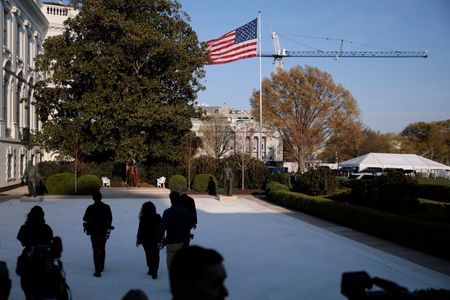

Recently disclosed documents reveal the Trump administration established a structure that permits anonymous private contributions totaling hundreds of millions of dollars for a proposed White House ballroom, while restricting federal ethics oversight of the initiative.
The October agreement between the White House, National Park Service, and Trust for the National Mall outlines the legal and funding structure for the approximately $400 million initiative, which would represent the most substantial modification to the White House grounds in decades.
President Trump has positioned the White House ballroom as a signature achievement of his second presidential term, describing it as a transformative improvement financed through private contributions instead of public funds.
However, the magnitude of the undertaking and how the administration has managed fundraising and transparency has prompted growing concerns from oversight organizations and legal scholars, who question the project’s openness, potential donor influence, and compliance with established ethical standards.
Public Citizen, a watchdog organization, secured the document through litigation against the Park Service and Interior Department following a public records request, subsequently sharing it with news organizations.
“The Trump Administration’s failure to disclose this contract was flatly unlawful,” stated Wendy Liu, Public Citizen attorney and lead counsel on the lawsuit. “The American people are entitled to transparency over this multi-million-dollar project, and this win gets us a bit closer to knowing the truth.”
When requested for response, White House spokesman David Ingle indicated the ballroom contributors encompass numerous corporations and individuals donating “to make the People’s House better for generations to come.”
“The same critics who are alleging fake conflicts of interest would also complain if American taxpayers were footing the bill for these long-overdue renovations,” Ingle stated.
The agreement allows contributors to maintain anonymity and contains clauses limiting the revelation of their identities, based on the document. It also creates a review mechanism for possible conflicts of interest concerning the Park Service and Interior Department, but excludes similar requirements for the White House or president.
The proposed ballroom would overshadow other sections of the White House complex, with administration representatives describing an approximately 90,000-square-foot building designed to accommodate major state functions and receptions.
The initiative aims to substitute activities normally conducted in temporary structures on the South Lawn and would substantially increase capacity for formal dinners, diplomatic meetings, and official events. Proposals include a multi-level facility featuring service spaces, security enhancements, and integrated connections to the current executive residence grounds.
Trump has indicated roughly $300 million has been collected for the initiative, part of his wider effort to transform Washington.
Numerous identified contributors revealed by the White House following agreement to publicize their names — including Amazon, Lockheed Martin, Palantir Technologies, and Google — maintain billions of dollars in government contracts collectively.
A federal appeals court recently permitted ballroom construction to proceed while a legal dispute continues. The case, filed by the National Trust for Historic Preservation, contends the administration failed to obtain proper authorization before starting East Wing demolition and launching the project.
The recent decision temporarily overturned a ruling issued the previous day by U.S. District Judge Richard Leon in Washington, who determined the ballroom project violated the law without Congressional approval.