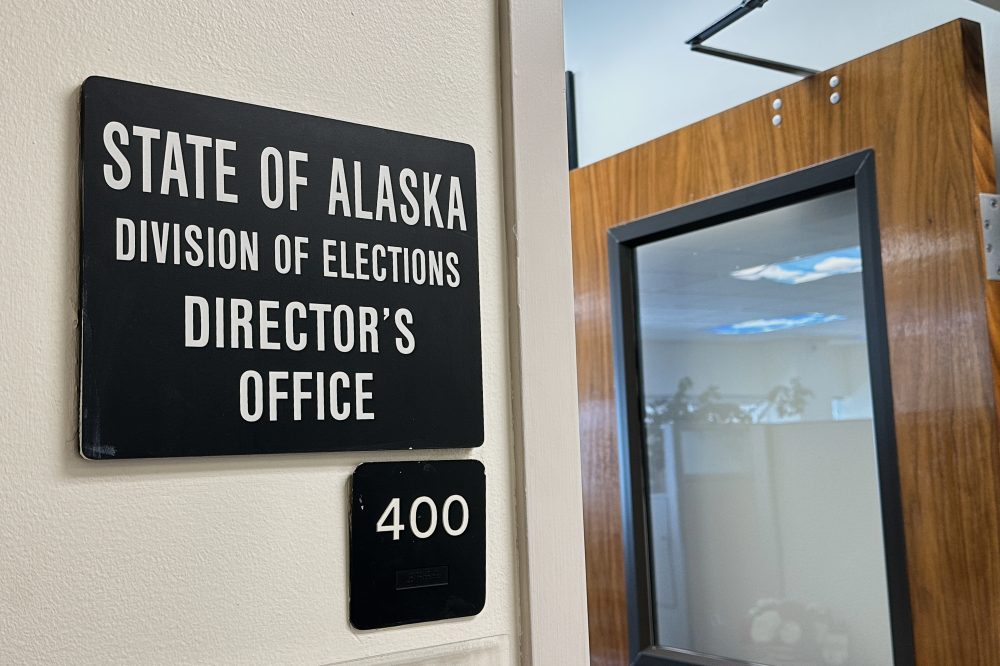

Civil rights organizations filed legal action Wednesday against Alaska’s election administrators, claiming the state’s decision to turn over complete voter registration records to federal authorities violates constitutional privacy protections.
According to the Brennan Center, Alaska joins at least 12 states that have handed over or committed to providing comprehensive voter information — including birth dates, driver’s license numbers, and partial Social Security numbers — to the Trump administration. Both Alaska and Texas entered into formal agreements when transferring this data, allowing the federal department to conduct its own voter file analysis, identify potential issues with voter rolls, and provide guidance for removing voters considered ineligible.
While several additional states complied with data requests, they declined to sign similar agreements as part of the Justice Department’s broad initiative to collect detailed voter information from all 50 states. Some election administrators have voiced concerns that this information could be used by the Trump administration to identify potential non-citizens on voter rolls.
The League of Women Voters of Alaska and Alaska Black Caucus brought the state court case against Division of Elections leadership. Their complaint argues that releasing personal voter information breaches privacy rights guaranteed under Alaska’s constitution. The filing also contends that the memorandum of understanding undermines due process by permitting the Justice Department to mark voters for removal “without any apparent notice or process for impacted voters to challenge those decisions.”
Republican Lt. Gov. Nancy Dahlstrom, who supervises the division, and division Director Carol Beecher are named as defendants in the case. Division spokesperson Steve Kirch directed comment requests to the Alaska Department of Law, which has not yet responded.
Legal representation for the plaintiffs comes from the American Civil Liberties Union of Alaska, ACLU Voting Rights Project and the Electronic Privacy Information Center.
The Brennan Center reports that the Justice Department has initiated lawsuits against at least 30 states plus the District of Columbia attempting to compel data release. Courts have denied these federal efforts in California, Massachusetts, Michigan, Oregon and most recently Rhode Island. A Georgia judge dismissed one Justice Department lawsuit for being filed in an incorrect jurisdiction, though it was later refiled.
During the Rhode Island proceedings, Justice Department lawyers admitted the agency wanted unredacted voter data for sharing with the Department of Homeland Security to verify citizenship status.
Beyond Alaska’s state court challenge, at least four federal cases have been filed nationwide aimed at blocking the Justice Department from gathering unredacted voter registration information or preventing states from canceling voter registrations based on this federal initiative.
At a legislative hearing in Alaska last month, state Department of Law attorney Rachel Witty informed lawmakers that Alaska had a “compelling interest” in responding to the federal data request.
“To ensure the integrity of elections, there was a mutual interest in maintaining voters rolls that were accurate and current,” she said.
The Alaska complaint outlines state procedures for maintaining voter registration lists and notes that only specific circumstances allow for immediate voter registration cancellation — “upon death or conviction of a felony involving moral turpitude.” While election officials claim they will only remove voters “to the extent allowed by state and federal law,” the lawsuit argues this interpretation conflicts with “the plain language” of the Justice Department agreement.
The legal challenge asks a judge to invalidate the agreement and order the elections division to make “reasonable efforts” to ensure immediate destruction of all physical and electronic copies of the shared voter list by the Justice Department.
“Rather than fiercely defending the rights of Alaska’s voters, our Division of Elections acceded to federal overreach,” Eric Glatt, legal director for the ACLU of Alaska, said in a statement. “Now, we are asking the court to step in and ensure that DOE upholds its constitutional and legal obligations to Alaskans.”