
A recently established conservative super PAC is setting its sights on Republican House members who have endorsed comprehensive immigration reform, potentially creating primary challenges for the 2026 midterm elections.
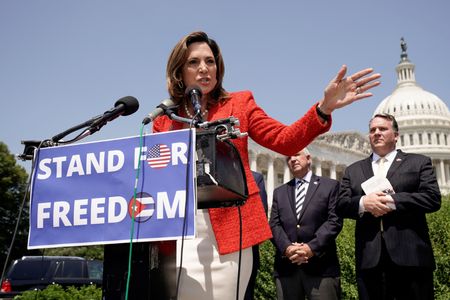
The Homeland Political Action Committee, led by founder Ryan Girdusky, is specifically targeting GOP lawmakers who have thrown their support behind the bipartisan DIGNIDAD Act, a sweeping immigration reform measure crafted by Florida Republican Representative María Elvira Salazar.
Girdusky characterized the legislation as going against both the president’s agenda and core party principles. While he would prefer to challenge all Republicans backing the measure, he acknowledged that such an approach would be impractical given the party’s narrow House majority.
“We’re not here to burn the party down,” Girdusky explained. “It’s to challenge pro-amnesty Republicans in safe Republican seats and to defend Republicans in challenging seats or in swing districts that need support.”
The DIGNIDAD Act currently has backing from 19 Republican co-sponsors and would permit undocumented immigrants to remain, work, and reside in the United States provided they lack criminal backgrounds. The legislation requires annual fines for those without legal status but stops short of offering citizenship pathways. Additionally, the measure allocates billions in funding to the Department of Homeland Security for border security technology improvements.
Girdusky previously established the 1776 Project PAC, which has accumulated over $5 million primarily from small-dollar contributions since early 2025 to support conservative school board candidates nationwide, based on federal records.
The political operative also hosts a podcast titled “It’s a Numbers Game with Ryan Girdusky.” He gained notoriety in 2024 when CNN banned him following comments to Muslim journalist Mehdi Hasan, saying “I hope your beeper doesn’t go off,” referencing deadly Israeli strikes against Hezbollah operatives in Lebanon, which Girdusky later claimed was meant as humor.
The strategy aims to force House Republicans into a difficult position: either support Trump’s immigration stance or potentially face primary opposition from candidates endorsed by Homeland PAC.
Beyond Salazar, Girdusky’s target list encompasses Republicans in secure GOP districts who support the DIGNIDAD Act, including Representatives Lloyd Smucker from Pennsylvania, along with Marlin Stutzman and Jim Baird from Indiana.
Each of these four lawmakers currently faces primary challengers in their respective contests. While Girdusky has not yet endorsed or financially backed any opponents in these races, he indicated plans to do so if their positions match his organization’s values.
Additional Republicans supporting the DIGNIDAD Act are either stepping down from office, such as Representatives Dan Newhouse from Washington and Neal Dunn from Florida, or competing in competitive races like Representatives Young Kim and David Valadao from California.
None of the Republican representatives’ offices provided responses to requests for comment.
According to Girdusky, Homeland PAC will likely resonate with conservative voters who prioritize immigration enforcement or border security as their primary concerns.
This effort against the legislation underscores a strategic dilemma facing the Republican Party, which finds itself balancing Trump and his supporters’ demands for stringent immigration policies while avoiding the alienation of Latino voters.
Girdusky revealed that Homeland PAC has not secured endorsement from House Speaker Mike Johnson, who faces his own challenging battle to maintain chamber control in November, based on discussions with Johnson and his political advisors.
Johnson’s political operation representatives did not respond to comment requests.
Latino voters demonstrated significant movement toward Trump in 2024, primarily driven by economic concerns including inflation and elevated living costs. Trump secured approximately 48% of Latino support in 2024, representing a 12-point increase from his 36% showing in 2020, according to Pew Research Center data.
However, most Latinos reported increased difficulty affording daily expenses compared to previous years, based on a national survey of 2,413 Latinos conducted by civic participation organization Voto Latino during late March and early April this year.
A recent Reuters/Ipsos poll indicated that Trump’s aggressive deportation campaign could negatively impact Republicans in November’s elections. Approximately 52% of Americans stated they would be less inclined to support candidates who endorse Trump’s deportation approach.
While Salazar expressed confidence about maintaining her coalition, which includes 20 Democrats, she voiced concerns about Republicans potentially losing House control in November.
“There is a very important coalition of Hispanics, the largest and fastest growing minority in the country,” Salazar stated. “These people feel targeted, and they feel that they are not welcome in the Republican Party and that concerns me.”
Latinos have historically avoided monolithic voting patterns in the United States, noted Daniel Alegre, CEO of Spanish-language media company TelevisaUnivision. However, in recent electoral cycles, Latino voters have emphasized economic issues over partisan allegiance.
“Ignore the Hispanic vote at your own peril,” Alegre warned. “It’s the Hispanic vote in so many of the key races that will determine the control of Congress.”