
ST. PAUL, Minn. — State governments across America have dramatically enhanced security protocols at capitol buildings and expanded protection measures for elected officials following the shocking murder of Minnesota House Democratic leader Rep. Melissa Hortman nearly one year ago.
The enhanced security measures come as political violence has escalated nationwide, including Hortman’s assassination last June and the September murder of conservative activist Charlie Kirk during a speaking engagement at a Utah college campus.
Minnesota’s state capitol now operates with most entrances secured, requiring all visitors to pass through metal detection systems before entry. Those wishing to observe legislative sessions from public galleries must clear an additional security checkpoint.
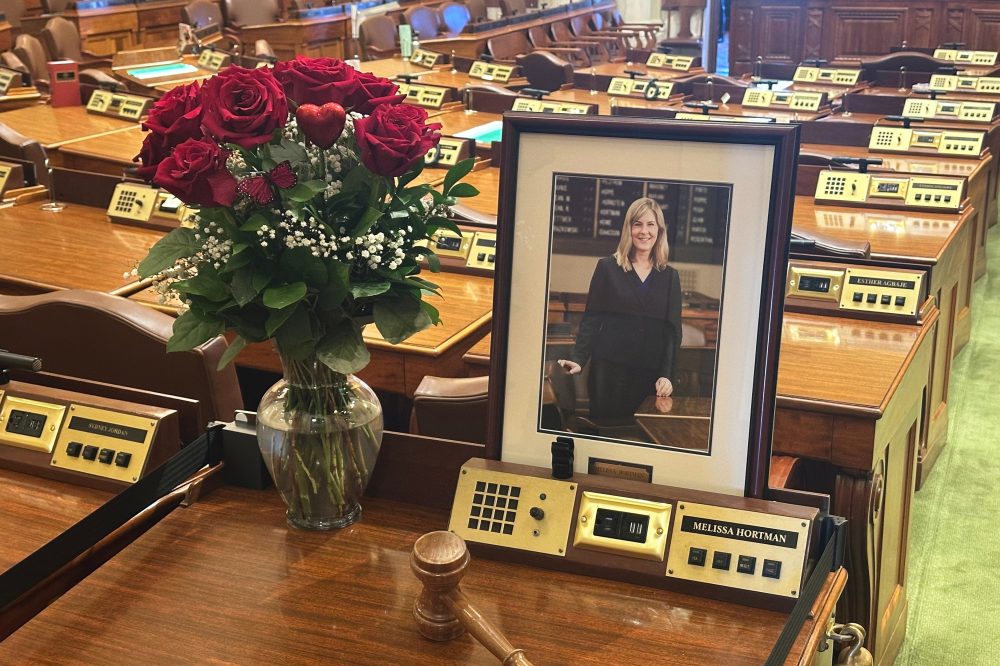
“It’s important for us to be able to not have our government fall apart if our legislators are under threat,” said Minnesota Rep. Julie Green, a Democrat who sits directly across the aisle from Hortman’s old desk, which remains empty except for fresh roses, her portrait and a speaker’s gavel. “It’s a complicated, complex, very emotional issue, as you can imagine.”
The violence against Hortman and Kirk represents part of a broader pattern of attacks on political figures, including a 2024 arson incident at Democratic Pennsylvania Gov. Josh Shapiro’s residence, an assassination attempt against then-candidate Donald Trump during a Pennsylvania campaign event in 2024, and the 2022 hammer assault on Democratic then-House Speaker Nancy Pelosi’s husband at their California residence.
Currently, 25 states including Minnesota have established formal policies permitting political candidates to allocate campaign dollars toward personal security expenses. The majority of these changes occurred following the Kirk and Hortman killings. According to data from the National Conference of State Legislatures and the VoteMama Foundation, eleven states have enacted specific legislation, while others have implemented the policy through regulatory or administrative channels.
During this year alone, Alabama, Oregon, Nebraska and Utah have passed legislation authorizing campaign security expenditures. Approximately twelve additional states are currently considering similar proposals.
The trend extends beyond state politics. Congressional and presidential campaign security expenditures have increased five times over the previous ten years. According to an April analysis by the nonpartisan Public Service Alliance, federal political organizations allocated over $40 million for security-related costs during the 2023-24 election period.
Alaska installed metal detection equipment at its capitol facility last year, representing one of the most obvious indicators of growing concerns about political violence. Democratic Rep. Sara Hannan attributed the installation to “increased risk of violence in our public institutions.” State legislators approved the security measures prior to Hortman’s death.
However, certain states have resisted implementing stricter access controls to government buildings. Wisconsin Assembly Speaker Robin Vos, a Republican who had personal knowledge of Hortman, opposed proposals for metal detector installation in his state, explaining he preferred not to “fortify” the capitol building. According to a state audit, Wisconsin ranks among eleven state capitols operating without metal detection systems.
Minnesota legislators are also evaluating the creation of a specialized State Patrol division responsible for capitol security that would extend protection services to legislators, the state attorney general, secretary of state, state auditor, and Supreme Court justices.
Democratic Sen. John Hoffman, a primary sponsor of the legislation, survived being shot nine times during the same night Hortman was murdered. According to prosecutors, the perpetrator disguised himself as a law enforcement officer and initiated his attack by shooting Hoffman and his spouse, then traveled to two other lawmakers’ residences where they were not present. The gunman subsequently arrived at Hortman’s residence, where he killed both the representative and her husband, and injured their dog so severely that veterinarians had to euthanize the animal.
During Tuesday’s legislative hearing, Hoffman described his proposal as “a necessary response” that would “keep elected officials and Supreme Court justices safe and dedicate the resources necessary and hopefully stop future tragedies from happening.”
Multiple states have also implemented measures to safeguard lawmakers’ private information. North Dakota legislators discussed draft legislation Wednesday that would allow candidates and public officials to request confidential treatment of their home addresses.
The NCSL established a $1.5 million reimbursement program in February to cover legislature expenses related to lawmaker safety and security when they are away from state capitol buildings. According to NCSL spokesperson Katie Ziegler, more than 30 states have submitted applications or are preparing to do so.