
WASHINGTON — In a significant policy change Thursday, Acting Attorney General Todd Blanche issued an order moving state-licensed medical marijuana into a less restrictive federal drug classification, fulfilling a longstanding goal of cannabis advocates who argued the substance shouldn’t be regulated alongside heroin.
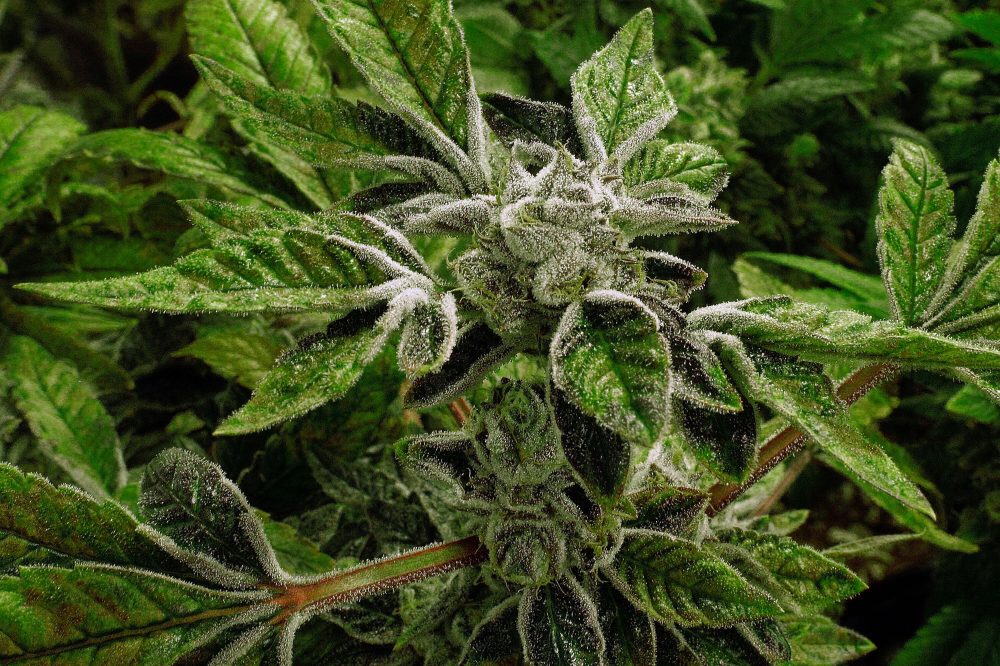
While Blanche’s directive doesn’t make marijuana federally legal for medical or recreational purposes, it transfers licensed medical cannabis from Schedule I — designated for substances with no accepted medical value and high abuse potential — to Schedule III’s less stringent regulations. The change provides substantial tax relief for licensed medical marijuana businesses and removes certain research obstacles.
In December, Trump directed his administration to expedite marijuana reclassification efforts. Last Saturday, while signing a separate executive order on psychedelics, the Republican president appeared frustrated with the timeline’s length.
“This rescheduling action allows for research on the safety and efficacy of this substance, ultimately providing patients with better care and doctors with more reliable information,” Blanche stated Thursday, emphasizing the Department of Justice was “delivering on President Trump’s promise” to broaden Americans’ medical treatment access.
The action essentially validates medical marijuana programs operating in 40 states. It establishes a streamlined registration process for state-licensed medical cannabis producers and distributors with the Drug Enforcement Administration.
The order clarifies that cannabis researchers won’t face penalties for obtaining state-licensed marijuana or cannabis-derived products for studies. Additionally, it provides state-licensed medical marijuana companies their first opportunity to claim business expense deductions on federal tax returns — creating significant financial benefits.
FDA-approved marijuana-derived medications receive similar Schedule III classification under the order.
This directive marks a substantial shift for federal policy, which has maintained marijuana prohibition since the Marijuana Tax Act of 1937, despite nearly every state approving some form of cannabis use. Twenty-four states plus Washington, D.C., permit adult recreational marijuana use, 40 operate medical marijuana programs, and eight others allow low-THC cannabis or CBD oil for medical purposes. Only Idaho and Kansas maintain complete marijuana bans.
Blanche noted medical marijuana regulation has evolved dramatically since California pioneered state programs in 1996.
“Today the vast majority of States maintain comprehensive licensing frameworks governing cultivation, processing, distribution, and dispensing of marijuana for medical purposes,” Blanche wrote. “Taken as a whole, they demonstrate a sustained capacity to achieve the public-interest objectives … including protecting public health and safety and preventing the diversion of controlled substances into illicit channels.”
Marijuana products outside state medical programs remain classified as Schedule I substances. Beginning in June, the Trump administration will launch new administrative hearings to examine broader marijuana rescheduling possibilities.
Schedule III substances are characterized as having moderate to low physical and psychological dependence potential. Some industry critics argue state legalization has produced increasingly potent cannabis products requiring research rather than reduced regulatory classification.
Under President Joe Biden’s Democratic administration, the Justice Department had proposed marijuana reclassification, generating nearly 43,000 public comments. The Drug Enforcement Administration was still reviewing when Trump assumed office in January, prompting his order to accelerate the process legally.
Blanche’s order bypassed the review process using federal law provisions allowing the attorney general to classify drugs the U.S. must regulate under international treaties.
The order’s impact on states where licensed recreational marijuana dispensaries also serve medical patients remains uncertain. In Washington state, which legalized adult marijuana use in 2012, 302 of 460 licensed stores hold endorsements for tax-free cannabis sales to registered patients.
Many Republicans oppose relaxing marijuana restrictions. More than 20 Republican senators, including several Trump allies, signed a letter last year urging the president to maintain existing standards.
Trump has prioritized combating other drugs, particularly fentanyl, during his second term, ordering military strikes on Venezuelan and other vessels allegedly transporting drugs. He signed another executive order designating fentanyl as a weapon of mass destruction.