
Theories linking the deaths and disappearances of several American scientists have evolved from obscure internet discussions into a full federal investigation in just two months. By Friday, authorities were examining at least 12 cases, with both the FBI and congressional committees searching for potential connections.
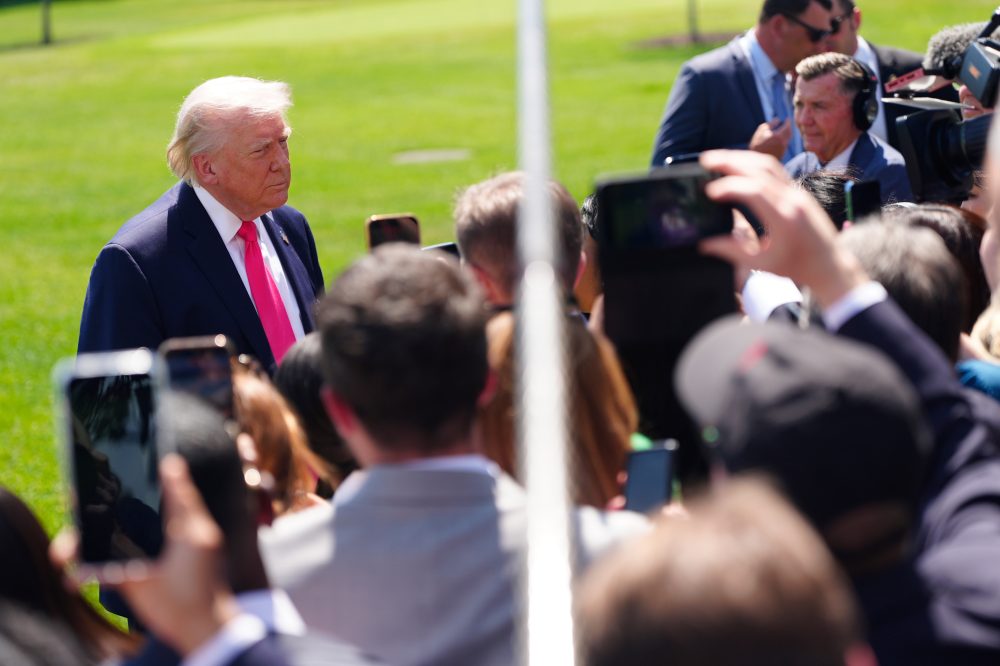
During an April 16 news conference, President Donald Trump addressed questions about “10 missing scientists with access to classified stuff, nuclear material, aerospace, they’ve all gone missing or turned up dead in the last couple of months” and whether he believed the cases were related.
“Well, I hope it’s random, but we’re going to know in the next week and a half,” Trump responded.
Online theorists claim these individuals were deliberately targeted, possibly by foreign adversaries, due to their sensitive research in areas like astrophysics, nuclear technology, and pharmaceuticals. However, investigators have yet to discover concrete evidence linking the cases or proving coordinated criminal activity.
University of Maryland professor Jen Golbeck, who researches conspiracy theories, explained that connecting scientist deaths to sinister plots is a recurring theme in conspiracy communities.
“There are a lot of people who work for national labs and universities and government research centers and some of them will go missing or commit suicide or die,” she noted. “Any year you could take a bunch of those and name them as something sinister if you wanted to.”
While individual cases had previously attracted attention from internet investigators, the February 27 disappearance of 68-year-old William “Neil” McCasland, a retired Air Force general, intensified widespread speculation about potential connections. His military background and ties to UFO research communities particularly fueled these theories.
Following McCasland’s disappearance, online users began identifying additional cases of missing or deceased scientists, eventually reaching back to June 2022.
The Daily Mail amplified these theories on March 22, publishing a story about five individuals and declaring that “a chilling pattern has emerged after a string of US scientists died or went missing in recent months.”
Questions about the cases surfaced at a White House briefing on April 15, and Trump announced the following day that he had consulted with advisers and launched an investigation. FBI Director Kash Patel emphasized the significance of examining these connections during a Sunday Fox News appearance. The House Committee on Oversight and Government Reform has initiated its own inquiry.
“That’s pretty typical for how a lot of this stuff works, is that there are these fringe online spaces, they start it, it spreads, it gets picked up by … the more conspiratorial-minded politicians who do have platforms and makes its way onto more mainstream social media and then grabs that attention,” Golbeck observed.
Callie Kalny, co-director of Northwestern University’s Center of Media Psychology and Social Influence, confirmed these conspiracy theories follow typical patterns of migration from niche platforms to mainstream discourse.
“Once it’s made it to the mainstream and once we experience this repeat exposure to it, it sort of just embeds into our minds as something that maybe we just take as fact or we just take as something that is common knowledge without ever really critically thinking well, where did this come from to begin with? And is there any validity to this?” she explained.
While the dozen individuals central to these theories share some similarities, including connections to Los Alamos National Laboratory and NASA’s Jet Propulsion Laboratory, along with specialized expertise and security clearances, the evidence contains significant inconsistencies that challenge online claims.
Several cases have already been resolved through investigations, with suspects identified or arrested. Others lack apparent connections or compelling evidence.
MIT physicist and fusion researcher Nuno F.G. Loureiro appears on the list after being fatally shot December 15 by Claudio Manuel Neves Valente, who had also carried out a mass shooting at Brown University days earlier before taking his own life. While no motive has been established, the two men had previously studied physics together in Portugal decades ago.
California Institute of Technology astrophysicist Carl Grillmair, known for discovering water on a distant planet, was shot and killed February 16, according to local media. Police arrested 29-year-old Freddy Snyder on murder and carjacking charges, and he remains held on a multi-million-dollar bond.
Melissa Casias, 53, vanished June 26 in New Mexico. Though she worked at Los Alamos National Laboratory, her LinkedIn profile shows she served as an administrative assistant, contrary to online assumptions that she was a scientist.
Regarding McCasland’s case, the Bernalillo County Sheriff’s Office reports he left home without his phone, prescription glasses, or wearable devices. His hiking boots, wallet, and .38 caliber revolver were missing from the house. Authorities have found no evidence suggesting foul play, and he remains missing.
McCasland’s wife, Susan Wilkerson, addressed online speculation in a March 6 Facebook post, explaining that since his retirement 13 years ago, McCasland “has had only very commonly held clearances” and “it seems quite unlikely that he was taken to extract very dated secrets from him.” She added that while he “had a brief association with the UFO community,” he possesses no special knowledge about extraterrestrials.
“In the face of tragedy or uncertainty, people seek patterns and explanations rather than accepting ambiguity or coincidence,” said Donnell Probst, executive director of the National Association for Media Literacy Education. “Narratives suggesting hidden connections or intentional wrongdoing can feel more satisfying than incomplete or evolving information, even without supporting evidence.”