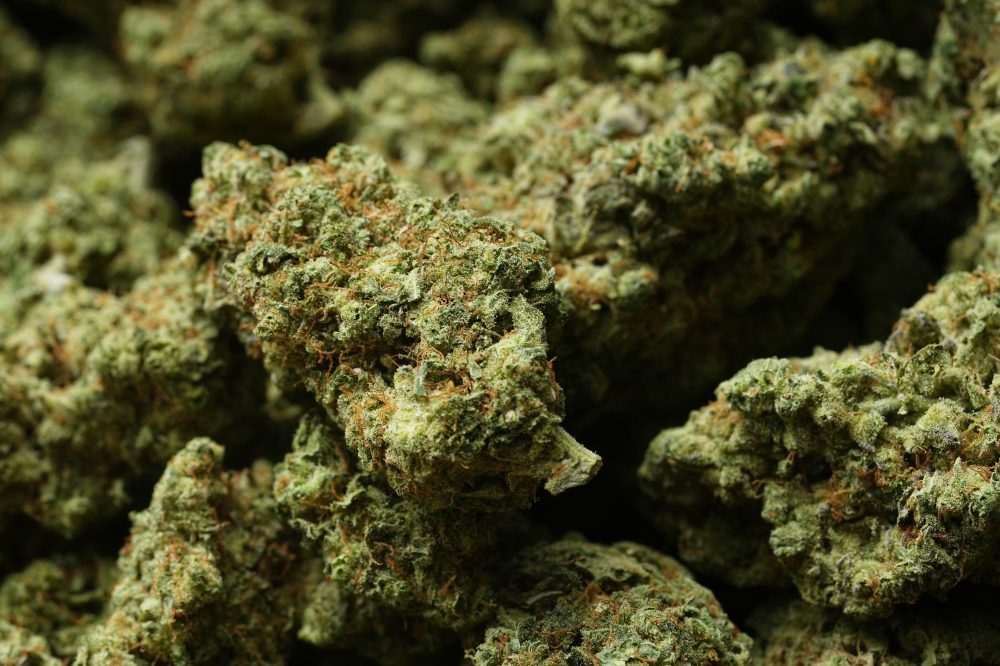

President Trump has moved forward with reclassifying state-licensed medical marijuana as a less dangerous substance, delivering substantial benefits to the cannabis industry through tax relief, reduced research obstacles, and potential international export opportunities.
However, this action may represent just the beginning of broader changes. An upcoming administrative proceeding scheduled for late June could extend similar reclassification benefits to state-licensed recreational cannabis markets as well.
“This is a signal that this administration means business on getting this done,” stated Jesse Alderman, a cannabis industry lawyer from Boston working with Foley Hoag.
Thursday’s executive order doesn’t make marijuana federally legal for medical or recreational purposes and will likely encounter court challenges.
The directive does transform cannabis regulation by moving licensed medical marijuana from Schedule I classification — designated for substances deemed medically useless with high abuse potential — to the more lenient Schedule III category.
This represents a major policy reversal for the federal government, which has maintained strict marijuana prohibition even as 48 states have embraced some form of cannabis since California pioneered medical marijuana approval in 1996.
Twenty-four states and Washington, D.C., have legalized adult recreational marijuana use, generating billions in tax income. Forty states operate medical marijuana programs, while eight additional states permit low-THC cannabis or CBD oil for medical purposes.
The executive order acknowledged that medical marijuana oversight has evolved significantly, with most states implementing thorough licensing frameworks covering everything from growing to retail sales.
Douglas Hiatt, a veteran Seattle marijuana defense lawyer, remembered the AIDS crisis of the 1980s and 1990s, when law enforcement frequently targeted cultivation operations supporting patients.
He accompanied one client, disabled medical marijuana advocate JoAnna McKee, to clandestine meetings with Hells Angels members in wooded areas to obtain cannabis for other patients following police raids — illustrating the extreme measures sometimes necessary to secure marijuana during that era.
“We were watching all these guys die from this horrible disease, and the only thing that helped them keep their pills down was marijuana, and the cops were going after anyone who helped them get it,” Hiatt explained in a Thursday phone conversation. “It was crystal clear from the beginning that it had medical uses. For the feds to admit that now is great. It’s surreal.”
Some medical professionals argue that state legalization has produced increasingly potent cannabis products requiring research rather than looser classification.
Moving marijuana from Schedule I to Schedule III suggests therapeutic value, but there aren’t “massive medical indications for cannabis,” according to Dr. Smita Das, a Stanford University addiction psychiatrist. Additionally, cannabis use disorder — affecting roughly 3 in 10 users per CDC data — continues increasing.
“We’ve already had kind of a decrease in risk perception related to cannabis over the years with the state legalization,” Das explained. “This will probably just add to that.”
The reclassification falls short of what prohibition critics ultimately seek: complete legalization with measures addressing prohibition’s damage, particularly in minority communities that faced disproportionate impacts. Many states have already implemented reforms like criminal record expungement.
State-licensed medical operators can now deduct business expenses on federal taxes for the first time, providing crucial financial relief.
However, in numerous recreational marijuana states, licensed dispensaries serve both markets — creating complex accounting challenges to determine which business expenses qualify for medical-related deductions.
“If this artificial distinction between medical and recreational is maintained, it raises all sorts of questions,” observed sociology professor Josh Meisel, who helped establish the Humboldt Institute for Interdisciplinary Marijuana Research at California State Polytechnic University, Humboldt.
Trump directed his administration in December to expedite marijuana reclassification, building on stalled initiatives from the Biden era. Last Saturday, while signing an unrelated executive order regarding psychedelics, the Republican president appeared frustrated with the pace of progress.
American Trade Association for Cannabis and Hemp president Michael Bronstein described the order as “the most significant federal advancement in cannabis policy in over 50 years.”
However, marijuana legalization opponent Kevin Sabet, CEO of Smart Approaches to Marijuana, argued that while cannabis research is important, “there are many ways to increase our knowledge without giving a tax break to Big Weed.”
Trump has prioritized fighting other drugs, particularly fentanyl, during his second term, authorizing military strikes against Venezuelan and other vessels the administration claims transport narcotics.