
Since its establishment following World War I, the White House Correspondents’ Dinner has transformed through several different formats over the decades.
Saturday’s Washington elite gathering is now recognized for its contemporary structure: a glamorous red carpet event featuring top journalists, government officials, business executives, and Hollywood stars — culminating with comedic roasts delivered by both the president and a featured entertainer.
While some annual events fade into obscurity on C-SPAN recordings, others create unforgettable moments — whether hilarious, awkward, or notably uncomfortable — that live on through social media.
Here’s an examination of the dinner’s most significant moments as Donald Trump gets ready to participate for the first time as president:
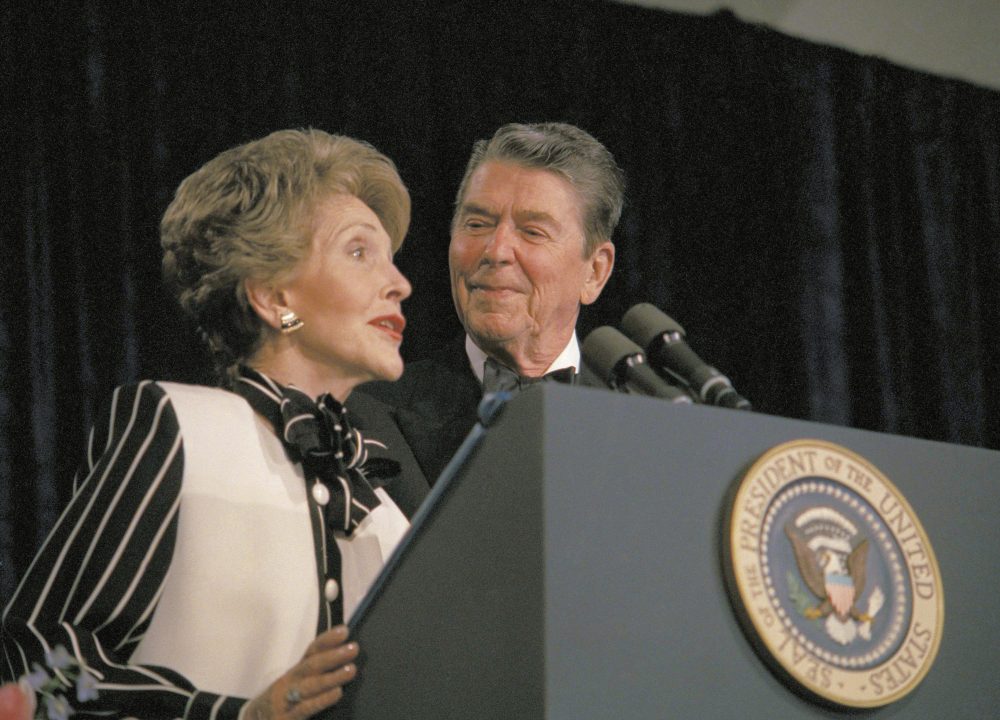
Drawing on his Hollywood background, the 40th president possessed natural charisma and comedic timing on stage, and Reagan’s era marked when entertainers became a regular fixture at the annual event.
During the 1983 dinner, Mark Russell, known for his political satire on PBS, delivered mild jokes targeting Reagan. “There is another speaker following me,” he began, “and so it is quite an honor for me to be doing the warmup for my chief writer here.”
When Reagan took the podium, he declined to perform his usual routine. He told attendees he had completed “a sad journey” to Andrews Air Force Base that day to honor Americans who died in the April 18 bombing of the U.S. Embassy in Lebanon.
“I realize the original plan was that I would, in a sense, sing for my supper. In fact, I was prepared, not really to sing, but to do what you expected,” Reagan explained, noting it would be inappropriate to deliver comedy that evening. “If you’ll forgive us,” he continued, “I’ll keep my script, and I hope you’ll give us a rain check, and it’ll still be appropriate next year.”
While NBC’s “Saturday Night Live” has mocked presidents since Chevy Chase portrayed Gerald Ford in 1975, Dana Carvey and President George H.W. Bush established an exceptional relationship.
Carvey, famous for his Church Lady character, exaggerated the 41st president’s distinctive voice and aristocratic demeanor, popularizing catchphrases like: “Not gonna do it. Wouldn’t be prudent.”
Bush embraced the impersonation. During Bush’s final dinner as president in 1992, he and Carvey shared the same table. Following his electoral loss to Bill Clinton that November, the president brought Carvey to a White House Christmas celebration. Their friendship continued beyond the presidency.
In 2004, U.S. troops were still deployed in Iraq following the 43rd president’s military action based on claims that Saddam Hussein possessed dangerous weapons.
When the annual dinner occurred, those assertions had proven exaggerated. Bush joked about the situation using photographs of himself searching the White House for Saddam’s arsenal.
“Those weapons of mass destruction have got to be here somewhere,” he remarked while slides depicted him peering under Oval Office furniture.
The crowd responded with laughter and applause. Some military veterans, including then-Sen. John Kerry, the 2004 presidential candidate, found it distasteful. Bush still defeated Kerry in November’s election.
Early in his second administration, Bush appeared visibly uncomfortable as Stephen Colbert, then hosting on Comedy Central, attacked him with unprecedented intensity for the dinner.
“The greatest thing about this man is he’s steady,” Colbert declared in 2006. “You know where he stands. He believes the same thing Wednesday that he believed on Monday, no matter what happened Tuesday. Events can change; this man’s beliefs never will.”
He mockingly encouraged Bush to dismiss his approval ratings, which had fallen to the low 30s: “We know that polls are just a collection of statistics that reflect what people are thinking in reality. And reality has a well-known liberal bias.”
Colbert also criticized the dinner’s media hosts, claiming Washington journalists shielded the Bush administration.
“Over the last five years you people were so good — over tax cuts, WMD intelligence, the effect of global warming. We Americans didn’t want to know,” Colbert stated, “and you had the courtesy not to try to find out.”
Throughout his initial presidency, Trump ended the tradition of presidential participation. Comedian Michelle Wolf still made him a target.
“It’s 2018, and I’m a woman, so you cannot shut me up — unless you have Michael Cohen wire me $130,000,” she joked, alluding to hush money payments preventing an adult film actress from revealing alleged intimate encounters with Trump.
When audience members reacted negatively to her crude humor, Wolf responded, “Yeah, shoulda done more research before you got me to do this.”
With Trump’s absence, his press secretary and current Arkansas Gov. Sarah Huckabee Sanders occupied the head table and became Wolf’s primary focus. Wolf likened Sanders’ position with Trump to a character from “The Handmaid’s Tale,” a dystopian story about authoritarian, misogynistic rule.
Her most cutting joke referenced a well-known Maybelline cosmetics advertisement.
“I actually really like Sarah. I think she’s very resourceful,” Wolf declared. “But she burns facts and then she uses that ash to create a perfect smoky eye. Like maybe she’s born with it; maybe it’s lies. It’s probably lies.”
Trump, who was campaigning in Michigan, described the performance as “disgusting.”
Hours later, the Correspondents’ Association released a statement explaining the dinner should celebrate “our common commitment to a vigorous and free press while honoring civility, great reporting and scholarship winners” and declared Wolf’s routine “was not in the spirit of that mission.”
Sanders referenced the incident earlier this year at Washington Gridiron, another annual political-journalism gathering. “I’m proud to note that color has really taken off,” she commented. “In fact, it’s the exact same thing worn by Vice President JD Vance.”
Although Trump hasn’t yet participated as president, he experienced his own memorable dinner moment.
In 2011, he was promoting the birther conspiracy against then-President Barack Obama. Trump utilized social media and regular Fox News Channel segments to spread the debunked theory that America’s first Black president was born in Kenya rather than being a natural-born citizen.
However, at the Washington Hilton, Obama controlled the microphone — and he wielded it effectively with Trump seated before him.
“Tonight, for the first time, I am releasing my official birth video,” Obama said with deadpan delivery, before screening the opening sequence from Disney’s “The Lion King,” showing baby Simba’s presentation on the African plains.
Obama then aimed his criticism directly at the reality television personality.
“No one is happier, no one is prouder to put this birth certificate matter to rest than the Donald,” Obama declared. “And that’s because he can finally get back to focusing on the issues that matter. For example, did we fake the moon landing? What really happened in Roswell? And where are Biggie and Tupac?”
While cameras showed Trump’s stern expression, Obama ridiculed Trump’s “Celebrity Apprentice” role.
“We all know about your credentials and breadth of experience,” the president remarked, expressing amazement that Trump had to determine responsibility when “the men’s cooking team cooking did not impress the judges from Omaha Steaks.”
“These are the kind of decisions that would keep me up at night,” Obama finished. “Well handled, sir. Well handled.”
Trump’s expression remained coldly hostile.
By November 2012, as Obama began his second term, Trump had submitted a trademark request for the slogan he would make nationally famous four years later: “Make America Great Again.”