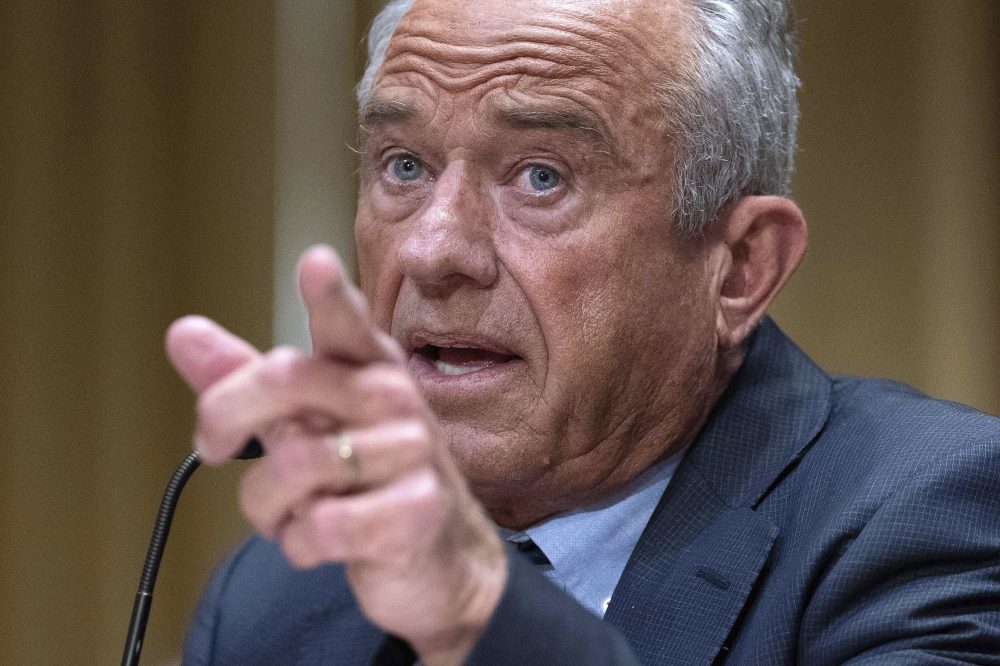

Health Secretary Robert F. Kennedy Jr. wrapped up an intense week of congressional testimony on Wednesday, facing tough questions about rising measles cases and defending President Trump’s proposed budget that would slash funding to his department by more than 12%.
During multiple hearings before Senate and House committees this week and last, Kennedy found himself defending Trump’s 2027 budget proposal, which increases military spending while reducing Department of Health and Human Services funding. The cuts total more than $100 billion from his agency’s budget.
Lawmakers from both political parties expressed alarm about reduced funding for programs and research initiatives. Kennedy admitted the reductions were “painful” but argued they were essential to tackle the federal government’s unprecedented $39 trillion deficit.
When facing aggressive questioning from Democratic members, Kennedy grew increasingly confrontational, sometimes shouting his responses. He frequently accused Democratic lawmakers of playing politics, fabricating claims, and prioritizing media attention over substantive dialogue.
A major point of contention centered on accountability for declining childhood immunization rates and measles outbreaks that have swept the nation in recent months, putting America’s measles-free status at risk. Kennedy consistently refused to accept blame for these developments.
“It has nothing to do with me,” Kennedy stated Tuesday regarding the nationwide increase in measles cases over the past year. He pointed to rising measles infections globally, including in countries like Canada, Mexico and the United Kingdom.
Kennedy, who previously campaigned against vaccines for years before entering government service and once told people to “resist” CDC vaccination schedules for children in 2021, rejected claims that he opposes vaccines. He described himself as “pro-science.”
During the hearings, he attempted to highlight HHS programs unrelated to immunizations, reflecting the administration’s strategy to emphasize less divisive health issues such as proper nutrition.
Kennedy maintained that declining vaccination rates stem from Americans losing confidence in government health recommendations during the COVID-19 pandemic. He claimed to be working toward rebuilding that confidence, though polling data indicates trust in federal health agencies has continued dropping during his time in office.
Democratic Representative Kim Schrier from Washington suggested Kennedy’s vaccine positions have created a “spillover effect” leading mothers to refuse vitamin K shots typically given to newborns to prevent brain hemorrhaging.
“I’ve never said anything about vitamin K,” Kennedy responded.
“That’s exactly the point,” Schrier replied.
However, Kennedy did receive praise from Republican Senator Tim Scott of South Carolina, who credited him with helping manage a serious measles outbreak in his state over the past year.
“We would not be on the right side of this outbreak without your leadership,” Scott told Kennedy.
Whenever Democrats mentioned nearly $1 trillion in Medicaid reductions over ten years, primarily through new work requirements for beneficiaries, Kennedy forcefully disputed characterizing these changes as cuts to Medicaid.
“Only in Washington is it considered a cut,” Kennedy told Democratic Senator Ben Ray Luján from New Mexico on Wednesday.
Kennedy referenced a Congressional Budget Office analysis showing Medicaid spending projected to grow approximately 47% over the coming decade. However, policy experts argue his interpretation of that data is misleading and politically motivated, noting the spending increases reflect normal factors like inflation and population growth.
“This is an old, sort of tired argument that’s been used by conservatives to justify spending cuts by saying, well, if spending is still growing in nominal terms, somehow there wasn’t a cut,” explained Edwin Park, a research professor at Georgetown University. “The federal government is spending nearly a trillion dollars less than it otherwise would have in the absence of the legislation.”
Healthcare affordability emerged as a significant concern, particularly with the 2026 midterm elections approaching. Lawmakers from both parties raised questions about soaring medical and insurance costs.
On Tuesday, Republican Representative Cliff Bentz from Oregon shared his brother’s situation, paying $26,000 annually for health coverage.
“What in the world can I go back to him and say? ‘Hey, the administration is working on trying to drive these prices down?’” Bentz asked Kennedy.
Kennedy highlighted several Trump administration efforts to reduce costs, including the White House’s TrumpRx website offering discounted medications and Trump’s negotiated deals with pharmaceutical companies for favorable pricing.
When senators pressed for details about these agreements, Kennedy promised to share information that wouldn’t compromise proprietary data or trade secrets. Some Democrats demanded more aggressive action.
“Why don’t you do an agreement yourself?” he challenged Democratic Senator Ron Wyden from Oregon. “You’ve had power to do that for 20 years and haven’t done it.”
To achieve the proposed 12% reduction in HHS’s budget exceeding $100 billion, the Trump administration plans to eliminate approximately $5 billion from the National Institutes of Health while cutting numerous other programs, including assistance for low-income households’ energy costs.
Multiple senators questioned Kennedy about the rationale behind various cuts. The NIH reductions particularly sparked bipartisan criticism.
“There’s an argument to be made that we’re handing China our lunch,” said Republican Senator Thom Tillis from North Carolina.
Kennedy acknowledged that neither he nor his agency staff supported the cuts, describing them as “painful.”
“There’s a lot of cuts to the agency that nobody wants,” he admitted.