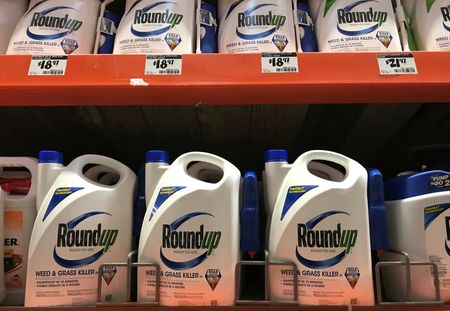

A new national survey reveals widespread public anxiety about pesticide safety as the Supreme Court prepares to hear arguments in a major case involving Bayer’s Roundup weedkiller on Monday.
The Reuters/Ipsos poll, which surveyed 4,557 American adults, found that 78% of respondents expressed concern about pesticide use in food crops. The worry crossed party lines, with 81% of Democrats, 78% of Republicans, and 77% of independents sharing these concerns.
The survey comes as German pharmaceutical giant Bayer seeks to limit thousands of lawsuits claiming its Roundup product causes cancer. The Trump administration has sided with the company in the legal battle.
Additionally, 63% of those polled opposed giving companies protection from lawsuits when they sell products that cause cancer, even if warning labels are included. This opposition was strongest among Democrats at 71%, with 57% of Republicans and 61% of independents also opposing such protections.
Bayer faces tens of thousands of legal claims alleging the company failed to adequately warn users that glyphosate, Roundup’s main ingredient, may cause cancer. While the Environmental Protection Agency has not concluded that glyphosate causes cancer, the World Health Organization has labeled the chemical as “probably carcinogenic to humans.”
The case centers on John Durnell, a Missouri man who won a $1.25 million jury verdict after claiming he developed non-Hodgkin lymphoma following years of glyphosate exposure. Glyphosate ranks among the most widely used herbicides in American farming.
At the heart of the legal dispute is whether consumers can pursue state-level lawsuits over inadequate safety warnings when federal agencies have already approved a product’s labeling.
Bayer maintains that state-level lawsuits should be blocked because the EPA has determined Roundup poses no cancer risk and requires no cancer warning. The company argues federal regulations prevent it from adding warnings beyond what the EPA mandates.
Trump administration lawyers have supported Bayer’s position, arguing that federal law takes precedence over state laws that have formed the basis for many lawsuits against the company.
Some state Farm Bureau organizations have warned the Supreme Court that ruling against Bayer could harm farmers if the company stops selling Roundup due to liability concerns.
The poll also revealed broader health anxieties, with 79% of respondents worried about health impacts from chemicals, food additives, and microplastics in drinking water. The online survey, conducted April 15-20, has a margin of error of 2 percentage points.
The bipartisan nature of these concerns could create political challenges for Republicans heading into November’s congressional elections, where the party aims to maintain narrow control of both chambers.
Health and Human Services Secretary Robert F. Kennedy Jr., appointed by Trump, has been promoting administration efforts to restrict food dyes and encourage healthy eating at campaign events nationwide.
Trump’s support for Bayer has created tension with some supporters of the Make America Healthy Again movement, who prioritize pesticide concerns. Kelly Ryerson, co-executive director of American Regeneration and known online as “The Glyphosate Girl,” attended White House meetings on April 9 where MAHA leaders discussed pesticide issues with Trump and senior officials.
Ryerson warned administration officials that glyphosate represents a major concern for MAHA voters and that backing Bayer could cost Republican votes in the midterms.
MAHA activists have also criticized Trump’s February executive order aimed at increasing domestic glyphosate production, viewing it as another potential threat to midterm support.
Ryerson, scheduled to speak at Monday’s rally outside the Supreme Court, said Trump “has a full understanding of how important the MAHA vote is to midterms.”
Other planned rally speakers include social media personality Vani Hari, known as “The Food Babe,” anti-vaccine activist Del Bigtree, and Democratic Representative Chellie Pingree.