
WASHINGTON – Kevin Warsh, nominated to lead the Federal Reserve, has proposed a comprehensive overhaul of inflation measurement methods, but economists warn he may discover the challenge lies not in finding new approaches but in selecting among numerous existing alternatives that often contradict each other.
Recent February data illustrates this complexity perfectly. The Fed’s primary inflation gauge registered nearly a full percentage point above the central bank’s 2% goal. However, the Dallas Federal Reserve’s calculations, using Warsh’s preferred methodology that eliminates extreme outliers such as moving services’ 384% annualized price spike or calculators and typewriters’ 50% price collapse, indicated inflation was much closer to target at just 2.3%.
Meanwhile, the Cleveland Fed’s Center for Inflation Research examined median price increase rates and found results similar to the Bureau of Economic Analysis’ main figure. The New York Fed’s sophisticated statistical model painted an even grimmer picture, suggesting underlying inflation trends were worsening at 3.1%.
Omair Sharif, who leads Inflation Insights as president and founder, criticized the notion that a perfect inflation measure exists but has been ignored by Fed officials. This perspective “sounded like somebody who has not been in the building for a while and has not looked at inflation research since he left the Fed” in 2011 following his term as governor, Sharif observed.
Sharif pointed out that Warsh’s favored alternative during Tuesday’s Senate confirmation hearing – the trimmed mean approach – currently shows the lowest inflation rate among standard measurements, aligning with President Donald Trump’s expectations for rate reductions. However, this same measure failed to detect inflation’s broadening and acceleration in 2021, a critical oversight that conventional inflation statistics successfully identified.
The Dallas Fed’s trimmed mean calculation, which removes items showing extreme price movements before averaging remaining data, may currently underestimate inflation due to shifts in the comparative distribution between the fastest and slowest price changes.
Krishna Guha, Evercore ISI’s vice chair, noted in his analysis of Warsh’s inflation framework comments that maintaining established measures like the personal consumption expenditures price index excluding food and energy, or core PCE, offers advantages because “it is better known in the market and possibly easier to explain with limited reference to statistics.”
Though core PCE serves as the preferred indicator for inflation trends, the Fed bases its 2% target on headline PCE. Warsh stopped short of explicitly proposing target modifications but suggested focusing should remain “left of the decimal point,” implying acceptance of inflation somewhat above the established goal.
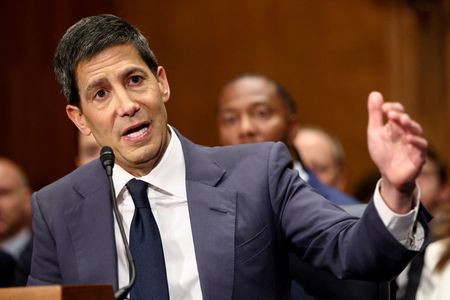
During his hearing, Warsh emphasized his commitment to challenging what he termed “the tyranny of the status quo,” though developing successful “new framework, new tools, and new communications” won’t be straightforward.
The Federal Reserve’s structure makes change difficult, encompassing the Washington-based Board of Governors, an influential economics team, 12 regional banks with distinct staffs and philosophies, plus numerous former officials and staff frequently consulted for research and policy discussions. Current Chair Jerome Powell, despite sharing some of Warsh’s communication concerns, faced significant resistance from colleagues and staff when proposing modifications last year.
However, Fed thinking isn’t completely rigid. When mainstream economists warned in 2022 that rapid rate increases could trigger massive unemployment, research by Governor Christopher Waller and staff economist Andrew Figura demonstrated why such outcomes were improbable, helping ease policymakers’ concerns about aggressive rate hikes to combat inflation.
The Fed completely abandoned its previous approach in 2020, adopting a new framework that demonstrated both its capacity for innovation and the associated risks. This framework was discarded last year after it underestimated inflation at a crucial moment and delayed officials’ response.
Similar to how Powell’s Fed attempted to improve economic outcomes by boosting inadequate inflation to test maximum employment limits through lower rates, Warsh believes he can explore the boundaries of non-inflationary economic growth with reduced rates, based on expectations that artificial intelligence will enhance productivity and reduce price pressures.
During his hearing, Warsh remained cautious about timing specifics, keeping his short-term rate outlook uncertain.
His direction was clear nonetheless. AI could “increase the potential output of the economy,” Warsh told lawmakers concerned that misinterpreting its impact might lead to policy errors and higher inflation. “We don’t know that. We can’t bank on that, but considerable work needs to be done by the Federal Reserve in evaluating this productivity wave.”
Current Fed officials have expressed similar views: AI will bring changes, but at an uncertain pace and magnitude that’s difficult to incorporate into present policy.
Regarding inflation measurement, Warsh will discover extensive ongoing research aimed at improving calculations, plus abundant opinions about optimal methods for distinguishing temporary price fluctuations from the sustained upward movement economists define as inflation.
Separating broad, persistent trends from narrow, temporary changes represents a well-established challenge. Fed officials during the pandemic inflation surge developed numerous approaches to analyze available data for meaningful signals and explored alternative “big data” sources similar to those Warsh mentioned during his hearing.
Government agencies have already integrated additional real-world pricing data from private sources into their indexes, Sharif noted. He suggested that if Warsh seeks rapid improvements to inflation statistics, he should focus on persuading Congress to increase funding and staffing for existing projects at agencies like the Bureau of Labor Statistics.
“I think what he was going for was we need to understand the data collection for all types of prices. That is a laudable goal. It is what BLS has been doing for many years,” Sharif explained. “But I don’t think you get to some big new trend you never thought of. What he should have said is what everyone says. We will look at a variety of things to get a handle on inflation.”