Consumer products giant Reckitt announced Thursday that it surpassed fourth-quarter sales projections, powered by exceptional performance in developing nations, while projecting 4% to 5% growth for its primary business segments through 2026.
The British company, similar to industry competitors like Nestle and Unilever, has been restructuring its brand portfolio to concentrate on higher-profit, faster-growing products. Reckitt completed the sale of its Essential Home division to private equity company Advent International for $4.8 billion on December 31, while maintaining a 30% ownership interest.
The manufacturer of well-known brands including Durex contraceptives and Lysol disinfectants announced comparable net revenue increases of 5.4% for the three months ending December 31, surpassing analyst predictions of 4.7% growth according to company-gathered forecasts.
Throughout the full year, developing market sales jumped 14.6%, creating a stark contrast with European markets, which declined 1.4%.
Developing nations, representing approximately 42% of Reckitt’s primary revenue streams, have now achieved double-digit sales increases for 10 straight quarters, according to Barclays financial analysts.
“(Emerging Markets) is doing the heavy lifting for the group and provides a reliable growth engine at a time when developed markets category growth is sluggish,” the analysts said in a note.
Company executives indicated they anticipate continued difficulties in European markets and cautioned that their seasonal over-the-counter medication business may face headwinds in early 2026 due to a milder cold and flu season than typical.
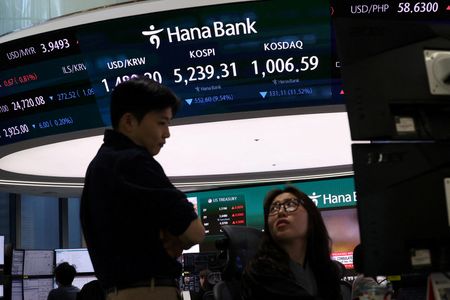
Stock markets across Asia experienced dramatic gains Thursday as investors appeared to regain confidence following signals that escalating Middle East tensions might be cooling down.
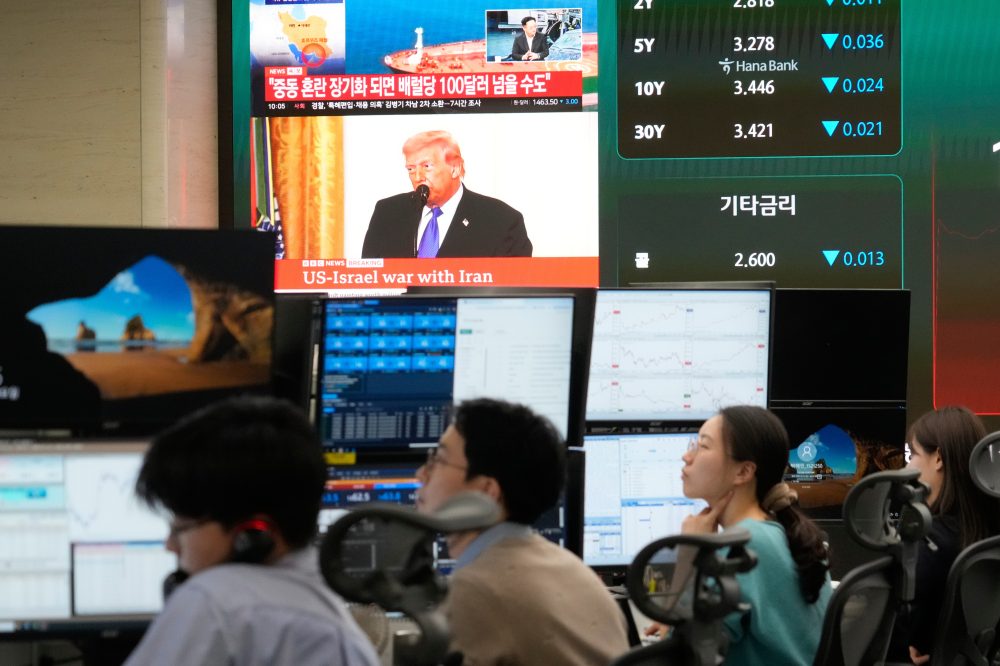
South Korea’s main stock index bounced back from heavy losses in the previous trading session, climbing more than 10% after Wall Street posted strong gains on speculation that the United States and Iran could be looking for ways to reduce hostilities. Meanwhile, oil and precious metals continued their upward trajectory.
In economic policy news, China announced its growth projections at a marginally slower rate compared to last year as part of an extensive economic blueprint that drew significant attention from global markets. However, the U.S. Senate endorsed President Donald Trump’s military operations against Iran, indicating the conflict that has disrupted financial markets, shipping routes, and energy supplies may not end quickly.
“Political tensions in volatile regions can resurface rapidly, meaning the early positive momentum we’re witnessing across Asia-Pacific stock exchanges today might not hold,” warned Paco Chow, dealing manager at Moomoo Australia and New Zealand. “Market sentiment will stay guarded until we observe energy shipments returning to standard levels.”
The broad Asia-Pacific stock measurement excluding Japan climbed 2.9% according to MSCI data. South Korea’s benchmark index dominated regional performance with its 10.4% jump, while Japan’s primary index also gained 2.9%.
U.S. Treasury bond yields moved higher, with the 10-year note yield increasing 2.7 basis points to reach 4.109%, and the 30-year bond yield climbing 3.1 basis points to 4.7479%.
The conflict between the U.S.-Israel alliance and Iran intensified significantly Wednesday following an American submarine’s attack on an Iranian naval vessel and NATO defense systems intercepting an Iranian missile aimed at Turkey.
However, stock markets in Europe and America found encouragement in Trump’s commitment to safeguard shipping operations and a New York Times article suggesting Iranian intelligence had contacted the CIA early in the conflict regarding potential resolution pathways.
Iran subsequently denied the newspaper’s account, while the Republican-controlled Senate voted against a bipartisan measure seeking to halt aerial combat operations.
Energy supply worries kept pushing petroleum prices upward. American crude oil increased 3.01% to reach $76.91 per barrel, with Brent crude climbing to $83.43 per barrel, representing a 2.49% daily gain. Gold prices in spot markets rose 0.84% to $5,178.42 per ounce.
“Headlines continue driving market behavior, and additional price swings appear likely moving forward,” explained Henry Russell, a London-based economist with ANZ, during a podcast appearance. “Energy availability remains under pressure as production sites shut down, with more closures probable if this confrontation extends further.”
Chinese officials established their economic expansion goal for 2026 between 4.5% and 5%, representing a modest reduction from last year’s 5% achievement, creating space for initiatives addressing industrial excess capacity and economic restructuring. Beijing simultaneously unveiled its 15th five-year strategy, committing to investments in innovation, advanced technology sectors, and a “significant” boost in consumer spending.
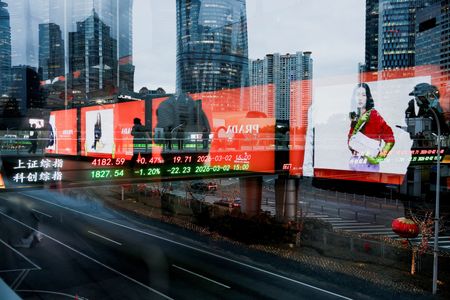
China’s premier stock index gained nearly 1% during early trading hours, while the Shanghai benchmark added 0.4%.
The U.S. dollar paused after recent increases driven by safe-haven buying. The dollar measurement against major currencies remained unchanged at 98.81.
Japan’s currency strengthened 0.2% to 156.75 against the dollar.
Digital currency markets saw declines, with bitcoin dropping 0.78% to $72,774.53 and ethereum falling 0.94% to $2,130.43.
NASHVILLE, Tenn. — Nashville’s metro council has formally registered its opposition to Elon Musk’s underground transportation project, approving a resolution Tuesday night that challenges the tech mogul’s tunnel system on multiple fronts.
Council members voted 20-15 with two abstentions to voice their objections regarding safety issues, lack of transparency, and minimal community involvement in The Boring Company’s Music City Loop proposal. While the resolution cannot halt or modify the project, it serves as an official statement of local government displeasure.
The controversy stems from July when Tennessee’s Republican Governor Bill Lee joined forces with Musk’s tunneling enterprise to announce the ambitious transportation network. The initial proposal covered 13 miles linking Nashville’s airport with the city center, later expanding to approximately 25 miles with an additional western route.
State officials promised the venture would require no taxpayer funding, though it would utilize government property near the state Capitol at no charge. Construction aims to have the first tunnel segment running by early 2027.
The transportation system would operate using specially designated Tesla cars with professional operators, featuring over 30 planned stations with room for future expansion. Company representatives indicate fares would undercut existing transit alternatives. While human drivers would initially control the vehicles, autonomous operation remains a future possibility.
Resolution sponsor Delishia Porterfield addressed her fellow council members before the vote, stating: “Colleagues, public land needs to be for public good and public infrastructure decisions must prioritize the welfare, safety and express needs of Nashville residents.”
Council member John Rutherford, who opposed the resolution, urged colleagues to separate their personal views of Musk from the project itself. He warned that rejecting the proposal could eliminate future negotiations with The Boring Company.
The Boring Company declined to provide immediate commentary when contacted.
Musk’s company currently operates a Tesla tunnel network in Las Vegas, though construction remains incomplete. Additional facilities include experimental tunnels in Texas designed for high-speed autonomous pods reaching 600 mph. While some proposed projects in other cities have been abandoned, Dubai has approved plans for an international tunnel.
The Nashville announcement faced immediate complications when Democratic Representative Justin Jones, whose district encompasses the airport, was prevented from attending the July press conference.
Boring Company CEO Steve Davis praised Nashville’s cooperation during the project launch, saying: “Nashville has been fantastic. Moved at an incredible speed, so welcoming, so kind, so so friendly.”
However, local leaders and community advocates expressed surprise at the announcement, with the council resolution questioning why city officials weren’t properly consulted about such significant changes to Nashville’s transportation strategy. This comes as the city continues implementing transit improvements following voter approval of increased transit funding in 2024.
The resolution highlights geological and environmental risks, specifically Nashville’s limestone foundation that increases sinkhole probability and affects water flow patterns. The city’s flooding history adds another layer of concern.
During a recent council session, Boring Company officials fielded questions from both council members and residents worried about environmental damage, tunnel safety, and compliance with disability access requirements.
Company representatives defended their safety record, with Vice President David Buss noting Nashville’s suitability for tunneling based on existing underground infrastructure built by other organizations. He emphasized The Boring Company’s “strong track record in safely managing variable ground conditions,” citing their Las Vegas experience.
This marks the second time a Musk-affiliated company has faced Tennessee criticism for circumventing regulations without advance warning. His xAI data center in Memphis began operations in 2024 using gas turbines that produce emissions, all without obtaining proper permits first, sparking heated public protests at city meetings.
Major financial backers of artificial intelligence company Anthropic are scrambling to resolve a bitter disagreement between the tech firm and military officials, according to seven sources with knowledge of the situation who fear the conflict could severely damage the company’s operations.
Chief Executive Dario Amodei has held conversations about the dispute with key investors and business partners in recent days, including Amazon.com’s CEO Andy Jassy, according to two individuals familiar with the discussions. Investment firms Lightspeed and Iconiq have also maintained contact with company leadership, sources revealed.
Several investors are reportedly contacting their connections within the Trump administration to help reduce tensions, two sources indicated.
The conversations center on preventing a complete prohibition of Anthropic’s artificial intelligence technology across all Pentagon contractor operations, according to those familiar with the matter.
Meanwhile, Anthropic and military officials continue limited discussions, though one source said Reuters could not confirm the specific nature of these conversations. President Donald Trump has demanded that Anthropic assist the government in eliminating its AI systems from federal use.
Amazon and the Pentagon did not provide immediate responses when contacted for comment.
The San Francisco-based AI developer and the Defense Department, recently renamed the Department of War by the current administration, have engaged in a prolonged disagreement spanning several months regarding military battlefield applications of the company’s technology. Industry observers view this confrontation as a crucial test of how much authority AI developers can maintain over their technological creations, which they believe could revolutionize educational systems, government services, and numerous other societal functions.
Military officials have urged AI companies to eliminate restrictions and instead agree to permit any lawful government use. However, Anthropic has maintained its position against allowing its Claude AI system to operate autonomous weapons systems or enable widespread domestic surveillance programs.
Among similar technology companies, Anthropic became the first to handle classified government information through a contract arrangement with cloud service provider Amazon. OpenAI announced Friday that it secured its own classified agreement with the Pentagon and stated that Anthropic should not be considered a security threat to the department.
During discussions with company executives, investors have confirmed their continued support for the San Francisco AI laboratory while simultaneously expressing their wish to reach an agreement with military officials, the seven sources said. Some financial backers told Reuters they felt frustrated that CEO Amodei had created antagonism with Pentagon leadership rather than building cooperative relationships. “It’s an ego and diplomacy problem,” explained one person briefed on the situation.
At this stage, some investors believe Amodei cannot appear to surrender to administration demands without alienating essential employees and customers who chose Anthropic specifically because of his principled position.
Amodei, who did not respond to requests for comment, has stated that Anthropic cannot “in good conscience accede to their request.” During a Tuesday evening conversation with investors, Amodei indicated the company would “continue to work to figure out a solution with the DoW.”
The investors intervening in Pentagon negotiations aim to help Anthropic avoid receiving a “supply-chain risk” classification from federal authorities, which could devastate the startup’s rapidly expanding commercial customer base.
Consumer interest has surged for Anthropic’s offerings, including its conversational AI Claude and programming tool Claude Code. On Monday, Claude ranked as the top free application download on Apple’s App Store, overtaking OpenAI’s ChatGPT.
Defense Secretary Pete Hegseth has indicated that such a risk classification would force all government contractors to cease using Anthropic’s technology throughout their entire operations. Anthropic has publicly disputed Hegseth’s statements, arguing he lacks legal authority to prevent use of its AI systems beyond defense-related contracts. The Pentagon did not respond to requests for comment regarding Anthropic’s assertion.
On Friday, Anthropic announced it would legally contest any supply-chain risk designation in federal court.
Nevertheless, some investors express concern that the confrontation might discourage potential clients who prefer to avoid any conflict with the current administration, one source noted.
These concerns arise during a pivotal period for the startup. Anthropic has secured tens of billions in funding based on ambitious projections for its business sales, which represent approximately 80% of the company’s income, according to company statements.
The outcome of future investment rounds, including a highly anticipated public stock offering, depends on Anthropic’s ability to continue expanding its commercial revenue. The company is currently allowing employees to sell shares to investors, though no final decision has been made regarding a public offering.
Anthropic’s revenue run rate, representing projected annual income based on current performance, has reached approximately $19 billion, one source revealed, increasing from $14 billion just weeks earlier.
The investor intervention occurred as multiple federal agencies began discontinuing their use of Anthropic’s technology, with the State Department switching to competitor OpenAI, following Trump’s Friday directive to eliminate Anthropic within six months.
Energy services company Baker Hughes is moving forward with plans to issue roughly $10 billion in bonds across international markets to support its major acquisition of Chart Industries, according to a Wednesday report from Bloomberg News citing informed sources.
The oilfield services giant announced last year its intention to purchase Chart Industries through a $13.6 billion cash transaction. This acquisition would expand Baker Hughes’ reach into industrial technology that serves the liquefied natural gas sector and data center operations.
According to Bloomberg’s reporting, Baker Hughes has selected Goldman Sachs Group and Morgan Stanley to lead a team of banks in organizing investor meetings scheduled for Wednesday.
The news outlet indicated that the company may subsequently launch bond offerings in both euro and dollar currencies.
Money raised through the bond issuance would substitute for a short-term lending arrangement worth up to $14.9 billion that was established last year to support the Chart Industries purchase, the report stated.
When contacted by Reuters for comment, Baker Hughes and Morgan Stanley did not provide immediate responses, while Goldman Sachs chose not to comment on the matter.
WASHINGTON, March 4 – A Federal Reserve official stated Wednesday that economic uncertainties stemming from the U.S. military confrontation with Iran should not prevent the central bank from pursuing additional interest rate reductions throughout 2024, as inflation pressures are anticipated to diminish and employment concerns persist.
During an appearance on Bloomberg Television, Fed Governor Stephen Miran explained that elevated oil costs resulting from the military action “will feed into headline inflation, but the evidence that it feeds into core inflation … is quite limited. … It is difficult for me to get very excited about a policy implication of what’s happened so far.” Miran advocated for implementing four quarter-percentage-point rate decreases this year to achieve approximately neutral monetary policy levels, though some of his more conservative Fed colleagues believe that neutral stance has already been accomplished with current rates between 3.5% and 3.75%.
Miran drew distinctions between today’s circumstances and the 2022 situation when Russia’s Ukrainian invasion triggered worldwide spikes in oil and commodity costs that contributed to widespread inflationary pressures. He emphasized that current conditions differ because monetary policy remains restrictive and fiscal policy is less expansionary, reducing the likelihood of sustained inflation.
The Fed governor also highlighted concerns about employment trends, noting officials shouldn’t overlook “two plus years of a trend of gradually weakening labor markets. … There is still evidence to me that it needs support from monetary policy,” citing challenges such as recent college graduates struggling to secure employment.
The recent large-scale U.S. and Israeli military operations against Iran have introduced additional uncertainty into Fed policy discussions that were already experiencing internal disagreement. Current inflation remains roughly one percentage point higher than the Fed’s 2% objective and has shown minimal improvement over the past year. Employment growth has significantly slowed, though policymakers remain split on whether this reflects insufficient labor demand or economic adjustment to restrictive immigration policies that have constrained worker availability.
However, January employment figures exceeded projections, with officials now awaiting February jobs data to determine if employment patterns might be improving. A recent report from private payroll company ADP showed the strongest gains in seven months, surpassing analyst expectations.
As the Iran situation potentially remains in its initial phases with U.S. officials pledging continued action until the country’s hardline government changes, Fed officials have been cautious about making definitive statements beyond acknowledging new economic uncertainties.
Cleveland Fed President Beth Hammack told the New York Times she was monitoring economic consequences from the conflict but maintained her position that the Fed should maintain current rates because inflation appears persistently elevated. Unlike Miran, who views the neutral rate as significantly lower than colleagues suggest, Hammack believes the Fed has already reached or approached neutral territory.
“We’re in a good spot from a policy perspective,” Hammack stated, adding they can “respond as new data show how the job market and prices are evolving. I think we could be on hold for quite some time.”
The Federal Reserve’s next policy meeting is scheduled for March 17-18, with expectations that rates will remain unchanged. While financial markets still anticipate two rate cuts this year, the timeline has shifted following the Iran conflict’s onset, with an initial reduction now expected at the July meeting instead of June.
The company that produces Jack Daniel’s whiskey delivered financial results that surpassed Wall Street predictions for the third quarter, driven by consistent consumer interest in its spirits and ready-to-drink products amid uncertain economic conditions.
Brown-Forman’s stock price climbed 3% during early market activity on Wednesday following the earnings announcement, while the company also kept its yearly financial projections unchanged.
The Louisville-based distiller has implemented new product development strategies, expense reduction initiatives, and operational improvements over the past year, while also expanding more aggressively into developing international markets to counterbalance declining performance in its core American spirits division.
The company saw strong consumer appetite for its higher-end whiskey products like Jack Daniel’s Blackberry among affluent buyers, particularly in countries including Brazil and Mexico.
However, Canadian stores continue boycotting American-produced alcoholic beverages due to an ongoing trade conflict from the previous year, creating difficulties for spirits producers like Brown-Forman.
The company confirmed its projected organic annual revenue decrease would remain in the low single-digit percentage range, with organic operating earnings also expected to fall within the same range.
Revenue for the three-month period ending January 31 increased 2% to reach $1.06 billion, surpassing analyst projections of $998.5 million based on LSEG data compilation.
Brown-Forman reported earnings of 58 cents per share, beating Wall Street estimates of 47 cents.
Domestic sales dropped 8% as alcohol consumption faces pressure from health-focused consumers choosing non-alcoholic beverages and energy drinks, a shift accelerated by widespread use of GLP-1 weight-loss medications. Generation Z consumers are also reducing their consumption of spirits and beer.
The company anticipates a difficult operating climate for fiscal year 2026 due to economic instability and consumer hesitancy.
Competitor Diageo reduced its annual sales outlook last month, citing consumer financial pressure as the most significant obstacle facing the industry.
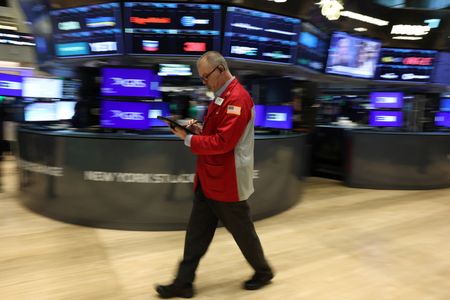
Major U.S. stock exchanges started Wednesday’s trading session with gains after news emerged that Iranian officials have quietly initiated contact with American representatives about possible negotiations to resolve ongoing conflicts.
Investor confidence also received a boost from President Donald Trump’s commitments to ensure stability in oil markets, contributing to the upward momentum across trading floors.
The Dow Jones Industrial Average climbed 134.33 points, representing a 0.28% increase to reach 48,629.08. Meanwhile, the S&P 500 gained 15.1 points or 0.22% to open at 6,831.69. The technology-heavy Nasdaq Composite showed the strongest performance, jumping 104.2 points or 0.46% to 22,620.89 when markets opened.
Apple announced its newest laptop offering on Wednesday, introducing the MacBook Neo with a starting price of $599 as the tech giant seeks to capture market share in the budget-conscious computer segment while competitors struggle with memory chip shortages.
This budget-friendly laptop represents Apple’s most competitive pricing strategy for the PC market in recent memory. The MacBook Neo will run on Apple’s A18 Pro processor, the same chip that powers the iPhone 16 Pro series released in 2024.
The $599 price point significantly undercuts Apple’s previous entry-level MacBook, which launched in May 2006 at $1,099 — equivalent to approximately $1,750 in current dollars when adjusted for inflation.
Apple announced that customers may begin placing pre-orders immediately, with shipping and retail store sales commencing March 11.
“The real question is not whether Apple can sell a MacBook at this price (because it will be one of the most sold Macs ever if they can deliver), but how it balances cost, performance and brand positioning while maintaining the premium experience that defines the Mac,” Francisco Jeronimo, vice president of client devices at IDC, commented.
This isn’t Apple’s initial venture into this pricing territory. The company previously offered a $699 MacBook Air exclusively through Walmart, featuring the M1 processor that originally launched in 2020, after discontinuing other models using that chipset.
The MacBook Neo directly targets users of Google’s Chromebook devices and entry-level Windows computers, entering a market where Microsoft’s attempts to transition to more energy-efficient Arm-based processors haven’t generated significant sales momentum.
By entering the mid-tier PC market, Apple could expand its customer base to include students and consumers purchasing their first Mac computer.
Due to ongoing global memory chip supply constraints, the MacBook Neo includes 8 gigabytes of unified memory — half the amount found in M4-powered MacBooks and less than the 12 gigabytes featured in the iPhone 17 Pro.
Both global PC and smartphone markets continue to show high price sensitivity following several quarters of inconsistent consumer demand, with manufacturers still dealing with variable component pricing, especially for memory chips.
Apple also released its $599 iPhone 17e this week with expanded base storage capacity and updated its MacBook Air and Pro models with new M5 processors and standard configurations featuring increased memory, as the company works to maintain market position in competitive smartphone and declining PC markets affected by rising memory costs.
Financial regulators from the United States and United Kingdom are at odds over methods for testing digital versions of securities built on blockchain technology, with British officials advocating for more careful oversight in discussions designed to enhance cryptocurrency partnerships, according to insider sources.
The two nations established a joint working group last September focused on reducing regulatory barriers for businesses wanting to operate across both markets and strengthening digital currency cooperation.
This disagreement highlights the challenges facing financial oversight agencies worldwide as they navigate the Trump administration’s pro-cryptocurrency stance. Under President Donald Trump, the US has relaxed digital asset regulations and promoted wider cryptocurrency use.
While Britain also seeks to grow its digital currency sector, certain UK regulatory bodies like the Bank of England prefer a more measured pace of implementation.
The US and UK have reached general consensus on the working group’s primary objectives, including developing more unified regulations for stablecoins – digital currencies backed by traditional money.
However, Britain’s desire to test collaborative efforts on tokenized securities through what’s called a “sandbox” became a point of contention during regulatory meetings held earlier this year, according to two sources present at those discussions.
British financial authorities use these regulatory sandboxes to evaluate innovative financial products within controlled parameters.
During a January meeting of the Transatlantic Taskforce for Markets of the Future, a Securities and Exchange Commission official raised objections to the sandbox approach, questioning whether it would be commercially practical for participants and expressing concerns about potential negative effects on innovation, the two meeting attendees reported.
The SEC is considering an alternative method for tokenization called “exemptive relief,” which has support from America’s cryptocurrency sector, sources revealed, requesting anonymity due to the confidential nature of the discussions.
When contacted by Reuters, the SEC stated it would continue collaborating with the UK “to build consensus and harmonize rules for international market participants,” noting there was “significant opportunity to align our frameworks to support the future of finance.”
The Bank of England and UK Treasury Ministry declined to provide statements. The US Treasury Department did not respond to requests for comment.
The Financial Conduct Authority emphasized that sandboxes can provide value as both nations develop capital markets and payment systems while “maintaining trust and integrity.”
According to the FCA, regulatory sandboxes offer companies “space to test new ideas in a live but controlled environment and helping us understand emerging risks and opportunities.”
Advocates of tokenization argue it offers greater efficiency and lower costs, while regulators warn that digitized stocks present new investor risks and could undermine market stability.
Both taskforce participants also aim to establish reciprocal arrangements allowing companies regulated in one country to trade tokenized securities in the other with minimal additional oversight, the two sources indicated.
The working group plans to deliver its recommendations by summer.
WASHINGTON – February brought the strongest private sector job growth in seven months, according to a new employment report released Wednesday, though economists revised January’s figures significantly downward.
The ADP national employment report revealed that private companies added 63,000 positions last month, surpassing the 50,000 jobs economists had predicted and representing the best performance since July 2025. However, January’s job growth was revised down to just 11,000 from the previously reported 22,000.
Healthcare and education sectors drove most of the job creation, contributing 58,000 new positions. Construction companies hired 19,000 additional workers, while manufacturing businesses eliminated 5,000 jobs.
This ADP data, created in partnership with Stanford Digital Economy Lab, comes ahead of Friday’s official employment report from the U.S. Bureau of Labor Statistics. Historically, ADP numbers have not been reliable predictors of the government’s official employment figures.
Economic forecasters expect Friday’s report to show 59,000 new nonfarm jobs for February, following January’s 130,000 increase. Private sector employment is projected to rise by 65,000 after January’s 172,000 gain, while unemployment should remain at 4.3%.
Employment conditions have found their footing after last year’s instability, which economists attributed to uncertainty surrounding import duties.
The Supreme Court recently overturned President Donald Trump’s extensive tariff program, which had been implemented using emergency powers legislation. Trump responded by establishing a 10% worldwide tariff for 150 days to replace some emergency measures, later announcing plans to increase it to 15%.
The combination of stable employment and persistent inflation is likely to keep the Federal Reserve from changing interest rates at this month’s policy meeting. Energy costs have surged due to the ongoing U.S.-Israeli military conflict with Iran.
This Middle East situation has caused traders to reduce expectations for rate cuts this year, fearing it could worsen inflation. Chances for a rate reduction at the Fed’s June 16-17 meeting have dropped considerably. The central bank maintained its key interest rate between 3.50%-3.75% during January’s meeting.
Wednesday’s ADP report also indicated wage growth remained consistent. Workers staying in their current positions saw annual pay increases hold steady at 4.5%, while those switching jobs experienced wage growth of 6.3%, down slightly from January’s 6.4%.
Moderna’s stock price jumped 10% in premarket trading Wednesday after the biotech company reached a settlement agreement to end a prolonged patent lawsuit concerning the technology behind its COVID-19 vaccine, clearing the way for investors to concentrate on the company’s future drug development.
The agreement requires Moderna to pay as much as $2.25 billion to Genevant, a subsidiary of Roivant Sciences, and Arbutus Biopharma to resolve all domestic and international lawsuits claiming the company illegally utilized lipid nanoparticle technology in its coronavirus vaccine. Financial experts believe this settlement will redirect investor attention toward Moderna’s experimental cancer treatments currently in development.
“The company (now) has certainty it is well funded through multiple late-stage oncology readouts expected in 2026 that represent new long-term growth drivers,” William Blair analyst Myles Minter stated.
Under the settlement terms, Moderna will make an initial payment of $950 million in July 2026, plus a potential additional $1.3 billion depending on the results of a separate legal challenge. Importantly for the company’s future, it will not owe royalty payments for using this technology in upcoming vaccines, which industry observers view as a major victory.
Citi analyst Geoffrey Meacham noted the settlement amount was lower than Wall Street’s fears of payments exceeding $3 billion.
However, Bernstein analyst Courtney Breen warned that if the full payment becomes required, it could drain Moderna’s cash holdings to approximately $3.2 billion by 2026. The company currently projects having between $4.5 billion and $5 billion in reserves this year.
Breen explained this “narrows the tightrope” for Moderna, particularly given the uncertain timing and scope of its own patent lawsuit against Pfizer and BioNTech over mRNA technology, plus management’s history of overly optimistic projections.
The patent battles continue elsewhere, as Moderna filed suit against Pfizer and BioNTech in 2022 for allegedly violating mRNA technology patents. BioNTech responded with its own lawsuit in February, claiming Moderna’s newer COVID-19 vaccine, MNEXSPIKE, violates one of its patents.
FRANKFURT – A fresh analysis from the European Central Bank challenges widespread concerns that artificial intelligence will eliminate jobs, suggesting instead that AI adoption may actually boost employment opportunities across Europe.
The debate over AI’s impact on employment has intensified among economic experts, particularly after research from Germany’s Ifo Institute revealed that over 25% of German businesses anticipate workforce reductions due to AI implementation within the next five years.
However, findings from the ECB’s Survey on the Access to Finance of Enterprises paint a different picture, showing that businesses heavily incorporating AI technology demonstrate greater likelihood of expanding their workforce in the immediate future.
“In other words, AI-intensive firms tend, on average, to hire rather than fire,” stated the blog post, though authors noted this doesn’t necessarily reflect official ECB policy.
Companies preparing to invest in artificial intelligence also express more optimistic projections regarding future job growth, according to the analysis.
“This is true regardless of the level of planned AI investment and suggests that a pause in hiring due to investment in AI technology is also unlikely over the next year,” wrote the two ECB staff economists who authored the blog.
The researchers cautioned that long-term prospects might differ significantly. They noted that more pessimistic studies typically examine extended timeframes, and employment patterns could shift once AI begins fundamentally reshaping how companies operate and produce goods and services.
A major pharmaceutical company based in South Africa is working to bring Eli Lilly’s highly successful weight-loss medication Mounjaro to countries across sub-Saharan Africa, potentially as soon as this year.
Aspen Pharmacare’s chief executive Stephen Saad announced the expansion plans on Wednesday, highlighting the growing regional appetite for obesity treatments. The company is positioning itself as a crucial manufacturing and distribution ally for international drug companies looking to tap into one of the world’s remaining major unexplored markets for GLP-1 weight-loss medications.
These specialized weight-loss treatments remain largely unavailable throughout the African continent, creating significant growth opportunities while also testing how rapidly such medications can reach nations with lower average incomes.
Following successful registration in South Africa, Saad explained to investors that “of the KwikPen (a pre-filled multi-injection device) gave us an opportunity now to register the product across sub-Saharan Africa, and we expect registrations from as early as this calendar year.”
The weight-loss drug market has experienced explosive growth since Mounjaro’s South African debut in late 2024. According to Saad, the medication has sparked unprecedented demand, driving the overall GLP-1 market value to approximately 2.2 billion rand (equivalent to $133.64 million) with continued expansion expected.
Market values have increased threefold over just 18 months, with Mounjaro’s market dominance more than doubling from 21% in the quarter ending April 2025 to 52% by January’s close. This dramatic growth was significantly boosted by regulatory clearance for chronic weight management applications, Saad noted.
The CEO projects Mounjaro sales will exceed 1.3 billion rand ($78.97 million) during the fiscal year ending in June. Saad emphasized the medication’s remarkable commercial success, stating: “It will be the quickest brand to reach a billion rand sales in the South African private market.”
Within the South African market, Eli Lilly faces competition from Danish pharmaceutical giant Novo Nordisk, which produces the competing weight-loss drugs Wegovy and Ozempic. Novo Nordisk has also signaled intentions to broaden its African presence following its South African Wegovy launch.
SANTA FE, N.M. — State prosecutors in New Mexico unveiled previously unseen video testimony from top Meta executives on Tuesday as they build their case alleging the social media giant concealed known dangers its platforms pose to young users, particularly on Instagram.
The state’s legal team is positioning video depositions featuring Meta CEO Mark Zuckerberg and Instagram head Adam Mosseri as crucial evidence in their lawsuit against Meta, the parent company behind Facebook, Instagram and WhatsApp. New Mexico officials claim the tech company broke state consumer protection regulations.
According to prosecutors, Meta inadequately handled and failed to warn users about social media addiction risks and child sexual exploitation occurring across their platforms.
Meta’s legal representative Kevin Huff countered these claims during February 9th opening arguments, emphasizing the company’s efforts to remove dangerous content from their sites while cautioning users that some harmful material may still slip past their security measures. He maintained that Meta does inform users about potential risks.
Both the New Mexico lawsuit and another ongoing trial in Los Angeles have the potential to influence the outcome of thousands of additional legal actions targeting social media corporations.
Zuckerberg provided testimony in Los Angeles last month regarding Instagram usage among young people and has previously faced congressional questioning about youth protection on Meta’s services.
In his 2024 appearance before Congress, he offered an apology to families devastated by incidents they attributed to social media influence. However, while he expressed that he was “sorry for everything you have all been through,” he avoided accepting direct blame for these tragedies.
During the California proceedings, Mosseri stated his disagreement with claims that individuals can develop clinical addictions to social media services.
Officials from Japan and the United States are in discussions to incorporate a nuclear energy initiative into the next phase of agreements under Japan’s massive $550 billion investment commitment, according to two individuals familiar with the negotiations who spoke to Reuters Wednesday.
The proposed nuclear initiative would include Westinghouse and aims to bolster energy supply chains for both nations amid ongoing Middle East conflicts that have raised fresh energy security concerns.
Multiple agreements are currently being negotiated and could potentially be revealed during Japanese Prime Minister Sanae Takaichi’s scheduled meeting with U.S. President Donald Trump in Washington on March 19, according to the sources who requested anonymity due to the confidential nature of the discussions.
Japan is working quickly to develop projects under investment pledges made as part of a U.S. trade agreement. The country has previously revealed three initiatives worth $36 billion combined, including a natural gas facility in Ohio.
Sources also indicated that officials are exploring a project to build a copper processing and refining plant.
To advance these discussions, Japan’s Trade Minister Ryosei Akazawa is scheduled to travel to the United States starting Thursday for meetings with U.S. Commerce Secretary Howard Lutnick, two additional sources familiar with the plans confirmed Wednesday.
Westinghouse appeared among approximately 20 companies listed in a joint statement released by both governments in October, identifying businesses that had shown interest in Tokyo-funded projects.
The American company, which is owned by Cameco and Brookfield, is exploring the construction of pressurized water reactors and small modular reactors with a total value reaching $100 billion, the joint statement indicated.
Japanese companies including Mitsubishi Heavy Industries, Toshiba and IHI could potentially participate, according to the statement.
In the previous year, the U.S. government established a partnership valued at no less than $80 billion with Westinghouse for nuclear reactor construction, highlighting Trump’s priority to boost domestic energy production as artificial intelligence data centers drive up energy demand.
The joint statement also mentioned that Falcon Copper is evaluating the construction of a $2 billion copper processing and refining facility while considering participation from Japanese suppliers and customers.
A representative from Japan’s industry ministry stated that officials were uncertain about the negotiation outcomes. Mitsubishi Heavy indicated that no decisions had been finalized and that equipment supply would be evaluated individually. Toshiba refused to provide comment. IHI said it would examine specifics if formal discussions developed.
Westinghouse and Falcon Copper were unavailable for comment outside regular business hours.
Swedish automaker Volvo Cars announced Wednesday that vehicle deliveries fell by 10% during the December through February quarter compared to the same timeframe last year, with total sales reaching 156,965 units.
The Stockholm-based manufacturer attributed the decline to challenging market dynamics in a company statement, citing tariff issues and adverse regulatory changes particularly affecting the United States market. Extended holiday celebrations in China during the new year period also contributed to reduced performance during the quarter.
Despite the overall sales decrease, Volvo highlighted positive momentum in one key area. “However, we are pleased to see steady growth in the sales of our fully electric cars,” the company stated, noting that electric vehicle deliveries jumped 18% year-over-year.
“Our sales for the period were impacted by the continued tough market conditions, impacted by tariffs and unfavourable regulatory developments especially in the U.S.. The prolonged new year holiday period in China further affected our performance,” according to the official statement.
Wall Street responded favorably to the mixed results, with Volvo’s stock price climbing 1% during morning trading sessions. The company is scheduled to release its complete first-quarter financial results on April 29.
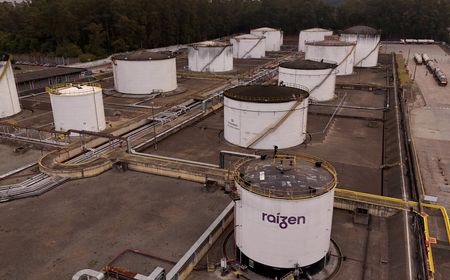
British oil giant Shell has pledged to provide financial backing of 3.5 billion reais (equivalent to $668 million) to support struggling Brazilian sugar and ethanol producer Raizen, according to Shell’s Brazil chief executive on Tuesday.
The sugar and ethanol manufacturer has faced a series of financial setbacks in recent months, including mounting losses and escalating debt levels. These challenges stem from expensive capital investments and adverse weather conditions that have damaged crop yields, leading the company to issue a warning in February about “significant uncertainty” regarding its continued operations.
Previous reports indicated that Shell would contribute 3.5 billion reais to Raizen, with sources noting this amount would exceed the funding expected from Cosan, Shell’s joint venture partner in the company.
Creditors of Raizen have expressed dissatisfaction with a restructuring proposal from BTG Pactual, which manages a fund that joined Cosan’s controlling ownership group in the previous year. The proposal suggested dividing Raizen by separating its fuel distribution operations from its refinery and other business segments.
Cristiano Pinto da Costa, who leads Shell’s Brazilian operations, stated that the oil company favors maintaining Raizen as a unified entity. He also indicated that Shell anticipates another stakeholder will contribute an additional 3.5 billion reais investment to help stabilize Raizen’s financial position.
While Costa acknowledged that dividing Raizen into separate business units remains a future possibility, he emphasized that such considerations should only occur after the recapitalization process has been finalized.
Brazilian financial publication Valor Economico reported later Tuesday that Cosan has no intentions of contributing capital directly to Raizen, according to unnamed sources familiar with the matter.
However, the report noted that Rubens Ometto, Cosan’s founder and majority owner, plans to invest 500 million reais in the sugar producer through his family investment office, Aguassanta.
Thousands of Facebook users across the United States, including those here in Delaware, experienced widespread service disruptions Tuesday evening when Meta Platforms’ flagship social media site went offline.
Outage monitoring website Downdetector.com recorded more than 10,600 user complaints about Facebook malfunctions by 5:37 p.m. Eastern Time. The tracking service compiles problem reports from multiple sources to monitor when popular websites and apps stop working properly.
The website cautions that its data comes from people voluntarily reporting issues, meaning the true scope of users impacted could differ from the reported numbers.
Meta Platforms has not yet provided an explanation for what triggered the service interruption when contacted for comment about the technical problems.
Discount clothing retailer Ross Stores announced Tuesday that it expects annual sales to surpass Wall Street projections, banking on continued consumer appetite for marked-down brand-name merchandise despite ongoing economic concerns.
The company’s stock jumped approximately 6% during after-hours trading following the announcement, which also included plans for a massive $2.55 billion share repurchase program spanning fiscal years 2026 and 2027.
Bargain-hunting consumers continue flocking to discount retail chains seeking name-brand items at reduced prices as inflation persists and trade policy remains uncertain, helping maintain consistent customer traffic at these stores.
The California-headquartered company has been boosting its marketing investments to capture market share in the highly competitive discount retail space. Company leadership revealed during their earnings conference call that they’ve also collaborated with suppliers to manage tariff impacts on product categories including home merchandise.
Ross faces stiff competition from industry players including TJX, Burlington Stores, rapidly growing fast-fashion retailers like Shein, and online giant Amazon, all of which continue expanding their discount product lines.
According to Michael Gunther, Senior Vice President of research and market intelligence at ConsumerEdge, spending increases at discount retail chains represent some of the strongest growth in the retail sector, with gains spanning all income levels. While lower-income consumers have recently driven much of this growth, middle and upper-income households are also contributing solid increases.
Competitor TJX issued a more cautious outlook last week, projecting annual sales and earnings below market expectations due to worries about decreasing discretionary spending as cost of living pressures mount.
Ross reported fourth-quarter operating margins of 12.3%, slightly down from the previous year’s 12.4%.
During the holiday shopping period, the retailer’s comparable store sales climbed 9%, significantly outperforming analyst expectations of a 4.03% increase, based on LSEG data compilation.
The company delivered quarterly earnings of $2 per share, surpassing analyst forecasts of $1.90 per share.
Ross anticipates same-store sales growth of 3% to 4% for the full year, compared to analyst predictions of a 3.05% increase.
However, the company’s projected annual earnings per share range of $7.02 to $7.36 fell short of the average analyst estimate of $7.21.
Stock market futures fell Wednesday morning as Wall Street grappled with intensifying Middle East tensions and the potential impact of rising oil costs on inflation, creating uncertainty ahead of key economic reports.
Oil prices surged with Brent crude jumping nearly 2%, though they pulled back from session highs after President Donald Trump announced insurance protections for Gulf shipping routes and indicated the U.S. Navy might provide escorts for oil tankers navigating the Strait of Hormuz.
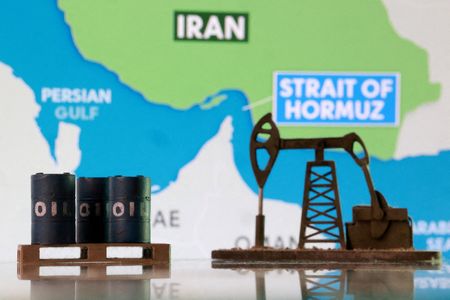
This critical waterway connecting the Persian Gulf to the Gulf of Oman serves as a crucial passage for global energy supplies, handling approximately one-fifth of worldwide oil and liquefied natural gas shipments.
Market participants flocked to traditional safe investments, pushing gold prices up 1% while the dollar remained close to three-month highs and U.S. 10-year Treasury notes gained for the third straight trading session.
The regional conflict intensified as U.S. and Israeli military forces continued operations against Iran that began Saturday, while Iranian forces launched drone and missile attacks on Gulf oil facilities and targeted American diplomatic missions in Saudi Arabia and Kuwait.
Financial markets are particularly focused on how a fifth consecutive day of fighting might affect inflation trends. Crude oil values have already surged more than 13% this week, potentially complicating Federal Reserve policy decisions as inflation data continues showing elevated levels and central bank officials maintain a more restrictive approach.
These developments have reinforced market expectations that the Federal Reserve will maintain current short-term interest rates without changes in the near term.
Early Wednesday trading showed Dow E-mini futures declining 144 points or 0.3% with 17,957 contracts traded, while Nasdaq 100 E-minis dropped 156.75 points or 0.63%.
Wednesday’s economic calendar includes the Federal Reserve’s Beige Book regional economic survey, ADP employment statistics, and the final S&P composite purchasing managers’ index reading.
Tuesday’s trading session saw the S&P 500 fall 0.9%, breaking below its 100-day moving average for the first time since November 20, while the Dow Jones declined 0.8% and the Nasdaq dropped 1%.
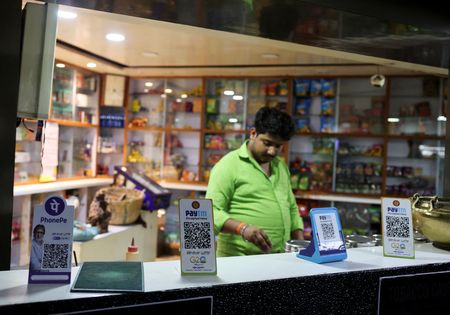
India’s dominant digital payments company PhonePe is preparing for a major stock market debut, seeking a valuation between $9 billion and $10.5 billion, according to two sources familiar with the plans.
The initial public offering could generate between $900 million and $1.05 billion for the Walmart-supported fintech company. However, even the highest projected valuation represents a decrease from the $12 billion price tag PhonePe achieved when it secured $100 million in private funding during 2023.
Major stakeholders are planning significant changes in ownership through the public offering. Walmart intends to reduce its holdings by approximately 12%, while both Tiger Global and Microsoft are looking to completely divest their positions, based on regulatory documents filed by PhonePe.
The three companies will collectively sell roughly 50.7 million shares during the offering, with PhonePe choosing not to create any additional shares for the market.
PhonePe faces stiff competition from Google Pay and Paytm in India’s crowded digital payments landscape. The company submitted its IPO paperwork in September and hopes to finalize the public listing by April, though one source noted that market conditions, including potential effects from Middle East tensions, could alter this schedule.
The sources spoke anonymously due to the confidential nature of the discussions. Representatives from PhonePe, Walmart, Tiger Global, and Microsoft did not respond to requests for comment.
This marks the first time details about PhonePe’s expected market value and listing timeline have been disclosed publicly. The company’s name translates to “on the phone” in Hindi.
If successful, PhonePe’s market debut would become India’s second-largest fintech public offering, trailing only Paytm’s approximately $20 billion listing in 2021. Paytm currently maintains a market value of $7.1 billion.
Despite its market dominance, PhonePe operates in a challenging environment where profit generation remains difficult. The platform serves more than 650 million registered users and handled almost 10 billion of India’s 21.7 billion digital transactions in January, according to government data. However, payment processing in India typically yields thin profit margins.
India introduced its unified payments interface system in 2016 and prohibited companies from collecting fees for instant payment services, aiming to encourage digital transactions and decrease cash dependency in Asia’s third-largest economy.
Financial performance shows mixed results for PhonePe. The company’s losses expanded to 14.44 billion rupees ($158 million) during the six months ending September 30, compared to 12.03 billion rupees in the previous year. Meanwhile, revenue increased approximately 22% to 39.18 billion rupees, according to IPO filings.
Investment professionals who attended pre-IPO presentations expressed concerns about the fintech sector’s prospects. Two portfolio managers noted that enthusiasm for India’s financial technology companies has diminished, with ongoing uncertainties about PhonePe’s capacity to generate revenue from its massive user base potentially limiting its valuation potential.
“Monetisation remains a question mark. Active users aren’t growing at the same pace so the game is all about upsell and that remains to be seen,” one portfolio manager explained.
A banking source involved in the offering also highlighted investor concerns about India’s saturated fintech marketplace, where companies struggle to distinguish themselves from competitors.
All sources requested anonymity as they lacked authorization to discuss the matter publicly.
A major British banking institution announced ambitious financial projections on Wednesday, setting aggressive targets for profit growth over the coming months and years.
Metro Bank revealed plans to more than double its return on tangible equity within the next six months, with expectations to nearly triple those returns over an 18-month period. The financial institution attributes these projected gains to its comprehensive turnaround strategy and continued efforts to manage operational costs.
Looking ahead to 2028, the British banking company anticipates achieving a return on tangible equity of at least 18 percent, signaling confidence in its long-term financial strategy and market position.
Volkswagen’s commercial vehicle division Traton announced Wednesday its projection for recovering truck sales by 2026, following a difficult period that saw significant declines in the previous year.
The German manufacturer anticipates unit sales growth ranging from negative 5% to positive 7% in 2026, with adjusted operating return on sales expected between 5.3% and 7.3%. This outlook comes after the company experienced a 9% drop in unit sales and achieved a 6.3% adjusted return on sales in the prior year, according to preliminary figures released in January.
“The Group plans to offset additional costs from tariffs as much as possible through mitigation and cost measures,” the company stated in its announcement.
Traton’s financial performance reflected challenging market dynamics, with sales revenue dropping 7% to 44.1 billion euros ($51.2 billion) in 2025. The company’s adjusted operating result fell dramatically to 2.8 billion euros, down from 4.4 billion euros in 2024. These declines were attributed to difficult market circumstances influenced by U.S. import tariffs and reduced demand across European markets.
Despite the revenue challenges, the company saw positive momentum in new business, with incoming orders rising 7% last year. This increase was primarily fueled by a substantial 32% surge in European orders. However, North American customers remained cautious, continuing to delay purchases due to concerns about U.S. tariff policies.
Following the announcement, Traton’s stock price declined 4.4% in premarket trading activity.
A British technology company specializing in autonomous vehicles announced Wednesday it has secured $103 million in new funding to expand operations targeting industrial facilities such as ports, airports, and warehouses.
Oxford-based Oxa received half of its Series D funding round—$50 million—from the United Kingdom’s National Wealth Fund, with additional investments coming from technology giant Nvidia’s investment division NVentures and energy company BP’s venture arm bp Ventures.
Rather than pursuing the passenger vehicle market like many robotaxi companies, Oxa concentrates on what company founder Paul Newman describes as “industrial mobile autonomy,” where operations are simpler due to reduced traffic and fewer pedestrian interactions.
“We think trying to do that in the passenger car space is super, super hard,” Newman explained. “In the industrial space, it’s extremely clear what you need to do to make a product.”
The company develops both software and hardware systems for vehicles and can convert a commercial port truck to autonomous operation in less than 24 hours, according to company officials.
This latest investment brings Oxa’s cumulative funding beyond $250 million and will support expanded partnerships with major clients such as DHL, BP, and Vantec.
Newman indicated the new capital will also fund technology deployment in upcoming projects the company plans to reveal soon.
The funding announcement comes just weeks after another British autonomous vehicle startup, Wayve, which partners with Uber on robotaxi services and collaborates with automakers on driver assistance systems, announced it had raised $1.2 billion in its own Series D funding round.
FRANKFURT – The German pharmaceutical and agricultural giant Bayer announced Wednesday its financial outlook for the coming year, projecting adjusted earnings could reach as high as 10.1 billion euros, equivalent to approximately $11.7 billion when currency fluctuations are excluded.
The company released details indicating its 2026 earnings before interest, taxes, depreciation and amortization (EBITDA) before special items are expected to fall within a range of 9.6 billion to 10.1 billion euros, calculated using average 2025 exchange rates.
These projections represent a potential increase from the company’s 2025 performance, when Bayer recorded 9.67 billion euros in similar earnings metrics.
The financial forecast comes as the multinational corporation continues operations in both pharmaceutical development and crop protection products worldwide.
German automotive parts manufacturer Continental announced Wednesday its expectations for relatively unchanged sales and profit margins in its tire division through 2026, despite facing continued market uncertainty.
The tire manufacturer projects revenue for its primary business segment will range from 13.2 billion to 14.2 billion euros ($15.3 billion to $16.5 billion), compared to 13.8 billion euros recorded in 2025. This midpoint projection falls slightly short of analyst predictions of 14.0 billion euros.
For adjusted operating profit margins in the tire segment, Continental forecasts a range of 13.0% to 14.5%, versus 13.6% achieved last year and below the 14% average analyst expectation listed on Continental’s website.
German automakers and parts suppliers continue facing significant headwinds including U.S. trade tariffs, declining consumer demand, growing competition from Chinese manufacturers, unfavorable currency exchange rates, and supply chain disruptions that are pressuring profit margins and creating business uncertainty.
Looking ahead to 2026, Continental anticipates worldwide replacement tire demand for passenger vehicles will either decline by 1% or grow by up to 2%, while passenger car and light commercial vehicle manufacturing is expected to remain flat or drop by as much as 2%.
The company noted in its statement that these projections do not account for any potential effects from the ongoing military conflict in the Middle East.
Continental, which is currently executing a significant corporate restructuring to transform into a specialized tire company, confirmed it completed the divestiture of its Original Equipment Solutions division in February.
MILAN – An Italian digital banking and investment management company announced Wednesday its plans to implement artificial intelligence technology as part of a comprehensive strategy running through 2029, designed to attract more customers and reduce operational expenses while accelerating the rate at which it brings in new investments.
Fineco outlined goals for achieving average yearly growth in the low double digits for both new money coming in and customer acquisition from 2025 through 2029. This represents a significant jump from the 6% growth rate the company experienced during the 2021-2025 timeframe.
The company noted that these projections do not account for potential additional benefits from plans to extend its investment brokerage operations beyond Italy’s borders. Fineco intends to launch a continent-wide European investment platform by the beginning of 2027.
The German athletic apparel giant Adidas announced Wednesday that it anticipates operating profits will climb to approximately 2.3 billion euros ($2.7 billion) in 2026, even while facing roughly 400 million euros in losses from American tariffs and challenging currency fluctuations.
The company stated that when accounting for currency changes, revenue is projected to grow at a high single-digit percentage in 2026, bringing in an additional 2 billion euros. Adidas forecasts low double-digit growth rates in key markets including North America and Greater China.
Looking ahead, the sportswear manufacturer anticipates that currency-adjusted net sales will continue expanding at high single-digit rates through 2027 and 2028. Operating profits are expected to increase at a mid-teens compound annual growth rate across the three-year span from 2026 through 2028.
For 2025, the company recorded total sales of 24.8 billion euros with operating profits reaching 2.06 billion euros.
Company leadership has recommended increasing dividends by 40 percent to 2.80 euros per share for 2025.
In related corporate news, Adidas has nominated Nassef Sawiris for the position of chairman while extending CEO Bjorn Gulden’s contract through 2030.
A Spanish aerospace company announced Wednesday that it successfully secured 180 million euros ($209 million) in new investment funding, with Japanese electronics giant Mitsubishi Electric among the key investors backing the rocket manufacturer’s expansion plans.
PLD Space’s latest capital raise reflects Europe’s growing push toward independent space and defense capabilities, driven partly by President Trump’s “America First” approach and ongoing conflict in Ukraine that has highlighted the need for strategic autonomy.
The Madrid-based firm described this Series C funding round as crucial for transitioning into full commercial operations while expanding both manufacturing capacity and launch infrastructure. This type of investment round typically helps startups scale operations, develop new products, or prepare for potential public stock offerings.
Since its founding, PLD Space has now accumulated more than 350 million euros in total investment capital.
The company gained international recognition in 2023 when it successfully launched Europe’s first completely privately-developed rocket. As part of the new partnership, PLD Space will offer small satellite launch services to Mitsubishi Electric using its Miura-5 rocket system for missions serving Japan and the broader Asian market.
The Miura-5 rocket takes its name from a renowned Spanish bull breed featured in traditional bullfighting. Company officials indicated the rocket’s inaugural test flight is scheduled for 2026, with projections showing commercial launch operations could reach more than 30 missions annually by 2030.
Additional participants in this funding round included Spain’s Centre for the Development of Technology and Innovation alongside COFIDES, a partially government-owned Spanish entity that finances private sector investments.
Tesla CEO Elon Musk will appear in a San Francisco courtroom Wednesday to defend against allegations that he intentionally made misleading public statements to manipulate Twitter’s stock price before acquiring the social media company for $44 billion in 2022.
The legal action was initiated in October 2022 in federal court in Northern California, representing Twitter investors who sold their shares between May 13 and October 4, 2022, just weeks prior to Musk finalizing his Twitter acquisition. The complaint alleges Musk broke federal securities regulations through deliberate public declarations that “were carefully calculated to drive down the price of Twitter stock.”
The Tesla billionaire initially agreed to purchase Twitter and convert it to a private company in April 2022. However, on May 13, he announced his intention was “temporarily on hold” while claiming he needed to determine the actual number of spam and fraudulent accounts on the service. Twitter’s share value plummeted following this announcement. Days afterward, he posted on Twitter that the transaction “cannot go forward” while asserting nearly 20% of Twitter profiles were “fake,” the legal filing states.
According to the lawsuit, Musk’s May 13 social media post — “Twitter deal temporarily on hold pending details supporting calculation that spam/fake accounts do indeed represent less than 5% of users” — contained false information because the acquisition was not actually “temporarily on hold.” The suit argues Twitter never consented to pausing the deal, and the signed merger contract contained no provisions allowing Musk to suspend it unilaterally.
Over the subsequent weeks, Musk persistently attempted to postpone or escape the agreement through what the lawsuit characterizes as false, damaging public statements about Twitter’s operations that caused the San Francisco-based company’s stock to drop dramatically.
By July 2022, Musk intensified his focus on the bot controversy and declared he would withdraw his purchase offer after Twitter allegedly failed to supply adequate data about fraudulent accounts. The lawsuit points out that Musk had previously waived due diligence requirements for his “take it or leave it” Twitter bid, meaning he surrendered his right to examine the company’s confidential financial records.
On July 8, when Musk announced via Twitter he was withdrawing from the deal due to fake account concerns, the stock finished trading at $36.81. This represented a 32% decline from Musk’s proposed purchase price of $54.20 per share.
“To try to renegotiate the price or delay the merger, Musk made materially false and misleading statements and omissions, and engaged in a scheme to deceive the market, all in violation of the law,” the legal complaint states.
The issue of automated accounts and fake profiles on Twitter was not a recent discovery. The platform had previously paid $809.5 million in 2021 to resolve allegations it was inflating its user growth statistics and monthly active user counts. Twitter had also regularly reported its bot calculations to the Securities and Exchange Commission for years while acknowledging its estimates might be conservative.
Twitter initiated legal proceedings against Musk to compel completion of the transaction, prompting Musk to file a countersuit. On October 4, Musk agreed to proceed with his original $44 billion offer, which Twitter accepted. The acquisition concluded later that month. Following the purchase, Musk dramatically reduced the company’s staff, eliminated its trust and safety department, and reversed content oversight policies. In July 2023, he rebranded Twitter as X.
This marks another instance where Musk faces courtroom scrutiny over accusations of misleading investors through his social media activity. Three years earlier, Musk testified for approximately eight hours in a San Francisco federal courthouse regarding his plans to take Tesla private — the electric vehicle manufacturer he continues to lead as a public company — for $420 per share in a proposed 2018 transaction that never occurred. A nine-person jury cleared Musk of any wrongdoing in that matter.
Global financial markets continued their steep decline across Asian trading sessions, with investors abandoning risky investments due to growing concerns about extended disruptions to oil supplies.
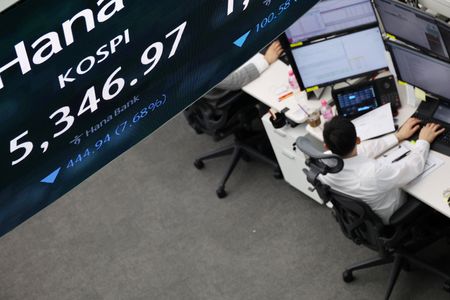
South Korea’s stock market took the hardest hit, with the KOSPI index plummeting nearly 13% during trading before recovering slightly to close down 8%. The two-day decline represents the most severe drop the country has experienced since 2009, as panic selling struck what had previously been among this year’s most profitable investments.
The selloff spread throughout the region, with Japan’s Nikkei falling 3.7% and Taiwan’s stock market declining 3.6%. Few investors were willing to buy into what had become an overcrowded investment strategy. Thailand experienced the worst performance among emerging markets, tumbling 7.7%.
Asian nations face particular vulnerability since most import their energy supplies through the Strait of Hormuz, and a strengthening dollar adds additional pressure to energy costs.
Some market stabilization occurred late Tuesday in New York after Trump announced he had directed the U.S. International Development Finance Corporation to offer political risk insurance and financial backing for oil tankers operating in the Gulf region, with potential U.S. Navy escort services.
However, the administration’s failure to establish these protections before taking military action against Iran raised questions about their preparedness. Analysts identified numerous obstacles ahead, noting the lack of specific details in the proposal.
Historical precedent from the 1987 Iran-Iraq conflict shows that while insurance coverage was available, it required extensive preparation and had limited reach – nowhere near the scale necessary to protect the hundreds of tankers traversing the Strait of Hormuz. Most of these vessels operate under foreign ownership and flags rather than U.S. registration.
Questions remain about whether the DFC possesses adequate funding to handle such extensive risks or the specialized knowledge required for proper risk evaluation. Legal challenges would likely emerge, as is typical for most U.S. government initiatives.
Regarding naval escort services, the narrow strait presents significant navigation challenges under normal circumstances, made worse by Iran’s proximity just kilometers away. The Navy’s limited vessel capacity explains why they have historically avoided major operations in this area.
Additional market pressures include emerging problems in private credit markets and growing anxiety about artificial intelligence’s impact on software companies.
Blackstone’s primary private credit fund experienced substantial investor withdrawals during the first quarter, with net outflows reaching $1.7 billion according to Monday’s regulatory filing.
Wednesday’s key market influences include developments in the Iran conflict, oil price movements, and U.S. economic indicators including the ISM services survey and ADP employment report.
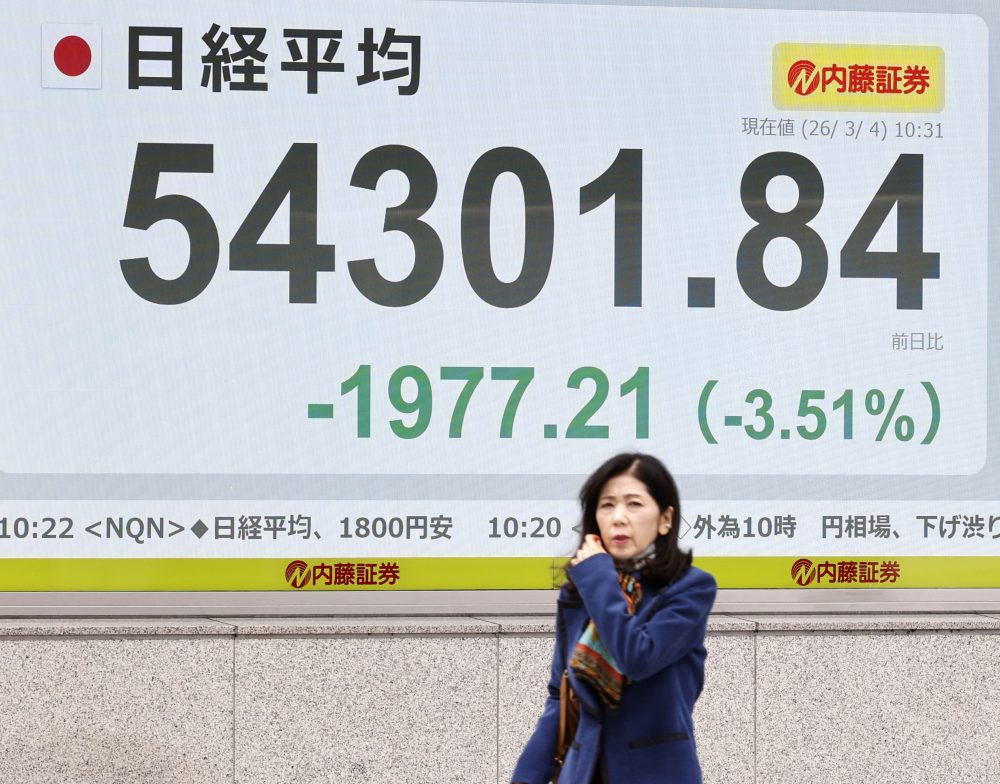
Stock markets throughout Asia suffered dramatic losses Wednesday as growing concerns over Middle East conflicts sparked fears of rising oil prices that could reignite inflation and postpone anticipated interest rate reductions.
The region’s major market indicator, MSCI’s Asia-Pacific index excluding Japan, plummeted 4.2%. South Korea experienced particularly severe declines, with the KOSPI index losing more than 11% and activating emergency trading circuit breakers. Combined with previous losses, Korean markets have dropped 17% over just two trading sessions. Meanwhile, Japan’s Nikkei index declined 4.3% and Taiwan’s main index fell 3.6%.
Technology stocks, particularly semiconductor companies, bore the brunt of the selling pressure as international investors rapidly exited positions they had built up during earlier market gains.
Tareck Horchani, Head of Prime Brokerage Dealing at Maybank Securities in Singapore, explained the market dynamics: “We are definitely seeing foreign outflows driving the move, particularly in the large-cap tech names that had led the rally year-to-date. Korea had been one of the strongest markets globally, up nearly 50% at its peak on the back of the AI and memory cycle, so positioning was crowded.”
Horchani noted that the selloff appears more related to investor positioning than company fundamentals: “This looks more like a positioning unwind and risk reduction rather than a fundamental deterioration in earnings. When oil spikes and FX volatility jumps, especially for oil-importing markets like Korea and Japan, global funds tend to de-risk quickly from the most liquid index heavyweights. That’s exactly where the selling has been concentrated: Samsung, SK Hynix and other large caps.”
The market expert also highlighted broader economic concerns: “There is also a clear macro overlay. Higher oil prices raise concerns about inflation and could delay Fed easing, which hits high-beta tech and cyclical names disproportionately. So yes, part of this is profit-taking, but it’s more broadly a global risk-off move rather than investors permanently moving to cash.”
However, Horchani observed some selective buying: “Importantly, domestic institutional accounts have been selectively adding, and we are seeing rotation into defensives and defence-related names rather than indiscriminate selling across all sectors.”
Christopher Forbes, Head of Asia and Middle East at CMC Markets, characterized the Korean market decline as a technical rather than fundamental issue: “The Kospi’s 15% two-day collapse is a textbook momentum unwind, not a structural break… when U.S.-Israeli operations practically closed the Strait of Hormuz, there were no diversified bids to absorb the selling. The order book evaporated. Foreign investors pulled over US$7 billion in two sessions.”
Forbes suggested potential for recovery: “The biggest upside catalyst is the record hedge fund short book. According to Goldman’s prime brokerage, shorts outpaced longs two-to-one in early February. If tensions ease quickly, a violent squeeze could follow. Samsung and SK Hynix remain healthy businesses.”
Rupal Agarwal, Asia Quant Strategist at Bernstein in Singapore, emphasized regional vulnerabilities: “The impact on Asian markets has been higher because Asian economies are more vulnerable to the Strait of Hormuz closure and because in the run-up to the war, momentum trends were very sharp in many parts of Asia such as Korea.”
Agarwal outlined conditions needed for market stabilization: “For markets to find a floor, we need signs of de-escalation on the war front or status quo which could then move the focus back to fundamentals. It is difficult to time such geopolitical events but given the positioning was extreme on the way up, it would take some time for things to normalize.”
Radhika Rao, Senior Economist at DBS Bank in Singapore, detailed regional economic impacts: “Amongst the ASEAN-6 countries, the net oil trade balance is most adverse in Thailand, Malaysia, and Vietnam (as % of GDP), with the pass-through to price pressures most material in Thailand and the Philippines. Additionally, while less strategic, Thailand and Singapore are top LNG buyers in the region, but with a well-distributed supplier mix, especially in Singapore.”
Rao predicted cautious central bank responses: “Much of the region will likely monitor developments in the Middle East with trepidation. THB, MYR, and SGD are down more than 1% this week, and regional currencies might underperform if the U.S. dollar stays bid. Regional central banks are unlikely to act pre-emptively on policy, preferring to remain on hold while maintaining a keen watch on the domestic currency and bond yield movements.”
In Japan, Shingo Ide, Chief Equity Strategist at NLI Research Institute in Tokyo, warned that previous market assumptions no longer hold: “Up to now, the market has been bought up on narratives like ‘Takaichi’s policies’ and expectations of double-digit profit growth next fiscal year. But both of those pillars are wobbling. This isn’t the moment to be talking about investing on the back of ‘Takaichi policies.’ If the priority shifts to measures against higher prices and higher crude oil — things that have to be dealt with first — then you run out of money.”
Ide expressed concerns about corporate earnings: “And corporate earnings, too: if elevated oil prices persist, profits are obviously going to be squeezed. In other words, the premises we’ve been relying on no longer hold. Seen that way, I wouldn’t call 54,000 yen ‘oversold’.”
While acknowledging uncertainty about market bottoms, Ide noted widespread profit-taking: “I don’t think it just keeps falling forever. It’ll find a level where it stabilises somewhere—but whether that’s 54,000, 52,000, 50,000, or some level on Korea’s KOSPI, we simply can’t say at this point. Across a broad range of sectors, a lot of investors had been looking for a point to take profits. But there hadn’t been a clear trigger for a serious downturn, and that backdrop persisted. Now, all at once, profit-taking selling has ballooned.”
Efforts to save one of Brazil’s major sugar and ethanol companies have collapsed after its owners couldn’t reach an agreement on how to provide emergency funding, according to a Bloomberg News report released Tuesday.
The rescue discussions for Raizen broke down when co-owners Cosan and Shell were unable to come to terms on a capital injection plan, sources familiar with the negotiations told Bloomberg.
Earlier on Tuesday, Shell’s Brazil chief executive had expressed the company’s willingness to invest 3.5 billion reais (equivalent to $662.75 million) into Raizen, which holds the distinction of being the world’s biggest sugar producer. The executive also indicated expectations that another shareholder would contribute an additional 3.5 billion reais to help stabilize the company’s financial situation.
However, according to the Bloomberg report, Cosan stated it was unable to provide financial support matching what Shell had proposed for Raizen. The report also indicated that Shell turned down several alternative proposals put forward by Cosan.
Private equity funds under the management of Banco BTG Pactual, which had also participated in the rescue discussions, ultimately chose not to invest in Raizen after expressing disagreement with multiple conditions suggested by Shell, the report stated.
When contacted by Reuters for comment, Raizen, Cosan, and Shell had not immediately provided responses. Reuters was unable to independently confirm the Bloomberg report’s details.
The failed rescue talks come after Raizen disclosed severe financial troubles last month, reporting a quarterly net loss of 15.6 billion reais. The company also issued a warning about “significant uncertainty” regarding its capacity to maintain ongoing operations.
By December’s end, Raizen’s net debt had reached 55.3 billion reais, a result of multiple challenging factors including substantial capital investments, unpredictable weather patterns, and destructive wildfires. These conditions contributed to reduced harvest yields and decreased processing volumes for the struggling company.
A Chinese biotechnology company announced Wednesday that it has struck a major licensing deal with Belgian pharmaceutical giant UCB for an experimental treatment targeting autoimmune conditions, with the agreement potentially worth more than $1.1 billion.
Antengene Corporation revealed that UCB will pay $60 million immediately and could provide additional payments exceeding $1.1 billion if specific development goals are achieved for the experimental drug ATG-201.
In a company statement posted online, Antengene highlighted that the partnership demonstrates the “unique” capabilities of its drug development platform. Following the announcement, the company’s Hong Kong stock shares climbed approximately 6% during Wednesday morning trading.
The experimental medication ATG-201 is designed to treat autoimmune conditions related to B-cells. Antengene intends to file for clinical trial approval in both Australia and China during the opening quarter of 2026, and once initial phase I testing concludes, UCB will assume responsibility for continued development.
The licensing arrangement grants UCB global rights to develop, produce, and market ATG-201, along with access to related manufacturing processes. Beyond the initial $60 million payment, Antengene stands to receive additional compensation tied to “certain conditions,” development achievements, and commercial success markers, plus ongoing royalty payments based on future sales revenue.
Israel’s stock market continues climbing higher this week, creating an unusual financial phenomenon as the country remains engaged in military operations against Iran that have destabilized the broader Middle East region.
The Tel Aviv Stock Exchange posted gains on Tuesday, marking three consecutive days of positive trading since the Israeli-American military campaign against Iran began. Defense contractors, energy companies, and financial institutions drove the market rally, while Israel’s currency strengthened by 1.5% against the U.S. dollar, approaching the three-decade peak it hit last month.
This upward trend contradicts typical market behavior during wartime, as global financial markets elsewhere declined Monday and oil prices climbed, raising concerns about inflation.
Dr. Gali Ingber, who leads finance studies at Israel’s College of Management Academic Studies, described the market response to The Media Line as investor euphoria. “What we saw yesterday was euphoria, a situation in which investors are valuing only the best-case scenario, without taking into consideration any other possibility,” Ingber stated.
The positive market sentiment stems from investor expectations that confronting Iran directly could eventually deliver greater regional stability after decades of uncertainty, according to market analysts.
Professor Ilan Alon from Ariel University, an economics specialist, highlighted how Israel’s situation differs from typical conflict scenarios. “Israel is an anomaly,” Alon explained to The Media Line. “In most wars, there is usually a withdrawal of investments.”
According to Ingber, the stock exchange gains reflect investor confidence that military success will improve Israel’s risk assessment in international markets.
While other global exchanges saw their volatility indexes spike as uncertainty gripped international investors, and gold prices rose as traders sought safer investments, Tel Aviv bucked this trend entirely.
The market rally also demonstrates the distinctive characteristics of Israel’s financial system. Large institutional investors control much of the Tel Aviv exchange trading, with domestic pension funds and long-term investment vehicles continuing to invest capital even during military conflicts. These institutional investors typically maintain longer-term perspectives, focusing on structural economic strengths in technology sectors, defense exports, and energy development, unlike international markets that may respond quickly to geopolitical disruptions.
However, Alon cautioned that current optimism comes with significant risks. “In general, war isn’t a good thing for the economy,” Alon continued. “War requires resources and reduces productivity. But investors appear to believe that if Israel wins, uncertainty in the market will decline and will be beneficial for Israel.”
He warned that market conditions could change rapidly. “If the war drags on, or changes course, this could easily be reversed,” he added.
The Tel Aviv exchange has maintained strong upward momentum since the middle of the conflict that started on October 7, 2023, a war that initially caught Israel off guard during one of its most vulnerable periods.
Ingber identified the market turnaround as occurring approximately one year after hostilities began, when military momentum shifted in Israel’s favor as the country recovered from the initial shock of the conflict. A sequence of military achievements, particularly in Israel’s operations against the Lebanon-based Hezbollah organization, transformed investor attitudes.
This pattern repeated during Israel’s previous direct military engagement with Iran last June, when Israeli stocks rose even while combat operations continued, demonstrating investor confidence that the campaign would ultimately diminish Iran’s regional threat.
For many years, Tehran’s government built an extensive network of allied groups, which it called the “Axis of Resistance,” designed to threaten Israel along its borders. This network included Hezbollah in Lebanon, Hamas and Islamic Jihad in Gaza, various militias in Iraq and Syria, and the Houthis in Yemen, creating a ring of hostile forces around Israel while Iran maintained distance from direct military confrontation. Simultaneously, Iran developed comprehensive missile and drone capabilities, providing precision weapons and unmanned aircraft to its allied groups while enhancing its own long-distance strike capacity.
Israel has long viewed Iran as the primary source of Middle Eastern instability, citing Tehran’s nuclear ambitions and ballistic missile stockpiles as additional concerns.
The current conflict expanded into a regional confrontation as Israel systematically weakened much of Iran’s proxy network. This also resulted in multiple direct military exchanges with Iran, during which Israel targeted Tehran’s ballistic missile supplies and nuclear facilities. These developments have generated optimism that the region might be moving toward greater stability, signaling to investors an opportunity for increased investment.
Despite Israel’s deteriorating international political position throughout the conflict, including criticism over Gaza operations, war crimes allegations, and international court proceedings that have left the country increasingly isolated, investors have disregarded these political factors.
Alon emphasized the distinction between financial and political considerations. “The stock market is very different than the political market,” said Alon. “Investors want big returns. China is a great example of a communist dictatorship that enjoys a lot of investments.”
However, many Israeli citizens find the soaring market disconnected from their everyday experiences. Israel ranks among the most expensive countries in the Organization for Economic Cooperation and Development, with costly housing and persistently high living expenses. Structural changes, including reducing bureaucratic obstacles, increasing market competition, and breaking up monopolistic practices, would be necessary for market strength to benefit broader economic prosperity.
Ingber noted this disconnect between market performance and daily life. “Israelis experience a high cost of living, but on the other hand, the data on the economy is very positive,” said Ingber. “After over two years of war, and despite very negative outlooks on the future of the economy after such a war, the Israeli economy proved incredible, actually inexplicable, resilience.”
Nevertheless, financial markets are anticipating a clear resolution to the current conflict.
Should investors prove correct and the military campaign substantially reduces Iran’s regional influence and long-range military capabilities, Israel might experience decreased security risks, lower government borrowing costs, and renewed international investment. However, if fighting expands or continues indefinitely, current market optimism could rapidly transform into instability.
For the present, the positive trading screens in Tel Aviv represent more than just confidence in military outcomes, but hope that a conflict spanning decades may be reaching a critical juncture.
Manufacturing activity in China declined for the second straight month during February, though potential changes in U.S. trade policy could offer modest improvements ahead.
Government data released Wednesday showed China’s official manufacturing purchasing managers index dropped to 49 in February, down from January’s reading of 49.3, marking a four-month low according to the National Bureau of Statistics. This monthly survey of factory managers uses a 100-point scale where readings below 50 indicate declining activity.
After breaking an eight-month streak of manufacturing declines with a December reading of 50.1, the recent drop back into negative territory reveals continued struggles in the sector amid weak domestic spending and consumer demand.
National Bureau of Statistics chief statistician Huo Lihui blamed the weaker numbers on seasonal influences, including the nine-day Lunar New Year celebration that occurred in mid-February.
However, a competing survey from private research firm RatingDog painted a brighter picture, showing February manufacturing activity at 52.1, up from 50.3 the previous month. This marked the strongest expansion since December 2020, with the private survey typically reflecting conditions at smaller, export-oriented companies.
RatingDog founder Yao Yu noted in his analysis that international demand strengthened significantly in February, with new export orders showing notable growth.
“The mixed bag of manufacturing PMI data suggests a similar trajectory to what we observed in 2025,” wrote Lynn Song, ING Bank’s chief economist for Greater China. “Resilient external demand (is) continuing to drive growth, while domestic demand has been disappointingly soft.”
Capital Economics China economist Zichun Huang suggested that last month’s Supreme Court decision striking down Trump’s reciprocal tariffs, leading to reduced U.S. tariffs on Chinese goods, should provide a “small boost” to exports and factory activity in coming months.
The planned April meeting between U.S. President Donald Trump and Chinese leader Xi Jinping, which could result in an extended trade agreement between the nations, may also benefit Chinese manufacturers.
Analysts warned that China’s weak domestic demand will likely persist as problems in the real estate sector continue to hurt consumer spending and business investment.
China plans to announce its economic growth target this week during its annual national congress beginning Thursday, with economists predicting a target of 4.5% or higher.
The week-long congressional session will also approve Beijing’s policy framework for 2026-2030, expected to emphasize technological development and reducing dependence on foreign suppliers.
BANGKOK (AP) — Stock markets throughout Asia continued their steep decline Wednesday following a global selloff that impacted Wall Street, with South Korea’s primary index crashing 8% as crude oil prices surged to new heights.
Escalating tensions in the Middle East conflict involving Iran have battered financial markets worldwide. Investors are increasingly concerned about rising energy costs and their potential to fuel inflation, which could slow global economic growth and hurt company earnings.
South Korea’s Kospi index experienced the region’s steepest decline, dropping 8.1% to close at 5,321.38, prompting authorities to halt trading temporarily. Energy supply worries overshadowed positive sentiment about technology giants Samsung Electronics and SK Hynix benefiting from growing artificial intelligence demand.
Tokyo’s Nikkei 225 dropped 3.4% to finish at 54,346.73. Both Japan and South Korea rely heavily on oil and natural gas imports from Middle Eastern nations, with supplies now trapped in the Persian Gulf region.
Other Asian markets also posted significant losses, with Hong Kong’s Hang Seng declining 1.4% to 25,408.27 and Shanghai’s Composite index falling 0.5% to 4,100.46.
Australia’s S&P/ASX 200 dropped 1.8% to 9,130.90, while Taiwan’s Taiex retreated 2.9%.
Wall Street suffered losses Tuesday, with the S&P 500 ending down 0.9% after falling as much as 2.5% during trading on economic concerns related to the conflict. The Dow Jones Industrial Average trimmed its decline to 0.8%, while the Nasdaq composite dropped 1%.
Rising inflation linked to the conflict could limit the Federal Reserve’s ability to reduce interest rates. The central bank cut rates multiple times last year and signaled additional reductions could come in 2026. While lower rates typically stimulate economic growth and employment, they can also contribute to inflationary pressures.
U.S. benchmark crude oil prices rose 1.2% to $75.46 per barrel, while Brent crude, the global benchmark, increased 1.5% to $82.61 per barrel.
Currency markets showed the dollar holding steady at 157.55 Japanese yen, while the euro weakened to $1.1599 from $1.600.
Negotiations between investment giant Blackstone and Hong Kong-based New World Development have reportedly reached a standstill over a massive $4 billion transaction, according to Bloomberg News reporting on Wednesday.
The discussions have hit a wall because the Cheng family, who maintains operational control of the Hong Kong real estate company, is unwilling to surrender management authority, sources with knowledge of the negotiations told Bloomberg.
The reported breakdown was published March 4, though Reuters noted they were unable to independently confirm the details of Bloomberg’s reporting.
The potential deal would have represented a significant acquisition for Blackstone, one of the world’s largest private equity firms, as it continues expanding its real estate portfolio globally.
The executive overseeing Alibaba Group’s artificial intelligence platform announced his departure Wednesday, marking an unexpected leadership change at one of China’s major tech companies.
Lin Junyang, who directed the Qwen AI model division, revealed his resignation through a social media post on X, simply stating “Bye my beloved Qwen” without elaborating on his reasons for leaving.
The timing of Lin’s announcement is notable, occurring just two days following Alibaba’s launch of enhanced AI products. Neither Lin nor company representatives have responded to media inquiries seeking additional details about the departure.
The Qwen platform has experienced remarkable expansion in recent months, with its mobile app attracting 203 million monthly active users in February – a dramatic increase from the 31.05 million users recorded in January, according to AICPB.com, which monitors artificial intelligence applications.
This substantial user growth positioned Qwen as the world’s third-largest AI application, trailing only OpenAI’s ChatGPT and ByteDance’s Doubao platform.
Industry analysts attribute the rapid user acquisition to intensive marketing efforts by Chinese technology companies during the Lunar New Year holiday period, when firms competed aggressively to expand their customer base.
The former chief legal officer at Goldman Sachs will appear before a congressional committee to address her connections to the late Jeffrey Epstein, her representative announced Tuesday.
Kathryn Ruemmler stepped down from her position at the Wall Street giant following revelations about her relationship with the convicted sex offender. Recent Justice Department document releases revealed that Ruemmler had received presents from Epstein and provided him with counsel on managing press coverage of his criminal conduct.
Her representative, Jennifer Connelly, issued a statement saying Ruemmler is eager to speak with the U.S. House Oversight Committee.
“She has done nothing wrong and had no knowledge of any ongoing criminal activity on his part,” Connelly stated.
According to Connelly, Ruemmler was working as a criminal defense lawyer during her dealings with Epstein and represented a mutual client.
Goldman Sachs CEO David Solomon announced Ruemmler’s departure from her chief legal officer position in February. In her own announcement, Ruemmler indicated she would be leaving the company in June.
Her exit represents the most significant departure from the banking industry following the Justice Department’s most recent disclosure of Epstein-related documents. Ruemmler had been one of the senior executive leaders at the prominent financial institution.
Australia experienced its strongest economic expansion in almost three years during the December quarter, according to government data released Wednesday, though the robust growth has sparked renewed inflation concerns and expectations of higher interest rates.
The Australian Bureau of Statistics reported that the nation’s real gross domestic product climbed 0.8% in the fourth quarter, surpassing the previous quarter’s revised 0.5% increase. Year-over-year growth reached 2.6%, marking the strongest annual performance since early 2023 when pandemic recovery measures were still influencing the economy.
However, economic challenges are mounting due to ongoing Middle East tensions that have disrupted oil shipments through the Strait of Hormuz, driving energy prices up more than 10%. While Australia exports energy, sustained oil price increases burden both consumers and businesses with higher costs.
Stephen Smith, a partner at Deloitte Access Economics, warned that the strong growth figures present complications for monetary policy makers. “While stronger growth may seem like positive news,” Smith explained, the result “will be a concern” for the Reserve Bank of Australia.
“The RBA is already of the view that the economy is operating above its potential. Combined with elevated inflation, today’s data will keep the RBA on high alert and increase the likelihood of a rate hike in May,” Smith added.
The central bank considers economic growth above 2% annually as potentially inflationary, which explains why officials raised interest rates by a quarter-point to 3.85% last month after inflation began accelerating again following three rate cuts in the previous year.
Financial markets responded to the mixed signals, with three-year government bond futures recovering some losses while the Australian dollar declined 0.6% to $0.6994 amid broader Asian stock market weakness driven by Middle East conflict concerns.
Market participants are pricing in approximately 30% odds of a March rate increase, with May rate hikes considered nearly certain by investors.
The fourth-quarter strength highlighted the economy’s performance against capacity limits. Inflation rose to 3.8% in January while unemployment remained at a historically low 4.1%, though February’s rate increase is expected to moderate economic demand.
Business inventory building contributed the largest boost to quarterly growth, adding 0.4 percentage points. Government expenditures, primarily defense-related, contributed 0.2 points, while household spending added just 0.1 point to growth.
Consumer savings behavior revealed continued caution, with the household savings rate increasing to 6.9% from 6.1%, indicating significant remaining spending capacity.
Tony Sycamore, an analyst at IG, suggested the positive headline numbers concealed weaker consumer spending patterns that support keeping rates unchanged at the central bank’s March 16-17 policy meeting.
“This is an indication that cost-of-living pressures are still biting — Aussies are channelling extra income into savings rather than spending,” Sycamore observed.
While inflation metrics remained elevated, one key measure of labor costs decelerated to its slowest annual pace since early 2021. In nominal terms, the economy expanded 6% for the year, reaching A$2.85 trillion ($2.00 trillion).
DBS Group, the largest financial institution in Singapore by total assets, announced Wednesday that Chinese regulators have approved its subsidiary to serve as a primary underwriter for corporate bonds within China’s interbank market.
The authorization comes from China’s National Association of Financial Market Institutional Investors (NAFMII) and enables DBS to take the lead role in managing corporate bond transactions on the mainland, including organizing underwriting groups, according to the bank’s announcement.
The Southeast Asian banking giant reported that its Chinese operations emerged as one of the most prominent foreign institutions in the panda bond sector during 2025, capturing a substantial 38% portion of the market through involvement in deals worth 65.8 billion yuan, equivalent to approximately $9.54 billion.
Panda bonds represent yuan-currency debt securities marketed within China’s domestic financial system by international companies and organizations.
DBS highlighted that it stands as the sole Singapore-based financial institution authorized to lead the underwriting process for all types of corporate bonds within China’s interbank market.
Market data from Wind Information, cited by the bank, shows panda bond activity in China’s interbank system expanded significantly over recent years, growing at a 26% annual rate from 54.5 billion yuan in 2020 to reach 173.3 billion yuan in 2025.
The financial institution also noted its historic achievement in 2025 as the first Singapore bank selected to serve as a renminbi clearing institution.
Crude oil prices surged Wednesday as escalating military conflict in the Middle East threatens global energy supplies, potentially impacting gas prices for Delaware drivers in the coming weeks.
International Brent crude climbed $1.11 to reach $82.53 per barrel, marking a 1.4% increase, while U.S. crude futures gained 79 cents to $75.37 per barrel, representing a 1.1% jump. Both benchmarks closed Tuesday at their highest levels in months.
The price spike followed coordinated military strikes by Israeli and American forces against Iranian targets Tuesday, which triggered retaliatory Iranian attacks on energy facilities throughout a region responsible for nearly one-third of worldwide oil production.
Iraq, which ranks as the second-biggest oil producer within OPEC, has been forced to reduce daily output by approximately 1.5 million barrels – roughly half its normal production capacity – due to storage constraints and blocked export pathways, according to government officials who spoke with Reuters. These sources warned that Iraq might need to completely halt its 3 million barrel-per-day production within days unless export operations can restart.
Meanwhile, Iranian forces have targeted commercial oil tankers navigating the Strait of Hormuz, a vital waterway that handles about 20% of global oil and natural gas shipments. Maritime traffic through the strait has remained essentially blocked for four straight days after Iran attacked five vessels.
President Donald Trump’s announcement that the U.S. Navy might provide escort protection for oil tankers helped prevent even steeper price increases. Trump revealed he had directed the U.S. International Development Finance Corporation to offer political risk insurance and financial backing for Gulf maritime commerce.
However, shipping industry executives and market analysts expressed doubt about whether military protection and insurance assistance would be sufficient to restore market confidence.
Nations and corporations worldwide have started pursuing backup supply sources and alternate shipping routes. India and Indonesia announced they are actively seeking different energy suppliers, while several Chinese refineries have either suspended operations or accelerated scheduled maintenance work.
Saudi Arabia’s state oil company Aramco is working to redirect some shipments through Red Sea routes to bypass the blocked Strait of Hormuz, industry sources reported.
Domestically, U.S. crude inventories increased by 5.6 million barrels during the previous week, according to American Petroleum Institute data cited by market sources. This figure significantly exceeded analyst predictions of a 2.3 million barrel increase. Official government inventory numbers are scheduled for release later Wednesday.
China’s services industry experienced its most robust expansion in nearly three years during February, according to a private sector analysis released Wednesday from Beijing.
The RatingDog China General Services PMI, produced by S&P Global, jumped to 56.7 last month, up from January’s 52.3 reading. This marks the strongest performance since May 2023, with any figure above 50 indicating growth rather than decline.
This surge was fueled by stronger customer demand, including a notable increase in international orders, though escalating expenses drove service prices to their highest point in 21 months.
When combined with manufacturing data, the services performance points to promising signs for some Chinese businesses as the year begins. However, ongoing structural problems, trade disputes, and global political tensions continue to pose significant threats to future growth.
These findings stand in sharp contrast to government data released the same day, which indicated non-manufacturing sectors actually shrank for the second consecutive month in February.
The Composite Output Index also demonstrated strength, climbing to 55.4 in February from January’s 51.6, representing the fastest growth rate since May 2023 as both manufacturing and services sectors accelerated.
Chinese government officials have committed to strengthening domestic consumer spending in services while addressing persistent overcapacity issues. There are growing concerns that last year’s export surge, which helped shield the economy from U.S. tariff impacts, may not continue.
“External uncertainties and the current softness in employment may constrain the sustainability of this improvement to some extent. The Services PMI is expected to maintain its expansionary trend in the short term,” stated Yao Yu, Founder at RatingDog.
Fresh business orders increased at their fastest rate in six months, boosted by domestic marketing campaigns and growing customer inquiries. International demand expanded at its quickest pace in twelve months.
However, service companies cut their workforce numbers in February following a modest hiring increase at year’s start, citing the need to control expenses. This staffing reduction led to increased work backlogs.
Financial pressures also mounted, with average operating costs climbing faster than the previous month due to higher labor and energy expenses. Companies responded by raising their service prices as customer demand strengthened, reaching the highest pricing level since May 2024.
While business optimism showed slight improvement in February, companies expressed ongoing worries about fierce market competition.
The head of Goldman Sachs expressed astonishment Wednesday at how calmly financial markets have responded to the escalating Middle East conflict, predicting it will take several more weeks for investors to fully grasp the economic consequences.
Speaking at a business conference in Sydney, CEO David Solomon shared his thoughts on the market’s reaction to the regional turmoil.
“I look at the market reaction, and I’m actually surprised that the market reaction has been more benign given the magnitude of this as you might think,” Solomon told attendees at the Sydney summit.
The banking executive explained that financial markets typically show restrained responses to international political tensions unless those events directly threaten economic expansion.
“There’s a cumulative effect of everything that’s happening and a much harsher reaction. Up to this point, we haven’t seen that cumulative effect,” Solomon noted. “But it’s very hard to speculate because there is so much that is unknown at this point.”
“I think it’s gonna take a couple of weeks for markets to really digest the implications of what has happened both in the short term and medium term, and I can’t speculate as to how that would play out,” he added.
The expanding conflict has driven petroleum prices higher due to concerns about supply disruptions, adding to investor worries about rising inflation pressures.
International stock markets have declined while the U.S. dollar has gained strength as traders moved away from higher-risk investments toward safer alternatives.
Despite these trends, Wall Street’s declines have remained modest, with the S&P 500 falling less than 1% this week after recovering from earlier losses during both trading sessions.
Solomon highlighted that several positive factors, including relaxed monetary policies and reduced regulatory constraints, have helped maintain the strength of the American economy.
“Let us put aside what’s going on in the Middle East at the moment,” he explained. “We have a confluence of strong macro tailwinds that make the economic growth trajectory of the United States, I think, quite compelling.”
A massive banking merger worth more than $12 billion could face significant obstacles following President Donald Trump’s announcement to suspend trade relations with Spain, according to a financial analyst’s warning issued Tuesday.
Wells Fargo analyst Mike Mayo has lowered his rating on Webster Financial’s stock, expressing concerns that regulatory approval for Banco Santander’s acquisition of the U.S. regional bank may become more difficult to secure. The Spanish banking giant announced the purchase deal just last month.
In his client advisory, Mayo explained his reasoning: “The U.S. president today said trade with Spain will halt. We extrapolate this comment to mean that U.S. regulatory approval for Banco Santander to acquire Webster will be incrementally harder to obtain.”
The acquisition represents a strategic move by Spain’s biggest financial institution to establish itself among America’s top 10 retail and commercial banking operations. Should regulators give their blessing, the merged entity would control roughly $327 billion in total assets across the United States.
Santander’s Executive Chair Ana Botin addressed the situation during a Bloomberg TV appearance, expressing optimism about future U.S.-Spain relations. “Spain and the U.S. have had a great long-term relationship and that is where we are going back to. But we are surely living in extraordinary times,” she stated.
While Botin avoided discussing regulatory matters or deal approval specifics, she emphasized Santander’s commitment to continuing service for its 5 million American banking customers.
Mayo’s analysis suggests that even under the most favorable circumstances, growing trade friction between Washington and Madrid would likely prolong the approval timeline. He also warned that if regulators ultimately reject the merger, competing banks might pursue Webster at a reduced price, potentially cutting the deal value by 10 percent.
Financial markets reflected these concerns Tuesday, with Webster’s stock price falling 3.2 percent during late trading hours, while Santander shares ended the day down more than 6 percent.
Financial markets are experiencing significant turbulence as Wall Street prepares for the possibility of extended Middle Eastern hostilities that could reignite inflation concerns and jeopardize economic expansion while weakening arguments for Federal Reserve rate reductions.
Tuesday marked another volatile trading session following weekend military actions by U.S. and Israeli forces against Iran. Concerns about potential disruptions to the Strait of Hormuz, a vital shipping lane handling approximately 20% of global oil transport, have heightened worries about energy-fueled price increases.
“While not much has changed fundamentally since yesterday, investors are growing anxious about the duration of the war and its impact on energy prices,” explained Joseph Tanious, chief investment strategist at Northern Trust Asset Management in San Diego. “The reality is setting in that a prolonged conflict could dampen global growth and re‑ignite inflation pressures.”
Oil prices continued their upward climb for the second straight day, pushing major stock indices lower. The S&P 500 dropped 0.9%, reaching its weakest point in more than three months despite recovering from steeper earlier declines. All eleven sectors within the index posted losses, signaling widespread selling pressure.
International government bonds also weakened, though they recovered somewhat as traders assessed the likely duration of the conflict.
Wall Street’s volatility indicator, the Cboe Volatility index, climbed to its highest reading in over three months.
“The reaction has become more intense…there’s no sign of a quick resolution,” noted Que Nguyen, chief investment officer of equity strategies at Research Affiliates in Newport Beach, California. “People are waking up to the fact that this is a lot more complicated than they assumed.”
Market participants are particularly focused on how sustained oil price increases might pressure inflation. Brent crude recently traded near $81 per barrel, significantly higher than the roughly $60 level seen at year’s beginning.
The five-year U.S. breakeven inflation rate, which reflects market-based inflation expectations, climbed to 2.503% late Monday, marking the highest level since February 11.
According to Goldman Sachs economists, every sustained 10% rise in oil prices adds 28 basis points to the consumer price index, a key inflation measurement.
Market expectations for Federal Reserve rate cuts appear to be diminishing. Fed Fund futures Tuesday showed a 56% probability the central bank will maintain current rates at its June meeting, compared to greater than 50% odds for a cut that markets had priced in late last month, based on CME FedWatch data.
“The biggest issue that (investors) are trying to weigh gets back to the intertwining of inflation and interest rates,” said Chuck Carlson, chief executive officer at Horizon Investment Services.
While other geopolitical tensions involving the United States, including situations with Venezuela and Greenland, haven’t substantially damaged stocks, some investors view current weakness as a potential buying opportunity.
“We are taking cash we raised from tech to aggressively get more positioned for a global acceleration of economic growth,” said Eddie Ghabour, CEO of Key Advisors Wealth Management, whose firm has been purchasing emerging markets ETFs this week.
Even with this week’s declines, the S&P 500 remains just slightly more than 2% below its record closing high.
Andrew Slimmon, senior portfolio manager at Morgan Stanley Investment Management, suggested the market’s resilience “suggests to me that investors might be underestimating the geopolitical risk.”
Market participants will closely monitor developments in coming days.
“We’re really still at the mercy of the headlines,” said Kevin Gordon, head of macro research and strategy at Charles Schwab. “The potential for whiplash in parts of the market is very high.”
The Walt Disney Company announced Tuesday that it has arranged a fresh $5.25 billion credit facility that will expire in under 12 months, taking the place of an existing financing arrangement worth the same amount.
The entertainment conglomerate’s new short-term borrowing agreement provides the company with continued access to substantial credit as it manages its financial operations.
Financial institutions across America are ramping up their cybersecurity defenses as Middle East tensions intensify following the recent killing of Iranian Supreme Leader Ali Khamenei in an airstrike last weekend, according to industry executives and security analysts.
The death of Khamenei has ignited widespread conflict throughout the Middle East region, causing global market volatility and raising serious concerns about potential Iranian-sponsored cyberattacks targeting American banking operations.
The banking sector has always maintained cybersecurity as a critical focus area, given its role in operating essential infrastructure including payment processing, clearing systems, settlement operations, and trading platforms – making these institutions attractive targets for hostile actors, industry data shows.
Todd Klessman, who serves as managing director for financial services cyber and technology at SIFMA, an industry organization that conducts annual emergency preparedness drills, stated: “The industry remains vigilant and ready to respond to cyber threats at all times, and especially when global cybersecurity risks are heightened.”
Klessman added: “We continue to monitor the current situation with a focus on operational resilience, which is foundational to the integrity and stability of the U.S. capital markets.”
A senior banking industry representative indicated that financial institutions are deeply worried about cyberattack risks, viewing such threats as highly probable under current circumstances.
Intelligence officials have assessed that Iranian-affiliated “hacktivist” groups may launch smaller-scale cyber operations against American networks, particularly distributed denial-of-service (DDoS) attacks that flood targeted servers with overwhelming internet traffic, Reuters reported Monday.
Credit rating firm Morningstar DBRS warned Tuesday that while the most substantial threats to international banks and investment managers would likely be indirect effects such as prolonged elevated oil prices and borrower stress, cyber risks could also escalate significantly.
“Iran could increase its cyberattacks against Western entities, including banks,” the rating agency cautioned.
Investment bank Lazard’s geopolitical advisory division similarly highlighted cyber threats this week, pointing out Iran’s demonstrated history of using cyber warfare capabilities against commercial entities, particularly financial infrastructure.
Data from the Financial Services Information Sharing and Analysis Center (FS-ISAC), an industry collaborative group, revealed in a 2025 report that financial services companies faced more DDoS attacks than any other sector during 2024, with conflicts involving Hamas-Israel and Russia-Ukraine driving increased hacktivist activity.
Although the financial industry has not experienced major disruptions from hostile attacks in recent years, smaller DDoS incidents and ransomware attacks have caused localized market interruptions.
In 2023, a ransomware attack against the American broker-dealer division of Industrial and Commercial Bank of China caused delays in settling certain U.S. Treasury transactions.
Intel Corporation announced Tuesday that chairman Frank Yeary will retire following the company’s annual shareholder meeting scheduled for May, with Craig Barratt set to take over the leadership position.
The leadership change represents a significant shift for Intel’s board of directors as the semiconductor giant continues to face challenges in the competitive chip market. Yeary has been a board member since 2009 and oversaw the selection of four different chief executives during his time with the company, including current CEO Lip-Bu Tan who assumed the role approximately one year ago.
Barratt brings extensive technology industry experience to his new role, having recently joined Intel’s board in 2025. His background includes previous positions at wireless technology company Qualcomm and Google, which operates under parent company Alphabet.
DETROIT – General Motors announced Tuesday it’s completely revamping its approach to used vehicle sales at dealerships across the country as it works to stay competitive with rapidly growing online car retailers such as Carvana.
The automotive giant revealed plans to eliminate its existing certified pre-owned program that has long supported dealer used car sales with company-backed warranties. In its place, GM is requiring dealerships to join its CarBravo online platform, which the company introduced in 2023 as a nationwide digital marketplace.
Beginning this June, dealers selling Chevrolet, Buick, and GMC vehicles must participate in the CarBravo program to offer used GM cars with factory warranties, the automaker announced. However, Cadillac dealerships will maintain access to GM’s traditional certified pre-owned system.
According to GM officials, this strategic shift will significantly boost the volume of pre-owned vehicles moving through dealer networks by incorporating non-GM brands and much older inventory. The new framework could provide warranty coverage for vehicles as old as 15 years, a dramatic expansion from current certified programs that typically only cover GM models up to five years old.
The transformation comes as the automotive industry faces mounting affordability challenges, with vehicle prices climbing more rapidly than general inflation throughout the current decade. This pricing pressure has driven explosive growth in the used car market, where approximately 40 million pre-owned vehicles change hands annually compared to roughly 16 million new car sales in recent years.
Used vehicle operations play a crucial role for manufacturers like GM by attracting customers to showrooms and facilitating trade-ins that lead to new car purchases.
“We know these customers that buy certified used vehicles, the propensity for them to come back and buy a new vehicle just increases,” explained John Fitzpatrick, who leads the CarBravo program.
Industry analyst Jeremy Robb from Cox Automotive points to companies like Carvana as catalysts for increased competition throughout the sector. Carvana’s direct-to-consumer model eliminates traditional dealership visits by selling vehicles online and delivering them to buyers’ homes.
Since launching a decade ago in 2013, Carvana moved 596,641 vehicles last year. By comparison, GM’s CarBravo platform has facilitated sales of approximately 216,000 cars since beginning operations in 2023.
Despite having fewer than 25% of GM’s 3,500 U.S. dealerships participating in CarBravo, the company reports the online platform is generating sales at a quicker pace than its broader certified pre-owned programs.
Andy Guelcher, who operates Mohawk Chevrolet in upstate New York, credits the digital selling platform with boosting his used car business by 52% over two years. “I’m talking to people that I’ve never spoken to before,” Guelcher noted.
A federal antitrust trial began Tuesday in Manhattan with Justice Department attorneys arguing that Ticketmaster and its parent company Live Nation Entertainment have created a stranglehold on the concert ticketing business that hurts both fans and performers.
Attorney David Dahlquist from the Justice Department’s antitrust division delivered opening statements to jurors, explaining that the federal government and 39 states are seeking to break up what they consider an illegal monopoly that inflates ticket prices.
“This case is about power, the power of a monopolist to control competition,” Dahlquist told the jury. “Today, the concert ticket industry is broken.”
Defense attorney David Marriott, representing the companies, challenged the government’s position and promised to present data contradicting the monopoly claims.
“We’ll let the numbers do the talking,” Marriott stated. “We do not have monopoly power.”
Federal Judge Arun Subramanian informed jurors they will hear testimony and review evidence for approximately six weeks before determining whether Live Nation and Ticketmaster violated federal antitrust regulations.
The legal action originated from a 2024 lawsuit claiming the companies have strangled competition and gained control over multiple aspects of the concert business, from event promotion to ticket sales.
Founded in 1976, Ticketmaster became the globe’s dominant ticket distributor for live entertainment, sports events, and theater productions after combining with Live Nation in 2010.
The Justice Department attorney highlighted the public backlash that occurred in November 2022 when Ticketmaster’s website failed during presales for Taylor Swift’s stadium tour.
Company officials blamed the technical failure on overwhelming demand from legitimate fans combined with automated bot attacks designed to purchase tickets for resale on secondary markets. The incident led to congressional investigations and proposed state legislation to strengthen consumer protections.
According to Dahlquist, Live Nation employs anti-competitive tactics including lengthy venue contracts spanning five to seven years that prevent competitors from entering the market, and restrictions that stop venues from working with multiple ticketing services.
The conflict between Ticketmaster and performers spans decades, with Pearl Jam challenging the company’s practices in 1994, though federal prosecutors chose not to pursue charges at that time.
Live Nation maintains that performers and their management teams control ticket pricing and distribution methods.
Defense attorney Marriott described Live Nation as the music industry’s greatest advocate for artists, facilitating 55,000 concerts featuring 11,000 performers for 159 million attendees in 2025.
He disputed government claims about company profits, arguing that while prosecutors claim Ticketmaster earns $7 per ticket, the actual revenue is $5 with net profits under $2 after operating costs.
According to Marriott, Live Nation and Ticketmaster “are all about bringing joy to people’s lives.”
American dairy farmers are getting better access to international markets thanks to four new trade agreements the United States completed in February with Indonesia, Taiwan, Argentina and Bangladesh. The National Milk Producers Federation and U.S. Dairy Export Council played key roles in advocating for these deals that will eliminate barriers preventing American dairy products from competing overseas.
Under the agreements with Indonesia, Taiwan and Bangladesh, all tariffs on American dairy exports will be eliminated. The deals also remove complex facility registration requirements that have made it difficult for US companies to sell their products, and they protect more than 36 common cheese names such as “parmesan” from being claimed exclusively by European producers.
These three countries purchased $3.6 billion worth of dairy products last year, but only 9% came from the United States. By removing trade obstacles, American suppliers will be better positioned to compete in these important Asian markets where people are consuming more dairy products.
The Indonesia deal builds upon existing relationships, including a memorandum of understanding the National Milk Producers Federation signed last May with Indonesia’s Chamber of Commerce and Industry to expand dairy trade and strengthen business connections. Similar partnership agreements were established with Taiwan’s Dairy Association in September to promote local dairy consumption and support school milk programs.
The timing of the Argentina agreement is particularly important as that South American nation prepares to implement the EU-Mercosur trade deal, which would give European suppliers better market access and potentially exclusive rights to certain cheese names. The US-Argentina agreement secures improved market access for several important American dairy products and includes protections for generic cheese terms while preventing additional trade barriers.
Serving as official advisors to US trade negotiators, the National Milk Producers Federation and U.S. Dairy Export Council stressed the need for lasting access to these expanding markets, ensuring American dairy farmers can compete fairly as the European Union pursues aggressive trade deals worldwide.
Both organizations have collaborated with the current administration to include new opportunities for US dairy exports in all nine reciprocal trade agreements completed so far. They plan to continue working closely with the US Trade Representative and other government partners to ensure complete implementation, though the timeline remains unclear. The organizations will monitor whether Indonesia, Taiwan, Argentina and Bangladesh fulfill their commitments to maintain open and predictable export markets for American dairy producers.
Financial markets worldwide saw a dramatic shift toward safer investments this week as tensions between the United States, Israel and Iran intensified, raising concerns about potential impacts on global economic growth and price stability.
According to data released Tuesday by LSEG Lipper, American money market funds saw their largest weekly inflows at $30.75 billion, leading all major investment categories as investors flocked to these traditionally secure assets. International bond funds also experienced renewed investor interest during the same period.
Worldwide, money market funds captured $47.9 billion in new investments, marking the second-highest weekly total since February 17, when these funds drew $48.2 billion.
Some riskier investment vehicles also benefited from the market uncertainty. Alternative equity funds in the U.S., which include private equity, hedge funds and leveraged exchange-traded funds that use financial instruments to amplify returns, received approximately $1 billion in new money.
Short-term and municipal bond funds in the United States similarly recorded positive inflows during the reporting period.
Energy-related investments gained traction as commodity prices climbed following military strikes by Israeli and American forces on Iranian targets, which disrupted energy infrastructure and shipping routes through the strategically important Strait of Hormuz. Natural resources equity funds focusing on energy and mining sectors attracted fresh investment capital.
Meanwhile, investors pulled back from stock market exposure, withdrawing $9.6 billion from funds focused on U.S. equities. International stock funds excluding U.S. markets and technology sector funds each experienced outflows exceeding $1 billion.
Global equity funds overall lost $9.1 billion on Monday alone, representing the largest single-day withdrawal in more than two months.
Stock prices for technology company MongoDB dropped dramatically on Tuesday, falling 27% to reach their lowest point in six months after the firm released disappointing financial projections and showed sluggish growth in its cloud database services.
The company’s Atlas cloud platform, which is positioned to benefit from the expanding use of artificial intelligence technology, saw revenue increase by 29% during the fourth quarter that concluded on January 31. This represented a decline from the 30% growth rate recorded in the prior quarter, and UBS financial analysts noted that MongoDB failed to provide a clear reason for this weaker performance.
Barclays analysts commented on the mixed results, stating: “Q4 was more mixed with a slightly lower Atlas beat level and below consensus FY27 guidance. Some of this could well be conservatism but in this tape, investors don’t have a lot of patience.”
Following the earnings announcement, more than 19 out of 42 financial analysts who track the company reduced their target prices for MongoDB stock, according to LSEG market data. These analysts also expressed concerns about the uncertain future growth prospects for the Atlas platform.
These disappointing results reflect broader challenges facing the software industry, where company stocks have taken significant hits in recent months due to concerns that AI tools developed by emerging companies like Anthropic might threaten traditional revenue sources.
If the stock losses continue, MongoDB could lose approximately $6 billion from its total market value of $26.45 billion.
Despite the cloud service concerns, MongoDB’s total revenue of $695 million exceeded analyst predictions, which had averaged $667.2 million according to LSEG compiled data.
For the upcoming first quarter, the company projected adjusted earnings between $1.15 and $1.19 per share, falling short of the $1.20 average estimate from Wall Street analysts.
Delaware Transit Corporation will hold a recruitment event this Saturday, March 21st, seeking to fill positions for transit specialists and maintenance workers.
The hiring fair runs from 9 AM until 1 PM at DART’s facility located at 119 Lower Beech Street in Wilmington. Job seekers can participate in testing, sit for interviews, and potentially receive employment offers on the same day.
The agency is specifically looking to hire Paratransit Specialists and Maintenance Personnel during this community recruitment drive.
Attendees will have the chance to interact with current DART staff members and take part in pre-employment assessments scheduled for 9:30 AM and 11:30 AM. Those who pass the initial testing phase will move forward to the interview process.
Small businesses throughout Delaware and the nation grappled with significant financial strain from import taxes and rising inflation during 2025, according to a new Federal Reserve study released Tuesday.
The 2025 Small Business Credit Survey, conducted by all 12 regional Federal Reserve banks, identified increasing expenses for goods, services, and employee wages as the primary obstacle these companies encountered last year.
The survey found that over 40% of participating businesses reported that higher expenses linked to import taxes created financial difficulties, with retail and manufacturing sectors experiencing the most severe impact. Of those companies dealing with increased costs from the president’s trade policies, 76% transferred some expenses to customers while 60% absorbed portions of the additional costs internally.
According to the report, nearly half of surveyed companies obtain some materials from international sources, and the vast majority of these businesses saw foreign supply costs climb between 2024 and 2025.
Despite facing higher expenses, companies generally did not respond by switching suppliers or relocating operations to domestic sources, the study found.
Federal Reserve officials identified Trump’s import tax policies as a significant contributor to inflation during 2025, noting these measures caused their 2% inflation target to be exceeded. Most Fed policymakers anticipate the tariff effects will diminish throughout this year.
The Trump administration has consistently maintained that foreign countries bear the burden of these import taxes, arguing the policy aims to restore American manufacturing while generating government revenue. The administration has also employed these trade measures as diplomatic leverage.
However, recent analyses from the New York Federal Reserve and Congressional Budget Office concluded that, contrary to presidential claims, American consumers and businesses shoulder nearly all tariff costs. The future of the trade policy remains uncertain following a Supreme Court decision that found Trump’s extensive import taxes overstepped executive authority, though the president responded by implementing additional trade barriers.
The Federal Reserve study also examined small business adoption of artificial intelligence technology, discovering growing usage with minimal workforce disruption.
Nearly half of small companies currently utilize AI tools, while 15% intend to incorporate the technology within the coming year. The survey indicated that businesses primarily use artificial intelligence for content creation and marketing purposes, followed by enhancing individual worker efficiency.
While AI implementation did not alter labor expenses, it did boost productivity for numerous companies, according to the findings.
America’s top electricity provider announced ambitious plans Tuesday to construct massive amounts of new power generation capacity specifically designed to serve the nation’s rapidly expanding data center industry.
NextEra Energy revealed during a company presentation that it anticipates developing between 15 and 30 gigawatts of additional generation capacity through 2035 to meet the surging electricity demands from data centers across the United States.
The energy crunch stems from major technology companies’ aggressive push into artificial intelligence development, which relies heavily on power-hungry data centers for both training AI systems and deploying the advanced technology to users.
While data centers previously could connect seamlessly to existing electrical infrastructure, their massive and immediate power requirements now necessitate building entirely new power generation facilities to keep up with demand.
The scale of NextEra’s planned expansion is staggering – 30 gigawatts represents enough electricity to supply approximately 22 million American households, which exceeds the total residential power consumption of California, the nation’s most populous state.
The Florida-based energy giant indicated that natural gas will likely fuel a significant portion of this new generating capacity, noting the company currently has over 20 gigawatts of gas-powered generation projects in development.
NextEra operates through two main divisions: NextEra Energy Resources, which develops both renewable energy and natural gas power facilities, and Florida Power and Light, the company’s regulated utility operation.
A comprehensive study released Tuesday by the European Investment Bank reveals that companies across the European Union have successfully navigated increased tariffs imposed by the United States, though they continue to struggle with internal trade barriers within their own economic bloc.
The research, conducted by Europe’s largest investment institution, also found that European businesses match their American counterparts in artificial intelligence adoption, which has helped enhance their operational efficiency.
According to the bank’s findings, “The EIB Group Investment Survey 2025/2026 shows that EU firms adapted well to rapid technological advancement and the demands of the green transition, as well as sharp rises in U.S. tariffs.” The comprehensive study gathered data from approximately 13,000 companies during a four-month period spanning April through July of the previous year.
Last July, trade negotiators from Washington and Brussels reached an agreement establishing a 15% import duty on the majority of European products entering the US market. While this rate represents a significant reduction from initially proposed levels, it fell short of European hopes for eliminating tariffs entirely.
The survey noted, “When the United States raised tariffs, American firms expressed more concern than their EU counterparts. So far, the impact of tariffs has largely been absorbed by U.S. importers, with the effect remaining manageable for EU exporters.”
Despite success in handling external trade challenges, European businesses face significant hurdles closer to home. The study found that 62% of companies within the EU encounter difficulties when attempting to sell their products in other member nations, primarily due to conflicting national regulations across the 27-country union.
The research suggests substantial economic benefits could result from addressing these internal obstacles. “Removing these barriers could boost the ratio of firm investment to assets by 10%, with even stronger gains for intangible investment,” according to the report.
These conclusions align with previous research conducted by the International Monetary Fund, which determined that regulatory inconsistencies within the EU create trade barriers equivalent to imposing a 44% tariff on goods and a 110% tariff on services.
A top Federal Reserve official signaled Tuesday that additional interest rate reductions remain on the table as long as inflation trends downward, though he steered clear of discussing potential economic impacts from escalating Middle East tensions.
Speaking at a credit union conference in Washington, New York Fed President John Williams expressed confidence in the central bank’s current approach. “Monetary policy is currently well positioned to support the stabilization of the labor market and return inflation to our 2% goal,” Williams stated in his prepared remarks.
The Fed official emphasized that future rate decreases could become necessary to maintain economic balance. “If inflation follows the path I expect, further reductions in the federal funds rate will eventually be warranted to prevent monetary policy from inadvertently becoming more restrictive,” Williams explained.
Williams delivered his comments as financial markets worldwide experienced turbulence connected to U.S. and Israeli military operations against Iran. The conflict has primarily pushed energy costs higher, potentially adding pressure to inflation rates that remain above the Fed’s 2% objective.
Financial markets, concerned about inflation risks stemming from the war, have begun adjusting expectations for additional Fed rate reductions throughout the year.
Notably absent from Williams’ prepared speech was any discussion of how the conflict might influence economic conditions.
The Federal Reserve reduced its key interest rate by 0.75 percentage points in the previous year, bringing it to a range of 3.50%-3.75%. This move aimed to bolster a softening employment market while maintaining sufficient economic restraint to bring inflation back to target levels. Fed officials had anticipated additional cuts this year based on expectations of declining inflation pressure, though the war has introduced uncertainty to those projections.
Williams described the U.S. economy as fundamentally strong and projected 2.5% growth for this year. He attributed this optimism to “stimulus from fiscal policy, favorable financial conditions, and robust investments in artificial intelligence.”
Regarding employment, Williams characterized the job market as operating in a “low-hire, low-fire environment” that has reached stability. He anticipates unemployment rates will decline slightly both this year and in 2027.
The Fed official identified tariffs as a significant inflation driver this year, though he expects their influence to diminish by mid-year. This should allow overall inflation, measured by the Personal Consumption Expenditures Price Index, to decrease to 2.5% this year before reaching the 2% target by 2027. December’s PCE reading was 2.9%.
Williams emphasized that U.S. import tariffs impact domestic consumers “overwhelmingly” rather than foreign manufacturers. This conclusion, supported by recent New York Fed research, has faced strong opposition from the Trump administration.
Drivers filling up their tanks are facing sticker shock as gasoline costs surged 11 cents in a single day, bringing the national average to roughly $3.11 per gallon, AAA reported.
While fuel costs had already been climbing due to seasonal factors as oil companies transition to summer gasoline formulations, the recent military conflict involving U.S. strikes on Iran has sent crude oil markets into overdrive.
Tuesday witnessed oil futures climbing to their highest points in over 12 months following Iran’s retaliatory military response, which included drone attacks targeting the U.S. Embassy in Saudi Arabia.
Domestic crude oil prices surged 8.6% to reach $77.36 per barrel.
International Brent crude oil experienced a 6.7% increase, settling at $81.29 per barrel. Market analysts attribute the week’s dramatic price increases to fears that ongoing military actions could disrupt global oil supply chains.
A semiconductor company backed by tech giant Nvidia announced Tuesday it has secured $500 million in new funding, highlighting continued investor enthusiasm for artificial intelligence infrastructure.
Ayar Labs, which specializes in developing computer chips that use light rather than traditional electrical signals to transmit data, reached a valuation of $3.75 billion with this Series E funding round. The investment brings the company’s total raised capital to $870 million.
Investment firm Neuberger Berman spearheaded the funding round, with participation from several new investors including ARK Invest, Qatar Investment Authority, and 1789 Capital.
The strong investor interest reflects ongoing confidence in the AI sector, as venture capital and private equity firms continue placing significant bets on technologies expected to transform traditional business operations and drive substantial funding into infrastructure development companies.
Ayar’s innovative approach involves replacing conventional electrical signals with light-based transmission to accelerate communication between AI processing chips and memory components. This technology becomes increasingly valuable as major cloud providers and government entities invest hundreds of billions of dollars to establish dominance in AI infrastructure capabilities.
The company faces competition from similar firms including Celestial AI, which secured $250 million in funding last March, along with Lumentum and Coherent, both of which received $2 billion investments from Nvidia on Monday.
Company officials said the fresh capital will support expanded production capabilities and testing capacity, fuel global expansion efforts including operations at a newly established office in Hsinchu, Taiwan, and speed up deployment of their co-packaged optics technology solution.
A Delaware-area biotechnology company announced Tuesday it will explore selling itself or other strategic alternatives following disappointing results from a major drug trial.
Theravance Biopharma revealed that its experimental medication ampreloxetine did not achieve its primary objectives in advanced clinical testing. The treatment was designed to help patients with multiple system atrophy, an uncommon condition that causes potentially dangerous blood pressure drops when patients stand up.
According to the company’s announcement, participants who received the experimental treatment showed no significant symptom improvements when compared to those who received inactive placebo treatments.
The biopharmaceutical firm has enlisted investment banking firm Lazard to assist with evaluating its options, though company officials cautioned that no transaction is guaranteed to occur.
Trading of Theravance shares was suspended during pre-market hours following the announcement.
Financial markets are reducing their bets on Federal Reserve interest rate reductions in 2024 as escalating Middle East tensions push energy costs higher, raising concerns about renewed inflation pressures that could derail the central bank’s policy plans.
Oil prices have risen for three consecutive trading sessions amid the expanding U.S.-Israeli confrontation with Iran, which is disrupting fuel deliveries and sparking worries about potential supply interruptions from Middle Eastern oil and gas producers.
Market indicators reveal shifting expectations for Fed policy decisions:
The CME FedWatch Tool shows futures markets now price in just a 30.7% probability of a quarter-point rate reduction in June, falling sharply from 49.6% odds a week earlier and more than 56% likelihood a month ago. Market participants previously anticipated June would mark the Fed’s return to rate cutting after its December reduction, but now assign a 47.2% chance to a July decrease instead.
Goldman Sachs researchers noted in a Monday analysis that a persistent 10% jump in oil costs would increase core consumer prices by 4 basis points while boosting headline inflation by 28 basis points. Financial markets currently anticipate approximately 42 basis points of policy loosening through December, suggesting one quarter-point cut this year with uncertainty surrounding a second reduction.
Climbing oil costs threaten to reignite inflation pressures by rapidly increasing gasoline and transportation expenses, which flow through to higher costs for consumer goods and services across the economy.
Records from the Federal Reserve’s January policy session revealed a divided committee, with “several” members open to rate increases if inflation remains elevated, while other officials favored additional cuts should price pressures ease as anticipated.
The central bank is broadly expected to maintain current rates unchanged at its March meeting, extending the pause that followed three rate reductions in 2024.
The globe’s biggest sovereign wealth fund, operated by Norway, has entered the American renewable energy market for the first time with a major acquisition announced Tuesday.
Norway’s investment management arm, known as Norges Bank Investment Management, spent $425 million to secure a one-third ownership share in a collection of clean energy facilities spanning 17 solar installations and five land-based wind farms throughout the United States.
The complete portfolio carries an estimated total value of approximately $2.6 billion, according to officials with the Norwegian fund.
Two other major investors will join Norway in this venture, with British Columbia Investment Management Corporation and Brookfield each acquiring matching 33.3% ownership stakes in the renewable energy collection, which can generate roughly 2.3 gigawatts of electricity.
The three investment partners will operate their holdings through a newly created joint company called Northview Energy, which British Columbia Investment Management Corporation revealed could potentially invest an additional $1.5 billion in future clean energy projects across both the United States and Canada.
The social media platform Pinterest revealed Tuesday that Elliott Investment Management will purchase $1 billion worth of new stock in the company, a move that positions the investment firm to claim the top shareholder spot.
The announcement sent Pinterest stock climbing almost 9% in early trading, boosted further by news of a massive $3.5 billion program to repurchase company shares.
According to Pinterest, funds from Elliott’s investment will fuel the newly announced share buyback initiative.
The investment firm Elliott, known worldwide for its activist approach to investing, already held Pinterest’s third-largest ownership position at 4.8%, valued at approximately $725 million as of December, based on LSEG data.
“We have been steadfast supporters of Pinterest since we first invested in 2022, and have strong conviction in the company’s trajectory,” said Marc Steinberg, partner at Elliott, who is also on Pinterest’s board of directors.
The image-sharing company has intensified its focus on expanding its user base while taking advantage of artificial intelligence-powered shopping features that are gaining popularity. Pinterest reported 619 million users at the end of December.
Despite the company’s artificial intelligence initiatives driving user numbers to unprecedented levels, Pinterest continues to face challenges convincing Wall Street that these technological advances can translate into increased advertising dollars, especially while competing against larger platforms including Meta’s Instagram and Facebook.
Technology media company Ziff Davis announced Tuesday that it has reached an agreement to sell its Connectivity division to global consulting firm Accenture in a deal worth $1.2 billion cash.
The division being sold operates several well-known internet brands including Ookla, the company behind the popular Speedtest service, and Downdetector, which tracks website outages.
Following the announcement, Ziff Davis stock surged more than 45% during premarket trading sessions.
According to the company, the money from this sale will go toward general business operations and capital distribution activities, following the terms of existing debt agreements.
Ziff Davis expects the deal to finalize within the next few months.
The country’s leading electronics retailer exceeded financial analysts’ expectations for fourth-quarter earnings on Tuesday, as the company successfully managed to reduce operational expenses during a challenging holiday shopping period marked by cautious consumer spending.
Stock prices for the retailer jumped approximately 12% during pre-market trading sessions. Prior to this surge, the company’s shares had dropped nearly 8% since the beginning of the year.
The electronics giant has faced mounting challenges as consumers across the nation, dealing with increased living expenses tied to tariffs and employment uncertainty, have postponed major purchases.
“Our data sources show our overall market share was at least flat, pointing to slightly softer customer demand for our industry during the holiday quarter,” said CEO Corie Barry.
Despite these headwinds, the retailer successfully reduced operational expenses, including cutting costs within its domestic health division.
The company’s cost of sales for the three-month period totaled $10.93 billion, representing a decrease from the previous year’s figure of $11.03 billion.
The retailer reported adjusted earnings of $2.61 per share for the quarter, surpassing Wall Street predictions of $2.47 per share, based on data from LSEG.
Looking ahead, the company forecasts full-year comparable sales will range from a 1% decline to a 1% increase, while analysts had predicted growth of 1.63%.
A newly released European Central Bank research paper warns that the growing adoption of digital stablecoins across Europe could significantly impact traditional banking and monetary policy effectiveness.
The study, published Tuesday from Frankfurt, indicates that these digital currencies—which are designed to maintain consistent value—might pull customer deposits away from conventional banks and limit credit availability for businesses and consumers.
While stablecoins currently represent a relatively small market segment, their rapid expansion has sparked regulatory concerns about their potential to fundamentally alter both commercial banking and central bank operations.
The research highlights a primary concern for traditional financial institutions: as customers increasingly shift funds from bank accounts to stablecoin platforms, banks may be forced to seek more costly funding sources in financial markets.
“In other words, stablecoins can reduce the amount of credit banks provide to the real economy,” stated the paper authored by ECB economists.
Despite these concerns, the current scale remains manageable—European bank deposits total approximately 17 trillion euros (about $19.7 trillion), while the worldwide stablecoin market represents roughly $300 billion, indicating banks haven’t yet experienced significant deposit losses.
The European Central Bank faces a particular challenge since most stablecoins operate using U.S. dollars, a currency beyond ECB jurisdiction.
Should dollar-denominated digital assets become more prevalent across Europe, monetary decisions made outside the region could influence local liquidity and spending patterns, potentially diminishing the ECB’s policy effectiveness.
“Foreign monetary conditions could be ‘imported’ into the euro area through stablecoins,” the research noted, explaining this could reduce the central bank’s authority over financial conditions, particularly during economic turbulence.
Any negative impact on traditional banks would also compromise ECB effectiveness, since European economic policy relies heavily on banks to implement interest rate adjustments throughout the economy, making policy outcomes less predictable, according to the economists.
The study concludes that these potential risks necessitate comprehensive stablecoin regulation, including enhanced transparency standards for reserve holdings, reliable redemption assurances, sufficient capital reserves for loss protection, and rigorous oversight to minimize financial dangers.
Target Corporation surpassed Wall Street predictions Tuesday with its annual revenue and earnings projections, as the retail giant enters a new chapter under CEO Michael Fiddelke’s leadership, emphasizing store renovations and enhanced digital operations.
The Minneapolis-headquartered company’s stock jumped 4% in pre-market trading, though shares have declined over the past four consecutive years, underperforming competitors like Walmart.
The retailer has historically depended on non-essential merchandise including clothing and home goods for approximately 30% of yearly revenue, but this segment has consistently underperformed as economic uncertainty causes consumers to reduce discretionary purchases.
With Michael Fiddelke now at the helm, Target is prioritizing improved product selection, competitive pricing strategies, and enhanced in-store experiences to attract customers back to their locations.
“Target saw a healthy, positive sales increase in February, serving as an important milestone on our path back to growth this year, and reinforcing my confidence in the momentum we’re building and the future we’re creating together,” Fiddelke said.
The corporation anticipates 2026 net revenue growth of 2%, surpassing analyst predictions of 1.76% according to LSEG data.
Target forecasts annual earnings per share between $7.50 and $8.50, significantly higher than analyst estimates of $7.67 per share.
A major federal antitrust case against entertainment giant Live Nation and its Ticketmaster subsidiary commenced Tuesday in a Manhattan courtroom, where government prosecutors will argue the company has illegally cornered live entertainment markets.
The Manhattan jury trial represents part of a broader bipartisan effort to address consumer costs through aggressive antitrust enforcement. Federal prosecutors, working alongside the Justice Department and a coalition that includes most U.S. states, filed the lawsuit in 2024 under the Biden administration.
During Tuesday’s opening arguments, Justice Department attorneys plan to contend that Live Nation maintains unlawful monopolistic control over specific venue operations and ticket distribution networks. Should prosecutors succeed, they may pursue forcing Live Nation to divest Ticketmaster or overhaul its business agreements. New York state leads efforts among participating states to secure financial compensation for consumers.
Live Nation has dismissed the accusations as unfounded. “The outcome of this trial will do nothing to lower ticket prices for fans or address the industry issues they care about most,” a Live Nation spokesperson said.
The trial will feature testimony from notable figures including musician Kid Rock and Ben Lovett from Mumford & Sons, along with executives from competing ticketing services and entertainment venues such as Madison Square Garden.
Government prosecutors claim Live Nation forces musical acts to utilize its concert promotion services as a condition for performing at outdoor amphitheaters under the company’s ownership. Additionally, federal attorneys contend the corporation’s Ticketmaster division has seized control of ticket sales markets by using intimidation tactics and securing long-term exclusive agreements with prominent concert facilities.
While U.S. District Judge Arun Subramanian recently dismissed several aspects of the government’s case, he denied Live Nation’s motion to halt proceedings while the company pursues an appeal.
NEW YORK (AP) — Celebrated chef Patrick O’Connell plans to release a candid autobiography this September detailing his journey from transforming an abandoned garage into a world-renowned culinary hotspot.
The upcoming memoir, titled “Main, Middle & Gay,” chronicles O’Connell’s experiences as creator of The Inn at Little Washington, a Michelin-starred establishment. The book’s name pays homage to the intersection of streets in Washington, Virginia, where his acclaimed restaurant and inn operates.
“This book was eight decades in the making. (I had to wait till most of the characters were dead). Unleashing my demons was freeing,” the 80-year-old O’Connell stated in an announcement made Tuesday by Celadon Books, his publisher planning a September 15 release date.
“Finally, the jagged pieces of the jigsaw puzzle of my life have been assembled into a haunting portrayal worthy of a southern, gothic novel — proving that fiction can rarely compete with reality,” he added.
The D.C.-born chef launched his restaurant venture in 1978 and has since earned prestigious recognition, including the James Beard Foundation’s lifetime achievement honor and a National Humanities Medal for elevating “the culinary arts to new heights of excellence by embracing regional flavors and championing local farmers.”
MINNEAPOLIS — Target Corporation disclosed another period of falling revenues and earnings as the retail giant works to reconnect with shoppers who are grappling with elevated costs in nearly every sector.
However, the Minneapolis-based retailer delivered on Tuesday a promising yearly earnings forecast that surpassed what Wall Street analysts had anticipated. The company also expressed confidence that revenue will increase each quarter throughout this year.
Target additionally reported that same-store sales showed improvement at the beginning of the current quarter.
Stock prices surged over 4% in pre-market trading.
The retailer generated $2.30 per share, totaling $1.05 billion, during the three-month span ending January 31. This represents a decrease from $2.41 per share, or $1.10 billion, in the corresponding period last year. Modified earnings per share reached $2.44 for the latest quarter.
Revenue dropped 1.5% to $30.45 billion in the recent period. Annual sales declined nearly 2% to $104.78 billion.
Wall Street experts had projected $2.16 per share with revenue of $30.46 billion, based on FactSet polling data.
Same-store sales — revenue from existing locations and digital platforms — decreased 2.5%, following a 2.7% decline in the previous fiscal quarter. This latest number represents the 11th quarter out of the last 13 where Target recorded either decreases or minimal growth in this key metric.
Target’s results highlight the difficulties confronting new Chief Executive Michael Fiddelke, a two-decade company employee who replaced long-serving CEO Brian Cornell last month.
Fiddelke is scheduled to outline his turnaround strategy on Tuesday at the company’s annual shareholder meeting in Minneapolis. Investors are eager for Target to reclaim its previous reputation for stylish yet affordable merchandise that once earned it the playful moniker “Tarzhay.”
Fiddelke assumes leadership as Target’s Minneapolis headquarters finds itself at the center of President Donald Trump’s efforts to combat illegal immigration. Several company locations have become focal points in resistance to U.S. Immigration and Customs Enforcement operations. The corporation has faced demands to publicly oppose the immigration enforcement measures.
Prior to immigration-related tensions, Target had already encountered protests and consumer boycotts following its choice to scale back diversity, equity and inclusion programs. Opponents view this as abandoning Target’s charitable commitment to addressing racial inequality and supporting progressive causes in liberal Minneapolis and other markets.
These challenges exist alongside an unpredictable economic and political climate intensified by aggressive trade policies under Trump. The administration currently pursues a 15% global tariff after the U.S. Supreme Court invalidated many extensive import taxes imposed over the past year.
Although inflation rates have moderated, consumer costs have risen approximately 25% during the last five years. American corporations face uncertain prospects with struggling households, while the Trump administration attempts to circumvent the Supreme Court decision to maintain its tariff policies.
Target shoppers have grown dissatisfied with what they perceive as poorly maintained and disorganized stores featuring subpar products.
As the company’s roughly 2,000 locations have transformed into fulfillment centers for online orders, customers report that in-store shopping experiences have deteriorated with employees prioritizing digital order completion over store maintenance.
Target also confronts intensified rivalry from Walmart, which has enhanced its emphasis on fashion and other merchandise categories. As numerous Americans seek lower-priced alternatives due to inflation, Walmart has captured market share, especially among families earning more than $100,000 annually.
Joe Feldman, senior managing director and assistant research director at Telsey Advisory Group, believes consumer boycotts related to DEI policy changes and inadequate opposition to ICE operations have impacted sales. Nevertheless, he noted that Fiddelke appears committed to implementing operational improvements.
Fiddelke has already reorganized Target’s executive team, increased investment in store staffing, and reduced positions at distribution centers and regional headquarters, according to an employee memo distributed in February.
The company is also revamping its private label merchandise including the Threshold home goods line and announced a partnership with Roller Rabbit, recognized for 1960s-inspired designs and vibrant patterns. This limited-time collection of apparel, sleepwear and accessories is set to launch at Target stores this month.
Tuesday’s financial report provided encouraging indicators for the business. Target noted that sales and shopper visits gained momentum during the quarter’s final two months. The company also recorded revenue growth in food and beverages, beauty products and toys for the latest quarter.
Target projects annual net sales will grow by 2%, suggesting revenue could reach $106.88 billion. This slightly exceeds analyst predictions of $106.7 billion. Target also forecasts earnings per share between $7.50 and $8.50. Analysts expect $7.30 per share for the year, according to FactSet surveys.
Technology companies are turning to massive stock buyback programs in an effort to halt a prolonged slide in share prices, but market analysts question whether these moves will be sufficient to restore investor confidence.
Software stocks have been in freefall since autumn, with the S&P 500 software index plummeting 28% from its late October peak. The decline stems from growing anxiety that artificial intelligence breakthroughs could fundamentally reshape competition within the historically high-valued software industry.
The downturn intensified in January when AI firm Anthropic unveiled new products that heightened concerns about the rapid pace of AI advancement and its potential impact on traditional software companies’ future earnings potential.
From January 12 onward, software companies traded on U.S. exchanges have approved $70.5 billion worth of share repurchase programs – nearly quadruple the amount authorized during the comparable timeframe last year, data from EPFR shows. Salesforce led the charge by adding $30 billion to its existing buyback initiative, while ServiceNow greenlit an additional $5 billion in repurchases beyond the $1.4 billion already available, including a $2 billion accelerated program.
Across the broader technology sector, buyback authorizations jumped approximately 63% to $110.1 billion compared to $67.6 billion in the previous year’s equivalent period.
“When a company announces a buyback after their stock has been hit hard, I think that is an attempt to stop the decline,” explained Andrew Slimmon, senior portfolio manager at Morgan Stanley Investment Management. He noted his preference for companies that execute share repurchases during periods of solid fundamentals and upward price movement.
Share buybacks typically appeal to investors because they inflate quarterly earnings per share by reducing the total number of outstanding shares, while also demonstrating management’s belief in the company’s prospects.
However, some investment professionals remain unconvinced that repurchase programs alone can revitalize the beleaguered software sector.
“I don’t think the buybacks are enough,” stated Peter Tuz, president of Chase Investment Counsel in Charlottesville, Virginia. “There needs to be demonstrated evidence that AI isn’t going to fundamentally hurt the business of a specific software company. That just takes time.”
Tuz revealed his firm increased its position in Paychex, a human resources software provider, after the company reaffirmed its annual financial projections in December and subsequently unveiled a $1 billion buyback program on January 16, replacing a smaller $400 million repurchase plan scheduled for 2024.
Despite these moves, Paychex shares have dropped 15% since the buyback announcement, closing Monday at $94.25 – more than 40% below its June 2025 peak. Tuz predicted it may require “several quarters of hitting and hopefully exceeding revenue and earnings targets before the stock probably rises.”
While companies executing buybacks have historically outperformed broader market indices, recent performance has been mixed. The S&P buyback index has surpassed the S&P 500 over the past two decades, though it has trailed the benchmark for the last three years. Share repurchases reached a record $1.38 trillion in 2025, up from $1.34 trillion the previous year, according to EPFR data.
Daniel Morgan, portfolio manager at Synovus Trust in Atlanta, Georgia, expressed skepticism that buybacks would significantly improve software stock performance “as investors will focus more on the long-term fundamental outlook.”
That fundamental outlook is undergoing substantial revision. By late February, the S&P software and services index was trading at 22 times projected earnings for the next 12 months, a sharp decline from the 32 multiple seen in October.
Companies across the nation are rushing to file lawsuits at a specialized Manhattan courthouse, hoping to recover their portion of more than $130 billion in tariff payments that were recently declared illegal.
Major corporations including FedEx and L’Oreal, along with hundreds of smaller businesses, have submitted approximately 2,000 legal claims to the U.S. Court of International Trade, court documents reveal. These companies want refunds for duties imposed during the Trump administration that the Supreme Court struck down on February 20.
The flood of new filings represents a massive jump compared to 2024, when the trade court received just 252 new cases throughout the entire year.
This surge may only be the beginning, as the invalidated tariffs affected more than 300,000 importing companies nationwide. The Supreme Court’s ruling did not specify how refunds should be handled, leaving that complex task to customs authorities and the trade court’s eight active judges.
The Manhattan court typically manages disputes involving anti-dumping rules and import category disagreements for products ranging from window coverings to pig fat. Now it must navigate this unprecedented volume of tariff refund requests.
Several companies that originally challenged the tariffs, including toy manufacturer Learning Resources and spirits importer VOS Selections, have returned their cases to the trade court following the Supreme Court victory.
Attorneys representing five of these companies filed a February 24 proposal suggesting their cases should function as pilot lawsuits to establish how refunds will be calculated and distributed. Under this plan, remaining cases would be temporarily suspended.
However, not all affected businesses want to wait for this process to unfold.
Smaller importing companies, which represent the majority of businesses that paid these tariffs, hope to avoid expensive litigation that can cost thousands in attorney fees. These businesses are pushing for Customs and Border Protection to create a straightforward, affordable refund system, possibly through a dedicated website where companies could submit basic information to receive reimbursements.
Trade attorneys suggest CBP might require importers to navigate its existing administrative procedures, which involve filing formal protests. The situation becomes more complex because tariffs paid early in 2025 might be handled differently than more recent payments.
Trade attorney John Peterson, who has filed several cases in the current wave of refund claims, described the process as “the mega-question.”
Customs and Border Protection has not responded to requests for comment about their planned approach.
In their February 24 court submission, the companies’ legal teams pointed out that the trade court has successfully managed similar large-scale refund situations before, though involving fewer claimants and less money.
A comparable refund wave began following a 1998 Supreme Court decision that eliminated a tax collected from exporters for eleven years. “This court employed a similar approach with respect to the challenges to the Harbor Maintenance Fee,” the attorneys noted in their filing.
During that earlier case, the trade court temporarily halted thousands of lawsuits and created a steering committee of specialized trade lawyers to oversee a single test case. This pilot lawsuit addressed key issues like refund interest rates and filing deadlines, with the court’s decisions applying to all pending cases.
The court approved a refund system less than six months after the Supreme Court invalidated that tax. The process required each claimant to file individual lawsuits and submit claim forms to CBP. When disagreements arose between importers and CBP, or when legal questions emerged, parties could request court review.
Within approximately two and a half years of the Supreme Court’s harbor tax ruling, about $730 million was distributed to as many as 100,000 claimants, according to research published on the trade court’s website.
The legal team representing VOS Selections and four other companies in the current litigation has asked the trade court to essentially follow this established model, allowing their cases to proceed and create a refund framework applicable to all affected businesses.
While the harbor tax litigation offers a blueprint, the current situation involves an unprecedented scale of tariff payments requiring reversal. Government court filings indicate that as of December 10, the illegal tariffs were collected on approximately 34 million shipments.
“There’s still a lot of questions that are going to need to be answered, and whenever you have $133 billion at stake, there’s going to be disputes,” explained Daniel Pickard, a trade attorney who has not filed tariff-refund cases. “So you’ve got to think that there’s going to be a whole bunch more litigation before this is all over.”
ISTANBUL – The governing AK Party in Turkey introduced proposed legislation on Monday that would establish taxation on profits earned from digital currency transactions and impose fees on cryptocurrency service companies.
The proposed legislation outlines that profits generated from purchasing and selling digital assets would face withholding taxes, with transactions happening outside of approved platforms requiring tax reporting through official declarations.
The draft legislation specifies that companies providing cryptocurrency services would face a 0.03% transaction fee on sales and transfer operations they either execute directly or facilitate for clients.
The parliamentary submission represents Turkey’s latest move to regulate the growing cryptocurrency market through formal taxation structures.
Despite pulling back on numerous electric vehicle initiatives, automotive manufacturer Stellantis remains committed to maintaining an aggressive patent filing strategy, according to the company’s innovation leader.
Anne Laliron, who serves as Stellantis’ chief of innovation, addressed reporters Tuesday in Paris, emphasizing that the company’s strategic restructuring won’t diminish its focus on intellectual property protection.
“Antonio Filosa is very much in favor of promoting creativity and protecting our innovations. We have very strong support for innovation and patents,” Laliron stated, referring to the company’s Chief Executive.
The innovation executive revealed that Stellantis secured 1,294 patents in France during the previous year, representing approximately half of the company’s global patent applications.
This commitment to innovation comes as Stellantis navigates significant financial adjustments. The automaker recently announced a massive 22.2 billion euro writedown while reducing its electric vehicle goals due to market demand falling short of industry projections.
Despite Southeast Asia’s fastest-growing economy showing remarkable strength, Vietnam faces a puzzling challenge as international investors continue pulling money out of its stock markets.
The country’s main stock index surged 41% in 2025 – marking its strongest performance in eight years – as the nation’s economy expanded by 8%. However, foreign investors withdrew a record $5.1 billion from Vietnamese stocks during the same period, according to LSEG data.
Vietnam stands on the brink of achieving emerging market status, with FTSE Russell expected to upgrade the country from frontier market classification as early as September. Confirmation of this upgrade could arrive in March or April when FTSE releases its assessment of Vietnam’s regulatory improvements.
The index provider MSCI may also add Vietnam to its watchlist by June, according to J.P. Morgan analysts, though a full upgrade isn’t anticipated until the decade’s end.
International investors remain wary due to several factors, including potential impacts from shifting U.S. trade policies and concerns about market concentration.
“Foreign investors were cautious on Vietnam heading into the Trump presidency due to concerns around potential tariffs,” explained Sean Taylor, chief investment officer at Matthews Asia, a San Francisco-based asset management company.
“We felt there were many opportunities to make money in more liquid and transparent markets in the index like Taiwan, South Korea and China,” Taylor added.
The exodus has reduced foreign ownership to approximately 14.5% of shares in Vietnam’s $332 billion market, based on government statistics. Even London-listed Vietnam Enterprise Investments Limited, Dragon Capital’s primary closed-end fund, saw more than two-thirds of shareholders vote to cash out portions of their investments.
This fund, which includes the Gates Foundation Trust and hedge fund manager Boaz Weinstein among its investors, has consistently traded below its asset value – reflecting the local market’s liquidity challenges.
Vietnam’s market regulator stated to Reuters that “several of the world’s largest global investment institutions … have actively prepared to invest in Vietnam,” though no specific names were provided.
A major concern centers on the overwhelming influence of Vingroup, a massive conglomerate that skyrocketed 736% last year. The company, along with its subsidiaries, now represents over 20% of the benchmark index, making it Vietnam’s most valuable enterprise.
“For foreign funds that care about diversification and liquidity, that makes it harder to add exposure without taking on too much single-stock risk,” noted Tran Thi Mong Tuyen, a researcher at the Hawaii-based Pacific Forum.
Vingroup was established in 1993 by Pham Nhat Vuong, an entrepreneur who initially built his wealth selling instant noodles in Ukraine. The company has evolved from real estate into a sprawling empire covering railways, steel, energy, entertainment, and space ventures.
Now valued at nearly $50 billion despite recent declines, Vingroup’s stock surge last year lifted the broader market amid government backing and the ruling Communist Party’s promise of “preferential policies” for private domestic companies.
“A few related stocks account for a disproportionate share of the index and exert outsized influence over market movements,” observed Thu Nguyen, deputy head of Vietnamese fund VinaCapital.
Vingroup, which launched its loss-making electric vehicle subsidiary VinFast on the Nasdaq in 2023, attributed last year’s stock gains to favorable government policies and its divisions’ accomplishments.
While the company’s net profit doubled last year, its dramatic stock price increase has resulted in a price-to-earnings ratio of 96 times.
This valuation “is quite challenging for a fundamental investor like ourselves to get comfortable with at the present moment, when there remain significant uncertainties about the timing of the future cash flows from the many projects it is involved with,” said Craig Martin, Singapore-based chairman of Dynam Capital, which oversees a London-listed Vietnam fund.
Eight brokers and fund managers contacted by Reuters either advised against purchasing Vingroup shares or refused to discuss the company, with some expressing concerns about potential retaliation.
Vietnam has made strides by relaxing funding and trading regulations, improving market access and moving closer to a market upgrade.
International investors haven’t completely soured on Vietnam, with some purchasing companies listed in other markets but conducting business in Vietnam to gain exposure.
However, locally-listed companies often trade at 20-30% premiums for international buyers due to foreign ownership restrictions, leaving few investors seeing immediate value in rushing to enter the market.
“A lot of managers have mentioned stocks have potential, but the liquidity needs to be there,” said Hunter Beaudoin from research firm Morningstar. “Foreign ownership limits are creating some constraints.”
Elliott Investment Management has claimed a significant victory after successfully pressuring Toyota to substantially increase its acquisition offer for Toyota Industries, the global automaker’s forklift manufacturing subsidiary.
The Japanese automotive giant announced Monday it would raise its buyout proposal to 20,600 yen per share (approximately $131), bringing the total deal value to $30 billion. This marks the second time Toyota has boosted its offer following sustained pressure from Paul Singer’s activist investment firm.
Elliott had previously rejected Toyota’s January offer of 18,800 yen per share, calling it insufficient. The fund initially valued the Toyota Industries shares at roughly 26,134 yen each when it began advocating for a higher price months ago.
The acquisition aims to enable Toyota Industries, known as TICO and a crucial supplier to Toyota, to focus on developing cutting-edge mobility technologies without being constrained by quarterly earnings pressures.
The controversy began last June when Toyota first proposed acquiring TICO for 16,300 yen per share, triggering fierce criticism from minority shareholders who deemed the price too low and the process lacking in transparency. International investors even filed complaints with the Tokyo Stock Exchange, arguing the transaction contradicted efforts to strengthen corporate governance standards.
Amar Gill from the Asian Corporate Governance Association acknowledged the improved outcome, stating: “The fact that the price was revised up twice, with the final offer significantly above the initial one, is clearly a better outcome for minority shareholders.”
However, Gill noted that “various governance concerns remain,” pointing to “questionable” treatment of affiliated companies as independent minority shareholders and insufficient transparency regarding anticipated business synergies.
The governance association had expressed these concerns in an August letter to both companies, co-signed by approximately two dozen investors. They criticized inadequate financial disclosure and argued that Toyota’s affiliated companies shouldn’t be classified as minority shareholders, which reduces the approval threshold needed for the deal’s completion.
Following the criticism, TICO provided additional financial information and conducted investor meetings. The company maintains it ensured transparency by consulting external directors and independent advisory firms, obtaining three separate fairness assessments.
Toyota disputes claims that the transaction unfairly disadvantages shareholders or inappropriately benefits Chairman Akio Toyoda, the company founder’s grandson and former chief executive.
The deal will allow Toyoda to increase his TICO stake from 0.05% to 0.5% through a $6.5 million investment, strengthening his control over the supplier company.
One anonymous London-based investor called the final price “inadequate” considering the asset quality, but acknowledged that minority shareholders would likely have little choice but to accept the offer following Elliott’s agreement to sell.
The investor described the outcome as a “big improvement” for Japanese corporate governance compared to previous years, while noting “many weak points” in the deal that still limit benefits for minority shareholders.
For the acquisition to proceed, 42.01% of designated minority shareholders must accept the offer, excluding Toyota Motor’s 24.66% ownership stake. The tender offer closes March 16.
Part of the ongoing controversy involves Toyota’s classification of parts suppliers Denso and Aisin, plus trading company Toyota Tsusho—collectively owning 12.21% of Toyota Industries—as independent minority shareholders rather than Toyota affiliates.
Toyota Fudosan, the entity managing the buyout, defends this classification by arguing these are independent, publicly-traded companies making autonomous decisions.
Auto industry analyst Julie Boote from Pelham Smithers Associates views the situation as demonstrating Japan still has significant progress to make in protecting minority shareholder rights.
“The recent developments do not demonstrate that Japanese corporate governance reforms have prompted changes among companies’ attitudes towards shareholders’ rights – given that Toyota was forced to cave in and put up a fight not to do so,” Boote wrote to clients.
Despite ongoing concerns, Gill praised TICO for making an independent director available to address investor questions, suggesting this approach should become standard practice for similar transactions in Japan.
“We believe that the company reaching out to investors to get their feedback helped in this outcome, in combination with the activist pressure,” he concluded.
Stock market futures dropped Tuesday morning as investors grappled with the economic impact of escalating tensions in the Middle East and concerns that rising energy costs could fuel inflation.
The ongoing conflict has shown no signs of de-escalation, pushing oil prices up 2.2% while gold continued its winning streak for the fifth consecutive trading session. The dollar gained strength and the 10-year Treasury yield reached its highest point in over a week.
Military action between the U.S., Israel and Iran began Saturday when American and Israeli forces conducted airstrikes on Tehran, resulting in the death of Iranian Supreme Leader Ali Khamenei. Iran and its ally Hezbollah responded with retaliatory attacks, pulling the broader Gulf region into the expanding conflict.
President Donald Trump defended the military campaign on Monday, stating the operation was progressing better than anticipated and justifying what he described as an extensive, ongoing war effort.
Financial markets are expressing concern about potential inflation spikes that could result from energy supply disruptions.
The closure of the Strait of Hormuz to shipping traffic has raised fears that oil price increases could ripple through the entire economy, creating additional challenges for Federal Reserve officials who are already dealing with persistent inflation data and internal disagreements about policy direction.
These circumstances have strengthened market expectations that the Federal Reserve will maintain current interest rates rather than implementing cuts in the near future.
Market participants are now focusing on upcoming economic data releases this week, including retail sales figures for January, ADP employment numbers, and the highly anticipated non-farm payrolls report.
As of 2:41 a.m. Eastern Time, Dow futures had declined 494 points or 1.01%, S&P 500 futures dropped 72.5 points or 1.05%, and Nasdaq 100 futures fell 332.75 points or 1.33%.
Monday’s trading session saw Wall Street open lower before recovering as value-seeking investors entered the market, with artificial intelligence leaders like Nvidia and Microsoft attracting renewed buying interest.
Airlines and travel-related companies suffered significant losses due to flight cancellations, increased jet fuel expenses, and widespread airspace restrictions across the Middle East. The S&P 500 finished unchanged, the Nasdaq gained 0.4%, while the Dow lost 0.1%.
Investors will be monitoring upcoming comments from Federal Reserve officials, particularly given recent disagreements about interest rate policy. Fed speakers John Williams, Jeffrey Schmid, and Neel Kashkari are expected to address markets later today.
A Norwegian mining company announced Tuesday that mineral estimates at its European rare earth project have dramatically increased by 81% since its previous assessment two years ago.
Rare Earths Norway revealed that its Fen project now contains 15.9 million metric tons of rare earth oxide materials, according to findings from consulting firm WSP. This massive increase comes after additional exploration drilling conducted last year, which expanded the estimate from the previous 8.8 million tons calculated in 2024.
The discovery holds significant importance for Europe, which currently operates no rare earth mining facilities. Development of this Norwegian project could help reduce European reliance on China, which dominates global rare earth production.
Bernd Schaefer, who leads EIT RawMaterials, an EU-funded critical minerals agency, emphasized the project’s importance. “By nearly doubling its known size, Rare Earths Norway has moved from being a promising discovery to a world-class strategic asset,” Schaefer stated.
The Norwegian deposit significantly surpasses Sweden’s Per Geijer site, which mining company LKAB previously identified as Europe’s largest rare earth deposit. The Swedish site was initially estimated at 1.3 million tons of rare earth oxides in 2023, later revised to 2.2 million tons.
According to the company, 19% of the oxides consist of neodymium and praseodymium, critical materials for manufacturing permanent magnets. These magnets are essential components in electric vehicles, wind turbines, electronic devices, and defense equipment.
The Norwegian company previously indicated to Reuters in 2024 that it planned to produce 2,000 tons of neodymium and praseodymium by 2031, though Tuesday’s announcement did not include updated production targets or timelines.
The American dollar has regained some strength following last weekend’s military strikes against Iranian targets, but financial experts say the currency’s rise stems more from energy market shifts than investors seeking safety.
Since former President Donald Trump returned to office, the dollar had been weakening even during times of market uncertainty, largely due to questions about U.S. economic policies and ongoing domestic and international tensions.
Weakening the dollar after years of it being overvalued remains a cornerstone of the Trump administration’s economic strategy. However, the currency’s reduced role as a safe haven during global crises indicates that foreign investors, who already hold substantial U.S. assets, have altered their investment patterns.
The dollar’s broad gains following the extensive bombing operations by American and Israeli forces against Iranian facilities, including the killing of Supreme Leader Ali Khamenei and subsequent regional violence, came as a surprise to many observers.
The currency movement centered primarily on energy price changes rather than investors rushing to buy dollars for safety. Instead, it represented a shift away from currencies of nations most vulnerable to sustained high energy costs.
Since America now exports more petroleum and energy products than it imports, Monday’s initial 10% jump in global oil prices impacted other major currencies more severely due to concerns about economic damage if supply disruptions continue for weeks or months.
This explains why traditional safe-haven currencies like Japan’s yen failed to attract safety-seeking investors and instead fell more than 1% against the dollar Monday. Japan imports significant amounts of energy, with roughly one-third coming through the Strait of Hormuz.
China, another major oil consumer dependent on supplies now trapped in disputed waters, particularly heavily discounted Iranian crude that faces Western sanctions and current uncertainty, saw its recently strong yuan reverse course Monday, dropping 0.8% as events developed.
“This isn’t a friendly outcome for the Northern Asian currencies,” said Societe Generale currency strategist Kit Juckes, noting that Trump’s most significant signal so far indicates U.S. military action will continue for weeks rather than days.
Europe faces additional complications due to its natural gas dependence after shipping attacks effectively shut down the Hormuz route, which handles 20% of global liquefied natural gas shipments and up to 30% of crude oil.
European benchmark gas prices jumped nearly 50% at one point Monday, reaching their highest levels in over a year before closing up 35%, prompting the European Union’s gas supply group to call an emergency Wednesday meeting.
Last year, the United States provided 58% of the European Union’s LNG imports. Qatar, which supplied 6% of the bloc’s imports, halted production at its facilities Monday following Iranian attacks.
The euro declined 1% against the dollar, hitting its lowest point in more than a month.
Switzerland’s franc maintains its long-standing haven status, though this is complicated by the Swiss National Bank’s efforts to combat deflation and its renewed commitment to intervene by selling francs to limit the currency’s rise.
Regarding the broader economic impact of oil price spikes, Barclays economists estimate that each sustained $10 per barrel increase in crude prices reduces global growth by up to 0.2 percentage points. If predictions of oil exceeding $100 per barrel prove correct, the economic bite could be significant.
Currently, Monday’s net Brent crude price increase of $5 to $77 per barrel represents a more manageable impact, with movements so far having minimal demand effects on the United States itself.
Analysis now focuses on whether oil price pressure becomes an economic drag or inflation accelerator. With U.S. core inflation running above 3%, this could support maintaining high American interest rates throughout the year, providing additional dollar support.
As typical with Middle Eastern conflicts, initial economic impact assessments depend heavily on conflict duration and energy supply disruption length.
Trump has suggested the military campaign will run four to five weeks, and prediction markets like Polymarket show a 63% probability that Trump will end operations by month’s end.
Most currency reaction analysis doesn’t strictly involve dollar hoarding or cross-border safety seeking, but rather appears to reflect relative economic assessments based on energy exposure.
Nevertheless, this can create powerful, self-reinforcing effects.
Barclays’ general guideline suggests the dollar gains between 0.5% and 1.0% for every $10 oil price increase.
If dollar-denominated energy prices rise and remain elevated, pushing the exchange rate higher, this would both worsen the energy shock for overseas economies and drive the dollar even higher in a self-perpetuating cycle.
Nobody wants that scenario, especially Washington.
Elon Musk’s artificial intelligence venture xAI is preparing to pay off $3 billion worth of high-yield bonds before they’re due, Bloomberg News reported Monday, according to sources familiar with the situation.
Companies that choose to settle their debt obligations ahead of the original timeline typically face penalties and must cover the interest payments that lenders anticipated earning throughout the full agreed-upon term.
The bond values surged approximately three points Monday, reaching around $1.17 per dollar, Bloomberg reported based on Trace pricing information. These securities were initially issued in June 2025 under terms suggesting the debt would stay active for no less than two years.
Last year, Morgan Stanley spearheaded a $5 billion financing package for xAI, which included both high-yield bonds and loans intended to support the company’s rapid growth in the artificial intelligence sector.
SpaceX completed its acquisition of the AI startup in February through a landmark transaction that placed xAI’s worth at $250 billion, providing the space company with enhanced ability to reorganize xAI’s financial structure.
The rocket manufacturer is gearing up for a major initial public offering later this year that could reach a valuation exceeding $1.5 trillion.
Given that the merged entity carries substantial debt obligations, financial advisors have been developing a funding strategy aimed at reducing some of the expensive interest burdens both companies have accumulated in recent years, according to the Bloomberg report.
Neither xAI nor Morgan Stanley provided immediate responses to requests for comment. Reuters was unable to independently confirm the report.
WILMINGTON, Delaware — A federal appeals court has directed tariff-related lawsuits back to Wilmington’s U.S. Court of International Trade on Monday, setting the stage for decisions on how to return over $130 billion in collected duties to importing companies.
The Federal Circuit Court of Appeals issued a brief, single-page ruling approving importers’ request to transfer the litigation back to the trade court where proceedings began earlier this year. The Trump administration had fought against this move, seeking a delay of up to four months to evaluate their legal strategy.
Last month on February 20, the Supreme Court invalidated tariffs that Trump had implemented using emergency economic powers. While more than 300,000 importing businesses paid these duties, the high court offered no direction on the government’s obligation to return the funds, with Trump warning the refund process might trigger five years of court battles.
Approximately 2,000 importing companies have filed legal claims seeking their money back, including major corporations such as FedEx. Meanwhile, smaller importing businesses are pushing for customs authorities to establish a streamlined, affordable system for processing refunds.
The importing companies have already petitioned the trade court to mandate government action on creating a refund mechanism once the case returns to the court’s authority.
A major Swiss pharmaceutical corporation is making an aggressive move to establish itself as a leading player in the rapidly expanding weight loss medication sector, according to a recent interview with a German business publication.
Roche’s top executive, Thomas Schinecker, outlined ambitious plans during a conversation with Handelsblatt newspaper, stating his company’s intention to secure a substantial portion of the obesity treatment market while challenging Denmark-based competitor Novo Nordisk’s current dominance.
In the Tuesday interview, Schinecker expressed confidence about his company’s prospects in the competitive landscape. “We expect to be among the top three in the market at the very least,” the Roche CEO stated.
The pharmaceutical giant is positioning itself to compete in what has become one of the most lucrative segments in modern medicine, as demand for effective weight management treatments continues to surge globally.
An investment consortium supported by BlackRock is working to finalize a major port acquisition deal while excluding two Panama Canal terminals that were recently taken over by government authorities, according to a Financial Times report released Tuesday.
The partnership between Mediterranean Shipping Company (MSC), a Swiss-Italian maritime firm, and the prominent U.S. asset management company is reportedly negotiating with CK Hutchison to purchase approximately 41 port facilities located throughout Europe, Southeast Asia, and the Middle East, sources close to the discussions told the publication.
Neither BlackRock, MSC, nor CK Hutchison provided responses when contacted for comment about the negotiations.
The exclusion of the Panama facilities stems from a January ruling by Panama’s highest court, which declared the operating agreement for Hutchison’s Panama Canal terminals violated the constitution. Following this decision, government officials assumed control of the port assets last month.
In response to the government takeover, Hutchison’s Panama Ports Company division has initiated international arbitration proceedings against the Central American nation.
The Hong Kong-based conglomerate CK Hutchison has been actively working to divest its international ports operations outside of China, which encompasses 43 terminal facilities across 23 nations worldwide.
The Panama Canal ports represented a crucial component of the $23 billion transaction that was initially announced last year. Under the original arrangement, BlackRock would have assumed control of the Panama operations while MSC would have acquired the majority of the remaining port assets in the portfolio.
WASHINGTON — Military strikes involving Iran and Israel are injecting fresh economic uncertainty into an already challenging landscape for American consumers, with Delaware drivers potentially facing higher costs at the gas pump in the coming days.
The Middle East conflict has already pushed oil prices upward and threatens to compound existing economic pressures from trade disputes, sluggish job creation, and persistent price increases that have strained household budgets.
Economic experts warn that while a brief conflict lasting just weeks would have minimal lasting impact, an extended war driving oil beyond $100 per barrel could reignite inflation concerns and dampen economic expansion, further frustrating Americans already dealing with high costs for basic necessities.
Following nearly five years of climbing prices, affordability concerns have damaged President Donald Trump’s approval ratings and helped Democratic candidates in recent electoral contests.
On Monday, benchmark U.S. crude oil prices surged 6.3% to close at $71.23 per barrel, while Brent crude, the global benchmark, jumped 6.7% to $77.74. However, economists suggest this level of increase, even if maintained, would have limited inflationary impact.
“While cost-conscious Americans who are dealing with an affordability crisis will not take this increase lightly, such an increase will not materially affect economic growth,” said Joe Brusuelas, an economist at RSM consulting firm.
Stock markets recovered from early losses to post modest gains Monday, suggesting investor confidence that hostilities may be brief.
However, a prolonged conflict that disrupts shipping through the Strait of Hormuz — a critical waterway handling approximately 25% of global oil transport — could drive crude prices above $100 per barrel. This scenario might push U.S. gasoline prices to $3.50 per gallon, up from Monday’s national average just below $3.00.
Such price increases would accelerate U.S. inflation while hampering economic growth, according to analysts.
“Markets are right now really under-pricing the tail risk of a sustained engagement and an operation that does not wrap up quickly, restore travel through the Strait of Hormuz and get everything back to de-escalation and normal in a timely manner,” said Alex Jacquez, chief of policy and advocacy at the Groundwork Collaborative and former economic adviser to the Biden White House.
The conflict’s economic ripple effects could extend beyond gasoline. Rising fuel costs typically translate to higher airfares as airlines face increased expenses, while shipping costs could climb, potentially affecting grocery prices for Delaware families.
Natural gas prices also spiked Monday, as roughly 20% of global gas supplies pass through the Strait of Hormuz and a liquefied natural gas facility in Qatar ceased operations. This development could increase heating costs for Delaware residents, adding to the 10% price increase natural gas has already experienced over the past year, partly due to surging energy demand from artificial intelligence data centers.
Nevertheless, economists note that today’s U.S. economy relies less heavily on oil than in previous decades, with most workers now employed in service industries rather than manufacturing.
Additional factors may help contain oil price increases. Rory Johnston, founder of oil analytics firm Commodity Context, noted that oil stockpiles were substantial before the conflict began, helping moderate price movements. This contrasts sharply with winter 2022, when post-pandemic supply chain disruptions had already elevated oil costs before Russia’s Ukraine invasion triggered much larger price spikes.
“Monday’s increase is a very minor spike relative to” what occurred after Russia’s invasion, Johnston observed.
Should the Iran conflict persist for months, it could also undermine business confidence, potentially leading companies to reduce investment and hiring, according to Kathy Bostjancic, chief economist at Nationwide Financial.
“When there is an injection of new uncertainty into the business environment … that’s a hit to confidence,” she explained.
The outcome might mirror the impact of Trump’s tariffs, which didn’t increase prices as dramatically as many economists predicted but appeared to slow job creation. Employment growth in 2025 has been the weakest outside of a recession since 2002.
Even without significant inflation increases, Trump faces the risk that Americans will grow dissatisfied with his economic stewardship.
Polling data shows Americans maintain pessimistic economic views, largely due to lingering effects from price increases over the past five years. Trump’s efforts to characterize the U.S. as experiencing a “golden age” have failed to shift these perceptions.
An extended Iranian conflict that raises gasoline prices would likely worsen public sentiment, Jacquez suggested.
“People generally don’t think that President Trump is focused on the things that they are focused on,” Jacquez added, “and what they want him to be focused on is the price of groceries. What they think he’s focused on are things like tariffs and foreign policy.”
ORLANDO, Florida, March 2 – Energy markets experienced dramatic upheaval Monday as oil and natural gas costs posted their most significant gains in years, following weekend military strikes involving the United States and Israel against Iran that sent shockwaves through global financial markets. While most international exchanges tumbled, Wall Street defied expectations with a mixed performance.
Market analysts are grappling with a complex scenario for Treasury bond investors – whether to purchase bonds due to heightened geopolitical tensions and potential economic slowdown from elevated energy costs, or to sell based on concerns about rising inflation. Currently, inflation anxiety appears to be the dominant factor driving decisions.
Several key developments are shaping the current market landscape, including Iran’s threats to target vessels attempting passage through the Strait of Hormuz, expanded regional conflict affecting Lebanon, and accidental downing of U.S. aircraft by Kuwaiti forces. Additionally, Switzerland’s central bank has indicated readiness to counter excessive strengthening of the franc, while U.S. manufacturing data shows steady activity alongside surging factory-level inflation.
Monday’s Market Performance
Stock markets across Asia and Europe dropped between 1-3%, with notable exceptions being Chinese indices and U.S. markets where the Nasdaq and Russell 2000 posted gains. Within the S&P 500, four sectors managed positive territory: technology and industrials each rose 1%, while energy climbed 2%. Consumer staples, discretionary spending, and healthcare sectors all declined 1% or more. Individual stock movements included Northrop Grumman and Marathon Petroleum gaining 6%, while AES dropped 17% and Norwegian Cruise Line fell 10%.
Currency markets saw the dollar achieve its strongest performance since July. The Japanese yen weakened by 1%, while the Swiss franc declined even more sharply following central bank intervention warnings. China’s recent currency rally came to an abrupt halt, and Bitcoin surged 5%.
Bond markets reflected rising anxiety as U.S. yields jumped as much as 11 basis points on shorter-term securities, creating a bear-flattening yield curve pattern.
Energy Market Explosion
Fears of supply interruptions drove energy prices dramatically higher Monday. Crude oil retreated from earlier peaks but still concluded trading 6% higher, pushing annual price changes solidly positive – a meaningful shift for inflation calculations.
Liquefied natural gas experienced the most dramatic increase after Qatar announced production suspension. European LNG benchmarks initially rocketed over 50% before settling at 40% gains, marking the largest single-day increase since Russia’s invasion of Ukraine four years ago.
Swiss Franc Intervention
Despite global stock declines, increased market volatility, and elevated geopolitical risk that typically strengthen Switzerland’s currency as the world’s premier safe haven, the franc actually tumbled more than 1% against the dollar in its steepest decline since May. This sparked speculation that Switzerland’s National Bank actively intervened to counter massive safe-haven purchases. Bank officials confirmed their readiness to prevent “excessive” franc appreciation, and market indicators suggest they acted on this commitment.
Wall Street’s Surprising Resilience
Following 1-3% declines across Asian and European markets Monday, Wall Street initially opened lower but quickly recovered to finish narrowly mixed. The Dow Jones declined 0.15%, the S&P 500 gained 0.04%, the Nasdaq advanced 0.4%, and the Russell 2000 small-cap index jumped 0.9%.
Given the severity of Middle Eastern developments and their impact on energy costs and bond yields, this performance stands out as remarkable. Even the 1-3% declines in Asia and Europe could be considered relatively restrained reactions, but Wall Street’s ability to close higher raises questions about whether this represents resilience or complacency.
Tuesday’s Market Factors
Key elements that could influence markets include ongoing Middle Eastern developments, particularly regarding energy supply disruptions, Australia’s fourth-quarter current account data, Japan’s January unemployment figures, European Union February inflation estimates, UK Chancellor Rachel Reeves’ budget update with new economic forecasts, Brazil’s fourth-quarter GDP, and speeches from multiple Federal Reserve officials including New York Fed President John Williams, Kansas City Fed President Jeffrey Schmid, and Minneapolis Fed President Neel Kashkari.
TOKYO, March 3 – Global currency markets experienced significant volatility Tuesday as escalating Middle East tensions raised concerns about energy supply disruptions and their potential impact on inflation worldwide.
The U.S. dollar gained strength as investors sought safe-haven assets amid the expanding conflict between the U.S., Israel, and Iran that has now spread to neighboring nations. Meanwhile, the euro stabilized after dropping more than 1% as uncertainty grew over when regional oil deliveries might resume normal operations.
Oil prices continued their upward climb for the third consecutive day following Iran’s threats to target vessels attempting to navigate through the Strait of Hormuz. In response to market volatility, Japanese Finance Minister Satsuki Katayama indicated that intervention in currency markets remains a possibility to support the yen.
“Europe and Japan stand out within the major economies, in that they still have a great need to import energy,” explained Rodrigo Catril, a currency strategist at National Australia Bank, during a podcast appearance. “History will tell you that currencies such as the yen and the euro would struggle to perform.”
Tuesday’s trading saw the yen gain 0.06% to reach 157.29 per dollar, recovering slightly from Monday’s 0.8% decline. The euro increased 0.03% to $1.1689 after experiencing a 1.1% drop in the prior session.
The dollar index, which tracks the greenback’s performance against multiple currencies, climbed 0.04% to 98.55. The British pound fell 0.07% to $1.3395.
Military actions intensified as Israel launched strikes against Lebanon in retaliation for Hezbollah attacks, while Tehran continued its missile and drone campaigns targeting Gulf nations. Qatar suspended its liquefied natural gas production Monday, leading to preventive shutdowns of energy facilities throughout the Middle East region.
The United States, being a net energy exporter, faces less exposure to rising energy costs compared to Europe and Japan, which rely heavily on imports.
Minister Katayama stated that Japanese financial authorities are watching markets with an “extremely strong sense of urgency.” Regarding potential currency intervention, she noted that Japan established a mutual agreement with the United States last year.
President Donald Trump warned the conflict could persist for weeks and expressed uncertainty about Iran’s leadership following Supreme Leader Ayatollah Ali Khamenei’s death. Israeli Prime Minister Benjamin Netanyahu attempted to calm concerns about duration, assuring Fox News viewers this would not become an “endless war.”
Saudi Arabia’s defense ministry reported via social media that two drones struck the U.S. embassy in Riyadh, causing minor fire damage according to preliminary assessments.
Worries that increased inflation might postpone the Federal Reserve’s next interest rate reduction also supported dollar strength.
Financial markets no longer expect a rate cut until September, pushing back previous July projections based on Fed funds futures pricing. Traders still anticipate two quarter-point reductions before year’s end.
Japanese government bond yields for short-term securities increased as inflation concerns heightened expectations for earlier central bank rate increases. Bank of Japan Governor Kazuo Ueda avoided discussing monetary policy during Tuesday’s speech, one day after BOJ Deputy Governor Ryozo Himino stated that market turbulence wouldn’t prevent rate adjustments.
The Australian dollar rose 0.25% to $0.7109 and advanced 0.9% to 111.81 yen. New Zealand’s currency edged up 0.05% to $0.5943.
Cryptocurrency markets declined, with bitcoin falling 1.53% to $68,368.17 and ethereum dropping 1.64% to $2,009.87.
The world’s largest alternative asset manager is dealing with significant investor withdrawals from one of its major funds, according to regulatory documents filed Monday.
Blackstone revealed that participants in its massive $82 billion private credit fund requested withdrawals totaling 7.9% of their investments during the first quarter, surpassing the standard 5% quarterly limit typically allowed for redemptions.
The withdrawal requests amounted to approximately $3.7 billion based on current fund valuations. While the fund attracted $2 billion in fresh investor commitments, the math resulted in a net outflow of $1.7 billion for the period.
The private credit sector has faced mounting concerns recently regarding asset valuations and transparency issues, with broader worries about credit quality intensified by two major bankruptcies in the previous year. Investment vehicles like Blackstone’s fund, which cater to affluent individual investors, have experienced heightened pressure in recent weeks.
“Total repurchase requests for the quarter exceeded the 5% of shares typically available for repurchase,” Blackstone stated in its filing, explaining that the company would “upsize” the standard redemption allowance to 7% of the fund’s total value.
The Manhattan-based investment giant indicated that an additional 0.9% of requested redemptions would be “offset” through a combined $400 million investment from Blackstone and its staff members, ensuring all withdrawal requests would be fulfilled.
Company officials emphasized that this approach reflected the fund’s operational structure, “not by any constraints on BCRED’s liquidity.”
Financial markets across Asia experienced significant declines Tuesday morning as investors weighed the economic impact of recent U.S. and Israeli military actions against Iran, particularly on energy costs and global economic stability.
The MSCI Asia-Pacific stock index excluding Japan dropped 1%, marking the second consecutive day of losses. South Korean markets led the decline with a 2.5% fall, while Japan’s Nikkei 225 decreased 0.8%. U.S. S&P 500 futures trading indicated a 0.2% decline.
“Economic policy uncertainty was already elevated and now with the Iran conflict, the geopolitical risk is expected to rise too,” said Rupal Agarwal, Asia quant strategist at Bernstein in Singapore. “Last time both spiked was in 2022 during the Russia-Ukraine conflict, which didn’t work well for Asian markets.”
U.S. markets showed mixed results Monday after initial volatility, with the S&P 500 recovering from early losses to finish unchanged and the Nasdaq Composite gaining 0.4% as investors purchased stocks following the Middle Eastern conflict’s expansion into Lebanon.
Tensions escalated Monday when an Iranian Revolutionary Guards official announced the closure of the Strait of Hormuz to shipping traffic, threatening to attack any vessels attempting passage through the crucial waterway.
Energy markets reacted sharply, with Brent crude oil futures initially spiking 13% to $82.37 per barrel – the highest level since January 2025 – before closing 7.1% higher at $78.07. Natural gas prices in Europe and Asia surged approximately 40% Monday.
The dramatic increase in energy costs presents additional challenges for Federal Reserve officials working to maintain price stability, as policymakers already face disagreements about artificial intelligence’s economic effects.
Manufacturing data released Monday revealed steady growth in February, but factory-level pricing reached nearly three-and-a-half-year highs due to tariff impacts, indicating inflation risks existed even before the Iran strikes sent oil prices soaring.
Financial markets now assign a 97.5% likelihood that the Federal Reserve will maintain current interest rates at its March 18 meeting, according to CME Group’s FedWatch analysis. Expectations for a June rate hold, previously under 50%, increased Monday to slightly above even odds.
The dollar index, measuring the currency against six major counterparts, remained near a six-week peak at 98.494 as the Iran situation unsettled markets and renewed the dollar’s safe-haven appeal. Ten-year Treasury yields fell 1.9 basis points to 4.0288%.
Gold prices edged up 0.2% to $5,336.99, while Bitcoin declined slightly by 0.1% to $69,348.85. Ethereum increased 0.3% to $2,050.50.
TOKYO — Stock markets throughout Asia experienced significant declines Tuesday while crude oil prices jumped dramatically as financial markets reacted to concerns over potential energy supply disruptions stemming from the conflict involving Iran.
South Korean markets took the biggest hit, plummeting 4.8% to close at 5,946.06 as trading resumed following Monday’s holiday closure.
Energy prices saw substantial increases, with U.S. benchmark crude climbing 77 cents to reach $72.00 per barrel. International Brent crude gained $1.10, settling at $78.84 per barrel. Both oil benchmarks had spiked Monday before retreating, though they remain elevated from pre-conflict levels due to concerns the fighting could disrupt global petroleum distribution networks.
Tokyo’s Nikkei 225 index dropped 2.1% to finish at 56,853.48. Japan faces particular vulnerability to energy supply disruptions since the resource-limited nation relies heavily on oil and natural gas shipments passing through the Strait of Hormuz.
Market analysts note that Japan maintains substantial energy reserves exceeding 200 days of supply, meaning any supply threat wouldn’t create immediate shortages.
Japanese energy companies saw sharp declines, with Eneos Corp. falling nearly 6% and Idemitsu Kosan dropping almost 4%. Defense contractors, which had recently gained on expectations of increased military spending under Prime Minister Sanae Takaichi, retreated as investors took profits from earlier gains. Mitsubishi Heavy dropped 5%, while IHI declined 4%.
Other regional markets also posted losses, with Australia’s S&P/ASX 200 falling 1.2% to 9,089.50. Hong Kong’s Hang Seng index slipped 0.1% to 26,038.29, and Shanghai’s Composite index decreased 0.3% to 4,170.63.
Aviation stocks suffered particularly steep losses following Monday’s airline sector decline on Wall Street. Rising fuel costs threaten carriers already facing substantial operational expenses, while Middle Eastern airport closures have stranded passengers. Japan’s ANA fell 2.4%, Japan Airlines dropped 5.2%, Korean Air declined 8.9%, and Qantas Airways lost 2.9%.
Despite the volatility, market responses to the conflict have remained relatively contained. Historical data shows previous Middle Eastern military actions haven’t triggered prolonged U.S. market declines. Morgan Stanley strategists, led by Michael Wilson, suggest oil would likely need to exceed $100 per barrel to cause significant, sustained damage to American equities.
“Since 2000, there have been 22 one-day oil price spikes of more than 10 percent,” said Stephen Innes, managing partner at SPI Asset Management. “In other words, energy shocks do not automatically derail equities unless they are severe and sustained. The market is well aware of that playbook.”
Monday’s U.S. trading session saw the S&P 500 initially fall 1.2% before recovering to post a minimal gain of less than 0.1%, closing at 6,881.62. The Dow Jones Industrial Average edged down 0.1% to 48,904.78, while the Nasdaq composite advanced 0.4% to 22,748.86. All major indices recovered from steep morning losses.
Gold prices rose 1.2% as investors sought safer assets amid ongoing diplomatic efforts to contain the conflict’s duration and scope.
U.S. energy companies benefited from higher crude prices, with Exxon Mobil gaining 1.1% and Marathon Petroleum surging 5.9%. Defense contractors also posted strong gains, including Northrop Grumman up 5.9%, RTX climbing 4.7%, and Palantir Technologies jumping 5.8%. Major technology stocks contributed to market recovery, with Nvidia rising 2.9% and providing the strongest individual boost to S&P 500 performance.
Bond markets saw the 10-year Treasury yield increase to 4.04% from Friday’s 3.97% close. A manufacturing growth report exceeding economist expectations also supported higher yields.
Currency markets showed the dollar weakening to 157.32 Japanese yen from 157.47 yen, while the euro gained slightly to $1.1693 from $1.1690.
Japanese companies significantly increased their spending on factories and equipment during the final three months of last year, according to new government data released Tuesday by the Ministry of Finance.
Business investment climbed 6.5% compared to the same period in 2022, demonstrating continued strength in corporate spending even as Japan’s overall economic growth remains sluggish.
The positive investment figures will factor into updated economic growth calculations set to be released March 10, potentially boosting Japan’s gross domestic product numbers. This development arrives as Japanese officials work to encourage more business investment through targeted government funding in sectors considered crucial for national economic security.
“The data shows that overall capital expenditures have been firm,” said Kazutaka Maeda, an economist with Meiji Yasuda Research Institute, noting that the GDP numbers will likely see upward revisions.
Earlier preliminary reports indicated Japan’s economy expanded at just a 0.2% annual rate during the fourth quarter, falling short of predictions as rising prices hurt consumer spending and a trade deal with the United States failed to significantly boost exports.
Corporate investment in equipment and facilities reached 15.4 trillion yen ($97.9 billion) from October through December, setting a new quarterly record. This marked the fourth consecutive quarter of growth, with the pace accelerating from the prior quarter’s 2.9% yearly increase. When adjusted for seasonal factors, investment grew 3.5% from the July-September period.
The Ministry of Finance data also revealed that company sales increased 0.7% in the fourth quarter year-over-year, while recurring profits jumped 4.7%.
Japanese business investment has remained relatively strong in recent years as companies upgrade outdated, inefficient equipment to address persistent worker shortages caused by the country’s declining population.
The end of Japan’s long period of falling prices has also encouraged businesses to accelerate their investment plans, expecting higher equipment costs in the future.
Economic analysts suggest upcoming government initiatives designed to stimulate corporate spending – including direct capital investments, subsidies, and tax incentives – could meaningfully boost the economy.
Mizuho Research & Technologies projects these measures will increase business investment by approximately 1%, counteracting any negative effects from rising interest rates.
The research firm anticipates real business investment growth of 2.7% in fiscal year 2026, beginning April 1, followed by 2.5% growth in fiscal 2027.
However, Meiji Yasuda’s Maeda questioned whether government funding alone would directly motivate companies to invest more, noting that businesses already possess adequate profits to fund capital spending if they choose to do so.
“By putting in some money, the government hopes to nudge firms toward becoming investment‑oriented, but I’m not entirely convinced,” Maeda explained. “Growing external risks, such as tensions in the Middle East and tariff issues, complicate firms’ willingness to invest.”
Global oil prices continued their upward climb Tuesday, marking three consecutive days of increases as tensions between the United States, Israel and Iran intensify, sparking fears of major supply chain disruptions from the crucial Middle Eastern oil-producing region.
Brent crude futures reached $78.83 per barrel, gaining $1.10 or 1.4% by early Tuesday. The previous day saw the contract spike to $82.37, marking its peak level since January 2025, before settling with a 6.7% increase despite losing some ground.
Meanwhile, U.S. West Texas Intermediate crude climbed 74 cents to $71.97 per barrel, representing a 1% increase. Monday’s trading session initially pushed the contract to its highest point since June 2025 before pulling back, though it still closed up 6.3%.
Market analyst Tony Sycamore from IG warned of continued risks in a recent note, stating: “With no quick de-escalation in sight, the Strait of Hormuz effectively closed and Iran showing a willingness to target energy infrastructure in the region, upside risks remain and they grow the longer the conflict drags on.”
Monday brought an expansion of the ongoing air campaign between the U.S. and Israel against Iran, with Israeli forces launching attacks on Lebanon while Iran retaliated by striking energy facilities in Gulf nations and targeting vessels navigating the Strait of Hormuz.
The strategic waterway typically handles approximately one-fifth of the world’s daily crude oil shipments, along with tankers transporting diesel, gasoline and other petroleum products to major Asian consumers like China and India. Additionally, roughly 20% of global liquefied natural gas passes through this crucial shipping lane.
Maritime traffic has begun avoiding the area as insurance companies have withdrawn coverage for vessels attempting passage through the strait.
Concerns about safe passage have intensified following reports from Iranian media Monday, where a senior Iranian Revolutionary Guards official declared the Strait of Hormuz closed and threatened to attack any vessel attempting to transit the waterway.
Earlier Monday, the Revolutionary Guards reported that a fuel tanker flying the Honduran flag, the Athe Nova, caught fire in the strait after being struck by two drone attacks, according to Iranian news outlets.
Market experts anticipate oil prices will stay elevated in the coming days as traders monitor the impact of the escalating Middle Eastern conflict.
Investment firm Bernstein revised its 2026 Brent crude price forecast Monday, raising it from $65 to $80 per barrel, while projecting potential prices of $120-$150 in scenarios involving extended conflict.
Refined petroleum product futures are also climbing since the Middle East serves as a major fuel supplier and processing facilities face potential threats. Saudi Arabia was forced to shut down its largest domestic oil refinery Monday following a drone attack.
U.S. ultra-low-sulfur diesel futures increased 3.1% to $2.991 after hitting a two-year high Monday, while gasoline futures rose 1.1% following the previous session’s 3.7% gain.
European gasoil futures jumped 2.7% to $909.50 per metric ton, after Monday’s dramatic 18% surge.
Job seekers across the Eastern Shore will have access to numerous employment opportunities at an upcoming career fair scheduled for April 1st in Snow Hill, Worcester County officials announced.
The comprehensive employment and resource event will bring together employers from various industries looking to fill positions, offering attendees a chance to explore different career paths in one convenient location.
Worcester County is organizing the fair to help connect local residents with available jobs and provide access to career resources that can assist in professional development and job placement.
The timing of the fair comes as many businesses continue seeking qualified workers across different sectors, making it an opportune moment for those looking to advance their careers or find new employment.
Additional details about participating employers, specific job openings, and event logistics are expected to be released as the April 1st date approaches.
A major private equity company is reportedly on the verge of finalizing a massive acquisition that could reshape the shipping technology industry, according to Bloomberg News sources with knowledge of the negotiations.
Thoma Bravo, a Chicago-based investment firm specializing in software companies, is in final discussions to acquire WWEX Group, a logistics services provider, in a transaction that would establish a shipping technology giant valued at up to $12 billion.
The acquisition deal places WWEX’s worth at approximately $5 billion, with sources indicating an announcement could come as early as Tuesday, Bloomberg reported on Monday.
According to the report, Thoma Bravo intends to merge WWEX with Auctane, an existing company in their investment portfolio that provides shipping software solutions for online retailers.
When contacted for verification, representatives from Thoma Bravo did not provide an immediate response to requests for comment. WWEX Group, which operates under the Worldwide Express brand among others, also declined to offer any statement regarding the potential deal.
The cloud computing giant’s data services division has completed a $427 million purchase of George Washington University’s Science and Technology campus located in Ashburn, Virginia, university officials announced Monday.
According to the campus student publication, property documents indicate Amazon Data Services plans to construct a data processing or information technology facility at the Northern Virginia location. The tech company has not yet responded to requests for comment regarding their specific development plans.
The Washington D.C.-based university confirmed that terms of the sale include provisions allowing GWU to maintain current academic programs at the Ashburn facility for as long as five years if needed.
The transaction represents another significant expansion of Amazon’s data center footprint in the Virginia region, where the company has been building out infrastructure to support its cloud computing operations.
The American dollar experienced its strongest performance in seven months on Monday, climbing nearly 1% as investors sought safety following U.S. military action against Iran, signaling the currency maintains its protective role during international crises.
This surge provides reassurance to global markets after recent months of uncertainty about whether the dollar could still serve as a reliable refuge during turbulent times. Those doubts emerged when the currency stumbled during last year’s widespread market decline triggered by tariff disputes.
“Today is, I would say, a classic risk-off day from a U.S. dollar perspective,” stated Eric Theoret, a foreign exchange strategist at Scotiabank.
Theoret referenced the challenges the dollar faced during what he called “Liberation Day” – the April 2, 2025 announcement of comprehensive U.S. tariffs that sparked global market chaos. “I think ‘Liberation Day’ was obviously a bit of a break with the historical analogs that we’ve had,” he explained.
The dollar’s recent strength represents welcome news for the currency, which had seen its traditional safe-haven status questioned as investors increasingly turned to alternatives like the euro, Japanese yen, and gold during periods of uncertainty.
Market experts point to the scale and stability of American financial markets as key factors supporting the dollar’s appeal. “If you’re looking to de-risk and de-risk in size, the U.S. Treasury market is really the only one that can handle those flows,” Theoret noted. When international investors purchase Treasury securities during crises, it naturally increases demand for dollars.
Don Calcagni, chief investment officer at Mercer Advisors in Denver, emphasized the limited options available to investors during volatile periods. “So, I’m perhaps not surprised that we’re still seeing the dollar perform as a safe-haven asset,” Calcagni observed.
The currency’s struggles during previous market stress largely resulted from the United States being the source of global uncertainty, leaving investors reluctant to seek protection in the dollar when American policies were creating the instability.
“Liberation Day forced the USD’s centrality to diminish … investors started to favor the (rest of world),” explained Benjamin Ford, a researcher at macro strategy firm Macro Hive. “The oil shock then has scared global investors out of positions that they have been chasing over the past three months and landed them net long USD.”
John Velis, Americas macro strategist at BNY, distinguished between domestic and international sources of crisis. While the dollar’s protective appeal might weaken when concerns originate within the U.S., “when it’s an international geopolitical crisis, its safe-haven appeal seems intact,” he said. “Certainly, the evidence today suggests that.”
However, some analysts remain cautious about declaring the dollar’s safe-haven status fully restored. “I think there will be some reassurance from today’s activity that the USD still has safe-haven characteristics,” said Jane Foley, head of foreign exchange strategy at Rabobank. “However, I think the debate is not over yet.”
Monday’s dollar strength benefited not only from safety-seeking flows but also from America’s position as a net energy producer, which shields the U.S. economy from oil price increases that typically damage import-dependent nations.
Aaron Hurd, senior portfolio manager for currency at State Street Global Advisors, questions whether the dollar would maintain its strength facing different types of economic shocks. “If it’s just a general kind of economic fear, I think the dollar will be far less effective,” he predicted.
Citing America’s substantial fiscal deficits, policy uncertainty, and extensive global exposure to U.S. investments, Hurd anticipates the dollar will likely show stronger correlation with risky assets during major market disruptions going forward.
Looking ahead, Ford from Macro Hive sees oil prices as crucial to the dollar’s trajectory. “If we continue in this oil up, risk appetite down world, then USD will continue to find a bid,” he projected. “However, if oil sinks, you could see typical safe-havens return to the forefront,” potentially favoring the Swiss franc and Japanese yen instead.