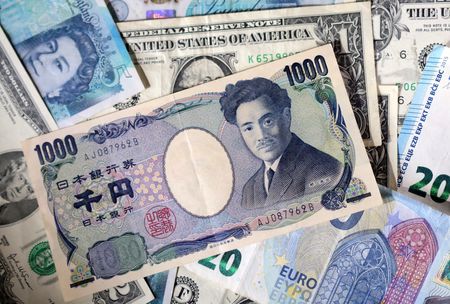

TOKYO, March 3 – Global currency markets experienced significant volatility Tuesday as escalating Middle East tensions raised concerns about energy supply disruptions and their potential impact on inflation worldwide.
The U.S. dollar gained strength as investors sought safe-haven assets amid the expanding conflict between the U.S., Israel, and Iran that has now spread to neighboring nations. Meanwhile, the euro stabilized after dropping more than 1% as uncertainty grew over when regional oil deliveries might resume normal operations.
Oil prices continued their upward climb for the third consecutive day following Iran’s threats to target vessels attempting to navigate through the Strait of Hormuz. In response to market volatility, Japanese Finance Minister Satsuki Katayama indicated that intervention in currency markets remains a possibility to support the yen.
“Europe and Japan stand out within the major economies, in that they still have a great need to import energy,” explained Rodrigo Catril, a currency strategist at National Australia Bank, during a podcast appearance. “History will tell you that currencies such as the yen and the euro would struggle to perform.”
Tuesday’s trading saw the yen gain 0.06% to reach 157.29 per dollar, recovering slightly from Monday’s 0.8% decline. The euro increased 0.03% to $1.1689 after experiencing a 1.1% drop in the prior session.
The dollar index, which tracks the greenback’s performance against multiple currencies, climbed 0.04% to 98.55. The British pound fell 0.07% to $1.3395.
Military actions intensified as Israel launched strikes against Lebanon in retaliation for Hezbollah attacks, while Tehran continued its missile and drone campaigns targeting Gulf nations. Qatar suspended its liquefied natural gas production Monday, leading to preventive shutdowns of energy facilities throughout the Middle East region.
The United States, being a net energy exporter, faces less exposure to rising energy costs compared to Europe and Japan, which rely heavily on imports.
Minister Katayama stated that Japanese financial authorities are watching markets with an “extremely strong sense of urgency.” Regarding potential currency intervention, she noted that Japan established a mutual agreement with the United States last year.
President Donald Trump warned the conflict could persist for weeks and expressed uncertainty about Iran’s leadership following Supreme Leader Ayatollah Ali Khamenei’s death. Israeli Prime Minister Benjamin Netanyahu attempted to calm concerns about duration, assuring Fox News viewers this would not become an “endless war.”
Saudi Arabia’s defense ministry reported via social media that two drones struck the U.S. embassy in Riyadh, causing minor fire damage according to preliminary assessments.
Worries that increased inflation might postpone the Federal Reserve’s next interest rate reduction also supported dollar strength.
Financial markets no longer expect a rate cut until September, pushing back previous July projections based on Fed funds futures pricing. Traders still anticipate two quarter-point reductions before year’s end.
Japanese government bond yields for short-term securities increased as inflation concerns heightened expectations for earlier central bank rate increases. Bank of Japan Governor Kazuo Ueda avoided discussing monetary policy during Tuesday’s speech, one day after BOJ Deputy Governor Ryozo Himino stated that market turbulence wouldn’t prevent rate adjustments.
The Australian dollar rose 0.25% to $0.7109 and advanced 0.9% to 111.81 yen. New Zealand’s currency edged up 0.05% to $0.5943.
Cryptocurrency markets declined, with bitcoin falling 1.53% to $68,368.17 and ethereum dropping 1.64% to $2,009.87.