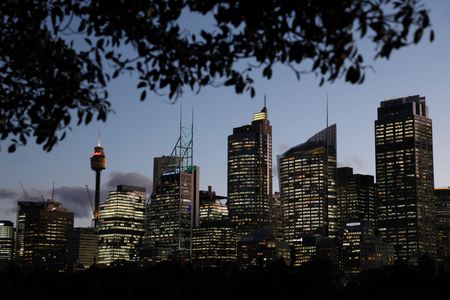

Australia experienced its strongest economic expansion in almost three years during the December quarter, according to government data released Wednesday, though the robust growth has sparked renewed inflation concerns and expectations of higher interest rates.
The Australian Bureau of Statistics reported that the nation’s real gross domestic product climbed 0.8% in the fourth quarter, surpassing the previous quarter’s revised 0.5% increase. Year-over-year growth reached 2.6%, marking the strongest annual performance since early 2023 when pandemic recovery measures were still influencing the economy.
However, economic challenges are mounting due to ongoing Middle East tensions that have disrupted oil shipments through the Strait of Hormuz, driving energy prices up more than 10%. While Australia exports energy, sustained oil price increases burden both consumers and businesses with higher costs.
Stephen Smith, a partner at Deloitte Access Economics, warned that the strong growth figures present complications for monetary policy makers. “While stronger growth may seem like positive news,” Smith explained, the result “will be a concern” for the Reserve Bank of Australia.
“The RBA is already of the view that the economy is operating above its potential. Combined with elevated inflation, today’s data will keep the RBA on high alert and increase the likelihood of a rate hike in May,” Smith added.
The central bank considers economic growth above 2% annually as potentially inflationary, which explains why officials raised interest rates by a quarter-point to 3.85% last month after inflation began accelerating again following three rate cuts in the previous year.
Financial markets responded to the mixed signals, with three-year government bond futures recovering some losses while the Australian dollar declined 0.6% to $0.6994 amid broader Asian stock market weakness driven by Middle East conflict concerns.
Market participants are pricing in approximately 30% odds of a March rate increase, with May rate hikes considered nearly certain by investors.
The fourth-quarter strength highlighted the economy’s performance against capacity limits. Inflation rose to 3.8% in January while unemployment remained at a historically low 4.1%, though February’s rate increase is expected to moderate economic demand.
Business inventory building contributed the largest boost to quarterly growth, adding 0.4 percentage points. Government expenditures, primarily defense-related, contributed 0.2 points, while household spending added just 0.1 point to growth.
Consumer savings behavior revealed continued caution, with the household savings rate increasing to 6.9% from 6.1%, indicating significant remaining spending capacity.
Tony Sycamore, an analyst at IG, suggested the positive headline numbers concealed weaker consumer spending patterns that support keeping rates unchanged at the central bank’s March 16-17 policy meeting.
“This is an indication that cost-of-living pressures are still biting — Aussies are channelling extra income into savings rather than spending,” Sycamore observed.
While inflation metrics remained elevated, one key measure of labor costs decelerated to its slowest annual pace since early 2021. In nominal terms, the economy expanded 6% for the year, reaching A$2.85 trillion ($2.00 trillion).