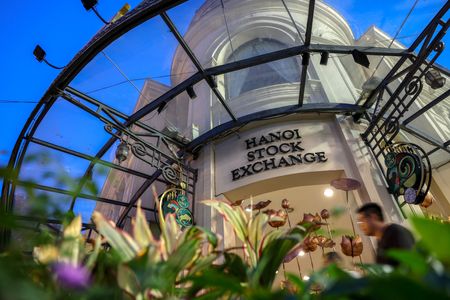

Despite Southeast Asia’s fastest-growing economy showing remarkable strength, Vietnam faces a puzzling challenge as international investors continue pulling money out of its stock markets.
The country’s main stock index surged 41% in 2025 – marking its strongest performance in eight years – as the nation’s economy expanded by 8%. However, foreign investors withdrew a record $5.1 billion from Vietnamese stocks during the same period, according to LSEG data.
Vietnam stands on the brink of achieving emerging market status, with FTSE Russell expected to upgrade the country from frontier market classification as early as September. Confirmation of this upgrade could arrive in March or April when FTSE releases its assessment of Vietnam’s regulatory improvements.
The index provider MSCI may also add Vietnam to its watchlist by June, according to J.P. Morgan analysts, though a full upgrade isn’t anticipated until the decade’s end.
International investors remain wary due to several factors, including potential impacts from shifting U.S. trade policies and concerns about market concentration.
“Foreign investors were cautious on Vietnam heading into the Trump presidency due to concerns around potential tariffs,” explained Sean Taylor, chief investment officer at Matthews Asia, a San Francisco-based asset management company.
“We felt there were many opportunities to make money in more liquid and transparent markets in the index like Taiwan, South Korea and China,” Taylor added.
The exodus has reduced foreign ownership to approximately 14.5% of shares in Vietnam’s $332 billion market, based on government statistics. Even London-listed Vietnam Enterprise Investments Limited, Dragon Capital’s primary closed-end fund, saw more than two-thirds of shareholders vote to cash out portions of their investments.
This fund, which includes the Gates Foundation Trust and hedge fund manager Boaz Weinstein among its investors, has consistently traded below its asset value – reflecting the local market’s liquidity challenges.
Vietnam’s market regulator stated to Reuters that “several of the world’s largest global investment institutions … have actively prepared to invest in Vietnam,” though no specific names were provided.
A major concern centers on the overwhelming influence of Vingroup, a massive conglomerate that skyrocketed 736% last year. The company, along with its subsidiaries, now represents over 20% of the benchmark index, making it Vietnam’s most valuable enterprise.
“For foreign funds that care about diversification and liquidity, that makes it harder to add exposure without taking on too much single-stock risk,” noted Tran Thi Mong Tuyen, a researcher at the Hawaii-based Pacific Forum.
Vingroup was established in 1993 by Pham Nhat Vuong, an entrepreneur who initially built his wealth selling instant noodles in Ukraine. The company has evolved from real estate into a sprawling empire covering railways, steel, energy, entertainment, and space ventures.
Now valued at nearly $50 billion despite recent declines, Vingroup’s stock surge last year lifted the broader market amid government backing and the ruling Communist Party’s promise of “preferential policies” for private domestic companies.
“A few related stocks account for a disproportionate share of the index and exert outsized influence over market movements,” observed Thu Nguyen, deputy head of Vietnamese fund VinaCapital.
Vingroup, which launched its loss-making electric vehicle subsidiary VinFast on the Nasdaq in 2023, attributed last year’s stock gains to favorable government policies and its divisions’ accomplishments.
While the company’s net profit doubled last year, its dramatic stock price increase has resulted in a price-to-earnings ratio of 96 times.
This valuation “is quite challenging for a fundamental investor like ourselves to get comfortable with at the present moment, when there remain significant uncertainties about the timing of the future cash flows from the many projects it is involved with,” said Craig Martin, Singapore-based chairman of Dynam Capital, which oversees a London-listed Vietnam fund.
Eight brokers and fund managers contacted by Reuters either advised against purchasing Vingroup shares or refused to discuss the company, with some expressing concerns about potential retaliation.
Vietnam has made strides by relaxing funding and trading regulations, improving market access and moving closer to a market upgrade.
International investors haven’t completely soured on Vietnam, with some purchasing companies listed in other markets but conducting business in Vietnam to gain exposure.
However, locally-listed companies often trade at 20-30% premiums for international buyers due to foreign ownership restrictions, leaving few investors seeing immediate value in rushing to enter the market.
“A lot of managers have mentioned stocks have potential, but the liquidity needs to be there,” said Hunter Beaudoin from research firm Morningstar. “Foreign ownership limits are creating some constraints.”