The maker of Play-Doh and other popular toys has entered the legal battle against the federal government, demanding money back from tariffs collected during Donald Trump’s presidency that were recently ruled unconstitutional by the nation’s highest court.
Hasbro filed its legal claim on Friday, becoming part of a massive wave of more than 2,000 companies pursuing similar lawsuits in the U.S. Court of International Trade since April. The toy manufacturer is seeking complete reimbursement plus interest for payments made under the International Emergency Economic Powers Act, though the company has not revealed the total amount involved.
The legal action follows last week’s Supreme Court decision that invalidated these emergency trade policies. Since that ruling, major corporations have rushed to file claims, including cosmetics giant L’Oreal, vacuum cleaner company Dyson, and eye care manufacturer Bausch + Lomb, all of which submitted their cases on Monday. Ty Inc., the company behind Beanie Babies, also entered a similar claim this week.
Legal representation for Hasbro comes from Sandler, Travis & Rosenberg, the same firm handling cases for Swiss athletic wear brand On and personal care company Conair in their respective tariff disputes. When contacted for additional details, Hasbro representatives had not provided a response.
Drug development company Generate Biomedicines experienced a rocky start on Wall Street Friday, with its stock price dropping 6.25% during its first day of trading on the Nasdaq exchange.
The pharmaceutical firm, which receives backing from investment company Flagship, ended its debut trading session with a market value of $1.91 billion. Market analysts attributed the decline to ongoing uncertainty in financial markets that has made investors wary of newly public companies.
The stock’s performance reflects broader market conditions that have made investors more selective about new investment opportunities, particularly in the biotechnology sector.
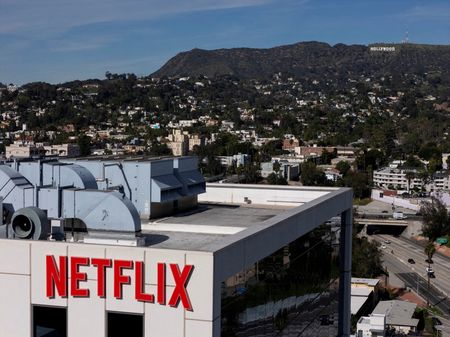
In a stunning conclusion to months of corporate warfare, Paramount has successfully outbid Netflix to acquire Warner Bros. in what’s being called one of Hollywood’s most significant consolidations ever.
The streaming giant Netflix withdrew from the competition Thursday, stating the deal was no longer “financially attractive” after Paramount launched an aggressive $31 per share bid worth approximately $111 billion including debt. Netflix’s earlier offer had stood at $27.75 per share.
This latest merger continues Hollywood’s trend toward consolidation. Nearly a decade ago, the industry’s “big six” studios shrank to five when Disney absorbed most of 20th Century Fox. Now that number appears destined to drop to four major players, alongside Universal and Sony.
Netflix co-CEOs Ted Sarandos and Greg Peters released a joint statement explaining their withdrawal: “We believe we would have been strong stewards of Warner Bros.’ iconic brands. But this transaction was always a ‘nice to have’ at the right price, not a ‘must have’ at any price.”
Warner Bros. Discovery had initially supported Netflix’s December proposal right until Thursday evening, when the board simultaneously endorsed Netflix while acknowledging Paramount’s offer was “superior.”
Warner Bros. Discovery CEO David Zaslav expressed enthusiasm about “the potential of a combined Paramount Skydance and Warner Bros. Discovery and can’t wait to get started working together telling the stories that move the world.”
Paramount Skydance’s chairman and CEO David Ellison has outlined ambitious plans to produce more than 30 films annually while maintaining both studios as separate entities. However, the company has also indicated plans to eliminate approximately $6 billion in costs through workforce reductions in “duplicative operations.”
According to SEC filings from last month, Paramount stated: “Our priority is to build a vibrant, healthy business and industry — one that supports Hollywood and creative, benefits consumers, encourages competition, and strengthens the overall job market.”
Paramount executives argue the merger will enhance their ability to compete with larger competitors, particularly in streaming services, while offering expanded content libraries to subscribers.
The announcement comes as Warner Bros. promotes its latest release, “The Bride!” Director Maggie Gyllenhaal shared her thoughts with The Associated Press Friday, saying she discovered the news through social media that morning.
“I don’t have a position but I do feel really deeply supported by (Warner Bros. Motion Pictures Chairs) Pam (Abdy) and Mike (DeLuca) and I feel that they have been taking a slightly different route than most of the other people around them,” Gyllenhaal explained. “They’ve been supporting films that are actually about something while at the same time, I think, encouraging the filmmakers who are making them to reach as big of an audience as possible. That combination is very specific and very precious.”
The timing highlights a stark performance gap between the studios. Warner Bros. earned recognition as one of Hollywood’s most filmmaker-friendly operations, securing 30 Oscar nominations this year through “Sinners,” “One Battle After Another,” and “Weapons.” Paramount received none.
Box office numbers tell a similar story. Warner Bros. films captured 21% of domestic ticket sales in 2025, including major releases like “A Minecraft Movie,” “Superman,” and “Sinners.” Paramount managed only 6% market share, with “Mission: Impossible — The Final Reckoning” as their primary driver, though it failed to crack the top 10 highest-grossing films, landing at 11th place.
Paramount recently committed to releasing at least 15 theatrical films in 2026, up from their typical eight annual releases before the Skydance partnership. However, Skydance’s track record shows heavy reliance on Tom Cruise vehicles, with “Top Gun: Maverick” as their sole billion-dollar success alongside six “Mission: Impossible” installments. Their “Terminator” franchise revival attempts proved less successful.
While Warner Bros. has found success balancing original content with franchise properties, Paramount’s strategy leans heavily toward established intellectual property including “Transformers,” “Scream,” “Sonic the Hedgehog,” and “Paw Patrol.”
Cinema United, representing movie theater operators, had strongly opposed a Netflix acquisition due to concerns about theatrical releases. However, they expressed equal worry about studio consolidation in testimony to a Senate Judiciary subcommittee in February.
“If Paramount or another major studio ends up displacing Netflix as the buyer, our concerns are no less serious,” the organization stated. “A combination of Paramount and Warner Bros., for instance, would consolidate as much as 40% of each year’s domestic box office in the hands of a single dominant studio.”
The theater industry remains fragile since the pandemic, with annual domestic box office revenues struggling to reach pre-2020 levels of over $11 billion. Since 2020, the market has exceeded $9 billion only once.
While 30 guaranteed films annually could benefit theaters, skepticism remains about actual theatrical distribution versus streaming releases. Hollywood historian Mark Harris wrote on social media that “the idea of a Paramount-WB merger producing 30-40 movies a year is an absurd fiction.” He predicted Warner Bros. would eventually become Paramount’s “classy” label before transitioning to specialty or streaming content and ultimately disappearing.
Questions remain about the future of both studios’ streaming services and their potential bundling, similar to Disney’s approach with Disney+ and Hulu.
The acquisition also raises concerns about the fate of two historic studio lots in California, where production activity has declined significantly. Paramount’s legendary Melrose Avenue facility spans 65 acres with 30 stages, hosting productions from “Sunset Boulevard” to “Forrest Gump.” Warner Bros.’ Burbank location covers 110 acres with 31 soundstages and 11 exterior sets, home to “My Fair Lady,” “Gilmore Girls,” and “Friends.” Warner Bros. also operates a major facility in Leavesden, UK.
The deal still requires regulatory approval from the U.S. Department of Justice and international authorities, with reviews already underway.
The world’s top tequila producer is preparing for a bumpy road ahead as American consumers cut back on hard liquor purchases and the company overhauls how it gets its products to store shelves.
Becle, the Mexican company behind Jose Cuervo and other popular tequila brands, announced it expects a challenging 2026 after ending its distribution partnership with Republic National Distributing Company this month. The split comes as the distributor made a messy departure from California, the nation’s largest state, at the end of last year.
Company executives are now rushing to establish new distribution partnerships while dealing with shrinking demand across their primary North American markets.
“This will be a transition year,” Chief Financial Officer Rodrigo de la Maza explained to industry analysts. “Changes of this scale take time to fully stabilize and may create temporary disruptions, shipping volatility, inventory realignment and added complexity.”
The company anticipates the most significant challenges will occur during the first six months of 2026, with executives hoping to see US market growth resume by 2027.
Becle projects its sales revenue will fall by low single digits in 2026 when accounting for currency fluctuations, while spending between $90 million and $110 million, a decrease from the $130 million budgeted for 2025.
Declining sales throughout Becle’s key North American territories caused revenues to plummet 14% during the final quarter of 2025, which also hurt net profits alongside increased tax obligations.
The disappointing financial results fell short of analyst expectations, causing Becle’s stock price to drop as much as 5% during morning trading before recovering slightly. Shares remain down 16% since the start of the year.
Scotiabank analyst Felipe Ucros described the recent quarter as one “to forget by most measures,” noting that “the start of 2026 doesn’t look too bright either” due to a stagnant tequila market as American drinking preferences shift.
Industry experts blame the downturn on several factors including tighter household budgets, growing interest in healthier lifestyle choices, and competition from legal marijuana sales. Becle has also noted that Canadian consumers are increasingly choosing locally-produced spirits following last year’s trade tariff concerns.
While tequila enjoys exemption from US tariffs under the North American trade agreement currently under review, ongoing trade tensions have still impacted the industry, especially smaller suppliers.
US tequila imports dropped 26% during the first nine months of 2025 compared to the same timeframe in 2024, according to trade association figures, while overall spirits imports declined 17%. Becle’s combined US and Canadian sales fell 4% throughout 2025.
Although sales grew in markets outside North America, which typically generate about one-fifth of the company’s revenue, the gains weren’t sufficient to balance losses in larger markets. A stronger peso also reduced the value of foreign currency earnings.
Despite lower sales volumes last year, Becle managed to improve profit margins by avoiding the aggressive price cuts adopted by competitors.
De la Maza told analysts that while the spirits industry remains weak, Becle continues to outperform the broader market and should benefit from reduced agave costs, though less dramatically than in 2025. Agave is the spiky plant essential for tequila production.
When asked about recent violence in Jalisco state, tequila’s birthplace, following the military killing of Mexico’s most wanted cartel leader, Becle stated its operations remained unaffected and the company doesn’t anticipate any operational challenges.
Three major banking institutions are facing legal action from investors who claim the financial giants overlooked clear warning signals about fraudulent activity at a collapsed auto lending company.
Investors filed a lawsuit Thursday evening in Manhattan federal court against JPMorgan Chase, Barclays, and Fifth Third Bank, alleging the institutions failed to heed obvious danger signs while promoting investments tied to Tricolor, a subprime auto lender that has since declared bankruptcy.
The legal action involves investors holding more than $230 million in Tricolor asset-backed securities that were marketed between April 2022 and June 2025. According to the lawsuit, the banks “fueled and perpetuated Tricolor’s Ponzi-like fraud” through their financing and securitization of the company’s auto loans, while also serving as significant lenders to the business.
Court documents reveal that the banking institutions promoted these securities as sound investments despite receiving warnings from audits conducted in 2022 and 2024. These examinations uncovered falsely reported loan receivables and cash flow irregularities, including funds being directed to incorrect accounts or completely fabricated.
The investment notes now trade for less than 10 cents per dollar of their original value, with investor losses potentially reaching hundreds of millions of dollars.
“Rather than risk a massive loss on their warehouse lines and forfeit the millions of dollars of fees and income derived from Tricolor’s fraudulent enterprise, defendants responded by hiding what they had learned and sticking their heads in the sand,” the complaint said.
All three banks – JPMorgan, Barclays, and Cincinnati-based Fifth Third – have refused to provide comments regarding the litigation. The 30 plaintiffs include investment funds managed by Janus Henderson, Ellington Capital Management, and One William Street Capital Management.
Tricolor specialized in providing automotive financing primarily to lower-income Hispanic communities throughout the southwestern United States before filing for Chapter 7 liquidation bankruptcy on September 10 of last year.
This bankruptcy filing occurred just 18 days prior to another significant automotive industry collapse, when parts supplier First Brands also sought Chapter 11 bankruptcy protection.
Both corporate failures have drawn attention to the risks associated with private credit markets, where investment funds and other financial entities provide capital to companies that face less regulatory scrutiny compared to businesses accessing public markets.
In December, federal prosecutors in Manhattan indicted Tricolor Chief Executive Daniel Chu and former Chief Operating Officer David Goodgame on charges of systematically defrauding creditors and lenders through falsified loan data and double-pledging of collateral.
Both Chu and Goodgame have entered not guilty pleas to the charges. The three banks involved have each reported nine-figure financial losses related to their Tricolor exposure, with JPMorgan Chief Executive Jamie Dimon characterizing his institution’s involvement as “not our finest moment.”
Delaware’s Supreme Court has validated controversial changes to the state’s business laws on Friday, backing legislation that critics labeled the “billionaire’s bill” for its protections of corporate executives.
The new statute, identified as SB 21, significantly reduces investors’ ability to take legal action against company deals. The updated rules allow transactions to proceed without court challenges if either a board committee with mostly independent directors approves them, or if public shareholders vote in favor. The previous system demanded both conditions plus entirely independent board committees.
Additional provisions in the legislation make it more challenging to question whether directors are truly independent and restrict shareholder access to company documents when investigating potential conflicts of interest.
State legislators passed these measures in March 2025 as a response to what’s become known as “DExit” – the departure of major companies from Delaware incorporation. This trend threatens a significant revenue source, as corporate fees contribute roughly 20% of the state’s budget, even as Delaware continues to serve as the legal headquarters for most major public corporations.
The new regulations primarily affect businesses with controlling shareholders, such as Meta Platforms under Mark Zuckerberg’s control.
Opposition came from pension funds and other groups who worried the changes would hamper their oversight of potential conflicts, viewing the legislation as favorable treatment for powerful technology company founders.
Legal representatives for shareholders contended that SB 21 violated Delaware’s constitution by removing cases from the Court of Chancery’s authority and blocking judicial review of certain business transactions.
Supporters countered that legislators weren’t eliminating the court’s jurisdiction or specific legal rights, but instead adjusting the standards the Court of Chancery uses to evaluate transaction fairness.
Corporate leaders have grown increasingly frustrated with recent court decisions that challenged established expectations about Delaware’s business law framework.
In January 2024, a Delaware judge struck down Elon Musk’s $56 billion Tesla compensation package. This decision angered Musk, who encouraged businesses to leave Delaware, prompting departures by companies including Dropbox, Roblox, and Coinbase Global.
However, Delaware’s Supreme Court reversed that decision in December, reinstating Musk’s pay package on appeal.
MEXICO CITY – Mexican media powerhouse Grupo Televisa experienced its steepest stock decline of the year Friday after announcing it would halt dividend payments for 2026 while pursuing new telecommunications ventures.
The broadcasting giant’s shares plummeted 7.5%, erasing 2.1 billion pesos (approximately $122 million) from its market value following the dividend suspension announcement.
“Considering several opportunities in the telecom sector in Mexico that we’re currently exploring, our Board of Directors approved suspending the payment of our regular dividend in 2026,” Francisco Valim, CEO of Televisa’s Cable and Sky division, explained during an analyst conference call.
Company leadership confirmed they are actively pursuing telecommunications sector investments but declined to provide additional details about specific opportunities under consideration.
Valim projected that Televisa’s capital expenditure-to-sales ratio will reach approximately 25% in 2026.
The dividend cancellation comes on the heels of disappointing fourth-quarter financial results released Thursday. The world’s top producer of Spanish-language programming reported a narrowed net loss of 7.68 billion pesos (roughly $808 million) for the final quarter, falling short of analyst predictions who had anticipated a modest profit of $1.52 million.
Santander analysts characterized Televisa’s performance as showing “challenging top-line growth trends but with a continued improvement in profitability levels.”
The media conglomerate hasn’t recorded an annual profit since 2022. Both 2023 and 2024 saw the company post yearly losses exceeding 8 billion pesos.
Major retailer Target announced Friday it will exclusively carry cereals free from certified synthetic dyes by May’s end, joining a growing movement among retailers to eliminate artificial colors from food products.
The Minneapolis-based chain has collaborated with both national cereal manufacturers and its own private-label suppliers to reformulate products as necessary. This new policy will affect all cereal products available in Target stores and through online ordering.
Several major food companies including PepsiCo, Campbell’s, and Conagra Brands made similar commitments last year to eliminate artificial dyes. These decisions came in response to the Trump administration’s “Make America Healthy Again” campaign and Health Secretary Robert F. Kennedy Jr.’s push against ultra-processed foods and chemical additives.
“We know consumers are increasingly prioritizing healthier lifestyles, and we’re moving quickly to evolve our offerings to meet their needs,” Cara Sylvester, Target’s chief merchandising officer, said in a statement.
Target indicated it will “continue evaluating opportunities where ingredient evolution aligns with guest expectations.”
This timeline places Target ahead of some cereal brands currently sold in its stores that have set longer deadlines for removing artificial colors. General Mills’ Lucky Charms, for example, won’t eliminate synthetic dyes until 2027.
Competing retail giant Walmart announced in October it would phase out synthetic dyes from its private-label food products by January 2027.
The announcement comes as Target works to recover from an extended period of declining sales under new CEO Michael Fiddelke’s leadership, which has included workforce reductions and management restructuring. The company is scheduled to release quarterly earnings results Tuesday.
Target confirmed earlier this month that it anticipates fourth-quarter 2025 sales and full-year adjusted earnings will meet previously announced projections.
Target’s stock price dropped approximately 2% Friday during broader market declines.
WASHINGTON – December brought a modest uptick in nationwide construction activity, with spending climbing 0.3% as single-family home projects and renovation work provided a boost to the sector.
Friday’s report from the Commerce Department’s Census Bureau showed the December gain followed a 0.2% drop in November spending. The growth matched what economists had predicted, though construction activity remained 0.4% lower than the same period a year earlier. Officials noted the data release was pushed back due to the previous year’s federal government shutdown.
Private construction projects saw spending jump 0.5% in December, reversing November’s 0.2% decline. Residential building investment climbed 1.5% after showing no change the month before. New single-family home construction bounced back with a 1.5% spending increase, while multi-family housing projects – representing a smaller portion of the market – edged up 0.1%.
Home improvement and renovation spending continued its upward trend. However, homebuilding activity overall has remained weak due to elevated mortgage rates, increased costs for building materials stemming from import tariffs, and ongoing worker shortages in the construction industry.
Recent drops in mortgage rates may help stimulate future construction activity, though the availability of buildable lots continues to be limited. Housing investment has now fallen for four consecutive quarters.
Commercial and industrial construction spending fell 0.7% in December, including office buildings and manufacturing facilities. This sector has now seen eight straight quarters of decline, even as data center construction has surged to meet artificial intelligence technology demands.
Government construction projects dropped 0.5% following November’s 0.2% decrease. While state and local government construction spending declined 0.7% in December, federal construction projects increased 1.6%.
The company behind the popular ChatGPT artificial intelligence tool announced Friday it has secured a massive $110 billion investment deal that places its total worth at $840 billion, demonstrating the intense competition among tech companies to dominate the AI market.
Three major technology firms are leading the investment: SoftBank will contribute $30 billion, Nvidia is putting in $30 billion, and Amazon plans to invest $50 billion total. This financial backing comes as OpenAI prepares for what could be one of the largest initial public stock offerings of the year.
Technology giants and major investors are competing aggressively to build stronger relationships with OpenAI, which requires enormous spending on data processing facilities, hoping these partnerships will provide advantages in the rapidly evolving artificial intelligence sector.
Amazon’s investment strategy involves an initial payment of $15 billion, with the remaining $35 billion to follow over the next several months once specific requirements are fulfilled.
Beyond the financial investment, Amazon and OpenAI have established a computing partnership where OpenAI will access 2 gigawatts of processing power using Amazon’s proprietary Trainium computer chips, according to both companies.
Amazon’s cloud service, AWS, has been designated as the sole external cloud provider for OpenAI Frontier, which is the enterprise version of the platform that helps businesses create, launch and oversee AI systems.
This new arrangement will not affect OpenAI’s current partnership with Microsoft. Microsoft Azure continues as the exclusive cloud service for OpenAI’s programming interfaces that allow access to the company’s AI models, both organizations confirmed.
OpenAI’s direct consumer products will remain on Microsoft’s Azure platform, and Microsoft retains its exclusive licensing rights and access to OpenAI’s technology and products.
Questions remain about whether Nvidia’s $30 billion commitment replaces a previous agreement from September in which Nvidia had pledged to invest as much as $100 billion in the startup.
Neither OpenAI nor Nvidia provided immediate responses when asked for clarification about their investment arrangements.
Chinese technology company Xiaomi announced Friday it will establish an advisory panel to evaluate the safety of its electric vehicles following mounting concerns over several deadly crashes involving its cars.
The tech giant also intends to conduct routine discussions with vehicle owners, journalists, and safety specialists to gather feedback about their cars’ safety features. According to Hou Jinglei, who leads Xiaomi’s electric vehicle safety division, the initial meeting is scheduled for sometime in the first six months of this year. Hou made these remarks during a live broadcast from the company’s electric vehicle manufacturing facility in Beijing.
The automaker employs over 3,500 safety personnel, which includes a dedicated internal unit responsible for examining vehicle accidents.
A deadly collision last October involving Xiaomi’s SU7 model has drawn significant attention after forensic investigators determined the vehicle’s doors failed to operate following the crash due to electrical system failure. The driver died from burns after becoming trapped inside, according to reporting by Chinese publication Caixin, which cited official forensic documentation.
Chinese media outlet Yicai, which also covered the forensic findings, published an editorial Friday calling on Xiaomi to issue a complete recall of all original SU7 models to “fully address door handle safety risks.”
The company declined to provide a statement regarding these media reports.
Investigators continue examining another SU7 crash that occurred while the vehicle operated in driver assistance mode, resulting in three fatalities.
Authorities have not yet published official findings for either incident.
In September, Xiaomi distributed a software patch to over 115,000 SU7 vehicles to address problems with the assisted driving technology.
The manufacturer has ended production of the original SU7 model and plans to introduce an enhanced version of its popular sedan in April, featuring emergency power backup for the door systems.
Sales of the SU7, which competes directly with Tesla’s Model 3, reached more than 381,000 units through February.
The widespread coverage of these accidents has prompted stricter government oversight of marketing practices and safety requirements for driver assistance technology. Officials have also mandated the elimination of concealed door handles by 2027 and are evaluating potential speed restrictions for electric vehicles.
The groundbreaking shale technology that transformed America into the globe’s leading oil producer has now arrived in the Arabian Peninsula.
Located in the desert sands near Saudi Arabia’s massive Ghawar oil field, the state-owned energy giant Aramco has launched production at a colossal natural gas development that could generate billions in new revenue for the kingdom over the next several years.
The company has partnered with American and Chinese corporations including Halliburton and Sinopec, utilizing cutting-edge equipment such as ‘walking rigs’ – massive drilling towers that can relocate short distances without being taken apart and rebuilt – to accelerate drilling operations at the Jafurah basin.
Despite scaling back other ambitious mega-developments and abandoning plans to increase oil production capacity, Aramco – the planet’s largest oil exporter – has actually increased its natural gas production goals, placing this $100 billion investment at the heart of its strategy to become a dominant force in the global gas market.
The Jafurah field is believed to hold 229 trillion standard cubic feet of raw gas and 75 billion barrels of condensate, making it possibly the largest shale gas project anywhere outside American borders.
For many years, Saudi Arabia has burned some of its most precious resource – crude oil – to generate electricity for its power system. With less than five years remaining to achieve Crown Prince Mohammed bin Salman’s Vision 2030 plan to reduce dependence on oil revenues, there’s mounting urgency to substitute those liquid fuels with gas.
“Jafurah is not just a large gas field: it is a strategic platform that supports the Kingdom’s broader growth ambitions across key sectors, including energy, artificial intelligence, and major industries like petrochemicals,” Aramco stated in response to questions.
On Thursday, Aramco formally declared the beginning of operations at Jafurah, marking a significant achievement for a development that required years of preparation similar to the early stages of America’s shale revolution. The company revealed that production commenced in December 2025, information that was previously disclosed in the Saudi finance ministry’s budget documents.
“The excellent progress at Jafurah is a testament to a decade of relentless innovation and focus on value creation,” Aramco’s Upstream President Nasir Al-Naimi stated.
“Early well performance has been outstanding, validating our high-tech approach and reaffirming the significance of this flagship project to our gas growth strategy.”
The economic calculation is straightforward: Saudi Arabia currently consumes more than 1 million barrels daily of crude oil and fuel oil for domestic electricity production. Aramco plans to substitute 500,000 barrels per day of that consumption with gas by 2030, allowing that crude to be sold internationally. With current oil prices around $70 per barrel, 500,000 daily barrels would create approximately $12.8 billion in annual revenue.
In Thursday’s announcement, Aramco projected the gas expansion will produce additional operating cash flows between $12 billion and $15 billion in 2030.
“Through our strategic gas expansion, we anticipate attractive double-digit returns as we set about unlocking significant volumes of high-value liquids and capitalize upon captive domestic gas demand,” Al-Naimi explained.
Analysis of drilling equipment data from Baker Hughes, contract awards, and corporate documents shows that Jafurah has become the kingdom’s top capital investment and represents a new opportunity for American oilfield service companies as the U.S. shale expansion matures and they seek growth elsewhere.
Jafurah presents an exceptional opportunity: an enormous, undeveloped unconventional resource requiring the hydraulic fracturing and horizontal drilling techniques mastered in Texas.
Equipment activity data indicates that while drilling in America’s Permian Basin has stabilized, gas exploration in Saudi Arabia has grown as Jafurah development accelerated and investment was redirected after the kingdom canceled a previously planned 1 million barrel-per-day oil capacity increase.
Aramco has disclosed approximately $26 billion in contracts for Jafurah’s initial two phases since 2018, when it granted Halliburton a deal for unconventional gas stimulation, typically involving fracking. Additional first-phase agreements went to Sinopec, South Korea’s Samsung Engineering and Italy’s Saipem.
To make shale extraction feasible in the harsh desert conditions, engineers have created specialized technology, according to company publications. Innovations include processing Gulf seawater to eliminate well-blocking sulfates for underground injection and ultra-durable diamond drill bits designed to penetrate abrasive rock without overheating.
Aramco is working toward 2 billion standard cubic feet daily of gas from Jafurah, 420 million standard cubic feet daily of ethane, and 630,000 barrels daily of associated liquids by 2030.
At maximum output, Jafurah could yield up to 1 million barrels daily of condensates, according to a knowledgeable source. Condensates are liquid hydrocarbons that can be refined to create petrochemical raw material naphtha and other processed products.
In November, Aramco announced it was increasing its nationwide gas expansion target to 80% above 2021 production levels, up from a 60% increase goal set in March 2024. Using the company’s 2021 baseline of 9.2 billion cubic feet daily, calculations indicate the revision means Aramco seeks to produce nearly 2 billion cubic feet daily more by decade’s end, matching the volume targeted from Jafurah.
Some industry experts question the timeline for production increases. Aramco had initially indicated Jafurah would begin operations in early 2024.
“There is still a lot of uncertainty around the pace of ramp-up and how much of the condensates will be exported or used as feedstock,” noted Monica Malik, chief economist at ADCB.
She estimated that Jafurah revenue could contribute 0.3% to Saudi GDP growth in 2026.
The gas development aims to prolong Saudi Arabia’s hydrocarbon income, which continues to represent more than half the government budget, while positioning the kingdom to capitalize on growing Asian demand, according to Neil Quilliam, associate fellow at Chatham House think tank.
Beyond freeing crude for export, Aramco is constructing a worldwide liquefied natural gas portfolio through international investments. The company has acquired stakes in LNG firm MidOcean and secured 20-year supply contracts from Commonwealth LNG’s planned Louisiana facility and NextDecade’s Rio Grande terminal in Texas.
Aramco’s gas emphasis comes as Qatar – whose reserves are conventional and therefore simpler to extract than shale – advances its own production expansion to maintain regional gas dominance. Abu Dhabi National Oil Company is also pursuing significant gas and LNG investments domestically and internationally.
The International Energy Agency and market observers anticipate a wave of new Qatari and American LNG this decade that could create global oversupply and reduce prices. Aramco’s long-term goal is LNG capacity of 20 million tons annually, Chief Executive Amin Nasser told analysts in August. Qatar operates 77 million tons annually of capacity, expected to reach 142 million tons by 2030, while ADNOC targets 20 to 25 million tons by 2035.
Aramco anticipates domestic gas demand will continue growing, fueled by industrial expansion including manufacturing, mining, and petrochemicals, Al-Naimi stated.
Cloud computing company CoreWeave experienced a dramatic stock decline Friday, with shares falling approximately 15% after the firm revealed ambitious plans to dramatically increase its infrastructure investments this year.
The sharp drop in stock value could wipe out more than $8 billion from CoreWeave’s overall market worth if the losses continue.
CoreWeave announced it will invest between $30 billion and $35 billion in capital expenditures during 2025, representing more than double the $14.9 billion the company allocated last year. This massive spending increase is aimed at building extensive data center facilities equipped with premium Nvidia processors to meet growing artificial intelligence service demands.
Company officials acknowledged the substantial investment will create “short-term pressure on the margins” as they ramp up operations.
Investment analyst Russ Mould from AJ Bell explained the market reaction, stating: “The share price reaction suggests that while markets understand CoreWeave’s plan to accelerate spending, and prioritize speed to, and share of, market, they are concerned about the long-term economics and how the company plans to fund the investment.”
CoreWeave’s aggressive spending strategy mirrors similar moves by major technology giants including Google’s parent company Alphabet and Amazon, which have together pledged over $600 billion this year for AI infrastructure development.
However, smaller cloud companies like CoreWeave face a significant disadvantage compared to these tech behemoths – they lack substantial cash reserves to weather potential market volatility. CoreWeave currently holds $3.13 billion in cash and equivalent assets, while Microsoft maintains $24.3 billion and Amazon holds $86.8 billion, according to recent financial reports.
The challenges facing newer cloud providers became evident when Amsterdam-based competitor Nebius reported earlier this month that its capital spending surged to $2.1 billion during the final quarter of last year, compared to just $416 million in the same period the previous year.
These emerging cloud companies, known as “neoclouds,” operate by providing hardware access and cloud computing services to other technology firms, typically offering high-performance processors and cloud infrastructure on a service basis.
The artificial intelligence company behind ChatGPT has secured a massive $110 billion investment from three major technology corporations, with the deal placing OpenAI’s value at $730 billion prior to the funding.
E-commerce giant Amazon is spearheading the investment effort with a $50 billion commitment, while graphics chip maker Nvidia and investment firm SoftBank are each contributing $30 billion, according to OpenAI’s co-founder and chief executive Sam Altman, who announced the deal Friday. Additional investors may participate as the funding process continues.
Amazon plans to begin with a $15 billion initial payment and will provide the remaining $35 billion over the coming months based on specific conditions being met.
“These partnerships expand our global reach, deepen our infrastructure, and strengthen our balance sheet so we can bring frontier AI to more people, more businesses, and more communities worldwide,” Altman stated.
The OpenAI leader revealed that ChatGPT now serves over 900 million users each week, with more than 50 million paying subscribers.
“We are entering a new phase where frontier AI moves from research into daily use at global scale,” Altman explained. “Leadership will be defined by who can scale infrastructure fast enough to meet demand, and turn that capacity into products people rely on. This funding and these partnerships let us do both, and move faster on our mission to ensure AGI benefits all of humanity.”
The collaboration between OpenAI and Amazon spans multiple years and will introduce cutting-edge artificial intelligence features for business customers while making Amazon Web Services the sole external cloud provider for OpenAI Frontier. The companies are expanding their existing $38 billion agreement by adding another $100 billion over eight years. They will also work together on creating specialized AI models for Amazon’s development team to enhance customer-facing services.
OpenAI announced it is also broadening its collaboration with Nvidia.
The AI company has maintained a business relationship with Microsoft dating back to 2019. OpenAI clarified in a Friday statement that the new funding and partnerships announced do not alter their existing agreement with Microsoft in any way.
“The partnership remains strong and central,” the company confirmed.
The founder of athletic apparel company Lululemon intensified his corporate battle on Friday, pushing for sweeping changes to the company’s board of directors beyond his initial proposals.
Chip Wilson escalated his conflict with the Canadian yoga apparel company he founded, expressing growing frustration with the board’s strategic decisions, CEO leadership transition, and what he views as insufficient creative and marketing knowledge among top executives.
Wilson initiated his corporate challenge late last year by putting forward three independent candidates for board positions — Marc Maurer, Laura Gentile and Eric Hirshberg — while also advocating for yearly board elections.
In a shareholder communication, Wilson stated: “While we have proposed changing three directors, our strong feeling is that more than three directors should be replaced.”
Wilson revealed that despite submitting his director candidates in December, the board only began discussions with them this week, describing their response as “weak and insufficient.”
“I have pursued private, constructive dialogues with the Lululemon board of directors for the past few months. My attempts toward a sensible solution have not been reciprocated,” Wilson declared Friday.
As one of Lululemon’s largest individual investors holding a 4.27% ownership stake, Wilson also disclosed that the board turned down his suggestion to establish a committee dedicated to overseeing brand development, product innovation and creative direction.
The company has not yet provided a response to requests for comment.
Wilson’s corporate challenge unfolds as Lululemon’s stock value has dropped by nearly 50% in the last year, with the brand facing difficulties attracting younger, wealthy consumers while competing against rapidly expanding competitors like Alo Yoga and Vuori.
The athletic wear company currently lacks a permanent chief executive following Calvin McDonald’s exit in December and faces additional pressure from activist investor Elliott Investment Management, which has accumulated over $1 billion worth of shares in the retailer.
Target Corporation announced Friday it will eliminate all breakfast cereals containing certified synthetic colors from its store shelves by May’s end, responding to increasing consumer demand for healthier food choices.
The decision highlights growing awareness among American shoppers and government officials about ingredients in processed foods during the Trump administration era. The Minneapolis retailer has been gradually removing synthetic colors from cereals over recent years.
Currently, approximately 85% of Target’s cereal revenue comes from products manufactured without certified synthetic dyes. The Food and Drug Administration is examining several artificial colorings mentioned by Target, including Red No. 40, Yellow No. 5 and 6, and Blue No. 1.
The company collaborated with both national manufacturers and its own private label brands to reformulate products when necessary. While some cereals will feature new recipes, many already comply with Target’s updated standards prohibiting certified synthetic colors.
“We know consumers are increasingly prioritizing healthier lifestyles, and we’re moving quickly to evolve our offerings to meet their needs,” stated Cara Sylvester, Target’s executive vice president and chief merchandising officer.
This cereal reformulation expands upon Target’s 2019 introduction of its Good & Gather private label brand, which excludes artificial flavors, sweeteners, synthetic colors, and high fructose corn syrup. The brand now encompasses over 2,500 items spanning dairy, produce, prepared pasta dishes, meat, and baby food products.
Other major food manufacturers have made similar commitments recently. Companies including Kraft Heinz, Nestle, and Conagra Brands have promised to eliminate petroleum-derived synthetic dyes in upcoming years.
General Mills revealed plans last year to strip artificial dyes from all domestic cereals and school food products by summer 2026, with complete removal from its U.S. retail lineup targeted for late 2027.
Walmart announced in October its intention to remove synthetic food colorings and 30 additional ingredients, including certain preservatives, artificial sweeteners, and fat substitutes, from its store brands by January 2027.
WASHINGTON — January’s wholesale price data revealed inflation pressures that caught economists off guard, according to Friday’s report from the Labor Department.
The producer price index, which tracks inflation at the wholesale level before reaching consumers, climbed 0.5% compared to December and jumped 2.9% versus January 2024. Financial analysts had anticipated a smaller 0.3% monthly gain and just 1.6% annual growth, based on FactSet polling data.
When volatile food and energy costs were stripped out, core wholesale inflation showed even steeper increases — rising 0.8% month-over-month and 3.6% year-over-year, both figures surpassing expert predictions.
Despite the overall increase, energy costs provided some relief. Wholesale gasoline dropped 5.5% from the previous month and tumbled 15.7% compared to the same period last year.
The primary factor behind January’s price surge was rising service sector costs, particularly increased profit margins among retail and wholesale businesses.
This wholesale price data arrives two weeks following the Labor Department’s consumer price report, which showed a 2.4% annual increase in January — moving closer to the Federal Reserve’s 2% inflation target.
Many economists had expressed concern that President Donald Trump’s substantial import tariffs could fuel higher inflation. However, the tariffs’ inflationary effects have proven less severe than initially feared, though price pressures remain above the Fed’s preferred level.
These wholesale figures serve as an early indicator of future consumer price trends. Economic analysts pay close attention to this data because certain components, particularly healthcare and financial services measurements, directly influence the Fed’s favored inflation metric — the personal consumption expenditures price index.
Stock prices for payment company Block jumped more than 20% during early Friday trading following the company’s announcement of plans to eliminate nearly half of all employee positions as part of a major artificial intelligence integration initiative.
The significant workforce reduction represents one of the clearest examples of how America’s financial technology sector is adapting to artificial intelligence capabilities, with company CEO and tech mogul Jack Dorsey cautioning that many businesses have been “late” in recognizing the transformative power of this new technology.
Financial analysts at Evercore ISI explained the strategy, writing: “At its core, it’s about how some companies may be run going forward – not just doomsday headcount reductions, but also enabling higher ROI investments in growth and FCF,” using the abbreviation for free cash flow.
The rapid implementation of AI technology is allowing businesses to eliminate positions in departments where automation can take over human tasks. Research from Goldman Sachs economists suggests that artificial intelligence contributed to job losses that reduced average monthly employment growth by 5,000 to 10,000 positions in the most affected industries during 2025.
Block was among the companies that expanded their hiring significantly during the coronavirus pandemic when digital payment systems and internet-based shopping experienced dramatic growth.
Matt Britzman, who works as an analyst for Hargreaves Lansdown, characterized the situation by saying: “In Block’s case, this looks like a mix of AI efficiency gains and an overdue clean-up of corporate bloat.”
The company’s employee count grew dramatically from approximately 3,800 workers in 2019 to over 10,000 by 2025 as Block faced intensifying competitive pressure in both its payment processing and buy-now-pay-later business areas.
Analysts from JPMorgan noted: “While the RIF (reduction in force) is large, it does bring Block’s headcount back toward pandemic-era levels, making it a standout in gross profit per employee, well ahead of its peers including Visa.”
The Chief Financial Officer of HF Sinclair Corporation, Atanas Atanasov, has voluntarily stepped away from his position, according to a company filing released Friday. This development follows closely behind a similar move by the company’s top executive Tim Go just one week earlier.
The oil refining company’s stock dropped 4% during pre-market trading following the announcement.
According to the filing, HF Sinclair launched an internal investigation into its disclosure practices last week.
The company revealed Friday that this internal examination started on January 26, triggered when Atanasov expressed worries that certain decisions made by Go had established a negative “tone at the top” regarding the company’s 2025 disclosure procedures.
As the investigation progressed, the board of directors developed their own concerns about specific decisions made by Atanasov, which led to his decision to request voluntary leave.
HF Sinclair announced it has wrapped up the internal investigation and determined that the executives’ actions did not establish a negative “tone at the top” concerning the 2025 disclosure procedures.
The oil company also stated that its disclosure controls and procedures continue to function properly.
Vivek Garg has been appointed to serve as temporary CFO, while Franklin Myers is currently filling the interim CEO role.
HF Sinclair indicated it plans to work out mutually acceptable departure agreements with both Go and Atanasov.
WASHINGTON – Wholesale costs for businesses climbed more sharply than anticipated in January, with companies appearing to transfer elevated import expenses to consumers, according to new federal data that hints at potential price increases ahead.
The Bureau of Labor Statistics reported Friday that wholesale prices jumped 0.5% during January, following a revised 0.4% climb in December. Financial analysts had predicted a smaller 0.3% rise for the month.
Service sector costs drove the overall increase, surging 0.8% largely due to a 2.5% rise in trade service margins – the profit margins earned by wholesale and retail businesses. Professional and commercial equipment wholesalers saw margins spike 14.4%, indicating companies are transferring tariff costs to customers.
Price increases also affected clothing and shoe retailers, chemical wholesalers, telecommunications services, health and beauty stores, and food and beverage retailers.
Over the full 12-month period ending in January, wholesale prices rose 2.9%, down slightly from December’s 3.0% annual increase. This slowdown occurred as higher prices from the previous year were no longer factored into yearly comparisons.
The government delayed releasing this data due to the recent federal shutdown. While producer goods costs dropped 0.3% – with energy falling 2.7% and food declining 1.5% – prices excluding these volatile categories jumped 0.7%.
These wholesale price measurements help calculate the Personal Consumption Expenditures index, which the Federal Reserve monitors for its 2% inflation target.
Before this report’s release, economists projected core consumer price inflation could reach 0.5% in January, potentially pushing the annual rate to 3.1%. December’s core inflation stood at 0.4% monthly and 3.0% yearly. The government plans to release the delayed consumer price report on March 13.
The maker of ChatGPT secured a record-breaking investment Friday as Amazon announced plans to pour $50 billion into OpenAI, beginning with $15 billion upfront and an additional $35 billion over the next several months.
This massive commitment forms part of an unprecedented $110 billion fundraising effort by OpenAI, which now carries a pre-investment valuation of $730 billion. Technology giants SoftBank and Nvidia are also participating in the funding round, each contributing $30 billion to the artificial intelligence company.
Under the partnership agreement, Amazon Web Services will become the sole external cloud computing provider for OpenAI Frontier, the company’s business-focused platform designed for creating, launching and overseeing AI-powered digital assistants.
The collaboration will see OpenAI utilizing 2 gigawatts of computing power through Amazon’s proprietary Trainium processors to meet its substantial computational requirements, according to both companies.
Wall Street futures tumbled Friday morning as mounting worries about artificial intelligence technology continued to weigh heavily on tech companies, pushing the Nasdaq toward what could be its worst monthly decline since March 2025.
Investors are growing increasingly nervous about whether the enormous investments being poured into AI development will actually pay off, creating significant turbulence across technology sectors throughout February.
Adding to market uncertainty, trade policy questions emerged after the Supreme Court struck down most tariffs that President Donald Trump had implemented previously. Trump responded by announcing a temporary 10% worldwide tariff that took effect Tuesday.
Even chip giant Nvidia couldn’t escape the pessimism, with shares dropping slightly in early trading despite posting solid earnings results. The stock had tumbled more than 5% in Thursday’s session, highlighting how fragile investor confidence remains around AI investments.
“It’s easy to feel anxious when the tech darlings that carried the market stumble,” explained Brian Jacobsen, chief economic strategist at Annex Wealth Management.
“We are witnessing a true market rotation, where opportunities are broadening out beyond a handful of megacap tech stocks and flowing into value stocks, small-caps and industrial sectors,” Jacobsen added.
Several companies felt the AI anxiety acutely. Cloud security provider Zscaler plummeted 10.5% after reporting a larger quarterly loss, while financial software maker Intuit declined 3.1% following disappointing profit forecasts.
The broader software industry has been particularly vulnerable this year as investors worry about AI potentially disrupting established business models. Other sectors including financial services, data analytics, legal services, real estate, and transportation are also facing similar concerns.
Market indicators showed the strain, with the Nasdaq finishing below a key technical benchmark for 17 consecutive trading sessions. However, the Dow Jones Industrial Average remained positioned for its tenth straight month of positive performance.
By 7:31 a.m. Eastern Time, futures contracts showed significant declines across major indexes, with Dow futures down 294 points and S&P 500 futures falling 27.75 points.
Not all companies struggled in early trading. Netflix jumped 8.1% after announcing it would step back from competing for Warner Bros Discovery assets. Paramount Skydance surged 7.5% after securing valuable entertainment properties.
Block, the payments company, soared 20% following news of major workforce reductions affecting over 4,000 employees as part of an AI integration strategy. Dell also gained 12.1% after projecting doubled revenue from AI server business by fiscal 2027.
Language-learning platform Duolingo moved in the opposite direction, dropping 24.2% after providing disappointing booking forecasts for the coming quarters.
Investors are closely watching for January producer price data, which could provide clues about Federal Reserve interest rate decisions ahead.
Target announced Friday that it will exclusively offer cereals without certified synthetic dyes by late May, joining other major retailers in eliminating artificial additives from food products.
The Minneapolis-based chain has collaborated with both national manufacturers and private-label suppliers to reformulate products as necessary. This policy will cover all cereals available in Target locations and through online sales.
Major food companies including PepsiCo, Campbell’s, and Conagra Brands made similar commitments last year to eliminate artificial coloring agents. These moves came in response to the Trump administration’s “Make America Healthy Again” campaign and Health Secretary Robert F. Kennedy Jr.’s push against heavily processed foods and synthetic additives.
“We know consumers are increasingly prioritizing healthier lifestyles, and we’re moving quickly to evolve our offerings to meet their needs,” Cara Sylvester, Target’s chief merchandising officer, said in a statement.
The retailer’s timeline surpasses several well-known brands currently sold in its aisles that have established extended deadlines for removing synthetic dyes. General Mills’ Lucky Charms, for example, plans to eliminate artificial coloring by 2027.
Walmart announced in October that it would phase out synthetic dyes from its private-label food products in the United States by January 2027.
Target has been working to reverse declining sales under new CEO Michael Fiddelke’s leadership, implementing cost-cutting measures including workforce reductions. The company is scheduled to release quarterly earnings results on Tuesday.
Dell Technologies stock surged 11% in pre-market trading Friday morning following the company’s bold prediction that artificial intelligence server sales will double by fiscal year 2027, highlighting the explosive growth in AI infrastructure demand.
Wall Street investors responded enthusiastically to Dell’s financial announcements, which included plans to boost cash dividends by 20% and launch an additional $10 billion stock repurchase initiative.
Trading at $135.17 before market opening, Dell’s stock price reached its highest level in more than two months and appeared ready to continue climbing.
Companies that manufacture data center equipment like Dell are capitalizing on the AI boom, with industry leaders projected to invest a minimum of $630 billion this year in AI infrastructure.
Dell projected that its AI server revenue will experience 103% growth, reaching approximately $50 billion by fiscal 2027.
Three major Wall Street investment firms increased their price targets for Dell stock, with J.P.Morgan analysts predicting the shares could climb at least 36% from their previous closing price to reach $165 within the next year.
J.P.Morgan analysts, led by Samik Chatterjee, explained in a research note that Dell’s success in overcoming market challenges comes from its dominant position in AI computing for mid-tier cloud providers and enterprise customers, where substantial revenue growth gives the company greater flexibility in managing profit margins and earnings results.
Dell’s personal computer division, which represents another major revenue stream, faces challenges from rising memory chip prices as companies redirect resources toward constructing AI data centers.
Despite these cost pressures, Dell has managed the price increases more effectively than competitors including HP Inc and China-based Lenovo Group.
The climbing costs could particularly impact Dell’s gaming computer segment, since memory processors are crucial components for video game systems, providing fast loading speeds, seamless frame rates and optimal performance.
Research firm TrendForce recently increased its Dynamic Random Access Memory price growth forecast for the first quarter of 2026, raising the projection to 90% to 95% growth compared to the previous quarter.
Over the past year, Dell’s stock performance has significantly outpaced both HP and Lenovo shares in the marketplace.
German automotive giant Volkswagen is moving forward with one of Europe’s largest corporate sell-offs this year after receiving initial offers worth roughly $9.4 billion for its diesel engine subsidiary Everllence, according to three individuals with knowledge of the negotiations.
The proposed sale price of approximately 8 billion euros, including debt obligations, has exceeded some industry analysts’ projections for the division that manufactures marine engines and heating pump systems.
Several major private equity companies, including Brookfield, CVC, and Blackstone, have entered the bidding competition for the industrial unit, sources revealed. These investment firms are particularly interested in acquiring businesses that appear insulated from potential artificial intelligence disruption. Additionally, Japanese diesel engine producer Yanmar has also submitted an offer, according to a fourth insider.
The Financial Times previously reported that Porsche SE, which holds the largest stake in Volkswagen, is exploring a potential investment in Everllence. All sources requested anonymity due to the confidential nature of the discussions.
According to one source, final binding proposals are anticipated within the coming six weeks. Volkswagen requested initial bids in mid-February and recently informed select participants that they had advanced to the next phase of the process, two sources confirmed.
This divestiture represents part of a broader trend among major European corporations working to simplify their business operations and shed non-essential divisions. The movement is generating numerous high-quality acquisition opportunities for private equity funds seeking to invest capital as merger and acquisition activity rebounds.
When contacted for comment, Volkswagen representatives declined to provide details but reiterated the company’s previous statement about evaluating strategic alternatives for the business unit. Porsche SE, Yanmar, Blackstone, CVC, and Brookfield all declined to comment on the matter.
Financial markets experienced significant volatility this week as investors grappled with growing concerns about how artificial intelligence could reshape the economy and eliminate jobs.
The market turbulence began after research company Citrini released an extensive 7,000-word analysis titled “The 2028 Global Intelligence Crisis” on Sunday. The report painted a bleak picture, warning that AI could eliminate millions of office positions, leading to reduced consumer spending and triggering a deflationary economic spiral.
While such scenarios remain within the realm of possibility, some analysts question whether markets are overreacting to dramatic AI predictions, suggesting we may be witnessing an “AI doom bubble” driven by fear rather than facts.
Technology stocks saw mixed results throughout the week. The software industry received a modest lift Tuesday when Anthropic introduced new plugins that demonstrated how AI companies might collaborate with established businesses rather than replace them entirely. However, fear ultimately prevailed over optimism, with both the S&P 500 and Nasdaq declining Thursday.
Surprisingly, these losses occurred even after Nvidia announced another strong quarterly performance Wednesday. The chip manufacturer, valued at $4.5 trillion, reported its 14th straight quarter of revenue growth, beating expectations for the January period and providing optimistic forecasts for the current quarter. While Nvidia’s stock initially climbed on the news, it later retreated as investors appeared to have already anticipated the positive results and remained concerned about increasing competition and customer concentration risks.
In international markets, South Korea has emerged as this year’s top performer. Despite a slight decline Friday, the KOSPI index has surged over 48% year-to-date. While such dramatic gains might suggest speculative trading, analysts believe the growth may have legitimate foundations and could continue.
The corporate merger landscape saw resolution in a major media deal, with Paramount Skydance defeating Netflix in the battle to acquire Warner Bros Discovery. Paramount Skydance secured victory with a revised offer of $31 per share.
Geopolitical tensions also contributed to market anxiety this week, as the United States and Iran continued their standoff over Tehran’s nuclear ambitions. The two nations held indirect discussions in Geneva Thursday, with talks scheduled to resume in Vienna next week.
Oil markets reflected this uncertainty, with Brent crude initially falling on reports of negotiation progress before climbing back above $71 per barrel Friday morning. The volatile situation may benefit OPEC+, as headline-driven price swings provide cover for the producer group’s market strategy. OPEC+ is anticipated to announce a 137,000 barrel daily production increase at Sunday’s meeting.
President Donald Trump delivered a marathon State of the Union address Tuesday, lasting a record one hour and 47 minutes. The speech offered limited new solutions for addressing Americans’ cost-of-living concerns, though it did include proposals for enhancing retirement savings. Trump also reaffirmed his commitment to tariff policies despite recent Supreme Court setbacks.
A significant moment in the address came when Trump stated that large technology companies “have the obligation to provide for their own power needs” as they construct energy-intensive data centers for AI development. The administration aims to prevent strain on the electrical grid and avoid driving up consumer electricity costs.
However, infrastructure challenges are already mounting. Regardless of whether companies generate their own power, ambitious AI expansion plans face serious obstacles from inadequate power infrastructure capacity.
This reality suggests that rather than worrying about viral AI apocalypse predictions, investors and policymakers should focus more attention on the tangible infrastructure limitations that could actually slow technological progress.
The week’s events highlight the complex relationship between technological advancement, market psychology, and practical implementation challenges as the AI revolution continues to unfold.
Stock market futures dropped Friday morning as mounting concerns about artificial intelligence investments continued to batter technology companies, putting the Nasdaq on track for its worst monthly decline since March 2025. Investors are also waiting for crucial inflation data expected later today.
Tech companies have experienced significant volatility throughout February as market participants question whether the massive investments in AI technology will deliver expected returns.
Adding to market uncertainty, tariff disputes have created additional instability after the Supreme Court struck down most trade duties imposed by President Trump last year. Trump responded by implementing a temporary 10% global tariff that took effect Tuesday.
Nvidia shares rose slightly by 0.4% in early trading after dropping more than 5% Thursday despite reporting strong financial results, indicating continued nervousness around AI-related investments.
Cloud security company Zscaler saw shares fall 9.1% after reporting larger second-quarter losses, while financial software maker Intuit declined 3.6% following profit forecasts that missed analyst expectations.
Software companies have faced particular pressure this year amid fears that AI technology could disrupt entire industries. Financial services, data analysis, legal work, real estate, and trucking sectors are also feeling the impact of AI-related concerns.
Both the S&P 500 and Nasdaq posted losses in Thursday’s session, with the Nasdaq finishing below a key technical indicator for the 17th consecutive day. This moving average is considered an important measure of market direction.
Economic data scheduled for release before market opening includes January producer price information, which could provide clues about Federal Reserve interest rate decisions.
As of 6:00 a.m., Dow futures had fallen 271 points or 0.55%, while S&P 500 futures dropped 24.75 points or 0.36%, and Nasdaq 100 futures declined 78 points or 0.31%.
Most large technology and growth companies showed early losses, including major semiconductor firms AMD and Broadcom.
Netflix jumped 7.4% after announcing its withdrawal from bidding for Warner Bros Discovery assets, which fell 2%. Meanwhile, Paramount Skydance gained 7.8% after successfully acquiring valuable television and film properties.
Payment company Block soared nearly 19% following news it will eliminate over 4,000 positions, roughly half its workforce, as part of a restructuring plan to integrate AI throughout its operations.
Computer manufacturer Dell climbed 10.6% after projecting that revenue from AI-focused server products will double by fiscal 2027 and announcing increased shareholder returns.
Language learning platform Duolingo tumbled almost 25% after providing disappointing forecasts for first-quarter and 2026 booking expectations.
A senior housing company called Janus Living submitted documents on Friday to become publicly traded on the stock market, joining other businesses preparing for March stock offerings.
The company’s parent organization, Healthpeak Properties, had previously announced plans earlier this year to separate its senior housing business into its own independent real estate investment trust that would trade publicly.
Investment banking firms BofA Securities and J.P. Morgan will serve as the primary underwriters managing the stock offering. The new company plans to begin trading on the New York Stock Exchange using the ticker symbol ‘JAN’.
Following the initial public offering, Healthpeak Properties will continue to hold controlling ownership in Janus Living.
Energy market specialists have revised their oil price predictions upward for the coming year as international tensions create uncertainty in global supply chains, though surplus concerns may prevent dramatic price increases.
A February survey of 34 financial experts and economists now projects Brent crude oil will reach an average of $63.85 per barrel throughout 2026, representing an increase from January’s prediction of $62.02.
American crude oil is anticipated to reach $60.38 per barrel on average, higher than the previous month’s estimate of $58.72. Current year-to-date averages show the benchmarks trading at $70.48 and $65.01 respectively.
Norbert Rucker, who leads economics and next generation research at Julius Baer, explained the current market dynamics: “Oil prices are bloated with a decent geopolitical risk premium.”
Rucker added: “That said, Iran tensions should prove temporary and once the attention span exhausts, the focus should return on the supply glut and the lasting pressure on prices.”
Earlier this year, market watchers had predicted Brent and WTI would average $74.63 and $70.66 during 2025, while actual prices reached $68.19 and $64.73 respectively throughout the year.
Market experts indicate that worries about potential military conflict between America and Iran have added a risk premium of $4 to $10 per barrel to current oil costs. President Donald Trump referenced possible military action during his recent State of the Union address.
Nevertheless, expectations of market oversupply will likely become the primary factor influencing prices as the year progresses, according to industry watchers. Projected surplus estimates vary widely from 0.8 million to 3.5 million barrels daily, with outcomes partially dependent on China’s stockpiling activities.
Cyrus De La Rubia, chief economist at Hamburg Commercial Bank, noted China’s significant impact on global markets: “A slowdown in China’s strategic stockpiling would further increase the oversupply, as China has recently added around 1 million barrels per day to its reserves, effectively removing part of the surplus from the market.”
The OPEC+ alliance remains a key factor in market dynamics, with the organization reportedly considering a production increase of 137,000 barrels per day for April, according to three knowledgeable sources who spoke with Reuters.
This potential increase would end a three-month freeze on production growth as the group prepares for higher summer demand periods.
Eight OPEC+ member nations are scheduled to convene this Sunday for discussions.
Zain Vawda, an analyst with MarketPulse by OANDA, suggested the timing could be significant: “If the geopolitical risk premium remains in play by then, this may further embolden (OPEC) to resume output hikes.”
Most industry observers anticipate American oil production will either remain steady or decrease slightly in 2026. Simultaneously, analysts project oil demand will grow between 0.5 and 1.1 million barrels daily.
Surabhi Menon, a research analyst at the Economist Intelligence Unit, identified several factors that could limit demand growth: “High prices, an economic slowdown due to trade uncertainties and a higher adoption of EVs will add downward pressure to that growth.”
The retail chain Target announced Friday it will exclusively carry breakfast cereals free of artificial synthetic dyes by May’s conclusion, joining other major retailers implementing stricter food standards as federal officials intensify their focus on synthetic food additives.
“We know consumers are increasingly prioritizing healthier lifestyles, and we’re moving quickly to evolve our offerings to meet their needs,” stated Cara Sylvester, who serves as Target’s executive vice president and chief merchandising officer.
Robert F. Kennedy Jr., the current Health Secretary, has launched an aggressive campaign against heavily processed foods and synthetic additives, arguing these ingredients have contributed to widespread childhood obesity, diabetes, cancer, mental health issues, allergic reactions, and developmental disorders including autism.
Major food manufacturers including PepsiCo, Campbell’s, and Conagra Brands all made commitments in the previous year to eliminate artificial coloring from their products, responding to the Trump administration’s “Make America Healthy Again” campaign.
Walmart, the nation’s largest retailer, also committed last October to phase out synthetic dyes from all its store-brand food products across the United States by January 2027.
While Americans appeared to be cutting expenses across the board last year, one industry stood out as customers flocked to dining establishments for affordable luxuries and comfort food experiences.
The restaurant sector became an unexpected employment success story, with workforce numbers climbing 1% throughout the year and creating approximately 108,000 new positions, data from the Bureau of Labor Statistics reveals.
This growth stands in stark contrast to the broader economic picture, where total non-farm employment increased by just 181,000 jobs in 2025 – representing the most sluggish annual hiring pace in two decades outside of recession periods.
However, the restaurant industry’s success wasn’t uniform across all dining categories.
Companies like Brinker’s Chili’s, Yum Brands’ Taco Bell, and rapidly expanding coffee retailer Dutch Bros attracted diners through strategic bundle promotions, digital technology adoption, limited-time menu items, and photogenic dishes designed for social media sharing, according to corporate reports.
Meanwhile, previously popular chains including Chipotle and Cava faced challenges from what industry experts term “slop-bowl fatigue” – a growing disinterest among young customers toward expensive, build-your-own grain and salad bowl concepts.
Arizona-based Dutch Bros expanded its workforce by approximately 8,000 positions over the past two years – a 33% jump – company officials reported.
“We have a healthy pipeline of growth,” CEO Christine Barone stated to Reuters following February earnings announcements. The beverage-focused brand resonates strongly with younger demographics, according to Barone.
Similar expansion patterns emerged at other treat-focused establishments rather than traditional meal providers.
Whit’s Frozen Custard has increased staffing by as much as 40% annually over two consecutive years to support rapid expansion, according to owner Bill Aseere. The chain now operates 93 locations spanning 10 states, employing approximately 15 to 20 workers per store.
Amanda Wang, who co-founded the emerging Chinese beverage brand Ningji Lemon Tea – representing part of a growing wave of Asian tea companies entering American markets – explained that new U.S. locations benefited from budget-conscious consumers seeking inexpensive pleasures.
Tea “offers that little bit of happiness,” Wang observed.
Despite facing reduced customer traffic and increasing labor expenses, the restaurant industry overall managed workforce growth partly through menu price adjustments, industry analysts note. Restaurant menu costs rose 4.1% in 2025 compared to grocery price increases of 2.3%, Federal Reserve Bank of St. Louis data shows.
Employment data reveals significant variations between restaurant categories: snack and non-alcoholic beverage establishments saw 3.6% staff growth in 2025, while full-service restaurants increased headcount by 1%. Fast-food chains managed only 0.4% workforce expansion, and cafeteria and buffet operations actually reduced staff by 3.9%.
“At the end of the day, people want go out to eat and celebrate those big occasions,” explained Chad Moutray, an economist with the National Restaurant Association, discussing continued spending at full-service establishments.
“Consumers might be pulling back from vacations, but they still prioritize eating out.”
These employment figures and Moutray’s observations highlight what the industry describes as the “lipstick effect” – consumers reduced spending on major expenses like travel and large purchases while maintaining small indulgences such as special meals, coffee, or desserts.
Brinker’s documented 23% growth in hourly restaurant workers between fiscal years 2024 and 2025 in SEC documents, though noted an increasing proportion of part-time positions.
Darden, which owns full-service chains including Olive Garden and LongHorn Steakhouse, expanded its workforce by approximately 3.8% for fiscal 2025.
While most major restaurant chains operate through franchises and don’t disclose total franchisee employment numbers, Chipotle and Starbucks – which directly operate most of their locations – both reported minor decreases in total staff for fiscal year 2025.
Unlike other industries forced to adjust pricing and supply chains due to tariff announcements, restaurant operators have only encountered tariffs affecting limited items such as cup packaging materials and Chinese Sichuan peppers.
The German chemical giant BASF is examining whether its American operations have grounds to pursue legal action seeking refunds on import tariffs, following the U.S. Supreme Court’s decision to strike down numerous trade duties implemented during the Trump administration.
Speaking at a press conference following the release of quarterly financial results, BASF CEO Markus Kamieth explained the company’s position on potential legal action.
“If this change in regulations does indeed result in a legal title for BASF Corporation, we of course have a fiduciary duty to pursue this claim,” Kamieth stated during the event in Ludwigshafen, Germany.
The chief executive noted that the company’s internal review of potential claims remains in progress, with no definitive conclusions reached yet. BASF’s Finance Chief Dirk Elvermann pointed out that the majority of products the company sells within the United States are manufactured domestically, which would significantly reduce any direct financial impact from the previous import tariff structure.
A major hedge fund is raising red flags about potentially deceptive financial practices within the private credit industry, warning that some companies may be artificially improving their financial appearance.
Rubric Capital, a $3 billion investment firm led by former Point72 executive David Rosen, issued a warning to its investors in a February 18th letter obtained by Reuters. The firm alleges that certain business development companies (BDCs) – which provide loans to smaller businesses – are temporarily moving debt off their books at the end of each quarter to appear less leveraged than they actually are.
According to the letter, these companies then restore the debt to their balance sheets just days after the quarterly reporting period ends. The hedge fund described this practice as utilizing repo-style loans from a specific investment bank to conceal actual debt levels.
“Our key takeaway from this behavior is that distribution cuts are so worrisome that some bad actors are playing Enron-like accounting games,” the letter stated.
Rubric Capital did not identify which investment bank or BDCs are allegedly involved in these practices, and Reuters could not independently confirm the scope or scale of such activities. When contacted, Rubric Capital chose not to provide additional comments.
The private credit sector has faced mounting pressure recently following high-profile bankruptcies, including auto-parts manufacturer First Brands and subprime lender Tricolor in the previous year. These failures have intensified examination of an industry that has experienced rapid expansion, attracting significant institutional investment and increasing its role in corporate lending.
The BDC sector manages more than $300 billion in total assets and represents approximately 25% of direct lending activity across the United States, based on data from a Bank for International Settlements report published in July. These closed-end investment vehicles operate both as private entities and publicly traded companies.
The comparison to Enron references the energy company’s 2001 collapse after it was revealed to have used off-balance-sheet entities and other accounting manipulations to conceal tens of billions in debt obligations.
Rosen, who established Rubric after spending a decade at Point72 (previously known as SAC Capital), began his finance career in restructuring at Blackstone Group. Morgan Stanley reported in June that the firm managed approximately $3 billion in assets as of May 2025.
Current private credit default rates are estimated between 3% and 5%, while indicators of financial stress – including paid-in-kind interest arrangements that help struggling borrowers meet debt payments – are approaching their highest levels since the pandemic, according to UBS analysis.
Private BDCs must provide quarterly liquidity options for investors, though they cap redemption amounts at 5%, Rubric Capital’s letter noted. When redemption requests reach 10% of total net assets, investors may find themselves unable to access their funds as these investment vehicles can suspend all withdrawals.
Increasing operational costs combined with persistent investor expectations for regular distributions have created significant pressure on BDC management teams, Rubric Capital observed.
“This is leading to dodgy industry behavior with funds increasing leverage instead of taking their medicine and reducing distributions,” the hedge fund’s letter concluded.
Star Entertainment Group, which operates as Australia’s second-biggest casino company, announced on Friday that it had significantly reduced its financial losses during the first six months of operations.
The casino operator disclosed a normalized loss of A$75.7 million (equivalent to $53.86 million in U.S. currency) for the period ending December 31. This represents a substantial improvement from the previous year’s loss of A$136 million during the same timeframe.
Company officials attributed the improved performance to increased trading activity during the second quarter of fiscal year 2026, which typically sees higher seasonal business volumes.
The financial results were released on February 27, showing the gaming company’s efforts to recover from previous operational challenges are beginning to show positive results.
China’s central bank is working to put the brakes on its rapidly strengthening currency as the yuan continues climbing against the U.S. dollar, driven by strong export performance and declining American interest rates.
The Chinese yuan posted a 4.4% increase last year, marking its largest annual rise since 2020, and has already gained approximately 2% in 2026, reaching levels not seen in three years.
On Friday, the People’s Bank of China (PBOC) took action to moderate the yuan’s appreciation by eliminating reserve requirements for foreign exchange forward contracts, a decision designed to make dollar purchases more attractive.
Financial experts believe China’s monetary authorities may implement further strategies to keep the yuan from strengthening too rapidly.
The central bank announced it would remove the 20% reserve requirement for forex forward contracts beginning March 2nd. This action will make buying dollars less expensive and reverses a policy from September 2022 that had raised these requirements to combat the yuan’s sharp decline and prevent capital from leaving the country.
“It sends a clear policy signal that regulators want to prevent excessive yuan appreciation, which will help stabilize market expectations,” said Wang Qing, chief macroeconomic analyst at Orient Golden Credit Rating.
The PBOC could also increase the foreign exchange reserves that banks must maintain, currently set at 4% after being lowered from 6% in 2023. Such a move would require more dollar purchasing and reduce available dollar liquidity domestically.
Since December, China’s central bank has been establishing daily yuan reference rates that are weaker than what market conditions suggest, demonstrating its desire to slow currency gains. This gap has expanded to record levels this week, showing the bank’s increasing concern about the yuan’s strength.
Major Chinese state-owned banks have been purchasing dollars in domestic markets and holding them as part of an unusual strategy to control yuan strength, according to December reports. These institutions appeared to avoid recycling the dollars back into swap markets, likely trying to reduce dollar availability and increase costs for those betting on yuan gains.
Currency expert Brad Setser from the Council on Foreign Relations suggested in a recent analysis that while the central bank wasn’t directly visible in markets, state banks may have been operating on its behalf.
“All the activity is with the state banks,” he noted, describing what he called a “nearly unprecedented” level of indirect intervention in December.
Chinese monetary officials regularly make public comments reinforcing their goal to keep the yuan “basically stable” and caution against currency overshooting. The central bank has also consistently encouraged market participants to use financial instruments to protect against currency fluctuations instead of making one-directional yuan bets.
In severe situations, the PBOC can directly trade foreign currencies to affect exchange rates. During China’s 2015-16 market crisis, the central bank sold dollars to support a declining yuan. However, in recent years, Chinese authorities have avoided direct market intervention, as shown by their relatively unchanged foreign currency reserves.
The chief executive of Finnish energy firm Wartsila believes recent U.S. initiatives encouraging data centers to generate their own electricity will create substantial opportunities for his company’s environmentally-friendly power solutions and drive significant workforce expansion over the coming two years.
The White House announced Wednesday that it plans to convene with major technology corporations including Microsoft, Amazon and Meta on March 4 to develop strategies for shielding consumers from escalating electricity costs linked to the explosive growth of artificial intelligence data facilities.
This matter has become increasingly contentious as mid-term elections approach later this year, with mounting public concern about environmental consequences including excessive water consumption and pollution.
According to CEO Hakan Agnevall, while market demand was already robust, Wartsila anticipates expanding its data center engine delivery capabilities by 80 percent through 2028, with the new U.S. policy direction providing additional momentum for the company’s more efficient power and cooling technologies.
“So far we’ve contracted for about 1.2 gigawatts of power for datacentres,” Agnevall stated, noting “one particular situation where it was a very important factor for choosing our technology.”
Data facilities are increasingly turning to natural gas or diesel backup generators to avoid straining public power grids, though many of these systems require substantial fuel consumption and water usage for cooling operations.
The company claims its closed-loop cooling engine design uses “up to 2,000 times less water” compared to competing gas turbine systems from other manufacturers, while also producing reduced emissions and delivering fuel cost savings between 20 and 35 percent.
The Finland-headquartered corporation, which also manufactures marine engines and other products, reported missing fourth-quarter order projections earlier in February but highlighted data center business as a particularly strong performing segment.
Approximately half of the world’s data centers operate within the United States, with industry analysts projecting dramatic expansion in coming years as technology companies compete to enhance computing capabilities, creating intense competition for skilled workers.
Agnevall explained that roughly half of his company’s current revenue stems from maintaining and servicing engines after installation, with approximately 1,000 employees currently based in the United States – a workforce that could experience double-digit percentage growth over the next 24 months.
However, to ensure adequate staffing levels, the CEO emphasized the need for expanded vocational education programs across the country.
“Everybody’s looking for that type of talent,” Agnevall observed. “There is a strong demand… in the U.S., (but) there has, so far at least, been tight supply. We need more vocational training in the U.S.”
The chief executive of an American toy manufacturing company that successfully challenged former President Trump’s extensive tariff policies in federal court recently discussed the landmark Supreme Court ruling with NPR.
Rick Woldenberg, who leads Learning Resources, a U.S.-based toy company, served as one of the plaintiffs in the high-profile case that ultimately resulted in the elimination of numerous tariffs implemented during the Trump administration.
During his conversation with NPR’s Steve Inskeep, Woldenberg shared insights about the court battle that dismantled a significant portion of the former president’s comprehensive tariff program.
A Chinese technology company that manufactures Insta360 cameras announced Friday it can continue selling its products across the United States following a favorable decision from federal trade officials.
Arashi Vision, headquartered in Shenzhen, stated it “will continue to import and sell existing products in the U.S. without restrictions” after receiving the final determination from the U.S. International Trade Commission.
The resolution comes after California-based GoPro filed patent infringement allegations last year, arguing that Arashi Vision was bringing competing camera products, systems and accessories into the American market that violated GoPro’s intellectual property rights. This complaint prompted the U.S. International Trade Commission to open a formal investigation under Section 337 of the Trade Act of 1930, examining both Arashi Vision and its American subsidiary.
The commission released its final determination on Thursday, officially closing the investigation. In a statement filed with the Shanghai stock exchange on Friday, Arashi Vision reported that the completed investigation resulted in “no substantial impact on the company’s production and operations.”
A major acquisition in the technology sector was announced Friday as the Canada Pension Plan Investment Board partnered with Equinix to purchase atNorth, a data center company operating throughout Scandinavia, in a transaction worth approximately $4 billion.
According to a joint announcement from the companies, CPP will put up around $1.6 billion to secure a 60% controlling interest in the business, while Equinix will take the remaining 40% share. The deal is anticipated to boost Equinix’s adjusted funds from operations right after it closes.
The acquired company currently runs eight data center facilities spanning Denmark, Finland, Iceland, Norway and Sweden, with multiple additional locations in development phases.
atNorth has locked in 1 gigawatt of electrical capacity for future growth and is planning approximately 800 megawatts worth of projects over the coming five years as it works to satisfy Europe’s growing artificial intelligence infrastructure needs.
Private equity company Partners Group originally purchased the business in 2022 for an amount that wasn’t disclosed publicly, and has backed its expansion throughout the region since then.
Equinix, headquartered in California, has been pursuing aggressive growth strategies to capitalize on surging demand for digital infrastructure, while CPP has been building up its investment portfolio in data center properties.
European stock markets showed resilience on Friday, maintaining steady performance while heading toward a remarkable eighth consecutive month of positive returns, driven by stronger-than-anticipated corporate earnings that helped ease investor concerns about trade policies and artificial intelligence impacts.
The STOXX 600 index, which tracks European markets across the continent, climbed 0.1% to reach 634.16 points by early morning trading. The index remained close to record territory, with mining companies leading the charge with gains of 1.7%.
This winning streak represents the longest period of monthly increases since the stretch from mid-2012 through 2013.
Throughout February, market participants grappled with worries that emerging artificial intelligence technologies might disrupt established business models and erode company profits, while also navigating uncertainty around trade policies following President Donald Trump’s implementation of new global tariffs.
Despite these challenges, investors found reassurance in the improving financial outlook across European companies, with positive reports from major firms including HSBC, Nestle, and Capgemini boosting market confidence.
Not all companies fared well in early trading. Delivery Hero, the online food delivery platform, saw its shares drop 5.2% after announcing annual gross merchandise value figures that fell short of analyst projections, highlighting ongoing competitive pressures and economic headwinds.
Banking sector stocks declined more than 0.4% as investors kept a close watch on the industry’s potential exposure to Market Financial Solutions (MFS), a mortgage financing company that recently entered a UK insolvency process.
More than 85,000 Kia vehicles across the United States are being recalled due to a safety concern involving defective seat components, federal safety officials announced Friday.
The recall affects 85,448 vehicles and stems from problems with seat back frames that may not adequately protect passengers during vehicle collisions, according to the U.S. National Highway Traffic Safety Administration.
The defective seat frames could potentially fail to provide proper restraint for occupants in the event of a crash, creating a serious safety risk for drivers and passengers.
Kia America issued the recall notice to address the manufacturing defect and ensure vehicle safety standards are met.
NEW DELHI, Feb 27 – India is working to negotiate the most favorable trade agreement possible with the United States to maintain a competitive advantage, according to the country’s trade minister on Friday. This comes as previously finalized trade deals face uncertainty following the invalidation of President Donald Trump’s tariff policies.
Trade Minister Piyush Goyal told CNN-News18 that New Delhi plans to monitor the Trump administration’s approach to tariffs while actively pursuing the “best possible opportunities” in negotiations with the United States.
During an unexpected meeting on Thursday, Goyal held discussions about trade and economic cooperation with US Commerce Secretary Howard Lutnick over lunch in New Delhi. Lutnick’s private trip to India had not been announced publicly, making the meeting a surprise.
Trump issued warnings to countries earlier this week against abandoning recently negotiated trade agreements with the US, following a Supreme Court decision that struck down his emergency tariffs and limited his legal power to implement broad international tariffs.
Following the court ruling, Trump has implemented a temporary 10% tariff on all countries, including India, with plans to increase it to 15% – the highest level permitted under current legal authority.
The future of Trump’s international trade agreements remains unclear, as China calls for the elimination of tariff measures, the European Union has frozen its approval process, and India has postponed scheduled negotiations.
According to Goyal, he will not establish a specific timeframe for completing trade agreements. Previously, New Delhi and Washington had targeted March for signing a formal agreement.
India postponed sending a trade delegation to Washington following the Supreme Court’s tariff ruling last week.
Before the court decision, both nations had reached agreement on a framework that would reduce US tariffs on India from 50% to 18% – the original rate had included a 25% penalty tariff related to New Delhi’s purchases of Russian oil.
The American hotel giant Hyatt Hotels Corporation has announced ambitious plans to multiply its presence in India by five times within the next five years, according to the company’s chief executive officer speaking at a conference in Goa on Friday.
The expansion strategy comes as the U.S.-based hospitality company anticipates significant growth in domestic travel and increased consumer spending across India, which recently became the world’s most populous nation.
International hotel companies are aggressively competing to establish footholds in India’s market, capitalizing on the recovery in leisure travel among affluent consumers following the pandemic.
“Given the growth of the industry, I would say that in five years’ time, we should have five times the number of hotels that we have today, because that’s what the market would warrant,” stated Hyatt Hotels President and CEO Mark S. Hoplamazian during his remarks at the HOPE conference in Goa.
Currently, Hyatt manages 55 hotel properties throughout India in major metropolitan areas such as New Delhi, Mumbai and Bengaluru. The company had previously announced intentions to reach 100 properties by 2030. Worldwide, Hyatt operates more than 1,400 hotels.
The hospitality sector in India is experiencing robust growth driven by population increases, accelerating urbanization, and expanding travel desires among consumers. Industry analysts at Mordor Intelligence project the market will nearly double from $23.5 billion in 2025 to $55.7 billion by 2031.
Competing hotel chains are implementing similar aggressive expansion strategies. Hilton Worldwide announced last year its intention to increase its Indian hotel room pipeline by four times over the next five years. Meanwhile, Leela Hotels indicated Friday that its fiscal 2027 projections rely on wealthy consumer demand and the current shortage of luxury accommodations throughout the country.
“India is a place to invest, it’s a long-term bet,” Hoplamazian emphasized.
The head of the World Economic Forum announced his resignation Thursday following weeks of scrutiny over his connections to convicted sex offender Jeffrey Epstein.
Borge Brende, who has led the organization since 2017, made his departure official in a written statement released weeks after the forum initiated an independent probe into his relationship with the disgraced financier.
Documents released by the U.S. Justice Department revealed that the Norwegian executive had participated in three business meals with Epstein and had exchanged electronic communications including emails and text messages with him.
“After careful consideration, I have decided to step down as President and CEO of the World Economic Forum. My time here, spanning 8-1/2 years, has been profoundly rewarding,” Brende stated. His announcement did not reference Epstein directly.
“I am grateful for the incredible collaboration with my colleagues, partners, and constituents, and I believe now is the right moment for the Forum to continue its important work without distractions,” the former Norwegian foreign minister continued.
Brende has maintained that he had no knowledge of Epstein’s criminal history or illegal activities when they first met in 2018, expressing regret that he did not conduct more thorough research on the financier.
The resignation comes amid ongoing fallout from Epstein-related revelations that have impacted numerous business leaders, politicians, and even members of Britain’s royal family. Epstein was previously convicted in 2008 on charges of soliciting prostitution from a minor.
Co-chairs Andre Hoffmann and Larry Fink of the Geneva-based organization, which hosts the famous annual Davos gathering, issued their own statement confirming that the independent investigation into Brende’s Epstein connections had been completed.
According to their findings, no additional issues were discovered beyond what had already been made public.
The leadership announced that Alois Zwinggi from the WEF will take over as acting president and CEO while the Board of Trustees manages the transition and searches for a permanent replacement.
The Justice Department has made public over 3 million pages of Epstein-related documents. Epstein took his own life in a jail cell in 2019 while facing federal charges for sex trafficking.
His connections to numerous high-profile individuals continue to face examination, including relationships with current President Donald Trump, former President Bill Clinton, and Tesla’s Elon Musk.
The document releases have also triggered criminal investigations internationally, including probes involving Britain’s Andrew Mountbatten-Windsor, previously known as the Duke of York, along with other notable public figures.
California-based artificial intelligence chip designer Broadcom has announced ambitious projections to sell a minimum of one million advanced processors by 2027 using breakthrough 3D stacking technology, a company executive revealed to Reuters this week.
This sales forecast represents a significant new revenue opportunity for Broadcom that industry analysts estimate could generate billions in income over the coming years.
According to Harish Bharadwaj, the company’s vice president of product marketing, the projected one million chip sales will utilize Broadcom’s innovative method of layering two processors vertically. This stacking technique creates tighter connections between silicon components, dramatically increasing data transfer speeds between chips.
Broadcom has spent five years perfecting this technology, with Japanese tech giant Fujitsu becoming the first client to create engineering prototypes for testing purposes. Fujitsu plans to begin manufacturing these three-dimensional chips within the current year.
The million-unit projection encompasses multiple chip designs beyond the initial Fujitsu collaboration.
Bharadwaj explained that the stacking method enables customers to create processors with enhanced computing power while consuming less electricity – crucial advantages for handling the intensive computational demands of AI applications.
“Now, pretty much all of our customers are adopting this technology,” he said.
Rather than designing complete AI processors independently, Broadcom typically partners with major technology companies including Google for its tensor processing units and ChatGPT creator OpenAI for custom-built processors. Broadcom’s engineering teams help transform initial concepts into manufacturable chip layouts that facilities like TSMC can produce.
The company’s processor division has experienced substantial growth through these custom partnerships, particularly with Google. Broadcom anticipates its AI chip revenues will double annually to reach $8.2 billion during its first fiscal quarter.
This expansion has positioned Broadcom as a major rival to industry leaders Nvidia and Advanced Micro Devices in the race to develop competitive silicon solutions.
Fujitsu is implementing the new stacking technology for data center applications. Taiwan Semiconductor Manufacturing Company is producing the chip using its advanced 2-nanometer manufacturing process combined with a 5-nanometer component.
The Broadcom technology allows companies flexibility in choosing which TSMC manufacturing processes to combine, with TSMC joining the upper and lower chips during production.
Broadcom has multiple additional designs under development and plans to deliver two more stacking-based products during the second half of this year, with three more prototypes scheduled for 2027 testing.
The company invested approximately five years establishing the foundation for stacked chip technology and evaluating various configurations before achieving a commercially viable product. Engineering teams are currently developing chips featuring up to eight dual-chip stacks.
Greg Abel, the newly appointed chief executive of Berkshire Hathaway, confronts significant obstacles as he steps into the role previously held by legendary investor Warren Buffett.
This Saturday, investors will get their first glimpse of how Abel handles one of Berkshire’s most distinctive traditions: the much-awaited annual shareholder letter.
The 95-year-old Buffett retired at the end of last year, ending a remarkable 60-year tenure during which he turned a struggling textile manufacturer into a massive $1 trillion empire encompassing multiple insurance companies, the BNSF railway system, and numerous energy, manufacturing, and retail operations.
Though Buffett remains as chairman, he announced in November that he would be “going quiet” while Abel assumes leadership responsibilities.
Following in Buffett’s footsteps presents a formidable challenge, and the 63-year-old Abel will bring his own distinct approach to the role.
During previous appearances answering questions with Buffett at the company’s annual gatherings in Omaha, Nebraska, and in a 2022 correspondence about environmental issues that Buffett requested he draft, Abel has concentrated more on the operational details of Berkshire’s various enterprises when communicating with shareholders.
His upcoming letter may follow this pattern, potentially with less of the poetic flair that characterized Buffett’s highly anticipated yearly messages. This represents an opportunity to demonstrate Berkshire’s future direction and possibly address its substantial $381.7 billion cash reserves.
“Warren Buffett was the Mark Twain of shareholder letter writers,” commented Evan Pondel, founder of investor relations company Triunfo Partners and instructor at the University of Southern California’s Annenberg School for Communication and Journalism. “Abel hasn’t been an easy person to get to know at Berkshire. The annual letter is his opportunity to establish his voice, tone and strategy.”
Abel became part of Berkshire in 2000, spending his final eight years as vice chairman with oversight of numerous non-insurance operations.
Industry observers widely recognize his thorough knowledge of Berkshire’s operations and dedication to the company’s values.
“Management credibility has been a big part of Berkshire’s strategy,” explained Greg Miller, a professor at the University of Michigan’s Ross School of Business who specializes in financial communications. “Buffett’s name brought credibility to what the company does and the choices it makes. Abel needs to step in and continue that.”
Despite expectations that Berkshire’s operating profit for 2025 could match the previous year’s record of $47.44 billion, the company’s stock performance has disappointed investors.
Berkshire’s share price has fallen 8% since May 3rd of last year, when Buffett revealed his retirement plans, while the S&P 500 index has climbed 22% during the same period.
Financial experts have consistently viewed the cash accumulation as a burden on performance. The company has sold more stocks than it purchased for twelve consecutive quarters and hasn’t repurchased any shares for five straight quarters. Currently, Berkshire’s stock trades at roughly 1.5 times its book value.
Berkshire Hathaway did not provide immediate responses to requests for commentary.
No other corporate leader’s communications received the same level of scrutiny as Buffett’s, surpassing even JPMorgan Chase’s Jamie Dimon and BlackRock’s Larry Fink in terms of attention. Every letter Buffett has written since 1978 remains available on the company’s website.
Buffett frequently employed a down-to-earth writing style. During the 2008 financial crisis, he memorably described the market conditions that exposed poor financial practices in the housing sector: “You only learn who has been swimming naked when the tide goes out.”
Even if Abel focuses primarily on Berkshire’s operations, he may also share broader perspectives on market conditions and economic trends.
“Buffett’s letters were not just about what Berkshire did, but how Buffett saw the world. People will want to know how Greg Abel sees the world,” Miller noted. “He has to walk a fine line between continuity and establishing himself.”
Abel’s correspondence could also clarify several outstanding issues facing the company.
These matters include the future tenure of 74-year-old Vice Chairman Ajit Jain, whom Buffett described as a “unique” talent, and his continued leadership of Berkshire’s insurance divisions after decades in that position.
The company has yet to designate a chief investment officer to succeed Buffett, who managed the majority of its roughly $300 billion stock portfolio. Ted Weschler, who has assisted with portfolio management, could assume this responsibility, as could Abel himself, or potentially both executives.
Potential strategies for deploying excess cash include restarting share repurchase programs or distributing Berkshire’s first dividend payment since 1967.
“Greg will be opportunistic – that’s a hallmark of the Berkshire way,” observed Steven Check, a long-term Berkshire shareholder at Check Capital Management in Costa Mesa, California.
Pondel suggested Abel should utilize the letter to show his commitment to Buffett’s principles, outline his approach to creating long-term shareholder value, and present an investment strategy he can implement over the coming decade.
This means assuming a role beyond simply serving as Berkshire’s new operational leader.
“Following Buffett is like taking the football from Tom Brady,” said Macrae Sykes, portfolio manager at Gabelli Funds in Rye, New York, referencing the former NFL quarterback. “As long as Abel can communicate well, and give clear and transparent business feedback, he will do well in building shareholder confidence.”
Markets across Asia showed varied results Friday morning following a downturn on Wall Street, where technology giant Nvidia experienced its steepest decline since spring.
Investor attention centered on Block CEO Jack Dorsey’s announcement regarding his company’s plan to eliminate 4,000 positions—representing 40% of its total workforce—due to advances in artificial intelligence technology that reduce the need for human labor.
Japan’s Nikkei 225 climbed slightly by 0.1% to reach 58,810.03, while Hong Kong’s Hang Seng saw stronger gains of 0.8% to close at 26,578.03. However, Shanghai’s Composite index declined 0.3% to 4,139.53.
South Korea’s Kospi dropped 0.6% to 6,288.40 as investors took profits from recent market advances. Australia’s S&P/ASX 200 managed a modest 0.1% increase to 9,184.10, while India’s Sensex fell 0.4%.
American market futures pointed to continued weakness, with S&P 500 futures down 0.2% and Dow Jones Industrial Average futures declining 0.4%.
Thursday’s trading session saw the S&P 500 decrease 0.5% to 6,908.86. The Dow managed a minimal gain of less than 0.1% to reach 49,499.20, while the technology-heavy Nasdaq composite dropped 1.2% to 22,878.38.
Employment data revealed that weekly jobless claims increased slightly but remained within economists’ forecasts and at historically low levels.
Nvidia, the chip manufacturer at the center of the artificial intelligence revolution, delivered exceptional quarterly results that exceeded analyst predictions. The company’s revenue projections for the upcoming quarter also surpassed Wall Street expectations.
However, such outstanding results have become routine for Nvidia, diminishing their market impact. The stock plummeted 5.5%, marking its largest single-day loss since April.
Block’s stock, formerly known as Square, initially rose 5% Thursday before earnings were released, then surged more than 20% in after-hours trading following Dorsey’s workforce reduction announcement.
“We believe Block will be signficantly more valuable as a smaller, faster, intelligence-native company. Everything we do from here is in service of that,” Dorsey wrote in a letter to shareholders.
According to Stephen Innes of SPI Asset Management, Dorsey “just did what most CEOs have only whispered about in boardrooms.”
“For years we’ve debated whether AI would dent jobs at the margin. Now we have a public case study where the CEO explicitly says intelligence tools have changed what it means to build and run a company,” he said.
Despite Nvidia’s struggles, the broader market showed resilience with seven S&P 500 stocks advancing for every three that declined. Salesforce contributed to the positive momentum, gaining 4% after reporting quarterly profits that beat analyst expectations.
Various industries, from transportation logistics to financial services, have faced investor skepticism over concerns that artificial intelligence could disrupt or eliminate their business models entirely.
In entertainment news, Netflix shares jumped 9.2% in extended trading after the streaming company withdrew its acquisition bid for Warner Bros. Discovery’s studio and streaming operations. This development positions Skydance-owned Paramount to potentially acquire its Hollywood competitor.
Netflix stated that the cost required to purchase Warner after its board declared Paramount’s proposal superior would make the transaction “no longer financially attractive.”
Warner Bros. shares edged down 0.3% Thursday after the media company reported a $252 million fourth-quarter loss.
Oil markets saw early Friday gains, with U.S. benchmark crude rising 43 cents to $65.64 per barrel. Crude prices have experienced volatility amid indirect negotiations between the United States and Iran regarding Iran’s nuclear program. Thursday saw U.S. crude briefly drop to $63.60 before recovering.
A diplomatic resolution would reduce military tensions that could potentially disrupt global oil supplies and drive prices higher. American military presence in the Middle East has reached its highest level in decades, increasing geopolitical stakes.
International benchmark Brent crude gained 27 cents early Friday to $71.11 per barrel.
Currency markets showed the U.S. dollar weakening to 155.80 Japanese yen from 156.13 yen. The euro strengthened to $1.1810 from $1.1796.
Stock prices for financial technology firm Block jumped more than 20% during after-hours trading Thursday following CEO Jack Dorsey’s announcement that the company would eliminate over 4,000 positions from its approximately 10,000-person workforce, crediting artificial intelligence advancements for the decision.
In a shareholder letter for Block, which serves as the parent company for Square and CashApp, Dorsey explained his reasoning. “The core thesis is simple. Intelligence tools have changed what it means to build and run a company,” Dorsey wrote. “A significantly smaller team, using the tools we’re building, can do more and do it better,” he stated.
Dorsey also shared his comments about AI being a primary factor in the workforce reduction on X, the social media platform formerly known as Twitter that he helped create.
Market analysts noted that investor confidence surged based on Block’s claims that the workforce reduction would boost both profitability and operational efficiency.
Block’s stock value increased 5% on Thursday, reaching $54.53 before the company released its quarterly results. During after-hours trading, shares climbed to nearly $69. The mobile payment company announced that its fourth-quarter gross profit increased 24% compared to the same period last year.
While overall employment terminations by U.S. corporations remain at reasonably stable levels, Block’s workforce reduction joins a growing list of job cuts announced in recent months.
Beyond Block, several major corporations have revealed layoff plans recently, including shipping giant UPS, retail leader Amazon, chemical company Dow, and media outlet the Washington Post.
Global financial markets are experiencing turbulence as technology sector disappointments combine with escalating international conflicts to create investor uncertainty.
Despite impressive quarterly results from artificial intelligence leader Nvidia, the performance failed to meet sky-high expectations in a technology sector where investors demand flawless execution.
Market analyst Rocky Swift reports that investor anxiety over tech company values has created a defensive trading atmosphere that continues to worsen amid growing geopolitical tensions.
Safe-haven investments including Japan’s yen and U.S. Treasury bonds gained ground while oil prices climbed higher.
International tensions are mounting on multiple fronts. While President Donald Trump threatens military action against Iran, an Omani negotiator involved in nuclear discussions between the U.S. and Iran offered encouraging comments about recent talks, though significant disagreements persist between the nations.
Regional conflicts are intensifying elsewhere. Pakistan has exhausted its patience with Afghanistan, conducting nighttime bombing campaigns against Taliban government facilities while declaring “open war.”
Meanwhile, China’s military has criticized the Philippines for “disrupting” regional peace by conducting joint maritime patrols with nations from outside the area.
In an unusual incident over Texas, American military forces used laser technology to destroy a drone that was actually operated by the U.S. government itself.
Political troubles also emerged for British Prime Minister Keir Starmer, whose Labour Party lost an election in a Greater Manchester district they had controlled for nearly 100 years.
European stock market futures showed mixed signals heading into Friday trading. The Euro Stoxx 50 futures climbed 0.03% to 6,172, German DAX futures remained unchanged at 25,314, while FTSE futures rose 0.21% to 10,856.5.
American market futures pointed downward, with S&P 500 e-mini contracts falling 0.24% to 6,903.3.
Economic data releases scheduled for Friday include U.S. Producer Price Index figures for January and Chicago PMI data for February. European markets will watch for French consumer spending and inflation data, German unemployment numbers, and remarks from Bank of England chief economist Huw Pill.
WASHINGTON – A Federal Reserve official is advocating for significant interest rate reductions this year, even after January showed encouraging employment gains.
Federal Reserve Governor Stephen Miran described January’s robust job creation as “a really good thing” during an appearance on Fox Business’s “Mornings with Maria” on February 26. However, he maintains the central bank should implement four quarter-point interest rate reductions throughout the year, totaling a full percentage point decrease from current policy rates.
Miran emphasized that employment concerns persist despite recent positive data. “I think it’s way too early to sort of sound an all clear that the labor market doesn’t need more support from the Federal Reserve. I definitely think the labor market can be supported by the Federal Reserve further,” he stated, advocating for the four cuts.
The Fed governor also downplayed current inflation concerns, stating “I really do not think that we have an inflation problem.” He noted that while recent inflation measurements remain about one percentage point higher than the Federal Reserve’s target, he expects this trend to decelerate.
Miran’s position suggests continued monetary policy support is necessary to maintain economic stability, balancing employment support against inflation management.
The journalism industry finds itself racing toward an AI-driven future, wrestling with fundamental questions about technology integration, transparency with audiences, and the fate of displaced workers.
These concerns took center stage as ProPublica reporters organized picket lines this month, moving closer to what experts believe could be the first newsroom strike primarily focused on artificial intelligence policies.
Industry observers predict this won’t be an isolated incident.
Artificial intelligence has certainly benefited journalists by streamlining complicated processes and reducing time spent on routine tasks, especially for data-heavy reporting. News outlets are deploying AI to analyze documents like the Epstein files, generate headline suggestions, and create story summaries. Automated transcription has nearly eliminated manual interview typing, and even basic Google searches now incorporate AI technology.
However, the rush to implement AI solutions in a financially struggling industry has led to multiple embarrassing corrections and retractions.
Over the past year, Bloomberg published several corrections for errors in AI-created news summaries. Business Insider and Wired were compelled to pull articles attributed to a fictional writer named Margaux Blanchard. The Los Angeles Times encountered problems with AI-generated opinion content. Ars Technica discovered AI had invented quotes, and the publication—which regularly covers AI risks—compounded its embarrassment by failing to follow its own disclosure policies.
The ProPublica labor dispute stands out because it addresses issues sparking debates across the industry. The union representing ProPublica’s journalists is negotiating its first contract with the investigative news organization and seeks commitments about transparency and human oversight in AI implementation—demands echoing throughout the profession.
Beyond organizing informational pickets, union members voted overwhelmingly to authorize a strike if negotiations fail, according to Jen Sheehan, spokesperson for the New York Guild representing the journalists.
“It feels to me pretty monumental when we think about the trajectory of AI and journalism,” said Alex Mahadevan, an expert on the topic at the Poynter Institute journalism think tank.
ProPublica has declined the union’s requests, according to labor representatives. The company’s position reflects arguments made in a widely circulated essay titled “Something Big is Happening” by author and investor Matt Shumer, who spent six years developing an AI startup. Shumer wrote that technology advances so rapidly that “if you haven’t tried AI in the last few months, what exists today would be unrecognizable to you.”
This rapid evolution explains why news executives hesitate to commit to written guarantees that could quickly become obsolete.
Instead of making potentially unkeepable promises, ProPublica is investigating how technology might expand opportunities for investigative journalism, company spokesman Tyson Evans explained. Should AI-related layoffs occur—which Evans called unlikely—ProPublica proposes enhanced severance packages for affected employees.
“We’re approaching AI with both curiosity and skepticism,” Evans said. “It would be a mistake to freeze editorial decisions in a contract that will last years.”
Among 283 contracts at American news organizations negotiated by NewsGuild-USA, 57 include artificial intelligence language, according to union president Jon Schleuss, whose organization represents more journalists than any other nationwide. These provisions first appeared in 2023, with The Associated Press among early adopters. Schleuss advocates for expanding such contract language.
Progress faces obstacles, given many outlets’ reluctance to accept binding restrictions. Trusting News, an organization encouraging news companies to develop and publicize AI policies, estimates fewer than half of U.S. outlets have done so.
“I think it is becoming harder,” Schleuss said, “because too many newsrooms are being run by the greedy side of the organization and not by the journalism side of the organization.”
The guild pushes for contracts guaranteeing AI won’t eliminate positions—an unsurprising stance for organizations designed to protect employment. Schleuss frames proposals requiring human journalist involvement in AI use as error prevention measures that build reader trust.
“Humans are actually so much better at going out, finding the story, interviewing sources, bringing back the relevant pieces, asking the hard follow-up questions and putting that in a way that people can understand and see, whether it’s a news story or a video,” he said. “Humans are way better at doing that than AI ever will be.”
Not all journalism professionals share this perspective. Chris Quinn, editor of Cleveland’s Plain Dealer, recently expressed frustration with a college graduate who rejected a job offer after being taught that AI harms journalism.
Quinn’s publication sends reporters to gather quotes and information from interviews, then feeds that material to computers for article writing. While humans edit the computer output, reporters lose a crucial element—using professional judgment to craft storytelling—from their responsibilities. Quinn justified this approach as optimal resource management.
Research indicates most American consumers consider it extremely important for newsrooms to disclose AI use in writing stories or editing photographs, said Benjamin Toff, director of the Minnesota Journalism Center at the University of Minnesota. The catch: such transparency decreases rather than increases reader trust in the outlet’s content.
A substantial minority—30% in Toff’s recent study—opposes any AI use in journalism.
Informing readers about AI involvement proves more complicated than it appears. “There are just so many, many uses of AI in journalism, from the very beginning of the reporting process to when you hit publish, that just broadly declaring that when AI is used in the newsgathering process that you have to disclose it, just seems like it is actually a disservice to the reader in some cases,” Poynter’s Mahadevan said.
Two New York state legislators—representing the nation’s publishing hub—introduced legislation this month mandating clear disclaimers when artificial intelligence contributes to published content. Passage prospects remain unclear, though both Democratic sponsors serve in a Democrat-controlled legislature.
Mahadevan supports policies requiring human involvement—such as editing to prevent mistakes. However, even these requirements invite interpretation, he noted. When outlets deploy chatbots for reader inquiries, do humans edit those responses?
“Speaking realistically, the newsroom of the future is going to look completely different than it does today,” he said. “Which means people will lose jobs. There will be new jobs. So I think it’s important that we are having these conversations right now because audiences do not want a newsroom completely taken over by AI.”
For 26-year-old Benson Lu, Pokémon isn’t just a hobby—it’s his entire world.
Lu dedicates time daily to playing Pokémon Go on his phone, watches the animated series weekly, visits his local Los Angeles card shop regularly to participate in trading card tournaments, and owns an impressive card collection valued at over $70,000.
“I don’t remember when was the last day I did not think about Pokémon at all,” he said.
Three decades have passed since Pokémon first appeared in Japan through the 1996 launch of “Pokémon Red” and “Pokémon Green” on Nintendo Game Boy, yet the brand continues dominating worldwide entertainment through animated programming, smartphone applications, and sought-after collectible cards that appeal to multiple generations.
According to Heather Cole, a teaching assistant professor specializing in game design and interactive media at West Virginia University, Pokémon demonstrates exceptional character development that explains its lasting appeal.
“I think the longevity of it has to do with the characters and world-building it does with the characters,” she said.
The attraction extends beyond adorable designs to include merchandise demand, especially trading cards. The collectibles market has reached extraordinary heights, with social media personality Logan Paul recently selling a single card for a record-breaking $16.5 million. However, this valuable market has attracted criminal activity, with Southern California experiencing multiple break-ins at trading card retailers resulting in hundreds of thousands in losses and armed robberies targeting collectors.
Card business owner Adam Corn of Overdose Gaming Inc credits his Pokémon collection with enabling him to purchase a home last year.
“Pokémon almost always appreciates in value over time,” Corn said. “So it’s just a really good place to put your money in my opinion, better than a a lot of other assets.”
Authentication companies such as Beckett Grading Services and Professional Sports Authenticator evaluate and rate Pokémon card condition using a 1-10 system, where perfect 10-rated cards command premium prices. Paul’s record-setting purchase was a PSA Grade 10 Pikachu Illustrator card, previously acquired for $5.3 million, which he famously wore as jewelry in online videos. The artwork shows Pikachu with drawing tools.
Criminal targeting continues affecting businesses, with Do-We Collectibles in Anaheim suffering its second theft last Tuesday when criminals made off with more than $80,000 in Pokémon merchandise. Similar incidents have struck shops throughout Los Angeles and New York.
Store owner Duy Pham believes the financial motivation driving thieves and resellers has permanently changed the collecting landscape.
“It’s rougher for collectors and players,” Pham said. “It’s hard for us to get anything.”
Enthusiasts face two purchasing options: buying standard randomized card packs at retail for approximately $5 containing 10 cards, or purchasing specific desired cards through secondary markets at higher costs. Similar to gambling, pack opening doesn’t guarantee profits—collector Aiden Zeng discovered this when $1,000 worth of purchased packs yielded only $60 in resale value.
Seventeen-year-old Zeng traces his passion back to elementary school fascination with character reference books. His collecting focus centers on obtaining every available card featuring his preferred character, Black Kyurem.
“I memorized every single Pokémon’s specific move set, what region they come from, some of the lore behind it,” Zeng said.
Beyond serious collectors, Zeng observes renewed Pokémon interest at his Toronto high school, where classmates use special artwork or holographic cards as phone case decorations.
Franchise creator Satoshi Tajiri drew inspiration from his childhood passion for capturing insects and small creatures in natural areas surrounding his Tokyo suburban home. These experiences influenced his development of the colorful, imaginative Pokémon universe now featuring thousands of different species.
Despite the profitable nature of his collection, Lu emphasizes that nostalgia for childhood characters and community connections remain his primary motivations. He avoids selling individual cards due to concerns about replacement difficulty.
Lu recently dedicated an entire Saturday to walking through Pasadena’s Rose Bowl area, searching for Pokémon through his augmented reality mobile application during a massive gathering of thousands of participants.
“I’ve liked Pokémon ever since I was a kid,” he said. “And I still like it the same amount.”
Economic experts are cautioning that while artificial intelligence may deliver productivity gains, it won’t serve as a cure-all for the mounting debt challenges facing wealthy nations around the world.
The financial pressures are immense. Government debt has surpassed 100% of economic output in most developed countries and continues climbing due to costs associated with aging populations, rising interest payments, and increased spending demands for defense and climate initiatives.
American officials have expressed optimism about AI’s potential to drive economic expansion, and researchers believe the technology could help reverse the productivity decline that has persisted since the 2008 financial crisis by enhancing worker efficiency and allowing employees to concentrate on higher-value activities.
Stronger economic growth could make government expenditures and debt burdens more sustainable while reducing concerns from bond market investors.
The Organization for Economic Cooperation and Development, along with three prominent economists, provided preliminary projections to Reuters regarding AI’s potential impact on government finances if the technology does enhance worker productivity over time.
Filiz Unsal, who serves as the OECD’s deputy director of economic policy and research, indicated that an AI-driven productivity increase that boosts employment could reduce debt levels across OECD member nations, including the United States, Germany, and Japan, by 10 percentage points from the approximately 150% of economic output the organization anticipates by 2036.
However, this would still represent a significant increase from the current 110% level.
The outcome will largely depend on whether new job creation ultimately exceeds job losses from automation, whether companies share higher profits through wage increases, and how governments handle their overall expenditures.
For the United States specifically, two economists projected debt would climb more gradually to roughly 120% over the coming decade from the current 100% of output in their most optimistic scenarios. A third economist anticipated minimal change.
“Productivity is like magic… It helps the fiscal dynamics dramatically,” stated Idanna Appio, a former New York Federal Reserve economist who now works as a fund manager at First Eagle Investment Management.
“But our fiscal problems are well beyond what productivity can fix,” Appio added.
Currently, credit rating agency S&P expects no significant public finance impact by decade’s end.
“The one (path) that the (U.S.) administration is hoping for would be you get saved by the bell,” explained Mark Patrick, who leads macro and country risk at Teachers Insurance and Annuity Association of America, while noting this isn’t “something we can set our clocks by.”
While the economists didn’t provide projections for other nations, OECD research suggests AI could enhance productivity in Britain at levels similar to the United States, but would have roughly half the impact in Italy and Japan due to slower adoption rates and smaller sectors that could benefit from AI technology.
Demographic trends represent the most significant obstacle to AI’s potential fiscal benefits.
“The root of the debt issue is with ageing demographics and the entitlements that are tied to that,” said Kevin Khang, who directs global economic research at Vanguard, the world’s second-largest asset management firm.
Tackling this challenge “requires getting the fiscal house in order and (AI is) just buying us the time,” he explained.
Khang considers a scenario where AI helps U.S. growth average 3% through 2040 as the most probable outcome. The Federal Reserve estimates potential growth at around 2%.
He calculates that enhanced growth and tax collections would slow U.S. debt expansion to approximately 120% of output by the late 2030s. This compares favorably to the 180% he predicts if AI fails to deliver, growth weakens, and market pressures increase borrowing costs.
Bond market participants have rapidly penalized governments for excessive spending since bond yields spiked following the pandemic across developed economies.
Appio noted that declining U.S. immigration compounds the demographic challenge.
“The labour shock offsets any (AI) productivity growth,” she observed, while adding she would be significantly more concerned without AI’s potential.
Broader productivity improvements should boost government revenues. However, if AI decreases employment or competition, with profits and capital receiving most benefits instead of labor, tax collections could fall short of expectations.
Regarding government spending, public sector efficiency improvements could help control costs, but there’s risk that expenditures will increase alongside economic growth.
This explains why Kent Smetters, who directs the University of Pennsylvania’s Penn Wharton Budget Model analysis group, anticipates minimal impact on U.S. debt within a decade.
Even with higher-than-expected growth, this would have limited effect on social security spending, which comprises one-fifth of federal expenditures, because benefits are tied to average wage levels, Smetters explained. Other government labor costs would also rise if productivity gains increase private sector wages, he added.
“It’s very important to see whether wages are going to increase,” the OECD’s Unsal commented, noting that wage growth becomes more likely if AI doesn’t boost employment levels.
Debt servicing costs will depend on whether productivity gains raise real interest rates, a discussion already underway at the Federal Reserve, and how long growth can outpace any increases, economists noted.
Obviously, economic forecasters cannot predict the future with certainty. An unexpected shock could rapidly change this entire discussion.
A recession might mean “the AI boom may not come quick enough before the market gets nervous about the fiscal trajectory,” warned Christian Keller, Barclays’ global head of economics research.
Government regulations will determine the trajectory of American ethanol sales to Canada, which continues to be the United States’ primary ethanol market. According to Fred Ghatala, who leads the Advanced Biofuels Canada Association, the biofuels industry operates as a “policy game.”
“Renewable fuels exist because policy makes room in the market, and then creates structures that encourage carbon intensity reductions over the long-term,” Ghatala explained during his participation on a discussion panel.
The industry executive’s comments highlight how government decisions and regulatory frameworks will shape the ongoing trade relationship between American ethanol producers and their largest international customer.
The tech giant Apple is pushing back against a major shareholder lawsuit, asking a federal court to throw out claims that the company misled investors on two fronts: exaggerating what its Siri voice assistant could do with artificial intelligence and failing to properly follow court orders about App Store fees.
According to court documents filed Wednesday in San Jose, California, Apple argues there’s no evidence the company knowingly made false statements about AI capabilities during a June 2024 conference, even though Siri upgrades were later delayed and took longer than anticipated to roll out.
The delays became apparent when Apple postponed certain Siri improvements the following March. Two months after that, CEO Tim Cook acknowledged that creating a “more personal” Siri was “taking a bit longer than we thought.”
The lawsuit also targets Apple’s handling of a 2021 court order stemming from the Epic Games case, which required the company to allow app users to pay developers directly instead of going through Apple’s commission system. Apple maintains it never promised its compliance procedures would be perfect.
“It is no secret that Apple faced challenges and weathered ups and downs in its stock price in 2025, like many major companies,” Apple stated in its filing. “But plaintiff takes a massive and unsupported leap by claiming that securities fraud caused the temporary price drops.”
The legal action represents Apple investors who may have lost hundreds of billions of dollars in stock value between May 3, 2024, and May 1, 2025. That end date coincides with when a judge determined Apple was not properly following the court injunction.
Leading the shareholder group is South Korea’s National Pension Service, which manages nearly $1 trillion in assets and ranks as the world’s third-largest pension fund. Legal representatives for the shareholders have not yet responded to requests for comment.
The court order in question was designed to reduce Apple’s control over app purchases by requiring the company to provide external payment links, allowing developers to avoid the standard 30% commission on App Store transactions.
However, the judge overseeing the original case criticized Apple for establishing a new system that still charged developers a 27% commission on some external sales. A federal appeals court later partially overturned her sanctions in December.
Two West African nations responsible for producing half of the world’s cocoa supply are facing a severe financial crisis that threatens both local farmers and the global chocolate industry.
Ivory Coast and Ghana are experiencing significant difficulties selling their cocoa beans and compensating farmers this year, as global harvests have increased while cocoa prices have dropped dramatically and chocolate manufacturers have reduced their demand for the key ingredient.
The crisis stems from how these nations manage their cocoa trade. Unlike free market systems, both countries operate through government-appointed regulatory bodies that pre-sell approximately 80% of their cocoa beans to international traders one year ahead of harvest. Based on these advance sales, officials establish a guaranteed price for farmers when the growing season begins each October.
The system works through a chain where farmers sell their harvested beans to local collectors at the predetermined price. These collectors then transfer the beans to licensed buyers, who either sell directly to international traders or work through local intermediaries.
This October, Ivory Coast established its main crop price at approximately $5,000 per metric ton, while Ghana set theirs at nearly $5,300 per metric ton. However, global cocoa futures have plummeted to roughly $3,100 per ton, representing a 50% decline in value this year alone.
This dramatic price difference has created substantial losses for international cocoa traders who purchased beans from these countries at the higher rates but must sell them at current market prices. Consequently, most traders have ceased purchasing from Ivory Coast and Ghana entirely.
The impact on farmers has been devastating. Ghanaian farmers reported last month that they haven’t received payment for their beans since November, while industry sources indicate Ivorian farmers face similar circumstances. Unsold cocoa inventory continues to accumulate throughout Ivory Coast.
Both governments have implemented emergency measures to address the crisis. Ivory Coast launched a program late last month to purchase 100,000 tons of unsold main crop cocoa directly from farmers, investing half a billion dollars to provide immediate cash relief.
Ghana’s cocoa regulatory authority took action on February 12 by reducing the guaranteed farmer price by nearly one-third to around $3,580 per ton, after determining the country held approximately 50,000 tons of unsold cocoa inventory.
Ivory Coast plans to implement similar price reductions starting March 1, lowering their guaranteed farmer price by roughly one-third to encourage international sales. Government officials announced they will reveal new farmer pricing by the end of February, one month earlier than their typical schedule.
The global price collapse follows a period where cocoa prices nearly tripled to record levels in 2024 before losing approximately three-quarters of their value. Several factors contributed to this dramatic decline.
High prices led chocolate manufacturers to reduce product sizes, increase non-cocoa ingredients like wafers and nuts, and replace cocoa butter with alternative fats, resulting in decreased demand. Simultaneously, favorable weather conditions produced larger, healthier crops, creating a global market surplus of approximately 300,000 to 400,000 tons this season, according to international traders.
Much of this surplus exists in Ivory Coast and Ghana, which lack the financial resources and storage capacity that international traders and processors possess for warehousing beans long-term.
The economic implications are substantial for both nations. Cocoa represents nearly 40% of Ivory Coast’s export revenue and approximately 15% of Ghana’s export income, making it a crucial source of foreign currency for these West African countries.
Ghana faces additional challenges as it continues recovering from its most severe economic crisis in decades, having defaulted on and restructured much of its $30 billion international debt. This financial instability has made obtaining financing for cocoa purchases significantly more difficult and expensive for Ghana’s regulatory authority.
Nearly 2 million cocoa farmers and their dependents in both countries, most living below the poverty line, depend on chocolate ingredient production for their survival. The crisis directly threatens their livelihoods and economic stability.
Industry experts note that there’s typically a one-year delay between cocoa futures market prices and any resulting impact on chocolate prices for retail consumers.
Federal aviation authorities announced Wednesday they have mandated new safety procedures for Boeing 737 MAX 8 and 8200 aircraft following reports of electrical malfunctions that can cause dangerous overheating in passenger cabins and cockpits.
The Federal Aviation Administration’s new airworthiness order gives airlines 30 days to update flight manuals with emergency procedures pilots must follow when specific electrical components fail, triggering air conditioning system breakdowns. Aviation officials say the mandate affects 2,119 aircraft globally, with 771 of those planes registered in the United States.
Boeing expressed support for the regulatory action, which enforces guidance the aircraft manufacturer distributed last month. “We are advancing an engineering solution to eliminate the possibility of this electrical fault,” the company stated.
Federal regulators revealed that two recent in-flight episodes involved rapid temperature spikes aboard affected aircraft. Boeing identified the source as faulty ground wiring within the air conditioning systems.
According to the FAA, the air conditioning malfunction can trigger uncontrolled temperature increases that “could lead to injury or incapacitation of flightcrew and passengers, which could result in the inability to maintain safe flight and landing.”
Boeing officials indicated they anticipate having repairs ready for the 737 MAX 7 and 10 models prior to their certification approval and don’t expect the issue to delay that process.
Southwest Airlines, which experienced one of the reported incidents, confirmed it maintains ongoing communication with federal regulators and Boeing regarding the matter and has informed its pilots about proper response procedures for this particular electrical malfunction.
Ford Motor Company announced Thursday it’s issuing a major recall affecting 4.3 million pickup trucks and SUVs across the United States due to a computer glitch that could disable critical trailer safety systems.
The recall encompasses popular Ford models from 2021 through 2026, including the F-150, along with 2022-2026 F-250 Super Duty trucks, Lincoln Navigator, Expedition, Maverick, and select Ranger and E-Transit models.
According to Ford, the problem stems from a malfunction in the Integrated Trailer Module that can disrupt communication between the vehicle and any attached trailer. This breakdown could result in the failure of trailer brake lights, turn signals, or even complete brake system malfunction while towing.
The automaker plans to resolve the defect through wireless software updates sent directly to affected vehicles.
Federal safety regulators at the National Highway Traffic Safety Administration warned that malfunctioning trailer lights or brakes significantly compromise a driver’s ability to safely control their trailer, substantially raising crash risks.
Ford has documented 407 incidents potentially linked to this safety issue, though the company states it has not confirmed any actual crashes resulting from the defect.
The software problem typically occurs during vehicle startup, causing the trailer to lose its connection with the towing vehicle. Ford and federal safety officials discussed this concern during a routine December meeting, prompting Ford to reopen its internal investigation in January based on NHTSA recommendations.
A major Japanese technology company announced Tuesday it will significantly expand its workforce in India by adding 5,000 new positions throughout 2024.
NTT Data, owned by telecommunications giant NTT Group, will fill these roles across multiple areas including software development, business consulting, and information technology support services, according to company leadership.
Sudhir Chaturvedi, who serves as the company’s chief growth officer and North America CEO, revealed that major technology contracts worth over $100 million have seen a twofold increase during the past year. These lucrative deals are coming from the manufacturing sector, logistics companies, and government agencies.
“North America is back to growth, and we expect strong growth next financial year,” Chaturvedi stated.
The technology firm is simultaneously developing four new data centers throughout India as part of a massive $1.5 billion investment initiative. The company already maintains a workforce of 40,000 employees in the country.
This expansion reflects a broader trend of international and domestic companies working to increase their data center infrastructure in India, which ranks as Asia’s third-largest economy.
Despite India storing 20% of global data, the nation currently maintains less than 6% of worldwide data center capacity, according to research from ratings agency ICRA. This gap makes the sector particularly appealing for investment opportunities. India’s government has sweetened the deal by offering tax breaks to foreign companies that utilize domestic data centers.
Chaturvedi projected that client technology spending will increase between 7% and 9% this year, driven by investments extending beyond artificial intelligence. This represents growth from the 6% to 7% increase seen in the previous year.
The video game company behind Super Mario is reportedly moving forward with a massive stock divestiture plan that could reach approximately $1.9 billion, according to insider sources familiar with the matter.
Three individuals with knowledge of the situation indicate that Nintendo is preparing to dissolve strategic shareholding arrangements, which would allow MUFG Bank and Bank of Kyoto to offload their stakes in the gaming powerhouse. Sources suggest the Kyoto-headquartered company may finalize this decision by Friday and is also considering implementing a stock buyback program.
The anticipated sale would total around 300 billion yen, marking a significant financial move for the entertainment company. Nintendo has not provided any response to inquiries regarding these reports, and the sources requested anonymity due to the confidential nature of the information.
Following news of the potential sale, Nintendo’s stock price moderated earlier gains, closing up 2.4% for the day.
This wouldn’t mark the first time these financial institutions have reduced their Nintendo holdings. In 2019, both banks participated in a similar divestiture totaling approximately 71 billion yen, aligning with their established policies to decrease cross-shareholding arrangements.
Current ownership data from September shows Bank of Kyoto, a regional financial institution, maintaining a 4.19% ownership stake in Nintendo. MUFG Bank, Japan’s largest financial institution, holds a 3.62% stake through its trust banking division.
Neither Mitsubishi UFJ Financial Group nor Kyoto Financial Group provided responses to requests for comment. However, Kyoto Financial’s stock price surged 9% following the reports.
This development aligns with broader regulatory pressure from Japanese authorities and the Tokyo Stock Exchange, who have been pushing domestic corporations to eliminate cross-shareholding practices. Toyota recently announced similar plans involving approximately $19 billion in share sales by banks and insurance companies.
Cross-shareholding arrangements, where companies maintain ownership stakes in each other to strengthen business relationships, have faced criticism from corporate governance advocates and international investors. Critics argue these practices shield company leadership from shareholder accountability. While such arrangements have been standard practice in Japan for many years, they remain uncommon in Western business practices.
A major Malaysian healthcare company has filed official documents for a public stock offering that could bring in as much as $735.98 million, potentially becoming the country’s biggest market debut in close to a decade.
Sunway Healthcare Holding released its offering prospectus on Friday, outlining plans to sell shares at a starting price of 1.45 ringgit each. The company intends to offer nearly 2 billion shares total, with 575 million being newly created stock and 1.39 billion coming from current shareholders. Both everyday investors and large institutions will have the opportunity to purchase these shares.
The total value of the offering could reach 2.86 billion ringgit in Malaysian currency. At current exchange rates, one U.S. dollar equals approximately 3.89 ringgit.
South Korean automotive giant Hyundai Motor Group announced Friday a massive investment agreement worth approximately $6.26 billion to develop cutting-edge technology facilities along the nation’s western coastline.
The comprehensive development plan, valued at 9 trillion won, was formalized through an agreement between Hyundai and the South Korean government, according to the country’s land ministry.
The investment breakdown includes several major components. Hyundai will allocate roughly 5.8 trillion won toward constructing an artificial intelligence data center equipped with 50,000 graphics processing units. Additionally, the company plans to spend 400 billion won on establishing a robotics manufacturing facility that will produce various types of robots, including wearable technology.
The project also encompasses significant renewable energy investments, with 1 trillion won designated for hydrogen production facilities and an additional 1.3 trillion won earmarked for solar power generation infrastructure.
The development will take place in the Saemangeum region, an ambitious land reclamation initiative that launched over two decades ago along South Korea’s western shoreline. Originally designed to create additional agricultural land, the project later evolved to attract industrial development to an economically disadvantaged area.
The Jeolla provinces, where this massive development will occur, have historically served as a political stronghold for South Korea’s liberal parties, including the Democratic Party led by President Lee Jae Myung.
WASHINGTON – Kevin Warsh, nominated by President Donald Trump to head the Federal Reserve, may find his ability to quickly implement interest rate reductions increasingly constrained as positive economic indicators emerge and central bank officials adopt a more cautious stance toward monetary policy.
The International Monetary Fund announced Wednesday that with anticipated U.S. economic expansion reaching 2.4% this year compared to 2.2% in the previous year, joblessness expected to remain around 4%, and price increases declining slowly, the central bank would have “only modest scope to lower the policy rate over the coming year” with just one quarter-point reduction.
Additionally, a recent Conference Board survey of chief executives revealed a significant increase in optimism regarding both the broader economy and individual industry prospects, with minimal expectations of major workforce reductions and companies planning to transfer costs from the Trump administration’s trade tariffs to consumers – factors that could complicate arguments for lowering borrowing costs.
Market participants have adjusted their predictions for when Warsh might initiate his first rate reduction, now anticipating action at the Fed’s July 28-29 session rather than the June 16-17 meeting. While his nomination awaits formal Senate submission, Warsh is anticipated to receive confirmation before the June gathering, as current Fed Chair Jerome Powell’s leadership term concludes in May.
The strengthening economic picture may benefit overall growth but could place Warsh in a similar predicament as Powell, with economic data and fellow policymakers favoring one approach while the administration advocates for another.
“The Fed’s reaction function has shifted slightly more hawkish,” wrote Natixis CIB economists Christopher Hodge and Selin Aker in their analysis, predicting the central bank might implement only two quarter-point rate reductions this year instead of their previously forecasted three.
The Federal Reserve’s upcoming meeting is set for March 17-18, when the Federal Open Market Committee is projected to maintain the benchmark interest rate within the 3.50%-3.75% range. Updated quarterly economic forecasts and rate projections will also be published following that session.
In December, Fed Governor Stephen Miran, formerly Trump’s Council of Economic Advisers leader, was the sole central bank official whose rate outlook aligned with the significant cuts Trump desires. Miran anticipated the Fed’s policy rate dropping to potentially the 2.00%-2.25% range by 2026, while his colleagues’ median projection suggested only one quarter-point reduction would be suitable.
Nearly three months afterward, following a robust January jobs report, Miran told Fox Business’s “Mornings with Maria” program Thursday that he maintains rates could decline by a full percentage point this year through four 25-basis-point reductions, preferably implemented quickly.
His perspective stems partly from expectations of a “profoundly disinflationary” artificial intelligence-driven productivity surge, a “supply shock” that Warsh has similarly indicated should permit lower rates.
“I really do not think that we have an inflation problem,” stated Miran, despite recent inflation measurements running one point above the central bank’s 2% objective. His governor term has technically concluded, but he may continue serving until a successor is appointed. Without another Board of Governors departure, Miran’s position would be required for Warsh’s eventual appointment.
Minutes from the Fed’s January 27-28 meeting revealed limited support for restructuring monetary policy based on AI optimism. Staff presentations indicated a small potential economic boost might be emerging – the “supply shock” Miran referenced, though in moderate amounts – while demand remains sufficient to maintain price pressures.
The minutes also noted surprising remarks that several policymakers considered the possibility that the next rate adjustment could be an increase. Furthermore, Fed Governor Christopher Waller, who joined Miran in dissenting for a cut during January’s meeting, stated this week that if recent strong employment growth continues, “it may be appropriate to hold the FOMC’s policy rate at current levels.”
The February U.S. employment report is scheduled for release on March 6.
A scenario combining persistent inflation, stable unemployment, and ongoing economic expansion would largely comfort Fed officials. Policymakers generally concur that inflation will decrease and expect the combination of modest job creation and minimal layoffs will maintain relatively steady unemployment. As long as this trajectory persists, and without indications that public inflation expectations are rising, there would be little incentive to take action beyond waiting.
This situation could create challenges for Warsh, who has presented arguments supporting rate reductions and must now work with a determined president who has publicly expressed expectations based on his nominee’s statements. Trump mentioned earlier this month that while he hadn’t requested rate cuts from Warsh, he believed his nominee’s intentions were clear.
Trump has repeatedly confronted Powell over presidential demands for substantial rate cuts, but said regarding Warsh last month: “I don’t want to ask him that question. I think it’s inappropriate … I want to keep it nice and pure. But he certainly wants to cut rates.”
The president also informed NBC News he had “not much” doubt rates would decrease. “We’re way high,” he stated. Trump, who has connected his lower rate advocacy to hopes of reducing federal debt financing costs and home mortgage expenses, has expressed minimal concern about inflation he believes has vanished.
Nevertheless, with current economic growth exceeding potential estimates and inflation showing minimal recent movement toward the Fed’s target, the central bank feels no urgency to reduce rates, especially not as dramatically as Trump or Miran have proposed.
Trump’s recent State of the Union address to Congress emphasized this contradiction, as he celebrated positive developments he attributes to his leadership and those anticipated ahead. Many analysts agree that combining fiscal stimulus through tax reductions, continued deregulation, and favorable credit conditions supported by last year’s Fed rate cuts could boost the economy – making additional borrowing cost reductions even less probable.
Currency markets experienced major fluctuations in February as shifting interest rate expectations dominated trading, with the Australian dollar climbing while the Japanese yen weakened significantly.
Despite broader market volatility caused by geopolitical tensions, a key U.S. Supreme Court decision on Trump’s tariffs, and uncertainty in artificial intelligence investments, currency movements were primarily influenced by changing rate forecasts.
“The rates are reflecting the changing macro situation,” said Sim Moh Siong, a currency strategist at OCBC.
“Last year was about which central banks will cut rates and by how much. This year, the focus has shifted towards which central banks will lead in terms of hiking rates.”
The Australian dollar held steady at $0.7106 on Friday and appeared set for approximately a 2% monthly increase. Having risen more than 6% year-to-date, Australia’s currency leads all G10 currencies as the nation’s robust economy continues driving expectations for a more aggressive Reserve Bank of Australia.
“It is conceivable that the Aussie dollar can put on one or two more (U.S.) cents from here,” said Carol Kong, a currency strategist at Commonwealth Bank of Australia.
“We are still of the view that there will be just one more 25-basis-point rate hike from the RBA this year.”
Japan’s central bank also appears positioned to raise rates, though this hasn’t benefited the yen as domestic political developments complicate the outlook, despite Bank of Japan Governor Kazuo Ueda indicating potential for near-term increases.
The yen gained 0.2% to 155.78 in Asian trading but remained down 0.4% for the week and 0.6% for the month.
Japan’s government this week appointed two academics viewed by markets as strong supporters of economic stimulus to the BOJ’s board. This unexpected decision signals Prime Minister Sanae Takaichi’s opposition to higher interest rates, raising questions about future policy tightening.
“Ueda flagging a possible March/April hike did little to support the yen because the guidance remains conditional on incoming data, and the political optics around appointments make markets question the pace and conviction of policy normalisation,” said Saxo’s chief investment strategist Charu Chanana.
The British pound remained flat at $1.3484, positioned to end three consecutive months of gains with a 1.5% February decline. Sterling has been weakened by dovish signals from the Bank of England, with traders now pricing an 83% probability of a March rate cut.
Meanwhile, the dollar was set for a 0.6% monthly gain, supported by a slightly more hawkish Federal Reserve after “several” policymakers expressed openness to rate hikes if inflation stays elevated during January’s meeting.
However, investors continue expecting two additional Fed cuts this year.
“I think because there’s still lingering concerns about what the Fed would be like under new Fed Chair Kevin Warsh,” said OCBC’s Sim.
The Supreme Court’s decision overturning Trump’s tariffs also strengthened checks on presidential authority, providing dollar support, analysts noted.
“It suggests that the long-term prospects for the U.S. dollar might not be as grim as previously imagined,” said Macquarie Group’s FX and rates strategist Gareth Berry.
Euro movements remained subdued, with the common currency unchanged at $1.1796 Friday and heading for a monthly decline just above 0.4%. The European Central Bank is expected to maintain current rates for the foreseeable future.
China’s central bank announced Friday it would eliminate foreign exchange risk reserves for certain forward contracts, reducing dollar purchasing costs. This follows the yuan’s 4.4% climb against the dollar in 2025, its largest annual increase since 2020.
The offshore yuan declined 0.2% to 6.8585 per dollar ahead of onshore trading.
Markets across Asia experienced another day of negative sentiment Friday, with investors pulling back from technology stocks despite seemingly strong earnings reports and remaining cautious about escalating Middle East tensions.
Stock exchanges in Japan mirrored Thursday’s decline on Wall Street, even after artificial intelligence leader Nvidia delivered earnings that exceeded expectations. Meanwhile, the Japanese yen and U.S. Treasury bonds gained value as investors sought safer investments, while gold prices remained stable following two consecutive days of increases.
Despite an encouraging update from an Omani official mediating discussions between the United States and Iran regarding nuclear negotiations, energy markets remained volatile with concerns about potential military action still looming.
“AI and geopolitics remained front and centre for financial markets, prompting a retreat from risk assets and a shift towards safe havens,” Mantas Vanagas, senior economist at Westpac Group, wrote in a note.
“With no major breakthroughs announced in the U.S.–Iran talks, crude markets remained in wait-and-see mode, continuing to price in a significant risk of military escalation between the two countries,” he said.
The MSCI Asia-Pacific index excluding Japan dropped 0.4%, while Tokyo’s Nikkei fell 0.8%.
Despite Nvidia reporting stronger-than-anticipated January quarter results Wednesday and projecting current quarter revenue above analyst predictions, U.S. markets closed lower and the chip maker’s shares remained unchanged in extended trading.
American stock futures continued sliding during Asian hours, with S&P 500 contracts down 0.41% and technology-focused Nasdaq 100 futures falling 0.36%.
“It seems ‘the Street’ simply wanted more, or perhaps just isn’t prepared to chase the stock at its current lofty valuation,” IG market analyst Tony Sycamore said about Nvidia’s results in a note.
The dollar index measuring the greenback against major currencies edged up 0.04% to 97.77, with the euro holding steady at $1.1797.
Japan’s currency gained 0.2% to 155.86 per dollar, while the British pound remained unchanged at $1.3482.
Following meetings in Switzerland, Omani Foreign Minister Sayyid Badr Albusaidi announced on X that the United States and Iran would continue nuclear program discussions after consulting with officials in their respective capitals.
Significant progress in these talks could reduce the likelihood of President Donald Trump following through on threatened military strikes against Iran, which many experts worry could trigger broader regional conflict.
U.S. Treasury yields declined, with the benchmark 10-year note falling 1.5 basis points to 4.002% and the 30-year bond dropping 1.3 basis points to 4.6565%.
Japanese economic data revealed slowing inflation in Tokyo and manufacturing output below forecasts, creating challenges for the central bank’s interest rate policy decisions. This information follows Prime Minister Sanae Takaichi’s nomination of two Bank of Japan board members who support her accommodative fiscal approach.
China’s central bank announced Friday it would eliminate foreign exchange risk reserves for certain forward contracts, a policy change designed to make dollar purchases less expensive.
The Chinese yuan achieved its strongest annual performance against the dollar since 2020 last year, breaking through the significant 7-per-dollar threshold, with this upward trend continuing into 2025.
In the United Kingdom, observers will closely monitor a special election that could increase pressure on Prime Minister Keir Starmer’s Labour Party, which has faced criticism over recent policy changes.
Polling indicates the contest in Gorton and Denton, located in Greater Manchester in northwestern England, remains highly competitive between Labour, Reform UK, and the Green Party.
Gold prices dipped 0.23% to $5,175.03 per ounce, while U.S. crude oil gained 0.09% to $65.27 per barrel.
Digital currencies also declined, with bitcoin falling 0.3% to $67,290.45 and ethereum dropping 0.68% to $2,016.78.
Crude oil prices dropped Friday as diplomatic negotiations between the United States and Iran continued over the Middle Eastern nation’s nuclear activities, reducing market fears about potential military action that could affect global energy supplies.
Brent crude decreased 28 cents to $70.47 per barrel, while West Texas Intermediate crude dropped 29 cents to $64.92 per barrel on Friday trading.
Both oil benchmarks were positioned for weekly losses, with Brent down 1.8% and WTI declining approximately 2.2% for the week, giving back some gains from the prior week.
The two nations conducted indirect diplomatic discussions Thursday in Geneva regarding their ongoing nuclear disagreement, following President Donald Trump’s decision to increase military presence in the region.
Energy markets initially surged more than a dollar per barrel during the negotiations after news reports suggested the talks had reached an impasse over American demands for Iran to halt uranium enrichment completely and transfer all highly enriched uranium to the United States.
Oil prices subsequently retreated when Oman’s diplomatic representative announced that both countries had achieved meaningful progress in their discussions.
According to Omani Foreign Minister Sayyid Badr Albusaidi’s social media statement following the Geneva meetings, technical-level negotiations are scheduled to continue next week in Vienna.
ANZ analyst Daniel Hynes noted, “While this initially allayed concerns of imminent U.S. military action, it leaves little time to reach a deal before President Trump’s deadline of 1–6 March.”
A biotechnology company focused on artificial intelligence-powered drug development successfully completed its public stock debut Thursday, securing $400 million through its initial public offering by setting share prices at $16 each.
Generate Biomedicines launched its stock offering during a turbulent period for new public companies, as the IPO market continues to experience instability due to fluctuations in technology stocks and concerns about artificial intelligence’s potential to transform various business sectors.
Market analysts have observed that recent downturns have caused multiple companies to postpone their public offering plans, emphasizing that successful stock launches typically require positive investor confidence.
The biotechnology firm, which receives backing from venture capital company Flagship Pioneering, distributed 25 million shares during the offering, staying within its projected price range of $15 to $17 per share, with the company retaining all proceeds from the sale.
Established by Flagship in 2018, Generate Biomedicines employs artificial intelligence-based technology to advance beyond conventional trial-and-error methods in drug discovery, focusing on creating innovative protein-based treatments with emphasis on immunology and cancer research.
The company’s primary experimental treatment, GB-0895, designed for severe asthma patients, is currently undergoing advanced clinical testing, with complete patient enrollment anticipated to occur during the first six months of 2028.
Trading on the Nasdaq stock exchange will commence Friday using the ticker symbol ‘GENB.’
Investment banking firms Goldman Sachs, Morgan Stanley, Piper Sandler, Guggenheim Securities and Cantor served as the underwriters managing the public offering.
Cloud security company Zscaler saw its stock price tumble 9% in after-hours trading Thursday following the release of second-quarter earnings that showed dramatically increased losses despite strong revenue growth.
The cybersecurity firm reported net losses of $34.3 million for the quarter ending January 31st, a sharp increase from the $7.7 million loss recorded during the same period last year. The expanded losses stem from significantly higher expenditures on sales initiatives, marketing campaigns, and research and development efforts as the company navigates an increasingly competitive marketplace.
These financial results emerge during a period when information technology departments are operating under constrained budgets, with clients taking a more cautious approach to major purchases due to ongoing economic uncertainties. However, cybersecurity investments typically face less scrutiny than other technology spending categories.
The San Jose-based company specializes in cloud-based zero trust security solutions, technology designed to replace traditional firewall systems and virtual private networks by requiring authentication for each individual connection instead of providing broad network access.
Recent market volatility has affected multiple cybersecurity stocks, including both CrowdStrike and Zscaler, as investors evaluate how artificial intelligence startup Anthropic’s new Claude Code Security tool might impact the broader industry landscape.
Operating in direct competition with established players like Palo Alto Networks and Cloudflare, Zscaler’s total operating costs climbed to $676.3 million during the second quarter, representing a substantial increase from the $539.5 million spent during the comparable period in the previous year.
“While CIOs (chief information officers) care about the budget, but they’re doing two things: they do want to embrace AI and they want to do it securely. So, AI is driving demand for security,” explained Zscaler CEO Jay Chaudhry during earnings discussions.
Corporate spending on cybersecurity solutions has intensified following a series of prominent cyberattacks affecting major companies, including technology firm F5, driving increased demand for protective services offered by companies like Zscaler.
Despite the larger losses, Zscaler delivered strong financial performance in key metrics. Second-quarter revenue climbed 26% to reach $815.8 million, surpassing analyst projections of $798.8 million according to LSEG data. The company’s adjusted earnings per share of $1.01 also exceeded Wall Street expectations of 90 cents.
Looking ahead, Zscaler provided optimistic guidance for the upcoming third quarter, projecting adjusted earnings per share between $1.00 and $1.01, above analyst estimates of 95 cents. The company also forecasts revenue ranging from $834 million to $836 million, beating expectations of $831.9 million.
A top Federal Reserve official indicated Thursday that interest rates could drop multiple times during 2026, though he cautioned against implementing cuts too rapidly.
Austan Goolsbee, who leads the Chicago Federal Reserve, described his outlook as more “optimistic” compared to other Fed officials during a Thursday Fox News interview. However, he emphasized the central bank should proceed with caution to avoid reigniting economic overheating and rising prices.
“I have some confidence rates can come down several more times this year in 2026,” Goolsbee stated. “I just don’t want to front load it too much before we actually have the evidence that the inflation is headed” back down to the Fed’s 2% goal.
The remarks signal potential relief for borrowers facing high interest rates on mortgages, credit cards, and business loans, though Goolsbee stressed the importance of waiting for clear signs that inflation continues declining before acting.
The worldwide shortage of gaming semiconductors will likely continue through the remainder of 2024, according to a top Nvidia executive, potentially adding more difficulties for an already struggling video game sector facing declining sales and reduced consumer interest.
During Wednesday’s quarterly earnings conference call, Nvidia’s Chief Financial Officer Colette Kress indicated that supply limitations will continue to impact the company’s gaming division this quarter and in upcoming months, despite robust consumer demand for their products.
“As much as we would love to have more supply, we do believe for a couple quarters it is going to be very tight,” Kress said.
“If things improve by the end of the year, there is an opportunity to think about what that is from a year-over-year growth. But it’s still too early for us to know at this time.”
The semiconductor shortage has intensified as technology companies rush to expand their artificial intelligence infrastructure, creating demand for memory chips that far exceeds available supply. This situation has driven up costs and led manufacturers to focus on producing components for more profitable data center applications.
The supply crunch has affected consumer technology products including mobile phones and computers, along with gaming systems. Nvidia’s processors power many PC gaming setups and Nintendo’s Switch gaming device, while Sony’s PlayStation and Microsoft’s Xbox systems rely on AMD components.
Industry analysts have painted a grim picture for gaming console sales. Research company TrendForce projected in December that console sales will drop 4.4% this year, a worse outlook than their previous estimate of a 3.5% decrease.
The parent company behind TurboTax delivered disappointing profit projections Thursday, citing plans to boost marketing expenditures as tax season reaches its peak period.
Intuit announced its third-quarter earnings forecast would likely miss analyst expectations as the software company ramps up spending to capture more customers during the busy filing season.
Tax season traditionally represents Intuit’s most profitable period, driving strong demand for its popular financial software including TurboTax, Credit Karma, and QuickBooks platforms.
This year’s federal tax filing period launched January 26 when the IRS opened its systems to accept returns, with taxpayers facing an April 15 deadline to submit their forms.
Chief Financial Officer Sandeep Aujla explained to Reuters that the company is strategically investing more in marketing campaigns and customer assistance during the third quarter to maximize tax season opportunities and expand its assisted tax preparation and QuickBooks business lines.
For the quarter ending April 30, Intuit projected adjusted earnings between $12.45 and $12.51 per share, falling below the $12.95 average analyst prediction compiled by LSEG.
Revenue growth expectations remain solid at approximately 10%, closely matching analyst forecasts of 9.9% growth for the period.
These projections emerge as technology markets grapple with concerns that artificial intelligence tools could diminish demand for conventional software products, particularly as consumers increasingly want personalized financial advice and automated solutions for accounting tasks.
In response to competitive pressure from companies like H&R Block, Oracle’s NetSuite division, and Microsoft’s Dynamics 365 Platform, Intuit has established long-term partnerships with AI companies Anthropic and OpenAI to incorporate advanced AI capabilities into its software offerings.
“We’re paying OpenAI and Anthropic for the capabilities. We’re not paying them revenue share,” Aujla stated, noting that over 3 million customers currently interact with the company’s artificial intelligence features.
The company maintained its fiscal 2026 outlook and reported second-quarter revenue increased 17% to reach $4.65 billion, surpassing the $4.53 billion analyst consensus.
The popular language-learning platform Duolingo announced Thursday it’s changing direction, choosing to focus on attracting more users rather than maximizing profits — a strategic shift that will impact the company’s financial performance throughout the year.
Following the announcement, the company’s stock price dropped more than 15% during after-hours trading.
As part of this new approach, Duolingo will make its AI-powered “Video Call with Lily” feature available to Super Duolingo subscribers instead of restricting it exclusively to the higher-priced Max subscription tier.
In recent years, the language app had concentrated on increasing revenue through additional advertisements and subscription prompts, successfully boosting earnings per user. However, this strategy coincided with a slowdown in new user acquisition, leading to the company’s decision to refocus on user engagement.
“If we’re seeing faster user growth than we’re expecting, and what we are expecting is about 20%, then that means the strategy is working,” CEO Luis von Ahn told Reuters.
The Pennsylvania-based company also intends to provide more AI-powered speaking features to users at no cost, eliminating barriers that previously encouraged learners to upgrade to paid subscriptions.
According to Von Ahn, the AI video call feature now costs more than ten times less to operate compared to its initial launch, and as expenses continue decreasing, Duolingo plans to make it available to all users to enhance the learning experience.
The company reported that daily active user growth has slowed throughout 2025 and is projected to drop to approximately half the rate maintained in previous years.
Wall Street analysts have been closely examining the company’s slowing expansion as it grows larger, especially following several quarters of rapid growth.
Revenue bookings are now projected to increase approximately 11% in 2026, compared to the roughly 20% growth the company indicated it could have achieved with its former strategy.
The adjusted core profit margin is expected to decrease to around 25% this year as Duolingo invests in wider access to AI capabilities and increases marketing spending.
For the upcoming first quarter, Duolingo projected bookings of approximately $301.5 million, falling short of analyst estimates of $329.7 million, based on Visible Alpha data.
For the complete year, the company anticipates bookings between $1.27 billion and $1.30 billion, below analyst projections of $1.39 billion.
Duolingo expects annual revenue to range from $1.20 billion to $1.22 billion, trailing analyst expectations of $1.26 billion, according to LSEG compiled estimates.
A Manhattan federal judge delivered a significant blow to cryptocurrency giant Binance on Thursday, ruling that the exchange cannot compel customers to resolve their legal disputes through private arbitration proceedings.
U.S. District Judge Andrew Carter determined that investors who filed claims before February 20, 2019, can proceed with their court case. The judge found that Binance failed to properly inform customers when it changed its user agreement to include mandatory arbitration clauses and eliminate their ability to participate in class-action lawsuits.
According to Carter’s ruling, Binance provided no evidence that it properly “announced” the arbitration requirement or guided users to where they could find this provision in the terms of service. The judge also determined that the class-action waiver language in Binance’s 2019 user terms was unclear and could not be enforced.
The legal action also names Changpeng Zhao, who founded Binance and previously served as its chief executive officer. Representatives for both Binance and Zhao have not yet provided responses to requests for comment on the ruling.
Companies often favor arbitration over traditional court proceedings because these private processes can stay confidential, limit evidence collection opportunities, and reduce legal expenses.
The customers bringing the lawsuit claim they suffered financial losses on seven specific cryptocurrency tokens: ELF, EOS, FUN, ICX, OMG, QSP and TRX. They allege that Binance violated federal and state securities regulations by not properly warning investors about the “significant risks” associated with purchasing these digital assets, and they are seeking to recover their investment losses.
This case has had a lengthy court history. Carter initially dismissed the lawsuit in 2022, but a federal appeals court reinstated the case two years later, allowing it to move forward.
Canada’s trade minister responsible for U.S. relations warned Thursday that the North American trade agreement between the United States, Mexico, and Canada might undergo yearly evaluations, potentially creating ongoing business uncertainty under the Trump administration.
Speaking to business leaders in Toronto, Dominic LeBlanc announced plans to meet with U.S. Trade Representative Jamieson Greer in Washington next week, prior to the required USMCA evaluation scheduled for July.
“If there’s no consensus in the review the agreement continues. Then there’s an annual review that starts and if uncertainty is one of the objectives from one of our (USMCA) partners you can imagine scenarios of how this might go,” LeBlanc explained to the audience.
The Canadian official noted that questions surrounding the trade agreement’s stability are already impacting business decisions across Canada.
“Net business investment is down,” LeBlanc stated. “Therein lies one of the big challenges. We have to control what we can control.”
Canadian Prime Minister Mark Carney has established an ambitious target to expand Canada’s non-American exports by 100% over the coming ten years, citing concerns that U.S. tariffs are discouraging investment. Carney recently completed trade negotiations with China and is currently conducting business in India.
President Trump originally negotiated the USMCA during his previous presidency and incorporated a provision requiring the agreement’s review in 2026.
The president has discussed encouraging American automotive companies to relocate their Canadian operations to the United States, while Greer has promoted bringing industrial manufacturing back to America.
Despite these concerns, LeBlanc expressed cautious optimism about the trade agreement’s prospects, noting that Trump’s recent tariff announcements maintained existing exemptions for Canada and Mexico under the USMCA framework.
“So, they’re doing that because it’s in the American economic interest to do that,” he observed.
While the USMCA currently protects most Canadian exports to America, specific industries including aluminum, steel, automotive, and lumber continue to face tariff pressures that are affecting Canada’s economic performance.
LeBlanc revealed that Canada appeared close to reaching an agreement on industry-specific tariffs during the fall, but negotiations ended abruptly when Trump responded negatively to an anti-tariff television advertisement created by Ontario’s government.
The minister acknowledged that Trump administration representatives have engaged in public political discussions about trade policy, but suggested private diplomatic conversations remain more productive.
“There is a public prosecution of the argument, the political argument in the United States, and there are the private government-to-government-to-government conversations, which are not discouraging,” LeBlanc concluded.
CoreWeave exceeded Wall Street’s revenue projections for the fourth quarter on Thursday, riding the wave of artificial intelligence growth that has led businesses to seek its platform for the substantial computing resources required to build and run sophisticated AI systems.
Despite the revenue success, CoreWeave’s stock price dropped 7% in after-hours trading as operational costs skyrocketed to $1.66 billion during the fourth quarter – more than twice the previous amount – while the company’s net losses grew substantially.
The business saw its adjusted losses expand dramatically to $284 million, compared to just $36 million during the same three-month period last year.
D.A. Davidson analyst Alexander Platt pointed out that CoreWeave continues to grapple with ongoing challenges related to backlog risks, debt obligations, and capital costs.
The company reported a revenue backlog totaling $66.8 billion at the end of December.
In January, tech giant Nvidia announced a significant $2 billion investment in CoreWeave, making it the AI infrastructure company’s second-largest stakeholder.
CoreWeave’s adjusted operating income margin declined to negative 6% in the fourth quarter, a significant drop from the positive 16% recorded one year earlier.
Although the company has successfully diversified its revenue backlog, major customers including Microsoft and OpenAI continue to play a crucial role in its expansion plans.
CoreWeave has established itself as a more focused and budget-friendly option compared to cloud services offered by tech giants Amazon, Google, and Microsoft, drawing customers that include AI research facilities and major corporations.
The company transformed its high-performance GPU systems, which were initially designed for large-scale cryptocurrency mining operations, into what is now considered a leading cloud service provider for the worldwide artificial intelligence industry.
Fourth-quarter revenue reached $1.57 billion, surpassing the average analyst forecast of $1.55 billion.
Technology stocks took a beating Thursday as investor enthusiasm for artificial intelligence chipmaker Nvidia quickly turned to disappointment, sending major market indexes tumbling despite initially strong earnings results.
The tech-heavy Nasdaq Composite dropped 1.3% while the S&P 500 fell 0.5%, with seven of the index’s eleven sectors declining. Technology stocks led the losses with a 1.8% drop, while the Philadelphia semiconductor index plunged 3%.
Nvidia shares exemplified the market’s volatile mood, initially jumping 4% in after-hours trading Wednesday following fourth-quarter results that exceeded sales expectations and provided an optimistic forecast. However, that enthusiasm evaporated by Thursday’s close, with the stock tumbling 5.5% in its worst single-day performance since April. The decline erased $260 billion from the company’s market value.
The dramatic reversal highlights growing uncertainty about whether artificial intelligence investments will deliver the returns investors expect from massive capital expenditures across the technology sector. Market sentiment around AI appears to shift daily as questions mount about the technology’s disruptive potential.
While tech stocks struggled, safe-haven assets found favor among nervous investors. Gold and Treasury securities gained ground as uncertainty prevailed. Interestingly, several international markets reached new highs overnight, including Japan, Taiwan, South Korea, and the United Kingdom.
In currency markets, the dollar index finished flat while most emerging market currencies declined. A notable exception was China’s yuan, which reached its highest level in nearly three years and extended its longest winning streak since 2010.
Bond markets provided some relief as U.S. yields dropped 3-4 basis points. Significantly for consumers, 30-year mortgage rates fell below 6% for the first time since September 2022, potentially offering psychological relief to prospective homebuyers struggling with affordability challenges.
Interest rate expectations continue evolving as futures markets now price the next quarter-point Federal Reserve rate cut for September rather than earlier in the summer. With core inflation still running at 3%, the central bank appears in no rush to ease monetary policy.
The housing market developments could provide political relief for President Trump ahead of potentially challenging midterm elections. However, borrowing costs remain elevated compared to existing mortgages, with roughly 70% of current homeowners holding rates below 5%.
Looking ahead, several key economic indicators could influence market direction, including inflation data from Japan and Germany, Canadian GDP figures, and U.S. producer price inflation numbers. Bank of England chief economist Huw Pill is also scheduled to speak, potentially moving currency markets.
The day’s trading underscored the market’s skittish nature around technology investments and artificial intelligence prospects, with investor sentiment capable of dramatic shifts within hours based on earnings interpretations and future growth expectations.
Security services giant Brinks Company announced Thursday it will purchase NCR Atleos, a digital retail solutions company, in a massive transaction worth approximately $6.6 billion.
Under the terms of the agreement, Brinks will pay NCR Atleos shareholders $30.00 in cash plus 0.1574 shares of Brinks common stock for each share they own.
Leadership teams from both corporations have given their approval to the merger, which is anticipated to finalize during the opening quarter of 2027.
Streaming service Netflix announced Thursday that it will not increase its acquisition bid for Warner Bros Discovery following the media company’s board decision to favor a competing offer.
The board of Warner Bros Discovery, which owns HBO Max, has classified the most recent proposal from Paramount Skydance as a “Superior Proposal” when compared to the existing merger agreement with the streaming giant.
This development marks a significant shift in the ongoing bidding war for the major media conglomerate, as Netflix steps back from escalating its financial commitment in the face of increased competition.
A North Dakota judge has ordered the environmental organization Greenpeace to pay $345 million to Energy Transfer, the company behind the controversial Dakota Access Pipeline that sparked massive protests years ago.
The massive financial penalty stems from a jury verdict last year that held three Greenpeace organizations responsible for various legal violations, initially awarding Energy Transfer more than $660 million in damages. Judge James Gion reduced that amount by nearly half before announcing the final order on Tuesday.
Both parties are expected to challenge the ruling before North Dakota’s highest court once the judgment becomes official. Energy Transfer, a $64 billion Dallas-based pipeline operator with networks spanning 44 states, has expressed dissatisfaction with the reduced award amount. Meanwhile, Greenpeace USA has reported having nowhere near the financial resources to cover such substantial damages.
“We will be requesting a new trial and, failing that, will appeal the judgment to the Supreme Court of North Dakota, where Greenpeace International and the US Greenpeace entities have solid arguments for the dismissal of all legal claims against us,” stated Kristin Casper, General Counsel for Greenpeace International, on Thursday.
The affected organizations – Netherlands-based Greenpeace International, Greenpeace USA, and their funding branch Greenpeace Fund Inc. – have vowed to continue their environmental protection mission despite the legal setback.
Operating across more than 55 nations worldwide, Greenpeace describes itself as “a global network of independent campaigning organizations that use peaceful protest and creative confrontation to expose global environmental problems and promote solutions that are essential to a green, just, and joyful future.”
The organization traces its roots to 1971, when Canadian environmental activists attempted to halt nuclear weapons testing in Alaska’s Aleutian Islands. Though the Coast Guard stopped their ship before reaching the test site, the mission succeeded when the United States ceased testing on the island. The group’s name originated during a meeting when someone departed making a peace sign while saying “Peace!” prompting Canadian ecologist Bill Darnell to suggest, “Let’s make it a Green Peace.”
Throughout its history, Greenpeace has become known for dramatic protest tactics, including scaling bridges to display banners and confronting whaling vessels on the open ocean. The organization maintains three ships that travel globally to support their environmental campaigns.
Notable past actions include activists climbing a chemical facility’s smokestack in 1981 to protest toxic contamination, taking over a North Sea oil platform in 1995, and displaying a “Resist” banner from a crane near the White House in 2017 following President Donald Trump’s decision to resume Dakota Access construction. More recently, in 2023, they draped then-British Prime Minister Rishi Sunak’s country residence in black material to oppose new oil and gas exploration.
However, it was their involvement in North Dakota protests supporting the Standing Rock Sioux Tribe that led to their current legal predicament.
The multi-billion-dollar Dakota Access Pipeline, which currently transports oil across four Midwest states, faced significant resistance following objections from the tribe. The Standing Rock Sioux, whose reservation sits downstream from where the pipeline crosses the Missouri River, have consistently argued that the project poses risks to their water supply.
The tribal opposition attracted thousands of supporters who established camps in the region for months while attempting to halt construction activities. The sometimes turbulent demonstrations during 2016 and 2017 resulted in hundreds of arrests.
Energy Transfer’s legal representative, Trey Cox, argued that Greenpeace transformed what could have remained a minor, localized dispute into a major controversy to advance their own objectives. He characterized the organization as “master manipulators” and “deceptive to the core,” alleging they funded professional demonstrators, conducted protester training sessions, shared intelligence about pipeline routes, and even provided lockboxes for protesters to chain themselves to construction equipment.
The Greenpeace organizations denied these accusations, stating no evidence supported such claims and asserting they had minimal involvement in the protests. They characterized the legal action as “lawfare” designed to intimidate activists and suppress criticism.
Despite their denials, the jury found Greenpeace USA responsible for all charges, including defamation, conspiracy, trespassing, creating a public nuisance, and tortious interference. The two other Greenpeace entities were held liable for some of the accusations.
NEW YORK — In a dramatic reversal that could reshape Hollywood’s landscape, Warner Bros. Discovery announced Thursday that Paramount’s enhanced takeover proposal now outshines the media company’s existing agreement with Netflix.
The entertainment conglomerate behind HBO Max, DC Studios, and blockbuster franchises like “Harry Potter” had previously supported Netflix’s bid for several months. However, following Skydance-backed Paramount’s decision to raise its comprehensive buyout offer to $31 per share along with additional sweeteners, Warner’s leadership declared the revised proposal represents a “company superior proposal.”
This development sets the stage for what could become an intense new round of corporate warfare. Netflix now faces a four-day deadline to either equal Paramount’s terms or enhance its current $27.75 per share proposal, which targets Warner’s entertainment and streaming divisions specifically.
Despite Thursday’s announcement, Warner Bros. Discovery emphasized that Netflix’s original agreement remains valid. The board clarified it “has not withdrawn or modified” its earlier endorsement of the Netflix transaction.
Netflix representatives did not provide immediate comment when contacted.
Paramount CEO David Ellison celebrated the development, stating his company was “pleased WBD’s Board has unanimously affirmed the superior value of our offer.”
The corporate battle reflects fundamentally different strategic visions. While Netflix seeks Warner’s studio and streaming assets, Paramount pursues complete ownership, including traditional television networks such as CNN and Discovery.
Recent weeks have witnessed an increasingly aggressive public competition between the two suitors. Thursday’s announcement followed Paramount’s decision to substantially improve its proposal terms.
Beyond raising its acquisition price, Paramount committed to a $7 billion regulatory termination fee. The company also accelerated its “ticking fee” timeline, agreeing to pay 25 cents per share quarterly if the transaction extends beyond September’s end, rather than waiting until year-end as originally proposed.
Technology company Dell announced Thursday its revenue projections for fiscal 2027 will surpass Wall Street expectations, fueled by increasing demand for servers designed to handle artificial intelligence workloads. The positive forecast sent Dell’s stock price climbing approximately 12% in after-hours trading.
Along with the optimistic revenue outlook, Dell revealed it will increase its cash dividend by 20% and allocate an additional $10 billion toward buying back company shares.
Major technology corporations including Alphabet, Microsoft, Amazon, and Meta are projected to invest at least $630 billion this year in building AI infrastructure, creating significant opportunities for equipment suppliers like Dell and competitor Super Micro Computer.
Rising costs for memory chips and U.S. trade restrictions related to AI infrastructure development have prompted companies such as Dell and HP Inc to raise their prices, helping them manage increased expenses.
Memory chips are essential components in virtually all servers, storing data and instructions needed to maintain high-speed processor operations that are crucial for AI applications.
Dell anticipates its AI server revenue will double, growing 103% to approximately $50 billion by fiscal 2027.
The company reported having more than 4,000 customers for its AI servers, including Elon Musk’s artificial intelligence company xAI and CoreWeave.
Dell’s annual revenue projection ranges from $138 billion to $142 billion, significantly higher than the $125.54 billion average estimate from analysts, based on LSEG data.
The shortage of memory chips is expected to reduce global consumer demand for electronic devices like personal computers, smartphones, and gaming systems. HP Inc indicated it expects fiscal 2026 performance to fall at the lower end of previous projections, while China’s Lenovo cautioned about increasing challenges for PC sales.
Dell projects annual adjusted earnings of $12.90 per share, surpassing analyst estimates of $11.59.
The company achieved record fourth-quarter revenue of $33.4 billion, exceeding the estimated $31.73 billion. Dell’s adjusted earnings per share of $3.89 also beat expectations of $3.53.
Revenue from Dell’s infrastructure solutions division, encompassing storage, software, and server products, surged 73% to $19.60 billion. Meanwhile, sales from the client solutions group, which includes personal computers, increased 14% to $13.49 billion.
Dating platform Grindr delivered stronger-than-expected financial results for the final quarter of last year, announcing Thursday that it will pour resources into artificial intelligence technology while expanding its stock repurchase initiative by $400 million.
The LGBTQ+ focused app saw its stock price climb roughly 4% in after-hours trading following the announcement.
Company leadership also revealed a new agreement with Ray Zage, the firm’s biggest investor. The deal includes an 18-month commitment from Zage not to pursue taking the company private unless the board of directors extends an invitation, according to regulatory documents filed Thursday.
“We are going to stay public. And everyone’s aligned on that. I think we have a very clear strategy,” Grindr CEO George Arison told Reuters.
Back in October, major stakeholders had floated the idea of converting Grindr into a private company, but those discussions collapsed the following month.
The Los Angeles-headquartered business plans to pour significant investment into AI-driven projects throughout 2025, expressing optimism that technological enhancements will boost both user acquisition and activity levels.
Grindr recently unveiled “Edge,” a premium subscription option powered by artificial intelligence that bundles the platform’s AI capabilities into a single offering.
“Edge will be the focus for most of the year, trial and testing around the pricing and enhancing the user experience through the comprehensive offering,” Arison said.
Unlike competitors such as Bumble and Match Group’s Tinder, which have faced challenges keeping younger demographics engaged amid changing dating habits and app exhaustion, Grindr has successfully held onto its leading position within the LGBTQ+ dating market.
The platform is doubling down on artificial intelligence through its custom gAI system, which enables conversation summaries, tailored suggestions, and profile discovery features. The company sets itself apart by emphasizing community connections and location-based networking beyond just romantic matches.
Simultaneously, Arison emphasized that Grindr will maintain “a very robust free product” to draw in younger demographics and enhance the overall user experience.
Looking ahead, the company announced plans for heavier investment in 2026 to update its fundamental technology infrastructure and branch out beyond dating services, including health and wellness offerings through its Woodwork project.
For the complete year, Grindr projects revenue exceeding $528 million, closely matching analyst predictions of $529 million based on LSEG data.
Fourth-quarter revenue jumped 29% to reach $126 million, surpassing Wall Street forecasts of $122 million.
Mexican President Claudia Sheinbaum announced Thursday that Coca-Cola’s worldwide chief executive has committed to a massive $6 billion investment in her country.
According to Sheinbaum’s social media announcement, the beverage company’s global CEO Henrique Braun shared details of the substantial financial commitment during their Thursday discussion.
The announcement marks a major expansion of the Atlanta-based company’s presence in Mexico, though specific details about how the funds will be allocated have not yet been disclosed.
Delaware families preparing their grocery budgets should brace for another hit to their wallets, as the U.S. Department of Agriculture projects food costs will climb an additional 3% this year.
The anticipated increase comes on top of already substantial price hikes that have strained household budgets across the First State. According to Andrew Harig from the Food Industry Association, families have watched their weekly grocery expenses balloon by roughly 40% since 2020.
“If you look at that, $120 to $170, that exceeds the rate of inflation over that period,” Harig explained, highlighting how food cost increases have outstripped broader economic price trends.
The projected price surge reflects ongoing challenges in the food supply chain and evolving consumer preferences that continue to reshape the grocery landscape. For Delaware households already stretching their dollars at the checkout counter, the forecast signals another year of careful meal planning and budget adjustments.
The shipping giant FedEx announced Thursday it plans to pass along any tariff refunds it receives to the customers and businesses who originally shouldered those costs.
The company’s pledge follows its legal action in the U.S. Court of International Trade seeking reimbursement for tariffs imposed during the Trump administration through the International Emergency Economic Powers Act. Last Friday, the nation’s highest court declared these IEEPA tariffs unlawful.
FedEx joins more than 1,000 businesses pursuing legal remedies in the trade court to recover money spent on the now-illegal tariffs, with major retailers like Costco and Revlon among those seeking compensation.
“If refunds are issued to FedEx, we will issue refunds to the shippers and consumers who originally bore those charges,” the company stated Thursday. “When that will happen and the exact process for requesting and issuing refunds will depend in part on future guidance from the government and the court.”
The high court’s decision left unresolved how companies and consumers who paid these tariffs would actually receive their money back.
Establishing a refund mechanism will likely take considerable time. Earlier this week, the Liberty Justice Center, which advocates for limited government and represented some original plaintiffs in the Supreme Court case, announced it filed coordinated legal motions with attorney Neal Katyal in both the U.S. Court of Appeals for the Federal Circuit and the trade court to begin creating a refund process. Federal officials must respond by Friday.
“We are committed to transparency and will communicate clearly as additional direction becomes available from the U.S. government and the court,” FedEx added in its statement.
Two founding members of South America’s Mercosur trading bloc made history Thursday by becoming the first nations to formally approve a groundbreaking trade agreement with the European Union that has been in negotiations for 25 years.
Uruguay’s lower legislative chamber overwhelmingly endorsed the deal with a decisive 91-2 vote, following Wednesday’s unanimous Senate approval. Meanwhile, Argentina’s Senate passed the agreement by a commanding 69-3 margin without any abstentions, after the nation’s Chamber of Deputies had already given their approval on February 12th.
Following Uruguay’s historic vote, Congressman Juan Martín Rodríguez declared: “Uruguay has sent a strong message to the United States, Mercosur and Europe: that we have waited 25 years, but we are not willing to wait a single second longer.”
The comprehensive trade pact encompasses nations that collectively represent more than 700 million residents and account for approximately 25% of the world’s total economic output. Brazil and Paraguay, the remaining two original Mercosur members, are expected to ratify the agreement within the coming weeks.
The trans-Atlantic agreement received official signatures on January 17th, finally breaking through a 25-year stalemate that had been maintained by European farming interests worried about competitive disadvantages. However, European legislators have since filed a legal challenge in the bloc’s highest court, questioning the agreement’s legality. While a judicial ruling may take several months, European Commission President Ursula von der Leyen previously indicated the EU would move forward once at least one Mercosur country completed ratification.
When fully operational, the trade zone will establish what von der Leyen has described as a significant demonstration of international cooperation amid what she characterized as “the face of an increasingly hostile and transactional world.”
Royal Bank of Canada announced Thursday that its first-quarter earnings exceeded Wall Street expectations, driven by robust performance in wealth management and personal banking operations.
As economic uncertainty persists due to ongoing trade disputes with the United States, Canadian financial institutions have increasingly focused on fee-generating, high-margin services like capital markets operations and wealth advisory services to maintain profitability.
RBC has been expanding its wealth management operations by recruiting additional financial advisors and growing the division’s presence in international markets beyond Canada.
The wealth management division delivered impressive results with net income soaring 32% to C$1.3 billion (equivalent to $950.22 million) in the first quarter, benefiting from increased fee revenue generated by client asset management.
Despite elevated interest rates and a sluggish housing sector, consumer spending patterns have proven more resilient than many economists anticipated.
Personal banking operations at RBC, which holds the distinction of being Canada’s largest financial institution, saw net income climb 17% to reach C$1.96 billion.
Canadian banks have also benefited from renewed activity in mergers and acquisitions along with initial public offerings, while market volatility has encouraged investors to rebalance their portfolios, creating additional revenue opportunities for trading operations.
RBC’s capital markets division posted a 3% increase in net income to C$1.48 billion, though results were somewhat dampened by rising employee compensation costs and increased provisions set aside for potential credit losses. Operating expenses for this segment increased 4% compared to the previous year.
The financial institution reported adjusted earnings per share of C$4.08 for the quarter, surpassing the average analyst forecast of C$3.85 according to LSEG data compilation.
The fast-food giant Burger King is experimenting with artificial intelligence headsets that monitor employee interactions and can detect whether workers are using courteous language with customers.
Restaurant Brands International, the Miami-headquartered corporation behind Burger King, Popeyes, and other restaurant chains, announced Thursday that it’s currently piloting these OpenAI-driven headsets across 500 locations throughout the United States.
The technology gathers operational information and communicates through “Patty,” an AI voice assistant that speaks directly to workers via their headsets. When beverage dispensers run low on Diet Coke, Patty notifies management. Should a patron scan a QR code to report restroom cleanliness issues, supervisors receive immediate alerts.
Workers can inquire with Patty about preparation methods for different food items or instruct the system to temporarily remove menu options when ingredients are unavailable.
The restaurant chain revealed it’s also investigating Patty’s potential for enhancing guest relations. The technology monitors employee use of courteous language including “welcome,” “please,” and “thank you,” then reports this information to management.
During Thursday’s inquiry from The Associated Press regarding this feature, Burger King clarified that Patty serves as a training resource rather than a surveillance mechanism for individual workers.
“It’s not about scoring individuals or enforcing scripts. It’s about reinforcing great hospitality and giving managers helpful, real-time insights so they can recognize their teams more effectively,” the company stated.
Burger King emphasized that courteous language represents “one of many signals to help managers understand service patterns.”
“We believe hospitality is fundamentally human. The role of this technology is to support our teams so they can stay present with guests,” according to the company’s statement.
This AI assistant operates within the broader BK Assistant platform, an app-based system scheduled for deployment across all domestic restaurants by year’s end.
The burger chain joins other major fast-food companies exploring artificial intelligence applications. Yum Brands announced last spring its collaboration with Nvidia to create AI solutions for KFC, Taco Bell, and Pizza Hut.
McDonald’s discontinued its IBM partnership in 2024 after testing automated drive-thru ordering systems. The company has since begun working with Google on AI development.
For the first time in more than three years, mortgage rates on 30-year home loans have dropped below the 6% mark, offering some relief to potential homebuyers across Delaware and the region.
According to mortgage giant Freddie Mac’s Thursday report, rates on 30-year fixed mortgages now average 5.98%, down from 6.01% the previous week. This represents the most affordable borrowing costs since September 2022, when compared to the 6.76% average from the same week last year.
The rate decline came after the 10-year U.S. Treasury yield dropped following last Friday’s Supreme Court decision that overturned President Donald Trump’s emergency tariff measures. Trump quickly responded by implementing a 10% global tariff for 150 days, later increasing it to 15% over the weekend. Since mortgage rates typically follow Treasury yields, this market uncertainty created downward pressure on borrowing costs.
“This legal tug-of-war has triggered a flight to safety among investors, pushing bond prices higher and yields lower, helping mortgage rates settle around 6%,” explained Jiayi Xu, an economist with Realtor.com. “However, as this week’s decline stems from market volatility rather than fundamental economic data, more supportive economic data is needed to establish a consistent trend.”
The Trump administration has also directed the Federal Housing Finance Agency, which supervises Freddie Mac and Fannie Mae, to buy $200 billion worth of bonds from these mortgage companies to help reduce home loan costs.
Meanwhile, 15-year mortgage rates moved in the opposite direction, climbing to 5.44% from the previous week’s 5.35%, though still below last year’s 5.94% average for the same period.
Despite the improved rates, housing economists remain doubtful that lower borrowing costs alone will solve affordability challenges for Delaware families and other homebuyers.
Federal Reserve meeting minutes from January 27-28, released last week, revealed that a New York Fed official noted the administration’s mortgage bond purchasing plans had reduced mortgage-backed securities yields compared to similar Treasury yields. However, the official “observed that the decline was unlikely to result in a material increase in mortgage refinancing because current mortgage rates are well above the weighted average rate of outstanding mortgages,” according to the minutes.
Housing market experts point to limited home inventory as the primary barrier facing buyers. The number of existing homes available for purchase remains significantly lower than pre-pandemic levels. Many current homeowners are reluctant to sell because they secured mortgages with rates below 5%, creating what industry professionals call a “rate-lock” situation.
While housing supply showed some improvement last year, that progress has recently stalled. Real estate professionals report that some homeowners are removing their properties from the market due to declining prices. The Federal Housing Finance Agency reported Tuesday that home prices rose 1.8% over the 12 months ending in December, down from November’s 2.1% increase.
Industry analysts and trade organizations suggest that the current administration’s trade and immigration policies have made construction more expensive by raising costs for building materials and appliances while reducing available workers. These factors, combined with scarce building lots due to state and local regulations, are limiting builders’ capacity to start new single-family home projects.
Nevertheless, the drop in 30-year mortgage rates could motivate some hesitant sellers to list their homes and attract potential buyers back to the market.
“While buying power has already increased $30,000 from last year, mortgage rates below 6% could be an important psychological threshold,” said Kara Ng, senior economist at Zillow. “Round numbers matter, and that headline alone could prompt many sidelined buyers to take another peek at the housing market.”
The rate improvements come as Trump faces political pressure to address rising costs, including housing expenses, ahead of challenging midterm elections where Republicans are fighting to maintain Congressional control.
MEXICO CITY – One of Mexico’s largest television networks has entered voluntary bankruptcy proceedings after company shareholders gave their approval Thursday for the financial restructuring process.
TV Azteca, owned by prominent Mexican businessman Ricardo Salinas Pliego, cited several reasons for seeking bankruptcy protection, including a recent settlement of almost $2 billion in overdue taxes paid to Mexican tax authorities, challenging negotiations with overseas lenders, COVID-19 pandemic effects, and government licensing fees from 2018.
The broadcasting giant also referenced major shifts occurring throughout the television sector, particularly changes affecting advertising revenue streams. TV Azteca ranks among Mexico’s top-rated television networks.
Company CEO Rafael Rodriguez explained the decision in an official statement: “This is a last‑resort tool aimed at preserving the value of the company, ensuring the continuity of its operations, and facilitating the orderly fulfillment of its obligations without interrupting its functioning.”
The network’s stock has been halted from trading on Mexico’s stock market since 2023 after the company missed deadlines for submitting required financial reports.
Owner Salinas, known for his conservative political views, has engaged in public disputes with Mexico’s left-leaning President Claudia Sheinbaum and her administration throughout the past year during an ongoing conflict regarding his unpaid taxes. President Sheinbaum has repeatedly labeled Salinas as someone who avoids paying taxes, while he has characterized the government’s actions as extortion.
The current administration had issued warnings about potentially confiscating company property and canceling broadcasting permits if Salinas refused to settle his tax obligations. President Sheinbaum has launched an intensive campaign to boost tax collections to support her expanded social welfare initiatives.
In January, Salinas’ business empire Grupo Salinas announced it would pay 32 billion Mexican pesos (equivalent to $1.86 billion) to resolve two decades of tax disagreements with Mexican officials. Previously, President Sheinbaum had stated his businesses owed more than $4 billion in back taxes.
A Singapore-based engineering services company with backing from major investment firm Carlyle has announced its intention to launch a public stock offering in India within the next 12 to 18 months, according to company leadership speaking at a Mumbai technology conference this week.
Quest Global’s co-founder and chief executive disclosed the IPO timeline while expressing confidence that growing demand from energy and defense sectors will drive the company’s expansion plans.
The firm is positioning itself to capitalize on the global shift toward more sophisticated hardware-integrated software solutions as conventional information technology services experience slower growth rates.
CEO Ajit Prabhu highlighted the energy sector’s potential during remarks at the Nasscom Technology and Leadership Forum in Mumbai, stating: “The energy sector is going to grow quite a bit because all the data centres have to be powered by energy.”
This represents the first public announcement of Quest Global’s stock market plans. Company officials have not yet determined whether the public offering will consist of existing shareholders selling stakes, issuing new shares, or combining both approaches.
The company has set ambitious financial targets, projecting revenue growth from $1.1 billion in the previous year to $2.5 billion over the next five years, representing approximately 20% annual growth. Quest Global is also working to relocate its corporate headquarters from Singapore back to India through a reverse restructuring process.
Prabhu expressed optimism about the engineering research and development sector’s prospects compared to traditional IT services companies. “(The) next five to ten years, in my opinion, are like a time for engineering renaissance,” Prabhu said. “It is a massive opportunity to bring together all of these technologies (including) chips, telecom, internet and AI.”
The planned stock listing reflects strong investor interest in India’s Engineering, Research & Development sector, which provides technical support to global hardware-focused industries including data centers and autonomous vehicle technology. This segment represents roughly one-fifth of India’s $315 billion information technology industry.
Industry data supports the sector’s growth trajectory, with trade organization Nasscom projecting 6.8% expansion to $63 billion by fiscal 2026, outperforming the core IT services sector’s anticipated 4.2% growth rate.
MILAN – The fashion world is buzzing after Meta CEO Mark Zuckerberg made a surprise appearance at Prada’s fall/winter runway presentation in Milan on Thursday, sparking fresh rumors about a possible smart glasses collaboration between the tech giant and the luxury Italian fashion house.
The high-profile show featured creative directors Miuccia Prada and Raf Simons presenting their latest collection through just 15 models, each showcasing multiple outfits to emphasize the art of layering garments. The collection highlighted combinations like cropped winter coats paired with flowing lightweight dresses, embellished satin gowns, transparent skirts, and woolen knitwear.
“As a woman, your life is layered – each day demands not only a shifting of clothes, but a richness of identities within yourself,” Miuccia Prada explained in the show’s official notes.
The runway also featured vibrant handbags and distinctive low-heeled shoes with playful designs.
What captured attention beyond the fashion was the seating arrangement, with Zuckerberg and his spouse Priscilla Chan positioned directly next to Prada CEO Andrea Guerra and Lorenzo Bertelli, the brand’s heir and chief marketing officer.
This high-profile meeting comes months after Bertelli revealed to Reuters in November that Prada had engaged in “exploratory talks” with EssilorLuxottica regarding potential smart eyewear development under Prada’s brand names, though no final agreements were reached.
The connection becomes more intriguing given Prada’s existing licensing deal with EssilorLuxottica, the Franco-Italian eyewear company that already partners with Meta on developing artificial intelligence-enhanced glasses.
Federal trade officials have launched an investigation into how the Chinese government provides financial backing to its biotechnology industry, according to a new announcement from the International Trade Commission.
The probe represents one of two newly initiated studies examining the commercial relationship between the United States and China, signaling increased scrutiny of Beijing’s economic practices in key technology sectors.
Federal highway safety regulators have wrapped up a lengthy investigation involving nearly 7.4 million vehicles manufactured by Stellantis, the parent company of Chrysler, without demanding a recall over malfunctioning active head restraints.
The National Highway Traffic Safety Administration announced Thursday it was ending the probe that began in 2019 after determining there were no confirmed cases of severe injuries linked to the safety devices deploying without warning.
As part of the resolution, Stellantis has committed to providing a decade-long extended warranty covering vehicles from the 2010 to 2020 model years affected by the issue.
While safety officials received reports of 750 injuries connected to the head restraint problems, investigators could not verify any serious harm in cases where individuals did not already have underlying health conditions.
The federal agency conducted extensive research on the matter, including having its Human Injury Research Division run computer modeling of the deployments to assess potential risks for skull fractures or traumatic brain injuries.
Investigators examined 16 years worth of information and reviewed more than 8,500 instances of unintended deployments. According to the agency, “no serious crashes or injuries could be validated.”
The investigation covered eight different vehicle models, including the Chrysler 200 from 2011-2014, the Town & Country from 2010-2016, the Dodge Durango from 2011-2020, the Dodge Grand Caravan from 2010-2020, the Dodge Journey from 2010-2019, the Jeep Compass from 2010-2017, the Jeep Grand Cherokee from 2011-2020, and the Jeep Patriot from 2010-2017.
Stellantis representatives had not provided a response to the agency’s decision as of Thursday evening.
Electric car manufacturer Tesla and a major German labor organization have temporarily halted their public disagreement over workplace matters at the company’s facility near Berlin, according to union officials who announced the development Thursday.
The automotive giant had previously lodged criminal charges against an IG Metall representative, claiming the individual made unauthorized recordings during a February 10th labor discussion. The union strongly rejected this accusation, calling it a “calculated lie.”
According to IG Metall representatives, both organizations have committed to avoiding similar accusations and public statements through next Wednesday, when the facility’s works council elections conclude.
When contacted for their perspective on the matter, Tesla officials had not provided a response by publication time.
Union representatives confirmed that this temporary resolution was finalized during proceedings at a Frankfurt an der Oder labor court Thursday.
“Now, just a few days before the works council election, we can concentrate fully on the issues (over working conditions) … there’s a lot to do,” stated Jan Otto, who leads the local IG Metall chapter.
Barcelona-based pharmaceutical company Grifols announced Thursday that its annual earnings reached 402 million euros ($473.96 million) in 2025, representing more than a twofold increase compared to the prior year’s results, fueled by company revenues that climbed to 7.5 billion euros.
The Spanish drugmaker’s revenue figures showed a 7% year-over-year increase, while financial experts surveyed by LSEG had anticipated profits of 427 million euros alongside revenues matching the actual 7.5 billion euro result.
The company’s adjusted EBITDA—earnings before interest, taxes, depreciation and amortization—climbed to 1.8 billion euros, meeting analyst projections for the reporting period.
Despite these positive financial results, Grifols has experienced significant market turbulence, with its stock value declining approximately 25% since the beginning of 2024. This downturn followed the publication of several critical reports by short-selling firm Gotham City Research, which alleged that the pharmaceutical company had inflated its earnings figures while downplaying its debt obligations—claims that Grifols has firmly rejected and challenged through legal action against the investment fund.
The retail giant Walmart has reached a $100 million settlement with federal regulators over accusations that the company misled delivery drivers about their potential earnings, costing them tens of millions in lost income.
The Federal Trade Commission announced Thursday that the Arkansas-based company displayed exaggerated base pay rates and tip amounts to participants in its gig-based delivery service known as Spark. Eleven states including Pennsylvania joined the federal agency in bringing the case forward.
According to the FTC, Walmart also misled shoppers by incorrectly stating that customer tips would be fully passed along to delivery drivers.
“Labor markets cannot function efficiently without truthful and nonmisleading information about earnings and other material terms,” Christopher Mufarrige, director of the FTC’s Bureau of Consumer Protection, stated.
Under the settlement terms, Walmart must establish a system to verify driver earnings and ensure promised payments and tips are actually delivered to workers.
In response, Walmart acknowledged that it “values the hard work and dedication of the drivers who deliver great service and products to our customers.” The company indicated it has already begun compensating affected drivers and will continue making additional payments where needed.
“We are continuously improving procedures to ensure fairness and transparency for drivers,” the retailer stated.
Delaware homebuyers received welcome news this week as mortgage rates dropped below 6% for the first time in more than two years, potentially jumpstarting the spring real estate market.
Freddie Mac reported Thursday that the standard 30-year home loan rate decreased to 5.98%, down from 6.01% the previous week. This represents a significant improvement from the 6.76% rate recorded one year ago.
The current rate has remained near the 6% threshold throughout this year. This week’s reduction marks the third consecutive weekly decrease, bringing rates to their most favorable level since September 8, 2022, when they stood at 5.89%.
Home loan rates respond to multiple economic factors, including Federal Reserve policy choices, bond market activity, and investor sentiment regarding economic growth and inflation trends. These rates typically mirror movements in the 10-year Treasury yield, which serves as a benchmark for lenders when setting home loan prices.
Thursday’s midday trading showed the 10-year Treasury yield at 4.02%, declining from approximately 4.07% seven days earlier.
Home loan costs have been decreasing for several months, contributing to increased home sales during the final four months of 2025. However, this improvement hasn’t been sufficient to revive the housing market from its downturn that began in 2022 when rates started climbing from their pandemic-era record lows.
Last year’s sales of existing homes across the nation remained at three-decade lows. Even with more favorable borrowing costs this year, home sales dropped significantly last month, recording the steepest monthly decline in nearly four years and the weakest annual sales rate in over two years.
Nevertheless, with 30-year mortgage rates now sitting below 6% as the traditional spring buying season approaches, this could motivate qualified buyers to enter the market during the coming months.
“Assuming rates stay below 6%, buyers and sellers are going to start getting back into the market,” said Lisa Sturtevant, chief economist at Bright MLS. “March is when the spring homebuying season typically begins to ramp up and with rates at a three-and-a-half year low, it could be a barn burner of a spring homebuying season.”
The retail giant Walmart will shell out $100 million to resolve federal allegations that the company cost delivery workers millions in lost income, federal regulators announced Thursday.
Federal Trade Commission officials, working alongside attorneys general from 11 states, accused the Arkansas-based retailer of misleading practices within its Spark Driver delivery service. The charges centered on claims that Walmart falsely told customers their full tips would reach drivers while simultaneously displaying exaggerated wage and tip figures to potential delivery workers.
Under the settlement terms, Walmart faces restrictions preventing future misrepresentation of driver compensation within its Spark delivery platform, regulators stated.
“Labor markets cannot function efficiently without truthful and non-misleading information about earnings and other material terms,” Christopher Mufarrige, Director of the FTC’s Bureau of Consumer Protection, said in the statement.
Federal officials emphasized their commitment to worker protection and urged businesses in the gig economy sector to maintain transparency in their employment practices while establishing strong oversight measures.
Walmart representatives had not provided a response to media inquiries by press time.
Business news network CNBC is combining its television and digital newsroom operations in a major restructuring that will eliminate nearly a dozen positions, according to four sources with knowledge of the plan who spoke to Reuters.
Among those losing their jobs is Jeff McCracken, who serves as managing editor of the website, the sources revealed. The sources requested anonymity since the reorganization details have not been made public.
The restructuring is taking place under the leadership of Editor-in-Chief David Cho as CNBC gets ready to launch a subscription paywall for its website content, according to the sources.
However, the job eliminations are not being driven by cost-cutting efforts, sources indicated. The news organization actually intends to hire approximately 40 new employees over the next year, two sources confirmed.
When contacted for comment, both CNBC representatives and McCracken chose not to respond.
CNBC ranks among the top-rated cable news channels due to its real-time market coverage and reporting on international business news.
The workforce reduction follows recent corporate changes, occurring just weeks after CNBC’s parent company Versant Media separated from Comcast through a spinoff transaction.
Since Versant began trading on the Nasdaq exchange in January, the company’s stock value has dropped by more than 30 percent.
Versant Media’s portfolio extends beyond CNBC to include other cable channels like USA Network, MSNBC, and Oxygen, plus digital properties including movie ticket platform Fandango and review site Rotten Tomatoes.