Service station operators nationwide are expressing mounting frustration as Congress continues to delay action on legislation that would allow year-round sales of E15 ethanol-blended gasoline.
According to Geoff Cooper, who leads the Renewable Fuels Association as CEO, gas station owners and truck stop operators have grown weary of waiting for federal lawmakers to establish consistent, nationwide regulations for the higher ethanol blend.
“We’ve certainly heard that remark from the retailers and truck stop folks before, and I think there is” genuine exhaustion with the legislative process, Cooper noted.
The push for year-round E15 availability has been stalled in Congress despite ongoing advocacy from fuel retailers who want clearer federal guidelines for offering the ethanol blend to customers throughout all seasons.
A recent federal policy change has shifted power dynamics between corporations and their investors, creating legal disputes and uncertainty in the process.
Last November, the Securities and Exchange Commission altered its longstanding practice of reviewing corporate decisions to exclude shareholder proposals from annual meeting ballots. Under the new approach, company executives gained broader authority to determine which investor resolutions will appear on proxy statements — the required documents distributed before shareholder meetings.
This regulatory shift has sparked at least three legal challenges against major corporations including AT&T, Axon Enterprises, and PepsiCo, with additional cases potentially on the horizon. Giovanna Eichner, a shareholder advocate with Green Century Capital Management, a Boston-based climate-focused investment firm, said the commission’s retreat from oversight has created confusion.
“More than anything, this lack of structure and rules is actually just leaving everyone unsure about the best way to move forward,” Eichner stated.
When the changes were announced in November, activist investors expressed concern that the move aligned with broader efforts by Trump administration appointees to limit environmental, social and governance (ESG) investment initiatives. Republican lawmakers from energy-producing regions have criticized ESG efforts as harmful to corporate profitability.
Despite gaining new authority, companies appear to be exercising restraint due to litigation risks. Shareholder advocacy organization As You Sow has submitted 47 proxy resolutions this year, with corporations blocking approximately half a dozen — similar to last year’s rate when companies rejected 8 out of 63 such proposals.
“Companies have to decide: Do you want to have a good relationship with your shareholders, or do you want to pay your corporate attorneys millions?” said Andy Behar, CEO of As You Sow.
SEC officials declined to provide comment, though a source familiar with the agency’s reasoning indicated the change was motivated partly by efforts to reduce staff workload.
The legal challenges have prompted some companies to reverse course. On January 5, PepsiCo informed the SEC it would exclude a proposal calling for review of animal welfare standards in its supply chain, including practices at Indian sugar facilities where bulls allegedly pull overloaded sugarcane carts. The company cited the proposal filer’s failure to adequately detail their availability for discussions.
Following a February 19 lawsuit, PepsiCo reversed its position the next day, agreeing to include the resolution on its proxy ballot.
“It was us bringing the lawsuit that forced Pepsi to follow the necessary procedure here,” said Asher Smith, attorney for the People for the Ethical Treatment of Animals Foundation, which represented the proposal filer.
Similarly, telecommunications company AT&T faced legal action on February 17 from New York City pension funds after rejecting a shareholder proposal seeking workforce demographic information. A week later, New York Comptroller Mark Levine announced AT&T had settled the lawsuit by agreeing to allow the vote, describing it as a “major win for investors amid ongoing attempts to undermine transparency and accountability” by corporations.
Stun-gun manufacturer Axon continues to fight a pending lawsuit in federal court after deciding to exclude a vote on political contribution reporting, arguing it would “micromanage” company operations. The Nathan Cummings Foundation filed the legal challenge seeking to force the vote.
Laura Campos, senior director at the foundation, explained the lawsuit was necessary to protect shareholder rights. “When the Securities and Exchange Commission stepped back from providing substantive responses to no-action requests, it left shareholders hoping to preserve their rights with few options for doing so,” she said.
Not all companies have chosen confrontation. Starbucks requested permission in November to skip a resolution on transgender healthcare coverage filed by conservative organization National Center for Public Policy Research, claiming it involved “ordinary business” matters. Despite the new regulatory flexibility that would have allowed Starbucks to simply exclude the proposal, the company scheduled it for their March 25 annual meeting.
The Nasdaq stock exchange has filed a formal request with federal securities regulators to launch a new type of prediction market focused on one of its flagship stock indexes.
According to regulatory documents filed March 2nd, the exchange is asking the Securities and Exchange Commission for permission to offer binary options trading on both the Nasdaq 100 index and its smaller counterpart, the Nasdaq 100 micro index.
The Nasdaq 100 serves as a benchmark that follows the performance of the 100 largest non-financial corporations trading on the Nasdaq exchange. This group includes technology giants such as Apple, Nvidia and Intel. The micro version represents one one-hundredth of the full index’s value.
These binary options would function as prediction markets, allowing traders to make yes-or-no bets on whether the index will reach certain price levels within specified time periods.
T-Mobile has launched a legal counterattack against Verizon Wireless, claiming the nation’s largest wireless carrier uses misleading advertising tactics to steal customers from competitors.
The countersuit, filed late Friday in Manhattan federal court, comes nearly a month after Verizon filed its own lawsuit on February 4 targeting T-Mobile’s advertisements that promised customers could save over $1,000 annually by switching services.
According to T-Mobile’s legal filing, Verizon’s marketing campaign promising customers a superior deal when they bring in bills from T-Mobile or AT&T is fundamentally dishonest because Verizon cannot actually provide similar service plans at reduced costs.
Verizon’s promotional campaign features billboards and store displays showing historical figures George Washington, Abraham Lincoln, and Benjamin Franklin with shocked expressions over the company’s advertised offers.
“The Better Deal Campaign is a classic ‘bait and switch’ by which Verizon lures many consumers through the door with a false promise of savings and then tries to upsell them on more expensive products and services,” T-Mobile stated in court documents.
Verizon representatives and their legal team did not respond to requests for comment Monday regarding the countersuit.
In Verizon’s original legal action, the company claimed T-Mobile unfairly matched its discounted promotional pricing against Verizon’s regular rates while exaggerating the worth of additional services that competitors don’t include. T-Mobile has rejected these allegations.
Both wireless companies are seeking court orders to stop their rival’s advertising campaigns, along with triple financial damages under federal false advertising laws and compensation for violations of New York’s business competition regulations.
T-Mobile operates from its headquarters in Bellevue, Washington, while Verizon is based in New York.
According to year-end financial data, Verizon leads the wireless market with 146.9 million customers, followed closely by T-Mobile with 142.4 million subscribers. AT&T holds third place with 120.1 million customers.
A Beijing-based artificial intelligence company is setting its sights on global expansion after delivering impressive financial results and outlining ambitious growth strategies.
MiniMax, a Chinese AI startup, announced Monday its goal to establish itself as a worldwide AI platform provider following remarkable revenue performance that saw earnings climb 159% compared to the previous year, reaching $79 million. International markets accounted for more than 70% of the company’s total sales.
The firm experienced particularly strong performance in its core AI products, with consumer subscription revenues jumping 143.4%. Its enterprise services and open platform division delivered comparable growth rates.
This marks MiniMax’s inaugural financial report since completing its Hong Kong stock market debut in January, where the company successfully raised HK$4.8 billion, equivalent to $614 million.
The strong results reflect growing market appetite for more affordable, open-source AI solutions offered by Chinese companies like MiniMax and DeepSeek, which market themselves as budget-friendly alternatives to expensive proprietary American systems.
While DeepSeek concentrates on text-based reasoning technology and developer resources, MiniMax distinguishes itself through multimodal features that integrate text, video, and audio capabilities.
During a conference call following the earnings announcement, Chief Executive Officer Yan Junjie outlined the company’s strategy to function as both a model developer and product platform while maintaining its open-source philosophy to draw external developers.
The organization intends to launch its newest M3 model during the first six months of this year.
Despite its growth trajectory, MiniMax remains significantly smaller than American rivals. OpenAI reported its annual revenue exceeded $20 billion in 2025.
The Chinese company continues operating at a loss, recording a net deficit of $1.87 billion in 2025, up from $465.2 million the year before. The majority of last year’s losses stemmed from valuation changes in financial instruments the company holds.
“We believe AI is not currently a zero-sum market, but rather one where annual incremental growth far exceeds the existing base,” Yan stated, emphasizing potential opportunities in programming assistance, workplace productivity tools, and video creation technologies.
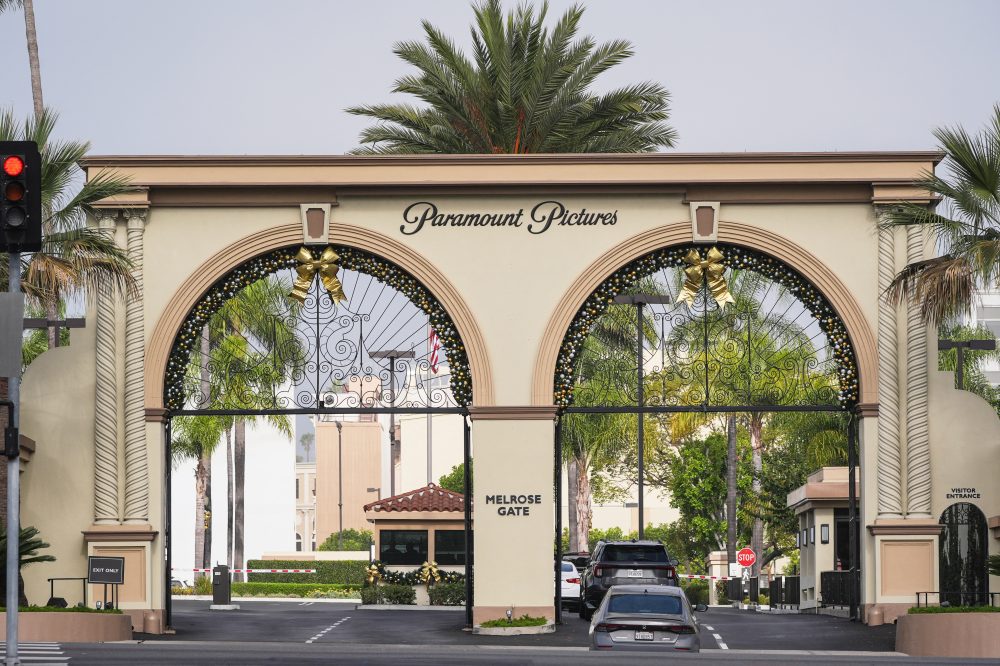
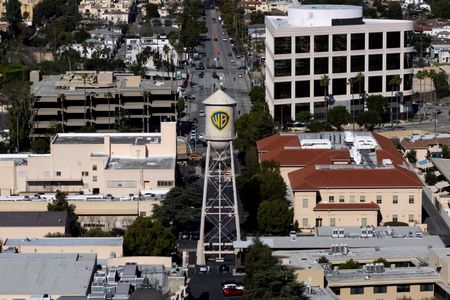
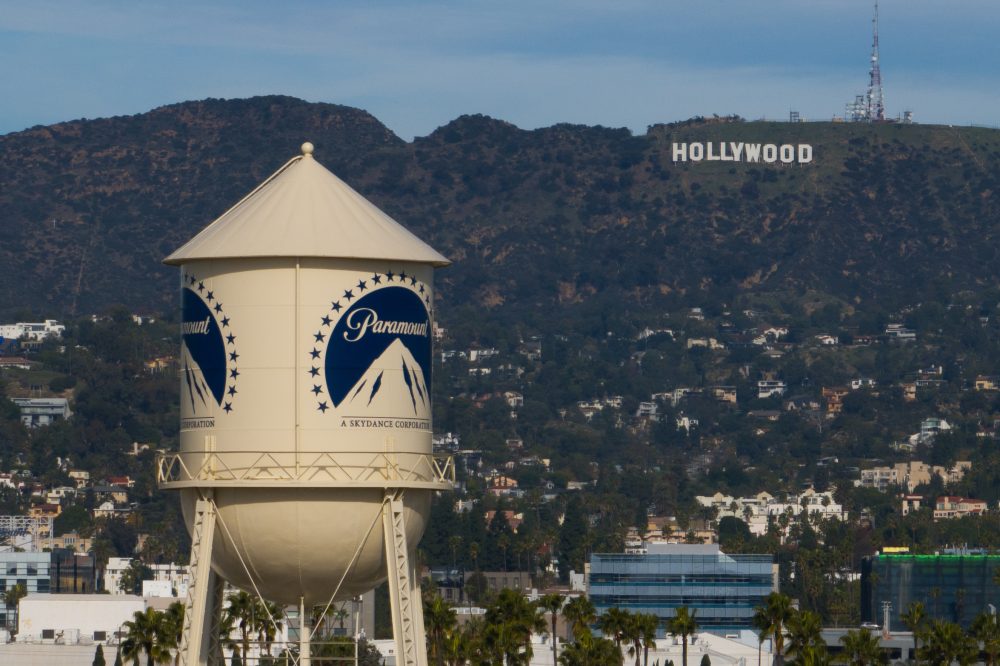
A massive entertainment merger announced this week will create a media powerhouse carrying approximately $79 billion in debt, company executives revealed Monday following the completion of their $110 billion acquisition deal.
Paramount CEO David Ellison disclosed the debt figure during an analyst conference call after finalizing the $31-per-share purchase of Warner Bros on Friday. The deal came together after Netflix chose not to increase its competing bid.
The newly combined companies plan to merge their streaming platforms into one service, according to Ellison, who believes this will provide the necessary resources and scale to better challenge Netflix’s market dominance.
Ellison noted that the merged companies currently reach over 200 million subscribers across more than 100 global markets.
“Unlike Netflix, Paramount’s business could use a shot in the arm and an immediate boost to achieve the greater scale it needs,” commented Matthew Dolgin, a senior analyst with Morningstar.
The acquisition brings together Paramount’s television networks CBS, MTV, Comedy Central and BET with Warner’s portfolio including CNN, HBO, TNT, and Food Network.
This combination creates one of entertainment’s most extensive collections of proven content, joining popular franchises like “Game of Thrones,” “Mission Impossible,” “Harry Potter,” “Top Gun,” DC Universe properties and “SpongeBob SquarePants.”
The bidding war for Warner Bros stretched across several months, with both Paramount and Netflix submitting competing offers for the studio and streaming operations.
Netflix initially secured an agreement in December to purchase those assets for $27.75 per share, totaling $82.7 billion, but excluded cable networks from the deal.
When Warner’s board determined Paramount’s proposal was superior, Netflix declined to increase its offer and withdrew from the competitive battle for properties including DC Comics, HBO and HBO Max.
The Paramount-Warner arrangement eliminates uncertainty about cable network assets that Warner stockholders would have kept under Netflix’s proposal, addressing concerns that had complicated Netflix’s bid.
The merged company plans to release at least 30 movies annually in theaters while keeping both Warner Bros and Paramount studio operations running.
Paramount covered the $2.8 billion termination fee Warner owed to Netflix on Friday. Company officials expect the transaction to finalize during the third quarter of this year.
Industry observers anticipate the merger will receive European Union antitrust clearance without major obstacles, with any required asset sales expected to be minimal, according to sources familiar with the regulatory process.
Paramount, under David Ellison’s leadership – son of tech billionaire Larry Ellison – maintains connections to the Trump administration that some analysts suggest could lead to more favorable regulatory review.
However, California State Attorney General Rob Bonta has announced his office is already examining the deal and will conduct a thorough investigation.
Movie theater operators have expressed concerns that combining two major Hollywood studios could eliminate jobs and reduce the total number of films available for theatrical release.
Financial experts are warning Delaware drivers to brace for continued high gas prices as escalating Middle East tensions threaten oil shipments through one of the world’s most important waterways.
The Strait of Hormuz, which carries more than one-fifth of the world’s oil supply, has become the focal point of market concerns as regional conflicts intensify. Multiple investment banks released analyses this week projecting sustained price increases at the pump.
Citigroup forecasts Brent crude oil will trade between $80 and $90 per barrel for at least the next week, though analysts expect prices could drop back to $70 per barrel if tensions ease.
Goldman Sachs calculated that current crude prices include an $18 per barrel risk premium due to the crisis. The investment firm projects this premium could shrink to $4 if shipping through the strait is only half-blocked for one month. However, Goldman warns that natural gas prices could skyrocket by 130% to reach 74 euros per megawatt hour if oil flows stop completely for a month.
Wood Mackenzie analysts predict even steeper price increases, saying oil could top $100 per barrel if tanker traffic doesn’t resume quickly through the strategic waterway.
“The disruption creates a dual supply shock: not only are current exports through the Strait halted, but OPEC+ additional volumes and ultimately most of OPEC’s spare capacity – typically a key lever for balancing the global oil market – are inaccessible while the waterway remains closed,” Wood Mackenzie researchers stated in their analysis.
The Organization of the Petroleum Exporting Countries and its allies had planned to increase production by 206,000 barrels daily in April, but those plans may be complicated by the shipping disruptions.
JPMorgan Chase reports that oil exports through the Strait of Hormuz have plummeted to approximately 4 million barrels per day from the typical 16 million, with shipments now limited mainly to Iranian crude as commercial tanker traffic has largely ceased.
The bank estimates that Gulf region oil producers maintain enough storage and tanker capacity to handle 25 days of stranded supply. However, JPMorgan warns that shipping restrictions lasting 3-4 weeks could force Gulf Cooperation Council nations to shut down production, potentially pushing Brent crude above $100 per barrel.
Societe Generale analysts offered a more optimistic outlook Monday, suggesting the most probable outcome would be a brief price spike followed by a partial decline as markets gain confidence in supply stability.
Bernstein research firm has already adjusted its long-term projections, raising its 2026 Brent oil price forecast from $65 to $80 per barrel. In worst-case scenarios involving extended conflict, Bernstein sees prices potentially reaching $120-$150 per barrel.
Macquarie Group’s global energy strategist Vikas Dwivedi said international markets could absorb a one to two-week closure of the Strait of Hormuz, but warned that price impacts would accelerate dramatically after three weeks and become severe after four weeks of disruption.
Graphics processing powerhouse Nvidia announced Monday it will commit $2 billion to each of two technology partnerships designed to accelerate its artificial intelligence chip capabilities.
The California-based company revealed separate deals with photonic technology firms Lumentum and Coherent, targeting improvements to data center processors that can handle increasingly demanding AI workloads.
Wall Street responded positively to the news, with both Lumentum and Coherent stock prices climbing more than 7% during pre-market trading following Monday’s announcement.
Company leadership previously indicated during Nvidia’s latest quarterly earnings call that the firm planned to deploy its substantial cash holdings toward strengthening the artificial intelligence ecosystem and enhancing model performance capabilities.
Photonic and light-based technologies have gained traction among semiconductor manufacturers seeking to accelerate chip performance speeds, particularly as inference processing demands continue escalating across the industry.
These strategic partnerships encompass multi-billion dollar procurement agreements from Nvidia, while securing future access and capacity rights to cutting-edge laser and optical networking solutions from both partner companies.
The financial backing will enable Lumentum and Coherent to expand their research and development efforts, increase production capacity, and strengthen operations while developing domestic manufacturing facilities within the United States.
Media and information giant Thomson Reuters announced Monday it has selected Gary E. Bischoping Jr., a veteran Dell Technologies executive, to serve as its new chief financial officer effective May 8, as part of a scheduled leadership succession plan with retiring CFO Mike Eastwood.
Bischoping, who currently works as a partner with private equity company Hellman & Friedman, will officially join Thomson Reuters on April 13. His background includes over 17 years with Dell Technologies, where he held various executive positions including chief financial officer and treasurer for one of the company’s divisions.
The leadership restructuring also involves Eastwood transitioning to chair the board of Thomson Reuters Foundation, taking over from Jim Smith, the former leader of the Toronto-headquartered technology and information corporation that operates Reuters News.
“He (Bischoping) brings the right combination of financial rigor, strategic insight, and operational leadership to guide Thomson Reuters through its next chapter — including the opportunities ahead in the AI era,” CEO Steve Hasker said in a statement.
Thomson Reuters indicated that both Eastwood and Bischoping will take part in the company’s first-quarter earnings conference call scheduled for May 5.
FRANKFURT, Germany — Global oil markets experienced significant volatility Monday as shipping interruptions in a crucial Middle East passage sparked concerns about potential supply shortages affecting the worldwide economy amid escalating U.S. and Israeli military actions against Iran.
Domestic crude oil prices climbed 7.4% to reach $71.97 per barrel, while the international Brent benchmark increased 7.7% to $78.46 per barrel.
The price jumps could translate into more expensive fuel costs for Delaware motorists and higher prices for consumer goods during a period when inflation continues to impact household budgets across the nation.
Market analysts focused heavily on developments surrounding the critical waterway at the Persian Gulf’s southern entrance, which handles approximately 20% of global petroleum shipments. Maritime data company Kpler reported via social media that vessel movements declined dramatically due to compromised satellite navigation technology, while Britain’s Maritime Trade Operations Centre documented multiple ship attacks in the surrounding waters and cautioned about increased electronic interference affecting vessel tracking systems.
Omani officials confirmed that an explosive drone vessel targeted a Marshall Islands-registered oil tanker in the Gulf of Oman Monday, resulting in one crew member’s death. Iranian forces have reportedly been targeting ships approaching the strategic waterway and are suspected of conducting numerous assaults.
Saudi Arabian officials announced they successfully intercepted Iranian drone strikes aimed at the Ras Tanura petroleum facility near Dammam, prompting a precautionary shutdown of the refinery, according to Saudi government media. Financial markets remain watchful for signs the hostilities might spread to additional oil-producing nations throughout the region.
Monday’s price surge fell within the $5-$10 per barrel increase that market experts anticipated based solely on conflict-related uncertainties. Some geopolitical risk factors had already influenced pricing before the current tensions began.
Extended interruptions to maritime traffic through the strait could drive prices significantly higher, as could infrastructure damage in other Gulf states. Conversely, a brief conflict with easily reversible disruptions might mean current price increases won’t persist long-term.
Global financial markets are experiencing significant volatility as Middle East tensions escalate, with crude oil prices jumping dramatically overnight in response to military action between the United States, Israel, and Iran.
Oil futures climbed as much as 10% following coordinated U.S.-Israeli strikes against Iran over the weekend, which have prompted substantial retaliation from Tehran. The conflict has effectively halted shipping traffic through the strategically important Strait of Hormuz, a critical pathway for global energy supplies.
Brent crude prices reached above $80 per barrel early Monday morning, marking their highest point since January 2025, before retreating slightly to around $79. Industry analysts suggest prices could potentially reach $100 per barrel if the regional conflict extends over several weeks.
The crisis has intensified following the reported death of Iranian Supreme Leader Ali Khamenei, leading to widespread retaliatory actions throughout the region. President Trump has suggested the military campaign could continue for up to four weeks, raising concerns about prolonged supply disruptions.
The extended closure of the Strait of Hormuz waterway threatens to create substantial stress on worldwide oil supplies. Even a planned OPEC+ production increase scheduled for April may provide little relief, as regional producers face significant challenges exporting their oil while Gulf navigation remains disrupted.
The energy price surge carries important implications for inflation and Federal Reserve policy decisions. For the first time in over a year, crude oil prices are showing significant year-over-year gains, adding to concerns following hot inflation data released Friday. Financial markets have pushed back expectations for the next Federal Reserve rate cut to September.
Treasury markets are experiencing complex movements as investors weigh competing factors. While government bonds initially gained on safety concerns and geopolitical risks, inflation worries from rising energy costs have caused two-year yields to rebound from three-year lows, erasing Friday’s declines.
The U.S. dollar has strengthened considerably as energy price concerns and regional conflict fears impact currencies of major energy-importing nations including Japan, China, and European countries.
Stock markets have declined but remain relatively stable, with U.S. index futures and Asian and European benchmarks falling between 1% and 2%.
Shipping data from Sunday revealed that at least 150 oil tankers have anchored in Gulf waters, while three vessels sustained damage during Iranian retaliatory strikes against U.S.-Israeli forces.
The duration of this expanding regional conflict will be crucial in determining how energy markets and broader financial systems respond in the coming days and weeks.
Economic data scheduled for release today includes U.S. manufacturing reports from S&P Global and ISM for February, expected between 9:45 and 10:00 a.m. Eastern time.
Norwegian Cruise Line Holdings announced Monday that its annual earnings forecast falls short of what Wall Street analysts had predicted, as mounting operational expenses continue to eat into profits despite strong interest in premium cruise packages.
The cruise company’s stock price tumbled approximately 7% during pre-market trading sessions, alongside similar declines for industry competitors Carnival Corp and Royal Caribbean. The broader market downturn reflected investor concerns over intensifying tensions involving the United States, Israel, and Iran.
The Miami-based cruise operator is experiencing a decline in fresh reservations as cost-conscious travelers hesitate to book expensive vacation packages while dealing with ongoing inflation pressures and uncertainty surrounding potential tariff policies in America.
Rising fuel expenses linked to growing international conflicts, particularly in Middle Eastern regions, combined with costs associated with dry dock maintenance, new vessel deliveries, and routine upkeep, are putting additional pressure on the company’s profit margins.
The cruise line now projects adjusted earnings of $2.38 per share for the 2026 fiscal year, falling below the $2.55 per share that industry analysts had anticipated, based on LSEG data compilation.
For the fourth quarter, Norwegian posted revenue totaling $2.24 billion, which came in under the $2.35 billion that financial experts had forecasted.
A major Dutch technology company that plays a crucial role in manufacturing the world’s most advanced computer chips is setting its sights on significant expansion to capitalize on the artificial intelligence boom.
ASML Holding, currently the sole producer of extreme ultraviolet (EUV) machinery essential for creating cutting-edge AI processors, has revealed ambitious plans to broaden its equipment offerings, according to a senior company official speaking with Reuters.
The Netherlands-based corporation has spent over ten years developing its EUV technology, investing billions of dollars in systems that companies like Taiwan Semiconductor Manufacturing Co and Intel depend on for producing the most sophisticated AI chips available today. While continuing to advance its EUV capabilities with next-generation products in development, ASML is now looking to diversify its portfolio.
The company’s strategy involves entering the advanced packaging market, which focuses on creating tools that bond and link multiple specialized processors together – a critical component in AI chip construction and the high-performance memory systems that support them. This expansion will also incorporate artificial intelligence into both new ventures and existing operations.
“We look, not just for the next five years, we look at the next 10, maybe 15 years,” Chief Technology Officer Marco Pieters explained to Reuters. “(We look at) what are potential directions the industry could take, and what would it require in terms of packaging, bonding, etc.?”
ASML’s current EUV systems perform lithography, utilizing light to create intricate patterns on silicon wafers during chip production. The company is also investigating whether it can increase the maximum chip size beyond its present limitation – approximately the dimensions of a postage stamp – which currently restricts processing speed.
The technology leadership recently underwent changes when Pieters was elevated to CTO in October, taking over from Martin van den Brink, who led the technology division for nearly four decades. ASML restructured its technology operations in January to emphasize engineering positions over administrative roles.
Wall Street has high expectations for Pieters and CEO Christophe Fouquet, who assumed his position in 2024. The company’s stock reflects investor confidence in its EUV market dominance, trading at approximately 40 times forward earnings compared to Nvidia’s 22 times earnings ratio. ASML’s market capitalization of $560 billion has seen shares climb more than 30% this year.
The corporation is accelerating efforts to manufacture chip packaging machinery and developing equipment for next-generation AI processor production.
“We’re actually researching that – to what extent can we participate in it, or what we can add to that part of the business,” Pieters stated.
Drawing from his software development background at ASML, Pieters noted that as the company’s equipment becomes faster, engineers will implement AI to accelerate machine control software and enhance chip inspection processes during manufacturing.
The chip design landscape has transformed dramatically in recent years. Previously, companies like Nvidia and Advanced Micro Devices created processors that were essentially flat, resembling single-level structures. Today’s chips increasingly resemble multi-story buildings with various levels connected through microscopic pathways.
Due to size constraints, combining chips in vertical stacks or horizontal arrangements allows designers to boost processing speeds for the complex computations needed to build large AI models or operate chatbots like OpenAI’s ChatGPT.
The precision and complexity required for constructing these multi-layered chips has transformed packaging from a low-profit, high-volume industry into a more profitable manufacturing segment for companies like ASML. TSMC has employed advanced packaging techniques to build Nvidia’s most sophisticated AI processors.
“But we also see more of that advanced packaging is coming to the front end,” Pieters observed, referring to TSMC and similar companies’ activities. “Accuracy is becoming more and more important.”
After analyzing chip manufacturers’ roadmaps – including memory producers like SK Hynix – Pieters recognized the growing demand for additional machinery to help companies produce vertically stacked chips and similar configurations.
In the previous year, ASML unveiled a scanning device called the XT:260, specifically designed to assist in manufacturing advanced memory chips for AI applications and AI processors themselves. Company engineers are currently exploring additional equipment possibilities, according to Pieters.
“One of the things I’m doing is also looking at what could be a product portfolio in that direction,” Pieters revealed.
As AI chips continue growing in size, the company is investigating supplementary scanner systems and lithography equipment to enable even larger chip production.
The scanning technology leverages expertise in optics and specialized knowledge about precise silicon wafer handling, giving ASML advantages in developing future equipment, Pieters explained.
“It will co-exist next to what we’ve been doing for the last 40 years,” he concluded.
A major European satellite operator announced Monday it will reduce its investment spending for 2026 while gearing up for a significant satellite deployment later this year.
SES, headquartered in Luxembourg, revealed plans to launch as many as 13 satellites in the coming months while trimming its capital expenditure forecast by 100 million euros to approximately 700 million euros for 2026.
The company delivered annual financial results that aligned with Wall Street predictions on Monday. Following the announcement, SES stock initially fell as much as 7% during morning trading in Paris before recovering to post a 3.7% gain by mid-morning.
Financial analysts from ING noted that SES exceeded expectations in its fourth-quarter performance, though they pointed out the company has not released projections beyond 2026. The satellite deployment timeline has been pushed to the latter half of this year, which may delay anticipated revenue increases from the new platform.
SES completed its massive $3.1 billion purchase of Intelsat in the previous year. The combined entity generated annual revenue of 2.63 billion euros ($3.09 billion) and adjusted earnings before interest, taxes, depreciation and amortization of 1.2 billion euros, figures that matched industry analyst forecasts.
According to company officials, growing demand for secure communication services across Europe helped balance out negative effects from the U.S. government shutdown and budget reductions implemented by the now-defunct Department of Governmental Efficiency.
The satellite operator secured 1.8 billion euros in new business contracts during 2025, bringing its total contract backlog to more than 6.6 billion euros.
Company leadership projects steady revenue and core earnings for 2026 when compared on an equivalent basis. The reduced capital spending reflects the company’s strategy to balance investments between its medium orbit O3b mPOWER satellite network and the European Union’s low orbit IRIS² initiative.
SES indicated it continues working alongside the European Commission to confirm costs and implementation schedules for IRIS², which represents the EU’s independent connectivity infrastructure designed to rival Elon Musk’s Starlink service.
Finnish telecommunications equipment manufacturer Nokia announced Monday that it’s broadening its artificial intelligence technology partnerships with TIM Brasil and Deutsche Telekom, as the company works to benefit from the worldwide surge in AI-powered network solutions.
The agreements build on Nokia’s recent multi-year deal with Telefonica to supply network infrastructure for data centers throughout Spain, demonstrating how artificial intelligence technology is generating fresh income opportunities for the Finnish company.
Nokia will broaden its network collaboration with TIM Brasil beyond the current 5G network upgrades and AI service preparations in São Paulo state to include 14 additional states spanning four regions, ultimately serving approximately 42% of Brazil’s population.
According to a Nokia statement obtained by Reuters, the expanded partnership will allow TIM Brasil to deliver AI-powered services to corporate clients through Nvidia’s AI-RAN technology platforms.
In a separate announcement Monday, Nokia and Deutsche Telekom revealed plans to enhance their cooperation in developing cloud-based, disaggregated, and AI-native radio access network technology.
The companies stated this collaboration will establish the foundation for programmable and automated mobile networks that are less complex, more efficient, and better suited for future connectivity requirements as artificial intelligence transforms the telecommunications industry.
These agreements represent the global telecommunications industry’s push to modernize networks with 5G technology to support widespread AI implementation, creating substantial business opportunities for equipment suppliers like Nokia and Ericsson.
Nokia purchased American optical networking company Infinera last year to position itself for the AI expansion, followed by a $1 billion investment from chipmaker Nvidia, which acquired a 2.9% ownership stake in the Finnish corporation.
The new partnerships are central to Nokia’s most significant corporate reorganization since divesting its famous mobile phone division over ten years ago, as the company focuses on artificial intelligence and data center markets to compensate for declining investment and lost contracts in 5G technology.
Danish pharmaceutical company Novo Nordisk announced Monday its commitment to a massive expansion project at its Irish manufacturing site, allocating 432 million euros for the initiative.
The investment, valued at approximately $506.3 million in U.S. currency, will focus on enhancing production capabilities at the company’s existing facility located in Athlone, Ireland.
The announcement came from the Copenhagen-based pharmaceutical manufacturer, which specializes in diabetes care and other medical treatments.
Currency conversion calculations show the euro amount translates to the U.S. dollar figure based on an exchange rate where one dollar equals 0.8530 euros.
Amazon’s cloud computing division experienced significant power and connectivity disruptions at its data centers in Bahrain and the United Arab Emirates on Monday, coinciding with Iranian retaliatory attacks across the Gulf region that targeted airports, ports, and residential areas.
According to the company’s status page, two data center clusters operated by Amazon Web Services in the UAE lost power on Monday. The tech giant had previously reported on Sunday that one UAE zone was impacted when unspecified objects hit the facility, causing sparks and flames that forced officials to cut power to the site.
“We can confirm that a localized power issue has affected another availability zone” in the UAE region, Amazon Web Services stated.
While the cloud computing provider reported some service restoration in the region earlier Monday, it has since advised customers to use its services in other geographic areas. The company warned that full recovery would be “multiple hours away.”
When questioned about potential connections between the UAE incident and the Iranian military strikes, Amazon declined to confirm or deny any link.
Amazon Web Services also acknowledged experiencing localized power problems at one of its operational zones in Bahrain during the same timeframe.
Financial markets took a sharp downturn Monday morning, with stock futures falling more than 1% as escalating tensions in the Middle East sent investors scrambling for safer investment options during what promises to be a data-heavy week for economic indicators.
Commodity markets saw oil prices surge while investors flocked to traditional safe-haven investments, pushing gold up approximately 2% and driving bond values higher. The flight to safety pushed the 10-year Treasury yield down to its lowest point in nearly a year.
Ongoing military operations by American and Israeli forces against Iran have intensified following weekend strikes that resulted in the death of Supreme Leader Ayatollah Ali Khamenei. Tehran responded with widespread missile attacks throughout the region, heightening concerns that the conflict may expand to involve additional nations in the area.
Media reports indicate President Donald Trump suggested the military action could continue for up to four more weeks, stating that operations will persist until American objectives are met.
The international crisis arrives as investors prepare for several important economic announcements. Today will bring manufacturing PMI data from last month, followed later this week by January retail sales numbers, ADP employment statistics, and the highly anticipated jobs report.
Extended increases in oil costs could reignite concerns about rising prices, particularly as traders are already grappling with elevated inflation data that has strengthened predictions the Federal Reserve will maintain current interest rates rather than implementing cuts soon.
Early Monday morning trading showed significant declines across major indices: Dow futures dropped 680 points or 1.39%, S&P 500 futures fell 100.5 points or 1.46%, and Nasdaq 100 futures declined 464 points or 1.86%.
February proved challenging for financial markets, with increased volatility stemming from concerns about artificial intelligence expenses and market disruption, renewed tariff anxieties, and persistent international tensions that kept investors cautious about taking risks.
Both the S&P 500 and Nasdaq experienced their worst monthly performance since March 2025. Meanwhile, the Dow managed modest gains, extending its winning streak to ten months – the longest such run since a similar ten-month period that concluded in January 2018.
Friday’s trading session saw financial and technology stocks leading the decline, with the Dow finishing down more than 1%, the Nasdaq falling 0.9%, and the S&P 500 closing 0.4% lower.
A major British medical device manufacturer is projecting significant profit growth for 2026, despite facing headwinds from international trade tensions and market difficulties in China.
Smith & Nephew announced on March 2nd that it anticipates an 8% organic increase in trading profits for 2026, driven by improved revenue efficiency and cost-reduction measures that will help counterbalance challenges from inventory adjustments, tariff impacts, and ongoing struggles in the Chinese marketplace.
The healthcare technology firm recently wrapped up a comprehensive three-year transformation initiative that restructured its bone and joint replacement division, reduced operational expenses, and accelerated expansion in its wound care and sports medicine segments. This overhaul came after the company faced margin pressures due to rising inflation and supply chain complications.
As part of its updated business strategy announced in December, Smith & Nephew intends to streamline its product offerings and decrease inventory levels by approximately $500 million, while channeling investments toward faster-growing sectors like sports medicine.
The manufacturer, known for producing joint implants, wound care products, and various surgical instruments, posted trading profits of $1.21 billion for the year ending December 2025. This figure represents a 15.5% increase compared to the previous year and aligned with analyst projections.
LONDON – Telecommunications giant Vodafone announced Monday it has struck a partnership agreement with Amazon Leo, the tech company’s satellite constellation operating in low Earth orbit, to provide internet connectivity to cellular towers located in isolated regions throughout Europe and Africa.
The satellite service will deliver internet speeds reaching 1 Gbps for downloads and 400 Mbps for uploads, allowing Vodafone to connect its network infrastructure to towers situated in difficult-to-access areas without the costly process of laying fiber optic cables, according to the telecommunications company.
The mobile carrier plans to begin utilizing Amazon Leo’s satellite technology for connecting cellular base stations in Germany and additional European nations during 2024, with plans to expand the service throughout Africa via its Vodacom division in subsequent phases.
According to Vodafone, Amazon Leo currently operates more than 200 satellites in space, with hundreds of additional units constructed and prepared for deployment.
In a separate initiative, Vodafone intends to provide satellite connectivity directly to consumer smartphones through a collaboration with AST SpaceMobile, though the company has not announced a launch timeline for this service.
A transportation and environmental advocacy organization released findings Monday indicating that expanding battery manufacturing within Europe could dramatically narrow the cost difference between domestically produced batteries and Chinese imports.
Transport & Environment’s analysis shows that ramping up European production could reduce the current 90% price gap to approximately 30%, making locally manufactured batteries far more competitive in the marketplace.
The European Union’s executive branch plans to introduce its “Industrial Accelerator Act” on Wednesday, legislation that would mandate preference for domestically manufactured goods when government funding is involved. The proposed law targets critical industries such as battery production, renewable energy equipment, hydrogen technology, nuclear power, and electric vehicles.
However, some automobile manufacturers have expressed concerns that requirements for local content could drive battery costs to unaffordable levels, potentially harming their vehicles’ market competitiveness.
According to T&E’s research, enhanced production methods – including reduced waste rates, improved worker expertise, and increased automation – could shrink the cost difference to $14 per kilowatt-hour by 2030, down from a projected $41.
For typical electric vehicle buyers, this translates to a price difference of roughly 500 euros ($590), which could be further reduced through government incentives or viewed as protection against supply chain disruptions like China’s existing restrictions on essential minerals and rare earth elements.
“Europe needs a domestic battery industry as an insurance policy against its supply chains being weaponised. Local content requirements are the only policy on the table to avoid another Northvolt. The cost of Made-in-EU rules is a sovereignty premium worth paying,” stated Julia Poliscanova, T&E’s senior director for vehicles & e-mobility supply chains.
The organization emphasized that cost reductions would only materialize if European local content mandates enable companies like ACC, Powerco, and Verkor to increase their production capacity.
T&E recommended that the Made in Europe initiative should clearly specify that government support programs encompass electric vehicle tax credits for individual buyers as well as corporate fleet programs for businesses and their employees.
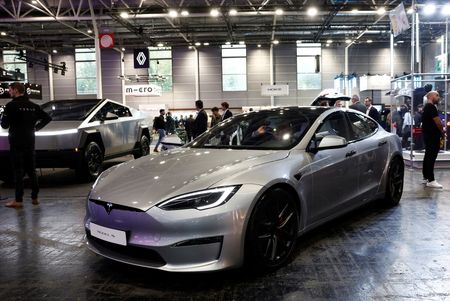
COPENHAGEN – New vehicle registration data from Denmark reveals a notable decline in Tesla sales during the month of February.
According to information released Monday by Mobility Denmark, the country saw 419 new Tesla vehicles registered last month, representing an 18% drop compared to February of the previous year.
The registration figures highlight changing patterns in electric vehicle adoption in the Scandinavian nation, where Tesla has been a prominent player in the growing electric car market.
Oil markets are experiencing significant turbulence as a major shipping crisis unfolds in one of the world’s most critical energy corridors.
The Strait of Hormuz, which handles approximately 20% of global seaborne oil shipments along with substantial amounts of liquefied natural gas and fertilizer, has become a bottleneck as vessel operators hesitate to navigate the waterway. Tracking data reveals numerous oil tankers accumulating on both sides of the passage, reluctant to proceed through what has become an increasingly dangerous route.
Three tankers have already sustained damage in the Gulf region, prompting shipping companies to reconsider transit plans, particularly given the skyrocketing costs of war-risk insurance coverage. Charter fees for the largest oil tankers had already increased substantially before recent attacks, and current events are driving costs even higher.
Much of the affected oil supply typically flows toward Asian markets, with China serving as a primary destination for Iranian crude exports.
While the waterway remains technically open, the situation could persist for an extended period. President Trump indicated to the Daily Mail that military operations might continue for four weeks or until the United States achieves its “very strong objectives,” though he did not specify what those goals entail.
Reports suggest U.S. forces have conducted over 1,000 strikes throughout Iran, targeting not only air defense and intelligence facilities but also storage facilities and military installations. Questions remain about whether sufficient advanced weaponry exists to sustain operations for a full month.
The conflict escalated further when Israel conducted fresh airstrikes on Tehran Sunday, prompting Iran to respond with additional missile attacks. This exchange occurred following the death of Supreme Leader Ali Khamenei.
OPEC+ recently announced plans to increase crude production by 206,000 barrels daily starting in April, but this represents merely 0.2% of worldwide oil consumption, and most of that supply would still require shipping through potentially affected routes.
Market participants responded by driving Brent crude prices up nearly 6% to approximately $77 per barrel, after briefly reaching $82. Year-to-date gains now exceed 26%, with some market observers suggesting $100 per barrel as a potential target. Such sustained increases could reignite inflationary pressures while effectively taxing consumers and businesses worldwide.
Financial markets showed mixed reactions, with 10-year Treasury yields initially dropping to an 11-month low of 3.926% before recovering to 3.970%. Federal Reserve fund futures declined slightly through December, suggesting reduced expectations for aggressive interest rate cuts, with June action now considered a coin flip.
Currency markets remained relatively stable, with the dollar gaining modestly against the euro and yen while declining slightly versus the Swiss franc. The Norwegian krone, typically benefiting from oil price increases, saw limited Asian trading activity.
Asian stock markets opened lower, with airline and banking sectors experiencing the steepest declines. European and U.S. stock futures also dropped, though they recovered from early session lows.
TOKYO – Toyota Motor Corporation revealed Monday it will increase its buyout offer for subsidiary Toyota Industries (TICO) to 20,600 yen per share, equivalent to approximately $132, while pushing the tender offer deadline to March 16.
The automotive giant’s enhanced bid represents a significant jump from its earlier proposal of 18,800 yen per share for the forklift manufacturing company. Monday had originally marked the closing date for the previous offer.
The increased share price comes with stipulations, requiring Toyota to secure loan guarantees from its banking partners. This development marks the newest chapter in an extended dispute between the world’s top automaker and activist investor Elliott Investment Management that has dragged on for several months.
According to Toyota’s regulatory filing, Elliott Investment Management – which had pressured the car manufacturer to increase its acquisition price – has now agreed to sell its Toyota Industries holdings provided specific terms are met.
The current exchange rate stands at $1 equals 156.59 yen.
The Australian Securities Exchange faces a challenging transition as it searches for new leadership while dealing with mounting legal and operational difficulties.
Helen Lofthouse announced last month that she will step down as CEO in May, ending an 11-year tenure with the exchange, including four years in the chief executive role. An international executive search firm is currently leading the hunt for her replacement.
Market experts and investors believe the incoming CEO will encounter significant obstacles in rebuilding the exchange’s reputation as it competes with other regional and global markets for new company listings and institutional investment.
The leadership transition occurs during a period of heightened concerns about global financial market infrastructure stability, driven by rapidly advancing technology and increasing trade volumes.
In January, the Australian exchange recorded average daily trading volumes of A$6.9 billion ($4.9 billion), significantly lower than Hong Kong’s exchange volume of HK$272.3 billion ($34.81 billion). The Australian bourse ranks ninth in the Asia-Pacific region by total market capitalization, according to World Federation of Exchanges data.
Omkar Joshi, founder of Opal Capital Management, emphasized the need for credible leadership. “You need someone that restores credibility and really does focus on understanding the problems that they are facing, and really just going from the bottom up to fix those issues,” Joshi stated.
“They’ve been making mistakes which have been of their own accord,” he added. “And to stop doing that, they need to first understand what’s actually driving that and get on top of that.”
The exchange declined to provide comments regarding the CEO search process. However, ASX Chair David Clarke stated last month that the next leader must “have strong credentials in financial markets, transformation and risk management.”
Sean Sequeira, chief investment officer at Australian Eagle Asset Management and an ASX shareholder, stressed the importance of regulatory experience. “While shareholders would love near-term returns, for the longevity of the company, the most important part for them at the moment is to manage the regulatory risk, which would mean keeping those regulators that they are in touch with very happy with what they’re doing,” Sequeira explained.
“That’s probably the reason why (Lofthouse) was encouraged to move on … regulators have picked up a number of missteps. Those missteps probably resulted in a requirement for ASX to make some sort of change.”
The Australian exchange dominates approximately 80% of the country’s A$9.9 billion daily equity trading, with smaller competitor CBOE Australia handling the remaining 20%, based on regulatory information.
The organization’s most significant challenge emerged publicly in 2022 when it announced a A$250 million write-down for a failed blockchain technology project designed to modernize its outdated software systems and enhance trading capacity to better compete internationally.
This initiative, called CHESS, is now the subject of legal action by the Australian Securities and Investments Commission (ASIC), which alleges the ASX misled investors regarding project timelines and development progress. Federal Court hearings are scheduled to begin in mid-June.
Following this setback, the exchange has encountered numerous additional problems, including deploying a replacement software system that won’t be completely functional until 2029, along with multiple regulatory investigations that have frustrated investors and market participants.
Technical difficulties continued into late 2024 when the exchange experienced a system failure that postponed trade settlements and raised questions about its capacity to maintain essential market infrastructure. The exchange’s announcement platform also froze on December 1 of last year.
Emanuel Datt, managing director of fund manager Datt Capital, criticized the exchange’s performance. “The ASX’s near-monopoly means they don’t face the pressures that other businesses in Australia deal with, which reduces the urgency of change,” Datt observed.
“The errors we’ve seen, such as consistent outages for the announcement platform, suggest a culture of sloppiness that tarnishes the reputation of such an important piece of financial market infrastructure.”
Financial markets are preparing for continued uncertainty as artificial intelligence threatens to reshape entire industries, with Wall Street eagerly awaiting next week’s employment figures for additional clues about the technology’s economic impact.
February’s employment report, scheduled for release March 6, takes center stage among upcoming economic indicators, while chip manufacturer Broadcom prepares to deliver one of the final fourth-quarter earnings announcements.
Investment professionals have been fixated on AI’s transformative power in recent weeks, causing stock values in sectors like software development, financial advisory services, and property management to plummet amid fears of widespread industry changes.
“There continues to be this … back and forth about who might be the victim and those that will actually emerge winners because they are harnessing AI as opposed to being replaced by it,” said Kristina Hooper, chief market strategist at Man Group.
“There is very little definitive right now about that, and so I think that will continue to be a concern.”
Share prices in technology-related fields continue showing extreme reactions to artificial intelligence announcements. Even Nvidia, considered a leading indicator for AI trends, saw its stock drop more than 5% Thursday following its quarterly earnings release, despite high investor expectations. Market participants worry whether Nvidia’s major clients can generate adequate profits to support their enormous investments in server farms and related infrastructure.
Although technology stocks have struggled, positive performance in sectors like manufacturing and everyday consumer goods has helped maintain stability across major market indices.
Technology and banking sector declines pulled down primary market measures Friday, with both the S&P 500 and Nasdaq Composite recording their steepest monthly drops in approximately twelve months during February.
The S&P 500 benchmark index showed a 0.5% gain for 2026 through Friday’s close.
“The U.S. equity market is sort of in its late cycle, trying to find the winners and losers of this new disruptive technology and pretty much treading water,” said John Velis, Americas macro strategist at BNY.
Economists predict February will show 60,000 new positions added, according to Reuters polling. This follows January’s unexpectedly strong performance, which delivered 130,000 additional jobs while pushing unemployment down to 4.3%.
January’s employment data eased concerns about labor market deterioration, but “the concern is that January is a one-off,” said Paul Nolte, senior wealth adviser and market strategist at Murphy & Sylvest Wealth Management.
“We saw a good January jobs report, but we also have seen a really weak 2025 for the job market,” Hooper said. “And so the question becomes, where do we go from here?”
Market watchers will also analyze the employment data for hints about Federal Reserve interest rate policy. Futures markets currently indicate the next rate reduction will occur in June or July, following Fed Chair Jerome Powell’s May departure and the potential leadership of nominated successor Kevin Warsh.
The Federal Reserve reduced rates last year responding to employment weakness but halted further cuts in January, and robust job numbers might cause investors to delay their expectations for additional reductions. Lower interest rates typically correlate with higher valuations for stocks and other investments.
BNY’s Velis noted that market responses to employment statistics will reveal which factors most influence equity investors. Strong data accompanied by declining stock prices would “be a sign that the rate argument is important,” Velis explained.
Additional economic announcements scheduled for the coming week include manufacturing and service industry activity measurements. January’s retail spending report is also expected March 6.
Beyond Broadcom’s Wednesday earnings release, financial results are anticipated from retail giants Best Buy and Target.
Financial professionals continue seeking evidence of AI’s economic effects, both beneficial and harmful. During a Reuters interview this week, departing Atlanta Fed President Raphael Bostic suggested the United States might face a period of persistently elevated unemployment as companies implement AI solutions to reduce workforce needs.
“Major technological shifts provoke both excitement and anxiety,” Keith Lerner, chief investment officer at Truist Advisory Services, said in a research note on Thursday. “More recently… optimism has begun to give way to heightened anxiety and increasingly bleak narratives about AI’s impact on work, productivity, and economic outcomes.”
Escalating military tensions in the Middle East sent oil prices soaring on Monday as investors fled to safer investments amid concerns the conflict could drag on for weeks.
Brent crude oil prices leaped 9% to reach $79.42 per barrel, while U.S. crude oil climbed 8.6% to $72.61 per barrel. Gold also gained ground, rising 1.4% to $5,350 an ounce as investors sought refuge from market volatility.
The price spike comes as military operations involving the United States and Israel against Iran continue with no signs of de-escalation, while Iran has responded with missile attacks throughout the region, raising fears neighboring countries could be drawn into the fighting.
In an interview with the Daily Mail, President Donald Trump indicated the conflict might persist for another four weeks, stating on social media that attacks would continue until American goals are achieved.
Market attention has focused on the Strait of Hormuz, a critical shipping lane through which approximately one-fifth of global seaborne oil and 20% of liquefied natural gas passes. Though the waterway remains open, ship tracking data reveals tankers accumulating on both sides, with crews either fearful of attacks or unable to secure voyage insurance.
“The most immediate and tangible development affecting oil markets is the effective halt of traffic through the Strait of Hormuz, preventing 15 million barrels per day (bpd) of crude oil from reaching markets,” said Jorge Leon, head of geopolitical analysis at Rystad Energy.
“Unless de-escalation signals emerge swiftly, we expect a significant upward repricing of oil.”
Extended high oil prices could reignite inflation worldwide while acting as an additional cost burden on businesses and consumers that might reduce economic demand.
OPEC+ members agreed Sunday to a modest production increase of 206,000 barrels daily for April, though much of that oil must still navigate Middle Eastern shipping routes by tanker.
“The nearest historical analogue in our view is the Middle East oil embargo of the 1970s, which increased oil prices by 300% to around $12/bbl in 1974,” said Alan Gelder, SVP of refining, chemicals and oil markets at Wood Mackenzie.
“That is only US$90/bbl in 2026 terms. Eclipsing this in today’s market concerned about significant losses of supply seems very achievable.”
The oil shock would particularly impact Japan, which relies entirely on imported oil, contributing to a 1.1% decline in Nikkei futures.
U.S. stock markets also felt the pressure, with S&P 500 futures dropping 0.8% and Nasdaq futures falling 0.9%.
Currency markets reflected the oil price shock as the dollar weakened 0.2% against the safe-haven Swiss franc to 0.7673. However, since America exports more energy than it imports, and U.S. Treasury bonds remain attractive during uncertain times, the dollar found some support, pushing the euro down 0.3% to $1.1780.
The Japanese yen’s typical safe-haven status was complicated by Japan’s complete dependence on oil imports, leading to mixed currency flows. The dollar gained 0.2% to 156.31 yen while rising significantly against the Australian dollar, which traders often sell during periods of global uncertainty.
In bond trading, 10-year Treasury futures strengthened 3 ticks, with yields having dropped below 4% last week for the first time since late November.
Bond prices had already received a boost Friday when UK mortgage company MFS entered administration following accusations of financial misconduct. The firm’s collapse raised broader credit concerns, as major banks were among its lenders. MFS had outstanding debts of 2 billion pounds ($2.69 billion).
The banking sector news, combined with concerns about artificial intelligence-related stocks, weighed on Wall Street more broadly.
Investors must also navigate a busy week of U.S. economic releases, including the ISM manufacturing survey, retail sales figures, and the closely watched employment report.
Weak economic data could undermine confidence following a disappointing fourth quarter, but might also increase expectations for Federal Reserve interest rate cuts.
Current market pricing suggests a 53% probability of rate reduction in June and approximately 60 basis points of cuts throughout the year.
Stock prices for Australia’s national airline Qantas Airways dropped sharply on Monday, falling more than 10% to reach their lowest point in nearly a year following weekend military strikes involving the United States, Israel and Iran that sent fuel costs soaring.
When trading began Monday in Australia, Qantas stock prices declined as much as 10.4% to A$8.92 per share – marking the lowest trading level since May 2, 2025. By late Monday, the losses had moderated somewhat with shares down 5.8% by 2345 GMT.
International aviation continues to face significant disruption as the Iranian conflict has forced major Middle Eastern travel centers like Dubai and Doha to shut down operations for a second consecutive day, leaving tens of thousands of travelers stranded across the globe and canceling thousands of scheduled flights.
Other regional carriers also experienced stock declines, with Virgin Australia – the country’s second-largest airline – seeing shares drop as much as 3.5% on Monday to A$3.03 each, hitting nearly month-low levels before recovering to post gains of approximately 1.9%.
Meanwhile, Air New Zealand’s stock fell up to 0.5% to NZ$0.553 per share, reaching its lowest trading point since April 7, 2025, though the airline’s losses were later recovered to close unchanged for the day.
Crude oil markets experienced their sharpest spike in months on Monday, with prices climbing over 8% as military tensions between Iran and Israel intensified, threatening vital shipping lanes in the Middle East.
International Brent crude reached a peak of $82.37 per barrel before settling at $79.34, marking an increase of $6.47 or 8.88% by late Monday. Meanwhile, U.S. West Texas Intermediate crude climbed $5.36 to $72.38 per barrel, after earlier touching $75.33.
The price surge followed Israel’s launch of fresh military strikes against Tehran on Sunday, prompting Iran to respond with additional missile attacks. This escalation came one day after the death of Supreme Leader Ali Khamenei, creating widespread uncertainty across the Middle East and global financial markets.
Maritime operations in the region suffered significant casualties, with at least three oil tankers sustaining damage near the Gulf coast. One crew member was killed as vessels became caught in the crossfire during Iran’s retaliatory strikes against U.S. and Israeli targets, according to shipping industry sources and government officials who spoke Sunday.
The disruption to petroleum shipments from this crucial oil-producing area could translate to higher fuel costs for consumers as global energy markets react to supply concerns.
Delaware motorists should prepare for higher prices at the pump as escalating tensions with Iran threaten to push gas costs above $3 per gallon for the first time in over three months, energy experts predict.
The anticipated price jump comes as ongoing conflict between the United States and Iran, a major oil-producing nation, creates disruptions in worldwide petroleum supply chains, according to industry analysts.
This development poses significant political challenges for President Donald Trump and the Republican Party as they approach the November midterm elections, with inflation continuing to weigh heavily on voters’ minds. Trump has frequently taken credit for reduced fuel costs since his return to the presidency last year, though these claims are often inaccurate.
Patrick De Haan, who tracks retail fuel costs for GasBuddy, forecasts that nationwide pump prices may exceed $3 per gallon on Monday, marking the first occurrence this year. The last time prices crossed this threshold was in November 2025, with costs dropping as low as $2.85 per gallon in February.
“Oil will move first. Gasoline will follow — but gradually,” De Haan stated in a blog post following the military strikes against Iran.
Iran ranks among the globe’s leading petroleum suppliers, and Tehran has announced the closure of navigation through the Strait of Hormuz after U.S. and Israeli airstrikes resulted in the death of Supreme Leader Ali Khamenei.
The Hormuz waterway serves as a vital passage in the Middle East Gulf, with approximately one-fifth of global oil shipments passing through by tanker. At least three vessels have sustained damage in the area, prompting major shipping companies to announce they will bypass the strait.
International oil benchmark Brent crude surged 10% to roughly $80 per barrel in over-the-counter trading Sunday due to the intensifying situation, with some market observers projecting Brent could reach $100 as the Middle East enters a fresh period of warfare.
Bob McNally, who heads the Rapidan Energy Group consulting firm, believes the White House appears prepared to accept the political consequences of elevated oil prices while pursuing its foreign policy goals.
“Their eyes are wide open to the risk, and I expect they will focus on shortening the amount of time Iran has to control the flow of energy through the Strait of Hormuz,” McNally explained.
McNally suggested the White House might also indicate readiness to tap the U.S. Strategic Petroleum Reserve to prevent excessive price increases.
Former President Joe Biden had authorized a record SPR release in 2022 to combat soaring prices following Russia’s Ukraine invasion, a decision that Trump and fellow Republicans have strongly condemned.
The White House has not yet responded to requests for comment.
Even before the Iranian conflict, gasoline prices across America were already climbing as refineries recently began producing more expensive summer-grade fuel, which environmental regulations require to reduce air pollution during warmer months, De Haan noted.
Additionally, gasoline consumption typically reaches its highest levels in the United States during summer vacation periods.
Tom Kloza, senior adviser for fuel supplier Gulf, said the industry was already positioned for increases to $3.10-$3.25 per gallon under peaceful conditions in the Persian Gulf region.
“We’ll now get there very quickly and the action of the last 48 hours puts higher numbers in play,” Kloza stated.
He explained that a $5 increase per barrel of crude oil typically translates to about 12 cents more per gallon for gasoline and diesel, though some suppliers have already raised wholesale prices by as much as 25 cents per gallon.
The current price surge reverses months of decreases since mid-last year, which were primarily caused by high inventory levels and weak demand growth. These substantial stockpiles might help cushion global market disruptions and moderate current price spikes.
Government data shows U.S. gasoline inventories reached 254.8 million barrels as of February 20, approaching the highest levels seen since the coronavirus pandemic. These reserves represent a 30-day supply.
“I expect a lot of (price) volatility tonight, but markets will likely start to settle down a bit after the first furious hour,” De Haan predicted.
Amazon announced Monday it will eliminate commission charges for Indian sellers on items priced below 1,000 rupees (approximately $11), as the e-commerce giant works to draw more merchants to its platform and strengthen its position in India’s highly competitive online retail sector.
This decision builds upon Amazon’s ‘zero-referral fee’ initiative from last year, which applied to about 12 million items under 300 rupees and resulted in a 50% increase in new sellers signing up with Amazon India. These referral fees represent the commission payments sellers make to Amazon for each item sold through the platform.
Beginning March 16, the updated fee structure will apply to over 125 million products, according to Amazon, which also announced reductions in certain delivery costs.
“This move is designed to make selling on Amazon more lucrative and simpler, particularly for small businesses and entrepreneurs in tier-2 and tier-3 cities,” said Amit Nanda, director of Selling Partner Services for Amazon India.
India represents a vital marketplace for Amazon, driven by the country’s rapidly growing internet user population that has accelerated e-commerce expansion in the world’s most populous nation.
However, Amazon confronts intense rivalry in the region from Flipkart, which has Walmart’s backing, and the retail division of billionaire Mukesh Ambani’s Reliance Industries. Meanwhile, rapid-delivery services like Eternal’s Blinkit and Swiggy’s Instamart have been quickly capturing market share.
In December, Amazon announced plans to invest over $35 billion in India through 2030, aiming to enhance its artificial intelligence infrastructure while focusing on expanding retail logistics and supporting small business development.
Eight member nations of the OPEC+ petroleum alliance declared Sunday they will ramp up crude oil output as military conflicts escalate across the Middle East, threatening global energy supplies and potentially driving up gas prices for Delaware consumers.
The oil-producing coalition, meeting in a session scheduled prior to the current hostilities, decided to raise daily production by 206,000 barrels starting in April – exceeding what market analysts had projected. Nations increasing their output include Saudi Arabia, Russia, Iraq, the United Arab Emirates, Kuwait, Kazakhstan, Algeria and Oman.
Military strikes across the region, including incidents involving two ships navigating the Strait of Hormuz at the Persian Gulf’s entrance, threaten to limit oil export capabilities from the area. Energy analysts predict this disruption will drive up both crude oil costs and gasoline prices at the pump.
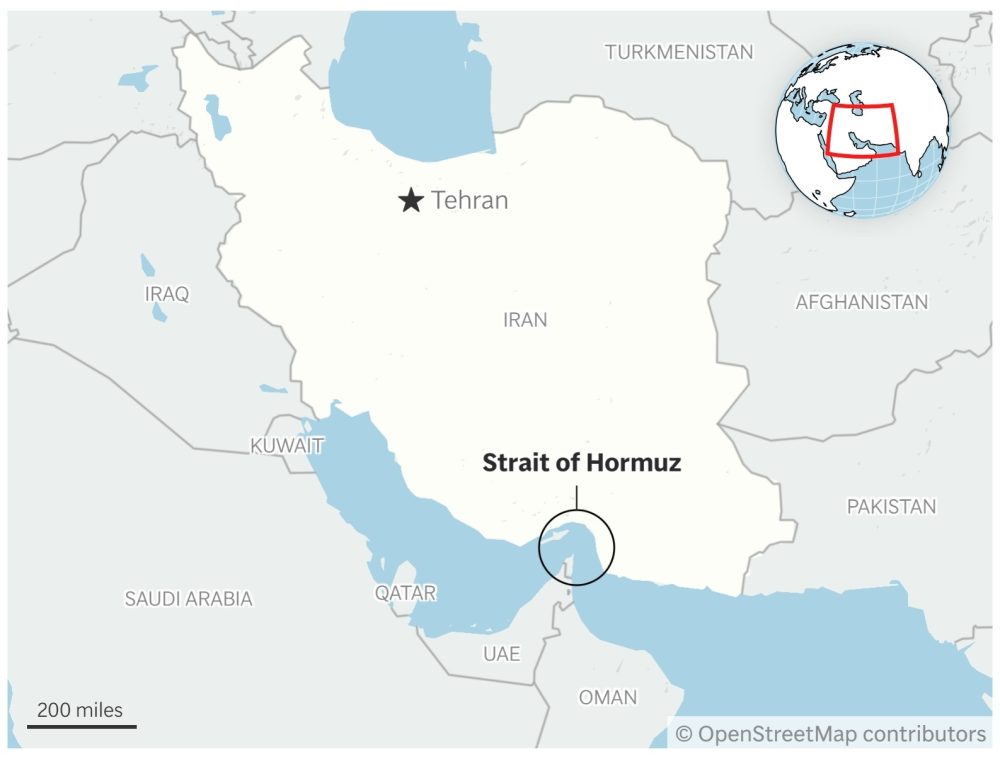
The Strait of Hormuz serves as a critical passage for approximately 15 million barrels of crude daily – representing roughly 20% of global oil supply – establishing it as the planet’s most vital oil transit point, according to Rystad Energy. Vessels passing through this waterway, which has Iran along its northern border, transport petroleum products from Saudi Arabia, Kuwait, Iraq, Qatar, Bahrain, the UAE and Iran.
Iran previously closed portions of the strait temporarily in mid-February, citing military exercises as the reason. Additional interruptions to this shipping corridor could reduce available supply while increasing oil costs.
“Roughly one-fifth of global oil supply passes through the Strait of Hormuz, a vital artery for world trade, meaning markets are more concerned with whether barrels can move than with spare capacity on paper,” said Jorge León, Rystad’s senior vice president and head of geopolitical analysis, in an email. “If flows through the Gulf are constrained, additional production will provide limited immediate relief, making access to export routes far more important than headline output targets.”
Iran ships approximately 1.6 million barrels daily, primarily to China, which may require alternative suppliers if Iranian exports face disruption – another element that could push energy costs upward.
Energy specialists predict oil prices may surge when trading resumes late Sunday. Rystad analysts project Brent crude, the global benchmark, could jump $20 per barrel when markets open.
Brent crude finished Friday at $72.87 per barrel, marking a seven-month peak.
Financial markets worldwide are preparing for potential widespread disruption as Middle East tensions escalate beyond what investors initially anticipated, according to market analysts.
What began as a peripheral concern has now evolved into a primary source of anxiety for Wall Street, particularly following weekend U.S.-Israel military operations that resulted in the death of Iranian Supreme Leader Ayatollah Ali Khamenei on Saturday. The strikes prompted Iranian retaliation against Gulf cities, forced airlines to cancel flights, and led to the suspension of oil tanker traffic through the crucial Strait of Hormuz.
Market experts are particularly concerned about the unpredictable nature of Iran’s political future, given the complex structure of the Islamic Republic’s government, its ideological foundation, and the influence wielded by the Revolutionary Guards.
These uncertainties are creating additional pressure on oil markets, which have already experienced weeks of price increases and now face potential disruption based on regional producer actions and shipping lane accessibility. The situation carries significant implications for global inflation rates and could even impact traditionally safe investment bonds.
Rong Ren Goh, a portfolio manager with Eastspring Investments’ fixed income division in Singapore, explained the market shift: “Middle East tail risks have increased. Markets will reprice from geopolitical shock to regime risk shock, prolonged conflict, not just retaliation, unless Iran says it wants to negotiate.”
Market specialists suggest a major concern is investor overconfidence, with many assuming the economic impact will remain limited, similar to last June’s “12-Day War” in Iran or Russia’s ongoing attacks on Ukraine. Many are also dismissing parallels to Iran’s 1979 regime transformation.
Current market indicators show Brent crude oil has risen by 20% this year, reaching approximately $73 per barrel. Investors have been purchasing U.S. Treasury bonds and gold as protective measures against various risks, including Middle East instability and unpredictable policies from President Donald Trump.
Gold experienced record performance last year and has gained 22% in 2026 so far, while the primary U.S. stock index has only increased by 0.5%.
Barclays analysts noted in a Saturday report: “History argues strongly in favor of selling geopolitical risk premium when hostilities start. What worries us is that investors have now learned this pattern and might be underpricing a scenario where containment fails.”
The Barclays team also highlighted additional factors that could worsen any market decline if conflict expands, including existing concerns about artificial intelligence market valuations and private credit sectors.
“We would recommend not buying any immediate dip – risk-reward doesn’t seem compelling. If equities pull back enough, say over 10% in the S&P 500, there is likely to come a time to buy. But not yet,” the analysts advised.
Markets are expected to experience significant volatility in the upcoming week.
Charles Myers, chairman and founder of geopolitical investment consulting firm Signum Global Advisors, assessed the situation before the weekend strikes: “The markets are prepared for a limited surgical strike. What is not priced in is a major strike to decapitate the regime.”
William Jackson, chief emerging markets economist at Capital Economics, predicts that extended conflict affecting supply chains could push oil prices to around $100, potentially increasing global inflation by 0.6-0.7 percentage points.
Tariq Dennison, a wealth adviser at Zurich-based GFM Asset Management, offered a different perspective: “In my view, the market has already been overestimating inflationary forces, so I don’t think this will change much. There will be more impact on Europe than U.S. given the closer proximity of Hormuz oil and gas post-Russia.”
Dennison also noted: “Maybe a slight short term uptick on gold, but gold has already priced in maximum geopolitical uncertainty.”
Eastspring’s Goh pointed to the continuous decline in U.S. bond yields, which has brought 10-year rates below 4%.
“I’m not sure if buying US Treasuries here is a good trade, especially if oil prices spike and induce inflation, if this thing drags,” he stated.
However, some market observers believe Iran will be unable to significantly disrupt Gulf region commerce and that oil price impacts will remain manageable.
Ed Yardeni, president of New York-based Yardeni Research, suggested: “We wouldn’t be surprised if any selloff in the S&P 500 on Monday morning turns into a rally, driven by expectations of lower oil prices once the latest Middle East war ends.”
“The price of gold might also round-trip on Monday. Bond yields might fall due to both safe-haven demand and post-war prospects for lower oil prices,” Yardeni added.
WASHINGTON — President Donald Trump, along with his Treasury secretary and Federal Reserve nominee, are banking on recreating the economic prosperity that defined the late 1990s.
Their strategy centers on artificial intelligence serving the same transformative role that the internet played during the Clinton era. During that period, the American economy experienced remarkable growth as companies became more efficient, joblessness dropped significantly, and price increases remained manageable.
Trump believes his Fed chair nominee, Kevin Warsh, can trigger an even more impressive economic surge by abandoning what the president considers the central bank’s outdated resistance to aggressive interest rate reductions.
Economic experts remain unconvinced.
Today’s economic landscape bears little resemblance to the era when the Spice Girls dominated music charts and “Titanic” broke box office records. The narrative promoted by Trump’s team — suggesting that visionary Fed leader Alan Greenspan sparked the ’90s expansion through low interest rates — presents an oversimplified picture.
“The administration is offering a rather distorted version of what actually happened in the 1990s,” economist Dario Perkins of TS Lombard said in a commentary.
Despite skepticism, the Trump administration remains convinced that history can be repeated. According to the president’s perspective, the only missing element has been a Fed chair possessing Greenspan’s forward-thinking approach.
Trump has consistently criticized current Fed leader Jerome Powell, whose chairmanship expires in May, for his unwillingness to cut rates more dramatically while inflation remains above the central bank’s 2% goal. Treasury Secretary Scott Bessent posted on social media in January that the president wanted to replace Powell with someone having “an open, Greenspan-like mind.”
“Our nation can see productivity boom like we did in the ’90s when we are not encumbered by a Federal Reserve which throws the brakes on,” Bessent said.
Trump announced his selection of Warsh on January 30.
Through various speeches and publications, Warsh has contended that artificial intelligence-powered productivity enhancements could support lower interest rates.
These positions match Trump’s preference for Fed rate reductions but represent a departure from Warsh’s previous stance as someone who typically favored fighting inflation. Following the 2007-2009 Great Recession, Warsh — serving as a Fed governor at the time — opposed some central bank initiatives designed to assist the struggling economy through rate cuts, even with unemployment exceeding 9%. Warsh incorrectly predicted then that inflation would soon surge.
The current debate revolves around productivity increases and whether AI will amplify them substantially.
Economists view productivity improvements as nearly miraculous. When businesses implement new equipment or technology, their employees can work more effectively and generate greater output per hour. This enables companies to increase profits and worker compensation without raising prices. Simply put: Rising productivity can fuel economic expansion without triggering inflation.
During the mid-1990s, Greenspan faced unusual economic conditions: Employee wages were increasing, yet inflation remained stable.
Significant productivity gains could have provided an explanation, but government statistics showed no evidence of such improvements. Other Fed officials worried that rising wages and controlled inflation couldn’t coexist and that price increases were inevitable. They favored raising interest rates.
However, Greenspan suspected the official productivity measurements were incomplete. The data didn’t align with remarkable efficiency improvement stories the Fed was hearing from companies investing in computers and adopting internet technology.
He directed his staff to examine decades of productivity data. The official statistics they compiled presented an unlikely scenario: Service sector businesses — from retail stores to law firms — had allegedly experienced declining productivity over time, despite fierce competition and substantial technology investments.
Greenspan rejected this conclusion. He convinced his Fed colleagues that government figures were incorrect and underestimating productivity. They decided in September 1996 to postpone rate increases.
The economy soared.
Eventually, productivity improvements appeared in official data. American economic growth exceeded 4% annually from 1997 through 2000, an achievement repeated only once in the following 25 years. Unemployment fell to 3.8% in April 2000, the lowest level in three decades. Inflation remained controlled, staying below 2% — later the Fed’s official target — for 17 consecutive months during 1997-1999.
American productivity appeared robust during the second and third quarters of 2025, with some economists crediting early AI adoption for these improvements; they anticipate larger gains and stronger economic growth ahead.
Others express uncertainty.
Joe Brusuelas, chief economist at consulting firm RSM, argued that 2025 productivity improvements “are not because of artificial intelligence” but reflect automation investments companies made when facing worker shortages during and after the COVID-19 pandemic. “Those investments are starting to pay off,” Brusuelas wrote.
Economist Martin Baily, senior fellow emeritus at the Brookings Institution, believes AI will require time to significantly impact business operations and national productivity.
“Companies don’t change that fast,” said Baily, chair of President Bill Clinton’s Council of Economic Advisers. “It’s expensive to change. It’s risky to change. The managers don’t necessarily understand the new technology that well. So they have to learn how to use it. They have to train their staff. All that stuff takes a long time.”
While productivity booms can increase the economy’s growth potential without triggering higher prices, they might not justify lower interest rates, Federal Reserve Gov. Michael Barr explained in a recent speech.
Companies will need to borrow money for AI investments, creating upward pressure on interest rates. Similarly, American workers and families would likely save less and borrow more expecting higher wages from increased productivity, further pressuring rates upward.
Barr concluded: “The AI boom is unlikely to be a reason for lowering policy rates.”
Even Greenspan’s Fed ultimately reached similar conclusions, changing direction and beginning to raise its benchmark rate in mid-1999, increasing it from 4.75% to 6.5% in under a year. (The current rate Trump criticizes stands around 3.6%.)
“Warsh and Bessent talk only about the dovish 1995/96 version of Greenspan; they overlook the hawkish 1999/2000 variant,” Perkins wrote.
Many of Warsh’s potential future Fed colleagues on the interest-rate setting committee view the late 1990s experience differently, potentially creating conflicts at the central bank if the Senate confirms Warsh as chair.
Austan Goolsbee, president of the Federal Reserve Bank of Chicago, said earlier this week that “the analogy to the late 90s is a little harder for me to understand.” Greenspan’s insight was that productivity gains meant the Fed could delay raising rates, not that it should reduce them, Goolsbee observed.
“It wasn’t, ‘Should we cut rates because productivity growth is higher?’” he said.
The economic environment awaiting Warsh is also considerably less favorable than what Greenspan encountered.
Greenspan avoided rate increases when the typically free-spending U.S. government was running unusual budget surpluses and didn’t require extensive borrowing. Currently, following multiple spending increases and tax reductions, deficits accumulate annually, and the Congressional Budget Office projects federal debt will reach a historic high of 120% of America’s GDP by 2035.
Productivity wasn’t the sole factor controlling inflation during the 1990s. Nations were reducing tariffs and eliminating trade restrictions. Immigration was increasing.
Now, largely due to Trump’s own policies, particularly his comprehensive import taxes and immigration restrictions, circumstances have changed dramatically. “Trade barriers are going up,” Perkins wrote. “Globalization has given way to de-globalization.”
“That benign era is clearly behind us,” said Michael Pearce, chief U.S. economist at Oxford Economics.
Financial markets are bracing for major volatility as investors turn to gold and other precious metals following recent military strikes involving the United States and Israel against Iran. Market experts are predicting substantial price movements when trading resumes Monday.
Edward Meir, an analyst at Marex, anticipates immediate market reactions across commodity sectors.
“I think you’re going to see a knee jerk spike up in most commodity markets, including gold and oil. This will be a natural response to the outbreak of hostilities, which was rather unexpected in terms of scale and scope,” Meir said.
He projects gold could jump approximately $200 per ounce initially, though expects prices may decline throughout the trading day. “The markets are rather dispassionate when it comes to military conflicts; the only thing investors are ultimately focused on is whether the oil flows will be interrupted so once the initial spike is over, the initial rally tends to fade,” Meir explained.
Digital gold trading is already showing signs of increased demand during the weekend closure of traditional exchanges. Hugo Pascal, a precious metals trader at InProved, noted that tokenized gold is currently commanding premium prices.
“With traditional exchanges closed, tokenised gold is currently trading at a premium, signalling a bullish ‘flight to safety’ ahead of the week’s open. Our digital proxies are showing a strong weekend bid,” Pascal said.
He reported that “PAX Gold (PAXG) is currently leading the charge at $5,344/oz (+2.2% since Friday), while Tether Gold (XAUt) has climbed to $5,292/oz (+1.2%).”
However, Pascal cautioned that “weekend proxy premiums often overstate the initial gap but accurately reflect the direction.”
Tim Waterer, chief market analyst at KCM Trade, expects heightened gold demand due to multiple risk factors.
“Gold is likely to be in higher demand than usual when markets open on Monday. Given the risks regarding how long the conflict may last, which other nations could be dragged in, and inflation fears, gold is expected to assume its mantle as the safe haven asset of choice,” Waterer said.
“Stock markets and other risk assets will probably be sold off and investors will be looking for the best place to park their funds, and gold will likely be atop that list,” he added.
Fawad Razaqzada from City Index and Forex.com sees potential for new record highs in gold pricing.
“There will be extra haven demand for gold which could see prices rise to around $5,500 again, and possibly a new record high above January’s peak of around $5,600,” Razaqzada said.
“However, gold’s gains beyond that level could be capped by a potential rebound in the U.S. dollar, especially if crude oil stays sharply higher,” he noted.
Independent metals trader Tai Wong suggests the market response may be mixed initially.
“I think gold and silver could sell off ‘on the fact’ on the open but any significant sell off will find buyers as the picture in Iran will unlikely be clear for weeks to months,” Wong said.
“I think a U.S. attack has been priced in but the timing was a bit uncertain. It’s certainly in the oil market. And the fact that crypto is higher might be a harbinger,” he added.
ANZ analyst Soni Kumari expects positive price movement with possible pullbacks depending on developments.
“Tomorrow, the price reaction will be positive initially, though there could be some retracement later in the session depending on how events unfold,” Kumari said.
“Our overall view has not changed, we remain positive on gold … Geopolitics has been very different this year, with tensions more intense, and after this attack there could also be macro implications, especially if oil prices rise sharply,” she explained.
Joshua Rotbart, founder and managing partner at J. Rotbart & Co, predicts increased volatility in precious metals markets.
“It is safe to assume that precious metals will experience enhanced volatility with upward movement,” Rotbart said.
“As the risk of a war with Iran was somewhat priced in the rally gold price had already, the extent of the movement will depend on the effect the conflict will have on the energy market, and on whether regime change in Iran is within reach,” he added.
Ole Hansen, head of commodity strategy at Saxo Bank, expressed concern about the escalating situation and its market implications.
“There is no doubt this is a worrying escalation and one that will drive investors into precious metals and the energy sector. How big the impact will be is anyone’s guess but given last week’s momentum I would not be surprised if gold prints a fresh record high,” Hansen concluded.
Crude oil prices experienced a dramatic surge of 10% to approximately $80 per barrel in weekend trading as escalating Middle East tensions threaten global energy supplies, according to oil market traders.
The price spike comes after military strikes involving the United States, Israel, and Iran have created new instability in the region, with market experts warning that oil could reach $100 per barrel if shipping disruptions continue.
Ajay Parmar, who serves as director of energy and refining at ICIS, explained the primary concern driving the market volatility. “While the military attacks are themselves supportive for oil prices, the key factor here is the closing of the Strait of Hormuz,” Parmar stated.
The strategic waterway has become a major bottleneck as shipping companies halt operations. Major oil companies, tanker operators, and commodity traders have stopped moving crude oil, fuel, and liquefied natural gas through the Strait of Hormuz following Tehran’s warnings to vessels about using the passage. This critical shipping lane handles more than one-fifth of the world’s oil transportation.
Parmar warned of further price increases when markets reopen. “We expect prices to open (after the weekend) much closer to $100 a barrel and perhaps exceed that level if we see a prolonged outage of the Strait,” he said.
RBC analyst Helima Croft reported that Middle Eastern leaders have cautioned Washington that military action against Iran could drive oil prices beyond $100 per barrel. Financial analysts at Barclays have issued similar predictions about potential price levels.
Meanwhile, the OPEC+ alliance of oil-producing nations announced a modest production increase of 206,000 barrels per day starting in April, though this represents less than 0.2% of worldwide oil demand.
Jorge Leon, an energy economist with Rystad, outlined the potential supply impact even with alternative routes. While some backup infrastructure could help circumvent the Strait of Hormuz, including pipelines through Saudi Arabia and Abu Dhabi, closing the waterway would still eliminate 8 million to 10 million barrels per day from global crude oil supplies.
Rystad’s analysis projects oil prices will increase by $20 to reach approximately $92 per barrel when trading resumes.
The developing crisis has prompted governments and oil refiners across Asia to evaluate their petroleum reserves and explore backup shipping routes and supply sources.
BEIJING – Chinese electric vehicle manufacturer BYD has reported its most dramatic sales decline in six years, according to company filings released over the weekend.
The automaker experienced a sharp 41.1% decrease in worldwide vehicle sales during February compared to the same period in 2023, company documents filed with stock market regulators on Sunday revealed. This marks the sixth month in a row that BYD has seen its sales numbers drop.
The February decline represents the company’s steepest sales fall since February 2020, when global markets were severely impacted by the onset of the COVID-19 pandemic.
Chinese technology company Xiaomi reported a notable decrease in electric vehicle sales for February, announcing deliveries exceeded 20,000 units compared to more than 39,000 vehicles sold the previous month.
The company shared the delivery figures through a statement posted on its official Weibo social media platform on Sunday. Xiaomi, widely recognized for manufacturing smartphones and consumer electronics, entered the electric vehicle market in 2024 with the debut of its Speed Ultra 7 sedan, commonly known as the SU7.
Despite the monthly decline in deliveries, the tech giant indicated it is currently working to ramp up large-scale manufacturing of an updated version of its SU7 electric sedan model.
South Korea has achieved its ninth consecutive month of export growth in February, with overseas shipments powered by robust semiconductor sales despite growing concerns about potential U.S. trade tariffs.
The Asian nation, which serves as an important indicator of worldwide commerce trends, saw its February exports climb 29.0% compared to the same period last year, reaching $67.45 billion according to official trade figures. This performance exceeded analysts’ expectations, who had predicted a more modest 24.0% increase in a Reuters survey.
Meanwhile, the country’s imports rose at a more measured pace of 7.5%, falling short of the 13.0% growth rate that economists had anticipated.
The trade ministry highlighted the exceptional performance of the technology sector in an official statement: “Semiconductor exports jumped 160.9% to again record their highest monthly performance ever and exceeded $20 billion in value for three consecutive months, driven by strong demand thanks to AI investment and a surge in memory prices.”
The continued export momentum demonstrates South Korea’s position as Asia’s fourth-largest economy and its role as a key player in global technology markets.
Greg Abel, who recently took over as CEO of Berkshire Hathaway, issued his first annual shareholder letter Saturday, working to reassure investors that he will continue the successful strategies established by Warren Buffett while putting his own leadership mark on the massive conglomerate.
The 63-year-old executive committed to preserving Berkshire’s “fortress-like” financial foundation and promised he won’t hastily spend the company’s massive $373.3 billion cash reserves. Abel indicated this substantial war chest provides significant “dry powder” for future opportunities, while confirming he has no intention of starting dividend payments – a stance that aligns with Buffett’s long-held position. The company hasn’t bought back its own shares since spring 2024.
“I recognize how you want us to succeed together, and to do so in the right way,” Abel stated in his comprehensive 18-page letter. “My role is to ensure our liquidity levels and capital deployment remain intentional and deliberate.”
Abel expressed deep respect for his predecessor, describing the 95-year-old Buffett as “remarkable” and noting that the legendary investor continues serving as chairman while maintaining his daily presence at company headquarters five days weekly.
“Warren Buffett is arguably the greatest investor of all time, with generations benefiting from his investment acumen,” Abel emphasized. “To invest in Berkshire has long been a vote of trust in our founder – a trust that now rests with Berkshire.”
Since Buffett’s unexpected announcement in May about stepping down from the CEO role, Berkshire’s stock performance has lagged considerably behind the Standard & Poor’s 500 index.
While Abel’s writing style differs from Buffett’s distinctive approach, CFRA Research analyst Cathy Seifert believes the letter should comfort worried investors.
“He needed to show a degree of continuity, that the Berkshire franchise would continue despite the change in leadership, and it would be business as usual,” Seifert explained. “In my opinion, he hit the mark.”
The communication demonstrated Abel’s commitment to preserving Buffett’s six-decade transformation of Berkshire from a struggling textile manufacturer into a trillion-dollar empire encompassing car insurance giant Geico, BNSF railroad, and numerous other insurance, manufacturing, energy and retail operations.
“If there were any doubts about whether Greg was the right individual to take the reins, the letter should dispel them,” stated Dan Hanson, who manages over $6 billion as head of Neuberger Berman’s quality equity team.
The company also announced declining earnings, influenced by writedowns on its roughly 27% ownership positions in both Kraft Heinz and oil producer Occidental Petroleum.
Operating profits for the fourth quarter dropped 30% to $10.2 billion as insurance division earnings, including Geico, decreased significantly.
Overall net earnings declined 3% to $19.2 billion, impacted by a $4.5 billion Occidental writedown, though this was partially offset by gains from major holdings including Apple and American Express.
For the complete year 2025, operating earnings fell 6% to $44.49 billion, while net earnings decreased 25% to $66.97 billion. Buffett consistently advised shareholders to disregard net income variations, which reflect accounting requirements for equity investments.
Annual revenue remained essentially flat at $371.44 billion, and Seifert noted Abel “teed up an expectation that reinsurance and commercial insurance growth may be nonexistent” in 2026.
Fruit of the Loom, among Berkshire’s most recognizable subsidiaries, eliminated 6,000 positions last year amid falling sales, according to company reports.
Abel assured shareholders that Berkshire’s corporate culture and principles will persist “in perpetuity,” indicating no modifications to its decentralized management approach where individual businesses operate with minimal corporate oversight.
He also hinted at his long-term commitment, suggesting that even after 20 years in the role, he will have served “just a fraction of the tenure that Warren had.”
The new CEO pledged to focus investments on stable, well-run companies that Berkshire comprehends while working to “avoid businesses that undermine the fabric of society or could jeopardize Berkshire’s reputation.”
Though Abel didn’t specify what types of businesses he meant, Seifert suggested he might have been referencing artificial intelligence companies.
Abel addressed ongoing challenges facing PacifiCorp, the company’s utility subsidiary dealing with extensive litigation related to devastating Oregon and California wildfires that consumed over 500,000 acres in 2020.
Numerous wildfire victims have blamed PacifiCorp for failing to deactivate power lines during dangerous conditions. The utility has agreed to settlements exceeding $2.2 billion but still confronts an additional $50 billion in wildfire-related claims. Abel emphasized that while Berkshire accepts responsibility for fires it causes, the company will vigorously contest unfounded legal claims.
“PacifiCorp is not an insurer of last resort and should not be treated as a deep pocket,” Abel declared. “Accountability, paired with principled opposition to unwarranted liability, is essential to preserving the regulatory compact that governs utilities.”
Abel demonstrated more direct criticism than Buffett typically showed toward underperforming Berkshire subsidiaries.
He characterized the performance difference between BNSF railroad and industry leaders as “too wide,” while describing “self-inflicted” problems at Shaw flooring company that have damaged quality and customer service.
“Each business is accountable to its CEO, who is expected to pursue operational excellence relentlessly and close performance gaps,” Abel stated regarding Berkshire’s non-insurance operations.
Hanson from Neuberger Berman commented: “Those are fighting words.”
Berkshire has not appointed a chief investment officer to succeed Buffett in that capacity, though Abel confirmed that responsibility for stock investments “ultimately resides with me as CEO.”
Abel indicated that veteran portfolio manager Ted Weschler, who oversees approximately 6% of Berkshire’s stock portfolio, will continue in an expanded “broader role” evaluating major investment opportunities and providing additional support to the organization.
Energy markets are preparing for potential turbulence in the coming week as recent U.S. and Israeli military operations create uncertainty around Middle Eastern oil production and distribution.
Market analysts had previously outlined two potential outcomes before the latest escalation with Iran: a brief price increase that would settle down if shipping lanes and critical infrastructure like Iranian pipelines and the Kharg island facility remained operational. Conversely, more significant and sustained price increases would occur if oil facilities or supply chains faced interruption, particularly if tanker movement through the Strait of Hormuz encountered problems.
Energy markets have already responded to conflict concerns, with Brent crude reaching $72.87 on Friday, marking the highest level in seven months.
Iran currently ships approximately 1.6 million barrels daily, with the majority heading to China through private refineries that show less concern about U.S. sanctions restricting Iranian oil sales to other markets. Should this supply face disruption, Chinese buyers would need to source oil from alternative global suppliers, which could push prices higher.
The Strait of Hormuz presents another critical factor, as this waterway handles 20% of daily global oil movement. Major Middle Eastern producers including Saudi Arabia, Iraq and the United Arab Emirates route most of their shipments through this passage. However, energy experts suggest Iran lacks motivation to block the strait since doing so would eliminate its own export capabilities and damage relations with China, its primary customer.
Rystad Energy projected in pre-conflict analysis that targeted strikes against Iran’s nuclear facilities and Revolutionary Guard that stop short of regime change or full-scale warfare could trigger $5-$10 price increases driven purely by market anxiety.
A broader conflict that includes Iranian interference with tanker operations could push crude beyond $90 per barrel and drive U.S. gasoline costs “well above” $3 per gallon, according to pre-conflict projections from Clayton Seigle at the Center for Strategic & International Studies. AAA data shows U.S. gas prices averaged $2.98 per gallon during the previous week.
Berkshire Hathaway announced Saturday that its quarterly earnings dropped substantially in the final three months of the year, driven by investment losses and weakened performance from its insurance operations.
The financial results represent the conclusion of Warren Buffett’s era as the company’s chief executive officer, with Greg Abel now assuming the CEO role while Buffett continues as chairman of the board.
The investment conglomerate revealed it closed out the year holding $373.3 billion in cash reserves, providing Abel with substantial resources to pursue large-scale acquisitions that had been challenging for Buffett to secure in recent years.
The company’s quarterly operational earnings dropped by 30 percent to $10.2 billion, equivalent to approximately $7,092 for each Class A share, compared to $14.53 billion during the same period the previous year.
The earnings decline was attributed to significant losses on the company’s stakes in Kraft Heinz and Occidental Petroleum, combined with weaker results from Berkshire’s various insurance subsidiaries.
Changes to federal Small Business Administration lending rules are creating new obstacles for legal immigrants who want to start their own businesses in the United States.
The updated SBA policies now prohibit non-citizens from obtaining the government-backed loans that many entrepreneurs rely on to launch their ventures, regardless of their legal immigration status.
NPR’s Scott Simon recently interviewed immigrant entrepreneur Cristina Foanene to discuss how these regulatory changes have impacted her journey to secure financing for her business startup.
The conversation highlighted the challenges that legal immigrants now face when trying to access traditional small business funding options that were previously available to them.
These policy modifications represent a significant shift in how the federal government approaches small business lending to immigrant communities across the country.
OMAHA, Neb. — The new chief executive of Berkshire Hathaway issued his inaugural shareholder letter this weekend, marking a significant milestone as Greg Abel steps into the role previously held by legendary investor Warren Buffett. The company simultaneously announced it would take a $4.5 billion write-down on investments in Kraft Heinz and Occidental Petroleum.
Abel assumed the CEO position this past January, giving him his first opportunity to establish his leadership approach. While investors are closely monitoring potential operational shifts, both Abel and Buffett have indicated the company will maintain its established business practices.
The correspondence begins by honoring Buffett’s legacy and pledges to preserve the corporate philosophy that has driven success for more than sixty years. Abel committed to continuing the operational methods that have defined the company’s approach.
Though Buffett retains his role as board chairman and remains the company’s primary stakeholder, he continues providing guidance to the Nebraska-based business empire he created. However, Abel now authors the widely-anticipated annual communications that became essential reading in the investment community due to Buffett’s exceptional performance history and distinctive commentary style. At the upcoming May shareholder gathering, Abel will field questions independently while Buffett observes alongside other board members.
Administrative adjustments represent the primary modifications Abel has implemented thus far, along with January documentation indicating potential divestment of some or all of Berkshire’s 325 million Kraft Heinz shares. Buffett likely endorsed this strategy, having previously acknowledged the company paid excessive amounts during the Heinz-Kraft combination and expressing concerns about the food manufacturer’s division plans. Numerous investors have historically attempted to mirror Buffett’s investment decisions within Berkshire’s extensive stock holdings.
The conglomerate’s strength stems from its ownership of numerous subsidiaries, including major insurance providers like Geico, the BNSF railway system, multiple utility companies, and various manufacturing and retail operations. Popular consumer brands under Berkshire’s umbrella include Dairy Queen and See’s Candy, alongside industrial suppliers such as Precision Castparts, Lubrizol, and Iscar Metalworking.
Abel brings substantial familiarity with Berkshire’s portfolio, having overseen all non-insurance subsidiaries since 2018. Company leaders reporting to him have commended his understanding of their diverse business operations.
NEW YORK — Two decades ago, a young entrepreneur named David Ellison launched his entertainment company with a World War I aviation film that featured himself in a leading role and heavy special effects.
The movie crashed and burned at theaters.
Fast-forward twenty years, and that same studio chief who was once dismissed as just another wealthy heir playing in Hollywood is now positioned to control one of the entertainment industry’s biggest names. Ellison’s Skydance Productions, after successfully merging with Paramount, has emerged victorious in the battle to acquire the massive Warner Bros. Discovery.
“It’s only a surprise to those who haven’t been paying attention to the long game,” said Walter Nicoletti, who founded film production company Voce Spettacolo. He pointed to Skydance’s strategy of backing successful films and building partnerships with major industry players. “This is a sort of a silent takeover. Skydance didn’t start as a predator. It started as an essential partner.”
Back in 2006, when David Ellison — son of Oracle Corporation co-founder Larry Ellison — established Skydance at age 23, the company barely registered as a footnote in an industry accustomed to wealthy outsiders attempting to break into Hollywood’s inner circle.
The company’s first major release, “Flyboys,” failed to make any significant impact on the industry.
Critics savaged the film. The Seattle Times called it “cloyingly formulaic,” while The Washington Post dismissed it as an “inflated wannabe epic.” The Atlanta Journal-Constitution wrote “It’s hard not to giggle.”
Renowned critic Richard Roeper joined the chorus of negative reviews and questioned the filmmakers’ judgment.
“Why make such a corny and incredibly predictable film?” he asked in his review.
Despite the setback, Ellison persevered. Over the following years, while more failures occurred, he gradually accumulated victories as well. He formed alliances with entertainment giants like Paramount, Netflix and Apple, producing a series of successful films that generated hundreds of millions in revenue. He attracted top talent and significant investment. His studio even achieved the rare milestone of crossing $1 billion in earnings with 2022’s massive hit “Top Gun: Maverick,” starring his company’s most dependable performer, Tom Cruise.
Jason Squire, a former studio executive and emeritus professor at the University of Southern California who hosts “The Movie Business Podcast,” opposes the deal that positions Skydance to control Warner Bros., believing such consolidation reduces competition and damages the industry. However, he acknowledges his amazement at Ellison’s transformation from someone who was “not high on the radar” in Hollywood to reaching the industry’s summit.
“One of the traditions of entering the movie business is serious wealth, or access to serious wealth. But once you get a foothold, you have to demonstrate that wealth — by buying things, acquiring projects,” Squire explained. “They became a player.”
While money alone didn’t guarantee Ellison’s success, Squire noted, it certainly provided crucial assistance.
“He became a member at the table when these partnerships and the infusion of dollars really set him up on a really strong trajectory,” he said. “It’s quite amazing.”
Eventually, the “Flyboys” disaster faded from people’s memories regarding Skydance. Despite some setbacks, including a failed “Terminator” franchise reboot, a series of “Mission: Impossible” movies consistently showcased Cruise and drew audiences to theaters. Successful projects like “Grace and Frankie” on Netflix provided the company access to streaming television.
A series of victories led to speculation about which major corporation might acquire Skydance.
Instead, Skydance became the acquirer.
Following years of collaboration with Paramount, the companies combined last year, and subsequently, Ellison embarked on an aggressive acquisition campaign, announcing deals ranging from Ultimate Fighting Championship streaming rights to an agreement with the “Stranger Things” creators, whom he recruited away from Netflix.
Meanwhile, although the much larger Netflix appeared likely to acquire Warner Bros., Ellison’s Skydance persistently pursued its competing bid. On Thursday, Skydance prevailed. Netflix withdrew its offer, leaving regulatory approval as the only remaining obstacle for Skydance.
“This was absolutely a meteoric rise. Two decades from its formation to its current position to become one of the most powerful media companies in the world is nothing less than incredible,” said Tre Lovell, a Los Angeles media law and entertainment attorney. “What Skydance has done over the past two decades has not been accomplished by any other media company in history.”
The Paramount merger brought Skydance control of MTV, Comedy Central, Nickelodeon and numerous other networks, including flagship CBS, where the leadership change has created upheaval in the news department. Should the Warner transaction complete, Ellison would oversee a vast media empire encompassing HBO, HGTV, the Food Network, and significant news expansion through CNN — a development that concerns some employees given the family’s perceived alliance with President Donald Trump.
The deal would also provide Paramount, which has struggled recently in theaters, with a studio fresh off an exceptional year. Warner Bros. earned 30 Oscar nominations compared to Paramount’s zero, and captured 21% of domestic box office revenue in 2025. Paramount’s market share stood at merely 6%.
All of this could soon belong to Ellison. The contrast over two decades is remarkable.
The “Flyboys” failure left Ellison so devastated that he once revealed it caused atrial fibrillation requiring hospitalization. However, for someone from a family so wealthy that his father owns most of a Hawaiian island, and possessing what GQ magazine described as “the golden glow of the genetically sparkling,” his dramatic turnaround may not be entirely unexpected. In this comeback tale, Ellison seems perfectly cast for the role.
Ellison has achieved his greatest theatrical successes with recognizable properties from established franchises including “Transformers,” “Scream,” “Sonic the Hedgehog,” and “Paw Patrol.” His personal story of emerging as the unexpected winner may resonate with equally familiar themes.
“Hollywood has seen David-versus-Goliath moments before,” said Vikrant Mathur, co-founder of streaming company Future Today.
A major Chilean lithium mining company announced Friday that its fourth-quarter earnings soared by more than half compared to the previous year, driven by better market conditions and increased demand.
SQM, which ranks as the globe’s second-biggest lithium producer, reported net income of $183.8 million for the final three months of the year, marking a 53% increase from the same period in the prior year.
The mining company’s quarterly revenue climbed 23.3% to reach $1.32 billion, up from $1.07 billion during the fourth quarter of the previous year. Gross profit also saw significant growth, rising 52.7% to $448.5 million.
Company CEO Ricardo Ramos highlighted the strong performance across the firm’s lithium operations. “Our fourth quarter 2025 results reflected record-high sales volumes across both of our lithium businesses, Nova Andino Litio (formerly SQM Salar) and our International Lithium Division,” Ramos stated. “In November 2025, we began to see early signs of an improved supply-demand balance, driven by stronger-than-expected demand from energy storage systems (ESS).”
Ramos noted that the company is expanding its lithium carbonate refining operations in China through processing agreements, converting lithium sulfate into the more valuable carbonate form.
Looking at the full-year results, SQM achieved net income of $588.1 million, a dramatic turnaround from the $404.4 million loss recorded in 2024. Annual revenue increased 1.0% to $4.58 billion.
SQM operates as one of just two lithium producers in Chile and also manufactures fertilizers and industrial chemicals.
The lithium market has experienced volatility, with prices declining from peak levels reached in 2022 when supply increases exceeded demand growth, creating pressure on profit margins for SQM and competitors like American company Albemarle.
However, industry analysts anticipate growing demand for the battery metal in upcoming years, supported by expanding electric vehicle adoption and increased battery storage applications.
Graphics processing leader Nvidia is developing a specialized processor aimed at helping companies like OpenAI create AI systems that operate with greater speed and efficiency, according to a Wall Street Journal report published Friday that cited sources with knowledge of the project.
The company is working on technology for “inference” computing, which enables artificial intelligence models to process and respond to user questions, the publication reported.
According to sources familiar with the development, Nvidia plans to reveal this new platform during its GTC developer conference scheduled for next month in San Jose, and the system will feature technology from startup company Groq.
Neither Nvidia nor OpenAI provided immediate responses when contacted for verification of the report.
Previous reporting indicated that OpenAI has expressed dissatisfaction with how quickly Nvidia’s current technology can generate responses for ChatGPT users, particularly for complex tasks like software development and AI-to-AI communication.
According to a source, OpenAI requires new hardware that could eventually handle approximately 10% of the company’s inference processing requirements.
The maker of ChatGPT had been exploring partnerships with emerging companies including Cerebras and Groq to obtain faster inference chips, sources revealed. However, Nvidia secured a $20 billion licensing agreement with Groq that ended OpenAI’s negotiations, according to one source.
Last September, Nvidia announced plans to invest up to $100 billion in OpenAI through an arrangement that provided the chipmaker with an ownership stake while giving OpenAI the funding needed to purchase advanced processors.
Several major international investment firms are positioning themselves to pour more than $200 million into the upcoming American stock market debut of PayPay, the Japanese digital payments company owned by SoftBank, according to sources with knowledge of the deal.
The investment group includes Qatar Holdings (part of the Qatar Investment Authority), payment giant Visa, and the Abu Dhabi Investment Authority, two individuals familiar with the situation revealed. These cornerstone investors are expected to help anchor what could become the largest Japanese company listing on U.S. stock exchanges.
PayPay is aiming for a market valuation reaching $14 billion through this offering, one source indicated. The company plans to begin trading on the Nasdaq exchange next month, though the original December timeline was pushed back due to a lengthy U.S. government shutdown that delayed regulatory approvals.
Sources requested anonymity since the details haven’t been made public yet. They emphasized that final agreements haven’t been signed, and both investment amounts and company valuation remain under discussion and subject to change.
Representatives from PayPay, SoftBank, Qatar Holdings, Visa, and ADIA have not responded to requests for comment. Reuters initially reported more than two years ago that SoftBank was exploring an American listing for PayPay.
This stock offering arrives at a crucial time for SoftBank Group, which has made artificial intelligence its primary focus. The Japanese technology conglomerate recently committed $30 billion to OpenAI, adding to approximately $41 billion it invested in December for an estimated 11 percent ownership stake, according to Reuters reporting.
To finance these AI investments, CEO Masayoshi Son has been selling off major assets, including the company’s $5.8 billion Nvidia holdings and $4.8 billion worth of T-Mobile U.S. stock. The PayPay public offering represents the first U.S. listing for a SoftBank-controlled company since Arm Holdings went public, potentially providing much-needed capital for the conglomerate.
Earlier this month, PayPay announced a new partnership with Visa as the Japanese payments firm looks to enter the American market.
Created through a joint venture between SoftBank and Yahoo Japan in 2018, PayPay has played a significant role in Japan’s shift toward digital payments, using mobile app rebates to encourage consumers to move away from traditional cash transactions. In just over seven years of operation, PayPay has become one of Japan’s most popular payment platforms, accumulating approximately 72 million registered users by the end of December.
Goldman Sachs’ investment management division is telling investors it’s weathering the storm better than competitors in the private credit sector, where concerns about artificial intelligence disrupting technology companies have created market turbulence.
According to an investor communication obtained by Reuters this Friday, the financial giant reported that Goldman Sachs Private Credit Corp maintained robust investor demand through December, with money flowing in at rates 11% higher than the yearly average. The firm’s fourth-quarter redemption rate stood at 3.5%, significantly better than the industry average exceeding 5%.
The private credit industry, which serves as a major funding source for technology firms, is experiencing upheaval as investors worry that artificial intelligence could diminish software companies’ profitability and their capacity to repay debts. This anxiety has led investors to reconsider their exposure levels and evaluate potential risks.
Adding to market concerns are fresh complications at Blue Owl regarding asset transactions, which sparked a dramatic decline in stock prices for alternative investment managers operating in private credit markets.
These developments are challenging a segment of the alternative investment world that has expanded to approximately $2 trillion in recent years.
Goldman Sachs acknowledged the challenging environment ahead, stating: “As we enter 2026, the private credit landscape is facing volatile macroeconomic conditions, shifting flows in the traded and non-traded BDC (Business Development Company) market, and accelerating technological change – particularly around AI.”
The investment firm revealed that GS Credit held roughly 15.5% exposure to enterprise software lending by the end of the third quarter, positioning it at the lower end compared to similar companies.
Market participants have spent weeks wrestling with potential AI-related disruption, with growing numbers viewing the technology as shifting from a beneficial force for software efficiency to a possible existential challenge.
Goldman indicated it has spent years analyzing AI’s effects on the software industry and declined its first transaction due to AI-related concerns back in October 2023.
The firm expressed agreement “with the perspective that AI is significantly lowering development costs which will lead to increased competitive intensity for incumbent software companies,” according to the investor letter.
Goldman emphasized its focus on investing in companies with “structural advantages and incumbency moats” that would be challenging for newcomers to overcome.
The company revealed it implemented its initial internal system for assessing AI disruption risks in early 2025, adding: “We do not underestimate the risk of AI disruption.”
A little-known British mortgage company’s dramatic failure sent tremors through Wall Street on Friday, sparking fresh worries about hidden risks lurking within the massive private credit sector.
Market Financial Solutions Ltd, a London-based lender specializing in property-backed loans, entered administration this week after creditors discovered what court documents describe as financial misconduct and poor management practices.
The fallout hit major financial institutions hard. Jefferies saw its stock plummet 10.7% during Friday trading, building on Thursday’s 3.5% drop as news of the investment bank’s ties to the failed UK firm spooked investors. Barclays shares declined 4.2%, significantly worse than the broader market’s performance, while Santander dropped nearly 5%.
Court filings reveal a potentially massive shortfall in backing for the company’s loans. Administrators discovered that MFS may have been engaging in “double pledging” of assets, leaving creditors facing a potential $1.25 billion gap in collateral.
The documents show that while MFS had outstanding loans totaling 1.16 billion pounds, only 230 million pounds in “true value” existed in collateral accounts to back those obligations.
Multiple major financial players find themselves exposed to the crisis. According to court records, Barclays, Santander, Wells Fargo, Jefferies, and Apollo Global Management-backed Atlas SP Partners all provided funding to MFS, which had borrowed more than $2.69 billion total.
Atlas SP Partners acknowledged roughly $540 million in exposure to the mortgage provider, representing about 1% of its total portfolio. “Following a breach of contractual terms by Market Financial Solutions, Atlas proactively put two warehouses into default last week and is pursuing all legal avenues to maximize recoveries,” an Atlas spokesperson stated.
The crisis represents another setback for Jefferies, which was already dealing with fallout from its involvement in the First Brands auto parts supplier bankruptcy that occurred last year.
Market analysts are watching closely for signs of broader problems in the private credit industry, where specialized funds make direct loans to companies. This sector has experienced explosive growth in recent years.
The current situation echoes warnings from JPMorgan CEO Jamie Dimon, who cautioned months ago that more “cockroaches” could emerge from Wall Street’s multi-trillion-dollar lending operations, following the First Brands and Tricolor auto lender failures.
MFS operated from London’s upscale Mayfair district, marketing itself as a specialist in buy-to-let mortgage lending and bridge financing. Company records show it employed 149 people and reported net assets of about $21.4 million as of December 31, 2024, with a loan portfolio worth approximately $3.2 billion.
The company was established by CEO Paresh Raja, though MFS has not responded to requests for comment about the administration proceedings.
Two creditor companies, Amber Bridging Limited and Zircon Bridging Limited, initiated the legal action that forced MFS into administration. Their court filings cited “real and serious concerns about the mismanagement of the company” and related entities within the MFS Group.
These creditors reported irregularities in payments owed to their accounts and successfully petitioned for independent administrators to take control of the failing company.
News reports suggest Barclays faces exposure of approximately $809 million to MFS, with the British bank reportedly among those that arranged the original lending agreements. However, financial analysts caution that banks often sell portions of their loan exposure after arranging such deals.
“Arranging a loan is very different to retaining that risk on balance sheet,” Citi analysts noted. “Also not clear if/how much could already be provisioned against.”
Some experts sought to calm fears about Jefferies’ total losses. BMO Capital Markets estimated the bank’s MFS exposure at roughly $135 million, noting that “the entire balance is unlikely at risk.”
The broader market selloff in financial stocks and alternative asset managers on Friday reflected growing investor anxiety about potential credit market problems and deteriorating lending standards across the industry.
Trump Media & Technology Group is exploring the possibility of separating its Truth Social platform into an independent publicly traded entity, according to a Friday announcement from the company.
The media company, established by President Donald Trump, is currently in talks with TAE Technologies and Texas Ventures Acquisition III regarding this potential restructuring.
The proposed plan would involve distributing shares of the newly independent company to current TMTG stockholders, followed by a merger with a special purpose acquisition company.
This restructuring would effectively divide TMTG’s social media operations from its recently revealed fusion energy business, creating two separate public companies with different business focuses.
TMTG, which operates the Truth Social platform targeting conservative users, has encountered difficulties expanding its media operations while competing against established social networks and dealing with inconsistent user engagement.
The company is now looking to expand beyond its primary Truth Social business and capitalize on investor enthusiasm for new energy technologies.
Company officials noted that no final agreement has been finalized regarding the separation, and negotiations continue.
TMTG stock declined more than 3% during afternoon market activity.
Last December, TMTG announced plans to combine with TAE through an all-stock transaction worth over $6 billion, representing a strategic shift toward fusion energy and establishing a public company dedicated to building commercial-scale power facilities to address growing electricity needs, particularly from artificial intelligence data centers.
TAE Technologies, based in California, is a private enterprise developing cutting-edge nuclear fusion technology that has secured over $1 billion in funding from backers including Google’s parent company Alphabet and energy giant Chevron.
The company specializes in fusion technology engineered to generate electricity while minimizing neutron radiation output, thereby reducing radioactive waste production.
A North Dakota court has upheld a massive financial penalty against environmental organization Greenpeace, ordering the group to pay $345 million in damages related to protests over the Dakota Access Pipeline construction.
Judge James Gion made the ruling official on Friday, maintaining his earlier decision from October that had already reduced the original jury award by nearly half. The March jury verdict had initially set damages at approximately $667 million.
The environmental organization plans to challenge the decision, with representatives calling the legal action “a blatant attempt to silence free speech.”
“Speaking out against corporations that cause environmental harm should never be deemed unlawful,” stated Marco Simons, who serves as interim general counsel for both Greenpeace USA and the Greenpeace Fund.
Pipeline operator Energy Transfer defended the court’s decision, describing it as “an important step in this legal process of holding Greenpeace accountable for its unlawful and damaging actions against us during the construction of the Dakota Access Pipeline.”
The company indicated it is “analyzing possible next steps that we may choose to take to make sure they are held fully accountable.”
The controversial Dakota Access Pipeline project was constructed between 2016 and 2017 near the Standing Rock Indian Reservation. The completed pipeline now carries approximately 40% of crude oil from North Dakota’s Bakken shale formation.
Environmental activists and tribal groups mounted significant opposition to the project, arguing it would contaminate local water sources and worsen climate change impacts.
Energy Transfer, headquartered in Texas, initiated legal proceedings against Greenpeace in federal court in 2017, claiming the organization disseminated false information about the pipeline and financially supported protesters who interfered with construction activities.
The jury’s March decision included financial penalties for defamation, property trespassing, and conspiracy charges.
In a separate legal maneuver, Greenpeace filed a countersuit against Energy Transfer in the Netherlands this past February, utilizing European legislation designed to prevent harassment lawsuits targeting activists. That case remains active in the court system.
A newly formed artificial intelligence infrastructure company backed by Canadian asset manager Brookfield has reached a $1.3 billion valuation after completing a combination with a London-based cloud computing startup, according to three sources familiar with the transaction and documents reviewed by Reuters.
The company, called Radiant, was established by Brookfield Asset Management to offer on-demand access to artificial intelligence processing chips. Tuesday’s announcement of the merger with Ori Industries did not include financial details of the transaction.
Sources indicate that all existing Ori investors have transferred their ownership stakes into the combined entity, while Brookfield provided additional funding to the new venture. The specific portion of the valuation attributed to Ori’s contribution could not be determined.
Documents show the $1.3 billion valuation was determined earlier in February, though it’s unclear whether this figure has been adjusted since then. Both Brookfield and Ori representatives declined to provide comment on the matter.
The sources requested anonymity since the deal terms were not disclosed publicly.
Corporate filings reveal that Ori held 42.5 million pounds ($57.2 million) in total assets minus current liabilities at the close of 2024. The company’s total debt increased to 11.3 million pounds from 4.4 million pounds the previous year.
This transaction occurs as investors compete to construct the data center facilities, power systems, and chip infrastructure required for advanced artificial intelligence applications, driven by a scarcity of high-performance computing resources.
Ori’s founder Mahdi Yahya, whose startup received backing from Saudi Aramco’s investment division, will assume the role of president at Radiant.
“For more than seven years we have been designing software to support AI infrastructure at scale, and it was clear Brookfield was the right partner,” Yahya stated Tuesday. “Through Radiant we can help address the supply-demand imbalance that has defined AI since 2023.”
Radiant’s executive chair Vishal Padiyar explained that the company combines infrastructure and software solutions to serve government agencies and large corporations, with goals of reducing computing expenses and enhancing performance capabilities.
Radiant represents one of the initial projects supported by Brookfield’s AI infrastructure investment fund, which is pursuing $10 billion in investor commitments and plans to expand to as much as $100 billion through additional co-investment and financing arrangements.
The fund allocates up to $5 billion for Bloom Energy to deploy up to 1 gigawatt of behind-the-meter power solutions for data centers and AI manufacturing facilities, while semiconductor company Nvidia provided initial capital contributions and will supply processing chips to Radiant.
The United Kingdom is accelerating data center development and intends to increase national computing capacity by 20 times before 2030, as data centers receive classification as critical infrastructure.
International technology giants including Google and Microsoft have committed multi-billion-pound investments in the UK sector, alongside up to 2 billion pounds ($2.70 billion) in government funding through the UK’s Compute Roadmap initiative.
Customers who paid extra fees due to import tariffs are now taking major companies to court, demanding they share any refunds they might receive after the Supreme Court determined those taxes were illegally imposed.
Two separate class-action cases have emerged in federal courts targeting shipping giant FedEx and EssilorLuxottica, the French company behind Ray-Ban eyewear. These consumer lawsuits come as more than 1,000 businesses, including major retailers like Costco and Revlon, have already filed their own claims in the U.S. Court of International Trade seeking reimbursement.
The Supreme Court struck down the tariffs on February 20, ruling that former President Trump lacked legal authority to implement them under the International Emergency Economic Powers Act. The invalidated import taxes are estimated to be worth between $130 billion and $175 billion.
Government agencies are still developing procedures for processing refund claims in the coming weeks and months, as numerous lawsuits move through the court system. Many companies have filed preventive legal actions to protect their right to reimbursement.
FedEx released a statement Thursday promising to pass along any tariff refunds to the shippers and customers who originally paid the fees. However, Miami resident Matthew Reiser, who filed suit against the delivery company on Friday, argues this commitment “creates no legally enforceable obligation and is expressly contingent on future government and court guidance that may never materialize.”
Reiser’s complaint details how he paid $36 in tariff and customs fees for tennis shoes shipped through FedEx from Tennis Warehouse Europe, a German-based online retailer located in Schutterwald. FedEx has not yet provided a response to requests for comment.
In the second lawsuit filed this week, New York resident Nathan Ward claims he bought Ray-Ban sunglasses from the company’s website in August 2025, paying inflated prices that included tariff surcharges.
According to Ward’s legal filing, “Despite seeking an order entitling it to a refund of the duties collected as a result of the subject tariffs, EssilorLuxottica continues to collect and has not refunded the tariff surcharges it collected from consumers.” The eyewear company has also not responded to comment requests.
Legal expert Barry Appleton, who co-directs the Center for International Law at New York Law School, predicts many similar consumer cases will emerge, particularly against businesses that provided detailed receipts showing tariff charges. While the legal strength of these cases remains uncertain, Appleton notes they create pressure on companies to distribute any tax refunds they successfully obtain.
“What we are watching is the predictable next chapter of the IEEPA story,” Appleton said. “The Supreme Court told the White House it overreached, the major importers lined up for refunds, and now ordinary consumers are asking the obvious question — if those duties were illegal, why shouldn’t we get our money back too?”
A class-action lawsuit has been filed against FedEx in federal court, representing customers who want their money back following a recent U.S. Supreme Court decision that declared former President Donald Trump’s emergency tariffs illegal.
The legal action, filed Friday in Miami federal court, represents potentially millions of customers who paid import duties and associated fees on items that attorneys argue should have entered the country without any tariffs.
In response to the lawsuit, FedEx released a statement Friday saying: “If refunds are issued to FedEx, we will issue refunds to the shippers and consumers who originally bore those charges.”
However, the lawsuit argues that FedEx’s commitment cannot be legally enforced. Attorney John Yanchunis, representing Miami resident Matthew Reiser, stated: “Our goal is to return to American consumers every penny they were improperly charged.”
The shipping giant joins over 2,000 other companies already pursuing legal action against the federal government in the U.S. Court of International Trade to reclaim tariffs paid under the International Emergency Economic Powers Act, or IEEPA. The Supreme Court determined on February 20 in a 6-3 ruling that Trump exceeded his legal authority when he used emergency powers legislation to implement widespread tariffs.
The lead plaintiff, Reiser, claims FedEx charged him $36 for tennis shoes he ordered from Germany – including $21 in IEEPA duties and $15 in brokerage and processing fees. According to the lawsuit, no duty payment should have been necessary.
Toy manufacturer Hasbro also joined the growing list of companies Friday seeking tariff refunds from the government through the U.S. Court of International Trade. Other major companies pursuing similar legal action include French cosmetics company L’Oreal, British appliance maker Dyson, contact lens producer Bausch + Lomb, and retailers like Costco and J. Crew.
The battle for Warner Bros. Discovery has entered a new phase as Paramount, fresh off its victory over Netflix, now must navigate the complex world of federal regulatory approval.
Following an extended and chaotic bidding process, the entertainment conglomerate emerged victorious against its streaming rival, but the real challenge may lie ahead. Federal regulators must now determine whether this massive consolidation would damage consumer interests.
The scale of regulatory concerns is substantial. Unlike Netflix’s bid for only portions of Warner Bros., Paramount seeks to acquire the complete operation, a move that would fundamentally alter Hollywood’s structure and the broader entertainment industry.
The Department of Justice must still evaluate this major combination, which could grant Paramount significant control over movie pricing and content distribution, potentially harming consumers. Both the DOJ and Federal Trade Commission have previously derailed numerous mergers by filing lawsuits demanding modifications or blocking deals entirely.
Even with federal approval, state regulators in California and international authorities in countries where both companies operate could create additional barriers that might prove impossible to overcome.
President Donald Trump adds another unpredictable element to the equation.
While presidents typically avoid interfering in antitrust matters to prevent political influence in business decisions, Trump has shown willingness to involve himself in areas usually handled by government attorneys and regulators.
This Paramount-Warner Bros. combination would shrink the remaining major movie studios from five to four while creating the industry’s dominant player.
Paramount’s catalog features major hits including “Top Gun,” “Titanic” and “The Godfather.” The century-old Warner Bros. studio has created everything from “Harry Potter” and “Superman” to “Barbie” and “One Battle After Another.”
Paramount recently completed its own $8 billion acquisition of Skydance just months earlier. Warner Bros. completed its $43 billion merger with Discovery four years prior.
Regulators face a fundamental question: What constitutes excessive market concentration?
During Netflix and Warner’s negotiations, both companies argued that merging Paramount and Warner, two entities with nearly identical assets, created greater risks for employment losses and competitive issues.
Warner’s chief revenue and strategy officer Bruce Campbell testified before a Senate antitrust committee that “one of the reasons that the Netflix offer appeals to us so much” stemmed from the streaming company’s lack of comparable film studio and production facilities. He explained that a Netflix purchase would preserve those operations without forced regulatory sales, enabling growth in the film division of the merged entities.
Warner must now advocate for combining both studios.
Employee welfare presents additional concerns.
Industry organizations have spent months warning that any agreement could trigger significant job cuts — concerns amplified by the enormous debt Paramount must assume to fund its proposal.
While some analysts believe layoffs won’t attract antitrust attention, related issues exist. Northwestern University’s Pritzker School of Law professor Jim Speta noted regulators might object if they determine the merged entity becomes large enough to dictate worker compensation.
Beyond conventional film production, a merged Paramount and Warner would wield considerable influence in television and streaming competition.
Paramount controls networks like CBS, MTV and Nickelodeon, plus the Paramount+ streaming platform. Warner’s portfolio includes CNN, Discovery and HBO Max.
Paramount contends that joining with Warner would enable delivery of expanded content libraries to customers while competing against much larger streaming competitors. According to streaming guide JustWatch, the combined entity would control 20% of U.S. on-demand subscriptions — matching Netflix’s current individual market share.
However, questions remain about consumer benefits. Critics argue the merged company would possess sufficient power to manipulate prices and increase subscription requirements for accessing specific content.
Democratic Senator Elizabeth Warren, a prominent antimonopoly advocate, described a Paramount-Warner merger as “an antitrust disaster threatening higher prices and fewer choices for American families.”
Regulatory discussions will likely center on market definition and whether it extends far beyond traditional boundaries to include competitors like Google’s YouTube.
Netflix previously argued it competes against all online video content, not exclusively streaming services, claiming a Warner combination wouldn’t create excessive market power.
Just weeks earlier, Paramount CEO David Ellison characterized that reasoning as Netflix “trying to mask its dominance.” He may now adopt Netflix’s previous arguments.
Regulators will also examine whether housing CNN and CBS under one corporate structure damages competition crucial to news operations.
Some experts doubt news concerns will carry equal weight with streaming and content library issues in the antitrust review. Nevertheless, a CNN-CBS combination will likely receive scrutiny.
Similar to expanding streaming market definitions, merger supporters will probably highlight broader media options beyond traditional television news, including social media information sharing.
The president initially suggested involvement in any Warner transaction before retracting those comments and stating that regulatory approval remains with the Justice Department.
Paramount benefits from Trump’s close ties to billionaire Oracle founder Larry Ellison, father of Paramount CEO David Ellison, who serves as both a Trump contributor and major financial supporter of Paramount’s Warner acquisition bid.
Under new Skydance leadership, Paramount has implemented changes Trump might favor. The company has moved to attract more conservative audiences in news programming, including appointing Free Press founder Bari Weiss as CBS News editor-in-chief. If the Warner acquisition succeeds, many anticipate similar changes at CNN — developments Trump would likely welcome given his frequent criticism of the network’s coverage.
“The president does not like CNN, and he’s made that very clear — and he’s even suggested that changes to CNN might be relevant to review of the merger,” Northwestern’s Speta explained.
However, Trump’s unpredictability could still derail the agreement.
Despite new CBS management and Paramount’s $16 million settlement with Trump over a lawsuit regarding a CBS “60 Minutes” program he considered unfair, the president continues criticizing Paramount over the show’s editorial choices.
Delta Air Lines announced Friday its purchase of 34 additional Airbus A321neo aircraft, continuing the airline’s strategy to modernize its fleet with more fuel-efficient planes that feature expanded premium seating.
Deliveries of the newly ordered aircraft will begin in 2029, according to the Atlanta-based carrier.
This latest purchase brings Delta’s total A321neo commitment to 189 planes. The airline currently operates 92 of these aircraft, with 97 additional jets already on firm order and options for 36 more.
Friday’s announcement represents Delta’s third major aircraft purchase this year. The carrier ordered 30 Boeing 787-10 jets in January, followed by a subsequent order for 31 Airbus widebody planes.
Major airlines including Delta have been investing in newer aircraft models that deliver better fuel efficiency while offering increased premium cabin seating.
The carrier has indicated that future capacity expansion will primarily focus on higher-priced premium seats rather than standard economy seating.
Delta plans to deploy the A321neo primarily on domestic routes and shorter international flights as part of this premium-focused strategy.
According to Delta, the A321neo offers the most cost-effective operation per seat among its single-aisle aircraft and provides more first-class and extra-legroom seating than any other narrowbody plane in its current fleet.
The newly ordered aircraft will feature RTX’s Pratt & Whitney GTF engines for power.
Warner Bros Discovery will be purchased by Paramount Skydance in a massive $110 billion transaction, concluding an intense corporate battle after Netflix withdrew from competing offers, the companies announced Friday.
The entertainment merger, valued at $81 billion in equity, is scheduled for completion during the third quarter of 2026. The agreement came after Netflix chose not to match Paramount’s enhanced $31-per-share proposal on Thursday, which Warner Bros considered more attractive than the streaming company’s previous $27.75-per-share bid for the studio and streaming properties.
“Netflix had the legal right to match the PSKY offer. As you all know, they ultimately decided not to do that. That then resulted in a signed agreement with PSKY as of this morning. So that’s where everything stands,” Bruce Campbell, Warner Bros’ chief revenue and strategy officer, explained during a company-wide meeting.
Financial backing for the acquisition includes $47 billion in equity from the Ellison Family and RedBird Capital Partners, along with $54 billion in debt commitments from Bank of America, Citigroup and Apollo. Paramount also intends to offer existing shareholders up to $3.25 billion in Class B stock through a rights offering.
The combined entertainment giant expects to achieve over $6 billion in cost reductions through technology consolidation, corporate streamlining and operational improvements, according to both companies.
This merger will create a film collection exceeding 15,000 titles, bringing together beloved properties including “Game of Thrones,” “Mission Impossible,” “Harry Potter,” and the DC Universe under one corporate umbrella.
Despite Paramount’s victory in the acquisition battle, the deal faces regulatory examination. California officials are preparing an intensive review of the $110 billion transaction that could significantly alter Hollywood’s landscape.
David Ellison, son of tech billionaire Larry Ellison, leads Paramount and maintains strong political ties to the Trump administration, potentially smoothing federal regulatory approval processes.
California State Attorney General Rob Bonta announced Thursday that his office is already examining the deal and promised a “vigorous” evaluation.
European Union antitrust clearance appears likely with minimal required asset sales, industry sources indicated Friday.
This transaction ranks among Hollywood’s most significant corporate restructurings and will establish one of the world’s largest film studios. The deal enables Paramount to access Warner’s extensive intellectual property portfolio, including “Fantastic Beasts” and “The Matrix” franchises.
The merger also strengthens Paramount’s streaming capabilities, potentially combining HBO Max and Paramount+ platforms to better compete with industry leader Netflix for market dominance.
Paramount pursued Warner Bros since late last year through an aggressive campaign, consistently increasing offers to secure the acquisition from the streaming competitor.
In its final proposal, Paramount increased the termination penalty from $5.8 billion to $7 billion should regulatory approval fail. The company also covered the $2.80 billion termination fee Warner Bros owed Netflix, according to regulatory documents filed Friday.
Activist investor Ancora Holdings, holding a minority Warner Bros stake, had pressured the company to engage more seriously with Paramount’s proposals.
Political leaders from both parties have expressed concerns that acquiring Warner Bros could limit consumer options and increase entertainment costs.
Theater operators worry that consolidating major Hollywood studios might eliminate jobs and reduce the number of films released for theatrical distribution.
Federal aviation officials will impose flight restrictions at Chicago’s O’Hare International Airport this summer after determining that major carriers have scheduled excessive operations that could overwhelm airport systems.
The Federal Aviation Administration announced Friday it will hold a meeting with airline executives on March 3 to address schedule reductions for the upcoming summer travel period, which begins March 29 and continues until October 25.
Aviation authorities report that carriers have planned more than 3,080 daily flights during peak summer days, representing a substantial jump from the 2,680 daily operations recorded last summer. Officials warn this “increase is significant and would stress the runway, terminal, and air traffic control systems.”
Currently, O’Hare manages approximately 100 departures and 100 arrivals per hour, totaling roughly 2,800 daily operations. The FAA describes this level as workable “given the current infrastructure and staffing resources.”
Federal officials propose maintaining the 2,800 daily operation ceiling throughout the summer season “to prevent large-scale operational disruption while also allowing air carriers to operate within the airport’s demonstrated manageable capacity.”
United Airlines has announced intentions to run 780 daily flights from O’Hare this month, a significant increase from its average of 541 daily flights last year. The carrier plans to boost its mainline departures by 20 percent compared to last summer.
American Airlines revealed in December it would introduce 100 additional daily departures to over 75 destinations from O’Hare in preparation for spring break travel, marking a 30 percent rise in spring departures versus 2025.
American expects to reach 500 daily departures from O’Hare in March, bringing flight levels back to pre-pandemic numbers.
FAA Administrator Bryan Bedford expressed concerns to airline representatives during a private meeting about O’Hare’s capacity to handle the increased flight volume this summer. He referenced similar action taken last year when the agency organized schedule reduction discussions and decreased flights at Newark Airport to address congestion issues.
CNN’s top executive is working to reassure worried employees after news broke that Paramount has emerged as the likely buyer of Warner Bros. Discovery, the network’s parent company.
Mark Thompson, CNN’s chief, quickly sent an internal message to staff essentially telling them to stay focused and not panic about the corporate shake-up.
The acquisition has created significant uncertainty about CNN’s future, including questions about potential staff changes and whether the network’s editorial approach might shift under new ownership. Many are analyzing how Paramount has managed CBS News as a preview of what could happen at CNN.
Thompson advised his team in the internal communication not to make assumptions based on media speculation. “Despite all the speculation you’ve read during this process, I’d suggest that you don’t jump to conclusions until we know more,” Thompson stated, encouraging staff to concentrate on delivering quality journalism.
Warner Bros. Discovery’s chief executive David Zaslav acknowledged during a company meeting Friday that Paramount’s victory over Netflix in the bidding process “feels a little whiplashy,” as reported by CNN’s Brian Stelter. Zaslav estimated the transaction would require approximately six months to finalize. David Ellison, who leads Paramount, has remained silent about his intentions for the news network.
The uncertainty comes at a challenging time for the media industry, and the potential impact could be substantial.
CNN pioneered round-the-clock cable news coverage when Ted Turner launched the network 45 years ago. Today, its domestic audience trails behind Fox News, which primarily attracts conservative viewers, and MS NOW (previously MSNBC), which appeals mainly to liberal audiences. President Trump has been a vocal critic, and his attacks during his first presidency significantly hurt CNN’s reputation among conservative viewers.
Last December, Trump accused CNN of spreading “poison and lies,” declaring that “I think the people who have run CNN for the last long period of time are a disgrace. I think it’s imperative that CNN be sold.”
Both David Ellison and his wealthy father Larry have connections to Trump. David Ellison was present in the gallery Tuesday when the president gave his State of the Union speech.
After Paramount gained control of CBS News last summer, the company reached a settlement in Trump’s lawsuit against “60 Minutes.” The president, who avoided the program during his reelection campaign, participated in an interview last fall and another on the “CBS Evening News” in January.
Under Ellison’s leadership, CBS appointed a Republican operative as ombudsman to monitor potential bias, though his activities have remained largely out of public view. Bari Weiss, an opinion writer and creator of the Free Press website, took over as CBS News editor-in-chief, with observers closely watching her decisions for signs of a rightward shift. Weiss has stated her goal is to attract viewers from across the political spectrum.
Critics’ suspicions intensified in December when Weiss directed that a “60 Minutes” segment criticizing Trump’s immigration deportation policies should include additional administration response. The piece eventually broadcast a month later.
Whether Ellison plans to combine CBS News and CNN operations remains unclear, though such mergers have been considered previously. The Wall Street Journal reported in December that Ellison told Trump administration representatives he would implement “sweeping changes” at CNN if he acquired it. Paramount has not responded to requests for comment.
Trump has publicly criticized every host in CNN’s prime-time schedule at various times.
In 2023 social media posts, he claimed Erin Burnett broadcast false information about him, suggesting her program should be canceled. He has repeatedly used derogatory language about Anderson Cooper, who is gay, by calling him by a woman’s name. This month, he labeled Kaitlan Collins “the worst reporter” after she questioned him about the Epstein documents at the White House. Last year, he described Abby Phillip as “strictly 3rd rate” on social media.
Just two weeks ago, Cooper announced his departure from “60 Minutes,” where he split time with his CNN duties, and he may now find himself working under Weiss’s leadership again.
Tom Johnson, who served as network president during the 1990s, expressed his concerns: “Since its founding by Ted Turner in 1980, CNN has provided news that viewers can trust. News that is accurate and fair. I truly hope the new CNN owner will maintain its journalistic independence and excellence. I am deeply worried that he will not.”
However, characterizing CBS News and Paramount as simply pro-Trump would be oversimplified. “60 Minutes” continues producing critical coverage of administration policies. While CBS announced it would end Stephen Colbert’s late-night comedy show in May, Paramount has also renewed contracts for Jon Stewart and the “South Park” creators on Comedy Central.
Former CNN correspondent Jim Acosta, who departed to launch his own online program after clashing with Trump during the president’s first term, said network employees were already concerned about job security before this announcement.
“Trump has cracked the code in how to hurt the media,” Acosta observed. “This is bigger than just one company. This is deeply un-American.”
LOS ANGELES — A potential takeover of Warner Bros. Discovery’s entertainment and streaming operations by Paramount is generating significant pushback from politicians and entertainment industry figures across the country.
Democratic lawmakers are expressing strong opposition to the proposed consolidation, while Hollywood actors are raising concerns about its impact on the creative community and consumers.
California Senator Adam Schiff is demanding extensive review of any potential agreement, stating the merger “must be subject to the highest levels of scrutiny, free from White House political influence, to determine its impact on American jobs, freedom of speech, and the future of one of our nation’s greatest exports.”
Actor Tessa Thompson shared her concerns about the deal’s implications for content creators during an Associated Press interview, saying: “It’s worrisome. I would lie if I said — as someone that’s making work and producing work — that it isn’t worrisome. But I think the North Star always has to be: Do you have a story to tell? Is it important to tell it?”
Mark Ruffalo took to social media platform X to voice his opposition, writing: “Please let’s circle up all the State AG’s and talk about how this is going to kill completion in the industry and drive down wages, and product quality for consumers. There are lots of agents in Hollywood who can tell you how past mergers and consolidations have hurt their clients and business. There is lots of talent that can tell you the same.”
Massachusetts Senator Elizabeth Warren characterized the potential merger as “an antitrust disaster threatening higher prices and fewer choices for American families,” adding that “a handful of Trump-aligned billionaires are trying to seize control of what you watch and charge you whatever price they want.”
Connecticut Senator Chris Murphy went further, posting on X: “Paramount should enjoy its growing news monopoly while they have it because when Democrats win back power we are going to break up these anti-democratic information conglomerates. All of them.”
California Attorney General Rob Bonta emphasized that regulatory approval is far from guaranteed, stating: “Paramount/Warner Bros is not a done deal. These two Hollywood titans have not cleared regulatory scrutiny — the California Department of Justice has an open investigation, and we intend to be vigorous in our review.”
New Jersey Senator Cory Booker promised congressional oversight, writing on X: “I intend to exercise Congress’ oversight authority and scrutinize this deal just as we did the Netflix transaction. And I will soon be unveiling legislation that would require DOJ & FTC to review all mergers under this Trump Admin and unwind any that are anticompetitive, bad for consumers, or put Americans out of work.”
WASHINGTON – Federal regulators on Friday gave their blessing to Charter Communications’ massive $34.5 billion purchase of Cox Communications, the Federal Communications Commission announced.
The merger, which was first revealed in March 2025, brings together two major cable and internet service providers as they face increasing competition from streaming services and wireless companies.
According to the FCC, Charter, which operates under the Spectrum brand, has pledged to pour billions into network improvements and faster internet speeds. The company has also made commitments to bring jobs back to the United States and will guarantee Cox employees receive Charter’s $20 per hour minimum starting pay.
Previous reporting by Reuters indicated this acquisition will establish the country’s biggest cable television and internet service company, with roughly 38 million customers – overtaking current industry leader Comcast.
Elon Musk’s space exploration venture SpaceX is reportedly preparing to go public with a potential company valuation that could exceed $1.75 trillion, according to a Bloomberg News report released Friday.
The aerospace manufacturer may submit confidential paperwork for its initial public offering as early as next month, sources familiar with the plans told Bloomberg. Such a move would position the company among the most valuable public stock debuts in market history.
However, the timeline remains fluid, and SpaceX may choose to postpone its public listing, the report noted.
Previous Reuters reporting suggested a June IPO timeline was probable, making a March confidential filing consistent with that schedule.
The Texas-based space company, headquartered in Brownsville, reportedly earned approximately $8 billion in profits from revenues ranging between $15 billion and $16 billion during the previous year, according to sources cited by Reuters last month.
SpaceX has not yet provided a response to requests for comment regarding the IPO speculation.
The company completed its purchase of Musk’s artificial intelligence venture xAI earlier this year through an all-stock transaction, creating a combined business entity worth $1.25 trillion, according to individuals with knowledge of the deal.
Market observers anticipate a robust year for initial public offerings, with SpaceX joining other high-value technology companies like OpenAI and Anthropic in considering potential stock market debuts that could break records in 2026.
Meanwhile, Musk plans to conduct a test flight of an upgraded Starship rocket variant in March, featuring hundreds of engineering improvements. The launch will end a several-month pause while the company addressed technical issues with the next-generation spacecraft.
MILAN (AP) — Against a backdrop of classical sculptures, designer Demna unveiled his debut collection for Gucci during Milan Fashion Week on Friday, launching with form-fitting white mini-dresses and sleek muscle tees that highlighted the human physique.
The designer described these pieces as “palette cleansers,” while models strutted with confident, casual attitudes. The body-hugging designs evolved into fitted pants and tops for men, plus leggings and form-fitting long dresses for women — clearly drawing inspiration from Tom Ford’s sensually-charged era at Gucci.
Several homages appeared to former Gucci designer Alessandro Michele, now Valentino’s creative director who watched from the front row and previously worked with Demna during his Balenciaga tenure. These acknowledgments featured a flower-printed dress, a day outfit with a bow-tie collar, and fuzzy slip-on footwear.
Demna fully embraced archetypal designs, and his interpretation of timeless sensuality emerged through an off-balance white dress that flowed and opened with a dramatic side split. Traditional Gucci staples like overcoats and formal suits were notably absent. The line also featured minimal Gucci logo placement.
Additional character types referenced included the “sciura” — affluent Milanese society women wearing elegant dresses with eco-fur wraps — contrasted against the “maranza,” working-class suburban men recognized by their distinctive haircuts (long on top, buzzed sides), baggy pants, and relaxed posture — all represented on Gucci’s catwalk.
Kate Moss concluded the presentation wearing a sparkling evening dress with a dramatic back cutout that revealed designer logo underwear. Moss walked seductively along the extended, dimly-lit runway, savoring the experience.
Demna named his inaugural Gucci runway presentation “Primavera,” the Italian word for “spring,” indicating both a fresh beginning while drawing from Sandro Botticelli’s famous artwork displayed in Florence’s Uffizi gallery, which inspired Gucci’s floral designs — most prominently featured in the Gucci evening wear.
The designer immediately rejected any academic interpretation of his creative message and severed connections between Gucci and haute couture.
In his designer notes, Demna stated the collection “is built around a sense of pragmatism.” He expressed wanting his Gucci “to become lighter, softer, more refined, more elaborate, more emotional, even senseless sometimes. I don’t want Gucci to be intellectual, but I want Gucci to be a feeling.”
This translates to: Gucci targets mainstream consumers — at least those with purchasing power — rather than the exclusive couture market. Accordingly, Gucci announced immediate availability of select collection pieces through their see-now, buy-now approach.
“My vision of Gucci is about the coexistence of heritage and fashion … Gucci only exists when both are in sync,” Demna explained. “This first Gucci show introduces a universe of people, archetypes, consumers and dress codes that will shape my design language moving forward.”
Notable front-row attendees included Paris Hilton, Nicky Hilton, Donatella Versace and Demi Moore — who appeared in a tailored leather outfit while carrying her dog Pilaf.
Block CEO Jack Dorsey isn’t just talking about artificial intelligence changing the workplace – he’s acting on it in a way that’s grabbing attention across the business world.
The co-founder made waves Thursday when he announced plans to eliminate more than 4,000 positions, representing nearly half of the fintech company’s staff, as part of a major restructuring to integrate AI throughout the organization.
“Intelligence tools have changed what it means to build and run a company. We’re already seeing it internally. A significantly smaller team using the tools can do more and do it better,” Dorsey stated in his announcement.
He didn’t stop there, delivering a stark message to other business leaders about the technology’s impact. “I don’t think we’re early to this realization. I think most companies are late,” he declared, predicting that other firms will reach similar conclusions within twelve months.
“I’d rather get there honestly and on our own terms than be forced into it reactively,” Dorsey added.
Wall Street responded favorably to the news, with Block’s stock price jumping Friday as investors increasingly favor companies positioning AI as a fundamental business transformation rather than just an experimental tool.
The announcement has intensified an ongoing discussion among business leaders, financial experts, and government officials about AI’s true role: Does it enhance human productivity, or does it enable organizations to operate with dramatically fewer employees?
Data shows AI-related workforce reductions are becoming more common globally. A Reuters analysis reveals that since November, companies have announced over 61,000 job eliminations connected to artificial intelligence implementation, including major corporations like Amazon, Pinterest, and Australia’s Wisetech.
However, Block stands out as one of the most prominent companies to identify AI as the main catalyst for its cuts, rather than treating it as a secondary efficiency measure.
Some market watchers suggest these automation-driven reductions are partially addressing years of excessive hiring practices. Brian Jacobsen, chief economic strategist at Annex Wealth Management, commented Friday that “AI is the new scapegoat.”
Nevertheless, financial markets are growing increasingly concerned about AI’s potential to disrupt employment and corporate earnings amid global economic uncertainty.
A prominent research report released this week by Citrini Research projected a troubling 2028 scenario where unemployment could reach 10.2%, fueled by rapid job displacement in software development, logistics, and delivery sectors.
Despite these concerns, evidence suggests companies are beginning to see concrete returns from their AI investments. Morgan Stanley analysts reported this week that an increasing number of firms are documenting measurable benefits from AI implementation, based on their examination of over 10,000 earnings calls and fourth-quarter conference transcripts.
The analysis showed 21% of S&P 500 companies cited at least one quantifiable advantage, rising from 15% in the third quarter and 10% in the final quarter of 2024. The analysts project that expanded AI usage will increase corporate profit margins by 40 basis points this year.
Until now, most executives and policymakers have taken a more cautious approach than Dorsey when discussing AI’s employment implications.
European Central Bank President Christine Lagarde told a European Parliament committee Thursday: “What we are seeing for the moment is that it’s increasing productivity. But we are not yet seeing consequences in terms of labour market and waves of redundancies that are feared, and that you know we will be extremely attentive going forward.”
At last month’s World Economic Forum, JPMorgan Chase CEO Jamie Dimon acknowledged that jobs would vanish but emphasized that new positions would also emerge.
Bank of America global economists Claudio Irigoyen and Antonio Gabriel stated Friday that AI could ultimately impact 25% of all employment positions. They argued that while the AI transformation will be disruptive for companies that fail to adapt and workers who lose their jobs, the overall economy will benefit through the creation of new employment opportunities and business ventures that were previously unfeasible.
Michael Ashley Schulman, partner and chief investment officer at Running Point Capital Advisors, cautioned against dramatic measures like Block’s approach.
“Dorsey’s strategy suggests that less is more and that human capital has lost its competitive edge,” Schulman observed. “The question is whether the company is resetting to its smaller, nimbler startup days or whether it might lose the creativity and human intuition that built its most iconic products in the first place.”
Two sources with direct knowledge of the situation revealed Friday that Paramount Skydance should face minimal obstacles in obtaining European Union antitrust clearance for its Warner Bros Discovery acquisition, with any required asset sales expected to be relatively small.
The sources, speaking on condition of anonymity due to the sensitive nature of the discussions, explained that Paramount’s proposal encounters fewer regulatory challenges compared to Netflix’s previously abandoned attempt. This is because a merged Paramount-Warner Bros entity would control under 20% of market share in every European territory.
EU antitrust officials typically impose stricter scrutiny when companies reach 30% or higher market dominance. While Paramount hasn’t yet filed formal approval paperwork with the EU, the company is currently sharing business information with regulators.
The transaction will also need clearance under the EU’s foreign subsidies regulation, since Middle Eastern sovereign wealth funds are helping finance the deal. These include Saudi Arabia’s Public Investment Fund, Abu Dhabi’s L’imad Holding Company, and the Qatar Investment Authority. This regulation targets potentially unfair foreign government assistance.
Neither Paramount nor the European Commission provided comments when contacted.
According to the sources, while Paramount hopes to win unconditional EU approval, the company stands ready to sell off smaller television channels, particularly children’s programming brands, if regulators demand it. The merger would create overlapping operations including dual film studios and multiple TV networks.
For example, Paramount operates Nickelodeon while Warner Bros controls Cartoon Network.
Industry insiders expect Paramount to submit formal EU approval requests within the next few months, triggering a standard 25-working-day initial assessment period. This timeline can extend by an additional 10 working days if the company proposes remedies near the end of the review window.
However, California regulators may present the biggest challenge to completing the deal. Approvals from both U.S. and UK authorities are also essential requirements.
Since January, Paramount has been actively courting European officials. CEO David Ellison held meetings with French President Emmanuel Macron that month, while Chief Legal Officer Makan Delrahim met with Guillaume Loriot, the European Commission’s senior merger official, during the same period.
Delrahim brings familiarity with Loriot from his previous role as assistant attorney general leading the U.S. Department of Justice’s antitrust division.
European Parliament member Andreas Schwab, who previously criticized Netflix’s bid and has spearheaded negotiations on multiple technology regulations, also met with Delrahim recently. Schwab indicated that Paramount’s proposal raises fewer concerns.
“I think Paramount is something we could accept. It is a concentration in the production of films. There is no risk of a digital champion taking over the video streaming market,” Schwab stated.
A massive entertainment industry consolidation has taken place with Paramount’s successful acquisition of Warner Bros Discovery for $110 billion, as revealed during a company-wide meeting Friday morning.
During the internal discussion, Bruce Campbell, who serves as Warner Bros’ chief revenue and strategy officer, explained the final stages of the transaction. “Netflix had the legal right to match the PSKY offer. As you all know, they ultimately decided not to do that. That then resulted in a signed agreement with PSKY as of this morning. So that’s where everything stands,” Campbell stated during the meeting.
Neither Paramount nor Warner Bros provided immediate responses when contacted for official statements regarding the transaction.
This massive acquisition, which carries approximately $29 billion in debt obligations, represents one of the entertainment industry’s most significant restructuring moves in recent years. The combined entity will form one of the world’s most powerful film studios, giving Paramount access to Warner’s extensive catalog of popular franchises including “Fantastic Beasts” and “The Matrix” series.
The merger will significantly strengthen Paramount’s position in the competitive streaming market, potentially merging HBO Max with Paramount+ to better compete against industry leader Netflix for market dominance.
The successful bid concluded an intense competition after Netflix chose not to counter Paramount’s final offer of $31 per share, which Warner Bros’ leadership viewed as more attractive than Netflix’s previous $27.75 per share proposal.
Paramount had been pursuing Warner Bros since the end of last year through an aggressive acquisition campaign, consistently increasing their financial offers to secure the deal from the streaming giant.
David Ellison, son of technology billionaire Larry Ellison, leads Paramount and successfully convinced Warner’s board to return to negotiations by proposing enhanced cash terms.
In their final proposal, Paramount increased the penalty payment for potential regulatory rejection from $5.8 billion to $7 billion, demonstrating their commitment to completing the transaction.
Ancora Holdings, an activist investment firm holding shares in Warner Bros, had been advocating for the company to seriously consider Paramount’s acquisition proposals.
However, the merger will likely face extensive regulatory review from federal antitrust authorities, international regulators, and various state governments including California, despite the Ellison family’s political connections to President Donald Trump.
Political leaders from both major parties have expressed concerns that consolidating these entertainment companies could limit consumer options and lead to increased pricing.
Movie theater operators are also worried that merging major Hollywood production companies might eliminate jobs and reduce the total number of films available for theatrical release.
WASHINGTON – The Securities and Exchange Commission announced Friday that it has finalized new regulations mandating that executives and directors at foreign corporations listed on American stock exchanges reveal their shareholdings and trading activities, following a congressional directive from late last year.
This development represents another step in what appears to be increasingly strict oversight of international companies operating in U.S. markets. In the previous year, the SEC initiated regulatory proceedings that may force numerous foreign corporations to provide enhanced disclosure information to investors, addressing what regulators described as a regulatory gap that particularly favored Chinese companies.
Beginning March 18, senior executives and board directors at foreign private companies that issue certain registered securities must start reporting their ownership stakes and trading activities under the newly implemented regulations, according to an SEC announcement. These requirements stem from the Holding Foreign Insiders Accountable Act.
The legislation, which Congress passed in December, removes a previous exclusion that had allowed insiders at international companies to avoid the same reporting obligations that senior officials at domestic U.S. corporations must follow.
A comprehensive trade agreement between India and the European Union has established new frameworks for digital commerce and World Trade Organization compliance, according to draft documents released Friday by India’s trade ministry.
Under the proposed agreement, both nations will receive Most Favored Nation designation once the deal becomes active, creating a five-year period where neither country can provide superior tariff arrangements to other trading partners.
The trade partnership, finalized last month after extended negotiations, seeks to dramatically reduce tariffs on the majority of goods while increasing bilateral commerce during a time of rising international trade disputes.
Following legislative approval, the agreement is anticipated to become operational within one year and could potentially double European exports to India by 2032. The deal eliminates or reduces tariffs on 96.6% of traded merchandise by value, potentially saving European businesses 4 billion euros ($4.7 billion) in duty payments, according to EU officials.
Both governments have specified that agricultural products including soya, beef, sugar, rice and dairy items remain excluded from the trade agreement’s scope.
The draft text reveals commitments from both sides to maintain World Trade Organization standards by avoiding new import or export limitations while expanding digital trade collaboration within the proposed free-trade framework.
To facilitate smoother trade operations, India and the European Union will harmonize food safety and plant health protocols with WTO guidelines while simplifying certification and inspection processes.
The agreement also establishes improved customs coordination and expedited goods clearance procedures, with these obligations becoming legally enforceable following ratification.
Beginning one year after implementation, both parties will share yearly import statistics to track compliance and monitor tariff preference utilization. The agreement also guarantees fair and accessible appeals processes for customs rulings affecting imported, exported or transit goods.
Regarding digital commerce, India and the EU have pledged to eliminate unnecessary obstacles while fostering a transparent and secure digital marketplace.
The draft acknowledges privacy as a basic right while maintaining each party’s jurisdiction over personal data protection and international data transfer regulations.
Additionally, the agreement encourages electronic documentation and legal acceptance of digital contracts, signatures and verification methods.
Under a separate provision, the European Union will provide financial resources and investment support for India’s greenhouse gas reduction initiatives as part of the proposed agreement.
The maker of Play-Doh and other popular toys has entered the legal battle against the federal government, demanding money back from tariffs collected during Donald Trump’s presidency that were recently ruled unconstitutional by the nation’s highest court.
Hasbro filed its legal claim on Friday, becoming part of a massive wave of more than 2,000 companies pursuing similar lawsuits in the U.S. Court of International Trade since April. The toy manufacturer is seeking complete reimbursement plus interest for payments made under the International Emergency Economic Powers Act, though the company has not revealed the total amount involved.
The legal action follows last week’s Supreme Court decision that invalidated these emergency trade policies. Since that ruling, major corporations have rushed to file claims, including cosmetics giant L’Oreal, vacuum cleaner company Dyson, and eye care manufacturer Bausch + Lomb, all of which submitted their cases on Monday. Ty Inc., the company behind Beanie Babies, also entered a similar claim this week.
Legal representation for Hasbro comes from Sandler, Travis & Rosenberg, the same firm handling cases for Swiss athletic wear brand On and personal care company Conair in their respective tariff disputes. When contacted for additional details, Hasbro representatives had not provided a response.
Drug development company Generate Biomedicines experienced a rocky start on Wall Street Friday, with its stock price dropping 6.25% during its first day of trading on the Nasdaq exchange.
The pharmaceutical firm, which receives backing from investment company Flagship, ended its debut trading session with a market value of $1.91 billion. Market analysts attributed the decline to ongoing uncertainty in financial markets that has made investors wary of newly public companies.
The stock’s performance reflects broader market conditions that have made investors more selective about new investment opportunities, particularly in the biotechnology sector.
In a stunning conclusion to months of corporate warfare, Paramount has successfully outbid Netflix to acquire Warner Bros. in what’s being called one of Hollywood’s most significant consolidations ever.
The streaming giant Netflix withdrew from the competition Thursday, stating the deal was no longer “financially attractive” after Paramount launched an aggressive $31 per share bid worth approximately $111 billion including debt. Netflix’s earlier offer had stood at $27.75 per share.
This latest merger continues Hollywood’s trend toward consolidation. Nearly a decade ago, the industry’s “big six” studios shrank to five when Disney absorbed most of 20th Century Fox. Now that number appears destined to drop to four major players, alongside Universal and Sony.
Netflix co-CEOs Ted Sarandos and Greg Peters released a joint statement explaining their withdrawal: “We believe we would have been strong stewards of Warner Bros.’ iconic brands. But this transaction was always a ‘nice to have’ at the right price, not a ‘must have’ at any price.”
Warner Bros. Discovery had initially supported Netflix’s December proposal right until Thursday evening, when the board simultaneously endorsed Netflix while acknowledging Paramount’s offer was “superior.”
Warner Bros. Discovery CEO David Zaslav expressed enthusiasm about “the potential of a combined Paramount Skydance and Warner Bros. Discovery and can’t wait to get started working together telling the stories that move the world.”
Paramount Skydance’s chairman and CEO David Ellison has outlined ambitious plans to produce more than 30 films annually while maintaining both studios as separate entities. However, the company has also indicated plans to eliminate approximately $6 billion in costs through workforce reductions in “duplicative operations.”
According to SEC filings from last month, Paramount stated: “Our priority is to build a vibrant, healthy business and industry — one that supports Hollywood and creative, benefits consumers, encourages competition, and strengthens the overall job market.”
Paramount executives argue the merger will enhance their ability to compete with larger competitors, particularly in streaming services, while offering expanded content libraries to subscribers.
The announcement comes as Warner Bros. promotes its latest release, “The Bride!” Director Maggie Gyllenhaal shared her thoughts with The Associated Press Friday, saying she discovered the news through social media that morning.
“I don’t have a position but I do feel really deeply supported by (Warner Bros. Motion Pictures Chairs) Pam (Abdy) and Mike (DeLuca) and I feel that they have been taking a slightly different route than most of the other people around them,” Gyllenhaal explained. “They’ve been supporting films that are actually about something while at the same time, I think, encouraging the filmmakers who are making them to reach as big of an audience as possible. That combination is very specific and very precious.”
The timing highlights a stark performance gap between the studios. Warner Bros. earned recognition as one of Hollywood’s most filmmaker-friendly operations, securing 30 Oscar nominations this year through “Sinners,” “One Battle After Another,” and “Weapons.” Paramount received none.
Box office numbers tell a similar story. Warner Bros. films captured 21% of domestic ticket sales in 2025, including major releases like “A Minecraft Movie,” “Superman,” and “Sinners.” Paramount managed only 6% market share, with “Mission: Impossible — The Final Reckoning” as their primary driver, though it failed to crack the top 10 highest-grossing films, landing at 11th place.
Paramount recently committed to releasing at least 15 theatrical films in 2026, up from their typical eight annual releases before the Skydance partnership. However, Skydance’s track record shows heavy reliance on Tom Cruise vehicles, with “Top Gun: Maverick” as their sole billion-dollar success alongside six “Mission: Impossible” installments. Their “Terminator” franchise revival attempts proved less successful.
While Warner Bros. has found success balancing original content with franchise properties, Paramount’s strategy leans heavily toward established intellectual property including “Transformers,” “Scream,” “Sonic the Hedgehog,” and “Paw Patrol.”
Cinema United, representing movie theater operators, had strongly opposed a Netflix acquisition due to concerns about theatrical releases. However, they expressed equal worry about studio consolidation in testimony to a Senate Judiciary subcommittee in February.
“If Paramount or another major studio ends up displacing Netflix as the buyer, our concerns are no less serious,” the organization stated. “A combination of Paramount and Warner Bros., for instance, would consolidate as much as 40% of each year’s domestic box office in the hands of a single dominant studio.”
The theater industry remains fragile since the pandemic, with annual domestic box office revenues struggling to reach pre-2020 levels of over $11 billion. Since 2020, the market has exceeded $9 billion only once.
While 30 guaranteed films annually could benefit theaters, skepticism remains about actual theatrical distribution versus streaming releases. Hollywood historian Mark Harris wrote on social media that “the idea of a Paramount-WB merger producing 30-40 movies a year is an absurd fiction.” He predicted Warner Bros. would eventually become Paramount’s “classy” label before transitioning to specialty or streaming content and ultimately disappearing.
Questions remain about the future of both studios’ streaming services and their potential bundling, similar to Disney’s approach with Disney+ and Hulu.
The acquisition also raises concerns about the fate of two historic studio lots in California, where production activity has declined significantly. Paramount’s legendary Melrose Avenue facility spans 65 acres with 30 stages, hosting productions from “Sunset Boulevard” to “Forrest Gump.” Warner Bros.’ Burbank location covers 110 acres with 31 soundstages and 11 exterior sets, home to “My Fair Lady,” “Gilmore Girls,” and “Friends.” Warner Bros. also operates a major facility in Leavesden, UK.
The deal still requires regulatory approval from the U.S. Department of Justice and international authorities, with reviews already underway.
The world’s top tequila producer is preparing for a bumpy road ahead as American consumers cut back on hard liquor purchases and the company overhauls how it gets its products to store shelves.
Becle, the Mexican company behind Jose Cuervo and other popular tequila brands, announced it expects a challenging 2026 after ending its distribution partnership with Republic National Distributing Company this month. The split comes as the distributor made a messy departure from California, the nation’s largest state, at the end of last year.
Company executives are now rushing to establish new distribution partnerships while dealing with shrinking demand across their primary North American markets.
“This will be a transition year,” Chief Financial Officer Rodrigo de la Maza explained to industry analysts. “Changes of this scale take time to fully stabilize and may create temporary disruptions, shipping volatility, inventory realignment and added complexity.”
The company anticipates the most significant challenges will occur during the first six months of 2026, with executives hoping to see US market growth resume by 2027.
Becle projects its sales revenue will fall by low single digits in 2026 when accounting for currency fluctuations, while spending between $90 million and $110 million, a decrease from the $130 million budgeted for 2025.
Declining sales throughout Becle’s key North American territories caused revenues to plummet 14% during the final quarter of 2025, which also hurt net profits alongside increased tax obligations.
The disappointing financial results fell short of analyst expectations, causing Becle’s stock price to drop as much as 5% during morning trading before recovering slightly. Shares remain down 16% since the start of the year.
Scotiabank analyst Felipe Ucros described the recent quarter as one “to forget by most measures,” noting that “the start of 2026 doesn’t look too bright either” due to a stagnant tequila market as American drinking preferences shift.
Industry experts blame the downturn on several factors including tighter household budgets, growing interest in healthier lifestyle choices, and competition from legal marijuana sales. Becle has also noted that Canadian consumers are increasingly choosing locally-produced spirits following last year’s trade tariff concerns.
While tequila enjoys exemption from US tariffs under the North American trade agreement currently under review, ongoing trade tensions have still impacted the industry, especially smaller suppliers.
US tequila imports dropped 26% during the first nine months of 2025 compared to the same timeframe in 2024, according to trade association figures, while overall spirits imports declined 17%. Becle’s combined US and Canadian sales fell 4% throughout 2025.
Although sales grew in markets outside North America, which typically generate about one-fifth of the company’s revenue, the gains weren’t sufficient to balance losses in larger markets. A stronger peso also reduced the value of foreign currency earnings.
Despite lower sales volumes last year, Becle managed to improve profit margins by avoiding the aggressive price cuts adopted by competitors.
De la Maza told analysts that while the spirits industry remains weak, Becle continues to outperform the broader market and should benefit from reduced agave costs, though less dramatically than in 2025. Agave is the spiky plant essential for tequila production.
When asked about recent violence in Jalisco state, tequila’s birthplace, following the military killing of Mexico’s most wanted cartel leader, Becle stated its operations remained unaffected and the company doesn’t anticipate any operational challenges.
Three major banking institutions are facing legal action from investors who claim the financial giants overlooked clear warning signals about fraudulent activity at a collapsed auto lending company.
Investors filed a lawsuit Thursday evening in Manhattan federal court against JPMorgan Chase, Barclays, and Fifth Third Bank, alleging the institutions failed to heed obvious danger signs while promoting investments tied to Tricolor, a subprime auto lender that has since declared bankruptcy.
The legal action involves investors holding more than $230 million in Tricolor asset-backed securities that were marketed between April 2022 and June 2025. According to the lawsuit, the banks “fueled and perpetuated Tricolor’s Ponzi-like fraud” through their financing and securitization of the company’s auto loans, while also serving as significant lenders to the business.
Court documents reveal that the banking institutions promoted these securities as sound investments despite receiving warnings from audits conducted in 2022 and 2024. These examinations uncovered falsely reported loan receivables and cash flow irregularities, including funds being directed to incorrect accounts or completely fabricated.
The investment notes now trade for less than 10 cents per dollar of their original value, with investor losses potentially reaching hundreds of millions of dollars.
“Rather than risk a massive loss on their warehouse lines and forfeit the millions of dollars of fees and income derived from Tricolor’s fraudulent enterprise, defendants responded by hiding what they had learned and sticking their heads in the sand,” the complaint said.
All three banks – JPMorgan, Barclays, and Cincinnati-based Fifth Third – have refused to provide comments regarding the litigation. The 30 plaintiffs include investment funds managed by Janus Henderson, Ellington Capital Management, and One William Street Capital Management.
Tricolor specialized in providing automotive financing primarily to lower-income Hispanic communities throughout the southwestern United States before filing for Chapter 7 liquidation bankruptcy on September 10 of last year.
This bankruptcy filing occurred just 18 days prior to another significant automotive industry collapse, when parts supplier First Brands also sought Chapter 11 bankruptcy protection.
Both corporate failures have drawn attention to the risks associated with private credit markets, where investment funds and other financial entities provide capital to companies that face less regulatory scrutiny compared to businesses accessing public markets.
In December, federal prosecutors in Manhattan indicted Tricolor Chief Executive Daniel Chu and former Chief Operating Officer David Goodgame on charges of systematically defrauding creditors and lenders through falsified loan data and double-pledging of collateral.
Both Chu and Goodgame have entered not guilty pleas to the charges. The three banks involved have each reported nine-figure financial losses related to their Tricolor exposure, with JPMorgan Chief Executive Jamie Dimon characterizing his institution’s involvement as “not our finest moment.”
Delaware’s Supreme Court has validated controversial changes to the state’s business laws on Friday, backing legislation that critics labeled the “billionaire’s bill” for its protections of corporate executives.
The new statute, identified as SB 21, significantly reduces investors’ ability to take legal action against company deals. The updated rules allow transactions to proceed without court challenges if either a board committee with mostly independent directors approves them, or if public shareholders vote in favor. The previous system demanded both conditions plus entirely independent board committees.
Additional provisions in the legislation make it more challenging to question whether directors are truly independent and restrict shareholder access to company documents when investigating potential conflicts of interest.
State legislators passed these measures in March 2025 as a response to what’s become known as “DExit” – the departure of major companies from Delaware incorporation. This trend threatens a significant revenue source, as corporate fees contribute roughly 20% of the state’s budget, even as Delaware continues to serve as the legal headquarters for most major public corporations.
The new regulations primarily affect businesses with controlling shareholders, such as Meta Platforms under Mark Zuckerberg’s control.
Opposition came from pension funds and other groups who worried the changes would hamper their oversight of potential conflicts, viewing the legislation as favorable treatment for powerful technology company founders.
Legal representatives for shareholders contended that SB 21 violated Delaware’s constitution by removing cases from the Court of Chancery’s authority and blocking judicial review of certain business transactions.
Supporters countered that legislators weren’t eliminating the court’s jurisdiction or specific legal rights, but instead adjusting the standards the Court of Chancery uses to evaluate transaction fairness.
Corporate leaders have grown increasingly frustrated with recent court decisions that challenged established expectations about Delaware’s business law framework.
In January 2024, a Delaware judge struck down Elon Musk’s $56 billion Tesla compensation package. This decision angered Musk, who encouraged businesses to leave Delaware, prompting departures by companies including Dropbox, Roblox, and Coinbase Global.
However, Delaware’s Supreme Court reversed that decision in December, reinstating Musk’s pay package on appeal.
MEXICO CITY – Mexican media powerhouse Grupo Televisa experienced its steepest stock decline of the year Friday after announcing it would halt dividend payments for 2026 while pursuing new telecommunications ventures.
The broadcasting giant’s shares plummeted 7.5%, erasing 2.1 billion pesos (approximately $122 million) from its market value following the dividend suspension announcement.
“Considering several opportunities in the telecom sector in Mexico that we’re currently exploring, our Board of Directors approved suspending the payment of our regular dividend in 2026,” Francisco Valim, CEO of Televisa’s Cable and Sky division, explained during an analyst conference call.
Company leadership confirmed they are actively pursuing telecommunications sector investments but declined to provide additional details about specific opportunities under consideration.
Valim projected that Televisa’s capital expenditure-to-sales ratio will reach approximately 25% in 2026.
The dividend cancellation comes on the heels of disappointing fourth-quarter financial results released Thursday. The world’s top producer of Spanish-language programming reported a narrowed net loss of 7.68 billion pesos (roughly $808 million) for the final quarter, falling short of analyst predictions who had anticipated a modest profit of $1.52 million.
Santander analysts characterized Televisa’s performance as showing “challenging top-line growth trends but with a continued improvement in profitability levels.”
The media conglomerate hasn’t recorded an annual profit since 2022. Both 2023 and 2024 saw the company post yearly losses exceeding 8 billion pesos.
Major retailer Target announced Friday it will exclusively carry cereals free from certified synthetic dyes by May’s end, joining a growing movement among retailers to eliminate artificial colors from food products.
The Minneapolis-based chain has collaborated with both national cereal manufacturers and its own private-label suppliers to reformulate products as necessary. This new policy will affect all cereal products available in Target stores and through online ordering.
Several major food companies including PepsiCo, Campbell’s, and Conagra Brands made similar commitments last year to eliminate artificial dyes. These decisions came in response to the Trump administration’s “Make America Healthy Again” campaign and Health Secretary Robert F. Kennedy Jr.’s push against ultra-processed foods and chemical additives.
“We know consumers are increasingly prioritizing healthier lifestyles, and we’re moving quickly to evolve our offerings to meet their needs,” Cara Sylvester, Target’s chief merchandising officer, said in a statement.
Target indicated it will “continue evaluating opportunities where ingredient evolution aligns with guest expectations.”
This timeline places Target ahead of some cereal brands currently sold in its stores that have set longer deadlines for removing artificial colors. General Mills’ Lucky Charms, for example, won’t eliminate synthetic dyes until 2027.
Competing retail giant Walmart announced in October it would phase out synthetic dyes from its private-label food products by January 2027.
The announcement comes as Target works to recover from an extended period of declining sales under new CEO Michael Fiddelke’s leadership, which has included workforce reductions and management restructuring. The company is scheduled to release quarterly earnings results Tuesday.
Target confirmed earlier this month that it anticipates fourth-quarter 2025 sales and full-year adjusted earnings will meet previously announced projections.
Target’s stock price dropped approximately 2% Friday during broader market declines.
WASHINGTON – December brought a modest uptick in nationwide construction activity, with spending climbing 0.3% as single-family home projects and renovation work provided a boost to the sector.
Friday’s report from the Commerce Department’s Census Bureau showed the December gain followed a 0.2% drop in November spending. The growth matched what economists had predicted, though construction activity remained 0.4% lower than the same period a year earlier. Officials noted the data release was pushed back due to the previous year’s federal government shutdown.
Private construction projects saw spending jump 0.5% in December, reversing November’s 0.2% decline. Residential building investment climbed 1.5% after showing no change the month before. New single-family home construction bounced back with a 1.5% spending increase, while multi-family housing projects – representing a smaller portion of the market – edged up 0.1%.
Home improvement and renovation spending continued its upward trend. However, homebuilding activity overall has remained weak due to elevated mortgage rates, increased costs for building materials stemming from import tariffs, and ongoing worker shortages in the construction industry.
Recent drops in mortgage rates may help stimulate future construction activity, though the availability of buildable lots continues to be limited. Housing investment has now fallen for four consecutive quarters.
Commercial and industrial construction spending fell 0.7% in December, including office buildings and manufacturing facilities. This sector has now seen eight straight quarters of decline, even as data center construction has surged to meet artificial intelligence technology demands.
Government construction projects dropped 0.5% following November’s 0.2% decrease. While state and local government construction spending declined 0.7% in December, federal construction projects increased 1.6%.
The company behind the popular ChatGPT artificial intelligence tool announced Friday it has secured a massive $110 billion investment deal that places its total worth at $840 billion, demonstrating the intense competition among tech companies to dominate the AI market.
Three major technology firms are leading the investment: SoftBank will contribute $30 billion, Nvidia is putting in $30 billion, and Amazon plans to invest $50 billion total. This financial backing comes as OpenAI prepares for what could be one of the largest initial public stock offerings of the year.
Technology giants and major investors are competing aggressively to build stronger relationships with OpenAI, which requires enormous spending on data processing facilities, hoping these partnerships will provide advantages in the rapidly evolving artificial intelligence sector.
Amazon’s investment strategy involves an initial payment of $15 billion, with the remaining $35 billion to follow over the next several months once specific requirements are fulfilled.
Beyond the financial investment, Amazon and OpenAI have established a computing partnership where OpenAI will access 2 gigawatts of processing power using Amazon’s proprietary Trainium computer chips, according to both companies.
Amazon’s cloud service, AWS, has been designated as the sole external cloud provider for OpenAI Frontier, which is the enterprise version of the platform that helps businesses create, launch and oversee AI systems.
This new arrangement will not affect OpenAI’s current partnership with Microsoft. Microsoft Azure continues as the exclusive cloud service for OpenAI’s programming interfaces that allow access to the company’s AI models, both organizations confirmed.
OpenAI’s direct consumer products will remain on Microsoft’s Azure platform, and Microsoft retains its exclusive licensing rights and access to OpenAI’s technology and products.
Questions remain about whether Nvidia’s $30 billion commitment replaces a previous agreement from September in which Nvidia had pledged to invest as much as $100 billion in the startup.
Neither OpenAI nor Nvidia provided immediate responses when asked for clarification about their investment arrangements.
Chinese technology company Xiaomi announced Friday it will establish an advisory panel to evaluate the safety of its electric vehicles following mounting concerns over several deadly crashes involving its cars.
The tech giant also intends to conduct routine discussions with vehicle owners, journalists, and safety specialists to gather feedback about their cars’ safety features. According to Hou Jinglei, who leads Xiaomi’s electric vehicle safety division, the initial meeting is scheduled for sometime in the first six months of this year. Hou made these remarks during a live broadcast from the company’s electric vehicle manufacturing facility in Beijing.
The automaker employs over 3,500 safety personnel, which includes a dedicated internal unit responsible for examining vehicle accidents.
A deadly collision last October involving Xiaomi’s SU7 model has drawn significant attention after forensic investigators determined the vehicle’s doors failed to operate following the crash due to electrical system failure. The driver died from burns after becoming trapped inside, according to reporting by Chinese publication Caixin, which cited official forensic documentation.
Chinese media outlet Yicai, which also covered the forensic findings, published an editorial Friday calling on Xiaomi to issue a complete recall of all original SU7 models to “fully address door handle safety risks.”
The company declined to provide a statement regarding these media reports.
Investigators continue examining another SU7 crash that occurred while the vehicle operated in driver assistance mode, resulting in three fatalities.
Authorities have not yet published official findings for either incident.
In September, Xiaomi distributed a software patch to over 115,000 SU7 vehicles to address problems with the assisted driving technology.
The manufacturer has ended production of the original SU7 model and plans to introduce an enhanced version of its popular sedan in April, featuring emergency power backup for the door systems.
Sales of the SU7, which competes directly with Tesla’s Model 3, reached more than 381,000 units through February.
The widespread coverage of these accidents has prompted stricter government oversight of marketing practices and safety requirements for driver assistance technology. Officials have also mandated the elimination of concealed door handles by 2027 and are evaluating potential speed restrictions for electric vehicles.
The groundbreaking shale technology that transformed America into the globe’s leading oil producer has now arrived in the Arabian Peninsula.
Located in the desert sands near Saudi Arabia’s massive Ghawar oil field, the state-owned energy giant Aramco has launched production at a colossal natural gas development that could generate billions in new revenue for the kingdom over the next several years.
The company has partnered with American and Chinese corporations including Halliburton and Sinopec, utilizing cutting-edge equipment such as ‘walking rigs’ – massive drilling towers that can relocate short distances without being taken apart and rebuilt – to accelerate drilling operations at the Jafurah basin.
Despite scaling back other ambitious mega-developments and abandoning plans to increase oil production capacity, Aramco – the planet’s largest oil exporter – has actually increased its natural gas production goals, placing this $100 billion investment at the heart of its strategy to become a dominant force in the global gas market.
The Jafurah field is believed to hold 229 trillion standard cubic feet of raw gas and 75 billion barrels of condensate, making it possibly the largest shale gas project anywhere outside American borders.
For many years, Saudi Arabia has burned some of its most precious resource – crude oil – to generate electricity for its power system. With less than five years remaining to achieve Crown Prince Mohammed bin Salman’s Vision 2030 plan to reduce dependence on oil revenues, there’s mounting urgency to substitute those liquid fuels with gas.
“Jafurah is not just a large gas field: it is a strategic platform that supports the Kingdom’s broader growth ambitions across key sectors, including energy, artificial intelligence, and major industries like petrochemicals,” Aramco stated in response to questions.
On Thursday, Aramco formally declared the beginning of operations at Jafurah, marking a significant achievement for a development that required years of preparation similar to the early stages of America’s shale revolution. The company revealed that production commenced in December 2025, information that was previously disclosed in the Saudi finance ministry’s budget documents.
“The excellent progress at Jafurah is a testament to a decade of relentless innovation and focus on value creation,” Aramco’s Upstream President Nasir Al-Naimi stated.
“Early well performance has been outstanding, validating our high-tech approach and reaffirming the significance of this flagship project to our gas growth strategy.”
The economic calculation is straightforward: Saudi Arabia currently consumes more than 1 million barrels daily of crude oil and fuel oil for domestic electricity production. Aramco plans to substitute 500,000 barrels per day of that consumption with gas by 2030, allowing that crude to be sold internationally. With current oil prices around $70 per barrel, 500,000 daily barrels would create approximately $12.8 billion in annual revenue.
In Thursday’s announcement, Aramco projected the gas expansion will produce additional operating cash flows between $12 billion and $15 billion in 2030.
“Through our strategic gas expansion, we anticipate attractive double-digit returns as we set about unlocking significant volumes of high-value liquids and capitalize upon captive domestic gas demand,” Al-Naimi explained.
Analysis of drilling equipment data from Baker Hughes, contract awards, and corporate documents shows that Jafurah has become the kingdom’s top capital investment and represents a new opportunity for American oilfield service companies as the U.S. shale expansion matures and they seek growth elsewhere.
Jafurah presents an exceptional opportunity: an enormous, undeveloped unconventional resource requiring the hydraulic fracturing and horizontal drilling techniques mastered in Texas.
Equipment activity data indicates that while drilling in America’s Permian Basin has stabilized, gas exploration in Saudi Arabia has grown as Jafurah development accelerated and investment was redirected after the kingdom canceled a previously planned 1 million barrel-per-day oil capacity increase.
Aramco has disclosed approximately $26 billion in contracts for Jafurah’s initial two phases since 2018, when it granted Halliburton a deal for unconventional gas stimulation, typically involving fracking. Additional first-phase agreements went to Sinopec, South Korea’s Samsung Engineering and Italy’s Saipem.
To make shale extraction feasible in the harsh desert conditions, engineers have created specialized technology, according to company publications. Innovations include processing Gulf seawater to eliminate well-blocking sulfates for underground injection and ultra-durable diamond drill bits designed to penetrate abrasive rock without overheating.
Aramco is working toward 2 billion standard cubic feet daily of gas from Jafurah, 420 million standard cubic feet daily of ethane, and 630,000 barrels daily of associated liquids by 2030.
At maximum output, Jafurah could yield up to 1 million barrels daily of condensates, according to a knowledgeable source. Condensates are liquid hydrocarbons that can be refined to create petrochemical raw material naphtha and other processed products.
In November, Aramco announced it was increasing its nationwide gas expansion target to 80% above 2021 production levels, up from a 60% increase goal set in March 2024. Using the company’s 2021 baseline of 9.2 billion cubic feet daily, calculations indicate the revision means Aramco seeks to produce nearly 2 billion cubic feet daily more by decade’s end, matching the volume targeted from Jafurah.
Some industry experts question the timeline for production increases. Aramco had initially indicated Jafurah would begin operations in early 2024.
“There is still a lot of uncertainty around the pace of ramp-up and how much of the condensates will be exported or used as feedstock,” noted Monica Malik, chief economist at ADCB.
She estimated that Jafurah revenue could contribute 0.3% to Saudi GDP growth in 2026.
The gas development aims to prolong Saudi Arabia’s hydrocarbon income, which continues to represent more than half the government budget, while positioning the kingdom to capitalize on growing Asian demand, according to Neil Quilliam, associate fellow at Chatham House think tank.
Beyond freeing crude for export, Aramco is constructing a worldwide liquefied natural gas portfolio through international investments. The company has acquired stakes in LNG firm MidOcean and secured 20-year supply contracts from Commonwealth LNG’s planned Louisiana facility and NextDecade’s Rio Grande terminal in Texas.
Aramco’s gas emphasis comes as Qatar – whose reserves are conventional and therefore simpler to extract than shale – advances its own production expansion to maintain regional gas dominance. Abu Dhabi National Oil Company is also pursuing significant gas and LNG investments domestically and internationally.
The International Energy Agency and market observers anticipate a wave of new Qatari and American LNG this decade that could create global oversupply and reduce prices. Aramco’s long-term goal is LNG capacity of 20 million tons annually, Chief Executive Amin Nasser told analysts in August. Qatar operates 77 million tons annually of capacity, expected to reach 142 million tons by 2030, while ADNOC targets 20 to 25 million tons by 2035.
Aramco anticipates domestic gas demand will continue growing, fueled by industrial expansion including manufacturing, mining, and petrochemicals, Al-Naimi stated.
Cloud computing company CoreWeave experienced a dramatic stock decline Friday, with shares falling approximately 15% after the firm revealed ambitious plans to dramatically increase its infrastructure investments this year.
The sharp drop in stock value could wipe out more than $8 billion from CoreWeave’s overall market worth if the losses continue.
CoreWeave announced it will invest between $30 billion and $35 billion in capital expenditures during 2025, representing more than double the $14.9 billion the company allocated last year. This massive spending increase is aimed at building extensive data center facilities equipped with premium Nvidia processors to meet growing artificial intelligence service demands.
Company officials acknowledged the substantial investment will create “short-term pressure on the margins” as they ramp up operations.
Investment analyst Russ Mould from AJ Bell explained the market reaction, stating: “The share price reaction suggests that while markets understand CoreWeave’s plan to accelerate spending, and prioritize speed to, and share of, market, they are concerned about the long-term economics and how the company plans to fund the investment.”
CoreWeave’s aggressive spending strategy mirrors similar moves by major technology giants including Google’s parent company Alphabet and Amazon, which have together pledged over $600 billion this year for AI infrastructure development.
However, smaller cloud companies like CoreWeave face a significant disadvantage compared to these tech behemoths – they lack substantial cash reserves to weather potential market volatility. CoreWeave currently holds $3.13 billion in cash and equivalent assets, while Microsoft maintains $24.3 billion and Amazon holds $86.8 billion, according to recent financial reports.
The challenges facing newer cloud providers became evident when Amsterdam-based competitor Nebius reported earlier this month that its capital spending surged to $2.1 billion during the final quarter of last year, compared to just $416 million in the same period the previous year.
These emerging cloud companies, known as “neoclouds,” operate by providing hardware access and cloud computing services to other technology firms, typically offering high-performance processors and cloud infrastructure on a service basis.
The artificial intelligence company behind ChatGPT has secured a massive $110 billion investment from three major technology corporations, with the deal placing OpenAI’s value at $730 billion prior to the funding.
E-commerce giant Amazon is spearheading the investment effort with a $50 billion commitment, while graphics chip maker Nvidia and investment firm SoftBank are each contributing $30 billion, according to OpenAI’s co-founder and chief executive Sam Altman, who announced the deal Friday. Additional investors may participate as the funding process continues.
Amazon plans to begin with a $15 billion initial payment and will provide the remaining $35 billion over the coming months based on specific conditions being met.
“These partnerships expand our global reach, deepen our infrastructure, and strengthen our balance sheet so we can bring frontier AI to more people, more businesses, and more communities worldwide,” Altman stated.
The OpenAI leader revealed that ChatGPT now serves over 900 million users each week, with more than 50 million paying subscribers.
“We are entering a new phase where frontier AI moves from research into daily use at global scale,” Altman explained. “Leadership will be defined by who can scale infrastructure fast enough to meet demand, and turn that capacity into products people rely on. This funding and these partnerships let us do both, and move faster on our mission to ensure AGI benefits all of humanity.”
The collaboration between OpenAI and Amazon spans multiple years and will introduce cutting-edge artificial intelligence features for business customers while making Amazon Web Services the sole external cloud provider for OpenAI Frontier. The companies are expanding their existing $38 billion agreement by adding another $100 billion over eight years. They will also work together on creating specialized AI models for Amazon’s development team to enhance customer-facing services.
OpenAI announced it is also broadening its collaboration with Nvidia.
The AI company has maintained a business relationship with Microsoft dating back to 2019. OpenAI clarified in a Friday statement that the new funding and partnerships announced do not alter their existing agreement with Microsoft in any way.
“The partnership remains strong and central,” the company confirmed.
The founder of athletic apparel company Lululemon intensified his corporate battle on Friday, pushing for sweeping changes to the company’s board of directors beyond his initial proposals.
Chip Wilson escalated his conflict with the Canadian yoga apparel company he founded, expressing growing frustration with the board’s strategic decisions, CEO leadership transition, and what he views as insufficient creative and marketing knowledge among top executives.
Wilson initiated his corporate challenge late last year by putting forward three independent candidates for board positions — Marc Maurer, Laura Gentile and Eric Hirshberg — while also advocating for yearly board elections.
In a shareholder communication, Wilson stated: “While we have proposed changing three directors, our strong feeling is that more than three directors should be replaced.”
Wilson revealed that despite submitting his director candidates in December, the board only began discussions with them this week, describing their response as “weak and insufficient.”
“I have pursued private, constructive dialogues with the Lululemon board of directors for the past few months. My attempts toward a sensible solution have not been reciprocated,” Wilson declared Friday.
As one of Lululemon’s largest individual investors holding a 4.27% ownership stake, Wilson also disclosed that the board turned down his suggestion to establish a committee dedicated to overseeing brand development, product innovation and creative direction.
The company has not yet provided a response to requests for comment.
Wilson’s corporate challenge unfolds as Lululemon’s stock value has dropped by nearly 50% in the last year, with the brand facing difficulties attracting younger, wealthy consumers while competing against rapidly expanding competitors like Alo Yoga and Vuori.
The athletic wear company currently lacks a permanent chief executive following Calvin McDonald’s exit in December and faces additional pressure from activist investor Elliott Investment Management, which has accumulated over $1 billion worth of shares in the retailer.
Target Corporation announced Friday it will eliminate all breakfast cereals containing certified synthetic colors from its store shelves by May’s end, responding to increasing consumer demand for healthier food choices.
The decision highlights growing awareness among American shoppers and government officials about ingredients in processed foods during the Trump administration era. The Minneapolis retailer has been gradually removing synthetic colors from cereals over recent years.
Currently, approximately 85% of Target’s cereal revenue comes from products manufactured without certified synthetic dyes. The Food and Drug Administration is examining several artificial colorings mentioned by Target, including Red No. 40, Yellow No. 5 and 6, and Blue No. 1.
The company collaborated with both national manufacturers and its own private label brands to reformulate products when necessary. While some cereals will feature new recipes, many already comply with Target’s updated standards prohibiting certified synthetic colors.
“We know consumers are increasingly prioritizing healthier lifestyles, and we’re moving quickly to evolve our offerings to meet their needs,” stated Cara Sylvester, Target’s executive vice president and chief merchandising officer.
This cereal reformulation expands upon Target’s 2019 introduction of its Good & Gather private label brand, which excludes artificial flavors, sweeteners, synthetic colors, and high fructose corn syrup. The brand now encompasses over 2,500 items spanning dairy, produce, prepared pasta dishes, meat, and baby food products.
Other major food manufacturers have made similar commitments recently. Companies including Kraft Heinz, Nestle, and Conagra Brands have promised to eliminate petroleum-derived synthetic dyes in upcoming years.
General Mills revealed plans last year to strip artificial dyes from all domestic cereals and school food products by summer 2026, with complete removal from its U.S. retail lineup targeted for late 2027.
Walmart announced in October its intention to remove synthetic food colorings and 30 additional ingredients, including certain preservatives, artificial sweeteners, and fat substitutes, from its store brands by January 2027.
WASHINGTON — January’s wholesale price data revealed inflation pressures that caught economists off guard, according to Friday’s report from the Labor Department.
The producer price index, which tracks inflation at the wholesale level before reaching consumers, climbed 0.5% compared to December and jumped 2.9% versus January 2024. Financial analysts had anticipated a smaller 0.3% monthly gain and just 1.6% annual growth, based on FactSet polling data.
When volatile food and energy costs were stripped out, core wholesale inflation showed even steeper increases — rising 0.8% month-over-month and 3.6% year-over-year, both figures surpassing expert predictions.
Despite the overall increase, energy costs provided some relief. Wholesale gasoline dropped 5.5% from the previous month and tumbled 15.7% compared to the same period last year.
The primary factor behind January’s price surge was rising service sector costs, particularly increased profit margins among retail and wholesale businesses.
This wholesale price data arrives two weeks following the Labor Department’s consumer price report, which showed a 2.4% annual increase in January — moving closer to the Federal Reserve’s 2% inflation target.
Many economists had expressed concern that President Donald Trump’s substantial import tariffs could fuel higher inflation. However, the tariffs’ inflationary effects have proven less severe than initially feared, though price pressures remain above the Fed’s preferred level.
These wholesale figures serve as an early indicator of future consumer price trends. Economic analysts pay close attention to this data because certain components, particularly healthcare and financial services measurements, directly influence the Fed’s favored inflation metric — the personal consumption expenditures price index.
Stock prices for payment company Block jumped more than 20% during early Friday trading following the company’s announcement of plans to eliminate nearly half of all employee positions as part of a major artificial intelligence integration initiative.
The significant workforce reduction represents one of the clearest examples of how America’s financial technology sector is adapting to artificial intelligence capabilities, with company CEO and tech mogul Jack Dorsey cautioning that many businesses have been “late” in recognizing the transformative power of this new technology.
Financial analysts at Evercore ISI explained the strategy, writing: “At its core, it’s about how some companies may be run going forward – not just doomsday headcount reductions, but also enabling higher ROI investments in growth and FCF,” using the abbreviation for free cash flow.
The rapid implementation of AI technology is allowing businesses to eliminate positions in departments where automation can take over human tasks. Research from Goldman Sachs economists suggests that artificial intelligence contributed to job losses that reduced average monthly employment growth by 5,000 to 10,000 positions in the most affected industries during 2025.
Block was among the companies that expanded their hiring significantly during the coronavirus pandemic when digital payment systems and internet-based shopping experienced dramatic growth.
Matt Britzman, who works as an analyst for Hargreaves Lansdown, characterized the situation by saying: “In Block’s case, this looks like a mix of AI efficiency gains and an overdue clean-up of corporate bloat.”
The company’s employee count grew dramatically from approximately 3,800 workers in 2019 to over 10,000 by 2025 as Block faced intensifying competitive pressure in both its payment processing and buy-now-pay-later business areas.
Analysts from JPMorgan noted: “While the RIF (reduction in force) is large, it does bring Block’s headcount back toward pandemic-era levels, making it a standout in gross profit per employee, well ahead of its peers including Visa.”
The Chief Financial Officer of HF Sinclair Corporation, Atanas Atanasov, has voluntarily stepped away from his position, according to a company filing released Friday. This development follows closely behind a similar move by the company’s top executive Tim Go just one week earlier.
The oil refining company’s stock dropped 4% during pre-market trading following the announcement.
According to the filing, HF Sinclair launched an internal investigation into its disclosure practices last week.
The company revealed Friday that this internal examination started on January 26, triggered when Atanasov expressed worries that certain decisions made by Go had established a negative “tone at the top” regarding the company’s 2025 disclosure procedures.
As the investigation progressed, the board of directors developed their own concerns about specific decisions made by Atanasov, which led to his decision to request voluntary leave.
HF Sinclair announced it has wrapped up the internal investigation and determined that the executives’ actions did not establish a negative “tone at the top” concerning the 2025 disclosure procedures.
The oil company also stated that its disclosure controls and procedures continue to function properly.
Vivek Garg has been appointed to serve as temporary CFO, while Franklin Myers is currently filling the interim CEO role.
HF Sinclair indicated it plans to work out mutually acceptable departure agreements with both Go and Atanasov.
WASHINGTON – Wholesale costs for businesses climbed more sharply than anticipated in January, with companies appearing to transfer elevated import expenses to consumers, according to new federal data that hints at potential price increases ahead.
The Bureau of Labor Statistics reported Friday that wholesale prices jumped 0.5% during January, following a revised 0.4% climb in December. Financial analysts had predicted a smaller 0.3% rise for the month.
Service sector costs drove the overall increase, surging 0.8% largely due to a 2.5% rise in trade service margins – the profit margins earned by wholesale and retail businesses. Professional and commercial equipment wholesalers saw margins spike 14.4%, indicating companies are transferring tariff costs to customers.
Price increases also affected clothing and shoe retailers, chemical wholesalers, telecommunications services, health and beauty stores, and food and beverage retailers.
Over the full 12-month period ending in January, wholesale prices rose 2.9%, down slightly from December’s 3.0% annual increase. This slowdown occurred as higher prices from the previous year were no longer factored into yearly comparisons.
The government delayed releasing this data due to the recent federal shutdown. While producer goods costs dropped 0.3% – with energy falling 2.7% and food declining 1.5% – prices excluding these volatile categories jumped 0.7%.
These wholesale price measurements help calculate the Personal Consumption Expenditures index, which the Federal Reserve monitors for its 2% inflation target.
Before this report’s release, economists projected core consumer price inflation could reach 0.5% in January, potentially pushing the annual rate to 3.1%. December’s core inflation stood at 0.4% monthly and 3.0% yearly. The government plans to release the delayed consumer price report on March 13.
The maker of ChatGPT secured a record-breaking investment Friday as Amazon announced plans to pour $50 billion into OpenAI, beginning with $15 billion upfront and an additional $35 billion over the next several months.
This massive commitment forms part of an unprecedented $110 billion fundraising effort by OpenAI, which now carries a pre-investment valuation of $730 billion. Technology giants SoftBank and Nvidia are also participating in the funding round, each contributing $30 billion to the artificial intelligence company.
Under the partnership agreement, Amazon Web Services will become the sole external cloud computing provider for OpenAI Frontier, the company’s business-focused platform designed for creating, launching and overseeing AI-powered digital assistants.
The collaboration will see OpenAI utilizing 2 gigawatts of computing power through Amazon’s proprietary Trainium processors to meet its substantial computational requirements, according to both companies.
Wall Street futures tumbled Friday morning as mounting worries about artificial intelligence technology continued to weigh heavily on tech companies, pushing the Nasdaq toward what could be its worst monthly decline since March 2025.
Investors are growing increasingly nervous about whether the enormous investments being poured into AI development will actually pay off, creating significant turbulence across technology sectors throughout February.
Adding to market uncertainty, trade policy questions emerged after the Supreme Court struck down most tariffs that President Donald Trump had implemented previously. Trump responded by announcing a temporary 10% worldwide tariff that took effect Tuesday.
Even chip giant Nvidia couldn’t escape the pessimism, with shares dropping slightly in early trading despite posting solid earnings results. The stock had tumbled more than 5% in Thursday’s session, highlighting how fragile investor confidence remains around AI investments.
“It’s easy to feel anxious when the tech darlings that carried the market stumble,” explained Brian Jacobsen, chief economic strategist at Annex Wealth Management.
“We are witnessing a true market rotation, where opportunities are broadening out beyond a handful of megacap tech stocks and flowing into value stocks, small-caps and industrial sectors,” Jacobsen added.
Several companies felt the AI anxiety acutely. Cloud security provider Zscaler plummeted 10.5% after reporting a larger quarterly loss, while financial software maker Intuit declined 3.1% following disappointing profit forecasts.
The broader software industry has been particularly vulnerable this year as investors worry about AI potentially disrupting established business models. Other sectors including financial services, data analytics, legal services, real estate, and transportation are also facing similar concerns.
Market indicators showed the strain, with the Nasdaq finishing below a key technical benchmark for 17 consecutive trading sessions. However, the Dow Jones Industrial Average remained positioned for its tenth straight month of positive performance.
By 7:31 a.m. Eastern Time, futures contracts showed significant declines across major indexes, with Dow futures down 294 points and S&P 500 futures falling 27.75 points.
Not all companies struggled in early trading. Netflix jumped 8.1% after announcing it would step back from competing for Warner Bros Discovery assets. Paramount Skydance surged 7.5% after securing valuable entertainment properties.
Block, the payments company, soared 20% following news of major workforce reductions affecting over 4,000 employees as part of an AI integration strategy. Dell also gained 12.1% after projecting doubled revenue from AI server business by fiscal 2027.
Language-learning platform Duolingo moved in the opposite direction, dropping 24.2% after providing disappointing booking forecasts for the coming quarters.
Investors are closely watching for January producer price data, which could provide clues about Federal Reserve interest rate decisions ahead.
Target announced Friday that it will exclusively offer cereals without certified synthetic dyes by late May, joining other major retailers in eliminating artificial additives from food products.
The Minneapolis-based chain has collaborated with both national manufacturers and private-label suppliers to reformulate products as necessary. This policy will cover all cereals available in Target locations and through online sales.
Major food companies including PepsiCo, Campbell’s, and Conagra Brands made similar commitments last year to eliminate artificial coloring agents. These moves came in response to the Trump administration’s “Make America Healthy Again” campaign and Health Secretary Robert F. Kennedy Jr.’s push against heavily processed foods and synthetic additives.
“We know consumers are increasingly prioritizing healthier lifestyles, and we’re moving quickly to evolve our offerings to meet their needs,” Cara Sylvester, Target’s chief merchandising officer, said in a statement.
The retailer’s timeline surpasses several well-known brands currently sold in its aisles that have established extended deadlines for removing synthetic dyes. General Mills’ Lucky Charms, for example, plans to eliminate artificial coloring by 2027.
Walmart announced in October that it would phase out synthetic dyes from its private-label food products in the United States by January 2027.
Target has been working to reverse declining sales under new CEO Michael Fiddelke’s leadership, implementing cost-cutting measures including workforce reductions. The company is scheduled to release quarterly earnings results on Tuesday.
Dell Technologies stock surged 11% in pre-market trading Friday morning following the company’s bold prediction that artificial intelligence server sales will double by fiscal year 2027, highlighting the explosive growth in AI infrastructure demand.
Wall Street investors responded enthusiastically to Dell’s financial announcements, which included plans to boost cash dividends by 20% and launch an additional $10 billion stock repurchase initiative.
Trading at $135.17 before market opening, Dell’s stock price reached its highest level in more than two months and appeared ready to continue climbing.
Companies that manufacture data center equipment like Dell are capitalizing on the AI boom, with industry leaders projected to invest a minimum of $630 billion this year in AI infrastructure.
Dell projected that its AI server revenue will experience 103% growth, reaching approximately $50 billion by fiscal 2027.
Three major Wall Street investment firms increased their price targets for Dell stock, with J.P.Morgan analysts predicting the shares could climb at least 36% from their previous closing price to reach $165 within the next year.
J.P.Morgan analysts, led by Samik Chatterjee, explained in a research note that Dell’s success in overcoming market challenges comes from its dominant position in AI computing for mid-tier cloud providers and enterprise customers, where substantial revenue growth gives the company greater flexibility in managing profit margins and earnings results.
Dell’s personal computer division, which represents another major revenue stream, faces challenges from rising memory chip prices as companies redirect resources toward constructing AI data centers.
Despite these cost pressures, Dell has managed the price increases more effectively than competitors including HP Inc and China-based Lenovo Group.
The climbing costs could particularly impact Dell’s gaming computer segment, since memory processors are crucial components for video game systems, providing fast loading speeds, seamless frame rates and optimal performance.
Research firm TrendForce recently increased its Dynamic Random Access Memory price growth forecast for the first quarter of 2026, raising the projection to 90% to 95% growth compared to the previous quarter.
Over the past year, Dell’s stock performance has significantly outpaced both HP and Lenovo shares in the marketplace.
German automotive giant Volkswagen is moving forward with one of Europe’s largest corporate sell-offs this year after receiving initial offers worth roughly $9.4 billion for its diesel engine subsidiary Everllence, according to three individuals with knowledge of the negotiations.
The proposed sale price of approximately 8 billion euros, including debt obligations, has exceeded some industry analysts’ projections for the division that manufactures marine engines and heating pump systems.
Several major private equity companies, including Brookfield, CVC, and Blackstone, have entered the bidding competition for the industrial unit, sources revealed. These investment firms are particularly interested in acquiring businesses that appear insulated from potential artificial intelligence disruption. Additionally, Japanese diesel engine producer Yanmar has also submitted an offer, according to a fourth insider.
The Financial Times previously reported that Porsche SE, which holds the largest stake in Volkswagen, is exploring a potential investment in Everllence. All sources requested anonymity due to the confidential nature of the discussions.
According to one source, final binding proposals are anticipated within the coming six weeks. Volkswagen requested initial bids in mid-February and recently informed select participants that they had advanced to the next phase of the process, two sources confirmed.
This divestiture represents part of a broader trend among major European corporations working to simplify their business operations and shed non-essential divisions. The movement is generating numerous high-quality acquisition opportunities for private equity funds seeking to invest capital as merger and acquisition activity rebounds.
When contacted for comment, Volkswagen representatives declined to provide details but reiterated the company’s previous statement about evaluating strategic alternatives for the business unit. Porsche SE, Yanmar, Blackstone, CVC, and Brookfield all declined to comment on the matter.
Financial markets experienced significant volatility this week as investors grappled with growing concerns about how artificial intelligence could reshape the economy and eliminate jobs.
The market turbulence began after research company Citrini released an extensive 7,000-word analysis titled “The 2028 Global Intelligence Crisis” on Sunday. The report painted a bleak picture, warning that AI could eliminate millions of office positions, leading to reduced consumer spending and triggering a deflationary economic spiral.
While such scenarios remain within the realm of possibility, some analysts question whether markets are overreacting to dramatic AI predictions, suggesting we may be witnessing an “AI doom bubble” driven by fear rather than facts.
Technology stocks saw mixed results throughout the week. The software industry received a modest lift Tuesday when Anthropic introduced new plugins that demonstrated how AI companies might collaborate with established businesses rather than replace them entirely. However, fear ultimately prevailed over optimism, with both the S&P 500 and Nasdaq declining Thursday.
Surprisingly, these losses occurred even after Nvidia announced another strong quarterly performance Wednesday. The chip manufacturer, valued at $4.5 trillion, reported its 14th straight quarter of revenue growth, beating expectations for the January period and providing optimistic forecasts for the current quarter. While Nvidia’s stock initially climbed on the news, it later retreated as investors appeared to have already anticipated the positive results and remained concerned about increasing competition and customer concentration risks.
In international markets, South Korea has emerged as this year’s top performer. Despite a slight decline Friday, the KOSPI index has surged over 48% year-to-date. While such dramatic gains might suggest speculative trading, analysts believe the growth may have legitimate foundations and could continue.
The corporate merger landscape saw resolution in a major media deal, with Paramount Skydance defeating Netflix in the battle to acquire Warner Bros Discovery. Paramount Skydance secured victory with a revised offer of $31 per share.
Geopolitical tensions also contributed to market anxiety this week, as the United States and Iran continued their standoff over Tehran’s nuclear ambitions. The two nations held indirect discussions in Geneva Thursday, with talks scheduled to resume in Vienna next week.
Oil markets reflected this uncertainty, with Brent crude initially falling on reports of negotiation progress before climbing back above $71 per barrel Friday morning. The volatile situation may benefit OPEC+, as headline-driven price swings provide cover for the producer group’s market strategy. OPEC+ is anticipated to announce a 137,000 barrel daily production increase at Sunday’s meeting.
President Donald Trump delivered a marathon State of the Union address Tuesday, lasting a record one hour and 47 minutes. The speech offered limited new solutions for addressing Americans’ cost-of-living concerns, though it did include proposals for enhancing retirement savings. Trump also reaffirmed his commitment to tariff policies despite recent Supreme Court setbacks.
A significant moment in the address came when Trump stated that large technology companies “have the obligation to provide for their own power needs” as they construct energy-intensive data centers for AI development. The administration aims to prevent strain on the electrical grid and avoid driving up consumer electricity costs.
However, infrastructure challenges are already mounting. Regardless of whether companies generate their own power, ambitious AI expansion plans face serious obstacles from inadequate power infrastructure capacity.
This reality suggests that rather than worrying about viral AI apocalypse predictions, investors and policymakers should focus more attention on the tangible infrastructure limitations that could actually slow technological progress.
The week’s events highlight the complex relationship between technological advancement, market psychology, and practical implementation challenges as the AI revolution continues to unfold.
Stock market futures dropped Friday morning as mounting concerns about artificial intelligence investments continued to batter technology companies, putting the Nasdaq on track for its worst monthly decline since March 2025. Investors are also waiting for crucial inflation data expected later today.
Tech companies have experienced significant volatility throughout February as market participants question whether the massive investments in AI technology will deliver expected returns.
Adding to market uncertainty, tariff disputes have created additional instability after the Supreme Court struck down most trade duties imposed by President Trump last year. Trump responded by implementing a temporary 10% global tariff that took effect Tuesday.
Nvidia shares rose slightly by 0.4% in early trading after dropping more than 5% Thursday despite reporting strong financial results, indicating continued nervousness around AI-related investments.
Cloud security company Zscaler saw shares fall 9.1% after reporting larger second-quarter losses, while financial software maker Intuit declined 3.6% following profit forecasts that missed analyst expectations.
Software companies have faced particular pressure this year amid fears that AI technology could disrupt entire industries. Financial services, data analysis, legal work, real estate, and trucking sectors are also feeling the impact of AI-related concerns.
Both the S&P 500 and Nasdaq posted losses in Thursday’s session, with the Nasdaq finishing below a key technical indicator for the 17th consecutive day. This moving average is considered an important measure of market direction.
Economic data scheduled for release before market opening includes January producer price information, which could provide clues about Federal Reserve interest rate decisions.
As of 6:00 a.m., Dow futures had fallen 271 points or 0.55%, while S&P 500 futures dropped 24.75 points or 0.36%, and Nasdaq 100 futures declined 78 points or 0.31%.
Most large technology and growth companies showed early losses, including major semiconductor firms AMD and Broadcom.
Netflix jumped 7.4% after announcing its withdrawal from bidding for Warner Bros Discovery assets, which fell 2%. Meanwhile, Paramount Skydance gained 7.8% after successfully acquiring valuable television and film properties.
Payment company Block soared nearly 19% following news it will eliminate over 4,000 positions, roughly half its workforce, as part of a restructuring plan to integrate AI throughout its operations.
Computer manufacturer Dell climbed 10.6% after projecting that revenue from AI-focused server products will double by fiscal 2027 and announcing increased shareholder returns.
Language learning platform Duolingo tumbled almost 25% after providing disappointing forecasts for first-quarter and 2026 booking expectations.
A senior housing company called Janus Living submitted documents on Friday to become publicly traded on the stock market, joining other businesses preparing for March stock offerings.
The company’s parent organization, Healthpeak Properties, had previously announced plans earlier this year to separate its senior housing business into its own independent real estate investment trust that would trade publicly.
Investment banking firms BofA Securities and J.P. Morgan will serve as the primary underwriters managing the stock offering. The new company plans to begin trading on the New York Stock Exchange using the ticker symbol ‘JAN’.
Following the initial public offering, Healthpeak Properties will continue to hold controlling ownership in Janus Living.
Energy market specialists have revised their oil price predictions upward for the coming year as international tensions create uncertainty in global supply chains, though surplus concerns may prevent dramatic price increases.
A February survey of 34 financial experts and economists now projects Brent crude oil will reach an average of $63.85 per barrel throughout 2026, representing an increase from January’s prediction of $62.02.
American crude oil is anticipated to reach $60.38 per barrel on average, higher than the previous month’s estimate of $58.72. Current year-to-date averages show the benchmarks trading at $70.48 and $65.01 respectively.
Norbert Rucker, who leads economics and next generation research at Julius Baer, explained the current market dynamics: “Oil prices are bloated with a decent geopolitical risk premium.”
Rucker added: “That said, Iran tensions should prove temporary and once the attention span exhausts, the focus should return on the supply glut and the lasting pressure on prices.”
Earlier this year, market watchers had predicted Brent and WTI would average $74.63 and $70.66 during 2025, while actual prices reached $68.19 and $64.73 respectively throughout the year.
Market experts indicate that worries about potential military conflict between America and Iran have added a risk premium of $4 to $10 per barrel to current oil costs. President Donald Trump referenced possible military action during his recent State of the Union address.
Nevertheless, expectations of market oversupply will likely become the primary factor influencing prices as the year progresses, according to industry watchers. Projected surplus estimates vary widely from 0.8 million to 3.5 million barrels daily, with outcomes partially dependent on China’s stockpiling activities.
Cyrus De La Rubia, chief economist at Hamburg Commercial Bank, noted China’s significant impact on global markets: “A slowdown in China’s strategic stockpiling would further increase the oversupply, as China has recently added around 1 million barrels per day to its reserves, effectively removing part of the surplus from the market.”
The OPEC+ alliance remains a key factor in market dynamics, with the organization reportedly considering a production increase of 137,000 barrels per day for April, according to three knowledgeable sources who spoke with Reuters.
This potential increase would end a three-month freeze on production growth as the group prepares for higher summer demand periods.
Eight OPEC+ member nations are scheduled to convene this Sunday for discussions.
Zain Vawda, an analyst with MarketPulse by OANDA, suggested the timing could be significant: “If the geopolitical risk premium remains in play by then, this may further embolden (OPEC) to resume output hikes.”
Most industry observers anticipate American oil production will either remain steady or decrease slightly in 2026. Simultaneously, analysts project oil demand will grow between 0.5 and 1.1 million barrels daily.
Surabhi Menon, a research analyst at the Economist Intelligence Unit, identified several factors that could limit demand growth: “High prices, an economic slowdown due to trade uncertainties and a higher adoption of EVs will add downward pressure to that growth.”
The retail chain Target announced Friday it will exclusively carry breakfast cereals free of artificial synthetic dyes by May’s conclusion, joining other major retailers implementing stricter food standards as federal officials intensify their focus on synthetic food additives.
“We know consumers are increasingly prioritizing healthier lifestyles, and we’re moving quickly to evolve our offerings to meet their needs,” stated Cara Sylvester, who serves as Target’s executive vice president and chief merchandising officer.
Robert F. Kennedy Jr., the current Health Secretary, has launched an aggressive campaign against heavily processed foods and synthetic additives, arguing these ingredients have contributed to widespread childhood obesity, diabetes, cancer, mental health issues, allergic reactions, and developmental disorders including autism.
Major food manufacturers including PepsiCo, Campbell’s, and Conagra Brands all made commitments in the previous year to eliminate artificial coloring from their products, responding to the Trump administration’s “Make America Healthy Again” campaign.
Walmart, the nation’s largest retailer, also committed last October to phase out synthetic dyes from all its store-brand food products across the United States by January 2027.
While Americans appeared to be cutting expenses across the board last year, one industry stood out as customers flocked to dining establishments for affordable luxuries and comfort food experiences.
The restaurant sector became an unexpected employment success story, with workforce numbers climbing 1% throughout the year and creating approximately 108,000 new positions, data from the Bureau of Labor Statistics reveals.
This growth stands in stark contrast to the broader economic picture, where total non-farm employment increased by just 181,000 jobs in 2025 – representing the most sluggish annual hiring pace in two decades outside of recession periods.
However, the restaurant industry’s success wasn’t uniform across all dining categories.
Companies like Brinker’s Chili’s, Yum Brands’ Taco Bell, and rapidly expanding coffee retailer Dutch Bros attracted diners through strategic bundle promotions, digital technology adoption, limited-time menu items, and photogenic dishes designed for social media sharing, according to corporate reports.
Meanwhile, previously popular chains including Chipotle and Cava faced challenges from what industry experts term “slop-bowl fatigue” – a growing disinterest among young customers toward expensive, build-your-own grain and salad bowl concepts.
Arizona-based Dutch Bros expanded its workforce by approximately 8,000 positions over the past two years – a 33% jump – company officials reported.
“We have a healthy pipeline of growth,” CEO Christine Barone stated to Reuters following February earnings announcements. The beverage-focused brand resonates strongly with younger demographics, according to Barone.
Similar expansion patterns emerged at other treat-focused establishments rather than traditional meal providers.
Whit’s Frozen Custard has increased staffing by as much as 40% annually over two consecutive years to support rapid expansion, according to owner Bill Aseere. The chain now operates 93 locations spanning 10 states, employing approximately 15 to 20 workers per store.
Amanda Wang, who co-founded the emerging Chinese beverage brand Ningji Lemon Tea – representing part of a growing wave of Asian tea companies entering American markets – explained that new U.S. locations benefited from budget-conscious consumers seeking inexpensive pleasures.
Tea “offers that little bit of happiness,” Wang observed.
Despite facing reduced customer traffic and increasing labor expenses, the restaurant industry overall managed workforce growth partly through menu price adjustments, industry analysts note. Restaurant menu costs rose 4.1% in 2025 compared to grocery price increases of 2.3%, Federal Reserve Bank of St. Louis data shows.
Employment data reveals significant variations between restaurant categories: snack and non-alcoholic beverage establishments saw 3.6% staff growth in 2025, while full-service restaurants increased headcount by 1%. Fast-food chains managed only 0.4% workforce expansion, and cafeteria and buffet operations actually reduced staff by 3.9%.
“At the end of the day, people want go out to eat and celebrate those big occasions,” explained Chad Moutray, an economist with the National Restaurant Association, discussing continued spending at full-service establishments.
“Consumers might be pulling back from vacations, but they still prioritize eating out.”
These employment figures and Moutray’s observations highlight what the industry describes as the “lipstick effect” – consumers reduced spending on major expenses like travel and large purchases while maintaining small indulgences such as special meals, coffee, or desserts.
Brinker’s documented 23% growth in hourly restaurant workers between fiscal years 2024 and 2025 in SEC documents, though noted an increasing proportion of part-time positions.
Darden, which owns full-service chains including Olive Garden and LongHorn Steakhouse, expanded its workforce by approximately 3.8% for fiscal 2025.
While most major restaurant chains operate through franchises and don’t disclose total franchisee employment numbers, Chipotle and Starbucks – which directly operate most of their locations – both reported minor decreases in total staff for fiscal year 2025.
Unlike other industries forced to adjust pricing and supply chains due to tariff announcements, restaurant operators have only encountered tariffs affecting limited items such as cup packaging materials and Chinese Sichuan peppers.