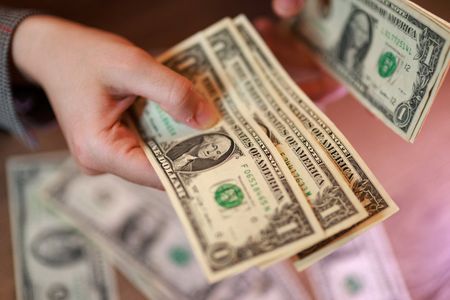

The American dollar experienced its strongest performance in seven months on Monday, climbing nearly 1% as investors sought safety following U.S. military action against Iran, signaling the currency maintains its protective role during international crises.
This surge provides reassurance to global markets after recent months of uncertainty about whether the dollar could still serve as a reliable refuge during turbulent times. Those doubts emerged when the currency stumbled during last year’s widespread market decline triggered by tariff disputes.
“Today is, I would say, a classic risk-off day from a U.S. dollar perspective,” stated Eric Theoret, a foreign exchange strategist at Scotiabank.
Theoret referenced the challenges the dollar faced during what he called “Liberation Day” – the April 2, 2025 announcement of comprehensive U.S. tariffs that sparked global market chaos. “I think ‘Liberation Day’ was obviously a bit of a break with the historical analogs that we’ve had,” he explained.
The dollar’s recent strength represents welcome news for the currency, which had seen its traditional safe-haven status questioned as investors increasingly turned to alternatives like the euro, Japanese yen, and gold during periods of uncertainty.
Market experts point to the scale and stability of American financial markets as key factors supporting the dollar’s appeal. “If you’re looking to de-risk and de-risk in size, the U.S. Treasury market is really the only one that can handle those flows,” Theoret noted. When international investors purchase Treasury securities during crises, it naturally increases demand for dollars.
Don Calcagni, chief investment officer at Mercer Advisors in Denver, emphasized the limited options available to investors during volatile periods. “So, I’m perhaps not surprised that we’re still seeing the dollar perform as a safe-haven asset,” Calcagni observed.
The currency’s struggles during previous market stress largely resulted from the United States being the source of global uncertainty, leaving investors reluctant to seek protection in the dollar when American policies were creating the instability.
“Liberation Day forced the USD’s centrality to diminish … investors started to favor the (rest of world),” explained Benjamin Ford, a researcher at macro strategy firm Macro Hive. “The oil shock then has scared global investors out of positions that they have been chasing over the past three months and landed them net long USD.”
John Velis, Americas macro strategist at BNY, distinguished between domestic and international sources of crisis. While the dollar’s protective appeal might weaken when concerns originate within the U.S., “when it’s an international geopolitical crisis, its safe-haven appeal seems intact,” he said. “Certainly, the evidence today suggests that.”
However, some analysts remain cautious about declaring the dollar’s safe-haven status fully restored. “I think there will be some reassurance from today’s activity that the USD still has safe-haven characteristics,” said Jane Foley, head of foreign exchange strategy at Rabobank. “However, I think the debate is not over yet.”
Monday’s dollar strength benefited not only from safety-seeking flows but also from America’s position as a net energy producer, which shields the U.S. economy from oil price increases that typically damage import-dependent nations.
Aaron Hurd, senior portfolio manager for currency at State Street Global Advisors, questions whether the dollar would maintain its strength facing different types of economic shocks. “If it’s just a general kind of economic fear, I think the dollar will be far less effective,” he predicted.
Citing America’s substantial fiscal deficits, policy uncertainty, and extensive global exposure to U.S. investments, Hurd anticipates the dollar will likely show stronger correlation with risky assets during major market disruptions going forward.
Looking ahead, Ford from Macro Hive sees oil prices as crucial to the dollar’s trajectory. “If we continue in this oil up, risk appetite down world, then USD will continue to find a bid,” he projected. “However, if oil sinks, you could see typical safe-havens return to the forefront,” potentially favoring the Swiss franc and Japanese yen instead.