
Global oil prices continued their upward climb Tuesday, marking three consecutive days of increases as tensions between the United States, Israel and Iran intensify, sparking fears of major supply chain disruptions from the crucial Middle Eastern oil-producing region.
Brent crude futures reached $78.83 per barrel, gaining $1.10 or 1.4% by early Tuesday. The previous day saw the contract spike to $82.37, marking its peak level since January 2025, before settling with a 6.7% increase despite losing some ground.
Meanwhile, U.S. West Texas Intermediate crude climbed 74 cents to $71.97 per barrel, representing a 1% increase. Monday’s trading session initially pushed the contract to its highest point since June 2025 before pulling back, though it still closed up 6.3%.
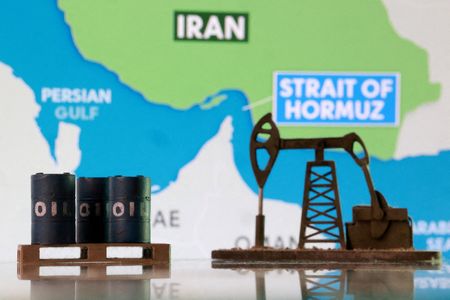
Market analyst Tony Sycamore from IG warned of continued risks in a recent note, stating: “With no quick de-escalation in sight, the Strait of Hormuz effectively closed and Iran showing a willingness to target energy infrastructure in the region, upside risks remain and they grow the longer the conflict drags on.”
Monday brought an expansion of the ongoing air campaign between the U.S. and Israel against Iran, with Israeli forces launching attacks on Lebanon while Iran retaliated by striking energy facilities in Gulf nations and targeting vessels navigating the Strait of Hormuz.
The strategic waterway typically handles approximately one-fifth of the world’s daily crude oil shipments, along with tankers transporting diesel, gasoline and other petroleum products to major Asian consumers like China and India. Additionally, roughly 20% of global liquefied natural gas passes through this crucial shipping lane.
Maritime traffic has begun avoiding the area as insurance companies have withdrawn coverage for vessels attempting passage through the strait.
Concerns about safe passage have intensified following reports from Iranian media Monday, where a senior Iranian Revolutionary Guards official declared the Strait of Hormuz closed and threatened to attack any vessel attempting to transit the waterway.
Earlier Monday, the Revolutionary Guards reported that a fuel tanker flying the Honduran flag, the Athe Nova, caught fire in the strait after being struck by two drone attacks, according to Iranian news outlets.
Market experts anticipate oil prices will stay elevated in the coming days as traders monitor the impact of the escalating Middle Eastern conflict.
Investment firm Bernstein revised its 2026 Brent crude price forecast Monday, raising it from $65 to $80 per barrel, while projecting potential prices of $120-$150 in scenarios involving extended conflict.
Refined petroleum product futures are also climbing since the Middle East serves as a major fuel supplier and processing facilities face potential threats. Saudi Arabia was forced to shut down its largest domestic oil refinery Monday following a drone attack.
U.S. ultra-low-sulfur diesel futures increased 3.1% to $2.991 after hitting a two-year high Monday, while gasoline futures rose 1.1% following the previous session’s 3.7% gain.
European gasoil futures jumped 2.7% to $909.50 per metric ton, after Monday’s dramatic 18% surge.