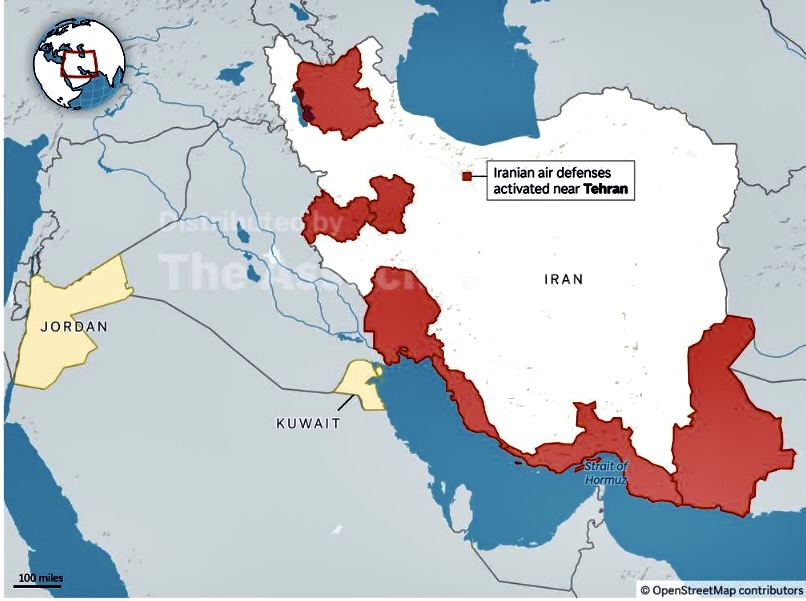

The head of Goldman Sachs expressed astonishment Wednesday at how calmly financial markets have responded to the escalating Middle East conflict, predicting it will take several more weeks for investors to fully grasp the economic consequences.
Speaking at a business conference in Sydney, CEO David Solomon shared his thoughts on the market’s reaction to the regional turmoil.
“I look at the market reaction, and I’m actually surprised that the market reaction has been more benign given the magnitude of this as you might think,” Solomon told attendees at the Sydney summit.
The banking executive explained that financial markets typically show restrained responses to international political tensions unless those events directly threaten economic expansion.
“There’s a cumulative effect of everything that’s happening and a much harsher reaction. Up to this point, we haven’t seen that cumulative effect,” Solomon noted. “But it’s very hard to speculate because there is so much that is unknown at this point.”
“I think it’s gonna take a couple of weeks for markets to really digest the implications of what has happened both in the short term and medium term, and I can’t speculate as to how that would play out,” he added.
The expanding conflict has driven petroleum prices higher due to concerns about supply disruptions, adding to investor worries about rising inflation pressures.
International stock markets have declined while the U.S. dollar has gained strength as traders moved away from higher-risk investments toward safer alternatives.
Despite these trends, Wall Street’s declines have remained modest, with the S&P 500 falling less than 1% this week after recovering from earlier losses during both trading sessions.
Solomon highlighted that several positive factors, including relaxed monetary policies and reduced regulatory constraints, have helped maintain the strength of the American economy.
“Let us put aside what’s going on in the Middle East at the moment,” he explained. “We have a confluence of strong macro tailwinds that make the economic growth trajectory of the United States, I think, quite compelling.”