
WASHINGTON, March 4 – A Federal Reserve official stated Wednesday that economic uncertainties stemming from the U.S. military confrontation with Iran should not prevent the central bank from pursuing additional interest rate reductions throughout 2024, as inflation pressures are anticipated to diminish and employment concerns persist.
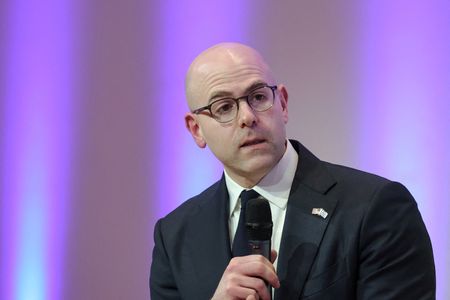
During an appearance on Bloomberg Television, Fed Governor Stephen Miran explained that elevated oil costs resulting from the military action “will feed into headline inflation, but the evidence that it feeds into core inflation … is quite limited. … It is difficult for me to get very excited about a policy implication of what’s happened so far.” Miran advocated for implementing four quarter-percentage-point rate decreases this year to achieve approximately neutral monetary policy levels, though some of his more conservative Fed colleagues believe that neutral stance has already been accomplished with current rates between 3.5% and 3.75%.
Miran drew distinctions between today’s circumstances and the 2022 situation when Russia’s Ukrainian invasion triggered worldwide spikes in oil and commodity costs that contributed to widespread inflationary pressures. He emphasized that current conditions differ because monetary policy remains restrictive and fiscal policy is less expansionary, reducing the likelihood of sustained inflation.
The Fed governor also highlighted concerns about employment trends, noting officials shouldn’t overlook “two plus years of a trend of gradually weakening labor markets. … There is still evidence to me that it needs support from monetary policy,” citing challenges such as recent college graduates struggling to secure employment.
The recent large-scale U.S. and Israeli military operations against Iran have introduced additional uncertainty into Fed policy discussions that were already experiencing internal disagreement. Current inflation remains roughly one percentage point higher than the Fed’s 2% objective and has shown minimal improvement over the past year. Employment growth has significantly slowed, though policymakers remain split on whether this reflects insufficient labor demand or economic adjustment to restrictive immigration policies that have constrained worker availability.
However, January employment figures exceeded projections, with officials now awaiting February jobs data to determine if employment patterns might be improving. A recent report from private payroll company ADP showed the strongest gains in seven months, surpassing analyst expectations.
As the Iran situation potentially remains in its initial phases with U.S. officials pledging continued action until the country’s hardline government changes, Fed officials have been cautious about making definitive statements beyond acknowledging new economic uncertainties.
Cleveland Fed President Beth Hammack told the New York Times she was monitoring economic consequences from the conflict but maintained her position that the Fed should maintain current rates because inflation appears persistently elevated. Unlike Miran, who views the neutral rate as significantly lower than colleagues suggest, Hammack believes the Fed has already reached or approached neutral territory.
“We’re in a good spot from a policy perspective,” Hammack stated, adding they can “respond as new data show how the job market and prices are evolving. I think we could be on hold for quite some time.”
The Federal Reserve’s next policy meeting is scheduled for March 17-18, with expectations that rates will remain unchanged. While financial markets still anticipate two rate cuts this year, the timeline has shifted following the Iran conflict’s onset, with an initial reduction now expected at the July meeting instead of June.