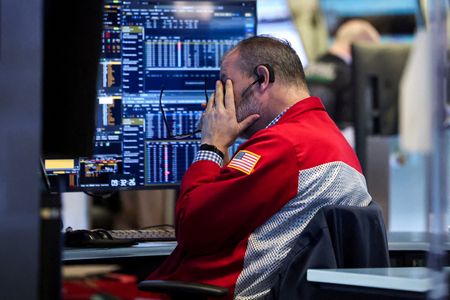

Stock market futures fell Wednesday morning as Wall Street grappled with intensifying Middle East tensions and the potential impact of rising oil costs on inflation, creating uncertainty ahead of key economic reports.
Oil prices surged with Brent crude jumping nearly 2%, though they pulled back from session highs after President Donald Trump announced insurance protections for Gulf shipping routes and indicated the U.S. Navy might provide escorts for oil tankers navigating the Strait of Hormuz.
This critical waterway connecting the Persian Gulf to the Gulf of Oman serves as a crucial passage for global energy supplies, handling approximately one-fifth of worldwide oil and liquefied natural gas shipments.
Market participants flocked to traditional safe investments, pushing gold prices up 1% while the dollar remained close to three-month highs and U.S. 10-year Treasury notes gained for the third straight trading session.
The regional conflict intensified as U.S. and Israeli military forces continued operations against Iran that began Saturday, while Iranian forces launched drone and missile attacks on Gulf oil facilities and targeted American diplomatic missions in Saudi Arabia and Kuwait.
Financial markets are particularly focused on how a fifth consecutive day of fighting might affect inflation trends. Crude oil values have already surged more than 13% this week, potentially complicating Federal Reserve policy decisions as inflation data continues showing elevated levels and central bank officials maintain a more restrictive approach.
These developments have reinforced market expectations that the Federal Reserve will maintain current short-term interest rates without changes in the near term.
Early Wednesday trading showed Dow E-mini futures declining 144 points or 0.3% with 17,957 contracts traded, while Nasdaq 100 E-minis dropped 156.75 points or 0.63%.
Wednesday’s economic calendar includes the Federal Reserve’s Beige Book regional economic survey, ADP employment statistics, and the final S&P composite purchasing managers’ index reading.
Tuesday’s trading session saw the S&P 500 fall 0.9%, breaking below its 100-day moving average for the first time since November 20, while the Dow Jones declined 0.8% and the Nasdaq dropped 1%.