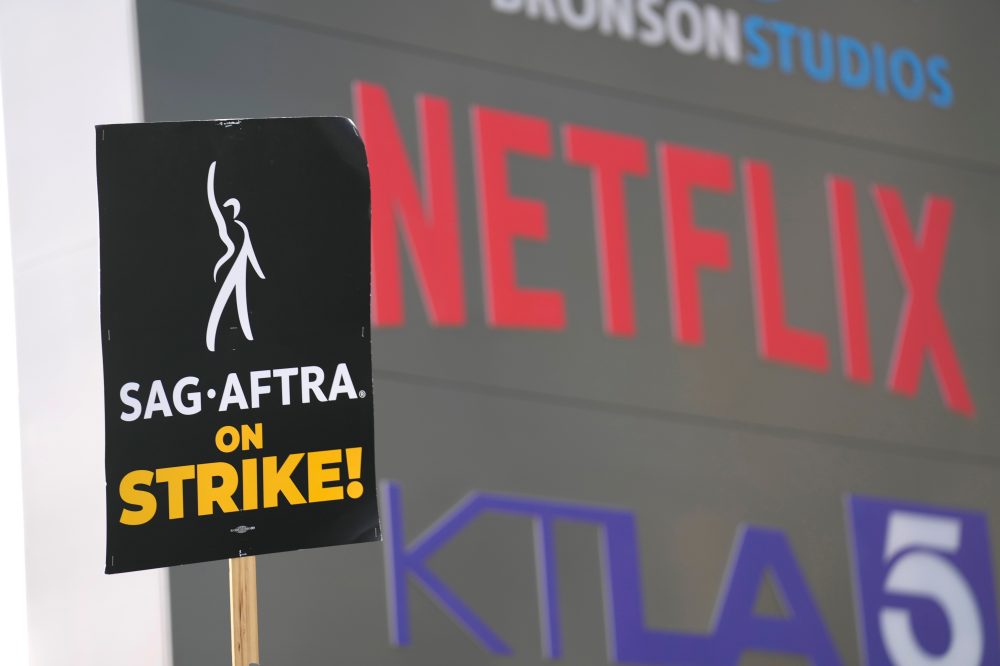

LOS ANGELES — Board members of the Screen Actors Guild-American Federation of Television and Radio Artists are preparing to examine a preliminary contract agreement reached with major studios and streaming platforms this week.
The tentative agreement, revealed on Saturday, requires approval from SAG-AFTRA’s board followed by ratification through a membership vote. Should both steps proceed as anticipated, Hollywood will sidestep a recurrence of last year’s devastating strikes by actors and writers that severely disrupted the entertainment business. This round of contract talks proceeded smoothly without significant conflict, making work stoppages unlikely from the start.
Both SAG-AFTRA and the Alliance of Motion Picture and Television Producers issued a combined announcement regarding the preliminary agreement. The Alliance serves as the bargaining representative for Hollywood’s leading studios, streaming companies, and production firms.
According to their joint announcement, contract specifics will remain confidential until union board members complete their evaluation.
A source with knowledge of the discussions revealed to The Associated Press that negotiators agreed to a four-year contract term rather than the traditional three-year standard. The individual requested anonymity as they lacked authorization to discuss the matter publicly.
Key union objectives during negotiations centered on strengthening safeguards against artificial intelligence technology that could generate digital performers or replicate actual actors’ appearances. The performers also sought enhanced long-term compensation for program reruns, commonly called residuals within the industry.
During a pre-negotiation interview with the AP, SAG-AFTRA President Sean Astin emphasized the union’s commitment to maintaining previous strike victories.
“There is no going back,” he said.
Astin noted that studio executives were “sending signals of wanting stability, of wanting to work as partners.”
Studio representatives similarly expressed measured confidence about achieving an equitable agreement.
Approximately six weeks of discussions led to the final deal. Talks commenced on February 9 but paused temporarily while studios focused on writer negotiations, which also resulted in a four-year contract extension beyond their typical three-year terms.
The existing SAG-AFTRA agreement expires on June 30. Contract discussions frequently approach or exceed deadlines, even during years without labor disputes.
With actor negotiations concluded, AMPTP representatives can now turn their attention to upcoming Directors Guild contract talks. These discussions, scheduled to begin May 11, will mark the first negotiations under new guild president Christopher Nolan.