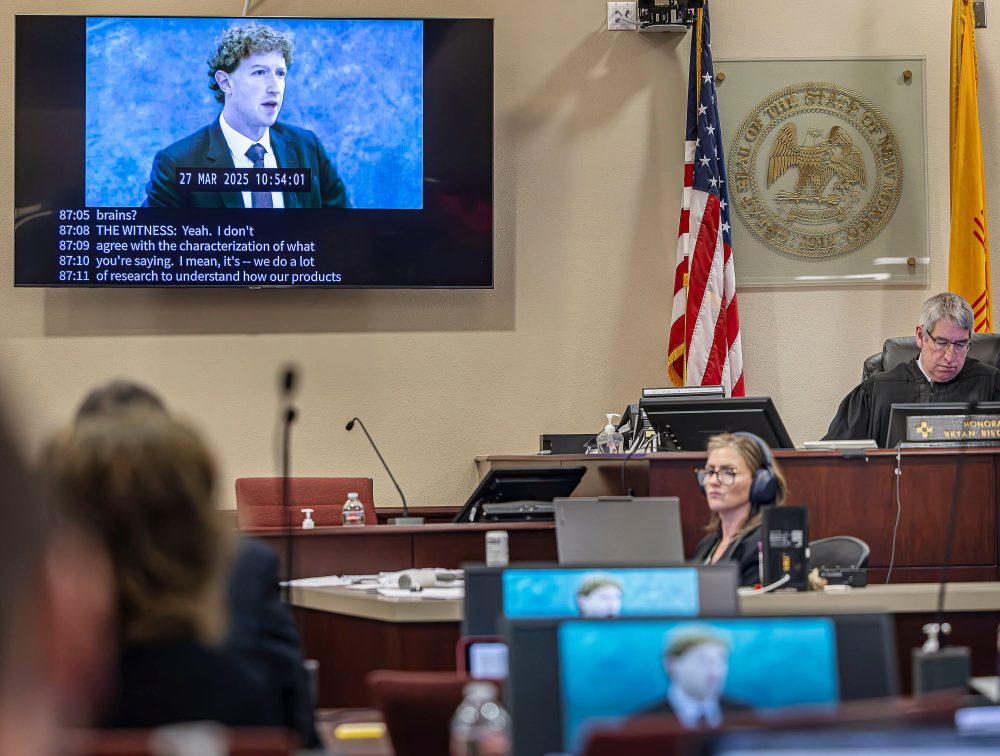

SANTA FE, N.M. — State prosecutors in New Mexico are demanding sweeping modifications to Meta’s social media platforms and recommendation systems to protect young users as the second portion of a groundbreaking legal case begins.
A three-week bench trial is set to start Monday with opening arguments, where a judge will determine if Meta’s platforms — including Instagram, Facebook, and WhatsApp — constitute a public nuisance according to state regulations.
During the initial phase of proceedings, a jury imposed $375 million in civil fines on Meta after finding the company deliberately damaged children’s mental wellbeing while hiding information about sexual exploitation of minors on its services.
State attorneys are now requesting a judge mandate comprehensive reforms targeting habit-forming design elements, enhanced age verification processes, and stronger protections against child exploitation through automatic privacy controls and increased monitoring.
Meta has pledged to challenge the jury’s decision and cautioned it might discontinue Instagram and Facebook operations in New Mexico if required to follow unrealistic requirements.
“The fact that we’re having a trial on nuisance is itself a remarkable outcome,” said Eric Goldman, co-director of the High Tech Law Institute at Santa Clara University School of Law in California. “That theory is not well accepted as applied to the internet, and that theory doesn’t really fit the internet.”
New Mexico Attorney General Raúl Torrez stated the jury’s ruling broke through the shield of immunity that has protected technology companies from responsibility for platform content under Section 230, a three-decade-old component of the U.S. Communications Decency Act.
A separate Los Angeles jury also held both Meta and YouTube responsible for harm to children, confirming longstanding worries about social media risks.
New Mexico officials are insisting Meta assist in addressing a youth mental health emergency through various protective measures and modifications, including restructuring recommendation algorithms so they no longer focus primarily on maintaining user engagement.
Prosecutors are also challenging additional features connected to compulsive behavior, such as “infinite scroll” that continuously displays new content, push alerts, and standard settings that display counts for “likes” and shares. Their legal action additionally seeks enhanced age verification and other measures designed to reduce child sexual exploitation.
New Mexico also wants youth accounts on Meta’s services to require an associated parent or guardian, plus a court-appointed child safety supervisor to monitor progress over time.
Company leadership has stated Meta constantly enhances child protection and tackles compulsive usage, arguing many prosecutor demands are unnecessary.
Meta intends to present numerous technical specialists as witnesses while contending the requirements are unworkable if not impossible and would compel the company to “disregard the realities of the internet.”
The corporation also maintains its platforms are being unfairly targeted among hundreds of applications teenagers utilize, potentially leaving young people exposed on services with weaker safeguards.
The company is citing free speech protections that have defended social media platforms for decades.
“The state’s proposed mandates infringe on parental rights and stifle free expression for all New Mexicans,” Meta said last week in a statement.
This case represents the first to proceed to trial among lawsuits initiated by over 40 state attorneys general alleging Meta contributes to a youth mental health crisis. Most others are pursuing solutions in federal court.
Torrez, the state attorney general, explained this positions the case uniquely not only “to try and change the paradigm of how this company does business, but also how Big Tech generally is expected to do business going forward.”
Goldman suggested prosecutors might be entering uncharted legal territory simply by pursuing age verification requirements.
“In practice a court order saying that Facebook had to impose age authentication would have no Supreme Court textual support,” he said. “The Supreme Court might bless it. We don’t know.”
The trial’s first phase included six weeks of testimony from witnesses such as educators, mental health professionals, state investigators, senior Meta executives, and former company employees who became whistleblowers.