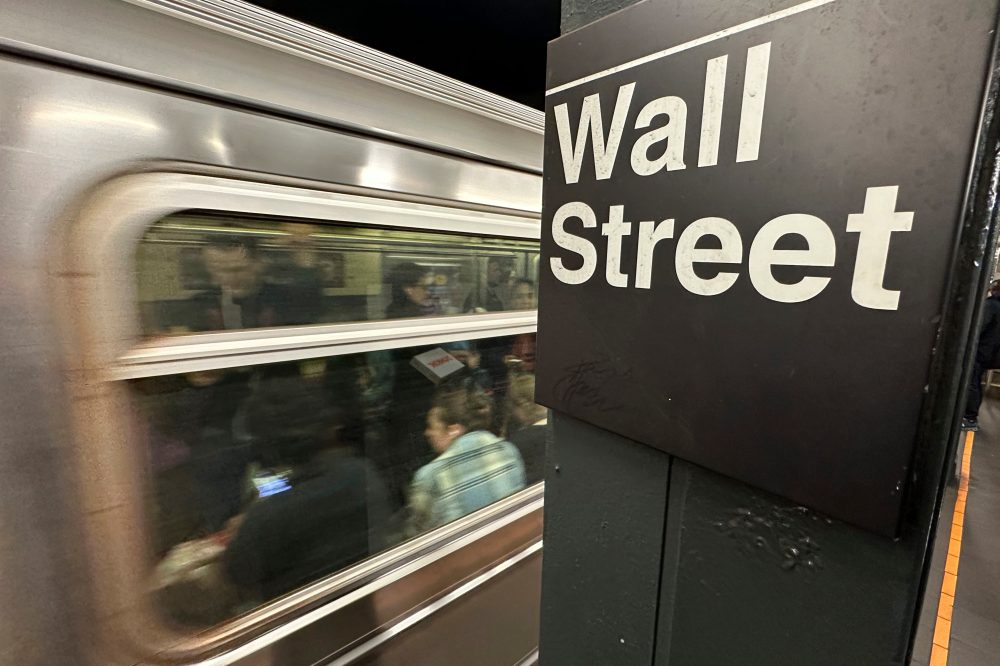

HONG KONG — Markets across Asia dropped Tuesday, following the lead of Wall Street where stocks pulled back from their recent record-setting levels.
Energy prices retreated after climbing earlier due to growing conflicts between the United States and Iran.
Futures for U.S. markets showed a modest 0.1% increase.
Trading activity remained light across the region, as markets in Japan, South Korea and mainland China remained shuttered for holiday observances.
The Hang Seng index in Hong Kong dropped 1.1% to close at 25,805.98. In Australia, the S&P/ASX 200 declined 0.5% to finish at 8,649.80, while Taiwan’s Taiex ended 0.2% lower at 40,626.22.
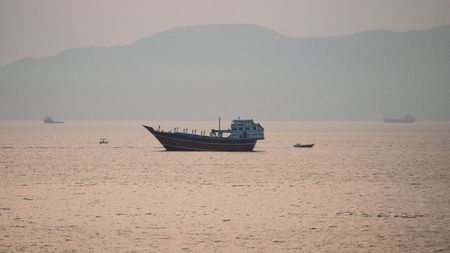
Monday brought new challenges to the delicate ceasefire agreement between Washington and Tehran when U.S. military forces reported destroying six small Iranian vessels that were threatening commercial shipping. Meanwhile, two American-flagged ships successfully navigated through the Strait of Hormuz.
This crucial passage for global oil and gas shipments continues to face significant restrictions, despite ongoing U.S. demands for Iran to allow normal transit. The United States has established a naval blockade around Iranian ports while launching President Donald Trump’s “Project Freedom” initiative Monday, designed to escort stranded vessels through the strategic waterway.
International benchmark Brent crude dropped $1.22 to $113.22 per barrel after Monday’s surge above $114, which represented nearly a 6% gain. Prior to the conflict’s start in late February, the commodity was valued around $70.
U.S. benchmark crude fell $2.08 to $104.34 per barrel.
Diplomatic efforts to establish a lasting peace agreement have reached an impasse. The situation worsened when the United Arab Emirates, a key U.S. partner, reported coming under Iranian attack for the first time since last month’s ceasefire took effect.
“We are seeing the first signs of the ceasefire between the U.S. and Iran breaking down amid a re-escalation in the Persian Gulf,” ING Bank analysts Warren Patterson and Ewa Manthey wrote in a note Tuesday.
“Continuation of ‘Project Freedom’ risks further escalation,” they wrote. “Any relief from stranded vessels making their way through the Strait will be temporary, with very few inbound vessels moving into the Persian Gulf.”
Monday’s session on Wall Street ended in negative territory, with the S&P 500 benchmark declining 0.4% from its latest peak to close at 7,200.75. The Dow Jones Industrial Average tumbled 1.1% to 48,941.90, while the tech-focused Nasdaq composite fell 0.2% to 25,067.80.
GameStop shares plummeted 10.1% following the company’s announcement of its intention to purchase eBay, despite eBay’s market capitalization being approximately four times larger than GameStop’s.
Currency markets saw the U.S. dollar strengthen to 157.27 Japanese yen from 157.25 yen. The euro weakened to $1.1687 from $1.1689.