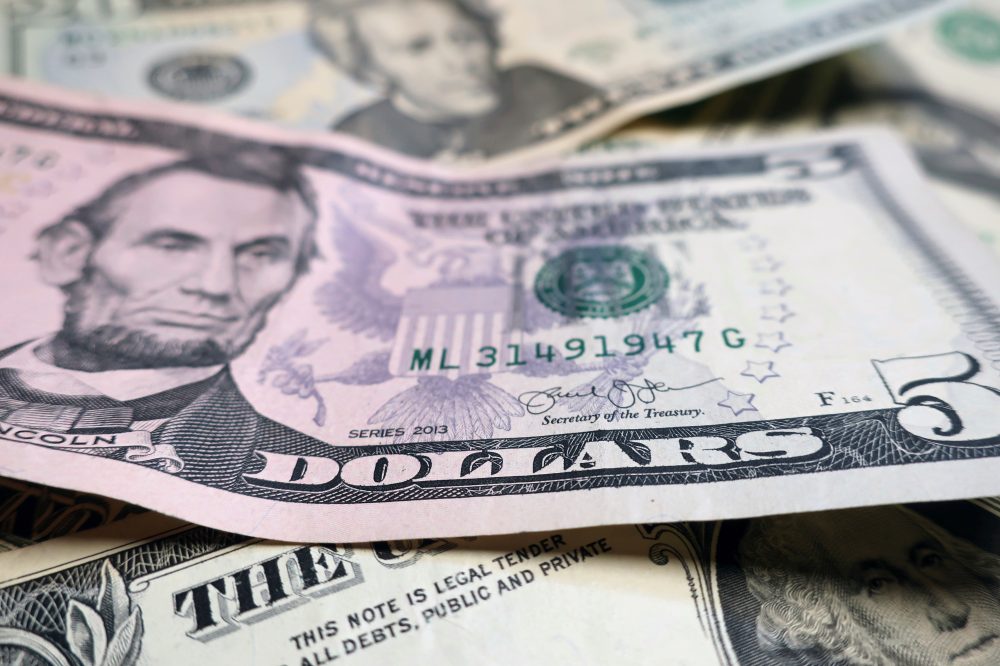

NEW YORK — An invisible economic factor is steadily increasing expenses for Delaware families, from vacation costs to weekly shopping trips: the declining value of the U.S. dollar.
Since the beginning of 2025, the dollar has decreased roughly 10% compared to other major global currencies, creating a potential contributor to Americans’ growing worries about the cost of living.
“It’s kind of a hidden tax,” says economist Thomas Savidge of the conservative-leaning American Institute for Economic Research. “What your dollar is going to be able to buy is going to shrink.”
The U.S. Dollar Index, which tracks the greenback’s performance against other significant currencies, experienced its most dramatic six-month decline in over five decades during the first half of 2025. While the drop has stabilized, the index remains approximately 10% below where it stood at the beginning of President Trump’s current term.
When the dollar is strong, foreign goods become less expensive and inflation can be controlled more effectively. However, a weakened dollar tends to raise prices on international products while making American exports more competitive globally.
American presidents have traditionally expressed support for a robust dollar, even while implementing policies that sometimes weakened the currency. Trump has indicated that a strong dollar disadvantages the United States and that a weaker currency benefits American manufacturing. Consistent with his communication style, Trump has been direct about this position.
“You make a hell of a lot more money with a weaker dollar,” he said last year, one of a number of public statements showing his preference for seeing the dollar decline.
Trump’s perspective on a weaker dollar’s advantages is shared by others in the business community.
Corporate earnings discussions in recent months have frequently highlighted how currency weakness has benefited companies ranging from Philip Morris to Coca-Cola, with executives using terms like “favorable currency impact” to describe how the decline provided international advantages that improved their financial results.
“In many cases, we’ve got a weaker dollar, which is not unhelpful,” Elie Maalouf, the CEO of InterContinental Hotels, said on a February call as the company announced higher profits and revenues.
Large international corporations conducting overseas business can benefit from a weaker dollar as their products become more affordable in foreign markets. However, most American businesses operate domestically. For companies serving local customers, the situation differs significantly, especially when they depend on imported materials.
Travis Madeira, a fourth-generation lobsterman who founded the lobster-shipping business LobsterBoys with his brother, generates approximately 80% of his revenue from American customers, unlike competitors who focus primarily on exports.
“The exporters are gonna have the advantage when it comes to the dollar weakening,” says Madeira, who is paying more to import bait and buy Canadian lobsters. “These guys are gonna have a little bit of a lever on us.”
Even companies with international operations feel the currency’s impact. While large corporations often use currency hedging strategies for protection or increase overseas sales, smaller enterprises typically face greater vulnerability to these fluctuations.
David Navazio, CEO of Pennsylvania-based Gentell, which manufactures bandages and other medical supplies, runs facilities in Brazil, Paraguay, Canada, New Zealand and the United Kingdom. The dollar’s decline in each location has increased Gentell’s operational expenses.
Gentell has been forced to increase certain prices to account for currency changes, adding to other difficulties including tariffs and war-related fuel cost increases.
“A year ago, none of these were concerns,” he says. “And it always hurts the consumer.”
American consumers most directly experience the dollar’s weakness when traveling internationally or purchasing items directly from foreign vendors.
Traveling to Mexico, Americans’ preferred international destination, means your dollar has lost about 16% of its value against the peso since early 2025. Similar decreases of roughly 10% to 17% have occurred against the Swiss franc, South African rand, Danish krone, Swedish krona and the Euro.
Regarding products imported into the United States, there is an effect, though it’s more difficult to measure precisely. Economic experts estimate that in developed nations like the U.S., only approximately 5% to 10% of currency depreciation affects consumer prices directly.
However, these currency effects add pressure when prices are already influenced by other economic factors.
Consider coffee, among the grocery products experiencing the largest price increases over the past year. Brazil supplies the majority of America’s coffee, and the dollar has weakened around 13% against the Brazilian real. Currency shifts can have greater impact in developing economies, and while only a portion of this change may contribute to coffee’s rising costs, every factor accumulates. Government statistics show coffee prices have increased nearly 19% in the United States over the past year.
Currency valuations fluctuate continuously, and although the dollar’s recent decline is significant, it has reached lower points during the presidencies of each of Trump’s predecessors, dating back to the Dollar Index’s creation in 1973 during Richard Nixon’s administration.
Kenneth Rogoff, a Harvard University economist and former chief economist at the International Monetary Fund, says while “a lot of policies that Trump is doing are something of a cancer for the dollar,” he believes that it was destined to fall no matter who was in charge.
“The dollar had been on a 15-year bull run,” he said. “I would argue the dollar is still wildly overvalued, and over the next maybe five or six years, it might fall 15%.”
What does this mean for American families? Rogoff predicts commodity prices will likely increase, particularly considering the impact of Middle Eastern conflicts on fuel costs.
“They’re just going to go up,” he says, “no matter what the dollar’s at.”