
Crude oil markets retreated Tuesday following a successful U.S. naval operation that helped break Iran’s blockade of the strategically vital Strait of Hormuz waterway. The development came after oil prices had surged as much as 6% in Monday’s trading session.
The United States initiated a new military mission Monday focused on restoring shipping access through Hormuz. Shortly afterward, shipping giant Maersk announced that its U.S.-flagged vessel Alliance Fairfax successfully navigated through the strait while under protection from American military forces, providing relief from immediate supply shortage concerns.
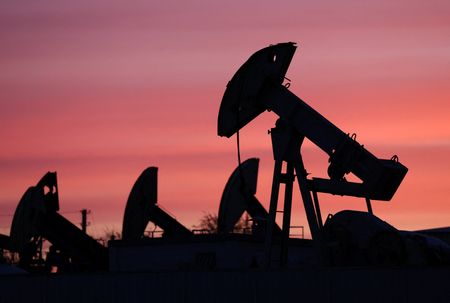
July Brent crude contracts dropped 68 cents, or 0.6%, to $113.76 per barrel at 0100 GMT, following Monday’s 5.8% gain. U.S. West Texas Intermediate crude declined $1.59, or 1.5%, to $104.83, after Monday’s 4.4% increase.
“The successful escorted exit of the Maersk-operated vessel has helped ease some immediate supply disruption fears,” said Tim Waterer, chief market analyst at KCM Trade.
“It shows that limited safe passage is possible under current conditions and helps chip away at some of the worst-case supply disruption fears. However, it’s still very much a one-off event rather than a full reopening,” he said in an email.
However, Iran responded to the American initiative with military strikes throughout the Gulf region Monday as both nations compete for control of the Strait of Hormuz, the narrow passage linking the Persian Gulf to international markets. The waterway normally transports oil and natural gas equivalent to roughly 20% of worldwide daily consumption.
Multiple commercial ships reportedly sustained damage in the region, while Iranian forces targeted a major oil facility in the United Arab Emirates, causing significant fires. This naval intervention marks the most serious escalation in the conflict since a truce was established four weeks earlier.
Washington is working to restore Hormuz shipping operations to address severe disruptions to international energy markets that began when Iran largely sealed the waterway following the start of U.S.-Israeli military action on February 28.
Chevron Chairman and CEO Mike Wirth warned Monday that physical oil shortages will soon emerge globally due to the Hormuz blockade.
Goldman Sachs reported Monday that worldwide oil inventories are nearing eight-year lows because of the supply interruptions, with analysts expressing concern about the rapid depletion rate while access remains limited.
“With the world rapidly burning through commercial stockpiles, strategic reserves, and crude held in floating storage, the underlying supply squeeze remains a potent tailwind for oil prices,” IG market analyst Tony Sycamore said in a note.