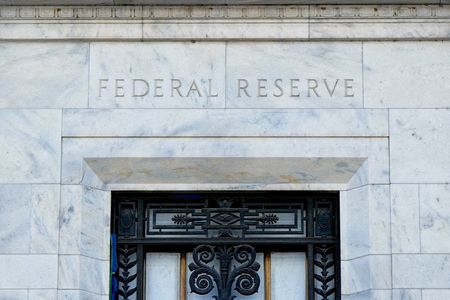

This week’s upcoming employment report will determine whether America’s economy stays strong enough for the Federal Reserve to maintain current interest rates, or if weakening job numbers might bring back discussions of rate reductions that international conflict has largely eliminated.
Robust economic performance and worries about conflict-related inflation have led financial markets to anticipate no interest rate adjustments throughout this year. This represents a dramatic shift from January, when traders in federal funds futures markets were anticipating two quarter-point reductions by 2026.
“The economic backdrop and the data have been quite resilient through the conflict,” said Jonathan Cohn, head of U.S. rates desk strategy at Nomura. “Even without the uncertainty from Iran, one could make the case that the economy doesn’t require meaningful easing at this point.”
Financial experts suggest that obvious deterioration in employment numbers might encourage Federal Reserve officials to consider reduced rates. However, even substantially weak employment data would be unlikely alone to change the central bank’s overall position, given last month’s strong job numbers, other positive economic indicators, and persistently elevated inflation. Market participants have been counting on reduced rates to maintain this year’s gains in stock prices and other investment values.
Robust economic data has strengthened arguments against rate reductions, even if the current conflict reaches a quick resolution, according to analysts. March saw the addition of 178,000 jobs, almost triple the 60,000 that economists predicted in a Reuters survey, while unemployment decreased slightly to 4.3%.
Ten-year Treasury benchmark yields have increased to 4.43% from 3.94% before the conflict started on February 28, while two-year yields sensitive to rate changes have climbed to 3.94% from 3.38%. This widespread repricing shows markets adjusting to expectations of extended higher interest rates.
Central bank officials show limited indication that rate reductions are their primary concern. During the Fed’s latest meeting, rates remained unchanged, but three policymakers opposed language suggesting a preference toward rate cuts.
“Over the inter-meeting period, there was growing support for a more neutral stance on the future path of interest rates,” said Vail Hartman, U.S. rates strategist at BMO Capital Markets.
Fed Chair Jerome Powell indicated during last week’s post-meeting press conference that the central bank might abandon its easing preference as early as the June 16-17 meeting.
Financial analysts noted that circumstances supporting a reduction in the federal funds rate from its current 3.50%-3.75% range have become significantly more limited.
First-quarter economic expansion accelerated as companies increased artificial intelligence investments and government expenditures recovered following a damaging shutdown.
Consumer spending has also maintained strength, despite higher gasoline costs for consumers.
“If the Fed cuts, it’s not going to be because we got good news on inflation data,” Hartman said. “It’s going to be because we got bad news on the labor side.”
Such employment market deterioration would require evidence across multiple reports and would most likely involve a sustained unemployment rate increase, he explained.
Reuters-surveyed economists anticipate Friday’s Labor Department report will show 62,000 jobs added last month, with unemployment holding steady at 4.3%.
Even if energy prices stabilized following a ceasefire, analysts warned that inflation was already following a concerning path before the conflict started. This means resolving Middle Eastern tensions would eliminate one barrier without completely opening the route to reduced rates.
“Inflation was already increasing before the oil shock even hit,” Hartman said, noting there would be “some reluctance to conclude that we shouldn’t be all that worried about inflation just because the oil issue has diminished in relevance.”
Cohn identified several elements preventing markets from consistently pricing in Fed tightening, including pending Senate confirmation of former Fed Governor Kevin Warsh to replace Powell as central bank head, still-stable long-term inflation expectations, and what he described as the Fed policy committee’s “implicit dovish bias.”
However, Cohn warned that preference alone wouldn’t be sufficient to restore aggressive rate-cut expectations without economic data deterioration.
An unusually large wave of tax refunds may have hidden underlying economic weakness by helping consumers manage increased energy costs, according to Michael Lorizio, head of U.S. rates and mortgage trading at Manulife Investment Management.
The speed of that cushion’s disappearance and whether higher oil price effects appear in consumption or other economic indicators will be crucial for markets evaluating the Fed’s direction, he explained.
Currently, standards remain elevated on both sides. Without employment market problems, building a case for rate cuts proves difficult. With inflation still high, maintaining current rates is easily justified.
“If you see the labor market data begin to crack, then cut expectations can reemerge in a more meaningful way,” Cohn said. “Absent that, I think the market will struggle to get back all the way to what we were pricing pre-war.”