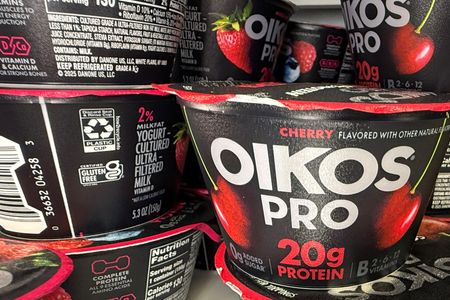

The booming popularity of weight-loss medications is creating an unprecedented surge in demand for whey protein, prompting dairy companies and food manufacturers around the world to dramatically increase their investments in production capabilities.
Whey, which has traditionally been used primarily as animal feed after being separated during cheese production, has become a critical ingredient in foods designed for consumers trying to maintain muscle mass while losing weight.
According to StoneX consultancy data, the cost of whey protein concentrate containing 80% protein has skyrocketed nearly 90% over the past 12 months, reaching 20,000 euros ($23,410) per metric ton. This dramatic increase far surpasses price jumps seen in other dairy products like powdered milk and cheese.
While factors such as increased health consciousness and aging demographics have contributed to rising whey costs, industry experts say the GLP-1 medication trend represents the primary driver behind this explosive demand. Interviews with twelve companies and professionals in the dairy and food industries confirmed this assessment.
“The ongoing strong demand for whey proteins, being fuelled even further by GLP (-1) in recent years, is what the industry needs to figure out,” Luis Cubel, managing director of Arla Foods Ingredients, told Reuters. “Are there any more untapped volumes you can tap into?”
Major dairy operations, including Arla Foods (known for Lurpak butter) and Netherlands-based FrieslandCampina, have ramped up their whey manufacturing capabilities. Meanwhile, food companies are broadening their high-protein product lines, including Danone’s Oikos yogurt and Bel Group’s Babybel Protein offerings.
MEDICATION USERS SEEK PROTEIN SOLUTIONS
Kristen Coady, chief innovation and brand officer at Dairy Farmers of America, explained that individuals taking weight-loss medications are actively pursuing protein sources, spurring fresh innovations across the industry.
DFA, America’s largest dairy farm cooperative, introduced MULU last month – a cottage cheese enhanced with additional whey that delivers 18 grams of complete protein per half-cup portion, significantly exceeding the standard 12 to 13 grams found in regular products.
“What we’ve been seeing is almost a run on dairy proteins,” Coady said.
The cottage cheese trend has prompted DFA to boost investments in its cultured production capabilities, converting manufacturing facilities in Pennsylvania and New Mexico from fluid milk operations, according to Coady.
Health and wellness retailer iHerb has experienced tremendous growth in products related to GLP-1 medications, particularly across the United States.
“Customers are starting to really look for ways to fight the downside or the side effects of GLP-1,” said iHerb’s Chief Revenue Officer Hyeyoung Moon.
She observed increased searches containing ‘GLP-1’ terms and noted more female customers seeking supplements to combat muscle loss, expanding beyond the traditional demographic of gym enthusiasts who typically used whey proteins.
INFRASTRUCTURE STRUGGLES WITH HIGH-GRADE WHEY DEMAND
John Lancaster, head of EMEA dairy and food consulting at StoneX, indicated that the food industry currently lacks sufficient infrastructure to meet the growing appetite for high-protein whey concentrates and isolates.
“There’s a shortage of the capacity to turn (whey) into what is required by the market at the moment,” he said.
FrieslandCampina Global Director for Marketing and Product Strategy Guus Aerts explained that the protein surge has motivated the Dutch Lady and Yazoo manufacturer to make substantial investments in premium whey processing operations.
The company completed its acquisition of Wisconsin Whey Protein, an American producer of whey protein isolates, this past January and has expanded capacity at its Borculo facility in the Netherlands by 100%.
Enhancing whey quality has become essential for dairy companies as food manufacturers create more protein-enhanced versions of yogurt, cottage cheese, beverages, and savory snacks.
FrieslandCampina announced Tuesday its commitment to invest over 90 million euros to accelerate expansion in high-value whey protein markets.
Marion Bucas, marketing director at Lactalis Ingredients, a division of the world’s largest dairy corporation, described protein as representing enormous potential.
“Dairy proteins are still the best quality proteins on the market, but there will be lots of work to try to find substitutes to answer the demand,” Bucas said.
EXPLORING ALTERNATIVE PROTEIN SOURCES
Growing demand for protein-rich legumes like peas and lentils is providing struggling American farmers with an important new income source. Additionally, biotechnology firms producing alternative proteins through precision fermentation methods are drawing significant investment interest.
French startup Verley, which uses fungi fermentation to create proteins targeting muscle recovery, described the GLP-1 impact on the traditionally slow-changing food industry as “insane.”
“In the U.S., in just two to three years, everything changed,” said Verley co-founder and CEO Stephane Mac Millan, adding: “And that puts the whole food industry under pressure to reformulate (products).”
Standing Ovation, another French startup that has secured investments from Danone and Bel Group, produces casein proteins and anticipates launching its products commercially this year.
Co-founder Romain Chayot revealed that 80% of their product development focuses on high-protein applications.
“With GLP-1, developing high-protein yoghurt or cheese or beverage is booming today,” he said.
While analysts believe precision fermentation remains too costly to achieve widespread adoption currently, elevated whey prices are creating new market opportunities.
However, consumer acceptance presents challenges regarding taste preferences.
“Dairy protein is delicious,” said Bel Group’s North America CEO Peter McGuinness, adding: “In this protein race, we’ve lost deliciousness.”