America’s potato inventory has experienced a slight decline, dropping 1 percent from levels recorded on April 1, 2025, according to the latest report from the United States Department of Agriculture.
The federal agency’s National Agricultural Statistics Service released the updated figures, which track stored potato supplies across the country. The modest reduction reflects current market conditions and seasonal patterns in potato storage and distribution.
These inventory numbers are closely monitored by agricultural economists, food processors, and industry analysts as they provide insight into supply chain trends and potential pricing impacts for consumers.
Agricultural producers nationwide experienced a decline in peanut compensation during the week concluding April 11, according to federal agriculture data.
Growers received an average of 20.3 cents per pound for their farmer stock peanuts, marking a drop of 4.8 cents from the previous reporting period.
The pricing information reflects what farmers earned for their raw peanut crops before processing and distribution to retailers and manufacturers.
A recent article from the United Soybean Board discussing soybean planting information was unable to be retrieved due to technical difficulties with the source website.
The piece, originally titled ‘Beyond the Bean – Planting Edition,’ was published on the United Soybean Board’s website but only shows loading elements and attribution links rather than the full article content.
The United Soybean Board typically provides educational content and resources for farmers and industry professionals regarding soybean cultivation, market information, and agricultural best practices.
Delaware’s soybean farmers stand to benefit from a major federal investment announced today, as three national soybean organizations received $14 million in new funding to expand global markets for American-grown soybeans.
The U.S. Department of Agriculture’s Foreign Agricultural Service awarded the funding through its newly created America First Trade Promotion Program to the American Soybean Association, U.S. Soybean Export Council, and World Initiative for Soy in Human Health.
These organizations plan to use the federal dollars to provide international buyers with technical assistance, market data, and other resources designed to increase their preference for American soybeans over competitors from other countries.
“This AFTPP funding is a welcome and especially timely opportunity coming just as new trade agreements are opening doors, and diversifying demand for U.S. Soy in international markets,” said Mike McCranie, who chairs the U.S. Soybean Export Council board and farms in South Dakota. “USSEC is eager to turn that momentum and this new investment into export sales and measurable returns for U.S. soybean farmers.”
Ohio farmer Scott Metzger, who leads the American Soybean Association, emphasized the importance of maintaining market share abroad. “For soybean farmers, demand is everything,” Metzger said. “This funding helps strengthen long-term market access and ensures U.S. Soy remains competitive in a global marketplace, keeping American farmers at the forefront of growing global demand.”
The funding will also support efforts in developing nations where protein sources remain limited, according to Morey Hill, an Iowa farmer who chairs the World Initiative for Soy in Human Health. “The AFTPP funding supports WISHH and U.S. Soy to capitalize on years of market development efforts in developing and emerging markets,” Hill said. “This funding will allow WISHH to launch new and innovative programs with partners who are eager to try U.S. Soy.”
The organizations outlined several key initiatives for the funding, including training programs for overseas food processors and feed manufacturers, support for local food processing businesses in protein-deficient regions, promotion of soy-based food products, and sustainability programs highlighting the environmental benefits of American soybean farming practices.
The America First Trade Promotion Program launched in 2025 as a tool to help American agriculture take advantage of new international market opportunities while maintaining existing trade relationships and expanding into new export destinations. The program works alongside other USDA export promotion efforts including the Market Access Program and Foreign Market Development program.
WASHINGTON, D.C. — The National Chicken Council has officially filed comments with the U.S. Department of Agriculture’s Agricultural Marketing Service endorsing the agency’s proposed 18-month postponement of new poultry grower payment regulations.
The industry group submitted formal documentation backing the delay of the Poultry Grower Payment Systems and Capital Improvement Systems rule, originally scheduled to become effective July 1, 2026.
Federal agriculture officials first suggested the delay back in March following an assessment of the regulation’s potential financial impact on poultry operations nationwide.
Beyond supporting the postponement, the National Chicken Council is advocating for complete elimination of the rule altogether.
The United States Department of Agriculture has officially declared nine Maryland counties as primary natural disaster areas on April 17, 2026, following prolonged drought conditions that have severely impacted agricultural operations during the current growing season.
Agricultural producers in the counties of Allegany, Carroll, and Charles are among those receiving the federal disaster designation, which will unlock emergency assistance programs for farmers dealing with crop losses and livestock challenges caused by the extended period of insufficient rainfall.
The drought disaster declaration comes as farmers across the affected regions continue to struggle with water shortages that have hampered planting schedules and threatened crop yields during critical growing months.
This federal designation will allow eligible farmers and ranchers access to low-interest emergency loans and other disaster relief programs administered through the USDA’s Farm Service Agency to help recover from drought-related agricultural losses.
Agricultural operations across America face tight profit margins, and access to cost-effective energy sources can determine whether farmers stay in business or fail. However, obtaining government assistance for renewable energy projects has become significantly harder following Donald Trump’s inauguration.
The new administration has taken an antagonistic stance toward clean energy initiatives, instead championing fossil fuel development as crucial to America’s energy independence. A joint investigation by The Associated Press and Grist examined how shifting federal energy policies are impacting agricultural communities.
Their research revealed that two essential programs supporting clean energy expansion — the rural-focused REAP initiative and clean energy tax incentives — have faced dramatic reductions. Since the current fiscal year began on October 1st, investigators discovered the U.S. Department of Agriculture has distributed zero dollars through rural energy grants or loan guarantees.
The Rural Energy for America Program, known as REAP, provides financial assistance through grants and loans to agricultural producers and rural enterprises pursuing renewable energy solutions, such as solar panel installations to reduce electricity expenses. Since its launch approximately twenty years ago, REAP has supported tens of thousands of clean energy and efficiency initiatives, distributing grants exceeding $1.8 billion.
The initiative received substantial additional funding through the Inflation Reduction Act in 2022 and enjoyed support from both political parties until recently.
However, the Grist-AP investigation of USDA records revealed the program has allocated zero dollars toward renewable energy development since September. The agency has failed to restart REAP’s grant application process despite promising to do so last October. While the loan guarantee component — designed for larger agricultural and rural business initiatives — remains technically available, researchers found no new agreements have been approved this fiscal year.
On March 31st, the USDA announced it was halting all REAP grant distributions to revise regulations according to a Trump executive directive issued in July.
A USDA representative described the halt as temporary but provided no timeline for resumption.
The Energy Policy Act of 2005, enacted under President George W. Bush, established a 30% investment tax credit for major clean energy developments, spurring solar industry growth. This tax benefit was renewed for eight years during President Obama’s tenure and extended again under Trump in 2020.
When President Joe Biden enacted the 2022 climate legislation, the tax credit received another extension through 2032 or until certain emissions goals were achieved. However, Trump’s tax legislation approved by Congress last year accelerated the qualification timeline. Commercial solar developments must now begin construction by July 2026 and become operational by December 2027 to qualify for the credit.
The Grist-AP analysis identified at least 126 solar developments proposed since 2024 — all located on or adjacent to agricultural land — currently awaiting regulatory clearance. Combined, these projects would generate approximately 20 gigawatts of renewable electricity, sufficient to supply roughly 4.5 million households.
Several developers are canceling projects, citing inability to meet the accelerated deadlines.
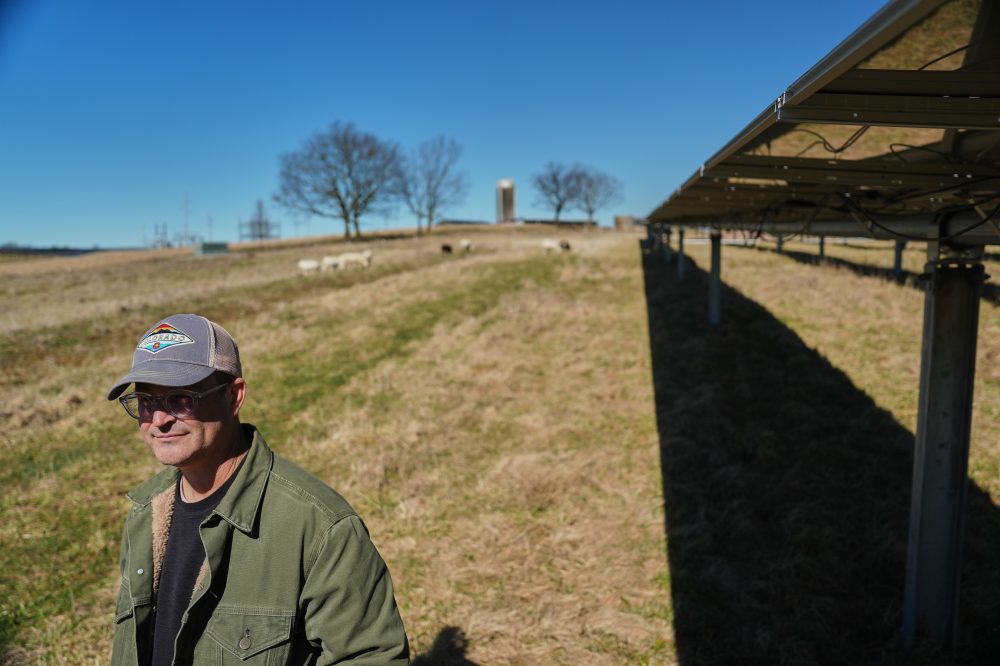
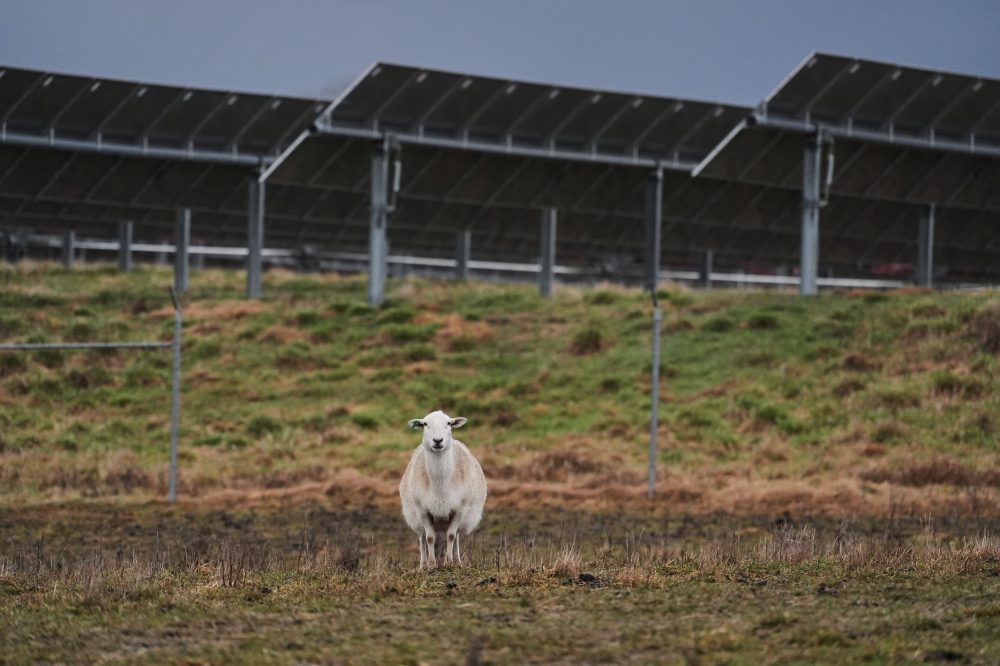
Daniel Bell, who raises sheep in Kentucky, generates additional income by grazing his animals on land leased to a commercial solar facility. The sheep maintain vegetation beneath solar panels. With his expanding herd, Bell requires a new barn and planned to install rooftop solar — until discovering the Trump administration had essentially eliminated the grants that would have enabled the project on his property.
“For him it’s an issue of the freedom to do what he wants in a way that lowers his bills,” Bell explained.
Robert Bonnie, former undersecretary for farm production and conservation at the USDA during the Biden years, predicted the withdrawal from renewable energy funding will impact rural communities nationwide. The USDA’s mission has included investing in rural regions while incorporating rural economic development into climate initiatives.
“In places like Iowa and Texas, renewables matter, not just for additional power, and lower power bills, and clean energy, but also matters for farmers’ pocketbooks,” Bonnie stated. “Anything you do to pull back on that is hugely problematic.”
A Kentucky livestock producer’s experience highlights the growing challenges farmers nationwide face when trying to invest in solar energy following recent federal policy changes.
Daniel Bell, who raises sheep in Kentucky, had planned to install rooftop solar panels on a new barn he needed to construct for his expanding operation. Since his property sits far from existing power infrastructure, solar seemed like the perfect solution for heating the structure.
Bell intended to seek financial assistance through the Department of Agriculture’s Rural Energy for America Program, known as REAP, but discovered the Trump administration had essentially stopped issuing grants through the initiative. This development forced him to abandon his original solar installation plans.
“For me, it’s just been about freedom. Freedom to lower bills, freedom to control my own assets,” Bell explained.
Agricultural operations typically operate with extremely tight profit margins, making cost-cutting measures essential for survival. Many producers have turned to federal assistance programs to help finance solar panel installations on barns, grain storage facilities, and farm offices. Others have explored commercial renewable energy lease agreements as both additional income sources and ways to utilize unused farmland.
During Trump’s second term, two crucial federal initiatives supporting solar energy development – REAP and clean energy tax incentives – have faced significant rollbacks. Analysis conducted by The Associated Press and Grist examining data on both large-scale solar developments and small rural energy projects revealed that the Department of Agriculture has not distributed any rural energy grants or loan guarantees during the current fiscal year.
Reporters reached out to approximately 75 of the nearly 300 developers who have proposed agricultural land projects over the past two years. They discovered these companies are either preparing to operate without federal support or have already suffered millions in losses due to the administration’s revised tax credit policies.
Bell ultimately chose an alternative approach: rather than building on his own property, he requested permission to construct two temporary barns on land owned by a commercial solar operation where he receives payment for grazing his sheep beneath solar panels to maintain vegetation. If approved, these barns could access less expensive power from the solar facility’s operation. However, such opportunities remain unavailable to most farmers.
The impact of these policy modifications varies significantly. Some solar developments face delays due to permitting complications, others proceed as scheduled, and some are accelerating as developers rush to begin construction before tax credits disappear. Collectively, these findings demonstrate how the reduction in federal solar support has affected American agriculture from large corporations to family operations.
President George W. Bush signed the Energy Policy Act of 2005, which established a 30% investment tax credit for large-scale clean energy projects, providing a major boost to the solar industry. This tax credit received extensions under President Barack Obama and again under Trump in 2020.
When President Joe Biden signed the 2022 climate legislation, the tax credit was extended through 2032 or until specific emissions reduction goals were achieved. Last July, Congress passed Trump’s tax legislation, which reversed the timeline for clean energy tax credits. Now commercial solar projects must begin construction by July 2026 and become operational by the end of 2027 to qualify for the credit.
At least 126 solar projects proposed since early 2024 are currently waiting for regulatory approval, according to analysis of the most recent information developers provided to the Energy Information Administration. Each project is located near or on agricultural land, with at least 20% of the surrounding area used for livestock grazing or crop production, and would collectively generate approximately 20 gigawatts of electricity if completed. According to the Solar Energy Industries Association, this represents enough renewable energy to power roughly 4.5 million homes.
The compressed timeline has led some developers to abandon projects after determining they cannot move quickly enough to meet the new tax credit deadline.
Bogdan Micu, CEO of German solar developer Alpin Sun, reported his company had to abandon projects representing approximately $6 million in investments totaling about 1,000 megawatts in the northeastern United States.
“Well. We lost our projects,” Micu stated. The company simply could not accelerate its projects sufficiently to meet the deadlines, he explained.
Through REAP, the USDA provides grants and loans to farmers, ranchers, and rural businesses interested in renewable energy installations to reduce utility expenses. According to Richa Patel, a policy specialist at the National Sustainable Agriculture Coalition, REAP has funded over 19,000 grants totaling more than $1.8 billion since its establishment nearly two decades ago, supporting tens of thousands of renewable energy and energy efficiency projects nationwide.
The program received significant additional funding from the Inflation Reduction Act in 2022 and enjoyed largely bipartisan support until some congressional Republicans began questioning the grant structure. For many farmers whose awards or applications were affected as Trump returned to office, the past year has made farm country’s already challenging economic situation even more difficult.
Elisa Lane, who grows flowers and fruit in Hampstead, Maryland, will always remember the stress she experienced in February 2025 when she learned the Trump administration had frozen her $30,576 REAP grant awarded in 2024 for solar panel installation – without providing any explanation.
“Man, was that so stressful,” said Lane, who spent months worried she would be responsible for the amount she had already contracted a solar company to install. The system was supposed to reduce the burden of her energy bills, which she says averaged around $500 monthly before installing solar.
In March 2025, the agency announced it would release previously awarded grants and loans – but with apparent conditions. The USDA invited recipients to voluntarily revise their proposals to align with Trump’s executive order by “eliminating Biden-era DEIA and climate mandates embedded in previous proposals.”
Despite anxiously awaiting the funds, Lane chose not to revise her proposal after a local USDA representative advised against doing so. The representative assured her she would receive the payment, according to emails reviewed by Grist and the AP. Later that spring, she heard from the USDA that the payment would be released and she could proceed with construction.
She moved forward, paying the full $70,000 cost to install the panels. By August, they were operational on her property. By September, she received her reimbursement check covering approximately half the project cost from USDA – more than six months after the funding was initially frozen.
Over roughly seven months, the USDA froze the program’s grant funding, invited grantees to reapply without climate and diversity language, imposed extensive new restrictions on agricultural solar installations, and suspended future application cycles.
“It was so disruptive,” she said. “I just want to have a farm and be able to focus on my business.”
Now she is doing exactly that. The panels represent a long-term investment in reducing her farm’s substantial energy expenses.
While things eventually worked out for Lane and other recent REAP recipients, analysis of USDA Rural Development data found the program has not committed any funding for renewable energy development since September. Despite the agency indicating it anticipated doing so last October, USDA never reopened REAP’s grant application process. Its loan guarantee program – designed for larger farm and rural business projects – has remained available, though analysis found the agency has awarded no new agreements this fiscal year.
On March 31, the USDA announced suspension of all REAP grant awards so the agency could update program regulations to comply with an executive order Trump issued last July. The agency noted it “will not be making further grant awards until the new regulations are in effect,” but added that REAP guaranteed loans “will continue to be awarded in this time.”
In response to a comment request, a USDA spokesperson said the “suspension of REAP grant awards is temporary” but provided no additional details about how long grants will remain paused. When asked why the USDA has not issued any loans this fiscal year through the program, the spokesperson said the agency “continues to administer REAP in accordance with current guidance” and is “prioritizing program integrity and alignment with Administration direction as it conducts its review.”
Robert Bonnie, who served as undersecretary for farm production and conservation at the USDA under the Biden administration, said any reduction in the program’s funding will impact rural America broadly. Part of the USDA’s long-term role, he explained, has been channeling investment into rural areas while making rural prosperity part of the climate agenda.
“In places like Iowa and Texas, renewables matter, not just for additional power, and lower power bills, and clean energy, but also matters for farmers’ pocketbooks,” Bonnie said. “Anything you do to pull back on that is hugely problematic.”
For RIC Energy North America, a renewable energy developer headquartered in New York City, the solar tax credit changes triggered an urgent effort to advance every project in its pipeline, said CEO Jon Rappe. The company manages approximately 150 solar projects in its North American portfolio, with most developments on unused land, hayfields and former agricultural property.
“Now, some companies are probably going to go out and continue to sign sites, and take some risks, in case there’s an extension of tax credits or something like that,” Rappe said. “But the next generation of projects is not going to happen unless there’s some change at the federal level.”
One of RIC Energy’s developments involves creating 15 acres of solar installations on Tim Covert’s property in the predominantly agricultural community of Sheridan, New York. The community solar project, featuring small-scale arrays that would allow low-income residents to subscribe for monthly utility bill credits, provides a new source of consistent income for Covert, a former dairy farmer who received cancer treatment in the past year and struggled to work as a result.
“I’m 100% cancer-free, but with the treatments, there’s some side effects that take a little while to get rid of,” he said, including mental fog, muscle pain and reduced energy. “So it would be great if they did have it done by fall, and I started getting money.”
Under the agreement, the larger payment, which Covert says equals roughly 25% of his income as an electrical contractor, will not begin until the project is finished and operational – and Covert remains uncertain when that will occur given the changing federal environment. Currently, he receives a small payment simply for leasing his land. He has been told construction could begin as early as late May, though “it seems to be changing a lot.” RIC Energy told reporters that construction is scheduled to begin late summer to early fall.
“I don’t think they’re going to stop now, because they have quite a bit of time and money invested in this thing already,” he said. “So I don’t see them pulling the plug.”
Despite the policy shifts, some clean-energy developers report they are succeeding. Solar energy remains one of the most affordable energy forms, and energy demand continues growing, partly due to artificial intelligence data center construction. Additionally, tax equity sometimes complicated project financing, so losing the tax credit also removed a barrier to completion, said Nick Cohen, president and CEO of Doral LLC, a large-scale solar energy and battery storage developer with about 450 megawatts operating and approximately 16,000 more planned or under construction.
It’s “a very exciting time if you’re a large enough developer that was in the right place at the right time doing large projects,” he said.
“All the new rules really favor the big guys like us.”
Listen to the Morning Delmarva Farm Report Update — April 17, 2026
DELMARVA — Cattle ranchers across Delaware are focusing on strategic planning as dry weather conditions continue, with livestock producers taking proactive steps to safeguard their operations against potential drought impacts. Many farmers are prioritizing reproductive efficiency in their herds as part of their drought management strategy, following the principle that preparation beats scrambling for solutions during a crisis.
Markets
Corn and soybean farmers in eastern states are seeing improved pricing opportunities as robust demand creates favorable conditions. Josh Strine, a graduate research assistant at Purdue University, reports that basis has increased for both crops at levels greater than historical averages would suggest, offering potential benefits for agricultural operations.
At Laurel Grain Company in Laurel, Delaware, corn is bringing $5.01 per bushel for May delivery. Soybeans are trading at $11.23 for May.
Policy
The USDA is seeking farmer input on rising fertilizer costs through a confidential reporting system. Deputy Undersecretary Stephen Vaden says the agency wants as many on-the-ground stories as possible of what American farmers are experiencing. The reporting system extends beyond fertilizer to include other agricultural supply challenges.
Local
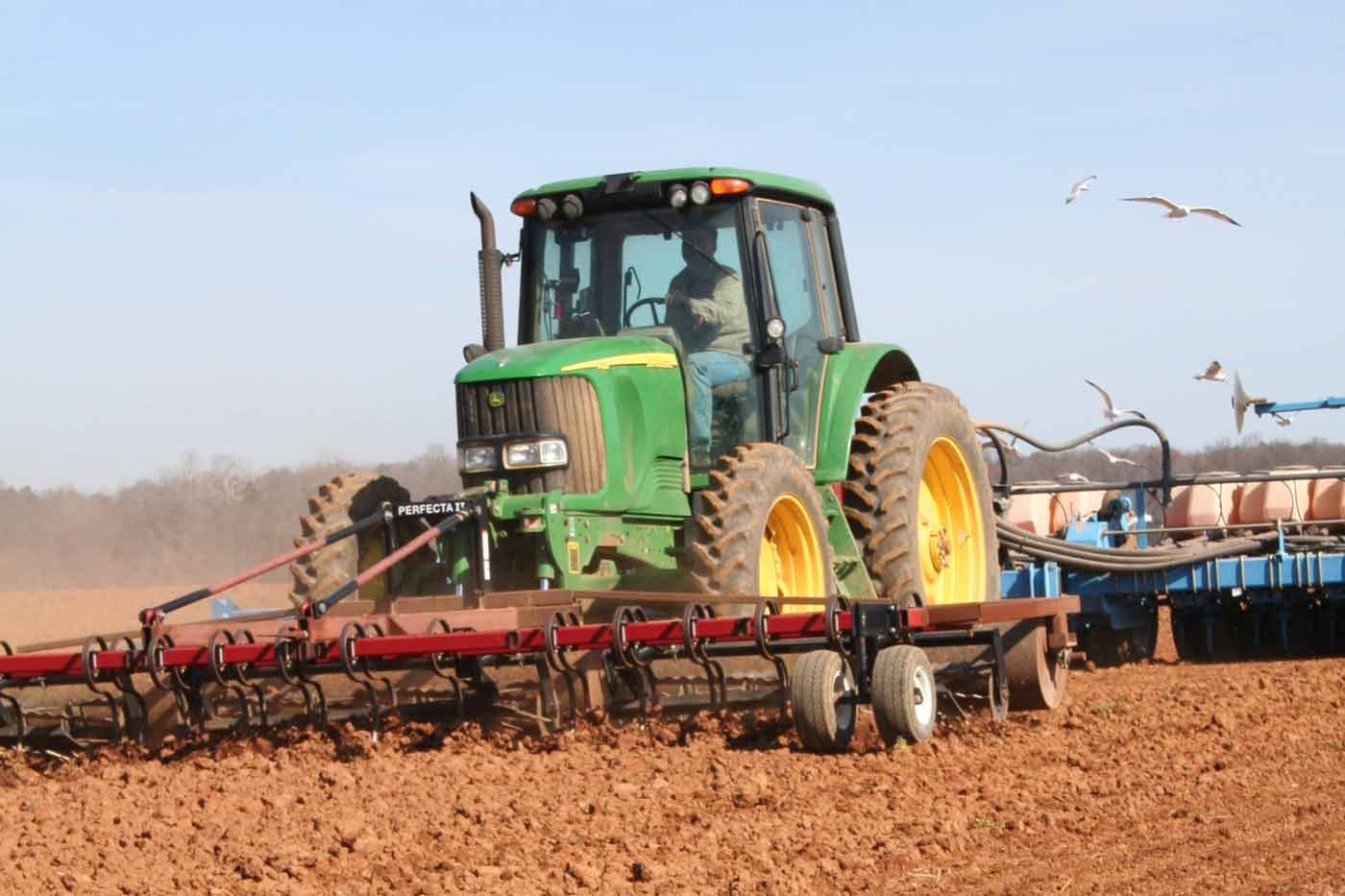
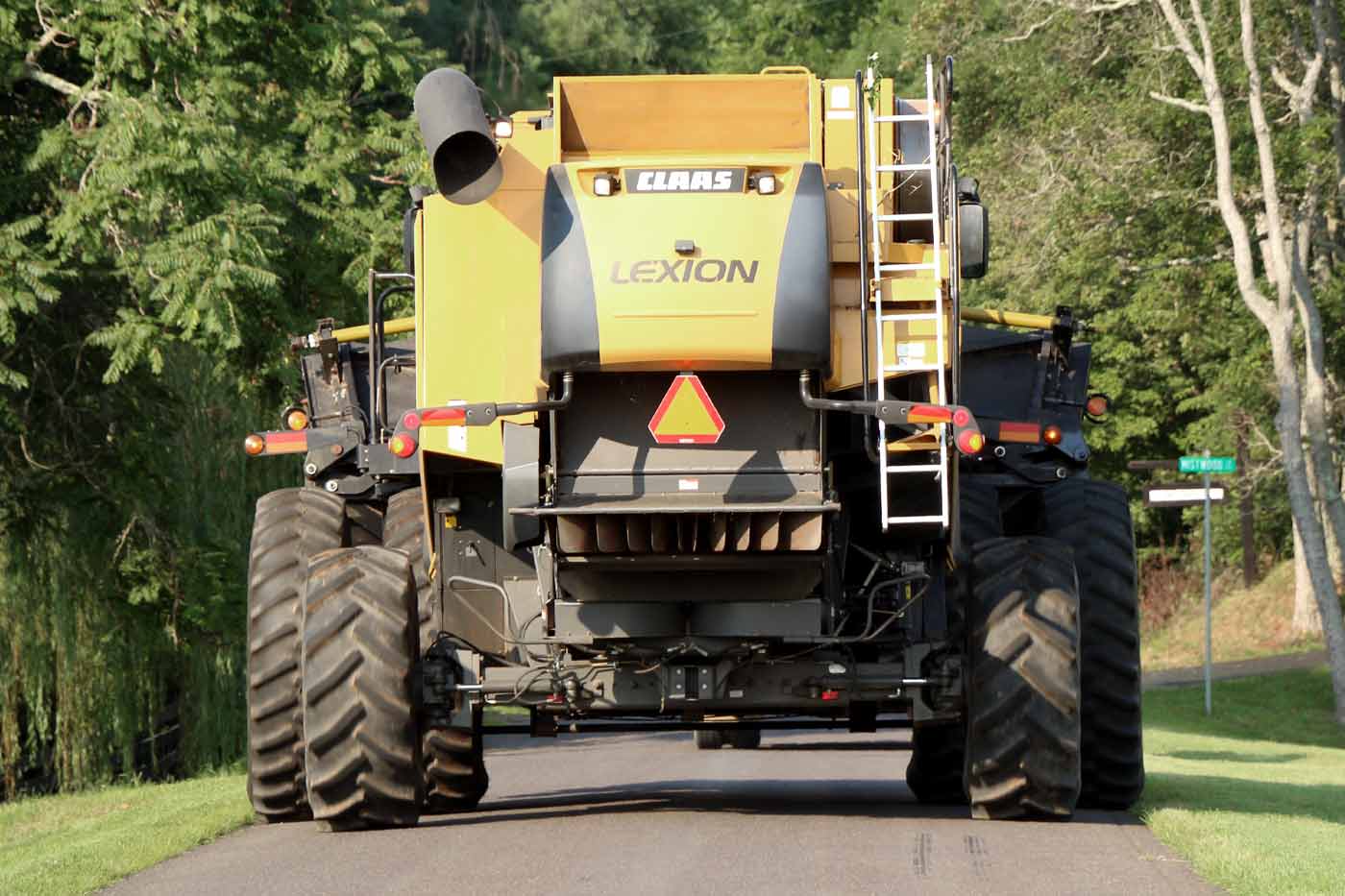
Spring planting season is bringing more farm equipment to area roads, requiring extra caution from motorists as slow-moving agricultural vehicles mix with regular traffic.
Forecast
Expect scattered rain showers today with a high near 74°F. Tonight will bring isolated showers then partly cloudy conditions with lows around 53°F. Tomorrow will be partly sunny with highs near 64°F.
This article is based on the Delmarva Farm Report Update Morning Edition, April 17, 2026. Hosted by Tom Bradley.
Delaware State Fire Marshal investigators are examining the cause of a blaze that erupted at a chicken house facility in Harrington earlier this week.
Emergency crews were dispatched to the 300 block of Hayfield Road on April 15, 2026, shortly after 3:00 PM following reports of a fire at the poultry operation. The Harrington Fire Company responded to the scene alongside several mutual aid departments from neighboring areas.
Upon arrival, firefighters encountered the chicken house engulfed in flames. The Delaware State Fire Marshal’s Office has taken over the investigation to determine what sparked the fire.
Listen to the Evening Delmarva Farm Report Update — April 16, 2026
DELMARVA — Spring planting season is in full swing across Delmarva, bringing increased farm equipment traffic to area roads. Tractors, combines, and other large machinery are moving between fields as farmers begin spring field prep and planting operations. Motorists and agricultural workers both need extra vigilance to prevent accidents as slow-moving equipment mixes with regular traffic.
Fire
19 fire departments battled a massive poultry house blaze yesterday afternoon in Harrington. The alarm came in at 3:15 p.m., bringing crews to Hayfield Road where 2 buildings, each measuring 60 feet by 500 feet, were fully engulfed. Flames spread to a storage facility and threatened nearby propane tanks. Firefighters brought it under control in about an hour but stayed on scene until 8:30 p.m. dousing hot spots.
Markets
Grain prices retreated today as the rally from Middle East tensions continues fading. Corn at Laurel Grain Company is bringing $4.99 a bushel for May delivery. Soybeans are $11.24.
Policy
At the national level, Agriculture Secretary Brooke Rollins called foreign purchases of U.S. farmland a significant security threat, particularly pointing to Chinese acquisitions.
Forecast
The area is finishing this afternoon near 79 degrees under partly sunny skies. Tonight drops to 61 with partly cloudy conditions. Tomorrow brings a chance of rain showers with highs around 74.
This article is based on the Delmarva Farm Report Update Evening Edition, April 16, 2026. Hosted by Tom Bradley.
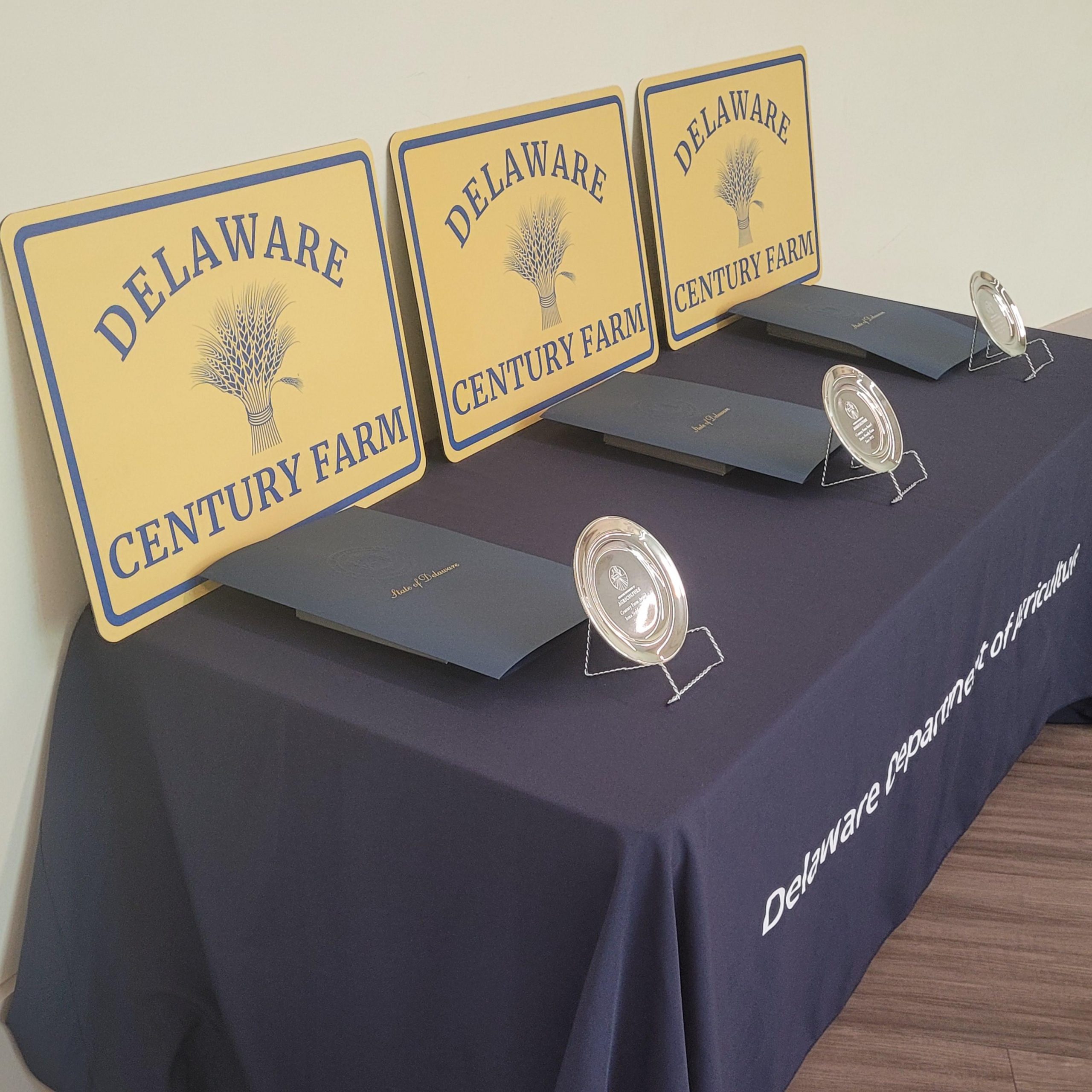
A special recognition ceremony took place today at the Delaware Agricultural Museum, where three farming families were honored for their remarkable dedication to agriculture spanning more than 100 years.
These families were formally welcomed into the Delaware Century Farm Program, which was created in 1987 to recognize farming families who have maintained ownership and actively worked their land for at least a century.
The ceremony celebrated not only the agricultural achievements of these families but also their role in preserving Delaware’s rich farming traditions and heritage. Each family represents generations of commitment to working the same land, creating lasting legacies of cultivation and stewardship.
The Delaware Century Farm Program serves as an important recognition of the state’s agricultural roots and honors families who have contributed to maintaining the First State’s farming culture through multiple generations.
The United States industrial hemp market has reached a substantial $739 million in value for 2025, according to newly released federal agricultural data.
The National Agricultural Statistics Service has documented this milestone for the hemp industry, which has experienced remarkable expansion since federal legalization removed previous restrictions on cultivation.
This valuation reflects the growing acceptance and commercial viability of hemp products across various industries, from textiles and construction materials to food products and wellness items.
The hemp sector’s growth represents a significant development in American agriculture, providing farmers with new crop opportunities and contributing to rural economic development nationwide.
Federal agencies continue to monitor and report on this emerging agricultural market as it establishes itself within the broader farming economy.
WASHINGTON, D.C., April 16, 2026 – Armed with fresh retail and federal agriculture data that highlights California Proposition 12’s harmful effects on both farmers and shoppers, 105 American pork farmers representing 23 states traveled to Capitol Hill this week to lobby federal legislators about protecting their operations.
Analysis conducted by researchers at North Dakota State University’s Agricultural Risk Policy Center reveals that price hikes linked to Prop. 12 have continued, even two full years since the regulation went into complete effect. When comparing California’s price jumps to those across the rest of the nation, covered pork products cost consumers 20% more on average because of Prop. 12. The most recent data shows the law has pushed pork loin prices up by 32%, rib prices by 22%, shoulder prices by 16%, and bacon prices by 16%.
Additionally, California shoppers have spent an extra $350 million on pork items while their overall pork purchases have dropped substantially because of Prop. 12. With food costs becoming increasingly burdensome, Prop. 12 keeps generating instability for agricultural operations and is creating an unworkable maze of differing state animal housing regulations.
The NPPC supports the bipartisan Farm, Food, and National Security Act of 2026 (also known as Farm Bill 2.0) which provides security to family farming operations nationwide by preventing any single state from dictating agricultural methods for farmers operating beyond its boundaries.
“We’re all singing from the same songbook – real pork producers of all sizes. We need relief from a patchwork of state animal housing laws, which will surely be the nail in the coffin for a number of farms across the country,” said NPPC President Rob Brenneman, a pork producer from Washington, Iowa. “The mission is clear: We need Congress to exercise their authority and fix Prop. 12.”
A coalition representing millions of agricultural producers and members has urged Congress to prevent one state from imposing its regulations on farming operations throughout the country.
Veterinary professionals also oppose Prop. 12. The American Veterinary Medical Association states that Prop. 12 does “not objectively improve animal welfare and may unintentionally cause harm.”
The National Pork Producers Council and the more than 60,000 farming operations it represents will keep spearheading efforts for producers to operate their enterprises without interference from regulations imposed by other states.
WASHINGTON—Agricultural entrepreneurs nationwide have the opportunity to win significant funding through a business competition designed specifically for rural innovators addressing farming challenges.
The American Farm Bureau Federation has partnered with Farm Credit to distribute $145,000 in startup funding through their annual Ag Innovation Challenge. This program supports entrepreneurs developing solutions for both longstanding agricultural problems and emerging issues affecting farming communities and rural areas.
Previous competition winners have included cutting-edge livestock protection technology, automated robots designed to keep farmers safely out of grain storage facilities, and hydroelectric systems for crop irrigation—demonstrating the diverse range of innovative solutions the program supports.
This marks the 13th consecutive year for the competition, which was pioneering as the nation’s first business contest dedicated entirely to rural entrepreneurship.
Prize distribution includes $100,000 for the top winner, $25,000 for second place, and $10,000 each for the remaining two finalists who reach the final round.
The application deadline is set for June 5, with ten semifinalists to be announced September 2. These selected teams will present virtual pitches competing for advancement to the final four round.
For media inquiries, contact Mike Tomko, AFBF communications director, at 202-406-3642 or [email protected], or Bailey Corwine, AFBF communications manager, at 202-406-3643 or [email protected].
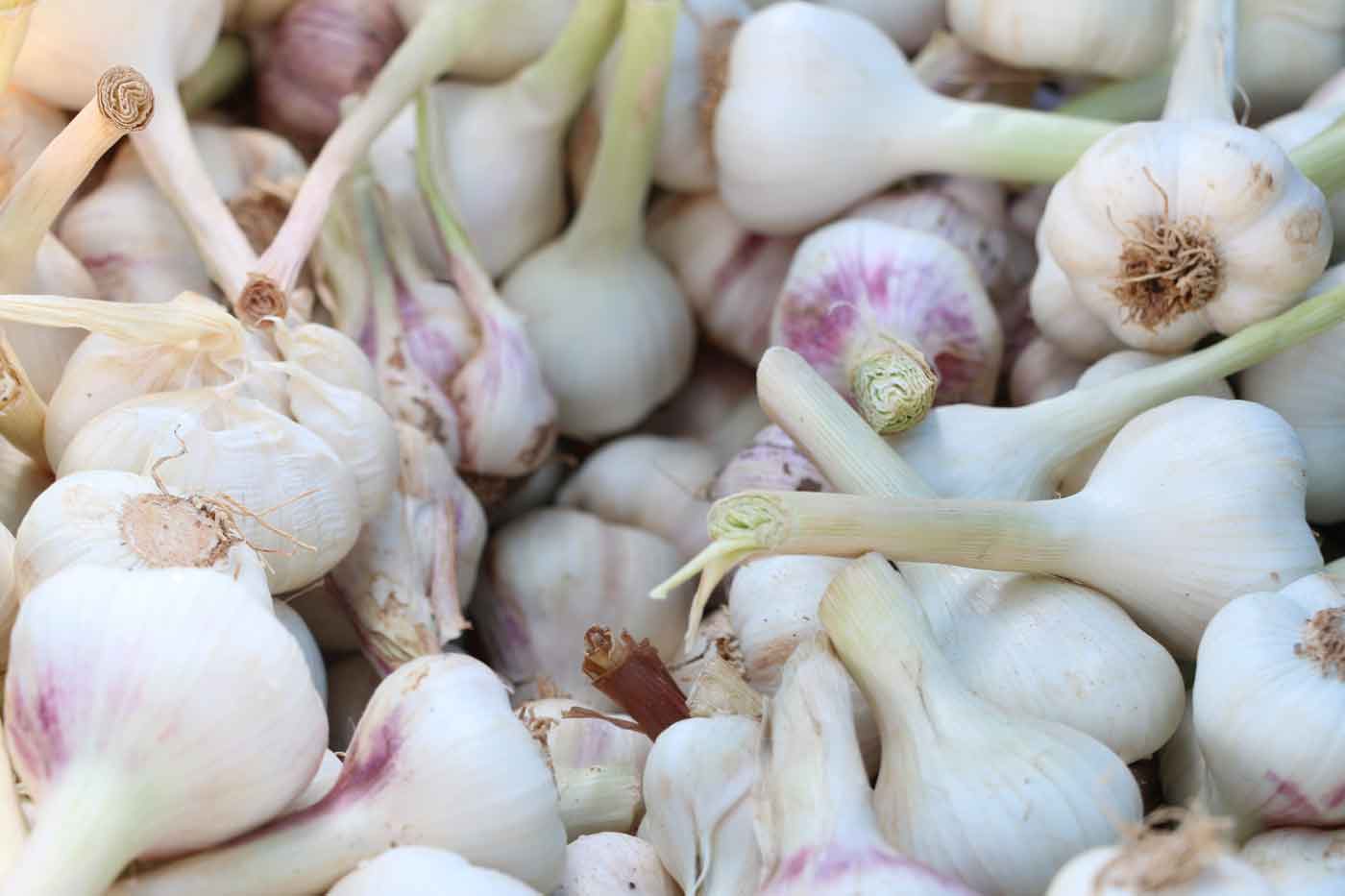
BLUEMONT, Va.—This April marks National Garlic Month, highlighting an essential kitchen ingredient that Virginia farmers are cultivating right in their backyard to satisfy growing consumer demand.
The month-long celebration recognizes the nutritional value, adaptability, and rich flavors of garlic that enhance dishes across different cooking traditions worldwide. Data from the U.S. Census of Agriculture shows that 9,231 farming operations cultivate garlic on 34,445 acres nationwide, generating more than $213 million in revenue during 2024.
Located in Loudoun County, Snickers Run Garlic Farm represents one of Virginia’s 195 garlic-producing operations. Farm operators Peter and Kathy Durand annually cultivate thousands of pounds across four distinct varieties: Music, German Extra Hardy, Chesnok Red, and Elephant garlic.
Beyond marketing fresh bulbs through farmers markets and internet sales, the couple creates specialty products including garlic powder, black garlic, scapes, and pickled garlic items.
“Each variety has its own characteristics—some are more robust and spicier, while others are milder and slightly sweet,” Peter said. “Chesnok Red is very popular with customers, especially for roasting, because it develops a slightly sweeter, more complex flavor when cooked.”
The Durands focus on hardneck garlic types that flourish in Northern Virginia’s cooler weather conditions. These hardneck varieties feature prominent stems and substantial cloves, earning recognition from professional chefs and home cooks for their intricate, bold taste profiles. In contrast, softneck garlic adapts better to warmer regions, producing smaller, densely arranged cloves with flexible stalks perfect for braiding and extended storage.
Farmers typically plant garlic during autumn months, allowing the crop to experience necessary cold temperatures throughout winter that promote proper bulb formation. Early spring brings the harvest of green garlic, followed by scapes and fully developed bulbs in late June.
Following harvest, bulbs undergo a curing period lasting several weeks—a vital process that enhances flavor development and enables appropriate storage conditions.
“Virginia is a great place to grow garlic, and it’s exciting to see more interest in locally grown specialty crops like this,” Peter said.
In Culpeper County, Don Haight, Jr. cultivates multiple garlic varieties across his 6-acre agricultural operation. Along with standard garlic bulbs and scapes, he focuses on producing black garlic—a specialized product created through extended aging in carefully monitored conditions.
“The aging process takes several months,” said Haight, owner of Farmer D’s Black Garlic, explaining that the cloves transform into a smooth, pliable consistency perfect for cooking applications or serving as a spread on crackers.
“It’s sweet and savory, like a date or a fig,” he described.
Haight chose to pursue black garlic production due to its enhanced health properties. Traditional garlic contains beneficial antioxidants and vitamins while supporting immune system function, but black garlic has gained popularity for its elevated antioxidant levels and potential benefits for blood sugar regulation and cholesterol reduction.
Those interested in garlic cultivation can view Real Virginia’s From the Ground Up program, while garlic recipe ideas are available on Heart of the Home. Local garlic producers can be located through the Virginia Grown directory.
Middle East tensions continue to create ripple effects for American agriculture, with shipping disruptions in critical waterways extending fertilizer supply shortages that farmers are already facing.
Agricultural producer John Halcomb recently spoke with NPR’s A Martinez about how these international developments are creating challenges for his farming operation and shaping his business perspective.
The ongoing conflict has resulted in blocked shipping routes through the Strait of Hormuz, a vital corridor for global commerce. This disruption has made existing fertilizer shortages even more severe, creating uncertainty for farmers who depend on these materials for their crops.
Halcomb’s comments highlight the interconnected nature of global supply chains and how international conflicts can directly impact local agricultural businesses across the United States.
Listen to the Morning Delmarva Farm Report Update — April 16, 2026
DELMARVA — Delaware cattle producers are sitting on record equity as beef prices continue climbing to historic levels. However, those high values also mean each hundredweight now carries significantly more financial exposure than in previous years, leaving cow-calf and stocker operations throughout the region with more at stake in today’s volatile market.
Markets
Federal agricultural analysts bumped corn prices up to $4.15 per bushel in their latest World Agricultural Supply and Demand Estimates report. Projections for the 2025 to 2026 U.S. corn market remain steady, with feed consumption and other uses holding at 6.2 billion bushels.
In local cash markets, corn at Laurel Grain Company in Laurel, Delaware is bringing $5.02 a bushel for May delivery. Soybeans are at $11.28 for May. Over in Lebanon, Pennsylvania, Triple-M Farms is paying $5.22 for corn and $11.53 for soybeans.
Forecast
Mostly sunny skies are expected today with temperatures climbing to 83 degrees under light southwest winds. Good planting weather is forecast if fields are ready. Tomorrow brings a chance of rain showers with highs around 78 degrees.
This article is based on the Delmarva Farm Report Update Morning Edition, April 16, 2026. Hosted by Tom Bradley.
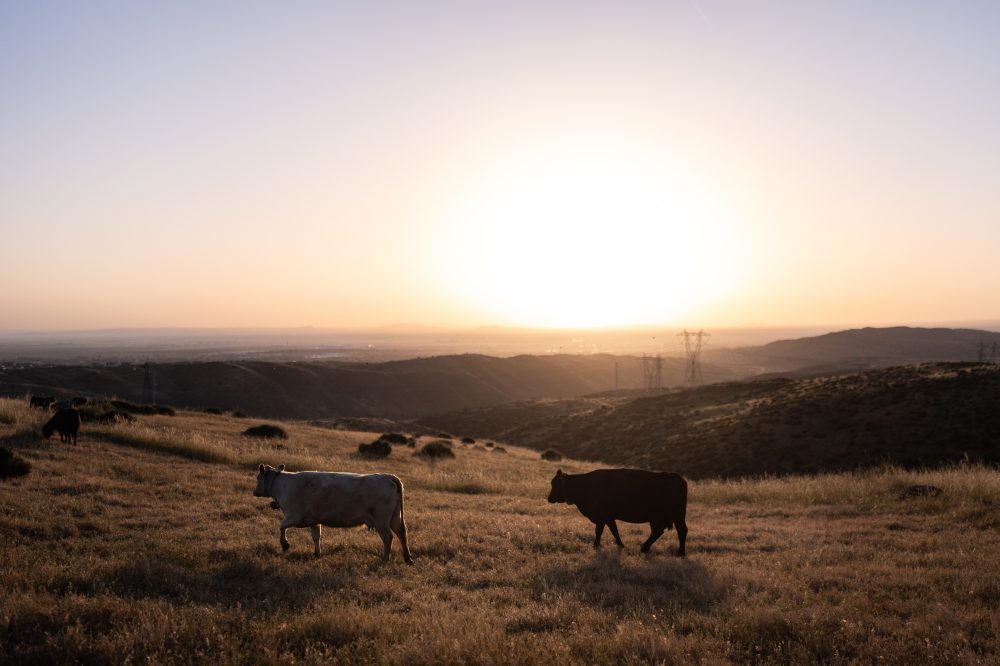
Americans have never paid more for steaks and hamburgers, but bringing down those costs would require cattle producers like Stephanie Hatzenbuhler to expand their operations — a challenge that’s far from simple.
Multiple factors are making Hatzenbuhler and ranchers nationwide hesitant to expand the country’s cattle population, which has shrunk to its smallest size in over seven decades. Until herd numbers increase, consumer demand will continue exceeding available supply, keeping beef costs elevated.
While expanding operations makes financial sense for some producers, others are barely managing with their current livestock numbers, according to Hatzenbuhler.
“They’re good times, and they’re bad times,” she said. “It’s a combination of both.”
This spring, Hatzenbuhler faces critical decisions as approximately 700 calves are born on her family’s Diamond J Angus operation, spanning over 2,000 wind-swept acres near Mandan, North Dakota. She must choose between expanding her herd or maintaining current numbers by selling an equivalent amount of cattle for processing.
While herd size isn’t the sole determinant of grocery store beef costs, the declining cattle population significantly contributes to current pricing. Federal data shows uncooked ground beef averaged $6.86 per pound nationally in March, just 3 cents below February’s record peak. This represents a nearly 48% increase from March 2021 levels.
According to the U.S. Department of Agriculture, America’s cattle population peaked at 132 million head in 1975, then gradually declined to 86 million this year.
Despite the dramatically smaller herd, improved genetics and feeding methods have enabled ranchers to produce significantly more meat per animal. This efficiency helped the nation achieve record beef production of 28.4 billion pounds in 2022, explained Tim Petry, a livestock marketing specialist at North Dakota State University. Production is projected to reach about 26 billion pounds by 2026.
Approximately 2.5 billion pounds of beef were shipped overseas in 2025, creating tight domestic supply that, combined with strong consumer demand, has driven prices to record levels.
While ranchers recognize the elevated prices, they confront numerous obstacles to herd expansion, particularly drought conditions.
Dry weather has affected much of cattle-producing regions, with roughly 63% of the U.S. cattle herd located in drought-stricken areas, USDA data shows. Some regions have also experienced massive wildfires that destroyed grazing grass.
“You’ve got to have rain. You’ve got to have grass to keep cows on because they’re out on pastures for over half the year, and so that’s been the dilemma, is we had forced liquidation of cows,” Petry said.
During calving season, producers must decide whether to keep young female cattle called heifers and calves for breeding purposes, with pasture conditions serving as a major consideration, said Bernt Nelson, an American Farm Bureau Federation economist.
Feed represents ranchers’ largest expense, and drought in states like Texas and Oklahoma has forced them to transport supplies from distant locations. These additional expenses make herd expansion financially challenging.
“When these pasture conditions deteriorate, and water becomes an issue, some of these states have to go as far as to haul hay, haul water from other regions of the country that have grass and easy access to water, and that adds a significant cost to operations,” Nelson said.
Even if ranchers decided to increase cattle numbers, calves require 15 to 24 months to mature before processing.
Producers frequently point to concentrated meat processing — dominated by four major companies — as responsible for high beef prices, though the situation involves multiple factors.
The Meat Institute, representing processing companies, stated that retailers and food service businesses, not processors, determine consumer prices. The organization noted that livestock producers were “earning record profits” while processors faced losses.
The trade group also contended that industry concentration levels haven’t “changed appreciably” over three decades.
“Rhetoric about beef industry concentration implies that consolidation in the beef packing sector is ongoing and that market power is becoming increasingly concentrated. That is not the case,” the organization stated.
John Robinson, representing the National Cattlemen’s Beef Association, acknowledged multiple price factors, sometimes including processor responsibility, but emphasized that “it’s far more complicated than most people will give it credit for.”
Price increases also stem from U.S.-Mexico border restrictions on livestock imports, implemented to prevent spread of the New World screwworm, a flesh-eating parasite. These restrictions, beginning in late 2024, have blocked approximately 1 million cattle from entering the U.S. from Mexico, according to Warren Rusche, an extension feedlot specialist at South Dakota State University.
The border restrictions particularly impact feedlot operations and ranchers who graze cattle in southern plains states.
While President Donald Trump has proposed increasing beef imports from Argentina, the expanded quota would represent only a minimal fraction of U.S. beef production, Rusche noted.
Hatzenbuhler, the North Dakota producer, isn’t becoming wealthy, but for ranchers who own their land and equipment, current conditions favor cattle operations. The situation is less favorable for newcomers, given high costs for everything from machinery to fertilizer and worker shortage challenges.
“If you’re a young guy and want to get in, it’s probably not the time to do it, but if you’re kind of established and been doing this for a while, you’re doing good,” she said.
California rancher Mike Williams said he wouldn’t discourage newcomers from entering the business but would advise caution about overextending financially.
“I would say that we’re finally maybe getting a fair price,” Williams said. “I think people are starting to realize the value of beef, and they’re finding that they’re willing to pay maybe a little more than they have in the past for the quality of the product that they’re getting.”
Listen to the Evening Delmarva Farm Report Update — April 15, 2026
DELMARVA — Soybean markets posted gains Wednesday on fund and technical buying activity. Market sentiment has improved regarding potential high-level trade talks between the United States and China anticipated for mid-May, following a social media announcement from President Trump.
The direct meeting between President Trump and Chinese President Xi was initially scheduled for late April or early May but has been postponed to the middle of next month.
Crop Health
Virginia’s strawberry farming community is battling a significant outbreak of Neo-P disease. The outbreak has prompted local growers to implement defensive strategies to protect their harvests. Agricultural specialists are closely monitoring the situation as producers work to minimize the impact on strawberry production.
Markets
Corn at Laurel Grain Company in Laurel, Delaware is bringing $5.01 a bushel for May delivery. Soybeans at Laurel are $11.27 for May.
Forecast
Mostly sunny skies are expected Wednesday afternoon with temperatures near 86 degrees and south winds at 10 miles per hour. Tonight, partly cloudy with a low around 63 degrees. Thursday looks mostly sunny with a high near 84 degrees and southwest winds 5 to 10 miles per hour. Friday brings a chance for rain showers with temperatures near 78 degrees.
This article is based on the Delmarva Farm Report Update Evening Edition, April 15, 2026. Hosted by Tom Bradley.
Beautiful spring weather is creating exceptional fishing opportunities across Maryland waters this week, with state Department of Natural Resources crews actively stocking trout throughout management areas. Among the highlights for trout enthusiasts are the distinctive golden rainbow trout that consistently bring joy to anglers.
Water Conditions Outlook: April 15-21
Chesapeake Bay waters are warming significantly as gamefish migrate toward spawning grounds. Monitoring buoys show main bay surface temperatures and river mouth readings now reaching the low to mid-50s. Smaller waterways maintain temperatures in the upper 40s to low 50s, though protected areas and sunny downstream sections can reach the low 60s on warm days.
These conditions create ideal environments for white perch (optimal spawning at 54-57 degrees) and hickory shad (55-65 degrees) as they advance toward downstream river sections preparing for spawning in coming weeks. Striped bass are actively moving to spawning locations in low-salinity bay areas and tidal rivers where temperatures range from 57-66 degrees.
River flows remain at typical levels statewide. Enhanced tidal movements are expected throughout the week following the April 17 new moon phase.
Upper Chesapeake Region
Hickory shad fishing continues to provide exciting catch-and-release opportunities at Conowingo Dam pool, Deer Creek mouth, multiple shoreline locations, and Octoraro Creek. Anglers find success with colorful sinking flies, shad darts, and reflective spoons, with preferred colors varying based on water clarity and light conditions.
White perch are arriving in the lower Susquehanna River, while warmer tidal waterways show post-spawning white perch activity. Prime locations include the Magothy, Chester, Gunpowder, Bush, Patapsco, and Sassafras rivers. Small jig heads paired with grass shrimp remain the preferred approach.
Blue catfish activity has increased in lower tidal river sections, with the lower Susquehanna, Chester, Gunpowder, Patapsco, and Magothy rivers offering excellent opportunities. Many catches in these areas are notably large specimens. Oily cut baits and scented options work effectively, though circle hooks are recommended due to potential striped bass encounters.
Striped bass catch-and-release fishing continues within designated areas, bounded by a line from Abby Point to Worton Point. Popular techniques include trolling barbless hook lures and jigging with large soft plastics.
Mid-Bay Waters
Striped bass catch-and-release fishing has performed well this month, with warmer temperatures making bay fishing more comfortable. Trolling and jigging along main channel edges attracts striped bass moving up the bay. Post-spawn fish are leaving the upper Choptank after two weeks of spawning activity, requiring careful catch-and-release practices.
White perch remain accessible in upper Choptank River and Tuckahoe sections, though anglers will encounter post-spawn fish moving downstream. Effective baits include 1/16-ounce or 1/8-ounce jig heads with grass shrimp, minnow pieces, or bloodworms. Bottom rigs work well in deeper areas.
Blue catfish are abundant in the Choptank River from Dover Bridge to Denton. Target deeper channel edges around river bends and deep shelves adjacent to channels. Most Choptank blue catfish weigh under 30 pounds, making them excellent table fare. Cut baits like gizzard shad, menhaden, or white perch prove effective, along with scented options.
Lower Bay Region
Post-spawn striped bass are moving down the Potomac River toward the bay, while spawning continues in the Patuxent and Nanticoke rivers. Earlier spawners are reaching lower bay areas, where menhaden schools along steep channel edges attract striped bass.
Trolling large barbless bucktails with chartreuse or white soft plastics remains popular for catch-and-release striped bass. Light tackle anglers enjoy success jigging with large soft plastics and fishing shallow bay shorelines.
Hickory and American shad fishing excels in the Potomac River below Chain Bridge, with low flows and warm temperatures creating ideal conditions. Shad respond to flashy spoons, shad darts, and bright sinking flies. Mason Branch of Mattawoman Creek also provides excellent hickory shad opportunities.
Blue catfish fishing is outstanding along main channel edges in lower bay tidal rivers. The Potomac River from Route 301 Bridge to Wilson Bridge holds abundant blue catfish. The Patuxent from Benedict through Jug Bay and Nanticoke near Sharptown also offer excellent fishing. Various baits work, including cut gizzard shad, menhaden, white perch, live bluegill, scented baits, chicken liver, cheese, and even processed foods.
White perch are completing spawning runs and returning to lower river sections. Target areas below spawning reaches in the Potomac, Patuxent, Nanticoke, Pocomoke, and Wicomico rivers. Light jig heads with grass shrimp, minnow, or bloodworm pieces work in confined waters, while bottom rigs excel in deeper areas.
Inland Fishing
Put-and-take trout waters in central and western regions top freshwater angling priorities this week. Beyond regular stockings, hatchery crews are releasing large breeder trout exceeding 26 inches. The trout stocking website provides real-time updates, with email subscribers receiving daily location notifications.
Upper Potomac River flows remain steady but seasonally low with clear water. Anglers make long casts to current breaks, boulders, and submerged ledges using swimbaits, crankbaits, and tubes for smallmouth bass.
Deep Creek Lake warming brings largemouth and smallmouth bass near rocky points, sunken timber, and emerging vegetation. Northern pike frequent cove mouths while yellow perch patrol steep shorelines.
Largemouth bass across Maryland are entering pre-spawn behavior patterns. Larger females hold in transition waters outside shallows while feeding aggressively. Smaller males occupy shallow areas, with some creating spawning beds. Various lures effectively target feeding females.
Rising temperatures increase Chesapeake Channa (snakehead) activity. Target sunny creek sides during afternoon hours using white paddletails, chatterbaits, and large minnows under popping corks or bobbers near shoreline structure.
Youth fishing rodeos offer excellent opportunities to introduce children to fishing, even for inexperienced adults. These events typically occur at small ponds and lakes designed for beginner success.
Ocean and Coastal Waters
Surf anglers report increasing black drum numbers along Assateague beaches. Sand fleas and peeler crab serve as top baits. Ocean City Inlet and Route 50 Bridge areas produce tautog on sand fleas and crab pieces, flounder on Gulp baits and squid strips, and mostly undersized striped bass for catch-and-release.
Flounder numbers are increasing, with ebbing tides producing optimal results in inlet channels. Striped bass provide excellent catch-and-release action at Route 90 and Verrazzano bridges using soft plastic jigs and paddletails. Most catches fall below the 28-inch minimum, though occasional fish reach the 28-31 inch slot.
Inshore and offshore wreck and reef sites hold tautog responding to crab baits, with flounder also available for targeted anglers.
A major agricultural investment is coming to Virginia’s Rockingham County as the Virginia Poultry Growers Cooperative, Inc. (VPGC) moves forward with a massive $113.9 million expansion project. Governor Abigail Spanberger revealed the development, which is projected to bring 146 new employment opportunities while boosting the state’s farming sector.
The centerpiece of this multi-stage development involves building an advanced feed mill and grain processing operation with storage capacity reaching nearly two million cubic feet. This facility will hold the distinction of having the East Coast’s largest feed mill capacity. The enhanced operations will enable VPGC to handle 4.5 million additional turkeys annually and source 2.4 million more bushels of corn and wheat from local Virginia producers during the upcoming three-year period.
The comprehensive project encompasses several other improvements, including construction of a new rail connection at the Linville location, water treatment system enhancements at the Hinton site, expanded turkey processing capabilities, and increased support for area family farming operations.
VPGC operates as a farmer-owned enterprise that distributes 100% of its profits to Virginia farmers, ensuring agricultural revenue stays within local communities. The cooperative has evolved since its 2004 establishment to become a major commercial turkey processor in the United States, specializing in antibiotic-free and organic products for both domestic and international customers.
State officials facilitated the development through collaborative efforts involving multiple governmental levels. Governor Spanberger authorized $2.25 million in grant funding, which includes performance-based incentives, agricultural development support, and rail infrastructure assistance.
This significant investment highlights agriculture’s importance as an economic catalyst, generating employment opportunities, enhancing farm sustainability, and promoting sustained development throughout rural Virginia communities.
The Environmental Protection Agency revealed new federal guidelines on March 27, 2026, designed to tackle recurring problems with Diesel Exhaust Fluid systems that have plagued farmers, truckers, and diesel equipment users nationwide. The EPA made this announcement during the White House Great American Agriculture Celebration as part of ongoing efforts to resolve operational and safety issues connected to these systems.
Understanding DEF Systems and Their Problems
Diesel Exhaust Fluid technology serves as an essential element in today’s diesel engines, created to cut nitrogen oxide emissions using selective catalytic reduction methods. Despite their effectiveness in meeting emissions standards, these systems—especially the DEF quality sensors—have experienced numerous breakdowns.
Equipment users have documented that defective sensors trigger unexpected power cuts, speed restrictions, or total equipment shutdowns, even when engines are running properly. These breakdowns have created safety hazards, productivity losses, missed agricultural seasons, and expensive repair bills for farmers and transport companies across the nation.
Details of the Updated EPA Guidelines
The revised EPA guidelines eliminate the federal mandate requiring DEF quality sensors on diesel machinery. Equipment manufacturers can now use NOx sensors instead as an acceptable method for meeting emissions regulations.
EPA officials state that dropping the DEF sensor mandate offers immediate operational flexibility to manufacturers and provides relief to equipment operators, while continuing to ensure emissions compliance through alternative monitoring technologies.
Financial Benefits and Industry Response
The EPA projects significant financial benefits from these updated guidelines:
• Annual savings of $4.4 billion for agricultural producers, based on U.S. Small Business Administration calculations
• Nationwide total yearly savings of $13.79 billion, resulting from decreased repair expenses and reduced equipment downtime
Trade organizations and equipment operators have praised the modification, emphasizing that DEF sensor malfunctions were a primary cause of warranty issues and work disruptions, especially during busy farming and shipping periods.
Previous and Ongoing Initiatives
The March 27 guidelines build upon earlier EPA measures to tackle DEF-related issues:
• During August 2025, the EPA urged manufacturers to update DEF software to minimize sudden performance reductions
• In February 2026, the EPA required comprehensive failure information from 14 leading manufacturers controlling over 80% of the DEF component market
• The agency has also reinforced equipment owners’ Right to Repair privileges, covering DEF system repairs
EPA representatives have suggested that additional regulatory changes may be forthcoming, potentially including new rules to address DEF-related performance issues in future engine models.
Impact on Farmers and Diesel Equipment Users
For agricultural producers, truckers, and equipment owners, these guidelines could:
• Decrease unexpected equipment breakdowns
• Lower maintenance and repair expenses
• Improve equipment dependability during critical work periods
• Provide manufacturers with more compliance design options
Equipment operators should understand that these guidelines affect federal emissions standards and do not remove all emissions controls—instead, they permit alternative compliance methods that may prove more dependable in everyday use.
Future Outlook
The EPA’s decision represents a movement toward finding balance between emissions compliance and the practical reliability issues voiced by agricultural and transportation sectors. As more information is analyzed and additional regulations are developed, equipment owners and manufacturers should monitor ongoing regulatory changes.
New federal statistics reveal continued growth in the nation’s chicken production industry, with increases recorded in both egg settings and chick placements across the United States.
According to the latest report from the U.S. Department of Agriculture’s National Agricultural Statistics Service, the number of broiler-type eggs placed in hatcheries nationwide climbed 2 percent compared to previous periods.
The data also shows that broiler-type chicks placed for grow-out operations increased by 3 percent across the country, indicating sustained demand in the poultry sector.
These figures reflect the ongoing activity in America’s chicken production pipeline, from initial egg incubation through the placement of young birds at growing facilities that will eventually supply the nation’s food chain.
Listen to the Morning Delmarva Farm Report Update — April 15, 2026
DELMARVA — Strawberry growers in Virginia are battling an outbreak of Neo-P disease that’s threatening crops across the region. According to Virginia Farm Bureau, producers are implementing defensive strategies to protect their harvests as agricultural specialists monitor the situation and develop best practices for managing the disease.
Policy
Farm leaders in Congress are pushing for approximately $15 billion in financial assistance for farmers as lawmakers return to Washington. According to Agri-Pulse, time’s running short to secure the aid package along with disaster relief for states hit by wildfires and other natural catastrophes.
Markets
Dairy trading at the Chicago Mercantile Exchange showed mixed results today. Nonfat dry milk climbed 2.5 cents to $2.1650 per pound. Cheese blocks gained 0.25 cents to $1.5775. Butter held steady at $1.90.
Locally, corn at Laurel Grain Company in Laurel, Delaware is bringing $5.01 a bushel for May delivery. Soybeans are $11.29 for May.
Forecast
Sunny skies are expected today with highs near 83°F and southwest winds around 10 mph. Thursday stays mostly sunny, 83°F again with lighter winds. Friday brings a chance of rain showers with highs near 78°F.
This article is based on the Delmarva Farm Report Update Morning Edition, April 15, 2026. Hosted by Tom Bradley.
Virginia Farm Bureau has released an educational video showcasing the fascinating transformation of fresh goat milk into handcrafted soap products.
The video demonstration walks viewers through the complete process, highlighting how farmers take raw goat milk and convert it into artisanal soap through traditional methods.
This educational content illustrates the value-added opportunities available to agricultural producers, showing how basic farm products can be transformed into specialty items with higher market value.
The presentation emphasizes the connection between livestock farming and artisanal product creation, demonstrating one way farmers can diversify their operations and income streams.
Virginia’s strawberry farming community is facing a significant agricultural challenge as they work to combat the spread of Neo-P disease threatening their crops.
The disease outbreak has prompted local growers to implement various defensive strategies to protect their strawberry harvests and maintain their agricultural operations.
Farming experts and agricultural specialists are closely monitoring the situation as producers work to address this emerging threat to one of the region’s important crop varieties.
The agricultural community continues to develop and share best practices for managing this disease challenge while working to minimize its impact on local strawberry production.
Property owners across Virginia are finding innovative ways to maintain the historical integrity of their century-old farmhouses while making them suitable for modern living and farming operations.
A recent video documentary showcases various approaches being taken throughout the Commonwealth to ensure these agricultural landmarks continue serving their communities while honoring their past.
The featured properties demonstrate how careful restoration work can preserve architectural details and historical significance without sacrificing functionality for today’s farming families and operations.
These preservation efforts represent a broader movement across Virginia’s rural communities to maintain connections to agricultural traditions while embracing necessary updates for contemporary farm management and family life.
A fresh partnership is blooming between a local mushroom operation and a culinary professional, demonstrating the growing farm-to-table movement in the region.
Capstone Mushrooms has joined forces with Chef Kenny Sloane in a collaboration that emphasizes the connection between local agriculture and restaurant kitchens. The partnership showcases how chefs are increasingly turning to nearby farms to source fresh, high-quality ingredients for their menus.
This alliance represents a broader trend in the culinary world where restaurants prioritize locally grown produce to ensure freshness while supporting regional farmers. The collaboration between the mushroom grower and the chef illustrates the benefits of direct relationships between agricultural producers and food service professionals.
The partnership highlights the importance of sustainable farming practices and the value of knowing where food originates before it reaches the dining table.
Listen to the Morning Delmarva Farm Report Update — April 15, 2026
DELMARVA — Poultry producers nationwide continue battling infectious bronchitis virus, one of the costliest health challenges in today’s industry. The respiratory disease hits both broilers and layers hard, spreading easily between birds and mutating quickly. Industry experts say the virus’s rapid genetic changes make control difficult, especially when it combines with other respiratory infections.
Markets
May corn futures closed Tuesday at $4.43 per bushel, up 2.75 cents. May soybeans dropped 4.25 cents to $11.58 per bushel. Chicago May wheat gained 9.75 cents, settling at $5.92. June live cattle finished up $2.90 at $251.42 per hundredweight.
Forecast
Sunny skies are expected today with highs reaching 83 degrees and southwest winds 5 to 10 miles per hour. Perfect conditions for field work across Delmarva. Thursday looks mostly sunny, highs again near 83 with similar winds. Rain chances arrive Friday with showers possible through the weekend.
This article is based on the Delmarva Farm Report Update Morning Edition, April 15, 2026. Hosted by Tom Bradley.
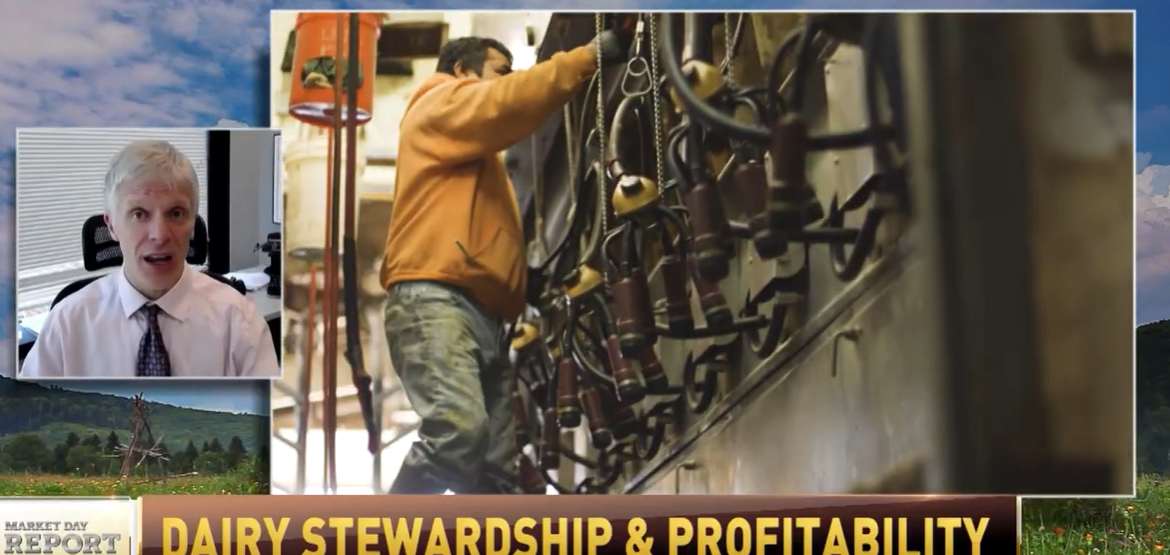
A leading dairy industry official recently emphasized how environmental stewardship practices can significantly impact farm profitability and market competitiveness during a television interview.
Alan Bjerga, who serves as Executive Vice President for the National Milk Producers Federation, spoke with RFD-TV about the critical role that quality stewardship plays in dairy farm economics. According to Bjerga, the nation’s approach of farmer-driven, voluntary programs designed to improve environmental practices serves a dual purpose.
These initiatives not only strengthen the ability of American dairy producers to compete in international markets but also bolster financial stability for operations domestically, Bjerga explained. He stressed that this connection between responsible farming practices and economic benefits represents an important message for consumers and the broader public to understand.
The discussion highlighted how environmental stewardship has become increasingly important for dairy operations looking to maintain their competitive edge both at home and abroad.
Listen to the Evening Delmarva Farm Report Update — April 14, 2026
DELMARVA — Mid-April heat continues across Delmarva with temperatures pushing well into the 80s, providing ideal conditions for fieldwork and early season growth. Farmers wrapped up another productive day with soil moisture levels holding steady after last week’s rainfall.
Planting operations are running ahead of schedule across the peninsula with corn emergence looking strong in early planted fields. Meanwhile, wheat stands are progressing through jointing stage under favorable conditions.
Markets
Corn futures closed at $5.18 per bushel. Soybeans settled at $11.42. Wheat finished at $6.71. Locally, number 2 yellow corn is bringing $4.90 at Delmarva elevators. Soybeans are running $10.85.
Forecast
Another warm evening is expected with mostly clear skies and temperatures dropping to 61 degrees under light southwest winds. Wednesday brings more sunshine with highs climbing to 86 degrees and southwest winds 5 to 10 miles per hour. Perfect conditions for spraying and fieldwork continue.
No rainfall is expected through mid-week, so irrigation planning may be necessary for newly planted fields and vegetable operations.
This article is based on the Delmarva Farm Report Update Evening Edition, April 14, 2026. Hosted by Tom Bradley.
Delaware’s agricultural sector received a boost today as state and federal agencies formalized their commitment to balancing productive farming with environmental protection through a renewed partnership agreement.
The Delaware Department of Agriculture and the U.S. Environmental Protection Agency signed a new Memorandum of Understanding that outlines their joint commitment to supporting sustainable agricultural practices across the First State. The agreement emphasizes the dual goals of maintaining productive farms that feed local communities while protecting environmental quality for all residents.
The comprehensive partnership agreement addresses multiple areas of collaboration, including communication strategies, educational initiatives, environmental stewardship programs, funding opportunities, and regulatory oversight programs designed to support Delaware’s farming community.
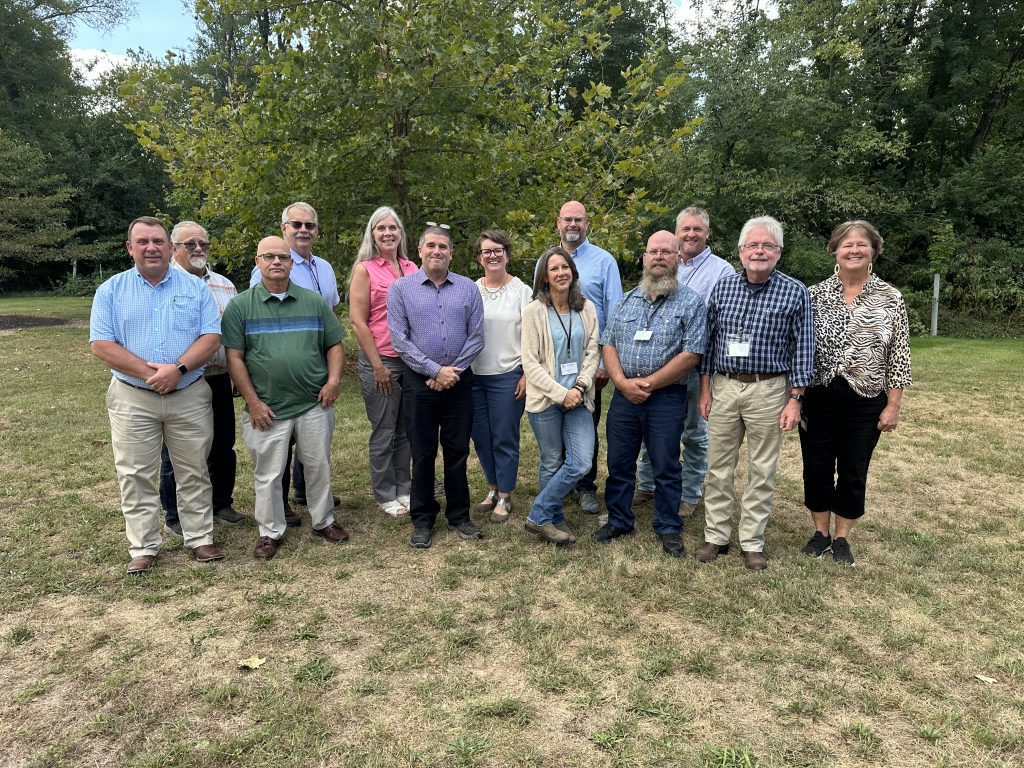
A new committee designed to give farmers throughout the Chesapeake Bay watershed a stronger voice in environmental restoration efforts has completed its first year of operations, with two Delaware representatives playing key roles.
The Chesapeake Bay Program’s Agricultural Advisory Committee launched in March 2025 during a critical period as the bay restoration program moves “Beyond 2025.” The committee was established to provide those who farm the land with direct input into leadership decisions affecting the bay’s future.
Fourteen appointed members make up the committee, representing all states within the Chesapeake Bay watershed plus the District of Columbia. Delaware’s representatives include Bill Powers and Will Carlisle, who joined farmers, agricultural business leaders, and technical specialists from across the region. This mix of practical farming experience aims to give the agricultural sector formal representation in restoration planning.
“For too long, agricultural policy was often seen as something happening to farmers rather than with them. The AAC has fundamentally changed that dynamic,” the committee stated in reviewing its first year.
The advisory group serves as an official liaison to the Chesapeake Executive Council and the Principals’ Staff Committee, working to ensure policy decisions reflect actual farming conditions and challenges.
During its first year, the committee achieved several significant milestones. Members helped shape revisions to the “Beyond 2025” Framework and the Chesapeake Bay Watershed Agreement, successfully ensuring agriculture received explicit representation in the updated agreement. This inclusion is considered crucial since farming operations must deliver a substantial portion of the remaining nutrient reduction targets needed to meet bay restoration goals.
The committee’s initial formal recommendations emphasized that economic sustainability must come first for conservation efforts to succeed. “You can’t ask a farmer to invest in the future of the Bay if they can’t stay in business today,” the group noted.
Other priorities established during the first year included promoting soil health as fundamental to restoration success and pushing for more transparent data systems that properly recognize conservation work already being performed by farmers.
Committee members believe their approach represents a fundamental shift from previous restoration efforts. “We are no longer just reacting to implementation goals; we are helping to write the playbook,” they stated.
Looking ahead to year two, the advisory committee plans to continue advocating for producer interests while maintaining focus on farm viability as essential for achieving water quality and habitat improvements. The group sees farmers as leaders in the next phase of bay restoration rather than simply contributors to pollution problems.
“The message from the first year is clear: when farmers engage as partners rather than just ‘sources’ of runoff, we see record reductions in pollution and stronger rural economies,” the committee concluded.
The Board of Trustees for the Maryland Agricultural Land Preservation Foundation will conduct their next meeting through video conference on February 24, 2026, beginning at 9:00 a.m.
The virtual session will focus on standard board operations and general organizational matters, according to the meeting announcement.
The foundation works to protect farmland across Maryland through conservation easements and other preservation programs.
Spring planting season has arrived, bringing with it the annual rush to garden centers and nurseries. This year, Delaware gardeners might want to think twice about the materials their gardening supplies are made from, particularly whether those items contain plastic components.
Plastic gardening products eventually deteriorate into tiny fragments known as microplastics, which can seep into our food supply and contaminate landfill sites. These microscopic particles come from everyday items including food containers, cooking tools, cleaning product bottles, and certain fabrics, and researchers have found them in tap water, meals, and even human tissue.
Many gardeners may not realize their backyard soil could be harboring these contaminants.
While garden soil naturally contains millions of helpful microorganisms such as bacteria and fungi, it may also contain these problematic plastic particles. What options do environmentally aware gardeners have?
Although we cannot undo existing contamination, gardeners can take action to reduce their contribution to plastic pollution while working toward a cleaner environment. These changes might even help save money along the way.
Rather than purchasing plastic starter trays, gardeners could try soil-blocking equipment to create their own planting containers. These metal tools compress a damp blend of compost, peat moss, perlite, and plant nutrients into firm blocks that maintain their shape without additional support.
These compressed blocks actually benefit young plants through a process called air-pruning of roots. Rather than growing in circles and becoming tangled when they reach container walls, plant roots stop extending outward and develop more densely when they encounter air at the block edges. This results in easier transplanting into garden beds.
For those who prefer ready-made options, biodegradable containers made from coconut fiber or composted animal waste offer good alternatives. These products are odorless and resemble cardboard in appearance.
When selecting containers for mature plants, natural materials such as wood or clay pottery work well.
Root crops, herbs, and tomato plants thrive in fabric growing containers available in multiple sizes. Potato-specific versions feature roll-up openings that simplify harvest time. Always check product labels to confirm they use natural rather than artificial fibers.
When available, choose bare-root plants instead of those sold in plastic containers.
Creating a home compost system reduces the need to purchase soil amendments or fertilizers. This eliminates plastic packaging waste while giving gardeners complete control over compost ingredients. If home composting is not feasible, purchasing bulk compost costs less than bagged versions.
Select canvas covers instead of plastic tarps and avoid installing landscape fabric beneath garden beds or border areas. Natural mulching materials like shredded bark, wood chips, or dried leaves effectively suppress weeds, though gravel is recommended in fire-prone areas for safety reasons.
Support climbing plants and tomatoes using stakes made from bamboo, wood, or metal. Fasten them with natural rope materials such as hemp or jute fibers.
Simple wooden craft sticks serve as excellent plant identification markers.
When plastic purchases become necessary, avoid disposable items like flimsy starter trays. Investing in durable products that will last multiple seasons before disposal represents progress in the right direction. Many small improvements will create meaningful change over time.
Listen to the Morning Delmarva Farm Report Update — April 14, 2026
DELMARVA — Cattle producers across Delmarva need to stay alert for bovine viral diarrhea, a disease that’s quietly costing operations nationwide. BVD continues to spread silently through herds, undermining animal performance and profitability long before obvious symptoms appear.
Despite regular vaccination programs, this virus affects productivity in ways that often go unnoticed. Experts say many farmers assume their herds are protected, but the infection can persist and reduce performance measures across the board.
Markets
June live cattle closed Monday at $248.52 per hundredweight, down $0.67. August live cattle settled at $244.45, off $0.30. May feeder cattle gained $0.47 to close at $346.25. Lean hog futures moved lower across the board.
Forecast
Mostly sunny skies are expected today with temperatures reaching 80°F and southwest winds 5 to 10 mph. Good conditions for field work. Tonight stays partly cloudy with lows near 60°F. Wednesday brings more sunshine with highs climbing to 83°F before a slight chance of showers arrives Wednesday night.
This article is based on the Delmarva Farm Report Update Morning Edition, April 14, 2026. Hosted by Tom Bradley.
Listen to the Evening Delmarva Farm Report Update — April 13, 2026
DELMARVA — Spring planting accelerated across Delmarva as another dry week concluded, with soil temperatures holding in the mid-50s to low-60s. Growers from Kent County down through the Eastern Shore are planting corn and soybeans ahead of schedule. Extension agents reported the moisture window has been ideal, but rainfall will be needed within the next 10 days to support germination.
Markets
Corn futures closed Monday at $5.18 per bushel, up $0.03. Soybeans settled at $11.42, down $0.05. Wheat finished at $6.07, up $0.02.
Locally, Delaware spot corn is running $4.95 to $5.05, and soybeans are bringing $11.20 to $11.35 at most elevators.
Forecast
Partly sunny skies are expected this evening with temperatures dropping to 77°F under southwest winds at 15 mph. Tonight will stay mild, down to 57°F with partly cloudy conditions and lighter winds at 5-10 mph.
Tuesday brings mostly sunny skies and a high near 80°F with continued southwest breezes at 5-10 mph, providing a solid window for fieldwork.
This article is based on the Delmarva Farm Report Update Evening Edition, April 13, 2026. Hosted by Tom Bradley.
The United States Department of Agriculture’s National Agricultural Statistics Service has issued its most recent evaluation of crop advancement and agricultural conditions nationwide.
The federal agency’s latest assessment tracks the development of various crops and provides insight into current growing conditions across American farmland.
These regular reports from NASS serve as important indicators for farmers, agricultural markets, and food industry professionals monitoring seasonal crop performance throughout the country.
New federal agriculture statistics show turkey production displaying mixed trends as spring gets underway.
According to the latest report from the U.S. Department of Agriculture’s National Agricultural Statistics Service, the number of turkey eggs currently in incubation facilities has risen 2% compared to the same period last year as of April 1.
However, the data also shows that fewer young turkeys, known as poults, were successfully hatched during March compared to the same month in the previous year. The report indicates a slight decrease in both hatching numbers and the total number of poults delivered to turkey growing operations.
The statistics reflect ongoing fluctuations in the nation’s turkey industry as producers navigate seasonal breeding cycles and market conditions.
CANFIELD, Ohio — From his combine’s cab, Wayne Greier observes his teenage son Blake maneuvering a tractor across barren fields, preparing plowing equipment for another unpredictable growing season.
Financial stress would be significantly reduced if the solar installation planned for his property had moved forward. However, county commissioners prevented the project in 2023 using Ohio legislation, forcing Greier to liquidate portions of his farm to manage overwhelming medical bills. The blocked agreement would have generated approximately $540,000 annually in rental income.
“It was our saving grace,” he said. “It wasn’t a scary picture that everybody likes to paint about solar and the loss of farmland.”
Community resistance to solar installations has consistently challenged renewable energy developers. However, certain regions are attempting to overturn local prohibitions, emphasizing tax revenue benefits, employment opportunities, and rental payments from energy corporations that offer steady income for agricultural producers in an unstable sector.
When solar developers contacted the 42-year-old sixth-generation farmer about constructing panels on his property, Greier initially remained cautious. However, confronting $1 million in medical expenses from an extended COVID battle and related health issues, he recognized an opportunity to preserve his agricultural operation.
Community members held opposing views.
Greier described how his family faced social isolation as public discussions about the proposal unfolded during town meetings. His psychological well-being deteriorated. The initiative was ultimately prevented under state legislation permitting counties to halt wind and solar construction on designated “restricted” properties.
“I was the one that was going to lose the sixth-generation farm. I was the one that couldn’t provide for my family,” he said.
President Donald Trump’s opposition to renewable energy has damaged the sector by eliminating subsidies, financing options and tax benefits. Even prior to his White House return, municipal prohibitions on clean energy projects were expanding. Research from Columbia University in 2025 revealed a 16% growth in restrictive legislation across 44 states between 2023 and 2024.
“Many communities want to decarbonize and probably theoretically support renewable energy,” said Juniper Katz, an assistant professor at the University of Massachusetts who focuses on environmental policy. But, she added, “When it’s your community and your backyard, balancing these processes so people feel like they’ve had a say without creating so many veto points that nothing can get done, I think is the trick. And it’s not easy to do.”
During February, Dearborn County, Indiana, administrators suspended solar development for twelve months following resident concerns about panel placement near residential areas and possible environmental effects from panel components.
Bobby Rauen, residing adjacent to a proposed 1,200-acre solar installation in that county, joined residents petitioning for the moratorium. He expressed hope that officials would utilize this period to establish stronger protections for neighbors of potential solar developments. He also worried that agricultural land might not return to farming if solar equipment is eventually dismantled.
Following Mahoning County, Ohio, officials’ decision to stop Greier’s planned 675-acre, 150-megawatt installation, he chose to assist others seeking solar development on their properties, stating he “didn’t want to be a victim.” As a Renewable Energy Farmers of America member, Greier, who primarily cultivates corn and soybeans, has discussed his situation with legislators, advocacy organizations and communities considering green energy development.
He recently addressed government representatives at a public forum in Richland County, Ohio, approximately 100 miles from his residence. Supporters there secured a referendum for this May’s ballot to eliminate the county’s prohibition on wind and solar developments.
Morgan Carroll, a lifelong county resident, has worked since last summer to build support for removing the ban. Although not a farmer or property owner, Carroll advocates for the employment and tax income these projects generate and believes the prohibition removes decision-making power from residents — potentially affecting her two young children’s future.
“I want them to be in a county that can provide jobs, can provide a good school for them,” she said. “I don’t want to have to move.”
Congressional Republicans and the Trump administration accelerated deadlines for utility-scale solar developments to qualify for tax incentives following passage of significant tax reduction and spending cut legislation last July. Currently, utility-scale solar installations must become operational by late 2027 to qualify.
Last year, Lita Leavell and her husband Joe, who manage a 1,000-acre cattle operation in Lancaster, Kentucky, planned to accommodate a utility-scale solar development on roughly half their property that would have generated an estimated $60,000 annually. Similar to Greier, the lease income would have guaranteed the land remained within their family.
However, after Garrard County enacted an ordinance in 2023 limiting solar development, the energy company working with Leavell chose to terminate the project.
County officials justified the ordinance partly based on federal government opposition to solar energy and the Trump administration’s goal to prevent utility-scale projects on farmland, according to statements made during an August 2025 meeting. Leavell, who identifies as Republican, questioned why insufficient federal support for green energy should impact her ability to pursue such projects on her own property. She and six other landowners are pursuing legal action to challenge the ordinance.
“The thing I guess that perplexed me so much is that there’s so many more worse things that could be next to you,” she said.
Carroll, who collected signatures for the Richland County, Ohio referendum, discovered that framing solar project discussions as property rights issues made community members more receptive.
Greier also emphasizes property rights when discussing the topic. His farm represents his retirement security, and he should maintain the right to utilize it for family support, he explained.
“There’s families that are relying on this and looking for this,” he said. “And it’s been taken away, this opportunity.”
Construction officially began on a major new grain handling facility at Baltimore’s Seagirt Marine Terminal, with Maryland agriculture officials participating in the ceremonial groundbreaking on April 10, 2026.
The facility represents a collaborative effort between Ports America Chesapeake and Frey Commodities at the Helen Delich Bentley Port of Baltimore. The Maryland Department of Agriculture joined the ceremony to mark the start of construction on the transloading operation.
The new facility will be located within the Seagirt Marine Terminal complex, adding to the port’s cargo handling capabilities in the agricultural sector.
Listen to the Morning Delmarva Farm Report Update — April 13, 2026
DELMARVA — The region’s poultry industry is confronting some of the most challenging operating conditions in recent years as feed costs continue to climb while disease pressures intensify, forcing producers to rethink their nutrition and health management strategies.
The combination of narrow profit margins and sustainability demands means every operational decision now requires careful calculation of its impact on the bottom line.
Meanwhile, livestock producers across the region are preparing for warm-weather challenges. As cattle move to summer pastures, fly populations become more than just nuisances. Horn flies, face flies, house flies, and stable flies can seriously compromise animal welfare, disrupt feeding patterns, and drag down herd performance during grazing season.
Markets
Chicago Board of Trade corn futures are trading at $5.08 per bushel. Soybeans are at $10.74. Wheat is at $5.62.
Forecast
Expect partly sunny skies today with a high near 77° and southwest winds 10-15 mph. Overnight lows drop to 57° under partly cloudy skies. Tuesday looks mostly sunny with temperatures climbing to 80° and light southwest winds under 5 mph. Dry conditions hold through midweek before rain chances return late Wednesday night.
This article is based on the Delmarva Farm Report Update Morning Edition, April 13, 2026. Hosted by Tom Bradley.
WAHOO, NE — Fierce winds buffeted Doug Bartek as the fifth-generation farmer made his way into a grain storage facility to move soybeans using a conveyor system. The 60-year-old expressed deep concern as spring planting approached, listing numerous challenges threatening his family’s agricultural operation on their 2,000-acre Nebraska property near Wahoo.
Rising expenses for fuel, machinery, and fertilizer — made worse by the conflict in Iran — along with trade barriers, alleged supplier price manipulation, and depressed soybean values caused by worldwide oversupply are all weighing heavily on Bartek, who serves as chairman of the Nebraska Soybean Association.
“Our biggest struggles are our inputs, be it fertilizer, seed, chemical, parts,” Bartek said. “There has been so much drastic markup in all of these. And I just kind of feel like the farmer’s kind of painted in the corner.”
Bartek’s worries echo throughout the Midwest soybean farming community. Production expenses like equipment have gradually increased while soybean market values remain depressed. Trade barriers imposed by the Trump administration and the subsequent extended trade dispute with China worsened conditions, farmers report. The Iranian conflict then disrupted shipping through the Strait of Hormuz, limiting worldwide fertilizer availability and causing fertilizer costs to surge. A ceasefire agreement announced April 7 offered hope for reduced shipping delays, though the deal’s long-term stability remained questionable.
“A lot of producers are pretty nervous going into this year,” said Justin Sherlock, a soybean farmer and president of the North Dakota Soybean Growers Association. “It looks like we’re going to have another year of negative returns.”
Soybeans serve multiple purposes including animal feed, human consumption, and biofuel production, ranking among America’s leading agricultural exports. This prominence is relatively recent. Prior to the 1960s, soybeans held minor importance in American agriculture, according to Chad Hart, an agricultural economist at Iowa State University. Soybean cultivation didn’t expand significantly until the 1990s when international demand — especially from China — accelerated, making soybeans and corn the dominant crops in American farming.
However, American soybean producers, who commonly also cultivate corn, have encountered financial difficulties for years before the Iranian conflict began. Soybean market prices have remained consistently low recently. The worldwide market has been flooded with soybeans, partially due to Brazil overtaking the United States as the globe’s top soybean producer several years ago.
“If we look at global soybean production over the past several years, it continues to set record, after record, after record,” Hart said. “There’s been just large supplies globally, and that has led to depressed prices.”
Simultaneously, Midwest soybean producers’ expenses have climbed. Total farm operating costs, including seeds and pesticides, have risen over time, according to the U.S. Department of Agriculture. Soybean production operating expenses have remained high since 2020 and are forecast to increase again in 2026, the agency reports.
Land expenses also present a significant challenge for farmers, specialists note. Midwest agricultural land values have appreciated. Most area farmers lease portions of their property, according to Joana Colussi, research assistant professor in the agricultural economics department at Purdue University.
Bartek, who leases three-quarters of his farmland, reported that property owners are raising rental rates, creating additional financial pressure.
“There’s a lot of what I call absentee landowners that have absolutely no idea what goes on on the farm,” he said. “All they know is their taxes went up and you get to make up the difference, some way, somehow.”
“They’re very concerned about negative margins driven by low prices and high cost,” said Paul Mitchell, a professor of agricultural and applied economics at the University of Wisconsin-Madison, of farmers. “There’s just a liquidity cash crunch for a lot of them and they’re just trying to figure out how to deal with everything.”
The total number of farms nationwide has decreased over time and agricultural consolidation represents a long-standing pattern, though farmers’ financial stress from elevated input costs and low commodity values has contributed, Hart explained. Larger operations tend to be more competitive and rely on costly, sophisticated equipment.
“The financial reserves need(ed) on a farm are much greater than they used to be,” Hart said. “We’re a bit more sensitive to the financial conditions these days because so much capital is being utilized within the farm business.”
Market dynamics aren’t the sole concern affecting farmers. Comprehensive trade barriers implemented by President Donald Trump in April 2025 intensified a trade dispute with China, the primary purchaser of American soybeans. China retaliated with counter-tariffs and essentially boycotted American soybeans, eliminating a crucial export market for Midwest producers and further depressing soybean prices.
“When that was announced and soybean prices basically collapsed, if you could afford to hold on to your beans and wait for better times, you were OK,” said Mike Cerny, a soybean, and winter wheat corn farmer in Sharon, Wisconsin. “If you had a mortgage due or payments due or cash flow needs and you had to sell at that point, you were taking it pretty rough.”
The United States and China eventually negotiated an agreement in late 2025. Beijing pledged to purchase 12 million metric tons of soybeans by January and at least 25 million metric tons yearly for three subsequent years. China has fulfilled its initial soybean buying commitment and the Trump administration also implemented a $12 billion temporary assistance program in December to support farmers impacted by the trade dispute.
However, the harm has already occurred, specialists and farmers report. While China’s resumed purchases and federal payments provide help, it’s insufficient to offset farmers’ losses. Even with federal assistance, farmers still lost nearly $75 per harvested soybean acre in the 2025 crop, according to the American Soybean Association. The trade dispute also pushed China toward alternative soybean suppliers like Brazil — accelerating a pattern of declining American soybean exports to China.
“When China decided to stop purchasing, we couldn’t find enough other markets to replace those sales,” Hart said. “We’re still feeling the impacts today. When you look at where soybean exports are today versus where we would normally expect them to be, we’re still running anywhere from 15% to 20% behind normal.”
Joseph Glauber, former chief economist at the Department of Agriculture between 2008 and 2014, noted that global competitors to American soybean farmers benefited from the trade dispute.
“When China has put on tariffs against the U.S. they’ve tended to buy then from Brazil or Argentina, largely Brazil,” Glauber added. “We’re not nearly as dominant in the world as we used to be in terms of the global export market for soybeans.”
Following the February 28 attack on Iran by the United States and Israel, a dramatic reduction in shipping activity through the Strait of Hormuz caused oil prices to spike. The shipping disruption also virtually halted nitrogen fertilizer exports manufactured in the Persian Gulf and restricted access to essential fertilizer components. The cost of urea, the most commonly traded nitrogen fertilizer, soared.
Soybeans don’t need nitrogen fertilizer, but it’s essential for corn and most soybean producers also cultivate corn. Approximately half the world’s urea supply originates from the Middle East, with Qatar and Saudi Arabia ranking among the top sources of American fertilizer imports, according to the American Farm Bureau Federation.
The United States and Iran reached a two-week ceasefire agreement last week that included reopening the Strait of Hormuz, but traffic remained reduced due to disagreements over Israeli operations in Lebanon, and urea prices stay elevated.
Many Midwest farmers purchased their fertilizer far ahead of the spring planting period. However, some farmers who didn’t buy early encounter higher prices. Dave Walton, a corn, soybean, and hay farmer in Iowa and vice president of the American Soybean Association, reported in March that some neighbors lacked available cash last fall to purchase fertilizer and were struggling to budget for fertilizer due to elevated costs.
The conflict also caused gasoline and diesel prices to jump, creating additional problems for farmers. Oil prices declined following the ceasefire announcement, but the war and strait closure will have enduring effects on farmers, said Seth Goldstein, a senior equity analyst at Morningstar, an investment research company. Middle Eastern facilities crucial for exporting chemicals, oil and other commodities suffered damage or destruction during the war and supply chains will need time to recover, he explained.
“Facilities have been hit, like liquid natural gas plants,” Goldstein added. “You are also looking at a big supply crunch in commodity chemicals, which are the inputs for crop chemicals.”
“We burn a lot of diesel fuel,” said Chris Gould, a corn and soybean farmer in Maple Park, Illinois. “It’s hard to say if I’m gonna come out ahead or behind on this whole deal. But I suspect I’m going to come out behind.”
Farmers’ financial troubles are appearing in various indicators. Farm bankruptcies, though still relatively uncommon, continued rising in 2025, according to the American Farm Bureau Federation. In a survey of 400 farmers conducted by researchers at the Purdue Center for Commercial Agriculture in late March, nearly half reported their farm operation is financially worse than one year prior.
Goldstein, the Morningstar analyst, noted farmers’ elevated costs and reduced revenues contributed to the bankruptcy increase between 2024 and 2025. If expenses rise faster than crop prices moving forward, he added, that “would strain farmers again and likely lead to more bankruptcies.”
After 43 years of farming, Bartek said the aroma of fresh soil still excites him for spring planting. But he’s also aware of farmer suicides, bankruptcies and “retirement sales” where farmers are compelled to auction their operations due to financial difficulties. Bartek compares farmers to gamblers who invest “millions of dollars in the dirt” hoping for profits.
Sometimes, Bartek questions his own choice to enter farming. He’s also concerned about his son, who bought a farm several years ago.
Bartek wonders: “Did I do the right thing helping him get into farming?”
SACRAMENTO, Calif. — Federal fishery officials approved the reopening of California’s coastal waters to commercial salmon fishing on Sunday, marking the first time since 2022 that such operations will be permitted as fish populations show signs of recovery following recent wet winters that broke a prolonged dry spell.
The Pacific Fishery Management Council’s approval to resume both commercial and recreational salmon fishing represents a significant victory for California’s fishing industry, which has endured multiple seasons of closures due to declining fish numbers. The West Coast fisheries management body had prohibited commercial salmon operations off California for three consecutive years, though it did authorize limited recreational fishing last year for the first time since 2022.
While the council serves in an advisory capacity to the U.S. Secretary of Commerce, who holds final authority, the secretary typically endorses the council’s recommendations. An official announcement is expected to appear in the Federal Register shortly.
“It is great news for everyone — for the fishermen, for seafood lovers and the environment because it means that salmon populations are back to a much healthier state,” California Natural Resources Secretary Wade Crowfoot said ahead of the decision.
Federal officials report encouraging projections for both Chinook and coho salmon populations along the West Coast this year, although the upcoming season will include certain limitations.
According to the Golden State Salmon Association, recreational fishing has already commenced this month along approximately 50 miles of coastline extending south from San Francisco to the Mexican border. Northern sportfishing areas, including San Francisco waters, will open in June, while commercial operations will launch in May.
The council established restrictions limiting commercial fishing to select days and implementing catch quotas for salmon harvests.
Scientists attribute the dramatic decline in Chinook salmon numbers to extended drought conditions that interfered with the species’ upstream spawning migrations. Industry representatives also point to policies from the previous Trump administration that permitted increased water diversions from the Sacramento River Basin for agricultural use, further damaging fish populations by raising river temperatures and reducing water levels during critical periods when juvenile salmon travel from spawning areas to ocean waters.
However, recent winters with increased precipitation have restored cooler water conditions essential for salmon reproduction.
Crowfoot noted that salmon have also returned to previously uninhabited areas thanks to river restoration initiatives.
Following the 2024 removal of four hydroelectric dams along the Klamath River, salmon have resumed spawning in waters near the Oregon-California border for the first time in decades. California has subsequently eliminated additional barriers blocking salmon passage in other waterways, including Alameda Creek in the San Francisco Bay Area, according to Crowfoot.
Most ocean-caught salmon originate from California’s Klamath and Sacramento river systems. After emerging in freshwater environments, they typically spend three years developing in Pacific waters, where commercial fishermen harvest many, before returning to their natal spawning locations under optimal reproductive conditions. The fish die after completing their egg-laying cycle.
Maintaining robust salmon populations remains vital for both environmental and economic reasons, Crowfoot emphasized.
“Salmon are an iconic species in California and critically important to our tribal communities and our fishing sector,” he said.
Vance Staplin, executive director of the Golden State Salmon Association, primarily attributed recent low salmon numbers to state and federal water management practices. The fishing season suspensions significantly affected California’s fishermen, bait retailers, and fishing equipment manufacturers, he explained.
“People don’t understand how big of an industry salmon is to California,” he said.
Listen to the Evening Delmarva Farm Report Update — April 11, 2026
DELMARVA — Agricultural leaders in Virginia are raising concerns over new minimum wage legislation that eliminates a longstanding exemption for farm employers. Governor Abigail Spanberger signed a bill this week that will increase the state’s minimum wage to $15 per hour by 2028 while removing a decades-old provision that allowed farm employers to pay less than minimum wage.
The increase will progress from $12.77 this year to $13.75 next year, reaching $15 in 2028. Future adjustments will track inflation. Virginia Eastern Shore growers are expressing serious concerns about how these labor cost increases will impact their operations.
Markets
Friday’s close showed mixed results across major commodities. May corn finished at $4.41 per bushel, down 3 cents. May soybeans climbed 10.5 cents to $11.75 3/4. Soybean meal surged $14.20 higher to $331.80. May wheat fell 3.5 cents to $5.71.
Forecast
The region is wrapping up a pleasant Saturday evening with clear skies and temperatures around 40° tonight under light northeast winds. Sunday looks sunny with highs near 60° and light east winds. Perfect weekend weather for any fieldwork planned.
This article is based on the Delmarva Farm Report Update Evening Edition, April 11, 2026. Hosted by Tom Bradley.
Delaware State Police are conducting an investigation into a deadly workplace incident that claimed the life of one man at a Bridgeville agricultural facility on Friday.
Emergency responders rushed to Evans Farms on Redden Road around 4:50 p.m. on April 10, 2026, following reports that two workers had become trapped inside a grain storage tank. Fire departments from both Delaware and Maryland worked together in extensive rescue operations to free the men from the corn-filled container.
A 20-year-old Bridgeville resident was successfully extracted and transported to a local medical facility where he is being treated for injuries that are not considered life-threatening. Tragically, a 66-year-old man, also from Bridgeville, was found deceased at the location. Authorities are withholding his identity pending family notification.
The Troop 4 Criminal Investigations Unit has taken over the case due to the circumstances surrounding the incident. Initial findings indicate both workers had entered the grain storage facility to address a blocked auger mechanism that had become jammed with corn. During their work inside the tank, corn material from an upper section shifted and buried the men, creating the dangerous entrapment situation.
Individuals affected by crime or sudden loss can access support through the Delaware State Police Victim Services Unit and Delaware Victim Center, which provides round-the-clock assistance via their hotline at 1-800-VICTIM-1 (800-842-8461). Support services are also available by contacting [email protected].
Listen to the Morning Delmarva Farm Report Update — April 11, 2026
DELMARVA — Agricultural leaders in Virginia are raising concerns about new minimum wage legislation that will affect farm employers for the first time in nearly 50 years. Governor Abigail Spanberger signed a bill that will boost the state’s minimum wage to $15 hourly by 2028.
The law requires farm employers to pay minimum wage for the first time in nearly 5 decades. The current $12.77 rate jumps to $13.75 next year before hitting $15 in 2028. Future adjustments will be tied to inflation. The change holds significant implications for Virginia growers on the Eastern Shore.
Markets
May corn closed Friday at $4.41 per bushel. May soybeans settled at $11.75¾. May soybean meal surged $14.20 higher to $331.80. May Chicago wheat ended at $5.71. Live cattle futures for June finished at $240.20 per hundredweight.
Forecast
Ideal spring weather is ahead for the region. Saturday will be sunny with highs reaching 65° and northwest winds 5 to 10 mph. Clear skies tonight will drop temperatures to 42°. Sunday stays sunny, topping out near 60° with light easterly winds. Monday warms to 76° and partly sunny before a slight chance of rain showers Monday night.
This article is based on the Delmarva Farm Report Update Morning Edition, April 11, 2026. Hosted by Tom Bradley.
Listen to the Evening Delmarva Farm Report Update — April 10, 2026
DELMARVA — Virginia’s agriculture sector is facing major cost concerns as Governor Spanberger signed legislation boosting the state’s minimum wage to $15 per hour by 2028. The law also removes a decades-old exemption that allowed farms to pay below minimum wage, marking the first time in nearly 50 years that Virginia farm employers must pay minimum wage.
The increase moves from $12.77 this year to $13.75 in 2027, then $15 in 2028. Future adjustments will be tied to inflation.
Markets
May corn closed at $4.41 per bushel, down 3 cents. May soybeans gained 10.5 cents to finish at $11.75 3/4. May soybean meal jumped $14.20 to $331.80 per ton. May wheat fell 3.5 cents to $5.71.
Forecast
Partly cloudy skies are expected tonight with temperatures dropping to 49° and light southwest winds. Saturday brings sunny conditions with highs reaching 65° and light north winds. Sunday looks mostly sunny with highs near 61°.
This article is based on the Delmarva Farm Report Update Evening Edition, April 10, 2026. Hosted by Tom Bradley.
Farmers across the country are seeing better returns on their peanut crops, with compensation reaching 25.1 cents per pound during the week that concluded on April 4.
This represents a significant increase of 3.1 cents compared to the previous reporting period, according to federal agricultural data tracking farmer stock peanut transactions.
The price boost affects all categories of farmer stock peanuts and reflects the amount producers are receiving directly for their crops before processing and retail markup.
Listen to the Morning Delmarva Farm Report Update — April 10, 2026
DELMARVA — Livestock futures climbed yesterday at the Chicago Mercantile Exchange as traders positioned ahead of direct sales. June live cattle advanced $1.27 to settle at $247.20 per hundredweight. August contracts gained $0.92 to close at $243.35.
Feeder cattle showed even stronger performance, with May contracts jumping $2.42 to finish at $370.42. August contracts rose $2.17 to end at $370.12.
Markets
The U.S. Department of Agriculture raised price projections for several key commodities in its latest market analysis. Season-average forecasts increased for wheat, corn, soybeans, soybean meal, cheese, and cotton.
On soybeans, futures posted modest gains on technical buying and renewed strength in crude oil markets. USDA boosted domestic processing projections while lowering export estimates, leaving ending stocks unchanged.
Forecast
Patchy fog this morning will give way to mostly sunny skies with highs reaching 65°F. Light south winds around 5 mph. Tonight stays partly cloudy with lows near 49°F.
Saturday looks sunny with temperatures again near 65°F and northwest winds 5 to 10 mph.
This article is based on the Delmarva Farm Report Update Morning Edition, April 10, 2026. Hosted by Tom Bradley.
Federal authorities have eliminated a mandatory veterinary inspection requirement that was creating obstacles for those bringing horses into the United States.
The rule change removes the obligation for horses entering the country to undergo pre-departure veterinary examinations within a 48-hour window before leaving their port of origin. These examinations previously needed approval from a government-employed veterinary official.
According to federal officials, practical challenges made it difficult for horse importers to comply with the timing requirements. The logistical hurdles proved too burdensome for those affected by the regulation.
While this specific examination requirement has been dropped, other existing import regulations for horses remain unchanged and continue to be enforced.
Listen to the Evening Delmarva Farm Report Update — April 9, 2026
DELMARVA — Cattle producers nationwide are receiving a boost from the National Fish and Wildlife Foundation’s new Grassland Resilience and Conservation Initiative. The foundation announced $32.8 million in grants to 6 partner organizations, covering conservation work on more than 2 million acres of grassland habitat.
Markets
Livestock futures climbed at the Chicago Mercantile Exchange Thursday. June live cattle settled up $1.27 at $247.20 per hundredweight. August contracts gained $0.92 to close at $243.35. Feeder cattle showed even stronger gains, with May contracts jumping $2.42 to $370.42.
Soybeans posted modest gains on technical buying and renewed strength in crude oil. The USDA raised price estimates for wheat, corn, soybeans, soybean meal, cheese, and cotton in Thursday’s WASDE report.
Forecast
Delmarva is holding at 55° this evening under mostly sunny skies with southeast winds at 10 mph. Tonight drops to 39° with partly cloudy conditions. Friday looks good with patchy frost early, then mostly sunny skies and a high of 63°.
This article is based on the Delmarva Farm Report Update Evening Edition, April 9, 2026. Hosted by Tom Bradley.
Federal agricultural officials report that orange production has increased by 4 percent compared to projections made earlier this spring, according to the latest crop assessment from the U.S. Department of Agriculture.
The revised estimates show stronger-than-expected yields in citrus-growing areas, marking an upward trend from the March forecasts issued by the National Agricultural Statistics Service.
The improved production figures suggest favorable growing conditions have benefited orange growers throughout the current harvest season, potentially leading to increased supply in domestic markets.
Unfortunately, the full article content was not available in the provided source material. The article appears to discuss collaborative strategies for expanding markets for American soybean products, but only website navigation elements and attribution links were included in the source.
For complete coverage of agricultural market developments affecting American farmers, viewers should check back for updated information.
ANNAPOLIS, MD – Maryland’s agriculture officials and federal environmental regulators have formalized a new five-year partnership designed to balance farming interests with environmental conservation efforts.
The Maryland Department of Agriculture and the U.S. Environmental Protection Agency’s Mid-Atlantic Region executed a memorandum of understanding during a ceremony at the Urban Farm Incubator located in Watkins Park, Prince George’s County, on April 9, 2026.
The collaborative agreement represents a continued commitment between state and federal agencies to work together on initiatives that benefit agricultural producers while promoting responsible environmental practices across Maryland’s farming communities.
BLACKSBURG—Agricultural producers and landowners throughout Virginia now have access to financial incentives this spring season for adopting conservation methods that enhance soil quality, improve pasture output, and build long-term agricultural sustainability. Statewide registration has begun for the Alliance to Advance Climate-Smart Agriculture, which provides landowners with compensation of either $100 or $300 per acre when they implement qualifying agricultural techniques.
This Alliance represents a program backed by the U.S. Department of Agriculture Advancing Markets for Producers initiative and managed by Virginia Tech, providing monetary rewards to farmers who adopt climate-conscious practices on active farmland through two distinct offerings.
“The General Program is a good fit if you want flexibility,” said Jamie Lucero, Alliance project director at the College of Agriculture and Life Sciences.
Under this program structure, property owners can register as many as 120 acres using a single practice—either nutrient management, grazing management, or pasture and hay planting—while receiving $100 for each acre enrolled.
“The Pasture Renovation Subpilot is a better fit if you are able to implement all three practices within one year,” she added.
This alternative provides enhanced compensation at $300 per acre while mandating the completion of all three practices and limiting enrollment to a maximum of 50 acres.
Registration remains available until April 30, with participant selection occurring on May 1. Operating with an anticipated $5.6 million funding allocation, the Alliance projects receiving approximately 700 applications while targeting the enrollment of 500 to 600 agricultural producers statewide in Virginia.
“Spots are limited,” Lucero continued. “With a limited budget and strong interest expected, producers are encouraged to apply early.”
Virginia Tech distributes payments directly to participants, and enrolled producers contribute to developing a nationwide framework for climate-conscious agriculture.
The Alliance operates as a three-year demonstration program created to showcase the benefits of compensating farmers for stewardship activities that provide community advantages. These benefits encompass enhanced soil quality, improved water conservation and purity, decreased greenhouse gas production, and strengthened climate adaptability.
Agricultural producers and property owners seek practical resources that provide economic value while promoting lasting sustainability, according to Martha Moore, senior vice president of governmental relations for Virginia Farm Bureau Federation.
“Virginia Farm Bureau strongly supports programs that recognize farmers as part of the solution,” she said. “Initiatives like this provide real, workable incentives that help them invest in their land, strengthen their operations, and continue improving stewardship without sacrificing productivity.”
Registration must be submitted by April 30. Agricultural producers should obtain necessary FSA documentation immediately to prevent processing delays. Example documents and comprehensive program details can be accessed through the Alliance website.
Additional details regarding Virginia programs are accessible at Allianceforcsa.org/virginia or by contacting the Alliance team at 540-231-3990, extension 2.
Media: Contact Lucero at 540-231-0296; or Katelyn Jordan, VFBF governmental relations, at 804-290-1021.
RICHMOND—As flowers bloom and vegetation flourishes, Virginia farmers are taking their agricultural machinery onto public roads to begin the spring planting season.
This annual agricultural period brings increased activity as farmers transport equipment between fields to plant their crops, creating potentially dangerous situations on roadways.
Matt Nuckols, who leads the Virginia Farm Bureau Federation Farm Safety Advisory Committee, explained that motorists often make a critical error in timing. “One of the biggest mistakes drivers make is waiting too long to slow down,” Nuckols stated. “These machines are large, slow and need extra room to turn or stop safely. Slowing down sooner than you think you need to and giving extra space, even treating it like a brief escort to the next turn, helps protect everyone on the road.”
Motorists should expect to encounter various agricultural implements including sprayers, planters, discs and plows that may stretch across the entire roadway, with some reaching widths of 17 feet. Vehicles traveling at highway speeds rapidly approach farm machinery that typically moves at 20 to 30 miles per hour.
Statistics reveal that collisions involving agricultural equipment result in fatalities five times more frequently than standard traffic accidents.
Orange County farmer Garret Chambers, who raises cattle and grows hay and feed grains, shared his experiences with near-accidents. “We’ve had some close calls,” Chambers said, noting that particularly hazardous situations occur during left turns into fields.
“We’re signaling that we’re getting ready to slow down and turn, but a car will try to fly out past us,” he explained.
Limited sight lines from farm equipment cabs mean operators may not notice approaching vehicles while concentrating on safely crossing traffic and maneuvering through narrow field entrances.
Chambers emphasized the importance of driver patience and awareness when sharing roads with farm equipment. He suggested that approaching motorists consider pulling over when possible to allow machinery to pass, or give farmers opportunities to find safe places to move aside. This approach prevents equipment from stopping completely in traffic lanes, which creates additional delays.
Many agricultural operators schedule their road travel during less busy traffic periods to minimize congestion. Chambers put the inconvenience in perspective, noting that following farm equipment typically “adds five minutes to your day—the time difference of stopping for a cup of coffee.”
Safety recommendations for motorists:
Reduce speed and maintain generous following distances.
Attempt passing only when legally permitted and completely safe. Avoid passing in no-passing zones.
Watch for obstacles that may force farmers to shift lanes, such as mailboxes, fencing, trees and drainage ditches.
Exercise patience during left-hand turns and observe hand signals.
Stay alert for field access points.
Avoid phone use and maintain focus on driving.
Safety guidelines for agricultural operators:
Mount slow-moving vehicle emblems on machinery traveling 25 mph or slower.
Verify proper operation of brake lights, turn signals and warning lights.
Comply with all traffic regulations, signals and posted signs.
Pull over safely when possible to allow traffic to pass.
Use seatbelts and prohibit additional passengers on equipment.
Avoid equipment transport during poor visibility or heavy traffic periods.
Listen to the Morning Delmarva Farm Report Update — April 9, 2026
DELMARVA — A freeze warning remains in effect until 9:00 a.m. Thursday across the Delmarva Peninsula. Temperatures bottomed out near 29 degrees overnight with widespread frost, prompting authorities to advise farmers to protect sensitive crops and livestock.
Agricultural Technology
Livestock producers who implement genomic testing for their animals gain access to valuable information that can improve breeding programs, according to agricultural experts. The genetic analysis technology provides farmers with detailed data that enables more informed choices when selecting animals for reproduction, ultimately leading to better outcomes for operations.
Markets
Corn futures for May delivery stand at $4.12 per bushel. Soybeans are trading at $10.68. Wheat is at $5.31. Local grain elevators are paying $3.95 for cash corn.
Forecast
The freeze warning expires at 9:00 a.m. Thursday. Temperatures will climb to 55 degrees under mostly sunny skies with light southeast winds. Tonight’s low will drop to 38 degrees with partly cloudy conditions and patchy fog developing. Friday looks better with sunshine and a high near 63 degrees.
This article is based on the Delmarva Farm Report Update Morning Edition, April 9, 2026. Hosted by Tom Bradley.
Farming success depends on teamwork, according to the head of a major wheat growers organization who says collaboration is more crucial than ever as producers face mounting economic pressures.
Sam Kieffer, CEO of the National Association of Wheat Growers, writes in his latest column that farmers are grappling with rising input expenses driven by inflation and tariffs, unpredictable international markets, regulatory challenges, and an unstable agricultural economy. He emphasizes that working together remains essential to the organization’s mission.
Recent months have seen the wheat growers group team up with other agricultural organizations to petition the International Trade Commission to eliminate countervailing duties on phosphates imported from Russia and Morocco. The association also provided its own economic research and wheat-focused testimony to the commission, citing fertilizer expenses as a major burden that affects farmer profits and global competitiveness.
High-level government engagement has been another priority, with the organization taking part in West Wing discussions at the White House. These meetings included representatives from corn and soybean groups, Farm Bureau, and PepsiCo, all focused on farm economic conditions and supportive agricultural policies.
The wheat growers have also partnered with the North American Millers’ Association, USA Rice, maritime industry representatives, and others to advocate for robust congressional funding of Food for Peace programs. These alliances demonstrate shared recognition that exporting American-grown crops supports farmers, strengthens supply networks, and enhances global food security, which Kieffer describes as national security.
Research advocacy continues through partnerships with the National Wheat Improvement Committee and the US Wheat and Barley Scab Initiative, pushing for strong funding of USDA’s Agricultural Research Service. These investments support wheat development, disease and pest resistance, and grain quality improvements that directly impact grower competitiveness.
The organization has also maintained extensive dialogue with private agricultural companies including Bayer, Corteva, Syngenta, UPL, PepsiCo, Farm Credit, Ardent Mills, FMC, Bunge, and John Deere. These conversations address issues that may not require legislative fixes. One productive discussion with Nutrien executives about farm economics and phosphate duty impacts led to the company’s public statement supporting the removal of countervailing duties on phosphate fertilizers.
Despite wheat not being used for biofuel production, the association backs efforts by corn, soy, and refining groups to expand renewable fuel opportunities, following the principle that industry-wide growth benefits all sectors.
Grassroots engagement remains equally important, with ongoing visits to state association gatherings and events to hear directly from farmers about their concerns and provide Washington updates. These interactions help shape messaging around farmer-established priorities and keep advocacy efforts targeted effectively.
The organization also creates opportunities for grower input on policy outcomes, recently bringing Minnesota and North Dakota farmers to engage directly with EPA officials on regional issues. They’re also working to place grower leaders before media and influential audiences to advance wheat policy and increase awareness of modern wheat production.
Kieffer concludes that agriculture has always relied on relationships among farmers, throughout supply chains, and with policymakers. Strong partnerships lead to better results, whether in policy advocacy, research advancement, or marketplace challenges. Collaboration isn’t just strategy but necessity, and unified farm group efforts ultimately benefit all farmers.
Listen to the Evening Delmarva Farm Report Update — April 8, 2026
DELMARVA — Growers across the Midwest are facing a serious pest challenge this season as corn rootworm infestations intensify. George Huckabay, chief agronomist at Vive Crop Protection, says corn rootworm will be the number one problem in the Midwest this year. Infestations have grown more troublesome in recent seasons, creating mounting concerns for producers across the region.
Markets
Soybean futures posted modest gains today on short covering ahead of Friday’s WASDE report. Traders are watching for possible acreage revisions and Chinese export demand. Corn and wheat both fell during the session.
At the Chicago Mercantile Exchange, June live cattle gained $0.12 to close at $245.92 per hundredweight. May feeder cattle jumped $1.37 to close at $368.
Forecast
A Freeze Warning remains in effect tonight through 9 tomorrow morning. Look for widespread frost with lows dropping to 31° under clear skies.
Thursday will see those frosty conditions early, then partly sunny skies with a high near 55°. Southeast winds 5 to 10 mph.
Friday turns warmer and sunny with highs reaching 64°.
This article is based on the Delmarva Farm Report Update Evening Edition, April 8, 2026. Hosted by Tom Bradley.
Spring’s arrival brings perfect conditions for Maryland anglers as waters warm and fish become more active throughout the Chesapeake Bay region. April temperatures in the low to mid-50s are drawing gamefish toward their spawning areas, creating excellent opportunities for both freshwater and saltwater fishing enthusiasts.
Maryland Department of Natural Resources officials report that hatchery teams continue working to ensure quality trout fishing experiences during this peak season. Fishing enthusiasts can stay updated on trout releases and DNR activities by enrolling in the department’s email notification system.
The agency also encourages participation in volunteer angler surveys, which provide crucial data for fisheries management. According to DNR, the information collected helps scientists and managers track harvest numbers and monitor fish populations effectively.
Weekly Outlook: April 8-14
Chesapeake Bay waters are warming rapidly as spawning fish move northward. Temperature readings from monitoring buoys show main Bay surface waters and river mouths reaching the low to mid-50s, while smaller waterways maintain temperatures in the upper 40s to low 50s. Sheltered areas and sunny spots in smaller streams often reach the low 60s on warm days.
These temperature ranges create optimal spawning conditions for white perch (54-57 degrees) and hickory shad (55-65 degrees) as they migrate upstream. Striped bass are also moving toward spawning areas in low-salinity sections of the Bay and tidal rivers, where they spawn in 57-66 degree water.
Most Maryland rivers and streams show normal flow levels with typical water clarity expected throughout the Bay system. However, reduced visibility from algal blooms is anticipated near the Wicomico, Back, and Gunpowder rivers on the Potomac. Enhanced tidal currents are forecast for Monday and Tuesday due to the April 17 new moon.
Upper Chesapeake Bay
Catch-and-release striped bass fishing remains legal in Chesapeake Bay waters below the line connecting Abby Point to Worton Point. Waters above this boundary stay closed to protect spawning fish in the Susquehanna Flats area.
Successful anglers are trolling large tandem-rigged bucktail and soft plastic combinations along channel edges, particularly where schools of menhaden are present. Jigging with oversized soft plastics also proves effective for targeting these fish.
Hickory shad have appeared in the lower Susquehanna River, near Deer Creek’s mouth, the dam pool, and Octoraro Creek. Small metallic spoons in gold or silver, along with shad darts, remain the preferred lures, though color preferences change daily based on light and water conditions.
Blue catfish populate all regional tidal rivers and Bay waters south to the Bay Bridge. The largest specimens concentrate near the Susquehanna River mouth, Conowingo Dam pool, lower Chester River, and open Bay areas. Sandy Point State Park’s “rip” area offers excellent shore fishing opportunities using medium surf gear.
Cut bait works well for catfish, with non-offset circle hooks recommended due to striped bass presence. Alternative baits include chicken liver, marinated chicken breast, hot dogs, and processed meat products. Plastic mesh sponges help secure soft baits to hooks when wrapped with rubber bands.
White perch spawning runs are active in the Chester, Sassafras, Bush, Gunpowder, and Magothy rivers. Small 1/16 to 1/8-ounce jig heads tipped with grass shrimp, small minnows, or bloodworm pieces prove most effective.
Middle Bay
Catch-and-release striped bass fishing continues along steep channel edges, with anglers limited to six lines when trolling. All lures must be barbless without stinger hooks. Shore fishing and jigging with large soft plastics also produce results when menhaden schools are located.
Active striped bass spawning has occurred in the Choptank River above Dover Bridge for over a week, with water temperatures around 60 degrees. These fish will begin leaving the river by month’s end. The Choptank remains closed to catch-and-release fishing to protect stressed spawning fish in low-salinity conditions.
White perch have moved upstream to Red Bridges in the Choptank and provide consistent action throughout the upper river. The Tuckahoe also hosts spawning white perch populations. Small jigs with grass shrimp, minnows, or bloodworm work best.
Blue catfish and channel catfish remain active from Choptank town to Denton, with the Tuckahoe producing fish upstream to Hillsboro. Cut baits or scented offerings on 8/0 or 9/0 non-offset circle hooks work well on sliding sinker rigs near channel edges and deep river bends.
Lower Bay
Multiple catch-and-release opportunities exist for striped bass in lower Bay waters. Trolling large bucktails and soft plastics along shipping channel edges proves productive, especially near menhaden schools swept by strong currents. Evening casting from shore with large lures also produces results as fish move through shallower waters seeking warmer temperatures.
Proper fish handling remains critical for successful releases. Fish should be released in water when possible, with quick horizontal holds for photos using rubber landing nets when necessary.
Jigging works well when fish appear on depth finders beneath menhaden schools or along channel edges. The Potomac River offers numerous catch-and-release opportunities.
Hickory shad continue appearing in the Potomac below Little Falls and Mattawoman Creek’s Mason Branch. Small metallic spoons and shad darts cast near current breaks provide exciting catch-and-release action. The first American shad have been reported near Fletcher’s Landing, though Maryland anglers need District of Columbia licenses to fish above the DC boundary.
White perch spawning runs continue in the Patuxent, Potomac, Nanticoke, Wicomico, and Pocomoke rivers with large females reaching spawning areas. Small jig heads with grass shrimp or minnows worked near bottom in current-swept areas remain most effective.
Blue catfish provide excellent opportunities throughout tidal sections of the Potomac, Patuxent, Nanticoke, Wicomico, and Pocomoke rivers using cut bait or scented offerings.
Freshwater Fishing
Trout fishing remains the top freshwater activity as stocking continues in management waters primarily through central and western regions. Eastern and southern areas receive fewer stockings as warming waters become unsuitable for trout survival. Current stocking information and location maps are available on the DNR trout stocking website.
Smallmouth bass show activity in the upper Potomac River, Deep Creek Lake, and lower Susquehanna River. Swimbaits, tubes, and crankbaits work well near current breaks, underwater ledges, and rocky drop-offs.
Largemouth bass fishing reaches peak conditions this week as fish feed actively in transitional depths between shallow and deep water. Prime locations include emerging grass beds, submerged wood, and feeder creek mouths at Susquehanna Flats, upper tidal rivers, and regional reservoirs. Spinnerbaits, lipless crankbaits, jerkbaits, and various soft plastics all prove effective.
Northern snakeheads become active in upper tidal rivers and creeks during afternoon hours along sunny shorelines where water warms fastest. White paddletail lures and large minnows under popping corks or bobbers work best.
Crappie fishing continues near deeper submerged structure including sunken brush, fallen trees, marina docks, and bridge piers. Small minnows under slip bobbers remain popular, while small lures and bladed marabou jigs help cover water when searching.
Chain pickerel hold near sunken wood or emerging grass beds before moving into heavier cover during warmer months. Paddletail lures and spinners prove most effective.
Atlantic Ocean and Coastal Bays
Ocean City area water temperatures remain in the 40s, but welcome species are beginning to arrive. Surf anglers catch black drum on sand fleas or clams, though clearnose skates and dogfish make up much of the catch.
Tautog are moving inshore to jetties, bulkheads, and bridge piers around Ocean City Inlet. While many fish fall short of the 16-inch minimum, enough legal-sized fish are available for dinner. Sand fleas and crab pieces serve as preferred baits.
Flounder migrate through the inlet toward warmer back bay waters. Drifting inlet channels with squid strips and artificial baits on bottom rigs with spinner blades proves popular.
Catch-and-release striped bass fishing at Route 90 and Verrazzano bridge piers provides entertainment for anglers. Most fish measure just under the 28-inch minimum, though occasional keepers are caught. Paddletail lures see the most use.
Offshore anglers find tautog on inshore wreck and reef sites along with flounder on various lumps and shoals beyond Ocean City Inlet.
The United States poultry industry is showing signs of growth, according to new federal agricultural data.
Recent statistics indicate that broiler-type eggs placed in incubators across the country increased by 2 percent during the reporting period. Additionally, the placement of broiler chicks in commercial operations rose by 3 percent nationwide.
These figures suggest continued expansion in the nation’s chicken production sector, which supplies meat to consumers across the country. The data reflects activity in hatcheries and production facilities that form the foundation of America’s poultry supply chain.
The statistics come from the National Agricultural Statistics Service, which regularly tracks livestock and poultry production trends to monitor the health of various agricultural sectors.
Virginia’s tidal rivers are experiencing peak shad season this month, offering exceptional fishing opportunities for anglers throughout the commonwealth. The Virginia Department of Wildlife Resources reports that April represents the optimal time to target these popular fish species.
The department’s latest fishing update emphasizes outstanding spring angling conditions, featuring a notable conservation achievement along the South Anna River where fish passage efforts have proven highly successful. Fishermen can focus their efforts on both American and hickory shad varieties during this seasonal migration.
According to wildlife officials, Virginia’s network of tidal waterways provides numerous locations where anglers can employ straightforward yet productive fishing methods. The department offers guidance on proper equipment selection, recommended lures, and proven tactics designed to maximize success during this annual spawning run.
For those interested in observing shad activity, the department maintains a live underwater camera feed at Bosher’s Dam, allowing viewers to watch the fish in real-time. Additionally, educational resources are available to help fishermen distinguish between American shad and hickory shad species.
The wildlife agency encourages anglers to take full advantage of this seasonal opportunity while following proper fishing regulations and conservation practices.
COCKEYSVILLE, MD – Maryland’s State Soil Conservation Committee has announced plans for a public meeting scheduled for Thursday, April 16, 2026, running from 9:30 a.m. until noon.
The gathering will take place at the Baltimore County Ag Center, located at 114 Shawan Road in Cockeysville, Maryland 21030. Officials indicate the session will be conducted in hybrid format, allowing both in-person and remote participation.
According to the announcement, the committee’s agenda will center on soil conservation topics. The meeting remains open for public attendance.
Six outstanding agricultural educators across Delaware have been selected as finalists for the prestigious Golden Owl Award, a recognition program celebrating excellence in agricultural education.
The Delaware FFA, Delaware Farm Bureau, and Nationwide Insurance announced the finalists after collecting nominations throughout October 2025 from students, parents, fellow educators, and community members statewide.
This year’s finalists include Mark Breeding from Caesar Rodney High School, Holly Hufford from Smyrna Middle School, Lauren Ruskey from Caesar Rodney High School, Karen Breeding from Woodbridge High School, Stefane Freimuth from Smyrna Middle School, and Kellie Michaud from Smyrna High School.
Each educator received a personalized plaque during a ceremony attended by colleagues and students, along with a $500 grant to enhance their educational programs. The finalists will now advance to the final selection round, where one will be chosen as Delaware’s Agricultural Educator of the Year, earning an additional $3,000 grant from Nationwide and the Golden Owl Award trophy.
“Delaware FFA if proud to honor the educators who dedicate their time, passion, and knowledge to cultivating the next generation of agricultural leaders; creating an impact far beyond the classroom and into the communities they serve,” said Sarah Bell, State FFA Advisor.
The Golden Owl Award program was created by Nationwide to acknowledge teachers’ dedication and provide additional resources for their educational initiatives. This year’s program recognizes exceptional agricultural educators across 15 states, including California, Delaware, Illinois, Indiana, Iowa, Kansas, Kentucky, Maryland, Missouri, Nebraska, New York, Ohio, Pennsylvania, South Dakota, and Utah.
Brad Liggett, president of Agribusiness at Nationwide, emphasized the importance of supporting agricultural education. “As the need grows for more ag educators across the nation, we are proud to thank and honor these hardworking agricultural teachers for their dedication,” Liggett stated. “These educators play a crucial role in preparing students for successful careers in the industry.”
Additionally, Nationwide is providing a $5,000 donation to the Delaware FFA to support continued professional development and growth opportunities for students, teachers, and advisors throughout the state.
The Delaware FFA Association serves as a leading youth development organization that prepares students for careers in agriculture, food systems, and natural resources through classroom instruction, supervised agricultural experiences, and practical activities.
Several committees under Maryland’s Agricultural Commission have scheduled virtual sessions for Wednesday, April 8th, according to a meeting announcement.
The day’s agenda includes three separate committee gatherings, beginning with the Farm Profitability & Sustainability Committee from 10:15 a.m. to 11:15 a.m. Following that session, the Committee on Agricultural Literacy & Education (CALE) will meet from 11:15 a.m. until 12:15 p.m. The Committee on Watershed Strategies (CoWS) is scheduled to begin at 12:15 p.m.
All sessions will be conducted online rather than in person. Those seeking access information for the virtual meetings or who have additional questions can reach out to Harrison Palmer via email at [email protected].
Listen to the Morning Delmarva Farm Report Update — April 8, 2026
DELMARVA — Agricultural experts are stressing the importance of proper timing when combining cover crops and manure application on Delmarva farms. When coordinated correctly, these practices boost nutrient efficiency and improve water quality protection. But poor timing creates significant management challenges for producers.
Specialists say farmers must understand the purpose behind both practices before implementing them together. The coordination can also provide additional forage benefits when done right.
Markets
Corn futures for May delivery settled at $4.49 per bushel. Soybeans closed at $11.58 per bushel for May contracts. Wheat futures showed strength, bucking the downward trend in other grains. Live cattle for June delivery finished at $245.80 per hundredweight.
Forecast
A Freeze Warning remains in effect until 9 o’clock this morning across Delmarva. Temperatures dropped to 29 degrees overnight with clear skies. Today looks sunny with highs reaching 52 degrees and light east winds.
Another freeze is possible tonight as temperatures fall to 33 degrees with areas of frost developing. Thursday brings mostly sunny skies with highs near 56 degrees before warming into the mid-60s Friday.
This article is based on the Delmarva Farm Report Update Morning Edition, April 8, 2026. Hosted by Tom Bradley.
KIGALI, Rwanda — Construction noise drowns out the sound of farming tools on a cold morning in Rwanda’s capital city, as new initiatives work to safeguard what’s left of agricultural areas from constant urban expansion in the continent’s most crowded nation.
Mukarusini Purisikira, 84, worked as a farmer before fleeing to Congo during Rwanda’s 1994 genocide. When she returned home, she discovered that her family’s expansive hillside property had been seized for building projects. She pointed toward the towering structures now dominating Kigali’s skyline.
Today, she cultivates corn and sweet potatoes on a plot no bigger than a small house, which she says provides barely enough food for survival.
“It is all I have,” she stated, nervously watching construction machinery operating on a nearby hilltop.
Her situation now has some protection. Beginning in September, Rwanda’s administration started creating detailed maps of farming areas and employing satellite technology to monitor any development that threatens agricultural zones and wooded areas in a nation whose population is projected to hit 22 million within the next few years.
Rwanda is working to guarantee food security while facing recent global challenges affecting farm supplies like fertilizer, whose costs have increased since the Iran conflict started.
Officials have established penalties reaching $3,000 and prison sentences up to six months for developers caught violating farmland boundaries.
Several structures in Kigali have been demolished, though individuals connected to these properties declined to speak publicly due to concerns about government consequences. Officials now intend to deploy drones for enhanced real-time surveillance.
Data from the mayor’s office reveals that Kigali’s master development plan allocates nearly one-fourth of the area — 22% — specifically for farming purposes.
Municipal leaders recognize that residential construction remains appealing because of high demand but emphasize that future analysis indicates “farming will be even more productive.” They note that food demand is also increasing and believe technological advances can enable cultivation on reduced land areas.
Although most food eaten in Kigali originates from other regions within Rwanda, agricultural space in those locations is also decreasing, according to mayoral office spokesperson Emma-Claudine Ntirenganya, who spoke with The Associated Press.
Last year, the government created and posted maps throughout Rwanda’s districts showing which zones are designated for development and which are protected for agriculture.
Ntirenganya discussed approaching agriculture “in an urban way. We will be able to show Kigalians that they can also do agriculture and be productive.”
The municipal government, which is installing a greenhouse on its building’s roof, mandates that developers applying for construction permits must incorporate green areas and gardens into their project plans.
Additional strategies in Kigali feature vertical farming operations, where crops and fruits like strawberries grow in stackable plastic systems.
Christian Irakoze helped establish a local business called Eza Neza, meaning “grow well,” which creates vertical farming installations throughout the city and calls them expandable. The AP toured two residential locations and another that supplies produce to a grocery retailer. One facility produces 600 plants arranged vertically along approximately 50 meters of perimeter fencing.
Irakoze characterized his work as “a different way of thinking about farming, from traditional large-scale upcountry farming to something smaller, modular, and that anyone can really do.”
By utilizing locally sourced materials like animal waste and volcanic soil as alternatives to traditional dirt, Irakoze explained that farming methods should adapt to reduce external dependencies.
“We really have to find ways to find our own solutions, whether through inputs like fertilizers or seeds. Some of these global events are always a reminder that we should definitely have some alternatives,” he stated.
In other parts of Kigali, a team of young agricultural specialists is teaching farmers to implement technologies like hydroponics to increase output using water rather than soil.
“The population is increasing, yet our land is not increasing. We make sure that we find solutions that can help farmers to overcome that, and then they produce more,” explained agronomist Richard Bucyana.
Bucyana confirmed that innovations like Rwanda’s help protect against international disruptions.
“African governments should start thinking how they can be self-sustainable,” he concluded.
Listen to the Evening Delmarva Farm Report Update — April 7, 2026
DELMARVA — Vive Crop Protection launched a new soil-applied insecticide on Tuesday that gives corn growers more flexibility in fighting soil insects during the growing season. Unlike most products that only work at planting, Bifender SM can be applied throughout the season, delivering protection right where insects cause damage. The product fills a gap in current pest control options as growers prepare for spring planting across Delmarva.
Markets
Corn futures closed at $4.49/bu for May delivery, down $0.05. Soybeans settled at $11.58¼, falling $0.08½. May wheat finished at $5.86, up $0.05¾. Soybean meal dropped $4.80 to $311.80/ton. Live cattle for June closed at $245.80/cwt.
Forecast
A Freeze Warning remains in effect tonight with temperatures dropping to 29°F under clear skies. Growers should protect tender plants and sensitive crops. Wednesday looks sunny with a high of 52°F, but another round of frost is possible Wednesday night into Thursday morning. Temperatures moderate by the weekend with Friday’s high reaching 65°F.
This article is based on the Delmarva Farm Report Update Evening Edition, April 7, 2026. Hosted by Tom Bradley.
The latest federal data on poultry production shows a mixed picture for the industry, with chicken hatching numbers rising while turkey production fell.
According to the newly released annual summary from the U.S. Department of Agriculture’s National Agricultural Statistics Service, both meat-producing chickens and egg-laying varieties saw increases in hatching numbers compared to the previous period.
However, turkey hatching operations experienced a downturn during the same timeframe, bucking the positive trend seen in chicken production.
The comprehensive report tracks hatching activity across commercial poultry operations nationwide, providing key insights into production trends that affect both farmers and consumers.
These statistics serve as important indicators for the agricultural sector, helping industry professionals and policymakers understand shifts in poultry production patterns throughout the country.
Maryland’s Pesticide Advisory Committee has announced plans to convene virtually on April 22, 2026, for a two-hour session beginning at 10 a.m.
The committee gathering will run until 12 p.m. and will be conducted entirely online. Participants can join the discussion through a Google Meet video conference link at https://meet.google.com/gqv-tmwb-xrq.
Those preferring to participate by telephone can dial (US) +1 402-921-2196 and enter PIN: 693 591 915# when prompted.
The meeting agenda shows that opening remarks and roll call will take place during the first 15 minutes, with Dr. Frederick Kutz serving as committee chair and delivering introductory comments.
Farm equipment manufacturer John Deere has reached a $99 million settlement agreement to resolve allegations that the company created a monopoly over repair services for its agricultural machinery.
The Illinois-based corporation faced accusations in a 2022 class action lawsuit claiming it deliberately restricted access to repair software and worked with authorized service centers to prevent farmers from conducting their own equipment maintenance or seeking independent repair options.
According to legal documents, farmers alleged this practice allowed John Deere and its dealer network to impose inflated pricing in a market where competition was artificially limited.
While continuing to reject any admission of guilt, the company stated it reached the settlement agreement to focus on customer service priorities. “To move forward and remain focused on what matters most — serving our customers,” explained Denver Caldwell, the company’s vice president of aftermarket and customer support.
The settlement funds will be distributed to farmers who paid John Deere or its authorized service providers for large agricultural equipment repairs from January 10, 2018, through the preliminary approval date. Court approval is still required before the agreement becomes final.
Additionally, John Deere committed to expanding access to repair resources and diagnostic tools as part of the settlement terms.
This resolution doesn’t end the company’s legal challenges, as the Federal Trade Commission filed a separate lawsuit in January 2025, alleging unfair business practices that increased repair costs while limiting farmers’ ability to perform timely equipment fixes. John Deere dismissed those federal claims as unfounded.
The dispute reflects a broader movement across multiple industries where consumers and workers are demanding greater access to repair their own products. From smartphones to gaming systems, manufacturers have faced criticism for restricting repair tools and creating software barriers that force customers to use company-authorized service providers, potentially stifling independent repair businesses. Several state legislatures have considered measures to address these concerns.
The National Oceanic and Atmospheric Administration has unveiled its strategic priorities for marine farming development throughout 2025, emphasizing the expansion of domestic seafood cultivation operations.
The federal agency’s annual aquaculture roadmap focuses on enhancing underwater farming techniques that contribute to America’s seafood supply chain while supporting coastal economic development. These underwater cultivation methods, including mussel farming operations, represent a growing sector in the nation’s food production industry.
NOAA’s 2025 initiative targets the advancement of sustainable seafood farming practices that can boost local food security and create employment opportunities in coastal communities. The program encompasses various species cultivation, from shellfish to finfish, designed to reduce dependence on imported seafood products.
The agency’s comprehensive approach includes supporting research into innovative farming technologies, streamlining regulatory processes for aquaculture operations, and providing technical assistance to marine farmers across the country.
Commercial underwater farming operations, such as the mussel cultivation systems highlighted in the federal report, demonstrate the potential for scaling up domestic seafood production while maintaining environmental sustainability standards.
Listen to the Morning Delmarva Farm Report Update — April 7, 2026
DELMARVA — A Freeze Warning remains in effect across Delmarva through Wednesday morning at 9 A.M., with potential crop damage threatening early plantings and vulnerable livestock. Temperatures are expected to drop to 29°F tonight under clear skies. Growers should protect tender plants and ensure adequate shelter for newborn animals. A Freeze Watch extends through Wednesday morning as well.
Markets
May corn futures closed Monday at $4.54/bu, up 1.75¢. May soybeans gained 3.25¢ to finish at $11.66¾. Soybean meal added $1.40 to $316.60/ton. May wheat slipped 4¢ to $5.48½. Live cattle futures for June rose 70¢ to $247.02, while May feeder cattle dropped 27¢ to $370.35.
Forecast
Expect sunny skies today with a high near 55°F and northwest winds 10-20 mph. Tonight turns clear and cold with that low of 29°F bringing freeze conditions. Wednesday stays sunny with a high near 51°F, but another freeze is possible Wednesday night with lows around 31°F. Thursday warms slightly to 56°F with morning frost likely before sunshine returns.
This article is based on the Delmarva Farm Report Update Morning Edition, April 7, 2026. Hosted by Tom Bradley.
Federal agriculture officials are working to update documentation requirements that govern how fruits and vegetables move from Hawaii and U.S. territories to the mainland United States.
The Animal and Plant Health Inspection Service has announced plans to seek revised approval for information collection procedures related to interstate transportation of produce from these regions. The agency is following requirements under the Paperwork Reduction Act of 1995 as it pursues both changes to existing rules and an extension of current approval.
These regulations control the movement of agricultural products between Hawaii, U.S. territories, and other states to help prevent the spread of plant diseases and invasive species that could harm mainland crops.
In the agricultural regions surrounding Taizhou, China, located two hours northwest of Shanghai, pig farmers are experimenting with an innovative feeding approach that could reshape global soybean markets.
At one local farm, owner Gao Qinshan, 47, has installed two large pools containing a fermented mixture of locally-sourced materials including grain brans, pumpkin vines, and wine byproducts. This ochre-colored liquid represents a significant departure from traditional soybean-based feeds.
The fermentation process breaks down proteins similar to yogurt production, making nutrients more digestible for livestock while reducing the need for premium soybean proteins. China currently imports 80% of its soybeans, creating vulnerability to price fluctuations and trade disruptions.
“Soybean prices have become so unstable,” Gao explained. With feed representing 70% of pig production expenses and soybean costs rising due to trade tensions with Washington and Middle East conflicts, “pig farming has become unprofitable. Everyone is thinking about how to cut costs.”
Beyond individual farm economics, Beijing has strategic motivations for this agricultural transformation. The government intensified efforts to diversify livestock protein sources in March of last year, coinciding with escalating trade disputes during President Trump’s second term, when soybeans became a negotiating tool.
Reuters investigations involving dozens of livestock producers, feed manufacturers, government researchers, and industry analysts show Beijing is advancing alternative feed technologies more rapidly than previously understood.
This agricultural initiative parallels Beijing’s technological independence campaigns in semiconductors and artificial intelligence, responding to Washington’s restrictions on advanced technology exports to China.
“The biggest national policy goal right now is soymeal reduction,” stated Fu Zhenzhen, a feed analyst at Beijing Orient Agribusiness Consultants. “The most direct reason for that is the trade war with the United States. Fermentation is essential.”
China leads global soybean purchases, importing $52.7 billion worth in 2024, with $12 billion originating from the United States, according to World Bank data. Last year’s imports increased 6.5% from 2024 to reach a record 111.8 million metric tons, Chinese customs reported.
Fermented feed currently represents 8% of China’s industrial feed production, rising from 3% in 2022, with industry projections reaching 15% by 2030. This growth could reduce Chinese soybean imports by up to 6.3% from current levels, based on Reuters analysis.
Pig farming represents a crucial component of Beijing’s food security strategy. Pork remains a dietary staple for Chinese consumers, with China housing half the world’s pig population. Swine require more soymeal than poultry or cattle, making feed alternatives particularly important.
Operations like Gao’s produce one-third of China’s livestock, making the country the world’s largest meat producer.
However, transitioning to fermented feed systems requires substantial investment and often complete feeding infrastructure overhauls. Gao initially struggled with mold contamination and feed waste, challenges that cause many farmers to abandon the approach.
Beijing is addressing these obstacles through comprehensive industry incentives targeting every supply chain segment.
Muyuan Foods, the world’s largest pig farming operation, has decreased soymeal content from 10% six years ago to 7.3% currently using synthetic amino acids derived from fermented corn starch, according to feed division director Zhang Meng.
Agricultural conglomerate New Hope Liuhe has created soymeal-free poultry feeds by fermenting duckweed and other affordable protein sources, according to informed sources. New Hope did not respond to comment requests.
Collaborating with government agencies, China’s leading dairy producers Yili and Mengniu have reduced cattle feed soymeal content by 20%, according to sources at the state-supported National Center of Technology Innovation for Dairy. Yili declined comment, while Mengniu did not respond to inquiries.
These soymeal reduction figures are being disclosed publicly for the first time.
International investment is also flowing into China’s fermented feed sector, with Netherlands-based trading company Louis Dreyfus planning its first fermented feed production facility in the northern port city of Tianjin.
“China is standing at the forefront of fermentation technology,” observed Shambhu Nath Jha, principal consultant at Fact.MR.
The US-based consulting firm estimates China’s fermented feed market reached $6 billion in value last year, rapidly approaching Europe’s mature $7 billion market. By comparison, the US market totals just $2.5 billion due to readily available domestic soybeans and corn.
In poultry applications, China’s 25% fermented feed adoption rate already exceeds Europe’s 20%, according to Fact.MR data.
Beijing benefits from favorable market conditions, as pork prices at 16-year lows make cost-reduction strategies attractive to producers.
However, the fermentation approach faces challenges from lack of standardized methods, analysts note.
Some experts argue that pigs fed improvised fermented feeds may mature more slowly and show increased disease susceptibility.
Consumer preferences may provide the ultimate evaluation criterion.
“There is so much demand from consumers for better quality meat, but the industry is just focused on reducing costs and doing what the government wants,” said Ian Lahiffe, a Beijing-based agriculture consultant.
“There are a lot of benefits to feeding soybeans,” he added. “They need to think about how to avoid sacrificing animal health and meat flavour.”
Agricultural equipment manufacturer John Deere reached a $99 million settlement agreement on Monday to resolve a class-action lawsuit filed by farmers over repair expenses and equipment access issues.
The legal dispute reflects growing national concerns about manufacturers’ repair policies, with government officials and lawsuit plaintiffs claiming certain companies stifle competition by restricting access to diagnostic software and repair equipment.
According to court documents filed Monday in Chicago federal court, the monetary settlement will benefit qualifying farmers who purchased repair services from Deere’s authorized dealerships for large farming machinery starting in January 2018.
Beyond the financial compensation, Deere committed to providing farmers with access to necessary digital diagnostic and repair tools for major agricultural equipment over the next 10 years. This includes tractors, combines, and sugarcane harvesters, according to the court filing.
The proposed agreement still requires judicial approval before taking effect.
“This settlement addresses the issues raised in the 2022 complaint and brings this case to an end with no finding of wrongdoing,” Deere stated in a company announcement.
The equipment manufacturer continues to face additional legal challenges, including a separate lawsuit filed by the Federal Trade Commission. A federal judge ruled in 2025 that Deere must defend against FTC allegations that the company requires farmers to use only authorized dealers, inflating repair and parts costs.
The FTC has argued that Deere prevents farmers from obtaining “tools and information necessary to repair their equipment in a timely and cost-effective manner,” according to court documents filed in April. Deere has disputed these allegations.
Listen to the Evening Delmarva Farm Report Update — April 6, 2026
DELMARVA — Farmers across the Midwest are making significant adjustments to planting strategies as spring planting season begins. In South Dakota, producers are reducing corn seed density by several thousand seeds per acre due to drought conditions and insufficient sub-soil moisture. Meanwhile in Arkansas, one grower is shifting entirely to soybeans, citing that corn and rice continue to show negative returns while beans approach break-even with recent price improvements.
Markets
Corn futures closed Monday with May contracts up 1.75 cents at $4.54 per bushel. Soybeans gained 3.25 cents, finishing at $11.66.75. May wheat dropped 4.25 cents to $5.77.50. Soybean meal added $1.40. Live cattle futures climbed 70 cents while feeder cattle slipped 27 cents.
Forecast
Partly cloudy skies are expected tonight with lows around 43°F and light west winds. Tuesday brings sunshine with highs near 55°F but northwest winds gusting to 20 mph. Tuesday night is the primary concern with a freeze watch in effect. Temperatures are expected to drop to 29°F with patchy frost anticipated. Farmers should protect sensitive plants and livestock. Wednesday starts frosty but warms to 51°F under sunny skies.
This article is based on the Delmarva Farm Report Update Evening Edition, April 6, 2026. Hosted by Tom Bradley.
The National Agricultural Statistics Service has issued its weekly report tracking crop development and field conditions across the country.
The federal agency’s latest assessment provides agricultural producers and industry professionals with updated information on planting progress and the current state of growing conditions in farming regions nationwide.
These regular reports serve as important benchmarks for the agricultural sector, offering insights into seasonal crop advancement and environmental factors affecting production.
Those wondering whether the dairy industry’s recent surge in popularity will stick around need only examine cottage cheese sales for their answer.
Remember 2023? Pink dominated fashion thanks to “Barbiecore,” understated luxury was trending, Ozempic was making headlines as a promising new medication, and political analysts were preparing for another Trump-Biden showdown. That same year, Americans rediscovered their love for cottage cheese.
Driven by viral TikTok videos and embraced by younger consumers, cottage cheese became a cultural phenomenon that boosted sales following years of steady decline. Many questioned whether this resurgence would prove temporary – just another social media trend destined to disappear once influencers moved on to the next big thing.
The answer is clear: absolutely not.
Three years of sales data prove cottage cheese has evolved far beyond a fleeting internet sensation. After hitting rock bottom in 2022 with 534.6 million pints sold, sales climbed 9.4 percent in 2023 – an impressive initial spike. However, 2024 saw an even stronger 12.5 percent increase. Most remarkably, 2025 delivered another 14.3 percent jump, bringing total sales to 746.6 million pints.
Industry experts recognize this pattern as a genuine, sustainable trend that continues gaining speed. The question now becomes: how much higher can these numbers climb?
Government consumption data from the USDA supports this upward trajectory. These statistics, spanning from 1975 through 2024, reveal additional compelling insights. Per-person consumption reached its lowest point in 2022 at 1.91 pounds annually per American. The following two years showed steady growth, with 2024 reaching 2.37 pounds per person.
Here’s where things get particularly interesting. Overall dairy consumption has reached levels not seen since the 1950s. Butter consumption stands at its highest since the 1960s. Cottage cheese consumption, meanwhile, has climbed to its peak since 2009 – the year of Kanye West’s infamous Taylor Swift interruption, vampire entertainment dominance, and Barack Obama’s historic presidency. While 2009 seems recent, it represents significant room for continued expansion.
This relatively modest historical high suggests enormous growth potential. Back in 1976, when America celebrated its 200th birthday and “Disco Lady” ruled the charts, Americans consumed 4.63 pounds of cottage cheese per person annually – nearly double the 2024 figure.
Such statistics indicate substantial opportunity for expansion, especially as America approaches its 250th anniversary this year.
Future observers looking back at 2026 may not remember it as the cottage cheese era simply because consumption could reach much higher levels by then. However, those experiencing this revival firsthand are witnessing the comeback of a nutritious, protein-rich snack option.
All indicators point toward continued growth. The dairy industry simply needs to sustain current momentum and messaging strategies. Social media platforms, where this revival reportedly began, remain crucial for maintaining consumer engagement.
Listen to the Morning Delmarva Farm Report Update — April 6, 2026
DELMARVA — Planting season is accelerating across Delmarva as the region enters early April with ideal soil conditions. Many growers wrapped up early oat seeding last week and are now turning attention to corn.
Delaware extension offices report fieldwork is running about 5 to 7 days ahead of the 5-year average thanks to a dry March. Soil temperatures at 4 inches are holding steady in the mid-50s across most of Sussex County, right where corn needs to be for good germination.
Markets
July corn futures opened this morning at $5.18 a bushel. November soybeans are trading at $10.72. July wheat is at $5.41. Local grain elevators on Delmarva are offering $4.90 for cash corn and $10.15 for soybeans.
Forecast
Monday will bring sunny skies and highs near 58 degrees with west winds around 10 miles per hour. Tonight temperatures will drop to 42 under partly cloudy skies.
Tuesday stays dry and sunny, topping out around 55, but the Tuesday night low will drop to 30 degrees with patchy frost possible Wednesday morning. Growers with tender transplants or early vegetables out will want to cover them Tuesday night. Otherwise, conditions remain prime for fieldwork through midweek.
This article is based on the Delmarva Farm Report Update Morning Edition, April 6, 2026. Hosted by Tom Bradley.
Listen to the Evening Delmarva Farm Report Update — April 4, 2026
DELMARVA — A week of shifting weather patterns across Delmarva has kept growers busy with early spring field work while monitoring soil conditions ahead of planting season.
Across the peninsula, farmers have been taking advantage of drier stretches to finish pre-emergence herbicide applications and prepare equipment. The week brought mixed conditions with alternating dry spells and scattered precipitation, keeping planters parked but allowing fertilizer spreaders to stay busy. Many operations used the time to soil test, calibrate equipment, and finalize seed selections for corn and soybeans.
Markets
Corn futures closed Friday at $4.38 per bushel, down $0.03 on the week. Soybeans settled at $10.71, up $0.05 from last Friday. Wheat finished at $5.16, nearly unchanged. Local cash prices on Delmarva saw number 2 yellow corn at $4.15, and soybeans bringing $10.45 at area elevators.
Forecast
Rain is expected to move in Saturday night and continue through Sunday. Temperatures will reach 78 degrees Saturday evening with a slight chance of showers, then drop to 53 overnight as showers and thunderstorms become more likely. Sunday brings widespread showers and thunderstorms with a high near 70 degrees and southwest winds 10 to 15 miles per hour. That system clears out Sunday night with temperatures falling to 41.
Field work will be limited through the weekend, but conditions improve Monday with sunshine and 58 degrees.
This article is based on the Delmarva Farm Report Update Evening Edition, April 4, 2026. Hosted by Tom Bradley.
ANNAPOLIS, MD – Maryland’s Department of Agriculture announced Thursday the lifting of quarantine restrictions across a control zone in Cecil County following an agricultural disease outbreak.
While the farm where the infection originally occurred continues to face quarantine measures, all other agricultural properties within the previously restricted area have been cleared to return to normal operations, according to the April 4th announcement from state officials.
Farms located outside any remaining active control zones are now free from the movement and operational restrictions that were put in place during the outbreak response.
Listen to the Morning Delmarva Farm Report Update — April 4, 2026
DELMARVA — Farmers across the Delmarva Peninsula wrapped up early spring field work this week ahead of an active weather pattern, with corn planting running approximately 10 days ahead of normal. Extension agents report nearly 40% of intended corn acreage is already in the ground in Kent and Sussex counties, well ahead of the 5-year average.
Soil temperatures have been holding in the mid-50s, and a dry stretch earlier this week provided growers with a solid planting window.
Poultry integrators are reporting strong demand heading into the spring season, with broiler prices firming up at processing plants across the Eastern Shore.
Markets
July corn futures settled Friday at $4.18 per bushel. November soybeans closed at $10.72. July wheat finished at $5.31.
Locally, cash corn is moving at $4.10 in Laurel. Soybeans are bringing $10.50 at the elevator.
Forecast
The weekend will start pleasantly with mostly sunny skies and a high near 76° this afternoon. There is a slight chance of showers and thunderstorms late today.
Sunday brings a bigger system with showers and thunderstorms likely, and temperatures only reaching the upper 60s. Rain should taper Sunday night with clearing by Monday.
This article is based on the Delmarva Farm Report Update Morning Edition, April 4, 2026. Hosted by Tom Bradley.
Listen to the Evening Delmarva Farm Report Update — April 3, 2026
DELMARVA — Spring planting is in full swing across Delmarva with warmer-than-average temperatures pushing corn planting ahead of schedule. USDA’s latest progress report shows Delaware growers have 32% of their corn acreage in the ground, about a week ahead of the 5-year average.
Sussex County farmers are taking advantage of ideal soil conditions following last week’s limited rainfall. Meanwhile, early-planted soybeans are emerging across Maryland’s Eastern Shore, with stand counts looking solid.
Markets
Corn futures settled at $5.48/bu, up $0.03 on the session. Soybeans closed at $12.16, down $0.07. Wheat finished at $6.82, gaining $0.02 on modest export demand.
Local cash corn is bringing $4.95 at Dover elevators, while soybeans are fetching $11.30/bu.
Forecast
Mostly sunny skies are expected through this evening with temperatures holding near 70°F. Light southwest winds at 5-10 mph are anticipated. Patchy fog is expected overnight as temps drop to 57°F.
Saturday brings another mostly sunny day with highs reaching 76°F before rain chances arrive Saturday night. Sunday is looking wet with showers likely and a high near 69°F, so farmers should plan any field work accordingly.
This article is based on the Delmarva Farm Report Update Evening Edition, April 3, 2026. Hosted by Tom Bradley.
Chinese authorities have implemented enhanced border security measures and begun destroying infected livestock following the emergence of an uncommon foot-and-mouth disease strain in the country’s northwestern regions, according to government officials who believe the outbreak originated from neighboring countries.
Agricultural ministry officials announced over the weekend that they initiated the destruction of infected animals and sanitization procedures in affected zones after the disease impacted herds containing 6,229 cattle across Gansu province and the Xinjiang Uyghur Autonomous Region.
Agricultural experts noted this marks the first detection of the SAT-1 variant—a disease form commonly found in Africa—within Chinese borders, emphasizing that current domestic immunizations designed for the more prevalent O and A variants offer no defense against this strain.
The SAT-1 variant has expanded from African territories to regions throughout the Middle East, West Asia and South Asia since 2025.
Government officials stated Monday that the disease entered Chinese territory through northwestern border areas, which share boundaries with Kazakhstan, Mongolia, Russia and additional nations.
Border regions including Xinjiang and Gansu received directives to increase surveillance activities and block disease transmission through contraband activities or unauthorized animal movement, based on government announcements.
“The current outbreak threatens a large region and prevention and control are under severe pressure,” said Rosa Wang, analyst from Shanghai JC Intelligence Co.
The situation develops while Russia confronts a serious livestock disease emergency in the Siberian Novosibirsk area, which neighbors Kazakhstan and sits approximately 1,200 kilometers (750 miles) and 2,500 kilometers from the affected locations in Xinjiang and Gansu respectively.
A March 20 analysis from the U.S. Department of Agriculture suggested that China’s response magnitude might signal an unverified foot-and-mouth disease outbreak. Russian officials have rejected claims of any such outbreak.
Animal diseases have previously entered China from Russian territory, including African swine fever in 2018 and foot-and-mouth serotype O during 2000 and 2014.
“It is not out of the question that China could adopt restrictions on Russian livestock products if it has reason to believe the transmission originated there,” said Even Pay, director at Trivium China. “But it’s more challenging if such outbreaks aren’t reported.”
Chinese officials announced this week that the strain transmits rapidly, may result in significant production damages and causes death rates above 50% among young livestock.
The SAT-1 variant primarily transmits through direct animal contact but can also spread through airborne particles, with aerial transmission being more potent than the common A and O variants, according to industry specialists.
Emergency veterinary medicine approvals were granted Wednesday for two SAT-1-targeted vaccines manufactured by Zhongnong Weite Biotechnology Co., Ltd, based on China’s National Veterinary Drug database records. Industry watchers believe the immunizations could become available within one month.
China’s livestock industry has been struggling with declining meat costs, excess production capacity and reduced consumer purchasing.
“If it is not controlled well, cattle prices could drop first and then rise again later as herd numbers fall,” said Xu HongZhi, analyst at Beijing Orient Agribusiness Consultants.
Equipment dealers across North America are concluding a challenging season of agricultural trade shows as farmers prepare for spring planting with limited new machinery purchases.
While agricultural producers haven’t completely stopped buying equipment, many are significantly reducing expenditures and steering clear of expensive machinery due to elevated costs for equipment, fertilizer, and fuel, combined with a worldwide surplus of grain that’s driving down commodity prices.
“They might not buy the million-dollar combine, but they’ll buy a $100,000 implement,” explained Chad Jones from manufacturer Degelman Industries, speaking from his company’s display of rockpickers, harrows, rippers and other yellow equipment at Canada’s Farm Show in March.
Agricultural producers continue to make purchases, but spending levels are substantially lower than previous years, based on sales information from the Association of Equipment Manufacturers, which represents major companies in the North American sector.
The organization reported to Reuters that sales of expensive equipment such as tractors and combines declined by 30% to 40% in the United States during March when compared to the same period last year.
Agricultural equipment sales have been severely impacted by financial pressure on farmers, worsened by President Trump’s trade war tariffs that have increased production costs for already costly machines like tractors and combines. These pieces of equipment, referred to by farmers as “big iron,” require substantial amounts of steel and frequently include imported parts.
The Trump administration reportedly plans to implement a 25% tariff on the total value of finished imported products containing steel and aluminum, rather than just 50% on the metal components of those items. This change will likely increase the overall cost of such products. However, equipment primarily constructed from steel and aluminum, including tractors and combines, will continue facing the 50% tariff that has been active for nearly a year.
During its latest quarterly earnings report, a John Deere representative stated the company projects tariffs will cost approximately $1.2 billion in 2026, noting that not all of 2025’s tariff expenses had been transferred to farmers.
Last Friday, Trump urged manufacturers to reduce prices to assist farmers.
However, for the struggling industry, Trump’s tariffs represent the core issue. The most effective method to lower machinery costs would be “to significantly scale back on the tariffs that are hitting the manufacturers, and the retaliatory tariffs that are hitting farmers,” stated Kip Eideberg from the Association of Equipment Manufacturers.
Trade disputes have damaged U.S. crop export sales, with China being absent from the U.S. soybean export market for months, reducing North American crop prices and creating massive stockpiles.
“They were looking at profitability being very tight to even potentially negative for the upcoming growing season, and this has led to slower decisions on equipment replacement,” explained Farm Credit Canada economist Leigh Anderson. Farmers have postponed planned purchases, keeping aging equipment longer, he noted.
Evidence of this reduced interest was visible at the agricultural show in Regina, where few farmers examined tractors and other large machinery. Despite more than 5,000 attendees at the show, many equipment displays remained relatively quiet.
“It’s fair to characterize it as purchasing behavior shifting from wants to needs,” said Eideberg of AEM. Fertilizer and machinery production costs are difficult to decrease once they have increased, which is why the AEM hopes to see tariff reductions.
“That’s the immediate relief that will make a significant difference for farmers and manufacturers,” Eideberg concluded.
Listen to the Morning Delmarva Farm Report Update — April 3, 2026
DELMARVA — Field work is ramping up across Delmarva as temperatures climb into the low 70s today. Growers are taking advantage of drying conditions to prep fields for planting season.
Extension offices report soil temperatures are hovering in the mid to upper 40s, still a bit cool for corn but approaching ideal range for early varieties. Some producers in southern Sussex County have begun test planting, but most are waiting another 1-2 weeks. Meanwhile, equipment inspections and fertilizer applications are keeping operations busy.
Markets
May corn futures opened at $5.18 per bushel, up 3 cents from yesterday’s close. May soybeans are trading at $11.42, down 2 cents. July wheat is at $6.61, holding steady.
Locally, #2 yellow corn is bringing $4.90 at elevators in Georgetown, and soybeans are running $10.75 at Seaford.
Forecast
Expect areas of fog to clear this morning with mostly cloudy skies developing. The high today will be near 72° with light south winds at 5-10 mph. Conditions are favorable for field work if ground is ready.
Tonight brings partly cloudy skies with patchy fog returning and a low around 57°. Looking ahead to Saturday, patchy morning fog gives way to mostly cloudy skies with a high near 76°. There is a slight chance of showers by afternoon, so producers should plan any spraying or planting for the morning hours.
This article is based on the Delmarva Farm Report Update Morning Edition, April 3, 2026. Hosted by Tom Bradley.
The Food Safety and Inspection Service has announced plans to extend its existing poultry slaughter inspection data collection program for another term.
Following federal paperwork reduction guidelines and Office of Management and Budget rules, the agency revealed its plans to seek renewal of the current information gathering system used for poultry plant inspections.
Officials indicated no modifications will be made to the existing data collection procedures. The current authorization for this inspection information system is set to end on August 31, 2026, with the renewal request deadline of June 2, 2026.
The program involves collecting data from poultry processing facilities as part of federal food safety oversight responsibilities.
Listen to the Evening Delmarva Farm Report Update — April 2, 2026
DELMARVA — Early spring field work is pushing ahead across Delmarva as soil conditions continue to improve. Growers from Kent County down through the Maryland Eastern Shore report they’re getting into fields for pre-plant fertilizer applications and seedbed prep.
Some corn planting has started in warmer, well-drained fields, though most producers are holding off another 1-2 weeks. The extended forecast shows a rain system moving through Sunday into Sunday night, which will likely pause field work early next week.
Markets
Corn futures closed mixed Thursday. May corn finished at $5.28/bu, down $0.02. July soybeans settled at $11.14, up $0.06. July wheat closed at $5.92, down $0.04 on the session.
Local cash prices on Delmarva show #2 yellow corn bringing $4.85 at Dover elevators. Soybeans are running $10.60 for #1s. Soft red winter wheat is fetching $5.40/bu.
Forecast
Patchy fog is expected Thursday evening as temperatures drop to 53°F. Tonight will see areas of fog with lows around 43°F. Friday brings widespread fog early, then partly sunny skies with highs reaching 72°F. Winds will stay light from the south at 5-10 mph. Saturday looks mostly sunny before rain chances arrive Saturday night and continue through Sunday.
This article is based on the Delmarva Farm Report Update Evening Edition, April 2, 2026. Hosted by Tom Bradley.
Scientists at Delaware State University have achieved a significant breakthrough in agricultural research, uncovering new insights into how strawberries develop resistance to diseases.
The research findings from DSU could have important implications for strawberry cultivation and crop protection strategies. This discovery adds to the university’s growing reputation in agricultural science and plant research.
The study represents another step forward in understanding plant disease resistance mechanisms, which could benefit both commercial growers and the broader agricultural community.
Kentucky’s Republican-controlled legislature has successfully overridden Democratic Governor Andy Beshear’s veto to pass legislation that may shield international chemical company Bayer from state-level legal action claiming the company didn’t adequately warn users that its popular herbicide could lead to cancer.
Wednesday’s veto override by Kentucky’s General Assembly occurs just weeks ahead of U.S. Supreme Court oral arguments in a case that might establish nationwide protection from such liability claims. This development also coincides with Bayer’s request for a Missouri court to approve a $7.25 billion settlement agreement that could resolve tens of thousands of lawsuits claiming its Roundup herbicide triggered non-Hodgkin lymphoma.
The coordinated efforts across state legislatures and court systems underscore what has emerged as a critical financial concern for the German-based corporation, which is also recognized for its pharmaceutical products. The issue has also exposed differing perspectives within President Donald Trump’s supporter base and the Make America Healthy Again movement.
Here’s an overview of the legislation and legal battles involving Bayer:
Monsanto introduced Roundup herbicide in 1974 featuring glyphosate as its primary active component. The product rapidly became among the most extensively utilized herbicides in farming. Roundup is engineered for use alongside genetically modified seeds that can withstand the herbicide’s lethal effects, enabling farmers to increase production while preserving soil through reduced tillage.
Bayer incorporated Roundup into its product line when it purchased Missouri-headquartered Monsanto in 2018. Along with the acquisition came an increasing volume of legal claims alleging glyphosate triggers a cancer type called non-Hodgkin lymphoma. Approximately 200,000 Roundup-related legal claims have been filed against Bayer.
The corporation challenges the cancer-causing allegations. However, Bayer has stated the litigation expenses are jeopardizing its capacity to maintain sales of glyphosate-based products in American agricultural markets. The company has already eliminated glyphosate from its updated Roundup versions intended for home use.
While certain research links glyphosate to cancer, the U.S. Environmental Protection Agency has determined it is unlikely to cause cancer in humans when applied according to instructions. The federally approved Roundup label contains no cancer warnings.
Most lawsuits center on allegations that Roundup’s producer failed to alert customers about potential cancer risks.
Bayer has partnered with an agricultural organization coalition called Modern Ag Alliance to attempt preventing similar future claims. They have supported legislation in various states stating that federally approved pesticide labels adequately fulfill any state law requirements to warn customers.
North Dakota and Georgia were the initial states to implement this legal protection last year. Kentucky joined as the third state when legislators voted to overturn Beshear’s veto.
“Farmers need clear, consistent rules to plan for the future and keep their operations profitable,” Elizabeth Burns-Thompson, executive director of Modern Ag Alliance, said while praising the Kentucky law.
Beshear, a former state attorney general, pointed out that numerous other products already display warning labels, including cosmetics, personal hygiene items and household cleaning products.
However, the Kentucky legislation “would allow dangerous pesticides to be sold without having labels warning of the risks of using them. It flies in the face of making America healthy,” Beshear said in his veto message.
The Supreme Court will hear arguments April 27 regarding a Missouri case where a jury awarded $1.25 million to a man who developed non-Hodgkin lymphoma after applying Roundup in a St. Louis community garden. Jurors found Monsanto responsible for inadequate risk warnings.
Bayer argues federal pesticide regulations supersede failure-to-warn claims under state laws, since states cannot mandate additional labeling requirements.
Trump’s administration has supported Bayer, changing the stance of former President Joe Biden’s administration and creating tension with some Make America Healthy Again agenda supporters who oppose granting companies legal immunity from such claims.
The case has attracted significant attention. Agricultural groups, business associations, healthcare organizations, plaintiffs’ lawyers and state officials have collectively submitted approximately 30 separate legal briefs urging the high court to rule either for or against Bayer’s claim of federal legal protection.
Among these is a group of former EPA officials who argue state lawsuits should proceed. Roundup’s manufacturer never requested EPA to include cancer warnings on its labels, so the absence of such labeling “cannot be understood as an implicit rejection of such a warning” and should not prevent failure-to-warn lawsuits, their court filing states.
A St. Louis Circuit Court judge granted preliminary approval last month to a proposed settlement designed to resolve most pending and future failure-to-warn claims involving Roundup. This initiated a notification period allowing people to opt out of the settlement by June 4.
The proposed agreement requires Bayer to make yearly payments into a special fund for up to 21 years, totaling as much as $7.25 billion. Individual compensation amounts would differ based on Roundup usage patterns, age at diagnosis and non-Hodgkin lymphoma severity.
An agricultural, industrial or turf worker with extended Roundup exposure would receive an average of $165,000 if diagnosed with an aggressive form of the disease before age 60, according to the proposed settlement. Individuals diagnosed at age 78 or older would receive an average of $10,000.
The settlement would reduce risks from an eventual Supreme Court decision. Patients would be guaranteed settlement payments even if the Supreme Court favors Bayer. Additionally, Bayer would be shielded from potentially higher costs if the high court rules against it.
Farmers across the nation maintained stable pricing for their peanut harvests during the week that concluded on March 28, according to new federal agricultural data.
Growers received an average of 22.0 cents per pound for all categories of farmer stock peanuts, showing no fluctuation from the previous reporting period.
The pricing information comes from the latest weekly agricultural market report tracking commodity values paid to producers nationwide.
New federal agriculture statistics show the nation’s cheese manufacturing industry produced 1.16 billion pounds during the reporting period, according to data released by government officials.
The production figures represent a 3.9 percent increase when compared to February 2025 numbers, but show a notable 9.0 percent decrease from January 2026 levels. These statistics do not include cottage cheese manufacturing in the overall totals.
The data comes from the latest federal tracking report on dairy industry performance across the United States, providing insight into national food production trends.
During Agricultural Literacy Week from March 15-21, 2026, Delaware Farm Bureau Foundation volunteers made their way to elementary classrooms throughout the state, sharing stories about farming and encouraging students to learn about food production. The educational initiative aimed to help young people understand agriculture’s connection to their daily lives.
The volunteers featured “Kenna, the Produce Princess: The Crown of Confidence,” authored by Delaware farmer and writer Katey Jo Evans. The tale chronicles Kenna’s farm experiences and county fair journey, teaching children about determination and self-belief. The Foundation provided each participating classroom with a complimentary copy of this agricultural-themed story that builds confidence while educating students about farming.
More than 10 schools across Delaware welcomed these volunteers, who shared the story with multiple classrooms and motivated children to explore agriculture, pose questions, and pursue their aspirations.
Rebecca Fabi, an educator at Clayton Intermediate School in Clayton, praised the program’s impact. “My students were actively engaged in the agriculture stories and real-world examples that Mrs. Urian brought to life,” Fabi stated. “My students were participating in conversations about each of the books she shared and were eager to hear more.”
The classroom visits align with the Delaware Farm Bureau Foundation’s broader goal of increasing public knowledge and appreciation for the state’s agricultural sector and locally-grown food. Throughout the year, the Foundation conducts educational programs teaching children about farming practices, nutritious eating habits, and food source awareness.
Those interested in learning more about the Delaware Farm Bureau Foundation can visit www.defb.org/foundation/. Schools or youth organizations seeking classroom presentations can reach out to DEFB Executive Director Joseph Poppiti at [email protected] or by calling 302-697-3183.
Three prominent dairy industry organizations have praised federal trade officials for highlighting international obstacles that block American dairy products from reaching foreign markets in the newly released 2026 National Trade Estimate report.
The National Milk Producers Federation, U.S. Dairy Export Council, and Consortium for Common Food Names expressed appreciation for the U.S. Trade Representative’s focus on addressing these barriers through diplomatic negotiations.
“Nearly one in every six pounds of milk produced in America is shipped to a customer overseas,” stated Gregg Doud, president and CEO of NMPF. “When foreign markets are closed off by bogus restrictions, the pain is felt directly on farms across this country. The administration’s work through reciprocal trade negotiations to knock down these barriers is exactly the kind of advocacy American dairy farmers need, and we are grateful to see it reflected in this report.”
Krysta Harden, who leads USDEC as president and CEO, emphasized the importance of removing unnecessary international requirements that block dairy exports.
“The inclusion of dairy trade barriers in this report and the administration’s concrete action to address them through reciprocal trade negotiations sends a clear signal that the United States is serious about opening markets for American dairy exporters,” Harden explained. “Every unnecessary certification requirement dismantled, every unjustified facility registration eliminated, and every market access commitment secured through these agreements is a win for U.S. dairy. We thank the administration for confronting the barriers directly and we look forward to building on that progress.”
The Consortium for Common Food Names specifically called attention to European Union policies that restrict the use of traditional food names, which the organization views as unfair trade practices.
“The EU’s common name confiscation campaign is one of the most cynical trade tactics in the world today, and we are grateful that this administration has made confronting it a priority,” said Jaime Castaneda, executive director of CCFN. “By documenting the EU’s geographical indications agenda prominently in the NTE Report and pushing back against it in reciprocal trade negotiations, USTR is standing up for American producers of cheeses, wines, meats, and beers. We strongly encourage the administration to keep up the great work.”
American families preparing for Easter and Passover celebrations will find much more affordable eggs this year, with nationwide prices dropping a dramatic 60% compared to last year’s unprecedented peaks.
The devastating bird flu epidemic was responsible for skyrocketing retail costs during the initial five months of 2025, and the trajectory of this highly infectious disease explains why costs have significantly decreased now. The outbreak required agricultural operations and large-scale producers to eliminate complete flocks of laying hens, but declining infection rates during the latter half of last year aided in rebuilding egg inventories, explained Mark Jordan, executive director of agricultural research company LEAP Market Analytics.
The persistent epidemic continues to impact American poultry operations, with infected commercial farm numbers increasing during March. However, producers have been quickly rebuilding flocks that perished or required elimination. From July 2024 through July 2025, the quantity of egg-producing chicks hatched across America increased by 8%. This marked the first continuous and significant growth in availability of specialized laying chicks since the bird flu crisis started in 2022, Jordan noted.
The Trump administration’s choice to bring in almost 1 billion eggs last year also contributed to reducing costs, Jordan explained, though imports have now returned to typical volumes. America also reduced egg exports last year to increase domestic availability.
However, what benefits shoppers doesn’t necessarily help producers, who struggle to recover expenses as egg costs drop dramatically. They may also face higher feed expenses, including corn and soybean meal, due to the Iran conflict.
“Farmers are no strangers to volatility. It’s part of the business. But in recent months, many have been selling eggs at or below the cost of production,” said Emily Metz, the president and CEO of the America Egg Board, a trade group.
Key statistics about American egg pricing, based on government data:
— $2.50 per dozen: February’s average nationwide cost for a dozen eggs.
— $6.23 per dozen: March 2025’s average nationwide cost for a dozen eggs, representing a record peak.
— 315.8 million: Total egg-laying hens across America as of March 1, representing an 8% increase from the previous year.
— 45 million: Iowa’s egg-laying hen population, leading all states in egg production.
— 205.7 million: Total chickens and other birds in commercial and residential flocks that perished or were eliminated due to bird flu since February 2022.
— 5.22 million: Total chickens and other birds that died or were eliminated from bird flu in March 2026, more than twice the March 2025 numbers.
— 657%: The percentage growth in American shell egg imports during 2025 versus the prior year.
— $1.05: Producers’ average cost to create a dozen eggs, excluding labor and shipping expenses, per the American Egg Board. In late March, the national average wholesale egg price reached $1.17 per dozen.
— 40,000: Total real eggs planned for this year’s White House Easter Egg Roll.
Agriculture officials in China announced Saturday that they have identified outbreaks of foot-and-mouth disease affecting cattle herds in two northwestern areas of the country.
The Chinese Ministry of Agriculture confirmed that 219 cattle tested positive for the SAT1 strain of foot-and-mouth disease. The infected animals were part of two separate herds containing a combined total of 6,229 cattle located in Gansu province and the Xinjiang Uyghur Autonomous Region.
Following the discovery of the disease, regional authorities in both affected areas have begun implementing emergency response protocols, including the culling of infected animals and comprehensive disinfection procedures at the affected facilities.
According to industry experts, this outbreak represents the first documented case of the SAT1 strain reaching China’s borders. The experts noted that vaccines currently available within the country do not provide effective protection against this particular variant of the disease.
Farmers across Australia are making significant changes to their crop selection as skyrocketing fertilizer and fuel expenses linked to the Iran conflict force agricultural decisions in one of the globe’s major food-producing nations.
Agricultural producers are increasingly choosing barley over more nitrogen-dependent crops like wheat and canola as planting season accelerates throughout much of the country this month. These crops require substantial nutrient supplies to support initial growth phases.
Urea prices in Australia have reached approximately A$1,350 ($928) per ton this week, representing a 60% increase since the start of the U.S.-Israeli conflict with Iran, according to market analysts. Australian diesel costs have jumped 88% during the same timeframe.
“Farmers are trying to reduce fertiliser application and switching planting from nitrogen hungry crops like wheat and canola into feed barley,” explained Dennis Voznesenski, an agricultural analyst at Commonwealth Bank of Australia.
“Some are also reducing planted area, but this so far is minimal,” Voznesenski added.
Industry experts predict Australia’s wheat cultivation could decrease by 10% to 12% under current circumstances, down from 12.4 million hectares planted last year. Canola production is also expected to fall despite better profit margins, according to unnamed agricultural brokers and analysts.
As the world’s fourth-largest wheat exporter and second-biggest canola supplier, Australia serves customers throughout Asia, the Middle East and Europe. The nation also produces barley, chickpeas and various pulse crops.
Global farmers face similar challenges securing fertilizer supplies as planting seasons begin in major agricultural regions. The Iran war has severely disrupted the Strait of Hormuz, a critical shipping route handling 30% of international fertilizer trade.
Bank of America has issued warnings that the conflict endangers 65% to 70% of worldwide urea supplies, a crucial nitrogen fertilizer, with prices already climbing 30% to 40%.
The U.S. Department of Agriculture reported this week that American farmers intend to plant less corn and increase soybean acreage in 2026 compared to last year. Meanwhile, China has restricted fertilizer exports while India seeks alternative supply sources for summer crops.
Wheat, corn and canola typically demand higher urea applications compared to barley and pulse crops.
“Australia typically relies on China for urea, but export curbs have limited shipments,” noted StoneX analyst Josh Linville.
“Buyers turned to Indonesia, only to face further constraints there and by the time they sought supplies from the Middle East, the war had already started and the Strait of Hormuz had closed,” Linville explained.
Agricultural crops require fertilizer during initial planting as well as during growth and pre-harvest stages. Crops planted in April and May are typically harvested in November and December.
“It is a big issue as the cost of farming has risen sharply in the last one month,” stated Tobin Gorey, founder of commodities consultancy Cornucopia in Sydney.