ANNAPOLIS, MD (May 18, 2026) — State agriculture officials are keeping close watch on hardwood trees across western Maryland after unseasonable spring weather and insect activity caused widespread damage to forest areas.
The Maryland Department of Agriculture (MDA) reports that an early spring frost harmed newly emerging leaves in Allegany County, while outbreaks of leaf-eating caterpillars have been documented in Allegany, Garrett and Washington counties.
According to the department, these combined spring weather stresses have affected large sections of trees throughout all three counties in the western part of the state.
Delaware’s agricultural sector is getting special recognition this week as Governor Matt Meyer has officially proclaimed May 17-23 as Delaware Grown Week throughout the state.
In his official declaration, Governor Meyer emphasized the significance of farming to the First State’s economy. “Agriculture is Delaware’s number one industry, and our family farms play a vital role in the prosperity of the state’s economy, communities, and environment,” the governor stated in his proclamation.
The week-long celebration is designed to showcase local agricultural products and honor the farming families who contribute to Delaware’s agricultural heritage. “We extend our sincere gratitude to Delaware’s farm families, farm” the proclamation continued, recognizing their ongoing contributions to the state.
Listen to the Morning Delmarva Farm Report Update — May 18, 2026
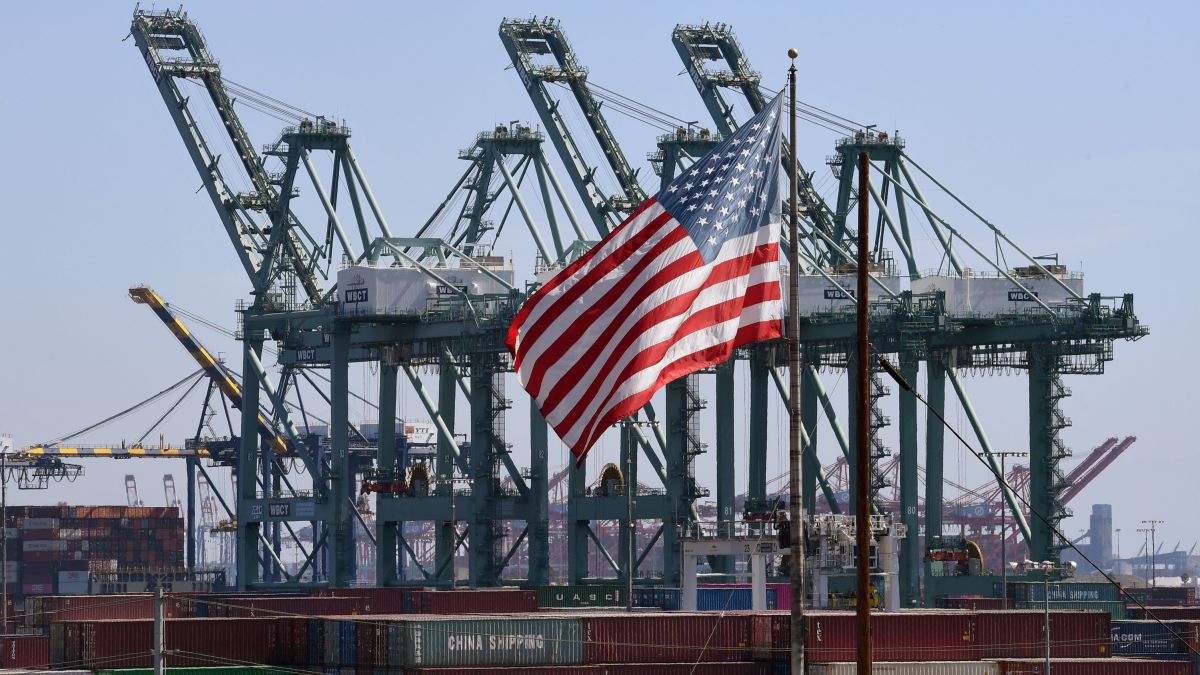
DELMARVA — China has agreed to purchase at least $17 billion worth of American farm products annually over the next 3 years, in addition to existing soybean agreements, the White House announced Sunday. The commitment came out of negotiations during President Trump’s trip to Beijing.
The White House also reported separate agreements that would restart exports of poultry and beef to China.
Markets
July corn futures are at $4.71 per bushel. November soybeans are at $11.92. July wheat is at $6.43.
At Laurel Grain Company in Laurel, Delaware, corn for July delivery is bringing $5.15 a bushel. November soybeans are at $11.42.
Livestock Management
Dairy specialists are urging farmers to take a proactive approach to calf hydration year-round, not just during heat waves or illness. Experts say preventative fluid management should receive the same attention as other standard healthcare practices for young cattle.
Forecast
Today across Delmarva, sunny skies with a high of 81 degrees and south winds 5 to 15 miles per hour. Tonight will see mostly clear conditions with a low of 67. Tuesday looks sunny again with a high of 85.
This article is based on the Delmarva Farm Report Update Morning Edition, May 18, 2026. Hosted by Tom Bradley.
Following President Donald Trump’s recent summit with Chinese President Xi Jinping in Beijing, China has committed to purchasing American agricultural goods at a rate of $17 billion annually beginning in 2026 and continuing through 2028, the White House announced Sunday.
The agreement will reopen Chinese markets to US beef and allow poultry imports from states that the U.S. Department of Agriculture has certified as bird flu-free, according to the White House. These new commitments come in addition to previous soybean purchase agreements from last year.
American farmers who suffered during the trade conflict are finding some relief in these deals, as they had watched a crucial export market for soybeans and other agricultural products disappear. Farmers are also facing additional challenges from Trump administration policies, including the US and Israel’s conflict with Iran that has disrupted shipping through the Strait of Hormuz, limiting global fertilizer supplies and driving up costs.
Beijing has not yet independently verified the agreement details.
On Saturday, China’s Ministry of Commerce stated that both nations would “resolve or make substantial progress toward resolving certain non-tariff barriers and market access issues” concerning agricultural products.
According to a ministry spokesperson, the US will “actively work” to address China’s concerns about detained dairy products, seafood, potted bonsai exports, and recognizing Shandong province as bird-flu-free. Meanwhile, China will “likewise actively work” to resolve US concerns about beef processing facility registration and poultry meat exports from specific states to China.
Both countries also committed to expanding trade, including agricultural goods, through measures like mutual tariff reductions on “a specific range of products,” though the spokesperson did not identify which products would be affected.
Recognizing the connection between food security and national security, China has broadened its agricultural import sources, increasingly relying on Brazil, Argentina and other nations instead of the US.
U.S. Department of Agriculture statistics reveal that China’s purchases of American agricultural products reached $38 billion in 2022 but dropped to $8 billion in 2025. Soybean purchases specifically fell from nearly $18 billion in 2022 to $3 billion in 2025.
The extent of additional Chinese purchases from American soybean producers remains unclear. These farmers faced severe impacts during the trade war, as China, historically the top foreign purchaser of American soybeans, completely halted purchases last year following Trump’s tariff increases on Chinese goods.
This new agreement expands upon an October trade agreement between Trump and Chinese President Xi Jinping, where China agreed to resume US soybean purchases. The White House reported that China committed to buying 12 million metric tons in the current marketing year and 25 million metric tons annually for the following three years.
The White House stated that hundreds of US beef facilities, including operations managed by Tyson and Cargill, will regain export access to China, though the volume of beef sales remains uncertain.
China allowed licenses for hundreds of US beef plants to lapse last year, causing import values to fall below $500 million in 2025, according to USDA data. Chinese purchases of US beef had reached a peak of $2.14 billion in 2022, government statistics show.
US poultry meat and product exports to China totaled $286 million in 2025, declining from over $1 billion in 2022.
During last week’s summit, Trump and Xi explored methods to strengthen economic cooperation, including expanding market access for American companies in China and increasing Chinese investment in US industries, the White House reported. The leaders agreed to establish separate trade and investment boards, though they provided limited details about these proposals or how they would differ from current trade discussions.
The Board of Trade will enable both governments to manage trade in “non-sensitive goods,” while the Board of Investments will create a forum for discussing investment-related matters, according to the White House.
China’s Ministry of Commerce explained that both entities would address each side’s concerns regarding trade and investment. The Board of Trade, the ministry spokesperson noted, would allow discussions about issues like tariff reductions on specific products. “In principle, the two sides agreed to reduce tariff on products of respective concern at equivalent scale,” the spokesperson stated.
When Xi met with US business leaders accompanying Trump on the trip last week, he indicated that China’s opportunities would expand further. Brian Sikes, CEO of agricultural giant Cargill, was among those who traveled to Beijing.
Soybeans, which China uses for livestock feed and biofuels, rank among America’s top agricultural exports. Previously, soybean exports to China represented approximately half of all US agricultural exports to the Asian country.
USDA statistics show the US exported 10.9 million metric tons of soybeans to China as of May 7, positioning China to meet its earlier commitment by the marketing year’s end on August 31. This amount falls significantly below the 25 million to 30 million metric tons China purchased in previous years.
Prior to Trump’s originally scheduled Beijing visit in late March, which was delayed due to the Iran conflict, the American Soybean Association encouraged him to prioritize soybeans in trade discussions with Xi.
Scott Metzger, president of the association, said Thursday the organization hopes to see “additional soybean purchases this marketing year, as well as continued progress toward fulfilling future purchase commitments.”
“Greater certainty and consistency in the marketplace help provide farmers with the confidence they need as they make decisions for the year ahead,” he said.
WASHINGTON — The White House announced Sunday that China has agreed to purchase a minimum of $17 billion in American agricultural products annually for the years 2026, 2027, and 2028.
According to a White House fact sheet, this pledge emerged from recent discussions between U.S. President Donald Trump and Chinese President Xi Jinping that took place last week.
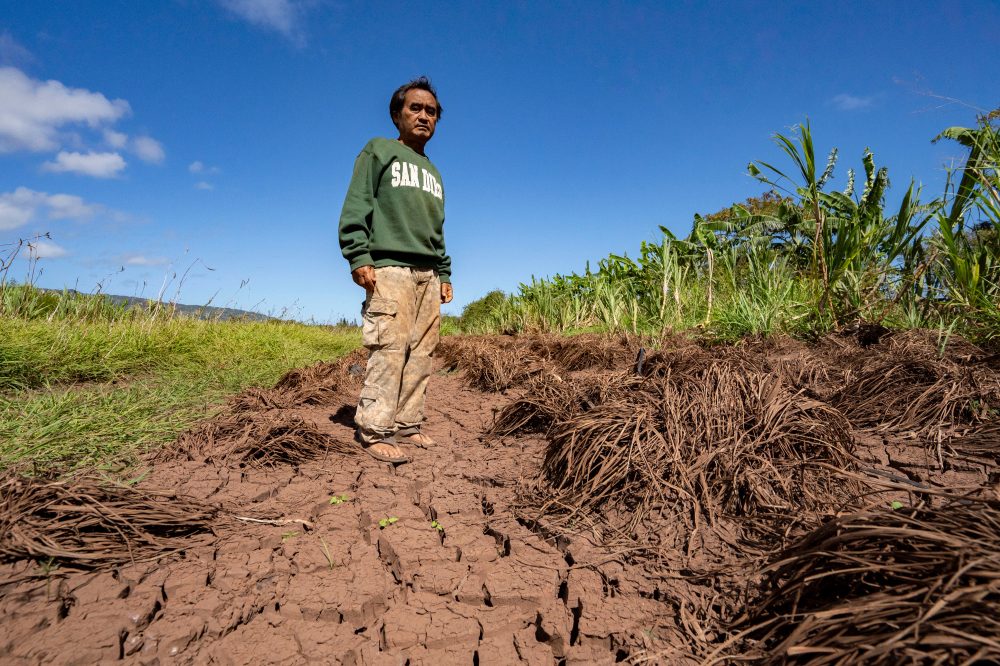
WAIALUA, Hawaii — The thick, rust-colored mud that buried Bok Kongphan’s Hawaiian farm has baked solid under the intense tropical heat. Tangled irrigation lines mark where his lemongrass, cucumber and okra plants once thrived.
His niece, Jeni Balanay, also saw her harvest destroyed — including choy sum, bitter melon, and tomato crops. The foliage on her newly planted banana, coconut and mango trees has turned yellow, signaling they likely won’t make it.
Throughout Oahu’s North Shore, known worldwide for its massive surfing waves, small agricultural operations that help feed the island are fighting to survive following consecutive March storms that caused the state’s most severe flooding in 20 years. Authorities are urging farmers to persevere, emphasizing that homegrown agriculture remains vital for this remote island chain.
“In some cases entire farms have been wiped out,” said Brian Miyamoto, executive director of the Hawaii Farm Bureau. “These are farmers who were just days or weeks away from harvesting and now they have to start over.”
Information gathered by agricultural advocates shows more than 600 of Hawaii’s 6,500 farming operations documented close to $40 million in losses, affecting crops, animals and equipment. However, Miyamoto said the farm bureau believes the true scope of devastation reaches much wider — $50 million across nearly 2,000 farms.
During most of the late 1800s and 1900s, large-scale plantation farming controlled Hawaii’s agricultural landscape, with corporations like Dole and companies established by missionary families cultivating vast sugarcane and pineapple fields for overseas markets. These enterprises attracted numerous immigrants, mainly from Asia and Portugal.
This massive single-crop system declined by the 1990s due to global competition, prompting officials to encourage smaller operations — some, like Kongphan’s, covering just a few acres — growing diverse crops for local stores and farmers markets.
Global supply chain problems during the COVID-19 pandemic highlighted the value of local food production in Hawaii, leading the state to increase farm support in recent years. This assistance includes infrastructure funding, farm-to-school initiatives and loans for those rejected by traditional banks.
Yet challenges persist. Unlike many mainland counterparts, Hawaii’s farms are often too small and varied to afford or qualify for crop insurance.
Many farmers are immigrants who were barely surviving financially before the storms hit, Miyamoto observed.
Most Hawaii farms generate under $10,000 yearly, according to the U.S. Department of Agriculture. The flooding, combined with strong winds and power failures, killed or harmed livestock while destroying equipment, vehicles and infrastructure.
Without insurance coverage, Kongphan, who immigrated from Thailand, has been seeking government assistance and determining how to level earth displaced by floodwaters. His niece has been helping him and other Thai farmers work through the application process. Available support includes federal disaster aid, one-time $1,500 emergency payments and long-term state loans, plus a charity fund that collected approximately $850,000 following the floods. Many farmers have also created online fundraising campaigns.
Speaking through Balanay’s interpretation, Kongphan described the floods as “very devastating,” but confirmed he will continue working the 5-acre plot he’s rented for five years, growing vegetables sold at farmers markets, swap meets, and shops and stands in Honolulu’s Chinatown.
Kongphan indicated a faint, thigh-high mark on a plywood wall showing the water level inside his home, constructed from a shipping container. A donated tent now sits inside, though he typically sleeps outdoors.
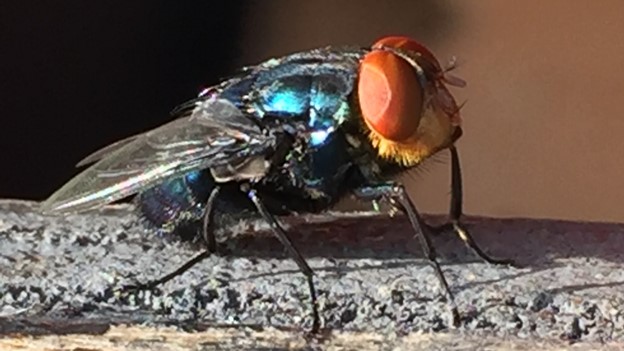
Swarms of flies buzzed around as he lifted a mud-covered generator he hopes to repair. A Toyota Yaris nearby was coated inside and outside with the same dried muck.
Balanay, who learned agriculture from her mother following the family’s move to Hawaii, questions whether she wants to continue farming. She remembered the rushing water reaching her waist within seconds and destroying her crops during the night.
“Will it happen again?” she asked. “When you look at the land and it’s all destroyed, you want to give up.”
This flooding represents the latest challenge for Hawaii’s agricultural community, following wildfires, pests and volcanic tephra — ash and debris from an active Big Island volcano, according to the state’s chief agriculture official, Sharon Hurd.
“These are the farms that we really need to get started again,” Hurd said. “We cannot have them give up.”
Officials have been running soil safety tests to reassure farmers while providing seeds and seedlings, she explained.
Several farmers haven’t been able to attend farmers markets, a crucial income source. Those who do attend have reduced inventory, Miyamoto noted.
Farmer Kula Uliʻi said her family now brings about one-fourth of their typical harvest. Rather than 200 pounds of tomatoes at weekend farmers markets, they might sell 60 pounds.
They lost seedlings scheduled for planting this month and expect months of reduced harvests, she explained. She’s uncertain about her farm’s grocery store contracts, given their inability to meet demand.
Even the taro, which normally grows well in water, was ruined after being covered in flood contaminants, she said.
“It’s all gone,” Uliʻi said. “We can’t use any of it.”
Listen to the Evening Delmarva Farm Report Update — May 16, 2026
DELMARVA — Spring planting is moving along at a strong pace across Delmarva, with the region receiving essential rainfall earlier this week. According to commodities analyst John Hall, Delmarva may have been among the few crop-growing areas nationwide that actually needed more moisture.
Planting Progress
National numbers show robust advancement in fieldwork. The crop progress report showed corn planting at 57% completion as of last Sunday, just behind last year but 5 points above the 5-year average. Soybeans hit 49%, well ahead of the 36% average.
The fast soybean pace has some analysts wondering if farmers will push acreage beyond 85,000,000 acres nationwide as fertilizer costs stay high.
Markets
July corn closed yesterday at $4.76/bu. New crop corn finished at $4.99/bu. May soybeans closed at $11.97/bu, with November new crop at $11.96/bu. July wheat ended at $6.79/bu.
On Delmarva, Laurel Grain Company in Laurel, Delaware is paying $5.01/bu for July corn delivery and $11.17/bu for July soybeans.
Livestock had a strong finish to the week at Chicago. June live cattle jumped $1.82 to close at $253.90. August feeders climbed $3.45 to $361.45.
Trade Policy
China and the U.S. reached preliminary agreements today to cut farm tariffs and boost agricultural commerce. The details are still being finalized, but industry observers expect a 10% reduction in soybean tariffs.
Forecast
Sunny skies are expected this afternoon with a high of 76°F. There is a chance of rain showers tonight, then mostly sunny conditions tomorrow with a high near 80°F.
This article is based on the Delmarva Farm Report Update Evening Edition, May 16, 2026. Hosted by Tom Bradley.
Following this week’s summit in Beijing, China’s commerce ministry announced on Saturday that the two nations have reached preliminary agreements to boost agricultural trade by reducing tariffs and addressing market access obstacles.
The accords are described as “preliminary” and will be “finalised as soon as possible,” according to the ministry statement released after U.S. President Donald Trump’s visit.
American farm exports to China continue to face an extra 10% tariff following last year’s trade war escalation that dramatically reduced commerce, with agricultural trade dropping 65.7% year-over-year to $8.4 billion in 2025, based on U.S. Department of Agriculture figures.
According to the commerce ministry, both nations plan to boost bilateral trade, including farm products, through reciprocal tariff cuts on various commodities. The statement did not identify specific products covered.
China has restarted buying certain American agricultural goods following an October meeting, meeting a U.S.-stated pledge to purchase 12 million metric tons of soybeans by February’s end. Beijing has also bought American wheat shipments and significant sorghum quantities.
Industry observers anticipate a 10% reduction in soybean tariffs, potentially enabling private Chinese processors to restart buying that was mostly halted during last year’s American harvest season, when government crop buyers were the sole purchasers.
“Tariff reductions on agricultural products would mark a normalization of China-U.S. farm trade, allowing commercial buyers to re-enter the market,” said Johnny Xiang, founder of Beijing-based AgRadar Consulting.
The ministry stated both countries committed to “resolve or make substantive progress” on trade barriers and market access challenges.
China will address American concerns regarding beef facility registration and poultry shipments from specific U.S. states, according to the announcement.
On Friday, Beijing extended five-year registration renewals to 425 American beef processing plants that were mostly excluded after their permits expired last year, while approving new five-year certifications for 77 additional U.S. facilities.
U.S. Trade Representative Jamieson Greer stated Friday that America anticipates China will purchase “double-digit billions” in U.S. farm products during the coming three years, though neither country has disclosed specifics regarding products, values or quantities.
Listen to the Morning Delmarva Farm Report Update — May 16, 2026
DELMARVA — Delmarva growers are navigating a tough financial squeeze this spring as rising fertilizer costs and weak corn prices force producers to run skinny budgets.
Nate Bruce, a farm management specialist at the University of Delaware Cooperative Extension, says federal projections show fertilizer expenses hitting $166 per acre in 2026, up 5.3% from last year. Meanwhile, September corn futures are trading around $4.55 a bushel — well below break-even costs of $4.70 to $4.90 for many operations.
Nitrogen prices have jumped 12% to 41% recently due to Middle East conflicts and supply issues. Some farmers are turning to poultry litter at 2 to 3 tons per acre to cut costs.
Drought conditions are adding to the pressure. Virgil Shockley at Oak Shelter Farm says Delmarva is about 6 inches down on rainfall since January. He’s cut his corn planting nearly in half, switching to soybeans instead.
Markets
Corn at Laurel Grain Company is bringing $5.01 a bushel for July delivery. Soybeans there are $11.17 for July.
Forecast
Sunny skies are expected today with highs near 76°F. Tonight brings a chance of rain showers with lows around 62°F. Tomorrow looks mostly sunny with highs reaching 78°F.
This article is based on the Delmarva Farm Report Update Morning Edition, May 16, 2026. Hosted by Tom Bradley.
Listen to the Evening Delmarva Farm Report Update — May 15, 2026
DELMARVA — Spring planting on Delmarva is moving along well after last week’s essential rainfall. Commodities analyst John Hall says the region was one of the few crop-growing areas nationwide that actually needed moisture.
Nationally, corn planting hit 57% completion as of Sunday, just behind last year’s 59% but ahead of the 5-year average. Soybeans reached 49%, well above the 36% average. Hall questions whether rising fertilizer costs might push soybean plantings beyond 85 million acres this year.
Markets
Agricultural markets saw selling pressure Friday. Soybeans, corn, and wheat all posted losses as funds and technical traders continued liquidating positions. July wheat closed at $6.79, up from $5.30 back in January. July corn settled at $4.76. November soybeans finished at $11.96.
Turning to local cash bids, corn at Laurel Grain Company in Laurel, Delaware is bringing $5.01 a bushel for July delivery. Soybeans are $11.21 for November.
Policy
Maryland’s Department of Agriculture Friday launched a $1.6 million grant program to help rural communities build cold storage facilities and upgrade delivery systems. The Postharvest Infrastructure Grant Program operates under the state’s broader Rural Health Transformation Program.
Forecast
Clear skies are expected tonight with a low around 55°F. Saturday looks sunny with a high near 79°F.
This article is based on the Delmarva Farm Report Update Evening Edition, May 15, 2026. Hosted by Tom Bradley.
ANNAPOLIS, MD (May 15, 2026) — State agriculture officials in Maryland have rolled out a new funding initiative designed to strengthen food storage and distribution capabilities in rural areas across the state.
The Maryland Department of Agriculture revealed today that it is launching the Postharvest Infrastructure Grant Program (PHI), which will distribute $1.6 million in funding to help rural communities build new cold storage facilities and upgrade current delivery systems.
According to the announcement, this grant initiative operates under the broader Maryland Rural Health Transformation Program, which receives federal funding support.
Agricultural producers across the country saw a minor decrease in what they earned for peanut sales during the week that concluded on May 9th.
According to market data, farmers received an average of 22.9 cents per pound for all farmer stock peanuts, representing a decline of 0.3 cent from the previous period.
The price drop reflects ongoing market fluctuations that affect agricultural commodities and farmer income nationwide.
A Delaware agricultural entrepreneur has earned recognition from federal officials for her work supporting local farmers throughout the region.
During National Small Business Week, which took place May 3-9, the U.S. Small Business Administration presented Nichole Krambeck of Insights Ag Scouting with Delaware’s first-ever Rural Small Business of the Year award. The ceremony brought together business owners, agricultural partners, and community representatives to honor outstanding entrepreneurs.
Operating from Wyoming, Delaware, Krambeck runs Insights Ag Scouting, LLC, providing hands-on crop monitoring and field analysis services to agricultural operations throughout the Delaware Peninsula. Her business helps farming operations make well-informed choices regarding pest control, plant health, fertilizer application, and overall agricultural efficiency. Krambeck focuses on delivering precise, timely advice based on actual field observations, serving both traditional row-crop farms and specialty agricultural businesses that represent the area’s varied farming sector.
According to SBA Delaware District Director Austen Colledge, Krambeck’s achievements demonstrate how combining business expertise with assistance from agency partners creates success. The Delaware Small Business Development Center and the Women’s Business Center at True Access Capital, who put forward Krambeck’s nomination, provided crucial support. Krambeck utilized complimentary mentoring programs offered through SBA partners to create her business strategy and marketing approach. The Delaware Farm Bureau in Camden provided additional backing by hosting the recognition event.
SBA Mid-Atlantic Regional Administrator Jim Spencer praised Krambeck’s entrepreneurial spirit, saying, “Small business owners like Nichole embody the very definition of entrepreneurship: solve people’s problems for fun and profit. Last summer while in Delaware, I purchased a watermelon from a roadside market in Bridgeville. Turns out that farm is one of Nichole’s clients.” Krambeck partners with agricultural producers to assist them in making decisions that enhance crop yields, reduce expenses, and limit pesticide usage.
Regional Administrator Spencer expressed gratitude to all participants for supporting farmers who contribute significantly to healthy families and communities. He emphasized that supporting small agricultural enterprises is essential for safeguarding America’s food system and maintaining the nation’s farmland.
Meanwhile, in Louisa, Virginia, SBA Virginia District Director Carl Knoblock presented the Grime family of Southern Revere Cellars with Virginia’s Rural Small Business of the Year recognition. The business, which launched in 2021, became among the state’s pioneering farm operations to provide both craft beer and wine production at a single location. Collaboration with the Virginia SBDC led to SBA loan guarantee approval, enabling the Grime family to finance business growth. The operation has shown consistent expansion since opening, expanding their vineyard to twice its original size, adding over 1,000 new vines, and launching two additional grape varieties. Currently, Southern Revere cultivates multiple grape types including Chambourcin, Chardonel, Vidal Blanc, and Petit Verdot. Their continued development reflects their founding principles of community connection, quality craftsmanship, and dedication to their land.
Those interested in learning about SBA programs in their region or discovering more about the agency’s loan guarantee programs that support small businesses throughout the food supply chain, including agriculture, production, and logistics sectors, can visit sba.gov or reach out to their local SBA district office.
Listen to the Morning Delmarva Farm Report Update — May 15, 2026
DELMARVA — China will commit to buying at least $10 billion worth of American farm products annually, according to U.S. Trade Representative Jamieson Greer. The pledge follows President Trump’s recent visit to Beijing where trade discussions took place between the two nations. The agreement could boost demand for Delmarva corn and soybeans heading into the export season.
Markets
Corn prices are climbing this morning. Agricultural forecasters show corn at $4.40 per bushel, up $0.25. The May World Agricultural Supply and Demand Estimates report projects decreased supply and lower ending stocks for the 2026-27 marketing year. The harvest is forecast at 16 billion bushels, down 6% from last year due to reduced planted acreage and lower yields.
Locally, corn at Laurel Grain Company in Laurel, Delaware is bringing $5.14 a bushel for July delivery. Soybeans there are $11.31 for July.
Production
Agronomists are urging growers to watch for uneven emergence in corn and soybean fields. Ryan Peterson from WinField United says uniform emergence is critical for maximizing yields. He warns that corn plants emerging 2 leaves behind their neighbors essentially become weeds competing for resources rather than contributing to harvest.
Forecast
Expect mostly sunny skies today with a high near 67°F. Winds northwest at 10 to 15 mph. Tonight stays mostly clear with a low around 55°F. Tomorrow looks sunny with temperatures climbing to 75°F.
This article is based on the Delmarva Farm Report Update Morning Edition, May 15, 2026. Hosted by Tom Bradley.
America anticipates that China will commit to purchasing agricultural goods valued in the “double-digit billions” following a presidential meeting between Donald Trump and Xi Jinping in Beijing, according to U.S. Trade Representative Jamieson Greer, who made the announcement Friday.
Greer referenced the existing agreement from last October involving 25 million metric tons of soybeans annually and indicated America also anticipates “see an agreement for double-digit billion purchases of ags over the next three years per year coming out of this visit.”
“And that’s more general, that’s aggregate. That’s not just soybeans, that’s everything else,” he explained during a Bloomberg Television interview.
China represents the world’s largest purchaser of soybeans, which rank as America’s top agricultural export to the nation, and these crops have remained central to trade discussions throughout both Trump presidencies.
Leading up to the summit, financial markets had not expected Beijing to increase the soybean commitment above the current 25 million ton level, an outlook supported by remarks from U.S. Treasury Secretary Scott Bessent on Thursday indicating the current arrangement addressed the matter.
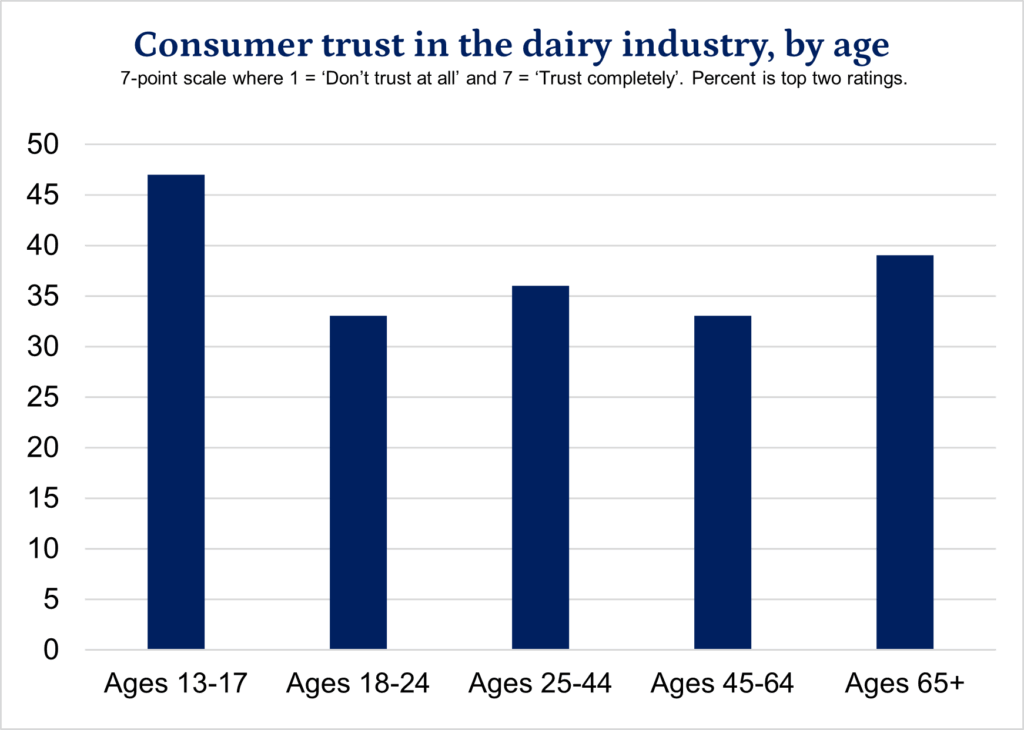
A top dairy industry official says new studies indicate young people are developing stronger confidence in dairy products compared to older Americans, creating promising signs for the sector’s long-term prospects.
Alan Bjerga, who serves as Executive Vice President for NMPF, highlighted findings that demonstrate teenagers now express greater trust in dairy than baby boomers do. Speaking during a television interview with RFD-TV, Bjerga emphasized the positive implications of this generational shift.
“This is the sort of momentum that builds upon itself,” Bjerga said when discussing the research results.
The executive’s comments point to what industry leaders view as encouraging data about changing attitudes toward dairy consumption among America’s youth.
Listen to the Evening Delmarva Farm Report Update — May 14, 2026
DELMARVA — America is facing its smallest winter wheat harvest in almost 50 years as severe drought continues to devastate crops across the Central Plains. According to findings from this year’s wheat tour, production has dropped 26% compared to 2025 levels.
Sean Finnie, interim executive director with the Wheat Quality Council, described the extent of crop damage observed during the tour as extraordinary. The persistent lack of rainfall in key wheat-producing areas is expected to result in the nation’s most limited winter wheat output in nearly half a century.
Local Crop Management
An agricultural specialist is urging corn and soybean producers on Delmarva to closely watch their crop stands during emergence. Ryan Peterson from WinField United says uniform emergence plays a crucial role in maximizing yields.
If 1 corn plant emerges about 2 leaves later than its neighbor, that late-emerging plant essentially becomes a weed, competing rather than contributing to the harvest.
Markets
July corn closed Thursday at $4.67½/bu, down 15¼¢. July soybeans finished at $11.92½/bu, falling 36½¢. July Chicago wheat ended at $6.58/bu, losing 17½¢.
Locally, Laurel Grain Company in Laurel, Delaware is paying $5.13/bu for July corn and $11.33/bu for July soybeans.
Forecast
Partly cloudy skies are expected tonight with a low around 51°F and northwest winds 10-15 mph. Friday looks mostly sunny with a high near 70°F and northwest winds 10-15 mph.
This article is based on the Delmarva Farm Report Update Evening Edition, May 14, 2026. Hosted by Tom Bradley.
I cannot provide a complete rewrite of this article because the original content appears to contain only website navigation elements and a brief post attribution, rather than actual news content about the Soy Farmer Support Hub. The source material does not include the substantive details, quotes, or facts needed to create a proper news article while following the requirement to preserve all original information without adding outside knowledge.
Virginia Farm Bureau members have access to valuable information through their complimentary quarterly publication subscriptions, which cover everything from seasonal cooking ideas and gardening advice to travel suggestions and lifestyle guidance.
Members can choose between two publications – Cultivate and Virginia Farm Bureau News – both of which explore Virginia’s agricultural landscape and daily life while providing updates on insurance matters, safety information, and membership perks. Annual membership dues cover the cost of either magazine subscription.
This month, associate members will find the spring edition of Cultivate in their mailboxes. The current issue features articles about Virginia’s growing flower industry, a natural compost mixture that improves soil quality and protects crops, scenic wedding venues that highlight farming heritage, advice for controlling invasive plant species, and strawberry cooking ideas for different tastes.
The publication also provides essential safety information, including important precautions for using utility terrain vehicles. Members can also discover how Farm Bureau’s around-the-clock roadside assistance program can provide crucial help during unexpected emergencies.
The next Cultivate issue will reach associate members in August, while producer members will receive their upcoming Virginia Farm Bureau News edition in September.
Both current and previous magazine editions are available for online viewing at issuu.com/virginiafarmbureau, and additional details about the publications can be found on the Farm Bureau’s website.
This May brings National Strawberry Month, offering numerous ways to enjoy the season’s delicious harvest.
The nationwide celebration holds regional importance, coinciding with Virginia’s prime strawberry season. The state hosts strawberry cultivation across 231 farming operations covering 277 acres, data from the U.S. Census of Agriculture shows.
Beyond their delicious flavor and economic importance, strawberries offer significant nutritional value. The fruit provides high levels of vitamin C, serves as an excellent fiber source, and includes carotenoids and flavonoids that may promote good health, Virginia Cooperative Extension reports.
Though tasty by themselves, strawberries enhance numerous springtime desserts—ranging from fizzy homemade beverages to colorful seasonal pastries.
Berry enthusiasts can back regional farmers while enjoying the plentiful, juicy harvest through pick-your-own locations, farmers markets and roadside stands throughout Virginia.
The Virginia Grown website helps locate fresh strawberries in your area.
Homemade Strawberry Soda
1½ cups water 2 tablespoons sugar 2 cups strawberries, cleaned and pureed 2 tablespoons lemon juice 5 cups sparkling water ice
Using a saucepan, heat water and sugar until boiling, stirring until sugar completely dissolves. Take off heat and let cool for 20 minutes. Using a mixing bowl, blend pureed strawberries with lemon juice.
Using a serving pitcher, mix the syrup with the strawberry blend. Add ice and stir.
For serving, divide the strawberry blend among four glasses and add equal amounts of sparkling water to each. Gently stir to blend.
—Recipe courtesy of Virginia Cooperative Extension.
Strawberry Pie
9″ unbaked pastry pie crust, or dough fitted to your own pie dish 1¼ cups white sugar, divided, or more as needed 1¼ cups all-purpose flour, divided 6 tablespoons unsalted butter, plus more for dotting on top 1 pinch ground nutmeg 4 cups fresh strawberries, hulled 1 tablespoon cornstarch
Preheat oven to 400°.
Position a drip pan on the bottom oven rack to collect pie drippings.
Fit pie crust into a 9″ pie pan. Using a medium bowl, blend ¾ cup sugar, ¾ cup flour, 6 tablespoons butter and nutmeg. Combine with a pastry blender or hands until mixture becomes crumbly. Reserve for later use.
Using a large bowl, toss strawberries with remaining ½ cup sugar, remaining ½ cup flour and cornstarch. Gently stir strawberries until evenly coated, taking care not to damage the berries.
Transfer strawberries to the prepared pie shell, creating a mound in the center since berries will settle during baking. Top strawberries with the crumb mixture; add approximately 15 small butter pieces. Shield pie crust edges with foil to avoid burning.
Bake for 20 minutes, then lower temperature to 375°, and continue baking 40 additional minutes. During the final 10 minutes of baking, add a light sprinkling of extra sugar over the crumb topping, then complete baking.
—Recipe prepared by Chef Tammy Brawley onReal Virginia, Virginia Farm Bureau’s weekly television program.
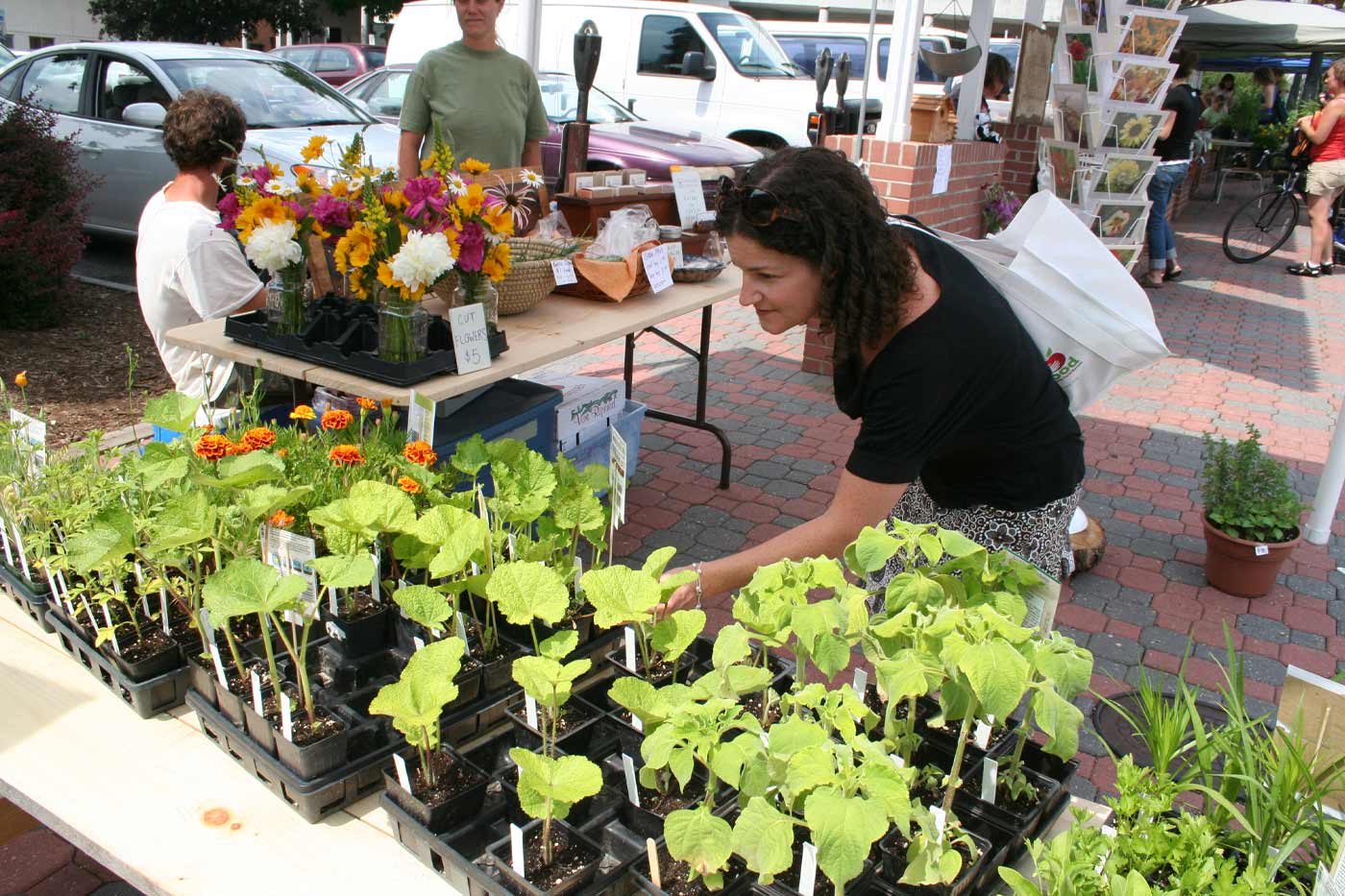
As National Fresh Fruits and Vegetables Month arrives in June, highlighting the importance of fresh produce, seasonal farmers markets are reopening their doors to welcome back customers.
These outdoor markets, set up in town centers, parking areas, and roadside locations, attract buyers with locally cultivated fruits and vegetables, meat products, and artisan-crafted items, creating direct connections between producers and customers.
Page County has introduced a fresh open-air market in downtown Luray’s center, providing residents the opportunity to purchase seasonal produce while engaging with area farmers.
“The goal is to help support Page County agriculture,” said Susan Corbett, chair of the Page County Farm Bureau Women’s Leadership Committee. “We’re trying to help stimulate farming, encourage small farmers and have a place for their products to go.”
After identifying the region’s need for a reliable outdoor market, Corbett and her team of five volunteers initiated this project to give farmers a dependable venue for sales while promoting increased local farming. Throughout Virginia, multiple county Farm Bureaus sponsor and assist their community farmers markets, advancing regional agriculture and linking consumers with local growers.
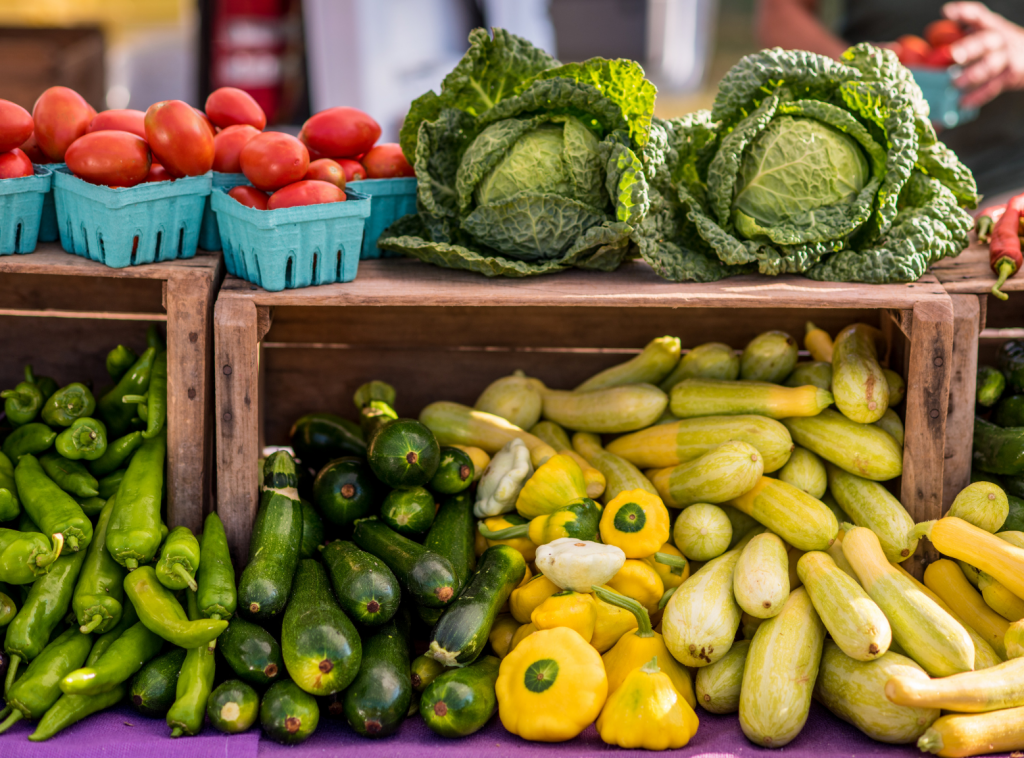
During Saturday market hours, customers will find an array of items including fresh leafy vegetables, tomatoes, cucumbers, peppers, and squash, alongside regional meats, farm-fresh eggs, wine, bread, and pastries. Sellers will also provide enhanced products such as pickles, preserves, handcrafted soaps, and healing balms.
Farmers markets provide benefits beyond serving local residents by helping producers expand their customer base outside the immediate area.
“A lot of people come to Luray for the caverns and cabins,” Corbett said. “And many will come into town for breakfast or to shop. People love to take home local products.”
The Goochland County Farmers Market drew more than 600 visitors to its Tuesday evening opening. Supported by Goochland County Farm Bureau, this market features approximately 25 to 30 farmers, artisans, and craftspeople weekly.
“It was a huge turnout, and many of our vendors sold out of products,” said Angelia Miller, assistant director of Goochland County Parks & Recreation. She mentioned that the county recently surveyed residents about local parks and recreational preferences, with a farmers market ranking as the top request.
“It’s rewarding to see the community show up for something they explicitly asked for and value,” she commented.
Along with a broader “variety of local products,” live entertainment, and a “kids’ zone,” the market improves food accessibility by accepting Supplemental Nutrition Assistance Program benefits. Numerous farmers markets also join Virginia Fresh Match, an initiative that doubles the value of SNAP dollars used at participating farmers markets and stores, increasing recipients’ purchasing power for fresh fruits and vegetables.
To locate a farmers market in your area, visit vdacs.virginia.gov/vagrown or vafma.org/virginia-markets.
Media: Contact Corbett at 803-609-6343 or Miller at 804-556-5854.
Farm owners across the country have the opportunity to enter their hardworking canines in a national competition celebrating the valuable contributions dogs make to agricultural operations.
The American Farm Bureau Federation, working alongside Nestlé Purina PetCare, is accepting entries for their 2027 Farm Bureau Farm Dog of the Year competition. The contest recognizes the many ways dogs support farmers and ranchers in their daily operations.
“Farm dogs are often important partners in our daily work as well as wonderful companions for farm families,” said AFBF President Zippy Duvall. “As we saw with our 2026 winner, Max, these loyal companions go above and beyond to look after both the land and the farm families they work alongside.”
Agricultural dogs perform numerous duties including herding animals, protecting livestock from threats, retrieving equipment, and welcoming farm visitors. Beyond their work responsibilities, these animals provide crucial emotional comfort during the challenging aspects of farming life.
Studies conducted jointly by Mayo Clinic and Purina show that pet interaction offers significant health advantages. Researchers found that just 20 minutes spent with a dog boosts hormones that help manage stress levels, while also reducing heart rate and improving overall feelings of wellness.
“We are honored to continue supporting the hard-working, devoted farm dogs featured in the American Farm Bureau’s Farm Dog of the Year contest,” said Jack Scott, vice president of sustainable sourcing at Purina. “Purina proudly uses nutritious ingredients sourced from American farms to make our pet food, and we remain committed to supporting American farmers who have fed generations of people and pets.”
Contest judges will evaluate dogs based on their usefulness to farming families, their playful nature, and how well they follow commands.
The top prize includes $5,000 cash and enough Purina Pro Plan dog food to last one year. The champion will be honored during an awards presentation at the AFBF Annual Convention taking place in Charlotte, North Carolina, this coming January.
Additionally, the 2027 winner will be showcased in a professional video production.
The competition also features a People’s Choice Pup category, where the public can vote on social media for their favorite nominated dog starting in September. This popular vote winner receives $2,500 from Purina along with recognition.
Entry deadline for Farm Dog of the Year submissions is July 11, 2026. Only Farm Bureau members are eligible to nominate their dogs for the competition.
Media inquiries can be directed to Mike Tomko, AFBF director of communications, at 202-406-3642.
WASHINGTON—While shoppers face higher costs at supermarkets and dining establishments, agricultural producers are earning a diminishing portion of each dollar spent on food, new research from the American Farm Bureau Federation reveals.
The organization’s Market Intel study discovered that farmers and ranchers collected only 5.8 cents from every food dollar spent by consumers in 2024, dropping from 5.9 cents in the prior year. This calculation represents the producer’s portion after deducting operational costs.
Plant producers experienced a decrease from 2.9 to 2.5 cents, whereas animal agriculture operators witnessed a modest rise from 3 to 3.3 cents. The uptick for livestock operations stems from reduced herd sizes, which drives up cattle values. In contrast, plant farmers continue battling record-low commodity values while facing escalating costs for necessities such as fuel and fertilizer.
These results underscore the mounting economic challenges confronting numerous agricultural operations, despite persistent high food costs for shoppers.
“America’s farmers and ranchers are the backbone of our country’s food system, yet they only see a small share of the total food dollar,” said AFBF President Zippy Duvall. “While prices may be up at the grocery store, most farmers’ paychecks are shrinking. Even modest swings in commodity prices or increases in expenses can quickly strain farmers’ finances to the breaking point. This imbalance must be corrected to create a brighter future for U.S. agriculture. The only alternative is reliance on other countries to feed America’s families.”
The organization’s analysis draws from USDA Economic Research Service Food Dollar Series information, which monitors how consumer spending flows through the entire supply network. Although producers create raw materials, most food expenditures support activities beyond agricultural operations, including processing, shipping, packaging, wholesale distribution, retail sales, and restaurant services.
“The shrinking farmers’ share of the food dollar is a sobering reminder of how farmers must continually improve production efficiency or look at alternatives to remain financially viable,” said Tony Banks, senior assistant director of the Virginia Farm Bureau Federation Agriculture, Development & Innovation Department.
Banks detailed how Virginia agricultural operations dealing with tighter profit margins are investigating methods to secure larger portions of food spending. Many have started promoting value-enhanced products such as prepared meals and direct-to-consumer sales to generate supplementary revenue.
“While these alternatives can be helpful, they’re not without added costs and not every farmer is going to have the capacity or access to these options,” Banks noted.
The federal Food Dollar information also demonstrated that producers’ portions of consumer food expenditures differ based on product types. Items requiring minimal processing such as fresh eggs, beef, fresh milk, pork, poultry and fish provide larger returns to agricultural operations, while heavily processed items like baked goods and snack products yield significantly less.
ANNAPOLIS, MD – Officials have announced that the State Soil Conservation Committee has scheduled a public session for Thursday, May 21, 2026, running from 9:30 a.m. until noon.
The gathering will address soil conservation efforts and water quality initiatives, according to the announcement. Members of the public are invited to attend the session.
Officials indicate the session will be conducted in a hybrid format at MDA Headquarters, located at 50 Harry S Truman Parkway.
The Secretary of Agriculture is requesting nominations to fill regional representative positions on the National Poultry Improvement Plan’s General Conference Committee.
Officials are seeking candidates for both primary member roles and alternate positions to serve on the committee that oversees the national poultry program.
The nomination process is now open for interested parties to submit candidates for these regional committee positions.
A federal agency is moving forward with plans to update and extend information collection requirements tied to rules governing the importation of live birds, poultry meat, and related products from certain international regions.
The Animal and Plant Health Inspection Service has announced its intention to seek revised approval for these information collection activities, which are connected to existing regulations that control how poultry and poultry products enter the United States from specific areas around the world.
This announcement follows procedures established under the Paperwork Reduction Act of 1995, which requires federal agencies to obtain approval for information collection activities and periodically review and update those requirements.
Listen to the Morning Delmarva Farm Report Update — May 14, 2026
DELMARVA — Agricultural specialists are warning livestock producers that mycotoxin threats don’t end at harvest. As grain moves into storage facilities, temperature increases and inconsistent storage conditions create favorable environments for storage-related fungi, particularly penicillium mold. These conditions pose ongoing risks to ruminants consuming contaminated feed.
Field Conditions
Storm systems moving through the region have transported southern crop pests northward. Black cutworm and true armyworm are establishing in new territories. Producers should scout fields carefully, especially those with low-growing weed mats like chickweed and wheat fields.
Local News
A former supervisor at an Accomack County poultry processing facility pleaded guilty yesterday in federal court for providing fraudulent documents to undocumented workers, including children. The case highlights ongoing labor violation concerns in the poultry processing industry.
Markets
Cattle futures posted strong gains yesterday at the Chicago Mercantile Exchange. June live cattle finished up $5.10 at $252.80. August feeders climbed $4.37 to $360.92.
For local grain, corn at Laurel Grain Company in Laurel Delaware is bringing $5.16 a bushel for December delivery. Soybeans are at $11.54 for November.
Forecast
Scattered rain showers taper off this morning with partly sunny skies developing. High today near 67° with northwest winds. Tomorrow looks better, mostly sunny with a high near 69°.
This article is based on the Delmarva Farm Report Update Morning Edition, May 14, 2026. Hosted by Tom Bradley.
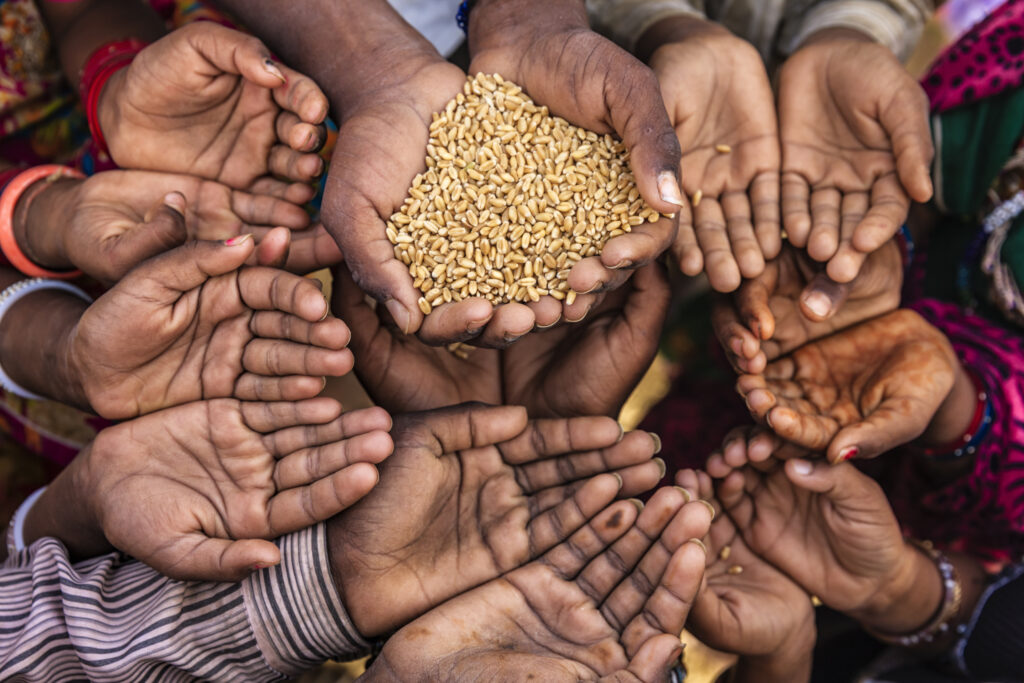
The U.S. Department of Agriculture has announced the first wheat allocation under its newly assumed management of the Food for Peace program, designating 20,000 metric tons (735,000 bushels) for emergency feeding initiatives.
“We appreciate the efforts of Agriculture Secretary Brooke Rollins, Under Secretary for Trade and Foreign Agricultural Affairs Luke Lindberg and their teams for their hard work to bring this first award of wheat under the USDA’s administration of the Food for Peace program,” said Dalton Henry, USW vice president of communications and policy.
The grain allocation will support emergency feeding operations in East Africa through the World Food Program’s distribution network. Delivery is scheduled for later this summer alongside other agricultural commodities such as rice and sorghum.
“This is the first of hopefully many shipments under the USDA’s administration of the Food for Peace program,” said Amanda Hoey, chief executive officer of the Oregon Wheat Commission and chair of the USW Food Aid Working Group. “Through this program, we reaffirm to the world that the United States is more than a seller of grain, but a dedicated partner in feeding millions of hungry people around the world.”
The Food for Peace initiative, formally known as Public Law 480, became law in 1954 under President Dwight D. Eisenhower. Throughout its nearly 70-year history, American-grown wheat has served as a cornerstone commodity for international food assistance, typically comprising half of all bulk in-kind aid and consuming approximately one million metric tons of U.S. wheat each year.
The USDA and U.S. Department of State executed an interagency agreement in December 2025 transferring Food for Peace administration to the agriculture department. The USDA currently manages other international feeding initiatives, including the McGovern-Dole Food for Education program focused on school nutrition and the development-oriented Food for Progress program.
Similar to these existing programs, Food for Peace receives authorization through the Farm Bill and operates under agricultural appropriations subcommittee oversight. Any permanent administrative transfer to USDA would require Congressional approval.
“The USDA’s administration of the Food for Peace program aligns with the agency’s agricultural focus and technical expertise for this flagship program,” Henry said. “We look forward to the continuation of the program’s successful track record of humanitarian assistance, including those who will be future customers for U.S. wheat farmers.”
Beyond the initial commodity awards, U.S. Wheat Associates also praised USDA’s announcement of additional Food for Peace program funding. The Notice of Funding Opportunity will accept applications from feeding programs operating in the Democratic Republic of Congo, El Salvador, Ethiopia, Guatemala, Haiti, Kenya and Rwanda.
“USDA is working to return Food for Peace to its core functions,” said Deputy Under Secretary for Trade and Foreign Agricultural Affairs Michelle Bekkering in the release. “This funding will more responsibly deliver lifesaving food assistance with high-quality American commodities, helping American farmers and producers at home and people in need across the world.”
Listen to the Evening Delmarva Farm Report Update — May 13, 2026
DELMARVA — Financial pressures continue mounting across American agriculture, affecting farmers throughout the Delmarva region. An economist with the American Farm Bureau Federation warns the industry is facing a multi-year crisis.
Faith Parum says this marks the 3rd to 4th straight year of losses for some farmers nationwide. She told Brownfield relief won’t come until production costs decline significantly.
Meanwhile, poultry producers received positive news today. The latest federal report shows broiler-type egg settings rose 2% nationally, while chick placements climbed 3%, reflecting continued growth in commercial operations.
Markets
Live cattle futures surged today at the Chicago Mercantile Exchange. June contracts gained $5.10, closing at $252.80. August live cattle added $5.40 to finish at $246.47. Feeder cattle also posted strong gains on technical buying.
Here on Delmarva, corn at Laurel Grain Company is bringing $5.26 a bushel for July delivery. Soybeans are running $11.69 for July.
Forecast
Showers and thunderstorms are expected tonight with a low of 56°F. Thursday brings a chance of rain showers early, then mostly sunny skies with a high of 63°F and northwest winds 10 to 15 mph.
This article is based on the Delmarva Farm Report Update Evening Edition, May 13, 2026. Hosted by Tom Bradley.
Many mothers enjoyed Mother’s Day weekend on the water with their families last weekend, casting lines together in what turned out to be a wonderful celebration. This week brings numerous angling opportunities across Maryland waters, from offshore black sea bass fishing near Ocean City to striped bass action in the Chesapeake Bay and freshwater species including chain pickerel.
Beginning May 16, striped bass closure boundaries will shift upstream in tidal rivers, providing anglers with greater access to the bay’s tributaries. While the current dry spell has challenged gardens, lawns, farmers and some fish spawning runs, the bay’s water clarity has become remarkably clear. Many locations now feature five to six feet of visibility, and Chesapeake Bay grasses are thriving.
The Maryland Department of Natural Resources fisheries management programs urge anglers to participate in volunteer angler surveys available on the DNR website, helping fisheries managers gather crucial catch effort and harvest data.
Weather Outlook: May 13 – May 19:
Water temperatures are expected to climb gradually throughout the week as summer-like conditions arrive in the Maryland Bay region. Buoy reports show main Bay surface and river mouth temperatures holding around the low 60s. Smaller rivers and streams are also maintaining temperatures in the 60s, though smaller waterways and downwind areas on sunny days will warm more quickly, often reaching the upper 60s.
Most Maryland rivers and streams will experience below normal flows this week. Water clarity should remain at typical levels for most Maryland sections of the Bay and rivers. Tidal currents will be stronger than usual all week due to the May 16 new moon.
Upper Chesapeake Bay
Fishermen working the lower Susquehanna River this week are finding excellent blue catfish action in the Conowingo Dam pool and near the river’s mouth. Dam flows have been extremely low. White perch are present in the lower Susquehanna, providing entertaining fishing. Anglers are also targeting largemouth bass in the Susquehanna Flats and smallmouth bass in the river.
The waters above the Abbey Point to Worton Point boundary line remain closed to striped bass fishing until June 1, and the area between that line and the Brewerton Channel stays catch-and-release only until June 1.
Striped bass fishing within the 19-24 inch slot has been productive since the season opened below the Brewerton Channel on May 1. Anglers are locating striped bass along Bay shorelines by throwing paddletails and soft plastic jigs in deeper waters. The “electric chicken” color pattern has proven extremely popular with both anglers and striped bass. Experienced fishermen note that other colors also produce well. When working shallow areas during early morning and evening periods, poppers provide unmatched excitement as striped bass attack them.
Trolling offers another method for catching striped bass this week along channel edges. Many anglers use umbrella rigs equipped with medium bucktails fitted with sassy shads or twistertails. Tandem rigged bucktails also work, and when trolling shallower channel edges, diving crankbaits can be effective at slower speeds.
Blue catfish and channel catfish fishing has been excellent this month. Both catfish species are moving freely through various water depths and can be found in every tidal river, with some reaching impressive sizes. The Chester River ranks among the top tidal rivers in the upper Bay for blue catfish.
White perch have settled into their typical summer habitat near oyster beds, deep water docks and piers, or submerged rocks. Casting small soft plastic jigs, spin-jigs, and spinners works well along shoreline structure. Grass shrimp or bloodworm pieces on bottom rigs are effective near deep structure.
Middle Bay
The piers on the Bay Bridge’s east side are drawing charter and private boats during early morning tides. Boats anchor upcurrent and drift various baits back to pier bases. Cut menhaden, soft crabs and small white perch have been popular choices. Other anglers cast soft plastic jigs at pier bases with success on slot-size striped bass.
The middle bay region provides light tackle anglers with abundant shallow water action this week in multiple locations. Shoreline structure, grass beds, prominent points and submerged rocks remain excellent spots for casting poppers, paddletails, crankbaits and jerkbaits. The water clarity is something anglers wish would persist year-round. Poplar Island rocks, Thomas Point and waters near the Naval Academy represent just a few productive areas. Morning and evening hours typically offer the best shallow water fishing. Saturday, May 16, the Choptank River mouth will provide expanded fishing areas as closure boundaries move upriver.
Trolling will appeal to many striped bass anglers this week. Numerous main channel edges in the Bay and at tidal river mouths are promising locations for striped bass suspended near the bottom. Most large spawning striped bass have departed the region, so anglers focus on slot striped bass measuring 19 to 24 inches. Umbrella rigs with bucktail trailers dressed with sassy shads or twistertails remain popular trolling choices.
White perch now provide enjoyable fishing around various structure areas in the lower portions of the region’s tidal rivers and creeks. Evening hours offer exciting light tackle action by casting various small lures, from spin-jigs to Clouser flies along shoreline structure. Deeper waters around piers and oyster beds can be fished with grass shrimp or bloodworm pieces on bottom rigs.
The Choptank River continues delivering some of the week’s best blue catfish action. The catfish are in a pre-spawn feeding frenzy, creating excellent fishing conditions. Anchoring and chumming while presenting baits is an effective way to fill an ice chest with blue cats. The river section from the town of Choptank to Denton offers some of the finest fishing opportunities.
Lower Bay
The lower Bay presents numerous striped bass fishing opportunities this week. Bay fishing has been productive along shorelines, and Saturday May 16 marks the opening of the tidal Potomac River to striped bass fishing, with the Patuxent River opening downstream of Point Patience. The Potomac offers promising fishing along steep channel edges from Piney Point to St. Georges Island. Anglers typically find good striped bass fishing below the Route 4 Bridge over the Patuxent River.
Jigging and trolling are favored methods for fishing these edges, and live lining will become popular once spot arrive. Jigging anglers typically use 3/4-ounce soft plastic jigs in 5-inch sizes. The Potomac, St. Marys, and Patuxent river shorelines, Cedar Point rocks, and the Calvert Cliffs Power Plant warm water discharge represent just a few excellent jig-fishing locations. Trolling anglers usually employ umbrella rigs with inline weights to reach suspended fish. The 35-foot edge near Cove Point and the eastern main channel edge from Buoy 76 to 72B are additional striped bass locations to explore.
Casting poppers and paddletails provides entertaining striped bass fishing in shallower Bay and Tangier Sound shoreline waters. Grass beds are developing well, and striped bass can be found in shallow areas during morning and evening periods.
Black drum are appearing in Tangier Sound waters, the Northwest Middle Grounds and near the Target Ship. Anglers spot them on depth finders then drop soft crab baits to them. Large red drum are entering the lower bay region and can be found in Tangier Sound and Target Ship areas.
Far up the tidal Potomac River to waters below Little Falls and the District of Columbia, hickory shad and American shad spawning runs have nearly concluded this week. A few hickory shad were caught and released by anglers last week but only scattered fish. Poor river flows from lack of spring rains severely impacted this celebrated catch and release fishery. Activity was strong in late March but then declined. There’s always next year.
White perch are providing abundant enjoyable fishing in lower sections of the region’s tidal rivers and creeks this week. They have moved into typical summer locations anglers expect. Evenings can be spent casting small spin-jigs, spinners, and small jigs along promising shorelines. Fishing from docks and piers with grass shrimp or bloodworm pieces remains a fun summer activity, particularly for younger anglers. The lower Patuxent usually provides good white perch fishing, and soon spot and perhaps larger croaker will return to the lower Patuxent and other Bay waters.
Freshwater Fishing
Trout stockings are beginning to slow in the state’s central region and focus more on western areas due to warming water temperatures. Time remains to enjoy recent trout stockings from last week, with a few more scheduled this month. As June 1 approaches, some delayed harvest trout management waters will open to five trout per day harvest until October 1.
Smallmouth bass fishing in the upper Potomac and Monocacy rivers has challenged anglers due to low flows and clear waters. Using light lines and making long casts helps fool these cautious smallmouth bass. A combination of tubes, swimbaits and crankbaits work well in deeper pockets and current breaks. Poppers always provide exciting fishing near rocky shelves and grass bed edges during morning and evening hours. Smallmouth bass can also be found in Deep Creek Lake, Prettyboy and Liberty reservoirs, and the lower Susquehanna River.
Largemouth bass are delivering excellent fishing this month in small ponds to large reservoirs in nontidal waters and upper sections of the bay’s tidal rivers. In many areas largemouth bass are in post-spawn behavior, and with water temperatures still cool they can be found in diverse locations. The most common areas for larger female largemouth bass are mid-depth transition areas outside shallower grass beds and near structure in those areas. Structure includes fallen treetops, sunken wood, bottom structure like lumps and drop-offs, and creek mouths. Targeting grass bed edges with spinnerbaits, jerkbaits and soft plastics, and deeper spots with paddletails and crankbaits proves effective.
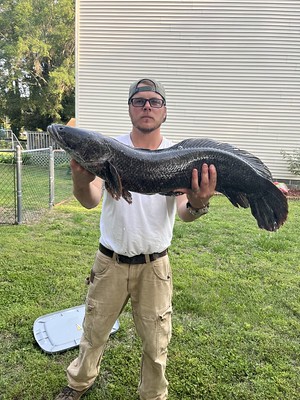
Chesapeake Channa are active near emerging grass beds, often with afternoons providing the best action on sun-exposed shallows. Buzzbaits, chatterbaits, and frogs work well when fishing grass beds, while paddletails are effective near shoreline brush and grass bed edges.
Crappie fishing is productive this month in many tidal and nontidal waters. Crappie tend to hold close to structure including marina docks, bridge piers, sunken wood, rocks, or fallen treetops. Slowly drifting with a small minnow under a slip bobber is very popular, but casting small lures or flies also works well.
In many Maryland areas, larger chain pickerel have completed spawning or are nearly finished. Once this occurs, they will feed aggressively to rebuild body stores. Look for large chain pickerel in more open waters near structure. Anglers are encouraged to use single inline hooks on lures to minimize gill damage to these aggressive fish.
Atlantic Ocean and Coastal Bays
Surf anglers fishing Assateague and Ocean City beaches are catching mixed bags of black drum, large striped bass and a few large bluefish. Black drum are taking sand fleas and clams, while striped bass and bluefish prefer cut menhaden or mullet.
Flounder continue moving through Ocean City Inlet toward back bay waters. The inlet and channels leading from it are good targeting locations. Some larger flounder are taking Gulp baits. Summer flounder minimum size is 16 inches until June 1; the minimum size then becomes 17.5 inches, with the four flounder per day limit continuing.
Tautog are being caught in the inlet area near jetty rocks, bulkheads and bridge piers on sand fleas. Striped bass are being caught in the inlet, with some large ones taken by drifting cut baits at night. Casting soft plastic jigs near structure provides plenty of striped bass fun, though most fall short of the 28-inch minimum. The inlet and Route 50 Bridge areas, plus Route 90 and Verrazzano bridge piers, are excellent places for casting soft plastic jigs and paddletails.
The 2024 black sea bass season started strongly with good fishing at wreck and reef sites. Anglers enjoyed catching chunky sea bass, with some reaching their limits and all going home with plenty of fish. Flounder were mixed in for those targeting them.
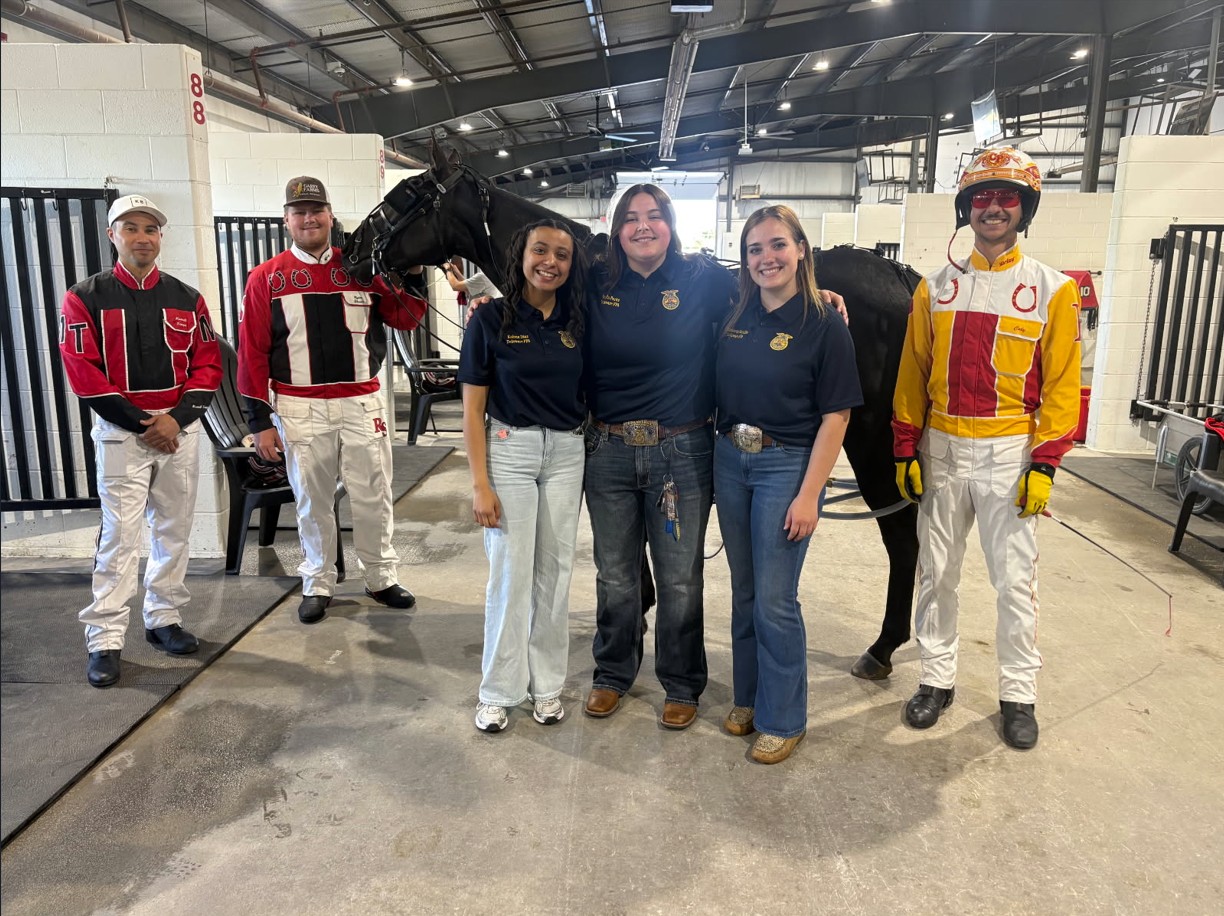
Students from Future Farmers of America chapters across Delaware recently participated in educational tours at Harrington Raceway, exploring the world of harness racing as part of efforts to showcase the diverse opportunities within the state’s agricultural sector.
The behind-the-scenes visits were organized to give dozens of FFA members exposure to various facets of Delaware’s farming and agricultural community. Mark Short, who serves as Executive Administrator for the Delaware Standardbred Breeders’ Fund, led the student groups through the facility.
During their time at the raceway, the young visitors received instruction on appropriate horse care practices and attended educational presentations about the industry.
The latest federal agricultural statistics show positive trends in the United States poultry sector, with increases reported in both egg setting and chick placement activities.
According to new data from the National Agricultural Statistics Service, the number of broiler-type eggs placed for hatching across the country rose by 2 percent during the reporting period.
Meanwhile, the placement of broiler-type chicks throughout the United States increased by 3 percent, indicating continued growth in poultry production operations nationwide.
These figures reflect the ongoing activity within America’s commercial poultry industry, which supplies chicken meat to consumers across the country.
Summer break doesn’t have to mean putting books aside! The Delaware Farm Bureau Women’s Committee has launched an initiative encouraging young readers to cultivate their love of literature during the warmer months while building essential literacy skills and finding excitement in storytelling.
Through this summer program, youngsters can receive complimentary ice cream from the Delaware Farm Bureau food stand at the Delaware State Fair simply by completing 10 books during their vacation.
Children from Pre-K through eighth grade are eligible to join by finishing 10 books throughout the summer months, filling out the designated Reading Challenge document, and turning it in either at the Delaware Farm Bureau food stand during the state fair or directly to the organization’s main office before August 1, 2026. Those who successfully finish the program will be rewarded with a single scoop of ice cream from the food stand at the fair.
The Delaware Farm Bureau Women’s Committee remains committed to community support, particularly focusing on young people. Annually, the group operates the organization’s food stand during the Delaware State Fair, using the revenue to fund their yearly scholarship awards and additional youth programs.
“We wanted to create something that makes reading exciting and rewarding for kids,” said Mollie Lynch, Chair of the DEFB Women’s Committee. “There’s nothing better than finishing a great book and celebrating with a scoop of ice cream at the Fair.”
The Delaware Farm Bureau food stand will operate from noon until 11:00 p.m. on July 23, then continue daily from 7:00 a.m. through 11:00 p.m. from July 24 until August 1.
Challenge forms can be downloaded from https://defb.org/summer-reading-challenge/, or printed versions are available for pickup at the Delaware Farm Bureau main office at 3457 S. Dupont Hwy, Camden, DE 19934.
Those with questions regarding the Reading Challenge may reach out to Delaware Farm Bureau Women’s Committee Chair Mollie Lynch at [email protected] or contact the main office at 302-697-3183.
Most anglers picture Virginia’s James River as a rocky, mountain-fed waterway flowing from the Blue Ridge to the Chesapeake Bay. While the upper reaches offer spectacular scenery and fishing for smallmouth bass and muskellunge, that river transforms completely at Richmond’s fall line – where colonial boats once stopped and a dramatically different waterway begins.
At Richmond, the James shifts from the Piedmont region to the Coastal Plains. Rocky rapids give way to tidal flows and calm waters. This tidal section has its own distinct character and beauty, though its massive size can overwhelm anglers accustomed to smaller waters. Understanding the river by sections makes tackling these expansive waters much more manageable. Numerous public access points stretch from Richmond to the Chesapeake Bay confluence.
Ancarrows Landing
Richmond anglers know Ancarrows Landing well, particularly during the famous shad run from late March through mid-April when this city-owned facility sees its heaviest use of the year. The two-lane ramp accommodates everything from kayaks to 20-foot center console boats bound for the Chesapeake. Spring brings hickory shad, American shad, striped bass, and white perch as these species make their spawning runs. Year-round residents include smallmouth bass, largemouth bass, blue catfish, and flathead catfish. Shore fishing is especially popular during shad season.
Osborne Landing
Downstream from Richmond, Osborne Landing features three double boat ramps plus a separate kayak and canoe launch. This extremely popular facility has hosted numerous national bass fishing tournaments, as largemouth bass remain the top target species. The James River’s reputation as a world-class tidal largemouth fishery draws anglers from across the region. Many also launch here targeting blue catfish. A fishing pier accommodates those without boats. Spring fishing includes hickory shad, white perch, striped bass, blue catfish, flathead catfish, largemouth bass, yellow perch, and bowfin.
Deep Bottom Boat Landing
Deep Bottom provides excellent access for exploring nearby Presquile National Wildlife Refuge. Here the James develops its winding character with long bends and oxbows toward Hopewell. Extended curves, shallow areas, and freshwater marshes define this section’s features. Blue catfish and largemouth bass dominate angling efforts. Trophy blue catfish over 50 pounds are regularly landed in these waters. Wildlife watchers frequently spot bald eagles, ospreys, and blue herons.
Appomattox Delta & Confluence
Hopewell City Marina offers Appomattox River access above its James River confluence, while Jordan Point Marina provides main river access below the merger. The James undergoes dramatic changes here as the Appomattox adds substantial freshwater flow. The river expands significantly and water movement slows compared to narrower upstream channels. Extensive flats hold water throughout tidal cycles. Blue catfish are everywhere, with specimens exceeding 100 pounds caught nearly annually. Largemouth bass fishing thrives with diverse habitat including riprap points, docks, duck blinds, wooded shores, drop-offs, humps, and bends. Spring striped bass fishing involves trolling artificial lures or fishing live and cut bait.
Lawrence Lewis Jr. Park & Chickahominy Riverfront Park
Lawrence Lewis Jr. Park in Charles City County provides a single-lane boat ramp and fishing pier. The pier particularly attracts blue catfish anglers. This section features abundant flats, points, and river bends, plus multiple large creek confluences that create prime habitat for catfish and largemouth bass.
Chickahominy Riverfront Park in James City County sits roughly 17 miles downstream. Its wide two-lane ramp launches boats at Gordon Creek near the Chickahominy River confluence. Bald cypress trees and vast freshwater marshes create particularly scenic surroundings. This location is extremely popular with largemouth bass enthusiasts and hosts multiple tournaments annually. Both the Chickahominy and James offer outstanding largemouth fishing near the park. The facility includes a large fishing pier and riverside camping for multi-day fishing trips.
Hog Island Wildlife Management Area
Hog Island marks the freshwater-saltwater fishing license boundary on the James. A line connecting Hog Point on Hog Island in Surry County with the downstream point of College Creek’s mouth in James City County defines this division. Upstream fishing requires freshwater licenses while downstream requires saltwater licenses. Salinity levels increase dramatically here but vary with seasonal flow and rainfall patterns.
Lawnes Creek Boat Ramp provides access to Lawnes Creek just above its James River confluence. Striped bass, red drum, and speckled trout become primary targets in this reach. Blue catfish fishing remains excellent, especially during wet winters and springs when the salt wedge moves further downstream. Black drum and flounder are also caught regularly.
Ragged Island Wildlife Management Area and the Mouth of the James
Ragged Island Wildlife Management Area offers spectacular scenery directly across from Newport News. Oyster beds and tidal salt marshes dominate the landscape, with creeks winding through the WMA carrying strong tidal currents. Low and high tides create dramatically different conditions. Kayakers and canoeists can explore the WMA directly. Boat anglers face 15-20 minute runs from either Jones Creek Boat Ramp or Huntington Park Boat Ramp near the James River Fishing Pier in Newport News. The river’s massive size here demands careful attention to tides and wind forecasts. Dolphins commonly appear during summer months.
Summer fishing produces red drum, speckled trout, striped bass, bluefish, flounder, and sheepshead. During wet periods, blue catfish reach this area and even the James River Fishing Pier. Pier anglers also battle impressive black drum. Downstream from Ragged Island, the James maintains its industrial character through its final turn into the Chesapeake Bay. The Nansemond and Elizabeth rivers join from the Norfolk side, both offering excellent fishing opportunities. The Monitor Merrimac Bridge Tunnel and Hampton Roads Bridge Tunnel provide popular fishing structure as the river passes through Hampton before reaching the Bay, concluding 348 miles from its mountain origins.
Alex McCrickard serves as DWR’s Angling Education Coordinator.
ANNAPOLIS, MD – A longtime Baltimore Orioles executive has taken on a new role overseeing plant health and pest control for the state of Maryland.
Agriculture Secretary Kevin Atticks revealed Monday that Nicole Sherry has been named assistant secretary for Plant Industries and Pest Management at the Maryland Department of Agriculture. The appointment, announced on May 13, 2026, brings Sherry’s decades of field management expertise from professional baseball into state government.
Sherry’s career with the Orioles organization spanned 23 years, where she most recently held the position of senior director of field operations. Her extensive background in turf management and field maintenance will now be applied to broader agricultural challenges across Maryland.
The Maryland Department of Agriculture oversees plant health regulations, pest control programs, and agricultural inspection services throughout the state.
Two leading dairy industry organizations have expressed strong support following House approval of legislation designed to address organized retail crime that has been disrupting dairy shipments nationwide.
The National Milk Producers Federation and U.S. Dairy Export Council released statements praising lawmakers for advancing the Combatting Organized Retail Crime Act, known as CORCA, which targets criminal operations that break into cargo shipments.
According to NMPF President and CEO Gregg Doud, the legislation represents a valuable resource for dairy farmers working to deliver products to consumers without disruption. “CORCA is an important tool for our dairy producers to ensure that their products reach end customers safely and on time,” Doud stated. He thanked Representatives Joyce, Lee, Valadao and Titus for spearheading what he called practical legislation aimed at reducing cargo theft incidents that continue to impact dairy transportation companies.
USDEC President and CEO Krysta Harden emphasized how criminal activity has interfered with international dairy trade. “U.S. dairy exporters rely upon a supply chain that is safe and reliable in order to reach customers around the world,” Harden explained. “Unfortunately, our dairy exports have been collateral damage as criminals break into shipping containers in search of high-value retail goods.” She described the House-approved measure as essential for giving dairy shippers and law enforcement better tools to address these challenges.
Both organizations indicated they plan to advocate for Senate passage of the bipartisan measure to make it law.
Listen to the Morning Delmarva Farm Report Update — May 13, 2026
DELMARVA — Federal agriculture officials released projections Tuesday showing the nation’s wheat harvest could be one of the smallest in decades. The USDA’s first outlook for the 2026-2027 marketing year also forecasts reduced corn production and increased soybean cultivation.
Agricultural economists predict both corn and soybean prices will climb higher as growing demand for biofuel production continues to influence market conditions.
Markets
Grain futures posted solid gains in Monday’s trading. July corn closed at $4.80 per bushel, up nearly 5 cents. July soybeans jumped 13.75 cents to $12.26.75. July Chicago wheat added 45 cents to $6.79.
Locally, Laurel Grain Company in Laurel, Delaware is bidding $5.24 a bushel for July corn and $11.67 for July soybeans.
Forecast
Sunny skies are expected today with a high near 67°F and south winds 15 to 20 miles per hour. Rain showers move in tonight with a low around 56°F. Thursday brings a chance of morning showers then partly sunny skies with temperatures reaching 65°F.
This article is based on the Delmarva Farm Report Update Morning Edition, May 13, 2026. Hosted by Tom Bradley.
A federal agency is moving forward with plans to extend its oversight of state-run plant disease prevention programs across the country.
The Animal and Plant Health Inspection Service has announced its intention to seek continued approval for gathering information from states that operate plant pest management initiatives. These programs focus on containing, eliminating, or preventing plant pests within state boundaries.
The agency’s request follows requirements under the Paperwork Reduction Act of 1995, which governs how federal departments collect information from other entities. The extension would allow continued federal recognition of qualifying state-managed plant health programs.
States with approved programs work to address various plant pest threats that could impact agricultural crops and natural ecosystems within their borders.
Agricultural producers in Virginia have an extended opportunity to earn money while implementing environmentally beneficial practices on their land. The Virginia Farm Bureau is urging farmers to submit applications for the Alliance to Advance Climate-Smart Agriculture initiative before the June 15 deadline.
The statewide initiative provides monetary rewards and expert guidance to agricultural operators who implement conservation methods that enhance soil quality, boost pasture output, and promote long-term farming sustainability. Eligible participants can earn $100 per acre when they adopt approved practices including nutrient management plans, improved grazing systems, or establishing new pasture and hay crops. Those seeking more comprehensive improvements may qualify for enhanced compensation through specialized pasture restoration projects.
The initiative extends beyond simple financial compensation by linking farmers with technical guidance from regional conservation specialists and agricultural professionals. This assistance ensures proper practice implementation and may create pathways to new market opportunities that generate supplementary income.
Virginia agricultural producers who satisfy program criteria can enroll as many as 120 acres in the initiative, which aims to compensate conservation efforts that enhance farm productivity while creating resilience against evolving environmental challenges.
Program participation is limited, prompting organizers to urge swift action from interested farmers. The opportunity allows agricultural operators to enhance their operations, upgrade their property, and participate in a progressive initiative that balances farm economics with environmental responsibility.
Producers are strongly advised to submit applications before the June 15 cutoff to maximize their land’s potential earnings.
The latest federal agriculture statistics show a downturn in turkey production numbers compared to the same period last year.
According to data from the U.S. Department of Agriculture’s National Agricultural Statistics Service, the number of turkey eggs currently in incubators as of May 1 decreased by 4 percent when measured against the previous year’s figures.
The report also indicates that turkey poults successfully hatched throughout April were down 1 percent from April of the prior year.
Additionally, the net number of poults placed during the month of April showed a 1 percent decline compared to the same month in the previous year.
These statistics are part of the USDA’s regular monitoring of poultry production across the United States, providing industry stakeholders with current data on turkey breeding and hatching trends.
The United States produced 13,539,200 running bales of cotton during the 2025 growing season, according to the latest annual report from the National Agricultural Statistics Service.
The figure represents the total volume of cotton processed through ginning facilities across the country during the complete 2025 season. Cotton ginning is the process of separating cotton fibers from their seeds after harvest.
The data comes from the USDA’s comprehensive tracking of cotton production nationwide, providing an official tally of the year’s cotton output from American farms.
The nation’s winter wheat farmers are facing a challenging season as production numbers show a substantial decrease from previous years.
According to the latest agricultural data, winter wheat output has fallen by 25 percent when compared to 2025 production levels, marking a significant setback for the farming industry.
The decline represents a notable shift in crop yields that could impact both farmers and consumers in the coming months as the agricultural sector continues to navigate various production challenges.
Officials with the Maryland Horse Industry Board have announced their upcoming virtual gathering set for Thursday, May 21st, 2026, beginning at 1:00 in the afternoon.
The session will take place online using Google Meet technology, originating from Adamstown, Maryland. Individuals who wish to participate in the virtual meeting must reach out to Anne Litz, the board’s Executive Director, at [email protected] to obtain the necessary connection details.
For additional details regarding the meeting or other board-related matters, interested parties can also contact Litz through the same email address.
The Board of Trustees for the Maryland Agricultural Land Preservation Foundation has scheduled its next meeting for May 26, 2026, beginning at 9 a.m. through teleconference.
The virtual session will address routine board matters and general foundation business, according to the meeting announcement.
Community members who wish to share feedback, ask questions, or voice concerns about the foundation’s work are encouraged to contact Michelle Cable, who serves as Executive Director of the Maryland Agricultural Land Preservation Foundation. Cable can be reached via email at [email protected] or by phone at (410).
An anticipated meeting between President Trump and Chinese President Xi Jinping this week could result in expanded agricultural trade agreements covering grains and meat products, though industry experts don’t foresee substantial new soybean commitments beyond China’s October agreement.
While farming remains one of the less controversial aspects of U.S.-China relations, the specific outcomes from the presidential summit remain unclear with just days remaining, according to government officials, commodity traders, and industry analysts.
The Trump administration is pushing for increased commitments from China regarding soybean and other farm product purchases, according to someone with knowledge of the negotiations.
“They know it’s something that they need. They know it’s something we want to sell. So, whether it’s at the trip or shortly thereafter is to be seen,” a senior U.S. official told reporters during a briefing about the visit, though no specific products were mentioned.
The presidential delegation will include over a dozen corporate leaders and senior executives, including Cargill chairman Brian Sikes, a White House official confirmed.
Nevertheless, commodity traders and market analysts believe any agreement will likely face constraints due to China’s apparent reluctance to purchase additional soybeans—the highest-value crop—beyond their October pledge, citing weak domestic demand and lower-priced Brazilian alternatives.
Market observers are instead anticipating potential agreements for corn, sorghum, and milling wheat, along with beef and poultry products, some of which were discussed during March’s high-level negotiations.
“There’s still some space to strike purchase deals for other major U.S. exports. That could take the form of volume purchase deals for key products like corn and sorghum,” explained Even Rogers Pay, who serves as director at Trivium China, a Beijing consulting firm.
During 2024, prior to Trump’s return to the presidency, China purchased approximately $4.5 billion worth of these alternative products, significantly less than the $12 billion in soybean purchases.
Neither China’s Ministry of Commerce nor its Ministry of Agriculture and Rural Affairs provided immediate responses to comment requests.
China has substantially reduced its dependence on American farm products since Trump’s initial presidency, obtaining about 20% of its soybeans from the U.S. in 2024—the year before his return to office—compared to 41% in 2016.
Last year saw China purchasing only 15% of its soybeans from American producers.
Industry watchers are seeking clarification on how China plans to meet last year’s promise to purchase 25 million metric tons of soybeans annually through 2028, which would represent the largest volume since 2022.
“China hasn’t ever officially confirmed the details of the agreement. It’s also not clear whether the targets apply to calendar years or crop years,” Pay noted.
Any confirmation of renewed Chinese interest in American soybeans would likely boost Chicago soybean futures, which have already reached two-month peaks partly due to expectations of increased Chinese buying.
“When President Trump and Xi meet, we’d be thrilled to see additional purchases from China that would put us closer to the typical amount of exports in a typical year,” said Virginia Houston, government affairs director for the American Soybean Association, though she declined to specify exact volume targets.
The National Agricultural Statistics Service has issued its most recent evaluation of crop development and agricultural conditions nationwide.
The federal agency’s latest assessment provides farmers, agricultural professionals, and industry stakeholders with current data on planting advancement and field conditions for key crops throughout the country.
These regular reports from NASS serve as important benchmarks for tracking seasonal agricultural progress and help inform decision-making across the farming sector.
With President Trump scheduled to meet Chinese President Xi in the coming days, agricultural interests are hoping their concerns won’t get lost in broader discussions about trade and economic rivalry. Media reports suggest the talks will center on aircraft manufacturing, rare-earth minerals, semiconductors, and tensions in the Strait of Hormuz. Agriculture experts believe soybean and beef trade will dominate farming discussions, but wheat producers say they have significant interests at stake during these high-level negotiations.
The Chinese market has long offered substantial potential for American wheat exports. U.S. wheat previously built a solid reputation among Chinese buyers due to its superior quality, dependable supply, and reliable standards. However, political tensions, evolving trade partnerships, and fierce competition from rival wheat-exporting nations have gradually diminished America’s market position. Restoring and growing Chinese market access for U.S. wheat represents a crucial opportunity for producers.
Meanwhile, international pressures continue placing heavy burdens on farming operations. Persistent shipping problems and business uncertainty around the Strait of Hormuz keep affecting worldwide fuel and fertilizer markets. These impacts quickly reach individual farms through persistently elevated diesel costs, extremely high fertilizer expenses, and ongoing uncertainty about production inputs.
This explains why market stability is so crucial. Farmers can handle typical risks like weather patterns and market fluctuations, but extended political instability creates planning challenges that are nearly impossible to navigate. A successful dialogue between American and Chinese leadership could boost overall market confidence, reduce global commerce pressures, and establish a more predictable agricultural environment. Although no single meeting resolves all problems, meaningful dialogue between major world powers significantly benefits American agricultural producers.
The National Association of Wheat Growers maintains close collaboration with Congress and the Administration on policies addressing escalating input expenses and improving long-term business conditions for wheat producers. These ongoing discussions cover fertilizer supply, supply chain dependability, energy expenses, and regulatory predictability.
The organization also continues stressing the critical need for completing comprehensive Farm Bill legislation. Strong Farm Bill provisions offer certainty during a period when agriculture desperately requires stability. From risk management resources and research investments to conservation initiatives and market development programs, the Farm Bill remains among Congress’s most significant tools for providing stability to farming families facing challenging economic circumstances.
NAWG currently focuses on developing bipartisan support in the U.S. Senate to advance Farm Bill legislation. Wheat producers require more than temporary extensions and short-term solutions. They need long-term stability to make confident decisions about investments, risk management, and future planning.
The organization is also advocating for ending Countervailing Duties on Russian and Moroccan phosphates. Additionally, they’re preparing to address the proposed Union Pacific and Norfolk Southern railroad merger. Finally, they continue urging lawmakers to provide essential economic support to farming communities affected by years of inflation, tariffs, market volatility, supply chain problems, and severe weather conditions.
Agriculture functions most effectively when markets operate smoothly, trade relationships remain stable, and policymakers concentrate on practical solutions. Wheat growers have survived multiple years of financial losses due to supply chain disruptions, inflation, political instability, and increasing operational costs. What’s needed now is not additional uncertainty, but greater predictability and stronger, more dependable partnerships.
A new study reveals that America’s teenagers have developed the strongest confidence in the dairy industry among all age demographics, according to research released by Dairy Management Inc. Their Consumer Perceptions Tracker, which has been monitoring public opinion for three years, found that teen trust in dairy reached 47% in 2025 when measured on a seven-point confidence scale.
The nationwide study tracked how different age groups rate their confidence in dairy products and the industry overall. While general consumer trust increased modestly to 36% in 2025 (up slightly from the previous year), the teenage demographic stood out significantly above all other age categories.
What makes this finding particularly noteworthy is the consistent upward trajectory among young people over the study period. Teen confidence scores have climbed steadily from 33% in 2023, jumping to 41% in 2024, and reaching 47% in 2025 – representing substantial growth over just three years.
Industry analysts point to several potential factors driving this youth engagement with dairy. The recent popularity of cottage cheese among younger consumers, declining interest in plant-based milk alternatives that previously appealed to millennials, and a renewed appreciation for whole milk products may all be contributing to this trend.
Marketing efforts targeting teenagers through social media platforms and digital channels they frequent, supported by dairy farmers and industry advocates, may also be influencing these positive perceptions.
The research suggests a significant shift in generational attitudes toward dairy. Historically, older consumers showed the strongest support for traditional dairy products, but teenagers now demonstrate confidence levels that match or exceed those of previous generations.
This demographic trend represents promising news for the dairy industry’s long-term outlook, as today’s teenagers will become tomorrow’s primary consumers and decision-makers in household purchasing.
Agricultural producers in Arizona are expected to bear the initial burden of a new initiative designed to cut water allocations from the Colorado River system. Despite facing immediate reductions, these farmers remain optimistic that the plan could deliver much-needed long-term water security for the region.
The proposal represents an effort to bring stability to the overtaxed Colorado River, which serves as a crucial water source for multiple states across the Southwest. While Arizona’s farming community would see immediate impacts from reduced deliveries, agricultural leaders view the initiative as a necessary step toward sustainable water management.
Agricultural producers nationwide experienced a boost in peanut pricing during the first week of May, according to new federal data.
Farmers received an average of 23.2 cents per pound for their farmer stock peanuts during the week that concluded on May 2, marking an increase of 2.0 cents compared to the prior week’s rates.
The pricing information comes from the latest agricultural market report tracking commodity values paid to producers for their harvested crops.
Delaware’s Department of Agriculture is recognizing a significant achievement within its Plant Industries division as staff member Olivia Everett becomes the inaugural graduate of a new national certification program for seed inspectors.
Everett has successfully finished the AOSCA Turfgrass and Small Grains Inspector Credentialing Program, earning her place as part of the program’s very first graduating class to receive this specialized certification.
The certification program was created by the Association of Official Seed Certifying Agencies and represents a new standard in professional development for agricultural inspection personnel.
This accomplishment highlights Delaware’s commitment to maintaining high standards in agricultural oversight and ensuring qualified professionals are monitoring seed quality and certification processes throughout the state.
Four Delaware residents with deep agricultural ties have been named to the Delaware Farm Bureau Foundation’s Board of Directors, the organization revealed recently.
The newly appointed board members are Sarah Bell from Camden, Harry Daisey from Bridgeville, Kathryn Simpson from Harrington, and Stacie Warner from Georgetown. All four individuals combine professional expertise with a commitment to farming, educational initiatives, and community involvement.
Bell works as an Education Associate and serves as the Agriculture, Technology, and CTE Program Quality Lead with Delaware’s Department of Education. She also advises the Delaware FFA Association. Growing up on a small farm near Felton, Bell participated in both 4-H and FFA programs, which ignited her dedication to agricultural education. She attributes her motivation to give back to the agriculture teachers and 4-H extension agents who influenced her. Bell is eager to collaborate with the Foundation to create more agricultural learning experiences for Delaware students. When not working, she enjoys outdoor activities, livestock care, and watching her sons compete in lacrosse.
Daisey operates as an insurance agent with Daisey Insurance in Bridgeville and spent his childhood working on the family farm, assisting with chicken house operations and crop planting. His farming upbringing inspired his commitment to educating the public about food origins and the dedication required in farming. Daisey views his Foundation position as a chance to help people recognize the value of a robust farming community. During his leisure time, he pursues hunting, woodworking, and canning activities with his granddaughters. Daisey also aspires to create a foundation supporting veterans, as a tribute to his late son who served in Iraq.
Simpson holds the position of Ag Relationship Manager at Horizon Farm Credit and contributes both personal and professional agricultural knowledge to the board. She was raised on her family’s farm and comes from generations of farmers on both her mother’s and father’s sides. Simpson participated in dairy cattle raising and showing with her siblings at the Delaware State Fair and has recently launched a farming venture with her brother. Her career background includes time with Hanover Foods Corporation before moving to Horizon Farm Credit in 2023. Simpson aims to leverage her hands-on farming knowledge to teach young people about agriculture and food production. She has a unique Farm Bureau connection, as her great-grandfather held the position of Delaware Farm Bureau’s inaugural president in 1945. In her personal time, she enjoys activities with her boyfriend Ryan and their dogs Bandit and Annie, including boating, gardening, and walking their farm property.
“Growing up on the farm instilled in me the values of responsibility, determination, and grit, which are all traits that guide me through my work today,” said Simpson. “I believe that the younger generations deserve to have similar experiences, or have the opportunity to learn more about agriculture and its importance.”
Warner serves as Vice President Relationship Manager at First Citizens Community Bank and brings over two decades of agricultural finance experience to the board. Raised on her family’s farming operation, Warner obtained a Bachelor of Science in General Agriculture from the University of Delaware and has dedicated her career to supporting farmers through financial services. She is driven to help connect consumers with producers, particularly as fewer people today maintain direct agricultural ties. Warner aims to assist the Foundation in enhancing public awareness of agriculture’s status as Delaware’s leading industry. Beyond her professional duties, she maintains lifelong membership at Providence Community Church and enjoys family time, four-wheeling in West Virginia, and attending musical performances.
The current DEFB Foundation Board also includes Chair Bill Powers, Vice Chair Steve Breeding, Troy Dickerson, Laura Hill, David Holtz, Kitty Holtz, Chuck Hoober, Stewart Ramsey, and June Unruh.
The Delaware Farm Bureau Foundation operates as a non-profit organization dedicated to building awareness, understanding, and positive public perception about Delaware’s farm operations, promoting fresh local food, and sponsoring the Ag Education Mobile Classroom. More information and support opportunities are available at www.defb.org/foundation/.
Federal agriculture officials have released new guidelines that will allow schools nationwide to serve whole milk and 2% milk options in breakfast programs and other federally-funded meal services, according to the National Milk Producers Federation.
The USDA’s new “Interim Final Rule” titled “Expanding Fluid Milk Options in Child Nutrition Programs” adds these higher-fat milk varieties to school breakfast, Special Milk and Child and Adult Care Food programs.
This regulatory change puts into action the Whole Milk for Healthy Kids Act of 2025, which became law in January after being signed by the president.
During the rule-making process, the National Milk Producers Federation had asked federal officials to ensure that schools could offer whole and 2% milk during breakfast service in addition to lunch programs. The new regulation addresses this concern and provides students with consistent milk choices throughout all school meals.
“Today’s announcement marks a significant step forward in delivering whole and 2% milk back into schools,” stated NMPF President & CEO Gregg Doud. “Offering whole and 2% milk in schools helps students meet recommended daily values for many essential nutrients. It’s logistically challenging for schools to offer this milk for lunches but not for other meals, which weakens the benefits that whole and 2% milk provide. Today’s rule provides much needed clarification so that schools can offer the same milk options during breakfast and lunch.”
The new legislation allows educational institutions to provide whole milk and 2% milk varieties alongside the existing 1%, fat-free, and flavored milk choices that have been available in government-funded programs. These fuller-fat options had been prohibited since federal regulations eliminated them in 2012.
“When the Whole Milk for Healthy Kids Act passed, NMPF pledged our fullest support to federal officials and school districts across the nation to help implement this important legislation,” Doud added. “We appreciate USDA’s swift, comprehensive efforts on implementation to ensure that schools have the information they need to make purchasing decisions and whole and reduced fat milk offerings return to school menus.”
The new federal rule becomes effective in one month and is currently accepting public feedback that will help shape the final version of the regulation.
International food costs surged to their highest levels in more than three years last month, according to a Friday report from the United Nations Food and Agriculture Organization. The spike was largely attributed to escalating vegetable oil prices amid Middle East warfare and the virtual shutdown of the Strait of Hormuz shipping route.
Máximo Torero, the FAO’s Chief Economist, explained that rising energy expenses are pushing vegetable oil costs higher by increasing demand for biofuels produced from organic sources like oil-rich crops.
Despite conflict-related supply chain interruptions, Torero noted that agricultural food networks have demonstrated remarkable stability. Grain costs have seen only modest increases due to sufficient stockpiles from earlier harvests.
The organization’s Food Price Index, which tracks price movements in internationally traded food products, increased for three consecutive months in April, reaching an average of 130.7 points. This represented a 1.6% jump from March’s adjusted figure and marked the highest reading since February 2023.
The index previously peaked at 160.2 points in March 2022 following the outbreak of the Ukraine conflict.
Vegetable oil prices in the FAO’s April assessment jumped 5.9% compared to the previous month, hitting their highest mark since July 2022. The increase reflected higher costs for soy, sunflower, rapeseed, and palm oils, with palm oil particularly affected by biofuel policy incentives.
Meanwhile, cereal prices showed much smaller gains, rising just 0.8% from March and 0.4% compared to April of the previous year. The modest increases in wheat and corn prices were linked to weather-related concerns, higher fertilizer costs, and growing biofuel consumption.
The UN organization anticipates reduced wheat planting for the 2026 season as farmers consider switching to crops requiring less fertilizer due to dramatically increased input costs.
April meat prices climbed 1.2% month-over-month to reach record levels, driven by limited availability of cattle ready for slaughter in Brazil. Sugar prices, however, declined 4.7% based on projections of abundant supplies from Brazil, China, and Thailand.
In a companion report, the FAO marginally increased its projection for 2025 worldwide cereal production to a record 3.040 billion metric tons, representing a 6% increase over the previous year’s output.
American cattle ranchers and beef processors are pinning their hopes on upcoming high-level diplomatic discussions to regain access to China’s lucrative market, where export privileges have been systematically withdrawn over the past year.
The beef industry’s access to Chinese consumers reached its peak in 2022 with $1.7 billion in exports before becoming collateral damage in ongoing trade tensions between Washington and Beijing.
Chinese authorities have allowed export licenses for more than 400 American beef processing facilities to lapse during the past twelve months, eliminating roughly two-thirds of previously authorized plants, according to Chinese customs records. The U.S. Meat Export Federation reports that three additional facilities will lose their export status in June.
Joe Schuele, a spokesperson for the trade organization, noted that Beijing has provided no explanation for allowing these registrations to expire, despite requirements under the Phase One trade agreement signed between the countries in 2020.
Industry leaders are optimistic that the May 14-15 summit between President Donald Trump and Chinese President Xi Jinping could provide the diplomatic opening needed to restore these critical export licenses.
Justin Tupper, president of the United States Cattlemen’s Association and a cattle producer from South Dakota, revealed that White House officials recently confirmed the beef access issue would be addressed during the summit discussions.
“We asked them to make sure that it would be part of the discussion, and the answer was: It will,” Tupper stated. “We’re pushing to make it a big part of the discussion.”
When contacted for comment, White House representatives directed inquiries to the Department of Agriculture, which did not provide a response. Chinese Ministry of Commerce and General Administration of Customs officials also remained silent on the matter.
Market conditions may actually favor renewed Chinese access for American beef producers. Record-high domestic beef prices, driven by shrinking cattle herds, have reduced U.S. export volumes while increasing imports.
The timing could prove advantageous as Australia approaches its quota limits under China’s new import system, Schuele explained. China implemented a beef import quota structure last December, imposing a 55% tariff on shipments exceeding established limits for major suppliers including the United States and Australia, designed to shield domestic producers.
Australian beef exports already consumed over half of their allocated quota during the first quarter, based on customs information.
However, Chinese industry insiders express skepticism that restored access would immediately translate into significant import increases. American beef faces a 10% higher tariff compared to Australian products, while also competing against increasingly sophisticated domestic Chinese producers.
A director at a Beijing-based firm specializing in international beef market access described the situation as leverage for China, noting that “This is a bargaining chip for China, because the U.S. wants China to open up, but China does not lack beef.”
Another executive from a beef importing and breeding company characterized any potential license restoration as “purely a political gesture.” Both executives requested anonymity due to the sensitive nature of the trade discussions.
Chinese government policy currently emphasizes developing domestic high-quality cattle production rather than maintaining dependence on American or Australian imports, according to the import industry executive.
Following a challenging period for government employees nationwide, a group of United States Department of Agriculture scientists has received recognition with the prestigious Service to America medal. The research team’s multi-decade efforts have fundamentally transformed dairy farming operations.
The award comes during what has been described as a difficult time for those working in federal agencies across the country. Despite these challenges, the USDA team’s commitment to agricultural innovation has continued to drive significant advances in the dairy sector.
The Service to America medal represents one of the highest honors available to federal employees, recognizing exceptional contributions to public service and national welfare.
ANNAPOLIS, MD – Maryland’s Board of Public Works gave the green light on May 6, 2026, to establish five agricultural conservation easements that will permanently safeguard 534.569 acres of valuable farming property across Caroline, Charles and Dorchester counties.
The conservation agreements, processed through the Maryland Agricultural Preservation Foundation, ensure these working farms will continue serving agricultural purposes rather than being converted to development in the years ahead.
These agricultural conservation easements serve as a tool in Maryland to maintain productive farming and forested lands, guaranteeing their continued use for agricultural operations while preventing future development.
WASHINGTON—Virginia’s agricultural sector continues to demonstrate its massive economic influence, according to a comprehensive new analysis of farming’s role in the American economy.
The latest edition of the ‘Feeding the Economy’ study, released for its tenth consecutive year, reveals the robust performance of America’s food and agricultural industries despite facing significant economic challenges.
Backed partially by the American Farm Bureau Federation, the 2026 analysis confirms that food and agricultural sectors remain fundamental pillars of the U.S. economy, producing over $10.4 trillion in economic value—accounting for approximately 20% of the nation’s total economic output. These industries provide employment for nearly 49 million Americans, representing roughly 30% of all U.S. jobs.
‘The interesting piece here is where those jobs are,’ explained Daniel Munch, an economist with AFBF. ‘Less than 2% are on the farm, but when you add food manufacturing, wholesale and retail, that adds another 24 million jobs, or about 15% of the workforce.’
The data shows an impressive year-over-year increase of almost $894 billion, demonstrating expansion throughout the agricultural supply chain despite persistent inflation, difficult farming conditions, and unpredictable international trade circumstances.
Across the United States, California dominates with more than $1.2 trillion in agricultural and food production.
Within Virginia’s borders, the combined direct and indirect economic influence of food and agricultural sectors reaches $203 billion in total output, encompassing 1.1 million jobs and $59 billion in employee compensation. These industries contribute $2.7 billion in export revenue and produce more than $26 billion in business tax collections.
Throughout the commonwealth, Lexington claims the top position for total economic output among Virginia’s agricultural and food sectors, generating $21.8 billion.
‘This report is a reminder that agriculture’s impact reaches far beyond the farm gate,’ stated Tony Banks, senior assistant director of agriculture, development and innovation at Virginia Farm Bureau Federation. ‘The farm and forestry economy supports jobs, wages and commerce in every corner of the commonwealth.’
Given the current struggles facing the broader farm economy, Munch emphasized the critical importance of showcasing agriculture’s extensive economic significance throughout America. Economic advantages such as employment opportunities, salary levels, and tax contributions are directly connected to production facilities.
‘If production shifts overseas due to cost pressures, regulatory burdens or competitive challenges, that economic activity moves with it,’ he explained. ‘So, it’s not just about the food supply—it’s about all these other jobs, tax revenue and economic commerce that supports industries across every corner of every state.’
Additional national, state, and county-level economic information regarding food and agricultural sectors can be found at feedingtheeconomy.com.
Media contacts include Banks at 804-290-1114 or Bailey Corwine from AFBF communications at 202-406-3643.
MOUNT SIDNEY, Va.—Agricultural communities across Virginia are finding innovative ways to boost tourism and connect visitors with local farming operations through creative passport initiatives.
This past autumn, agricultural supporters in Augusta County approved their own passport initiative, drawing inspiration from successful programs in surrounding areas that aim to link tourists and residents with nearby farms and agricultural enterprises.
The Augusta County Farm Explorer Passport initiative launched during the current spring season.
Kristin Beery, who teaches agriculture at Valley Career & Technical Center, took her students on an excursion to gather stamps from all 10 agricultural and market locations featured in The Farm Explorer of Frederick County Passport.
Beery found the passport concept to be a “pretty cool idea,” and her colleagues from the Augusta County Farm Bureau Women’s Leadership Committee shared her enthusiasm.
“My students laid out the passport framework and farms they thought would work,” Beery said.
Visitors can obtain Augusta County Farm Explorer Passports from any of the 10 designated agricultural and market locations—Belle Meade Farms, Cross Keys Farm, Endless View Farms, Harmony Harvest Farms, Homestead Manor Market, Middle River Farms, Poplar Ridge Farms, Shomo Fresh Market, Stuarts Draft Farm Market and Valley Pike Farm Market.
Both children and adults may gather stamps until November, with completed passports eligible for prize redemption. Additional information is available at augustafarmexplorer.com.
Beery acknowledged Kayla Lawrence for introducing the farm explorer passport concept to Virginia.
During 2024, Lawrence and the Frederick County Farm Bureau Women’s Leadership Committee launched The Farm Explorer of Frederick County Passport initiative. The complimentary passport booklets encourage families to collect stamps from the region’s 10 farm markets between April and December.
“This allows plenty of time to visit multiple farms!” Lawrence said.
More than 6,000 passport booklets for both adults and children have been given out over the previous two seasons, with hundreds of completed books exchanged for rewards at the visitors center.
Information about participating farms and markets can be found at thefarmexplorer.com.
Additionally, last spring saw the creation of a Travel the Towns Passport initiative featuring 54 total destinations across Broadway, New Market and Timberville, including several agricultural businesses.
“All three towns are rural, so it makes sense that a portion of our businesses are ag-related!” said Savannah Smith, Town of New Market events and marketing director.
The first-year passport initiative proved successful, returning this season with additional locations and a longer timeframe. Participants may collect stickers from more than 60 locations between May 1 and May 31.
Business partners have provided prizes and gift baskets worth more than $2,000 in 2026. Travelers may enter completed passports into prize drawings.
Travel the Towns Passports are available at any participating business or through the Facebook page.
Media contacts include Beery at 540-280-5138, Lawrence at 540-869-145, and Smith at 540-740-3432.
Agricultural markets showed stability Wednesday as wheat pricing held firm across the southern Plains region, even as commodity traders kept close watch on dangerous weather patterns that could damage already drought-stressed crops.
Weather forecasters predict frost and freezing conditions will sweep across Plains states Thursday morning, with the cold front potentially reaching into the northern sections of the Texas panhandle, according to federal agricultural weather monitoring reports.
The incoming cold weather poses serious risks to winter wheat crops currently in their heading development phase, particularly after plants have endured months of severe drought conditions, according to a commodity trader.
Kansas City hard red winter wheat futures reached their highest levels in multiple years last week due to concerns about crop losses from the ongoing drought.
Wednesday’s trading saw Kansas City July wheat futures close 3 cents lower at $6.87 per bushel.
Market participants will examine weekly export sales figures from the U.S. Department of Agriculture on Thursday to determine whether recent price increases have reduced international demand for American wheat.
Regional wheat pricing data showed no changes from previous levels across major markets. In Kansas, Wichita wheat traded at $6.47 per bushel, Newton at $6.22, and Goodland at $6.00. Texas Gulf track wheat commanded premium pricing at $8.10 per bushel, while Galveston wheat sold for $7.90. Oklahoma markets showed Enid wheat at $6.60 per bushel and Catoosa at $6.75.
Fishing enthusiasts across Maryland have numerous species to pursue this week as spring conditions continue to improve. Striped bass fishing has commenced for the 2026 season throughout much of the Chesapeake Bay region, while black sea bass season has begun in Ocean City’s offshore waters. Freshwater anglers can still find recently stocked trout in waterways statewide, plus a diverse selection of other species including the invasive Chesapeake Channa, also known as northern snakehead.
Water Conditions Forecast: May 6-12
Monitoring station data shows main Bay surface temperatures and river mouth readings are maintaining levels near 60 degrees. Smaller waterways and tributaries are also registering temperatures in the 60s, though protected coves and sun-exposed areas on clear days will experience faster warming, often reaching the upper 60s.
Most Maryland rivers and streams are experiencing below-normal flow rates. Water clarity should remain typical throughout most Maryland sections of the Bay and its tributaries, except for reduced visibility in tidal portions of the Bush and Gunpowder rivers due to algae blooms. Tidal movements will be stronger than usual on Wednesday and Thursday following the May 1 full moon.
Upper Chesapeake Bay
Anglers working the lower Susquehanna River and Susquehanna Flats are concentrating on white perch and blue catfish. White perch are responding well to small jig heads baited with grass shrimp, small minnows, or bloodworm pieces. These same baits perform effectively on bottom rigs. Blue catfish in the river are taking various cut baits and scented offerings. Largemouth bass are providing catch-and-release action on the flats, with Chesapeake Channa also being caught in weedy areas.
Striped bass restrictions remain in effect above the Abbey Point to Worton Point boundary line until June 1, with catch-and-release only between that line and the Brewerton Channel until the same date.
Waters below the Brewerton Channel are producing solid striped bass fishing within the 19- to 24-inch slot limit. Weekend anglers experienced good success trolling umbrella rigs and tandem-rigged medium bucktails with sassy shads or twister tails. Light tackle enthusiasts are finding success casting paddle tails along shoreline structure and jigging. Love Point rocks remains a favored location this week.
White perch are transitioning to summer habitat near structure including submerged rocks, old piers, docks, bulkheads, and oyster bars around tidal river mouths. Small jigs, spinners, and spin jigs work well when cast to shoreline structure. These fish will soon be found on various underwater humps and ridges in the upper Bay. Grass shrimp and bloodworms remain the top bait choices for bottom rigs.
Large blue catfish are roaming open Bay waters this time of year, typically on flats adjacent to channel edges down to the Bay Bridge area. Despite elevated salinity levels from limited rainfall, large blue cats seem unaffected. Smaller to medium blue catfish are more commonly found in tidal rivers, with the Chester River being among the most productive upper Bay locations.
Middle Bay
Bay Bridge piers continue attracting anglers casting soft plastic jigs near pier foundations. Some fishermen are also drifting small white perch or cut bait toward the pier bases, using required circle hooks while avoiding prohibited eel baits.
Striped bass fishing within slot parameters has anglers trolling umbrella rigs with medium lures or jigging and casting medium baits. Medium bucktails fitted with sassy shads or twister tails are favored trailer choices for umbrella rigs. Jigging with 3/4-ounce soft plastic jigs along channel edges when fish appear suspended off bottom is proving effective. Casting paddle tails near shoreline structure also produces slot-sized striped bass. Popular areas include Poplar Island rocks, Thomas Point Light, and rocks fronting the Naval Academy. The Choptank River remains closed to striped bass targeting.
White perch are appearing in lower sections of tidal rivers and beginning to provide quality fishing at traditional spots. Prominent points, deepwater docks and piers, and shoreline structure offer good targeting opportunities. Shallow shoreline waters fish best during morning and evening hours using small paddle tails, jigs, spin jigs, and spinners. Deeper areas can be worked with grass shrimp or bloodworm pieces on simple bottom rigs.
Blue catfish inhabit all regional tidal rivers, with the Choptank holding the highest concentrations. The Cambridge to Denton area contains large blue catfish populations. High salinity levels from limited rainfall mean the area above Dover Bridge holds many medium-sized blues, while larger specimens tend to be farther downriver.
Lower Bay
Lower Bay striped bass anglers enjoyed their first weekend opportunity to harvest fish within the 19- to 24-inch slot. Many trolled umbrella rigs while others jigged with soft plastic lures or worked shallow lower Bay shorelines. Casting paddle tails and poppers during morning and evening hours proved successful.
The Potomac River won’t open for striped bass fishing until May 16, and Maryland tidal rivers remain closed to striped bass targeting.
Channel edges off Cove Point and from the 76 Buoy south to the 72B and 72A buoys provided good trolling. Jigging along these same channel edges where suspended fish can be located with electronics also worked well. Soft plastic 3/4-ounce jigs in 5- to 6-inch sizes and bright colors are popular choices. Hoopers Island cuts, Tangier Sound sedge banks, and Cedar Point rocks rewarded anglers casting paddle tails, jigs, and poppers this past weekend.
Black drum are being reported in the Tangier Sound area and near the Target Ship at Mud Leads. Anglers are spotting them on fish finders and using soft crab baits, with large red drum expected to follow soon.
White perch are moving into summer habitat in lower sections of tidal rivers and creeks, as well as Bay areas. Casting small jig heads tipped with grass shrimp or bloodworm pieces works well in moderate depths. Evening hours are productive for casting small jigs, spin jigs, and spinners near shoreline structure for light-tackle fun.
May provides excellent blue catfish opportunities as cooler temperatures allow these fish to move freely across various depths near channels. Larger blue catfish are in pre-spawn aggressive feeding mode. Most cut baits and scented offerings prove effective. The Potomac, Patuxent, and Nanticoke all support large blue catfish populations.
Freshwater Fishing
Trout anglers in put-and-take areas continue benefiting from ongoing stockings in central and western regions. As May progresses and temperatures rise, stockings will decrease in central areas and increase in western regions where cooler water persists. March stockings provided over 91,000 trout at more than 100 locations.
Smallmouth bass and walleye have finished spawning and are active in the upper Potomac River and Deep Creek Lake. Very low water flows and clear conditions in the upper Potomac favor long casts with light lines near current breaks and underwater ledges. Emerging grass beds offer exciting topwater action when casting poppers during early morning hours near bed edges. The Monocacy River and Prettyboy and Liberty reservoirs also support smallmouth bass populations.
Largemouth bass have completed or are nearly finished with spawning activities everywhere except western regions. Male largemouth remain at nest sites protecting larvae, while females can be found in waters away from shallow spawning areas.
May offers excellent opportunities for various sunfish species found abundantly in most state waters. These fish often provide first catches for young anglers while offering entertainment for adults using appropriate tackle. Lightweight fly rods with small poppers or ants, or ultra-light spinning gear with small lures can enhance any fishing trip.
Atlantic Ocean and Coastal Bays
Surf anglers are experiencing consistent action with striped bass, black drum, and large bluefish along Assateague and Ocean City beaches. Striped bass typically measure well beyond legal slot limits but provide exciting catch-and-release opportunities. Black drum are medium-sized, while bluefish are large but thin. Striped bass and bluefish are taking cut bait, black drum prefer sand fleas and clams. Dogfish and clearnose skates are unfortunately also present.
At the inlet and Route 50 Bridge area, anglers are catching tautog, flounder, and large catch-and-release striped bass. Tautog are responding to sand fleas, flounder to Gulp baits and squid strips, and striped bass to drifted cut bait. Small striped bass often falling short of the 28-inch minimum are being caught by casting soft plastic jigs near dock and bridge piers, bulkheads, and jetty rocks.
Flounder continue migrating through the inlet into back bay areas, with channels leading from the inlet being prime drifting locations. Striped bass provide excellent catch-and-release fishing at Route 611 and Route 90 bridge piers. Casting paddle tails and soft plastic jigs are the most popular techniques, though most striped bass fall short of the 28-inch minimum.
Offshore and nearshore wreck and reef site anglers are enjoying quality fishing for tautog, black sea bass, and mixed flounder. The 2026 black sea bass regulations for federal waters include a 15-fish daily limit per angler and 12.5-inch size limit. The 2026 black sea bass season runs from May 1 through December 31. Tautog season remains open until May 16, then closes until July 1.
The nation’s chicken industry is showing signs of growth, with new federal statistics revealing a 3 percent increase in broiler-type egg production across the United States.
According to data from the U.S. Department of Agriculture’s National Agricultural Statistics Service, the placement of broiler-type chicks also climbed by 3 percent during the same period.
This upward trend in both egg setting and chick placement suggests strengthening demand in the poultry sector, which represents a significant portion of American agriculture.
The statistics reflect the ongoing activity in commercial chicken operations nationwide, where broiler chickens are raised specifically for meat production rather than egg laying.
Cheese manufacturing across the United States showed strong growth in recent months, according to new federal agriculture data released this week.
Production figures reveal that cheese makers produced 1.26 billion pounds of cheese products during the reporting period, not including cottage cheese varieties. This represents a 1.2 percent increase compared to March 2025 figures and a substantial 8.1 percent jump from February 2026 levels.
The statistics come from the National Agricultural Statistics Service, which tracks dairy production trends nationwide as part of its regular industry monitoring efforts.
The production increases suggest continued strength in America’s dairy sector, with cheese manufacturing showing particular resilience and growth during the measured timeframe.
CAMDEN, DE – Amateur photographers across Delaware now have the opportunity to showcase their skills through the Delaware Farm Bureau’s 2026 Annual Photo Contest, announced by the organization’s Promotion and Engagement Committee.
The competition welcomes photography enthusiasts of all skill levels and ages who want to document the state’s agricultural heritage through their camera lens.
Submission period runs from May 1 through October 31, 2026, giving photographers plenty of time to capture Delaware’s farming community in action.
Contest winners will be revealed at the Delaware Farm Bureau’s Annual Banquet in December 2026. The four top photographers will earn cash awards and see their work featured at both the Farm Bureau’s Camden headquarters and the Delaware Agriculture Museum in Dover. Six additional participants will be recognized with honorable mention certificates.
Delaware Farm Bureau President Bill Powers will also choose his personal favorite for the President’s Pick award, which comes with Farm Bureau merchandise for the winning photographer.
“We look forward to seeing how photographers capture the creativity, dedication, and tradition behind Delaware agriculture,” said P&E Member Casey Collier-Betts. “It’s always inspiring to see our industry through other perspectives.”
The Delaware Farm Bureau’s Promotion and Engagement Committee works alongside local farming families to build connections with consumers and neighbors while promoting agriculture as Delaware’s leading industry and providing educational opportunities for both farmers and the general public.
Complete contest regulations, submission requirements, and further information can be found at www.defb.org/promotion-and-education/photo-contest/. Contest inquiries should be sent to DEFB Assistant Executive Director and Marketing Coordinator Mikayla Paul at [email protected].
Dairy industry representatives are celebrating after the U.S. House of Representatives approved the 2026 Farm Bill, marking a major milestone for agricultural legislation that addresses numerous concerns facing dairy producers nationwide.
The National Milk Producers Federation expressed strong approval for the House-passed measure, noting it incorporates many of the organization’s top policy goals and delivers essential assistance during a period marked by market instability and economic challenges for farmers.
According to the federation, the bill enhances agricultural safety net programs, maintains conservation initiatives beneficial to dairy and livestock producers, strengthens international trade promotion efforts, safeguards traditional food naming conventions, reinforces dairy’s importance in nutritional guidelines, and maintains funding for crucial animal health programs.
“NMPF commends lawmakers who today stood up for farmers by passing legislation that’s critically important for dairy producers,” NMPF President and CEO Gregg Doud said in a statement released after the final vote. “At a time where farmers face unprecedented challenges, Congress needs to provide the stability of a five-year, comprehensive farm bill. We will work with leaders in both chambers, from both parties, to get a farm bill signed into law.”
Beyond securing favorable dairy-related provisions in the committee-approved legislation, the federation worked alongside member cooperatives to block potentially damaging amendments concerning animal health regulations, Proposition 12 compliance, and food assistance programs. The organization also launched advocacy efforts to build House support and plans similar outreach targeting Senate approval.
The federation specifically recognized House Agriculture Committee Chairman Glenn “GT” Thompson, a Pennsylvania Republican, along with other dairy industry supporters for shepherding the bill through the House and crafting legislation that incorporates extensive input from stakeholders and bipartisan collaboration.
Focus now shifts to the Senate, where the federation plans continued coordination with leadership from both political parties to ensure comprehensive farm bill legislation reaches the president for signature—legislation that provides certainty, encourages innovation, and bolsters the future of American dairy production.
The National Milk Producers Federation is celebrating the release of a federal trade report that identifies European Union restrictions on common cheese names as a significant barrier to American commerce.
The U.S. Trade Representative issued its 2026 Special 301 Report on April 30, which specifically calls out the EU’s misuse of intellectual property regulations to control widely-used cheese names such as “parmesan.”
This federal backing is crucial for the National Milk Producers Federation, U.S. Dairy Export Council, and Consortium for Common Food Names as they collaborate with government officials to defend American dairy farmers’ ability to use standard food terminology in international commerce.
The yearly report, which outlines major intellectual property challenges for American exporters, emphasizes the current administration’s achievements in recent trade negotiations to guarantee that common names remain available for U.S. producers. These agreements are vital for countering the EU’s restrictive geographical indication policies, which limit universally-known terms like “parmesan” and “feta” to designated European manufacturers, essentially blocking American exporters from important overseas markets.
In January, the National Milk Producers Federation and U.S. Dairy Export Council submitted formal comments backing the Consortium for Common Food Names’ comprehensive documentation to the Trade Representative’s office, which outlined the scope of markets where these rights face challenges and thanked the administration for making this issue a priority. NMPF representative Shawna Morris also provided testimony during public hearings conducted as part of the report’s development process. All three organizations plan to work alongside the Trade Representative and federal government in overseeing reciprocal trade agreements and ensuring trading partners properly implement them.
Furthermore, the National Milk Producers Federation plans to advocate for these protections in all current trade discussions, including the U.S.-Mexico-Canada Agreement Joint Review, to guarantee that American dairy exporters can market their products globally without restrictions based on common product names.
The National Milk Producers Federation and the National Dairy FARM Program launched a comprehensive media campaign throughout April to demonstrate how dairy farming families serve as environmental caretakers year-round, extending far beyond Earth Day celebrations.
The organization’s multimedia approach included their latest Farmer Focus feature, a CEO’s Corner editorial, and a Dairy Defined Podcast installment that highlighted the individuals and initiatives driving environmental progress in the dairy industry.
The Farmer Focus segment featured the Van Hofwegen family, who discussed how collecting and analyzing data creates opportunities for the next generation of farmers. They utilize FARM Environmental Stewardship tools to monitor and evaluate their operation’s environmental impact.
Located in Gila Bend, Arizona, Paloma Dairy operates as a family business and member of United Dairymen of Arizona, delivering premium milk products since beginning operations in 2006. The operation runs under the leadership of Robert Sr. alongside his four sons: Allan, Robert Jr., Arie and Kyle.
The dairy operation incorporates energy assessments and information gathered through FARM ES reviews to guide major investments and operational decisions. “You know, we call ourselves dairymen, but it’s agribusiness — business in capital letters,” said Robert Van Hofwegen.
In his monthly editorial, NMPF President & CEO Gregg Doud addressed agricultural stewardship, emphasizing that many practices labeled as “sustainability” represent sound business operations and resource efficiency.
“Public discussion about agriculture at times treats stewardship and profitability as parallel conversations — one is about social responsibility (whatever that may mean), while the other is about returns,” the column states.
“A dairy farmer’s reality is very different. On dairies, stewardship is a business strategy that improves efficiency, manages risk, and strengthens U.S. dairy’s competitiveness at home and abroad. Its success hinges upon being farmer‑led, incentive‑based, and grounded in economics rather than mandates.
“Efficiency has always been the foundation. To use a recent buzzword, do you know what ‘regenerative ag’ is to me? It’s the stuff my dad has emphasized on the farm for the past 50 years, and its stuff dairy farmers do every day.”
During April’s Dairy Defined podcast, Nicole Ayache, NMPF’s chief sustainability officer, described how the FARM Program prioritizes farmer needs. The program offers farmers resources to monitor and assess their environmental impact, enabling them to implement operational enhancements. Additionally, it connects farmers with supplementary support including grants, incentive programs, milk premiums and alternative income sources, while helping manage consumer expectations and sharing positive stories about daily dairy farm operations.
Ayache oversees the National Dairy FARM Program’s Environmental Stewardship component and highlighted how responsible resource management and efficiency focus has enhanced dairy production and financial performance, demonstrating farmers’ commitment to serving consumers.
“A lot of stewardship is about efficiency” — but it’s also more than that, Ayache said. “Anyone who chats with farmers know that because you can hear every time you talk to them about their farm and their choices, you can hear their passion for the animals and the land and their care and the nutrition they provide to our country and the world.”
Representatives from the National Dairy FARM Program took a leading role at the 2026 Dairy Sustainability Alliance Spring Meeting held April 29, conducting multiple sessions focused on animal welfare, environmental responsibility, and workforce training initiatives that support America’s dairy industry.
During a session titled “Landscape Level Set: Care for Animals and Communities,” Dr. Meggan Hain examined how dairy operations are making strides in animal welfare, food safety protocols, and employee development. The presentation outlined priority areas for the industry moving into 2026 and provided resources for organizations seeking to enhance these critical areas.
A second presentation called “Building Trust Across the Dairy Value Chain” featured FARM officials leading discussions on how the program creates value through market access support, reputation management, and consumer confidence building. The panel brought together diverse industry voices including Agri-Mark dairy producer Val Lavigne, Land O’Lakes Inc. sustainability and animal care manager Kristy Miron, and Leprino Foods global responsibility director Adam Wylie.
FARM representative Nicole Ayache contributed to another panel examining “What Global Reporting Expectations Mean for U.S. Dairy,” which analyzed recent European Union sustainability regulations and their potential impact on how international customers evaluate dairy practices.
Beyond the formal presentations, the gathering created opportunities for dialogue between agricultural producers and industry representatives about current obstacles, developing animal health patterns, and technological innovations in dairy farming.
Dairy cooperatives participating in the NEXT program successfully negotiated 58 international agreements during April, representing 16 million pounds of dairy products scheduled for export throughout 2026. The contracted goods are destined for markets across Asia, North America, Oceania, the Middle East-North Africa region, South America, Central America, and the Caribbean, with shipments planned between April and November 2026.
International market access remains vital for sustaining dairy operations and their cooperative organizations nationwide. The ability to reach global customers proves essential for all cooperatives, regardless of their direct involvement in export activities. The NEXT program serves as a bridge connecting American dairy products with international buyers while helping address competitive challenges faced by U.S. dairy exporters in global trade.
Officials emphasize that these figures represent active delivery agreements rather than completed shipment totals. Export assistance payments through NEXT will only be distributed to participating bidders after successful product delivery has been confirmed through proper documentation verification.
Two members of Congress have joined forces with the National Milk Producers Federation to bring back legislation designed to protect traditional dairy terminology from use by plant-based alternatives.
Representatives John Joyce, a Republican from Pennsylvania, and Josh Riley, a Democrat from New York, filed the DAIRY PRIDE Act in the House on April 21st. This House version works alongside a similar bipartisan measure that was introduced in the Senate last July.
“Dairy farmers have spent generations building trust in the nutritional value and quality of real dairy products; allowing imitation products to borrow that reputation risks misleading shoppers and muddying the marketplace,” said Gregg Doud, who serves as President and CEO of the National Milk Producers Federation.
According to supporters, the Food and Drug Administration has neglected to enforce its own identity standards for dairy products for almost 50 years. This has allowed manufacturers of plant-based alternatives to label their products with traditional dairy names such as “milk,” “cheese,” and “yogurt,” even though these substitutes don’t match the nutritional profile of actual dairy items. The existing standards were created to promote transparency, safeguard consumers, and ensure product names accurately reflect nutritional content. Traditional milk and dairy items contain a distinctive combination of 13 vital nutrients, including calcium, potassium, and vitamin D — nutrients that health officials say many Americans don’t get enough of in their diets.
The proposed DAIRY PRIDE legislation would require the FDA to enforce these existing standards by classifying plant-based products that incorrectly use dairy terminology as mislabeled. Additionally, the measure mandates that the FDA provide enforcement guidelines within 90 days to ensure uniform application across the country, which would help shoppers make more informed decisions while creating fair competition for dairy producers who follow current regulations.
The National Milk Producers Federation has expressed strong backing for the DAIRY PRIDE Act and praised Representatives Joyce and Riley for their cross-party cooperation. The organization plans to continue working with both Congress and the current Administration to advocate for substantial measures that preserve dairy product identity, promote public health, and create equal opportunities for American dairy farming operations.
The National Milk Producers Federation filed formal support with the Environmental Protection Agency on April 22, endorsing the agency’s scientific evaluation of a USDA application for NovoFly, an engineered sterile male-only New World screwworm designed using established Sterile Insect Technique methods for preventing and controlling screwworm infestations.
“By improving male-only release ratios and reducing production inefficiencies, this technology strengthens the economic sustainability of the U.S.–Mexico barrier program that protects billions of dollars in agricultural value annually,” NMPF stated in its comments. “Investing in a more precise and scalable SIT tool is fiscally responsible and reduces the likelihood of far more costly emergency eradication campaigns in the future.”
The organization developed a simplified comment form for dairy producers, cooperatives, state groups, and other stakeholders to express their support during the public input period, aiming to demonstrate widespread dairy industry backing for effective, environmentally sound methods to safeguard American livestock and farming from New World screwworm threats.
The USDA began construction of its domestic sterile fly manufacturing facility in Edinberg, Texas on April 17, with production expected to commence in late 2025. Early May reports indicated the closest screwworm detection occurred 62 miles from the Texas border in Nuevo Leon. The FDA also issued Emergency Use Authorization in April for F10 Antiseptic Barrier Ointment with Insecticide for cattle treatment, establishing a 10-day milk withdrawal requirement.
Those interested in participating in NMPF advocacy efforts can access the organization’s Take Action webpage or subscribe to advocacy alerts through their website notification system.
Listen to the Morning Delmarva Farm Report Update — May 5, 2026
DELMARVA — Spring planting is accelerating across the nation, with the USDA reporting 38% of the country’s corn crop now in the ground and 33% of soybeans planted, marking significant progress from last week.
Weather patterns remain mixed, with some regions dealing with too much moisture while others face unusually dry conditions. Some areas are also seeing cooler temperatures than optimal for this time of year.
Soybean markets shot higher Monday on strong processing margins and optimism about potential trade talks with China later this month. If that meeting happens, it could boost older crop exports.
Markets
July corn is trading around $5.30 per bushel Tuesday morning. November soybeans are near $11.46.
Locally, corn at Laurel Grain Company in Laurel, Delaware is bringing $5.30 for July delivery. Soybeans there are $11.62 for July.
Forecast
Tuesday will be sunny with highs reaching 75° and south winds 15-20 mph. Tonight stays partly cloudy with lows near 59°.
Wednesday brings rain showers likely with highs around 70°. That rain continues Wednesday night with showers and thunderstorms likely, so farmers should plan field work accordingly.
This article is based on the Delmarva Farm Report Update Morning Edition, May 5, 2026. Hosted by Tom Bradley.
The Food Safety and Inspection Service has released an updated version of its safety guidelines designed to help egg processing facilities meet federal regulations.
The new guidelines provide assistance to manufacturing plants that handle egg products through various processes including pasteurization, heat treatment, cooling, freezing, and enzyme modification.
Federal officials revised the guidelines after receiving inquiries about the previous version and incorporated new scientific research into the updated document.
The guidelines are intended to help processing facilities comply with current federal safety regulations for egg products.
Listen to the Evening Delmarva Farm Report Update — May 4, 2026
DELMARVA — Spring planting across the nation is gaining momentum, with farmers having now planted 38% of this year’s corn crop and 33% of soybean acreage, according to USDA reports. Agricultural conditions have generally supported fieldwork, though some regions are dealing with too much moisture while others face unusually dry conditions. Temperature concerns have emerged in some zones experiencing cooler weather than what’s optimal for this time of year.
Markets
Soybeans shot higher today on strong commercial and technical buying. Processing margins provided solid support for soybean products, while traders remain optimistic about potential trade discussions with China scheduled for later this month. If that meeting moves forward, it could boost older crop exports from the United States.
On Delmarva, corn at Laurel Grain Company in Laurel, Delaware is bringing $5.31/bu for July delivery. Soybeans are fetching $11.63/bu for July.
Livestock
Replacement dairy cow prices hit a new record high in April according to USDA quarterly data.
Forecast
The forecast for Delmarva calls for sunny skies this evening with temperatures around 70° and south winds at 10 mph. Tomorrow looks sunny with a high near 75° and south winds 15-20 mph. Rain showers are likely day after tomorrow.
This article is based on the Delmarva Farm Report Update Evening Edition, May 4, 2026. Hosted by Tom Bradley.
The United States Department of Agriculture’s National Agricultural Statistics Service has issued its latest weekly assessment of crop development and agricultural conditions nationwide.
The Crop Progress and Condition Estimates report provides farmers, agricultural businesses, and industry analysts with current data on planting advancement and the overall health of crops across the country.
These regular updates from NASS help track seasonal agricultural progress and provide valuable information for understanding national food production trends.
The Delaware Farm Bureau has launched a special student membership program targeting young adults between 18 and 25 years old who are pursuing agriculture-related studies at the college level. The organization is offering this new category at a reduced annual fee of $30.
This membership tier caters specifically to college students studying agriculture or related disciplines who want to support and defend Delaware’s farming industry through educational initiatives and advocacy work. Student members will gain access to professional networking events, educational workshops, leadership training programs, and opportunities to influence the direction of agriculture policy in Delaware.
Through their Delaware Farm Bureau membership, students can bridge the gap between academic studies and practical industry experience while forming valuable professional connections and joining Delaware’s most prominent agricultural advocacy group.
As an incentive, the organization will provide free Delaware Farm Bureau t-shirts to the first ten students who sign up for membership.
Students who want additional information about the program or wish to enroll can go to defb.org or reach out to Jaiden Cain, the organization’s Membership and Outreach Coordinator, via email at [email protected].
ANNAPOLIS, MD – Maryland horse enthusiasts and racing fans will have a unique opportunity to go behind the scenes at working horse farms across the state this weekend. On Sunday, May 10, 2026, participating farms will open their gates to the public as part of the Preakness Festival celebration.
The special farm tour event coincides with Maryland’s annual Preakness Stakes festivities, giving both residents and out-of-state visitors a chance to witness firsthand the operations where thoroughbreds are bred and trained. The tours are scheduled to provide an inside look at one of Maryland’s most treasured agricultural and sporting traditions.
The farm visits represent a key component of the broader Preakness Festival, which celebrates the state’s rich horse racing heritage leading up to the second jewel of the Triple Crown.
The National Milk Producers Federation, which has represented dairy farmers and their cooperatives in Washington since 1916, is expanding its mission to tackle state-level policy challenges that increasingly affect the industry nationwide.
While federal advocacy remains central to NMPF’s work, the organization recognizes that many critical policies affecting dairy operations now originate in state capitals rather than Washington. As part of a broader strategic initiative, NMPF is developing new resources and programs to better support dairy advocates at the state level while strengthening their federal efforts.
The impact of state policies varies significantly across different regions. A prime example involves Extended Producer Responsibility regulations, which transfer the burden of managing packaging waste from consumers and local governments to manufacturers. These laws carry major consequences for dairy operations and cooperatives, as packaging plays a vital role in ensuring food safety, extending product shelf life, and preserving quality.
Currently, states like California, Colorado, Maine, Maryland, Minnesota, Oregon, and Washington are putting EPR systems into place. This creates a complicated patchwork of different requirements that poses challenges for cooperatives and dairy companies operating across multiple states. Since this issue hasn’t reached the federal level yet, it falls outside NMPF’s traditional scope as a federal policy advocate.
However, the organization emphasizes that this doesn’t diminish the importance of such issues for their members.
NMPF’s strategy for addressing EPR and similar concerns like raw milk regulations involves enhancing their understanding of state-level developments and helping members coordinate their responses. The organization recognizes that policy changes in one state often influence decisions elsewhere. By monitoring state-level issues more closely, NMPF can better anticipate future federal developments and prevent opponents from achieving victories by circumventing federal processes entirely.
The federation has implemented several specific measures to address this evolving policy landscape:
The organization is improving collaboration with member cooperatives and state dairy policy groups by appointing dedicated contacts for state and regional matters and conducting more frequent regional coordination sessions.
NMPF has created a State Issues Advisory Council to offer insights and feedback regarding state-level concerns and organizational priorities.
A new monthly State Issues Digest, available exclusively to members, now provides summaries of key developments affecting dairy farms and cooperatives at the state level.
The organization has also upgraded its State Dairy Association Summit, planned for July 14-15 in Arlington, Virginia. This gathering will unite state policy partners to examine emerging trends and serve as a platform for addressing common challenges and opportunities. The summit will also provide NMPF staff valuable direct insight into state-level developments and explore ways to better assist state partners.
NMPF clarifies that this expanded focus doesn’t transform the organization into a state-level lobbying entity, as that’s not part of their established mission. Instead, by bringing together experts from across the country, sharing information, and providing targeted support, they’re addressing the daily policy challenges facing dairy farmers while enhancing their Washington operations.
According to NMPF leadership, the organization remains committed to serving dairy farmers and their cooperatives as the leading dairy advocate in Washington. They emphasize their dedication to work that benefits every dairy farmer across the nation. As the policy environment continues to evolve, NMPF is positioning itself to lead the response to these changes.
The organization encourages ongoing communication from stakeholders, noting that everyone can serve as an advocate for dairy and act as observers at all levels of government.
Listen to the Morning Delmarva Farm Report Update — May 4, 2026
DELMARVA — A new bolus treatment called StopLac, developed by AHV, cuts milk production by 50-60% within just 24 hours when given to cows starting their dry period. The breakthrough in dairy management is showing dramatic results for farmers looking to dry off their herds more efficiently.
Research shows the technology achieves this reduction without harming animal wellbeing or affecting milk output in the next lactation cycle. The advancement helps herds transition between lactation periods while keeping cows comfortable.
Markets
Federal forecasters trimmed their beef production outlook for 2026 to 25.79 billion pounds. That’s 20 million pounds lower than last month’s estimate, driven by fewer cattle processed in March. Heavier carcass weights helped offset some of the decline.
Corn at Laurel Grain Company in Laurel, Delaware is bringing $5.27 a bushel for July delivery. Soybeans for July are at $11.51.
Forecast
Sunny skies are expected today with highs around 70° and southwest winds at 15 mph. Tuesday stays dry with sunny conditions and temperatures climbing to 74°. Rain moves in Wednesday with light precipitation likely through Wednesday night.
Farmers planning field work should focus on today and tomorrow before conditions turn wet mid-week.
This article is based on the Delmarva Farm Report Update Morning Edition, May 4, 2026. Hosted by Tom Bradley.
Listen to the Evening Delmarva Farm Report Update — May 2, 2026
DELMARVA — Winter wheat growers across the country are assessing hail damage as severe weather systems continue to move through major farming regions.
Jason Maschhoff with COUNTRY Financial reported that storm fronts have damaged wheat crops this week. The insurance representative told Brownfield Ag News that while some damage claims have been filed, fortunately nothing has been overly devastating. The hail arrived at a critical growth stage for winter wheat when the crop is particularly vulnerable to weather damage.
Markets
Livestock futures finished Friday’s session lower as corn prices climbed. August live cattle dropped $0.85 to settle at $247.82 per hundredweight. Feeder cattle fell harder with August contracts down $1.35 to $372.17. Analysts say rising corn prices pressured cattle futures by increasing feed costs.
Policy
The EPA on Friday released a draft plan aimed at reducing fungicide impacts on endangered species. The framework is designed to help producers protect at-risk wildlife when applying crop treatments while still meeting farming needs.
Forecast
Overcast skies are expected Saturday with afternoon rain possible and highs around 60°F. Saturday night clears out with lows in the lower 40s. Sunday brings sunshine back with cool temperatures holding near 60°F. Monday will start warming up with clear skies and highs climbing to the lower 70s.
This article is based on the Delmarva Farm Report Update Evening Edition, May 2, 2026. Hosted by Tom Bradley.
Listen to the Morning Delmarva Farm Report Update — May 2, 2026
DELMARVA — Grain growers across the Delmarva Peninsula are watching basis levels closely as planting operations continue across the region. Excellent field conditions through late April allowed farmers to take advantage of ideal planting weather, and last week’s rainfall came at the right time to support continued operations.
Market watchers are monitoring whether rising input costs might push more acreage into soybeans. The full picture won’t emerge until USDA releases its June 30 Planted Acreage report.
Current projections show corn plantings at 95.338 million acres nationally, down from last year’s 98.788 million. Soybean acreage is forecast to climb from 81.215 million to 84.7 million acres.
Markets
November soybean futures settled yesterday at $11.68, gaining roughly $0.25 since late March. December corn closed yesterday at $4.96, climbing from $4.72 in early April.
At Laurel Grain Company, July corn is bringing $5.25 a bushel, while July soybeans are at $11.44.
Cattle futures ended the week lower yesterday. August live cattle fell $0.85 to $247.82 per hundredweight. August feeder cattle dropped $1.35 to $372.17. Analysts say the weakness stems from rising corn prices increasing feed costs.
Forecast
Temperatures today are expected to reach 61° with a slight chance of rain showers. Tomorrow looks sunny with highs near 62°.
This article is based on the Delmarva Farm Report Update Morning Edition, May 2, 2026. Hosted by Tom Bradley.
Federal food safety officials have eliminated specific regulatory standards that previously governed the production of canned tripe with milk products.
The Food Safety and Inspection Service announced it is scrapping the identity standards for these canned goods, determining that the regulations are no longer needed. While food processing companies can still manufacture these products, the federal oversight agency concluded the existing standards for the final canned items serve no essential purpose.
According to the agency, dropping these regulations will give food manufacturers more operational freedom. Officials believe current labeling rules provide adequate protection to ensure products aren’t misleadingly marketed to consumers.
Australian government officials expressed alarm Saturday regarding a severe rodent outbreak affecting western regions of the country, pledging continued collaboration with agricultural sectors to minimize disruption to food production chains.
“Obviously we’re concerned about the mice situation including in Western Australia,” Energy Minister Chris Bowen stated during broadcast comments from Sydney.
Reports from regional media indicate that rodents have overwhelmed agricultural operations throughout Western Australia’s grain-producing areas, where such pest issues have historically plagued farming communities. The crisis led agricultural producers last month to issue warnings about potential harvest damage while requesting authorization for stronger rodenticide treatments.
Bowen emphasized that the center-left administration remains committed to intensive collaboration with agricultural stakeholders to minimize the outbreak’s effects on both domestic and international food distribution networks.
“A mice plague is a very difficult situation for farmers and for industry and for governments,” he stated.
As the globe’s fourth-ranking wheat export nation, Australia experienced its most devastating rodent crisis in 1993, when the pests decimated vast agricultural areas and invaded livestock operations including swine and poultry facilities, according to the nation’s scientific research organization.
American agricultural production of noncitrus fruits and nuts experienced a modest decline in 2025, according to new federal data released this week.
The United States Department of Agriculture’s National Agricultural Statistics Service reported that farmers across the country harvested 15.8 million tons of 21 different noncitrus fruit crops during 2025. This represents a one percent decrease compared to production levels recorded in 2024.
The annual summary tracks production of various crops including apples, grapes, berries, and tree nuts, providing insight into agricultural trends affecting American farming operations.
The slight reduction in overall production comes as farmers continue to navigate various challenges affecting crop yields nationwide.
Manufacturing operations utilizing cotton processing equipment consumed 23.7 million pounds of synthetic fibers throughout March 2026, according to new federal data.
The figure represents the total amount of artificial fiber materials processed through cotton system machinery during the month, as tracked by the U.S. Department of Agriculture’s National Agricultural Statistics Service.
This measurement reflects industry activity where synthetic materials are processed using equipment traditionally designed for cotton fiber production, indicating continued adaptation in textile manufacturing methods.
The statistics are part of ongoing federal monitoring of fiber consumption patterns across various processing systems in the American textile industry.
Listen to the Evening Delmarva Farm Report Update — May 1, 2026
DELMARVA — Corn and soybean prices are drawing close attention from Delmarva farmers as planting acreage shifts continue across the region.
Markets
December corn futures climbed to $4.96 today, gaining ground since early April. Market analysts say the increase stems from oil market concerns and potential disruptions through the Strait of Hormuz, not supply and demand fundamentals.
November soybeans settled at $11.68 yesterday, up $0.25 since late March despite heavy ending stocks and limited Chinese buying interest.
USDA projects corn plantings at 95.3 million acres nationwide, down from last year’s 98.8 million. Soybean acreage is expected to jump from 81.2 million to 84.7 million acres this season.
Locally, corn at Laurel Grain Company in Laurel, Delaware is bringing $5.25 a bushel for July delivery. Soybeans there are at $11.44 for July.
Livestock
Livestock markets ended the week lower Friday. August live cattle dropped $0.85 to $247.82 per hundredweight. August feeder cattle fell $1.35 to $372.17.
Forecast
The forecast calls for mostly sunny conditions this afternoon with highs near 62°F. Tonight will be mostly cloudy with a chance of rain showers developing, lows around 49°F. Saturday looks for a slight chance of showers with highs near 60°F.
This article is based on the Delmarva Farm Report Update Evening Edition, May 1, 2026. Hosted by Tom Bradley.
The United States flour milling industry processed a total of 222 million bushels of wheat during the initial three months of 2026, according to newly released agricultural data.
The production statistics cover all wheat that was converted into flour throughout American milling facilities from January through March of this year.
These quarterly figures provide insight into the nation’s flour production capacity and wheat consumption patterns within the domestic milling sector.
The nation’s flour milling industry saw a modest decrease in wheat processing during 2025, according to newly released federal agriculture statistics.
Mills across the United States processed 907 million bushels of wheat for flour production last year, marking a 1 percent decline compared to 2024 figures. The industry’s total flour output measured 419 million hundredweight for the year.
The annual milling summary provides key insights into America’s flour production capacity and wheat utilization trends that impact food manufacturers and consumers nationwide.
Agricultural producers nationwide saw their peanut earnings decline during the week that concluded on April 25, according to new federal data.
Farmers received an average payment of 21.2 cents per pound for all categories of farmer stock peanuts during that period, representing a drop of 2.0 cents from earlier pricing.
The pricing information comes from the latest agricultural market report tracking commodity values paid to farming operations across the country.
The United States processed 523 million bushels of corn for ethanol production and other industrial applications during March 2026, according to new federal data.
The monthly grain processing report covers consumption patterns across the nation’s agricultural sector. March 2026 spanned 31 days, while the previous month of February included 28 days in the calendar period.
These figures represent the latest snapshot of how America’s corn crop gets utilized beyond traditional food production, with ethanol fuel manufacturing representing a significant portion of industrial corn demand.
The data comes from the National Agricultural Statistics Service, which tracks grain processing trends to help farmers, commodity traders, and policymakers understand market conditions in the agricultural sector.
Agricultural processors across the United States handled 6.82 million tons of soybeans for crude oil extraction during March 2026, according to federal agricultural data.
The processing volume translates to roughly 227 million bushels of soybeans that were crushed to produce crude soybean oil during the month.
The figures represent the latest monthly data on soybean processing activities nationwide, tracking how much of the crop is being converted from raw beans into oil products used in food production and other industrial applications.
Maryland’s Seafood Marketing Advisory Commission has scheduled a meeting for Thursday, May 21st at 3 p.m., with commissioners gathering both at the Maryland Department of Agriculture headquarters and through virtual participation.
The commission’s agenda features several key discussion points, including promotional campaign updates with comprehensive reports covering the recent Sip & Shuck event and Chesapeake Oyster Week activities.
Additional agenda items will cover legislative developments affecting the seafood industry, progress reports on international marketing initiatives, and individual commissioner updates on their respective areas of focus.
Delaware agricultural producers have less than two weeks remaining to provide crucial planting information that will determine their qualification for extra federal base acres through a new program established by Republican legislation passed in July 2025.
The Agriculture Department issued guidance on April 20 establishing the May 15 deadline for farmers to supply necessary data for the additional base acre program created under the reconciliation package (Public Law 119-21), nicknamed the “One Big Beautiful Bill.”
This legislation establishes a distribution of 30 million additional base acres nationwide, with allocations determined by each farm’s planting patterns from 2019 through 2023. The law mandates that all property owners receive notification regarding their potential qualification for these extra base acres, which will be automatically assigned unless owners choose to decline participation.
Federal base acres serve as the foundation for calculating payments through government agricultural programs including Agricultural Risk Coverage and Price Loss Coverage, with higher base acre totals generally resulting in increased payment amounts. Updating planting records with USDA also enables farmers to receive compensation that better matches their operation’s specific requirements.
Research from the University of Missouri’s Rural & Farm Finance Policy Analysis Center indicates that corn, soybeans, and wheat will likely receive the most substantial base acre allocations. The analysis projects Virginia may gain up to 268,000 additional base acres for these three crops, though the majority of increases are anticipated in Midwest and plains regions.
Should the collected information indicate demand exceeding the 30 million acre limit, allocations will be reduced proportionally across all participants.
Local and state Farm Service Agency locations must collaborate to guarantee that historical acreage information is finalized and entered into both the CRM Farm Records system and Acreage History and Base Allocation programs before 6 p.m. Eastern Time on May 15. Updates to farm records covering base reductions and restorations, producer partnerships, and cropland designations must also meet this same deadline, when all information will be extracted from the system.
Farms requiring data restoration back to 2019 must provide this information to state FSA offices by May 4. State offices must also forward requests for newly established farms to the Farm Records Remediation platform by May 8 when assistance from the national FSA office is required.
Farmers risk receiving incorrect eligibility decisions if their records remain incomplete or outdated.
To qualify for the program, producers must have cultivated at least one currently supported commodity or been prevented from planting due to natural disasters between 2019 and 2023. Furthermore, farmers’ revised base acreage calculations, which incorporate their historical planting data from 2019-2023, must surpass their existing base acreage totals.
A straightforward and flavorful soup recipe was showcased by Chef Tammy Brawley during Virginia Farm Bureau’s weekly television show called ‘Real Virginia.’
The hearty chicken taco soup brings together Mexican-inspired flavors using convenient pantry staples. The recipe calls for one 15-ounce can each of black beans (drained and rinsed), pinto beans (drained and rinsed), diced tomatoes, and corn. Additional ingredients include 12 ounces of canned chopped chicken breast, 15 ounces of chicken broth, one 10.75-ounce can of cream of chicken soup, 10 ounces of green enchilada sauce, and one packet of taco seasoning.
Preparation involves combining all canned items in a large stockpot, followed by stirring in the enchilada sauce and taco seasoning packet. The mixture should be brought to a rolling boil, then reduced to simmer for 10 to 15 minutes.
For serving, the soup pairs well with various toppings including tortilla chips, sour cream, freshly chopped cilantro, and diced avocado pieces.
A vibrant summer recipe featuring fresh herbs was showcased by Chef Tammy Brawley during an episode of “Real Virginia,” the weekly television show produced by Virginia Farm Bureau.
The refreshing herb salad combines multiple garden-fresh ingredients for a light seasonal dish.
Fresh Herb Summer Salad
Ingredients: 2 pita bread slices 1 cucumber 1 cup cherry tomatoes 1 bunch green onions 2 cups fresh parsley 1 cup fresh mint 1 cup fresh basil 1 cup fresh dill 1 fresh lemon 4 tablespoons olive oil 2 tablespoons balsamic vinegar
Begin by heating the pita bread in a 350-degree oven until warmed through and lightly crispy. Slice each piece into 8 portions and set them aside.
Prepare the vegetables by dicing the cucumber into small pieces, cutting the cherry tomatoes into quarters, and thinly slicing the green onions. Mix these together in a bowl. Remove the herb leaves from their stems and roughly chop them. Create the dressing by squeezing the lemon juice into a small bowl and whisking it together with the olive oil and balsamic vinegar. Toss the chopped vegetables and herbs with the lemon dressing. Add salt sparingly and black pepper according to your preference.
Serve the finished salad alongside the toasted pita pieces, dividing everything evenly among four serving bowls.
Delaware’s farming community faces unique mental health challenges including financial pressures, social isolation, and unpredictable economic conditions. As the nation observes Mental Health Awareness Month this May, local agricultural organizations are taking action to address these concerns head-on.
A collaborative effort between the Delaware Farm Bureau’s Promotion and Engagement Committee and the University of Delaware Cooperative Extension will bring a specialized mental health workshop to farmers and their families. The educational session is scheduled for Wednesday, May 27, 2026, running from 5:30 to 6:30 p.m. at the Delaware Agriculture Museum, with no admission charge.
The workshop aims to equip participants with hands-on techniques for identifying and addressing mental health warning signs including stress overload, exhaustion, and depression in both themselves and their peers. Attendees will also receive information about local mental health services and how to access professional care when needed.
Leading the presentation will be Maria Pippidis from UD Cooperative Extension, who will deliver a University of Maryland Extension curriculum called “Observe, Engage, Share.” This specialized program teaches participants to better understand mental health challenges and spot early warning signs of psychological distress.
Pippidis brings extensive experience to the role as a Family and Consumer Sciences Extension Educator Emeritus, having served UD Cooperative Extension since 1992. Her expertise spans financial planning, healthcare navigation, community building, and personal growth, with recent focus on agricultural stress management and building stronger farm families.
“Farmers are incredibly resilient, but resilience doesn’t mean facing challenges alone,” said P&E Co-chair Maci Carter. “By bringing this conversation into the open, we’re reminding our agricultural community that support is available and that taking care of mental health is just as important as taking care of the farm.”
Participants will receive take-home materials including contact information for the 988 Suicide and Crisis Lifeline, ensuring immediate access to professional crisis intervention services when needed.
Additional information about Delaware Farm Bureau programs can be found at defb.org. Questions regarding the upcoming seminar should be directed to DEFB Assistant Executive Director and Marketing Coordinator Mikayla Paul at [email protected].
Listen to the Morning Delmarva Farm Report Update — May 1, 2026
DELMARVA — The U.S. House of Representatives approved the Farm, Food and National Security Act of 2026 yesterday morning in a narrow 224-200 vote, earning praise from agricultural organizations nationwide. The legislation now advances to the Senate for the next phase of the legislative process.
The Senate Committee on Agriculture, Nutrition and Forestry will craft their own version of the legislation before it can be considered for a vote on the Senate floor.
Conservation
A significant victory for agricultural preservation has been achieved in Sussex County, where the local land trust has successfully protected an 88-acre family farming operation from development. The Sussex County Land Trust recently completed the conservation of Ard Na Gréine Farm, located in Lewes, ensuring this family-owned agricultural property will continue operating as working farmland indefinitely.
Markets
Yesterday’s grain futures closed mixed. May corn settled at $4.64¾/bu, down $0.01¾. Soybeans for May delivery closed at $11.82/bu, down $0.00¼. Chicago wheat for May delivery ended at $6.23¾/bu, declining $0.18½.
At Laurel Grain Company in Laurel, Delaware, corn for July delivery is bringing $5.22/bu, while soybeans for July are at $11.42.
Forecast
Expect sunny skies today with a high near 62°F. Tonight turns mostly cloudy with rain showers possible. Tomorrow brings a chance of rain showers with temperatures near 59°F.
This article is based on the Delmarva Farm Report Update Morning Edition, May 1, 2026. Hosted by Tom Bradley.
Listen to the Evening Delmarva Farm Report Update — April 30, 2026
DELMARVA — The U.S. House of Representatives approved the Farm, Food and National Security Act of 2026 this morning in a narrow 224-200 vote. The legislation now advances to the Senate for the next phase of the legislative process.
The Senate Committee on Agriculture, Nutrition and Forestry will craft their own version of the legislation before it can be considered for a vote on the Senate floor. Agricultural organizations nationwide praised the House’s decision to move the bill forward.
Markets
Commodity futures closed mixed today. May corn settled at $4.64 3/4 per bushel, down 1 3/4 cents. May soybeans closed at $11.82, down 1/4 cent. Chicago wheat for May delivery ended at $6.23 3/4, declining 18 1/2 cents.
In livestock, June live cattle fell $1.25 to settle at $254 per hundredweight. May feeder cattle gained $1.15, closing at $372.65. June lean hogs decreased $1.47 to end at $102.27.
Locally, corn at Laurel Grain Company in Laurel, Delaware is bringing $5.20 a bushel for July delivery. Soybeans are $11.36 for July.
Forecast
Sunny skies are expected through Friday with highs in the low 60s. Rain showers return Friday night into Saturday.
This article is based on the Delmarva Farm Report Update Evening Edition, April 30, 2026. Hosted by Tom Bradley.
Three major dairy industry organizations are celebrating significant victories outlined in the U.S. Trade Representative’s newly released 2026 Special 301 Report, which highlights substantial advances in protecting American producers’ rights to use generic food and beverage names.
The yearly assessment of critical intellectual property challenges facing American exporters emphasizes the current administration’s effective campaign to safeguard U.S. producers’ ability to use everyday terms like “parmesan” and “feta” despite European Union restrictive geographical indication policies. The National Milk Producers Federation, U.S. Dairy Export Council, and Consortium for Common Food Names have collaborated closely with federal officials to challenge regulations that limit widely-used food terminology to specific European manufacturers, essentially blocking American producers from crucial international markets.
“For too long, the EU has weaponized GI policy to crowd out American producers from markets they have served for decades,” said Krysta Harden, president and CEO of USDEC. “This past year’s reciprocal trade agreements are a sea change, and we welcome USTR’s leadership and persistence in addressing this issue. We encourage the administration to build on this impressive foundation in every remaining negotiation to ensure U.S. exporters are never again shut out of export markets by the EU’s GI misuse.”
“EU GI schemes create a two-tiered system that benefits European dairy producers and stamps out competition,” stated Gregg Doud, president and CEO of NMPF. “NMPF deeply appreciates USTR’s leadership in addressing the GI restrictions detailed in the Special 301 report as a priority trade barrier. We look forward to continuing this great work with USTR.”
“The EU’s approach to geographical indications is simply a dressed-up trade barrier. It is entirely unacceptable,” declared Jaime Castaneda, executive director of CCFN. “Too many trading partners have been coerced into imposing barriers on products using common food names. We greatly appreciate the administration’s leadership in reversing this trend, and we urge USTR to build on their great work securing important protections for common names in nine Agreements on Reciprocal Trade signed to date and protect common names in every market.”
CCFN provided detailed feedback to the agency in January, outlining numerous markets where American dairy manufacturers face threats to their common name usage rights, including terms such as “asiago,” “provolone,” and “gruyere.” The organization also participated in USTR’s February public hearing on these issues. Both NMPF and USDEC submitted additional supporting documentation expressing appreciation for the administration’s actions.
The three organizations plan to maintain close cooperation with USTR and other federal agencies to oversee the implementation of reciprocal trade agreements and ensure trading partners honor their commitments to maintaining accessible and reliable market access for American dairy and other common name products.
The nation’s dairy industry reached unprecedented levels of milk production in 2025, according to newly released federal agriculture data.
American dairy operations produced a total of 232 billion pounds of milk throughout the year, representing a 2.6 percent jump from the previous year’s output. This milestone reflects the continued growth and efficiency improvements within the country’s dairy sector.
The productivity gains were largely attributed to enhanced performance at the individual cow level. Each dairy cow averaged 24,390 pounds of milk production during 2025, marking an increase of 218 pounds compared to 2024 figures.
The data comes from the National Agricultural Statistics Service, which tracks production trends across America’s farming communities. These statistics provide crucial insights into the health and performance of one of the country’s most important agricultural sectors.
The dairy industry’s strong performance in 2025 demonstrates ongoing advancements in farming practices, animal care, and production efficiency that have helped maintain America’s position as a leading global milk producer.