
Kentucky’s Republican-controlled legislature has successfully overridden Democratic Governor Andy Beshear’s veto to pass legislation that may shield international chemical company Bayer from state-level legal action claiming the company didn’t adequately warn users that its popular herbicide could lead to cancer.
Wednesday’s veto override by Kentucky’s General Assembly occurs just weeks ahead of U.S. Supreme Court oral arguments in a case that might establish nationwide protection from such liability claims. This development also coincides with Bayer’s request for a Missouri court to approve a $7.25 billion settlement agreement that could resolve tens of thousands of lawsuits claiming its Roundup herbicide triggered non-Hodgkin lymphoma.
The coordinated efforts across state legislatures and court systems underscore what has emerged as a critical financial concern for the German-based corporation, which is also recognized for its pharmaceutical products. The issue has also exposed differing perspectives within President Donald Trump’s supporter base and the Make America Healthy Again movement.
Here’s an overview of the legislation and legal battles involving Bayer:
Monsanto introduced Roundup herbicide in 1974 featuring glyphosate as its primary active component. The product rapidly became among the most extensively utilized herbicides in farming. Roundup is engineered for use alongside genetically modified seeds that can withstand the herbicide’s lethal effects, enabling farmers to increase production while preserving soil through reduced tillage.
Bayer incorporated Roundup into its product line when it purchased Missouri-headquartered Monsanto in 2018. Along with the acquisition came an increasing volume of legal claims alleging glyphosate triggers a cancer type called non-Hodgkin lymphoma. Approximately 200,000 Roundup-related legal claims have been filed against Bayer.
The corporation challenges the cancer-causing allegations. However, Bayer has stated the litigation expenses are jeopardizing its capacity to maintain sales of glyphosate-based products in American agricultural markets. The company has already eliminated glyphosate from its updated Roundup versions intended for home use.
While certain research links glyphosate to cancer, the U.S. Environmental Protection Agency has determined it is unlikely to cause cancer in humans when applied according to instructions. The federally approved Roundup label contains no cancer warnings.
Most lawsuits center on allegations that Roundup’s producer failed to alert customers about potential cancer risks.
Bayer has partnered with an agricultural organization coalition called Modern Ag Alliance to attempt preventing similar future claims. They have supported legislation in various states stating that federally approved pesticide labels adequately fulfill any state law requirements to warn customers.
North Dakota and Georgia were the initial states to implement this legal protection last year. Kentucky joined as the third state when legislators voted to overturn Beshear’s veto.
“Farmers need clear, consistent rules to plan for the future and keep their operations profitable,” Elizabeth Burns-Thompson, executive director of Modern Ag Alliance, said while praising the Kentucky law.
Beshear, a former state attorney general, pointed out that numerous other products already display warning labels, including cosmetics, personal hygiene items and household cleaning products.
However, the Kentucky legislation “would allow dangerous pesticides to be sold without having labels warning of the risks of using them. It flies in the face of making America healthy,” Beshear said in his veto message.
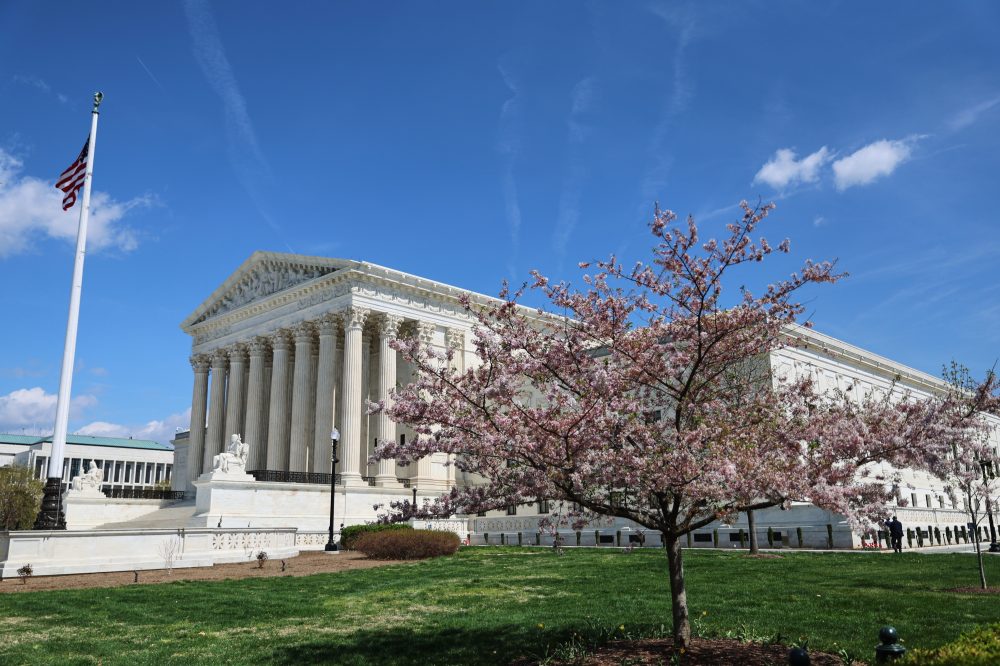
The Supreme Court will hear arguments April 27 regarding a Missouri case where a jury awarded $1.25 million to a man who developed non-Hodgkin lymphoma after applying Roundup in a St. Louis community garden. Jurors found Monsanto responsible for inadequate risk warnings.
Bayer argues federal pesticide regulations supersede failure-to-warn claims under state laws, since states cannot mandate additional labeling requirements.
Trump’s administration has supported Bayer, changing the stance of former President Joe Biden’s administration and creating tension with some Make America Healthy Again agenda supporters who oppose granting companies legal immunity from such claims.
The case has attracted significant attention. Agricultural groups, business associations, healthcare organizations, plaintiffs’ lawyers and state officials have collectively submitted approximately 30 separate legal briefs urging the high court to rule either for or against Bayer’s claim of federal legal protection.
Among these is a group of former EPA officials who argue state lawsuits should proceed. Roundup’s manufacturer never requested EPA to include cancer warnings on its labels, so the absence of such labeling “cannot be understood as an implicit rejection of such a warning” and should not prevent failure-to-warn lawsuits, their court filing states.
A St. Louis Circuit Court judge granted preliminary approval last month to a proposed settlement designed to resolve most pending and future failure-to-warn claims involving Roundup. This initiated a notification period allowing people to opt out of the settlement by June 4.
The proposed agreement requires Bayer to make yearly payments into a special fund for up to 21 years, totaling as much as $7.25 billion. Individual compensation amounts would differ based on Roundup usage patterns, age at diagnosis and non-Hodgkin lymphoma severity.
An agricultural, industrial or turf worker with extended Roundup exposure would receive an average of $165,000 if diagnosed with an aggressive form of the disease before age 60, according to the proposed settlement. Individuals diagnosed at age 78 or older would receive an average of $10,000.
The settlement would reduce risks from an eventual Supreme Court decision. Patients would be guaranteed settlement payments even if the Supreme Court favors Bayer. Additionally, Bayer would be shielded from potentially higher costs if the high court rules against it.