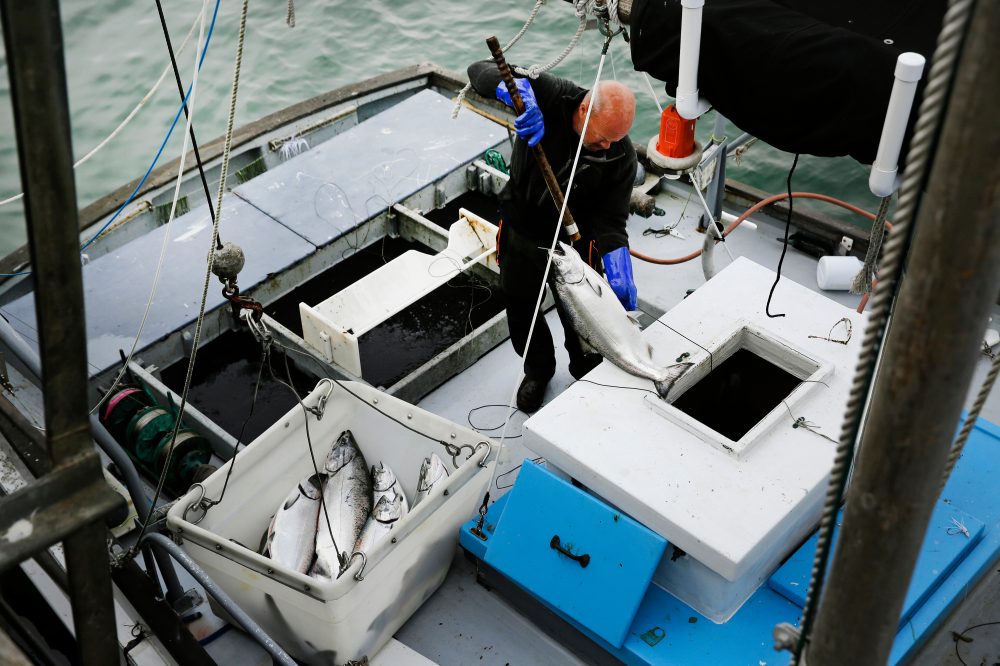

SACRAMENTO, Calif. — Federal fishery officials approved the reopening of California’s coastal waters to commercial salmon fishing on Sunday, marking the first time since 2022 that such operations will be permitted as fish populations show signs of recovery following recent wet winters that broke a prolonged dry spell.
The Pacific Fishery Management Council’s approval to resume both commercial and recreational salmon fishing represents a significant victory for California’s fishing industry, which has endured multiple seasons of closures due to declining fish numbers. The West Coast fisheries management body had prohibited commercial salmon operations off California for three consecutive years, though it did authorize limited recreational fishing last year for the first time since 2022.
While the council serves in an advisory capacity to the U.S. Secretary of Commerce, who holds final authority, the secretary typically endorses the council’s recommendations. An official announcement is expected to appear in the Federal Register shortly.
“It is great news for everyone — for the fishermen, for seafood lovers and the environment because it means that salmon populations are back to a much healthier state,” California Natural Resources Secretary Wade Crowfoot said ahead of the decision.
Federal officials report encouraging projections for both Chinook and coho salmon populations along the West Coast this year, although the upcoming season will include certain limitations.
According to the Golden State Salmon Association, recreational fishing has already commenced this month along approximately 50 miles of coastline extending south from San Francisco to the Mexican border. Northern sportfishing areas, including San Francisco waters, will open in June, while commercial operations will launch in May.
The council established restrictions limiting commercial fishing to select days and implementing catch quotas for salmon harvests.
Scientists attribute the dramatic decline in Chinook salmon numbers to extended drought conditions that interfered with the species’ upstream spawning migrations. Industry representatives also point to policies from the previous Trump administration that permitted increased water diversions from the Sacramento River Basin for agricultural use, further damaging fish populations by raising river temperatures and reducing water levels during critical periods when juvenile salmon travel from spawning areas to ocean waters.
However, recent winters with increased precipitation have restored cooler water conditions essential for salmon reproduction.
Crowfoot noted that salmon have also returned to previously uninhabited areas thanks to river restoration initiatives.
Following the 2024 removal of four hydroelectric dams along the Klamath River, salmon have resumed spawning in waters near the Oregon-California border for the first time in decades. California has subsequently eliminated additional barriers blocking salmon passage in other waterways, including Alameda Creek in the San Francisco Bay Area, according to Crowfoot.
Most ocean-caught salmon originate from California’s Klamath and Sacramento river systems. After emerging in freshwater environments, they typically spend three years developing in Pacific waters, where commercial fishermen harvest many, before returning to their natal spawning locations under optimal reproductive conditions. The fish die after completing their egg-laying cycle.
Maintaining robust salmon populations remains vital for both environmental and economic reasons, Crowfoot emphasized.
“Salmon are an iconic species in California and critically important to our tribal communities and our fishing sector,” he said.
Vance Staplin, executive director of the Golden State Salmon Association, primarily attributed recent low salmon numbers to state and federal water management practices. The fishing season suspensions significantly affected California’s fishermen, bait retailers, and fishing equipment manufacturers, he explained.
“People don’t understand how big of an industry salmon is to California,” he said.