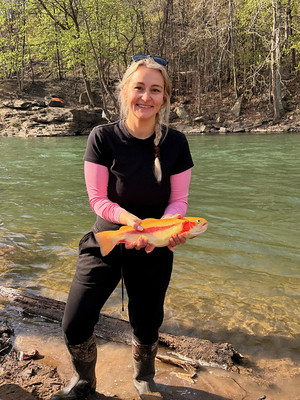

Beautiful spring weather is creating exceptional fishing opportunities across Maryland waters this week, with state Department of Natural Resources crews actively stocking trout throughout management areas. Among the highlights for trout enthusiasts are the distinctive golden rainbow trout that consistently bring joy to anglers.
Water Conditions Outlook: April 15-21
Chesapeake Bay waters are warming significantly as gamefish migrate toward spawning grounds. Monitoring buoys show main bay surface temperatures and river mouth readings now reaching the low to mid-50s. Smaller waterways maintain temperatures in the upper 40s to low 50s, though protected areas and sunny downstream sections can reach the low 60s on warm days.
These conditions create ideal environments for white perch (optimal spawning at 54-57 degrees) and hickory shad (55-65 degrees) as they advance toward downstream river sections preparing for spawning in coming weeks. Striped bass are actively moving to spawning locations in low-salinity bay areas and tidal rivers where temperatures range from 57-66 degrees.
River flows remain at typical levels statewide. Enhanced tidal movements are expected throughout the week following the April 17 new moon phase.
Upper Chesapeake Region
Hickory shad fishing continues to provide exciting catch-and-release opportunities at Conowingo Dam pool, Deer Creek mouth, multiple shoreline locations, and Octoraro Creek. Anglers find success with colorful sinking flies, shad darts, and reflective spoons, with preferred colors varying based on water clarity and light conditions.
White perch are arriving in the lower Susquehanna River, while warmer tidal waterways show post-spawning white perch activity. Prime locations include the Magothy, Chester, Gunpowder, Bush, Patapsco, and Sassafras rivers. Small jig heads paired with grass shrimp remain the preferred approach.
Blue catfish activity has increased in lower tidal river sections, with the lower Susquehanna, Chester, Gunpowder, Patapsco, and Magothy rivers offering excellent opportunities. Many catches in these areas are notably large specimens. Oily cut baits and scented options work effectively, though circle hooks are recommended due to potential striped bass encounters.
Striped bass catch-and-release fishing continues within designated areas, bounded by a line from Abby Point to Worton Point. Popular techniques include trolling barbless hook lures and jigging with large soft plastics.
Mid-Bay Waters
Striped bass catch-and-release fishing has performed well this month, with warmer temperatures making bay fishing more comfortable. Trolling and jigging along main channel edges attracts striped bass moving up the bay. Post-spawn fish are leaving the upper Choptank after two weeks of spawning activity, requiring careful catch-and-release practices.
White perch remain accessible in upper Choptank River and Tuckahoe sections, though anglers will encounter post-spawn fish moving downstream. Effective baits include 1/16-ounce or 1/8-ounce jig heads with grass shrimp, minnow pieces, or bloodworms. Bottom rigs work well in deeper areas.
Blue catfish are abundant in the Choptank River from Dover Bridge to Denton. Target deeper channel edges around river bends and deep shelves adjacent to channels. Most Choptank blue catfish weigh under 30 pounds, making them excellent table fare. Cut baits like gizzard shad, menhaden, or white perch prove effective, along with scented options.
Lower Bay Region
Post-spawn striped bass are moving down the Potomac River toward the bay, while spawning continues in the Patuxent and Nanticoke rivers. Earlier spawners are reaching lower bay areas, where menhaden schools along steep channel edges attract striped bass.
Trolling large barbless bucktails with chartreuse or white soft plastics remains popular for catch-and-release striped bass. Light tackle anglers enjoy success jigging with large soft plastics and fishing shallow bay shorelines.
Hickory and American shad fishing excels in the Potomac River below Chain Bridge, with low flows and warm temperatures creating ideal conditions. Shad respond to flashy spoons, shad darts, and bright sinking flies. Mason Branch of Mattawoman Creek also provides excellent hickory shad opportunities.
Blue catfish fishing is outstanding along main channel edges in lower bay tidal rivers. The Potomac River from Route 301 Bridge to Wilson Bridge holds abundant blue catfish. The Patuxent from Benedict through Jug Bay and Nanticoke near Sharptown also offer excellent fishing. Various baits work, including cut gizzard shad, menhaden, white perch, live bluegill, scented baits, chicken liver, cheese, and even processed foods.
White perch are completing spawning runs and returning to lower river sections. Target areas below spawning reaches in the Potomac, Patuxent, Nanticoke, Pocomoke, and Wicomico rivers. Light jig heads with grass shrimp, minnow, or bloodworm pieces work in confined waters, while bottom rigs excel in deeper areas.
Inland Fishing
Put-and-take trout waters in central and western regions top freshwater angling priorities this week. Beyond regular stockings, hatchery crews are releasing large breeder trout exceeding 26 inches. The trout stocking website provides real-time updates, with email subscribers receiving daily location notifications.
Upper Potomac River flows remain steady but seasonally low with clear water. Anglers make long casts to current breaks, boulders, and submerged ledges using swimbaits, crankbaits, and tubes for smallmouth bass.
Deep Creek Lake warming brings largemouth and smallmouth bass near rocky points, sunken timber, and emerging vegetation. Northern pike frequent cove mouths while yellow perch patrol steep shorelines.
Largemouth bass across Maryland are entering pre-spawn behavior patterns. Larger females hold in transition waters outside shallows while feeding aggressively. Smaller males occupy shallow areas, with some creating spawning beds. Various lures effectively target feeding females.
Rising temperatures increase Chesapeake Channa (snakehead) activity. Target sunny creek sides during afternoon hours using white paddletails, chatterbaits, and large minnows under popping corks or bobbers near shoreline structure.
Youth fishing rodeos offer excellent opportunities to introduce children to fishing, even for inexperienced adults. These events typically occur at small ponds and lakes designed for beginner success.
Ocean and Coastal Waters
Surf anglers report increasing black drum numbers along Assateague beaches. Sand fleas and peeler crab serve as top baits. Ocean City Inlet and Route 50 Bridge areas produce tautog on sand fleas and crab pieces, flounder on Gulp baits and squid strips, and mostly undersized striped bass for catch-and-release.
Flounder numbers are increasing, with ebbing tides producing optimal results in inlet channels. Striped bass provide excellent catch-and-release action at Route 90 and Verrazzano bridges using soft plastic jigs and paddletails. Most catches fall below the 28-inch minimum, though occasional fish reach the 28-31 inch slot.
Inshore and offshore wreck and reef sites hold tautog responding to crab baits, with flounder also available for targeted anglers.