The United States saw its meat production rise to 87.6 billion pounds in 2025, representing a 1% uptick compared to 2024 levels, according to new federal agriculture data.
The production figures encompass cattle, calves, hogs, and pigs raised across the nation, showing steady growth in America’s livestock industry.
This increase demonstrates the ongoing strength of the country’s agricultural sector, with farmers and ranchers maintaining robust output levels despite various market challenges.
The data provides insight into the scale of American meat production, which serves both domestic consumption and international export markets.
American farmers experienced improved market conditions last month as commodity values climbed, according to newly released federal statistics.
The U.S. Department of Agriculture’s National Agricultural Statistics Service reported that the March Prices Received Index increased by 1.1 percent compared to the previous month, signaling strengthening market conditions for agricultural producers nationwide.
This upward trend in farm commodity pricing represents positive economic news for rural communities that depend heavily on agricultural income. The monthly index tracks the average prices farmers receive for their crops and livestock at the first point of sale.
The pricing data comes from the NASS monthly survey of agricultural markets across the country, providing insight into the economic health of America’s farming sector.
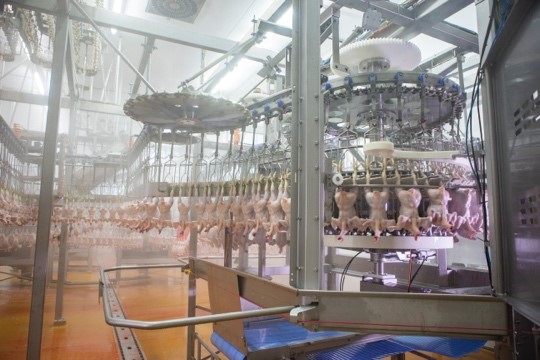
The United States poultry industry recorded substantial gains in recent reporting periods, with production and sales values jumping 16 percent compared to previous measurements, according to new data from federal agricultural officials.
The growth figures represent a significant boost for the nation’s chicken, turkey and egg producers, indicating strong market conditions and consumer demand across the sector.
The National Agricultural Statistics Service released the production value information as part of its regular tracking of major agricultural commodities nationwide.
Industry analysts view the double-digit percentage increase as a positive indicator for agricultural markets, particularly given ongoing economic uncertainties in other sectors.
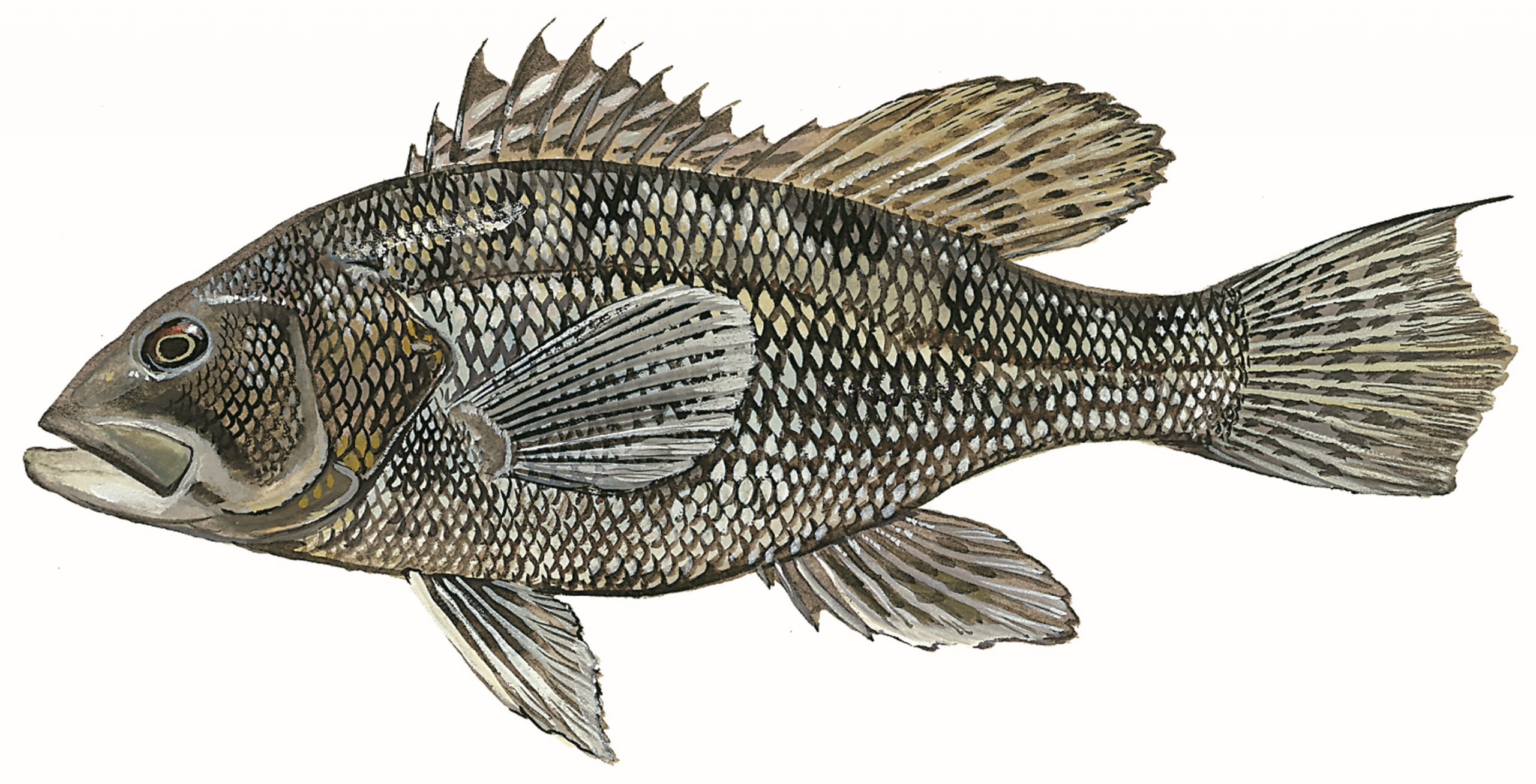
Delaware recreational anglers will now follow identical black sea bass fishing rules regardless of whether they cast their lines in state or federal waters, thanks to recent regulatory changes.
The Delaware Department of Natural Resources and Environmental Control updated its recreational fishing guidelines for black sea bass due to growing populations of the fish species, providing more opportunities for local anglers.
Following federal regulatory changes implemented this week, Delaware fishermen will operate under unified rules starting May 1, eliminating the previous distinction between state and federal water regulations for black sea bass fishing.
The National Milk Producers Federation is celebrating after the House of Representatives approved the 2026 Farm Bill, with the organization’s leadership calling it essential legislation for the nation’s dairy industry.
Gregg Doud, who serves as President and CEO of the federation, praised congressional members for their support of agricultural interests. “NMPF commends lawmakers who today stood up for farmers by passing legislation that’s critically important for dairy producers,” Doud stated.
According to Doud, the legislation that cleared the House includes several key provisions beneficial to dairy operations. The bill maintains agricultural safety net programs, keeps current conservation initiatives that benefit dairy and livestock operations, strengthens trade promotion efforts while safeguarding traditional food naming rights, acknowledges dairy’s nutritional importance, and backs animal health initiatives.
The dairy federation leader specifically recognized House Agriculture Committee Chairman GT Thompson and other congressional supporters for their efforts in advancing the measure through the lower chamber.
With House passage complete, the organization is turning its attention to the Senate. “We look forward to the Senate taking up the farm bill without delay. At a time where farmers face unprecedented challenges, Congress needs to provide the stability of a five-year, comprehensive farm bill,” Doud explained.
The federation plans to continue working with leadership from both political parties in both chambers of Congress to secure final passage and presidential approval of the agricultural legislation.
ARLINGTON, Va., April 30, 2026 — The National Grain and Feed Association (NGFA) expressed strong support today following the House of Representatives’ approval of farm legislation that provides crucial policy stability for American agriculture while renewing the U.S. Grain Standards Act (USGSA).
The organization praised House Agriculture Committee members and Chairman Glenn “GT” Thompson’s leadership for moving forward with the bipartisan measure that benefits farmers, grain handlers, and the entire agricultural supply network.
“A long-term farm bill is essential to maintaining a strong and competitive U.S. agricultural sector,” said NGFA President and CEO Mike Seyfert. “This legislation provides the certainty needed for businesses across the grain and feed industry to make investments, manage risk, and continue supporting a resilient and efficient supply chain.”
The association particularly welcomed an amendment renewing the U.S. Grain Standards Act, which maintains the federal grain inspection and weighing system that supports both domestic and international trust in American grain products.
“We are grateful to Congresswoman Mariannette Miller-Meeks for her efforts to reauthorize the U.S. Grain Standards Act, which is critical to avoiding disruptions in Official grain inspection services and reinforcing the reliability and integrity of the U.S. grain marketing system,” Seyfert said. “These authorities are foundational to maintaining global trust in U.S. agriculture. We thank Chairman Glenn ‘GT’ Thompson and Ranking Member Angie Craig for moving this amendment forward. NGFA also recognizes the leadership of Subcommittee Chairman Austin Scott and Ranking Member Sharice Davids for their work in advancing key provisions that support the grain and feed industry.”
The association highlighted that important elements of the farm legislation match industry goals, including preserving the existing Conservation Reserve Program (CRP) limits and boosting funding for the Market Access Program (MAP) along with other significant trade initiatives that enhance export possibilities and strengthen U.S. agricultural competitiveness.
The NGFA anticipates collaborating with Senate leadership and the administration to achieve final approval, President Trump’s signature, and successful implementation of the measure to ensure lasting advantages for the complete agricultural supply network.
WASHINGTON, D.C., April 30, 2026 – More than 60,000 pork producers across the United States are celebrating after the House approved the 2026 Farm Bill in a decisive bipartisan vote.
The Farm, Food, and National Security Act of 2026 passed by a margin of 224-200, delivering every policy priority requested by the National Pork Producers Council. Most notably, the legislation includes significant provisions addressing California’s Proposition 12 animal housing regulations.
“Today’s House farm bill passage is a testament to the power of rural America when we stand up for our farms and future generations with a unified voice,” said Rob Brenneman, NPPC president and pork producer from Washington County, Iowa. “We wholeheartedly thank our champions—House Agriculture Committee Chairman GT Thompson, Rep. Ashley Hinson, and others—for not backing down from the fight for what is right for rural America. He and congressional supporters on both sides of the aisle heard our plea to help America’s pork producers. Now, we look to the Senate to follow suit and pass this farm bill for us and others in agriculture without delay.”
Industry representatives warn that without addressing Proposition 12 in the final legislation, pork producers would face conflicting state regulations on animal housing that disproportionately burden smaller operations, limit veterinary decision-making, drive up food costs, and challenge state authority.
Beyond the California regulation relief, the 2026 Farm Bill addresses numerous other priorities important to pork producers:
The legislation provides funding to transform the Feral Swine Eradication and Control Pilot Program into a permanent initiative. It also boosts funding for agricultural trade promotion efforts, including the Market Access Program, Foreign Market Development Program, E. Kika de la Garza Emerging Markets Program, Technical Assistance for Specialty Crops, and Priority Trade Fund.
Additional provisions require the USDA to analyze how changes to the U.S.-Mexico-Canada Agreement might impact agriculture and establish an Agricultural Trade Enforcement Task Force to identify and address trade obstacles.
The bill expands the Animal Health Protection Act to enhance animal disease tracking capabilities and allows for new training centers under the Beagle Brigade Act. It also mandates comprehensive documentation of USDA’s capacity to shield producers from substantial financial losses during foreign animal disease outbreaks.
Cost controls are included through caps on administrative expenses for the National Animal Disease Preparedness and Response Program and the National Animal Health Laboratory Network, ensuring more funds go toward research. The legislation also directs USDA to develop research on insurance policies protecting pork producers from catastrophic disease-related financial losses.
The National Pork Producers Council and its member producers expressed gratitude to the House Agriculture Committee and full House for advancing this important legislation.
CHRISTIANA, Tenn. — At first glance, a solar installation in central Tennessee appears similar to countless others scattered across rural communities nationwide, featuring endless rows of dark panels capturing sunlight to produce clean electricity.
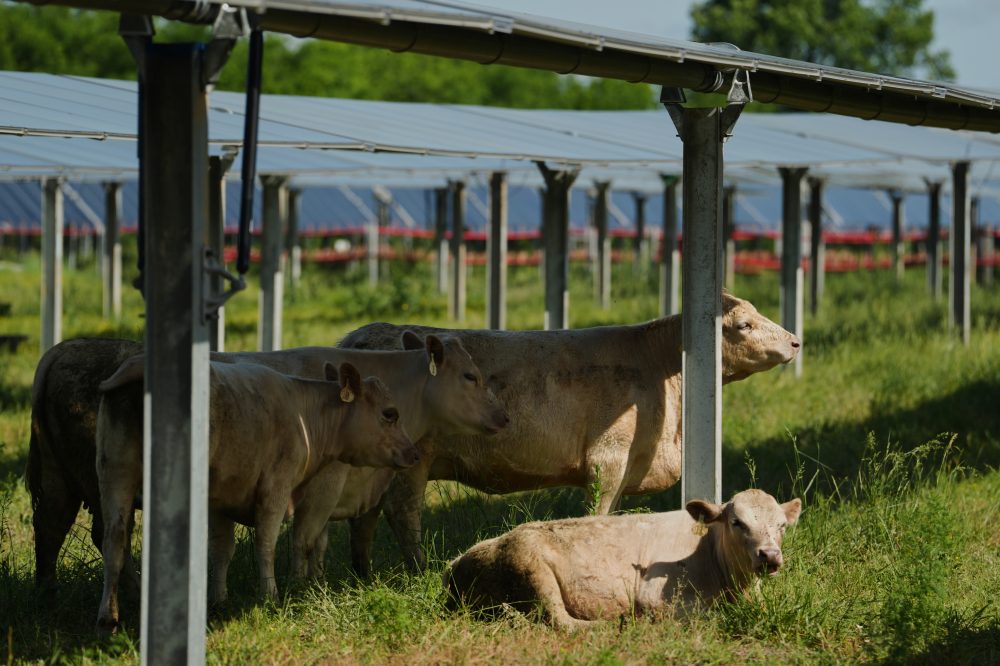
However, what sets this facility apart is the green pasture flourishing underneath the panels, where a small group of cattle peacefully grazes and seeks shelter from the sun.
The company behind this 40-acre installation near Nashville, Silicon Ranch, views cattle grazing as the newest development in agrivoltaics — a practice that has traditionally focused on cultivating crops or allowing sheep to graze around solar equipment.
Company officials unveiled this innovative project this week and plan to spend the coming year demonstrating that larger livestock can successfully coexist with solar operations. Success could accelerate new developments to satisfy increasing electricity needs from expanding data centers while avoiding carbon emissions and helping ranchers maintain their property and income sources.
“Solar is one of the most powerful tools we have for cutting emissions and … is cost-competitive with fossil fuels,” said Taylor Bacon, a doctoral student at Colorado State University who has studied ecological outcomes at solar grazing sites. “I think we’re starting to see enough research that, when you do it well, the land use can be more of an opportunity than a downside.”
While America has significantly more cattle than sheep, their substantial size creates obstacles at solar facilities, where expensive equipment and animals weighing over 1,000 pounds must both remain safe.
Traditional solar panels typically rotate to nearly vertical positions to maximize sun exposure, creating insufficient space below for cattle movement. Simply elevating all panels would be financially unfeasible due to increased steel requirements. Silicon Ranch addressed this by slightly raising panel height while creating specialized software that workers can use to position panels nearly flat during grazing periods, providing adequate room for cattle movement, explained Nick de Vries, the company’s chief technology officer.
Staff members move the livestock — currently consisting of 10 adult cows and their offspring — between different sections every few days, allowing panels in non-grazing areas to function normally and generate approximately 5 megawatts of power for Middle Tennessee Electric, a rural utility cooperative.
Company leaders expressed optimism that this technology will eventually gain wider acceptance.
“We know it works,” said de Vries. “But you need to prove it to other people.”
Solar developers typically find agricultural properties easier to develop compared to other locations. However, many farmers and local communities require convincing that solar grazing will provide benefits, given previous practices that damaged topsoil and permanently removed land from agricultural use.
“For many agricultural stakeholders, it is offensive to see high-quality farmland getting graded and piled when that’s a farm family’s legacy,” said Ethan Winter, national smart solar director at American Farmland Trust.
Winter recognizes potential for solar grazing partnerships to help farmers maintain productive land use while generating supplemental revenue.
“Agriculture is in a really tough spot right now, so maybe this is our moment where we can be helping states meet their energy needs and do that in a way that’s providing new opportunities for farmers,” Winter said.
Silicon Ranch expects to manage nearly 15,000 acres of grazed pastureland — primarily with sheep — by year’s end, building on five years of experience while collaborating with ranchers, farmers, university researchers and others to establish optimal practices for maintaining soil and animal health.
Their research reveals that grassland beneath solar panels retains greater moisture levels, improving drought resistance, according to Anna Clare Monlezun, a rancher and rangeland ecosystem scientist involved in the Tennessee project. Animals grazing in shaded conditions experience reduced heat stress, allowing better weight gain while requiring less water consumption.
“There are more win-wins than trade-offs,” she said.
Farmers typically receive approximately $1,000 per acre through solar land leases, representing roughly ten times their historical earnings from conventional farming, Winter noted. This additional income can help diversify operations, reduce debt and finance land purchases.
“I think you’ll start to hear more interest from farmers who are up against a serious financial wall right now and looking for income diversification opportunities that keep land in production,” Winter said. “We need and want to grow America’s energy capacity but not at the expense of our best farmland or at the expense of agricultural livelihoods.”
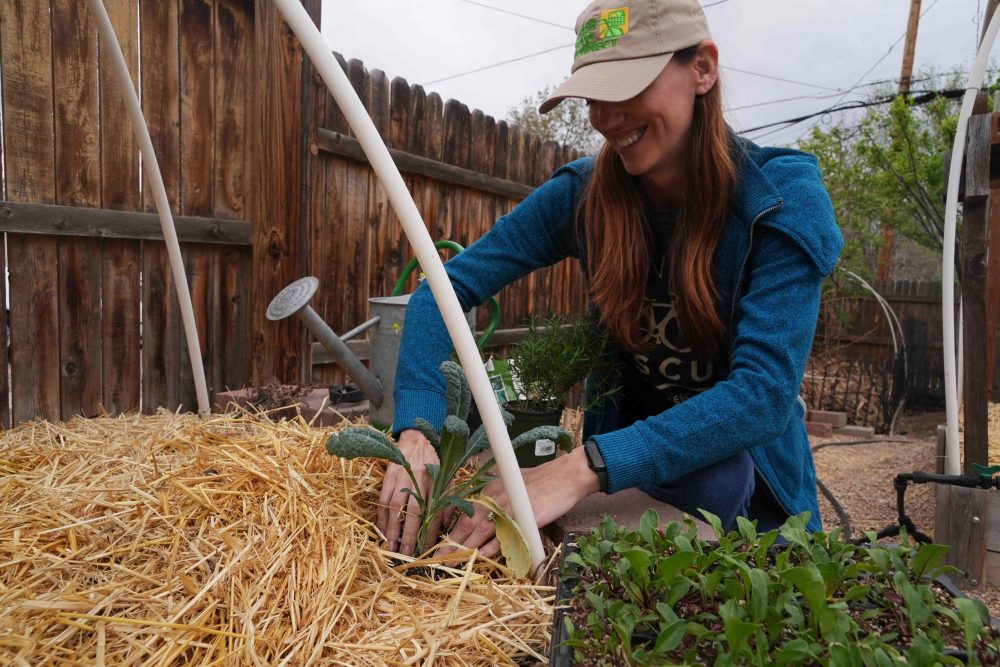
DENVER — Light drizzle began to fall as Heather Grady carefully moved young beet plants into her garden soil, though the brief precipitation wasn’t nearly enough to calm her concerns about the parched winter that has left water reservoirs dangerously low.
Facing widespread drought conditions across Colorado, Grady and her spouse Terrance started exploring methods to reduce water consumption in their home vegetable plot.
“We feel personally responsible, even though it’s not a problem we created,” Grady explained. She documents her sustainable gardening practices on the Homesteading in Denver Instagram page while committing to significant water reductions.
An unprecedented winter with minimal snowfall throughout the western United States translates to reduced snowmelt for the rivers and reservoirs that provide the region’s water supply. This reality has delivered an urgent warning to communities, farmers, and businesses that water conservation is no longer optional.
Municipal governments are enacting outdoor irrigation limitations. Denver Water implemented drought measures on March 25, marking their earliest restrictions on record. Salt Lake City has requested voluntary conservation from residents while requiring government facilities to reduce usage. Metropolitan areas including Los Angeles, Las Vegas, and Albuquerque maintain permanent seasonal watering regulations.
Food garden irrigation typically remains permitted under these restrictions within specific guidelines.
Even in areas without formal limitations, cultivating homegrown produce can be accomplished using water-efficient methods, including in arid desert environments. Agricultural specialists offer practical advice for getting started.
Greg Peterson, who developed The Urban Farm educational platform, recommends evaluating all available water sources, including unconventional options. Beyond municipal water, households can collect rainfall in containers, save water from vegetable washing or shower warming, Peterson explained. His preferred technique involves capturing air conditioner condensation by positioning containers beneath exterior drainage pipes.
Don Titmus, Peterson’s educational partner, employs multiple greywater collection strategies for his desert food garden and pollinator sanctuary in Mesa, Arizona. During summer months, Titmus showers outdoors, directing the runoff toward nearby plants. He also washes dishes in basins using environmentally safe soaps, then applies that water to his garden beds.
When precipitation does occur, capturing it for later use proves far more economical than purchasing municipal water, according to Jamiah Hargins, founder and executive director of Crop Swap LA, a nonprofit that cultivates food on vacant Los Angeles properties. The advantages extend beyond reducing utility costs.
“Rainwater has more oxygen than (tap water),” Hargins noted. “It actually makes the roots happier and the plants grow much better.”
Choosing plant varieties that flourish with natural local conditions represents one of the simplest water-saving approaches. Consider hybrid varieties developed for reduced water needs or heritage plants native to your region, suggests Noelle Johnson in her publication “The Water-Smart Garden.”
Healthy soil contains five elements: earth, internal air pockets, organic material, moisture, and living organisms. Quality soil requires less fertilization and irrigation than poor soil, Peterson explained.
Soil analysis can reveal deficiencies in essential nutrients, said Josie Hart, Associate Director of Sustainable Agriculture at Denver Botanic Gardens Chatfield Farms. Home gardeners can typically submit soil samples for evaluation through local public universities or private laboratories.
For initial soil preparation, break apart compacted earth using a tiller or spade, then incorporate compost or leaves to achieve a loose consistency. In subsequent seasons, simply add compost to the surface and allow earthworms to distribute nutrients naturally, Titmus advised.
Solar radiation and wind represent the main factors that dehydrate garden plants. Positioning crops near fencing, trees, or buildings can provide protective barriers, Hart noted.
Shade coverings also minimize evaporation for plants stressed by intense, sunny conditions by blocking approximately half the sunlight. These fabric or burlap materials can be suspended from hooks attached to structures or draped over frames positioned above the plants.
Johnson, the Arizona-based author, advocates for intensive vegetable cultivation, a technique that reduces wasted space compared to conventional row arrangements. This intensive approach places plants closer together in offset patterns, allowing mature plant foliage to create shade and decrease evaporation.
Direct ground planting also benefits water retention since raised beds face greater exposure to weather elements, Johnson explained.
Gardeners in dry climates might consider constructing waffle beds that utilize small raised soil ridges in grid formations around plants, Hart suggested. This traditional method used by Indigenous cultivators helps channel rainfall toward root systems.
“Creating a waffle bed is going to capture any moisture you have going and it will keep it there,” Hart stated.
Finally, mulching proves essential for soil protection by retaining moisture and preventing weeds, all experts emphasized. However, exercise caution with wood mulch, which can deplete nutrients from vegetables.
Employ irrigation methods that gradually deliver water directly into soil, specialists recommend. Options include soaker lines, drip systems, or drip tape. Any spray application will lose water to evaporation.
While choices may seem overwhelming, abundant online resources provide assistance, including complimentary drip tape workshops through urbanfarm.org. Local garden centers and water utilities frequently offer free or affordable educational programs.
Using these systems, water thoroughly but infrequently to encourage deep root development where moisture accumulates, Hart advised. Gardeners in hot, arid regions may believe frequent watering benefits plants, but this practice maintains shallow root systems. Hart suggests operating drip systems for at least one hour during summer, then waiting three days between watering sessions.
In Denver, adjusting the watering schedule represents one change Heather and Terrance Grady intend to implement this season. They plan to attempt deep watering three times weekly instead of brief daily applications.
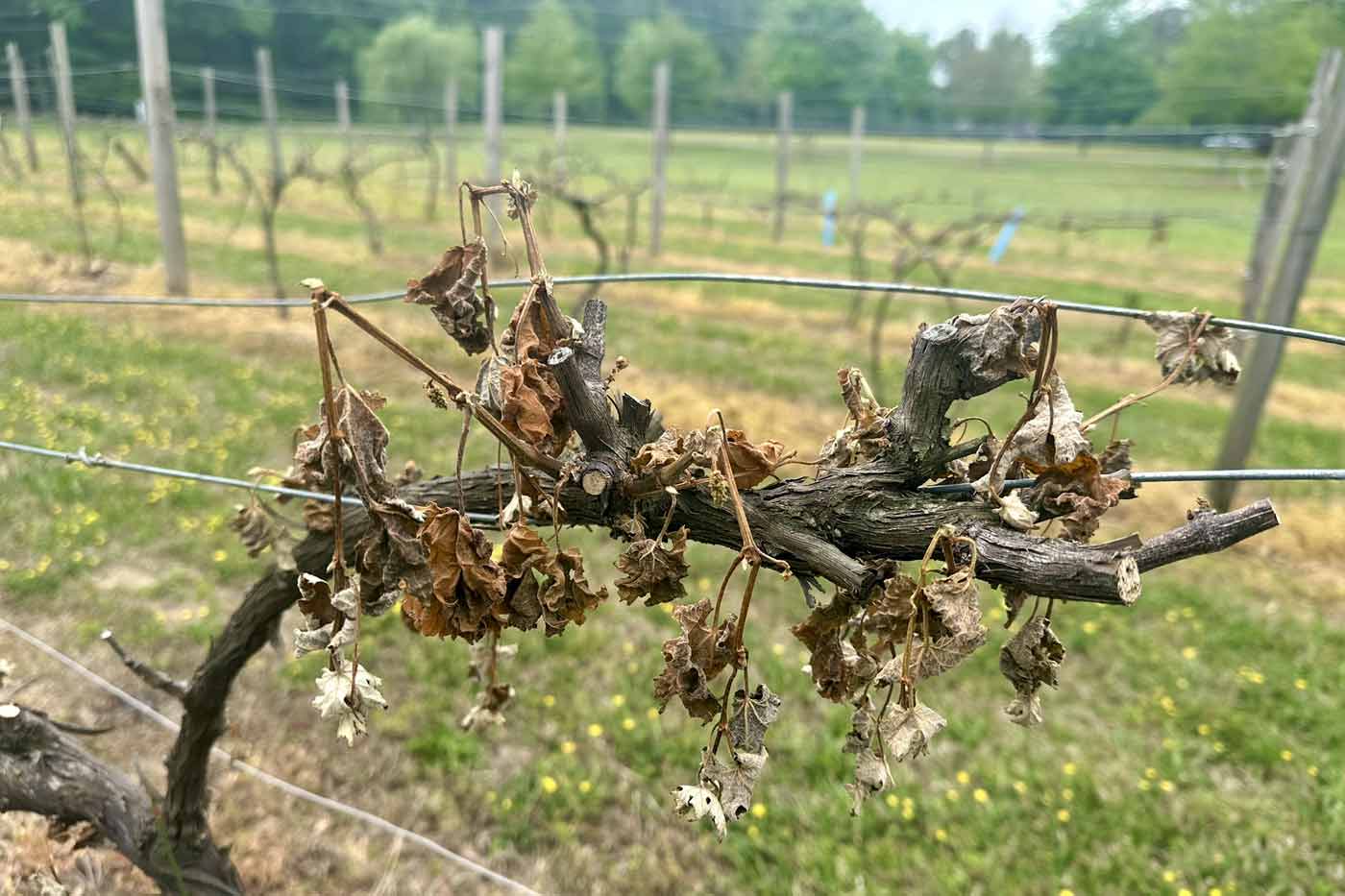
WINCHESTER—Fruit producers throughout Virginia are grappling with losses ranging from significant setbacks to complete devastation following an unusually harsh spring freeze season.
Farmers across the state endured unpredictable weather patterns during late winter and early spring, as periods of unseasonably warm temperatures accelerated growth in freeze-vulnerable crops before several damaging cold snaps arrived.
A freeze in early April caused near-total destruction to Virginia’s apple and peach harvests, with certain orchards in Winchester and Frederick County areas suffering complete crop failure.
“The freeze happened at the most sensitive time of flower development, which is full bloom,” said Sherif M. Sherif, Virginia Tech associate professor of pomology. “This has been the most devastating damage I’ve seen since I started with Virginia Tech.”
Although some trees began producing secondary blooms following the initial damage, another freeze on April 21 eliminated remaining hopes for this year’s harvest season. Only orchards located mainly in Central Virginia managed to survive.
Mark Sutphin, a Virginia Cooperative Extension agriculture and natural resources agent working in the Northern Shenandoah Valley, recently gathered with local orchard owners to discuss recovery strategies following what they called “one of the worst freeze events this region has ever seen.”
Despite efforts by numerous orchard operators to create warmth through propane torches, smudge pots, wind machines and additional frost protection methods, temperatures dropped about “10 degrees too cold” for these measures to be effective.
“The springtime is your one chance to set fruit,” Sutphin said. “Unfortunately, it’s going to be a very light crop for most of our growers.”
Vineyard operators faced comparable challenges on April 21, with wine grape operations statewide reporting between 30-90% shoot damage, according to Drew Harner, Virginia Tech assistant professor of viticulture.
“When we get below 29 degrees, that’s really when we start to see damage on primary shoots,” he explained. “A lot of fruit growers use different strategies to try to buffer the temperature in their vineyards, but those mechanisms weren’t enough.”
Harner noted it remains too early in the growing season to assess complete yield losses. Numerous producers are working intensively to promote secondary bud development, which generally yields approximately 30% of primary shoot production. Those who lost reserve buds are confronting even greater losses.
Numerous grape producers draw upon recollections of the “catastrophic” freeze that occurred around Mother’s Day in 2020 for context.
“In situations like these, you realize how resilient of a community it is, and how everyone is willing to say, ‘Alright, here’s how we’re going to move forward, and how can we help each other?’” Harner reflected. “And it’s only April—there’s still a lot of time for us to see where this year is going.”
While the extent of freeze damage to the state’s blackberry and blueberry harvests remains undetermined, consumers can anticipate abundant strawberries this season.
Following an intensive four-month period of extensive row cover applications, strawberry producers maintain substantial berry supplies ahead of favorable May weather forecasts—with certain early-season varieties even showing increased size and sweetness, according to Jayesh Samtani, Virginia Tech small fruit Extension specialist.
He urges consumers to support local producers.
“It’s always a very rewarding experience for growers to see customers, because their mind goes back to all the hard work that was put into growing those crops,” Samtani remarked.
“Focus on your local industry, your farm markets and pick-your-own operations—they need our support right now,” Sherif encouraged.
Sherif continues conducting research into possible mitigation strategies for tree fruit frost damage at the Alson H. Smith Jr. Agricultural Research and Extension Center. The research team seeks letters of support from producers as they pursue research grants and additional funding. Producers should contact their local Extension office for more information.
Furthermore, initiatives are in progress to gather information supporting applications for state and federal disaster relief funding. Any producers with crops affected by recent spring freezes are urged to report potential damage to their local Extension office.
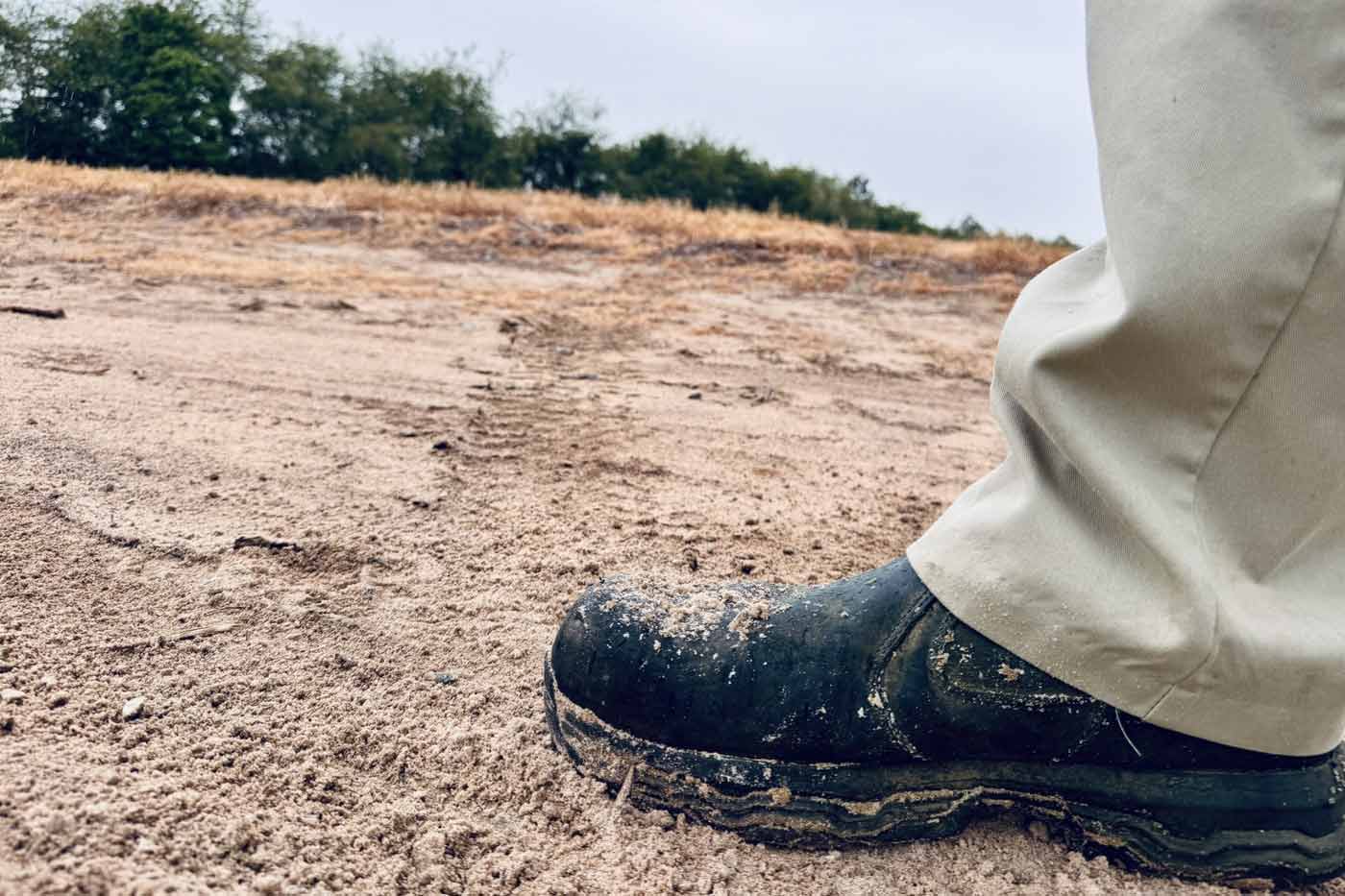
ZUNI, Va.—Virginia farmers are grappling with severe drought conditions that have brought spring planting operations to a standstill across the state.
The U.S. Drought Monitor has classified conditions as “severe” throughout Virginia, with southeastern counties experiencing extreme drought levels. The Virginia Department of Environmental Quality, working alongside the Virginia Drought Monitoring Task Force, has issued drought warning advisories covering 83 counties and 31 cities.
Agricultural equipment remains parked as farmers wait for adequate moisture to plant corn, cotton, peanuts, and soybeans. March 2026 ranked as Virginia’s 17th driest March on record since 1895.
“In my lifetime as a grower, I haven’t seen it like this,” stated Scott Sink, President of Virginia Farm Bureau Federation and a Southwest Virginia farmer. “Planters are sitting still, and there’s no significant rain forecast anytime soon. Combined with the recent frost and high input prices, these drought conditions may have some farmers facing tough choices this season.”
Taylor Hubbard, director of government affairs for the Virginia Grain Producers Association, reported that Central Virginia soils contained sufficient moisture for corn planting in recent weeks.
“But planting soybeans went full stop because of persistent drought conditions last week in particular,” Hubbard explained on April 28. “If we have a little rain in the coming week, I think soybeans will go into the ground. But if we don’t get anything in the next 10 days—red flags will be flown.”
Cotton and peanut producers continue waiting for improved conditions before beginning their planting operations.
Southampton County farmer Gary Cross, who cultivates cotton, peanuts, corn, wheat, and soybeans, has weathered numerous Virginia summer droughts throughout his career.
“But it’s highly unusual in springtime,” Cross noted. “And the worst I’ve ever seen.”
Cross, who serves central Virginia farmers on the VFBF board of directors, refuses to plant without proper soil moisture for seed germination, saying he’s “not putting out $120 an acre’s worth of cotton seed” under current conditions.
“If I had a crystal ball, I’d see us planting on through May,” Cross predicted. “And if peanuts are planted too much later, you risk an early fall frost when it’s time to dig.”
Some producers who began planting corn and soybeans early have succeeded, while others now wait for rainfall. Farmers with irrigation systems have activated them, though Hubbard noted the state lacks extensive irrigated cropland.
“Droughts have a severe impact on total farm income, especially for a row crop producer,” Hubbard emphasized.
Essex County farmer Jay Hudley suspended spring planting two weeks ago due to drought conditions. His remaining corn and soybean acreage spans counties throughout the Northern Neck and Middle Peninsula regions.
This April represents the driest conditions Hudley can recall.
“My father is 89, and he doesn’t remember it ever being this dry this early either,” Hudley said.
Meanwhile, Hudley irrigates his corn and small grain fields while monitoring unusually high water salinity levels.
“There are no beans yet, but if it doesn’t hurry up and rain, we’ll be pumping water on that too,” he explained. “Some wheat fields are OK, and others aren’t looking good. But, if we get some rain, I could make half a crop.”
The combination of drought and freezing temperatures has devastated Hudley’s barley crop, which “isn’t expected to yield a bushel an acre.” Hay production also faces significant challenges.
While rainfall will eventually arrive, Hudley prefers “sooner than later.” Should dry conditions persist, he plans concentrating efforts on crops under irrigation systems as field edges suffer from drought stress.
Hudley concluded with his remaining strategy for the season: “Just get on my knees and pray.”
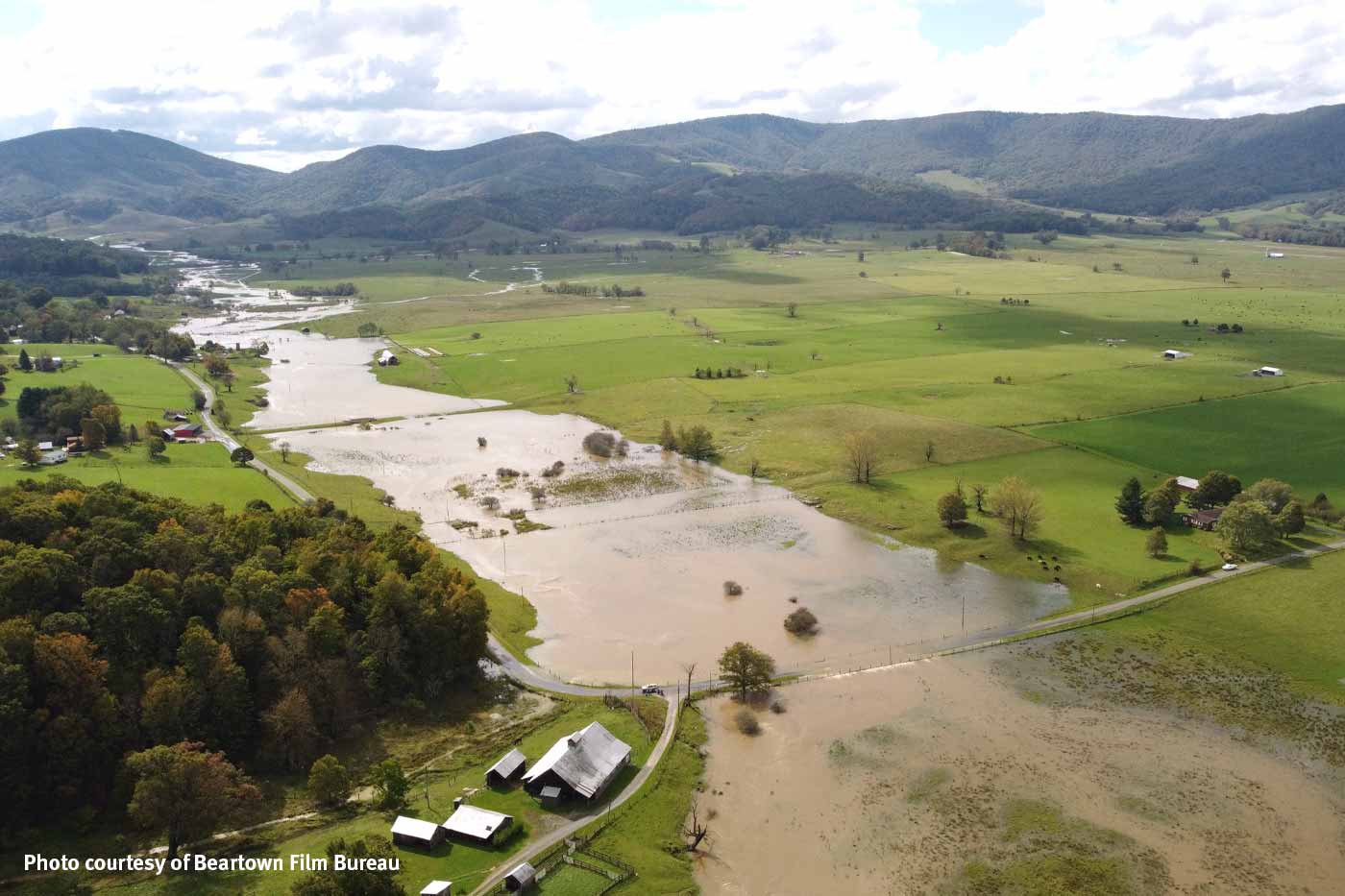
RICHMOND—Virginia has reopened its Farm Recovery Block Grant Program for agricultural producers and timber owners whose operations suffered damage from Hurricane Helene.
Governor Abigail Spanberger announced the second chance for affected farmers and landowners to seek assistance if they failed to submit applications during the original recovery funding period.
The powerful Category 4 hurricane struck northern Florida and devastated six states in late September 2024, unexpectedly hitting Southwest Virginia and causing approximately $159 million in agricultural and forest damage. The storm’s fierce winds and flooding knocked down trees, demolished farm fencing, and inundated cropland while washing away livestock, equipment, and supplies. Federal disaster assistance totaling nearly $61 million was provided by the U.S. Department of Agriculture to Virginia farmers for infrastructure, timber, and income losses related to Helene.
Many qualified farmers and forestland owners failed to seek relief funding during the initial application phase. Officials decided to reopen the grant application system to guarantee all eligible producers and timber owners can access disaster assistance.
The Virginia Farm Recovery Block Grant Program application window opens April 27 and ends July 1. Applications are available for producers throughout 21 counties and six independent cities that received federal disaster declarations because of the hurricane.
“I would encourage any farmer who is negatively impacted by Hurricane Helene to apply for the recovery block grant funds if they haven’t already,” said Tony Banks, senior assistant director of agriculture, development and innovation at Virginia Farm Bureau Federation.
The Virginia Department of Agriculture and Consumer Services manages the grant program alongside the Virginia Department of Forestry and Virginia Cooperative Extension.
“Agriculture and forestry are major economic drivers for the Virginia communities impacted by Helene,” said secretary of agriculture and forestry Katie Frazier. “The Virginia Farm Recovery Block grant provides direct funding for losses not covered by other federal disaster assistance programs. Reopening the Virginia Farm Recovery Block Grant is vital to the rebuilding process by ensuring all eligible producers have ample opportunity to apply for this valuable assistance.”
Farmers and timber owners with documented agricultural or forest losses can find additional information by clicking the grant alert banner at vdacs.virginia.gov or email [email protected] for general inquiries.
VDACS will conduct an in-person training session at 10 a.m. on May 1 at the Southwest Virginia Higher Education Center in Abingdon to help producers with the application process. A virtual session is also available through registration at vdacs.virginia.gov.
Media contacts include Banks at 804-290-1114 and Michael Wallace, VDACS communications, at 804-786-1904.
Listen to the Morning Delmarva Farm Report Update — April 30, 2026
DELMARVA — House Agriculture Committee Chairman Glenn Thompson says federal lawmakers will likely approve the Farm, Food, and National Security Act today. Thompson told agricultural reporters yesterday he expects the bill to pass the House by noon. The comprehensive legislation sets policy direction for the nation’s ag sector and food security over the coming years.
Agronomy
A crop nutrition specialist is reminding farmers that yield potential depends on addressing the weakest link in soil fertility. Tryston Beyrer with The Mosaic Company says it’s like a barrel with staves. Harvest potential equals whatever the shortest stave is. That concept’s called the Law of the Minimum.
Markets
Soybeans gained ground yesterday on strength in soybean oil and crude oil. Technical traders drove buying activity higher as soybean oil hit new peaks on favorable crush margins. Drier weather in the forecast should help accelerate planting operations across growing regions.
At Laurel Grain Company in Laurel, Delaware, soybeans are bringing $11.39 per bushel for July delivery. Corn’s at $5.23 for July.
Forecast
Expect mostly sunny skies today with highs near 65° and northwest winds 5 to 10 mph. Tonight stays mostly clear with lows around 46°. Friday turns sunny with highs near 62°, but rain chances return Friday night into Saturday.
This article is based on the Delmarva Farm Report Update Morning Edition, April 30, 2026. Hosted by Tom Bradley.
Global rice production is facing unprecedented challenges as the ongoing conflict in Iran disrupts critical supply chains and the emerging El Nino weather pattern threatens harvests across Asia’s major growing regions.
The world’s most widely consumed grain faces potential shortages as agricultural producers reduce planted acreage due to fertilizer scarcity and escalating fuel expenses stemming from the Iranian conflict. Weather experts warn that El Nino conditions will bring increased heat and drought to key rice-producing areas.
Rice serves as a cornerstone of international food security, with even minor supply interruptions creating widespread effects that drive up costs and burden family finances, especially for budget-conscious consumers throughout Asia and Africa. The United Nations Food and Agriculture Organization projected in April that rice production would grow 2% to reach record levels in 2025/26.
The Iranian conflict’s impact extends to major exporting nations Thailand and Vietnam, as well as import-dependent countries like the Philippines and Indonesia, according to agricultural producers and commodity traders. Military actions have restricted fuel and fertilizer movement through the Strait of Hormuz, a critical maritime passage linking Gulf nations to international markets.
Small-scale farmers throughout Southeast Asia are experiencing increased pressure as El Nino weather conditions prepare to bring hotter and more arid environments to the region during the year’s latter half.
“Farmers have already started planting rice in some countries and are using fewer inputs because prices have gone up,” said Maximo Torero, chief economist at the UN FAO. “We are going to see a tighter global supply situation in the second half of the year and early next year.”
Historical precedent shows the severity of rice market disruptions. In 2008, export limitations from major suppliers caused prices to more than double to approximately $1,000 per metric ton, sparking civil unrest in multiple nations. More recently, supply constraints from 2022 to 2023, worsened by India’s export limitations, elevated prices and triggered widespread panic purchasing.
Rice shipments currently encounter significant supply chain obstacles.
“Logistics have become a nightmare, especially in Asia as there is shortage of polypropylene bags, limited truck availability to move rice to ports and shipping itself has been disrupted,” said a Singapore-based trader at a top global rice merchant, who asked to remain unidentified as they are not authorized to speak to media.
Although fertilizer shortages and dry conditions are already reducing yields from smaller harvests currently being gathered in Southeast Asia, the upcoming crop season will likely experience more substantial decreases.
India, Thailand and the Philippines begin planting their primary crops during June and July, while Vietnam and Indonesia are currently seeding their second-season harvests.
The majority of Asian rice producers cultivate two or three annual crops.
Sripai Kaew-Eam, a 60-year-old farmer in Thailand’s Chai Nat province about 151 km (94 miles) north of Bangkok, explained that elevated fertilizer and fuel costs have increased production expenses to approximately 6,000 baht ($183.99) per rai (0.4 acre), up from around 4,500 to 5,000 baht for the previous crop, while the price she receives for the unhusked rice she harvests is about 6,200 baht per metric ton.
Fertilizer costs have climbed to 1,000 to 1,200 baht per bag, from 850 baht, compelling her to reduce usage by half.
“Fertiliser prices are high, fuel prices are high,” she said.
The Philippines, which imports more rice than any other country, confronts comparable challenges.
“Some farmers are now saying they may not plant or will reduce fertiliser use, which would inevitably cut production,” said Arze Glipo, executive director of the Integrated Rural Development Foundation.
The nation’s harvest could decline by up to 6 million tons from its standard 19 million to 20 million ton output.
“That would leave the Philippines in a precarious position, as imports are also uncertain due to export restrictions, making it extremely difficult to cover any production shortfall,” Glipo said.
In Indonesia, fertilizer availability isn’t problematic, but El Nino conditions are anticipated to reduce production.
Indonesia’s statistics bureau predicts the rice harvest area during the March to May timeframe will contract by 10.6% to 3.85 million hectares (9.5 million acres), while unhusked rice production will decrease 11.12% to 20.68 million tons.
Despite supply concerns, the world maintains substantial rice reserves following years of exceptional harvests, with India, the globe’s largest exporter, storing a record 42 million tons or roughly one-fifth of worldwide stockpiles, according to U.S. Department of Agriculture statistics, providing a buffer against any decline in global production.
Current prices for most rice varieties remain stable but will probably increase even if the Hormuz situation receives immediate resolution, the FAO’s Torero stated.
Reopening the strait quickly would prevent a major supply crisis, but “if we don’t reopen this in the next two to three weeks, the situation is going to get pretty serious,” he said.
Federal agriculture officials are seeking to extend their authority to collect information related to combating a harmful crop pest that threatens farming operations across the country.
The Animal and Plant Health Inspection Service has announced its plans to request both revisions and an extension of their current approval to gather data connected to pale cyst nematode regulations. This move follows requirements under the Paperwork Reduction Act of 1995.
The information collection focuses on rules governing how regulated materials can be transported between states, with the goal of preventing the harmful pest from spreading to areas that are currently unaffected.
Pale cyst nematodes pose a significant threat to agricultural crops and can cause substantial economic damage to farming communities when they establish themselves in new regions.
ARLINGTON, Va. — A major agriculture trade organization is celebrating congressional action on a funding bill that would bolster America’s grain and feed sectors.
The National Grain and Feed Association announced its support on April 29, 2026, after the House Appropriations Committee moved forward with the fiscal year 2027 agriculture appropriations measure.
The proposed legislation contains multiple provisions aimed at enhancing the dependability, openness, and worldwide competitiveness of America’s grain and feed operations, according to the association.
Key elements of the bill would require the U.S. Department of Agriculture to create and execute backup plans ensuring grain inspection and weighing services continue during future disruptions. The measure emphasizes clear operational procedures and input from stakeholders, including export elevators and officially designated agencies.
The legislation also promotes better collaboration between USDA’s Federal Grain Inspection Service and the Food and Drug Administration to speed up approvals for grain reconditioning plans, boosting efficiency at export locations when grain shipments need corrective measures.
Additional provisions highlight the critical nature of uninterrupted grain terminal operations for U.S. exports and reinforce the need for dependable data by instructing USDA’s National Agricultural Statistics Service to preserve important reports and surveys while giving Congress advance warning before major changes to data gathering programs.
The bill also acknowledges the significance of the FDA’s Center for Veterinary Medicine to America’s food supply by ensuring adequate funding for its operations.
“NGFA commends the House Appropriations Committee for advancing an agriculture appropriations bill that addresses several top priorities for the grain and feed industry,” said NGFA President and CEO Mike Seyfert. “From safeguarding the continuity of export inspection services to maximizing coordination across federal agencies and preserving essential market data, these provisions help ensure that U.S. agriculture remains competitive, reliable, and resilient in the global marketplace.”
The association indicated it plans to continue collaborating with both chambers of Congress as the legislative process moves forward.
Listen to the Evening Delmarva Farm Report Update — April 29, 2026
DELMARVA — Soybean futures climbed higher Wednesday, fueled by strength in both soybean oil and crude oil markets. Investment funds and technical traders drove purchasing activity, pushing soy oil to new peak levels on favorable crush margins.
Weather forecasts showing drier conditions ahead should help farmers accelerate planting operations across growing regions. National soybean planting progress continues to advance despite some weather-related delays.
Policy
House Agriculture Committee Chairman Glenn Thompson said he’s confident lawmakers will pass the Farm, Food, and National Security Act Thursday. Thompson told agricultural media at the National Association of Farm Broadcasters Washington Watch event he expects the bill to clear the House by noon Thursday. The legislation sets major policy direction for the nation’s agricultural sector over the coming years.
Markets
June live cattle finished up $1.75 at $255.25. August live cattle gained $0.62 to close at $249.72. Feeder cattle moved lower, with May contracts down $0.22 at $371.50.
For local grain, Laurel Grain Company in Laurel, Delaware is paying $5.23 per bushel for corn with July delivery. Soybeans at Laurel are bringing $11.37 for July.
Forecast
Showers and thunderstorms are expected tonight with lows around 50°F. Thursday looks mostly sunny with highs near 66°F and northwest winds at 10-15 mph.
This article is based on the Delmarva Farm Report Update Evening Edition, April 29, 2026. Hosted by Tom Bradley.
Excitement is building among Chesapeake Bay fishing enthusiasts as new regulations take effect this Friday, May 1st, allowing anglers to harvest striped bass within specific size limits for the first time this season.
Fishermen will be permitted to keep one striped bass daily that measures between 19 and 24 inches in designated Bay waters stretching from the Brewerton Channel south to the Virginia border. The harvest zone excludes most bays, tributaries, creeks and rivers, with exceptions for Tangier and Pocomoke Sounds and Potomac River tributaries below the Nice Memorial Bridge on U.S. 301. Spawning rivers remain completely closed to striped bass fishing.
Trolling restrictions remain in place, limiting anglers to six lines with barbless hooks and prohibiting stinger hooks.
Meanwhile, freshwater fishing continues to provide excellent opportunities, with trout fishing remaining strong and both largemouth and smallmouth bass offering good action. Young anglers are particularly enjoying family fishing outings during the current fishing rodeo season.
Water Conditions for April 29 – May 5:
Bay surface temperatures and river mouth readings are steady around 60 degrees, according to monitoring buoys. Smaller waterways are also maintaining temperatures in the 60s, though shallow areas and downwind locations can reach the upper 60s on sunny days. These warmer zones in low-salinity areas remain prime spots for hickory shad, which prefer temperatures between 55-65 degrees during their spawning period over the next few weeks.
Most Maryland rivers and streams are running below normal levels. Bay and river clarity remains average throughout most Maryland waters. Strong tidal currents are expected all week due to the full moon on May 1st.
Upper Chesapeake Bay Conditions
The striped bass spawning season near the Susquehanna River mouth is wrapping up, with post-spawn fish beginning their journey toward New England waters. Once these fish move south of the line between Abbey and Worton points, catch-and-release fishing becomes available. Starting May 1st, anglers south of the Brewerton Channel may harvest one striped bass daily within the 19-24 inch range.
Trolling and jigging along the main channel are proving effective this week. Light tackle enthusiasts are finding success in shallow Bay shoreline waters using paddletails, jerkbaits and glide baits.
Hickory shad continue offering catch-and-release opportunities in the lower Susquehanna River, Octoraro Creek, and near Deer Creek’s mouth, though numbers remain well below historical levels. Colorful flies, shad darts, and small gold and silver spoons are working well under various conditions.
Largemouth bass fishing remains strong at the Susquehanna Flats grass beds and area tidal rivers, with Chesapeake Channa (northern snakehead) also active in these waters.
White perch are entering the lower Susquehanna River, with larger females now arriving. Small jig heads tipped with grass shrimp or minnow pieces are effective, as are bottom rigs baited with grass shrimp or bloodworm pieces.
Blue catfish action is outstanding in upper Bay tidal rivers this week, with some of the largest specimens coming from the Conowingo Dam pool and open Bay waters. The Chester River holds particularly high blue catfish populations. Cut bait and scented baits work well whether fishing from boats or shore.
Middle Bay Report
Post-spawn striped bass are moving down from upper Bay spawning areas, while fish have been leaving the Choptank River for weeks. Middle Bay temperatures are holding at or slightly above 60 degrees.
Light-tackle anglers are enjoying excellent catch-and-release fishing in Bay shallows and will soon be able to harvest slot-sized fish. Exceptionally clear water conditions due to limited rainfall are creating ideal sight fishing opportunities. Topwater lures provide the most excitement, while paddletails remain another top choice.
Channel edge trolling will become popular once harvest season begins, but anglers must remember the six-line limit with barbless hooks and no stingers. When using bait, non-offset circle hooks are required and eels are banned.
White perch are moving into lower tidal river sections and transitioning to summer habitat. In deeper waters, small jigs with grass shrimp or minnows work well, along with bottom rigs using bloodworm pieces. Around structure like docks, points, jetties and oyster bars, simple bottom rigs with grass shrimp or bloodworms are popular.
The Choptank River holds good blue catfish numbers, with all regional tidal rivers and creeks supporting populations to varying degrees. The area between Choptank town and Denton typically holds the highest concentrations due to optimal salinity levels.
Lower Bay Fishing
While many larger post-spawn striped bass from the Potomac, Patuxent and Nanticoke rivers have moved through, smaller males continue lingering in the area. Light-tackle casting with topwater and paddletail lures works well in shallow Bay waters, while jigging succeeds in deeper channels.
Traditional striped bass locations include the steep channel edge on the Bay’s east side from Buoy 76R to 72B, plus Cove Point, Cedar Point, Point Lookout and Smith Point on the western shore. In the Potomac, the steep edge from St. Georges Island to Piney Point consistently produces fish, as does the Route 4 Bridge area on the Patuxent River.
White perch are present in lower tidal river sections and steadily moving toward summer areas. Black drum are being caught in Tangier Sound using peeler or soft crab baits.
Hickory shad and American shad spawning runs in the Potomac River near Washington D.C. have been hampered by extremely low water levels this month. Anglers are finding better catch-and-release action near the Cain Bridge, while Fletchers Landing pool waters have been unproductive. Expected rainfall later this week may improve this fishery significantly.
Blue catfish are providing excellent action in the Potomac River from the Route 301 Bridge to Wilson Bridge, with better fishing typically found upriver due to higher salinity levels. The Patuxent River above Benedict to Jug Bay and the Sharpstown area on the Nanticoke offer good blue catfish opportunities.
Freshwater Opportunities
Trout fishing continues benefiting from weekly stockings in put-and-take and special regulation waters. As temperatures warm, stockings will become less frequent and focus on the cooler western regions. Low stream flows due to limited rainfall are creating challenging trout conditions.
Largemouth bass are beginning to spawn statewide, though western areas typically start later due to cooler conditions. The catch-and-release season continues until June 16th, when harvest season opens for both tidal and non-tidal waters with a 12-inch minimum and five-fish daily limit. Targeting larger females in transition waters outside shallow spawning areas often proves more productive than focusing on males near spawning beds.
Chesapeake Channa remain active in areas where tidal largemouth bass are found. White paddletails excel when fishing near grass or structure. Developing grass beds will provide summer cover, while fishing large minnows under bobbers or popping corks in open water works well during spring.
Smallmouth bass have been spawning in the upper Potomac River and Deep Creek Lake for several weeks. The upper Potomac continues experiencing low flows with clear water, requiring long casts with light line toward emerging grass beds, current breaks and deep pools. Tubes, swimbaits, crankbaits and craw jigs all prove effective.
Crappie completed spawning in late March and early April and now hold near structure. Marina docks, fallen trees, bridge piers, sunken wood and brush attract crappie in both tidal and non-tidal waters. Small minnows under slip bobbers remain popular, though marabou jigs also work well.
Youth fishing rodeo events continue providing excellent opportunities for young anglers to find success in safe, family-friendly environments.
Atlantic Ocean and Coastal Areas
Surf anglers are experiencing a strong black drum run along Assateague and Ocean City beaches this week, with sand fleas and clams serving as preferred baits. Large striped bass and bluefish are also moving along beaches during their northward migration. Cut menhaden, particularly the head section, resists damage from clearnose skates and dogfish better than other baits.
At Ocean City Inlet and Route 50 Bridge areas, anglers are catching and releasing large striped bass by drifting cut bait during evening and nighttime hours. Smaller striped bass are being caught during early morning and evening using paddletails and soft plastic jigs. Tautog are active near jetty rocks, bulkheads and bridge piers, taking sand flea baits. Flounder continue moving through the inlet toward back bay waters.
Channels leading from the inlet are producing the best flounder action this week. Striped bass continue providing excellent catch-and-release opportunities during morning and evening hours near the Verrazzano and Route 90 Bridge piers, with paddletails and soft plastic jigs being the preferred methods.
Charter and private boats fishing inshore and offshore wreck and reef sites are finding good numbers of tautog and flounder, with crab pieces being the most effective bait.
New statistics from the U.S. Department of Agriculture show positive trends in the nation’s poultry production sector, with key indicators pointing to expanded operations across the country.
According to the latest federal report, the number of broiler-type eggs placed in incubators nationwide has increased by 3 percent compared to previous figures. This uptick suggests producers are preparing for higher future output of meat chickens.
Meanwhile, the placement of young broiler chicks has also grown, rising by 2 percent across United States facilities. This measurement tracks when newly hatched birds are moved to growing operations where they will be raised for meat production.
These statistics provide insight into the health and direction of America’s poultry industry, which supplies chicken meat to consumers nationwide. The increases in both egg setting and chick placement indicate producers expect continued demand for their products.
New data from the United States Department of Agriculture shows a modest drop in shell egg production nationwide, with numbers falling 3 percent below last year’s figures.
The decline was documented in the latest report from the USDA’s National Agricultural Statistics Service, which tracks various agricultural commodities and production levels across the country.
The decrease in shell egg production reflects ongoing challenges within the poultry industry, which has faced various pressures affecting output levels in recent months.
Listen to the Morning Delmarva Farm Report Update — April 29, 2026
DELMARVA — Agriculture Secretary Brooke Rollins announced Tuesday that she expects substantial expansion in U.S. fertilizer manufacturing within the next 2 years. However, industry analysts caution that even triple-digit percentage gains in domestic production may not fully shield farmers from future fertilizer price swings.
Disease Detection
Delaware confirmed its first-ever case of Chronic Wasting Disease in a wild white-tailed deer. The Delaware Division of Fish and Wildlife announced the positive test results from a deer harvested in Sussex County during routine surveillance. A second deer is awaiting final confirmation from USDA labs. The disease spreads through body fluids and can affect animals as young as 6 months old. There is no treatment or vaccine.
Markets
Tuesday’s grain futures closed mixed. May corn gained $0.04½ to settle at $4.65¼. Chicago May wheat rose $0.27½ to $6.49. May soybeans dropped $0.04¼ to $11.73.
At Laurel Grain Company in Laurel, Delaware, corn for July delivery is bringing $5.22 per bushel, while soybeans for July are $11.36.
June live cattle jumped $4.55 to $253.55, while June lean hogs fell $0.20 to $101.97.
Forecast
Expect mostly cloudy skies today with highs near 61°F and a chance of rain showers later. Showers and thunderstorms are likely tonight. Thursday looks mostly sunny with highs near 64°F and northwest winds around 15 mph.
This article is based on the Delmarva Farm Report Update Morning Edition, April 29, 2026. Hosted by Tom Bradley.
Listen to the Evening Delmarva Farm Report Update — April 28, 2026
DELMARVA — Delaware wildlife officials confirmed the state’s first-ever case of Chronic Wasting Disease in a wild white-tailed deer. DNREC announced the positive test results on April 21 after confirmation by the USDA’s National Veterinary Services Laboratory. The infected deer was harvested during routine surveillance testing in Sussex County. A second deer showed presumptive positive results and is awaiting final confirmation.
Since 2003, DNREC’s Division of Fish and Wildlife has tested 12,938 samples. These 2 positive cases came from over 600 samples collected statewide during the 2025-2026 hunting season. Chronic Wasting Disease is a deadly condition affecting the brain and nervous system of deer, elk, and moose, caused by infectious prions. No treatments or vaccines currently exist.
Markets
Beef cattle prices posted strong gains Tuesday at the Chicago Mercantile Exchange. June live cattle rose $4.55 to $253.50 per hundredweight. August contracts gained $3.72 to settle at $249.10. Feeder cattle also climbed, with May contracts up $4.27 to $371.72.
Soybean planting nationwide reached 23% complete, the fastest seasonal pace ever recorded.
Forecast
Mostly cloudy skies continue this evening with temperatures near 61°. Wednesday brings a chance of showers and thunderstorms with highs around 61°.
This article is based on the Delmarva Farm Report Update Evening Edition, April 28, 2026. Hosted by Tom Bradley.
WASHINGTON, D.C., April 28, 2026 – The organization representing more than 60,000 pork producers nationwide has expressed appreciation to the House Rules Committee for preserving crucial regulatory relief language in Farm Bill 2.0.
The National Pork Producers Council praised the committee’s decision to maintain provisions that would provide regulatory assistance to agricultural operations throughout the United States.
“Pork producers thank Chairwoman Virginia Foxx and Chairman GT Thompson for standing up for our livelihoods,” said NPPC President Rob Brenneman, a pork producer from Washington, Iowa. “We will continue to fight for our freedom to farm, and we urge the full House to support the Farm Bill 2.0.”
The council emphasized its commitment to advocating for farming rights as the legislation moves forward in the legislative process.
The Maryland Department of Natural Resources has honored two accomplished fishermen with Master Angler status after they each successfully caught 10 different fish species at trophy size within state waters.
Josh Porter from Baltimore City and Hien Tram from Burtonsville have become the 29th and 30th individuals to reach this prestigious milestone since Maryland launched its recreational fishing award program in 2019.
The FishMaryland initiative serves as the state’s recreational fishing recognition program, designed to encourage year-round angling while promoting accessible and diverse fishing experiences throughout Maryland waters.
Josh Porter
Porter, who resides in Baltimore’s Hampden neighborhood, prefers fishing the tidal rivers and reservoirs near his home. “I just love the relaxation and peace that I find when fishing,” he said.
His fishing journey began in childhood when his father, who frequently fished Chesapeake Bay waters from his Boston Whaler, taught him fundamental angling techniques. Porter’s passion was rekindled as an adult when he began joining a friend’s family fishing trips. Today, he often brings his 1-year-old son along, making each outing particularly meaningful.
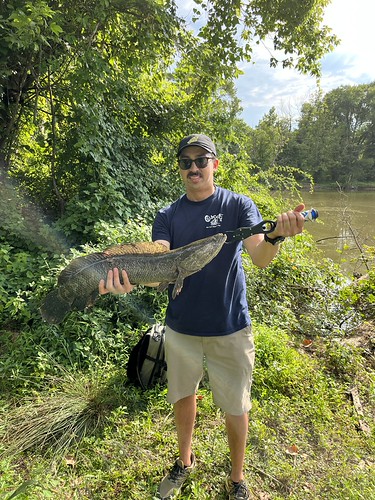
After earning multiple angler awards, Porter set his sights on achieving Master Angler recognition. His most cherished catch was also his first award-winner: while driving home from work with his fishing gear, he decided to make a spontaneous stop. He landed a Chesapeake Channa (northern snakehead) in shallow overflow waters, describing the surface strike as explosive and thrilling.
Another memorable battle involved a 25-inch rainbow trout from the Patuxent River. Arriving early to meet a fishing companion, Porter made several casts with a small Trout Magnet lure when the massive trout struck. The fish was so powerful it nearly straightened the hook.
His most meaningful catch was an 8-inch red-breasted sunfish from Jones Falls stream. He had decided to walk where he used to exercise his recently deceased dog, bringing his rod along for some casual fishing. This catch earned him his ninth species award.
Porter’s trophy catches included: Chesapeake Channa (northern snakehead) at 30 inches, largemouth bass at 22 inches, smallmouth bass at 20 inches, rainbow trout at 25 inches, hickory shad at 18 inches, carp at 30.5 inches, chain pickerel at 25 inches, blue crab at 8 inches, redbreast sunfish at 8 inches, and yellow perch at 14 inches.
Hien Tram
Tram, the 30th Master Angler, brings three decades of fishing experience to his achievement and primarily fishes from shorelines.
As a self-taught angler, Tram developed his skills by observing other fishermen, studying YouTube content, and reading magazine articles. His fishing career started during high school when he and friends would fish local waters with handlines, sometimes even skipping classes for fishing excursions.
“There is always something new to learn,” Tram explained about his passion for the sport. He discovered the FishMaryland program in spring 2024, noting that he had previously caught qualifying fish but hadn’t photographed them with measuring tape, which the program requires.
Tram enjoys challenging himself and considers shore fishing for red drum his most difficult undertaking. He extensively researched locations and techniques, focusing on the lower Eastern Shore. His 49-inch red drum became his favorite award-winning catch.
For aspiring Master Anglers, Tram offers this advice: “You can’t catch fish if you’re sitting at home thinking about it.”
Tram’s qualifying catches were: carp at 30.5 inches, Chesapeake Channa (northern snakehead) at 32 inches, hickory shad at 18.5 inches, striped bass at 42 inches, blue crab at 8.25 inches, spotted seatrout at 26.5 inches, kingfish at 14.5 inches, red drum at 49 inches, white perch at 13 inches, and chain pickerel at 24 inches.
The Department of Natural Resources’ fish conservation efforts are supported through fishing license sales, tackle purchases, boat acquisitions, and marine fuel sales. Anglers can obtain licenses through MD Outdoors online or at authorized agent locations throughout the state.
Listen to the Morning Delmarva Farm Report Update — April 28, 2026
DELMARVA — Delaware specialty crop growers now have access to more than $402,000 in federal grant funding. The Delaware Department of Agriculture opened applications Monday for its 2026 Specialty Crop Block Grant Program with $402,000 available.
Individual grants range from $5,000 to $75,000 for projects lasting 1 to 3 years. Proposals are due May 18 at 4:30 p.m. Qualifying crops include fruits, vegetables, tree nuts, nursery plants, and flowers.
Delaware producers, nonprofits, government agencies, and educational institutions can all apply. The program does not cover traditional field crops like corn and soybeans or livestock projects.
Planting Progress
Nationwide planting progress continues ahead of schedule. The USDA reports 23% of the nation’s soybean crop is already in the ground with 8% emerged, both above the 5-year average.
Markets
Corn and soybean futures posted gains Monday on technical buying and short covering.
Turning to local cash markets, corn at Laurel Grain Company in Laurel, Delaware is bringing $5.14 a bushel for May delivery. Soybeans there are $11.34 for May.
Forecast
On the forecast for Delmarva, Tuesday’s high reaches 62°F with a slight chance of rain showers and southeast winds 5 to 10 mph. Wednesday turns wetter with rain showers likely and a high of 61°F.
This article is based on the Delmarva Farm Report Update Morning Edition, April 28, 2026. Hosted by Tom Bradley.
Listen to the Evening Delmarva Farm Report Update — April 27, 2026
DELMARVA — The U.S. Department of Agriculture announced today it is relaxing testing protocols for highly pathogenic avian influenza when dairy cattle cross state lines, easing requirements for interstate dairy cattle movement.
State Grants
The Delaware Department of Agriculture opened applications today for its 2026 Specialty Crop Block Grant Program. The program has $402,000 available through federal Farm Bill funding. Grants range from $5,000 to $75,000 for projects lasting 1 to 3 years. Eligible specialty crops include fruits, vegetables, tree nuts, nursery plants, and flowers. Proposals are due by 4:30 p.m. on May 18.
Markets
Soybeans and corn both posted gains today on technical buying and short covering. Nationally, 23% of soybeans are planted and 8% emerged, both ahead of the 5-year average.
At Laurel Grain Company in Laurel, Delaware, corn is bringing $5.11 per bushel for May delivery and $5.05 for December. Soybeans are at $11.38 for May and $11.16 for November.
Forecast
Clear skies are expected tonight with a low around 45°F. Tuesday looks mostly sunny with a high near 62°F and light southeast winds. Rain showers are likely Wednesday, continuing into Thursday.
This article is based on the Delmarva Farm Report Update Evening Edition, April 27, 2026. Hosted by Tom Bradley.
WASHINGTON, D.C., April 27, 2026 — A coalition of nearly 400 agricultural organizations, spearheaded by the National Pork Producers Council and the American Farm Bureau Federation representing over 5 million farmers, is pressing Congress to address regulatory challenges stemming from California’s Proposition 12 in the upcoming Farm Bill.
The agricultural groups delivered a formal letter to House Speaker Mike Johnson (R-LA) and Democratic Leader Hakeem Jeffries (D-NY), outlining their opposition to the California law that affects farming operations across state lines.
The coalition presented several key arguments in their appeal to congressional leaders:
• Congressional action is the only viable solution to address Prop 12’s widespread impact, as confirmed by the 2023 Supreme Court ruling that placed responsibility squarely with federal lawmakers rather than regulatory agencies.
• The California law has generated widespread uncertainty throughout rural communities, particularly affecting smaller farming operations that lack the financial resources to renovate facilities to meet the new requirements.
• Bipartisan support exists for addressing the Prop 12 challenges. Former Trump administration Agriculture Secretary Brooke Rollins stated: “[Proposition 12] is not just affecting California. It’s affecting multitudes of other states, multitudes of other parts of the ag community, including our hog family farms.”
• Biden administration Agriculture Secretary Tom Vilsack also voiced support for congressional intervention, saying: “California’s Proposition 12 is not a narrow issue, nor is it a regional one. It goes to the heart of whether farmers across the country can operate under consistent, responsible, science-based standards—or be subject to a shifting patchwork of mandates they cannot control and cannot afford. When I served as Secretary of Agriculture the Supreme Court of the United States made clear, resolving these interstate challenges is the responsibility of Congress. I encouraged Congress to act then, and I am again encouraging Congress to act now. The farm bill presents a clear and immediate opportunity to provide that certainty and uphold the principles that have long sustained American agriculture and the affordability of our food supply.”
• The American Veterinary Medical Association has questioned the effectiveness of Prop 12’s housing mandates, stating: “the arbitrary housing requirements in Prop 12 do not objectively improve animal welfare and may unintentionally cause harm.”
• The California law could trigger a complex web of conflicting state regulations. Oklahoma is considering legislation with even stricter housing requirements than Prop 12, which would force producers to make additional costly modifications to access different state markets.
• Construction costs for compliant facilities are significantly higher, with university research showing new barns meeting Prop 12 standards cost 25-40% more per sow than traditional housing, plus an estimated 15% increase in operating expenses per animal due to reduced efficiency.
• Consumer food prices have risen substantially since implementation. North Dakota State University economists found that prices for affected pork products in California have jumped nearly 20% on average since Prop 12 took effect.
• The regulatory burden is accelerating consolidation in the pork industry, as smaller producers close operations due to compliance costs they cannot afford.
The proposed 2026 House Farm Bill aims to preserve farming freedoms while respecting state authority over practices within their own borders. However, the coalition argues that California’s Proposition 12 exceeds these boundaries by imposing requirements on agricultural operations in other states.
The National Pork Producers Council and the broader coalition of agricultural groups are advocating for congressional passage of the House Farm Bill with provisions addressing the Prop 12 complications.
The American Farm Bureau Federation has published additional economic analysis examining how state laws affect interstate agricultural commerce, available through their Market Intel reports.
The National Agricultural Statistics Service has issued its most recent evaluation of crop development and field conditions nationwide.
The federal agency’s latest assessment provides farmers, agricultural professionals, and industry stakeholders with current information about planting advancement and growing conditions for key crops across the country.
These regular reports from the USDA division help track the progress of the nation’s agricultural season and provide valuable data for market analysis and farming decisions.
Commercial storage facilities nationwide are currently holding 4.87 billion pounds of peanuts, according to the latest report from the U.S. Department of Agriculture’s National Agricultural Statistics Service.
The data reveals that processing of shelled edible grade peanuts has risen by 1 percent when compared to the same timeframe in the previous year, indicating steady demand for the popular crop.
The comprehensive report tracks peanut inventory levels and utilization rates across the country’s commercial storage network, providing key insights into market conditions for one of America’s favorite nuts.
These figures represent season-to-date totals and offer important benchmarks for farmers, processors, and distributors throughout the peanut supply chain as they plan for future production and distribution needs.
Delaware’s agriculture department announced today that it is now accepting applications for its 2026 Specialty Crop Block Grant Program, which will distribute roughly $402,000 in federal funding.
The competitive grant initiative, funded through the federal Farm Bill, seeks to support innovative projects that benefit specialty crops while helping to develop improved market opportunities for Delaware’s specialty crop sector.
The Delaware Department of Agriculture will oversee the distribution of these federal dollars to qualifying projects across the state.
The provided article content appears to be incomplete, containing only a link reference and source attribution without the actual news story details. Based on the headline indicating dairy product prices are gaining strength, this suggests ongoing increases in costs for milk, cheese, butter and other dairy items that consumers purchase at grocery stores nationwide.
Without access to the full article content, specific details about price increases, market factors, or industry analysis cannot be reported at this time.
ANNAPOLIS, MD – Maryland Governor Wes Moore has officially extended the life of the state’s Horse Industry Board for another decade after signing key legislation into law.
On April 14th, Moore put his signature on House Bill 225, which grants the Maryland Horse Industry Board authorization to continue operations until July 1, 2036. The signing ceremony included Maryland Department of Agriculture Secretary Kevin Atticks and Anne Litz, who serves as Executive Director of the Horse Industry Board.
The legislative action guarantees that the Board will maintain its role in overseeing Maryland’s equine industry for years to come, providing stability for horse-related businesses and activities throughout the state.
Virginia agricultural producers have an opportunity to influence changes to a state program that provides financial assistance for farming practices. The Department of Conservation and Recreation is assembling its Technical Advisory Committee once more to evaluate potential modifications to the Virginia Agricultural Cost-Share Program.
The Virginia Farm Bureau, which holds membership on both the main committee and various subcommittees, is actively seeking input from farmers across the state. The organization plans to present these recommendations to the Department of Conservation and Recreation on behalf of the agricultural community.
Producers interested in proposing modifications to the cost-share program can submit their ideas through an online form or contact Jake Tabor, who serves as a legislative specialist for the Virginia Farm Bureau, at [email protected]. All suggestions must be received by Wednesday, April 29th to be considered for this year’s review process.
The Technical Advisory Committee will use these farmer recommendations to guide discussions about potential program improvements and policy adjustments for the upcoming period.
I apologize, but the provided article appears to contain only a video embed and no text content to rewrite. The original source shows only HTML code for a YouTube video player without any accompanying article text, quotes, or detailed information about the Virginia dairy farm’s waste-to-energy operations.
To provide a complete rewritten article, I would need the actual text content that describes the dairy farm’s renewable energy project, including specific details about their process, any quotes from farm operators, and technical information about how they convert manure into power.
Old House Vineyards stands as an example of Virginia’s flourishing craft beverage industry, highlighting the state’s commitment to quality wine production and agricultural innovation.
The vineyard represents part of what industry experts call Virginia’s “craft beverage trifecta,” showcasing how local producers are building a reputation for excellence in wine making while supporting the state’s agricultural economy.
Virginia’s craft beverage sector continues to grow, with wineries like Old House Vineyards leading the way in demonstrating how traditional agricultural practices can be combined with modern production techniques to create distinctive products.
The success of establishments like Old House Vineyards reflects broader trends in Virginia’s agricultural landscape, where farmers and producers are finding new ways to add value to their crops and connect directly with consumers.
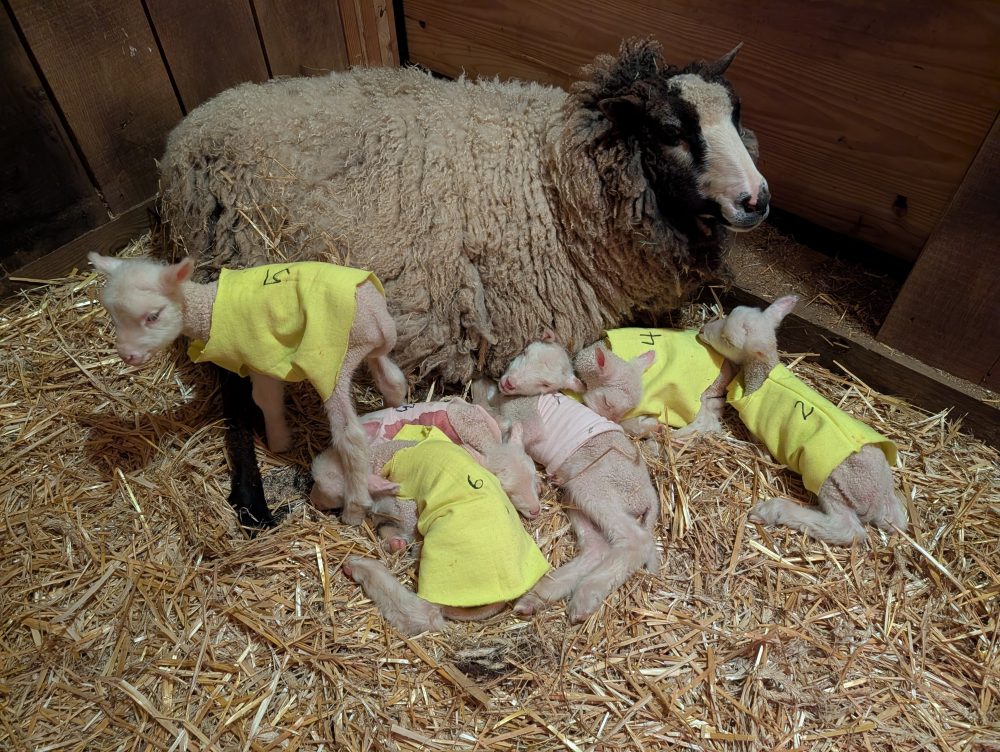
UNDERHILL, Vt. — Anne O’Connor found herself tallying up newborn lambs at her Vermont farm, and the count kept climbing far beyond expectations.
At Clover & Bee Farm in Underhill, Vermont, which O’Connor operates alongside her husband Gunnar, one of their ewes delivered an extraordinary litter of six healthy lambs this month. Both the mother sheep and all her offspring are thriving, making this exceptional birth even more noteworthy.
This particular ewe had previously delivered four lambs in one birth, and though veterinary examination suggested she would deliver twins this time around, O’Connor had her suspicions about a larger litter. When labor began, the lambs continued arriving one after another, she recalled.
“I was a little bit suspicious, just given how big she was and that she was going a little earlier, that she might have more than two,” she said. “Six is great, but it’s definitely — it’s plenty.”
Estimates vary widely regarding how unusual sextuplet sheep births are, with O’Connor citing odds of roughly 1 in 1,000 while certain farming websites suggest the chances could be as rare as one in a million or even rarer. O’Connor reached out to the Vermont Sheep & Goat Association regarding these births, and the organization discovered just one other local shepherd had experienced a sheep delivering this many lambs.
“They do take longer to reach full body weight, but most do just fine,” said Kristen Judkins of Gilead Fiber Farm, who owned a ewe that had sextuplets three years in a row, in an email. “You have to keep an eye on them for the first few weeks to make sure they are getting enough to eat.”
The newborn lambs, which have partial Finnsheep heritage, received Finnish names representing numbers one through six. Their mother bears the name Teemu, honoring Finnish hockey legend and Hockey Hall of Fame member Teemu Selänne. The O’Connors intend to retain the four female lambs while seeking new homes for the two males.
The operation focuses on wool production from their sheep while also cultivating herbs and berries. This marks their fifth season raising sheep on the property. Their flock continues expanding — these six newcomers, along with two other recent arrivals, have increased their total count to 21 sheep. Five additional ewes are currently expecting.
Teemu’s reproductive career likely isn’t finished. While she’ll receive some time to recover, chances are strong she’ll produce more lambs down the road, O’Connor explained.
“She’s a great mom, she’s doing awesome with this,” O’Connor said. “She’s still very much in her reproductive years, so probably a year or more and she’ll just, you know, be able to put her hooves up.”
Environmental responsibility remains a core principle for dairy farmers nationwide that also contributes to their financial success, according to Nicole Ayache from the National Milk Producers Federation, speaking on the recent Dairy Defined Podcast.
Ayache, who oversees the Environmental Stewardship initiative for the National Dairy FARM (Farmers Assuring Responsible Management) Programs, explains how effective resource management and efficiency improvements have enhanced dairy production and profitability while demonstrating farmers’ commitment to consumers.
“A lot of stewardship is about efficiency” – but it’s also more than that, Ayache said. “Anyone who chats with farmers know that because you can hear every time you talk to them about their farm and their choices, you can hear their passion for the animals and the land and their care and the nutrition they provide to our country and the world.”
Agricultural producers worldwide are confronting their second major fertilizer price surge in just four years as the conflict in Iran disrupts global supply chains. Unlike previous situations, current grain prices are too depressed to help farmers absorb the increased costs, leading many to reconsider their planting strategies and threatening worldwide food security.
The Middle Eastern region serves as a critical fertilizer manufacturing center, with most global fertilizer shipments normally traveling through the Strait of Hormuz. The ongoing conflict has completely stopped maritime traffic through this vital waterway.
Production of urea, a crucial nitrogen-based fertilizer, has ceased at Qatar’s largest manufacturing plant, while shipments of sulfur and ammonia—essential components for various fertilizers—have also been severely restricted.
As the conflict continues without resolution, industry experts, traders, fertilizer manufacturers, and agricultural specialists are drawing comparisons to the 2022 supply disruption caused by Russia’s invasion of Ukraine, expressing concern that current conditions may prove even more challenging.
“Back in 2022, a lot of the fertiliser was ultimately flowing through,” stated Shawn Arita from the Agricultural Risk Policy Center at North Dakota State University.
“It’s a much steeper supply crunch that we’re seeing now,” Arita explained.
Since the war began in late February, fertilizer costs have skyrocketed, with urea experiencing the most dramatic price increases due to the loss of approximately one-third of globally traded volumes normally shipped from the Gulf region.
Some nations are managing to secure supplies despite the costs. India, which ranks as the world’s top rice producer and second-largest wheat grower, recently purchased record quantities of urea through a single import agreement, paying almost double what it paid just two months earlier.
However, industry analysts note that such pricing levels are unattainable for many buyers.
During 2022, elevated global grain prices helped agricultural producers offset rising input costs from the Ukraine conflict. Recent abundant harvests of grains and oilseeds have kept crop prices relatively low.
Chicago wheat prices currently stand at roughly half their level from four years ago, while soybeans were nearly 50% higher than current prices.
Consequently, many farmers today lack sufficient revenue to manage escalating fertilizer expenses.
Nitrogen-based fertilizers like urea require seasonal application for most crops and directly affect annual production volumes and quality characteristics, including protein levels in wheat.
While farmers can reduce applications of other essential nutrients such as phosphate and potash without immediate production losses, this strategy may face limitations if phosphate markets experience extended pressure from Chinese export restrictions combined with war-related disruptions to sulfur and ammonia raw materials.
Some growers may ultimately “roll the dice” and decrease fertilizer usage, risking lower yields, according to Andy Jung from U.S. fertilizer company Mosaic.
At least 2 million metric tons of urea production—representing approximately 3% of annual seaborne trade—have been eliminated since hostilities began, reports Sarah Marlow from commodity data provider Argus. Manufacturing facilities have closed across the Middle East as well as in India, Bangladesh and Russia.
Additionally, nearly 1 million tons already loaded onto ships remain stranded in the Gulf.
Even if fighting ends quickly and the Hormuz strait reopens, clearing the shipping backlog will require weeks, noted Mark Milam from commodity market intelligence firm ICIS.
Fertilizer availability will likely stay limited for months due to damage at Gulf production facilities and competition for scarce alternative supplies.
“It’s going to take a while to get back to normal,” said Stephen Nicholson, Rabobank’s head of North American grains and oilseeds.
Many farms maintain fertilizer inventories, while record harvests last year increased global grain reserves. Therefore, the immediate effects of the current crisis on worldwide food supplies may remain contained.
However, agricultural organizations, including the International Grains Council, are already reducing their projections for upcoming harvests. The United Nations, which is attempting to negotiate shipping access for fertilizer through the Gulf, has issued warnings about food security in developing nations.
In 2022, elevated fertilizer costs contributed to worsening hunger in impoverished, import-dependent countries, and analysts indicate that regions like East Africa face similar vulnerabilities.
Australia may provide an early indicator of production impacts on global staple crops.
In Western Australia’s agricultural heartland, one industry organization now anticipates wheat planting area will decline by 14% as growers move away from the fertilizer-intensive, low-profit grain.
Farmers continuing to grow wheat may simply reduce fertilizer application rates.
“If we see a drop-off in application in Australia and we start seeing expected yields come down, it could be quite an ominous sign for what’s in store for everybody else,” explained Matthew Biggin, senior commodities analyst at BMI.
In Brazil, the world’s largest soybean exporter, analysts also anticipate farmers will use less fertilizer and potentially switch to cheaper, less effective alternatives like ammonium sulfate.
Production of Southeast Asian palm oil—the world’s most widely produced edible oil, already facing supply constraints—could also decline, while Amit Guha, an independent Kuala Lumpur-based agronomist, cautioned that nutrient deficiencies pose long-term risks to younger trees.
In Europe, spring planting decisions are shifting away from input-intensive corn in countries including France, while reduced supplemental nitrogen applications may lower protein content in this summer’s wheat harvest, analysts reported.
The greater concern, however, will emerge during autumn planting, when financially strained European farmers could reduce overall grain acreage.
“That’s why we’re starting to get a little worried about the 2027 harvest,” said Benoit Fayaud of Expana.
Listen to the Morning Delmarva Farm Report Update — April 27, 2026
DELMARVA — Maryland’s poultry industry is moving forward again after state environmental regulators released their updated chicken farm permit 2 days ago, ending a nearly 10-month delay.
The Maryland Department of the Environment published its 2025 general discharge permit for concentrated animal feeding operations, with the new rules taking effect May 8. According to the Delmarva Chicken Association, the holdup stalled an estimated $30 million in business investment by builders, realtors, lenders, equipment manufacturers and farmers looking to replace older chicken houses.
The association says it will be reviewing the final permit line by line to detail any important changes Maryland’s family farmers raising broiler chickens need to know about.
Markets
Corn at Laurel Grain Company is bringing $5.10 a bushel for May delivery. Soybeans are $11.27 for May.
On the Chicago Board of Trade this morning, December corn futures are trading around $4.88. November soybeans are near $10.60.
Forecast
A beautiful spring day is shaping up with sunny skies and a high near 64 degrees with light east winds 5 to 10 miles per hour. Conditions are perfect for field work.
Tonight stays mostly clear with a low around 45 degrees. Tuesday looks sunny again with highs near 62 degrees before rain chances return Wednesday.
This article is based on the Delmarva Farm Report Update Morning Edition, April 27, 2026. Hosted by Tom Bradley.
Listen to the Evening Delmarva Farm Report Update — April 25, 2026
DELMARVA — Maryland poultry farmers can finally move forward after the state Department of the Environment released its updated permit for concentrated animal feeding operations yesterday. The new 2025 general discharge permit ends a nearly 10-month delay that stalled an estimated $30 million in business investment.
Holly Porter with the Delmarva Chicken Association says the holdup impacted builders, realtors, lenders, equipment manufacturers and farmers looking to build modern chicken houses. The permit becomes effective May 8, allowing broiler producers to begin submitting applications under the new requirements.
Markets
Grain futures showed mixed results yesterday as traders wrapped up the week. Soybeans climbed on short covering and technical buying, though the crop still posted modest weekly losses. Wheat finished the week with gains driven by weather and fertilizer concerns.
Cattle futures moved higher at the Chicago Mercantile Exchange. June live cattle advanced $1.72 to settle at $245.22 per hundredweight. August feeder cattle surged $2.42 to finish at $361.77.
On the cash side, Laurel Grain Company in Laurel Delaware is offering $5.05 a bushel for May corn and $11.24 for May soybeans.
Forecast
Expect rain tonight with a low around 44°. Tomorrow brings a chance of rain showers early, then mostly cloudy skies with a high near 54°. Monday looks sunny with temperatures reaching 64°.
This article is based on the Delmarva Farm Report Update Evening Edition, April 25, 2026. Hosted by Tom Bradley.
Listen to the Morning Delmarva Farm Report Update — April 25, 2026
DELMARVA — Maryland’s Washington County documented 252 Johnsongrass violations in 2025, the highest count in at least 3 years according to state agriculture data. The figure represents more than one-third of all noxious weed cases across Maryland.
County weed specialist Lane Heimer identified land in transition as the primary problem — properties no longer actively farmed but not on consistent maintenance schedules. Industrial and warehouse sites have become frequent trouble spots, particularly when out-of-area owners must navigate multiple approval levels for weed management.
Policy
USDA announced Friday it will distribute a second round of emergency payments through its disaster assistance program. The payments will help farmers recover from financial losses sustained in 2023 and 2024, according to Agriculture Secretary Brooke Rollins.
Markets
Friday’s session showed mixed results. Soybeans climbed on short covering and technical buying. At Laurel Grain Company in Laurel, Delaware, corn for May delivery is bringing $5.05 a bushel. Soybeans for May are at $11.24.
Forecast
Rain showers are likely Saturday with highs near 56° and east winds 10 to 20 miles per hour. Rain tonight with lows around 44°. Sunday brings a chance of rain then rain showers with highs near 50° and northeast winds 15 to 20 miles per hour.
This article is based on the Delmarva Farm Report Update Morning Edition, April 25, 2026. Hosted by Tom Bradley.
Listen to the Evening Delmarva Farm Report Update — April 24, 2026
DELMARVA — Grain markets showed mixed results Friday as the week wrapped up with gains for wheat driven by weather worries and fertilizer concerns. Soybeans climbed on short covering and technical buying but still finished the week with modest losses.
Traders are watching U.S. planting progress closely while keeping an eye on potential trade talks between the U.S. and China, though those negotiations remain uncertain due to ongoing military developments in the region.
Markets
Peanut farmers saw a solid boost this week. The average payment for farmer stock peanuts reached 23.2 cents per pound for the week ending April 18, up 2.9 cents from the previous period.
Policy
Virginia farmers are battling severe drought conditions across the Commonwealth. The U.S. Drought Monitor released Thursday shows every corner of Virginia experiencing some degree of drought, with most counties facing severe classifications. 5 counties are dealing with extreme drought.
Agriculture Secretary Katie Frazier says the state is working closely with USDA and federal partners to direct producers to resources through official drought disaster declarations. 1 longtime Virginia farmer says he’s seeing rocks in his creek he’s never seen before in 7 decades on the property.
Forecast
Friday afternoon brings mostly sunny skies with temperatures around 70°F. Tonight brings a chance of rain showers with lows near 50°F. Saturday expects rain showers with highs in the mid-50s and east winds 10 to 20 miles per hour.
This article is based on the Delmarva Farm Report Update Evening Edition, April 24, 2026. Hosted by Tom Bradley.
The Maryland Forest Service is working to help farmers and communities discover the hidden potential of native edible plants that grow naturally beneath forest canopies across the state.
Francis Smith, a natural resources planner with the Maryland Forest Service, is promoting agroforestry – the practice of deliberately combining trees and shrubs with traditional farming to boost productivity and create sustainable land use.
“There is an edible and medicinal understory below our forest canopy that offers benefits to landowners ranging from backyard gardeners and beekeepers to traditional farmers,” Smith said.
Smith recommends several native species for Maryland landowners, including common elderberry, beach plum, black chokeberry, serviceberry, pawpaw, American hazelnut, common persimmon, wild American plum, and high bush blueberry. Larger trees like black walnut, hickory, chestnut and maple can also be integrated. Even woody flowering plants such as red osier and winterberry can be harvested for craft materials.
These agroforestry approaches create new economic opportunities beyond traditional farming. The native plants can support emerging markets for specialty foods and distilled products, while opening additional revenue sources for property owners. Both rural and urban communities are exploring “food forests” to increase access to fresh, locally grown produce.
Learning from Indigenous Knowledge
Smith has witnessed growing interest in agroforestry during his seven years working in the field. He notes that much of the knowledge he’s gathering has been maintained and passed down by Native Americans for generations.
“To me, agroforestry is really just a scientific word for indigenous stewardship,” Smith said. “[Native Americans] were the original stewards before ‘stewardship’ was even a word.”
The White Marsh Park Edible Trail in Centreville serves as a demonstration site for these concepts. This experimental food forest showcases six native species: hazelnut, persimmon, American plum, black chokeberry, pawpaw and high bush blueberry. All produce edible fruit or nuts that park visitors can harvest for free.
Now in its seventh growing season, the demonstration forest has inspired culinary experimentation throughout Maryland, with student groups researching hazelnut oil production and nutritious chokeberry beverages.
“This is where I think Maryland’s range of native understory trees and shrubs that produce edible, healthy fruits and nuts could possibly serve as a steady supplemental income or farm marketing opportunity,” Smith explained. He added that food forests work well in large backyard gardens or as educational tools at schools.
Six Farming Applications
The Forest Service collaborates closely with the Maryland Department of Agriculture to promote agroforestry on farms and in communities. Smith outlined six specific practices that farmers can implement:
Windbreaks: Linear plantings of trees, shrubs, or grasses that shield soil, crops, and livestock from wind damage. “A working windbreak in agroforestry terms is just a windbreak that you would periodically harvest from,” Smith explained. “You can blend in fruit and nut-producing species that offer products for market while also providing wildlife habitat and pollinator support.”
Multifunctional riparian forest buffers: Trees and plants along waterways that filter pollutants and prevent erosion, enhanced with edible understory plants for additional harvests. “We’re using trees and shrubs along streams and waterways because these are living filters,” Smith said. “Blending in agroforestry species that produce fruits, nuts, and syrups can improve the land and our health while providing potential new markets for farmers seeking new sources of income.”
Alley cropping: Growing crops between tree rows to maximize land use. “We already plant in rows, so why not maximize land use to the benefit of landowners?” Smith asked. “You really want to actively work every layer of the land.”
Silvopasture: Integrating trees, forage, and livestock in the same area. “They’re basically raising livestock in between the tree rows, which provides spots of shade and additional fodder,” Smith explained.
Forest farming: Cultivating specialty crops under existing forest canopies. “Growing and harvesting plants such as cohosh, goldenseal, ramps or wild ginger is part of what’s known as forest farming,” he said.
Food Forests: Sustainable systems that replicate natural forests on smaller scales, typically featuring fruit or nut trees surrounded by shrubs, herbs, vines, and root crops.
While these methods require less maintenance than conventional crops, Smith emphasizes that planning is still essential. “When you’re planting, you need to consider the three W’s: weeds, wildlife, and water,” Smith explained. “You need a plan for how you are going to manage those, because that’s going to be the things you’re going to always, always battle.”
Looking Ahead
The first Mid-Atlantic Agroforestry Conference will be held in Pennsylvania this June, focusing on forest farming and multifunctional buffers. The conference will provide regional practitioners, landowners, farmers, and conservation professionals with insights into agroforestry practices, marketing strategies, and real-world case studies.
Smith continues working on the best methods to distribute harvests to the public, from simple pick-your-own operations to partnerships with food banks. He also helps organizations apply for grants to establish edible trails.
“We’re in the early stages but it seems to all be coming together at the same time,” Smith said.
Those interested in agroforestry can contact their local Maryland Department of Agriculture Soil Conservation District. Funding opportunities are available through the MDA’s Healthy Soils Competitive Fund, and the Maryland Agricultural and Resource-Based Industry Development Corporation can provide equipment funding for farmers and forest product companies.
National cheese inventory held in refrigerated storage facilities showed mixed trends at the end of March 2026, according to federal agricultural data.
Warehouses across the country reported natural cheese stockpiles that climbed 1 percent compared to February levels, though supplies remained 2 percent lower than the same period in 2025.
The monthly cold storage survey provides industry stakeholders with critical information about dairy product availability and market conditions nationwide.
Farmers nationwide experienced a significant boost in compensation for their peanut harvests during the week that concluded on April 18, according to new agricultural data.
The average payment to agricultural producers for farmer stock peanuts reached 23.2 cents per pound, marking an increase of 2.9 cents compared to the previous reporting period.
This price surge represents positive news for peanut growers who have been monitoring market conditions closely throughout the growing season.
The nation’s poultry industry is experiencing notable growth, with new federal statistics revealing a substantial increase in production volumes this year.
According to data released by the U.S. Department of Agriculture’s National Agricultural Statistics Service, ready-to-cook weight has climbed 10 percent compared to the same period last year.
The increase demonstrates the continued expansion of poultry processing operations across the country as demand for chicken and other poultry products remains strong in the marketplace.
The USDA regularly tracks poultry slaughter statistics to monitor industry trends and production levels nationwide.
America’s cheese industry generated nearly 15 billion pounds of product during the past year, with Wisconsin maintaining its position as the nation’s dairy powerhouse, according to newly released federal agriculture statistics.
The U.S. Department of Agriculture’s National Agricultural Statistics Service reported that nationwide cheese manufacturing, not including cottage cheese varieties, reached 14.8 billion pounds. Wisconsin claimed the top spot among all states, responsible for 24.6 percent of total production across the country.
The annual dairy summary provides insight into one of America’s most significant agricultural sectors, tracking production volumes and regional distribution patterns throughout the industry.
The Delaware Forest Service marked this year’s Arbor Day observance on Friday, emphasizing the crucial benefits that trees provide to communities across the First State.
This annual celebration takes place each year on April’s final Friday, drawing attention to how forests and trees contribute to cleaner air and water, provide essential wildlife habitats, build stronger communities, and improve overall quality of life for Delaware residents.
The Delaware Forest Service, operating under the Delaware Department of Agriculture, remains committed to promoting forest conservation and tree-related initiatives throughout the state.
WASHINGTON, D.C., April 24, 2026 – Congressional representatives are divided over farm bill provisions that would address California’s Proposition 12, a state law requiring specific animal housing standards that affects pork producers across the nation.
More than 60,000 American pork producers are calling for congressional action to address what they describe as conflicting state regulations stemming from California’s ballot measure, which mandates housing requirements for animals whose products are sold in the state.
Agricultural leaders, veterinary professionals, the current administration, and elected officials from both political parties have voiced concerns about allowing individual states to regulate farming practices beyond their borders.
President Donald Trump stated:
“…Article I, Section 8 of the Constitution plainly states that Congress – not individual states – has the power to regulate commerce ‘among the several States.’ For many years, this provision has been understood to block efforts by individual states to regulate interstate trade in ways that are discriminatory or burdensome. I will use all authority under the Constitution and U.S. law to stop efforts by California – or other states – that hurt American farmers in other states…”
Agriculture Secretary Brooke Rollins explained that Prop. 12 “…is not just affecting California. It’s affecting multitudes of other states, multitudes of other parts of the ag community, including our hog family farms.”
“When those ideas, and those rules, and those laws begin to impact other states in such a negative way, that is not what our founders intended. That is not constitutional, and it is not OK,” Rollins continued.
“California has the right to do what California wants to do, but the minute that crosses the border and starts to compromise in such a significant way our pork producers, we need to act,” she added.
“This war against consumer choice and against our farmers forces Californians and those who receive those goods across the country to buy more expensive eggs and pork. California’s actions under Proposition 12 fly in the face of federal jurisdiction and regulation over food production and safety…”
Former Agriculture Secretary Tom Vilsack noted:
“Every state has the right to regulate the activities of farmers within their state borders. Where there’s disagreement is whether states have the right or the ability to extend their view about how livestock should be raised to farmers in other states.”
“At some point in time, somebody’s got to provide some degree of consistency and clarity otherwise you’re just inviting 50 different states to do 50 different iterations of [Prop. 12]. Farmers don’t need the chaos; they need clarity and certainty.”
“If we don’t take this issue seriously, we’re going to have chaos in the marketplace.”
USDA Deputy Secretary Stephen Vaden warned:
“This internal protectionism is what led to the demise of the Articles of Confederation. If one state can block products from another state, the country ceases to function as a unified national market.”
Senate Agriculture Committee Chairman John Boozman (R-AR) emphasized:
“Agriculture needs to stick together … to get this done.”
Sen. Chuck Grassley (R-IA) argued:
“California’s Proposition 12, along with Massachusetts’ Question 3, are based on arbitrary, nonsensical standards and have resulted in a harmful patchwork of regulations across the 50 states. They’re a threat to Iowa, which leads the nation in pork production, and to farmers and consumers across this country. Consistent with its authorities under the Commerce Clause, it’s time for Congress to solve this problem by passing legislation. Our bill will end California’s war on breakfast and make sure delicious Iowa pork can be sold everywhere.”
Sen. Joni Ernst (R-IA) called “Proposition 12 is dangerous and arbitrary overregulation that stands in direct opposition to the livelihoods of Iowa pork producers, increases costs for both farmers and consumers, and jeopardizes our nation’s food security.”
Sen. Roger Marshall (R-KS) said:
“The United States is constantly faced with non-tariff trade barriers from protectionist countries, which hurts American agriculture’s access to new markets. The last thing we need is for states like California imposing its will on ag-heavy states like Kansas with regulations that will also restrict our ability to trade among the states. Midwest farmers and ranchers who produce our nation’s food supply should not be hamstrung by coastal activist agendas that dictate production standards from hundreds of miles away.”
House Agriculture Committee Chairman Glenn “GT” Thompson (R-PA) questioned:
“The data shows that both producers and consumers are facing significant cost increases due to Prop 12. It begs the question – if producers are paying more, and consumers are paying more, who is winning?”
House Agriculture Committee Ranking Member Angie Craig (D-MN) acknowledged:
“Any true representative of farm country knows that Prop 12 is a concern for producers on both sides. We cannot ignore the questions and challenges Prop 12 raises. Even the Biden administration’s Ag Secretary said we need to treat this issue seriously to ensure stability in the marketplace. I agree that we cannot have 50 states with 50 different regulatory frameworks because of the significant challenges it would present to producers, but I believe that there are ways to avoid that situation.”
Former House Agriculture Committee Chairman David Scott (D-GA) noted:
“We have a substantial burden on our interstate commerce and the implications that this may have on the producers.”
Rep. Don Davis (D-N.C.) stressed:
“We need a long-term solution that does not disadvantage eastern North Carolina producers or others and potentially put some out of business. I work with anyone, to be clear, anyone on this committee to come up with that fix and a workable solution. But for us to not address this, I believe would be a fatal mistake–fatal mistake for our pork producers.”
Rep. Shomari Figures (D-AL) observed:
“But this is where state rights—one state’s rights—run up against the rights of companies that reside and operate in other states. It runs up against their ability to make a living… Some decisions should be left to the states, who know their own agricultural realities best.”
Rep. Ashley Hinson (R-IA) declared:
“California’s Proposition 12 and Massachusetts’ Question 3 pose a major threat to family farms and food security—both in Iowa and across the country.”
Rep. Randy Feenstra (R-IA) criticized:
“For too long, Iowa’s hog farmers have faced growing uncertainty because of California’s egregious Proposition 12. This unfair mandate has imposed costly, unscientific regulations on pork producers across the country – even though California produces less than one-tenth of one percent of the nation’s hogs.”
Iowa Governor Kim Reynolds commented:
“With Proposition 12, California has set out-of-touch, arbitrary requirements for how producers should operate their farming businesses. California activists now claim to know what’s best for the producers who have raised livestock from generation to generation.”
Florida Governor Ron DeSantis expressed concerns:
“You also have the situation where a state like California could adopt something like Proposition 12, and that ends up having a devastating impact in Iowa because of the size of California’s market. I don’t think California should be able to dictate how people are producing pork. I mean, that’s just not good for the economy. It’s not the way the system was designed to work. And I want states to be able to make their own decisions, but when they’re trying to do things that have an effect outside their state, well, that’s a different beast there. And I think what they’ve done — they do these initiatives, people don’t even know what they’re voting on. They have no sense of how that would impact people who are actually in the industry. It’s just kind of a thing that someone gets on the ballot, it sounds good, so they do it. That is not the way you do policy, particularly. And you don’t want any industry, agriculture or others, to be at the mercy of the whims of the state like California, like that is just not going to work for this country.”
Veterinary organizations have also weighed in on the scientific basis of the regulations.
The American Veterinary Medical Association stated:
“The arbitrary housing requirements in Prop 12 do not objectively improve animal welfare and may unintentionally cause harm.”
The American Association of Swine Veterinarians concluded:
“The ballot initiative does not objectively improve animal welfare. In fact, in some cases, it may compromise animal welfare.”
Even California’s own agricultural department has raised questions about the scientific foundation of the law.
California’s Department of Food and Agriculture determined:
“Animal confinement space allowances prescribed in the Act are not based in specific peer-reviewed published scientific literature or accepted as standards within the scientific community to reduce human food-borne illness, promote worker safety, the environment, or other human or safety concerns.”
Business leaders have highlighted the economic impact on communities.
Ruben Guerra, Latin Business Association Chairman, explained:
“The impacts of Proposition 12 are devastating our Latino businesses and families across California. With pork prices soaring up to 41% higher than the rest of the country and more than one in three Latino adults already living in food-insecure households, this misguided law is creating unintended food insecurity in our communities.”
Lilly Rocha, Latino Restaurant Association Executive Director, questioned:
“It would be one thing if the regulations imposed on pork producers were based on data and scientific research. But it’s not. We’ve had a great pork industry forever. Why do we need to change a good thing all of a sudden? It makes no sense. It seems to be regulation stemming from a social agenda, not a scientific one.”
Additionally, multiple agricultural organizations representing millions of farmers nationwide have written to Congress requesting action to address the regulatory conflicts created by Proposition 12.
HARRISONBURG, Va. — From multi-generational farming families to agricultural newcomers, female farmers across Virginia are creating meaningful change in their local communities.
The Virginia Farm Bureau Federation Women’s Leadership Program made history at their annual gathering by breaking from tradition. Instead of selecting just one recipient for their yearly “Distinguished Farm Bureau Woman” award, which recognizes contributions to farming enterprises, agricultural businesses, or rural leadership, they chose to honor exceptional women from every single district.
The decision came as the United Nations designated 2026 as the International Year of the Woman Farmer, an initiative aimed at showcasing women’s vital roles in food systems, agricultural commerce, and improving family welfare. The VFBF Women’s Leadership Committee marked this milestone by celebrating female farmers from all 14 organizational districts during their April 11 gathering in Harrisonburg.
“We thought it fitting to honor more than just one distinguished farmer this year,” said keynote speaker Kiah Twisselman Burchett, a ranch girl-turned-motivational-speaker called Coach Kiah. “We’ve had so many incredible women making a difference in agriculture every day.”
According to Faye Hundley, Women’s Leadership Committee chair, these women serve diverse functions within agriculture.
“These remarkable ladies are leaders, educators and advocates,” she said. “And true champions of the farm!”
Each 2026 Distinguished Farm Bureau Woman recipient earned an all-expenses-paid journey to the upcoming American Farm Bureau Federation Convention scheduled for January in Charlotte, North Carolina.
“The nominees were all surprised to be honored,” said Christy Murphy, VFBF Women’s Leadership coordinator. “They expected only one of them to be selected Distinguished Farm Bureau Woman.”
The honorees include:
DISTRICT 1 — Cindy Mullins of Wise County represents fourth-generation farming traditions while raising her daughter using the same hands-on methods, demonstrating dedication to agricultural success in rural Wise County.
DISTRICT 2 — Kristy Waller of Smyth County operates as a first-generation dairy farmer while managing livestock for beef and pork production, marketed through their family business, The Farmhouse Market.
DISTRICT 3 — Sheila Newman of Carroll County manages a cow-calf enterprise while championing agricultural heritage preservation. Newman played a key role in establishing the Carroll County Special Assessment Land Program and supports area producers via the Southwest Virginia Farmers’ Market.
DISTRICT 4 — Monica Bowman of Franklin County continues third-generation dairy farming while advocating for agriculture through Agriculture Literacy Week activities and farm safety event coordination. Bowman participates on her Farm Bureau board, various subcommittees, and the county’s Ag Development Committee.
DISTRICT 5 — Elaine Martin of Augusta County operates a direct-sales beef enterprise and recognizes public knowledge gaps about food origins. She builds community connections by sharing personal farming experiences.
DISTRICT 6 — Kayla Lawrence of Frederick County helps manage Richard’s Fruit Market, a fifth-generation diversified agricultural operation. Lawrence has spearheaded award-winning agritourism programs that promote rural tourism in Frederick County.
DISTRICT 7 — Helen Taylor of Prince William–Fairfax County serves as a veteran women’s leader and WLC project supporter, ensuring agricultural education, community outreach, and literacy programs create lasting multigenerational impact.
DISTRICT 8 — Cheryl Falvella of Fluvanna County builds local agricultural interest through various educational and artistic programs, including the “Soil your Undies” decomposition experiment that teaches soil health concepts. She also conducts barn quilt painting workshops that benefit youth organizations.
DISTRICT 9 — Karen Jones of Chesterfield County has dedicated over two decades to women’s committee service. The retired educator advocates for agricultural learning with exceptional interpersonal skills and talent for welcoming Farm Bureau newcomers.
DISTRICT 10 — Katie Hammock of Pittsylvania County works as a nurse while earning recognition as “The Dairy Wife.” Her firsthand experience with farming injuries motivated her safety advocacy work, including statewide workshop presentations and Farm Bureau first aid kit development.
DISTRICT 11 — Katrina Wells of Lunenburg County cultivates flower fields at Lunenburg Lavender. Her lavender farming and bath product creation has evolved into a passionate venture that allows agricultural storytelling with visitors.
DISTRICT 12 — Stacy Richardson of King & Queen County works in real estate while integrating agricultural education into client property tours, helping them appreciate farmland value and local agricultural significance. Her family farm hosts an Ag Day event that builds community farming awareness.
DISTRICT 13 — Stephanie Ripchick of New Kent County welcomes school groups and community members to her seasonal farm operation, providing agricultural experiences that expand farming knowledge and strengthen farmer-consumer relationships.
DISTRICT 14 — Roxanne Stonecypher of Chesapeake-Virginia Beach leads efforts that have enhanced local agricultural programming, expanded Farm Bureau participation, and increased WLC initiative visibility. She has been essential to locally-based farm projects that received national recognition.
Other nominees included Aimee Adams of Charlotte County; Sandra Heath of Patrick County; Cheyenne Rhodes of Shenandoah County; Ashley Fisher of Tazewell County; and Shawn Carr of Isle of Wight County.
“And we had a couple nominees who withdrew their names,” Murphy added. “They said they didn’t feel worthy of the honor.”
The Virginia Farm Bureau Women’s Leadership Program participants advance agriculture, the state’s primary industry, through community education initiatives, local outreach activities, and Farm Bureau policy advocacy.
For additional information, contact Christy Murphy, women’s leadership program coordinator, at 804-290-1031.
A Virginia high school senior’s mission to connect consumers with agricultural producers has earned her statewide recognition from the Farm Bureau.
Savannah Jones from Appomattox County High School received the title of 2026 Virginia Farm Bureau Ambassador during the Virginia Farm Bureau Federation Women’s Leadership Conference held in Harrisonburg.
According to Faye Hundley, chair of VFBF’s Women’s Leadership Committee, this honor celebrates young people’s agricultural accomplishments and gives them a platform to represent Farm Bureau and Virginia’s top industry.
Jones, who comes from four generations of farming families and participates actively in FFA and 4-H organizations, intends to earn her bachelor’s degree in animal science before becoming a veterinarian specializing in large animals.
During her conference presentation, Jones highlighted a startling statistic: “Did you know that 7% of Americans believe that chocolate milk comes from a brown cow? While that doesn’t seem like much, it equates to 23 million people.”
Given that most Americans are now three generations away from farming life, Jones proposes creating agricultural education packages for schools. These resources would feature brief 10-20 minute lessons, interactive components, spotlights on Virginia agricultural products, and educational videos.
Her plan also includes establishing year-round virtual farm partnerships with elementary students. Using photographs, video content, and live question-and-answer sessions, this program would link “students to real Virginia agriculture” while giving farmers chances to tell their stories.
“These activities will introduce consumers to what farmers are doing and why they’re doing it, as well as highlight the deep passion and love agriculturalists have for growing crops and raising livestock,” Jones explained.
Jones has taken on leadership positions within her school’s FFA chapter, worked as a 4-H Youth Livestock State Ambassador, and participates in the Appomattox Student Internship Program. She credits these youth organizations with influencing her career direction.
“Our youth are the next generation of agriculture supporters, and we must start there to invoke change,” Jones said. “I hope to sow a seed for a love of ag that will blossom as they grow.”
Jones received a $2,000 monetary prize provided by Colonial Farm Credit and Farm Bureau.
Second place went to Mindi Burch from Shenandoah County, who holds an MBA from Perdue University Global. Along with her husband Ben, she operates Corner Market Farm to Table, works as an EMT with Augusta County Fire and Rescue, and teaches part-time at Bridgewater College. She earned a $500 cash award.
Members of the Virginia Farm Bureau Women’s Leadership Program promote agriculture, the state’s biggest industry, by conducting community education programs, local outreach projects, and advocating for Farm Bureau policies.
VFBF represents Virginia’s largest farmers’ advocacy organization with nearly 137,000 members across 88 county Farm Bureaus. The organization operates as a non-governmental, nonpartisan, voluntary group dedicated to supporting Virginia’s agricultural sector.
For more information, contact Christy Murphy, Women’s Leadership Program coordinator, at 804-584-6210.
Listen to the Morning Delmarva Farm Report Update — April 24, 2026
DELMARVA — Grape growers across Delmarva are counting losses after 2 consecutive nights of freezing temperatures delivered a devastating blow to vineyards this week. Winery operators are reporting extensive damage to grape crops, with early assessments suggesting lasting effects on regional wine production.
Agricultural experts say the timing was particularly damaging, as many vineyards were in vulnerable growth stages when the freeze struck. The impact extends beyond individual farms, raising concerns about the broader regional wine industry that has grown significantly in recent years.
Markets
Grain futures showed mixed results Thursday. Wheat prices jumped on drought concerns and rising input costs, while soybeans dropped on profit-taking and technical selling.
At Laurel Grain Company in Laurel, Delaware, corn for May delivery is bringing $5.06 a bushel. December corn is at $5.00 even. Soybeans for May are at $11.23, and November beans are bringing $11.06.
Livestock
Poultry producers are being urged to strengthen pest control practices. Dr. Alissa Welsher with Elanco Animal Health says effective management starts with proper facility maintenance, including picking up organic material, cleaning feed spillage, and drying up standing water.
Forecast
Expect mostly sunny skies Friday with a high near 66°F. There’s a slight chance of rain showers late this afternoon. East winds 5 to 15 miles per hour. Tonight brings a chance of light rain with lows around 49°F. Rain becomes likely Saturday with a high near 56°F.
This article is based on the Delmarva Farm Report Update Morning Edition, April 24, 2026. Hosted by Tom Bradley.
Listen to the Evening Delmarva Farm Report Update — April 23, 2026
DELMARVA — Fertilizer costs reached a 4-year high today as ongoing tensions in the Middle East continue to drive up farming expenses. David Widmar from Agricultural Economic Insights warned that prolonged conflict in Iran could push costs even higher for growers across the country.
The urea price spike has disrupted traditional fertilizer market patterns. Widmar said surging urea has created a price gap between urea and anhydrous ammonia. Usually, anhydrous has a $16 per acre advantage, but that spread has shifted significantly from historical norms. The escalating costs come at a challenging time for agricultural producers already dealing with various economic pressures.
Personnel
The Delaware Farm Bureau announced today that Noah Dixon from Felton has joined the organization as their new Agriculture Literacy Coordinator. Dixon will advance educational initiatives and advocacy efforts that benefit farming families and consumers throughout the state.
He will create educational resources, organize school and community programs, and foster relationships between agricultural producers and educational institutions statewide. Dixon previously interned with the Delaware Farm Bureau and served 2 years as a Delaware State FFA Officer.
Markets
Soybeans dropped today on profit-taking and technical selling. Corn at Laurel Grain Company is bringing $5.06 a bushel for May delivery. Soybeans at Laurel are $11.20 for May.
Forecast
Sunshine continues this afternoon with 71 degrees. Tomorrow looks mostly sunny with a high near 65 before rain chances return tomorrow night.
This article is based on the Delmarva Farm Report Update Evening Edition, April 23, 2026. Hosted by Tom Bradley.
Odessa High School’s FFA and Agriscience Team has secured the Delaware Envirothon Championship title for the second consecutive year, marking another victory in the state’s premier environmental education competition.
The championship took place at Sussex Academy, where teams from across Delaware competed in this year’s event. The 2026 competition represents a significant milestone, marking three decades of the Envirothon program in Delaware.
The Delaware Department of Natural Resources and Environmental Control sponsors this educational competition, which welcomes participation from high school students throughout the state. The program challenges students to demonstrate their knowledge of environmental science and natural resource management.
This back-to-back championship demonstrates the continued excellence of Odessa High School’s environmental science program and their students’ dedication to understanding natural resource conservation.
The nation’s commercial red meat industry has experienced a 2 percent increase in production compared to the previous year, according to new data from federal agricultural officials.
The latest livestock slaughter statistics reveal continued growth in the red meat sector, indicating steady demand and production capacity across American agricultural operations.
This upward trend in meat production reflects the ongoing strength of the country’s livestock industry and its ability to meet consumer demand for red meat products.
The American Soybean Association operates as a producer-driven organization, relying on farming volunteers who serve as board members and guide emerging agricultural leaders.
Behind each agricultural policy victory lies extensive work and numerous individuals consistently championing soybean producers. The ASA’s governing documents establish specialized advocacy teams to help distribute responsibilities and enhance focus among soy leaders. These teams monitor policy developments, create advocacy strategies, and provide guidance in targeted policy areas. ASA directors chair each advocacy team.
FARM POLICY ADVOCACY TEAM
The Farm Policy team tackles economic sustainability and financial services matters. ASA Director Geoff Ruth from Rising City, Nebraska, chairs this team. Ruth represents a seventh-generation farming family, cultivating soybeans, corn, and cover crop rye. His leadership experience spans multiple boards, including the Shelby-Rising City Public School Board of Education, Nebraska Soybean Association, Nebraska Farm Service Agency, and various local community committees.
When asked about his 2026 priorities as team chair, Ruth emphasized the urgency of current challenges.
“There is no shortage of issues facing soybean farmers and agriculture as a whole in 2026. It is important for me as chair of the Farm Policy Advocacy Team to stay engaged and focused on the challenges and opportunities that lie before us in the soybean industry,” Ruth said. “At the top of the list of priorities is encouraging Congress to pass a farm bill. We are long overdue for an updated farm bill, and continued extensions of the previous farm bills are not the security and stabilization that agriculture needs in these uncertain times.”
Ruth noted that issues evolve rapidly, sometimes changing by the minute, making timely evaluation and response crucial for their advocacy team.
Regarding his motivation for leadership, Ruth expressed gratitude for the opportunity.
“It is an honor to serve as chair of the Farm Policy AT. I have always enjoyed serving people, whether that be as the current president of my local board of education, church council leadership, Nebraska Soybean Association, the Farm Service Agency as a member of the State Board, or even as a youth basketball/football/softball coach,” Ruth explained.
He advised aspiring leaders to embrace difficult challenges. “For those who have an interest in leadership, be willing to do the hard thing. Saying ‘yes’ and being outside your comfort zone is one of the hardest first steps when it comes to leadership,” Ruth said.
CONSERVATION & PRECISION AG ADVOCACY TEAM
The Conservation & Precision Ag team handles conservation, agricultural technology, checkoff and research, soy foods and nutrition, biobased consumer products, livestock, and labor issues. ASA Director Denise Scarborough from LaCrosse, Indiana, leads this team. She farms with her husband Mark, producing soybeans, commercial corn, seed corn, and wheat. The couple also operates an excavating business, and Scarborough works as a commercial and agricultural lender at First National Bank of Monterey.
Scarborough’s involvement includes Indiana Farm Bureau service at local, state, and national levels, plus volunteering with 4-H, Purdue Council for Agricultural Research, Extension, and Teaching, youth sports, and her church. She has served as an Indiana Soybean Alliance director since 2017.
Discussing her 2026 goals, Scarborough emphasized shifting from reactive to proactive approaches.
“I think some of the personal goals are to be proactive instead of reactive. When President Trump took office for the second time, we didn’t know what to fully expect, and it caused us to be reactive to what was happening,” Scarborough said. “When the Make America Healthy Again (MAHA) report came out, we didn’t imagine that we would have to defend the soybean as much as we are.”
She highlighted Indiana’s position as the leading high oleic soybean producer and the unexpected need to defend healthy soybeans against ultra-processed food concerns.
BIOFUELS & INFRASTRUCTURE ADVOCACY TEAM
The Biofuels & Infrastructure team focuses on energy policies related to biodiesel, renewable diesel, and sustainable aviation fuel, plus infrastructure matters involving ocean shipping, inland waterways, railways, roads, broadband, and industrial biobased products. ASA Director Drew Peterson from Salem, South Dakota, chairs this team. Peterson represents a fifth-generation farming family, raising soybeans and corn while operating a cow-calf and cattle feeding business with his father Steve, alongside his wife Lauren and their two children.
Peterson joined the South Dakota Soybean Association as a Corteva Young Leader in 2019, served as board vice president for three years, participates in the South Dakota Ag Foundation, and has been a state legislator for four years.
“Coming into 2026, my main goal was to get finalized Renewable Volume Obligations (RVOs) in the Renewable Fuel Standard (RFS) and Clean Fuel Production Credit (45Z) guidance in place,” Peterson said. “Not only would this certainty be good for soybean producers, but it will also help our country with energy security in a volatile geopolitical climate across the globe.”
Peterson emphasized infrastructure investment needs. “Continued investment in inland waterways and rail improvements are needed to keep our transportation infrastructure resilient, no matter where our whole bean and soybean byproducts need to be transported,” he said.
REGULATORY ADVOCACY TEAM
The Regulatory team addresses biotechnology, crop protection, pesticidal tools, and other regulatory activities. ASA Director Andrew Moore from Dalton, Georgia, chairs this team. Moore farms with his father and uncle in Northwest Georgia, using double crop production to raise nine different row crops or cereal grains on a five-year rotation. In 2008, they added value through vertical integration, constructing an Expeller Press™ oilseed processing facility and pellet mill for manufacturing animal feeds.
Moore’s 2026 priorities focus on strengthening advocacy capabilities.
“As chair of the advocacy team in 2026, my priorities are to further strengthen our soy team members’ capacity to advocate effectively on near-term regulatory issues impacting soy farmers,” Moore said. “This includes identifying and defining emerging regulatory challenges that are moving through the pipeline and are likely to affect farmers in the future.”
He stressed the importance of farmer participation. “Getting involved matters because participation makes our voices stronger and ensures they are heard,” Moore said.
TRADE POLICY & INTERNATIONAL AFFAIRS ADVOCACY TEAM
The Trade Policy & International Affairs team handles trade, market access, tariff and non-tariff barriers, international food aid, aquaculture, federal grain standards, fertilizer, and tax issues. ASA Director Josh Gackle from Kulm, North Dakota, chairs this team. He farms 2,800 acres of soybeans while also producing corn, wheat, and barley. Gackle began ASA board service in late 2017, served as ASA president in 2024, and has been active with the North Dakota Soybean Growers Association board and committees. He also serves on the Kulm City Council.
“TPIA plays a key role in maintaining and increasing existing demand and building new demand for U.S. soybean farmers’ international markets,” Gackle said. “The AT works closely with the state soybean associations, WISHH, USSEC, and USB to build on these priorities.”
Gackle emphasized the organization’s broader impact. “ASA is one of the most impactful organizations when it comes to government policy that affects our farm and business operations. There is power in numbers, and our organizations make sure our voice as farmers and rural America are heard by decision makers at the local, state, and national level,” he said.
A federal agriculture program has opened new international markets for American soybean producers by transforming Cambodia’s fish farming industry and creating lasting demand for U.S. soy products.
The American Soybean Association’s World Initiative for Soy in Human Health program, working through the USDA’s Food for Progress initiative, recently completed its Commercialization of Aquaculture for Sustainable Trade project in Cambodia. The program focused on strengthening the Southeast Asian nation’s fish farming sector while establishing commercial relationships that boost demand for American soybean meal.
The initiative targeted Cambodia’s heavy reliance on fish protein, which accounts for nearly three-quarters of the country’s protein consumption. Program organizers identified an opportunity to connect improved fish farming methods with increased use of U.S. soy-based feeds.
Training sessions taught fish farmers more systematic feeding methods, improved pond design techniques, and strategies to boost production while minimizing fish mortality. These enhancements enabled farmers to achieve superior growth rates and operational efficiency while demonstrating the benefits of premium feeds containing soybean meal.
The program also brought innovative equipment to Cambodia. Solar-powered drying structures helped minimize food waste by protecting fish from weather conditions and contamination risks that typically occur when products are dried outdoors on tables. The technology proved especially valuable during Cambodia’s monsoon season. Additional improvements included floating cage systems and specialized pond raceways that enhanced fish health and operational efficiency.
Ten feed distribution companies received training in modern aquaculture methods, with emphasis on how quality feeds improve fish performance. The project also supported the creation of the Cambodian Aquaculturist Association, which now connects over 1,300 producers, feed manufacturers, and industry partners to promote advanced farming practices and sector cooperation.
The training programs produced measurable results in industry standards. Before the project began, only approximately 3% of fish producers had earned Good Aquaculture Practices certification, which allows access to premium markets. Following the program’s implementation, that percentage jumped to 51%, with 63 producers obtaining the valuable certification.
The initiative also developed institutional markets for fish products through collaboration with the USDA McGovern-Dole International Food for Education and Child Nutrition Program, managed by the World Food Programme and partner organizations. Government purchases of fish for school meal programs are establishing sustainable markets for aquaculture production, which reinforces demand for the quality feeds necessary to support continued growth.
Feed manufacturers now purchasing U.S. soy have become important players in Cambodia’s agricultural sector. Companies like AgriMaster Feed Mill are buying American soybean meal to produce feeds distributed throughout Cambodia. Another major producer, M’s PIG, has expanded into aquaculture while increasing its feed manufacturing capacity, demonstrating the expanding opportunities across Cambodia’s livestock and feed sectors.
“Projects like CAST show how strategic partnerships can build lasting markets for U.S. soybean farmers,” said WISHH Executive Director Gena Perry. “By helping farmers and feed companies adopt better practices and high-quality feeds, we’re creating demand that benefits producers overseas and soybean growers here at home.”
The organization’s efforts are now expanding into additional sectors within Cambodia. Kirisu Dairy, the country’s first modern dairy operation, utilizes 120 tons of soybean meal annually to feed its dairy cattle. Similar to the aquaculture sector’s development, as Cambodia’s milk consumption increases, its dependence on U.S. soy for dairy feed may expand accordingly. The program has already collaborated with employee Senghong Khlit to provide expertise in feed management and quality standards.
With continued funding from USDA programs and soybean industry investments, the World Initiative for Soy in Human Health continues working with Cambodian aquaculture, dairy, and poultry industry leaders to expand production capabilities, improve feed systems, and strengthen commercial relationships for U.S. soy products.
Agricultural leaders from the American Soybean Association are venturing beyond their home farms to explore international markets, gaining fresh insights into the global impact of their crops. Through partnerships with the U.S. Soybean Export Council, these farmer-directors are connecting directly with overseas customers, observing their products being utilized, and establishing relationships that extend well past their local operations.
These international missions involve face-to-face meetings with foreign buyers, facility tours, and participation in worldwide agricultural events, bringing the complete soybean supply chain into focus for participating farmers. The experiences go beyond simple travel, demonstrating the vital link between American agricultural operations and international market needs.
These opportunities allow farmers to tell their production story while developing better understanding of the customers and markets that depend on their crops. Many participants find these trips serve as compelling evidence that their local farming efforts have significant global impact.
Michigan Farmer Attends Tokyo Sustainability Conference
Janna Fritz from Michigan took part in Tokyo’s Soy Sustainability Symposium, where international partners convened to examine sustainability practices, innovation developments, and soybean industry trends. Her participation allowed her to demonstrate how American farmers are adapting to changing market demands while continuing to provide superior, environmentally responsible products to worldwide customers.
Illinois Producer Joins Indonesia Trade Mission
Ryan Frieders from Illinois joined a USDA-organized Agricultural Trade Mission to Jakarta alongside the U.S. Soybean Export Council, meeting with buyers and industry executives in a crucial Southeast Asian growth market. His visit concentrated on building stronger partnerships and demonstrating the benefits of American soybeans through direct discussions with regional business partners.
North Dakota Director Travels to Thailand Conference
Justin Sherlock from North Dakota journeyed throughout Asia with the Export Council, connecting with customers and industry representatives from over 20 nations during Bangkok’s Southeast Asia U.S. Agricultural Cooperators Conference. His experience highlighted the significance of relationship building, customer need assessment, and promoting the advantages American soybeans offer in international markets.
“What really sets U.S. soy apart is that when customers buy from us, they’re not just buying a commodity – they’re buying a partnership and a support system,” Sherlock said.
Illinois Farmer Visits Middle East Markets
Scott Gaffner from Illinois traveled to Pakistan and Saudi Arabia with both the Export Council and American Soybean Association, working with partners to enhance relationships and explore new opportunities for American soybeans. His visits demonstrated the strength of established markets like Pakistan while revealing growth possibilities in developing markets such as Saudi Arabia, where demand for U.S. soybeans continues expanding.
“These in-person engagements matter because they build trust, reinforce the value of U.S. farmers in global markets, and open doors for expanded demand that ultimately benefits producers back home,” Gaffner explained.
Agricultural technology is experiencing a groundbreaking transformation as scientists harness the power of gene editing to revolutionize soybean cultivation, according to industry experts.
For centuries, farmers have depended on improved seeds to maintain productivity amid changing environmental conditions. From early plant breeding methods to contemporary techniques, each advancement has helped reduce risks, safeguard harvests, and optimize resource utilization. Currently, gene editing stands as one of the most significant breakthroughs in breeding technology, offering a biological solution that can deliver improvements with unprecedented speed and accuracy.
The most sophisticated and widely recognized gene editing technology is the CRISPR-Cas system, which stands for Clustered Regularly Interspaced Short Palindromic Repeats. This revolutionary tool enables researchers to make incredibly precise modifications to plant and animal genetic material. Functioning like molecular scissors equipped with a genetic guidance system, CRISPR-Cas technology locates specific sections within a plant’s DNA and creates targeted cuts. This process activates the plant’s inherent repair mechanisms, which can then be utilized to generate a variety of desired modifications.
Scientists often compare CRISPR-Cas to a word processing program for genetic material. Researchers can now remove or substitute individual components within the genetic blueprint. Importantly, this technique operates within the plant’s existing natural DNA structure, serving as a breeding enhancement tool that works alongside traditional breeding methods and other biotechnologies.
Thanks to major technological breakthroughs in artificial intelligence and genetic research working together, gene editing can now achieve results that previously required up to ten years to accomplish. The modifications created through CRISPR-Cas technology mirror changes that might happen naturally or through standard breeding practices—but with greater speed and precision. Certain genes can be deactivated, while others can be enhanced, reduced, or improved in their performance.
However, maximizing seed potential requires more than scientific innovation alone. As an internationally traded product, grain must comply with specific regulations established by each importing country. The seed industry promotes worldwide regulations grounded in solid scientific evidence that foster innovation by removing unnecessary regulatory burdens. Significant advancement is occurring, with increasing numbers of countries acknowledging gene editing as an innovative breeding method that should be exempt from restrictive GMO regulations, instead choosing a regulatory consultation approach.
Looking forward, farmers face mounting pressure to increase production while using fewer resources. Although no single solution exists, gene editing represents a significant advancement, combining thousands of years of breeding expertise with modern tools and capabilities designed to address current agricultural challenges. This new generation of seed innovations will deliver enhanced performance, improved efficiency, and greater durability in an increasingly challenging farming landscape.
The Evolution of Plant Breeding
Gene editing marks a critical advancement in the 12,000-year evolution of plant breeding. Understanding the significance of this technology requires examining its historical foundation.
First Generation Breeding: Humans selected and crossbred plants with desirable characteristics they preferred. This informal method—while effective, was extremely slow and labor-intensive—spanned the initial 10,000 years of breeding history.
Second Generation Breeding: Following Gregor Mendel’s breakthrough discovery of genetic inheritance laws in the late 1800s, humans began enhancing selection methods through statistical analysis and controlled experiments. This research ultimately resulted in breeder Norman Borlaug earning the Nobel Peace Prize for boosting wheat production by 70%.
Third Generation Breeding: After scientists understood DNA’s structure, breeders began incorporating genetic and genomic information to support and accelerate breeding choices. Genetic markers provided the capability to identify desirable traits and forecast the genetic potential of untested plant groups.
Fourth Generation Breeding: Currently, the combination of artificial intelligence, genomics, and gene editing enables scientists to comprehend and tackle some of the most complex aspects of crop systems—creating opportunities for substantial beneficial improvements.
A Delaware farmer has earned national recognition for his commitment to environmental stewardship and sustainable farming practices.
James “Jay” Baxter received the 2026 Northeast Regional Conservation Legacy Award from the American Soybean Association at the recent Commodity Classic conference. The honor celebrates farmers who demonstrate excellence in protecting natural resources while maintaining productive operations.
Baxter was one of four regional winners selected from across the United States, with Tennessee farmer Alex Forsbach taking home the top national prize.
The Delaware farmer’s recognition comes from his dedication to practices that protect water quality in his community. Baxter employs no-till farming methods, plants cover crops, and carefully manages nutrients to prevent runoff from reaching local waterways.
“This isn’t just about our farm, it’s about our community and the resources we all share,” Baxter explained during the awards ceremony.
His farming philosophy extends beyond immediate productivity gains to long-term environmental responsibility.
“At the end of the day, we want to leave this land better than we found it,” he stated.
Baxter’s approach reflects the unique challenges faced by farmers in Delaware, where agricultural decisions directly impact surrounding communities and shared natural resources.
The national winner, Alex Forsbach from Tennessee, has dedicated more than ten years to developing conservation systems based on patience and consistency. His operation focuses on no-till practices and cover crops, which have gradually improved his soil’s organic matter, structure, and ability to retain moisture.
“It doesn’t happen overnight,” Forsbach noted. “You have to stay consistent and trust the process.”
As the top honoree, Forsbach emphasized the importance of knowledge sharing among farmers.
“If we want to keep farming strong into the future, we have to be willing to learn and help others along the way,” he said.
The other regional winners included Lewis Unruh from Kansas, who won the Midwest Regional Award, and Jon and Cathy Nelson from South Dakota, who captured the Upper Midwest Regional Award.
Unruh continues a family tradition of conservation that began with contour farming to prevent erosion. His current operation incorporates no-till methods, cover crops, and enhanced water management systems.
“We’ve always believed that if you take care of the soil, it will take care of you,” Unruh shared.
The Nelson family from South Dakota built their award-winning operation on adaptability and continuous learning. Their farm features no-till practices, varied crop rotations, and techniques specifically designed to build soil health over time.
“You have to be willing to try things, learn from them, and keep adapting,” Jon Nelson explained.
The couple also believes in sharing successful practices with other farmers. “If something works for us, we want to share it,” Cathy Nelson said. “That’s how agriculture moves forward.”
The Conservation Legacy Awards program was established to honor farmers who enhance their operations while safeguarding the natural resources essential to their success. The American Soybean Association runs the program with support from industry partners including BASF, Bayer, Nutrien, Valent USA, and the United Soybean Board through soy checkoff funding.
A national committee comprising farmers, conservation experts, agronomists, and natural resource professionals evaluates all applications. Each year, the program recognizes regional leaders and selects one national winner whose operation exemplifies conservation excellence.
Common practices among all winning operations include prioritizing soil health through no-till farming and cover crops that prevent erosion and enhance soil structure. Water management remains crucial, whether through contour farming or careful nutrient application. Precision technology helps farmers apply inputs more efficiently.
Beyond specific techniques, these farmers share a mindset focused on building systems that improve over time.
As agriculture confronts challenges including narrow profit margins, increasing input costs, and growing sustainability expectations, these award winners deliver an important message: conservation practices complement rather than compete with productivity goals.
For the 2026 Conservation Legacy Award recipients, recognition at Commodity Classic represents a significant achievement. However, their real work continues in their fields, season after season, as they demonstrate that environmental stewardship forms the foundation of agriculture’s future.
The Delaware Farm Bureau has brought Noah Dixon from Felton aboard as their new Agriculture Literacy Coordinator.
Dixon’s responsibilities will include advancing the organization’s goals of supporting and safeguarding Delaware’s agricultural sector through educational initiatives and advocacy efforts that benefit farming families and consumers throughout the state. His position focuses on helping people understand the origins of food and fiber products by creating educational resources, organizing school and community programs, and fostering relationships between agricultural producers and educational institutions statewide.
“I am excited for the chance to educate Delaware’s youth about the significance of agriculture as an industry and in their lives,” said Dixon. “Young people are our future, and when we feed into them, the future is a stronger and brighter place.”
Dixon brings valuable experience from his previous internship with the Delaware Farm Bureau, where he worked directly with the organization’s programs and agricultural education efforts. His background also includes significant involvement with the National FFA Organization, including a two-year tenure as a Delaware State FFA Officer and ongoing volunteer work with the state chapter. Additionally, he completed a marketing internship with the Delaware Department of Agriculture.
Currently pursuing his education at Delaware State University, Dixon is expected to complete his general agriculture degree in May 2026. During his time at the university, he has participated in Collegiate FFA activities and helped establish the DSU Collegiate Farm Bureau.
Those interested in scheduling an agricultural literacy visit can reach Dixon at [email protected].
Three farmers received top honors at the American Soybean Association’s yearly recognition ceremony during Commodity Classic in San Antonio, Texas, including a Delaware farmer who received the organization’s highest award.
The ceremony celebrates outstanding contributions to the soybean industry, honoring volunteer work and exceptional leadership. Awards recognize state-level volunteer service, leadership accomplishments spanning five or more years, and lifetime contributions to the soybean sector. Nominations are typically accepted from June through October, with a judging panel making final decisions.
Iowa Farmer Dave Walton Wins Outstanding State Volunteer Recognition
The American Soybean Association presented Iowa farmer Dave Walton with the Outstanding State Volunteer Award. This recognition honors dedicated volunteers who have contributed exemplary service for at least three years in any aspect of their state association’s activities.
Walton has committed more than ten years to advancing soybean farmers’ causes, holding important positions on the Iowa Soybean Association board, the ASA Executive Committee, the Iowa Biodiesel Board, and the Clean Fuels Alliance America board.
His efforts have bolstered the soybean sector through relationship-building with government officials, industry executives, and fellow farmers. Walton has exceeded expectations in advocacy work, playing a crucial part in developing his state’s biodiesel agenda.
While accepting his award, Walton credited his success to teamwork with his wife and oldest son, who enabled him to dedicate time to volunteer activities throughout the years. He also expressed gratitude to fellow directors who challenged him and helped him grow as both a leader and individual.
Currently serving as ASA’s vice president, Walton is positioned to become president in 2027. “I have a couple years left at the national level, and I have a lot more things to accomplish here in the next few years, so I got to get going,” he stated. “It’s going to go fast, but we have a lot of work to do and I have a good team around me, both at the director’s level and the staff level, so we’re going to get some things done in the next two years. I’m looking forward to it.”
North Dakota’s Monte Peterson Earns Distinguished Leadership Award
The ASA Distinguished Leadership Award honors soybean producers or association staff who demonstrate exceptional commitment and successfully guide others toward achieving goals that benefit soybean farmers. North Dakota farmer Monte Peterson received this year’s Distinguished Leadership Award.
Peterson has championed soybean farmers since 2006 when he joined the North Dakota Soybean Council board. He also held a position on the American Soybean Association board from 2014 through 2023.
Throughout his ASA tenure, Peterson led the Trade Policy & International Affairs Committee. He gained recognition for simplifying complex issues, including the China trade conflict, and directing efforts to remove trade obstacles and expand markets.
From 2017 to 2023, Peterson served on the U.S. Soybean Export Council board, holding positions as vice chair, chair, and past chair. Leading the USSEC board during the COVID-19 pandemic, he participated in hundreds of virtual meetings while maintaining crucial trade relationships and reinforcing U.S. soy’s reputation as a dependable, high-quality product.
Through the ASA Corteva Young Leader Program, Peterson worked with emerging farmer leaders, motivating them to participate in committee activities and explaining how national policies impact their farming operations.
Upon receiving his award, Peterson acknowledged the opportunities he had to collaborate with strong leadership and committed board members from ASA, USSEC, and North Dakota Soybean Growers Association, whose guidance continues to advance the soybean industry.
“Any leadership that I’ve shown has been the result of standing shoulder to shoulder with individuals who bring insight, who bring energy and integrity to the work that we do. If I’ve managed to look like a leader at all, it’s only because I’ve been surrounded by people who lift me up, that keep me on track, and occasionally remind me where I’m supposed to be next. Thank you for this recognition and for your confidence in me,” he said.
Delaware’s Richard Wilkins Receives Pinnacle Award, ASA’s Top Honor
The American Soybean Association honored the late Richard Wilkins from Greenwood, Delaware, with its most prestigious recognition, the Pinnacle Award. This industry-wide acknowledgment celebrates a lifetime of work showing the highest level of contribution and leadership within the soybean community and sector.
Throughout his 53 years of service, Wilkins consistently displayed innovative leadership that enhanced the soybean industry’s sustainability and cohesion. He fulfilled numerous roles as a soybean farmer advocate, including membership in the Mid-Atlantic Soybean Association, former ASA president, and former state executive director of Delaware’s Farm Service Agency.
Wilkins started farming in 1972 with just three acres of soybeans on leased land, growing to 65 acres by his high school graduation in 1976. These early experiences fostered a lifelong appreciation for hard work, innovation, and producer-led leadership – values that shaped his contributions at every level of the soybean community.
At the state level, Wilkins participated on the Delaware Water Infrastructure Advisory Council, representing farmers during increasingly complex nutrient management requirements. In this role, he advocated for science-based, practical approaches that helped producers meet environmental regulations while maintaining yield and economic sustainability.
In 2015, Wilkins became ASA president and guided the organization through significant national policy discussions, particularly during the proposed Vermont GMO labeling law crisis. Under his direction, ASA rallied farmers and stakeholders to inform policymakers, leading to a consistent national food labeling standard that prevented confusion, protected consumers, and maintained market stability.
During the Awards Celebration, Wilkins’ wife, Donna, and his nephew, Chris, received the award on his behalf. Donna shared that Richard’s life passion involved continuing public education, mentoring future generations, and protecting agriculture’s future. She also read a letter Wilkins wrote to the ASA board in 2010 when deciding to run for ASA vice president. Wilkins wrote, “It is incumbent upon us as farmer leaders to advocate for policies that achieve societal wishes for a clean and safe food supply, but let’s also allow the American agribusiness industry to grow and prosper… I am driven by a passion to serve the industry that I have been a part of my entire life.”
Wilkins will be remembered for ensuring fair and equitable representation for smaller soybean-producing states within the American Soybean Association. His lasting impact will be measured not only by the policies he helped create and the markets he expanded, but also by the leaders he guided.
As spring planting season continues across the country, agricultural advocates are pressing federal regulators to accelerate approval processes for crop protection products that farmers say are essential for healthy yields.
The debate over pesticide labeling has intensified as consumers increasingly see products marked “glyphosate-free” in grocery stores. According to Madelyn Derks, Director of Government Affairs for the American Soybean Association, this creates a disconnect between consumer perceptions and farming realities, where pesticides like glyphosate serve as crucial tools for protecting crops from harmful pests and weeds.
The Environmental Protection Agency provided some relief to growers on February 6th when it announced new dicamba labeling for use on dicamba-resistant soybeans and cotton over the next two growing seasons. The timing proved critical for farmers preparing for planting, though the new regulations include challenging restrictions such as temperature limits and mandatory buffer zones that may complicate weed management during optimal spraying periods.
However, numerous new active ingredients and applications for existing products remain stuck in EPA approval processes, some waiting for months. This regulatory bottleneck comes at a particularly difficult time as agricultural input costs continue climbing, with pesticides facing the heaviest impact from tariffs at an average rate of 12 percent.
The situation has worsened over time, with the average approval timeline for new crop protection products extending from 11.3 years to 12.3 years. Agricultural groups worry that the growing EPA backlog puts American farmers at a competitive disadvantage compared to international producers who have faster access to innovative products.
The American Soybean Association has launched multiple advocacy campaigns to emphasize the importance of EPA’s science-based approval process and the need for farmer access to effective crop protection tools. The organization has identified particular concerns within the Make America Healthy Again movement, noting that both the movement and farmers share the common goal of providing affordable, nutritious food to American families.
Agricultural advocates argue that EPA should prioritize making new and innovative pesticide products available to growers more quickly. They contend that continued delays in registration approvals only weaken U.S. agricultural competitiveness at a time when global market position is increasingly important.
Industry representatives maintain that pesticides remain a fundamental component of producing healthy and sustainable food supplies, regardless of farming location or consumer purchasing preferences in grocery stores.
As Delaware emerges from an unusually harsh winter and residents anticipate the arrival of summer activities, state agricultural officials are encouraging everyone to support local growers through farmers markets and roadside produce stands that will soon begin their seasonal operations.
The Delaware Department of Agriculture is highlighting the upcoming opening of numerous farmers markets and farm stands throughout the state, where visitors can purchase fresh, locally-grown fruits and vegetables bearing the Delaware Grown label.
State agriculture officials note that the Food Products Inspection section works year-round to guarantee that all Delaware Grown items meet strict standards for proper storage, handling, and labeling requirements.
With winter’s grip finally loosening across the First State, these seasonal agricultural venues are preparing to welcome customers seeking fresh, locally-sourced produce while supporting Delaware’s farming community.
The Supreme Court is preparing to hear a significant case that could reshape how pesticides are regulated across the country, with major implications for farmers nationwide.
The case, Monsanto v. Durnell, centers on a fundamental question: Can individual states create additional warning requirements that conflict with scientific determinations made by the U.S. Environmental Protection Agency under the Federal Insecticide, Fungicide, and Rodenticide Act?
Sam Kieffer, CEO of the National Association of Wheat Growers, argues the case has been mischaracterized by critics. “Some provocateurs have tried to frame the case as something else entirely, suggesting it’s about broad legal immunity for chemical manufacturers. It’s not,” Kieffer stated in his recent column.
According to Kieffer, the real issue is whether farmers and agricultural companies can depend on uniform national standards established by the EPA, rather than navigating conflicting requirements from different states.
“For farmers, this case is about clarity, predictability, and the ability to follow the law with confidence,” he explained.
The wheat industry leader emphasized that farmers must follow EPA-approved labels as legal requirements, not mere suggestions. He warned that inconsistent state regulations could create dangerous confusion for agricultural producers.
Kieffer also addressed what he calls misinformation about farming practices, particularly regarding glyphosate use in wheat production. He disputed claims that farmers routinely apply glyphosate to wheat crops as a harvest aid.
“Glyphosate is not labeled as a desiccant for wheat, and farmers are required by federal law to follow label directions,” he stated.
Market statistics support his position, showing that 97% of glyphosate applications in wheat occur before planting as a weed control measure. Only 3% happens after planting, typically to manage problem weeds that could damage harvesting equipment.
The CEO stressed that economic realities drive responsible pesticide use. “With tight margins and rising costs, every decision on the farm is scrutinized. Applying a product without a clear agronomic or economic benefit simply doesn’t make sense and farmers don’t have money to waste,” he noted.
Kieffer defended the safety and quality of wheat production, emphasizing that crop protection products undergo extensive scientific review by regulatory agencies worldwide.
As the Supreme Court prepares to consider this case, agricultural groups are advocating for maintaining science-based regulatory consistency. They argue that conflicting standards could create additional uncertainty during an already challenging period for farm economics.
The National Association of Wheat Growers plans to continue supporting policies that provide clarity and consistency for American agriculture while ensuring decisions are based on scientific evidence rather than speculation.
HARRISONBURG, Va. — A farmer-owned cooperative in Virginia is moving forward with a massive expansion that promises to boost the region’s agricultural sector and create significant employment opportunities.
Governor Abigail Spanberger recently unveiled details of the Virginia Poultry Growers Cooperative’s ambitious $113.9 million investment in Rockingham County. The comprehensive development will bring 146 new positions to the area while substantially increasing the cooperative’s turkey processing capabilities.
The centerpiece of this multi-phase initiative involves constructing a cutting-edge feed mill featuring nearly 2 million cubic feet of capacity, making it the East Coast’s most expansive grain storage operation. The project will also enhance processing abilities to handle an additional 4.5 million turkeys within the next three years.
Additional improvements include installing a rail spur at the Linville location, upgrading water treatment infrastructure at the Hinton site, and expanding overall turkey processing operations.
“The Virginia Poultry Growers Cooperative’s investment speaks volumes for its commitment to the future of its turkey-producing members and grain farmers here in Virginia,” stated Tony Banks, senior assistant director of the Agriculture, Development & Innovation Department at Virginia Farm Bureau Federation. “The fact the investment is being made by a successful local company is outstanding. It truly represents a great opportunity for farmers, local businesses and communities.”
The enhanced processing and feed production capabilities will open doors for additional grower agreements and enable current member-farmers to scale up their operations. These developments come at a crucial time when agricultural producers face increasing operational expenses and narrow profit margins, where operational efficiency and size often determine long-term sustainability.
Operating as a completely farmer-owned entity, VPGC functions under a cooperative framework that channels profits directly back to the member-producers who raise the turkeys. This structure provides Virginia Farm Bureau poultry and grain producers with financial benefits while offering operational stability, risk distribution, and input in industry direction.
Farm Bureau officials have consistently highlighted the value of community-controlled agricultural infrastructure, and this investment demonstrates that philosophy in practice by maintaining value-added processing, management decisions, and earnings within Virginia’s farming communities.
“This historic investment is a testament to the power of Virginia’s farmers and producers,” Spanberger noted.
State financial support includes a $1 million performance-based grant through the Virginia Investment Performance Grant program, which incentivizes continued capital investment by established Virginia businesses. Additional funding comes from a $500,000 AFID facility grant through the Governor’s Agriculture and Forestry Industries Development Fund, supporting projects that source Virginia-grown products, plus a $750,000 allocation from the Virginia Rail Industrial Access Program.
RICHMOND—Virginia students gained valuable insights into farming and food production during the state’s annual Agriculture Literacy Week, which connected thousands of young learners with the agricultural community.
The Virginia Agriculture in the Classroom program reached approximately 77,000 children through 1,300 volunteers who read this year’s featured book, “Farm Boots” by Renée Kurilla, during the March 23-27 event. The initiative also distributed 3,200 book copies to schools, community organizations, and libraries throughout Virginia.
“We completely sold out of books!” Lynn Black, AITC’s education director, explained. “This event creates so many fun farm-to-classroom connections with students. It’s not just reading a book—it’s an experience that sparks curiosity in children, encourages discussion, and demonstrates the crucial role farmers play in putting food on our tables.”
Beyond simple story time, many participants incorporated interactive learning experiences, practical demonstrations, and question-and-answer sessions into their visits.
Henrico County Extension workers Carter Humphries and Laila Ampy-Thomas collaborated with 4-H and FFA students to visit multiple schools during the week. Their presentations included engaging conversations about farming operations, livestock, and agricultural products, plus activities highlighting the diverse crops Virginia producers cultivate year-round.
“This year was especially fun because students were able to connect their learning about the seasons to real-life activities on the farm, like planting strawberries, collecting chicken eggs, picking pumpkins, and so much more,” Humphries noted. “We enjoyed seeing their creativity as they designed their own farm boots and shared what type of farmer they would be. Those hands-on connections help bring the lessons to life, and it’s exciting to watch youth make those connections to their everyday lives.”
The Agriculture Literacy Week program has operated for 17 years and represents AITC’s most significant educational outreach effort. The initiative offers an entertaining, participatory approach to expanding children’s understanding of agricultural practices, food origins, and farming’s significance.
Notable volunteer readers included Governor Abigail Spanberger, Virginia Agriculture and Forestry Secretary Katie Frazier, Deputy Agriculture and Forestry Secretary Ben Rowe, Virginia Department of Agriculture and Consumer Services Commissioner Charles Green, state lawmakers, county Farm Bureau officials, VDACS and Farm Credit staff members, and youth from FFA and 4-H organizations.
Additional information about Agriculture Literacy Week and Virginia AITC support opportunities is available at virginia.agclassroom.org.
TROUTVILLE, Va.—Young dairy calves in Virginia have captured the hearts of students throughout the state, sparking touching correspondence, meaningful bonds, and educational experiences that last a lifetime.
During the 2025-26 academic year, more than 48,000 classrooms nationwide took part in Discover Dairy’s Adopt a Cow initiative. Created in collaboration with The Dairy Alliance, this no-cost educational program provides students with an online window into actual dairy operations while teaching them about where nutritious milk products originate.
The initiative has transformed participating farmers—who care for the featured calves—into local celebrities.
Botetourt County’s Courtney Henderson, who operates Cave Hill Dairy Farm, frequently hears children shouting her name when she shops for groceries.
“I receive a steady stream of correspondence from participating students, which my grandfather jokingly refers to as my ‘fan mail,’” Henderson said with amusement. “The children create artwork, inquire about the calves’ wellbeing, and this year they even remembered my birthday with handmade cards!”
Henderson has been involved with the initiative for four consecutive years. Prior to becoming an official host farmer, she was already building relationships with young people through social media posts—sharing everything from reading sessions alongside her cattle to demonstrations of creating Play-Doh using household ingredients like vinegar and milk.
Through her current role in the program, Henderson connects with thousands of students across different age groups and backgrounds. During each academic year, educators and their classes follow Henderson’s operation and their chosen calves via monthly photographs, video content, and developmental updates.
“Since our farm is among the limited number of dairy operations remaining in Virginia, I didn’t anticipate significant participation,” she remembered. “However, I was thrilled to discover how many educational institutions were actively involved and the substantial amount of response I received.”
Throughout this academic year, students tracked the development of their chosen calves, named Rosie and Petunia. Henderson took pleasure in addressing numerous student questions regarding the calves’ nutrition, unique behaviors, individual characteristics, and preferences.
“Educators are enthusiastic about this initiative,” Henderson explained. “It provides them with additional interactive content for their students, generating excitement each month. Students observe the calves’ development while gaining understanding of proper animal care, health maintenance practices, and our daily responsibilities.”
Following seven months of regular updates, students finally met Rosie and Petunia and spoke directly with Henderson during a live online session on April 14—posing questions such as “How many stomach chambers do cattle possess?” and “What activities do calves enjoy?”
Henderson expressed that she has “enjoyed highlighting my farm operations, sharing my enthusiasm for agriculture, and presenting my experiences in an engaging format that appeals to children, teachers, and families. Connecting not only with my local area but with communities throughout the state has been the most rewarding aspect.”
Enrollment for Discovery Dairy’s Adopt a Cow initiative for the 2026-27 school year begins in early May. The program remains free of charge, and educational institutions from all regions may participate.
Listen to the Morning Delmarva Farm Report Update — April 23, 2026
DELMARVA — Farm families putting off succession planning aren’t avoiding conflict, they’re actually making it more likely, according to agricultural experts. Starting those tough conversations early and being transparent with family members is the only way to keep current owners in charge of their operation’s future. It might be uncomfortable now, but it beats the alternative down the road.
Livestock Markets
Cattle markets took a hit Wednesday at the Chicago Mercantile Exchange. June live cattle fell $0.47 to settle at $243.07 per hundredweight. August contracts dropped $0.52 to $239.18. Feeder cattle also slipped, with May contracts down $0.12 finishing at $358.42.
Policy
Agriculture Secretary Brooke Rollins told a Senate subcommittee Tuesday that federal relief for high fertilizer costs could come soon. She said the administration’s been in daily contact with the White House on the issue.
Local Grain Markets
Corn at Laurel Grain Company in Laurel, Delaware is bringing $5.05 a bushel for May delivery. Soybeans there are at $11.26 for May.
Forecast
Expect mostly sunny skies today with a high near 71°F and northwest winds 5 to 10 miles per hour. Friday brings mostly sunny conditions again with a high around 64°F. Rain showers move in Friday night and continue likely on Saturday.
This article is based on the Delmarva Farm Report Update Morning Edition, April 23, 2026. Hosted by Tom Bradley.
Federal officials have announced their intention to seek continued authorization for a program that tracks spongy moths, an invasive species that poses threats to trees and forests across the United States.
The Animal and Plant Health Inspection Service revealed plans to request extended approval for their information gathering system related to spongy moth monitoring efforts. The agency’s announcement follows requirements established under the Paperwork Reduction Act of 1995.
The program utilizes identification worksheets and checklists to collect data about spongy moth populations and their impact on vegetation. These invasive insects, formerly known as gypsy moths, can cause significant damage to deciduous trees when their populations grow unchecked.
The federal agency’s request represents a routine administrative step to maintain their ongoing surveillance and management efforts targeting this destructive pest species.
Listen to the Evening Delmarva Farm Report Update — April 22, 2026
DELMARVA — Rising input costs are reshaping planting decisions across the Corn Belt as farmers pivot from corn to soybeans in search of better profit margins. Iowa farmer Dave Walton is shifting away from corn in favor of soybeans this season, flipping all his corn-on-corn acres to beans and citing better profit potential and lower input expenses. The same cost pressure is hitting Delmarva producers as they finalize their own spring planting plans.
Policy
Agriculture Secretary Brooke Rollins hinted yesterday that federal action on high fertilizer prices could come soon. Testifying before a Senate Appropriations subcommittee, Rollins said her team has held daily calls with the White House on the issue, though she didn’t outline specific measures being considered.
Markets
Livestock futures closed lower today. June live cattle dropped $0.47 to settle at $243.07 per hundredweight. August lives fell $0.52 to $239.18. May feeders lost $0.12, closing at $358.42.
On the cash grain side, corn at Laurel Grain Company in Laurel, Delaware is bringing $5.04 a bushel for May delivery. Soybeans there are $11.25.
Forecast
Clear skies are expected tonight with patchy fog developing and a low around 51°F. Thursday looks sunny with a high near 70°F. Dry conditions continue through Friday before rain showers become likely this weekend.
This article is based on the Delmarva Farm Report Update Evening Edition, April 22, 2026. Hosted by Tom Bradley.
Spring fishing conditions across Maryland’s Chesapeake Bay region are providing excellent opportunities for anglers this week, with water temperatures stabilizing around 60 degrees and multiple species actively feeding.
As Earth Day and Arbor Day arrive this month, fishing enthusiasts are encouraged to reflect on conservation efforts while enjoying outdoor opportunities. Anglers can contribute by picking up discarded fishing line and trash during their trips.
Current Conditions Through April 28
Buoy data shows main Bay surface temperatures and river mouth areas maintaining 60-degree readings. Smaller waterways are also holding in the 60s, though protected coves and downwind areas on sunny days often reach the upper 60s – perfect conditions for hickory shad, which prefer the 55-65 degree range during their spawning period over the next two weeks.
Most Maryland rivers and streams are experiencing below-normal flow levels. Water clarity remains typical across most Bay areas and tributaries, though algal blooms are reducing visibility along the western shore from Bush River down to the Patapsco, and near the Chester River mouth on the Eastern Shore.
Tuesday will bring stronger tidal movements due to the approaching full moon on May 1.
Upper Chesapeake Bay Action
Low flows in the Susquehanna River are actually benefiting anglers this week, creating clearer and warmer conditions due to reduced dam releases. While the area above a line from Abby Point to Worton Point remains closed for striped bass catch-and-release, other species are providing plenty of action.
Hickory shad are being caught throughout the Susquehanna up to Conowingo Dam, at Deer Creek’s mouth, and in Octoraro Creek. Small flashy spoons in gold and silver, colorful shad darts, and bright sinking flies are proving effective.
Small male white perch are beginning to enter the Susquehanna, with numbers expected to increase over the next week before larger females arrive. The developing grass beds on Susquehanna Flats are attracting largemouth bass and Chesapeake Channa near their edges.
Blue catfish and flathead catfish fishing remains strong near the dam, with blue cats also found near river mouths including the Susquehanna, Elk, Chester, and Gunpowder. Elevated salinity levels due to lack of rainfall make river mouths particularly promising for large blue catfish. Cut bait including gizzard shad, menhaden, or white perch works well, as do chicken liver and scented baits.
Anglers targeting blue catfish from Sandy Point State Park beach should wear knee boots and use circle hooks to properly release any accidentally caught striped bass without compromising their protective slime layer.
Catch-and-release striped bass opportunities exist along main channel edges for trolling large bucktails and sassy shad lures, or jigging when fish appear on depth finders. River mouths, Love Point rocks, and Bay Bridge piers are productive spots for casting paddletails and soft plastic jigs.
Middle Bay Report
Large post-spawn striped bass are leaving the Choptank River in increasing numbers this week. Upper Choptank temperatures peaked at 68 degrees last week before cooling slightly, while main Bay waters hold at 60 degrees. Spawning activity concluded last Saturday, with those fish now moving toward middle and lower Bay regions.
Trolling along main channel edges remains popular, but shallower waters shouldn’t be overlooked. Chartreuse bucktails with sassy shads and 6-inch soft plastic jigs are favorites when fish are visible on electronics. Schools of menhaden often indicate nearby striped bass.
Beginning May 1, anglers will be able to keep striped bass measuring 19-24 inches in areas below the Brewerton Channel south to Virginia waters, excluding tidal rivers.
White perch are moving down from spawning areas and spreading to summer habitats around tidal rivers and creeks. They’re typically in deeper water during this transition, making bottom rigs with grass shrimp, minnows, or bloodworm pieces effective. Anglers should note that small blue catfish in the 10-14 inch range are present in the Choptank and should be properly disposed of rather than released.
April provides excellent blue catfish opportunities in the Choptank, with ideal water temperatures encouraging movement from deep channels to nearby shelves and shallower areas. The stretch from Dover Bridge to Denton, and up the Tuckahoe past Route 328 Bridge, offer prime fishing. Cut bait, live small white perch, bluegill, large minnows, and scented baits all produce results.
Lower Bay Conditions
Post-spawn striped bass are exiting the Choptank, Nanticoke, Patuxent, and Potomac rivers this week, heading south toward the ocean. Their movement may pause only for the menhaden schools that have entered the lower Bay region – finding these baitfish schools is key to locating striped bass.
Menhaden schools often move with swift currents along channel edges but can also be found in shallower waters. Trolling and jigging along channel edges is extremely popular, while shallower Bay shores offer light tackle opportunities for casting various lures at passing striped bass.
Hickory shad fishing continues to excel in the Potomac River within Washington D.C. and Mason Branch of Mattawoman Creek. American shad are also beginning to appear in the Potomac’s deeper waters for anglers using larger shad darts.
White perch moving down spawning rivers on both Bay sides are providing entertaining fishing as they head to summer habitats. These fish are likely in deeper water during their downstream movement, making small jig heads and bottom rigs with grass shrimp or bloodworms preferred methods.
Blue catfish are extremely active in ideal water temperatures this month. Prime locations include the Potomac from Route 301 Bridge to Wilson Bridge, the Patuxent from Benedict to Jug Bay, and the Sharptown/Marshyhope section of the Nanticoke. Increasing numbers are being reported in the Wicomico and Pocomoke rivers.
Freshwater Opportunities
Trout fishing remains excellent in put-and-take management waters with weekly stockings continuing. Delayed harvest and catch-and-release waters in central and western regions offer opportunities for anglers preferring to release their catch.
Deep Creek Lake’s 51-degree water temperature is supporting diverse fishing for bluegills, pickerel, and largemouth bass moving into warmer, shallower coves – great for bank and wading anglers. Largemouth bass are positioning near structure like fallen treetops. Walleye season opened April 15 with a 15-inch minimum, five-fish daily limit, and 18-21 inch protected slot.
Upper Potomac River flows are very low with smallmouth bass spawning activity occurring. Largemouth bass are transitioning from pre-spawn behavior to entering shallow spawning areas where males have prepared nests. Female largemouth bass can be found in transition areas outside shallow spawning sites. Spinnerbaits, paddletails, jerkbaits, stick worms, crankbaits, and soft plastics are all effective choices.
Chesapeake Channa (northern snakeheads) are becoming more active as temperatures warm, with sunny afternoons offering the best opportunities on shallow, sun-exposed shores. White paddletails are currently the most popular lure choice, while dead-sticking large minnows under bobbers provides additional action.
Crappie have completed spawning in most areas and are now holding near shoreline structure, marina docks, and bridge piers. Various sunfish species are moving into shallower waters, providing excellent light tackle and fly-fishing opportunities.
Ocean and Coastal Bay Action
Surf anglers are experiencing outstanding black drum fishing along Assateague beaches this week. Sand fleas, peeler crab, and clams make effective baits. Dogfish and clearnose skates are also common in the mix – larger dogfish provide excellent smoked or fried nugget meat, though those with pups may need milk soaking to reduce ammonia levels. Striped bass moving up the coast are also being caught, with a one-fish daily limit at 28-31 inches.
Flounder continue moving through Ocean City Inlet, providing good fishing in the inlet and connecting channels. Tautog are being caught near rocks, bulkheads, docks, and bridge piers in the inlet and Route 50 Bridge areas, with sand fleas being the most popular bait.
Striped bass fishing offers excellent action in the inlet area and around Route 90 and Verrazzano Bridge piers. Paddletails and soft plastic jigs are the most popular methods, though most action is catch-and-release due to the 28-inch minimum size.
Charter and private boats venturing to inshore and offshore wreck and reef sites are finding good tautog fishing, with flounder also in the mix.
Public notices have been issued for the 2026 black sea bass and summer flounder seasons.
The United States saw a 2 percent decline in commercial red meat production during 2025, according to newly released federal data.
The U.S. Department of Agriculture’s National Agricultural Statistics Service published its yearly livestock slaughter report showing the drop in production levels across the country.
The annual summary provides comprehensive data on commercial meat processing operations throughout the United States, tracking production trends that impact both farmers and consumers nationwide.
The United States poultry industry is showing signs of growth, according to recent data from the National Agricultural Statistics Service.
Nationwide statistics reveal that broiler-type egg setting has increased by 2 percent compared to previous periods. Additionally, the placement of broiler-type chicks across the country has risen by 4 percent.
These figures suggest positive momentum in the American chicken production industry, with both upstream egg setting and downstream chick placement showing upward trends.
The country’s leading dairy-producing states experienced a notable increase in milk output during the month of March, according to new federal data.
The 24 states that dominate America’s dairy industry collectively produced 19.6 billion pounds of milk in March, marking a 2.4 percent rise when compared to March of the previous year.
The production figures highlight continued growth in the nation’s dairy sector as farmers and agricultural operations maintain steady output levels across major milk-producing regions.
A major dairy industry organization is throwing its support behind new federal legislation aimed at forcing stricter labeling rules for plant-based alternatives that use traditional dairy names.
The National Milk Producers Federation issued a statement backing the recently reintroduced DAIRY PRIDE Act, with President and CEO Gregg Doud criticizing federal regulators for allowing what he calls misleading marketing practices.
“FDA’s continued failure to enforce its own rules on the proper labeling of plant-based alternative products is a public health problem, plain and simple,” Doud stated. He emphasized that authentic dairy provides 13 vital nutrients, highlighting calcium, potassium, and vitamin D as particularly important for public health.
According to Doud, plant-based products that don’t match dairy’s nutritional profile have been permitted to suggest they’re equivalent to genuine dairy items, creating confusion among shoppers.
The proposed legislation would require the Food and Drug Administration to uphold existing dairy labeling standards that give specific meaning to terms like “milk,” “cheese,” and “yogurt.” These standards were originally created to ensure honest marketing and consumer protection.
“The DAIRY PRIDE Act directs FDA to enforce dairy standards of identity, which were developed to promote honesty and protect consumers,” Doud explained, arguing that current enforcement gaps allow plant-based companies to capitalize on consumer expectations while offering nutritionally different products.
“It’s high time FDA makes it easier for consumers to navigate the choices they face in the grocery aisles; the DAIRY PRIDE Act is an important step in the right direction. Dairy farmers and their cooperatives thank Reps. John Joyce and Josh Riley for their bipartisan leadership in finding solutions through this critical legislation,” he added.
Representatives John Joyce, a Pennsylvania Republican, and Josh Riley, a New York Democrat, reintroduced the bipartisan measure in the House of Representatives. The bill would classify food products making false claims about milk content as “misbranded” and mandate that the FDA provide enforcement guidance within 90 days for nationwide action against improperly labeled imitation dairy items.
Maryland’s wine industry is reeling from devastating crop losses after an unexpected frost struck vineyards throughout the state in the early hours of Tuesday, April 21st.
The Maryland Department of Agriculture confirmed that grape growers experienced one of the most catastrophic agricultural disasters in decades, with the late-season cold snap destroying what would have been the 2026 harvest.
The timing of the frost proved particularly damaging, coming after years of steady development that had positioned Maryland as an emerging force in American wine production. The state’s viticulture industry had gained national recognition through consistent quality improvements and innovative growing techniques.
According to agriculture officials, numerous vineyard operators are confronting their first major frost-related disaster of this magnitude, making the recovery process even more challenging for the affected growers.
The full extent of the economic impact on Maryland’s wine sector remains under assessment as growers and state agricultural experts survey the damage across affected regions.
April brings National Brunch Month, creating the ideal opportunity to savor morning meals well into the afternoon hours.
This beloved American dining tradition provides an excellent reason to indulge in “the most important meal of the day” whenever you choose, featuring recipes that highlight breakfast’s most versatile ingredient.
Nutritionally dense eggs are widely recognized as components of heart-healthy eating plans throughout all life phases. A single large egg delivers 6 grams of premium protein, contains all nine essential amino acids, plus vital vitamins and additional nutrients. The yolk houses nearly half the protein content along with most vitamins and minerals, including nutrients crucial for brain and body function, according to American Egg Board.
Virginia produces abundant locally-sourced eggs for regional consumers. The state’s chicken egg production achieved 10th place nationally among top agricultural commodities in 2024, bringing in more than $146 million in cash receipts, according to data from the U.S. Department of Agriculture’s Economic Research Service.
Mark this brunch celebration by discovering the adaptability of eggs throughout April—perhaps by preparing one of these distinctive recipes to share with loved ones.
2 tablespoons olive oil 1 teaspoon harissa sauce 1 tablespoon tomato paste 2 large red bell peppers, diced ½ cup chopped onion 2 teaspoons fresh, chopped garlic 1 teaspoon ground cumin ¼ teaspoon salt 28-ounce can crushed or diced tomatoes, undrained 6 large eggs ½ cup plain nonfat Greek yogurt ¼ cup freshly shredded Parmesan cheese
In a large skillet, combine olive oil, harissa, tomato paste, bell peppers, onion, garlic, cumin and salt. Cook covered on medium heat for 10 minutes or until the peppers and onion are soft, stirring occasionally.
Stir in canned tomatoes, and simmer. Cook uncovered for 10 minutes or until the sauce has thickened slightly.
Make 6 indentations in the sauce, and gently break 1 egg into each.
Simmer uncovered for about 10 minutes or until the whites are set and the yolks are still slightly soft.
Serve the eggs in the sauce with the yogurt and cheese on the side.
Overnight French Toast
1-pound loaf sourdough bread, torn into 1ʺ pieces 8 large eggs 2½ cups milk ½ cup granulated sugar ½ cup brown sugar 1 tablespoon vanilla extract 1 teaspoon ground cinnamon ½ teaspoon ground ginger ¼ teaspoon ground nutmeg ¼ teaspoon salt 3 cups fresh berries such as strawberry, blueberries, raspberries 1 tablespoon confectioners’ sugar, for garnishing maple syrup, for garnishing
Prepare a 9-by-13-inch baking dish with nonstick cooking spray. Place the bread pieces in the prepared dish in an even layer.
In a medium bowl, add eggs, milk, granulated sugar, brown sugar, vanilla extract, cinnamon, ginger, nutmeg and salt. Whisk to combine, then pour over the bread. Cover the dish with plastic wrap and refrigerate overnight.
Heat oven to 350°.
Remove the plastic wrap from the dish, and bake it for 45-60 minutes until reaching the desired texture.
Top with fresh berries, confectioners’ sugar and maple syrup, if desired.
Serve and refrigerate leftovers for up to three days.
With spring’s arrival bringing numerous outdoor tasks, homeowners may find themselves needing better equipment than what they used last year. Although purchasing new mowers and tractors represents a significant expense, members of Virginia Farm Bureau have access to special savings on various John Deere products.
Members of VFB can enroll to receive complimentary upgrades to John Deere Rewards Platinum 1 status, which provides additional savings on equipment, parts and products. Additionally, they can receive discounts of up to $150 on selected residential lawn mowing machines.
To be eligible, individuals must maintain Virginia Farm Bureau membership for a minimum of 30 days. Certain qualification criteria may be required, such as waiting periods or restrictions on specific models and equipment types.
Those interested can register at JohnDeere.com/Farm Bureau or visit the Virginia Farm Bureau website for additional details about the program.
Many homeowners view lawn maintenance as a seasonal chore, but implementing smart strategies can transform yard work from burden to benefit.
Proper mowing techniques can significantly improve both the health and visual appeal of residential lawns, creating enhanced curb appeal while actually reducing long-term maintenance requirements.
Property owners can develop healthier grass with fewer weeds by focusing on soil nutrition. The Old Farmer’s Almanac suggests applying a quarter-inch layer of compost rich in organic matter monthly throughout the growing season. This practice improves soil porosity, enhances drainage, and helps prevent root rot.
Lawn care specialists from The Old Farmer’s Almanac and Virginia Cooperative Extension have compiled essential strategies for creating a thriving yard:
Pre-mowing preparation: When using string trimmers, complete edging work before mowing so grass clippings get chopped by the mower blade. Avoid trimming close to tree bark and maintain vegetation-free zones around tree bases.
Proper cutting height: Different grass varieties require specific cutting heights, typically between 2-3 inches for both warm and cool-season varieties, though individual species may vary. Cool-season grasses benefit from higher cutting during late spring and early summer to better handle environmental stress. Warm-season varieties become denser when cut shorter during summer months. Shaded areas should be maintained at the higher end of recommended ranges to maximize leaf surface area.
Height adjustment technique: Position the mower on a solid surface, use a measuring tape to check current blade height, then modify deck settings to achieve desired levels.
The one-third principle: Never cut more than one-third of grass blade length in a single session, as this depletes root energy reserves. For overgrown areas, gradually reduce height over several sessions spaced 2-3 days apart.
Directional variation: Change mowing patterns each session to promote upright growth and prevent soil compaction. Rotate patterns by 45 or 90 degrees from previous sessions.
Dry conditions only: Avoid mowing wet grass. Morning mowing should wait until dew evaporates completely.
Sharp blade maintenance: Keep cutting edges sharp to prevent grass tearing, improve fuel efficiency, and extend equipment life. Sharpen blades three times per season: spring startup, late spring, and mid-to-late summer.
Natural fertilization: Mow without collection bags, allowing clippings to decompose and return nutrients to the soil naturally.
Clump removal: While leaving clippings benefits the lawn, remove any thick clumps that could smother underlying grass.
Edge maintenance: Use spading tools to create clean borders between lawn and garden beds, and refresh mulch around trees to prevent mower damage that can cause disease and tree death.
Additional lawn care guidance and safety information can be found through The Old Farmer’s Almanac and Virginia Cooperative Extension resources.
The U.S. Department of Agriculture has finalized a major technology partnership worth $300 million with Palantir Technologies, officials announced Wednesday.
The substantial contract, structured as a Blanket Purchase Agreement, is designed to advance the National Farm Security Action Plan while upgrading the department’s service delivery systems for agricultural producers across the country.
Under the new arrangement, Palantir will supply operational technology solutions to help the agriculture department enhance its support for both farmers and field personnel working in government roles.
The contract expands upon Palantir’s current collaboration with the USDA’s “Landmark” system and will bolster the “One Farmer, One File” program. According to the announcement, the Landmark platform is already revolutionizing agricultural reporting by allowing farmers to submit acreage information through user-friendly digital interfaces.
“Protecting America’s farmland is protecting America itself, and this work gives USDA the visibility and speed needed to safeguard our food supply,” stated Sam Berry, the Department of Agriculture’s Chief Information Officer.
JOHANNESBURG – South African authorities announced Wednesday they have secured 2 million foot-and-mouth disease vaccines from Turkey as they work to control what officials describe as the nation’s most devastating outbreak in recent memory.
The agriculture department confirmed the vaccines, provided by Turkish company Dollvet, will be sent to various provinces over the next several days. Distribution will be prioritized based on livestock populations and risk levels in each area.
Officials have placed orders for an additional 4 million doses from the same Turkish supplier to bolster their vaccination campaign.
The viral disease spreads rapidly among livestock, particularly cattle, creating painful sores in animals’ mouths and on their feet. While rarely deadly for mature cattle, the infection significantly reduces livestock productivity and causes substantial economic losses.
Livestock producers have sharply criticized government officials for their response to the crisis, with some farmers reporting severe financial damages and threatening court action over the handling of the situation.
South Africa has also secured 5 million additional vaccine doses from Argentina, which will arrive in two separate shipments once the South African Health Products Regulatory Authority approves their import.
This vaccination effort marks a significant milestone, as February saw the country deploy its first foot-and-mouth vaccines in two decades to address critical supply shortages.
The agriculture department has set an ambitious target of vaccinating 80% of South Africa’s cattle population, estimated at approximately 14 million animals nationwide.
Officials also announced plans to provide some vaccine supplies to pig farmers, as swine are also susceptible to foot-and-mouth disease infection.
The Virginia Farm Bureau has achieved a remarkable milestone, commemorating 100 years of dedicated service to the state’s agricultural community.
This centennial celebration highlights a full century of the organization’s unwavering support for farmers and rural communities throughout Virginia. The Farm Bureau has played a pivotal role in advocating for agricultural interests and providing essential services to its members over the past ten decades.
The milestone represents not just the longevity of the organization, but also its continued relevance and importance to Virginia’s farming sector. Throughout its century-long history, the Virginia Farm Bureau has adapted to changing agricultural landscapes while maintaining its core mission of supporting those who work the land.
The celebration acknowledges the countless farmers, staff members, and supporters who have contributed to the organization’s success and impact over the years. As the Virginia Farm Bureau enters its second century, it continues to stand as a testament to the enduring strength of agricultural advocacy and community support.
EAST LANSING, Mich. (AP) — The science behind your favorite bag of potato chips is more complex than you might imagine.
For decades, scientists have worked to create potato varieties specifically designed for chip manufacturing that can thrive in various weather conditions, resist plant diseases and harmful insects, remain fresh during extended storage periods, and provide that perfect crispy texture consumers crave. These researchers have also tracked changing consumer preferences, noting that the popularity of smaller snack packages has created demand for appropriately sized chipping potatoes.
“The potato industry is dynamic,” said David Douches, a Michigan State University professor who leads the school’s Potato Breeding and Genetics Program. “The needs change, the costs, the pressures that they have, and the markets change. So we have to adapt to that with our varieties.”
Over the past 15 years, Douches has created five new potato varieties specifically for chip production. His most recent innovation involves a genetically modified potato that maintains appropriate sugar levels during cold storage, helping prevent deterioration. He’s currently cultivating seeds for commercial evaluation of this variety, which hasn’t reached the marketplace yet.
While Douches’ research contributes to addressing global food security by creating disease-resistant varieties for farmers in Nigeria, Kenya, Rwanda and Bangladesh, his work also benefits American chip manufacturers, satisfied consumers, and Michigan’s $2.5 billion potato sector. Although Idaho ranks first nationally in overall potato production, Michigan leads in growing potatoes specifically for chip manufacturing.
Currently, approximately 50 distinct potato varieties are cultivated for chip production across the United States, according to the National Chip Program, a collaboration involving Michigan State and 11 other university breeding initiatives working alongside growers, chip manufacturers, and the U.S. Department of Agriculture.
Continuous improvement efforts for these varieties never cease. The National Chip Program examines roughly 225 new potato varieties annually and chooses 100 for additional testing, explained Tim Rendall, production research director at Potatoes USA, the trade organization that manages the chip program.
This tight collaboration between scientists, agricultural producers and chip companies represents an uncommon approach in the food sector, noted Phil Gusmano, purchasing vice president at Better Made Snack Foods, a Detroit-based chip manufacturer operating since 1930. Better Made collaborated extensively with Douches during development of two varieties the company currently uses, Gusmano explained.
“We were able talk about size profile and different needs that make a really good chip,” Gusmano said. “And the great thing is, they’re willing to listen to what we have to say, because if they put together a potato that doesn’t really meet the needs for the end processor, it doesn’t do them any good.”
Creating a new potato variety can require up to 15 years, Douches explained. Despite appearing simple, potatoes possess remarkably complex genetic makeup, containing four chromosomes per cell versus the typical two found in most species, including humans. This complexity makes it challenging to predict which characteristics crossbred plants will develop, he noted.
“We’re never able to fix a trait and carry that over to the next generation, so it’s very difficult to find a potato that has all the traits that we want,” Douches said.
Douches developed his passion for potato breeding and genetics during graduate studies. At Michigan State, he concentrates on chipping potatoes since Michigan leads in this area. Approximately 70% of the state’s potato harvest goes to chip processing, according to the Michigan Ag Council. The organization estimates that Michigan potatoes appear in one out of every four potato chip bags manufactured in the United States.
Creating potatoes capable of remaining viable in storage for nearly 12 months has presented one of the greatest challenges during Douches’ four-decade career. Traditionally, farmers harvested potatoes and stored them in large piles maintained at approximately 50 degrees Fahrenheit (10 degrees Celsius). Lower temperatures cause sugar content to increase in these root vegetables, and elevated sugar levels result in darker-colored chips. However, warmer storage conditions can cause spoilage.
“You think they’re just these inanimate objects, but they actually are respiring and breathing,” Douches said. “When you do that to them, you’ve got, like, a two- to three-day window where they’re happy.”
His Manistee variety, introduced in 2013, can remain safely stored until July at 45 F (7.2 C). His new genetically modified potato can withstand storage at 40 F (4.4 C).
Gusmano said Better Made previously obtained potatoes from sources outside Michigan for six months annually because locally harvested fall potatoes could only remain stored until February. The company now utilizes newer varieties, including Douches’ Mackinaw potato, which stays fresh until July and resists multiple common plant diseases.
“We’re not shipping potatoes from all over the country to be fried here in Michigan,” Gusmano said. “Instead, they’re being shipped from an hour and a half away all year long.”
Listen to the Morning Delmarva Farm Report Update — April 22, 2026
DELMARVA — The University of Maryland Eastern Shore has launched a new effort to strengthen farm resilience across the region. Extension researchers held the first Community Agricultural Resilience through Extension listening session in Princess Anne, bringing together farmers and stakeholders from Maryland’s Eastern Shore. It is the first of 18 sessions planned over 2 years.
Extension officials say they will use input from these forums to develop programming that helps producers deal with severe weather and other challenges. The next Maryland session is planned for this fall.
Disease Alert
Delaware confirmed its first case of Chronic Wasting Disease in a wild white-tailed deer. DNREC announced yesterday that 1 Sussex County deer tested positive for the neurological disorder, with a second deer showing preliminary positive results. While research has not shown transmission from deer to people, state officials are urging hunters and residents to follow safety protocols to limit the disease’s spread.
Markets
Yesterday’s session showed gains in grains. May corn closed at $4.53¾, up 1¾ cents. May soybeans gained 8¾ cents to settle at $11.74½. May wheat added 8 cents to finish at $6.05. Locally, corn at Laurel Grain Company is bringing $5.07 a bushel for May delivery.
Forecast
Rain showers are likely today with a high near 62°. Tomorrow turns sunny with temperatures climbing to 70°.
This article is based on the Delmarva Farm Report Update Morning Edition, April 22, 2026. Hosted by Tom Bradley.
Listen to the Evening Delmarva Farm Report Update — April 21, 2026
DELMARVA — A tragic grain bin accident at a Bridgeville farm is sparking calls for enhanced safety training across Delaware’s ag community. The April 10 incident at Evans Farm claimed the life of a 66-year-old worker when 2 employees became stuck inside a grain storage tank while repairing equipment.
More than 75 emergency responders worked for hours to free both men. A 20-year-old Bridgeville man survived with non-life-threatening injuries, but the second worker was found deceased. It’s Delaware’s first grain bin fatality in roughly 20 years.
Steve Breeding with the Sussex County Farm Bureau says there needs to be a cultural shift. “You’ve got to change the whole mentality of farmers in general. As farmers, we want to get it done. We don’t think about the consequences,” Breeding said. Delaware’s Occupational Safety and Health office is investigating.
Markets
May corn closed at $4.53 3/4, up $0.01 3/4. May soybeans closed at $11.74 1/2, up $0.08 3/4. May Chicago wheat closed at $6.05, up $0.08.
Forecast
Temperatures dropped to 25°F Tuesday morning under a freeze warning that expired at 9 AM. Tonight will see mostly cloudy skies with lows around 48°F and south winds 15-20 mph. Wednesday expects a high near 64°F with a chance of rain showers and southwest winds 5-20 mph.
This article is based on the Delmarva Farm Report Update Evening Edition, April 21, 2026. Hosted by Tom Bradley.
WASHINGTON, D.C. — The National Chicken Council has thrown its support behind a federal proposal that would allow poultry processing facilities to accelerate their production lines under specific inspection protocols.
The industry organization submitted formal comments to the U.S. Department of Agriculture’s Food Safety and Inspection Service on Tuesday, endorsing a rule change that would raise the permitted processing speed for young chickens from the current limit of 140 birds per minute to 175 birds per minute.
This speed increase would apply specifically to facilities operating under the New Poultry Inspection System, a modernized inspection approach that differs from traditional USDA inspection methods.
The proposed regulation represents a significant shift in how quickly poultry processors could operate their production lines while maintaining federal oversight and safety standards.
A dramatic shift from unseasonably warm temperatures to freezing conditions throughout the Northeast has created significant challenges for agricultural producers, forcing some to rush harvests while others face potential crop losses.
While chilly nights during this season aren’t uncommon, the Northeast Regional Climate Center at Cornell University notes that typical last frost dates span from mid-April through early June across the region. However, the exceptionally mild temperatures during April’s first two weeks, followed by a sharp temperature plunge, have created unusual difficulties for growers.
Several New England locations experienced temperatures reaching the 80s last week, only to see snowfall just days afterward. The cold snap extended into this week, prompting the National Weather Service to issue freeze warnings for Monday night through Tuesday morning across portions of Ohio, Pennsylvania, Virginia, Maryland and North Carolina.
At Apple Hill Orchards in Ohio, which operates approximately 80 acres in Mansfield and 110 acres in Fredericktown, the warm spell triggered premature budding in peach and apple trees. Owner Anne Joudrey reported that subsequent temperatures plummeting into the low 20s destroyed one entire peach variety.
“Farming is farming, and you never know what you’re gonna get, but we had a pretty good bloom, so we were expecting a pretty good crop,” she explained Monday.
Joudrey noted that her apple trees appeared to be weathering the conditions better, benefiting from their placement on elevated terrain that allows cold air to flow away.
“We should fare pretty well, hopefully,” she said. “But you never know.”
The temperature fluctuations have also disrupted operations at Understory Farm in Bridport, Vermont, where owner Gregory Witscher cultivates cut flowers. His tulips, originally planned for Mother’s Day sales in mid-May, have already reached full bloom inside the farm’s greenhouse facilities.
“That just means that we have to harvest them all at the same time,” he explained. “We have to harvest them and store them with the bulbs on in creates in a walk-in cooler for longer.”
Witscher, who produces approximately 50 different flower varieties for wholesale distribution, emphasized that weather variability demands adaptability. He noted that small-scale vegetable and flower operations increasingly rely on protective equipment such as row covers, heating systems for cold protection, and shade materials for extreme heat.
“With the hot weather and then the cold weather, I think its intense, and it makes things challenging,” he said. “The longer I do this, the more I want to have as many options as possible and have a lot of tools and resources available to be extremely nimble.”
Listen to the Morning Delmarva Farm Report Update — April 21, 2026
DELMARVA — A freeze warning has been issued for Delmarva through 9 o’clock this morning as temperatures dropped to 33°F overnight. Agricultural producers across the peninsula are monitoring crops closely as the unexpected cold snap arrives during a vulnerable period for plant growth.
Local farmers took precautionary measures yesterday as forecasters called for the abrupt temperature plunge. Crops that have been developing throughout the season could face serious setbacks if protective steps were not implemented quickly.
Markets
Grain futures showed mixed results yesterday. Soybeans benefited from favorable planting conditions nationwide, with USDA reporting 12% of the nation’s soybean acreage already planted, well ahead of the 5-year average of 5%.
Corn at Laurel Grain Company in Laurel, Delaware is bringing $5.02 per bushel for May delivery. Soybeans there are $11.33 for May.
The USDA released its April Feed Outlook report today, projecting increased worldwide coarse grain production for the 2025-26 season. The improved outlook stems from enhanced production projections and upward adjustments to initial inventory levels.
Forecast
Sunny skies are expected today with a high near 55°F and west winds 5 to 10 mph. Tonight turns mostly cloudy with a chance of rain showers developing and a low around 46°F. Wednesday brings a chance of showers with a high near 63°F.
This article is based on the Delmarva Farm Report Update Morning Edition, April 21, 2026. Hosted by Tom Bradley.
Federal agricultural officials have announced their approval to allow fresh glasswort plants from Israel to enter the United States for human consumption.
The decision covers the fresh leaves and stems of glasswort, scientifically known as Salicornia europaea L., which will now be permitted for import from Israeli growers.
According to government authorities, they conducted a comprehensive risk assessment to evaluate potential threats from plant diseases and invasive species. The analysis was previously made available for public input and feedback.
Officials concluded that implementing specific plant health safety protocols will adequately protect against the introduction of harmful pests or invasive weeds through these glasswort shipments.
The edible plant, also known as sea asparagus or samphire, grows in salt marshes and coastal areas. The approval represents a new addition to the list of fresh produce items that can be imported from Israel into American markets.
Listen to the Evening Delmarva Farm Report Update — April 20, 2026
DELMARVA — A freeze warning is in effect tonight across Delmarva as temperatures drop to the low 30s. The National Weather Service issued the warning this afternoon for all areas through 9 tomorrow morning. Growers should protect tender plants and newly emerged crops.
The cold snap mirrors what happened across the Midwest today, where agronomists are urging farmers to take their time assessing frost damage to corn and soybean fields. According to Lance Tarochione, an agronomist working with Dekalb and Asgrow in western Illinois, soybean plants can typically withstand temperatures as low as 28° without significant damage.
Meanwhile, Iowa farmers are making substantial progress with spring planting. 14% of corn fields are now seeded as producers take advantage of improved conditions.
Markets
Corn at Laurel Grain Company in Laurel, Delaware is bringing $5.02 a bushel for May delivery. Soybeans there are at $11.26 for May.
Nationally, soybean planting is running well ahead of normal with 12% of acreage complete, more than double the 5-year average of 5% for this time of year.
Forecast
Temperatures will drop to 33° tonight under mostly clear skies with that freeze warning in effect. Tuesday looks sunny with a high near 53°. Rain chances return Tuesday night into Wednesday.
This article is based on the Delmarva Farm Report Update Evening Edition, April 20, 2026. Hosted by Tom Bradley.
The United States Department of Agriculture’s National Agricultural Statistics Service has issued its latest weekly assessment tracking the advancement and health of crops nationwide.
The comprehensive report examines planting progress, crop development stages, and field conditions across major agricultural regions throughout the country. These regular updates help farmers, agricultural businesses, and commodity markets monitor seasonal growing patterns and crop performance.
The data collection covers key crops including corn, soybeans, wheat, and other major agricultural commodities, providing essential information for the farming industry and food supply chain planning.
Delaware’s poultry industry saw mixed results in March, with egg production climbing while fewer chicks intended for egg-laying operations emerged from hatcheries.
According to new agricultural data, the state’s egg production rose 5 percent during March when compared to the same month in the previous year. This increase comes despite a concerning trend in hatchery numbers.
The number of newly hatched chicks bred specifically for egg production dropped by 3 percent during the reporting period. This decline could signal potential challenges for future egg supply in the coming months.
Meanwhile, the broiler chicken sector showed positive growth, with hatcheries producing 3 percent more meat-type chicks compared to March of last year. This uptick suggests continued strong demand for poultry meat products.
The contrasting trends between egg production and chick hatching rates highlight the complex dynamics within Delaware’s vital poultry industry, which serves as a cornerstone of the state’s agricultural economy.
Listen to the Morning Delmarva Farm Report Update — April 20, 2026
DELMARVA — A Freeze Warning is in effect across much of Delmarva this morning, with temperatures expected to drop as low as 29°F overnight into tomorrow morning. The National Weather Service issued the warning for Kent and inland Sussex counties in Delaware, along with Caroline, Kent, Queen Anne’s, and Talbot counties in Maryland. The warning remains active from midnight tonight through 9 a.m. tomorrow.
Sub-freezing conditions could kill crops and tender vegetation that may have already started growing with recent warmer weather. Farmers and gardeners should take immediate action to protect sensitive plants by covering them or bringing potted plants indoors. The warning expires tomorrow morning at 9 a.m.
Livestock
Dairy farmers will soon have access to new breeding tools that help select cattle whose calves are naturally more resistant to common diseases. The genetic evaluation system focuses on reducing diarrhea and preventing respiratory illnesses in young cattle. Officials are completing final approval processes and plan to make these genetic selection tools available to Holstein and Jersey cattle breeders soon.
Markets
Corn at Laurel Grain Company in Laurel, Delaware is bringing $4.99 a bushel for May delivery. Soybeans there are $11.25 for May.
Forecast
Highs today are expected to reach 53°F with a chance of rain showers and west winds 5 to 15 mph. Tonight will be mostly clear with lows dropping to 35°F. Tomorrow will be sunny with highs near 55°F.
This article is based on the Delmarva Farm Report Update Morning Edition, April 20, 2026. Hosted by Tom Bradley.
Listen to the Evening Delmarva Farm Report Update — April 18, 2026
DELMARVA — The USDA delivered over $9 billion in financial support to farmers nationwide this week through its Farmer Bridge Assistance Program. Deputy Undersecretary Stephen Vaden says the agency processed payments in just 3 business days from completed applications. The money was directly deposited into producers’ bank accounts at a record pace.
Port Development
Baltimore’s Port of Seagirt broke ground earlier this month on a new grain transloading facility that will benefit Delmarva farmers. The 4-acre operation features 3 storage silos holding 60,000 bushels combined for corn, soybeans, and wheat exports. Frey Commodities says they will process 200 containers weekly starting this August, with yearly capacity reaching 275,000 metric tons. The new setup lets farmers deliver directly to the terminal instead of loading containers off-site.
Markets
Friday’s grain futures were mixed. May corn gained $0.0025 to $4.4875/bu. May soybeans climbed $0.035 to $11.6725/bu. May wheat fell $0.0725 to $5.9125/bu. Locally, Laurel Grain Company in Laurel, Delaware is offering $4.99/bu for May corn and $11.28/bu for May beans.
Forecast
Partly sunny conditions are expected this evening with highs near 64°F. Tonight brings areas of fog with a slight chance of showers and lows around 52°F. Sunday expects rain showers likely with highs near 59°F and breezy west winds. A coastal flood advisory is in effect tonight through 2 a.m. Sunday for low-lying areas near tidal waterways.
This article is based on the Delmarva Farm Report Update Evening Edition, April 18, 2026. Hosted by Tom Bradley.
Listen to the Morning Delmarva Farm Report Update — April 18, 2026
DELMARVA — A new grain export facility at the Port of Baltimore is on track to open this August, offering Delmarva farmers direct access to international markets.
State officials broke ground April 9 on the 4-acre facility at Seagirt Marine Terminal. The operation will feature 3 storage silos holding 60,000 bushels combined, handling soybeans, corn, and wheat. Frey Commodities will process over 200 containers weekly, with yearly capacity reaching 275,000 metric tons. The facility includes short line railroad connections to both CSX and Norfolk Southern.
Currently, Delmarva farmers have to load crops into containers off-site before they’re hauled to the port. The new setup lets farm trucks drive straight into Seagirt and unload directly into silos.
Markets
Soybeans finished yesterday’s session with modest gains on optimism about upcoming U.S.-China trade talks planned for next month. Brazil’s record harvest is nearly complete, while Argentina upgraded 48% of its soybean crop to good or excellent quality.
Locally, Laurel Grain Company in Laurel, Delaware is offering $11.28 a bushel for May soybeans and $4.99 for May corn.
Forecast
Partly sunny skies are expected today with highs near 60°F and east winds 5-10 mph. Rain showers move in tomorrow with highs around 62°F and gusty west winds up to 20 mph. Rainfall is expected to continue into Sunday night before clearing Monday.
This article is based on the Delmarva Farm Report Update Morning Edition, April 18, 2026. Hosted by Tom Bradley.
American fertilizer purchasers are shipping imported supplies overseas to capitalize on higher international prices driven by ongoing Middle East conflicts, according to industry analysts.
Josh Linville, vice president for fertilizer at financial services firm StoneX, reported that barges carrying imported urea nitrogen fertilizer were bought this week at the Port of New Orleans specifically for overseas export.
“We saw a lot of physical barges that were being traded. They were linked to exports,” Linville explained. “It is feasible to buy barges on the Mississippi River, reload them on a vessel, and ship them out.”
Nitrogen fertilizer costs have skyrocketed since the United States and Israel began their conflict with Iran on February 28, with over 30% of worldwide exports disrupted by Iran’s near-complete closure of the Strait of Hormuz. The waterway fully reopened after Israel’s ceasefire with Lebanon was announced Friday, causing oil prices to drop significantly.
Despite global fertilizer costs surging, domestic prices at New Orleans remain approximately $170 per short ton lower, creating lucrative arbitrage opportunities for buyers willing to redirect supplies.
As spring planting season progresses, some farming organizations and Republican Senator Josh Hawley of Missouri have criticized fertilizer companies for alleged price manipulation. However, Linville noted that domestic prices are so much lower compared to international markets that urea nitrogen fertilizer originally destined for American use is being purchased at ports and resold to higher-paying overseas customers.
The identity of companies redirecting these American imports remains unclear due to the fertilizer market’s lack of transparency.
Global fertilizer manufacturer CF Industries announced in late March that it was “foregoing new higher-priced export orders during this spring planting season” to ensure American farmers could access necessary supplies.
However, manufacturers only maintain control over fertilizer products like urea until they reach distribution networks. Retailers serving farmers and commodity traders manage much of the fertilizer supply chain beyond that point.
Rising fertilizer costs have become a significant worldwide concern for agricultural producers dealing with declining crop prices, which remain well below the levels farmers received in 2022 when fertilizer prices spiked following Russia’s invasion of Ukraine.
On Monday, Rabobank, the international agricultural banking institution, characterized both nitrogen and phosphate fertilizers as reaching “unaffordable” levels, with minimal relief expected for several months.
“There could be a very long tail to this,” warned Stephen Nicholson, head of North American grains and oilseeds for Rabobank.
Federal agriculture officials are moving forward with plans to extend a program that gives states additional authority to protect against harmful plant pests and diseases.
The Animal and Plant Health Inspection Service, part of the U.S. Department of Agriculture, has announced its intention to seek continued approval for an information collection system. This system supports regulations that permit individual states to establish their own prohibitions or restrictions on certain agricultural materials, going beyond the baseline protections already mandated at the federal level.
The extension request follows requirements outlined in the Paperwork Reduction Act of 1995, which governs how federal agencies collect information from the public. The program is designed to strengthen defenses against the introduction and spread of plant pests that could damage crops and natural ecosystems.
Under the current framework, states can implement stricter measures than those required by federal authorities when they determine additional protections are necessary for their specific agricultural conditions and pest threats.
Listen to the Evening Delmarva Farm Report Update — April 17, 2026
DELMARVA — The USDA has delivered more than $9 billion to farmers nationwide through its bridge assistance program. Stephen Vaden, the department’s Deputy Undersecretary, says payments are hitting bank accounts within 3 business days of receiving completed applications. That’s record pace for federal farm aid.
Delaware fire marshals are investigating a $1 million poultry farm fire that destroyed 2 chicken houses in Harrington 2 days ago. The blaze broke out Wednesday afternoon on Hayfield Road, killing birds inside both structures. 19 fire companies responded. Damage estimates exceed $1 million.
Markets
Soybeans closed modestly higher today on optimism about U.S.-China trade talks planned for next month. Brazil’s wrapping up a record harvest while Argentina’s crop ratings improved to 48% good to excellent.
Policy
The USDA declared 9 Maryland counties primary disaster areas today due to severe drought. Allegany, Carroll, and Charles counties are among those affected, unlocking emergency loans and relief programs for producers dealing with crop losses and water shortages.
Forecast
Partly sunny skies are expected Saturday with highs around 60° and light east winds. Rain showers move in Saturday night and continue through Sunday with highs in the low 60s. Drying out Monday with mostly sunny conditions and highs in the mid 50s.
This article is based on the Delmarva Farm Report Update Evening Edition, April 17, 2026. Hosted by Tom Bradley.
The latest federal agricultural report reveals that the number of cattle currently in feedlots across the United States has decreased by one percent compared to previous periods.
According to data released by the National Agricultural Statistics Service, the modest decline reflects ongoing trends within America’s cattle feeding operations.
The statistics provide insight into the current state of the nation’s livestock industry and feeding patterns at commercial operations nationwide.