The National Weather Service office in Mount Holly, New Jersey has issued an Extreme Heat Watch for the area, effective starting June 29th at 5:17 PM Eastern Time and running through July 4th at 8:00 PM Eastern Time.
An Extreme Heat Watch means that conditions are favorable for a dangerous heat event to develop in the coming days. Residents are urged to take the threat seriously, as extreme heat is one of the leading weather-related causes of illness and death.
Health officials typically recommend that people stay indoors during the hottest parts of the day, drink plenty of water even if not feeling thirsty, and never leave children or pets inside parked vehicles. Those without air conditioning are encouraged to visit cooling centers in their area.
Special attention should be given to elderly residents, young children, and those with chronic health conditions, as these groups are most vulnerable to heat-related illness. Neighbors are encouraged to check in on one another during the watch period.
The watch covers the Fourth of July holiday weekend, when many people are expected to be outdoors for celebrations. Residents planning outdoor activities should schedule them for early morning or evening hours when temperatures are lower, and take frequent breaks in the shade or air conditioning.
The San Francisco Catholic Archdiocese has reached a $395 million agreement to resolve over 500 lawsuits alleging child sexual abuse committed by church officials, according to attorneys representing the victims, who announced the deal Monday.
As part of the terms, San Francisco Archbishop Salvatore Cordileone is required to personally write an apology letter to every survivor involved in the settlement.
Attorney Jeff Anderson, who represents dozens of the abuse victims, said the agreement also obligates the archdiocese to carry out a series of reforms aimed at child protection and greater transparency — including the creation of a publicly available list of clergy members who have faced abuse allegations.
The settlement arrives three years after the archdiocese sought bankruptcy protection and will provide compensation to roughly 530 survivors of childhood sexual abuse, Anderson said. It is the latest in a string of major settlements involving clergy abuse claims. In 2024, the Archdiocese of Los Angeles reached a record-breaking $880 million settlement.
Archbishop Cordileone released a statement saying he believes the agreement offers “a path toward fair compensation for survivors who have borne the weight of this abuse for a lifetime.” He added, “The hope is that this proposal will allow us collectively to move forward by continuing the important ministries to the faithful and community members that rely on our services and charity.”
Survivor Margie O’Driscoll filed suit against the archdiocese, alleging she was sexually abused nearly five decades ago by a priest at Marin Catholic High School in Kentfield, a community located north of the Golden Gate Bridge. O’Driscoll described the settlement as hard-won and said it places accountability squarely on church leadership rather than on the survivors themselves.
“I, like every survivor, have carried this pain and shame along like a ball and chain for a very, very long time,” O’Driscoll said at a news conference. “Ashamed and confused about what happened, scorned by the archdiocese, and sometimes not even believed by family and friends, and I think today shame is gonna change sides.”
Anderson explained that a survivor committee — which spent thousands of hours over the past three years negotiating directly with the archbishop — will have authority over how the settlement funds are distributed. Each survivor will have the opportunity to share their personal account of abuse with an independent allocator chosen by the committee, who will then determine what Anderson called “an equitable distribution based on the unique circumstances of that survival.”
Beyond the financial payout, the archdiocese must comply with 14 specific child protection and transparency requirements. These include maintaining and publicly publishing a comprehensive, current list of all clergy accused of abuse, along with details about the allegations and investigation outcomes. The archdiocese will also be prohibited from using confidentiality agreements to silence survivors.
“I’ve never heard of anything quite as significant, as rigorous, as robust as what is being required of the Archdiocese of San Francisco,” Anderson said.
More than 100 people who had just been deported from the United States were staying in a hotel in Venezuela when a pair of powerful earthquakes struck, sending survivors scrambling through rubble and leaving the fate of many others unknown, according to those who made it out alive.
A deportation flight departing from Miami touched down in Caracas on Wednesday — just hours before the earthquakes hit. According to ICE Flight Monitor, a project run by Human Rights First that tracks deportation flights, the plane carried 146 Venezuelan nationals, including 19 women and seven children.
Lisbeth Portillo, 58, said she managed to escape the collapsed hotel along with roughly 20 other deportees. The group wandered the streets searching for assistance, witnessing chaotic scenes of people fleeing the destruction — some without shoes, others without clothing — as they emerged from the wreckage in La Guaira, one of the areas hardest hit by Wednesday’s 7.2 and 7.5 magnitude earthquakes.
“We walked about five kilometers, and I cried and cried … there was no communication,” Portillo said in a phone interview from her home in Maracaibo, Venezuela.
The group eventually reached a National Guard facility, where they were able to contact family members.
“I was born again; God gave me a second chance,” Portillo said, then paused and wept. “I am traumatized.”
The Venezuelan government has reported that more than 1,700 people lost their lives in the disaster.
Portillo was among those caught up in the current U.S. administration’s push for large-scale deportations. In May alone, ICE Flight Monitor recorded 288 deportation flights to 38 countries, including Burkina Faso, Cambodia, Cameroon, Chile, and the Ivory Coast. Twelve of those flights were to Venezuela, running three days per week. Deportation flights to Venezuela had resumed in February 2025 following a 13-month suspension.
Portillo said that upon arrival, authorities transported the deportees to the Hotel Santuario La Llanada, where they underwent medical evaluations and received identification documents. They were told they would be sent home the following day.
She had been sharing a second-floor room with 16 other women. Portillo stepped out onto a balcony to look at the ocean and noticed the sky had turned dark and the air was unusually hot. She went back inside, lay down on a bed, and then felt the shaking begin.
“I started hearing ‘papa, papa papapa,’ and I saw the women next to me start to fall,” she said, describing what the earthquake sounded and looked like. “They were all screaming for help.”
Almost immediately, a second earthquake followed.
“I fall and end up buried and covered by a beam, but the shaking shifted everything where I was buried and I was able to get out,” said Portillo, who sustained bruises across her body.
U.S. Immigration and Customs Enforcement did not provide a response to the Associated Press when asked for information about the situation.
The Venezuelan government shared video footage on social media showing the deportees being welcomed by Venezuelan officials upon landing at the Caracas airport on Wednesday.
Jenny Rodriguez, 24, told the Telemundo network that she had been on the deportation flight and was taken to the hotel. “I was trapped under the rubble. A colleague who had been on the same flight came by; I managed to free my hand from the debris, grabbed him by the trousers, and begged for help,” she said. “Thanks to God — and to him — I was able to get out of there.”
Liliana Rojas told Telemundo she has been desperately trying to find her 33-year-old partner. The detention facility in El Paso, Texas, where he had been held only confirmed that he was deported, offering no further details. “No one is giving an answer about anything,” Rojas said.
Portillo, who crossed the U.S.-Mexico border in November 2021 and said she had a pending asylum claim, could not recall her children’s phone numbers after the ordeal. Instead, she called her husband in the United States.
“I said to him, ‘Cesar, I’m alive. Help me.’ And my husband kept saying, ‘It can’t be,’” she recalled. “‘I’m alive, I made it out of the rubble, I’m alive,’ I told him.”
Her husband then contacted their children, who located her and reunited with her the following night.
“I was born that day; on the 24th, I was born again,” said Portillo, who had lived in South Florida for more than four years.
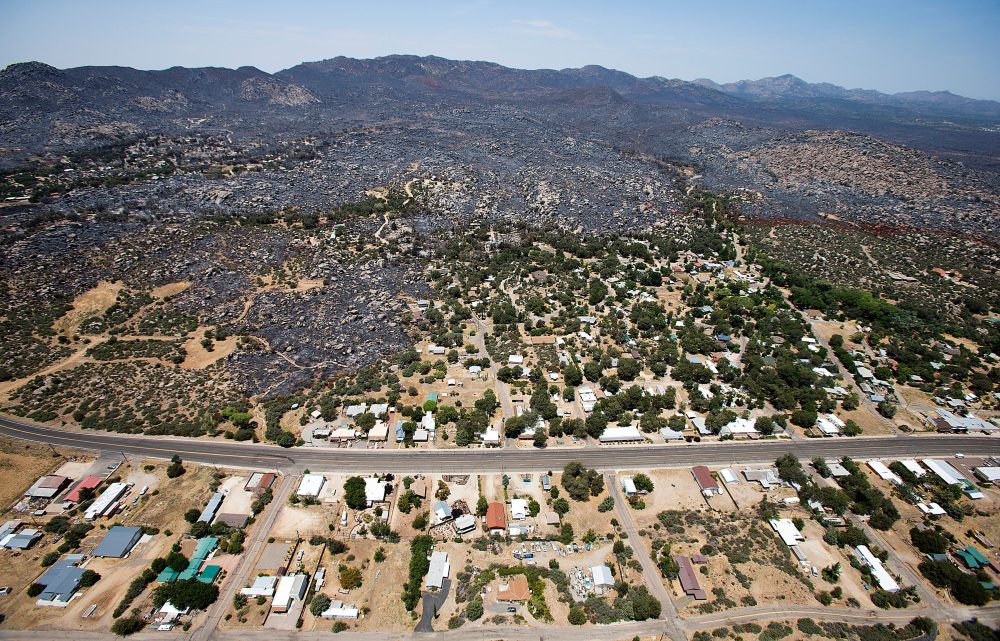
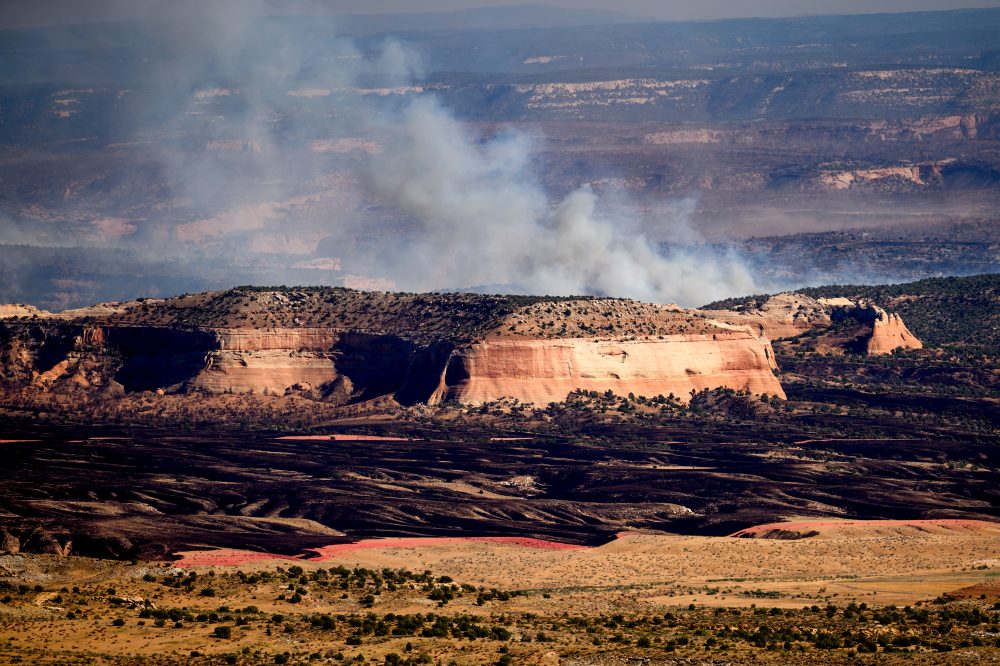
A wildfire burning near the Colorado-Utah border has taken the lives of three firefighters and left two others injured, making it one of the most deadly incidents for firefighters since a catastrophic blaze in Arizona more than a decade ago.
The Yarnell Hill Fire of June 30, 2013, which claimed 19 firefighter lives in Arizona, remains the single deadliest event for U.S. firefighters since the September 11, 2001, terrorist attacks and the worst for wildland firefighters in more than 100 years. Those firefighters perished about 30 miles southwest of Prescott, Arizona, after shifting winds drove flames toward them as they attempted to escape. They were in the process of deploying fire shelters — small, heat-resistant emergency tents designed to offer a chance at survival — when the fire overtook them in a brushy box canyon. Temperatures at the scene reached 2,000 degrees Fahrenheit.
On Saturday, a wildfire west of Grand Junction, Colorado, resulted in the deaths of three firefighters, with two more sustaining injuries. The fire has scorched approximately 44 square miles of land. All five firefighters were part of a Helitack crew — specialists who are transported by helicopter into hard-to-reach areas to clear vegetation and construct fire-resistant barriers in the path of advancing flames.
Much like the Yarnell Hill tragedy, these firefighters also made the decision to stop retreating and instead deploy fire shelters in an attempt to survive the advancing blaze.
Authorities say a thorough investigation could take months to complete, and a full picture of what occurred may be difficult to piece together. In the Yarnell Hill investigation, officials were unable to verify radio communications from the crew during a critical 30-minute window that might have revealed key details about the decisions made in the final moments.
The final report from that investigation cleared the firefighters of any wrongdoing, concluding they were properly qualified, adequately staffed, well-trained, and had “followed all standards and guidelines.” Their commanders were also found to have made reasonable decisions given the rapidly deteriorating conditions. The report summed up the tragedy by noting, “Complexity can outpace organizational attempts to respond.”
Fire shelters are considered a measure of absolute last resort, offering uncertain odds in otherwise unsurvivable situations. In a 2015 wildfire in Washington state, two firefighters who used the tents made it out alive, while three others who sheltered inside a truck did not survive.
The effectiveness of the shelters depends heavily on the specific conditions at the time of deployment. Riva Duncan, president of Grassroots Wildland Firefighters — a firefighter advocacy organization — noted Monday that the tents are not built to withstand direct contact with flames.
“It’s your last-ditch effort to try to survive,” Duncan said.
Sam Kerr is making her way back to the National Women’s Soccer League, rejoining the team where she once made her mark.
Gotham FC, the reigning NWSL champions, announced on Monday that they have signed the 32-year-old forward to a contract running through the 2030 season. Kerr became a free agent after her deal with English club Chelsea came to a close.
Before her time in England, Kerr built a strong NWSL resume over seven seasons with three different clubs, appearing in 119 regular-season games with 113 starts. That included three seasons — 2015 through 2017 — with Sky Blue FC, the club that has since been rebranded as Gotham FC.
Following her time with Sky Blue FC, Kerr spent the 2018 season with the Chicago Red Stars before heading home to Australia to play for the Perth Glory during the 2018-19 season. She then returned to Chicago in 2019 before making the move to Chelsea in the Women’s Super League later that same year.
Even with more than six years away from the league, Kerr’s 77 regular-season goals remain an NWSL record. In 2017, she claimed both the Golden Boot and MVP honors after putting up 17 goals in 22 games with Sky Blue FC.
Gotham FC General Manager Yael Averbuch West praised the signing in an official statement, saying, “Sam is one of the defining players of her generation and a game-changing talent who has consistently delivered at the highest levels of world football.”
“Her winning mentality, relentless competitiveness and ability to decide matches in an instant make her one of the most impactful players in the game. Bringing Sam back to Gotham is a landmark moment for our club, and we couldn’t be more excited,” Averbuch West added.
During her six years at Chelsea, Kerr scored 116 goals, claimed the Women’s Super League Golden Boot twice, and was part of a squad that captured five league titles and six domestic cup trophies.
Kerr will be eligible to take the field for Gotham once the NWSL’s transfer window opens on July 14. The club is set to host the Washington Spirit on July 15 in the Queens Classic in New York.
Kerr expressed her enthusiasm about the move in a statement of her own: “I’m incredibly excited to return to Gotham FC and to this city. This club was an important part of my journey, and to come back at this moment, with everything Gotham has built, is really special. The ambition here is clear, and I’m looking forward to helping this team compete for trophies and create more history.”
One financial note: Kerr does not qualify for the NWSL’s new High Impact Player rule, which takes effect Wednesday. That rule allows clubs to pay top-tier players up to $1 million above the salary cap. Kerr falls short of the eligibility criteria largely because she missed 20 months of action after tearing her ACL in January 2024.
Kerr’s return to the United States also comes after her marriage to fellow soccer player and midfielder Kristie Mewis. The couple recently welcomed a child together.
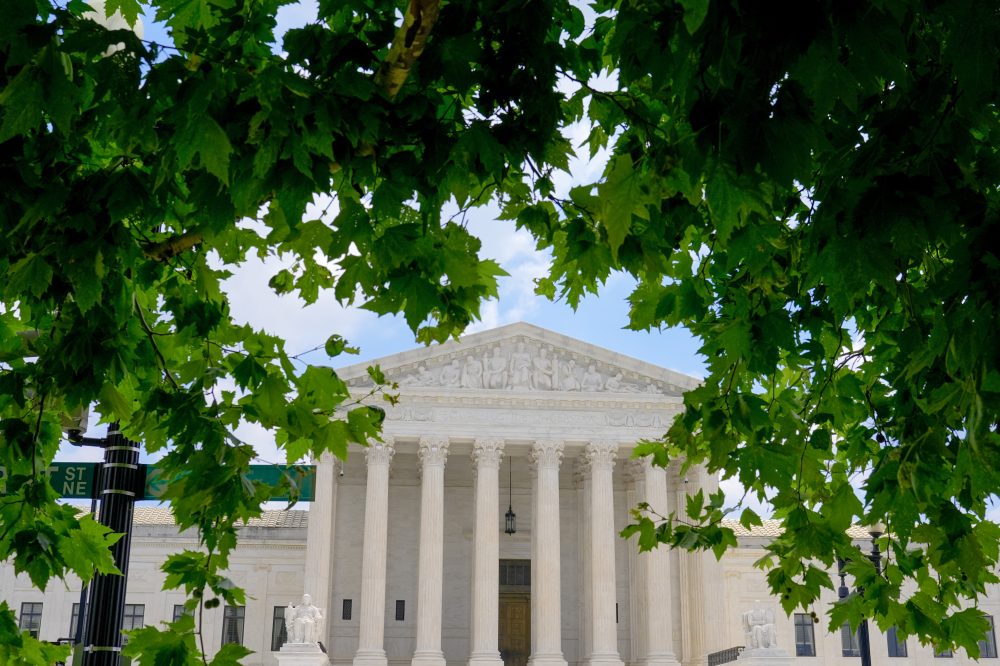
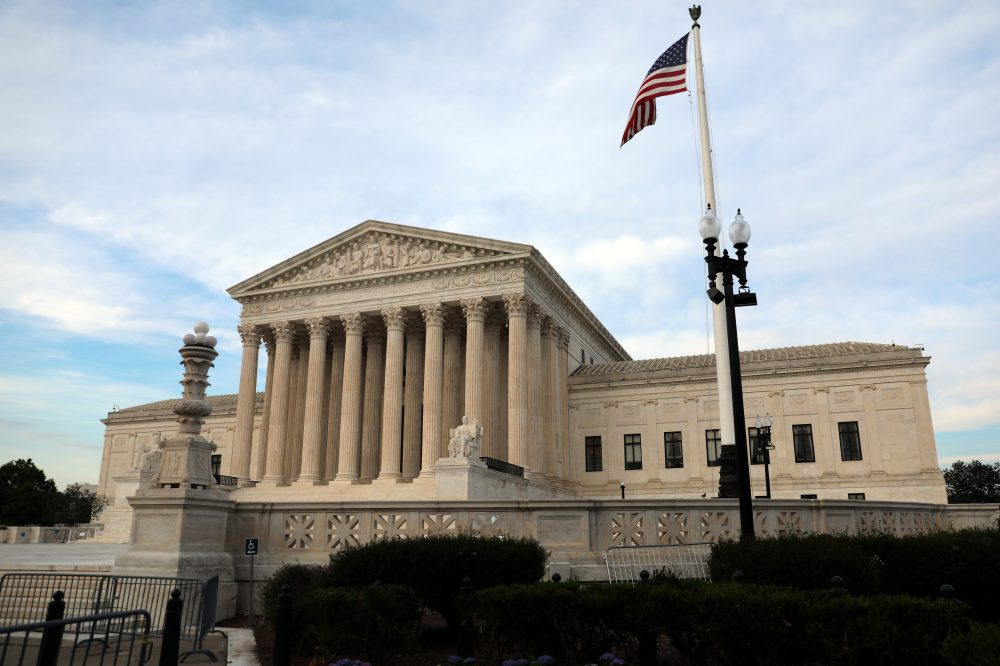
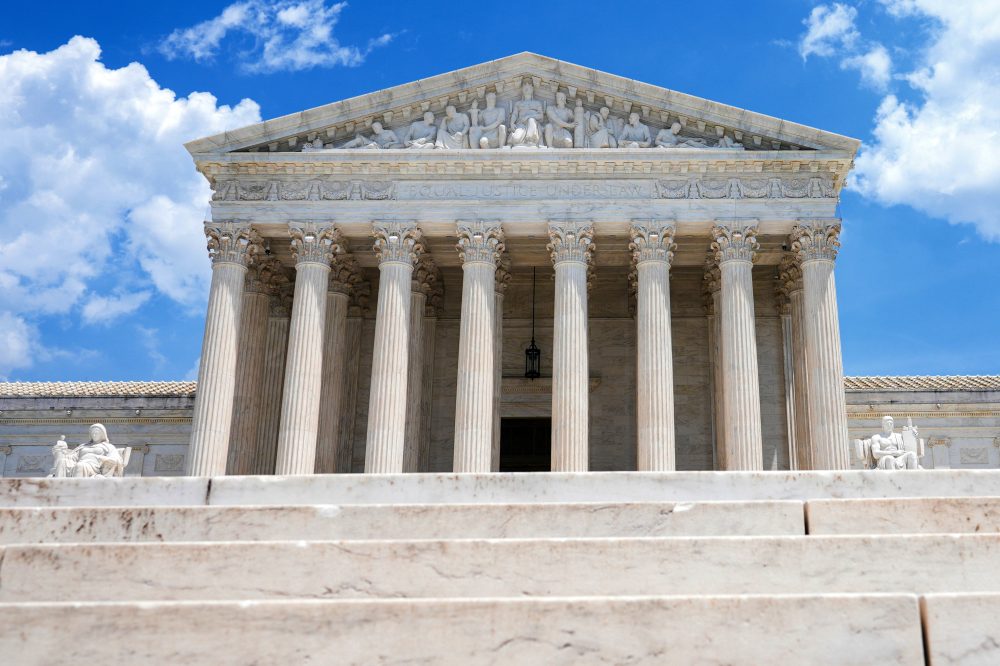
A major ruling from the U.S. Supreme Court has handed the Trump administration a significant legal victory, giving it the authority to remove Temporary Protected Status — commonly known as TPS — from hundreds of thousands of people currently living in the United States under that protection.
The court’s decision clears the way for the administration to strip TPS from individuals from the small number of countries that still have active designations under the program.
The ruling is being viewed by many as a move that could effectively bring the TPS program to an end, as the administration now has the legal standing to wind down protections for the remaining eligible populations.
Among those most directly affected are hundreds of thousands of Haitians and Syrians, who had been shielded from deportation under the program. The Supreme Court ruled in favor of the administration’s push to end those protections.
TPS has historically offered a temporary safe harbor for people from countries experiencing ongoing armed conflict, environmental disasters, or other extraordinary conditions that make it unsafe to return.
The Roman Catholic Archdiocese of San Francisco announced Monday that it has reached a $395 million settlement with approximately 530 individuals who say they were sexually abused as children by priests. The agreement, if finalized, would bring the archdiocese’s bankruptcy case to a close.
The deal stands as the largest settlement of its kind ever reached through bankruptcy proceedings by a Catholic diocese in the country. However, it still requires approval from U.S. Bankruptcy Judge Dennis Montali in San Francisco before it can take effect.
The archdiocese serves close to 450,000 Catholics across San Francisco, San Mateo, and Marin counties in California. As part of the settlement terms, church leaders also agreed to publicly release the names of priests who have been credibly accused of sexually abusing minors, along with implementing new measures designed to prevent future misconduct.
San Francisco Archbishop Salvatore Cordileone released a statement addressing the agreement. “We remain committed to the healing and care of survivors who have suffered because of past sins of Church ministers,” he said. “We pray for all survivors of sexual abuse, for our Archdiocese, parish communities and schools, and for the eradication of this shameful crime from our midst and from society as a whole.”
The archdiocese sought bankruptcy protection in 2023. It is among more than two dozen Catholic dioceses across the country that have taken similar steps in recent years, following the passage of laws in California, New York, and other states that temporarily allowed victims of childhood sexual abuse to pursue legal action over crimes that occurred decades ago.
The $395 million figure eclipses the previous record held by the diocese of Rockville Centre on Long Island, New York, which had settled for $323 million through bankruptcy. Notably, the archdioceses of Los Angeles and New York reached even larger sex abuse settlements in recent years, though neither filed for bankruptcy to do so.
Steve Moreno, who served on a court-appointed committee representing abuse survivors during the bankruptcy process, called the settlement a meaningful step forward following years of legal battles. “No amount of money can erase the pain and shame associated with carrying the burden of my child abuse in silence for over 50 years,” Moreno said in a statement.
Major League Soccer’s Chicago Fire made a blockbuster announcement Monday, confirming the signing of Polish striker Robert Lewandowski on a contract that extends through the 2027-28 season.
The prolific forward is trading Barcelona’s Camp Nou for Chicago’s Soldier Field, where he will fill a Designated Player slot and an international roster position — provided he receives his P-1 visa and International Transfer Certificate, according to the club.
Lewandowski’s numbers speak for themselves. During four seasons with Barcelona alone, he found the back of the net 120 times. Across his career with Barcelona, Bayern Munich, and Borussia Dortmund combined, the 37-year-old has scored a staggering 567 goals in all competitions, while also accumulating 30 trophies among those three clubs.
On the international stage, Lewandowski captains Poland, has made 167 appearances for his country, and has scored 89 international goals.
Chicago Fire head coach Gregg Berhalter expressed his excitement about bringing such a decorated player to the club.
“From the day (club owner) Joe Mansueto and I met for the first time, we set out to build a world-class Club that inspires greatness, unites Chicago and wins championships,” Berhalter said in a statement.
“Robert embodies those values and represents the standards this city deserves: a champion and a competitor. His arrival reinforces our ambition to compete for trophies and raises the standards for the club to heights worthy of this city.”
“We cannot wait to get to work with him and have Chicago see first-hand why he is among the most revered sporting icons in the world.”
The signing comes at a promising moment for the Fire, who currently sit third in the Eastern Conference with 26 points through 14 games — seven points behind conference leaders Nashville.
WASHINGTON — President Donald Trump put his signature on a new memorandum Monday that backs Americans’ right to repair their own vehicles.
Although most car owners are already legally allowed to work on their own vehicles, federal law draws the line at tampering with emissions-control systems. On top of that, automakers have long kept independent mechanics and everyday consumers from accessing diagnostic software, repair manuals, and specialized tools needed to fix modern vehicles.
Those in the right-to-repair movement argue that these limitations push repair costs higher and take choices away from consumers. Automakers, on the other hand, contend the restrictions are necessary to ensure vehicle safety, protect against cybersecurity threats, and maintain emissions standards.
Trump described Monday’s action as a follow-up to a similar order he signed earlier this year, which applied to farm equipment and off-road machinery. He said he was moved to act after hearing reports of people facing legal trouble simply for working on their own vehicles.
“It’s really common sense,” Trump said, adding that in his view, many Americans are more capable of repairing their own cars than professional mechanics.
A grieving mother is calling on the United States Navy to make sweeping, long-term changes to the way it handles sexual assault cases — changes she says are long overdue following the death of her daughter.
The woman’s daughter, a sailor, was killed by a fellow shipmate, and her mother is now channeling that loss into a push for meaningful reform within the military branch.
She is demanding that the Navy take a hard look at its policies and make lasting adjustments to better protect service members from violence and sexual assault at the hands of their peers.
A traffic crash has prompted the closure of Boulden Boulevard between Southgate Boulevard and Moores Lane, according to transportation officials.
Motorists traveling through the affected stretch are advised to find alternate routes until the roadway is cleared and reopened. No additional details regarding the severity of the crash or an estimated reopening time were immediately available.
Drivers are urged to use caution in the surrounding area and allow extra travel time.
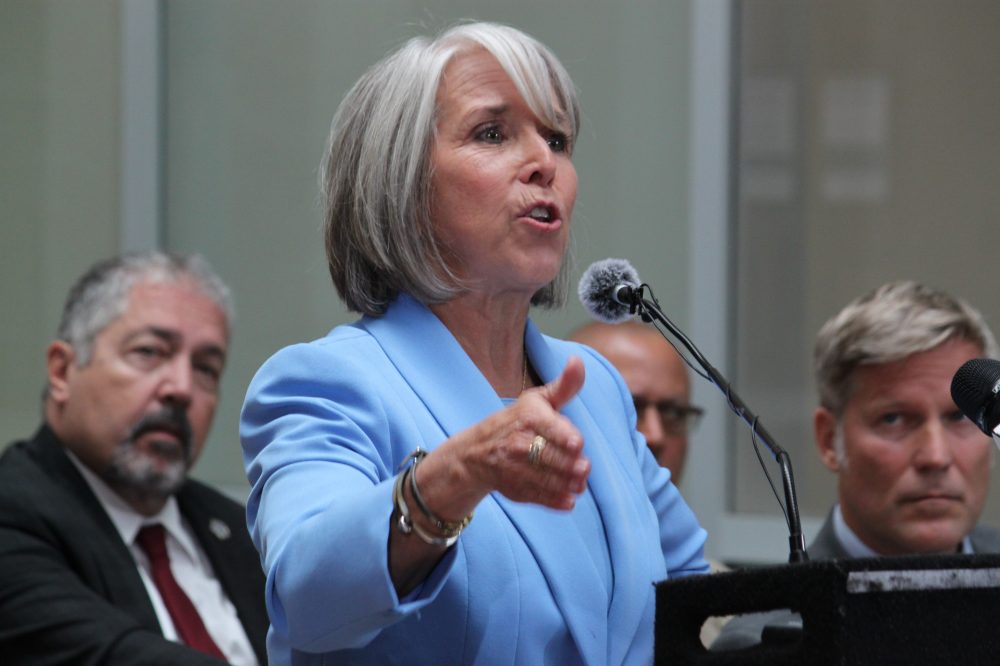
ALBUQUERQUE, N.M. — New Mexico’s governor announced Monday that the state may pursue billions of dollars in civil damages following revelations that agents with the U.S. Drug Enforcement Administration repeatedly allowed fentanyl shipments to pass through drug-troubled communities while trying to build larger criminal cases.
Democratic Gov. Michelle Lujan Grisham pledged to bring her anger “right to the White House and Congress” to demand guarantees that the DEA is no longer employing the dangerous tactic in New Mexico — and that it isn’t being used anywhere else in the country. Overdose rates have climbed sharply in New Mexico even as fentanyl-related deaths have dropped in other states.
“This is a stunning failure by the federal government,” the governor told reporters at a press conference held at the state medical examiner’s office in Albuquerque, where she was joined by state and local law enforcement officials demanding accountability. “It’s disgusting and despicable.”
The White House and DEA did not respond to requests for comment.
The governor’s statements came one week after the Associated Press revealed that DEA agents had repeatedly watched — without stopping — fentanyl shipments as part of a strategy to pursue bigger criminal targets between 2023 and 2025.
Both current and former DEA agents, including whistleblower David Howell, told the AP that the approach was a dangerous gamble with public safety and may have broken U.S. Justice Department rules designed to protect the public. The DEA initially denied Howell’s claims, but later asked the Justice Department’s independent watchdog to launch its own review.
The fentanyl went uncollected even as the DEA was running a public awareness campaign called “One Pill Can Kill,” which warned that even a tiny amount of the substance can be fatal — all during what has been described as the deadliest drug epidemic in U.S. history.
New Mexico’s attorney general last week launched a criminal investigation to determine whether any federal officials violated state law by knowingly exposing residents to the synthetic opioid.
“We’re going to protect the rest of the United States from this kind of foul, ‘I need a big case’ effort no matter what the consequences,” Lujan Grisham said. “We’re angry because it’s immoral.”
Albuquerque Mayor Tim Keller described fentanyl as his city’s “No. 1 challenge,” saying it fuels crime, homelessness, and places enormous strain on health care resources.
“Using us in some sort of uninformed, undisciplined experiment that’s literally killing our people — that’s what this is,” Keller said. “This should outrage every single New Mexican.”
President Trump last week shared a link on his Truth Social account to a story blaming the scandal on the “Biden-run Justice Department.” The Justice Department also stated last week that “the alleged conduct occurred under the Biden Administration’s disastrous open border policies.”
However, whistleblower Howell first raised concerns during the Biden administration in 2023 and was sidelined as a result. He continued to flag uninspected fentanyl shipments as recently as last year. The largest shipment he documented — 1.8 million pills — was one the DEA learned about but chose not to intercept in March 2025, two months into President Trump’s second term.
Lujan Grisham has criticized both administrations for failing to stop the flow of fentanyl into New Mexico. She pointed to the death last year of a 15-month-old girl who reportedly ingested some of her mother’s drugs in Española, a town hit hard by poverty and addiction.
It remains unclear whether any specific fatal overdoses in the state can be directly tied to the DEA’s strategy. While overdose deaths fell 14% nationally last year, New Mexico saw a 21% increase, according to government data.
“Somebody must pay for the damage to the state, the public safety risks that will be shared by everyone here for a decade or more, and pay to try to right the wrongs and put people’s lives back together,” the governor said.
Lujan Grisham, who will leave office at the end of this year after serving two terms, said the hardest part of being an elected official is facing victims of what she called “senseless” loss.
“There are no words that can take away that pain,” she said. “Whatever we can do to prevent the next loss for the next family, is the work that we’re all collectively doing.”
FRANKFURT, Germany — The leader of the European Central Bank is standing firmly behind the institution’s decision to raise interest rates earlier this month, rejecting the notion that the move was simply a precautionary measure.
ECB chief Christine Lagarde stated Monday that the quarter percentage-point rate increase on June 11 was absolutely necessary. Without it, she argued, inflation could have remained above the bank’s 2% target all the way through 2028.
“Some have characterized our rate increase earlier this month as an ‘insurance hike,’” Lagarde said. “I’m sorry to disappoint them. That is not an accurate description. We faced an outlook of rising headline and core inflation.”
The ECB serves as the central bank for the 21 nations that share the euro currency. The June hike brought the benchmark interest rate up by a quarter point to 2.25% — the first rate adjustment in a full year. Despite the increase, economists project that inflation won’t fall back to the 2% goal until the final quarter of 2027. As of May, annual inflation across the euro area stood at 3.2%.
Lagarde was quick to note, however, that the bank does not anticipate needing the aggressive half-point or three-quarter-point rate increases it previously used to bring inflation under control after Russia halted natural gas supplies during the war in Ukraine.
Instead, she explained that improved economic forecasting now allows the bank to evaluate conditions on a meeting-by-meeting basis and respond more carefully to shifting price pressures. Among the current concerns are the economic fallout from the Iran war and disruptions to oil and gas shipments through the Strait of Hormuz. The bank’s next scheduled rate-setting meetings are set for July 22-23 and September 9-10.
Speaking at the bank’s annual monetary policy conference in Sintra, Portugal, Lagarde reflected on how the institution handled the earlier energy crisis. The Russian gas cutoff triggered “the fastest tightening cycle in our history, raising rates in increments we had never used before,” she said.
“We no longer need to act with the same force,” she added. “We can make measured adjustments to rates, calibrated to the shocks we face.”
Lagarde noted that bank analysts are now running scenarios covering both milder and more severe geopolitical outcomes to help avoid overreacting or underreacting to events. Oil prices have swung dramatically throughout the Iran conflict, while the broader European economy has shown more resilience than many anticipated in the face of new tariffs on European goods imposed by U.S. President Donald Trump.
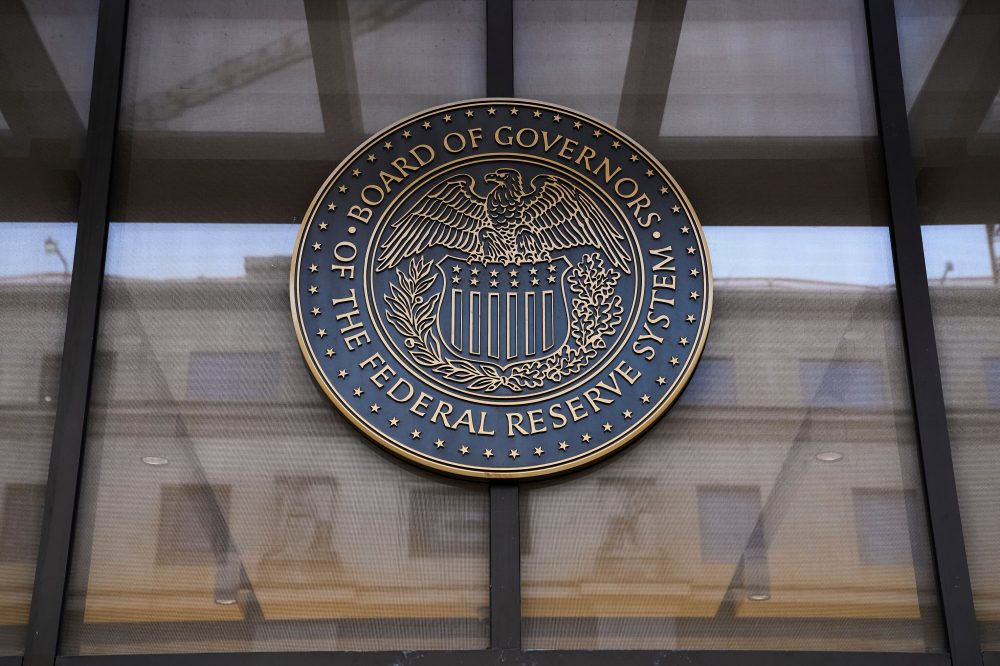
WASHINGTON — The U.S. Supreme Court ruled Monday that the Federal Reserve holds a special kind of independence from presidential control — a distinction shared by no other federal agency. However, the court stopped short of spelling out exactly how far that independence extends.
The ruling marks the latest chapter in an extraordinary standoff between the Fed and President Donald Trump. The outcome carries significant weight for global financial markets, which track the central bank’s interest rate decisions closely.
Trump has made no secret of his desire for the Fed to slash its key interest rate, which would reduce borrowing costs for homeowners, businesses, and the federal government. Last August, Trump moved to oust Fed Governor Lisa Cook, accusing her of mortgage fraud — an allegation she flatly denies. Cook was appointed by former President Joe Biden, and removing her would have allowed Trump to install a more favorable replacement.
In a 5-4 decision, the justices determined that the president does not have the authority to dismiss any of the seven members of the Fed’s board of governors without demonstrating a legitimate reason. This ruling stands in contrast to a separate 6-3 decision issued the same day, in which the court ruled that the president can fire the heads of other previously independent agencies — such as the Federal Trade Commission — at will.
Scott Alvarez, who previously served as the Fed’s top attorney, described the ruling’s significance plainly. “That’s a big deal,” he said. “That’s one of the things that makes the Fed independent.”
Despite offering some protection to the Fed, the ruling does not fully shield Cook from additional removal efforts. Trump posted on his Truth Social platform that “we will take appropriate action immediately” to remove her. For the time being, however, Cook retains her position while the legal fight continues in lower courts.
Chief Justice John Roberts wrote that the Fed carries a “unique historical status and role,” drawing a comparison to the First and Second Banks of the United States from the early 1800s, which were designed to operate “at a deliberate remove from the ordinary political process.” Roberts argued that allowing a president to fire a Fed governor for any reason would compromise that official’s ability to make independent decisions.
“Nothing could be more corrosive of the independence that Congress sought to preserve,” Roberts wrote in the court’s opinion.
Still, not everyone sees the ruling as a clear victory. Kathryn Judge, a law professor at Columbia University, pointed out that by stripping independence protections from other agencies while preserving them only for the Fed, the court has actually weakened the broader principle of nonpolitical governance.
“Fed independence lives on for another day, but is not as robust as it was prior to these decisions,” she said.
The court also declined to fully close the door on Trump’s bid to remove Cook. While Trump’s legal team acknowledged that any firing would need to be “for cause,” they argued the White House should be the one defining that standard — beyond judicial review. The Supreme Court pushed back on that position, suggesting “for cause” likely means serious misconduct unrelated to official duties, though without offering much elaboration.
Notably, the court also rejected the higher protection standard that Cook’s legal team had argued for — one that would have limited removal to cases of inefficiency, neglect of duty, or job-related misconduct. Since the alleged mortgage fraud reportedly took place before Cook joined the Fed, that standard would likely have ended the case in her favor.
The court additionally ruled that Cook must receive formal notice of any firing and an opportunity to respond — something that did not happen when Trump announced her dismissal via Truth Social last August. Roberts even included a footnote in his opinion noting that nothing prevents Trump from “trying again” to remove her, as long as proper procedures are followed.
Legal experts suggest Trump could attempt a streamlined process to fire Cook again and strengthen his position in the lower courts.
“That’s an area of vulnerability still for the Federal Reserve and for Lisa Cook,” Alvarez said.
The ongoing legal battle is expected to further clarify the limits of Federal Reserve independence going forward.
The stakes are high. The Fed holds enormous influence over the U.S. economy, using its control over short-term interest rates to either stimulate growth or cool inflation. When rates fall, borrowing becomes cheaper and economic activity tends to pick up. When rates rise, spending slows and inflation is brought under control — but jobs can be lost in the process.
Economists have long argued that central banks function better when insulated from political pressure, particularly when it comes to making unpopular decisions like raising interest rates. The lesson was reinforced during the inflation crisis of the 1970s and early 1980s, when former Fed Chair Arthur Burns was widely criticized for bowing to pressure from President Richard Nixon to keep rates low ahead of the 1972 election. Nixon feared higher rates would cost him votes; he won in a landslide, but inflation spiraled out of control.
Former Fed Chair Paul Volcker, appointed in 1979 by President Jimmy Carter, ultimately took the opposite approach — pushing the short-term rate to nearly 20%, compared to its current level of 3.6%. The resulting recession drove unemployment close to 11% and triggered widespread protests. But Volcker held firm, and by the mid-1980s inflation had returned to the low single digits. His resolve is now widely regarded as a defining example of why an independent central bank matters.
For investors, a politically independent Fed is also more predictable. A Fed subject to political whims would be harder to anticipate, potentially driving investors to demand higher returns on Treasury bonds — which would raise borrowing costs across the entire economy.
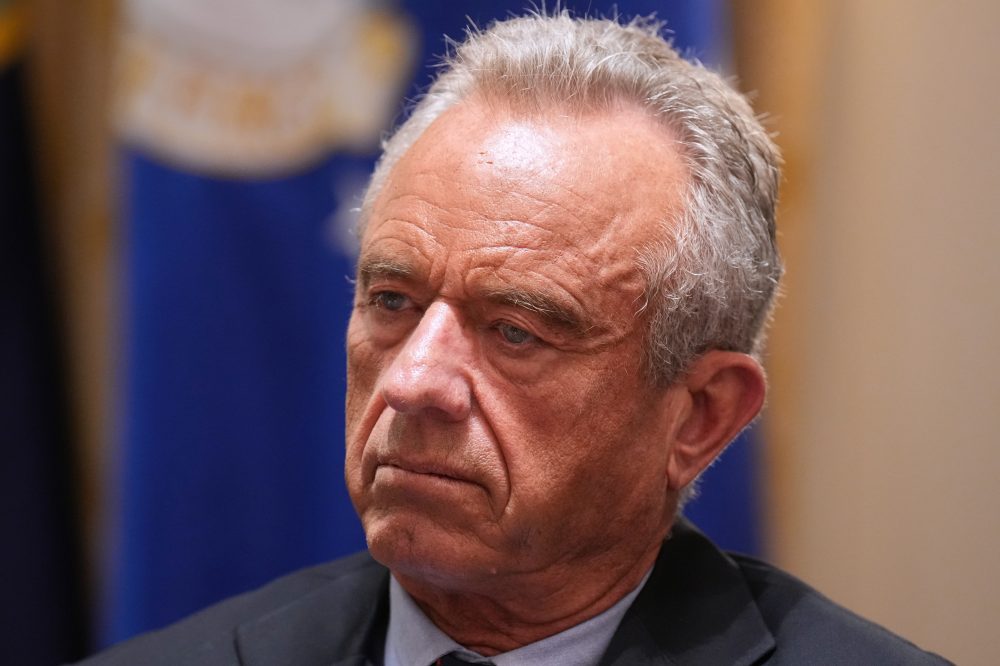
Federal health officials are preparing to hold a major review of controversial peptide drugs next month, but the expert panel assembled for the meeting looks very different from those that came before it — and that has some people talking.
The Food and Drug Administration released its list of panelists Monday for an upcoming two-day meeting aimed at reconsidering the safety and effectiveness of several widely used peptide injections, including some that Health Secretary Robert F. Kennedy Jr. has publicly endorsed.
Past FDA panels on this subject were made up primarily of academics and researchers from universities. The newly assembled group, however, is largely composed of health professionals who have a direct financial stake in the peptide industry — people who prescribe, manufacture, or actively promote these substances.
The meeting is being seen as the latest move by Kennedy and his team to reshape federal health policy in line with the Make America Healthy Again movement. Several prominent backers of that movement are involved in selling peptide products, even though many pharmaceutical experts classify them as illegal, unapproved drugs.
These substances are widely sold online and marketed through wellness clinics as tools for building muscle, speeding up injury recovery, and slowing the aging process — despite limited scientific evidence to back up those claims. Sellers frequently sidestep federal regulations by labeling their products as being “for research use only,” since the FDA does not regulate research chemicals.
A large portion of the injectable peptides available in the United States are produced by compounding pharmacies — specialized operations that create custom medications not offered by conventional drug manufacturers.
For years, the FDA has cautioned Americans about the dangers of injecting compounds such as BPC-157 and TB-500, neither of which has been thoroughly studied in human subjects. Both are classified as doping substances by international sports governing bodies. They are among seven peptides scheduled for review in July.
Earlier versions of the FDA’s drug compounding panel — the same body that will convene next month — had consistently voted against allowing peptide ingredients proposed by compounding pharmacies, determining each time that the risks to patients were too great. Those earlier panels were largely drawn from experts at institutions including Duke, Harvard, and Johns Hopkins.
The current panel includes more than half a dozen members who operate clinics, online businesses, or pharmacies that specialize in peptides. These substances are frequently offered alongside other unapproved treatments such as vitamin infusions.
Among the panelists is Dr. Haleem Mohammed, who runs clinics in Florida offering peptide injections, vitamins, testosterone, and weight loss medications as part of a national clinic chain called Gameday Men’s Health. The company’s own website acknowledges that “compounded medications offered through our services are not FDA-approved, and the FDA does not verify their safety.”
Another panelist, Dr. Gabriel Alizaidy, charges $500 for consultations on “peptide and hormone” topics, including guidance on “where to safely get each peptide or compound.” He promotes BPC-157, GHK-Cu, and other peptides to thousands of followers on Instagram and TikTok. His website notes that each consultation “is educational in nature and does not constitute medical care, diagnosis, or treatment.”
A third member of the panel is Bobby Harshbarger, a Tennessee state senator with several connections to the compounding pharmacy industry. Harshbarger works as a pharmacist at his family’s business, Premiere Pharmacy, which sells compounded medications for conditions ranging from weight loss and pain to longevity.
His mother, Rep. Diana Harshbarger, is also a licensed pharmacist and a Republican member of Congress from Tennessee. Last year, she wrote to Kennedy urging him to ease FDA restrictions on a half-dozen peptides.
President Donald Trump has repeatedly praised Rep. Harshbarger’s backing of his agenda. Last year, the president pardoned her husband, Robert Harshbarger Jr., who had pleaded guilty more than a decade ago to substituting an unapproved drug from China for one used by kidney dialysis patients. He lost his pharmacy license and served a four-year prison sentence.
The Associated Press reached out to Mohammed, Alizaidy, and Bobby Harshbarger for comment Monday afternoon, but none responded.
The FDA maintains more than 30 advisory panels that provide guidance on drugs, vaccines, food ingredients, and other products. These meetings follow strict federal transparency rules regarding panel composition and financial disclosures. Panelists with financial ties to an industry may participate, but those relationships must be publicly disclosed, and regulators are required to explain why a person’s expertise justifies their involvement despite any potential conflict of interest.
Kennedy and his allies have frequently attacked federal advisory panels, claiming they are riddled with conflicts of interest — even as federal data has generally shown otherwise. Last year, Kennedy dismissed all 17 members of the Centers for Disease Control and Prevention’s vaccine advisory panel and replaced them with individuals who include several voices skeptical of vaccines. A federal judge later said that move likely broke federal rules.
Earlier this year, Kennedy told podcast host Joe Rogan that he is “a big fan of peptides” and said he has used them to recover from injuries.
Former FDA Commissioner Marty Makary, who stepped down in May, was also a critic of the agency’s advisory panel system, calling the meetings costly, slow, and too susceptible to financial conflicts. The number of such meetings dropped sharply during his time in the role. In their place, the FDA held a series of informal gatherings with hand-selected experts on subjects aligned with Kennedy’s priorities, including the risks associated with talc powder and antidepressants.
Democrats representing 25 states and the District of Columbia filed a lawsuit Monday against the Trump administration, challenging new federal guidance on Medicaid work requirements that they say will block eligible Americans from getting the healthcare they depend on.
The attorneys general and governors behind the legal action argue that an interim final rule issued earlier this month by the Centers for Medicare and Medicaid Services goes beyond what the law passed last summer actually authorizes. That legislation set the stage for significant changes to the Medicaid program.
The plaintiffs contend that the Republican administration’s narrow reading of certain parts of the law — including new restrictions on who qualifies for a medical frailty exemption — will create harmful barriers to coverage and cause confusion in states racing to update their systems before a January deadline.
“Added administrative burdens will cause individuals who are eligible for Medicaid to lose or be denied coverage,” the plaintiffs wrote in the suit. “People with disabilities, patients in the middle of cancer treatment, or those struggling with another serious or complex health condition, shouldn’t be at risk of losing the care that helps maintain their health.”
Spokespeople for the U.S. Department of Health and Human Services and CMS — the two agencies named in the lawsuit — had not responded to requests for comment at the time of this report. The Trump administration has described the new rules as practical steps to eliminate government freeloading and make sure benefits go to those who truly need them.
The Medicaid restrictions stem from Trump’s major tax and policy legislation enacted in 2025. The changes specifically affect people enrolled through the Medicaid expansion, which extended the program to more lower-income Americans in most states.
Beginning January 1st, adults between the ages of 19 and 64 who are enrolled through the expansion will be required to demonstrate they are working or performing community service for at least 80 hours per month, or attending school at least half-time. Exemptions exist for people classified as medically frail, those in addiction treatment, and certain other groups.
The CMS announcement earlier this month surprised states by introducing a new definition of medical frailty. While the law described medically frail individuals as those with substance use disorders, disabilities, or serious medical conditions, the CMS rule added a higher bar — requiring that a person’s condition “significantly impair” their ability to work, volunteer, or attend school at the levels the law demands before they can be exempted.
Under the rule, patients can self-certify that they meet this definition in 2027 and once in 2028. However, when they seek to renew coverage in 2028, they will need to provide proof. Health analysts and state Medicaid officials have said it remains unclear what existing records or documents would satisfy that requirement.
The lawsuit states that the new definition arrived “contrary to months of regular communications with CMS and preliminary guidance materials upon which Plaintiff States based their implementation plans.” The states also argue that CMS has still not given them enough information to update their systems properly.
New York Attorney General Letitia James, one of the Democrats leading the legal challenge, warned that the rule puts thousands of her state’s residents at risk of losing coverage.
“New Yorkers who are battling cancer, living with a disability, managing a serious mental health condition, or recovering from addiction should be able to get the health care they need without being buried in paperwork,” she said in a statement.
The New York Yankees made a roster adjustment Monday, placing right-handed closer David Bednar on the paternity list and recalling right-hander Jake Bird from their Triple-A affiliate in Scranton Wilkes-Barre to cover his spot on the roster. The move comes just before the team opens a home series against the Detroit Tigers.
Bednar, 31, has put together a solid season so far, going 2-3 with 16 saves and a 3.09 ERA across 33 relief outings. Over the course of his eight years in the major leagues, he has compiled a 20-26 record with 127 saves and a 3.14 ERA in 348 relief appearances, having previously suited up for the San Diego Padres from 2019 to 2020, the Pittsburgh Pirates from 2021 to 2025, and the Yankees from 2025 to 2026.
Bird, 30, started this season going 1-1 with a 4.88 ERA in 29 relief appearances before being sent down to Triple-A earlier this month. Since his demotion, he strung together three straight scoreless outings for Scranton/Wilkes-Barre.
Now in his fifth major league season, Bird carries a career record of 12-12 with a 4.78 ERA in 220 appearances, including three starts, having pitched for the Colorado Rockies from 2022 to 2025 and the Yankees from 2025 to 2026.
The United States Department of Agriculture’s National Agricultural Statistics Service, known as NASS, has released its latest Crop Progress and Condition estimates.
The report, published through the USDA’s official reporting system, provides updated figures on the current state of crop development nationwide.
These weekly progress and condition reports are a key resource for farmers, agricultural businesses, and industry analysts who rely on the data to monitor how the growing season is unfolding.
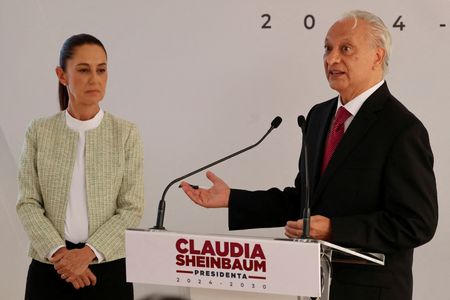
Mexican President Claudia Sheinbaum made clear Monday that she would not stand in the way of justice after a video emerged appearing to show Victor Rodriguez, the former chief of state-owned energy company Pemex, physically assaulting his wife.
The video was uploaded to YouTube on Friday by a woman who identified herself as Maria Felicia Jimenez, Rodriguez’s wife. The footage appears to have been captured by a home security camera in a living room and carries a date of March 15, 2026. Reuters has not independently confirmed the video’s authenticity.
At the time shown in the recording, Rodriguez was still serving as the top executive at Pemex. He later announced he was stepping down on May 14, in a joint video alongside Sheinbaum, who expressed gratitude for his work and described his exit as consistent with a timeline he had set before accepting the position.
Attempts to reach Rodriguez for comment were unsuccessful. A post on an X account that appeared to be his stated that he had withdrawn from any public-facing role while authorities investigate the matter, and that he was willing to cooperate with all relevant agencies.
“Let the law be applied, we will not protect anyone,” Sheinbaum declared at her regular morning press briefing.
“There can be no violence against women,” she added, making clear that Rodriguez would not be given any position within her government going forward.
In the five-minute clip reviewed by Reuters, Rodriguez is seen grabbing a woman by the throat, yanking her by the hair, pushing her, and pinning her down on a couch. He appears shirtless during portions of the video and is clearly recognizable throughout. A young child is briefly visible at the beginning of the footage before leaving the frame.
A written statement accompanying the YouTube video read: “Breaking my silence meant losing my job, my money, having nowhere to live, and having my children taken from me, simply because of his closeness to the highest spheres of power — the presidency, governors, members of congress, secretaries of state.”
The statement continued: “This is a government led by women, so I am asking for help and for the necessary measures to be taken to protect me and my children who are minors.”
The attorney general’s office for the state of Morelos announced on X Friday that it had launched an investigation into suspected criminal conduct stemming from a video “in which a violent act against a woman is observed.”
Throughout her time in office, Sheinbaum has consistently championed gender equality, a violence-free life for women, and what she has called an “era of women” since taking power.
Rodriguez has been a long-standing ally of Sheinbaum, with the two sharing both a personal and professional history going back to their time as students. After departing Pemex in May, he was named to lead the energy transition institute INEEL, though the energy ministry later clarified in a statement that his appointment was never officially finalized.
Scientists have made a surprising discovery — a rare dinosaur fossil from Antarctica that had been sitting unnoticed in a storage drawer for decades.
The bone is from the tail of a titanosaur, a large, long-necked, plant-eating dinosaur. Researchers have not yet pinpointed the exact species the fossil belongs to.
The bone was originally unearthed in 1985 during a research expedition to James Ross Island in Antarctica. Geologist Mike Thomson, who was working alongside the British Antarctic Survey at the time, was charting the area’s rock formations and gathered marine reptile fossils to assist with future geological dating. He logged the find simply as belonging to a large reptile.
Years later, paleontologist Mark Evans came across the bone while going through the British Antarctic Survey’s collections and suspected it could be from a dinosaur. He and a team of researchers studied the bone’s shape and compared it against more complete dinosaur specimens, ultimately confirming the identification. Their findings were published Monday in the journal Acta Palaeontologica Polonica.
Finding dinosaur fossils in Antarctica is extremely uncommon due to the continent’s harsh, ice-covered terrain. However, millions of years ago when this creature roamed the earth, the region looked very different. Study co-author Paul Barrett with the Natural History Museum in London described ancient Antarctica as a “rather different and much more hospitable place than we think of today,” filled with dense forests.
The dinosaur measured roughly 23 feet, or about 7 meters, in length — relatively small for a titanosaur — and may have still been a young animal when it died. Scientists are uncertain how the creature perished, but they believe its body drifted away from the shoreline and eventually sank to the ocean floor, where it became preserved in marine rock over time.
Advances in technology have given modern researchers tools to look inside bones and extract far more detailed information than was possible when the fossil was first collected. Tragically, Thomson passed away in 2020, never knowing the bone he picked up decades earlier turned out to be a dinosaur fossil.
Study co-author Mike Evans with the British Antarctic Survey reflected on the discovery, saying: “If he were still with us, he would be delighted to know what this was.”
A JetBlue pilot reported a collision with a drone Monday morning while on approach to JFK International Airport in New York, prompting a federal investigation.
According to the Federal Aviation Administration, the incident occurred at approximately 7:15 a.m. as the aircraft descended through 3,000 feet — about 914 meters — while crossing over the coastline. The plane continued to land safely without requiring any emergency assistance, and a subsequent inspection of the aircraft revealed no damage.
Audio captured by ATC.com recorded the pilot alerting air traffic control about the encounter. “We collided with a drone back there in the turn,” the pilot said. “It hit us right above the cockpit.”
JetBlue confirmed that all passengers exited the aircraft normally following the landing. The plane — an Airbus A321 that had been flying overnight from Las Vegas to New York — was then pulled from service for a thorough inspection. The airline reported that it “found no damage or evidence of a collision.”
In a written statement, the airline added: “Safety is JetBlue’s first priority, and we will assist with any relevant investigations.”
Under FAA rules, drones are generally permitted to fly no higher than 400 feet, or about 122 meters. However, the agency restricts drone use in airspace around airports and certain major public events due to safety concerns. Law enforcement officials note that even recreational drone operators filming overhead video can distract officers from monitoring other potential security threats.
FAA incident reports indicate that drone encounters near airports are becoming increasingly common. The danger is greatest near airports, where the flight paths of drones and commercial aircraft are most likely to intersect. The FAA reports that more than 100 drone sightings near airports are reported each month, and the agency works alongside law enforcement to investigate them. Drone operators who violate restricted airspace can face steep fines, license revocation, or confiscation of their equipment.
Growing concerns about drone threats have also been fueled by the deadly impact drones have had on battlefields in the wars in Ukraine and Iran, raising alarms among officials about broader security risks.
Authorities also caution that not every pilot report of a drone strike turns out to be an actual collision. In April, the FAA determined that a drone had passed approximately 1,000 feet — about 305 meters — below a United Airlines aircraft approaching San Diego, and had not made contact with the plane.
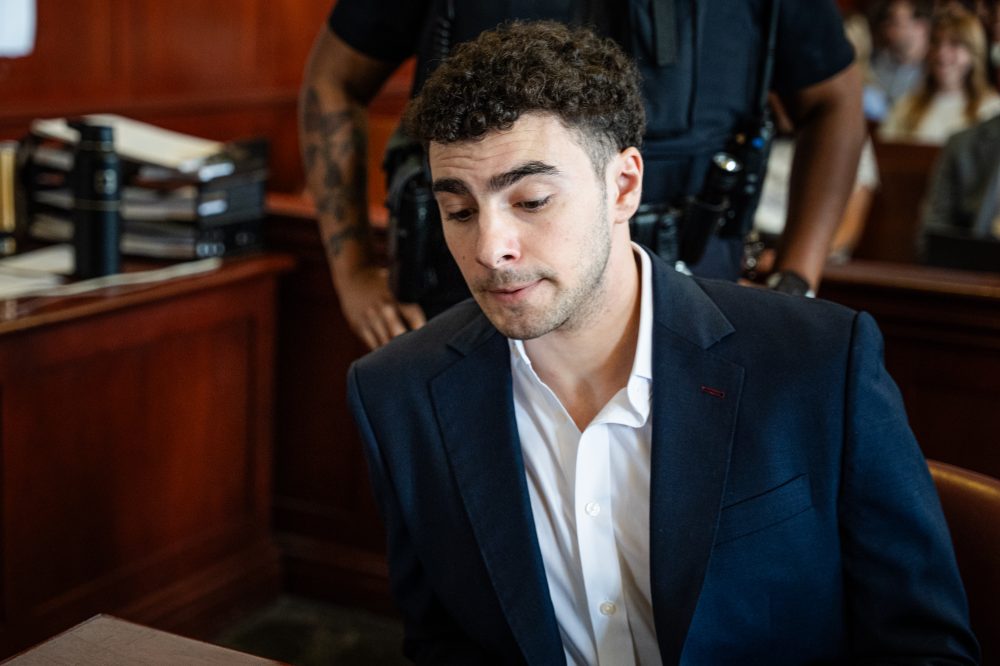
NEW YORK — A federal judge announced Monday that Luigi Mangione’s federal trial in the killing of UnitedHealthcare CEO Brian Thompson has been pushed back to January, scrapping the previously planned fall schedule.
U.S. District Judge Margaret Garnett said the delay is necessary to allow Mangione’s defense attorneys to concentrate on his state murder trial, which is set to get underway on September 8.
According to Garnett, jury selection in the federal case will now kick off on January 5 rather than the originally scheduled October 13 date. Opening statements and testimony are slated to begin January 25, replacing the former November 4 start date. The judge made the announcement during a hearing held in Manhattan.
Garnett also said she will keep the juror questionnaire under wraps until after the jury panel is selected, warning that having it circulate online for months ahead of jury selection “would only make what promises to be a difficult task more difficult.”
The hearing got off to a late start after Mangione became stuck in a courthouse elevator. He was eventually escorted into the courtroom by two deputy U.S. Marshals, appearing somewhat amused by the situation. Upon entering, he briefly looked out at the gallery, where roughly two dozen supporters had gathered.
Garnett acknowledged she had hoped with “undue optimism” to hold the federal trial in the fall, but said “we can no longer wait to see what happens” with the state case. “In my view it’s simply impossible to be moving through the jury selection process in this case while the defendant and his counsel are fully occupied by conducting the state trial,” she said.
Mangione’s attorneys chose not to speak with reporters following the hearing.
Mangione has entered not guilty pleas to both state and federal charges stemming from the December 4, 2024 killing. A conviction in either case could result in a life prison sentence.
Dressed in a beige jail uniform, the 28-year-old Ivy League graduate appeared alert and engaged throughout Monday’s brief proceeding. He was seen watching the proceedings intently at times, with his fingers laced together and his chin resting on them.
Before the hearing began, Mangione spoke animatedly with his attorneys, Karen Friedman Agnifilo and Marc Agnifilo, gesturing with his hands as he sat between them at the defense table.
The federal charges against Mangione allege he traveled across state lines by bus to stalk and kill Thompson, and that he used tools including a cellphone, the internet, and interstate highways, and stayed at a hostel catering to out-of-state guests while planning and executing the attack.
At a state court hearing in February, Mangione himself spoke out against facing two separate trials, telling the judge: “It’s the same trial twice. One plus one is two. Double jeopardy by any commonsense definition.” His lawyers had previously argued that consecutive trials on a tight timeline would infringe on his constitutional rights.
Thompson, 50, was shot and killed while walking toward a Manhattan hotel where UnitedHealth Group was holding its annual investor conference. Surveillance footage captured a masked gunman shooting him from behind. Investigators say the words “delay,” “deny,” and “depose” were found on the ammunition — a reference to a phrase commonly associated with insurance companies avoiding claim payouts.
Mangione was taken into custody five days after the shooting at a McDonald’s in Altoona, Pennsylvania, approximately 230 miles west of Manhattan.
In January, Judge Garnett ruled that the death penalty would not be pursued in the federal case, but allowed prosecutors to use evidence recovered from Mangione’s backpack at the time of his arrest. That evidence included a 3D-printed handgun that investigators say matches the weapon used to kill Thompson, along with a notebook in which authorities allege Mangione wrote about his intention to “wack” an insurance executive.
Earlier this month, Mangione’s defense team announced plans to pursue a psychiatric defense in the state case — a strategy that would have centered on claims that he was experiencing extreme emotional disturbance at the time of the killing. However, they reversed that decision just one day later. That particular defense is not permitted in federal court.
Mangione has drawn a significant following among people frustrated with the health insurance industry. An online fundraiser for his legal defense has collected more than $1.5 million, and his court appearances have been met by groups of supporters, some sporting “FREE LUIGI” T-shirts and green clothing — a nod to the Mario Bros. video game character of the same name.
A Catholic nun who was stopped by federal immigration agents while walking to Sunday Mass in her religious habit has been freed from custody, according to officials with the Diocese of Brownsville.
Sister Leticia Ugboaja was on her way to Our Lady of Sorrows Church in McAllen, Texas — located just a few miles from the U.S.-Mexico border — when U.S. Immigration and Customs Enforcement officers detained her. She was dressed in her habit at the time of the arrest.
The Department of Homeland Security and ICE had not responded to requests for comment as of the time of reporting.
Church officials quickly posted about the arrest on social media, and the story spread widely, drawing attention from members of Congress. U.S. Rep. Monica de la Cruz was among the congressional representatives who stepped in to advocate for Ugboaja’s release.
According to Brenda Riojas, a spokesperson for the Diocese of Brownsville, Sister Ugboaja belongs to the Daughters of Mary Mother of Mercy religious order and had been serving as an Extraordinary Minister of Holy Communion at Our Lady of Sorrows Church. Riojas also confirmed that Ugboaja works as a registered nurse at South Texas Health System and previously spent 10 years as a certified nursing assistant at DHR Health in Edinburg.
By Monday, Ugboaja had returned home after South Texas congressional members reached out to federal authorities on her behalf.
“We are grateful for the quick response of local representatives who reached out to the Department of Homeland Security to get her released from custody,” Riojas said in a statement.
The incident comes amid a broader immigration enforcement push under President Donald Trump, which has included operations at sensitive locations such as houses of worship. The crackdown has caused concern among faith communities nationwide, with some church leaders encouraging members to attend services online and offering to help with everyday tasks like grocery shopping for those too fearful to leave their homes.
BELGRADE, Serbia — Serbian President Aleksandar Vucic announced Monday that early general elections in the Balkan nation are expected within the next three to four months. He also repeated his intention to step down from the presidency before that vote takes place.
Vucic did not provide specific dates for either his resignation or the elections. Speaking to supporters at a rally on Saturday, he indicated it was likely the final time he would address them as president and said he plans to leave office within weeks.
Political observers widely view the move as a strategic maneuver that would position Vucic to take over as prime minister — a role that is formally the most powerful in the Serbian government. Vucic is currently serving his second presidential term and is prohibited by law from running for president again.
“Yes, it is logical that we will have elections soon, and when I say soon I mean the next three-four months,” Vucic stated. He added that he has not yet decided whether to pursue the prime minister’s position if his Serbian Progressive Party, known as SNS, wins the upcoming parliamentary election.
“Whatever I decide and whatever decision I make, it will be transparent, just like I have done by announcing my resignation,” he said. He noted he could step down at any point in July, August, or September, adding, “It will be no surprise.”
Under Serbian law, once Vucic formally submits his resignation, a presidential election must be held within 90 days. Regularly scheduled presidential and parliamentary elections in Serbia are not due until next year.
Vucic has been facing more than a year of widespread street demonstrations that originally erupted following a deadly train station tragedy in northern Serbia, which claimed the lives of 16 people. A youth-led movement demanding accountability for the collapse of a station canopy has rattled Vucic’s hold on power more significantly than any previous challenge.
Anti-government demonstrators have attributed the canopy collapse at the Novi Sad railway station to corruption-driven negligence in large government infrastructure projects.
Before assuming the presidency in 2017, Vucic had previously held the position of prime minister. His right-wing SNS party came to power in 2012, and since then he has steadily consolidated his authority. He has pushed back forcefully against protesters and has drawn criticism from the European Union over concerns about democratic backsliding in Serbia, including a crackdown on media freedom.
Hundreds of individuals have been detained during the protests, with demonstrators and international human rights organizations accusing Serbian police of using excessive force and conducting arbitrary arrests.
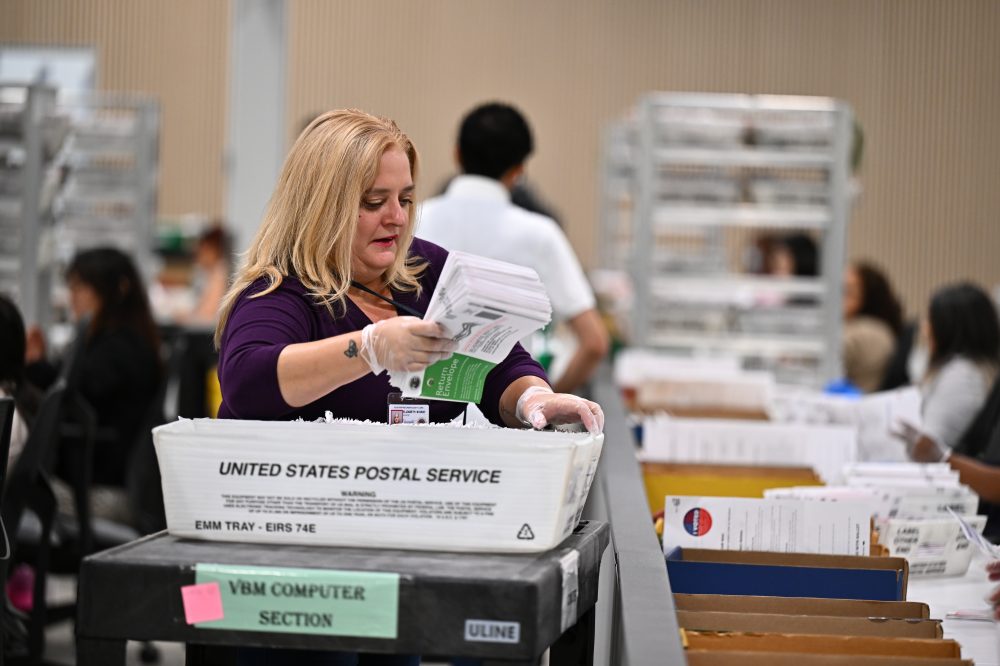
States that allow mail-in ballots to be tallied after Election Day breathed a collective sigh of relief Monday following a U.S. Supreme Court decision that rejected a Republican push to eliminate that practice.
The ruling sided with the state of Mississippi over the Republican National Committee, providing immediate protection to 14 states that have grace periods allowing regular mail ballots to be counted after Election Day. The decision also prevented what many expected would be a last-minute rush to overhaul voting procedures just months before the upcoming midterm elections.
At least one state, Ohio, had already changed its law ahead of time in anticipation of the court ruling differently. An additional 15 states maintain similar grace periods specifically for military and overseas voters.
Washington’s Secretary of State Steve Hobbs welcomed the outcome, saying the ruling ensures “the thousands of voters whose ballots are postmarked on time but received after Election Day still have their voices heard.”
Mail ballots — also referred to as absentee ballots — have long been a target of conspiracy theories pushed by President Donald Trump, who has repeatedly and without evidence blamed them for his defeat in the 2020 presidential election. The RNC and the Libertarian Party brought the lawsuit seeking to strike down a Mississippi law that allows mail ballots postmarked by Election Day to be counted if they arrive within five days after the election, arguing the law violated federal statute.
Justice Amy Coney Barrett, who was appointed by Trump, authored the majority opinion declaring the practice lawful.
“Nothing in the federal election-day statutes requires ballots to be received by Election Day,” she wrote, noting that the court deliberately confined itself to that narrow question and did not make broader pronouncements about absentee voting or the division of authority between Congress and the states over election rules.
In Illinois, where mail-in ballots made up as much as a quarter of the vote in this year’s primary, the state elections board had set aside $300,000 for a television and radio advertising campaign to alert voters about potential changes to the mail ballot deadline. Spokesman Matt Dietrich confirmed that campaign will now be scrapped following the court’s ruling. Illinois permits mail ballots to be counted if postmarked by Election Day and received within 14 days.
“Anytime you have a change in the administration of elections that affects voters, it is a big challenge to us to make sure that voters understand what that change is,” Dietrich said.
California, which has a seven-day grace period, has frequently been singled out by Trump and other Republicans who criticize the state’s extended ballot-counting timeline and have used it to fuel claims of voter fraud.
California’s Secretary of State Shirley Weber described Monday’s ruling as “a win for voters, for the rule of law, and for the future of our democracy.”
Beyond California, Illinois, and Mississippi, the other states that count regular mail ballots arriving after Election Day include Alaska, Maryland, Massachusetts, Nevada, New Jersey, New York, Oregon, Texas, Virginia, Washington, and West Virginia.
Research shows that mail voting is a widely used option among both Republican and Democratic voters across all 50 states.
While the RNC — not the Trump administration directly — was the party to the lawsuit, the national committee of a sitting president’s party typically works in alignment with the president’s political agenda. Trump has also effectively assumed control of the RNC, the Republican Party’s primary fundraising and political arm.
Trump called Monday’s ruling “a tremendous loss” and used it as an opportunity to press for passage of his sweeping election legislation, which has stalled in Congress despite Republicans holding majorities in both chambers.
In a post on Truth Social, the president declared it “more important than ever to pass THE SAVE AMERICA ACT” — his name for a bill that would require voters nationwide to prove U.S. citizenship when registering, present specific photo identification at the polls, and restrict who is eligible to vote by mail. RNC Chairman Joe Gruters issued a statement echoing Trump’s position, saying the ruling made passing the congressional proposal even more necessary.
Lower federal courts have already blocked several Trump administration attempts to impose new restrictions on mail voting and establish a national voter registration list, among other proposed changes. Judges in those cases have consistently ruled that the Constitution places authority over election rules with Congress and the states, not the executive branch.
Although Barrett’s majority opinion was deliberately narrow, focusing only on the mail ballot deadline question, some Democrats expressed hope that the ruling signals the high court may be skeptical of broader presidential claims of power over elections if such cases come before it.
Massachusetts Secretary of State Bill Galvin said he was relieved and saw the decision as a possible signal that other cases could favor Democrats. However, he accused the president and the RNC of attempting to suppress voter participation and expressed concern over the close 5-4 vote in the case.
“What’s troubling was that so many of the other justices were willing to sacrifice the rights of voters,” said Galvin, a Democrat.
Perhaps no state had more riding on the outcome than Alaska, where Native and rural communities spread across a vast and remote landscape depend on the state’s grace period to ensure their ballots are counted. In many areas, aircraft are the only practical means of transporting ballots from polling locations to counting facilities.
Jacqueline De León, a senior staff attorney with the Native American Rights Fund, was among the legal team that submitted a brief to the Supreme Court on behalf of Alaska Native and Native American groups. The brief outlined the particular difficulties faced by these communities, many of which can only be reached by air or water and depend entirely on air mail service.
“For many Native communities, voting by mail is shaped by long distances to election offices, no home mail delivery, unreliable postal service, lack of access to transportation, and the realities of living in rural and remote areas,” she said. “Ballots cast by election deadlines should not be discarded simply because substandard service or weather delays cause them to arrive after Election Day.”
With fewer than 60 days left to hammer out a lasting peace agreement, the United States and Iran cannot even seem to agree on the details of the temporary deal they struck earlier this month — and it remains unclear when the two countries will sit down together again.
“The situation is sensitive and complex,” senior Iranian negotiator Kazem Gharibabadi wrote Monday on the social media platform X, underscoring just how fragile the diplomatic process has become.
Beyond the peace talks themselves, major unresolved disputes remain — including who controls the Strait of Hormuz, the future of fighting in Lebanon, and what happens to Iran’s stockpile of highly enriched uranium. Days of military strikes between the two sides appeared to have wound down as of Monday, but tensions remain high.
ARE TALKS EVEN HAPPENING?
The two sides can’t even agree on that. U.S. President Donald Trump announced on social media Monday: “IRAN HAS REQUESTED A MEETING. IT WILL TAKE PLACE TOMORROW IN DOHA!”
Iran’s Foreign Ministry spokesperson Esmail Baghaei flatly contradicted that, stating Monday: “There are no negotiation meetings with the U.S. side at any level scheduled in the coming days.”
The reality appears to be somewhere in between. Lower-level technical diplomats are expected to meet before any high-level negotiations resume. Pakistan, serving as a key mediator alongside Qatar, indicated talks would pick back up on Tuesday. White House press secretary Karoline Leavitt told Fox News on Monday that envoys Steve Witkoff and Jared Kushner, who is Trump’s son-in-law, were heading to Qatar for meetings with Iranian counterparts, with technical negotiations expected on the sidelines.
Later, Iranian state media quoted Baghaei as saying an expert delegation would travel to Qatar during the week — but with no U.S. meetings planned.
The two countries are working against a deadline of roughly mid-August to finalize a comprehensive peace agreement, which must also address Iran’s disputed nuclear program. However, the interim deal requires a halt to all fighting before substantive negotiations can continue. After clashes over the weekend, Iran threatened Sunday to completely walk away from the talks. By Monday, both sides appeared to have paused their attacks, though Tehran may be waiting to see if that calm holds.
THE STRAIT OF HORMUZ DISPUTE
The U.S. maintains that the Strait of Hormuz is open under the terms of the interim agreement. Iran sees it differently.
Iranian Foreign Minister Abbas Araghchi stated Sunday: “Any attempt to establish new or separate arrangements from those currently being carried out by the Islamic Republic of Iran will only lead to further complications, delay the reopening of the Strait of Hormuz and increase the level of tension.”
The strait is a critical global waterway that carried one-fifth of the world’s oil and gas before the conflict began. During the war, Iran found it to be a significant source of leverage. The interim deal calls on Iran to immediately allow commercial shipping to pass through the strait, which lies between Iran and Oman, while permitting Iran to work with Oman and other Persian Gulf nations to manage the waterway in accordance with international freedom-of-navigation laws.
Iran has insisted that ships use its designated routes and check in with its authorities. It has pushed back against a new route overseen by the U.S. running along Oman’s coast — a disagreement that sparked the recent military exchanges. A U.S. official, speaking anonymously Monday because of the confidential nature of the negotiations, said the Trump administration is operating under the assumption that both sides are standing down and that vessels can move freely. Ships have started passing through again, though traffic remains lower than it was before the conflict.
THE SITUATION IN LEBANON
Iran’s position is that all fighting must stop and that Israel must pull its forces out of Lebanon before progress can be made on other fronts.
Hezbollah, the Iranian-backed militant group, has vowed to resist Israel’s occupation of large parts of southern Lebanon. Hezbollah leader Naim Kassem said Saturday that tying Israel’s withdrawal to Hezbollah’s disarmament is a “very dangerous suggestion.”
Israeli Prime Minister Benjamin Netanyahu, however, has made clear that Israeli forces will stay in southern Lebanon “until Hezbollah and the rest of the terrorist organizations are disarmed, and until no further threat to Israel is posed from Lebanon.”
A separate round of U.S.-brokered talks has been taking place between Israel and Lebanon’s government. Iran’s interim deal with the U.S. calls for a complete ceasefire in Lebanon and requires Israel to withdraw. But a different U.S.-brokered agreement between Lebanon and Israel allows Israeli forces to remain in southern Lebanon until Hezbollah has been disarmed. Hezbollah was excluded from those talks and has rejected that arrangement outright.
Hezbollah launched attacks against Israel two days after both Hezbollah and the U.S. struck Iran on Feb. 28. Israel responded with aerial strikes and a ground invasion. Lebanon’s government lacks the military capacity to forcibly disarm Hezbollah. Sporadic clashes continued in Lebanon over the weekend, which could further delay Iran’s willingness to return to the negotiating table.
Newly released financial disclosure forms from the U.S. Supreme Court are giving the public a closer look at how the justices spend their time away from the bench — and how much money they earn doing it.
Justice Sonia Sotomayor received gifted concert tickets last August during a personal visit to Puerto Rico, according to her disclosure form. While the paperwork does not name the performer, Puerto Rican music star Bad Bunny is known to have performed multiple shows on the island that month. The $4,333 gift was provided by Rimas Entertainment, which is Bad Bunny’s record label. Sotomayor attended with unidentified guests.
The financial activities of Supreme Court justices have faced growing public scrutiny in recent years, driven in part by news coverage — including reporting by The Associated Press — that has spotlighted lucrative book arrangements, gifts received, and travel taken by members of the court. Investigations by ProPublica previously revealed that Justice Clarence Thomas had failed to disclose luxury travel funded by Republican megadonor Harlan Crow.
The newly filed forms make clear that writing books continues to be a significant income source for several justices. Justice Ketanji Brown Jackson, whose memoir “Lovely One” was published in 2024, disclosed nearly $1.2 million in book advances. Justice Amy Coney Barrett reported more than $849,000 in royalties, and Justice Neil Gorsuch disclosed $300,000 in royalty payments. Both Jackson and Barrett reported attending more than a dozen book-related events where food, travel, or lodging was provided.
A number of justices also reported income from teaching. Chief Justice John Roberts earned $25,000 for leading a brief course at New England Law School. Justice Brett Kavanaugh received $33,285 for teaching at Notre Dame.
Kavanaugh also gave a speech last September at McLennan Community College in Waco, Texas, with his meals, transportation, and lodging covered. The AP previously reported that the same institution had invited Justice Thomas to headline an event there in 2017.
The court made disclosure forms available for eight of its nine current justices. Justice Samuel Alito, consistent with past practice, submitted a request for a 90-day filing extension, the court confirmed.
Motorists traveling through Odessa in New Castle County should be aware of a lengthy road closure coming soon to the area.
The Delaware Department of Transportation (DelDOT) has announced that Taylor’s Bridge Road will be completely shut down between Union Church Road and Fleming Landing Road. The closure takes effect Monday, August 3rd and will remain in place 24 hours a day, seven days a week.
The shutdown is expected to last a total of 709 days — nearly two full years — while crews work to replace Taylor Bridge, also identified as Bridge 1-447, in Odessa.
Drivers are encouraged to seek alternate routes during the extended closure period.
The U.S. Food and Drug Administration has tapped seven pharmaceutical companies — including Eli Lilly and Regeneron — to participate in a pilot program aimed at accelerating the approval process for new domestic drug manufacturing facilities, according to a report from CNBC.
CNBC cited an FDA spokesperson in its Monday report detailing the agency’s selection of the seven firms for the initiative.
A new government report shows that the index tracking prices received by agricultural producers moved higher in May, posting a gain of 4.1 percent compared to the previous period.
The data, released by the federal agency that monitors agricultural statistics, signals movement in the prices farmers are collecting for their goods across a range of commodity categories.
Price fluctuations at the farm level can have ripple effects throughout the broader food and agriculture supply chain, ultimately influencing what consumers pay at grocery stores and markets.
Further details on the breakdown of commodity prices and regional variations are available in the full report.
CF Montreal announced Monday that it has sent forward Kwadwo “Mahala” Opoku to Greek club Panetolikos FC in a transfer deal.
As part of the agreement, Montreal will hold onto a percentage of any future transfer fee involving the 24-year-old Ghanaian international.
During his time with the club from 2023 to 2026, Opoku made 42 regular-season appearances, finding the net seven times and adding four assists.
Luca Saputo, Montreal’s managing director of recruitment and sporting methodology, expressed gratitude for the player’s time with the team. “We would like to thank Mahala for his contributions and professionalism during his time with the club,” Saputo said. “We wish him the best of luck in the next chapter of his career.”
Before joining Montreal, Opoku spent time with LAFC from 2020 to 2023, where he scored nine goals and recorded six assists over 60 MLS appearances.
Sixteen years ago, the NBA world held its breath waiting for LeBron James to announce where he would play. Now, in the summer of 2026, history appears to be repeating itself.
James was the defining free agent move of the 2010 offseason when he chose to head to Miami, and once again he stands as the most anticipated decision of this year’s player movement period. The NBA’s free agency window officially opens Tuesday evening, with James’ next destination topping the list of burning questions fans and teams alike are eager to see answered.
Retirement does not appear to be on the table — which means the league’s all-time leader in points scored, minutes played, and games played could be suiting up for an unprecedented 24th season. He could also be approaching a milestone of 2,000 career appearances when counting playoff games.
Among the possibilities for James: remaining with the Los Angeles Lakers, heading back to Miami or Cleveland — both of which would welcome him enthusiastically — or potentially linking up with old friends Stephen Curry and Draymond Green in Golden State for one more shot at a championship.
Green, who is not expected to depart Golden State, declined his $27.6 million player option for next season on Monday. According to a person with knowledge of the situation who spoke to the Associated Press on condition of anonymity because the team had not made the move public, Green did so to give the Warriors greater financial flexibility to pursue additional players — potentially including James.
James himself offered little clarity when the Lakers were bounced from the playoffs this spring by Oklahoma City in a 4-0 sweep. “When the time comes, you guys will know what I decide to do,” he said at the time.
That time is nearly here.
Teams can officially begin speaking with free agents — aside from their own players, whom they could contact once the NBA Finals concluded — starting at 6 p.m. Eastern on Tuesday. Deals are expected to start emerging quickly, though most cannot be formally signed until after the league’s offseason moratorium lifts on July 6.
Warriors general manager Mike Dunleavy Jr. described the current stretch of the offseason as a whirlwind. “This period we’re in right now, kind of from mid-May to mid-July, it’s a two-month sprint through the draft, combine, free agency, Summer League, all that,” he said earlier this month. “We’re super busy right now. But it’s a fun time of year. This is where we get to make decisions, shape the roster, do all that stuff.”
The two teams that just squared off in the NBA Finals — champion New York and runner-up San Antonio — are both expected to largely hold their rosters together, though each will have roster decisions to navigate in the days ahead.
Significant moves have already been made around the league. The Giannis Antetokounmpo blockbuster trade stands out among the biggest transactions, while Trae Young locked in a $212 million deal with Washington and Austin Reaves agreed to a $185 million extension with the Lakers.
Miami is set to acquire Antetokounmpo and Bobby Portis in a deal that sends Tyler Herro, other players, and draft picks to Milwaukee — though that trade won’t be completed until the moratorium ends July 6. In the meantime, the Heat are expected to look for shooting help. Tim Hardaway Jr., whose father’s number hangs in the rafters in Miami, and Khris Middleton — a longtime Antetokounmpo teammate — are seen as logical fits.
Miami is also holding onto Andrew Wiggins. On Monday, he exercised his $30 million option for the upcoming season and, according to a person familiar with the negotiations, has agreed in principle to a $34 million deal covering the two seasons after that, with the 2028-29 year at his option.
More trades could be on the horizon as well. A person familiar with the talks confirmed to the AP that Toronto has had conversations with the Los Angeles Clippers about the possibility of Kawhi Leonard — who delivered the Raptors their 2019 NBA title — returning to Ontario. Meanwhile, Boston is still believed to be exploring a potential trade involving 2024 NBA Finals MVP Jaylen Brown, who was the central piece of the Celtics’ ultimately unsuccessful bid to acquire Antetokounmpo from Milwaukee.
Brown addressed his value on social media over the weekend. “Nobody has won more combined regular-season and playoff games since I entered the league 10 years ago,” he wrote. The numbers back him up: Boston has posted 523 wins with Brown in the lineup, including postseason games — six more than Denver has accumulated with Nikola Jokic over the same stretch.
Motorists in the area should be prepared for intermittent lane closures on Vance Neck Road between Bayview Road and Marathon Drive.
The lane restrictions are the result of ongoing construction activity in that stretch of roadway. Drivers are advised to plan accordingly and allow extra travel time until the closures are lifted at 5 p.m.
Travelers may want to consider alternate routes to avoid potential delays during this period.
A Florida judge on Monday set bond at $1 million for Detroit Lions cornerback Terrion Arnold, who stands accused of arranging the abduction and brutal beating of three men he allegedly believed had stolen luxury goods and $100,000 in cash from him.
Prosecutors had pushed for Arnold to be held without bond on the eight felony counts he faces — four counts each of kidnapping and assault. However, Chief Circuit Court Judge Christopher Sabella granted bond and notably declined to require Arnold to wear an ankle monitor, citing the fact that such a device would interfere with his ability to play and practice with the Lions.
Judge Sabella offered an unconventional reason why an ankle monitor wasn’t necessary, pointing out that Arnold already has what he called a “paparazzi monitor” — the photographers who regularly track his whereabouts.
“If he shows up on a beach in Tahiti, he’ll be on social media,” Sabella remarked at the conclusion of the bond hearing in Tampa.
While acknowledging the severity of the charges — each of which carries a potential life sentence upon conviction — the judge noted that prosecutors are “not there yet” when it comes to building a compelling case against Arnold.
Arnold is required to stay at his Tallahassee home except when his obligations with the Lions require him to travel, play, or train. The judge also prohibited Arnold from having any contact with others connected to the case.
According to prosecutors, Arnold allegedly set the events in motion in February by telling associates he believed he knew who had taken his belongings following a theft reported at an Airbnb in the Tampa area. Three men in their late teens — including Arnold’s personal driver — were then allegedly held at gunpoint inside a Tampa apartment, pistol-whipped, and beaten.
“Our office remains committed to seeking justice for the three victims in the case who were beaten, robbed, and held against their will,” said Erin Maloney, a spokesperson for the state attorney’s office.
Denise White, the CEO of EAG Sports Management, the agency that represents Arnold, said the judge’s decision “confirms that there is very little evidence to even suggest any criminal involvement by Mr. Arnold.”
ABDIN, Syria — When Israeli troops and military vehicles rolled into the southern Syrian town of Abdin, locals fought back the only way they could — blocking roads with rocks while young men and boys hurled stones at the patrol.
The confrontation on Sunday is the latest sign of rising tensions in a region where Israeli forces have taken control of a buffer zone previously monitored by United Nations peacekeepers. Residents of Abdin, located near that zone, attempted to resist what they described as a military incursion into their community.
According to residents, Israeli troops fired warning shots at walls and into the spaces between angry protesters before launching artillery rounds at the village. While no one was injured, the majority of residents fled their homes and remained too frightened to come back by Monday. Many now worry that the skirmish will bring even more aggressive military operations to the area.
“They come into the village regularly, every few days,” said resident Mohammad al-Hassan, speaking near a group of children gathered around an exploded shell. “They come in armored 4×4 vehicles, they roam around the village and search some houses, they knock on doors and if people don’t answer the door they break it down and enter the houses. Women and children start screaming, it’s a terrifying thing, them coming here.”
Israel took over the U.N.-monitored buffer zone in southern Syria back in December 2024, shortly after former Syrian President Bashar Assad was removed from power during an insurgent offensive. Israeli officials initially characterized the move as a temporary measure to guard their borders against militant groups. More recently, however, senior Israeli officials have stated that the occupation of the buffer zone will continue indefinitely.
The expanded Israeli military footprint in southern Syria fits into a broader strategic shift following the deadly Hamas-led attacks on southern Israel in October 2023. Since then, Israel has taken over large portions of Gaza, seized areas of Lebanon — where the Hezbollah militant group has launched missiles and drones across the border — and moved into Syria. Israel refers to these areas as “buffer zones” and maintains they are necessary to prevent future militant attacks.
Since Assad’s removal, there have been no cross-border attacks launched from Syria into Israel, aside from two rockets fired by a little-known militant group. Still, Israeli military operations in southwestern Syrian towns have at times triggered local resistance that has escalated into deadly confrontations.
Syria’s interim president, Ahmad al-Sharaa, has demanded that Israel pull out of the territory, which the United Nations estimates covers 235 square kilometers — roughly 91 square miles. The Syrian government also formally condemned the Israeli military’s incursion and shelling in Abdin.
The clashes in Abdin were actually the second violent episode within a 24-hour span. Earlier Sunday, the Israeli military announced it had killed armed individuals in southern Syria but provided no additional details.
On Monday, an Israeli military official — speaking anonymously under military briefing rules — confirmed that Israeli soldiers had killed two militants who were allegedly planning an attack on Israeli forces. The official did not specify the exact location within Syria.
Meanwhile, the mayor of the Syrian village of Hadar reported that two unidentified individuals traveling in a pickup truck just south of the village were killed in an attack, and that their bodies were taken by the Israeli military.
“There was the sound of an explosion when it happened,” Imad Hassoun told the Associated Press. “They weren’t from Hadar. If they were, we would immediately know.”
On the Abdin incident specifically, the Israeli military official said armed militants had opened fire on one of Israel’s military positions but that no one was hurt, offering no further details.
Residents of Abdin had held out hope that U.S.-brokered talks between Israel and Syria held in France — aimed at reaching a security agreement — would help ease the situation. Those negotiations, however, appear to have stalled.
With the security situation unstable and residents struggling with a lack of employment and basic services, many people in these border communities are leaving. The nearest Syrian government security checkpoint to Abdin sits about 10 kilometers — roughly 6 miles — away, and those who remain face persistent shortages of water and electricity.
Sobhi al-Tawlbi, 66, said farmers have had a particularly difficult time reaching their crops and water sources.
“We need the government to support us a little so we can remain steadfast in our villages,” he said, calling on the international community to pressure Israel to end its military incursions.
Residents throughout the broader border region have consistently maintained that they pose no threat and simply want to live stable lives after more than 13 years of civil war that devastated Syria.
“Why are they bothering us? We are living here peacefully in this border area,” al-Hassan said.
Delaware State Police are currently investigating a shooting that took place Saturday evening in the Newark area.
Around 6:30 p.m. on June 27, 2026, troopers were called to a local hospital after two individuals showed up with gunshot wounds. Both victims were reported to be in stable condition with injuries not considered life-threatening. The Criminal Investigations Unit was brought in to take charge of the case.
As the investigation progressed, detectives determined the shooting likely happened on Otts Chapel Road near Elkton Road in Newark. Officers canvassed the scene and recovered multiple spent shell casings from the area.
The investigation remains active and ongoing. Detectives are urging anyone who may have witnessed the incident or has any relevant information to reach out to Detective J. Lucyk directly at (302) 365-8446. Tips can also be submitted through a private Facebook message to the Delaware State Police or by contacting Delaware Crime Stoppers at 1-800-847-3333.
Anyone who has been a victim or witness of a crime, or who has lost a loved one to a sudden death and needs support, can contact the Delaware State Police Victim Services Unit and Delaware Victim Center. The unit is available around the clock through a toll-free hotline at 1-800-VICTIM-1 (1-800-842-8461). You may also reach the Victim Services Unit by email at [email protected].
Governor Matt Meyer is asking Delaware’s utility watchdog agency to halt a proposed rate increase from Delmarva Power while regulators take a closer look at the request.
In a letter addressed to the Delaware Public Service Commission, Meyer urged the body to exercise its authority under state law — specifically 26 Del. C. § 310 — to freeze Delmarva Power’s distribution rates at their current level during the review process.
The governor’s request comes as the utility has submitted a new application seeking higher rates from customers. Meyer is asking the Commission to prevent any rate changes from taking effect until a full review is completed.
Two major organizations are joining forces to improve the heart health of Delaware residents living in public housing communities across Kent and Sussex counties.
The Delaware State Housing Authority (DSHA) and the Delaware chapter of the American Heart Association (AHA) have announced a new partnership focused on reducing the risk of stroke, hypertension, and heart disease among people living in DSHA-managed public housing.
As part of the effort, residents will receive tools that allow them to monitor their own blood pressure at home, along with educational materials designed to help them better understand and manage their cardiovascular health.
The announcement was made on June 29, 2026, and represents a collaborative push to bring health resources directly into the communities where residents live.
Washington, D.C. has agreed to pay $50,000 to resolve a lawsuit brought by a local resident who says police unlawfully detained him after he followed an Ohio National Guard patrol while blasting Darth Vader’s theme from “Star Wars” on his phone — an act he described as political protest.
The plaintiff, Sam O’Hara, took legal action against the district, four Metropolitan Police Department officers, and an Ohio National Guard member, saying his detention was retaliation for exercising his right to protest President Donald Trump’s expanded federal law enforcement presence in the nation’s capital.
A court document filed Thursday revealed that a settlement had been reached, though it did not include a dollar amount. The D.C. Attorney General Brian L. Schwalb’s office later provided The Associated Press with a copy of the full settlement agreement, which confirmed the $50,000 figure — covering both the payout and attorney’s fees and costs.
O’Hara is represented by the American Civil Liberties Union of the District of Columbia. An ACLU spokesperson said in an email Friday that the financial terms represent “a significant amount” that O’Hara “is pleased with,” while declining to publicly state the dollar figure, citing privacy concerns.
O’Hara, who works in the hospitality industry and is also an artist, agreed to drop his claims against the district and the MPD officers within three business days of receiving payment. The agreement makes clear the settlement is not an acknowledgment of any wrongdoing on the part of the district.
However, the deal does not resolve O’Hara’s ongoing claims against Ohio National Guard Sgt. Devon Beck, who has separately requested that a judge throw out the case against him.
O’Hara originally filed his lawsuit in October, alleging that police officers infringed on his First Amendment right to free expression and his Fourth Amendment protection against unreasonable detention and excessive force.
The incident took place on September 11, 2025, when O’Hara walked behind a group of National Guard soldiers along a public street while playing “The Imperial March” — the iconic villain theme from the “Star Wars” franchise — from his cellphone. One of the soldiers called police, who stopped O’Hara and kept him in handcuffs for between 15 and 20 minutes before letting him go without filing any charges, according to the lawsuit.
The Guard’s presence in Washington stems from an executive order President Trump signed last August declaring a crime emergency in the capital. The deployment has stirred significant tension among residents of the heavily Democratic district. Hundreds of Guard members are still stationed there nearly a year later, with no clear timeline for their withdrawal.
A newly appointed judge has scheduled April 5 as the starting point for jury selection in the retrial of disgraced former attorney Alex Murdaugh, who faces two counts of murder in the shooting deaths of his wife and son. The South Carolina Supreme Court threw out his murder convictions in May, finding that a court clerk had “egregiously attacked Murdaugh’s credibility” by indicating to jurors that his testimony should not be believed.
Murdaugh was once a well-known figure in rural South Carolina, recognized both for his family name and for winning million-dollar verdicts in court. He was employed at his family’s law firm, which had been in operation for more than a century, and his father, grandfather, and great-grandfather all served as elected county prosecutors. Despite the overturned murder convictions, Murdaugh will remain behind bars due to separate federal convictions for stealing millions of dollars from clients. His case has been the focus of multiple documentaries and true crime podcasts.
Below is a chronological look at the major events leading up to the upcoming retrial:
June 7, 2021: Murdaugh contacts police to report that his wife Maggie, 52, and their son Paul, 22, have been shot and killed near dog kennels on the family’s property.
Sept. 4, 2021: According to officials, Murdaugh attempts to orchestrate his own death in a scheme designed to secure a $10 million life insurance payout for his surviving son. The plan fails when a gunshot fired by an associate of Murdaugh only grazes his head.
Oct. 14, 2021: Law enforcement arrests Murdaugh at a drug rehabilitation center in Florida, charging him with stealing insurance settlement funds totaling more than $4 million that were meant for the sons of his deceased housekeeper.
Nov. 17, 2021: Prosecutors announce 27 additional charges against Murdaugh, alleging he misappropriated nearly $5 million in settlement funds. Authorities say he was concealing money from attorneys who had sued him in connection with the death of a teenager killed when, according to officials, an intoxicated Paul Murdaugh crashed a boat he was operating.
Jan. 18, 2022: Further indictments push the total number of charges against Murdaugh to 71, with prosecutors alleging he stole nearly $8.5 million in wrongful death and accident settlements from more than a dozen individuals.
May 4, 2022: Russell Laffitte, who had served as CEO of Palmetto State Bank before being fired earlier that year, is indicted on charges that he worked with Murdaugh to defraud victims out of $1.8 million.
June 28, 2022: New indictments describe an eight-year scheme involving money laundering and a painkiller operation.
July 14, 2022: Murdaugh is formally charged with murder in the killings of his wife and son. Grand jury indictments allege he shot his wife with a rifle and his son with a shotgun.
Feb. 23, 2023: Taking the witness stand, Murdaugh denies being responsible for the deaths of his wife and son, though he acknowledges he lied to investigators about the last time he saw them alive.
March 2, 2023: After roughly six weeks of testimony, a jury finds Murdaugh guilty on both murder counts following less than three hours of deliberation.
March 3, 2023: A judge hands down a life sentence.
Jan. 29, 2024: A South Carolina judge rejects Murdaugh’s request for a new trial after his legal team alleged that a clerk of court had tampered with the jury.
April 2, 2024: Murdaugh receives a 40-year federal prison sentence for stealing from clients and his law firm.
Feb. 11, 2026: Murdaugh petitions the South Carolina Supreme Court to overturn his murder convictions.
May 13, 2026: In a unanimous decision, the South Carolina Supreme Court overturns Murdaugh’s murder convictions and life sentence, concluding that the court clerk’s behavior “egregiously attacked Murdaugh’s credibility” by casting doubt on his testimony in front of jurors.
June 29, 2026: Newly appointed Judge Debra McCaslin sets April 5 as the date for jury selection to begin in Murdaugh’s retrial on the two murder charges, with pretrial motions scheduled for August 14. The defense has asked that Murdaugh be permitted to appear in regular clothing rather than an orange prison jumpsuit and shackles. His legal team is also seeking to move the trial away from Colleton County, where both the killings and the original trial occurred.
WASHINGTON — A conservative law professor with a reputation for championing broad presidential authority — and for writing controversial memos decades ago that were used to justify harsh interrogation of terror suspects after the September 11, 2001 attacks — has confirmed he will serve as an adviser on a federal investigation into whether former law enforcement and intelligence officials engaged in a criminal conspiracy against President Donald Trump.
John Yoo told The Associated Press in an email Monday that he would be working alongside Joe diGenova, a former Justice Department prosecutor who was tapped in April to lead an inquiry into whether officials who scrutinized Trump over the past decade participated in a coordinated criminal effort against the Republican president.
DiGenova briefly addressed Yoo’s involvement in a phone interview, saying simply, “He’s a lawyer. He’s going to be helping us,” without providing any further details.
Yoo holds a faculty position at the University of California, Berkeley. During the George W. Bush administration, he was a senior official at the Justice Department and played a central role in drafting what became known as the “torture memos” — documents that government officials relied on to justify so-called “enhanced interrogation” techniques against suspected terrorists. The Justice Department eventually withdrew those memos.
In the years following that controversy, Yoo has continued to be a vocal advocate for expansive executive power. In a 2020 interview with the AP, he said he had advised Trump administration officials on multiple occasions that a Supreme Court decision blocking Trump’s attempt to dismantle the Deferred Action for Childhood Arrivals program, known as DACA, had actually created significant new opportunities for presidential authority.
The ongoing conspiracy investigation is taking place in Florida, though its full scope has not been made public, and it is not yet known whether prosecutors will seek any criminal charges.
At least a portion of the probe focuses on the now-completed investigation into Russian meddling in the 2016 U.S. presidential election. Prosecutors have issued a wide range of subpoenas seeking records and have conducted interviews tied to the development of an intelligence community assessment — made public in January 2017 — which concluded that Russia carried out extensive election interference aimed at helping Trump defeat his Democratic rival Hillary Clinton.
A 2019 report from special counsel Robert Mueller confirmed that Russia acted to benefit Trump’s campaign and that Trump campaign members repeatedly welcomed that help, but the report did not find enough evidence to establish a criminal conspiracy between the Trump campaign and Moscow.
Multiple subsequent reviews of the Russia investigation identified various procedural errors in how the probe was handled, and a former FBI attorney pleaded guilty in 2020 to altering an email during the investigation. However, none of those reviews found criminal wrongdoing on the part of any senior law enforcement or intelligence leaders involved in the case.
Trump has continued to push for accountability, seeking consequences for top officials from that era at the FBI and CIA.
When asked during a Fox News Channel interview in May what steps the Justice Department was taking to address allegations of a long-running effort to undermine Trump, acting Attorney General Todd Blanche responded, “That’s exactly what we’re investigating right now.”
Yoo’s role in the investigation was first reported by Politico and CNN.
WASHINGTON — The U.S. Supreme Court issued a landmark ruling Monday, determining that constitutional privacy rights extend to the location data generated by cellphones — a decision stemming from the case of a bank robber who was tracked down using a geofence warrant.
Writing for the six-justice majority, Justice Elena Kagan said that people do not surrender their expectation of privacy simply by opting into Google’s location history feature.
“A cellphone user is not to be viewed as sharing private information with third parties — which then can be freely passed on to the government — just by doing the ordinary things cellphone users do,” Kagan wrote.
Justice Samuel Alito authored a dissenting opinion, arguing that the defendant, Okello Chatrie, had no reasonable expectation of privacy over information he chose to share with Google.
The ruling represents the court’s continued effort to apply a constitutional amendment ratified in 1791 to modern technologies that the nation’s founders could never have anticipated.
The case began after a bank robbery in a suburb of Richmond, Virginia. Investigators obtained a geofence warrant following the May 2019 robbery, using it to identify cellphones that had been in the vicinity of the bank when the crime occurred.
One of those devices was traced back to Chatrie, who had managed to avoid detection until authorities employed the location-tracking tool.
The warrant set the investigation in motion. After placing Chatrie near the Call Federal Credit Union in Midlothian at the time of the robbery, police secured a search warrant for his residence. Inside, they discovered nearly $100,000 in cash — including bills still wrapped in bands bearing the signature of the bank teller.
Chatrie later pleaded guilty to the robbery and received a sentence of nearly 12 years behind bars. His legal team appealed, arguing that all evidence gathered should have been thrown out.
Defense attorneys challenged the geofence warrant as an invasion of privacy, noting it allowed investigators to collect location data from people in the area without any specific reason to suspect them in the crime. Prosecutors countered that Chatrie had no privacy claim because he had voluntarily enabled Google’s location history on his device.
The Supreme Court stopped short of ruling Monday on whether the search itself violated the Fourth Amendment, which prohibits unreasonable searches and seizures. Instead, the justices sent the case back to a lower court for additional proceedings.
A federal judge had previously found that the search violated Chatrie’s rights but still permitted the evidence to be used, reasoning that the officer who applied for the warrant had acted in good faith. The federal appeals court based in Richmond upheld the conviction in a divided ruling.
In a separate but related case, a federal appeals court in New Orleans concluded that geofence warrants “are general warrants categorically prohibited by the Fourth Amendment.”
Prisoners seized control of portions of a regional jail in eastern North Carolina on Monday after overwhelming correctional officers on duty, according to authorities.
The incident began around 5 a.m. at the Bertie-Martin Regional Detention Center in Windsor, where just three guards were responsible for overseeing 88 inmates at the time. The North Carolina State Bureau of Investigation announced the takeover in a statement on social media, noting that local, state, and federal agencies responded immediately.
Bertie County Sheriff Tyrone Ruffin assured the public there was no immediate danger to surrounding communities. Windsor is located approximately 120 miles, or about 190 kilometers, east of Raleigh.
During the standoff, inmates took two of the three guards hostage while the third managed to escape. Through negotiations, authorities secured the release of both guards along with 80 of the inmates. That left eight prisoners still inside the facility. By early afternoon, the Bureau of Investigation had entered the building and was working to take those remaining inmates into custody, Sheriff Ruffin said at a news conference.
Ruffin noted that the inmates who were released were moved to a “secure place,” though he did not elaborate further. The two guards who had been held captive were receiving medical treatment, but the sheriff offered no additional details about the nature of their injuries.
Authorities did not explain why only three guards were on duty to manage the entire jail population when the incident unfolded.
A secure perimeter was set up around the detention center, and the public was urged to stay away from the area. More than 20 law enforcement agencies were on the scene.
The sheriff did not indicate what triggered the takeover, but told reporters, “Right now we have a lot going on that we’re trying to get under control. I will release that information to the public as soon as I can.”
Five Maryland counties are now eligible to receive federal disaster assistance after the U.S. Department of Agriculture issued a major disaster declaration last week.
On June 26, 2026, the USDA issued a Secretarial Disaster Declaration covering 43 primary natural disaster area counties in the Commonwealth of Virginia, along with an additional 61 neighboring counties in that state.
Because Maryland shares a border with several of the Virginia counties included in that designation, five Maryland counties — Charles, Frederick, Montgomery, Prince George’s, and Washington — have been added as contiguous counties, making them eligible for federal disaster assistance as well.
The declaration was announced from Annapolis on June 29, 2026.
An Extreme Heat Watch has been issued by the National Weather Service office in Mount Holly, New Jersey, set to take effect on June 29th at 2:10 PM Eastern Time and running through July 4th at 8:00 PM Eastern Time.
The watch covers an extended stretch of the upcoming holiday weekend, raising concerns about dangerous heat conditions for residents across the area.
An Extreme Heat Watch means that conditions are favorable for a dangerous heat event in the coming days. Residents are encouraged to stay hydrated, limit outdoor activity during the hottest parts of the day, and seek air-conditioned spaces when possible.
Those most at risk during extreme heat events include the elderly, young children, outdoor workers, and individuals with certain medical conditions. Neighbors are urged to check on one another, particularly those who may be living alone or without access to air conditioning.
Stay with TV Delmarva for continuing updates on this developing weather situation as the July 4th holiday approaches.
Wimbledon’s opening day delivered plenty of drama Monday as defending men’s champion Jannik Sinner came dangerously close to a shocking first-round exit, while British players suffered a string of painful defeats and withdrawals.
Sinner entered the tournament as the heavy favorite to defend his title, especially with chief rival Carlos Alcaraz sidelined by injury. However, concerns about the Italian’s fitness had been building after he suffered a surprising second-round loss at the French Open. Those concerns seemed well-founded early in his match against Serbia’s Miomir Kecmanovic on Centre Court, as Sinner dropped the first and third sets and appeared on the verge of becoming just the third defending men’s champion to fall in the opening round.
He ultimately rallied to win 4-6, 6-3, 6-7(6), 6-2, 6-3 in a match that lasted three hours and 30 minutes — the third-longest of his Wimbledon career.
The victory was not without cost. Sinner took a fall in the third set and later appeared on court with blood staining his white shoe, the result of a broken toenail. Despite the grueling nature of the match, he downplayed the injury afterward.
Speaking to the Centre Court crowd, Sinner said: “It was a little tight in the beginning, I didn’t play at my best but I tried to get into it. It was my first official match on grass (this season) which is also a very important factor.”
“I’m happy I turned it around because the third set was a very tough one to swallow,” he added.
With a touch of humor, Sinner also remarked: “I’m actually surprised that they let me keep playing because my all white outfit turned into a little red.”
The win gave Sinner his 94th Grand Slam match victory, tying the Italian record previously held by Nicola Pietrangeli.
While Sinner advanced, two other seeded men were not so fortunate. Men’s 11th seed Casper Ruud fell to big-serving Pole Hubert Hurkacz 6-4, 6-2, 7-6(7), and 12th seed Andrey Rublev lost a five-set thriller to fellow Russian Roman Safiullin, dropping the deciding set tiebreaker 14-12 after squandering two match points.
Eighth seed Daniil Medvedev had no such trouble, cruising past former U.S. Open champion Marin Cilic 6-1, 6-2, 6-4 on Court One — a match that disappointed fans who had expected to see Emma Raducanu in action before her pre-tournament withdrawal due to injury.
The day was especially difficult for British tennis. Jack Draper also announced he was pulling out of the tournament with an arm injury, joining Raducanu on the sidelines. Of the six British players who did compete, all six lost — including British number one Cameron Norrie, seeded 26th, who fell in five sets to American qualifier Michael Zheng.
On the women’s side, French Open runner-up Maja Chwalinska suffered a heartbreaking defeat, losing 2-6, 7-5, 6-2 to Thai qualifier Mananchaya Sawangkaew after falling and injuring herself while holding match point.
Naomi Osaka, seeded 14th, impressed both in fashion and on the court, defeating Elsa Jacquemot 6-1, 7-5. American fourth seed Jessica Pegula beat Darja Vidmanova 7-5, 6-3, and Swiss 11th seed Belinda Bencic overcame young British wildcard Mika Stojsavljevic with relative ease.
Two young players from the next generation also made their mark. Brazil’s Joao Fonseca, energized by a loud crowd of fans in yellow soccer shirts, defeated Spanish veteran Roberto Bautista Agut 7-6(4), 6-4, 6-3. Rising Spanish teenager Rafael Jodar, also 19 years old, made an impressive Wimbledon debut by beating British wildcard Felix Gill 6-3, 6-3, 7-5.
An Extreme Heat Watch has been issued by the National Weather Service office in Mount Holly, New Jersey, set to remain in effect from the afternoon of June 29th through the evening of July 4th.
The watch period begins at 2:10 PM Eastern Time on June 29th and extends through 8:00 PM Eastern Time on Independence Day, covering what could be a dangerously hot holiday weekend.
Residents are encouraged to stay hydrated, limit time outdoors during peak afternoon hours, and check on elderly neighbors, young children, and pets. Extreme heat is one of the leading weather-related causes of illness and death, particularly for vulnerable populations.
More details and updates are expected as the event approaches. Stay with TV Delmarva for the latest on this developing weather situation.
Women’s top seed Aryna Sabalenka wasted little time getting her Wimbledon title bid underway Monday, dispatching Serbian qualifier Teodora Kostovic 6-2, 6-3 in a largely one-sided first-round contest.
The world number one arrived at Wimbledon still stinging from a troubling early exit at the French Open, but she showed sharp focus on Centre Court from the very start, winning the first four games of the match against the lower-ranked Kostovic.
While Sabalenka was eventually pushed to work a bit harder, the only real hiccup came when she gave up her serve at 5-2 in the second set. It proved to be nothing more than a brief stumble, as she quickly regrouped and avoided any repeat of the dramatic collapse she experienced in Paris against Diana Shnaider.
Speaking to the crowd — which included former England soccer captain David Beckham — Sabalenka expressed her joy at returning to the grass-court major.
“I’m super excited to be back,” she said. “I was happy I could close this match in straight sets. For the first match I feel pretty good, maybe eight out of 10.”
Sabalenka, who has reached the semi-finals at Wimbledon on each of her last three appearances without advancing further, will next face American McCartney Kessler in the second round.
HOUSTON — Brazil’s head coach Carlo Ancelotti has decided to keep his starting lineup intact heading into Monday’s World Cup round-of-32 showdown against Japan. The squad remains the same unit that delivered a convincing 3-0 victory over Scotland in Brazil’s final Group C contest.
Japan’s coaching staff, on the other hand, has made significant adjustments. Head coach Hajime Moriyasu is sending out a noticeably different squad compared to the team that settled for a 1-1 draw with Sweden in their last Group F outing — making four changes in total.
Among the notable storylines on the Brazilian side, 19-year-old forward Rayan earns his second start for the national team, slotting in for injured winger Raphinha. He will line up alongside Matheus Cunha and Vinicius Jr. Superstar Neymar remains on the bench as he continues working his way back from a calf injury.
For Japan, defenders Yukinari Sugawara, Ko Itakura, Ayumu Seko, and Ao Tanaka have been left out of the starting lineup. Taking their places are Shogo Taniguchi, Takehiro Tomiyasu, Junya Ito, and Kaishu Sano, as the team shifts to a five-man defensive setup. Takefusa Kubo is also held back on the bench while managing an ankle injury.
Starting Lineups:
Brazil: Alisson; Danilo, Gabriel Magalhaes, Marquinhos, Douglas Santos; Casemiro, Bruno Guimaraes, Lucas Paqueta; Matheus Cunha, Rayan, Vinicius Jr.
Two former professional basketball players are now facing federal charges as the government’s expansive gambling investigation continues to grow. Malik Beasley and Ed Davis were both indicted, authorities announced Monday, adding their names to a lengthy list of individuals swept up in the probe.
According to an indictment unsealed in Brooklyn, Beasley — who was playing for the Milwaukee Bucks at the time — agreed to deliberately adjust his on-court performance in certain games to align with prop bets placed by co-conspirators.
U.S. Attorney Joseph Nocella Jr. said Beasley and those involved with him “turned professional basketball into a criminal betting operation.” He went on to say the schemes “erode the integrity of American sports and victimize the sports-watching public.”
Attorneys representing both Beasley and Davis had not responded to requests for comment on the conspiracy and bribery charges as of Monday.
Nocella said the scheme involved hundreds of thousands of dollars. The indictment, which names six individuals in total, describes Beasley as having serious financial problems — including millions of dollars in gambling losses — and says he had turned to Davis, a former teammate, for financial assistance.
In exchange for manipulating his play, Beasley was allegedly paid by co-conspirators who profited from winning bets, and his debts to Davis were reduced or wiped out entirely, according to the indictment.
One specific incident cited in the indictment occurred on March 10, 2024, during a Milwaukee win over the Los Angeles Clippers. With the Bucks leading by seven points and the game’s outcome no longer in question, Beasley reportedly sprinted past four defenders to grab a last-second rebound — pushing his total for the night to four rebounds, which matched a winning prop bet.
“What’s funny is after he got it he had a big sigh of relief,” a co-conspirator wrote in a text message cited in the indictment.
Beasley’s most recent NBA stint was with the Detroit Pistons during the 2024-25 season, where he averaged 16 points per game. He is one of only five players in league history to knock down more than 300 three-pointers in a single season. He has not appeared in the NBA since due to the ongoing investigation, though he did play briefly for a team in Puerto Rico earlier this year.
Beasley’s financial difficulties have been widely covered in the press, with reports detailing lawsuits from his Detroit landlord and payment disputes involving a Milwaukee barber and a Minnesota dentist.
Davis spent 12 seasons in the NBA primarily as a backup, earning approximately $48 million in gross salary over his career. He and Beasley were briefly teammates in Minnesota during the 2020-21 season.
This latest round of charges builds on a broader investigation that has already ensnared more than 30 people, including reputed organized crime figures and others connected to basketball. In April, former NBA player Damon Jones, 49, became the first person to enter a guilty plea in the case. Jones pleaded guilty to two counts of conspiracy to commit wire fraud for schemes that allegedly defrauded major sportsbooks — including DraftKings and FanDuel — and stole millions from unsuspecting poker players. He was accused of using his NBA connections to sell insider information to bettors.
One of the most prominent figures caught up in the investigation is Basketball Hall of Famer Chauncey Billups, who was serving as coach of the Portland Trail Blazers when he was charged last year. Billups is accused of taking part in a conspiracy to rig high-stakes card games connected to La Cosa Nostra organized crime families, allegedly cheating unknowing gamblers out of at least $7 million. He has pleaded not guilty.
Also charged in 2025 was Terry Rozier, who was a member of the Miami Heat at the time. Rozier is accused of conspiring with associates to help them win bets tied to his performance during a 2023 game while he was playing for the Charlotte Hornets. He has also pleaded not guilty.
Pete Alonso recently played his 500th consecutive game — though the milestone may not turn many heads in his new home city, given that his Baltimore Orioles are home to the greatest iron man streak in baseball history.
Alonso signed with the Orioles this past offseason, joining an organization whose own franchise record for consecutive games is also the all-time major league mark: 2,632 straight games by Cal Ripken Jr. Before Ripken broke it in 1995, Lou Gehrig held the record at 2,130 games.
After Sunday’s action, Alonso’s streak stands at 501. To put that in perspective, Gehrig’s entire streak of 2,130 games would still fit within the gap between Ripken’s record and where Alonso stands today. Before making the move to Baltimore, Alonso had set the New York Mets’ franchise record with 416 consecutive games played.
The only active player with a longer streak than Alonso is Matt Olson of the Atlanta Braves. Olson has appeared in 864 straight games, with 730 of those coming as a Brave. The Braves’ franchise record of 740 consecutive games belongs to two-time MVP Dale Murphy — meaning Olson is on pace to break that mark on July 10, when Atlanta plays on the road against St. Louis.
Olson would tie Murphy’s record on July 9 — a date that falls exactly 40 years to the day that Murphy’s own streak came to an end.
As for consecutive games records across the league: according to Sportradar, the shortest franchise record belongs to Washington. That mark is held by the elder Vladimir Guerrero, who played in 276 straight games when the franchise was still based in Montreal. On the other end of the spectrum — aside from the Orioles and the New York Yankees — the Chicago Cubs own the longest team record at 1,117 consecutive games by Billy Williams. Close behind are the Los Angeles Dodgers with 1,107 by Steve Garvey and Cleveland with 1,103 by Joe Sewell.
In the American League wild-card race, the Toronto Blue Jays have dropped six games in a row yet remain only 2.5 games out of a postseason berth. That hasn’t made the losing any easier to swallow. Texas swept four straight from the defending AL champions, with Toronto’s latest defeat coming Sunday when Jarred Kelenic scored the winning run all the way from second base on a wild pitch in the ninth inning.
Offensively, the Blue Jays have struggled badly. After ranking third in the majors in OPS last season, Toronto has fallen into the bottom 10 this year. Vladimir Guerrero Jr. has managed just four home runs, and George Springer is hitting .220.
Tampa Bay’s Junior Caminero put on a show Thursday, clubbing three home runs and driving in six runs as the Rays crushed Kansas City 13-2. Tampa Bay also carried a combined no-hitter into the ninth inning of that game before Carter Jansen hit a home run off Craig Kimbrel with one out to break it up. Caminero now has 22 of the team’s 74 home runs on the season — a total only Miami and Boston have fewer of league-wide.
The Phillies had a remarkable week against Washington, rallying from the brink of defeat three times in three days. On Tuesday, the Nationals led 5-0 in the fifth inning and 8-6 heading into the ninth before Philadelphia erupted for eight runs — after the first two Phillies batters struck out — to win 14-9. On Wednesday, Philadelphia was down to its last out with nobody on base before Kyle Schwarber drew a walk and Derek Hill followed with a two-run homer to pull out a 5-4 win. Then on Thursday, trailing 5-0, the Phillies scored twice in the sixth, three times in the seventh and five more in the ninth for a 10-5 victory.
Baseball Savant’s win probability figures tell the story of Washington’s collapses: the Nationals had a 98.8% chance of winning Tuesday’s game, 96.3% on Wednesday and 96.5% on Thursday. Washington also blew an eight-run lead at San Francisco earlier this month. The team has now lost four games in which they held a lead of at least five runs — the most such losses in all of baseball.
Dakar, Senegal — Senegal’s National Assembly voted Monday to approve a controversial set of constitutional changes that would boost the legislature’s authority and reduce the powers held by the country’s president. Despite the vote, the government announced the reforms will ultimately be decided by a public referendum.
The move comes at a time of heightened political friction between President Bassirou Diomaye Faye and his former prime minister, Ousmane Sonko. Sonko was dismissed from the prime minister’s post last month and subsequently elected to lead the National Assembly.
The reform package was put forward by Pastef, the political party led by Sonko. Opposition groups are calling it an act of political payback, arguing that Sonko continues to wield considerable influence over the parliamentary majority.
Protests erupted outside the parliament building Monday, with demonstrators responding to calls from opposition parties and civil society groups. Crowds waved signs and chanted “Hands off my Constitution!” as police responded with tear gas and detained a number of opposition leaders and activists.
Among the changes included in the reform is a requirement that the government keep the legislature informed about agreements involving the extraction and use of natural resources. The package also expands the investigative authority of parliamentary committees.
Additionally, the reform calls for replacing the existing Constitutional Council with a newly created Constitutional Court. The new body would include nine members, two more than the current seven-member council.
Other provisions in the reform would bar the head of state from simultaneously serving as the leader of a political party, place limits on executive decisions made during the period between a presidential election and the official announcement of results, and tighten restrictions on the president’s ability to dissolve the National Assembly.
The government confirmed a referendum on the proposed changes will be held but did not provide a timeline for when that vote might occur.
LONDON (AP) — Penelope Keith, the celebrated British actress who charmed audiences with her portrayals of haughty yet endearing upper-class characters in beloved sitcoms, has passed away at the age of 86.
Her family announced Monday that Keith had received a cancer diagnosis and died at her home in Surrey, just outside London.
Keith launched her career on the stage, joining the Royal Shakespeare Company in 1963, before television brought her to the height of her fame.
In 1977, she took home a BAFTA award for her role as Margo Leadbetter in “The Good Life” — a snobbish suburbanite horrified by her neighbors Tom and Barbara Good, who were portrayed by Richard Briers and Felicity Kendal, as they abandoned modern comforts to live off the land.
Kendal remembered her co-star warmly, describing Keith as a “comic genius.” “She was a joy to know and work with, and she will be much missed,” Kendal said.
Keith brought a similar blend of commanding presence and dry humor to “To the Manor Born,” which aired from 1979 to 1981 and returned for a Christmas special in 2007. In that series, she played Audrey fforbes-Hamilton, a cash-strapped aristocratic widow who is forced to sell her country estate to a newly wealthy buyer played by Peter Bowles — a man she shares a complicated love-hate relationship with.
Beyond her sitcom roles, Keith’s distinctive voice was heard on the children’s program “Teletubbies” and in advertisements for products ranging from Pimm’s to Parker Pens. She also hosted warm, documentary-style television programs, among them “Penelope Keith’s Hidden Villages.”
Even into her 80s, Keith continued to take on stage roles. As a tribute to her legacy, theaters along London’s West End will dim their lights Wednesday evening in her honor.
In 2014, she was awarded the title of dame — the female equivalent of a knighthood — in recognition of her contributions to the arts and to charitable causes.
She is survived by her husband, Rodney Timson, and their two adopted sons.
LONDON — A former British Conservative lawmaker who had access to inside information about when then-Prime Minister Rishi Sunak would call a national election entered a guilty plea Monday on charges of cheating at gambling.
Craig Williams, who served as Sunak’s parliamentary private secretary, is among more than a dozen individuals charged in connection with a betting scandal surrounding the timing of Britain’s most recent general election.
While election gambling is legal in the United Kingdom — and wagering on when a prime minister will set an election date is a common bet — it becomes illegal when a person relies on confidential inside knowledge to place those bets.
Sunak caught many off guard in May 2024 when he announced the election would be held on July 4, as most political observers had expected him to wait until autumn. The announcement itself turned chaotic when Sunak was caught in a heavy rainstorm outside 10 Downing Street, and word quickly spread that several individuals with ties to the Conservative Party had placed suspiciously well-timed bets. Six weeks after that announcement, the Labour Party defeated the Conservatives, ending 14 years of Conservative rule.
Williams, 41, was present in meetings where the election date was discussed. He admitted in Southwark Crown Court that he used confidential information to place wagers. Prosecutors stated he placed three bets ranging from 22.50 pounds ($29.80) to 250 pounds ($331).
Williams, who lost his bid to keep his parliamentary seat in Wales, had previously acknowledged placing a 100-pound ($132) bet on a July election several days before the date was publicly announced.
In a video posted to social media in June 2024, Williams addressed the situation directly, saying: “I committed an error of judgment, not an offense, and I want to reiterate my apology directly to you.”
Prosecutor Zoe Johnson confirmed that three additional charges Williams had denied would be dropped at the time of his sentencing, which is scheduled for a later date. “He has now accepted by his plea that he used highly sensitive and confidential information to place bets and to profit,” Johnson said.
Other individuals still facing charges include additional members of the Conservative Party who were part of the government at the time, as well as a police officer. Those charges carry a potential prison sentence of up to two years upon conviction.
Twelve other defendants entered not guilty pleas Monday and are set to face trials scheduled for September 2027 and January 2028.
Also pleading guilty Monday was Amy Hind, 35, the wife of Conservative deputy digital director Anthony Hind. She admitted to cheating at betting and is scheduled to be sentenced on October 23. A separate charge against her husband for allegedly passing information to her was dropped.
DES MOINES, Iowa — A powerful heat wave that has been baking the Midwest since the start of the week is on the move, and the Eastern United States — including the Mid-Atlantic region — is next in line. Outdoor events have been scrapped or pushed back, cooling centers have been activated, and health officials are warning people to take the heat seriously.
“Overall, we’re looking at just a really hot and humid pattern. It’s going to be with us through most of the week,” said Andrew Ansorge, a meteorologist based in Des Moines, Iowa, describing what he called the first prolonged stretch of heat this summer.
Much of Iowa and large portions of the Midwest remained under an extreme heat warning through at least Tuesday. Actual air temperatures were expected to climb into the 90s, but the “feels-like” heat index — which accounts for humidity — was forecast to exceed 100 degrees Fahrenheit (37.8 degrees Celsius), according to Ansorge.
Early Monday morning, a couple from Rogers, Arkansas, Tom and Cindy Youngblood, both 67, were already out walking through an outdoor sculpture park in Des Moines, where the heat index had already hit 96 degrees Fahrenheit (35.5 degrees Celsius) by 6 a.m.
“The breeze is helpful,” said Tom Youngblood, as he and his wife ducked in and out of shaded spots along the path.
The couple had just returned from a camping trip in Wisconsin but decided to skip sleeping in their camper van Sunday night. “We did not want to camp last night because we knew it would be too hot,” Cindy Youngblood said.
The heat is expected to get even more intense as it shifts toward the Ohio Valley, the Mid-Atlantic, and the Northeast later in the week. Scott Kleebauer, a meteorologist with the Weather Prediction Center in College Park, Maryland, said the worst conditions are likely to arrive Thursday and Friday, with the possibility of record-high temperatures being broken in some areas.
Kleebauer stressed that people should stay hydrated and find access to shade and air conditioning. He also noted the timing is particularly tricky: “It just so happens to be coinciding with a time frame where a lot of people are away and a lot of people are going away for vacation” during the Fourth of July holiday week.
The heat wave is not just a U.S. problem. In Europe, temperature records have also been shattered, and France has reported numerous heat-related deaths.
Medical professionals are raising the alarm about how quickly heat can become dangerous. Dr. Roy Elrod, chief of staff at DMC Detroit Receiving Hospital, said people often let their guard down at the start of summer.
“You’re happy winter’s gone, you’re ready to enjoy the summer, you’ve just been aching for it,” Elrod said. “And so, I think we slip into kind of a position where we think it’s got to be OK.”
But that mindset can lead to serious injury. Elrod warned that heat-related illness can set in within minutes, especially for those who skip the basics — drinking enough water, wearing light clothing, staying out of the sun during peak hours, and limiting overall exposure.
“We’re just not always prepared for it and it just takes an incident that rattles you and shakes you up that you understand that it can get serious very quick,” he said.
Across the Midwest on Monday, summer camp schedules were reshuffled to keep kids out of the heat. A farmers market in Michigan and a drive-in theater in Minnesota both shut down for the day due to the dangerous temperatures. In Flint, Michigan, the city opened four cooling centers that are set to operate through Wednesday, with the possibility of extending that timeline if the heat lingers.
Meanwhile, the University of Wisconsin-Madison announced it would close 23 campus buildings to the public beginning Tuesday and limit access to 11 others. A broken water line at the university’s cooling plant earlier this month has significantly reduced air conditioning capacity across campus, forcing some summer classes to be relocated.
Federal officials on Monday released the names of three wildland firefighters who died over the weekend while battling wildfires near the Colorado-Utah border.
The U.S. Forest Service identified the three as Emily Barker, 38, of Clinton Township, Michigan; Nick Hutcherson, 27, of Glendale, Arizona; and Sydney Watson, 26, of Warrior, Alabama.
The trio were killed and two others were burned when fast-moving flames overtook them on Saturday. The firefighters had deployed emergency shelters — devices designed to protect them from fire and intense heat — but were unable to survive the rapidly spreading blaze.
All three belonged to a Helitack crew, a specialized unit that is transported by helicopter into remote, hard-to-reach areas with the goal of stopping newly ignited fires before they grow out of control. The work is considered extremely hazardous, as crews often find themselves in areas where fires are expanding at a dangerous pace.
The tragedy unfolded almost exactly 13 years after 19 wildland firefighters perished near Yarnell, Arizona, in June 2013. Those victims, like the three killed Saturday, were members of a specialized firefighting team who had also attempted to use emergency shelters when they were trapped in a brush-filled box canyon.
The deaths come during a particularly dangerous stretch of wildfire activity across the western United States. Dry conditions stretching back months, combined with a record-low snowpack this past winter in some regions, have fueled an explosion of fires. Wildfire experts have been sounding alarms for months about the elevated fire risk expected this summer.
Currently, more than two dozen large fires are burning across the country, with nearly 8,000 wildland firefighters and scores of firefighting helicopters deployed in response. Roughly half of the largest active blazes are located in Alaska, with most of the remaining fires concentrated in Western states.
So far in 2025, wildfires have scorched more than 4,600 square miles — approximately 11,900 square kilometers — making it the worst year for wildfire destruction since 2022.
WASHINGTON — Federal law enforcement is gearing up for what officials describe as one of the most demanding security operations ever staged in the nation’s capital, as Washington prepares to host massive celebrations marking 250 years of American independence.
The security challenge is compounded by a recent surge in politically motivated violence — including several incidents near the White House — and the presence of a sitting president who both enjoys large public gatherings and has been the target of multiple assassination attempts.
“It comes as no surprise to you that D.C. on a normal day is a target-rich environment,” said Darren B. Cox, assistant director in charge of the FBI’s Washington Field Office, during a recent press conference outlining the security plans. “We are prepared for any threats.”
Officials expect hundreds of thousands of visitors to pour into Washington over the coming weeks for the anniversary festivities. They will be met by thousands of law enforcement officers and agents, 5,000 National Guard troops, and an array of military-style vehicles and equipment rarely seen on American streets.
The biggest crowds are anticipated on July 4th, when several events will take place at the same time, including the Great American State Fair — a showcase featuring all 50 states spread across the National Mall. The traditional fireworks display that evening has been designated a National Security Special Event by the Department of Homeland Security for the first time, giving it the highest level of federal security coordination available.
For those planning to attend, that designation means strict identification checks, lengthy lines, and walk-through magnetometers — a process similar to airport security. Snipers are also expected to be stationed at certain events.
Flights at Ronald Reagan Washington National Airport, located just across the Potomac River from the city, will be suspended from noon on July 4th through the following day — a longer halt than in previous years due to the scale of the celebrations. Additional flight disruptions are possible if other America 250 events involve aerial flyovers or parachute demonstrations.
Multiple agencies are coordinating the security effort, including the FBI, Secret Service, U.S. Capitol Police, U.S. Park Police, and the D.C. National Guard. At an earlier press conference this month, officials displayed some of the equipment that could be deployed, such as BearCat armored SWAT vehicles, Mine-Resistant Ambush Protected vehicles — known as MRAPs — along with communication vans and FBI diving boats.
“Our protective model is meant to adjust to any type of direct or indirect threats that we come across,” said Tara McLeese, special agent in charge of the Secret Service’s Washington Field Office. “I can assure you that we have no lack of imagination as to the potential threats out there.”
Brig. Gen. Leland Blanchard II, interim commander of the D.C. National Guard, noted that planning has been ongoing for months and has included rehearsals. He said Guard members will continue performing the duties they have carried out over the past ten months as part of a deployment President Donald Trump says is aimed at reducing crime in the city. Those duties include traffic management, crowd control, and emergency response around the events.
President Trump, who has already participated in several lead-up events — including last week’s kickoff rally launching the Great American State Fair — posted on Truth Social that he plans to hold a rally on the National Mall on July 4th.
At a Monday press conference, Cox repeated that “at this time we are not tracking any credible threats related to the July 4th event, but we always remain vigilant.”
The celebrations are unfolding against a backdrop of heightened political tension. One man, Cole Tomas Allen, has been charged with attempting to assassinate the president after he rushed past security at the White House Correspondents’ Association dinner in April. Allen has pleaded not guilty. In the weeks that followed, two separate individuals fired at Secret Service officers near the White House on two different occasions. More recently, the FBI announced it had disrupted a planned attack targeting Trump’s UFC cage-fighting event at the White House, with several suspects arrested in connection with that plot.
Security around the National Mall was already being stepped up before the festivities officially began, after Trump — without offering evidence — claimed vandals had damaged the Reflecting Pool, which he said he had recently renovated.
Matt Dallek, a political scientist at George Washington University who studies extremism, said Trump presents a unique challenge for security planners because he is “both an accelerant and a target of political violence.”
Some observers are drawing comparisons to the nation’s 1976 bicentennial celebration. At that time, the country was still reeling from Watergate and the Vietnam War, and there had been two assassination attempts against then-President Gerald Ford in the ten months before the celebration.
“There was a lot of sourness in the country in ’76, a lot of cynicism about the direction of the country,” Dallek said. He noted that both Ford and his Democratic opponent Jimmy Carter recognized the danger posed by political divisions and “were looking to bring down the level of vitriol.”
Angelyn Spaulding Flowers, a professor of Homeland Security and Administration of Justice at the University of the District of Columbia, described the current security presence as unprecedented for Washington, pointing to the extended and open-ended National Guard deployment that has kept additional security patrols in the city for months.
The Democratic Republic of Congo has prohibited public gatherings across four provinces, including the capital city of Kinshasa, as the government works to contain a deadly Ebola outbreak that has claimed hundreds of lives.
The order was issued on June 27 by the country’s interior minister and applies to Kinshasa, Tshopo, Haut-Uele, and Bas-Uele provinces. Notably, none of those four provinces have recorded any Ebola cases so far. Officials cited the regions’ proximity to already-affected areas as a significant risk for transmission. Authorities in the affected provinces are also required to monitor individuals showing symptoms and submit daily surveillance reports.
The outbreak was officially declared on May 15 and has since infected 1,274 people and killed 360 across three eastern provinces — Ituri, North Kivu, and South Kivu — according to government figures released Monday.
However, the timing of the ban has raised red flags among opposition leaders. The restriction arrives just days before a scheduled protest in Kinshasa set for July 8, where demonstrators planned to rally against proposed constitutional changes that critics say could allow President Felix Tshisekedi to pursue a third term in office.
Prince Epenge, a spokesperson for the opposition Lamuka coalition, condemned the gathering ban as “politically motivated” and made clear to Reuters that the July 8 demonstration would move forward regardless of the government’s order.
The political tension is not new. A previous protest on June 12 was forcibly dispersed by police using tear gas and live ammunition, resulting in the death of one demonstrator and injuries to 38 others, according to the UN Human Rights Office.
A shooting that took place late Sunday night near a popular World Cup watch party location in San Jose, California resulted in one fatality and left a second person in serious condition, according to authorities.
San Jose Mayor Matt Mahan released a statement saying the violence was not connected to the ongoing World Cup tournament. Police responded to the scene at approximately 9:12 p.m. local time, near North Market Street and West Santa Clara Street. No World Cup games were being shown at the San Pedro Square fan zone when the shooting occurred.
“This shooting happened near an area where families and fans have been gathering for our World Cup watch parties, and that makes the brazenness of this crime even more unacceptable,” Mayor Mahan said in a Monday statement.
“I am grateful that Sunday’s programming had ended hours earlier, and there is no indication this violence was connected to the event. San Jose has safely welcomed hundreds of thousands of people downtown, and we are not going to let one criminal act scare our community away from public spaces that belong to them,” he added.
Officers arriving at the scene found an adult male unconscious on the sidewalk with at least one gunshot wound. According to the San Jose Police Department, “Officers immediately began life-saving measures and summoned medical personnel to the scene where they ultimately pronounced the victim deceased.”
A second adult male victim was found several yards from the first. Emergency responders transported him to a nearby hospital with life-threatening injuries. Police later said he had been stabilized and remains in critical condition but is expected to survive.
A witness who spoke to reporters at the scene Sunday said one of the victims was being treated by medics just outside a bar in the square, only a short distance from where World Cup fans had been watching games.
Following the shooting, police and security personnel evacuated the fan zone and cordoned off the surrounding area. Police said a spokesperson was scheduled to address the media at 11 a.m. local time Monday. The Bay Area is home to several dozen fan zones connected to the World Cup.
Resident doctors in England have chosen to accept the government’s latest pay and employment offer, their union announced Monday, putting an end to a prolonged labor conflict that has caused significant disruption to the National Health Service.
The British Medical Association reported that 53% of its eligible members approved the deal in a referendum held following the suspension of strike activity earlier this month. Voter turnout reached 57%, with a total of 32,932 doctors participating in the ballot.
Dr. Jack Fletcher said in a statement that the doctors determined the current offer “is sufficient to continue on the road to pay restoration, and sufficient to address the absurd lack of jobs” within the NHS. He added plainly: “The strikes will now end.”
The resolution closes the chapter on a dispute that originated in 2023 under the previous Conservative government and escalated into more than a dozen separate rounds of industrial action over the following years.
Under the approved package, resident doctors will receive a 3.5% pay increase for the 2026/27 period. The broader deal would bring average pay up by 6.6% by April 2027 and includes changes to training structures and career advancement pathways.
Doctors had long maintained that their wages had eroded significantly in real terms since 2008, a grievance that fueled the ongoing conflict across multiple administrations.
Health Minister James Murray had previously stated that the package was crafted to tackle concerns about both pay and staffing levels while keeping costs manageable for the health service. His department had not yet responded to requests for comment following the announcement of the ballot outcome.
The Colorado Avalanche made an official announcement Monday that forward Taylor Makar has agreed to a two-year contract extension with the club.
The financial specifics were not officially released by the team, though multiple reports suggest the deal includes a two-way contract for the 2026-27 season valued at $850,000 at the NHL level, followed by a one-way contract worth $900,000 for the 2027-28 campaign.
At 25 years old, Taylor Makar is the younger sibling of Colorado’s standout defenseman Cale Makar.
Taylor Makar was selected by the Avalanche in the seventh round of the 2021 NHL Draft, going 220th overall. He made his NHL debut in November and skated in 12 games during the 2025-26 season, recording 17 hits, seven shots on goal, and one blocked shot.
Two former professional basketball players, Malik Beasley and Ed Davis, were hit with federal indictments Monday as part of an alleged illegal sports betting scheme.
The pair are two of six individuals named in charges brought by the U.S. Attorney’s Office for the Eastern District of New York.
Davis was taken into custody Monday alongside three other defendants — William Brown, Rob Gorodetsky, and Ernesto Plascencia. As of Monday morning, Beasley and Paolo Zamorano had not yet been arrested. Zamorano is currently working as an NBA player agent.
According to the indictment, Beasley racked up millions of dollars in gambling losses throughout his nine-year NBA career, during which he played for six different teams between 2016 and 2025. Prosecutors allege that ahead of at least three games during the 2023-24 season with the Milwaukee Bucks, Beasley agreed to deliberately alter his on-court performance so that his alleged co-conspirators could place winning bets on his individual statistics.
The indictment further alleges that Beasley accepted bribes as a way to reduce or eliminate debts he owed to Davis. The two had been teammates on the Minnesota Timberwolves during the 2020-21 season. Davis himself played 12 seasons across eight NBA teams from 2010 to 2022.
Text messages cited in the indictment show Davis reaching out to Beasley in December 2023, writing: “Only way you can beat Vegas is sports betting… We can make some good money.”
About a month after that exchange, Beasley reportedly told Davis he planned to put up weak rebounding numbers in a January 26, 2024, matchup between the Bucks and the Cleveland Cavaliers. He ended up grabbing just three rebounds in that game — below the 3.5 rebound betting line offered at some sportsbooks.
The indictment states that “defendants and their co-conspirators placed numerous fraudulent wagers totaling tens of thousands of dollars conditioned on defendant Malik Beasley’s ‘under rebounds’ prop bets.”
By midday Monday, the NBA had not issued any public comment regarding the indictments.
Beasley, selected in the first round of the 2016 NBA Draft by the Denver Nuggets, took home nearly $60 million over the course of his professional career, which wrapped up in 2025. Davis, a first-round pick by the Toronto Raptors in 2010, earned just under $47 million during his playing days.
Cox Neck Road is closed between Nowland Lane and Clarks Corner Road due to downed wires, according to traffic officials.
Motorists traveling through the affected area are urged to find alternate routes and avoid the closure until further notice.
No information has been released regarding what caused the wires to come down or when the road is expected to reopen. Drivers should use caution and stay alert for updates as crews work to address the situation.
Chris Johnson, one of only nine players in NFL history to surpass 2,000 rushing yards in a single season, has announced he is living with ALS. The former Tennessee Titans standout made the revelation during a television interview that aired Monday morning.
The 40-year-old, who spent a decade in the NFL and last suited up for the Arizona Cardinals in 2017, appeared on ABC’s “Good Morning America” to share that doctors diagnosed him with the fatal nervous system disease last year. Unable to speak on his own, Johnson communicated through a computerized speech-generating device during the sit-down with Michael Strahan.
“Honestly, I don’t know if you really fully process it,” Johnson said. “At first you’re in shock. Then you realize you have two choices: You can give up or you can fight. I chose to fight.”
Selected in the first round of the 2008 NFL Draft out of East Carolina, Johnson went on to accumulate 7,965 rushing yards across six seasons with the Titans. The Orlando, Florida native posted 2,006 yards on the ground in 2009, earning him the nickname “CJ2K” and making him a beloved figure among Tennessee fans. He also earned Pro Bowl honors in each of his first three seasons with the team.
Titans owner Amy Adams Strunk issued a statement Monday expressing the organization’s support for Johnson and his family.
“Some people leave a mark on an organization that you just can’t put into words. Chris Johnson is one of those people for us. His leadership on the field, in addition to his impact in the locker room and Nashville community have written him permanently into the story of this franchise,” Adams Strunk said. “Learning this news is extremely difficult, and we will support Chris every step of the way throughout his journey.”
ALS — short for amyotrophic lateral sclerosis and widely known as Lou Gehrig’s disease — is a neurodegenerative illness that disrupts how nerve cells communicate with the body’s muscles. Over time, the disease causes increasing muscle weakness and can rob a person of the ability to move, speak, and breathe.
Johnson is not the only former Titan to face the disease. Tim Shaw, a linebacker who shared the locker room with Johnson from 2010 to 2012 during a six-year NFL career, received his own ALS diagnosis in 2014 at age 30 and remains alive today.
Johnson, who also had a stint with the New York Jets, first began noticing weakness in his right hand and difficulty maintaining his grip. A year ago, he was still exercising every day. Today, he is unable to hold a cup or speak without assistance.
“Your mind stays sharp. People sometimes look at a person with a physical disability and assume you’re not still the same person inside,” Johnson said. “I still think the same. I still dream. I still love my family. My body just doesn’t cooperate.”
Johnson’s wife, Brittany, joined him for the interview. She has stepped into the role of his primary caregiver throughout his illness.
“She hasn’t left my side through any of this. My kids are also a huge part of why I keep going,” Johnson said. “Every day I wake up wanting more time with them to make more memories and just be their dad. They give me a reason to keep fighting.”
Johnson and his wife have four children together. He is currently taking part in experimental treatments aimed at prolonging his life and contributing to the broader medical effort to find a cure for ALS.
“If it helps even one person get diagnosed sooner, inspires more research or gives another family hope,” he said, “then it’s worth it.”
NEW YORK (AP) — When an earthquake brings buildings crashing down, the survival of those trapped beneath the debris hinges on a number of critical factors — including the weather, access to water, and the ability to breathe.
According to experts, victims who escape serious injury can remain alive for a week or longer, provided temperatures are not extreme.
In Venezuela, emergency crews have been working urgently to pull survivors from the wreckage after two major earthquakes struck the northern state of La Guaira last Wednesday. The government reported that more than 770 structures were fully or partially destroyed, and the region continued to experience aftershocks in the days that followed.
Experts note that the vast majority of rescues occur within the first 24 hours after a disaster. After that window closes, the odds of finding survivors alive diminish with each passing day, largely because most victims suffer serious injuries or become buried under heavy stone and debris.
Geophysicist Victor Tsai of Brown University explained that people are more likely to survive if they end up in what specialists call a “survivable void space” — a debris-free pocket that shields them from serious harm while they wait for help. An example would be sheltering under a heavy, sturdy desk.
Emergency response expert Dr. Joseph Barbera, an associate professor at George Washington University, noted that fire, smoke, or hazardous chemicals released during a building collapse can significantly reduce a person’s chance of survival.
As time passes, access to air and water becomes increasingly vital.
“You could survive a while without food,” Barbera said. “You could survive less without water.”
Temperature conditions both inside the rubble and in the surrounding environment can affect not only the victim’s survival but also the ability of rescue teams to operate effectively.
The Venezuelan government reported that more than 2,600 rescue workers from various countries arrived with trained search dogs and heavy equipment. In La Guaira, the area hit hardest by the earthquakes, rescue operations appeared notably more coordinated by Sunday, following public frustration and anger over the perceived lack of response in the preceding days.
Dr. Barbera also stressed that survivors may need critical medical attention before being physically removed from the rubble. Without that care, a dangerous buildup of toxins released from crushed muscle tissue could send a rescued person into shock.
History has shown that survival against the odds is possible. After Japan’s devastating 2011 earthquake and tsunami, a teenager and his 80-year-old grandmother were found alive nine days after being trapped inside their collapsed home. The year prior, a 16-year-old girl in Haiti was pulled from earthquake rubble in Port-au-Prince after surviving 15 days buried beneath the debris.
Earthquake survival best practices vary by location. In areas with active fault lines, building codes are often engineered to withstand seismic activity — though this is not universally the case.
In many countries, including the United States, safety guidelines recommend dropping to the ground, seeking cover, and holding on during a quake — unless you are near an exit. Sheltering under a heavy table or close to solid furniture can create a protective pocket if the ceiling collapses. Covering your nose and mouth with cloth or a mask helps guard against dust and debris.
If you find yourself trapped after an earthquake, experts advise conserving your energy and avoiding unnecessary physical strain. Ration any food or water you can access, stay alert for sounds of rescue workers, and find something nearby to make noise with. If you have a cell phone, preserve the battery and make brief attempts to call for help at intervals throughout the day.
WhatsApp is preparing to give its users a new way to protect their privacy — by letting them go by a username instead of sharing their phone number with contacts.
The popular messaging app, which is owned by Meta Platforms and claims more than 3 billion users worldwide, announced Monday that it has already begun allowing people to reserve unique usernames. Once the feature officially launches later this year, those usernames can be used to reach someone on the app without ever needing their phone number.
In a blog post, WhatsApp said that over the coming months, users will have the option to be found and contacted exclusively through their username. The company did not offer a more precise launch date beyond that general window.
Alice Newton-Rex, WhatsApp’s vice president of product, described the significance of the change to reporters, saying, “We have designed this as a core privacy feature.”
Unlike some social platforms, WhatsApp will not maintain a searchable directory of usernames, and the app will not auto-suggest names as someone types. Newton-Rex made clear that access will be tightly controlled: “People will need to know your exact username to contact you for the first time.”
Currently, WhatsApp’s privacy tools are fairly basic — users can block specific people or silence calls from unknown numbers. There is also an option to add a profile name, but that name only shows up in group chats for people who haven’t saved the user’s contact information.
Because so many people are expected to want a catchy or recognizable handle, WhatsApp decided to open up reservations ahead of the feature’s launch. “I think a lot of people will go and get usernames and that’s why we decided to open reservations early,” Newton-Rex said.
Businesses, organizations, and content creators who already have accounts on Meta’s other platforms — Instagram and Facebook — will be given an opportunity to claim matching usernames on WhatsApp.
Usernames must be between three and 35 characters in length. To guard against impersonation, WhatsApp plans to set aside usernames associated with celebrities, public figures, and government entities.
While text messaging remains the preferred method of communication for many Americans, WhatsApp is widely used across Europe, Asia, and much of the rest of the world.
BASEL, Switzerland — When a brutal European heat wave sent temperatures soaring to around 39 degrees Celsius (102 degrees Fahrenheit) this past weekend, performers at Switzerland’s national yodeling festival found a creative way to stay cool — they took their rehearsals straight to the city’s fountains.
At one Basel fountain on Saturday, a folk band waded in and dangled their feet in the water while onlookers clapped along and dipped their hands into the flowing stream to escape the heat.
Throughout the three-day event, which ran from Friday through Sunday, singers and alphorn players spilled into the streets, and spontaneous yodeling broke out inside restaurants — catching diners off guard at first before they warmed up and joined in.
In the central Basel square of Petersplatz, seamstresses stood ready the entire festival to mend the traditional Alpine folk costumes worn by competitors whenever something tore or came undone.
But it was the fountain rehearsals that ended up defining this year’s gathering, as the city struggled through record-high temperatures.
The Eidgenössisches Jodlerfest — Switzerland’s national yodeling festival — drew roughly 12,000 performers and close to 200,000 visitors to Basel. It marked the first time the northwestern Swiss city had hosted the event since 1924.
The festival also carried added historical weight: Swiss yodeling was added to UNESCO’s Representative List of the Intangible Cultural Heritage of Humanity in December 2025, making this the first national gathering since the tradition received that international honor — something many Swiss people hold with considerable pride.
Swiss yodeling differs from the style most people associate with Austria and the Tyrol region. Rather than bright and melodic, the Swiss version is slower and more emotionally complex, rooted in the unique dialects of different regions.
One performer, Freddie Conquer, a member of Jodlerclub Echo Basel — one of the clubs organizing the festival — shared how the tradition has followed him across the globe. “I’ve always loved music, and I left here as a child. When I moved back to New Zealand, I wanted to stay connected to Swiss culture, so I joined a New Zealand-Swiss-Kiwi yodeling club,” he said.
Competitors took part in three categories during the festival: yodeling, alphorn playing, and flag-throwing.
The alphorn is a lengthy wooden instrument with deep roots in Alpine herding culture. Stretching more than 3 meters — or about 10 feet — in length, it was traditionally used to send sound echoing across mountain valleys. During the festival, those sounds rang through Basel’s streets instead. The instrument relies entirely on natural harmonics, with no valves or keys to assist the player.
Pierre-André Karlen, who was practicing on a school lawn, explained the challenge of playing it: “Everything is down to the mouthpiece, hearing the note in your head, and then using your lips to shape the pitch. The higher the note, the harder you have to blow.”
On Sunday morning, competitors gathered in front of the town hall, anxiously waiting to hear the competition results. Members of Jodlerklub Balfrin, from the town of Visp in the canton of Valais, nervously scanned the posted scores — then erupted in celebration after earning a perfect score of one, joining several other top-scoring groups.
The festival wrapped up with a closing parade through Basel’s historic old town, where members of Jodlerklub Muttenz rode by on a tractor to cheers from the crowd. Alphorn players marched behind them, their heavy instruments and thick traditional costumes no match for the heat — though the smiles on their faces never faded.
KHARTOUM, Sudan — Three years of war have turned Khartoum into something resembling a ghost town, with the Sudanese capital bearing deep scars from the ongoing conflict between the country’s military and the paramilitary Rapid Support Forces.
Children now wander through an abandoned amusement park surrounded by some of the city’s most recognizable buildings, which have been reduced to hollow shells following repeated attacks. The ground throughout the city is scattered with bullet casings, shrapnel, and unexploded weapons — a constant reminder of the danger that still lingers.
Though the military has retaken Khartoum, fighting continues in other parts of the vast nation, and the possibility of renewed violence has not disappeared.
Throughout the capital’s streets, makeshift burial sites have emerged, and volunteers are now working to exhume the remains. While some of the dead have been identified, thousands of others remain unknown.
For families desperately searching for missing loved ones, one source of hope is the morgue database at Al Nao Hospital — the only facility in Khartoum’s neighboring city of Omdurman that continued operating while the capital was under RSF control. The hospital, which has been bombed multiple times, continues to care for the injured, including a young girl who lost an eye during the conflict.
Since the military recaptured Khartoum last year, officials have been encouraging displaced residents to come back and begin rebuilding some sense of everyday life in the war-torn city.
WASHINGTON — In a landmark ruling Monday, the U.S. Supreme Court dramatically broadened presidential authority, siding with President Donald Trump’s ability to dismiss the leaders of independent federal agencies — with one notable exception involving the Federal Reserve.
The court’s six conservative justices formed the majority in a decision that effectively dismantles a 91-year-old ruling known as Humphrey’s Executor, which had long shielded agency board members from removal without cause. That precedent was designed to help keep agency decision-making free from political interference.
“We hold that such protection from removal is contrary to the separation of powers enshrined in the Constitution,” Chief Justice John Roberts wrote on behalf of the court.
The case centered on former Federal Trade Commission member Rebecca Slaughter, who was dismissed by Trump despite a federal law requiring that such firings be based on specific cause. The ruling’s reach extends beyond the FTC, applying to agencies such as the National Labor Relations Board, the Merit Systems Protection Board, and the Consumer Product Safety Commission — all of which have also seen Trump remove board members.
Trump celebrated the outcome in a post on Truth Social. “It is such an Honor to be the sitting President who won this Historic and Unprecedented Ruling, one of the most important ever given with respect to Presidential Powers,” he wrote.
Prior to Monday’s ruling, the court had already signaled its direction by allowing Slaughter and other removed board members to be kept out of their positions while their legal fights continued — a move the court’s liberal justices opposed.
No previous president had attempted to seize control of the wide range of agencies that oversee areas including nuclear energy, product safety, and labor relations. During oral arguments in Slaughter’s case last December, the six conservative justices — three of whom were appointed by Trump — appeared more focused on crafting a lasting legal standard than on simply delivering a win for the current administration.
Justice Sonia Sotomayor read her dissent aloud from the bench, warning that the ruling could result in “submission, instability, and even oppression.”
“The president, to be sure, emerges with more power than ever before. That power was given to him by six justices on this court, not the people or the Constitution,” Sotomayor said.
The one area where the court drew a line was the Federal Reserve. In a 5-4 vote, the justices blocked Trump’s attempt to immediately remove Fed Governor Lisa Cook. Roberts joined Justice Brett Kavanaugh and the three liberal justices in that majority.
Allowing Cook’s ouster at this stage, Roberts wrote, “would allow the President to remove a member of the Federal Reserve at any time, for any reason, without any notice before, and without any judicial check after. That would turn for-cause protection into little more than at-will employment.”
Roberts did note in a footnote, however, that nothing prevents Trump from making another attempt to remove Cook, as long as she is given proper notice and an opportunity to respond.
Trump indicated he intends to do exactly that, posting on Truth Social that “we will take appropriate action immediately to make sure that someone who has committed wrongdoing will not be making vital decisions concerning the Welfare of the United States of America!”
Cook, who was nominated to the Fed’s Board of Governors by former President Joe Biden, may remain in her role at least while her lawsuit challenging the firing continues. The Trump administration is currently appealing a lower-court decision that ruled in her favor.
Cook is the first Black woman to serve as a Federal Reserve governor. Trump’s critics argue that his real motivation for trying to remove her is a desire to gain influence over U.S. interest rate policy. If successful, Trump could replace Cook with his own pick and secure a majority on the Fed’s board — a prospect that has drawn close attention from Wall Street and raised concerns about potential ripple effects throughout financial markets and the broader economy.
Cook addressed the situation in a public statement: “It was an attempt to remove me on a manufactured pretext because I refused to bow to political pressure and continued to set interest rates based only on what would best serve the American people. That is the most fundamental obligation of a Federal Reserve governor.”
She also said her case was “never about mortgage documents signed years before I became a Federal Reserve governor.”
The allegations against Cook stem from claims that she listed two properties — one in Michigan and one in Georgia — as “primary residences” on mortgage applications filed in June and July 2021, before she joined the Fed. Declaring a property as a primary residence can result in a lower mortgage rate and a smaller required down payment compared to designating it as a rental or second home.
Solicitor General D. John Sauer argued in January that those applications represent “gross negligence at best” and provide sufficient grounds for her dismissal. He also contended that courts should not be second-guessing the president’s decision and that Cook has no right to a hearing. Cook has denied any wrongdoing and has not been charged with any crime.
Trump has pushed for significant interest rate cuts, arguing they would allow the government to borrow at lower costs and help Americans afford major purchases like homes and cars. He has downplayed concerns that cutting rates too fast could fuel inflation.
Meanwhile, the Federal Reserve has held its benchmark rate steady so far this year. A growing number of policymakers have begun expressing concern about persistent inflation, with some suggesting rates could be raised or left unchanged through the end of the year.
While Cook’s case was being reviewed by the Supreme Court, tensions between the Trump administration and the Fed escalated sharply. The Justice Department launched a criminal investigation into former Fed Chairman Jerome Powell and issued subpoenas to the central bank. That investigation was closed in late April, clearing the way for the confirmation of Kevin Warsh as Powell’s successor as chairman. Powell has remained on the board as a governor.
Comcast’s NBCUniversal announced Monday that its Peacock streaming service has expanded its reach by making the Premium Plus subscription tier available through YouTube Primetime Channels.
The new arrangement lets Peacock subscribers watch content directly inside the YouTube platform, without needing to switch to a separate app. Available programming includes live sports, popular NBC and Bravo series, original shows, and Universal films.
The launch builds on a wider partnership between NBCUniversal and Google that was first announced in late 2025.
The Premium Plus tier, which features only limited advertising, can now be purchased through YouTube’s Primetime Channels feature. That feature allows YouTube users to subscribe to and access various streaming services all in one place.
NBCUniversal noted that customers who prefer to sign up directly can still do so through Peacock’s official website.
Drivers traveling through Odessa should expect a significant detour for an extended period. The Delaware Department of Transportation (DelDOT) has announced the closure of a section of Walker School Road, specifically between Union Church Road and Fleming Landing Road.
The closure will be in effect around the clock, seven days a week, beginning Monday, August 3rd. Motorists should be prepared for the road to remain closed for a total of 709 days — nearly two years — while crews work to replace Taylor Bridge in Odessa.
Workers will be replacing Bridge 1-447 during the project. This closure affects a different portion of Walker School Road than a previously announced shutdown in the same area.
Drivers are encouraged to plan alternate routes and allow extra travel time for the duration of the project.
Dover police are investigating a shooting that critically injured an 18-year-old man in the early morning hours of Sunday, June 28th, 2026.
Officers were called to a rear alley in the 400 block of Kent Avenue at approximately 12:13 a.m. after a shooting was reported. When they arrived, they found the young man sitting in the passenger seat of a vehicle, suffering from a gunshot wound to his upper body. Officers immediately stepped in to help the victim until emergency medical crews arrived on scene.
The victim was taken by ambulance to a nearby hospital, where he remains in critical condition. Investigators recovered more than 30 shell casings from the scene, indicating a significant number of shots were fired.
The investigation is ongoing. Anyone with information is urged to contact the Dover Police Department at (302) 736-7145. Callers may remain anonymous. Tips can also be submitted through Delaware Crime Stoppers by calling 800-TIP-3333 or by visiting www.delaware.crimestoppersweb.com. A cash reward may be available for information that leads to an arrest.
A late-night traffic stop on North Dupont Highway escalated into a pursuit and resulted in multiple charges involving firearms and drugs, according to authorities.
At around 2:35 a.m. on Saturday, June 27, 2026, an officer working the Patrol B-Squad noticed a Chevrolet Malibu driving without a registration plate. The officer switched on their emergency equipment and moved to pull the vehicle over, but the driver refused to stop.
The article indicates the driver’s failure to comply led to further law enforcement action, ultimately resulting in multiple firearm and drug-related charges being filed in connection with the incident.
CAMDEN, Del. — The Delaware Department of Transportation has announced a significant road closure affecting drivers in the Camden area beginning Monday, July 6th.
Upper King Road will be completely closed between Willow Avenue and Voshell Mill Road. The closure is expected to remain in effect through Friday, September 4th, weather permitting. The work is being done to construct the new West Camden Bypass alignment.
Drivers heading north on Upper King Road toward Camden will need to follow a detour using Voshell Mill Road, then take US 13 northbound, and continue to Camden Wyoming Avenue.
For those leaving Camden and heading south on Upper King Road, the detour requires continuing on Camden Wyoming Avenue to US 13 southbound, then turning onto Voshell Mill Road.
Motorists are advised to allow extra travel time during this construction period and to follow all posted detour signs.
Jonathan Conricus, a senior fellow at the Foundation for Defense of Democracies and a former international spokesman for the Israel Defense Forces, is framing the Middle East not as one single crisis but as a series of overlapping collisions — each one demanding attention at the same time.
In a wide-ranging discussion, Conricus touched on attacks in the Strait of Hormuz, US military retaliation, and the nature of a memorandum of understanding between the United States and Iran. He questioned whether the document truly qualified as an MOU at all, arguing that it hands Tehran sanctions relief and diplomatic breathing room while doing nothing to confront Iran’s nuclear ambitions, its ballistic missile program, or its backing of proxy armed groups across the region.
The conversation also included a reference to President Trump’s threat to “complete the job” in connection with Iran and Bahrain, adding another layer of tension to an already complicated diplomatic picture.
But it was Lebanon where Conricus struck a notably different tone. He called the Lebanon diplomatic development “the big news of the weekend” and said it gave him “a glimmer of hope that maybe the future will be different” from the near-constant state of conflict Israel has endured over the past nearly three years.
Conricus also weighed in on Egypt and Prime Minister Netanyahu, offering assessments that ranged from pointed criticism to cautious optimism depending on the topic.
The University of Delaware softball team has announced the addition of utility player Eden Frederick, who is transferring from Furman, ahead of the 2027 season.
Frederick brings versatility to the Blue Hens roster as a utility player, giving the program added flexibility heading into the upcoming campaign.
Iran’s top judicial authority declared Sunday that the country intends to bring human rights cases against the United States — both within Iran and on the international stage — and will move to confiscate American assets whenever the chance arises.
Judiciary Chief Gholam-Hossein Mohseni Eje’i made the announcement following a directive from Supreme Leader Mojtaba Khamenei, who has not made a public appearance since being appointed to the position in March.
According to Eje’i, the legal efforts will center on casualties and damage that Iran attributes to military strikes carried out by the United States and Israel. Iranian courts, he said, would press forward with those claims while actively looking for opportunities to seize U.S.-owned property.
Khamenei had previously called on the judiciary to open legal proceedings against both the United States and Israel over losses stemming from military conflict last June and again starting on February 28, 2026.
During a message delivered in observance of Judiciary Week, Eje’i stated that Iran’s courts have a duty to hold accountable what he called “the crimes of international criminals, arrogant powers and global aggressors,” with special focus on events that took place in 2025 and 2026.
While conceding that Iran’s practical ability to get its hands on American assets is limited, Eje’i made clear that authorities would not stop pursuing such cases when openings present themselves.
“From now on, if we gain access to the properties of criminal Americans, we will seize and confiscate them in accordance with the legal ruling of the courts,” he said.
Eje’i also referenced a past instance in which Iran took possession of an American ship, saying it was done “for the benefit of compatriots who have suffered losses from American crimes.” He did not name the vessel in question.
The specific ship he referred to was not immediately clear. However, in 2023, Iran’s navy seized the cargo aboard the Advantage Sweet, a Suezmax crude tanker sailing under the Marshall Islands flag, in international waters in the Gulf of Oman.
Delaware’s DART transit system has released its service plan for Independence Day, falling on Saturday, July 4, 2026.
In New Castle County, bus service will be available on Routes 2, 4, 5, 6, 9, 13, 15, 33, 40, and 64. All of those routes will follow a Sunday schedule for the holiday. Paratransit service will be limited to complimentary ADA-only rides on that day.
Riders in Sussex County can take advantage of Beach Bus services, which will also be in operation during the holiday. Travelers heading to the shore are encouraged to check the DART First State website for specific route details and schedules.
For more information or questions, riders can contact DTC Public Affairs at [email protected] or by calling (302) 576-6002.
The U.S. Supreme Court has turned back a challenge brought by the Trump administration, deciding that states have the right to count mail-in ballots that show up after Election Day.
In a 5-4 ruling, the justices sided with Mississippi, determining that late-arriving ballots can be counted as long as they carry a postmark from Election Day or earlier and are received within five business days of the election.
The decision struck down a Republican-led legal effort targeting laws in more than half of all states and the District of Columbia. Those laws allow mailed ballots to be accepted and counted for a set number of days after the election, so long as voters postmarked them by Election Day. The ruling also means election officials will not have to scramble to rewrite ballot rules just months before the 2026 midterm congressional elections.
It is worth noting that in slightly more than half of the affected states, the more lenient arrival deadlines only apply to ballots submitted by military personnel and voters living overseas.
The court took up arguments in March in the Mississippi case, which placed the state in direct opposition to the Trump administration, along with the Republican and Libertarian parties. The central question was whether a single federal Election Day means ballots must be both cast by voters and received by election officials on that same day.
A federal appeals court based in New Orleans had previously struck down the Mississippi law that allowed ballots arriving within five business days of the election — provided they were postmarked by Election Day — to be counted.
Federal Reserve Governor Lisa Cook is responding after the U.S. Supreme Court on Monday blocked President Donald Trump’s attempt to have her fired, with Cook saying the ruling stands up for the independence of the nation’s central bank.
In a written statement, Cook said: “The Supreme Court’s decision to leave the lower court’s order in place and affirm the need for real process and real cause recognizes that Federal Reserve independence is essential to fulfilling the congressional mandate of price stability and maximum employment.”
She went on to say: “I am grateful for this decision, not for my own sake, but for the sake of the American people, whose economic well-being depends on a central bank that answers to its mission, not political intimidation.”
The Supreme Court’s action upheld an earlier lower court ruling that had already blocked the attempted removal, reinforcing the principle that Federal Reserve officials cannot be dismissed without legitimate cause and proper procedure.
BEIRUT — A security framework agreement between Israel and Lebanon may do more to cement an ongoing standoff than to resolve the deeper conflict between Israel and Hezbollah, according to regional analysts and politicians who say the deal’s central demand — that Hezbollah disarm — is simply not achievable.
The fundamental problem, analysts say, is that the agreement rests on a trade that doesn’t hold up: Hezbollah has outright rejected any notion of disarmament, and Lebanon’s government lacks the power to force the issue.
Because Hezbollah is unlikely to lay down its weapons, analysts argue that Israel now has political justification to maintain an indefinite military foothold in southern Lebanon — territory it entered after Hezbollah fired on Israel on March 2 in a show of solidarity with Tehran during the war in Iran.
The result, according to those analysts, is that Lebanon finds itself caught between obligations it has no means of fulfilling and a sovereignty it cannot fully reclaim.
The deal also runs headlong into Lebanon’s fragile political landscape. It asks a divided sectarian state to confront the most powerful armed group in the country — a task made even harder by Lebanon’s post-civil war system, which was built on power-sharing rather than confrontation.
“This is not an agreement, it is an imposed settlement,” said a senior Lebanese politician who asked not to be identified.
That politician added that the Lebanese army was neither built nor equipped to disarm Hezbollah, and that expecting it to do so ignores both the group’s deeply rooted military strength and the delicate sectarian balance that holds Lebanon together.
All the Weight on Lebanon
Political analysts say the agreement was designed with a fundamental imbalance — Lebanon is saddled with sweeping responsibilities while Israel faces no binding commitment to pull its forces out.
“This agreement has put all the burden on Lebanon,” said Michael Young, an analyst based in Beirut, who added that it “creates a structure that allows the Israelis to remain (in southern Lebanon) indefinitely.”
Fawaz Gerges, a Lebanese scholar at the London School of Economics and Political Science, went further, calling the deal “born dead” and structurally broken because it hinges on a condition that cannot realistically be met.
Gerges noted that Israel has already established a buffer zone roughly eight to ten kilometers — about five to six miles — deep in southern Lebanon, while making any future withdrawal contingent on Hezbollah’s disarmament. He warned that the deal risks turning that buffer zone into a permanent fixture with diplomatic cover, calling it a political “gift” to Israel.
The Lebanon conflict has been a key element in broader diplomacy surrounding the wider U.S.-Iran war. Gerges said Washington’s decision to treat the Lebanon situation separately from that larger conflict gave Israel more room to act freely in Lebanon.
Fears of Internal Strife
The framework agreement, signed in Washington, states that Israel makes no claim to Lebanese territory and links Lebanese army control in the south to the verified disarmament of non-state armed groups, including Hezbollah.
Netanyahu has described the deal as a historic achievement that could open the door to broader peace, even as Israeli troops remain in what Israel calls a security zone intended to shield northern Israel from attack.
“We will continue to hold it (territory in the security zone) until Hezbollah and other terrorist organisations are disarmed, and until no further threat to Israel is posed from Lebanon,” Netanyahu said on Saturday.
Three senior Israeli officials acknowledged that Israel has little confidence Lebanon can actually disarm Hezbollah, but they view the deal as an important diplomatic step toward eventual peace with Lebanon.
The human toll of Israel’s military campaign against Hezbollah has been severe — approximately 4,000 people have been killed in Lebanon and one million have been displaced.
Lebanese President Joseph Aoun welcomed the agreement as an initial step toward restoring Lebanese sovereignty, expressing hope that it would allow Lebanese citizens to return to fully liberated land.
Parliament Speaker Nabih Berri, however, called it an “agreement of dictates, not one that preserves Lebanon’s rights,” and declared it would not be carried out.
Hezbollah chief Naim Qassem declared the deal “null and void” and a “surrender,” vowing his group would continue fighting until Israel is compelled to leave. Hezbollah lawmaker Hassan Fadlallah raised the specter of “internal conflict” within Lebanon.
Analysts warn that any attempt to forcibly strip Hezbollah of its weapons could ignite dangerous sectarian tensions. Young said the deal “won’t lead us anywhere except to civil conflict, and maybe an insurrection by the Shi’ite (Muslim) community.”
Questions Surround Whether the Deal Can Work
Danny Citrinowicz, a regional analyst and former Israeli military intelligence officer, said Hezbollah’s dismantlement was “something that would never happen” and that the deal effectively gives legal standing to an open-ended Israeli military presence.
“Nothing will happen. Israel won’t withdraw, and Hezbollah won’t dismantle,” he said.
Citrinowicz argued that no Israeli prime minister has the political room at home to order a withdrawal while Hezbollah remains armed and communities in northern Israel remain displaced. He suggested a more limited agreement — one focused on pushing Hezbollah north of the Litani River, expanding the Lebanese army’s presence, and extending state authority — would have had a better chance of succeeding.
Pro-Hezbollah analyst Mohammed Obeid also expressed doubt the deal would ever be implemented, warning that its provisions were “like explosives” capable of blowing apart Lebanon’s internal stability, since they depend on the Lebanese state taking action against Hezbollah.
Federal securities regulators announced Monday that Merrill Lynch, the investment arm of Bank of America, has been hit with a $7.5 million fine for neglecting to file a significant number of required suspicious activity reports.
The U.S. Securities and Exchange Commission said the violations spanned more than four years, from April 2020 through September 2024.
WASHINGTON — The U.S. Supreme Court handed President Donald Trump a significant legal defeat Monday, refusing to allow him to remove Federal Reserve Governor Lisa Cook from her position and reaffirming the central bank’s long-standing independence from political influence.
In a 5-4 decision, the justices blocked what would have been the first removal of a Fed official since Congress established the central bank back in 1913. Conservative Chief Justice John Roberts and fellow conservative Justice Brett Kavanaugh sided with the court’s three liberal justices to form the majority. Justices Clarence Thomas, Samuel Alito, Neil Gorsuch, and Amy Coney Barrett dissented.
Roberts, who wrote the majority opinion, said Trump “failed to afford Cook the procedural protections to which she was entitled by statute. Without such protections, she could not properly dispute the charges the president laid against her.”
Roberts further noted that Federal Reserve governors “do not serve at the president’s pleasure — they instead serve staggered 14 year terms, and may be removed only ‘for cause.’”
Cook, the first Black woman to serve as a Federal Reserve governor, responded to the ruling with a statement welcoming the decision and saying it confirms the Fed’s duty to operate free from political meddling.
“This was never about mortgage documents signed years before I became a Federal Reserve governor. It was an attempt to remove me on a manufactured pretext because I refused to bow to political pressure and continued to set interest rates based only on what would best serve the American people,” Cook said.
Trump had sought to fire Cook on August 25, 2025, posting a termination letter on social media. The letter cited mortgage fraud allegations brought forward by Federal Housing Finance Agency Director Bill Pulte, a Trump appointee, involving properties Cook owned in Ann Arbor, Michigan, and Atlanta. Cook denied those allegations. Pulte posted on social media Monday, “As I have repeatedly said, I believe Lisa Cook will be indicted for mortgage fraud.”
The justices denied a request from Trump’s Justice Department to lift a lower court order preventing Cook’s immediate removal while her legal challenge continues. U.S. District Judge Jia Cobb had ruled in September that Trump’s attempt to remove Cook without notice or a hearing likely violated her constitutional right to due process under the Fifth Amendment. The judge also determined the allegations likely did not meet the legal standard for removal under the Federal Reserve Act, since they involved conduct that occurred before Cook took the position. The U.S. Court of Appeals for the District of Columbia Circuit had also declined to put that order on hold.
Roberts addressed the standard for what could constitute sufficient “cause” to remove a Fed governor, saying the central bank’s history and independence point to a “substantial threshold.” He wrote that without such constraints, “any perceived or alleged misstep (past or present) could provide a ready pretext for a governor’s removal — a fact that he would surely know, and that would surely weigh on him as he decided what to say and how to vote. Nothing could be more corrosive of the independence that Congress sought to preserve.”
Roberts also clarified that while only the president — short of impeachment — can decide whether to remove a Fed board member, “that does not mean that he may make that decision for any reason, or no reason.” He noted that Congress could have given the president unrestricted removal power or shielded such decisions from court review, but has done neither.
The Federal Reserve Act, passed in 1913, includes provisions designed to protect the central bank from political pressure. It requires that governors only be removed “for cause,” though the law does not define that term or spell out removal procedures.
Cook’s term was set to run until 2038. She was appointed by Democratic former President Joe Biden in 2022. As a Fed governor, she participates in setting U.S. monetary policy alongside the rest of the central bank’s seven-member board and the heads of the 12 regional Fed banks.
Monday’s ruling came in the same session as a separate Supreme Court decision that went in Trump’s favor — the court backed his firing of Rebecca Slaughter, a Democratic member of the Federal Trade Commission, overturning a 1935 precedent that had protected leaders of certain regulatory agencies from being dismissed at will by the president.
The Fed has been a frequent target of Trump since he returned to the presidency in January 2025. He has repeatedly pressured the central bank to cut interest rates more aggressively and has publicly attacked former Fed Chair Jerome Powell, calling him a “numbskull,” a “major loser,” and “very incompetent.” The administration also launched a separate criminal investigation in January into Powell involving cost overruns during a renovation project at the Fed’s Washington headquarters — an inquiry Powell characterized as a pretext to gain influence over monetary policy. A judge blocked subpoenas in that investigation on March 13, and the probe was dropped on April 24.
May 15 marked the end of Powell’s eight-year term as Fed chair, though he remains on the Board of Governors. The U.S. Senate confirmed Trump’s nominee Kevin Warsh as Powell’s successor on May 13, and Warsh was sworn in on May 22. Justice Clarence Thomas administered the oath, with Justice Brett Kavanaugh in attendance. Warsh previously served on the Fed’s Board of Governors, and his father-in-law is wealthy Trump supporter Ron Lauder. The Justice Department dropped the Powell investigation after Republican Senator Thom Tillis called it a frivolous attack on the Fed’s independence and threatened to block Warsh’s confirmation until it ended.
Monday’s ruling follows a February 20 Supreme Court decision striking down most of Trump’s sweeping global tariffs — a ruling that prompted the president to call some justices “fools” and “lapdogs” for Democrats, saying he was “absolutely ashamed” of them.
The court signaled last year that it may treat the Federal Reserve differently from other independent agencies, noting in a May 2025 ruling that allowed Trump to remove two Democratic members of federal labor boards that the Fed has a unique structure and historical tradition.
Reuters previously reported that Pulte’s father and stepmother had claimed the same property tax status on two homes in two different states — the same practice Pulte accused Cook of — and that the property tax authority in Ann Arbor told Reuters that Cook had not violated rules for tax breaks on her home.
The U.S. Supreme Court has ruled against a controversial surveillance technique used by law enforcement, finding that it runs afoul of constitutional protections guaranteed under the Fourth Amendment.
In a 6-3 decision, the Court determined that so-called geofencing — a method that allows investigators to obtain location data on every person present within a specific geographic area during a given time period — constitutes an unreasonable search under the Constitution.
Justice Elena Kagan wrote the majority opinion, stating that the technique crosses the line drawn by the Fourth Amendment’s prohibition on unreasonable searches.
The ruling places new restrictions on how law enforcement agencies across the country can use this type of digital location data in their investigations.
The United States Supreme Court has stepped in to allow Lisa Cook to hold onto her seat at the Federal Reserve — at least for now.
The court’s ruling means Cook can remain in her role as a member of the Federal Reserve’s Board of Governors while her legal challenge to her removal is decided by lower courts.
Cook had been dismissed from her position and subsequently contested that dismissal through the court system. The Supreme Court’s decision effectively puts that process on pause, keeping her in place as the legal proceedings continue.
Eastbound travelers on Vines Creek Road (Route 26) are facing a right shoulder closure between Main Street and Armory Road (Route 20/Road 382) due to construction activity in the area.
The closure is expected to remain in place until 5 PM. Drivers are encouraged to use caution when passing through the area and allow extra travel time if possible.
Drivers traveling along Janice Road should be prepared for intermittent lane restrictions between southbound Coastal Highway and Arlene Drive.
The lane closure is the result of construction activity in the area and is expected to remain in effect until 5 p.m.
Motorists are encouraged to use caution when passing through the construction zone and to allow additional travel time if their route takes them through that stretch of road.
The U.S. Supreme Court handed down a sweeping ruling that dramatically expands the president’s authority over federal agencies that were historically designed to function free from direct White House control.
The court voted 6-3 to overturn a 91-year-old legal precedent that had long protected members of independent federal agencies from being removed by the president. That longstanding precedent had served as a check on executive power for nearly a century.
The decision represents one of the most significant shifts in the relationship between the presidency and the federal regulatory structure in modern history, effectively giving the president new authority to remove officials at agencies that were specifically created to operate at arm’s length from political influence.
The United States Supreme Court has ruled in favor of a Mississippi law that gives election officials the ability to count mail-in ballots even after Election Day has passed.
Under the Mississippi law, absentee ballots that carry a postmark dated on or before Election Day can still be accepted and counted if they arrive within five days following the election.
The high court’s decision came as a blow to Republican challengers who had sought to overturn the grace period provision. The justices sided against the GOP in upholding the state’s mail-in ballot policy.
WASHINGTON — The U.S. Supreme Court issued a ruling Monday allowing states to accept and count mailed ballots that arrive after Election Day, dealing a blow to a challenge championed by President Donald Trump.
The decision turned back a Republican-driven legal effort aimed at laws in more than half the country’s states and the District of Columbia. Those laws allow mailed ballots to be counted even if they arrive a certain number of days after the election, so long as they were postmarked by Election Day. By upholding those laws, the court spares election officials from having to rewrite their rules just months before the 2026 midterm congressional elections.
It’s worth noting that in just over half of the states with these extended deadlines, the more lenient rules apply only to ballots submitted by military personnel and voters living overseas.
The legal fight is one piece of Trump’s larger campaign against mail-in voting, which he has repeatedly claimed is ripe for fraud — a position that runs counter to substantial evidence and the track record of many states that have used mail voting for years. Trump has also continued to insist his 2020 defeat to Joe Biden was the result of widespread fraud, despite more than 60 court rulings and a finding by his own attorney general that those claims had no legal basis.
The Supreme Court took up the case after hearing oral arguments in March. The dispute originated in Mississippi and placed the state in opposition to Trump’s Republican administration, as well as the Republican and Libertarian parties. The central legal question was whether federal law — by establishing a single Election Day — requires that ballots be both cast by voters and physically received by election officials on that same day.
Prior to the Supreme Court’s ruling, a federal appeals court based in New Orleans had struck down a Mississippi law that allowed ballots to be counted if they arrived within five business days after the election, provided they carried an Election Day postmark.
The U.S. Supreme Court on Monday turned away a $300 million defamation lawsuit that prominent attorney Alan Dershowitz had filed against CNN over how the network covered statements he made while defending President Donald Trump during his 2020 impeachment proceedings.
The court’s majority chose not to hear the case, issuing a short order without explanation. However, Justices Neil Gorsuch and Clarence Thomas disagreed with that decision, arguing the court should take a fresh look at the legal standards that apply when public figures bring defamation claims.
Dershowitz argued that CNN aired only a fragment of a comment he made during Trump’s impeachment defense, which he said twisted his meaning and made him appear as though he had “lost his mind,” according to court documents.
CNN pushed back, arguing that several other news organizations had interpreted his remarks in a similar fashion, and that Dershowitz was unable to demonstrate the network intentionally misrepresented what he said.
As part of his appeal, Dershowitz asked the high court to reconsider the landmark First Amendment ruling known as New York Times Co. v. Sullivan — a foundational case that set a high bar for public figures seeking to win libel cases by requiring them to prove an outlet knowingly published false information or acted with reckless disregard for the truth.
Dershowitz, a retired Harvard Law School professor and legal commentator, served on Trump’s defense team during the Senate impeachment trial, which centered on allegations that Trump sought political favors from Ukraine in exchange for U.S. military assistance. Trump was ultimately acquitted by the Senate.
At one point during the proceedings, Dershowitz responded to a question by stating, “the only thing that would make a quid pro quo unlawful is if the quo were somehow illegal.” He added that providing arms to Ukraine does not constitute an illegal act.
He claimed CNN only broadcast a separate portion of his remarks, made moments later, in which he said: “Every public official that I know believes that his election is in the public interest and, mostly, they are right, your election is in the public interest, and if the president does something which he believes will help him get elected in the public interest, that cannot be the kind of quid pro quo that results in impeachment.”
Dershowitz contended that by airing only that segment, CNN made it appear he was arguing a president could sidestep impeachment for unlawful actions as long as reelection was the motivation — a notion his original lawsuit described as “preposterous and foolish on its face.”
CNN denied the characterization, saying it did broadcast his complete remarks during live coverage and gave him two additional opportunities to clarify his position on air.
Lower courts had already dismissed the lawsuit, ruling that Dershowitz failed to demonstrate CNN acted with “actual malice” — the standard established under New York Times Co. v. Sullivan that public figures must meet in order to prevail in defamation cases.
WASHINGTON — The United States Supreme Court announced Monday that it will take up a legal fight over Arizona voting restrictions that Republicans in the state pushed through after the 2020 presidential election.
The nation’s highest court has previously allowed similar measures to go into effect on a temporary basis, including an Arizona rule requiring proof of citizenship for state and local elections and a Virginia voter roll removal effort the state said was intended to prevent noncitizens from casting ballots.
President Donald Trump’s Republican administration entered the case on appeal after federal courts at lower levels determined the Arizona measures ran afoul of federal voting statutes.
The Supreme Court is anticipated to hear oral arguments this fall and issue a final ruling following the midterm elections.
Arizona’s Republican-controlled legislature enacted the laws in 2022. They were part of a broader national movement following Trump’s false claims that rampant voter fraud had cost him his narrow loss in Arizona to Democrat Joe Biden. Trump went on to win the state in 2024, which helped him return to the White House.
The dispute first reached the Supreme Court’s emergency docket in 2024. At that time, the justices gave Republicans a partial win — permitting Arizona to demand proof of citizenship when registering for state and local elections, but not for federal races.
That same year, the high court also allowed Virginia to proceed with removing voters from its rolls in the weeks leading up to the election.
While U.S. citizenship is required to vote nationwide, and registrants must swear under penalty of perjury that they are citizens, Arizona is among only a small number of states that go further by requiring tangible proof such as a driver’s license or passport. Available data suggests that voting by noncitizens occurs very rarely.
Arizona previously attempted to require proof of citizenship for federal elections back in 2013, but the Supreme Court struck down that law. Currently, residents can register as “federal only” voters without submitting proof of citizenship, though Arizona requires additional documentation to participate in state and local elections.
WASHINGTON — The U.S. Supreme Court has turned away President Donald Trump’s effort to overturn a jury verdict finding that he sexually abused writer E. Jean Carroll at a New York City department store in the mid-1990s and subsequently defamed her.
The court issued a short, unexplained order — which is standard practice when declining to hear a case — and no justices publicly noted a dissent.
Trump’s legal team had argued that the $5 million verdict was tainted by what they called “highly inflammatory” rulings on evidence, particularly the judge’s decision to allow two additional women to testify that Trump had sexually abused them decades ago. Trump has denied the allegations made by all three women.
His attorneys contended that the judge violated federal evidence rules and framed the ongoing legal battle as an unnecessary burden on a sitting president — even though the verdict was reached before Trump returned to the White House.
“This mistreatment of a President cannot be allowed to stand,” attorney Justin D. Smith wrote in court filings. Trump has since nominated Smith to serve as a federal appeals court judge.
The ruling comes as the Supreme Court is issuing decisions in several major cases this term, many of which are closely tied to Trump’s policy agenda. Trump has previously and publicly expressed frustration over court losses, including unusually personal criticism of the majority after it struck down his sweeping tariffs imposed under an emergency powers law.
Carroll’s attorneys had asked the justices to leave the case alone, arguing that the testimony from the other women was relevant given the similar nature of the accusations and that the trial judge’s rulings were consistent with legal standards applied in courts across the country. “This question is not worthy of review,” wrote attorney Roberta Kaplan, who is not related to the trial judge, Lewis Kaplan.
Carroll, who worked for years as an advice columnist and previously hosted a television talk show, testified during a 2023 trial that Trump transformed a chance friendly meeting in the spring of 1996 into a violent sexual assault inside a dressing room at Bergdorf Goodman, a high-end retailer located across from Trump Tower in Manhattan. The jury also found Trump liable for defaming Carroll when he publicly denied her account in 2022.
The Associated Press has a policy of not identifying individuals who report sexual assault unless they have chosen to speak publicly — as Carroll has done.
In a separate legal proceeding, a jury awarded Carroll an additional $83.3 million following a second defamation trial. Trump is appealing that ruling as well, though it has not yet reached the Supreme Court.
Trump has managed to escape some other major court judgments, including a New York civil fraud penalty exceeding $500 million that was thrown out by a state appeals court. The Supreme Court also granted him broad immunity from criminal prosecution in 2024, though it later narrowly rejected his attempt to block sentencing in his New York hush money case.
Delaware State Police have arrested a 65-year-old Wilmington man following a lengthy investigation into an organized retail theft scheme that spanned multiple businesses across New Castle County.
Eric Tillman was taken into custody after investigators spent months building a case against him. According to police, the Delaware State Police Criminal Investigations Unit received a tip in March 2026 that Tillman was targeting people struggling with drug addiction, convincing them to steal goods from retail stores in exchange for only a small portion of what those items were actually worth.
Detectives identified several major retailers as targets in the scheme, including Giant, Walgreens, CVS, Target, and Kenny Family ShopRite locations throughout New Castle County.
Investigators worked alongside the New Jersey State Police Troop “A” Criminal Investigation Office and loss prevention staff from the affected stores. Through that collaboration, they discovered Tillman was hauling the stolen goods to a storage unit in New Jersey, where he would then sell the merchandise at flea markets across the state.
On June 8, 2026, detectives tracked Tillman down in Wilmington and arrested him without any confrontation. Investigators then executed search warrants at his Wilmington home, the New Jersey storage unit, and two vehicles. The searches turned up approximately 4,317 items believed to be stolen, with a combined estimated retail value of $70,292.36.
Tillman was transported to Troop 2, where he was formally charged with three felonies: Theft – Organized Retail Crime, Receiving Stolen Property, and Conspiracy in the Second Degree. He was arraigned through the Justice of the Peace Court and later released on an $8,000 unsecured bond.
A confidential security annex attached to the Israel-Lebanon agreement grants Israeli military forces ongoing authority to conduct operations inside the Yellow Line and makes any future withdrawal from southern Lebanon dependent on conditions on the ground — not a fixed schedule, according to a report by N12.
While the broader Israel-Lebanon agreement was made publicly available on the U.S. State Department’s website, the accompanying security annex was kept secret at the explicit request of the Lebanese government. The core provisions of that annex have now been approved for public disclosure.
A central element of the annex states that neither government is bound to a set withdrawal timeline. Instead, any Israeli military redeployments will be determined by operational assessments and whether specific objectives have been met — a framework that Lebanon agreed to.
The annex also outlines a gradual process for bringing the Lebanese Army into designated pilot zones. Under the disclosed terms, no new pilot areas can be established without Israeli approval. Two such zones currently exist in areas previously agreed upon by both sides, and Israeli officials expect it will take several weeks before Lebanese forces are actually deployed there.
A separate provision formally establishes the Israeli military’s right to act within the Yellow Line, authorizing operations against both immediate threats and those that are still developing.
Beyond concerns about Hezbollah testing the agreement on the ground, Israeli officials are also tracking what they see as a potential indirect challenge from Iran. According to N12, Israeli officials believe Tehran may try to leverage its separate dealings with the United States to push for additional concessions from Israel.
Israeli assessments suggest Iran could urge Washington to pressure Israel into pulling back from Lebanese territory, or potentially use progress on an Iran nuclear deal as leverage. Israeli officials fear this approach could be used to push the U.S. into demanding a full Israeli withdrawal from southern Lebanon — even as the annex explicitly ties any such withdrawal to operational conditions and preserves Israel’s military freedom of action in the area.
The Israel Defense Forces announced Sunday that Capt. David Hazutt, a platoon commander serving in the 12th Battalion of the Golani Brigade, lost his life during an overnight confrontation with a Hezbollah fighter in southern Lebanon. Military officials described the incident as the first direct engagement of its kind since the signing of an agreement with the Lebanese government.
According to the IDF, the clash took place at around 2:00 a.m. while a Golani Brigade Combat Team unit was conducting operations in the Deir Siryan area. During that mission, the soldiers came across a Hezbollah member who opened fire on them.
Capt. Hazutt was fatally wounded in the firefight. A second soldier was also hurt and was transported to receive medical attention. Israeli forces returned fire on the attacker, though the military stated it remained unclear whether the gunman was killed. In the aftermath of the encounter, the IDF carried out artillery strikes in the surrounding area.
Hazutt was 21 years old and originally from the city of Ashkelon, where he had served as a platoon commander in Battalion 12 of the Golani Brigade.
Ashkelon Mayor Tomer Glam offered his condolences, stating: “The city of Ashkelon bows its head and mourns the fall of Capt. David Hazutt, a resident of the city, a platoon commander in Battalion 12 of the Golani Brigade, who fell in battle defending the homeland in southern Lebanon at the age of 21. David is survived by his mother, sister, and a heartbroken family.”
Motorists traveling on Levels Road over Route 301 are facing lane restrictions in both directions due to ongoing construction activity.
Both the eastbound and westbound left lanes are currently closed, and a lane shift is in effect for drivers passing through the area. Travelers should use caution and allow extra time when planning their route.
The lane closures and lane shift are expected to remain in place until 3:00 PM. Drivers are encouraged to consider alternate routes if possible to avoid delays.
A new framework brokered by Washington between Israel and Lebanon has been signed, but it sits within a broader regional landscape that remains unstable, contradictory, and far from resolved.
The United States is simultaneously pursuing two diplomatic tracks. One involves a preliminary memorandum of understanding with Iran — giving both sides 60 days to hammer out final terms covering nuclear restrictions, sanctions relief, Strait of Hormuz provisions, and language aimed at halting hostilities across the region, including Lebanon. On a separate track, Washington has tied Israel’s gradual pullback from Lebanese territory to the confirmed disarmament of Hezbollah and the restoration of Lebanon’s exclusive authority over its own armed forces.
These two diplomatic efforts are not aligned. They reveal a central tension in American regional strategy. The US-Iran track could open economic doors for Tehran, while the Israel-Lebanon framework is designed to cut off money, weapons, and political support to Hezbollah. One approach treats Iran as a partner in de-escalation. The other essentially pushes Tehran out of Lebanon’s political equation and reframes Hezbollah not as a resistance movement, but as the primary obstacle to both Lebanese sovereignty and Israeli security.
The Israel-Lebanon framework, signed in Washington, lays out a step-by-step process. Lebanon’s military is expected to take charge in two initial “pilot zones” in southern Lebanon, where Hezbollah’s infrastructure would be dismantled and Lebanese civilians allowed to return under state control. If successful, the model would expand to other areas. A security annex — not yet made public — is believed to spell out the operational specifics.
The agreement also signals a broader political shift. Rather than simply seeking calm along the border, it addresses Lebanese sovereignty, the disarming of nonstate armed groups, blocking reconstruction funds from reaching armed factions, and establishing working groups aimed at a future comprehensive peace deal. For Lebanon, the text cuts to the heart of the country’s most sensitive modern political question: whether the Lebanese state — and not Hezbollah — holds the sole authority to decide on war and peace. For Israel, the concern is whether any withdrawal can be trusted given that previous agreements were signed but never fully carried out.
Sarit Zehavi, founder and president of Alma Center, said the most critical part of the agreement may be the section that has not been released to the public.
“It’s an MOU, so not all details are published. It seems like there is another part of the agreement that was not published, which is the security part,” Zehavi told The Media Line.
She noted that the pilot-zone mechanism still lacks clarity — specifically whether the Israel Defense Forces, the Lebanese Armed Forces, or both would be tasked with removing Hezbollah’s infrastructure from those areas.
From Zehavi’s standpoint, the framework’s key advancement is that Israeli withdrawal is no longer contingent on Lebanese promises alone, but on verified, concrete actions.
“I think the positive development of this agreement, with regard to the pilot zone, is the fact that there is an understanding that Israel is withdrawing only under proven actions of disarmament in Lebanon,” she said. “This was not the case in the two previous agreements that we had in 2006 and in 2024. In both cases, we had withdrawn based on a Lebanese promise that was never fulfilled. This time, it’s exactly the opposite.”
That sequencing is also where Israeli doubts take root. The deal hinges not just on the Lebanese army moving into areas the IDF vacates, but on ensuring Hezbollah cannot return alongside the civilian population. For communities in northern Israel — many still bearing the scars of prolonged fighting — this is the ultimate test.
“It is clear that it’s for the Lebanese army to make sure that Hezbollah is not coming back with the civilians,” Zehavi said. “Israel will not withdraw completely if it does not have proof that any area that was evacuated by the IDF is not being used for Hezbollah to come back. That’s the main achievement from the Israeli point of view.”
Zehavi also views the framework as something more politically significant than a standard ceasefire arrangement.
“The second achievement, which works for both sides, I think, is the fact that there is mutual recognition in the very existence of the State of Israel,” she said. “And the idea is that it’s an MOU for a peace agreement, not for a ceasefire agreement.”
That is precisely why Hezbollah has rejected the deal. The group has long defended its weapons as essential tools of resistance against Israel. A framework that makes disarmament a precondition for Israeli withdrawal flips that logic: Hezbollah’s arsenal becomes the reason Israel stays, not the reason it leaves.
“Hezbollah doesn’t want to be disarmed. Hezbollah wants to preserve its power,” Zehavi said.
There are fears within Lebanon that Hezbollah will portray any Lebanese army effort to enforce the agreement as an assault on the Shiite community and on the so-called “Axis of Resistance,” raising the threat of civil conflict. Zehavi acknowledged that danger but said failing to confront Hezbollah carries its own serious risks.
Within Lebanon, the framework has generated sharply opposing reactions. Supporters see it as a possible escape from a permanent state of war, a route to rebuilding, and a chance to reclaim Lebanese sovereignty. Critics — particularly Hezbollah and its allies — describe it as capitulation, normalization under duress, or an arrangement that validates Israeli military presence until Hezbollah lays down its arms.
Marwan Abdallah, head of the Foreign Affairs Department of the Lebanese Kataeb Party, argued that the Israel-Lebanon framework should be treated as a standalone agreement, not as an extension of the US-Iran diplomatic track. He said it has no connection to broader regional discussions involving Iran, Qatar, Oman, or Pakistan.
“Not Islamabad, not Tehran, not Qatar, not Oman. None of these processes is linked to the framework agreement between Lebanon and Israel,” Abdallah told The Media Line.
In Abdallah’s view, the only acceptable role for Iran in Lebanon would be to sever its financial, political, and military ties with Hezbollah.
“As Lebanese, and I think as Israelis, we don’t acknowledge Iran’s role in our process,” he said. “If Iran wants to have a role in our process, the only role that it’s required to do is to stop supporting Hezbollah, stop financing it, stop giving it orders to support their front and to launch attacks, and help us dismantle the organization.”
“Otherwise, there’s no role for Iran, irrespective of what is mentioned in the MOU that they signed with Washington,” he added.
This is where the contradiction with the broader US-Iran framework becomes politically hazardous for Lebanon. The Israel-Lebanon agreement seeks to stop funds from reaching Hezbollah and other nonstate armed groups. But if Tehran receives economic relief under the US-Iran deal, critics of Hezbollah in Lebanon worry those resources could ultimately bolster Iran’s regional network.
Abdallah said Western assumptions that any unfrozen Iranian assets would be directed toward domestic needs reflect a misunderstanding of Iran’s ideological priorities.
“We know for a fact that none of the money will go to the people of Iran, and it will be used to support the terrorist activities of Iran,” Abdallah said. “So, this is a naive approach from the West and the Americans.”
Zehavi echoed that concern from an Israeli perspective, saying the two diplomatic tracks appear to undercut each other. The Israel-Lebanon agreement aims to block money from reaching Hezbollah, she noted, while the Iran-US track could provide Tehran with resources that might eventually find their way to the group.
“I don’t know how to solve this contradiction. This is something that America created, and they will have to solve it. Time will tell,” she said.
Despite their reservations, both analysts regard the Israel-Lebanon framework as a potential turning point — even as both remain cautious about whether it will actually be carried out.
For Abdallah, the pilot zones represent a practical test of whether the Lebanese army can assert state authority and dismantle Hezbollah’s infrastructure one village at a time. He said the army could receive intelligence through the monitoring mechanism — including from Israel and the United States — and then be directed to take control and clear Hezbollah infrastructure in one area before moving on to the next.
He described the Lebanese army’s role as essential because it would restore authority through a national institution rather than a foreign one.
“For us as Lebanese, it’s the Lebanese army that’s taking control, so it’s not a foreign army. And I think this is the best thing that can happen,” he said.
But Abdallah also acknowledged that the opportunity came only after enormous destruction in the south. He said Lebanon failed to act before Israel attacked, occupied territory, and destroyed many villages along with Hezbollah infrastructure. He blamed Hezbollah for launching a war it could not sustain and then refusing to surrender its weapons even after the devastation of southern Lebanon.
Abdallah argued that the framework should not be limited to areas south of the Litani River. If the pilot zones prove successful, he said, the same model should be extended across the entire south and eventually throughout Lebanon.
The political opening is connected to a deeper shift in Lebanese society. During the war, discussions about peace with Israel became less of a taboo in some Lebanese circles. Lebanese officials, including President Joseph Aoun and Prime Minister Nawaf Salam, took firmer stances against Hezbollah than many would have anticipated years ago. Israeli voices appeared on Lebanese television. Polling indicated that a growing number of Lebanese people no longer supported permanent confrontation with Israel.
Abdallah said Aoun and Salam represent a broad parliamentary majority and are acting in Lebanon’s national interest. He pointed to recent polling he said showed 55% of Lebanese supporting peace with Israel.
“Peace, not just cessation of hostilities, not going back to the truce of 1949,” Abdallah said.
That position directly challenges Hezbollah’s warning that disarmament would trigger civil war. Abdallah said the term is being misapplied. A clash between political parties or sectarian factions, he said, would constitute civil war — but a national army enforcing the law against an illegal armed group is an act of state authority, not civil conflict.
“But when the army, the legitimate army of the country, is implementing the law and the constitution of the country, and is given an order by the president, the prime minister, and the cabinet of the country to dismantle a military group that is illegal, it’s not a civil war. It’s a terrorist organization or a military group resisting the law enforcement entities and resisting the rule of law.”
Abdallah said Hezbollah is the only actor capable of turning the process violent.
“No one wants to do a civil war except for Hezbollah,” he said. “No one is capable of doing a civil war except for Hezbollah because they are the ones who are armed and have their own militia.”
He said the Lebanese state is offering alternatives, including disarmament, demobilization, and reintegration programs.
“We are proposing many nonviolent paths to disarm willingly, to create economic opportunities and incentives for the people who are in Hezbollah, to do a DDR process, to help them rebuild their villages, to help them go back to their villages,” he said.
“If you want to stay stubborn about what you are doing or what you are deciding because Iran asked you to, then you have to pay the price,” he added.
The question of recognition may be the most symbolically charged element of the entire framework. Lebanon and Israel have technically been at war since 1948. Even an indirect acknowledgment of Israel’s legitimacy is politically explosive in Lebanon, where Hezbollah and its allies have built much of their identity around armed resistance.
Abdallah said Lebanon has spent too many decades trapped in a cycle of war and that the time has come to pursue peace.
“I think it’s time. No human being lives to fight. No people in the world, no country in the world exists to keep fighting all the time,” he said.
He also drew a clear line between Lebanon’s national interests and the Israeli-Palestinian conflict.
“The idea of removing Israel from existence is not something that we believe in,” Abdallah said.
“There’s a problem between the Israelis and the Palestinians. It’s for the Israelis and the Palestinians to solve. It’s not for us, the Lebanese, to solve,” he said. “We are too small a country. We carried the Palestinian cause for 80 years now, and now is the time to move on.”
For Abdallah, the desire to end the conflict crosses sectarian lines.
“The decision is clear, and it’s cross-sectarian by the way. It’s not Christian only. The Sunnis, the Druze, the Christians, and some of the Shia are fed up with the war, and we want to live in peace,” he said.
“So yes, recognizing Israel is a big step, but it’s normal. The big step would be when we find peace, and this would mean ending 100 years of conflict,” he added.
On the Israeli side, Zehavi said communities in the north are not opposed to peace with Lebanon, but they are waiting to see whether the words translate into action on the ground.
“The feeling is: let’s wait and see,” she said. “This agreement will only be proved to be a success if it is implemented. And this is a question, whether it will be implemented. The people here are welcoming the idea of peace with Lebanon. Nobody is against that here.”
“But since we were disappointed so many times, we want to wait and see if it will succeed,” she added.
The weeks ahead will reveal whether Washington can manage both diplomatic tracks simultaneously — a regional deal with Iran that does not end up reviving Hezbollah, and an Israel-Lebanon framework that depends on Hezbollah’s weakening without destabilizing Lebanon from within.
The framework’s central premise is straightforward but politically explosive: Lebanon cannot reclaim its sovereignty while Hezbollah maintains an independent military role, and Israel will not fully pull back while Hezbollah retains the ability to return to the border.
The question now is whether the Lebanese state — backed by Washington and tolerated by Israel — can enforce that premise without the country being pulled into another internal crisis. For those who support the framework, this is the first genuine opening in decades. For those who oppose it, it represents forced surrender. For both Israel and Lebanon, it is a test of whether the end of one war can avoid becoming the start of another.
Seven student-athletes from the Goldey-Beacom College Women’s Track & Field program have been recognized for their academic achievements, earning placement on the Central Atlantic Collegiate Conference All-Academic Team.
The honored athletes are Aiyana Adams of Pittsburgh, PA; Tania Alfaro of San Jose, Costa Rica; Ella Badra of Caracas, Venezuela; Ryley Dixon of Pilesgrove, NJ; Liv Drewling of Dusseldorf, Germany; Tess Pearce of Manchester, England; and Jourdyn Rumph of Ardmore, PA.
The recognition highlights the team’s commitment to excellence beyond competition, demonstrating strong academic performance alongside their athletic pursuits at the collegiate level.