
A wildfire burning near the Colorado-Utah border has taken the lives of three firefighters and left two others injured, making it one of the most deadly incidents for firefighters since a catastrophic blaze in Arizona more than a decade ago.
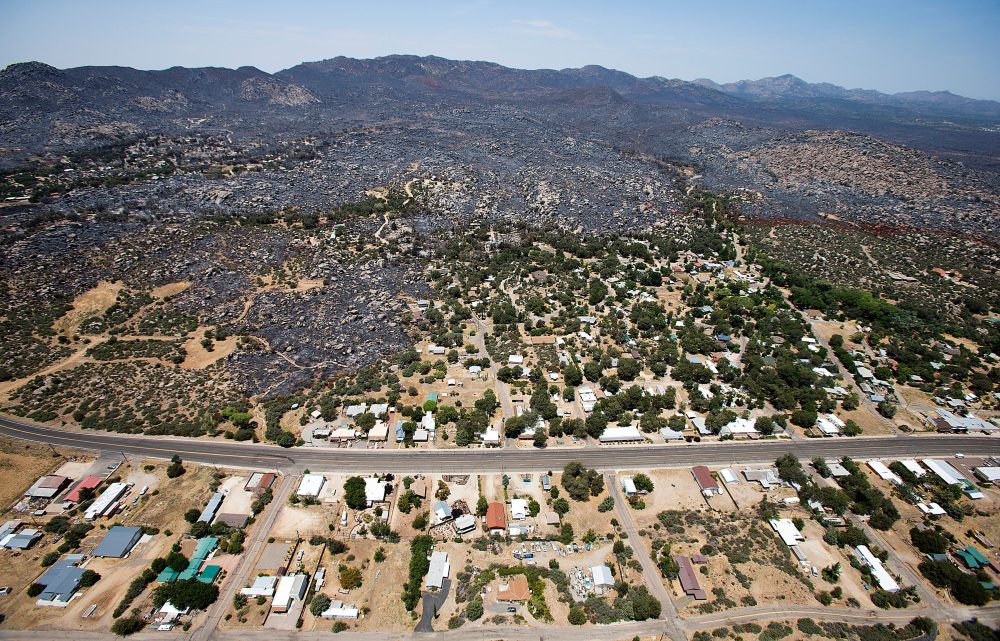
The Yarnell Hill Fire of June 30, 2013, which claimed 19 firefighter lives in Arizona, remains the single deadliest event for U.S. firefighters since the September 11, 2001, terrorist attacks and the worst for wildland firefighters in more than 100 years. Those firefighters perished about 30 miles southwest of Prescott, Arizona, after shifting winds drove flames toward them as they attempted to escape. They were in the process of deploying fire shelters — small, heat-resistant emergency tents designed to offer a chance at survival — when the fire overtook them in a brushy box canyon. Temperatures at the scene reached 2,000 degrees Fahrenheit.
On Saturday, a wildfire west of Grand Junction, Colorado, resulted in the deaths of three firefighters, with two more sustaining injuries. The fire has scorched approximately 44 square miles of land. All five firefighters were part of a Helitack crew — specialists who are transported by helicopter into hard-to-reach areas to clear vegetation and construct fire-resistant barriers in the path of advancing flames.
Much like the Yarnell Hill tragedy, these firefighters also made the decision to stop retreating and instead deploy fire shelters in an attempt to survive the advancing blaze.
Authorities say a thorough investigation could take months to complete, and a full picture of what occurred may be difficult to piece together. In the Yarnell Hill investigation, officials were unable to verify radio communications from the crew during a critical 30-minute window that might have revealed key details about the decisions made in the final moments.
The final report from that investigation cleared the firefighters of any wrongdoing, concluding they were properly qualified, adequately staffed, well-trained, and had “followed all standards and guidelines.” Their commanders were also found to have made reasonable decisions given the rapidly deteriorating conditions. The report summed up the tragedy by noting, “Complexity can outpace organizational attempts to respond.”
Fire shelters are considered a measure of absolute last resort, offering uncertain odds in otherwise unsurvivable situations. In a 2015 wildfire in Washington state, two firefighters who used the tents made it out alive, while three others who sheltered inside a truck did not survive.
The effectiveness of the shelters depends heavily on the specific conditions at the time of deployment. Riva Duncan, president of Grassroots Wildland Firefighters — a firefighter advocacy organization — noted Monday that the tents are not built to withstand direct contact with flames.
“It’s your last-ditch effort to try to survive,” Duncan said.