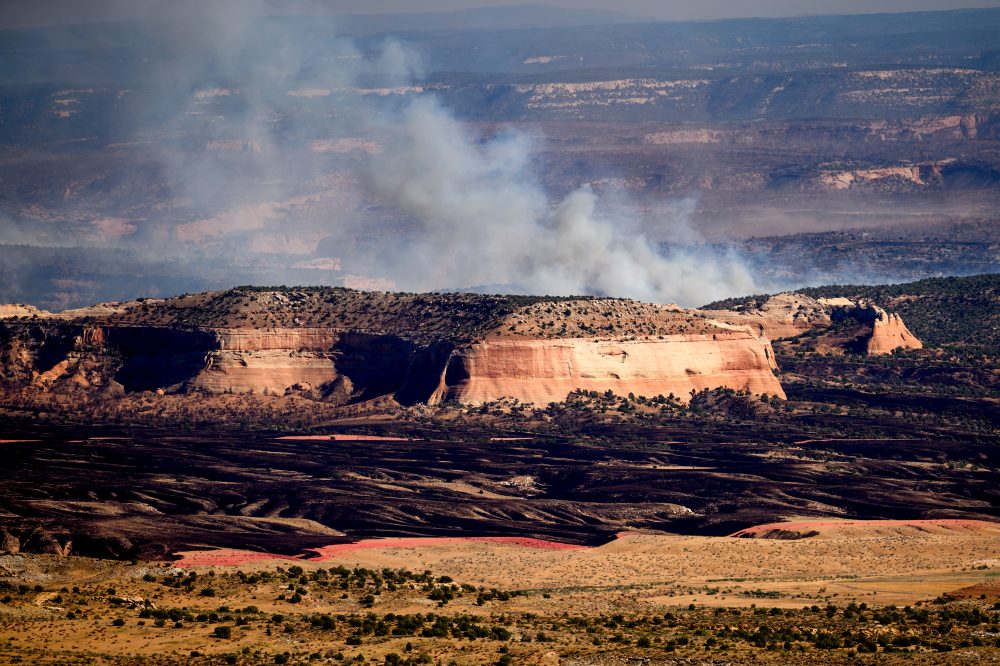

Federal officials on Monday released the names of three wildland firefighters who died over the weekend while battling wildfires near the Colorado-Utah border.
The U.S. Forest Service identified the three as Emily Barker, 38, of Clinton Township, Michigan; Nick Hutcherson, 27, of Glendale, Arizona; and Sydney Watson, 26, of Warrior, Alabama.
The trio were killed and two others were burned when fast-moving flames overtook them on Saturday. The firefighters had deployed emergency shelters — devices designed to protect them from fire and intense heat — but were unable to survive the rapidly spreading blaze.
All three belonged to a Helitack crew, a specialized unit that is transported by helicopter into remote, hard-to-reach areas with the goal of stopping newly ignited fires before they grow out of control. The work is considered extremely hazardous, as crews often find themselves in areas where fires are expanding at a dangerous pace.
The tragedy unfolded almost exactly 13 years after 19 wildland firefighters perished near Yarnell, Arizona, in June 2013. Those victims, like the three killed Saturday, were members of a specialized firefighting team who had also attempted to use emergency shelters when they were trapped in a brush-filled box canyon.
The deaths come during a particularly dangerous stretch of wildfire activity across the western United States. Dry conditions stretching back months, combined with a record-low snowpack this past winter in some regions, have fueled an explosion of fires. Wildfire experts have been sounding alarms for months about the elevated fire risk expected this summer.
Currently, more than two dozen large fires are burning across the country, with nearly 8,000 wildland firefighters and scores of firefighting helicopters deployed in response. Roughly half of the largest active blazes are located in Alaska, with most of the remaining fires concentrated in Western states.
So far in 2025, wildfires have scorched more than 4,600 square miles — approximately 11,900 square kilometers — making it the worst year for wildfire destruction since 2022.