PORTLAND, Maine — A Maine Democratic candidate seeking to challenge a longtime Republican senator has secured another notable endorsement, demonstrating continued momentum despite ongoing campaign challenges.
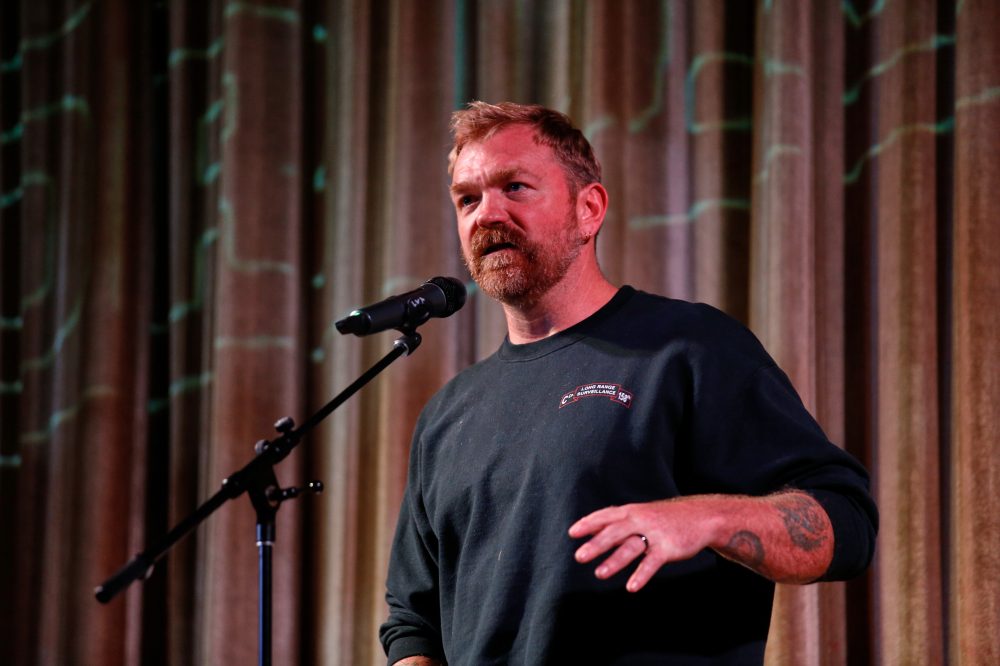
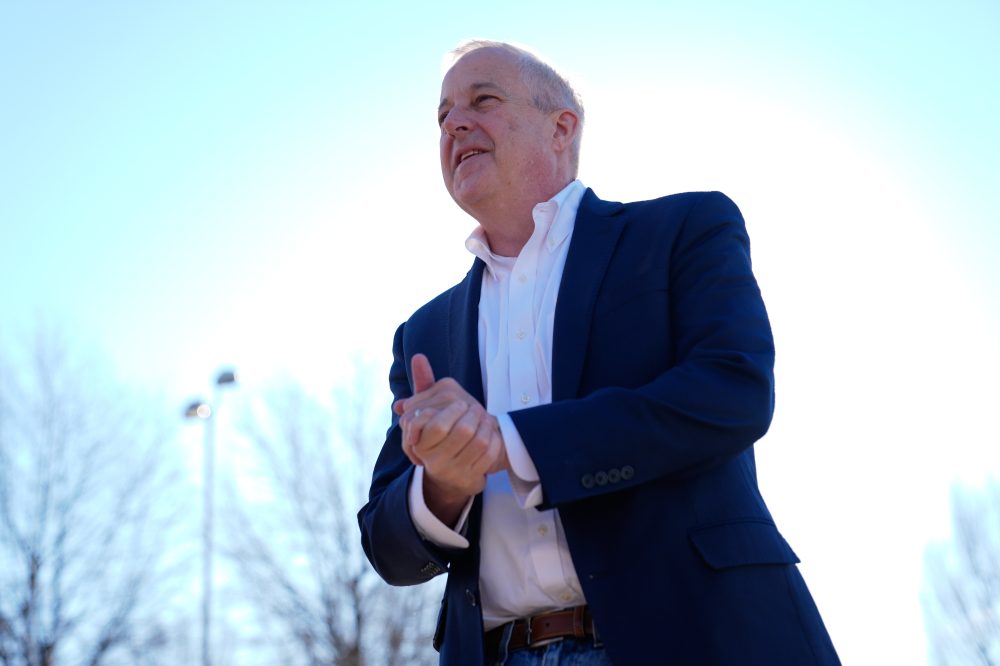
Arizona Senator Ruben Gallego announced his support Monday for Graham Platner, a first-time candidate who works as an oyster farmer and served as a combat veteran. Gallego praised Platner as embodying “the grit and independence that defines Maine.”
“Graham Platner is the kind of fighter Maine hasn’t seen in a long time, someone who tells you exactly what he thinks, doesn’t owe anything to the special interests, and wakes up every day thinking about working families,” Gallego stated. The Arizona Democrat secured his Senate position in 2024 with a victory margin exceeding 2 points, even as Trump won Arizona by nearly 6 points.
Platner’s endorsement list already includes Vermont Senator Bernie Sanders, who serves as an independent but works with Democrats, along with New Mexico’s Democratic Senator Martin Heinrich. However, Senate Minority Leader Chuck Schumer has chosen to support Platner’s primary rival, Maine Governor Janet Mills.
The 41-year-old Platner and 78-year-old Mills are both targeting Republican Senator Susan Collins, age 73, who serves her fifth term and recently declared her intention to seek reelection. Securing a Maine victory represents a critical component of Democratic strategy to regain Senate control, with the party requiring four additional seats to achieve majority status. Democrats have identified Maine, North Carolina, Alaska, and Ohio as key battleground states.
Platner has built support through his outsider appeal and focus on economic fairness messaging. His campaign has weathered storms including scrutiny over past social media content and a tattoo that appeared similar to Nazi imagery, which he has since had modified.
Gallego, considered among potential Democratic presidential candidates for 2028, previously campaigned in New Jersey, Virginia, and Florida last fall, supporting Democrats who ultimately won their races.
“I have an immense amount of respect for him and I’m looking forward to joining him as a fellow Marine and combat infantryman in the U.S. Senate,” Platner commented in response to the endorsement.
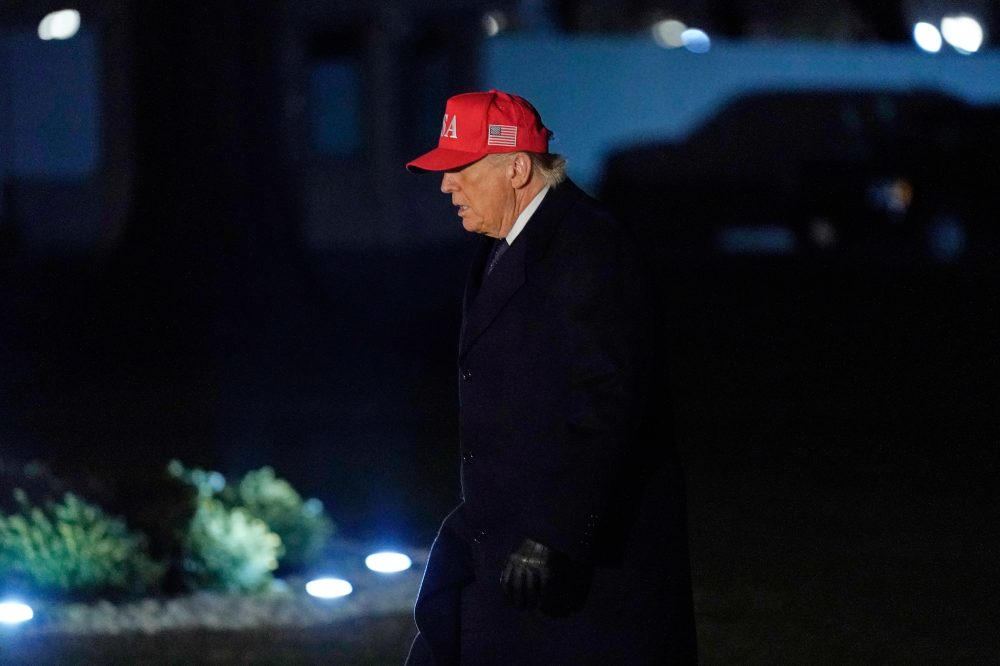
WASHINGTON – President Donald Trump indicated Monday that the United States plans to dramatically escalate its military actions against Iran, describing current operations as minimal compared to what lies ahead.
During an interview with CNN on Monday, Trump suggested that America’s military response has been restrained so far. “We haven’t even started hitting them hard. The big wave hasn’t even happened. The big one is coming soon,” the president stated.
The president’s remarks followed reports of the death of Iran’s Supreme Leader Ayatollah Ali Khamenei, creating questions about who will assume control of the Islamic Republic. Trump acknowledged the leadership vacuum, telling CNN that the administration remains uncertain about Iran’s current command structure.
“We don’t know who the leadership is. We don’t know who they’ll pick,” Trump explained during the interview.
According to Reuters reporting from Sunday, numerous high-ranking U.S. officials express doubt that the ongoing military campaign against Iran will result in immediate government change within the country.
The Cleveland Browns are addressing their offensive line needs by landing Houston Texans veteran Tytus Howard in an upcoming trade that will become official when the new NFL league year begins March 11.
The 29-year-old Howard brings significant versatility to Cleveland, having started at left guard, right guard, and right tackle during his seven-year tenure with Houston. Over his career, he has accumulated 93 starts and played multiple positions for the Texans last season.
When asked about the trade by KPRC2, Howard expressed understanding about the move. “I wasn’t surprised,” Howard said. “They’re trying to get younger and pay some guys. I ain’t mad. I kind of knew it was going to happen.”
The trade reunites Howard with former Texans quarterback Deshaun Watson, marking another player exchange between these two franchises in recent years. Howard entered the NFL as the 23rd overall selection in the 2019 draft from Alabama State, while Watson joined the Browns via trade in 2020.
According to ESPN’s reporting, Cleveland will surrender a fifth-round selection in the 2026 NFL Draft to complete the deal. Howard is anticipated to ink a three-year contract extension, with multiple sources indicating the agreement could reach a maximum value of $63 million.
The Browns face significant uncertainty along their offensive line, with only tackle Dawand Jones currently under contract for 2026. The 25-year-old Jones is working his way back from a lateral collateral ligament injury that ended his 2025 season in Week 3, adding to a concerning injury history that has prevented him from completing a full campaign. However, general manager Andrew Berry indicated at last week’s NFL Scouting Combine that Jones should be ready for training camp.
Houston has been active in reshaping their offensive line, having sent starting left tackle Laremy Tunsil to Washington at the beginning of last year’s league period. The Texans also dealt tackle Cam Robinson to Cleveland to help address the Browns’ injury-plagued line, though Robinson has since become a free agent.
The Nasdaq stock exchange has filed a formal request with federal securities regulators to launch a new type of prediction market focused on one of its flagship stock indexes.
According to regulatory documents filed March 2nd, the exchange is asking the Securities and Exchange Commission for permission to offer binary options trading on both the Nasdaq 100 index and its smaller counterpart, the Nasdaq 100 micro index.
The Nasdaq 100 serves as a benchmark that follows the performance of the 100 largest non-financial corporations trading on the Nasdaq exchange. This group includes technology giants such as Apple, Nvidia and Intel. The micro version represents one one-hundredth of the full index’s value.
These binary options would function as prediction markets, allowing traders to make yes-or-no bets on whether the index will reach certain price levels within specified time periods.
Multiple nations in the Persian Gulf region have approached Italy seeking advanced air defense technology as Middle Eastern conflicts continue to intensify, according to Italy’s defense minister who briefed lawmakers Monday.
Defense Minister Guido Crosetto explained that regional tensions involving Iran, Israel, and the United States have prompted these urgent requests from Gulf nations looking to bolster their defensive capabilities.
The escalating situation has seen Israel launch attacks into Lebanon following strikes from the militant organization Hezbollah, while Iran has targeted Gulf nations with missiles and unmanned aircraft. Additionally, a drone manufactured in Iran recently struck a British military installation in Cyprus.
“The Gulf countries are expressing strong concern about the evolution of the crisis and have indicated the urgent need to strengthen their defence capabilities, particularly air defence and anti-drone,” Crosetto told Italian parliament members.
Among the requested equipment is the SAMP/T system, a joint French-Italian defense platform also called MAMBA, which has the capability to monitor multiple dozens of aerial threats while simultaneously engaging up to ten targets. This represents Europe’s sole domestically-produced system capable of stopping ballistic missiles.
However, meeting these requests poses significant challenges since Italy is currently providing SAMP/T units to Ukraine for protection against Russian attacks, creating supply constraints.
“It is a very delicate issue, considering that these capabilities are already heavily strained and limited in light of European needs and the support provided so far to Ukraine,” the defense minister explained during his parliamentary testimony.
Crosetto had recently returned from Dubai on Sunday, where he and his family had been temporarily stuck following Iran’s recent military actions. He appeared alongside Foreign Minister Antonio Tajani, who characterized the regional conflict as presenting direct security risks to Italy itself.
T-Mobile has launched a legal counterattack against Verizon Wireless, claiming the nation’s largest wireless carrier uses misleading advertising tactics to steal customers from competitors.
The countersuit, filed late Friday in Manhattan federal court, comes nearly a month after Verizon filed its own lawsuit on February 4 targeting T-Mobile’s advertisements that promised customers could save over $1,000 annually by switching services.
According to T-Mobile’s legal filing, Verizon’s marketing campaign promising customers a superior deal when they bring in bills from T-Mobile or AT&T is fundamentally dishonest because Verizon cannot actually provide similar service plans at reduced costs.
Verizon’s promotional campaign features billboards and store displays showing historical figures George Washington, Abraham Lincoln, and Benjamin Franklin with shocked expressions over the company’s advertised offers.
“The Better Deal Campaign is a classic ‘bait and switch’ by which Verizon lures many consumers through the door with a false promise of savings and then tries to upsell them on more expensive products and services,” T-Mobile stated in court documents.
Verizon representatives and their legal team did not respond to requests for comment Monday regarding the countersuit.
In Verizon’s original legal action, the company claimed T-Mobile unfairly matched its discounted promotional pricing against Verizon’s regular rates while exaggerating the worth of additional services that competitors don’t include. T-Mobile has rejected these allegations.
Both wireless companies are seeking court orders to stop their rival’s advertising campaigns, along with triple financial damages under federal false advertising laws and compensation for violations of New York’s business competition regulations.
T-Mobile operates from its headquarters in Bellevue, Washington, while Verizon is based in New York.
According to year-end financial data, Verizon leads the wireless market with 146.9 million customers, followed closely by T-Mobile with 142.4 million subscribers. AT&T holds third place with 120.1 million customers.
The nation’s highest court has decided not to review a groundbreaking case about whether artificial intelligence can hold copyrights for creative works, effectively maintaining current rules that require human creators.
On Monday, the Supreme Court rejected an appeal from Stephen Thaler, a computer scientist from St. Charles, Missouri, who had been fighting for copyright protection of artwork created entirely by his artificial intelligence system.
Thaler’s legal battle began in 2018 when he sought federal copyright registration for “A Recent Entrance to Paradise,” a digital artwork depicting train tracks leading into a portal with green and purple plant-like imagery surrounding it. He claimed his AI technology called “DABUS” produced the piece without human involvement.
The U.S. Copyright Office turned down his application in 2022, determining that creative works require human authors to qualify for copyright protection. Federal courts in Washington later supported this decision, with one judge stating in 2023 that human authorship represents a “bedrock requirement of copyright.” The D.C. Circuit Court of Appeals confirmed this ruling in 2025.
President Donald Trump’s administration had recommended against the Supreme Court taking up Thaler’s case, arguing that “multiple provisions of the act make clear that the term refers to a human rather than a machine,” despite the Copyright Act not explicitly defining “author.”
Thaler’s legal team had argued their case held “paramount importance” given artificial intelligence’s rapid expansion in creative fields. They warned that the court’s refusal to hear the appeal could harm AI development in creative industries during crucial growth years.
“Even if it later overturns the Copyright Office’s test in another case, it will be too late. The Copyright Office will have irreversibly and negatively impacted AI development and use in the creative industry during critically important years,” his attorneys stated.
The Copyright Office has similarly denied copyright applications from other artists seeking protection for images created using the AI system Midjourney. However, those cases differed from Thaler’s because the artists claimed they used AI as a tool to assist their creative process, rather than having the AI work independently.
This marks the second time the Supreme Court has declined to hear Thaler’s arguments about AI-created intellectual property. The court previously rejected his separate case involving AI-generated inventions for a beverage holder and light beacon, which the U.S. Patent and Trademark Office had also denied on similar human authorship grounds.
A leading agricultural scientist is providing farmers with guidance on how to better utilize advanced weed management techniques this growing season. Dr. Eric Scherder, who serves as the U.S. Crop Protection Technical Lead for Corteva Agriscience, emphasizes that the Enlist system serves as an essential component in comprehensive weed management and resistance prevention strategies.
Speaking with Brownfield, Scherder outlined several approaches that growers can implement to optimize their use of the Enlist system during the upcoming season. He stressed the importance of incorporating these tools as part of a broader, systematic approach to controlling unwanted vegetation while preventing the development of herbicide-resistant weeds.
Agricultural chemical company BASF has unveiled a groundbreaking advancement in crop protection that could revolutionize how growers battle a devastating agricultural enemy: the soybean cyst nematode (SCN). The company’s newly developed genetic trait, called Nemasphere, marks a historic first as the initial genetic technology engineered exclusively to shield soybean crops from this destructive pest that severely reduces harvests.
This microscopic threat has long plagued soybean producers, causing substantial financial losses through diminished crop yields. The soybean cyst nematode attacks plant roots, weakening crops and significantly reducing the amount farmers can harvest from their fields.
According to Michael McCarville, who serves as BASF’s Trait Technology Lead, this innovation represents a major breakthrough for agricultural producers. McCarville explained to Brownfield that plant breeders now have access to this cutting-edge genetic tool to help protect one of America’s most valuable crops.
The development of Nemasphere addresses a critical need in modern agriculture, where farmers continuously seek effective methods to combat persistent threats that erode their crop yields and profitability. This genetic trait technology offers producers a new weapon in their ongoing battle against one of soybean production’s most costly adversaries.
Delaware State Police have taken into custody a 24-year-old Wilmington car wash worker accused of stealing a customer’s engagement ring and later trying to sell it at a pawn shop.
Jose Gonzales-Morales was arrested following an investigation that began February 15, 2026, when authorities were called to Magic Car Wash on Naamans Road in Wilmington. A customer reported their engagement ring had vanished from their vehicle after getting it washed, having accidentally left the jewelry inside the car.
During the initial investigation, police interviewed multiple employees at the car wash, including Gonzales-Morales, but were unable to locate the missing ring at that time.
The breakthrough came when the victim took matters into their own hands, distributing flyers with photos of the stolen ring to local pawn shops in case someone tried to sell it. This proactive approach paid off eight days later on February 23, 2026, when Gonzales-Morales allegedly walked into a Wilmington-area pawn shop attempting to sell the very ring pictured on the flyer.
The pawn shop owner, who had received one of the victim’s flyers, immediately recognized the jewelry and recovered it, returning the engagement ring to its rightful owner.
Gonzales-Morales was taken into custody without incident on February 28, 2026, and transported to Troop 1. He faces two felony charges: Theft $1500 or Greater and Providing False Statement to Law Enforcement. Following his arraignment at Justice of the Peace Court 11, he was released on an unsecured bond of $2,500.
Storm debris cleanup efforts are ongoing in Wicomico County as the Department of Public Works assists with roadside debris removal following the recent severe weather that impacted the area.
Officials announced that the brush collection site at the Parsonsburg Convenience Center has reached maximum capacity and will temporarily cease operations. The facility will remain unavailable to residents until county crews can process the accumulated storm debris.
The county’s public works department continues its efforts to help communities recover from the storm damage by supporting cleanup operations throughout the region.
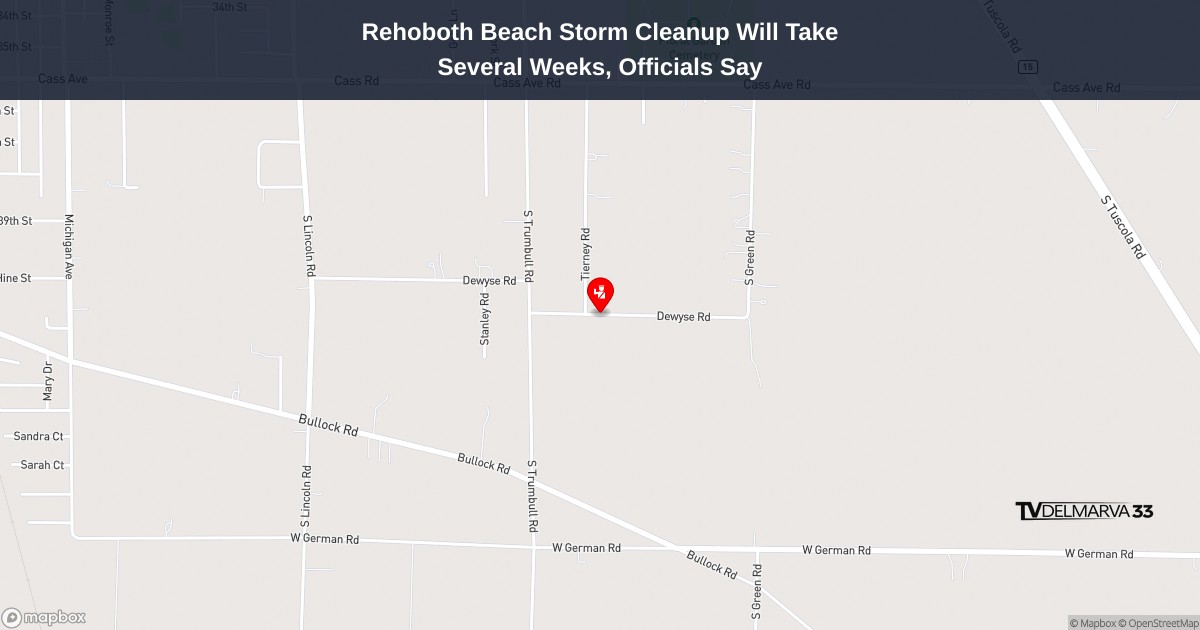
City officials in Rehoboth Beach are advising residents that cleanup operations following recent storm damage will require several weeks to finish completely.
Municipal work crews have deployed collection trucks today to gather storm debris while also handling regular trash collection duties, according to city officials who are asking for public patience during the process.
The Streets Department has established specific guidelines for debris removal that residents must follow. All large pieces of fallen trees and branches must be cut down to sections measuring 4 feet or smaller, or they will be left behind during collection runs.
City workers will not enter private properties to remove debris, making property owners responsible for clearing their own land. However, municipal crews may remove debris that blocks public roads or right-of-way areas.
Residents seeking an alternative disposal method can bring their storm debris directly to the recycling center located at 37540 Oyster House Road. The facility operates from 9 am to 1 pm on Mondays, Fridays, and Saturdays.
Officials emphasized that the cleanup process will require several weeks to complete due to the extensive amount of fallen trees, limbs and branches left behind by the storm.
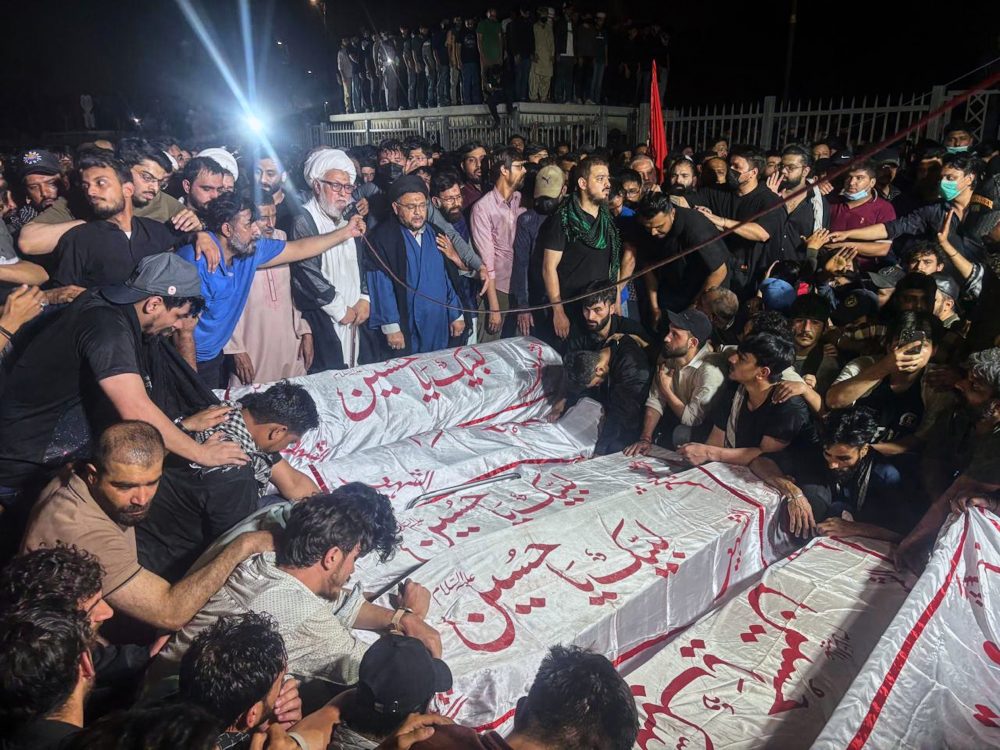
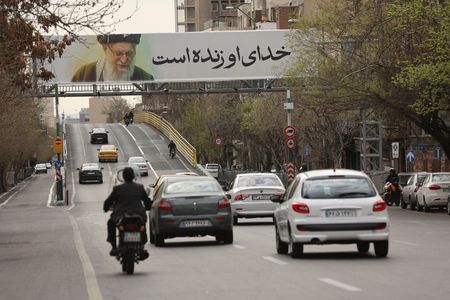
Iranian officials are working urgently to select a new Supreme Leader following the death of Ayatollah Ali Khamenei, who led the nation for nearly four decades before being killed in an unexpected joint U.S.-Israeli attack.
This marks just the second occasion since Iran’s 1979 Islamic Revolution that the country must choose a new supreme leader. Candidates being considered span from hardline figures favoring continued confrontation with Western nations to reform-minded individuals supporting diplomatic solutions.
The supreme leader holds ultimate authority over all critical decisions in Iran, including matters of war and peace, as well as the nation’s controversial nuclear activities.
Currently, a temporary leadership group consisting of President Masoud Pezeshkian, hardline judicial leader Gholamhossein Mohseni Ejei, and prominent Shiite religious figure Ayatollah Ali Reza Arafi is steering Iran through what many consider its most significant crisis in recent decades. Foreign Minister Abbas Araghchi announced Sunday that officials expect to name a new supreme leader within the coming days.
The selection process falls to the Assembly of Experts, an 88-member body required by law to promptly designate a replacement. This assembly comprises Shiite religious leaders who win public elections after the Guardian Council, Iran’s constitutional oversight body, approves their candidacy.
Given Khamenei’s substantial influence over both religious institutions, analysts believe the next leader is unlikely to represent a dramatic shift in direction.
Among the leading possibilities is Khamenei’s son, a mid-ranking Shiite cleric widely viewed as a potential heir. While he maintains strong connections to Iran’s paramilitary Revolutionary Guard, he has no governmental experience. His appointment could create complications, given the Islamic Republic’s historical opposition to inherited leadership and its claims of offering a more equitable system.
Arafi, who sits on the interim governing council, received Khamenei’s personal endorsement for Guardian Council membership in 2019 before winning election to the Assembly of Experts three years later. The senior religious leader oversees an extensive network of Islamic schools.
Former President Hassan Rouhani, considered a moderate voice, led Iran from 2013 through 2021 and negotiated the significant nuclear deal with President Obama’s administration that President Trump later abandoned. Rouhani maintained Assembly of Experts membership until 2024, when he claimed officials prevented his reelection bid. He condemned this action as limiting Iranian citizens’ political involvement.
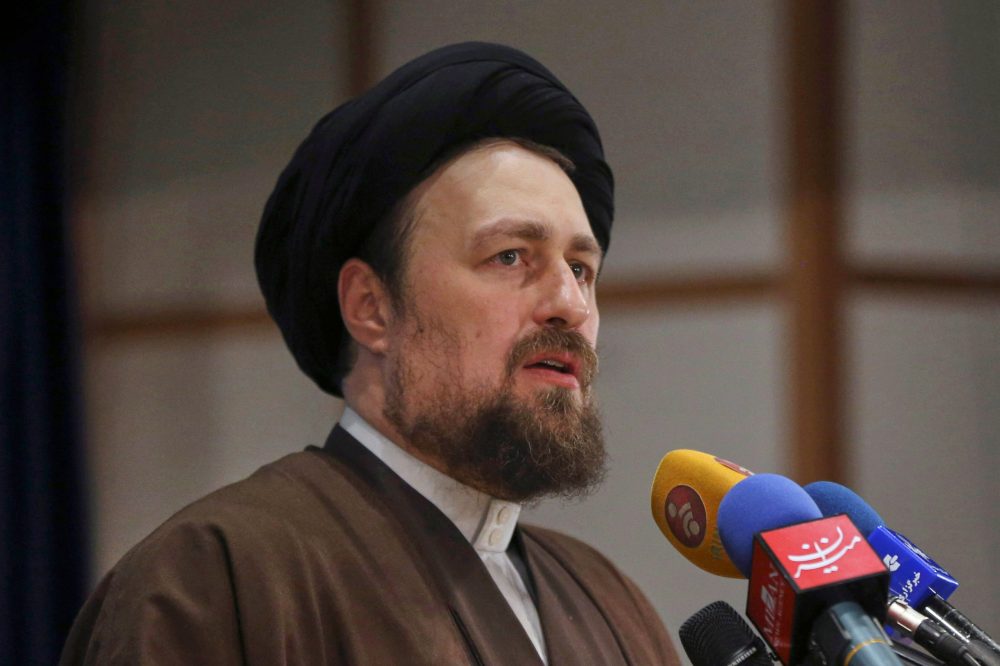
Hassan Khomeini represents the most notable descendant of Islamic Republic founder Ayatollah Ruhollah Khomeini. Though also viewed as relatively moderate, he lacks government experience and currently works at his grandfather’s memorial site in Tehran.
Senior cleric Mirbagheri enjoys support among hardline factions and serves on the Assembly of Experts. He maintained close relationships with the late Ayatollah Mohammad Taghi Mesbah Yazdi, another hardline figure who argued Iran should retain the option to develop “special weapons,” widely understood as nuclear weapons.
During the COVID-19 outbreak, Mirbagheri criticized school closures as part of a “conspiracy.” He currently directs the Islamic Cultural Center in Qom, Iran’s primary center for religious education.
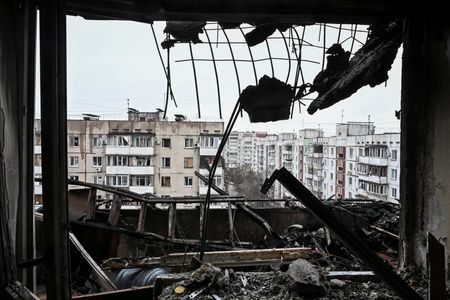
BRUSSELS — European nations find themselves increasingly entangled in the escalating Middle East conflict between the U.S.-Israel alliance and Iran, scrambling to safeguard military installations and rescue thousands of citizens trapped in the expanding war zone.
The crisis has thrust European countries into emergency mode, despite having no voice in the initial U.S.-Israeli military operations against Tehran. Now they’re grappling with the consequences as Iranian retaliation spreads throughout the region that houses vital European trading partners and strategic commercial pathways.
Thousands of Europeans residing in major Middle Eastern cities like Beirut, Dubai, and Jerusalem now face uncertainty, while extensive immigrant communities from Turkey, Egypt, and Gulf nations living across Europe watch developments with growing concern.
Although European powers have declined direct military participation, Britain, France, and Germany announced their willingness to collaborate with Washington in countering Iranian attacks. The United Kingdom has granted American forces access to British military installations for strikes against Iranian missile facilities.
The conflict’s reach has already touched European soil. Cyprus, currently holding the EU’s rotating leadership, was forced to clarify its non-involvement after an Iranian-designed Shahed drone struck a British air facility on the island’s southern shoreline this past weekend. These same drone models have previously appeared in European skies during Russia’s assault on Ukraine.
Anticipating potential domestic threats, several European governments have enhanced security protocols at transportation hubs including train terminals and airports.
Notably, European leadership has largely avoided condemning the American-Israeli military campaign. Many officials welcome the potential collapse of Iran’s government, which has repeatedly detained European nationals and undermined continental economic interests over recent years.
Spain stands as a notable exception to this consensus. Prime Minister Pedro Sánchez declared Sunday, “One can be against a hateful regime, and at the same time, be against a military intervention that is unjustifiable, dangerous and outside of international law.”
European involvement remains essential given the region’s volatility and the continent’s need for Middle Eastern stability. Concerns about prolonged petroleum price increases and potential unpredictable migration waves ensure continued European engagement.
The immediate European focus centers on protecting thousands of nationals caught in the spreading conflict zone.
EU foreign ministers addressed evacuation concerns during weekend emergency discussions. While no coordinated rescue operation launched, officials acknowledged one might become necessary shortly.
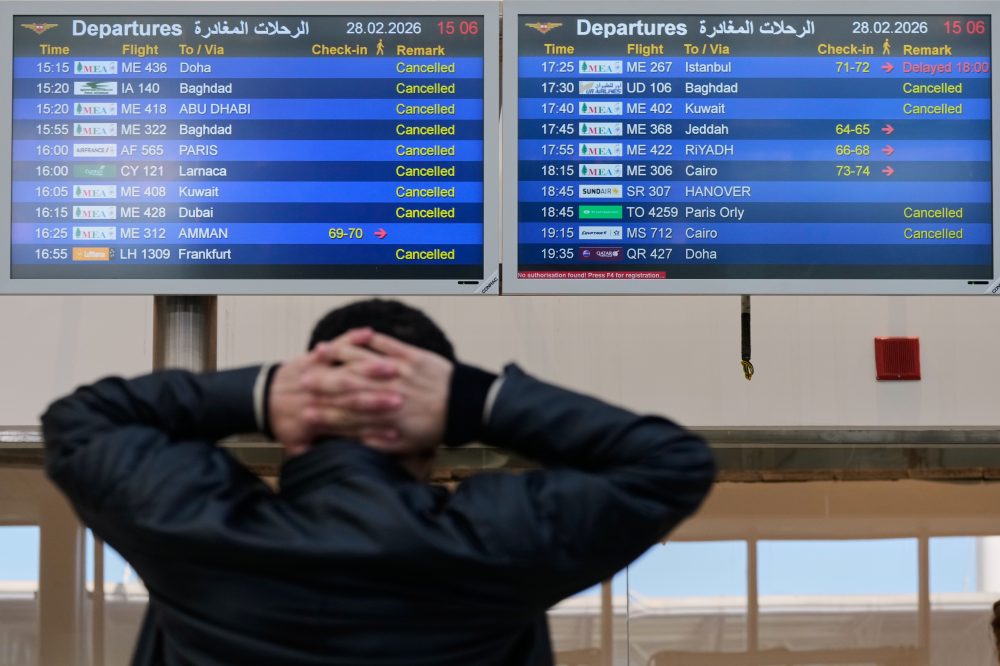
German authorities report approximately 30,000 German travelers stranded aboard cruise vessels, in hotels, or at shuttered airports, unable to return due to the fighting. Most remain in Middle Eastern locations, though some are stuck elsewhere because their connecting flights route through Abu Dhabi, Qatar, or Dubai. Military extraction proved impossible due to closed airspace.
The Czech Republic has dispatched two aircraft to Egypt and Jordan for citizen retrieval, collecting dozens of Czech nationals who traveled overland from Israel. Four additional planes were scheduled for Oman to transport more of the estimated 6,700 Czechs throughout the region.
Iranian threats against vessels in the Strait of Hormuz—the narrow Persian Gulf passage handling one-fifth of global oil commerce—have prompted calls for enhanced EU merchant ship protection following actual attacks in those waters.
France responded by deploying two additional warships to strengthen Operation Aspides, the European naval mission in the area. However, these vessels will only patrol the distant Red Sea and Gulf of Aden—entry points to the Suez Canal connecting the Red Sea and Mediterranean—joining three ships already stationed there.
Operation Aspides launched two years ago to shield maritime commerce from potential Houthi rebel attacks originating in Yemen. While the Houthis have voiced support for Iran, they haven’t immediately declared military action on Tehran’s behalf.
Officials are reviewing the mission’s authorization and considering stricter engagement protocols, though immediate changes appear unlikely.
Preserving broader Middle Eastern stability remains a primary European objective. Iran’s retaliatory actions across multiple countries have drawn widespread condemnation.
EU foreign policy chief Kaja Kallas plans to organize talks with Gulf Cooperation Council nations at the ministerial level this week, as the bloc works to reassure Iran’s neighbors and other regional countries facing potential threats.
“Iran’s attacks of a number of countries in the Middle East are inexcusable. The events must not lead to further escalation that could threaten the region, Europe and beyond, with unpredictable consequences,” Kallas stated following Sunday’s emergency discussions.
The European Union intends to spearhead diplomatic initiatives aimed at reducing regional tensions while maintaining efforts to prevent Iranian nuclear weapons acquisition, despite the collapsed nuclear agreement after the Trump administration’s withdrawal.
EU officials indicate no preferred successor for Tehran’s leadership, noting it’s premature to identify potential candidates for future support. Foreign ministers primarily expressed “solidarity with the Iranian people.”
They pledged assistance for “their fundamental aspirations for a future where their universal human rights and fundamental freedoms are fully respected.”
European leaders maintain that authentic popular opposition to the regime emerged recently but was crushed through unprecedented violence. Thousands died and tens of thousands faced detention.
One certainty remains: the EU will unlikely support any leadership promoted by Iran’s Revolutionary Guard. The IRGC’s addition to the bloc’s terrorism list last month makes European recognition of them as legitimate negotiating partners virtually impossible.
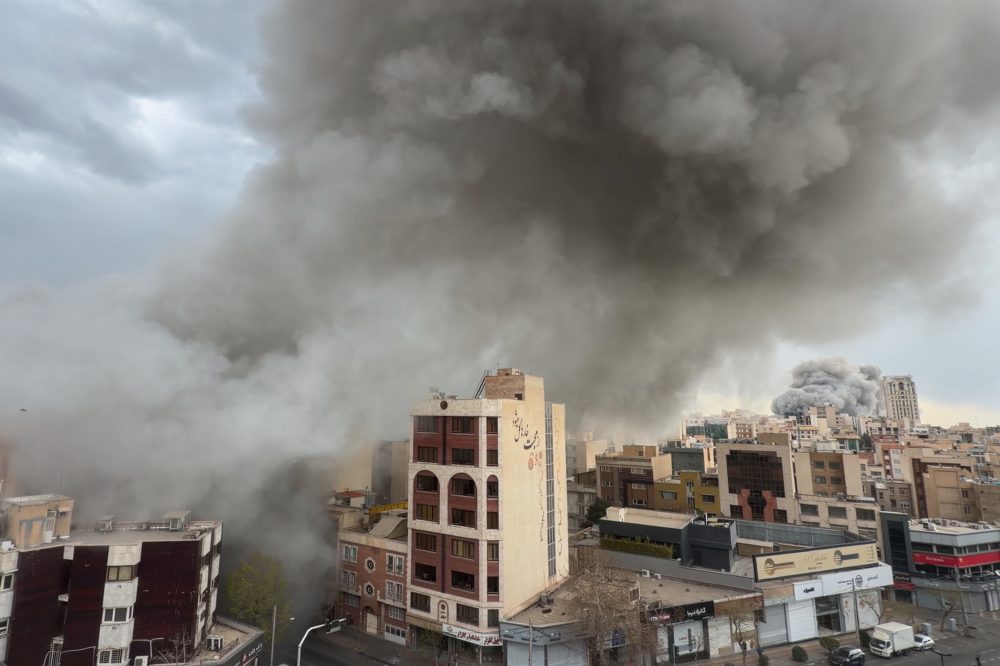
THE HAGUE, Netherlands — Recent military operations involving American and Israeli forces targeting Iran have intensified concerns about violations of international legal standards, as Tehran and allied groups responded with missile strikes throughout the Middle East region on Monday.
From United Nations headquarters in New York, the center of post-World War II international governance, Secretary-General António Guterres addressed the Security Council on Saturday, declaring that American and Israeli military strikes breached international law and UN Charter provisions. Guterres simultaneously criticized Iran’s counter-attacks as violations of Middle Eastern nations’ sovereignty and territorial boundaries.
Trump administration representatives maintain their military operations represent legitimate actions to prevent Tehran from developing nuclear capabilities. “It’s a matter of global security. And to that end, the United States is taking lawful actions,” stated Mike Waltz, Trump’s UN ambassador.
In a Sunday correspondence to the United Nations, Iranian Foreign Minister Abbas Araghchi described the death of Supreme Leader Ayatollah Ali Khamenei as “constitutes a grave and unprecedented breach of the most fundamental norms governing relations among States.”
Defense Secretary Pete Hegseth offered a forceful defense of American military actions on Monday. “No stupid rules of engagement, no nation building quagmire, no democracy building exercise, no politically correct wars. We fight to win and we don’t waste time or lives,” Hegseth declared from Pentagon headquarters.
These Iranian operations follow by fewer than eight weeks the American military operation that resulted in the capture of former Venezuelan President Nicolás Maduro in Caracas, subsequently transporting him to New York for prosecution.
International law expert David Crane, who established and led a United Nations tribunal prosecuting Sierra Leone war crimes, authored an assessment stating that American operations in Iran and Venezuela “highlight a dangerous trend: the normalization of unilateral force as a tool of foreign policy. Even when the outcome is positive, the violation of international law and constitutional limits sets a precedent that threatens global stability and undermines America’s own legal foundations.”
Democratic lawmakers in Washington have characterized the military strikes as unlawful. Their position maintains that constitutional authority for war declarations rests exclusively with Congress. Critics argue the Trump administration has not provided adequate justification or strategic planning for the military operations and their consequences.
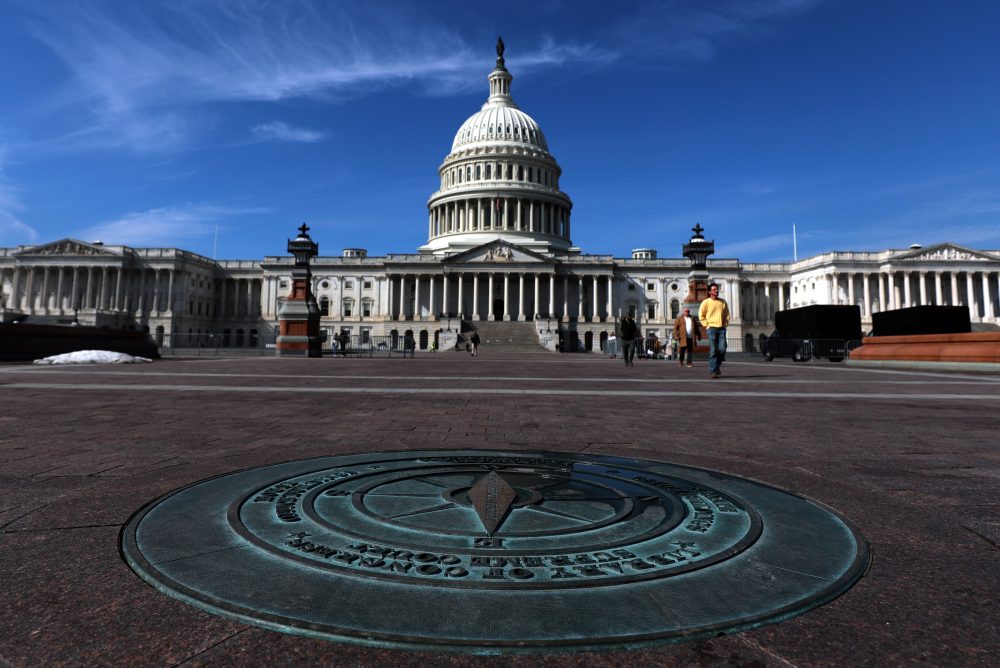
Congressional leadership rapidly organized a Monday debate regarding Trump’s constitutional authority for Iranian bombardment under war powers legislation.
The International Criminal Court’s founding treaty amendment defines aggression as “the use of armed force by a State against the sovereignty, territorial integrity or political independence of another State, or in any other manner inconsistent with the Charter of the United Nations.”
The court specifically identifies aggressive acts including: “Bombardment by the armed forces of a State against the territory of another State or the use of any weapons by a State against the territory of another State.”
Since the United States, Israel, and Iran maintain non-membership status with the court, ICC jurisdiction over the current conflict requires Security Council referral to court prosecutors.
UN Charter provisions restrict nations to using force against other countries only with Security Council authorization or for self-defense purposes, explained Marieke de Hoon, who teaches international criminal law at Amsterdam University.
De Hoon characterized the Iranian attacks as aggression crimes.
“It is a violation of the prohibition to use force, the cornerstone of the international legal order, and there is no legal justification for it: it is not a self-defense against an armed attack by Iran or an imminent threat” of attack, “nor is there a UNSC resolution to authorize use of force,” she explained to The Associated Press. “Regime change moreover violates the sovereignty of another state.”
Iranian leadership maintains an established record of violently suppressing opposition movements and supporting extremist activities that have created Middle Eastern instability. Trump administration forces targeted the nation’s nuclear facilities in previous military strikes last year.
However, De Hoon argued these factors cannot justify American and Israeli bombardments.
International law grants Tehran self-defense rights, she noted, while adding that “Iran is not allowed to attack civilian infrastructure in other countries. Its response needs to be proportionate to stop the aggression, without offering itself a legitimation toward, for instance, regime change in the aggressor country.”
Crane acknowledged that removing Maduro and Khamenei from power might enhance regional stability, decrease human suffering, and improve democratic and peaceful prospects, but “international law does not permit states to unilaterally decide which tyrants to remove by force.”
Reading University international law professor Marko Milanovic stated that during peacetime, “it is a clear violation of international law to assassinate the head of state or government of some other state.”
Government leaders “enjoy personal immunities and inviolability, and any attacks against them would also violate the sovereignty of their state,” he explained.
Wartime conditions alter these protections, he noted, explaining that when political leaders serve as armed forces members, “then they are combatants like any other members of the armed forces and are not immune from attack.”
Motorists in the Pike Creek area should plan alternate routes as a portion of Upper Pike Creek Road will be temporarily shut down for construction work.
The Delaware Department of Transportation announced that the roadway between Route 2 and Old Coach Road will be inaccessible to traffic during daytime hours on March 2nd and 3rd, 2026.
The daily closures will be in effect from 8 a.m. until 4 p.m. on both days, allowing the road to reopen for evening and morning commuter traffic.
Drivers who regularly use this route should expect delays and consider using alternative pathways during the construction window. The work is scheduled to wrap up by late afternoon on March 3rd.
Three United States Army service members will receive the nation’s highest military decoration during a White House ceremony on Monday, as President Donald Trump presents the Medal of Honor to recognize their extraordinary courage and sacrifice.
Among those being honored is retired Command Sgt. Maj. Terry P. Richardson, whose heroic actions during the Vietnam conflict are credited with preserving the lives of 85 fellow soldiers.
The ceremony will also posthumously honor Staff Sgt. Michael H. Ollis, who made the ultimate sacrifice in Afghanistan during 2013 while displaying exceptional bravery in the combat operation that claimed his life.
Additionally, Master Sgt. Roderick W. Edmonds will receive posthumous recognition for his courageous leadership and defiance while held as a prisoner of war by German forces during World War II. Edmonds passed away in 1985.
This prestigious military decoration is bestowed by the Commander in Chief on behalf of Congress to honor service members who demonstrate exceptional valor in combat situations, placing their own lives at risk while performing duties far exceeding normal expectations.
Ukrainian President Volodymyr Zelenskyy announced Monday that his nation will finish technical preparations needed to begin European Union membership negotiations within the coming days.
Speaking to reporters through a WhatsApp media session, Zelenskyy again urged EU partners to establish a concrete timeline for Ukraine’s admission to the bloc, arguing this would serve as a crucial security guarantee for his country as it works to negotiate an end to the conflict with Russia.
“We are ready, but not all leaders of the European Union are… I mean, not everyone is ready to give Ukraine this opportunity,” Zelenskyy stated.
Ukraine gained official EU candidate status shortly after Russia launched its invasion in February 2022.
However, Kiev’s advancement through the standard EU membership process has stalled due to Hungary’s opposition, which has prevented the required unanimous consent to formally begin discussions on the six main “clusters” of membership requirements.
Hungarian Prime Minister Viktor Orban, who maintains the strongest Russia ties within the EU and faces crucial elections in April, has also blocked the most recent EU aid package for Ukraine valued at 90 billion euros spanning this year and next.
Orban claims Ukraine has cut off Russian oil deliveries to Hungary through the historic Druzhba pipeline that runs through Ukrainian territory. Ukraine maintains the pipeline suffered damage from a Russian drone strike.
Kiev views EU membership as essential to its post-conflict reconstruction. Ukraine’s inclusion in the EU with a specific entry date appears in preliminary versions of a 20-point peace framework developed jointly by Ukraine and the United States, currently being discussed with Russia.
European Union officials have indicated that Ukraine, given its checkered history regarding government transparency, anti-corruption efforts, and legal system reforms, may require several years of institutional changes to satisfy EU entry standards.
Zelenskyy reiterated Monday that Ukraine would be technically prepared for EU membership by next year, emphasizing that the actual timing depends on political commitment from existing member nations.
“If they truly believe in Ukraine, if they want to see Ukraine in the EU, then this is the opportunity: at the end of the war, to give Ukraine a concrete date and not repeat the mistake they made with NATO,” he explained.
A Beijing-based artificial intelligence company is setting its sights on global expansion after delivering impressive financial results and outlining ambitious growth strategies.
MiniMax, a Chinese AI startup, announced Monday its goal to establish itself as a worldwide AI platform provider following remarkable revenue performance that saw earnings climb 159% compared to the previous year, reaching $79 million. International markets accounted for more than 70% of the company’s total sales.
The firm experienced particularly strong performance in its core AI products, with consumer subscription revenues jumping 143.4%. Its enterprise services and open platform division delivered comparable growth rates.
This marks MiniMax’s inaugural financial report since completing its Hong Kong stock market debut in January, where the company successfully raised HK$4.8 billion, equivalent to $614 million.
The strong results reflect growing market appetite for more affordable, open-source AI solutions offered by Chinese companies like MiniMax and DeepSeek, which market themselves as budget-friendly alternatives to expensive proprietary American systems.
While DeepSeek concentrates on text-based reasoning technology and developer resources, MiniMax distinguishes itself through multimodal features that integrate text, video, and audio capabilities.
During a conference call following the earnings announcement, Chief Executive Officer Yan Junjie outlined the company’s strategy to function as both a model developer and product platform while maintaining its open-source philosophy to draw external developers.
The organization intends to launch its newest M3 model during the first six months of this year.
Despite its growth trajectory, MiniMax remains significantly smaller than American rivals. OpenAI reported its annual revenue exceeded $20 billion in 2025.
The Chinese company continues operating at a loss, recording a net deficit of $1.87 billion in 2025, up from $465.2 million the year before. The majority of last year’s losses stemmed from valuation changes in financial instruments the company holds.
“We believe AI is not currently a zero-sum market, but rather one where annual incremental growth far exceeds the existing base,” Yan stated, emphasizing potential opportunities in programming assistance, workplace productivity tools, and video creation technologies.
A massive entertainment merger announced this week will create a media powerhouse carrying approximately $79 billion in debt, company executives revealed Monday following the completion of their $110 billion acquisition deal.
Paramount CEO David Ellison disclosed the debt figure during an analyst conference call after finalizing the $31-per-share purchase of Warner Bros on Friday. The deal came together after Netflix chose not to increase its competing bid.
The newly combined companies plan to merge their streaming platforms into one service, according to Ellison, who believes this will provide the necessary resources and scale to better challenge Netflix’s market dominance.
Ellison noted that the merged companies currently reach over 200 million subscribers across more than 100 global markets.
“Unlike Netflix, Paramount’s business could use a shot in the arm and an immediate boost to achieve the greater scale it needs,” commented Matthew Dolgin, a senior analyst with Morningstar.
The acquisition brings together Paramount’s television networks CBS, MTV, Comedy Central and BET with Warner’s portfolio including CNN, HBO, TNT, and Food Network.
This combination creates one of entertainment’s most extensive collections of proven content, joining popular franchises like “Game of Thrones,” “Mission Impossible,” “Harry Potter,” “Top Gun,” DC Universe properties and “SpongeBob SquarePants.”
The bidding war for Warner Bros stretched across several months, with both Paramount and Netflix submitting competing offers for the studio and streaming operations.
Netflix initially secured an agreement in December to purchase those assets for $27.75 per share, totaling $82.7 billion, but excluded cable networks from the deal.
When Warner’s board determined Paramount’s proposal was superior, Netflix declined to increase its offer and withdrew from the competitive battle for properties including DC Comics, HBO and HBO Max.
The Paramount-Warner arrangement eliminates uncertainty about cable network assets that Warner stockholders would have kept under Netflix’s proposal, addressing concerns that had complicated Netflix’s bid.
The merged company plans to release at least 30 movies annually in theaters while keeping both Warner Bros and Paramount studio operations running.
Paramount covered the $2.8 billion termination fee Warner owed to Netflix on Friday. Company officials expect the transaction to finalize during the third quarter of this year.
Industry observers anticipate the merger will receive European Union antitrust clearance without major obstacles, with any required asset sales expected to be minimal, according to sources familiar with the regulatory process.
Paramount, under David Ellison’s leadership – son of tech billionaire Larry Ellison – maintains connections to the Trump administration that some analysts suggest could lead to more favorable regulatory review.
However, California State Attorney General Rob Bonta has announced his office is already examining the deal and will conduct a thorough investigation.
Movie theater operators have expressed concerns that combining two major Hollywood studios could eliminate jobs and reduce the total number of films available for theatrical release.
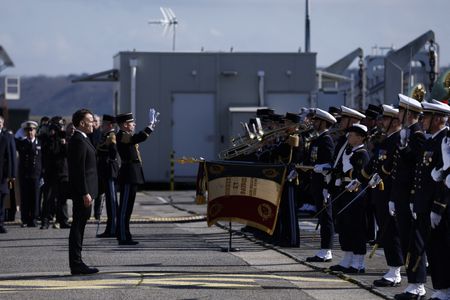
PARIS – French President Emmanuel Macron announced Monday that his nation will expand its nuclear weapons stockpile and bolster its defense capabilities, citing growing concerns about global conflicts potentially escalating to nuclear warfare.
Speaking from a naval submarine facility in Brittany on March 2nd, Macron warned of mounting international tensions that require France to strengthen its military deterrence strategy.
“We are currently experiencing a period of geopolitical upheaval fraught with risk,” Macron declared during his address, emphasizing that France needs a “hardening” of its nuclear deterrence approach to address these challenges.
The announcement comes as nations worldwide grapple with various regional conflicts and security threats that have raised concerns about potential nuclear escalation.
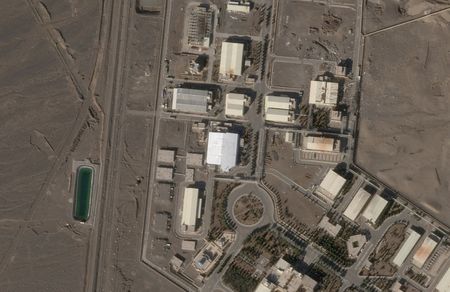
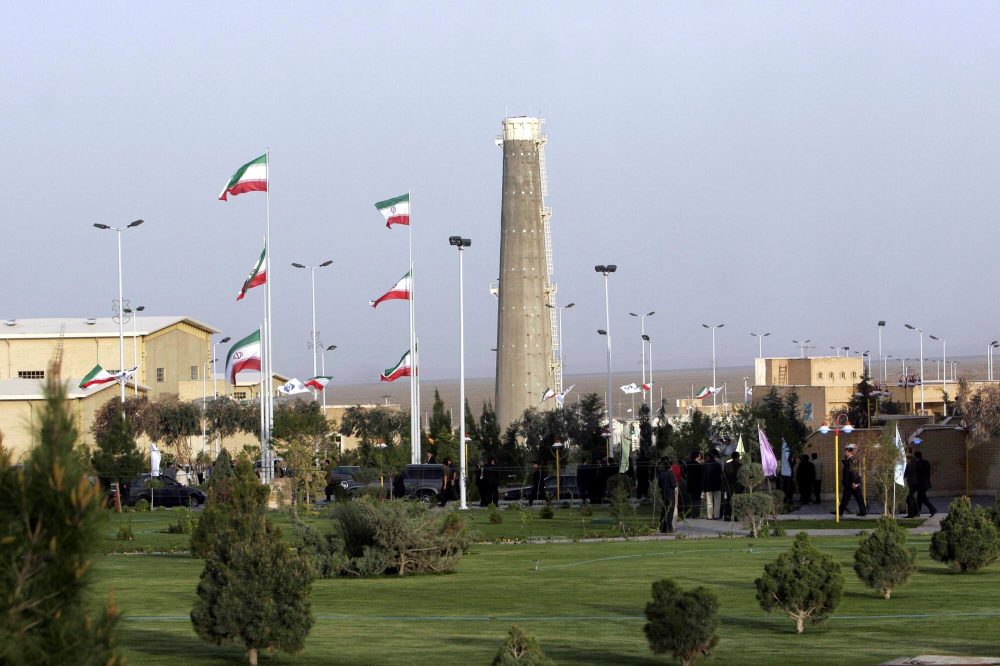
The head of the United Nations nuclear monitoring organization stated Monday that there’s no evidence recent strikes by Israel and the United States damaged Iran’s nuclear installations, contradicting Iranian officials who claim the Natanz facility was attacked.
Rafael Grossi, director general of the International Atomic Energy Agency, addressed the organization’s 35-member governing board, saying Iran’s nuclear program has been cited as justification for the military operations by Israel and the U.S., who contend Iran is advancing toward nuclear weapons capability.
However, Iran’s atomic installations appear to have avoided significant damage in the current round of attacks, unlike the June strikes that severely impacted nuclear facilities.
“We have no indication that any of the nuclear installations … have been damaged or hit,” Grossi told the Board of Governors meeting.
The IAEA chief revealed that his organization’s emergency response team has struggled to maintain contact with Iran’s nuclear oversight authorities, though some communication with Iranian officials continues.
“We are, of course, in conversation with Iran, but at the moment, it’s very limited. Until last Thursday, it was very intense,” Grossi explained during a news briefing, noting that while no IAEA personnel are currently stationed in Iran, the agency is monitoring developments through satellite surveillance.
Iran has prevented IAEA inspectors from returning to facilities damaged in the June bombardment.
Shortly after Grossi’s presentation, Iran’s IAEA representative Reza Najafi contradicted the assessment, telling journalists that strikes had targeted the Natanz nuclear site.
“Again they attacked Iran’s peaceful, safeguarded nuclear facilities yesterday,” Najafi declared. When asked by reporters to specify which installations were struck, he responded “Natanz” before departing.
The Natanz location previously contained two uranium processing facilities that sustained damage during June attacks – a surface-level plant that the IAEA determined was completely destroyed, and a subterranean facility that suffered extensive damage.
When questioned about the Iranian ambassador’s statements, Grossi maintained his position during the subsequent news conference.
“I will not get into a polemic on that. We stand by what I said before. We haven’t seen major military activity targeting the nuclear facilities. We have been looking at different satellite images,” he stated.
“There might be something there, but not significant or comparable in any way to what we saw last time.”
Grossi had participated in recent diplomatic discussions in Geneva, where Oman facilitated negotiations between Iranian and American representatives regarding nuclear issues.
“An understanding eluded the parties this time. I am sure we are, quite understandably, feeling a strong sense of frustration,” Grossi informed the governing board.
The IAEA director encouraged renewed diplomatic efforts while reaffirming the agency’s assessment that Iran shows no credible signs of operating a coordinated nuclear weapons development program. Iranian officials continue to deny any military objectives in their nuclear activities.
Indiana agriculture officials are dealing with a fresh outbreak of deadly bird flu after confirming six new infections of Highly Pathogenic Avian Influenza within the past seven days.
According to the Indiana State Board of Animal Health, the dangerous strain was found at two commercial egg-laying operations located in LaGrange County. Health officials have ordered the destruction of more than 43,000 birds to prevent further spread of the virus.
Authorities have established containment measures including a control zone extending approximately 6.2 miles around the affected facilities, with an expanded surveillance area covering more than 12 miles to monitor for additional cases.
The latest detections add to ongoing concerns about avian influenza’s impact on poultry operations across the Midwest, as officials work to prevent the virus from spreading to additional farms in the region.
Delaware Department of Transportation crews are currently conducting salt brine operations throughout the state, officials announced.
Drivers can expect to encounter slow-moving vehicles on roadways as DelDOT teams apply brine solution to road surfaces. The department is advising motorists to exercise caution and maintain safe following distances when approaching these operations.
The brine application is part of DelDOT’s standard road treatment procedures to help maintain safe driving conditions on Delaware highways and local roads.
Motorists are encouraged to allow extra travel time and remain alert for work crews and equipment operating at reduced speeds during these operations.
Motorists traveling through downtown Wilmington today will encounter traffic restrictions on East 4th Street as construction crews continue their work.
The Delaware Department of Transportation reports that the right lane of East 4th Street is currently closed to traffic from North Church Street to Christina Avenue. The lane closure is expected to remain in effect until 3 PM today.
Drivers are advised to allow extra travel time and consider alternate routes when possible to avoid potential delays in the area.
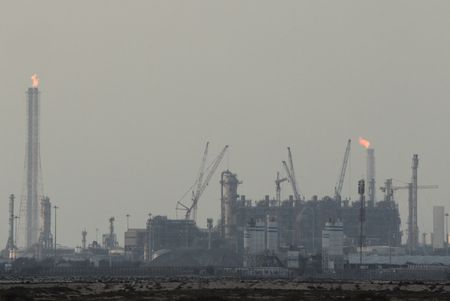
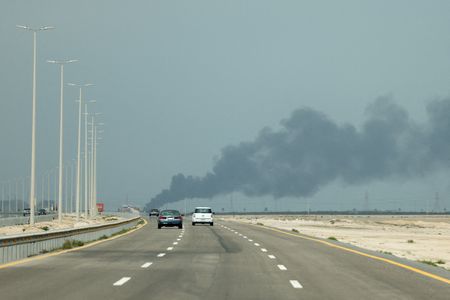
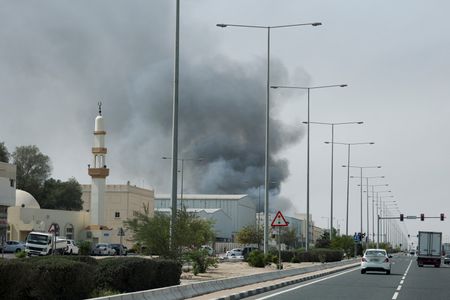
Energy facilities across the Middle East went offline Monday as escalating conflicts between Israel, the United States, and Iran triggered widespread precautionary shutdowns of oil and gas operations.
Qatar suspended its liquefied natural gas production, which accounts for roughly one-fifth of the world’s total supply. The nation ranks as the globe’s second-largest LNG exporter behind the United States and serves as a crucial supplier for balancing energy demands in Asia and Europe. QatarEnergy’s customer base is 82% Asian.
Saudi Arabia’s largest domestic oil refinery ceased operations after being targeted by a drone attack, according to a source familiar with the situation.
The military actions have extended into their third day, also forcing the halt of most oil production in Iraqi Kurdistan and shuttering several significant Israeli gas fields, which has disrupted exports to Egypt.
Energy markets reacted dramatically, with oil prices climbing as much as 13% during trading to exceed $82 per barrel – the highest level since January 2025. The price surge occurred as the conflict brought shipping through the Strait of Hormuz to a virtual standstill. This critical waterway handles one-fifth of the world’s oil supply.
Saudi Aramco’s Ras Tanura refinery, which processes 550,000 barrels daily, was closed as a safety precaution. The facility sits within an energy complex along the kingdom’s Gulf coastline that also functions as a vital export terminal for Saudi crude oil.
Aramco has not yet responded to requests for comment.
QatarEnergy announced it was also stopping production of LNG-related products. Earlier Monday, Qatar’s government reported that two Iranian drones struck a QatarEnergy facility, with officials currently evaluating the extent of damage.
In Iraqi Kurdistan, oil companies including DNO, Gulf Keystone Petroleum, Dana Gas and HKN Energy have suspended operations at their fields as a safety measure, though no damage has been reported. The region exported 200,000 barrels daily through a pipeline to Turkey’s Ceyhan port in February.
Off Israel’s coast, the government ordered Chevron to temporarily close the massive Leviathan gas field, where the company is working to increase capacity to approximately 21 billion cubic metres annually as part of a $35 billion export agreement with Egypt. A Chevron representative confirmed that its facilities, including the Tamar gas field, remain secure.
Energean also shut down its production vessel that services smaller gas fields in the area.
In Iran, explosions were reported Saturday at Kharg Island, which handles 90% of Iran’s crude exports, though the impact on facilities remains unclear.
Iran ranks as the third-largest producer within the Organization of the Petroleum Exporting Countries, contributing about 4.5% of global oil supplies. The country produces approximately 3.3 million barrels per day of crude oil, plus an additional 1.3 million barrels daily of condensate and other liquids.
Regarding the Saudi facility, the source indicated that conditions at Aramco’s Ras Tanura refinery are now stable. The Saudi defense ministry spokesperson told Al Arabiya TV that two drones were intercepted at the site, with debris sparking a contained fire but causing no injuries.
While some refinery units were shut down for safety reasons, an unnamed energy ministry official told Saudi state news agency SPA that petroleum product supplies to domestic markets remained unaffected.
However, the Ras Tanura closure will likely heighten supply concerns as shipping through the Strait of Hormuz has nearly stopped following attacks on vessels in the area Sunday.
“The attack on Saudi Arabia’s Ras Tanura refinery marks a significant escalation, with Gulf energy infrastructure now squarely in Iran’s sights,” said Torbjorn Soltvedt, principal Middle East analyst at risk intelligence firm Verisk Maplecroft.
“The attack is also likely to move Saudi Arabia and neighbouring Gulf states closer to joining U.S. and Israeli military operations against Iran.”
Saudi Arabia’s well-protected energy infrastructure has faced previous attacks, particularly in September 2019 when drone and missile strikes on the Abqaiq and Khurais facilities temporarily eliminated more than half of the kingdom’s crude production.
Yemen’s Iran-backed Houthis previously targeted Ras Tanura in 2021.
Financial experts are warning Delaware drivers to brace for continued high gas prices as escalating Middle East tensions threaten oil shipments through one of the world’s most important waterways.
The Strait of Hormuz, which carries more than one-fifth of the world’s oil supply, has become the focal point of market concerns as regional conflicts intensify. Multiple investment banks released analyses this week projecting sustained price increases at the pump.
Citigroup forecasts Brent crude oil will trade between $80 and $90 per barrel for at least the next week, though analysts expect prices could drop back to $70 per barrel if tensions ease.
Goldman Sachs calculated that current crude prices include an $18 per barrel risk premium due to the crisis. The investment firm projects this premium could shrink to $4 if shipping through the strait is only half-blocked for one month. However, Goldman warns that natural gas prices could skyrocket by 130% to reach 74 euros per megawatt hour if oil flows stop completely for a month.
Wood Mackenzie analysts predict even steeper price increases, saying oil could top $100 per barrel if tanker traffic doesn’t resume quickly through the strategic waterway.
“The disruption creates a dual supply shock: not only are current exports through the Strait halted, but OPEC+ additional volumes and ultimately most of OPEC’s spare capacity – typically a key lever for balancing the global oil market – are inaccessible while the waterway remains closed,” Wood Mackenzie researchers stated in their analysis.
The Organization of the Petroleum Exporting Countries and its allies had planned to increase production by 206,000 barrels daily in April, but those plans may be complicated by the shipping disruptions.
JPMorgan Chase reports that oil exports through the Strait of Hormuz have plummeted to approximately 4 million barrels per day from the typical 16 million, with shipments now limited mainly to Iranian crude as commercial tanker traffic has largely ceased.
The bank estimates that Gulf region oil producers maintain enough storage and tanker capacity to handle 25 days of stranded supply. However, JPMorgan warns that shipping restrictions lasting 3-4 weeks could force Gulf Cooperation Council nations to shut down production, potentially pushing Brent crude above $100 per barrel.
Societe Generale analysts offered a more optimistic outlook Monday, suggesting the most probable outcome would be a brief price spike followed by a partial decline as markets gain confidence in supply stability.
Bernstein research firm has already adjusted its long-term projections, raising its 2026 Brent oil price forecast from $65 to $80 per barrel. In worst-case scenarios involving extended conflict, Bernstein sees prices potentially reaching $120-$150 per barrel.
Macquarie Group’s global energy strategist Vikas Dwivedi said international markets could absorb a one to two-week closure of the Strait of Hormuz, but warned that price impacts would accelerate dramatically after three weeks and become severe after four weeks of disruption.
Drivers traveling on southbound US Route 13 are experiencing delays this morning after a vehicle accident forced authorities to shut down the left lane near the Route 20 intersection.
According to Delaware Department of Transportation officials, the collision has blocked traffic flow in the area, prompting drivers to merge into the remaining open lanes.
Motorists are advised to allow extra travel time and consider using alternative routes while emergency crews and transportation officials work to clear the roadway and restore normal traffic patterns.
The duration of the lane closure has not been determined, and drivers should continue monitoring traffic conditions before traveling through the area.
Motorists using Interstate 95 northbound in the Newark area are dealing with traffic delays today due to a lane restriction that will remain in place until late afternoon.
The Delaware Department of Transportation reports that the right lane is currently blocked along the northbound stretch of I-95 between the Newark Toll Plaza and the Delaware Welcome Center. The lane closure is scheduled to continue until 4 PM today.
Drivers are advised to allow extra travel time and use caution when passing through the work zone. Traffic may be moving slower than normal during peak travel hours.
Salisbury’s environmental committee, called the Green Team, has secured $20,000 in grant money to develop more pollinator-friendly spaces throughout the community.
The money will fund a comprehensive program designed to boost public awareness and create demonstration gardens that support bees, butterflies, and other pollinators in the area.
These crucial species play a vital role in maintaining healthy environments and supporting food systems, but their numbers continue to drop. The local project seeks to combat this decline by establishing additional native plant gardens and natural meadows on municipal, commercial, and private properties. A renewed Lower Shore Pollinator Habitat Certified program will monitor these locations and promote community involvement.
Mayor Randy Taylor noted that this program demonstrates the city’s dedication to environmental responsibility and resident participation.
Speaking about the grant’s impact, Mayor Taylor stated, “By expanding habitats like these, The City of Salisbury is not only supporting biodiversity but also creating greener, healthier spaces for our residents.”
The project will include several major elements:
• Establishing three to five new pollinator gardens in prominent community locations
• Creating and sharing educational resources in multiple languages
• Organizing at least twelve community events, including group planting activities
• Placing identification signs at garden demonstration areas
• Marketing the program via social platforms, news outlets, and community presentations
Several local organizations are collaborating on this project, including Lower Shore Land Trust, Wicomico Public Library, Youth Environmental Action, Habitat for Humanity of Wicomico County, Assateague Coastal Trust, and Fenix Youth Project.
These pollinator-friendly spaces offer multiple benefits beyond supporting wildlife, including better soil quality, decreased storm water problems, and attractive outdoor areas for community members and tourists. The program encourages participation from property owners, local businesses, and young people to foster environmental responsibility and ensure fair access to natural spaces.
Salisbury’s water utility crews will shut down a section of Hill Street on Monday, March 2, to install a new valve box as part of the city’s continued water infrastructure upgrades.
The Waterworks Utilities Division has scheduled the replacement work in the 600 block of Hill Street, requiring a full closure between Delaware Avenue and 2nd Street. Traffic will be blocked from passing through the area while crews work from 9 a.m. until approximately 3:30 p.m., though unexpected complications could extend the timeline.
Utility locating services and Central Alarm systems have received advance notice of the scheduled infrastructure work.
City officials are asking for patience from area residents and motorists who may be affected by the temporary road closure.
Drivers in Bear are dealing with traffic delays today as construction crews have closed the right lane on Christiana Road (Route 7).
The lane closure affects the stretch of roadway between Rivers End Drive and Christiana Meadows, according to Delaware Department of Transportation officials.
The construction-related closure is scheduled to remain in effect until 3 p.m. today, potentially causing slower travel times for commuters and residents in the area.
Motorists are advised to allow extra time when traveling through this section of Route 7 or consider alternate routes if possible.
AUSTIN, Texas — The 2026 midterm election season officially begins Tuesday as Texas voters participate in highly competitive Senate primaries that could reshape the political landscape heading into November’s general election.
With Republicans maintaining a 53-47 Senate advantage, Democrats acknowledge their challenging path to regaining control of the chamber in 2026. However, party leaders believe strong primary outcomes in Texas could potentially make the traditionally red state more competitive during a midterm cycle that historically favors the opposition party over the sitting president’s party.
Tuesday’s primary elections extend beyond Texas, with Arkansas and North Carolina also selecting their nominees. Texas voters will decide contests for every statewide position, including governor and state legislative seats.
On the Republican side, Senator John Cornyn encounters his most formidable primary challenge after sailing through his previous four Senate campaigns without serious opposition. This cycle, he confronts a field of eight candidates led by state Attorney General Ken Paxton and U.S. Representative Wesley Hunt. Historical data shows only two Texas incumbent senators have suffered primary defeats over the past century.
The Democratic primary features a competitive battle between U.S. Representative Jasmine Crockett and state Representative James Talarico, with Ahmad Hassan, who has previously sought office in both Texas and Minnesota, also in the running.
Governor Greg Abbott seeks his fourth consecutive term while facing ten Republican primary opponents. The Democratic gubernatorial field includes former U.S. Representative Chris Bell, state Representative Gina Hinojosa, and six additional active contenders.
Congressional races take on added significance as candidates compete within newly drawn district boundaries. State Republicans redesigned these maps following encouragement from President Donald Trump as part of their strategy to retain House control.
The redistricting’s effects are already apparent among Democratic incumbents. Representatives Christian Menefee and Al Green must compete against each other and two additional candidates in the reconfigured 18th Congressional District. Meanwhile, in the newly formed 33rd Congressional District, Democratic Representative Julie Johnson faces former Representative Colin Allred and two other primary challengers.
Several Republican incumbents face potentially difficult primary battles. Representatives Dan Crenshaw and Tony Gonzales encounter strong challenges in the 2nd and 23rd congressional districts respectively. Gonzales has weathered calls for his resignation from Republican colleagues following allegations regarding a relationship with a former staff member who died by suicide.
Texas election law requires primary winners to secure majority support to avoid a May 26 runoff election.
Democratic candidates traditionally face steep odds in Texas general elections. The party hasn’t captured any statewide office since 1994, spanning positions from governor to railroad commissioner. No Texas Democrat has won a Senate seat since 1988, with Lyndon Johnson being the last Democrat to hold Cornyn’s current position.
Harris County, encompassing Houston and representing the state’s largest population center, significantly influences both party primaries. Dallas and Travis counties maintain importance in Republican contests while contributing larger vote shares in Democratic races. Tarrant County, home to Fort Worth, typically carries greater weight in Republican primaries.
For the Republican Senate primary, counties showing strongest Trump support could prove decisive, given the campaign’s focus on questioning Cornyn’s conservative credentials during the Trump presidency. While many counties where Trump received 80% or more support in 2024 are rural with smaller populations, they collectively represented approximately one-fifth of previous state GOP primary votes. Historical data shows both Cornyn and Paxton won overwhelming majorities in these Trump strongholds during their last primaries, though Cornyn’s performance lagged behind his statewide numbers while Paxton exceeded his.
Democratic primary observers should monitor counties with substantial Hispanic populations along the border, particularly El Paso and Hidalgo counties, plus areas with significant African American populations in East Texas, part of the broader Southern region known as the Black Belt.
The Associated Press maintains its policy of declaring winners only when no mathematical possibility exists for trailing candidates to overcome deficits. Until races are officially called, the AP continues covering significant developments while clearly stating that winners haven’t been determined.
Texas law mandates automatic recounts solely for tied elections. Losing candidates may request and fund recounts when margins fall below 10% of the leading candidate’s total. The AP may call races subject to potential recounts if leads appear too substantial for recounts or legal challenges to alter outcomes.
Polls close at 7 p.m. local time statewide, though Texas spans two time zones. Most polling locations close at 8 p.m. Eastern Time, with westernmost areas closing at 9 p.m. Eastern. While significant results from most regions will be available between 8-9 p.m. Eastern, the AP won’t call statewide races until all polls close at 9 p.m. Eastern.
Coverage will include vote tallies and winner declarations for contested primaries across U.S. Senate, House, gubernatorial, lieutenant governor, attorney general, comptroller, land commissioner, agriculture commissioner, railroad commissioner, state Supreme Court, Court of Appeals, state Board of Education, and both legislative chambers.
Any eligible voter may participate in either party’s primary. Texas doesn’t require party registration, but primary participation establishes party affiliation for May runoff eligibility purposes.
Texas had approximately 18.5 million registered voters as of the November 2025 general election.
The 2022 primaries saw nearly 2 million Republican gubernatorial primary participants and roughly 1.1 million Democratic voters. Early voting accounted for about 53% of Republican primary ballots and 58% of Democratic primary votes.
This year’s early voting totals reached nearly 1,177,000 Democratic primary ballots and more than 1,009,000 Republican primary ballots by Thursday.
During 2024 Senate primaries, the AP began reporting results at 8:09 p.m. Eastern, nine minutes after most polls closed. Final updates occurred at 4:41 a.m. Eastern for the Democratic primary with 96% of votes counted, and 5:46 a.m. Eastern for the Republican primary with 98% tallied.
Counties historically release complete or nearly complete early and absentee voting results in initial updates before reporting Election Day totals.
Tuesday marks 84 days until potential runoff elections and 245 days until the 2026 midterm elections.
WASHINGTON — Tuesday’s primary elections in North Carolina will determine the candidates for a pivotal U.S. Senate contest that could influence which party controls the evenly split chamber come November. Voters will also choose nominees for various U.S. House seats, state legislative positions, and Court of Appeals races.
Following Republican Senator Thom Tillis’s retirement announcement last June, North Carolina has emerged as one of the few states where Democrats see a realistic chance to capture a GOP-held Senate seat in what’s otherwise a challenging electoral landscape. With Republicans currently maintaining a 53-47 Senate advantage, Democrats require a net gain of four seats to reclaim control.
Twelve contenders — split evenly between both parties — are seeking to replace Tillis. Tuesday’s primary victors will advance to the November general election showdown.
Leading the Republican field is Michael Whatley, who previously served as Republican National Committee chair and has secured President Donald Trump’s endorsement. The GOP race also includes author and lawyer Don Brown, along with conservative activist Michele Morrow, both of whom pursued different offices in 2024. Brown previously sought the Republican nomination in the 8th Congressional District, while Morrow mounted a strong campaign for Superintendent of Public Instruction. Though Margot Dupre’s name remains on the ballot, election officials have disqualified her candidacy.
On the Democratic side, former two-term Governor Roy Cooper faces five challengers. Both Whatley and Cooper have significantly outpaced their primary opponents in fundraising efforts.
House races will take place using newly drawn district maps — state lawmakers redrew boundaries in 2025 as part of Trump’s initiative to increase Republican House representation through mid-decade redistricting. The reconfigured 1st Congressional District, now designed to favor Republicans, features five GOP candidates vying to unseat Democratic Representative Don Davis. Laurie Buckhout, who came close to defeating Davis in 2024, is making another attempt and will compete against Carteret County Sheriff Asa Buck, state Senator Bobby Hanig, Lenoir County Commissioner Eric Rouse, and attorney Ashley-Nicole Russell.
The heavily Democratic 4th Congressional District, encompassing the Raleigh-Durham region, will see Democratic Representative Valerie Foushee in a primary rematch against Durham County Commissioner Nida Allam. Allam finished second to Foushee in a crowded 2022 Democratic field that featured former American Idol contestant Clay Aiken. Vermont Senator Bernie Sanders has endorsed Allam’s candidacy.
Wake and Mecklenburg counties, containing Raleigh and Charlotte respectively, represent the state’s most populous areas and typically generate the highest voter turnout in both party primaries. Guilford County, the third-largest with roughly half the population of Wake or Mecklenburg, also holds significant influence, though Durham County usually takes precedence in Democratic contests while Forsyth County carries more weight in Republican races.
Trump’s backing should benefit Whatley considerably in a state where the then-former president won every county during his 2024 primary battle against former UN Ambassador Nikki Haley.
Cooper demonstrated similar dominance, winning every county in his 2020 primary reelection campaign and losing only five small counties in his 2016 primary race.
In the 4th District contest, Allam previously captured her home base of Durham — the district’s largest county — during the 2022 primary against Foushee, while Foushee secured Orange County and achieved commanding victories in four smaller counties. The redrawn 4th District retains Durham and Orange but now includes portions of Wake and Chatham counties while losing the four smaller areas where Foushee performed strongest. Should Allam and Foushee divide Durham and Orange by comparable margins to 2022, Wake County’s results could prove decisive.
The Associated Press maintains strict standards for declaring winners, only doing so when no mathematical possibility exists for trailing candidates to overcome their deficits. Until a race is officially called, the AP continues monitoring significant developments while clearly stating no winner has been determined.
North Carolina’s primary system allows second-place finishers to demand runoff elections when the leading candidate receives less than 30% of total votes.
The state doesn’t conduct automatic recounts, though candidates may request them when margins fall below 0.5% of total votes or 10,000 votes in statewide races, or 1% in other contests. The AP may still declare winners in recount-eligible races if the lead appears too substantial for legal challenges to alter outcomes.
Polling locations close at 7:30 p.m. Eastern Time.
The AP will deliver vote tallies and winner declarations for contested primaries covering U.S. Senate, House, state Senate and House, plus state Court of Appeals positions.
Only registered party members can participate in their respective primaries, meaning Democrats cannot vote in Republican contests and vice versa. Unaffiliated voters may choose either party’s primary.
Current registration figures from February 21 show approximately 7.7 million eligible North Carolina voters. Republicans hold a slight edge over Democrats, with each party claiming roughly 2.3 million registered members. More than 3 million voters remain unaffiliated with any party.
The 2022 Senate primaries drew nearly 765,000 Republican votes and about 619,000 Democratic ballots. Early voting accounted for approximately 37% of Republican primary turnout and 46% of Democratic participation.
This year’s early voting numbers show more than 416,000 Democratic ballots and nearly 295,000 Republican ballots cast through Saturday.
During the 2022 Senate primaries, initial AP results appeared around 7:50 p.m. Eastern, roughly 20 minutes after polls closed. Final updates came at 12:25 a.m. Eastern with over 99% of votes tallied.
Most North Carolina counties release complete or near-complete mail and early voting results in their first updates before reporting any Election Day totals.
Following Tuesday’s primaries, 245 days will remain until the 2026 midterm elections.
DOVER (TV Delmarva) — As millions of Americans increasingly rely on artificial intelligence for guidance, technology companies are now launching specialized chatbots designed to address medical and health concerns.
This past January, OpenAI unveiled ChatGPT Health, a specialized version of its popular chatbot that can review medical records, fitness app data, and information from wearable devices to respond to health-related inquiries. The service currently has a waiting list for access. Meanwhile, Anthropic, another AI developer, provides comparable capabilities through its Claude chatbot for select users.
Both technology firms emphasize that their artificial intelligence systems, called large language models, are not meant to replace medical professionals and should never be used for diagnosing illnesses. The companies position these tools as aids for interpreting complex medical test results, preparing patients for medical appointments, or identifying significant health patterns within medical records and app data.
Medical professionals and researchers who have tested ChatGPT Health and similar technologies view them as potentially beneficial compared to current alternatives.
While AI systems aren’t flawless and may occasionally provide inaccurate information, they typically deliver more tailored and relevant responses than what patients might discover through internet searches.
“The alternative often is nothing, or the patient winging it,” explained Dr. Robert Wachter, a medical technology specialist at University of California, San Francisco. “And so I think that if you use these tools responsibly, I think you can get useful information.”
A key benefit of these newer chatbots is their ability to provide responses based on individual medical histories, including medication lists, patient age, and physician notes.
Wachter and other experts suggest that even without uploading medical records to AI systems, users should provide comprehensive details to receive better responses.
However, Wachter and colleagues emphasize certain situations require immediate medical care rather than chatbot consultation. Warning signs like difficulty breathing, chest discomfort, or severe headaches may indicate medical emergencies.
Even for non-urgent health concerns, both patients and physicians should maintain “a degree of healthy skepticism” when using AI programs, according to Dr. Lloyd Minor from Stanford University.
“If you’re talking about a major medical decision, or even a smaller decision about your health, you should never be relying just on what you’re getting out of a large language model,” stated Minor, who serves as dean of Stanford’s medical school.
While AI chatbots offer advantages when users share personal medical details, it’s crucial to recognize that information provided to AI companies lacks protection under federal privacy regulations that typically safeguard sensitive medical data.
The Health Insurance Portability and Accountability Act, or HIPAA, imposes penalties including fines and imprisonment for healthcare providers, hospitals, insurance companies, or medical services that inappropriately share medical records. However, this legislation doesn’t cover chatbot developers.
“When someone is uploading their medical chart into a large language model, that is very different than handing it to a new doctor,” Minor noted. “Consumers need to understand that they’re completely different privacy standards.”
OpenAI and Anthropic both claim they maintain health information separately from other data types and apply enhanced privacy safeguards. Neither company uses health data for training their AI models. Users must actively choose to share information and can withdraw access whenever they wish.
Despite growing enthusiasm for AI technology, independent research on these systems remains limited. Initial studies indicate programs like ChatGPT can perform well on advanced medical examinations but frequently struggle during real-world interactions.
A recent Oxford University study involving 1,300 participants discovered that individuals using AI chatbots to investigate hypothetical medical conditions didn’t make superior decisions compared to those using web searches or personal judgment.
When presented with detailed written medical scenarios, AI chatbots accurately identified underlying conditions 95% of the time.
“That was not the problem,” said lead researcher Adam Mahdi from the Oxford Internet Institute. “The place where things fell apart was during the interaction with the real participants.”
Mahdi’s research team identified multiple communication issues. Users frequently failed to provide chatbots with essential information needed to properly identify health problems. Additionally, AI systems often delivered mixed responses containing both accurate and inaccurate information, leaving users unable to differentiate between reliable and unreliable advice.
The 2024 study didn’t evaluate the most recent chatbot versions, including newer options like ChatGPT Health.
Wachter believes improving chatbots’ ability to ask follow-up questions and gather crucial details from users represents an important area for development.
“I think that’s when this will get really good, when the tools become a little bit more doctor-ish in the way they go back and forth” with patients, Wachter explained.
Currently, one method to increase confidence in AI-generated information involves consulting multiple chatbots, similar to seeking second medical opinions.
“I will sometimes put information into ChatGPT and information into Gemini,” Wachter said, referring to Google’s AI platform. “And when they both agree, I feel a little bit more secure that that’s the right answer.”
A massive triceratops skeleton that welcomed guests at a Wyoming museum for nearly 30 years is now heading to the auction house, marking an unusual case of a museum-displayed dinosaur entering the marketplace during a time when prehistoric fossil values have reached unprecedented levels.
The specimen, known as “Trey,” will be available for online bidding between March 17 and March 31 through Joopiter, a digital auction site created by Grammy Award-winning musician and producer Pharrell Williams. Auction organizers expect the fossil to sell for between $4.5 million and $5.5 million.
The ancient creature lived over 66 million years ago during the late Cretaceous era and was unearthed near Lusk, Wyoming, in 1993 by discoverers Lee Campbell and the late Allen Graffham, a professional fossil hunter known for making several important paleontological discoveries throughout his career.
Measuring 17 feet in length, the plant-eating dinosaur served as a centerpiece attraction when the Wyoming Dinosaur Center in Thermopolis opened its doors in 1995, remaining on display there through a loan arrangement until 2023.
Following a recent private sale, the skeleton has been relocated to Singapore, where potential buyers can schedule personal viewings through the end of March, according to Joopiter representatives.
Paleontologist Andre LuJan, who collaborated with Joopiter to ready the fossil for sale, noted that Trey “has this cultural aspect that a lot of fossils that go to auction these days just simply don’t have.” He added, “This one is connected to people and undoubtedly has inspired young children who’ve seen it to pursue a career in paleontology.”
What was once primarily the territory of academic institutions and museums has evolved into a thriving investment market for dinosaur remains.
Last year witnessed “Apex” the stegosaurus commanding $44.6 million at auction, breaking the previous benchmark of $31.8 million established in 2020 when “Stan,” a Tyrannosaurus rex skeleton, changed hands.
Demonstrating the continued strength of the fossil marketplace, another rare juvenile dinosaur skeleton exceeded its projected $4 million to $6 million Sotheby’s estimate in July, ultimately selling for more than $30 million amid intense competitive bidding, including additional fees and expenses.
According to Caitlin Donovan, Joopiter’s global head of sales, the growing enthusiasm represents a movement away from conventional collecting areas such as classic paintings toward items that possess “cultural resonance.”
“(Dinosaurs) have always captivated our imagination … and people are now starting to see the value in investing in these as assets,” LuJan explained.
However, the booming market has raised concerns among some paleontologists who worry that significant specimens might vanish into private ownership, limiting scientists’ access to valuable research materials. Public institutions are “getting totally priced out of an exploding market,” according to Kristi Curry Rogers, a paleontologist at Minnesota’s Macalester College.
“If a fossil goes into a private collection without guaranteed access forever, that data is essentially lost to science,” stated Curry Rogers, who has no connection to the current sale.
LuJan stressed that Trey has remained in private hands throughout its history, expressing optimism that it will eventually return to a museum setting, similar to Apex, which now resides at New York’s American Museum of Natural History following its buyer’s agreement to a long-term loan that permits scientific study.
“Because we’ve had this paradigm shift in what owning dinosaurs means to society, people are naturally gravitating toward these benevolent situations where they loan them long-term to museums or they end up donating them to a new museum that’s just being born,” LuJan observed.
Graphics processing powerhouse Nvidia announced Monday it will commit $2 billion to each of two technology partnerships designed to accelerate its artificial intelligence chip capabilities.
The California-based company revealed separate deals with photonic technology firms Lumentum and Coherent, targeting improvements to data center processors that can handle increasingly demanding AI workloads.
Wall Street responded positively to the news, with both Lumentum and Coherent stock prices climbing more than 7% during pre-market trading following Monday’s announcement.
Company leadership previously indicated during Nvidia’s latest quarterly earnings call that the firm planned to deploy its substantial cash holdings toward strengthening the artificial intelligence ecosystem and enhancing model performance capabilities.
Photonic and light-based technologies have gained traction among semiconductor manufacturers seeking to accelerate chip performance speeds, particularly as inference processing demands continue escalating across the industry.
These strategic partnerships encompass multi-billion dollar procurement agreements from Nvidia, while securing future access and capacity rights to cutting-edge laser and optical networking solutions from both partner companies.
The financial backing will enable Lumentum and Coherent to expand their research and development efforts, increase production capacity, and strengthen operations while developing domestic manufacturing facilities within the United States.
The nation’s highest-ranking military officer warned Monday that American military goals in Iran will require an extended timeline to accomplish, with more U.S. casualties anticipated as joint operations with Israel enter their third consecutive day.
General Dan Caine, who serves as chairman of the Joint Chiefs of Staff, addressed reporters about the expanding aerial campaign between the United States and Israel against Iranian forces, which shows no signs of concluding soon. During Monday’s operations, Kuwait’s air defense systems accidentally downed three U.S. F-15E fighter aircraft while responding to an Iranian assault, according to military officials.
“This is not a single overnight operation. The military objectives that CENTCOM and the Joint Force have been tasked with will take some time to achieve, and in some cases will be difficult and gritty work,” Caine explained to the media. He confirmed that America continues deploying additional military personnel to the Middle Eastern region, building upon an already substantial troop presence.
The general’s remarks followed President Donald Trump’s Sunday indication that Iranian strikes could continue for up to four weeks.
Military officials reported that a fourth American service member succumbed Monday to wounds received during the Iranian operation. U.S. forces have successfully intercepted numerous ballistic missiles aimed at American positions and regional allies.
At the same briefing, Defense Secretary Pete Hegseth assured that military actions against Iran would not result in an “endless war,” while recognizing the operation cannot be finished immediately. Hegseth outlined plans to eliminate Tehran’s missile capabilities, naval forces, and additional security infrastructure.
“This is not Iraq. This is not endless,” Hegseth stated.
President Trump initiated what military analysts consider the most significant U.S. foreign policy risk in recent decades, launching the coordinated campaign with Israel on Saturday against a longtime adversary that has challenged America and its allies for generations.
Despite the ongoing U.S.-Israeli attacks, Iran’s conservative religious leadership has demonstrated no indication of surrendering control. Defense experts suggest that American and Israeli air superiority, without ground troops, may prove insufficient to remove them from power. Reports indicate dozens of Iranian deaths from the strikes, including several that apparently struck civilian locations.
Officials in Gaza are warning of a critical shortage of fuel and essential supplies after Israel shut down all border crossings into the war-torn territory following military action against Iran.
The closure came Saturday after Israel announced coordinated airstrikes on Iran conducted alongside the United States. Israeli military officials have not provided a timeline for reopening the crossings, stating they cannot operate safely during active warfare.
The Palestinian territory relies entirely on fuel deliveries by truck from Israel and Egypt, and the supply shortage threatens to cripple hospitals and disrupt water and sewage systems. The majority of Gaza’s population has been forced from their homes during Israel’s ongoing two-year conflict with Hamas.
United Nations official Karuna Herrmann, who oversees fuel distribution in the region, warned of the dire situation ahead. “I expect we have maybe a couple of days’ running time,” Herrmann stated.
Palestinian aid coordinator Amjad Al-Shawa, who collaborates with UN agencies and non-governmental organizations, provided a similarly grim assessment. He projected fuel reserves might stretch three to four days, while supplies of produce, flour and other basic necessities could also be depleted if border operations remain suspended.
Reuters could not confirm these supply estimates independently.
COGAT, Israel’s military agency overseeing Gaza access, maintained that sufficient food had entered the territory since an October ceasefire began to meet population needs. “(The) existing stock is expected to suffice for an extended period,” COGAT stated without providing specifics. The agency did not address questions about potential fuel shortages.
The ceasefire is part of a broader American-supported initiative aimed at ending the conflict, which includes reopening Egypt’s Rafah border crossing, expanding humanitarian aid deliveries, and reconstruction efforts.
Hamada Abu Laila, among Gaza’s displaced residents, expressed concern that the border closures could trigger another humanitarian crisis similar to the famine that affected portions of the territory last year when Israel halted aid shipments for nearly three months.
“Why is it our fault, in Gaza, with regional wars between Israel, Iran, and America? It is not our fault,” Abu Laila said.
Media and information giant Thomson Reuters announced Monday it has selected Gary E. Bischoping Jr., a veteran Dell Technologies executive, to serve as its new chief financial officer effective May 8, as part of a scheduled leadership succession plan with retiring CFO Mike Eastwood.
Bischoping, who currently works as a partner with private equity company Hellman & Friedman, will officially join Thomson Reuters on April 13. His background includes over 17 years with Dell Technologies, where he held various executive positions including chief financial officer and treasurer for one of the company’s divisions.
The leadership restructuring also involves Eastwood transitioning to chair the board of Thomson Reuters Foundation, taking over from Jim Smith, the former leader of the Toronto-headquartered technology and information corporation that operates Reuters News.
“He (Bischoping) brings the right combination of financial rigor, strategic insight, and operational leadership to guide Thomson Reuters through its next chapter — including the opportunities ahead in the AI era,” CEO Steve Hasker said in a statement.
Thomson Reuters indicated that both Eastwood and Bischoping will take part in the company’s first-quarter earnings conference call scheduled for May 5.
Large numbers of Iranian nationals made their way across the Turkish border on Monday as regional conflict intensified, according to eyewitness reports from the scene.
A Reuters correspondent observed the mass crossing at the Kapikoy border checkpoint, where new arrivals described a climate of anxiety in Iran’s capital and long lines forming at fuel stations throughout the country.
The border crossing came after Turkey announced earlier Monday that routine day-trip travel between the nations had been mutually halted at all three crossing points. Turkish officials stated they would only permit Turkish citizens and third-country nationals to enter, following reports Sunday that some Iranian travelers had been turned away.
Despite the restrictions, Iranian citizens began streaming through the Kapikoy gate by Monday afternoon, carrying luggage through light snowfall with snow-capped Iranian mountains visible in the distance.
One Tehran resident, who requested anonymity while explaining his family was waiting in Istanbul, described conditions in the capital. “The situation in Tehran is already difficult,” he stated. “There are difficult things in Tehran, bombings. Everyone is scared. But for example, normal people, nothing happened to them.”
The man explained he had purchased household supplies when the conflict began, noting that stores were packed with customers.
Binali Kilic, who identified himself as an Iranian of Azeri descent from the Qazvin region near the Turkish frontier, said daily life continued in his area but military targets were under constant attack, disrupting civilian routines.
“They’ve withdrawn into themselves. Everyone is in their homes,” Kilic explained as travelers pulled suitcases through the checkpoint toward waiting transport vehicles. “There were sounds of bombing coming from nearby areas that were hit.”
Regarding daily necessities, Kilic noted supplies remained available but fuel access had become problematic. “There are no food problems or anything like that. The only concern people have is getting fuel for their trips, near and far. There are queues at petrol stations,” he added.
Turkish Trade Minister Omer Bolat confirmed Iran was allowing its citizens to return home through Turkey, while commercial freight continued moving through all three border crossings under enhanced security measures.
“All our units continue to perform their duties on high alert to ensure the uninterrupted continuation of Turkey’s border crossing services and trade flows,” Bolat announced.
Motorists should plan for delays on Park Avenue today as construction crews have closed one westbound lane between Nanticoke Avenue and Cedar Lane.
The Delaware Department of Transportation reports the lane restriction is in effect on Park Avenue (Route 431) and will remain in place until 5 PM today. The closure affects traffic traveling west between Nanticoke Avenue and Cedar Lane (Route 318).
Drivers are advised to allow extra travel time and consider alternate routes if possible to avoid potential backups in the construction zone.
Defense Secretary Pete Hegseth delivered his first public statements to the press since U.S.-Israeli military actions against Iran commenced on Saturday, declaring that the Trump administration intends to conclude the escalating conflict.
“We didn’t start this war but under President Trump we’re finishing it,” Hegseth stated during the briefing.
The Defense Secretary appeared alongside Dan Caine, chair of the Joint Chiefs of Staff, as they provided details about the American operation targeting Iran. The military actions began despite several weeks of diplomatic efforts aimed at preventing the conflict from escalating further.
The weekend operations mark a significant development in tensions between the United States, Israel, and Iran, coming after extensive negotiations failed to prevent military engagement.
BEIRUT — Lebanese residents evacuated from southern regions and Beirut’s southern neighborhoods on Monday, finding safety in makeshift shelters at schools throughout the capital after renewed deadly violence between Israel and the Iranian-backed militant organization Hezbollah.
According to Lebanon’s Health Ministry, no fewer than 31 individuals lost their lives while 149 others sustained injuries during nighttime attacks across Beirut’s suburbs and southern Lebanese territories.
Lebanon’s administration on Monday harshly criticized Hezbollah’s choice to join Iran’s conflict against Israel and the United States, declaring the organization’s military operations unlawful and insisting it surrender its arsenal.
Traffic congestion plagued roadways through the night and into Monday as residents escaped what represented Israel’s most devastating bombardment of Lebanon in over twelve months, occurring just hours after Hezbollah launched cross-border missiles for the first time in more than a year.
Inside a public school quickly transformed into emergency housing, displaced families brought mattresses, plastic containers, and bundles of personal items. Additional families waited on sidewalks with their possessions, while some men smoked cigarettes as they anticipated available space indoors.
Community volunteers moved among the crowds, recording names as families occupied classrooms and assembled in the school’s outdoor areas.
Hussein Abu Ali, who escaped from a southern Beirut neighborhood with his spouse and kids, recounted when the attacks occurred.
“My son began shaking and crying,” he said. “Where are you supposed to go? I stepped outside, then back in because I was afraid of shooting in the air. I gathered my children and went down to the street.”
Nadia Al-Salman, forced to leave the southern community of Majdal Zoun, stated they “left our homes not out of fear or terror of the United States, but to fulfill our religious and legal duty to protect ourselves.”
“They do not intimidate or frighten us, and they will not make us retreat even an inch from the path of resistance,” she added.
Throughout the most recent Israel-Hezbollah conflict in 2024, over one million Lebanese citizens were forced from their homes at its peak. Many remain unable to return to southern residences, where border communities continue lying in devastation.
Hezbollah fired rockets toward Israel one day following the militant Palestinian organization Hamas’s assault on southern Israel on Oct. 7, 2023, which sparked the Gaza conflict. Following months of limited confrontations, the situation intensified into comprehensive warfare in September 2024 before a U.S.-mediated ceasefire temporarily ended hostilities two months afterward.
Following that truce, Israel has maintained almost daily bombardments in Lebanon, claiming its goal involves preventing Hezbollah’s reconstruction efforts.
Monday’s violence also represented the first occasion in over twelve months that Hezbollah acknowledged responsibility for attacking Israel. The organization released a statement claiming the bombardments occurred as retaliation for Iran’s Supreme Leader Ali Khamenei’s assassination and for “repeated Israeli aggressions,” characterizing it as “a legitimate defensive response.”
However, Lebanon’s administration declared Hezbollah’s military operations unlawful and insisted the organization surrender its weapons. Prime Minister Nawaf Salam announced following an urgent Cabinet session Monday that exclusively the state should determine war and peace matters.
He stated that Hezbollah’s military actions were prohibited moving forward and urged security forces to prevent missile or drone launches from Lebanon while detaining those responsible for the attacks. This represented the most severe position Lebanon’s government has adopted regarding Hezbollah, which maintains a political wing with parliamentary representation alongside its armed militants.
Israeli military officials overnight warned approximately 50 communities throughout southern and eastern Lebanon to evacuate. Military spokesperson Brig. Gen. Effie Defrin stated Israel maintains “all options on the table,” including possible ground operations in Lebanon and warned that “Hezbollah will pay a very heavy price.”
He reported Israel has mobilized more than 100,000 reserve forces since the conflict with Iran commenced Saturday.
Ocean City, Maryland is gearing up for an action-packed March filled with cultural activities and community celebrations as spring approaches. The popular coastal destination is joining Maryland’s statewide participation in America’s semiquincentennial celebration, marking the nation’s 250th birthday in 2026.
The resort town announced plans for a diverse array of programming throughout the month that will highlight local arts, historical heritage, and community connections. These March activities represent Ocean City’s contribution to the broader national milestone celebration taking place across the United States.
With warmer weather on the way, officials say there’s no better time to experience what the seaside community has to offer through these specially planned events and activities.
Four members of the University of Delaware women’s swimming and diving squad made the trip to Pennsylvania this weekend to represent the Blue Hens at the 2026 ECAC Swimming & Diving Championships.
The competition took place at Kinney Natatorium in Lewisburg, Pennsylvania, where swimmers Simoni Antaki, Naia Legarda, Torun McGillis, and Erin Richards competed for Delaware against other schools in the Eastern College Athletic Conference.
The championships provided an opportunity for the quartet of Blue Hen athletes to showcase their skills at the conference level following their regular season performances.
A deadly assault on a South Sudanese village has claimed the lives of at least 169 people, marking another devastating chapter in the nation’s escalating conflict that threatens to spiral into full-scale civil war.
The Sunday attack in Abiemnom county left 90 civilians dead, according to James Monyluak, information minister for the Ruweng administrative region. Among the casualties were women, children, and numerous fighters.
Following the massacre, approximately 1,000 terrified residents fled to a United Nations peacekeeping base seeking safety, according to the U.N. Mission in South Sudan (UNMISS).
“Such violence places civilians at grave risk and must stop immediately,” stated Anita Kiki Gbeho, a UNMISS official. “I urge all involved to cease hostilities without delay and engage in constructive dialogue to address their grievances.”
“Our peacekeepers will continue to do everything within their capabilities to protect civilians seeking refuge at our base,” she added.
UN officials reported 23 wounded in the assault and expressed alarm over “reports indicating that dozens of civilians and some local officials have lost their lives.”
The massacre represents part of intensifying hostilities across South Sudan, where forces supporting President Salva Kiir are clashing with militants believed connected to opposition leader Riek Machar.
Intelligence suggests the armed fighters responsible for Sunday’s attack maintain connections to Machar’s faction, the Sudan People’s Liberation Movement-In-Opposition.
Machar served as Kiir’s deputy until his September dismissal following criminal charges. He remains under house arrest in Juba, South Sudan’s capital, while his trial continues.
The United States has called for negotiations between Kiir and Machar to resolve the crisis.
The current violence jeopardizes a delicate 2018 peace accord that ended five years of civil warfare. Under that arrangement, Machar assumed the role of first vice president in a unity government. However, a UN investigation determined that South Sudan’s leadership is “systematically dismantling” the peace framework.
Machar’s allies contend the subversion charges against him are politically driven. Violence surged dramatically following his removal from office.
The crisis intensified in December when opposition fighters captured government positions in Jonglei county, an opposition stronghold that has become a focal point of renewed combat displacing an estimated 280,000 people, according to UN figures.
Humanitarian organizations have cautioned that restricted access to opposition-controlled territories is putting civilian lives in danger.
Since January, government forces have launched a counterattack involving air strikes and ground operations, despite official pledges to honor the peace agreement.
KYIV, Ukraine — Diplomatic negotiations between Ukraine and Russia set for this week could be moved from the United Arab Emirates to alternative locations due to escalating Middle East violence, Ukrainian President Volodymyr Zelenskyy announced Monday.
The Ukrainian leader indicated that Switzerland or Turkey might serve as backup venues if the originally planned Abu Dhabi meeting cannot proceed safely amid regional warfare.
Zelenskyy also confirmed that Western nations have not signaled any immediate disruption to crucial air defense missile shipments to Ukraine despite their Middle East defense obligations.
The U.S.-facilitated diplomatic initiative aims to resolve the conflict that started when Russia launched its invasion of Ukraine in February 2022. However, recent American and Israeli military actions against Iran, along with retaliatory missile strikes from Iran and its allied militias targeting Israel and Arab nations, threaten to shift global focus away from the nearly three-year European war.
“Because of the fighting, we cannot guarantee at this time that the meeting will happen in Abu Dhabi,” Zelenskyy stated during a WhatsApp conversation with journalists. He had announced the UAE capital as the chosen location just last week.
Past diplomatic sessions between the warring nations have taken place in Abu Dhabi, Istanbul, and Geneva, though none have achieved significant progress on major disputes.
The Ukrainian president reported no immediate reduction in American and European air defense weapon supplies, particularly the crucial American-manufactured Patriot missile systems. Nevertheless, he warned that delivery quantities might decrease if Middle Eastern hostilities persist.
According to Zelenskyy, Russia’s winter campaign to destroy Ukraine’s electrical infrastructure was unsuccessful, despite causing substantial damage. He noted that Russian air strikes have now shifted focus to other critical systems, including water supply networks.
British Prime Minister Keir Starmer announced Sunday that the UK plans to deploy Ukrainian specialists to assist Persian Gulf nations in intercepting Iranian drones. Ukraine has developed significant drone warfare capabilities throughout the conflict, as Russia conducts daily bombardments using Iranian-designed Shahed drones.
However, Zelenskyy said he has not been contacted directly by Britain or other nations regarding such assistance requests.
THE HAGUE, Netherlands (AP) — After more than six decades of doubt, a painting once dismissed as a fake has been verified as an authentic work by renowned Dutch artist Rembrandt van Rijn, according to an announcement Monday from a prominent Netherlands museum.
The Rijksmuseum, which serves as the country’s premier art and history institution, revealed that “Vision of Zacharias in the Temple” is indeed a genuine piece created by Rembrandt when he was 27 years old in Amsterdam during 1633. The confirmation came after two years of intensive examination and advanced technological analysis.
The artwork had disappeared from public view for decades following its purchase by an unnamed private collector in 1961. This acquisition occurred just one year after art experts had concluded the piece was not created by the famous Golden Age painter. Beginning Wednesday, visitors will be able to view the painting alongside other renowned works at the Rijksmuseum, where it will remain as part of a long-term lending arrangement.
Museum Director Taco Dibbits explained that the institution frequently receives inquiries from individuals wondering whether their paintings might be undiscovered Rembrandt works. “We always hope to find a new Rembrandt, but this happens rarely,” Dibbits told The Associated Press. He described making such a discovery as being “just like (finding) a needle in a haystack.”
The anonymous owner initially approached the museum with a simple question about whether the painting was of Dutch origin. “He really didn’t know what he had. And then to discover that it’s a Rembrandt is something that’s amazing to experience,” Dibbits explained.
The composition illustrates a religious narrative featuring high priest Zacharias receiving a divine visit from the Archangel Gabriel, who announces that Zacharias and his spouse will become parents to John the Baptist. According to the museum, the painting captures Zacharias’s astonished reaction through dramatic lighting that signals Gabriel’s celestial presence.
Jonathan Bikker, the museum’s specialist in 17th-century Dutch art, detailed the comprehensive research process that led to the authentication. The investigation included advanced macro X-ray fluorescence scanning technology and detailed comparisons with other confirmed Rembrandt pieces.
“So the wood that was used for the panel on which it’s painted, that is definitely from a tree that was cut down before 1633, the date on the painting,” Bikker explained.
“All the pigments, the paint in the painting were used by Rembrandt in other paintings. And the layers of paint and how he painted it, that is also precisely the same as in other works by Rembrandt,” he continued.
This authentication increases the catalog of known Rembrandt paintings to approximately 350 works and raises optimism about potential future discoveries.
“We’re not actively looking for new paintings by Rembrandt, but I think this gives us hope — not just us, but everyone who’s interested in Rembrandt,” Bikker stated.
WASHINGTON — Pentagon chief Pete Hegseth and the nation’s top military officer, Air Force Gen. Dan Caine of the Joint Chiefs of Staff, are scheduled to address reporters Monday regarding ongoing U.S.-Israeli military operations against Iran.
This will represent the administration’s first formal media briefing since Saturday concerning the strikes and developing Iranian situation. Although President Donald Trump has participated in several telephone interviews with individual news outlets, he has avoided on-camera questioning and has only issued two video statements since military operations commenced.
The scheduled briefing occurs amid an expanding regional conflict. Iranian forces and their proxy organizations have fired missiles targeting Israeli territory, Arab nations, and American military installations throughout the Middle East.
American military personnel have suffered four combat deaths. Trump indicated Sunday that additional U.S. casualties should be expected.
The escalating crisis was highlighted when Kuwait, a U.S. partner nation, accidentally destroyed three American warplanes during a combat operation while Iranian aircraft, missiles, and unmanned drones were conducting attacks. According to U.S. Central Command, all six crew members successfully ejected from their F-15E Strike Eagle aircraft and remain in stable medical condition.
American leadership has not presented any withdrawal strategy or indicated when the conflict might conclude, while the death of Iranian Supreme Leader Ayatollah Ali Khamenei has created uncertainty about the Islamic Republic’s future and pushed the region toward greater instability.
During a Sunday discussion with The New York Times, Trump indicated the military campaign might continue for “four to five weeks.”
The Republican commander-in-chief reported that American and Israeli forces have already hit hundreds of objectives. These operations included joint strikes on Iranian missile facilities and naval targets, with claims of destroying Iran’s naval command center and several warships.
Iran’s Red Crescent Society reports that U.S.-Israeli operations have resulted in at least 555 Iranian deaths. Regional authorities indicate 11 Israeli fatalities and 31 deaths in Lebanon.
TOKYO (AP) — Global tensions reached new heights Monday as international leaders grappled with the aftermath of coordinated US and Israeli military operations against Iran that resulted in the death of Supreme Leader Ali Khamenei.
President Donald Trump, confirming Khamenei’s death in the strikes, described the military action as “the single greatest chance for the Iranian people to take back their Country.”
The international response revealed deep divisions, with many nations carefully avoiding direct commentary on the weekend strikes while focusing criticism on Iran’s retaliatory attacks. Several governments condemned Tehran’s missile strikes against Arab nations while remaining silent about the American and Israeli military operations.
Clear divisions emerged among key allies: Australia and Canada voiced explicit backing for the US actions, while Russia, China and Spain issued sharp rebukes of the strikes.
Following Saturday’s major assault by US and Israeli forces, Trump urged Iranian citizens to “seize control of your destiny” and overthrow the Islamic government that has controlled Iran for over four decades. Tehran responded by launching missiles and unmanned aircraft at Israeli targets and American military installations throughout the Middle East.
European leaders Keir Starmer of Britain, Emmanuel Macron of France, and German Chancellor Friedrich Merz issued a joint declaration urging Washington and Tehran to restart diplomatic discussions, emphasizing their preference for a peaceful resolution.
These three nations have spearheaded international efforts to negotiate agreements regarding Iran’s nuclear capabilities.
Thailand’s Foreign Affairs Ministry appealed for peaceful dialogue, requesting “all the parties to prevent the conflict from further deterioration, thereby undermining international peace and security and affecting innocent civilians.”
Oman issued a declaration stating the American military action “constitutes a violation of the rules of international law and the principle of settling disputes through peaceful means, rather than through hostility and the shedding of blood.” However, Omani Foreign Minister Badr al-Busaidi, who previously facilitated nuclear discussions between Washington and Tehran, maintained after two days of fighting that “the door to diplomacy remains open.”
The Arab League, representing 22 member nations, characterized Iran’s attacks as “a blatant violation of the sovereignty of countries that advocate for peace and strive for stability.” This coalition has traditionally criticized both Israeli and Iranian actions that threaten regional stability.
Senior diplomats from six Persian Gulf nations demanded Iran immediately cease attacks on their soil, arguing these actions violated national sovereignty and jeopardized regional peace.
Foreign ministers from Qatar, Saudi Arabia, the United Arab Emirates, Kuwait, Oman and Bahrain conducted an emergency virtual conference Sunday after the US-Israeli strikes triggered Iranian missile barrages against American bases and civilian targets including airports, hotels and residential neighborhoods.
Syria, previously Iran’s strongest regional partner under former President Bashar Assad, issued a statement exclusively condemning Iranian actions, demonstrating the new government’s efforts to strengthen relationships with regional economic powers and the United States.
Saudi Arabia declared it “condemns and denounces in the strongest terms the treacherous Iranian aggression and the blatant violation of sovereignty.”
Several European and Middle Eastern nations chose diplomatic language, avoiding appearances of either endorsing unilateral American military action or directly criticizing the United States.
Other countries responded more forcefully.
Russia’s Foreign Ministry labeled the strikes “a pre-planned and unprovoked act of armed aggression against a sovereign and independent U.N. member state.” Moscow accused America and Israel of using nuclear concerns as cover while actually seeking government overthrow.
Kremlin representative Dmitry Peskov expressed Monday that Russia felt deeply disappointed seeing the US and Israel attack Iran despite recent diplomatic progress.
China’s leadership said it remained “highly concerned” about the American and Israeli strikes, demanding immediate cessation of military activities and renewed negotiations.
Spain’s prime minister criticized the US-Israeli operations, advocating for immediate tension reduction and peaceful talks.
Canada, despite recent diplomatic friction with America, supported the military intervention. “The Islamic Republic of Iran is the principal source of instability and terror throughout the Middle East,” stated Prime Minister Mark Carney.
Australia’s Senate approved a resolution celebrating Khamenei’s death while rejecting provisions praising the United States and Israel.
Japanese Prime Minister Sanae Takaichi downplayed Monday concerns about economic impacts on Middle Eastern oil supplies following the strikes, noting Japan maintains domestic reserves lasting several months.
The Palestinian Authority condemned Iranian attacks on Arab states that have historically provided financial support, while making no reference to Israeli or American strikes.
Anxiety spread across multiple nations. Norwegian Foreign Minister Espen Barth Eide expressed to broadcaster NRK his worry that failed US-Iran negotiations could trigger “a new, extensive war in the Middle East.”
The Nobel Peace Prize-winning International Campaign to Abolish Nuclear Weapons criticized the US and Israeli military operations.
European Union leadership released a Saturday statement advocating restraint and diplomacy to guarantee “nuclear safety.”
Indian Prime Minister Narendra Modi said Monday that India remained troubled by the crisis and supported dialogue to reduce tensions.
Germany announced it would not participate in military operations against Iran but would consider protecting German troops at international bases in Jordan and Iraq if attacked, according to Foreign Minister Johann Wadephul.
A New York state court has convicted Skiboky Stora (pronounced skuh-BOH-kee) on charges of assault, stalking, and harassment in connection with a string of hate-motivated attacks targeting Jewish people, white individuals, and women during 2023 and 2024.
Court evidence included video footage showing Stora pursuing and threatening a Jewish couple while recording himself yelling hateful slurs at white pedestrians. During one incident, he chased the couple while screaming anti-Semitic slurs and shouting “Die, Jews, die!” according to prosecutors.
In business news, a financial technology company called Musaffa (pronounced moo-SAH-fah) has unveiled its Global Halal Investment Platform, targeting Muslim investors worldwide. Company leaders describe their service as a “fintech platform dedicated to Shariah-compliant investment research and Islamic finance education.” The platform aims to connect Muslim investors in 200 nations with U.S. stock markets while ensuring all investments meet Islamic law requirements. Industry analysts project global Islamic finance assets could reach $9.7 trillion by 2029.
The European Union has announced plans to use its social fund to subsidize abortion procedures for women, with particular focus on helping residents of countries with strict anti-abortion laws. The European Commission for Equality stated the 27-member union’s 147 billion euro social fund can cover abortion-related expenses. While most European nations permit abortion procedures, Poland, Malta, Liechtenstein, and Monaco maintain strong restrictions. Anti-abortion groups argue these restrictive countries shouldn’t have their contributions used to fund procedures that contradict their domestic policies.
Defense Secretary Pete Hegseth has demanded policy changes from Scouting America to maintain Pentagon backing, including a mandate that membership be determined by “biological sex at birth and not gender identity.” Hegseth has publicly criticized the organization’s 2024 name change from Boy Scouts and recent policy shifts allowing girls, transgender youth, and openly gay adult leaders. In a social media video, Hegseth announced the Defense Department will evaluate the organization’s compliance in six months and withdraw military support if changes aren’t implemented.
Texas Attorney General Ken Paxton has initiated legal proceedings against Aid Access, alleging the organization unlawfully delivers abortion medications to residents within Texas borders, defying the state’s anti-abortion statutes.
In the legal filing, Paxton claims that “Aid Access’s illegal acts in Texas are not theoretical — they have already caused the deaths of unborn children across the state. Aid Access is a notorious part of a growing network of out-of-state abortion traffickers that deliberately target Texas residents.”
The lawsuit represents the latest effort by Texas officials to enforce restrictive abortion laws by targeting organizations that provide abortion services from outside the state’s jurisdiction.
A Republican legislator in Idaho has put forward legislation requesting that the U.S. Supreme Court take another look at its landmark 2015 ruling that made same-sex marriage legal throughout the United States.
State Representative Tony Wisnewski is behind the proposed measure, which would formally petition the nation’s highest court to revisit the decision. According to Wisnewski, “The government has to recognize that the family is the fundamental building block of society.” The lawmaker contends that same-sex marriage weakens this foundational institution.
This isn’t the first time Idaho legislators have pursued this approach. A comparable proposal successfully moved through the Idaho House of Representatives during the previous legislative session, though it ultimately stalled and failed to gain approval in the state Senate.
British comedy legend John Cleese has announced he will avoid performing in British Columbia during his planned Canadian tour this year. The Monty Python co-creator made the decision following a substantial court ruling in the province.
A school official in British Columbia was recently ordered to pay $750,000 in damages after making public statements opposing transgender ideology. This legal outcome has prompted Cleese, known for his advocacy of free expression and his atheist beliefs, to reconsider performing in the region.
“What a pity. Now I won’t be able to risk doing any shows in British Columbia,” the veteran entertainer stated.
The decision means fans in that Canadian province will miss out on seeing the celebrated performer during his theatrical tour of the country.
A prominent Christian legal organization is calling on the Trump administration to address concerns about federally funded medical education programs that allegedly compel students to take part in abortion procedures.
Alliance Defending Freedom has contacted the Department of Health and Human Services regarding roughly 50 medical training programs that receive government funding while potentially mandating student involvement in abortions. The legal group contends that such requirements are inappropriate for taxpayer-supported programs.
“No family medicine residency can tell applicants or employees that any aspect of abortion is a necessary part of the program,” the organization stated in their correspondence to federal officials.
The request aligns with President Trump’s campaign commitment to eliminate all government funding for abortion-related activities. The incoming administration has pledged to implement comprehensive restrictions on taxpayer support for such procedures.
LITTLE ROCK, Ark. — Arkansas residents will head to polling stations Tuesday to select their party’s nominees across a wide range of federal, state and local races during primary election day.
The victorious candidates will advance to compete in the November midterm contests within a state where Democratic statewide victories have been absent since 2010. Beyond state-level positions, the Republican Party currently controls all four of the state’s U.S. House seats and maintains commanding majorities in both legislative chambers.
Senator Tom Cotton, seeking his third term as Arkansas’ Republican U.S. Senator, will compete against two challengers in his party’s primary. On the Democratic side, the nomination contest features Lewisville Mayor Ethan Dunbar against farmer and small business owner Hallie Shoffner.
Governor Sarah Huckabee Sanders, the Republican incumbent pursuing a second term in 2026, encounters no opposition in her primary race. Similarly, the state’s Republican lieutenant governor, attorney general, auditor and treasurer all run without primary challengers as they seek reelection.
The Democratic gubernatorial nomination pits State Sen. Fred Love against magazine publisher Supha Xayprasith-Mays in their effort to challenge Sanders this November. Xayprasith-Mays previously sought the nomination in 2022 but finished fourth in that Democratic primary.
Additional competitive primary battles will determine nominees for secretary of state, commissioner of state lands, two U.S. House districts, and over two dozen state legislative seats in both chambers.
Hotly contested statewide primary races have become uncommon in Arkansas during recent election cycles. Cotton faced no primary opposition in both 2014 and 2020, while Sanders and Republican U.S. Sen. John Boozman secured their 2022 primary victories with 83% and 66% of votes, respectively.
Pulaski County, which encompasses Little Rock, represents the state’s largest population center. As Arkansas’ most Democratic-leaning region — where Vice President Kamala Harris achieved her strongest state performance during the 2024 presidential election — Pulaski and similar Democratic-friendly counties typically exert greater influence in Democratic primaries compared to Republican contests.
During the 2016 GOP presidential primary, then-U.S. Sen. Marco Rubio of Florida captured over one-third of Pulaski County votes, sufficient to win the county against multiple opponents. However, despite strong showings in Pulaski and Benton County in northwest Arkansas, Rubio finished third statewide behind Donald Trump and U.S. Sen. Ted Cruz of Texas. While Pulaski represented Trump’s weakest county performance in 2016, he swept all Arkansas counties eight years later during his 2024 primary campaign against former United Nations Ambassador Nikki Haley.
Arkansas election law mandates that candidates receiving less than 50% of primary votes must compete in a March 31 runoff against the second-place finisher.
The Associated Press maintains its policy of avoiding projections and only declaring winners when no mathematical possibility exists for trailing candidates to overcome their deficits. Should races remain undecided, the AP continues reporting significant developments, including candidate concessions or victory claims, while clearly noting that no winner has been declared.
While Arkansas lacks automatic recount provisions, candidates may request and fund recounts, with costs reimbursed if results change. The AP may announce winners in recount-eligible races when determining that leads exceed margins that recounts or legal challenges could overturn.
Polling locations close at 7:30 p.m. local time, corresponding to 8:30 p.m. Eastern Time.
The Associated Press will deliver vote tallies and winner declarations for contested primaries including governor, U.S. Senate, U.S. House Districts 2 and 4, secretary of state, commissioner of state lands, state legislative races, plus a nonpartisan state Supreme Court position and special elections for state Senate District 26 and state House District 70.
Arkansas permits but doesn’t mandate party registration for voters. State law allows parties to establish specific eligibility criteria for primary participation. For 2026, Democratic Party rules permit registered Republicans to vote in Democratic primaries, while Republicans implemented a rule last June preventing registered Democrats from participating in Republican primaries.
Following the November 2024 general election, Arkansas maintained approximately 1.8 million registered voters.
The 2022 Republican primary drew roughly 348,000 participants, while about 94,000 voted in the Democratic primary. Early voting accounted for approximately 49% of Republican primary ballots and 52% of Democratic primary votes before primary day.
This year’s early voting totals show more than 61,000 Democratic primary ballots and approximately 125,500 Republican primary ballots cast through Saturday.
During the 2022 GOP gubernatorial primary, the AP began reporting results at 8:45 p.m. ET, just 15 minutes following poll closure. The final vote update occurred at 3:11 a.m. ET with roughly 98% of total ballots counted.
Historical patterns show counties typically release complete or near-complete early and absentee voting results in initial updates before reporting Election Day in-person voting totals.
Tuesday’s primaries occur 245 days before the 2026 midterm elections.
WASHINGTON — Federal lawmakers are preparing to hold war powers discussions regarding President Trump’s military actions against Iran under unprecedented conditions — the conflict has already begun, and the nation finds itself essentially engaged in warfare.
Military strikes are occurring, casualties are mounting, and threats of retaliation continue to escalate, while countless taxpayer funds support a military operation expected to last weeks without clearly defined objectives or endpoints. This situation differs markedly from the lead-up to the 2003 Iraq conflict, which featured extensive congressional deliberations following the September 11, 2001 attacks, or recent limited U.S. strikes on Venezuela. The combined American-Israeli military operation against Iran, dubbed Operation Epic Fury, is actively progressing with no apparent conclusion in view.
At least three American military service members have lost their lives, with Trump cautioning Sunday that “there will likely be more.”
This represents a crucial moment for Congress, which holds exclusive constitutional authority to declare war, and for the Republican commander-in-chief, who has repeatedly expanded executive power during his second term with seemingly unlimited views of presidential authority.
“The Constitution is intended to prevent the accumulation of power in any one branch of government — and in any one person in government,” stated David Janovsky, acting director of The Constitution Project at the Project on Government Oversight, a watchdog organization.
“Congress is the people’s representatives in a way that the president isn’t, even though we tend to focus on the president,” he explained. “We need the people’s representatives to weigh in on whether we, the people, are going to war right now.”
Within the United States, Congress must explicitly authorize military operations through either a war declaration or an authorization for the use of military force to sanction such actions. However, this process occurs infrequently.
Congress has actually declared war only five times throughout American history, last doing so in 1941 to join World War II following the Pearl Harbor assault. Lawmakers approved an AUMF for the 1990 Gulf conflict and again in 2001 and 2002 to initiate post-9/11 military campaigns in Afghanistan and Iraq.
However, Congress also established the war powers resolution during the Vietnam conflict era as a final option — designed to restrain presidents who had initiated military operations without legislative consent.
Both chambers have prepared war powers resolutions for voting this week.
Senator Mark Warner, the leading Democrat on the Senate Intelligence Committee, declared that Trump, as commander-in-chief, “does not have the right to do this on his own.”
“When the president commits American forces to a war of choice, he needs to come before Congress and the American people and ask for a declaration of war,” Warner stated on CNN’s “State of the Union.”
While legislators have condemned the Iranian government and its nuclear programs, Democrats argue Trump has failed to provide justification for the conflict or describe future strategy, and Trump’s MAGA supporters are dividing over what they view as the president’s inability to honor his “America First” pledge by drawing the U.S. into foreign warfare. Many representatives fear prolonged involvement as the operation resulted in the death of Iran’s Supreme Leader Ayatollah Ali Khamenei and hundreds of regional casualties.
Administration officials are scheduled to update congressional leadership and members this week, though these question-and-answer sessions will occur privately, away from public scrutiny.
Historically, presidents from both parties have gathered extensive power to conduct often limited American military actions to achieve strategic national security objectives without legislative approval. Democratic President Barack Obama’s Libyan operations and Republican George H.W. Bush’s Panama interventions proceeded without congressional endorsement.
Yet limiting presidential war powers remains something lawmakers have seldom managed to achieve. Even if Congress successfully passes a war powers resolution to restrict Trump’s Iran actions, neither chamber would likely gather the two-thirds majority required to override a presidential veto.
Trump has dismissed Congress’s ability to control his actions in warfare and other areas. He provided only brief Iran commentary during last week’s State of the Union speech, treating legislative support as secondary.
John Yoo, a University of California, Berkeley law professor, explained that the Founding Fathers created a constitutional framework where the president and Congress would compete over these matters — with Congress wielding one especially strong weapon through federal budget control.
“Congress, they know how to stop this if they want to,” said Yoo, who assisted in creating the Bush administration’s 2001 and 2002 force authorizations. The Vietnam conflict concluded once Congress eliminated funding, he noted.
But Congress remains under Republican control that generally supports Trump’s approach of directing military force against Iran, and recently authorized significant new Pentagon funding, approximately $175 billion, through the major tax reduction legislation he enacted last year.
With the Republican president’s party controlling both the House and Senate, their reluctance to oppose him comes as no surprise, Yoo observed: “They agree with him.”
Before the debates, Republican Senator Tom Cotton, the Senate Intelligence Committee chairman, said Trump has already outlined his Iran strategy.
Cotton explained Sunday that Trump has clarified the U.S. won’t deploy ground troops within Iran. Instead, Americans should anticipate an “extended air and naval campaign” throughout the region, which might lead to downed pilots, though he said military personnel would be retrieved.
He anticipates a campaign lasting several weeks as Iran selects new leadership and decides its response to American attacks.
“There’s no simple answer for what’s going to come next,” Cotton remarked on CBS’ “Face the Nation.”
International travelers found themselves trapped Monday after military operations between the United States, Israel and Iran forced the closure of major aviation routes throughout the Middle East.
Vacationers and business people were left waiting in hotels, terminals and aboard cruise vessels with little information about when normal air travel might return. Officials advised citizens abroad to stay put while evacuation plans were developed.
Key transportation centers in Dubai, Abu Dhabi and Doha – including the world’s busiest Dubai International Airport – suspended operations after being directly impacted by the conflict. These facilities serve as crucial connection points linking Europe, Africa and Western nations with Asian destinations.
Qatar Airways announced Monday that all services remain halted, with the next status update scheduled for Tuesday morning. Jordan also implemented partial airspace restrictions.
Germany faces a particularly challenging situation with approximately 30,000 of its citizens currently unable to return home from the region.
German Foreign Minister Johann Wadephul stated late Sunday that military rescue operations were impossible due to the airspace closures.
He explained that officials were exploring alternative methods to assist stranded Germans and urged people to heed guidance from travel companies and local officials.
The German Travel Association issued an urgent advisory telling tourists to “remain at their booked hotels as a matter of urgency” and avoid “make their own way to the airport or to a neighboring country.”
Similar guidance came from other nations dealing with stranded citizens.
Czech Prime Minister Andrej Babiš announced plans to deploy two aircraft to Egypt and Jordan for citizen evacuation. One plane will collect 79 Czech nationals in Sharm El Sheikh who are traveling by bus from Israel to Egypt. The second aircraft will retrieve citizens from Amman, Jordan. Babiš reported approximately 6,700 Czech citizens are currently in the affected region.
An additional four Czech evacuation flights are departing for Muscat and Salalah in Oman to transport tourists home.
The disruption extended to Asia, where thousands became stranded on Indonesia’s popular Bali island following widespread flight cancellations.
Officials at Bali’s international airport reported at least 15 cancelled flights by Monday afternoon, including eight departures and seven arrivals on routes serving Dubai, Doha and Abu Dhabi.
Major carriers including Air France suspended service to Tel Aviv, Beirut, Dubai and Riyadh, while airlines from Air India to KLM issued travel warnings and halted operations.
Airport representative Gede Eka Sandi Asmadi confirmed that 3,197 departing passengers were impacted by the service interruptions.
American airlines issued travel alerts as the transportation chaos affected financial markets Monday morning, with travel sector stocks declining sharply. United, Delta and American Airlines each dropped 5% to 6%, while international hotel companies and cruise operators like Carnival experienced even steeper losses.
FRANKFURT, Germany — Global oil markets experienced significant volatility Monday as shipping interruptions in a crucial Middle East passage sparked concerns about potential supply shortages affecting the worldwide economy amid escalating U.S. and Israeli military actions against Iran.
Domestic crude oil prices climbed 7.4% to reach $71.97 per barrel, while the international Brent benchmark increased 7.7% to $78.46 per barrel.
The price jumps could translate into more expensive fuel costs for Delaware motorists and higher prices for consumer goods during a period when inflation continues to impact household budgets across the nation.
Market analysts focused heavily on developments surrounding the critical waterway at the Persian Gulf’s southern entrance, which handles approximately 20% of global petroleum shipments. Maritime data company Kpler reported via social media that vessel movements declined dramatically due to compromised satellite navigation technology, while Britain’s Maritime Trade Operations Centre documented multiple ship attacks in the surrounding waters and cautioned about increased electronic interference affecting vessel tracking systems.
Omani officials confirmed that an explosive drone vessel targeted a Marshall Islands-registered oil tanker in the Gulf of Oman Monday, resulting in one crew member’s death. Iranian forces have reportedly been targeting ships approaching the strategic waterway and are suspected of conducting numerous assaults.
Saudi Arabian officials announced they successfully intercepted Iranian drone strikes aimed at the Ras Tanura petroleum facility near Dammam, prompting a precautionary shutdown of the refinery, according to Saudi government media. Financial markets remain watchful for signs the hostilities might spread to additional oil-producing nations throughout the region.
Monday’s price surge fell within the $5-$10 per barrel increase that market experts anticipated based solely on conflict-related uncertainties. Some geopolitical risk factors had already influenced pricing before the current tensions began.
Extended interruptions to maritime traffic through the strait could drive prices significantly higher, as could infrastructure damage in other Gulf states. Conversely, a brief conflict with easily reversible disruptions might mean current price increases won’t persist long-term.
Drivers traveling on Bennum Switch Road should expect delays today as construction crews work in the area between Gravel Road and Dodd Town Road.
The Delaware Department of Transportation reports that lanes will be periodically closed throughout the day as work continues. These temporary restrictions are scheduled to end by 5 PM this evening.
Motorists are advised to allow extra travel time and consider alternate routes when possible to avoid potential delays in the construction zone.
Global financial markets are experiencing significant volatility as Middle East tensions escalate, with crude oil prices jumping dramatically overnight in response to military action between the United States, Israel, and Iran.
Oil futures climbed as much as 10% following coordinated U.S.-Israeli strikes against Iran over the weekend, which have prompted substantial retaliation from Tehran. The conflict has effectively halted shipping traffic through the strategically important Strait of Hormuz, a critical pathway for global energy supplies.
Brent crude prices reached above $80 per barrel early Monday morning, marking their highest point since January 2025, before retreating slightly to around $79. Industry analysts suggest prices could potentially reach $100 per barrel if the regional conflict extends over several weeks.
The crisis has intensified following the reported death of Iranian Supreme Leader Ali Khamenei, leading to widespread retaliatory actions throughout the region. President Trump has suggested the military campaign could continue for up to four weeks, raising concerns about prolonged supply disruptions.
The extended closure of the Strait of Hormuz waterway threatens to create substantial stress on worldwide oil supplies. Even a planned OPEC+ production increase scheduled for April may provide little relief, as regional producers face significant challenges exporting their oil while Gulf navigation remains disrupted.
The energy price surge carries important implications for inflation and Federal Reserve policy decisions. For the first time in over a year, crude oil prices are showing significant year-over-year gains, adding to concerns following hot inflation data released Friday. Financial markets have pushed back expectations for the next Federal Reserve rate cut to September.
Treasury markets are experiencing complex movements as investors weigh competing factors. While government bonds initially gained on safety concerns and geopolitical risks, inflation worries from rising energy costs have caused two-year yields to rebound from three-year lows, erasing Friday’s declines.
The U.S. dollar has strengthened considerably as energy price concerns and regional conflict fears impact currencies of major energy-importing nations including Japan, China, and European countries.
Stock markets have declined but remain relatively stable, with U.S. index futures and Asian and European benchmarks falling between 1% and 2%.
Shipping data from Sunday revealed that at least 150 oil tankers have anchored in Gulf waters, while three vessels sustained damage during Iranian retaliatory strikes against U.S.-Israeli forces.
The duration of this expanding regional conflict will be crucial in determining how energy markets and broader financial systems respond in the coming days and weeks.
Economic data scheduled for release today includes U.S. manufacturing reports from S&P Global and ISM for February, expected between 9:45 and 10:00 a.m. Eastern time.
A pharmaceutical company announced positive results Monday for an investigational oral medication designed to treat a specific form of blood pressure condition.
United Therapeutics reported that their experimental drug successfully achieved all primary and secondary endpoints in advanced-stage clinical testing. The oral treatment is being developed as a potential therapy for patients suffering from a particular type of blood pressure disorder.
The announcement on Monday highlighted the completion of late-phase study objectives for the investigational medication, marking a significant milestone in the drug’s development process.
Lebanon’s Prime Minister Nawaf Salam announced on March 2nd that his government will prohibit Hezbollah’s armed operations throughout the country. The announcement comes after Israel conducted strikes against facilities connected to Hezbollah in response to the militant group’s recent missile and drone attacks.
The escalation follows unconfirmed reports regarding the death of Iran’s Supreme Leader Ali Khamenei, which appears to have triggered the series of retaliatory actions between the groups. Israel targeted what it described as Hezbollah-affiliated locations after the organization launched its attacks using missiles and unmanned aircraft.
Norwegian Cruise Line Holdings announced Monday that its annual earnings forecast falls short of what Wall Street analysts had predicted, as mounting operational expenses continue to eat into profits despite strong interest in premium cruise packages.
The cruise company’s stock price tumbled approximately 7% during pre-market trading sessions, alongside similar declines for industry competitors Carnival Corp and Royal Caribbean. The broader market downturn reflected investor concerns over intensifying tensions involving the United States, Israel, and Iran.
The Miami-based cruise operator is experiencing a decline in fresh reservations as cost-conscious travelers hesitate to book expensive vacation packages while dealing with ongoing inflation pressures and uncertainty surrounding potential tariff policies in America.
Rising fuel expenses linked to growing international conflicts, particularly in Middle Eastern regions, combined with costs associated with dry dock maintenance, new vessel deliveries, and routine upkeep, are putting additional pressure on the company’s profit margins.
The cruise line now projects adjusted earnings of $2.38 per share for the 2026 fiscal year, falling below the $2.55 per share that industry analysts had anticipated, based on LSEG data compilation.
For the fourth quarter, Norwegian posted revenue totaling $2.24 billion, which came in under the $2.35 billion that financial experts had forecasted.
Federal regulators announced Monday they plan to prohibit Elevance Health from accepting new enrollees in its Medicare Advantage prescription drug plans due to ongoing compliance failures.
According to a company filing, the Centers for Medicare & Medicaid Services informed the health insurance company of the pending sanctions, which are set to begin March 31, 2026, unless the identified problems are resolved to the agency’s satisfaction.
The announcement caused Elevance shares to drop 3% during premarket trading Monday.
Federal officials stated the proposed penalties stem from Elevance’s failure to meet specific Medicare Advantage risk adjustment data submission standards.
According to the February 27 notice, Elevance has not properly submitted data corrections for diagnosis codes lacking adequate medical record support through the government’s mandatory electronic systems since November 13, 2018.
Rather than using the required digital submission process, Elevance has consistently delivered this information using encrypted USB flash drives, a delivery method federal regulators have clearly prohibited.
Officials noted that Elevance maintained this rejected practice as recently as October 10, 2025.
In response, the health insurance company stated it updated its submission procedures in April 2023 and emphasized that the planned suspension will not affect current members already enrolled in the prescription drug coverage plans designed for seniors.
PARIS — French President Emmanuel Macron will address European security concerns Monday when he delivers a closely anticipated speech updating his nation’s nuclear weapons strategy from a military submarine base.
The French leader plans to detail how his country’s nuclear arsenal factors into European defense planning as continental leaders express mounting anxiety about President Donald Trump’s stance on Ukraine, Greenland and NATO commitments.
Despite escalating Middle East tensions involving Iran, French officials decided to proceed with the previously scheduled address. A presidential aide, speaking on condition of anonymity per standard protocol, explained that current global violence demonstrates why France must maintain its strategic independence against emerging threats.
Across Europe, government leaders are questioning whether the United States will honor its traditional “nuclear umbrella” commitment — the longstanding promise that American nuclear capabilities would shield NATO allies from attack.
As the European Union’s sole nuclear-armed nation, France holds unique significance in continental defense discussions. Macron’s administration indicated the speech will expand upon his 2020 nuclear deterrence remarks, made before Russia’s comprehensive Ukraine invasion transformed European security calculations.
Presidential officials have not revealed specific details about Monday’s announcement.
Several European countries have already accepted Macron’s previous invitation to participate in discussions about French nuclear deterrence and potentially join nuclear training exercises.
German Chancellor Friedrich Merz disclosed earlier this month that he had conducted “preliminary discussions” with Macron regarding nuclear cooperation and publicly suggested German military aircraft might transport French nuclear weapons.
“We have to re-articulate nuclear deterrence,” Macron stated at this month’s Munich Security Council gathering. He described having “strategic conversations” with Merz and other European leaders “in order to see how we can articulate our national doctrine, which is guaranteed and controlled by the Constitution, with special cooperation, common exercises and common security interests.”
France and Britain established a joint agreement in July enabling their independent nuclear forces to operate in “coordinated” fashion. The United Kingdom, though no longer an EU member while remaining a NATO partner, represents Europe’s only other nuclear-capable nation.
Macron has repeatedly emphasized that authority over French nuclear weapons deployment remains exclusively with France’s president.
A disturbing situation is unfolding in Iran’s agricultural sector as chickens on multiple farms have begun turning on each other in acts of cannibalism, driven by severe feed shortages linked to the nation’s worsening economic crisis.
The alarming behavior stems from Iran’s inability to secure adequate foreign currency required to purchase corn and soybeans – two essential ingredients that form the foundation of poultry feed. This currency shortage has created a domino effect, leaving farm operators across the country struggling to properly nourish their flocks.
The crisis represents the latest blow to Iran’s already struggling poultry industry, which has faced mounting challenges in recent years. Without proper nutrition, the birds have resorted to aggressive behavior toward their fellow chickens, creating additional losses for farmers already dealing with economic hardship.
The situation highlights how Iran’s broader economic difficulties are rippling through various sectors, with the agricultural industry bearing significant consequences as import capabilities continue to decline.
KUALA LUMPUR, Malaysia (AP) — Malaysian officials have granted Australian mining company Lynas Rare Earths a decade-long extension to operate its processing facility, while mandating the elimination of radioactive waste production by 2031.
The Lynas processing plant in Malaysia represents the first rare earth refinery established outside of China, producing essential materials for advanced technology manufacturing. Located in Pahang state’s central region, the facility has been operational since 2012 but has faced ongoing controversy regarding radiation concerns from accumulated waste materials.
Science Minister Chang Lih Kang announced Monday that radioactive waste produced over the next five years must undergo treatment and neutralization through thorium extraction or alternative approaches. He emphasized that no additional permanent storage facilities would be permitted.
The renewed operating permit extends through March 3, 2036, with a mandatory review scheduled after five years. Chang noted the license faces potential revocation if Lynas fails to meet established conditions.
Activist organizations have maintained sustained opposition to the Lynas facility, pushing for the company to remove its radioactive materials from the country. These groups argue that radioactive components, including thorium and uranium, become more dangerous following mechanical and chemical processing.
Lynas received a five-year window to upgrade its infrastructure and expand operations under what Chang characterized as an aggressive but definitive schedule. He reported that laboratory testing has demonstrated encouraging outcomes in waste radiation neutralization through thorium extraction, though implementing such technology on an industrial scale typically requires seven to 10 years.
“We have not gone against our promise to prevent the accumulation of radioactive waste in Malaysia. We remain committed to that position, and through this license renewal, we aim to fully achieve this goal by 2031,” Chang said in a statement.
Chang explained the license approval followed comprehensive technical assessment, considering Malaysia’s strategic priorities and commitments from Lynas. Current radioactive waste will be housed in a permanent storage facility currently under development, expected to be completed by year’s end.
Rare earth elements comprise 17 minerals essential for manufacturing electric and hybrid vehicles, defense systems, flat-screen televisions, mobile devices, mercury-vapor lighting and camera lenses. While China holds approximately one-third of global rare earth deposits, it maintains nearly complete control over supply chains. Lynas has indicated its refinery could supply almost one-third of worldwide rare earth demand, excluding China.
Malaysia’s only other rare earth processing facility — run by Japan’s Mitsubishi Group in northern Perak state — shuttered in 1992 after public demonstrations and allegations linking it to birth defects and leukemia among local residents. The site remains one of Asia’s most extensive radioactive contamination cleanup locations.
Thousands of Lebanese residents are abandoning their communities as deadly violence escalates along the Israeli-Lebanese border following Monday’s missile exchanges between the two nations.
The violence began when Hezbollah fired rockets from Lebanese territory into Israel, responding to the death of Iranian Supreme Leader Ali Khamenei. Israeli forces answered with military strikes against Lebanese targets, resulting in at least 31 fatalities according to Lebanon’s Health Ministry.
Images captured by Associated Press photographers document the mass displacement as families pack belongings and flee areas near the conflict zone.
VIENNA (AP) — Iran’s representative to the International Atomic Energy Agency made accusations Monday that American and Israeli military strikes hit the country’s Natanz uranium enrichment complex.
However, this claim conflicts with statements from UN nuclear oversight director Rafael Grossi, who indicated the agency has found “no indication” that atomic facilities in Iran have been struck “up to now.”
“Again they attacked Iran’s peaceful safeguarded nuclear facilities yesterday. Their justification that Iran wants to develop nuclear weapons is simply a big lie,” Iranian Ambassador Reza Najafi stated to media at IAEA offices in Vienna during a special Board of Governors meeting requested by Russia.
When a journalist asked which atomic facility he meant, Najafi responded “Natanz.”
Located approximately 220 kilometers (135 miles) south of Tehran, the Natanz complex combines surface and underground laboratories that handled most of Iran’s uranium processing operations.
Prior to current hostilities, IAEA reports showed Iran operated sophisticated centrifuges at the site to process uranium to 60% purity — just one technical step away from the 90% weapons-grade threshold. Officials believe some of this material remained at the facility when the entire compound was struck last June.
The primary surface enrichment structure at Natanz was called the Pilot Fuel Enrichment Plant. Israeli forces struck this building on June 13, rendering it “functionally destroyed” and causing significant damage to subterranean chambers containing centrifuge arrays, according to IAEA Director-General Rafael Grossi’s assessment at that time. A subsequent U.S. operation on June 22 targeted Natanz’s underground sections with penetrating explosives, potentially destroying remaining equipment.
Speaking to the special Board of Governors session, IAEA Director Rafael Mariano Grossi stated the International Atomic Energy Agency currently has “no indication that any of the nuclear installations, including the Bushehr Nuclear Power Plant, the Tehran Research Reactor or other nuclear fuel cycle facilities” in Iran have sustained damage or been targeted.
Grossi noted the IAEA continues attempting to reach Iranian nuclear regulatory officials through the agency’s Incident and Emergency Center “with no response so far,” citing communication difficulties due to the ongoing conflict.
The IAEA chief called for military restraint, cautioning that Iran and numerous other regional nations facing military action operate “operational nuclear power plants and nuclear research reactors, as well as associated fuel storage sites, increasing the threat to nuclear safety.”
He reported that thus far “no elevation of radiation levels above the usual background levels has been detected in countries bordering Iran.”
Najafi further accused the United States of using “deception and disinformation to invade other countries.” He claimed the conflict was initiated by U.S. President Donald Trump, “who attempts to portray himself as a man of peace and asking for Nobel Peace Prize. Even when they talk about peace, it is a lie. And if they call for diplomacy, it’s about deception,” he stated.
The Iranian ambassador characterized the strikes on his nation as “unlawful, criminal and brutal” and urged the 35-member IAEA Board of Governors to “categorically condemn” the military actions.
A joint military operation conducted by the United States and Israel during the weekend has resulted in the death of Iran’s Supreme Leader Ayatollah Ali Khamenei and numerous other high-ranking officials, sparking intense Iranian retaliation that raises fears of expanded regional conflict.
U.S. allies have committed to assisting in defending against Iran’s missile and drone attacks. For the first time in over a year, the Lebanese militant organization Hezbollah has launched strikes against Israel, prompting Israeli counterattacks.
The conflict has resulted in the first reported American military casualties. Additional fatalities have been confirmed in Israel and Gulf region countries, while Iranian officials report hundreds of deaths within their borders.
Following Khamenei’s death, Iran faces the task of selecting a new supreme leader for the first time since 1989. President Donald Trump has called on Iranian citizens to take advantage of this opportunity to topple the theocratic government that suppressed nationwide demonstrations earlier this year. However, there are no indications of such an uprising occurring.
Global reactions have been mixed, with some demonstrations taking place while others have celebrated the developments.
These military actions occurred just two days following the most recent diplomatic discussions between the U.S. and Iran regarding restrictions on Tehran’s nuclear activities. The situation mirrors events from the previous year, when negotiations were interrupted by an Israeli assault that resulted in a 12-day conflict and American bombardment of Iranian nuclear facilities. Washington has maintained that Iran has been reconstructing its nuclear capabilities in recent months.
Iranian officials claim they have not conducted uranium enrichment since June, though they have prevented International Atomic Energy Agency inspectors from accessing the sites targeted by American forces.
The 86-year-old Khamenei died during Saturday morning’s bombing of his residential compound. Iranian ballistic missile installations, naval headquarters, and warships were also struck. Iran reports that attacks also hit the Natanz nuclear enrichment facility.
With no designated heir, Iran has established a three-person leadership council. Foreign Minister Abbas Araghchi has indicated that a new supreme leader will be selected within “one or two days.” Limited street celebrations following Khamenei’s death have been reported, though internet restrictions within Iran have made monitoring the situation difficult.
Iranian forces have responded with strikes against Israel, resulting in multiple casualties. Iran has also launched attacks on American military installations throughout the region. Military officials confirmed three service members were killed, marking the first known American losses. Additional Iranian attacks have caused several deaths in Gulf states including the United Arab Emirates and Kuwait, while hundreds of flights have been disrupted at major international airports.
The strikes followed a significant U.S. military buildup in the region, representing the largest American presence there in decades. Israeli and American intelligence agencies spent weeks monitoring the locations of senior Iranian leadership. Trump has stated that the “heavy and pinpoint bombing” operations in Iran will continue throughout the week or potentially longer.
American military installations across the region remain vulnerable to potential Iranian attacks.
Washington has indicated willingness to engage in future discussions with Iran’s incoming leadership. Meanwhile, certain congressional leaders have objected to launching the strikes without legislative approval.
Israel views Iran as a fundamental threat and has consistently worked to eliminate its nuclear and missile programs, while also targeting allied armed groups such as Hamas in Gaza and Hezbollah in Lebanon. Israeli operations have significantly weakened these organizations following Hamas’ October 7, 2023, attack on Israel that initiated the Gaza conflict.
Early Monday, Israel conducted strikes in Lebanon in response to missiles fired by Hezbollah across the border.
Israel has now committed to “nonstop” attacks and reported that 100 fighter aircraft simultaneously struck targets in Tehran at one point. During last year’s conflict, Israel presented Trump with a proposal to eliminate Khamenei, which has now been accomplished.
Israeli citizens sought shelter throughout the weekend, though most Iranian attacks have been successfully intercepted. Prime Minister Benjamin Netanyahu, facing international criticism over the Gaza war, is declaring the outcome a victory for Israeli security.
However, threats persist from Iranian-supported groups like Yemen’s Houthi rebels, who have promised to restart attacks on Red Sea shipping lanes and Israeli targets.
The current crisis has already exceeded the intensity of last year’s Israel-Iran conflict, where the United States became involved near the conclusion by bombing Iranian nuclear sites, leading to Iran’s calculated response against a U.S. military base in Qatar.
Currently, hundreds of Iranian missile and drone attacks have caused widespread alarm across Gulf nations that had previously remained relatively protected from regional instability.
The United Arab Emirates reported disruptions at Dubai’s primary airport, while tourists and residents reacted to the sounds of interceptor missiles. Saudi Arabia confirmed it intercepted attacks and summoned Iran’s diplomatic representative. Senior diplomats from six Gulf states declared their “right to self-defense.”
Oil markets experienced sharp price increases when trading resumed Sunday, as investors anticipated potential supply disruptions from this crucial region. Concerns about attacks near the Strait of Hormuz, the world’s most vital oil transit point, are also affecting supply considerations.
In response, eight nations within the OPEC+ oil alliance announced plans to increase crude oil production.
Monday may bring initial information about potential impacts on Iran’s nuclear program as the International Atomic Energy Agency’s Board of Governors convenes a meeting regarding the conflict.
WASHINGTON – President Donald Trump moved forward with military action against Iran even after top advisors privately warned that the escalating situation could prove difficult to control and potentially damage Republican prospects in this November’s midterm elections, two senior White House officials and a Republican familiar with the administration told reporters.
The extensive military operation has received widespread support from foreign policy hawks throughout Washington, many of whom have long advocated for removing Tehran’s authoritarian government. However, several White House staffers are concerned this foreign policy risk could hurt Republican efforts to maintain congressional control, particularly when voters focused on war concerns are more worried about living expenses than overseas conflicts.
Prior to launching the strikes, Trump continuously requested briefings about how the military operations might help him appear strong to domestic audiences, the senior White House officials revealed. Key advisors warned that U.S. intelligence could not clearly guarantee that further escalation would be prevented once military action commenced, and cautioned the administration might be linking its political future to an uncertain outcome.
Trump eventually agreed with advisors who argued that bold action would demonstrate strong leadership, despite potential long-term consequences, according to the officials.
These officials don’t anticipate immediate political consequences. Rather, they predict what one called a “slow-burn effect,” influenced by how long the conflict lasts, the extent of retaliation, American casualty numbers, and effects on fuel prices.
A Reuters/Ipsos survey conducted Sunday revealed that just 25% of Americans supported the U.S. strikes that resulted in Iran’s leader’s death. Approximately half of those surveyed — including 25% of Republicans — indicated they think Trump shows excessive willingness to employ military force. The polling concluded before the U.S. military reported the operation’s first American casualties.
“The President’s decision to launch Operation Epic Fury is one that presidents of both parties have contemplated for more than fifty years, but none had the courage to execute,” White House press secretary Karoline Leavitt said in a statement. “Right now, the White House’s main priority is working alongside the Pentagon and the interagencies to ensure the continued and ultimate success of the operation.”
ECONOMIC FOCUS STRATEGY ABANDONED AGAIN
Considering public opinion before the midterms, White House staff and Trump advisors had been encouraging the president to concentrate on issues Americans prioritize most, such as healthcare and affordability, similar to his approach during the State of the Union address delivered four days prior to the attack.
The weekend military strikes highlighted how rapidly that approach has collapsed, at least temporarily. During Sunday interviews, the president indicated the Iran operations would likely require four to five weeks, and he continued preparing the nation for additional American deaths following the military’s announcement that three service members had died.
“The juxtaposition between a successful State of the Union address that focused on affordability and the economic issues that voters care about and going to war in the Middle East days later is not just whiplash-inducing, it’s head-spinning,” said Rob Godfrey, a Republican strategist.
“Making midterm voters comfortable with that juxtaposition will be one of the most important things that the White House needs to undertake in the next few weeks.”
One unofficial Trump advisor, who recently visited the White House, contended that the primary electoral threat comes not from moderate or independent voters, but from Trump’s MAGA base, for whom avoiding foreign intervention was a central element of the president’s 2024 campaign message.
Many of these supporters might simply skip voting during the midterms, when participation rates are typically already lower, the advisor explained.
With 58% of Americans expressing disapproval of Trump’s job performance according to February Reuters/Ipsos polling, Republicans need strong turnout from core supporters to prevent Democratic victories that could shift control of the U.S. House of Representatives and potentially threaten the Republican Senate majority.
COMPETITIVE HOUSE DISTRICTS FACE GREATER RISK
White House staff are analyzing how an extended military involvement in Iran, along with casualties and increased fuel prices, might weaken public support in competitive congressional districts, the White House officials reported.
The White House considers competitive House races, where Republicans maintain a slim majority, far more vulnerable to Iran-related consequences than Senate contests, sources indicated.
White House political analysis identifies numerous swing districts where even minor voter doubt could prove critical, or at minimum force vulnerable Republican representatives — including Colorado’s Gabe Evans, Wisconsin’s Derrick Van Orden, and Pennsylvania’s Rob Bresnahan — to vote on difficult war-powers measures and address questions about expanding international conflict when they prefer focusing on domestic concerns like living costs.
A senior Republican operative working to preserve the party’s congressional majorities stated that foreign intervention presents more political danger than benefit for Trump. Foreign policy successes often don’t resonate with voters, though foreign policy disasters typically do.
“Unless this operation goes bad, voters, especially for the midterms, don’t care about foreign policy,” the operative explained.
Trump’s successful capture of Venezuelan leader Nicolas Maduro during a raid last month generated minimal political backlash and caused no American deaths. Nevertheless, since that early January operation, Trump’s approval rating declined from 42% to 39%, according to recent Reuters/Ipsos polling.
Political analysts suggested that a brief conflict resulting in Iran abandoning its nuclear program and establishing new leadership would receive more positive reception than an extended war with many American casualties.
Conversations with Trump supporters reveal that — despite a significant minority expressing concern about his increasing tendency toward foreign intervention — many remain willing to support his shift from self-described “peacemaker” to aggressive military strategist.
“This totally blindsided me, I didn’t even know this was even being thought about,” said BJ Moore, an 83-year-old Trump voter from Atlanta, Georgia, regarding the Iran operation. “No one wants to be involved in a war, but Iran just killed thousands of their own people, so I’m fine with what Trump did.”
A major Dutch technology company that plays a crucial role in manufacturing the world’s most advanced computer chips is setting its sights on significant expansion to capitalize on the artificial intelligence boom.
ASML Holding, currently the sole producer of extreme ultraviolet (EUV) machinery essential for creating cutting-edge AI processors, has revealed ambitious plans to broaden its equipment offerings, according to a senior company official speaking with Reuters.
The Netherlands-based corporation has spent over ten years developing its EUV technology, investing billions of dollars in systems that companies like Taiwan Semiconductor Manufacturing Co and Intel depend on for producing the most sophisticated AI chips available today. While continuing to advance its EUV capabilities with next-generation products in development, ASML is now looking to diversify its portfolio.
The company’s strategy involves entering the advanced packaging market, which focuses on creating tools that bond and link multiple specialized processors together – a critical component in AI chip construction and the high-performance memory systems that support them. This expansion will also incorporate artificial intelligence into both new ventures and existing operations.
“We look, not just for the next five years, we look at the next 10, maybe 15 years,” Chief Technology Officer Marco Pieters explained to Reuters. “(We look at) what are potential directions the industry could take, and what would it require in terms of packaging, bonding, etc.?”
ASML’s current EUV systems perform lithography, utilizing light to create intricate patterns on silicon wafers during chip production. The company is also investigating whether it can increase the maximum chip size beyond its present limitation – approximately the dimensions of a postage stamp – which currently restricts processing speed.
The technology leadership recently underwent changes when Pieters was elevated to CTO in October, taking over from Martin van den Brink, who led the technology division for nearly four decades. ASML restructured its technology operations in January to emphasize engineering positions over administrative roles.
Wall Street has high expectations for Pieters and CEO Christophe Fouquet, who assumed his position in 2024. The company’s stock reflects investor confidence in its EUV market dominance, trading at approximately 40 times forward earnings compared to Nvidia’s 22 times earnings ratio. ASML’s market capitalization of $560 billion has seen shares climb more than 30% this year.
The corporation is accelerating efforts to manufacture chip packaging machinery and developing equipment for next-generation AI processor production.
“We’re actually researching that – to what extent can we participate in it, or what we can add to that part of the business,” Pieters stated.
Drawing from his software development background at ASML, Pieters noted that as the company’s equipment becomes faster, engineers will implement AI to accelerate machine control software and enhance chip inspection processes during manufacturing.
The chip design landscape has transformed dramatically in recent years. Previously, companies like Nvidia and Advanced Micro Devices created processors that were essentially flat, resembling single-level structures. Today’s chips increasingly resemble multi-story buildings with various levels connected through microscopic pathways.
Due to size constraints, combining chips in vertical stacks or horizontal arrangements allows designers to boost processing speeds for the complex computations needed to build large AI models or operate chatbots like OpenAI’s ChatGPT.
The precision and complexity required for constructing these multi-layered chips has transformed packaging from a low-profit, high-volume industry into a more profitable manufacturing segment for companies like ASML. TSMC has employed advanced packaging techniques to build Nvidia’s most sophisticated AI processors.
“But we also see more of that advanced packaging is coming to the front end,” Pieters observed, referring to TSMC and similar companies’ activities. “Accuracy is becoming more and more important.”
After analyzing chip manufacturers’ roadmaps – including memory producers like SK Hynix – Pieters recognized the growing demand for additional machinery to help companies produce vertically stacked chips and similar configurations.
In the previous year, ASML unveiled a scanning device called the XT:260, specifically designed to assist in manufacturing advanced memory chips for AI applications and AI processors themselves. Company engineers are currently exploring additional equipment possibilities, according to Pieters.
“One of the things I’m doing is also looking at what could be a product portfolio in that direction,” Pieters revealed.
As AI chips continue growing in size, the company is investigating supplementary scanner systems and lithography equipment to enable even larger chip production.
The scanning technology leverages expertise in optics and specialized knowledge about precise silicon wafer handling, giving ASML advantages in developing future equipment, Pieters explained.
“It will co-exist next to what we’ve been doing for the last 40 years,” he concluded.
WASHINGTON – The road to Senate control runs through eight key battleground states this November, where Republicans currently enjoy a comfortable 53-47 advantage in the upper chamber. Political experts say Democrats face a steep climb to regain the majority, needing to flip four additional seats while protecting their own vulnerable incumbents.
Out of 100 total Senate positions, 35 will appear on ballots this election cycle, but only a handful are expected to be truly competitive.
TEXAS
The Lone Star State’s traditionally red Senate seat could be in jeopardy following a chaotic Republican primary battle. Current Senator John Cornyn, representing the party’s establishment wing, finds himself behind populist Texas Attorney General Ken Paxton in recent polling. With Representative Wesley Hunt also in the mix, Tuesday’s primary may head to a May 26 runoff if no candidate secures a clear majority.
Despite facing multiple personal and professional controversies, Paxton maintains strong support among conservative grassroots activists due to his aggressive stance against Texas immigration organizations and alleged voter fraud. His three statewide electoral victories, including his 2022 reelection, demonstrate his political durability, though strategists believe his nomination could create an opening for Democratic challengers.
The Democratic contest features a compelling showdown between Representative Jasmine Crockett, known for her combative political style, and state Representative James Talarico, a Presbyterian seminarian targeting centrist voters. Political observers suggest Crockett may resonate better with primary voters but could struggle in a general election matchup.
NORTH CAROLINA
An open Senate seat in the Tar Heel State presents Democrats with their best pickup opportunity after Republican Senator Thom Tillis announced his retirement following disagreements with Trump on immigration policy, Federal Reserve matters, and fiscal issues.
Former Democratic Governor Roy Cooper, known for his moderate approach, appears positioned to win Tuesday’s primary, while Republicans have rallied around Michael Whatley, the former Republican National Committee chairman who has secured Trump’s backing.
Campaign strategists consider this contest among the year’s most competitive races.
ALASKA
The Last Frontier typically favors Republican candidates, but this year’s Senate race could prove surprisingly competitive as former Democratic Representative Mary Peltola challenges incumbent Republican Senator Dan Sullivan.
Sullivan has represented Alaska since 2015 and enters the race as the favorite in a state Trump carried by 14 percentage points in 2024.
Despite Sullivan’s mainstream conservative credentials, Alaska voters have historically supported moderate candidates like Republican Senator Lisa Murkowski.
Peltola brings proven statewide appeal as a moderate voice who made history as the first Alaska Native elected to Congress in 2022, though she narrowly lost reelection in 2024.
MAINE
Five-term Republican Senator Susan Collins faces another potentially tight reelection battle. As Senate Appropriations Committee chair, she controls government spending decisions, a role that has created tension with the Trump administration this year.
Collins, a well-known party moderate, represents Republicans’ strongest hope of retaining the seat. Her Democratic challenger will emerge from a June 9 primary featuring current Governor Janet Mills against progressive candidate Graham Platner.
At 77, Mills would become the oldest first-term senator in history if elected, surpassing Collins’ age of 72. Mills gained Democratic support for her defense of transgender rights against Trump administration policies. Platner, a Marine veteran and oysterman, campaigns on populist themes but has faced scrutiny over controversial past social media posts and a tattoo resembling Nazi imagery, highlighting his political inexperience.
GEORGIA
Among the four competitive seats Democrats must defend, two are located in states with Republican governors, illustrating the party’s electoral challenges. Democratic Senator Jon Ossoff seeks reelection after winning the seat in a January 2021 runoff.
At 38, Ossoff holds the distinction of being the Senate’s youngest member. He has concentrated on Georgia-specific priorities, including opposing proposed budget cuts to Atlanta’s Centers for Disease Control and Prevention.
Trump has withheld his endorsement ahead of the May 19 Republican primary, leaving the three-way race wide open between Representatives Mike Collins and Buddy Carter, plus Derek Dooley, an attorney and former college football coach backed by the Republican governor.
NEW HAMPSHIRE
Democrats face defending an open seat following three-term Senator Jeanne Shaheen’s retirement announcement. The race features well-known figures familiar to New Hampshire’s politically engaged electorate.
Both Republican contenders in the September 8 primary bring Senate experience. John E. Sununu served one term before losing in 2008, while Scott Brown represented Massachusetts from 2010 to 2013. Trump has given his endorsement to Sununu.
The Democratic side features Representative Chris Pappas, a four-term centrist who would make history as the first openly gay man elected to the Senate.
OHIO
Once considered a swing state, Ohio has shifted increasingly Republican over the past decade, culminating in long-serving Democratic Senator Sherrod Brown’s defeat in 2024.
Brown is mounting another campaign, hoping to perform better without Trump on the ballot.
However, he confronts a formidable challenger in incumbent Republican Senator Jon Husted, who previously served as secretary of state and lieutenant governor before receiving appointment to fill Vice President JD Vance’s former Senate seat.
MICHIGAN
Senator Gary Peters’ retirement creates an open contest in this crucial midwestern swing state, giving both parties realistic chances at victory.
The August 4 Democratic primary features candidates across the party’s ideological range. Four-term Representative Haley Stevens is seeking leadership support, while Michigan state Senator Mallory McMorrow and progressive activist Abdul El-Sayed position themselves as anti-establishment alternatives.
Trump has endorsed former Representative Mike Rogers for his second Senate bid. Rogers brings military service in the Army, FBI experience, and ran unsuccessfully for Senate in 2024.
What began as an ambitious Republican strategy to secure congressional control has ended in a virtual tie, leaving the battle for the House of Representatives right back where it started.
Sixteen months before the midterm elections, former President Donald Trump launched an unprecedented mid-decade redistricting effort, starting with Texas last July. Breaking with over a century of tradition, Trump persuaded Texas Republicans to redraw their congressional boundaries in a bold move to safeguard the party’s narrow House majority.
Initially, Democrats faced significant disadvantages in countering this strategy. With fewer state legislatures under their control and constitutional restrictions in key states like California and New York preventing similar tactics, Republicans seemed positioned to gain up to twelve additional House seats.
However, eight months later, the political landscape has shifted dramatically. Trump’s redistricting initiative encountered obstacles in multiple Republican-controlled states, while Democrats mounted their own aggressive campaigns and benefited from favorable judicial decisions, creating an essentially even playing field.
The battle for chamber control in November will ultimately depend on a small number of contested districts, despite the extensive political turmoil and wholesale redrawing of dozens of congressional boundaries nationwide.
“I do think that it is a wash right now,” said Erin Covey, a House analyst with the nonpartisan Cook Political Report. “It’s a huge amount of turnover and disruption all basically for nothing, if you’re looking solely at partisan seat gain.”
The situation remains fluid, with ongoing legal challenges targeting several new maps and Florida Governor Ron DeSantis announcing plans for April redistricting. Additionally, the Supreme Court is considering whether to weaken the Voting Rights Act, which could enable Republican-controlled Southern states to eliminate multiple Democratic districts.
TEXAS LEADS THE CHARGE
The Texas redistricting plan that initiated this nationwide effort faces its inaugural test Tuesday, as voters select party candidates for all 38 House seats, plus statewide Senate and gubernatorial races.
The elimination of several Democratic districts has produced unusual primary contests, including a Houston-area matchup between incumbent Democrats Christian Menefee and Al Green.
Tuesday’s primaries in Texas, North Carolina, and Arkansas officially launch the midterm season. Democrats require just three Republican seat flips to claim House control, though their Senate prospects appear more challenging.
A Democratic House majority could obstruct much of Trump’s legislative priorities while wielding subpoena authority to investigate his administration. Historically, the president’s party typically loses congressional seats during midterms, a pattern Trump’s redistricting campaign aimed to disrupt.
Congressional redistricting normally occurs once per decade following the Census to account for population shifts. Both parties have historically engaged in partisan gerrymandering, manipulating district lines for electoral advantage.
Trump’s mid-decade redistricting represented a dramatic departure from century-old precedent. The Texas map targeted five Democratic incumbents, with Missouri and North Carolina Republicans quickly following with their own aggressive redistricting plans.
While Democrats previously supported anti-gerrymandering legislation, Trump’s actions prompted many party members to advocate responding with similar tactics. Longtime gerrymandering opponents including former President Barack Obama and Senator Bernie Sanders endorsed Democratic states pursuing their own redistricting efforts.
“I’m sick and tired of this Democratic Party bringing a pencil to a knife fight,” Democratic National Committee Chair Ken Martin told a party gathering in August. “Let’s grow a damn spine and get in this fight.”
As Texas Republicans advanced their plans, Democratic House members from the state consulted with House Minority Leader Hakeem Jeffries and former Speaker Nancy Pelosi regarding party strategy, according to Representative Julie Johnson from the Dallas area.
Democrats rallied behind California Governor Gavin Newsom’s proposal to amend the state constitution through referendum, installing a map designed to flip five Republican seats. The initially unlikely plan passed the legislature and received overwhelming voter approval in November.
Virginia Democrats subsequently pursued an even more complex constitutional amendment strategy, potentially yielding four additional seats if it survives Republican legal challenges this spring.
JUDICIAL INTERVENTIONS
Court decisions also aided Democratic efforts. Judges in Utah and New York mandated new maps likely to flip one Republican seat in each state.
Meanwhile, Republicans in several states rejected Trump’s pressure campaign, most notably in Indiana, where state Senate Republicans defeated a Trump-endorsed redistricting plan despite threats of political retaliation.
Democrats haven’t achieved universal success. In Maryland, a proposed map eliminating the state’s sole Republican seat remains stalled due to opposition from the Democratic state Senate leader.
Whatever this year’s outcome, the redistricting conflicts Trump initiated appear far from over. Democratic-leaning states Colorado and New York, both with anti-gerrymandering laws, are considering rule changes to permit new maps for the 2028 election.
“We could have just as many states redraw their lines in 2028 as they did in 2026,” Covey predicted.
Following recent military strikes against Iran, lawmakers on Capitol Hill are renewing efforts to limit presidential authority over military operations in the region.
A bipartisan group of legislators, led primarily by Democrats with support from select Republicans, is advocating for congressional oversight of future military actions involving Iran. The renewed push comes in the wake of coordinated attacks by American and Israeli forces on Iranian positions.
Senator Tim Kaine of Virginia stands among the Democratic lawmakers spearheading this legislative effort to constrain unilateral presidential military decisions regarding Iran.
Despite previous attempts to pass similar war powers legislation that ultimately stalled, congressional advocates continue pressing for measures that would require executive branch consultation with Congress before launching military operations.
The timing of this legislative push highlights ongoing tensions between congressional oversight responsibilities and executive military authority, particularly as military engagement in the Middle East continues to evolve.
The nation’s highest court is currently deliberating over a federal statute that criminalizes firearm possession by individuals who use cannabis, creating an unusual coalition of supporters spanning the political spectrum.
This federal regulation gained national attention as the basis for criminal charges against Hunter Biden, the president’s son, in his gun possession case.
The legal challenge has brought together an unexpected alliance of advocacy organizations, with conservative Second Amendment groups joining forces with progressive civil liberties organizations to oppose the law.
The case highlights the complex intersection between federal firearms regulations and state marijuana legalization efforts, as more states continue to permit cannabis use while federal prohibitions remain in place.
Legal experts are closely watching how the justices will balance gun rights against federal drug policy in their eventual ruling.
PARIS – French officials declared Monday their willingness to provide military assistance to Gulf nations facing retaliatory attacks from Iran, while criticizing recent strikes against Iranian targets as lacking proper international authorization.
Foreign Minister Jean-Noel Barrot announced the pledge during a press conference following an emergency meeting at France’s Foreign Ministry in Paris.
“Regarding more specifically our partners in the region who have been targeted, deliberately aimed at by the Iranian regime, we stand ready to contribute to their defense,” Barrot stated to journalists.
The foreign minister clarified that any French assistance would come “based on their request, in a proportionate manner and in accordance with the principle of collective self-defence provided for under international law.”
Barrot also criticized Saturday’s military actions by Israel and the United States against Iran, arguing these “unilateral strikes” should have received authorization from the U.N. Security Council to gain proper legitimacy.
The French official urged Iran to cease its current offensive operations and make significant compromises to reach a diplomatic resolution that could bring stability to the Middle East.
According to Barrot, no French personnel were injured in Sunday’s drone strike on a French naval facility in Abu Dhabi, though the attack resulted in minor property damage.
A major European satellite operator announced Monday it will reduce its investment spending for 2026 while gearing up for a significant satellite deployment later this year.
SES, headquartered in Luxembourg, revealed plans to launch as many as 13 satellites in the coming months while trimming its capital expenditure forecast by 100 million euros to approximately 700 million euros for 2026.
The company delivered annual financial results that aligned with Wall Street predictions on Monday. Following the announcement, SES stock initially fell as much as 7% during morning trading in Paris before recovering to post a 3.7% gain by mid-morning.
Financial analysts from ING noted that SES exceeded expectations in its fourth-quarter performance, though they pointed out the company has not released projections beyond 2026. The satellite deployment timeline has been pushed to the latter half of this year, which may delay anticipated revenue increases from the new platform.
SES completed its massive $3.1 billion purchase of Intelsat in the previous year. The combined entity generated annual revenue of 2.63 billion euros ($3.09 billion) and adjusted earnings before interest, taxes, depreciation and amortization of 1.2 billion euros, figures that matched industry analyst forecasts.
According to company officials, growing demand for secure communication services across Europe helped balance out negative effects from the U.S. government shutdown and budget reductions implemented by the now-defunct Department of Governmental Efficiency.
The satellite operator secured 1.8 billion euros in new business contracts during 2025, bringing its total contract backlog to more than 6.6 billion euros.
Company leadership projects steady revenue and core earnings for 2026 when compared on an equivalent basis. The reduced capital spending reflects the company’s strategy to balance investments between its medium orbit O3b mPOWER satellite network and the European Union’s low orbit IRIS² initiative.
SES indicated it continues working alongside the European Commission to confirm costs and implementation schedules for IRIS², which represents the EU’s independent connectivity infrastructure designed to rival Elon Musk’s Starlink service.
Energy facilities across the Middle East came under attack Monday, forcing the temporary closure of Saudi Arabia’s largest domestic oil refinery following a drone strike, according to industry sources.
The escalating violence has now entered its third day, prompting energy companies to halt operations at facilities throughout the region as a safety precaution. Oil production in Iraqi Kurdistan has been largely suspended, while several major Israeli natural gas fields have also ceased operations, disrupting energy exports to Egypt.
Saudi Aramco’s Ras Tanura refinery, which processes 550,000 barrels daily, was temporarily shuttered after the attack. The facility sits within a crucial energy hub along Saudi Arabia’s Gulf coastline that also functions as a key export terminal for the kingdom’s crude oil.
In northern Iraq’s Kurdistan region, energy companies including DNO, Gulf Keystone Petroleum, Dana Gas and HKN Energy have halted production at their oil fields as a safety measure. The region had been exporting approximately 200,000 barrels per day through a pipeline to Turkey’s Ceyhan port in February. Officials report no damage to the facilities.
Off Israel’s coast, Chevron’s massive Leviathan natural gas field suspended operations Saturday, while Energean also shut down its production vessel that services smaller gas fields in the area.
Saudi defense officials confirmed that two drones were intercepted at the Ras Tanura facility, with falling debris sparking a small fire. The Saudi defense ministry spokesperson told Al Arabiya TV that no personnel were injured in the incident.
“The situation at Aramco’s Ras Tanura refinery is under control,” a source familiar with the matter reported. Saudi Arabia’s state news agency said some refinery units were shut down as a precaution, but emphasized that fuel supplies to domestic markets remained unaffected.
The facility closures are heightening concerns about global energy supplies, particularly as shipping traffic through the Strait of Hormuz has nearly stopped following attacks on vessels Sunday. About 20 percent of the world’s oil consumption passes through this critical waterway. Brent crude oil prices jumped approximately 10 percent Monday, climbing above $82 per barrel.
Energy analysts view the Saudi refinery attack as a major escalation in regional tensions. “The attack on Saudi Arabia’s Ras Tanura refinery marks a significant escalation, with Gulf energy infrastructure now squarely in Iran’s sights,” said Torbjorn Soltvedt, principal Middle East analyst at risk intelligence firm Verisk Maplecroft.
Soltvedt added, “The attack is also likely to move Saudi Arabia and neighbouring Gulf states closer to joining U.S. and Israeli military operations against Iran.”
This isn’t the first time Saudi Arabia’s heavily protected energy infrastructure has come under attack. In September 2019, drone and missile strikes on the Abqaiq and Khurais facilities temporarily eliminated more than half of the kingdom’s oil production. The Ras Tanura facility was previously targeted by Yemen’s Iran-backed Houthi forces in 2021.
Qatar successfully stopped Iranian strikes aimed at civilian targets, including the nation’s international airport, according to a foreign ministry spokesperson who spoke with CNN on Monday.
The spokesperson, Majed Al Ansari, warned that these types of aggressive actions “could not remain unanswered” and confirmed that Qatar is currently not maintaining diplomatic engagement with Iran.
The March 2nd statement highlights escalating tensions between the two Middle Eastern nations as Qatar takes a firm stance against what it describes as unprovoked attacks on non-military infrastructure.
Military forces have taken control of two northern Pakistani cities under emergency curfew orders following deadly weekend violence that claimed at least 23 lives, government officials announced Monday.
The lockdown affects Gilgit and Skardu, where thousands of Shiite protesters stormed United Nations facilities on Sunday in response to U.S.-Israeli military operations that killed Iran’s Supreme Leader Ayatollah Ali Khamenei. The demonstrations turned destructive as crowds targeted the UN Military Observer Group offices that oversee Kashmir ceasefire monitoring and attacked UN Development Programme facilities in Skardu. Violence also erupted in Gilgit, where demonstrators set fire to a police station and caused damage to a school and local charity buildings. Regional police report 12 fatalities and 80 wounded in the Gilgit-Baltistan area alone.
UN spokesperson Stephane Dujarric confirmed Monday that protesters vandalized the UNMOGIP Field Station during the violent confrontations. “The safety and security of U.N. personnel and premises throughout the region remain our top priority, and we continue to closely monitor the situation,” Dujarric stated.
Regional government representative Shabir Mir announced Monday that authorities have restored order, with the emergency curfew scheduled to continue through Wednesday. Police commander Akbar Nasir Khan instructed citizens to remain in their homes due to “deteriorating law and order conditions.”
Violence also erupted in Pakistan’s major southern port of Karachi, where angry crowds breached the U.S. Consulate grounds Sunday, shattering windows and attempting to ignite the structure. Law enforcement responded with riot control measures including batons, tear gas, and live ammunition, resulting in 10 deaths and over 50 injuries. Additional violence in the capital city of Islamabad claimed one life as Shiite protesters attempted to march toward the American Embassy.
American diplomatic facilities suspended normal operations Monday, with the U.S. Embassy and consulates in Karachi and Lahore canceling scheduled visa services and citizen assistance due to security threats. Pakistani security forces have increased protection around all U.S. diplomatic properties nationwide, including enhanced security perimeters around the Peshawar consulate facility.
Financial markets reflected the regional instability Monday as the Pakistan Stock Exchange experienced significant losses, with the primary KSE-100 Index dropping nearly 10 percent. Market analysts attributed the widespread selling across all sectors to increased uncertainty following the Iranian attacks and resulting geopolitical tensions.
The violent demonstrations reflect growing fury throughout Pakistan, especially within Shiite communities, following the U.S.-Israeli military operations that eliminated Khamenei and other high-ranking Iranian officials. Although Shiites represent a minority population nationally, they constitute majorities in certain northern districts and throughout Khyber Pakhtunkhwa province along the Afghan border.
These domestic disturbances occurred as Pakistan continues cross-border military confrontations with Afghanistan that began Thursday following Afghan retaliatory strikes responding to Pakistani air operations conducted the previous Sunday. Pakistani forces have maintained ongoing border operations since the conflict began.
MOSCOW – Russian officials announced Monday they are maintaining ongoing communications with Iran’s government following what Moscow describes as unprovoked attacks on the country, expressing significant disappointment over recent developments.
On Sunday, Russian President Vladimir Putin denounced the death of Iranian Supreme Leader Ayatollah Ali Khamenei as a calculated assassination. Russia’s Foreign Ministry has pointed fingers at the United States and Israel, claiming their actions are pushing the Middle East toward uncontrolled chaos.
Kremlin spokesperson Dmitry Peskov revealed Monday that Russian officials are examining the circumstances and forming their own assessment after Washington decided to conduct military operations against Iran, despite what appeared to be productive diplomatic discussions.
“Regarding the talks facilitated by Oman between America and Iran, we must voice our profound disappointment that despite reports of meaningful advancement in those discussions, circumstances have still descended into direct hostilities,” Peskov stated during a press briefing.
The spokesperson mentioned that Putin plans to conduct an international phone conversation about Iran later Monday, though he wouldn’t reveal the intended recipient.
“What I can share is that we maintain ongoing communication with Iran’s government and are examining developments affecting that nation. Meanwhile, we’re continuing discussions with leaders of countries impacted by this conflict, including nations in the Persian Gulf region,” Peskov explained.
NAIROBI – An assault by unknown gunmen in South Sudan’s Ruweng Administrative Area on Sunday resulted in the deaths of 122 individuals, with 82 of those being civilians, according to the region’s information minister who spoke Monday.
James Monyliak Majok confirmed the devastating toll to Reuters, stating: “I would like to sadly inform you that among those killed included the County Commissioner and the Executive Director. Eighty two were mostly children, women, and elderly.”
The identity of the attackers and their motives remain unclear as authorities continue investigating the incident that claimed the lives of numerous vulnerable residents along with key local government officials.
Iranian representatives accused the United States and Israel of launching military strikes against the country’s major nuclear facility at Natanz, according to statements made during a United Nations nuclear oversight meeting in Vienna on Monday.
Speaking to journalists at the International Atomic Energy Agency’s board meeting, Iran’s U.N. nuclear watchdog ambassador Reza Najafi claimed the attacks targeted peaceful nuclear operations under international supervision.
“Again they attacked Iran’s peaceful, safeguarded nuclear facilities yesterday,” Najafi stated to reporters gathered at the 35-nation governing board session. When pressed by Reuters about which specific installations were targeted, Najafi confirmed the strikes hit the Natanz complex.
The extensive nuclear installation at Natanz has been a focal point of international attention regarding Iran’s nuclear program activities.
Finnish telecommunications equipment manufacturer Nokia announced Monday that it’s broadening its artificial intelligence technology partnerships with TIM Brasil and Deutsche Telekom, as the company works to benefit from the worldwide surge in AI-powered network solutions.
The agreements build on Nokia’s recent multi-year deal with Telefonica to supply network infrastructure for data centers throughout Spain, demonstrating how artificial intelligence technology is generating fresh income opportunities for the Finnish company.
Nokia will broaden its network collaboration with TIM Brasil beyond the current 5G network upgrades and AI service preparations in São Paulo state to include 14 additional states spanning four regions, ultimately serving approximately 42% of Brazil’s population.
According to a Nokia statement obtained by Reuters, the expanded partnership will allow TIM Brasil to deliver AI-powered services to corporate clients through Nvidia’s AI-RAN technology platforms.
In a separate announcement Monday, Nokia and Deutsche Telekom revealed plans to enhance their cooperation in developing cloud-based, disaggregated, and AI-native radio access network technology.
The companies stated this collaboration will establish the foundation for programmable and automated mobile networks that are less complex, more efficient, and better suited for future connectivity requirements as artificial intelligence transforms the telecommunications industry.
These agreements represent the global telecommunications industry’s push to modernize networks with 5G technology to support widespread AI implementation, creating substantial business opportunities for equipment suppliers like Nokia and Ericsson.
Nokia purchased American optical networking company Infinera last year to position itself for the AI expansion, followed by a $1 billion investment from chipmaker Nvidia, which acquired a 2.9% ownership stake in the Finnish corporation.
The new partnerships are central to Nokia’s most significant corporate reorganization since divesting its famous mobile phone division over ten years ago, as the company focuses on artificial intelligence and data center markets to compensate for declining investment and lost contracts in 5G technology.
Danish pharmaceutical company Novo Nordisk announced Monday its commitment to a massive expansion project at its Irish manufacturing site, allocating 432 million euros for the initiative.
The investment, valued at approximately $506.3 million in U.S. currency, will focus on enhancing production capabilities at the company’s existing facility located in Athlone, Ireland.
The announcement came from the Copenhagen-based pharmaceutical manufacturer, which specializes in diabetes care and other medical treatments.
Currency conversion calculations show the euro amount translates to the U.S. dollar figure based on an exchange rate where one dollar equals 0.8530 euros.
The nation’s highest court is currently examining a federal statute that prohibits individuals who consume marijuana from owning firearms, creating an unlikely coalition of supporters spanning from conservative Second Amendment advocates to progressive civil rights organizations.
This particular regulation gained national prominence as the identical statute employed in the criminal case against Hunter Biden, the president’s son, regarding his unlawful firearm possession charges.
The legal challenge has brought together groups that typically find themselves on opposite sides of policy debates, highlighting the complex intersection between gun rights and drug policy in American law.
Iranian Americans residing in the Los Angeles area are expressing their viewpoints regarding recent military operations conducted by the United States and Israel targeting Iran.
The Iranian diaspora community in Los Angeles has been sharing their reactions as tensions escalate in the ongoing Middle East conflict involving Iran, the United States, and Israel.
Food assistance programs nationwide are experiencing significant changes as stricter work requirements for SNAP recipients begin taking effect under President Trump’s One Big Beautiful Bill Act.
The new regulations impose expanded employment obligations for individuals seeking to maintain their food assistance benefits. However, the timeline for putting these requirements into practice varies significantly across different states and local jurisdictions.
Some communities began enforcing the updated standards this past Sunday, while others will phase in the changes according to their own implementation schedules.
The varying rollout means Delaware residents may experience different timelines compared to neighboring states as local agencies work to comply with the federal mandate.
Recent modifications to the Supplemental Nutrition Assistance Program are introducing fresh employment obligations for individuals receiving food assistance benefits.
A Martinez from NPR conducted an interview with Ty Jones Cox, a representative from the Center on Budget and Policy Priorities, to discuss these updated employment stipulations affecting SNAP recipients.
The conversation focused on how these policy adjustments will impact people who depend on food stamps for nutritional support, examining the practical implications of the new requirements for benefit recipients across the country.
NEW DELHI (AP) — Canadian and Indian leaders announced Monday their commitment to enhancing economic cooperation, marking a significant effort to repair diplomatic relations that have been troubled for the past two years.
Following discussions with Canadian Prime Minister Mark Carney, Indian Prime Minister Narendra Modi announced that both nations would work toward completing a “comprehensive economic partnership” designed to boost bilateral trade to $50 billion by 2030.
The two countries resumed progress on trade agreement negotiations that had been stalled, as Carney has worked to rebuild diplomatic communication and stabilize the relationship between the nations.
According to Carney, both governments are targeting completion of the agreement before year’s end.
“This is not merely the renewal of a relationship. It is the expansion of a valued partnership with new ambition, focus, and foresight,” Carney said.
The relationship between the countries became strained when Canadian officials claimed India played a role in the death of a Canadian Sikh activist near Vancouver in June 2023. India strongly rejected these claims and criticized former Canadian Prime Minister Justin Trudeau’s administration for providing refuge to Sikh extremists associated with the Khalistan movement. India has prohibited this movement, which seeks to establish an independent Sikh state.
The diplomatic crisis resulted in both nations removing senior diplomatic personnel and temporarily halting certain visa operations.
The relationship began improving last June when Carney extended an invitation to Modi to attend the G7 summit in Alberta.
Following Monday’s discussions, Modi revealed that India and Canada had signed a nuclear cooperation agreement allowing Canada to provide uranium to India. He also noted that both countries would collaborate on strengthening defense industries and improving maritime domain awareness.
Representatives from both governments also signed multiple memoranda of understanding covering critical minerals, energy cooperation, and cultural exchange programs.
Carney plans to continue his trip to Australia and Japan later Monday as part of his strategy to expand Canada’s trade relationships beyond the United States. His administration has established an objective to double Canada’s non-U.S. exports within the next ten years, citing concerns that American tariffs are discouraging investment.
BEIJING – Chinese officials confirmed Monday that one of their citizens died in Tehran amid escalating Middle East violence, while Beijing has successfully evacuated over 3,000 nationals from Iran.
The fatality occurred as tensions exploded following weekend strikes by U.S. and Israeli forces that resulted in the death of Iran’s Supreme Leader Ali Khamenei. Iran responded with retaliatory attacks targeting Israel and Gulf nations where American military installations are located.
During a routine press conference, Chinese foreign ministry spokesperson Mao Ning explained that diplomatic missions in surrounding nations have established working committees to receive and support evacuated citizens, though she provided no details about plans for their return to China.
Ning revealed that Beijing received no advance warning about Washington’s military operations against Iran.
The spokesperson also pushed back against reports suggesting Iran and China were nearing an agreement for supersonic anti-ship missile purchases, stating China remains a responsible major power that “always fulfilled its international obligations.”
Ning repeated Beijing’s condemnation of the strikes and Khamenei’s killing, calling on all involved nations to halt military operations immediately to avoid further escalation.
The Chinese official emphasized that Gulf states’ sovereignty, security and territorial boundaries must be completely respected, adding that China supports enhanced dialogue between nations in the region.
Growing tensions in the Middle East involving Iran are creating significant disruptions to oil shipments destined for Asian markets, as shipping vessels remain stuck in the Persian Gulf while crude oil and transportation expenses climb, according to industry experts and analysts who spoke Monday.
These supply chain interruptions underscore the vulnerability of Asia, which represents the globe’s largest oil-consuming region and relies on Middle Eastern producers for 60% of its petroleum needs, amid ongoing hostilities between the United States and Israel against Iran.
President Donald Trump indicated that the U.S.-Israeli military operations could extend for several weeks, potentially causing extended interruptions to shipping traffic through the Strait of Hormuz, a critical waterway that handles approximately 20% of worldwide oil production and a comparable portion of liquefied natural gas shipments from Middle Eastern suppliers.
Weekend attacks resulted in damage to three oil tankers and claimed the life of one crew member, while earlier strikes prompted roughly 200 vessels to anchor near the Strait as a safety precaution. Insurance companies withdrew war risk coverage on Monday, and industry experts anticipate shipping rates will spike as operators keep their fleets away from the area.
Citi analysts noted in their report: “Iran has not officially shut the Strait of Hormuz but risk aversion from shippers is a real phenomenon. Transit volumes have already declined with vessels parking outside the Strait.”
International oil prices jumped approximately 9% on Monday following earlier increases of up to 13%.
Japan’s Chief Cabinet Secretary Minoru Kihara addressed the situation during a briefing, stating: “Some crude oil tankers bound for Japan from the Middle East are waiting in the Persian Gulf, avoiding passage through the Strait of Hormuz.”
Japanese trading company Itochu confirmed it is facing “some impact” on Gulf shipments of crude oil and petroleum products and plans to obtain supplies from non-Middle Eastern sources, according to an email statement.
Japan’s largest refiner, Eneos, indicated it would evaluate effects on future crude oil purchasing while keeping watch on developments.
A prolonged closure of the Strait would drive oil costs higher and potentially create supply shortfalls for China and India, the world’s first and third-largest oil importing nations, compelling these countries to use emergency reserves and reduce refinery activity.
The International Energy Agency, comprising primarily developed nations, mandates that member countries maintain oil reserves equal to no less than 90 days of net oil imports.
Kihara stated that Japan currently has no immediate intentions to release from its strategic petroleum reserves, among the world’s most substantial.
Indonesia’s state energy corporation Pertamina announced it has implemented risk management strategies and is optimizing refinery operations to maintain fuel and liquefied petroleum gas availability. The nation serves as Southeast Asia’s top gasoline importer.
Several Indian refineries have already informed Middle Eastern suppliers they cannot secure vessels to transport crude oil, according to sources from two companies.
India’s energy ministry and refiners conducted weekend meetings to explore options for reducing the crisis’s impact on the nation’s energy security, sources revealed.
The refiners plan to examine all alternatives, including Russian oil pending New Delhi’s approval, if the crisis extends beyond 10-15 days, sources indicated.
One source explained: “Alternative routes to get oil from the Middle East are costly and availability is not there as ships are not willing to go through that route.”
The interruption of LNG deliveries from Qatar, Oman and the United Arab Emirates would most severely affect Asian purchasers, particularly Pakistan, India and Bangladesh, analysts warned.
Rystad Energy analysts observed in their assessment: “Those countries face a choice between attracting LNG cargoes from other producers and reducing gas demand either by fuel switching or outright demand curtailment.”
China and Japan rank as the world’s top two LNG importing countries. However, Japan obtains most of its supply from Australia. Japanese utilities currently hold LNG inventory sufficient for approximately three weeks of domestic consumption, Kihara reported.
Recent military operations targeting Iran may influence North Korean leader Kim Jong Un to restart nuclear discussions with President Donald Trump, according to analysts and former government officials speaking from Seoul.
Previous diplomatic efforts aimed at addressing North Korea’s nuclear weapons program and missile development collapsed after high-level meetings between Kim and Trump during 2018 and 2019, despite initial optimism. However, the recent Iranian situation could change Pyongyang’s calculations.
The military action that resulted in the death of Iran’s Supreme Leader Ayatollah Ali Khamenei occurred two months following the capture of Venezuelan President Nicolas Maduro by American special operations forces under Trump’s direction.
“Kim must have thought Iran was attacked like that because it didn’t have nuclear weapons,” explained Song Seong-jong, who teaches at Daejeon University and previously worked for South Korea’s Defence Ministry.
North Korea’s foreign ministry described the military operation as unavoidable, characterizing the United States as “hegemonic and rogue” in a statement released through state-controlled media this past Sunday.
During a recent ruling party gathering, Kim announced plans to expand the country’s nuclear arsenal, though he suggested future discussions remained possible based on Washington’s approach.
“If the United States withdraws its policy of confrontation with North Korea by respecting our country’s current status … there is no reason why we cannot get along well with the U.S.,” Kim stated according to the KCNA news agency.
Trump has expressed interest in renewed discussions, leading to speculation about a potential meeting during his upcoming visit to China scheduled for March 31 through April 2.
“The lesson the Trump administration wants pariah states to take is clear; stop threatening America and its allies and make a deal before it is too late,” said Leif-Eric Easley, who teaches international studies at Ewha Womans University in Seoul.
Easley noted that North Korea has developed more sophisticated nuclear capabilities than Iran possessed, including advanced warhead technology and long-range missile systems.
North Korea formally adopted legislation in 2022 authorizing first-strike nuclear attacks, with Kim declaring this made the nation’s atomic status “irreversible.”
Sydney Seiler, currently a senior adviser at the Center for Strategic and International Studies and former U.S. representative in six-nation nuclear talks, believes renewed negotiations haven’t been Kim’s main focus.
“President Trump’s willingness to use military force and threats for negotiating leverage must make Kim nervous and less likely to hastily seek talks,” Seiler observed.
“Unlike Iran, it’s impossible to denuclearise North Korea,” said Cho Han-bum from the government-funded Korea Institute for National Unification, pointing to the widespread distribution of nuclear facilities throughout the isolated nation.
International estimates suggest North Korea has built approximately 50 nuclear warheads and maintains sufficient materials to construct up to 40 additional weapons, according to last year’s assessment by the Stockholm International Peace Research Institute.
Yang Moo-jin, a professor at Seoul’s University of North Korean Studies, sees potential for discussions if Kim attempts “to leverage his personal rapport with President Trump to explore Washington’s position on North Korea, while at the same time buying time to further advance the country’s nuclear capabilities.”
Nam Sung-wook, who teaches at Sookmyung Women’s University and formerly led a research organization connected to South Korea’s intelligence service, believes Kim might agree to conditional talks if America recognizes North Korea’s nuclear capabilities.
Nam also suggested the North Korean leader likely feels protected by relationships with China and Russia.
Kim traveled by armored train to Beijing last September, where he appeared alongside Chinese President Xi Jinping and Russian President Vladimir Putin at a significant military demonstration.
Despite these international partnerships, Ko Young-hwan, a former North Korean diplomat who defected and now advises the South Korean government, thinks Kim may want to reassure Trump about nuclear restraint.
“The incident in Iran must have made him think he should manage relations with the United States better,” Ko concluded.
Amazon’s cloud computing division experienced significant power and connectivity disruptions at its data centers in Bahrain and the United Arab Emirates on Monday, coinciding with Iranian retaliatory attacks across the Gulf region that targeted airports, ports, and residential areas.
According to the company’s status page, two data center clusters operated by Amazon Web Services in the UAE lost power on Monday. The tech giant had previously reported on Sunday that one UAE zone was impacted when unspecified objects hit the facility, causing sparks and flames that forced officials to cut power to the site.
“We can confirm that a localized power issue has affected another availability zone” in the UAE region, Amazon Web Services stated.
While the cloud computing provider reported some service restoration in the region earlier Monday, it has since advised customers to use its services in other geographic areas. The company warned that full recovery would be “multiple hours away.”
When questioned about potential connections between the UAE incident and the Iranian military strikes, Amazon declined to confirm or deny any link.
Amazon Web Services also acknowledged experiencing localized power problems at one of its operational zones in Bahrain during the same timeframe.
Financial markets took a sharp downturn Monday morning, with stock futures falling more than 1% as escalating tensions in the Middle East sent investors scrambling for safer investment options during what promises to be a data-heavy week for economic indicators.
Commodity markets saw oil prices surge while investors flocked to traditional safe-haven investments, pushing gold up approximately 2% and driving bond values higher. The flight to safety pushed the 10-year Treasury yield down to its lowest point in nearly a year.
Ongoing military operations by American and Israeli forces against Iran have intensified following weekend strikes that resulted in the death of Supreme Leader Ayatollah Ali Khamenei. Tehran responded with widespread missile attacks throughout the region, heightening concerns that the conflict may expand to involve additional nations in the area.
Media reports indicate President Donald Trump suggested the military action could continue for up to four more weeks, stating that operations will persist until American objectives are met.
The international crisis arrives as investors prepare for several important economic announcements. Today will bring manufacturing PMI data from last month, followed later this week by January retail sales numbers, ADP employment statistics, and the highly anticipated jobs report.
Extended increases in oil costs could reignite concerns about rising prices, particularly as traders are already grappling with elevated inflation data that has strengthened predictions the Federal Reserve will maintain current interest rates rather than implementing cuts soon.
Early Monday morning trading showed significant declines across major indices: Dow futures dropped 680 points or 1.39%, S&P 500 futures fell 100.5 points or 1.46%, and Nasdaq 100 futures declined 464 points or 1.86%.
February proved challenging for financial markets, with increased volatility stemming from concerns about artificial intelligence expenses and market disruption, renewed tariff anxieties, and persistent international tensions that kept investors cautious about taking risks.
Both the S&P 500 and Nasdaq experienced their worst monthly performance since March 2025. Meanwhile, the Dow managed modest gains, extending its winning streak to ten months – the longest such run since a similar ten-month period that concluded in January 2018.
Friday’s trading session saw financial and technology stocks leading the decline, with the Dow finishing down more than 1%, the Nasdaq falling 0.9%, and the S&P 500 closing 0.4% lower.
A major French telecommunications company announced Monday it will collaborate with AST SpaceMobile and a Vodafone partnership to develop revolutionary satellite-to-smartphone technology.
Orange revealed plans to test the groundbreaking direct-to-cell service in Romania during the final months of 2026, with trials including voice calls, text messaging, and internet data transmission.
The initiative involves Satellite Connect Europe, a collaborative effort between AST and Vodafone that launched in November. This venture plans to create a European satellite network with headquarters in Germany, serving both private companies and government agencies seeking satellite-to-phone connectivity.
Orange’s chief executive Christel Heydemann has consistently promoted the need for Europe to develop its own satellite capabilities, emphasizing the importance of competing with established networks like Elon Musk’s Starlink system and Amazon’s planned low Earth orbit satellite constellation through initiatives such as the European Union’s IRIS2 program.