Author: Admin

  • Trump’s War Communication Strategy Draws Criticism from Media, Political Figures

    Trump’s War Communication Strategy Draws Criticism from Media, Political Figures

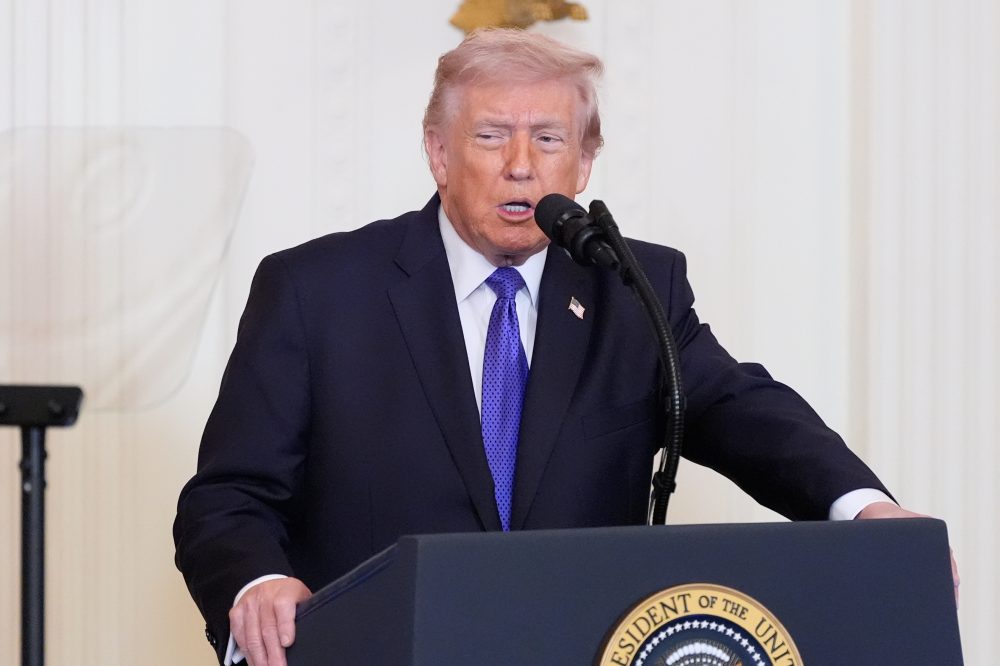
    Following his characteristic non-traditional style, President Trump’s administration delayed making direct, live public statements to Americans for more than two days after initiating military action against Iran.

    Trump explained his decision to launch the military operation before a White House ceremony celebrating military heroes on Monday, though he declined to take any reporter questions. Earlier that same day, Pentagon officials Defense Secretary Pete Hegseth and Joint Chiefs Chairman Dan Caine conducted a media briefing for journalists.

    During the preceding two days, Trump released a pair of pre-recorded videos through Truth Social, his media company’s social platform, and conducted phone conversations with over a dozen news reporters. Several of these telephone interviews resulted in incomplete answers that some observers felt created more confusion than clarity.

    This communication approach drew criticism that Trump failed to adequately explain the war’s reasoning and goals, particularly as American forces began experiencing their first combat losses. In comparison, Israeli Prime Minister Benjamin Netanyahu, who partnered with the U.S. in the Iran operation, made two public statements on the conflict’s opening day and spoke with reporters Monday at a missile strike location where nine people died. Israeli military officials have conducted multiple daily press conferences.

    “The American people need a commander in chief, and he has been absent in that role,” former Obama White House chief of staff Rahm Emanuel stated during a CNN appearance Monday. Emanuel, a Democrat considering a 2028 presidential campaign, criticized Trump’s leadership approach.

    New York Times chief White House correspondent Peter Baker posted on social media that “after Trump launched a new war on Iran, he did not rush back to the White House to make an Oval Office address to rally the nation as other presidents have done. He stayed at Mar-a-Lago to attend a glitzy political fundraiser.”

    White House communications director Steven Cheung responded to Baker’s criticism: “Imagine being a reporter so consumed with Trump Derangement Syndrome that he wants President Trump to mimic the failed policies of the past. The truth is that President Trump spent the majority of his time monitoring the situation in a secure facility, in constant contact with world leaders, and made multiple addresses to the nation that garnered hundreds of millions of views. He also took dozens of calls with reporters.”

    Among those calls was one with Baker’s Times colleague Zolan Kanno-Youngs. Many reporters covering Trump have access to his cell phone number, and the president frequently accepts their calls for impromptu interviews. Following the attack, he spoke with journalists from ABC, CBS, NBC, CNN, CNBC, Fox News Channel, The Atlantic, The Washington Post, Axios, Politico and an Israeli television network.

    The majority of these conversations were short and provided limited insight; Politico’s Dasha Burns reported that Trump answered her call but said he was too occupied to speak. The public couldn’t directly hear Trump’s comments and relied on journalists’ reporting of the conversations.

    “I spoke to President Trump today and he told me that the operation in Iran is going to go very fast,” Israeli Channel 14 News reporter Libby Alon wrote about her interview on X. “It’s doing very well, and (will) make the people of Israel very happy, and the people of the world very happy.”

    The Times described its six-minute conversation, reporting that Trump “offered several seemingly contradictory visions of how power might be transferred to a new government — or even whether the existing Iranian power structure would run that government or be overthrown.”

    During one of his two Trump conversations, ABC News’ Jonathan Karl asked about Iranian Ayatollah Ali Khamenei’s death, and the president responded: “I got him before he got me. They tried twice. Well I got him first.” CNN’s Jake Tapper went live shortly after his Monday call, reporting Trump told him “the big one is coming soon,” apparently referring to a planned future strike.

    White House spokeswoman Anna Kelly responded to requests for comment: “President Trump is the most transparent and accessible president in American history. The American people have never had a more direct and authentic relationship with a president of the United States than they have with President Trump.”

    Pentagon journalists received short notice about Hegseth’s Sunday evening briefing. While reporters from The Associated Press, Reuters, ABC, CBS, NBC, CNN, Fox News Channel and Stars & Stripes gained access to the briefing room, Hegseth didn’t acknowledge them for questions. He instead fielded inquiries from NewsNation and Trump-supporting outlets including the Daily Caller, Daily Wire, One America News and the Christian Broadcasting Network. Most traditional news organizations abandoned their regular Pentagon positions last fall rather than accept Hegseth’s new restrictions on their reporting.

    Hegseth criticized the “foolishness” of those seeking advance operational details, such as whether Americans would deploy beyond air support, and stated the operation would persist until achieving its goals. He initially disregarded NBC News’ Courtney Kube when she shouted a question: “President Trump put a four-week time limit on it. Are you saying he’s wrong?”

    Hegseth later criticized Kube for posing “the typical NBC sort of gotcha-type question. President Trump has all the latitude in the world to talk about how long it might take — four weeks, two weeks, six weeks, it could move up, it could move back. We’re going to execute at his command the objectives he set out to achieve.”

    Differing from previous administrations’ Pentagon briefings, reporters received designated seating assignments, with Trump-supporting outlets placed in front rows. Jennifer Griffin, Hegseth’s former Fox News Channel colleague who departed the Pentagon with other reporters after rejecting his new regulations, sat by herself in the back row.
  • United Airlines Jet Makes Emergency Return to LAX After Engine Fire Report

    United Airlines Jet Makes Emergency Return to LAX After Engine Fire Report

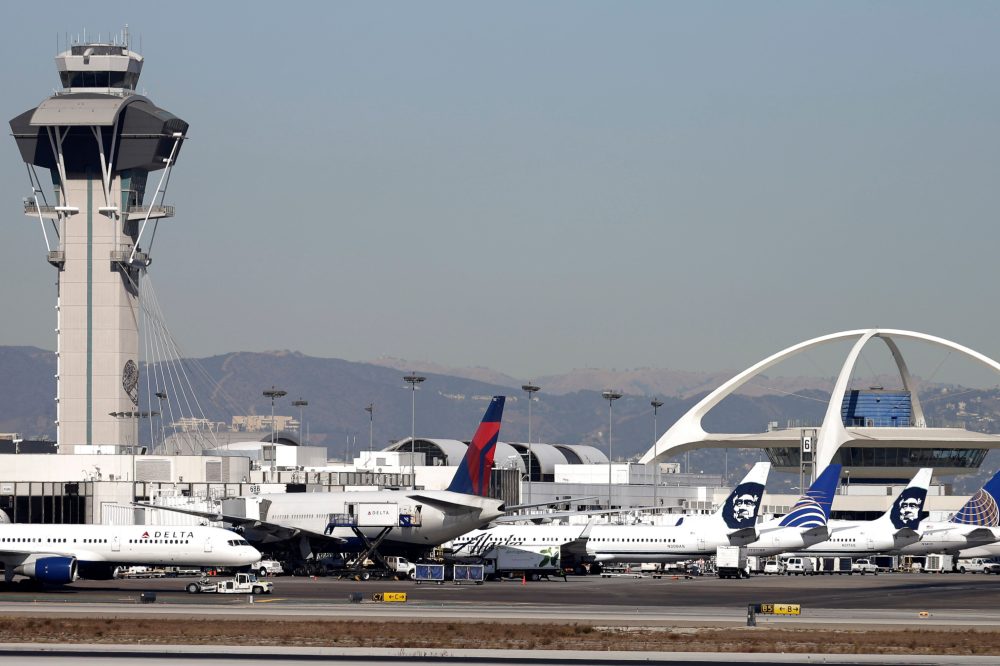
    LOS ANGELES (AP) — A United Airlines aircraft made an emergency return to Los Angeles International Airport on Monday morning, approximately 40 minutes into its journey, following reports of an engine fire that required immediate passenger evacuation, officials confirmed.

    Airport operations at LAX came to a temporary halt for roughly 30 minutes while the aircraft completed its emergency landing and evacuation procedures, based on Federal Aviation Administration notifications. Officials confirmed that no passengers or crew members sustained injuries during the incident.

    The aircraft, originally headed to Newark, New Jersey, was forced to circle back to Los Angeles due to a potential engine fire situation, United Airlines confirmed in an official statement. Los Angeles Fire Department personnel responded to the scene and successfully contained the fire within an hour of the plane’s emergency landing.

    Flight tracking data from FlightAware shows the aircraft departed at 10:43 a.m., initiated its return course around 11 a.m., and completed its emergency landing at 11:19 a.m.

    Fire department officials assisted in evacuating more than 250 individuals, including passengers and crew members. The evacuation took place on the airport taxiway, with people exiting through emergency slides and stairs before being transported to the terminal building, according to the airline’s statement.

    The aircraft involved in the incident was identified as a Boeing 787-9, part of Boeing’s widely-used 787 Dreamliner series designed for long-distance travel.

  • Local Residents React to U.S. Military Action Against Iran

    Local Residents React to U.S. Military Action Against Iran

    While military tensions escalate in the Middle East with ongoing missile exchanges, Americans across the region are voicing their opinions about recent U.S. military strikes targeting Iran.

    Citizens in Harrisburg, Pennsylvania shared their perspectives on the unfolding international crisis and what they think about America’s military response to the situation.

    The developing story continues to draw attention as the conflict between the two nations intensifies, prompting discussions among local communities about the implications of the military action.

  • Families of Nepal Protest Victims Pin Hopes on Thursday’s Election

    Families of Nepal Protest Victims Pin Hopes on Thursday’s Election

    KATHMANDU, March 3 – Last September 8th, 23-year-old student Rashik Khatiwada joined hundreds of demonstrators outside Nepal’s parliament, protesting government corruption and joblessness with a sign declaring “FUCK THE SYSTEM!”

    Two hours later, he was fatally shot.

    Khatiwada became one of 77 casualties during two days of deadly demonstrations that ultimately toppled Prime Minister K.P. Sharma Oli’s government and transformed Nepal’s political landscape ahead of Thursday’s national elections.

    The youth-driven protests have intensified calls for political reform throughout Nepal, particularly among families who lost relatives during the violence.

    “What have past leaders done for this country over the last three decades? They accumulated wealth for themselves and placed their own people in positions of power to benefit from it,” Rashik’s mother, Rachana Khatiwada, questioned. “What did they truly do for the nation?”

    This widespread frustration with established politicians has opened doors for newcomers like 35-year-old former rapper Balendra Shah, now a leading candidate for prime minister. Khatiwada has thrown her support behind his campaign.

    The 46-year-old homemaker joined the Rastriya Swatantra Party as a proportional representation candidate after Shah became a member in January, despite having little previous political involvement.

    Khatiwada explained her political engagement stems from wanting justice for her son and other protest victims’ families.

    “We demanded accountability for those responsible for the deaths of so many children, and the interim government failed to deliver,” she stated.

    A government-appointed investigative commission examining the protests, including authorities’ use of live rounds against young protesters, has received three deadline extensions. The commission’s conclusions won’t be published until after the election.

    ARTIST WHO NEVER RETURNED

    On September 8th morning, 34-year-old Binod Maharjan completed his usual routine of feeding pigeons on his family’s rooftop before suddenly departing, abandoning his breakfast of rice and lentils.

    “My son said he would return home and eat the meal he had left behind,” recalled his 75-year-old mother, Lata Maya Maharjan. “He never came back.”

    The family learned of Binod’s protest participation only after his older brother got a call from a childhood friend and rushed to Kathmandu’s Everest Hospital.

    “My mind went completely silent,” Kaji Ratna Maharjan remembered, describing the bullet wound near his brother’s mouth and exit wound behind his head. “I still cannot put into words what I felt when I saw his lifeless body.”

    Though Binod left school early, he devoted himself to artistic pursuits. His painted murals decorate virtually every surface of the family’s three-story brick home.

    His bedroom featured a hand-drawn Nepal map and artwork depicting Shiva, his favored Hindu god, while he slept on yak hide with horns positioned near his pillow.
    In his mother’s bedroom, Binod created a self-portrait showing his characteristic long dreadlocks and cigarette, surrounded by his nieces and nephews.

    “We do not understand politics, but those who do and are actively involved in it must focus on ending corruption and creating jobs in this country,” said Kaji Ratna Maharjan, who plans to vote Thursday alongside his mother. “Only then can we prevent another protest like the September uprising in Nepal.”

    WIDOW CAMPAIGNS FOR CHANGE

    Each day before sunrise, Parbati Subedi begins work as a house cleaner before reporting to her primary job in a major Nepali corporation’s sanitation department.

    Though exhausting, this demanding routine provides the 28-year-old widow with 30,000 Nepalese rupees ($206) monthly to support herself and her daughter following her husband’s death during September’s uprising.

    Security officer Dev Kumar Subedi, 29, suffered a fatal stomach gunshot wound on September 9th while participating in the second day of anti-government demonstrations.

    “I believe this protest happened because people wanted change in Nepal and change in our leaders,” Subedi said. “Those in power forgot about families like ours, for whom putting two meals on the table is a daily struggle.”

    Subedi received 1.5 million rupees compensation from the interim government that replaced Oli’s administration, payment made to families of 42 among the 77 killed who were designated as martyrs.

    However, additional commitments including job opportunities for relatives, ongoing medical assistance, and pension benefits remain unfulfilled, according to multiple families of the deceased, including Subedi.

    Following her late husband’s political preferences, Subedi supports the RSP and Shah based on his mayoral performance in Kathmandu, even creating social media content encouraging voters to back their campaign.

    “I believe they will genuinely work towards improving the country,” she said. “But if it’s any of the other parties, I have little hope that things will change.”

    ($1 = 145.5 Nepalese rupees)

  • Amazon Purchases GWU Virginia Campus for $427M Data Center Project

    Amazon Purchases GWU Virginia Campus for $427M Data Center Project

    The cloud computing giant’s data services division has completed a $427 million purchase of George Washington University’s Science and Technology campus located in Ashburn, Virginia, university officials announced Monday.

    According to the campus student publication, property documents indicate Amazon Data Services plans to construct a data processing or information technology facility at the Northern Virginia location. The tech company has not yet responded to requests for comment regarding their specific development plans.

    The Washington D.C.-based university confirmed that terms of the sale include provisions allowing GWU to maintain current academic programs at the Ashburn facility for as long as five years if needed.

    The transaction represents another significant expansion of Amazon’s data center footprint in the Virginia region, where the company has been building out infrastructure to support its cloud computing operations.

  • US Dollar Rebounds as Safe Haven After Iran Military Strikes Shake Markets

    US Dollar Rebounds as Safe Haven After Iran Military Strikes Shake Markets

    The American dollar experienced its strongest performance in seven months on Monday, climbing nearly 1% as investors sought safety following U.S. military action against Iran, signaling the currency maintains its protective role during international crises.

    This surge provides reassurance to global markets after recent months of uncertainty about whether the dollar could still serve as a reliable refuge during turbulent times. Those doubts emerged when the currency stumbled during last year’s widespread market decline triggered by tariff disputes.

    “Today is, I would say, a classic risk-off day from a U.S. dollar perspective,” stated Eric Theoret, a foreign exchange strategist at Scotiabank.

    Theoret referenced the challenges the dollar faced during what he called “Liberation Day” – the April 2, 2025 announcement of comprehensive U.S. tariffs that sparked global market chaos. “I think ‘Liberation Day’ was obviously a bit of a break with the historical analogs that we’ve had,” he explained.

    The dollar’s recent strength represents welcome news for the currency, which had seen its traditional safe-haven status questioned as investors increasingly turned to alternatives like the euro, Japanese yen, and gold during periods of uncertainty.

    Market experts point to the scale and stability of American financial markets as key factors supporting the dollar’s appeal. “If you’re looking to de-risk and de-risk in size, the U.S. Treasury market is really the only one that can handle those flows,” Theoret noted. When international investors purchase Treasury securities during crises, it naturally increases demand for dollars.

    Don Calcagni, chief investment officer at Mercer Advisors in Denver, emphasized the limited options available to investors during volatile periods. “So, I’m perhaps not surprised that we’re still seeing the dollar perform as a safe-haven asset,” Calcagni observed.

    The currency’s struggles during previous market stress largely resulted from the United States being the source of global uncertainty, leaving investors reluctant to seek protection in the dollar when American policies were creating the instability.

    “Liberation Day forced the USD’s centrality to diminish … investors started to favor the (rest of world),” explained Benjamin Ford, a researcher at macro strategy firm Macro Hive. “The oil shock then has scared global investors out of positions that they have been chasing over the past three months and landed them net long USD.”

    John Velis, Americas macro strategist at BNY, distinguished between domestic and international sources of crisis. While the dollar’s protective appeal might weaken when concerns originate within the U.S., “when it’s an international geopolitical crisis, its safe-haven appeal seems intact,” he said. “Certainly, the evidence today suggests that.”

    However, some analysts remain cautious about declaring the dollar’s safe-haven status fully restored. “I think there will be some reassurance from today’s activity that the USD still has safe-haven characteristics,” said Jane Foley, head of foreign exchange strategy at Rabobank. “However, I think the debate is not over yet.”

    Monday’s dollar strength benefited not only from safety-seeking flows but also from America’s position as a net energy producer, which shields the U.S. economy from oil price increases that typically damage import-dependent nations.

    Aaron Hurd, senior portfolio manager for currency at State Street Global Advisors, questions whether the dollar would maintain its strength facing different types of economic shocks. “If it’s just a general kind of economic fear, I think the dollar will be far less effective,” he predicted.

    Citing America’s substantial fiscal deficits, policy uncertainty, and extensive global exposure to U.S. investments, Hurd anticipates the dollar will likely show stronger correlation with risky assets during major market disruptions going forward.

    Looking ahead, Ford from Macro Hive sees oil prices as crucial to the dollar’s trajectory. “If we continue in this oil up, risk appetite down world, then USD will continue to find a bid,” he projected. “However, if oil sinks, you could see typical safe-havens return to the forefront,” potentially favoring the Swiss franc and Japanese yen instead.

  • Georgia Father’s Murder Trial in School Shooting Case Goes to Jury

    Georgia Father’s Murder Trial in School Shooting Case Goes to Jury

    A Georgia jury began deliberations Monday in the unprecedented murder trial of a father whose teenage son allegedly carried out a deadly school shooting using a weapon the father provided.

    Colin Gray, 55, faces 29 criminal charges including second-degree murder and involuntary manslaughter connected to the September 2024 attack at Apalachee High School in Winder, Georgia. His 14-year-old son Colt allegedly used a rifle given to him as a Christmas present to kill four people and injure seven others at the school.

    During closing arguments, prosecutor Patricia Brooks emphasized the case centers on determining “who armed Colt and who enabled him to do what he did.”

    The September attack claimed the lives of two 14-year-old students, Christian Angulo and Mason Schermerhorn, along with teachers Cristina Irimie, 53, and Richard Aspinwall, 39.

    Gray entered a not guilty plea and testified in his own defense during the 11-day proceedings before Piedmont Circuit Superior Court Chief Judge Nicholas Primm. Taking the witness stand Friday, he became emotional while acknowledging “I could have done more.” He described himself as a father attempting to hold together a fractured household while raising three children apart from his estranged spouse.

    Defense attorney Jimmy Berry urged jurors to base their verdict on evidence and legal standards rather than emotions, recognizing the community’s desire for explanations following the tragedy.

    Prosecutors presented evidence that Gray disregarded concerning behaviors from his son, including the creation of a shrine honoring previous school shooters in the teenager’s bedroom, along with disruptive conduct at school and violent episodes at home.

    Body camera recordings from responding deputies showed Gray’s reaction upon learning of the shooting. “God. I knew it, man. My little girl just texted me,” he was heard saying. The footage also captured him telling officers, “We’re trying to get him into counseling.”

    However, Gray’s estranged wife Marcee testified that her husband dismissed counseling efforts and ignored her pleas to secure firearms in their home away from their son.

    The defense argued Gray purchased the weapon as a Christmas gift to strengthen his relationship with Colt through shared hunting and target shooting activities.

    Colt Gray, who was 14 during the shooting, awaits his own trial on 55 charges including multiple counts of malice murder and felony murder.

    This prosecution follows a similar 2024 Michigan case where parents of school shooter Ethan Crumbley received 10 to 15-year prison sentences for manslaughter. Jennifer and James Crumbley were convicted after jurors determined they provided their son with a firearm and overlooked warning indicators before he killed four students at his Detroit-area high school in 2021.

    Legal experts note such parental prosecutions remain uncommon but are increasingly pursued by prosecutors and communities seeking accountability and potential deterrence in school shooting cases where parental negligence appears evident.

  • Major Argentine Union Challenges President’s Labor Law Changes in Court

    Major Argentine Union Challenges President’s Labor Law Changes in Court

    BUENOS AIRES, Argentina — The largest labor union organization in Argentina took legal action Monday to stop major workplace reforms championed by President Javier Milei that would dramatically reshape employment laws across the South American nation.

    Congress gave final approval to the legislation on Friday, which provides business owners with increased authority over employment decisions, terminations, compensation packages and union negotiations while reducing the traditional influence labor organizations have wielded.

    “This law represents a serious infringement of collective and individual rights that expressly violate constitutional principles,” the General Confederation of Labor, known as CGT, declared in their official statement following the court filing in Buenos Aires.

    The legal challenge questions whether the reforms comply with Argentina’s constitution, claiming they breach the “principle of progressivity” that protects existing worker benefits from being rolled back, as well as the “protective principle” designed to prevent workplace exploitation and maintain fair employer-employee relationships.

    “The damages are not collateral effects of an isolated decision, but are consistent with the national government’s economic and social program,” CGT officials stated, pointing to more than 300,000 job losses that have occurred since Milei assumed the presidency in late 2023 with promises of fiscal discipline and major economic changes.

    Following the legislation’s passage on Friday, Milei described the overhaul as “historic” and declared, “We have a labor modernization.”

    The path to approval was marked by significant conflict between Milei’s administration and opposition lawmakers. Tensions reached a peak last month as the bill moved through the lower chamber, with CGT organizing a day-long national work stoppage while protesters from multiple left-wing organizations fought with law enforcement officers near the congressional building.

    Milei views these modifications to Argentina’s five-decade-old employment laws as essential for attracting international investment, enhancing worker productivity and generating new employment opportunities in a nation where approximately 40 percent of the workforce operates without official documentation.

    Labor representatives contend the legislation will undermine worker safeguards that have been fundamental to Argentina since Peronism, the nation’s influential populist movement, emerged in the 1940s.

    The judicial system will now determine whether to accept or reject the CGT’s legal challenge, a ruling that might lead to a temporary halt of the reforms while judges deliberate on a final decision.

  • Missouri Farmer Warns of Brazil’s Growing Threat to U.S. Corn Market

    Missouri Farmer Warns of Brazil’s Growing Threat to U.S. Corn Market

    An agricultural producer from Missouri is sounding the alarm about the need to strengthen the market for American corn as Brazil emerges as a formidable competitor in the global grain trade. Brian Willott shared his concerns with Brownfield, emphasizing that the competitive pressure from South America shows no signs of letting up.

    “And every year they are able to produce more and more soy and more and more corn, both, because a lot of their double cropping,” Willott explained. “So we have to be sharp.”

    The farmer’s comments highlight the challenges facing American grain producers as Brazil leverages its climate advantages to harvest multiple crops annually, significantly boosting their agricultural output and market presence.

  • Schools Face Hurdles Bringing Whole Milk Back to Cafeteria Menus

    Schools Face Hurdles Bringing Whole Milk Back to Cafeteria Menus

    Schools looking to add whole milk back to their cafeteria offerings will need to navigate several logistical hurdles, according to a nutrition education specialist.

    Brianna Henton, who serves as director of youth engagement and outreach for the United Dairy Industry of Michigan, explained that educational institutions already have permission to include whole milk in their meal programs. However, she noted that federal guidelines from the USDA are still being developed to provide clearer direction.

    “Schools do have the option to put this on their menu today, (but) the USDA still needs to come up with” additional guidance, Henton stated.

    The transition faces practical challenges including increased expenses and refrigeration capacity issues that could delay widespread adoption across school districts nationwide.

  • Michigan Farm Bureau: Deer Population Control Efforts Need More Focus

    Michigan Farm Bureau: Deer Population Control Efforts Need More Focus

    Michigan’s efforts to manage its deer population are showing mixed results, according to a representative from the Michigan Farm Bureau who says more focused strategies are essential moving forward.

    The organization’s lobbyist Justin Tomei explained to Brownfield that maintaining stable deer numbers requires harvesting roughly 40 percent of Michigan’s estimated two million deer annually. “We need to be up over around 800,000,” Tomei stated when discussing the target harvest numbers needed for proper herd management.

    Despite some advancement in deer population control measures, Tomei emphasized that the state must implement more precise approaches to achieve the desired results. The declining harvest figures for 2025 highlight the ongoing challenge of balancing wildlife management with agricultural and environmental concerns.

  • Delaware AG Celebrates Court Victory Blocking SNAP Data Collection

    Delaware AG Celebrates Court Victory Blocking SNAP Data Collection

    Delaware Attorney General Kathy Jennings is praising a federal court ruling that has once again prevented the collection of private information from food stamp recipients across the country.

    The U.S. District Court for the Northern District of California issued a decision blocking federal demands that states hand over confidential details about millions of people who apply for or receive benefits through the Supplemental Nutrition Assistance Program.

    This marks another legal victory for Jennings, who earlier joined with other attorneys general in challenging the data collection requirements through federal court action.

    The ruling protects sensitive personal information of SNAP participants from being turned over to federal authorities, continuing a pattern of successful legal challenges to these data demands.

  • Louisiana National Guard Troops to Stay in New Orleans Through August

    Louisiana National Guard Troops to Stay in New Orleans Through August

    NEW ORLEANS — Louisiana military officials announced Monday they will keep 120 National Guard troops stationed in New Orleans until August, extending their mission by six months.

    The soldiers are part of a larger group of 350 Guard members who arrived in the city in late December to provide security for New Year’s celebrations and major events including the Sugar Bowl. Originally concentrated in the famous French Quarter area, these troops were initially set to return home following the conclusion of Mardi Gras festivities.

    New Orleans joins other Democratic-led cities including Washington and Memphis, Tennessee, where federal authorities have positioned armed military personnel under President Donald Trump’s administration. Separately, hundreds of federal agents also arrived in Louisiana last December as part of an immigration enforcement operation in the New Orleans area.

    Trump highlighted the New Orleans military presence as a “big success” during his recent State of the Union speech. Last month, the president claimed the troops helped reduce violent crime in the city within their first week of arrival. However, New Orleans police statistics indicate violent crime has dropped substantially over the past three years, following broader national patterns.

    A Louisiana National Guard statement explained that the remaining troops will maintain a “visible presence to deter criminal activity in New Orleans.”

    New Orleans Mayor Helena Moreno, a Democrat who initially resisted the deployment, now says the military personnel will help the city in upcoming weeks. She noted that National Guard soldiers provided valuable assistance during last year’s Mardi Gras celebration following the tragic New Year’s Day vehicle attack in the French Quarter that claimed 14 lives.

    “I continue to support the partnership with the LA National Guard to assist in our major events and there are several coming up in the next few weeks,” Moreno stated.

    Though Moreno didn’t specify which events she meant, New Orleans typically sees large crowds during spring celebrations like the New Orleans Jazz and Heritage Festival.

    Republican Governor Jeff Landry, a strong Trump supporter, first requested National Guard assistance last September, pointing to concerns about violent crime despite data showing decreases.

    “This continued deployment will help us combat violence in New Orleans and other parts of Louisiana,” Landry posted on X Monday, mentioning that Louisiana also sent Guard troops to Washington, D.C., previously.

    Kate Kelly, speaking for Governor Landry, confirmed federal funding will cover the extended deployment costs. She didn’t answer questions about potential Guard operations beyond New Orleans.

    Major General Thomas Friloux, who leads the Louisiana National Guard, said the troops have successfully collaborated with various city, state and federal agencies to enhance public safety during major events, including the busy Mardi Gras period and carnival season.

    “We remain committed to those partnerships as we continue supporting efforts to keep the City of New Orleans safe for residents and visitors,” Friloux stated.

  • Trump Defends Iran War Strategy Amid Growing Criticism from Allies

    Trump Defends Iran War Strategy Amid Growing Criticism from Allies

    WASHINGTON — President Donald Trump defended his military strategy against Iran on Monday as criticism grows over his administration’s handling of the expanding Middle East conflict.

    The backlash isn’t limited to political opponents — some of Trump’s own supporters are questioning the war effort as fighting spreads across the region, energy costs climb, and casualties mount in what officials say could be just the beginning of a prolonged campaign.

    Speaking to the New York Post on Monday, Trump declined to rule out deploying American ground forces to the conflict zone. Defense Secretary Pete Hegseth later told reporters the administration wouldn’t engage in what he called the “foolish” practice of revealing military plans in advance.

    “I don’t have the yips with respect to boots on the ground — like every president says, ‘There will be no boots on the ground.’ I don’t say it,” Trump stated. “I say ‘probably don’t need them,’ (or) ‘if they were necessary.’”

    The president and his senior staff worked to justify their approach as Iran launched retaliatory drone and missile attacks against Israel, U.S. military installations throughout the region, and Persian Gulf allies. Monday also saw Israel and Hezbollah, Iran’s proxy force in Lebanon, exchange fire, creating another battlefield in the widening conflict.

    Trump returned to the White House promoting an “America First” agenda focused on avoiding the extended military engagements that characterized previous administrations. His foreign policy platform has consistently emphasized rejecting “the failed policy of nation building and regime change.”

    During a Saudi Arabia visit last year, he reiterated this position, stating that “so-called ‘nation-builders’ wrecked far more nations than they built — and the interventionists were intervening in complex societies that they did not even understand themselves.”

    However, Trump now faces a military engagement of his own making that has raised concerns about another lengthy Middle Eastern entanglement for America.

    “I’m not happy about the whole thing. I don’t think this was in America’s interests,” said Erik Prince, a Trump supporter and private security executive, during Sunday’s appearance on former Trump advisor Steve Bannon’s “War Room” podcast. “It’s gonna uncork a significant can of worms and chaos, and destruction in Iran now.”

    Prince continued, “I don’t see how this is in keeping with the president’s MAGA commitment. I am disappointed.”

    Additional Trump supporters expressing doubts about the Iran strike include YouTube personality Benny Johnson, social media influencer Andrew Tate, and media figure Tucker Carlson.

    Nevertheless, numerous Trump loyalists continue supporting the president’s choice, dismissing suggestions of internal division within their political movement.

    “No, ma’am, I think Iran, they’re bad actors,” said Rep. Tim Burchett, R-Tenn., when asked about the disagreement. “They’ve killed Americans. In Iraq, they supply armaments. Hezbollah is part of their pact and they’ve supplied them with armaments and funds. And they do business with Chinese, so absolutely not. I think we’re good.”

    During a White House appearance Monday, Trump described the combined American-Israeli military campaign as “substantially ahead of schedule” and projected four to five weeks to achieve administration goals, though he acknowledged the timeline could extend further.

    “We have capability to go far longer than that,” Trump declared.

    Hegseth provided less specific timing estimates.

    “President Trump has all the latitude in the world to talk about how long it may or may not take. Four weeks, two weeks, six weeks,” Hegseth explained. “It could move up. It could move back.”

    Joint Chiefs Chairman Dan Caine warned reporters that additional American military casualties are anticipated as operations continue. By Monday, six U.S. personnel had died in combat with others seriously wounded during Iran’s widespread retaliatory attacks across the region.

    The administration hasn’t specified who should assume leadership of Iran after eliminating Supreme Leader Ayatollah Ali Khamenei and numerous other senior officials in the conflict’s initial strikes.

    When announcing major combat operations, Trump urged the Iranian Revolutionary Guard Corps to surrender their weapons. However, military experts note that airstrikes alone rarely achieve the type of government overthrow Trump seeks in Iran.

    The president also hasn’t promised support for Iranian opposition groups he’s encouraged to revolt against the Islamic government following the bombing campaign’s conclusion.

    Trita Parsi, executive vice president of the Quincy Institute for Responsible Statecraft, a Washington policy organization, suggested Trump might accept “regime collapse” or “regime implosion” instead.

    “That is very different (than regime change), not only because potentially it could be achieved, but it’s also something that enables the Trump administration to wash their hands of the consequences of this,” Parsi explained.

    Meanwhile, Israel is urging Trump to maintain extended operations that could definitively end Iran’s religious government.

    “I think the Israelis’ biggest concern may be that President Trump would take … sort of the early offering, declaring victory,” said Daniel Shapiro, former U.S. ambassador to Israel under Obama and current Atlantic Council distinguished fellow. “I think they’d like to see this go longer, with the president’s support.”

    Administration officials briefed congressional staff privately Sunday that American intelligence hadn’t detected Iranian preparations for preemptive strikes against the U.S. Instead, officials acknowledged broader regional threats from Iran’s missile capabilities and allied forces.

    Nevertheless, Trump reiterated Monday his position that action was required due to concerns over Iran developing ballistic missiles capable of reaching American territory.

    Iran hasn’t confirmed pursuing intercontinental ballistic missile development. The U.S. Defense Intelligence Agency stated in an unclassified report last year that Iran could create a functional intercontinental ballistic missile by 2035 “should Tehran decide to pursue the capability.”

    The president also restated claims that Iran was rebuilding its nuclear capabilities despite U.S. strikes last June during the 12-day Israel-Iran conflict that he said “obliterated” three major nuclear installations.

    International Atomic Energy Agency Director Rafael Grossi confirmed Monday that Iran maintains an “ambitious” nuclear program but currently lacks weapons development efforts. Iran has blocked IAEA inspectors from examining its damaged nuclear facilities.

    Kelsey Davenport, nonproliferation policy director at the Arms Control Association, argued that “regime change is not a viable nonproliferation strategy.”

    “Iran’s nuclear program cannot be bombed away. Iran’s nuclear knowledge cannot be bombed away,” she stated. “Even if there’s regime change, Iran’s program will still pose a proliferation risk.”

  • Montana GOP Rep. Ryan Zinke Steps Down From Congress Due to Health Issues

    Montana GOP Rep. Ryan Zinke Steps Down From Congress Due to Health Issues

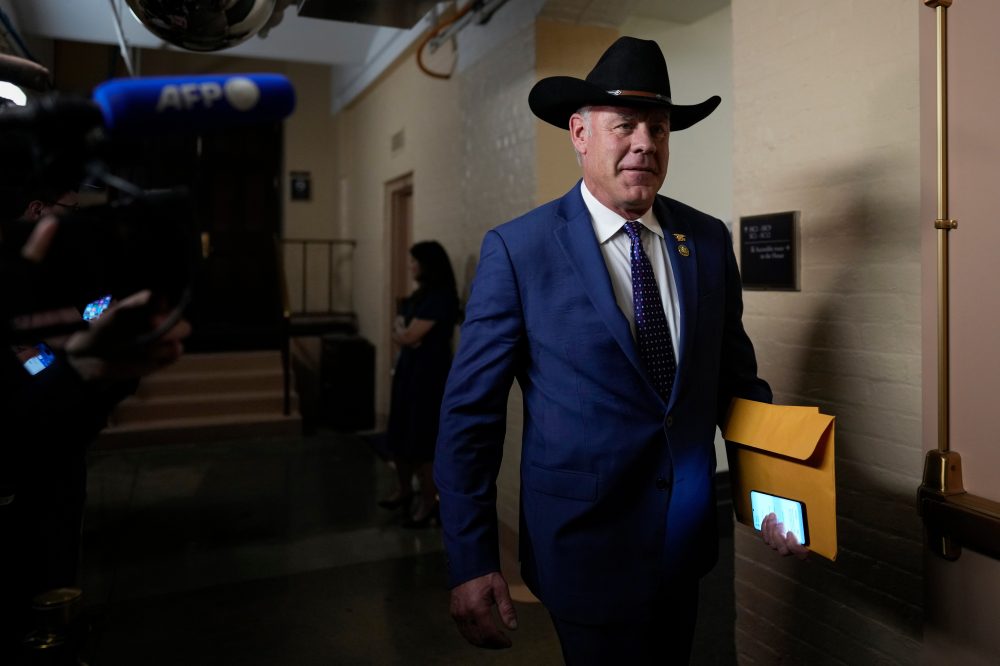
    Montana Republican Ryan Zinke, who previously held the position of Interior Secretary under Donald Trump, announced Monday he will step away from Congress after his current term, pointing to medical issues as the reason for his decision.

    The announcement creates a potential opening for Democratic candidates in Montana, a state that has shifted significantly toward conservative politics in recent election cycles.

    Zinke, who served as a Navy SEAL before entering politics, explained in a message to voters that he has endured several surgical procedures in recent years due to injuries from his military service, with additional medical treatments still ahead. While emphasizing that his health condition poses no threat to his life, he acknowledged that recovery would demand substantial time away from his duties.

    “My judgement and experience tell me it is better for Montana and America to have full-time representation in Congress than run the risk of uncertain absences and missed votes,” he wrote.

    Zinke’s political journey began in Montana’s state legislature, where he served four years before winning his first congressional seat in 2014. Trump selected him to lead the Interior Department in 2017, though Zinke stepped down from that role in 2018 as multiple ethics probes emerged. He successfully returned to electoral politics in 2022, claiming victory by a narrow margin in Montana’s newly established western congressional district, then securing reelection in 2024 with a more decisive win.

  • Congressional Committee Releases Clinton Deposition Videos on Epstein Ties

    Congressional Committee Releases Clinton Deposition Videos on Epstein Ties

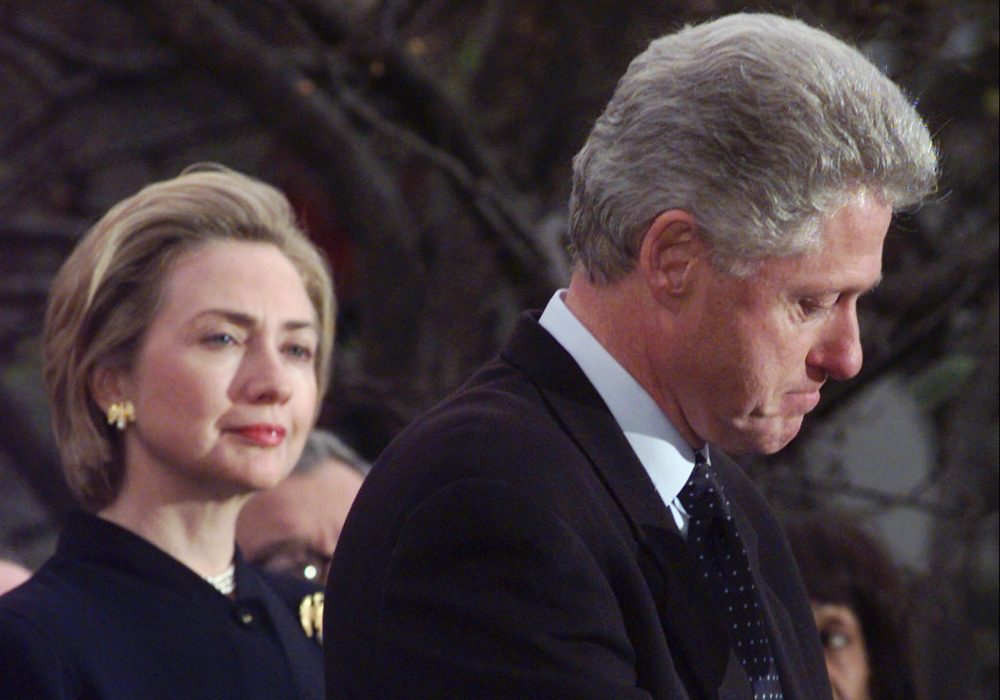
    A congressional committee made public on Monday video recordings showing former President Bill Clinton and former Secretary of State Hillary Clinton being questioned under oath about their connections to Jeffrey Epstein, the deceased financier who was convicted of sex crimes.

    The depositions, recorded over multiple days last week and lasting several hours, revealed how both former officials sought to create distance between themselves and Epstein. The former president testified that he had severed ties with Epstein well before the financier pleaded guilty in 2008 to charges involving solicitation of prostitution from a minor.

    According to Bill Clinton’s testimony, his initial encounter with Epstein occurred in 2002 when he traveled on Epstein’s aircraft for charitable endeavors involving the Clinton family, and their association concluded the following year.

    “There’s nothing that I saw when I was around him that made me realize he was trafficking women,” Bill Clinton told the committee.

    While records show Epstein made multiple visits to the White House during Clinton’s time in office and photographs exist of the two men meeting, the former president testified he could not remember those encounters.

    Hillary Clinton testified that she had no recollection of ever encountering Epstein personally.

    Despite their denials, both faced extensive questioning from legislators who are seeking to hold accountable anyone who may have known about or overlooked Epstein’s exploitation of minors.

  • Federal Agents Help Hunt for Cincinnati Nightclub Shooter; 9 Injured

    Federal Agents Help Hunt for Cincinnati Nightclub Shooter; 9 Injured

    Federal law enforcement agencies have joined Cincinnati police in hunting for the gunman responsible for a weekend shooting at a local nightclub that left nine people injured.

    The shooting occurred around 1:00 a.m. Sunday morning at Riverfront Live, a music venue in Cincinnati. All nine victims were taken to area hospitals with injuries that are not considered life-threatening, according to Interim Cincinnati Police Chief Adam Hennie, who reported that all patients remain in stable condition.

    The Federal Bureau of Investigation is now collaborating with Cincinnati police on the investigation, confirmed spokesperson Todd Lindgren. Additionally, the Bureau of Alcohol, Tobacco, Firearms and Explosives has posted a $5,000 reward for tips leading to the identification of the shooter.

    While this incident happened around the same time as a fatal bar shooting in Austin, Texas that investigators are examining as possible terrorism, Ohio authorities have not revealed any potential motive for the Cincinnati attack.

    Cincinnati ATF spokesperson Bill Halusek stated that investigators do not currently believe the nightclub shooting was a terrorist act.

    Witness Anton Canady was inside Riverfront Live when the violence erupted. He described hearing what seemed like an altercation or “commotion” before gunfire broke out while music was still playing. Canady and his girlfriend Brandi Willis immediately fled toward the exits.

    During the chaotic evacuation, Willis fell down and Canady shielded her with his body to prevent her from being trampled by other fleeing patrons.

    “I don’t think it was like they was doing it purposely or intentionally, I just think nobody wanted to die in there,” he said.

    The 40-year-old Cincinnati man spoke with The Associated Press from a hospital where he was waiting for Willis to receive additional treatment for injuries sustained during their escape. Canady also suffered cuts and bruises to his legs.

    After getting out of the venue, Canady discovered that one of the shooting victims was his own cousin.

    “I hurried up, found something out of the car that was next to us. And I tied her wounds up so we can get that pressure. And we try to do the next step, which is call 911 and get her the attention she needed,” he said.

    Canady reported speaking with his cousin on Monday, saying she is “doing good” but remains “in shock.”

    DJ Fresh, whose real name is Jermaine Tandy, was celebrating his birthday at the venue that night, based on his Facebook posts. Representatives for the DJ released a statement expressing their devastation over the violent incident.

    “Our hearts go out to the victims, their families, and everyone impacted by this senseless act of violence,” the statement read. “This event was intended to be an opportunity for us to come together and enjoy great music; and have fun celebrating life, it is deeply frustrating that the actions of one individual ruined the evening for so many.”

    The statement noted that venue management handled security arrangements for the event as part of the DJ’s rental contract.

    Riverfront Live is located on the Ohio River near the Riverbend Music Center and frequently attracts patrons from the larger outdoor concert venue, which closes during winter months.

    The club was renamed Riverfront Live in 2018 following previous incidents involving criminal activity. The property has operated under various names including Stage Forty-Three and Inner Circle, but is most famous as the former location of Annie’s, a legendary rock club that featured major touring acts during the 1990s and early 2000s.

  • Brazil Plans $48 Billion Green Investment Push Under Lula Administration

    Brazil Plans $48 Billion Green Investment Push Under Lula Administration

    Brazil’s administration plans to generate more than $48 billion in environmentally-focused investments throughout President Luiz Inacio Lula da Silva’s four-year presidency, according to a departing government official.

    Tatiana Rosito, who stepped down Monday from her role as international affairs secretary at Brazil’s Finance Ministry, stated the government anticipates mobilizing over 250 billion reais during this timeframe. She emphasized that 2026 will focus on strengthening programs already in motion.

    Rosito, who will transition to serve as the World Bank’s regional director for China, Korea and Mongolia beginning in July, explained that Brazil has developed an extensive collection of financing mechanisms highlighted during the country’s leadership roles in the G20, BRICS and COP30.

    She noted that the current emphasis involves producing tangible outcomes and securing investment capital instead of developing additional financial tools.

    Brazil’s recent policy initiatives have helped reestablish the nation as a significant international participant, with other countries recognizing Latin America’s largest economy as moving beyond promises toward actual implementation, Rosito explained.

    Among the major initiatives are establishing national guidelines for ecological transformation, releasing sovereign sustainable bonds in international markets, and introducing EcoInvest, which leverages government funding to draw private sector investment into environmental projects.

    Rosito highlighted the Brazil Investment Platform for Climate and Ecological Transformation (BIP), a system that catalogs sustainable projects seeking financial backing.

    Following Brazil’s introduction of this platform during its 2024 G20 leadership, the country assisted in creating a network of comparable programs under its COP presidency to encourage collaboration on sustainable and climate financing among developing nations.

    Over 15 countries, including Colombia, Nigeria and South Africa, have subsequently revealed plans to establish their own platforms, according to Rosito.

    “I don’t see many people viewing this as an ecosystem, but it is,” she stated, characterizing Brazil’s sustainable finance initiative as an innovative framework developed primarily from the ground up that facilitates real investments and supports strategic emerging industries.

    Rosito observed that sustainable development discussions have been “all but erased” from certain international forums, especially the G20 under this year’s U.S. leadership, and maintained that Brazil and its allies must continue advocating to keep these issues prominent.

    Mathias Alencastro, formerly an adviser to Finance Minister Fernando Haddad, will replace Rosito at the Finance Ministry, as Reuters initially reported Friday.

  • Iran Threatens to Fire on Ships in Critical Oil Transit Route

    Iran Threatens to Fire on Ships in Critical Oil Transit Route

    Iranian military commanders issued their strongest warning yet regarding the strategically vital Strait of Hormuz, declaring the waterway completely off-limits to shipping traffic on Monday.

    A high-ranking Revolutionary Guards official announced that Tehran would use military force against any vessels attempting to navigate through the passage, which handles roughly one-fifth of the world’s oil transportation.

    “The strait (of Hormuz) is closed. If anyone tries to pass, the heroes of the Revolutionary Guards and the regular navy will set those ships ablaze,” stated Ebrahim Jabari, a senior adviser to the Guards commander-in-chief, according to Iranian state media reports.

    The waterway serves as the planet’s most critical petroleum export channel, linking major Gulf oil-producing nations including Saudi Arabia, Iran, Iraq and the United Arab Emirates to the Gulf of Oman and Arabian Sea.

    Tehran’s decision to shut down the passage stems from recent military actions by the United States and Israel on February 28, which targeted Iranian leadership. President Donald Trump has publicly encouraged Iranian citizens to remove their current government officials.

    Iran responded by launching multiple missile strikes against neighboring Gulf states that house American military installations, including Qatar, Kuwait and Bahrain. Iranian forces also targeted the United Arab Emirates, Saudi Arabia and Oman with missile attacks.

    This blockade represents the fulfillment of longstanding Iranian promises to seal off the narrow shipping channel if the country faced military aggression.

    The strait measures approximately 21 miles across at its most constricted section, yet facilitates the passage of about 20% of daily global oil consumption.

    Energy markets have remained focused on escalating tensions between Iran and its longtime adversaries, the United States and Israel, with concerns that expanded conflict could severely impact oil supplies and destabilize the broader region.

    The closure compounds existing shipping challenges caused by Yemen’s Iran-backed Houthi forces, who have conducted drone and missile attacks against vessels in the Red Sea and Gulf of Aden since the Gaza conflict began in 2023.

  • Central Asian Nations Call for Peace Amid Middle East Crisis

    Central Asian Nations Call for Peace Amid Middle East Crisis

    On Monday, diplomatic leaders from Central Asia gathered to address the growing crisis in Iran and surrounding Middle East territories, according to an announcement from Kazakhstan’s Foreign Ministry.

    The diplomatic gathering was notable for bringing together representatives from nearly all regional nations simultaneously, with participants advocating for peaceful resolution to the current turmoil affecting Iran and neighboring areas.

    According to the ministry’s official statement, the foreign ministers emphasized “the importance of de-escalating tensions, adhering to international law, and combining efforts in the interest of maintaining regional security, peace, and stability.”

    Kazakhstan’s top diplomat Yermek Kosherbayev conducted meetings with his counterparts representing Kyrgyzstan, Tajikistan, Turkmenistan, Uzbekistan, and Azerbaijan during the diplomatic session.

    Kosherbayev acknowledged the assistance provided by Turkmenistan and Azerbaijan in helping evacuate people from Iran, noting that the participating nations were ready to work together on additional evacuations and related matters.

    The diplomatic discussions occurred as military actions intensified throughout the region on Monday, with U.S. and Israeli forces expanding air operations against Iran. Meanwhile, Israel launched strikes against Lebanon following Hezbollah attacks, and Tehran continued launching missiles and drone strikes targeting Gulf nations.

  • Authorities Arrest Man Suspected of Spying on Strategic Mediterranean Naval Base

    Authorities Arrest Man Suspected of Spying on Strategic Mediterranean Naval Base

    ATHENS – Authorities in Greece have taken a 36-year-old man into custody at Athens airport following allegations that he conducted surveillance activities at a critical naval installation on Crete, according to police sources who spoke Monday.

    The arrest occurred based on intelligence provided by Greece’s national security service. The facility in question, Souda Bay, serves as a vital strategic location for Greek, American, and NATO military operations in the eastern Mediterranean region.

    The naval base recently hosted the U.S. aircraft carrier Gerald R. Ford during a resupply mission, highlighting its importance to American military operations in the area.

    Investigators have opened a formal inquiry into the allegations and are currently analyzing digital materials, including photographic evidence that was allegedly collected by the suspect, police officials confirmed.

    Records show the accused individual was registered at a hotel in close proximity to Souda last month. As of now, he has not provided any response to the charges against him, according to one law enforcement official.

    This incident follows a similar case from June, when Greek police apprehended an Azerbaijani citizen also suspected of espionage activities. That individual had similarly taken up residence at a hotel near the same naval and air force installation in western Crete for several days.

    Security measures at the facility have been enhanced following recent military strikes conducted by Israel and the United States against Iran over the weekend.

  • Cuban Officials Detain 10 Panamanian Citizens Over Anti-Government Signs

    Cuban Officials Detain 10 Panamanian Citizens Over Anti-Government Signs

    Cuban authorities have taken 10 Panamanian nationals into custody, accusing them of producing anti-government propaganda materials on Saturday, according to the country’s Interior Ministry.

    Officials claim the detainees were hired by unidentified sponsors who promised payment in exchange for traveling to Cuba to create what authorities describe as subversive messaging.

    The detentions come just days after Cuban officials reported another alleged infiltration attempt, where armed Cuban exiles attempted to enter the country via speedboat. That incident resulted in a deadly confrontation at sea, leaving four attackers dead and six others wounded and in Cuban custody.

    These incidents unfold as Cuba faces significant economic and energy challenges, with U.S. sanctions creating what officials describe as an oil embargo that has worsened fuel shortages and power outages across the island nation.

    According to the Interior Ministry’s statement, the Panamanian citizens face charges for “acts of propaganda against the Cuban constitutional order.” Cuban law imposes sentences of three to eight years for “inciting against social order, international solidarity, or the socialist state,” and prohibits creating, distributing, or possessing such materials in any form.

    Ministry officials say the detained individuals confessed they had been “instructed to enter Cuba to create signs with subversive content.”

    “Once this objective was achieved, they were to leave the country and, upon their return to Panama, would receive a sum of money that, according to their initial statements, ranged between $1,000 and $1,500 each,” the Interior Ministry said.

    Panama’s embassy in Havana has not yet responded to requests for comment regarding the arrests.

    These restrictions on free expression have long been cited by Cuban exiles as justification for maintaining U.S. economic sanctions against Cuba’s Communist leadership.

  • Federal Charges Filed Against Man Who Drove Into NYC Jewish Headquarters

    Federal Charges Filed Against Man Who Drove Into NYC Jewish Headquarters

    Federal prosecutors have filed charges against a 36-year-old man who deliberately crashed his vehicle into the world headquarters of Chabad Lubavitch in New York City last month.

    Dan Sohail faced arraignment Monday afternoon in Brooklyn federal court on charges of intentionally damaging religious property following the January 28th incident. The crash caused damage to the entrance of the sacred Jewish site but resulted in no injuries.

    Sohail’s legal representative did not respond to requests for comment on Monday.

    New York City police had already taken Sohail into custody at the scene and local prosecutors filed hate crime charges against him.

    According to the federal complaint made public Monday, Sohail later informed authorities that he had recently discovered his Jewish ancestry and had received an invitation to visit the headquarters that evening to explore the faith’s customs.

    Multiple individuals close to Sohail, including relatives and Chabad religious leaders, have stated that he showed no animosity toward Jewish people and had actually expressed desire to convert to Judaism.

    Police records indicate that just weeks prior to the incident, Sohail participated in a social event at the Chabad headquarters, where surveillance footage captured him dancing alongside Orthodox Jewish men.

    Speaking to The Daily News, Sohail’s father described his son as having “mental problems” while maintaining “a very good friendship, relationship with the Jews.”

    Initially, Sohail told police that his “clunky boots” had caused him to slip and lose control of his car.

    However, federal authorities allege that surveillance showed him moving several barriers and clearing snow from the sidewalk before repeatedly driving into the building at least five times.

    The federal charge could result in up to three years imprisonment if prosecutors prove the property damage exceeded $5,000.

    Sohail has remained in custody since his arrest but was temporarily transferred to U.S. Marshals for Monday’s federal court appearance, according to online records. His next appearance in the state case is scheduled for March 31st.

    Chabad representatives have not responded to inquiries regarding the federal charges.

    The vehicle crash happened exactly 75 years after Rabbi Menachem Mendel Schneerson assumed leadership of the Lubavitch movement, raising immediate concerns throughout the city. Although Schneerson passed away in 1994, he continues to be honored worldwide.

    Law enforcement has maintained a continuous presence around the Chabad Lubavitch world headquarters for many years.

    The location became the focal point of the Crown Heights riots in 1991, during which Black neighborhood residents attacked Jewish community members following a child’s death involving a vehicle in Schneerson’s convoy. In 2014, a mentally disturbed individual entered the synagogue and stabbed a rabbinical student before police fatally shot the attacker.

  • European Leader Supports Lebanon’s Move to Halt Hezbollah Military Operations

    European Leader Supports Lebanon’s Move to Halt Hezbollah Military Operations

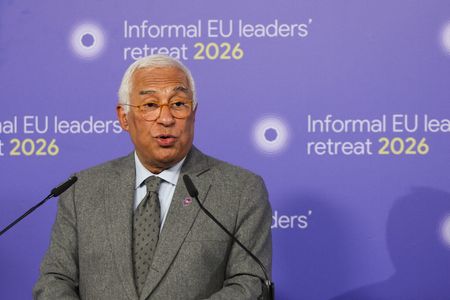
    BRUSSELS – The head of the European Council expressed strong support Monday for Lebanon’s commitment to halt Hezbollah’s armed operations and hold accountable those who launched attacks against Israel.

    Antonio Costa, the European Council President, praised the Lebanese government’s stance following a conversation with Lebanon’s President Joseph Aoun. Costa emphasized the critical need for renewed security cooperation between Israel and Lebanon.

    “It is now important for Israel and Lebanon to resume security coordination, so the Lebanese Armed Forces can disarm Hezbollah and ensure the security of all Lebanese people,” Costa wrote on the social media platform X.

    During separate diplomatic communications, Costa reached out to Cyprus President Nikos Christodoulides to offer European Union solidarity after an Iranian-made Shahed drone struck a British military installation on the Mediterranean island. Intelligence suggests the drone attack was likely carried out by Hezbollah, which receives backing from Iran.

    Costa also thanked Greek Prime Minister Kyriakos Mitsotakis, expressing “appreciation” for Greece’s military assistance provided to Cyprus in response to the incident.

  • Federal Agency Gives Drug Companies More Time to Join Medicare Cost-Cutting Program

    Federal Agency Gives Drug Companies More Time to Join Medicare Cost-Cutting Program

    Federal health officials announced Monday they are giving pharmaceutical companies extra time to enroll in a groundbreaking program designed to bring down prescription drug costs for Americans receiving Medicaid benefits.

    The Centers for Medicare & Medicaid Services has moved the application deadline from March 31 to April 30, 2026, for drug manufacturers interested in participating in the new payment structure.

    The initiative aims to reduce medication expenses within the Medicaid system, which serves low-income individuals and families, bringing those costs in line with what other developed countries pay for prescription drugs.

  • Infamous Sicilian Crime Boss Dies Behind Bars at 87

    Infamous Sicilian Crime Boss Dies Behind Bars at 87

    A powerful Sicilian organized crime leader who spent more than three decades behind bars has passed away at age 87, according to two sources familiar with the situation who spoke Monday.

    Benedetto “Nitto” Santapaola died while incarcerated at a maximum-security facility in Milan, where he was serving multiple life sentences for homicide and additional criminal charges following his 1993 arrest, one source confirmed.

    Italy’s justice ministry has not yet provided a statement regarding the death.

    Santapaola earned the fearsome nicknames “il cacciatore” (the hunter) and “il licantropo” (the werewolf) during his reign as the head of organized crime operations in Catania, a major city in eastern Sicily, spanning from the late 1970s through the early 1990s.

    The deceased crime boss was prosecuted and found guilty as one of the masterminds behind the 1992 assassinations of Giovanni Falcone and Paolo Borsellino, two of Italy’s most renowned prosecutors dedicated to fighting organized crime.

  • White House Doctor Explains Red Mark on President Trump’s Neck

    White House Doctor Explains Red Mark on President Trump’s Neck

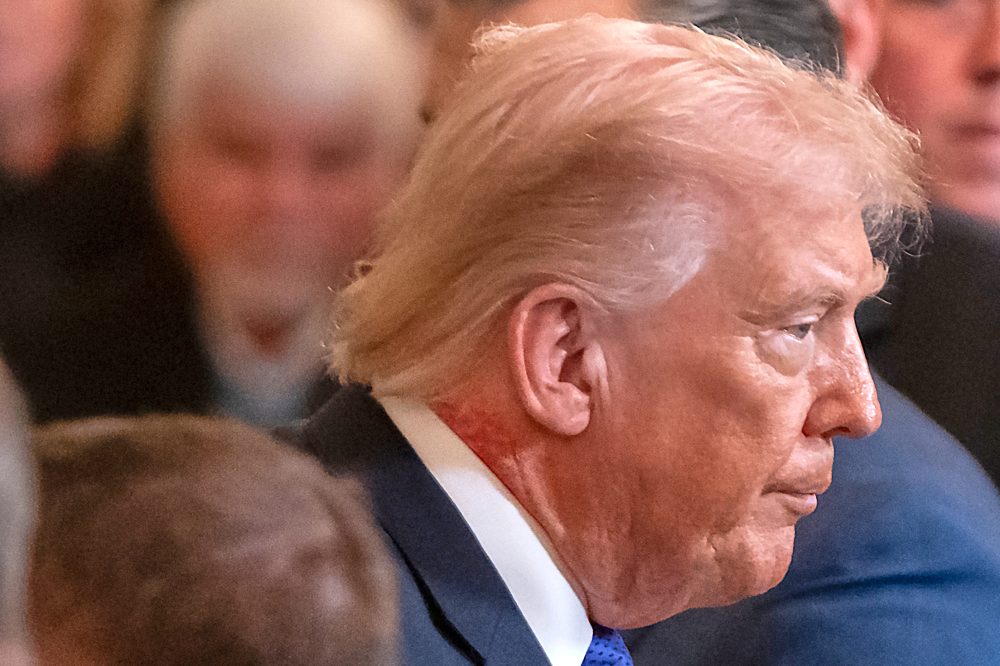
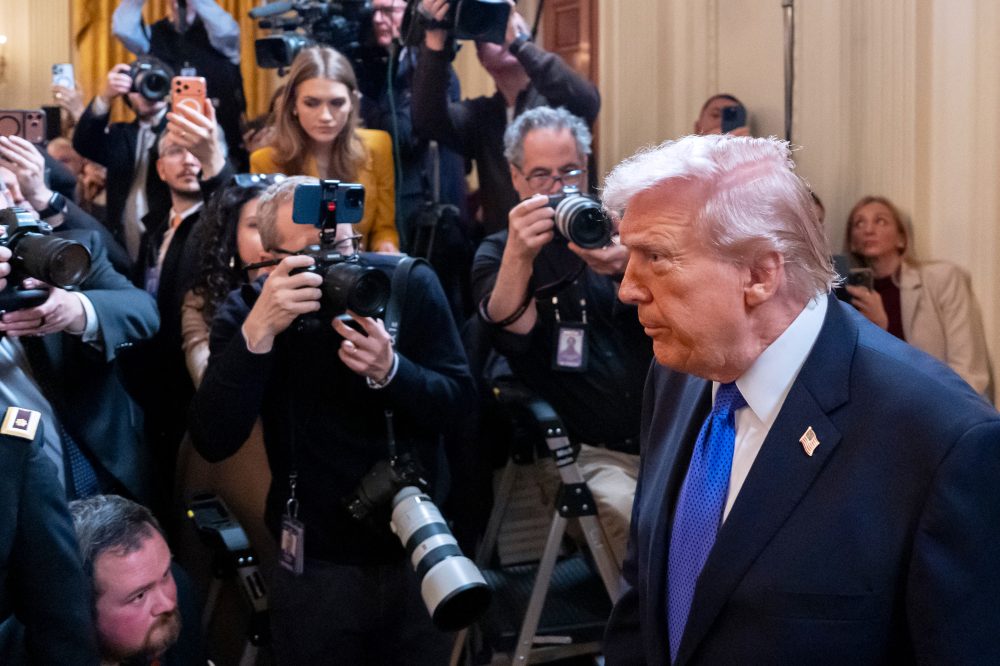
    WASHINGTON — White House officials explained Monday that a prominent red mark visible on President Trump’s neck comes from a preventative skin treatment he’s currently using, though they declined to provide additional specifics about the medical condition being addressed.

    The discolored area became a topic of widespread discussion after news photographers took detailed shots of the president’s neck area during Monday’s Medal of Honor presentation ceremony held in the White House East Room.

    White House physician Sean Barbabella issued a statement saying, “President Trump is using a very common cream on the right side of his neck, which is a preventative skin treatment, prescribed by the White House Doctor. The President is using this treatment for one week, and the redness is expected to last for a few weeks.”

    Officials have not answered additional inquiries about the specific medication being used, the start date of the treatment, or the particular condition being prevented. However, detailed photographs from previous events, including a White House gathering on February 23 — one day prior to the State of the Union speech — show similar discoloration in the same neck area.

    Medical records from Trump’s April 2025 health examination indicated he was using mometasone cream on an as-needed basis for a skin issue that was not further detailed.

    At 79 years old, Trump holds the distinction of being the oldest individual to assume the presidency when he took office this past January. Due to his age, medical professionals and the public maintain heightened attention on his health status.

    In December, Barbabella reported that Trump underwent MRI scans of his heart and abdominal area in October as standard preventative care for men in his age group, with all results coming back as “perfectly normal.” The October examination at Walter Reed National Military Medical Center concluded that Trump maintains “exceptional health” overall, the physician stated.

  • Gas Prices Hit $3 Per Gallon as Middle East Conflict Escalates

    Gas Prices Hit $3 Per Gallon as Middle East Conflict Escalates

    Drivers across Delaware and the region are feeling the pinch at gas stations as fuel prices climbed above $3 per gallon Monday, marking the first time costs have reached that level since November.

    The price jump comes as escalating Middle East tensions have disrupted global oil markets. Iran’s response to recent U.S. and Israeli military actions has affected oil production facilities in surrounding nations and shipping through the Strait of Hormuz, a critical international shipping corridor. These disruptions have pushed Brent crude oil prices up more than 5% to nearly $77 per barrel, driving up costs for gasoline and other petroleum products.

    The rising fuel costs present a significant political challenge for President Trump and Republican candidates as they approach November’s midterm elections, particularly as many Americans are already grappling with increased costs for everyday necessities. A recent Reuters/Ipsos survey found that nearly half of respondents indicated they would be less inclined to back Trump’s Iran policy if oil and gasoline prices continue climbing domestically.

    Mark Malek, chief investment officer at Siebert Financial, emphasized the psychological impact of fuel costs on consumers. “Gasoline prices are psychologically powerful,” Malek stated. “They are the inflation number that consumers see every single day.”

    Industry experts predict that each $10 increase in crude oil prices per barrel typically translates to a 25-cent rise in gasoline prices at retail locations. Malek warned that refinery complications could lead to even steeper fuel price increases.

    Data from OPIS confirmed that average retail gasoline prices surpassed $3 per gallon Monday. Tom Kloza, senior adviser to Gulf Oil, forecasts prices could climb as high as $3.25 per gallon this week due to the ongoing crisis.

    Even before the recent Middle East developments, gasoline prices had been climbing for four consecutive weeks, according to GasBuddy data. This increase was partly due to refineries transitioning to summer-grade gasoline, which environmental regulations require and which costs more to produce.

    GasBuddy analyst Patrick De Haan expects the conflict to worsen these price increases. “In the week ahead, gasoline prices are likely to face heightened upward pressure as seasonal trends continue and markets navigate this evolving geopolitical landscape,” De Haan explained.

  • Meat Giant JBS Breaks Ground on $150M Texas Plant Expansion

    Meat Giant JBS Breaks Ground on $150M Texas Plant Expansion

    One of the nation’s largest meat processing companies has launched a significant expansion initiative in the Southwest. JBS has commenced construction on a $150 million enhancement project at its beef processing facility located in Cactus, Texas.

    According to company representatives, the ambitious undertaking will feature the development of a cutting-edge fabrication floor along with an enlarged ground beef production area. The expansion represents a substantial investment in the company’s Southern operations and beef processing capabilities.

    The groundbreaking ceremony has already taken place for this major infrastructure project, which is expected to modernize and increase capacity at the existing Texas facility.

  • Ohio Launches Statewide Program to Help Farmers Plan for Future Generations

    Ohio Launches Statewide Program to Help Farmers Plan for Future Generations

    Agricultural families in Ohio now have access to a comprehensive statewide program designed to assist with generational farm transitions, according to an Ohio State University agricultural attorney.

    Robert Moore, who works with the university’s agricultural law program, explains that the Ohio Farm Transition Network offers educational resources and guidance to help farming operations prepare for the future. The program aims to equip agricultural producers with the knowledge needed to make well-informed choices about their farm’s future.

    “Farm families often have a difficult time finding resources,” Moore stated. “This program will help them find” the assistance they need for successful transitions.

    The network addresses a critical need in Ohio’s agricultural community, where many farming families struggle to locate appropriate guidance for succession planning. The initiative provides structured support to ensure farming operations can continue successfully from one generation to the next.

  • Bow Hunters Leading Fight Against Invasive Snakehead Fish in Chesapeake Bay

    Bow Hunters Leading Fight Against Invasive Snakehead Fish in Chesapeake Bay

    Bow hunters are proving to be the most effective weapon in the battle against invasive northern snakehead fish in Chesapeake Bay waters, according to new research from Maryland’s Department of Natural Resources.

    The recently published study in Integrated and Comparative Biology shows that bowfishing and gigging with pronged spears have become the dominant methods for catching these unwanted fish, far outpacing traditional rod-and-reel fishing, commercial operations, and state management efforts.

    What makes this finding particularly significant is that bow hunters are successfully targeting the larger female snakeheads that carry more eggs, which is crucial for controlling population growth of these Asian natives that were illegally released into Maryland waters in the early 2000s.

    “Bowfishing is an important component of the fishery, annually removing approximately 20% of the population in the upper Chesapeake Bay,” explained Dr. Joseph Love, the study’s lead author and DNR biologist. “We are always looking for creative, responsible ways to get us closer to our needed targets for managing these populations.”

    The invasive species presents a significant challenge for fisheries managers because these fish are naturally equipped with traits that help them thrive and multiply rapidly in environments where they face few natural threats. Northern snakeheads have spread so extensively throughout the Chesapeake Bay region that completely eliminating them is no longer considered feasible.

    Instead, wildlife officials are concentrating on reducing their numbers and finding ways to use them beneficially to minimize their damage to local ecosystems that support valuable recreational and commercial fish species.

    Bowfishing has gained popularity among anglers as an alternative to conventional fishing methods. Rather than using bait and waiting for a bite, bowfishers shoot arrows attached to retrieval lines at fish they can see in the water.

    Between 2022 and 2024, researchers collaborated with the U.S. Fish and Wildlife Service’s Maryland office to track snakeheads with tags and gather information from charter boat operators who specialize in bowfishing trips. The team collected data through multiple approaches: accompanying bowfishing charters in person, reviewing trip logs maintained by charter captains, and tracking reports when tagged fish were caught by both bow hunters and conventional anglers.

    The 2024 data alone reveals the scope of bowfishing activity: ten charter boat captains logged over 550 bowfishing excursions across 17 different rivers. These outings typically lasted around five hours with four participants each. While results varied dramatically – from catching nothing to landing more than 30 fish per trip – the average expedition removed approximately ten snakeheads. Activity peaked during spring and fall seasons, particularly during full and new moon phases.

    “We learned how many they harvested per night, but needed to learn more about what that meant for the fishery,” Love noted.

    The tagging portion of the research involved placing 657 tags on northern snakeheads in the upper Chesapeake Bay. Of the 149 tags that were reported back to researchers, 80 came from bowfishers compared to 65 from traditional anglers. After accounting for differences in reporting habits between the two groups, scientists determined that bowfishing accounts for a larger share of the total snakehead harvest than rod-and-reel fishing.

    State removal efforts through electrofishing surveys contributed only a small portion of annual catches, confirming what managers and fishers already suspected – bowfishers are harvesting substantial numbers of snakeheads.

    Because northern snakeheads have been shown to negatively affect native fish populations, the department urges anglers to keep every snakehead they catch. There are no bag limits or closed seasons for these invasive fish, and they’re considered excellent table fare. Their widespread distribution means anglers have numerous locations to try their luck at catching them.

  • Tickets Go On Sale for Delaware’s FIFA World Cup 2026 Watch Parties

    Tickets Go On Sale for Delaware’s FIFA World Cup 2026 Watch Parties

    As global attention turns to our region for the world’s biggest sporting spectacle, the Delaware Tourism Office (DTO) is encouraging soccer fans to experience every thrilling moment by watching this summer’s matches at four celebrations planned throughout the state.

    Tickets for the FIFA World Cup 2026™ soccer viewing festivities will go on sale Thursday, March 5th beginning at 9 a.m.

    The tourism office is capitalizing on the international spotlight shining on the area during the premier global soccer tournament, offering residents and visitors multiple locations to gather and enjoy the matches together.

  • Extra Long Staple Cotton Usage Reaches 138,000 Pounds in January

    Extra Long Staple Cotton Usage Reaches 138,000 Pounds in January

    Manufacturing facilities processed 138,000 pounds of extra long staple cotton through cotton system operations during the month of January 2026, according to recently released agricultural data.

    The consumption figure reflects activity in the specialized cotton processing sector, where extra long staple varieties are utilized for their superior fiber quality and length characteristics.

    Extra long staple cotton represents a premium grade of the crop, typically commanding higher prices due to its enhanced properties for textile manufacturing applications.

  • US Soybean Processing Reaches 75.2 Million Tons for Oil Production in 2025

    US Soybean Processing Reaches 75.2 Million Tons for Oil Production in 2025

    American agricultural processors handled 75.2 million tons of soybeans during 2025 to extract crude oil, according to the latest annual report from federal agriculture officials.

    The figure represents the total volume of soybeans that went through crushing operations nationwide to produce soybean oil, a key component in food production and industrial applications.

    The data comes from the annual fats and oils industry summary, which tracks processing volumes across the United States agricultural sector.

  • Soybean Processing Reaches 6.84 Million Tons in January

    Soybean Processing Reaches 6.84 Million Tons in January

    Agricultural processing facilities crushed 6.84 million tons of soybeans during January 2026 to extract crude oil, according to federal data released this week.

    The processing volume, equivalent to 228 million bushels, reflects ongoing activity in the nation’s soybean oil production sector during the opening month of the year.

    The figures come from the latest agricultural processing report tracking commodity crushing operations across the United States.

  • January Corn Usage Reaches 505 Million Bushels for Alcohol Production

    January Corn Usage Reaches 505 Million Bushels for Alcohol Production

    New agricultural statistics reveal that corn utilization for alcohol production and other industrial applications totaled 505 million bushels throughout January 2026, according to federal grain processing data.

    The monthly grain crushing report provides insight into how America’s corn harvest is being processed and consumed across various industries, with alcohol production representing a significant portion of demand.

    The data reflects processing activity during the 31-day period of January, following the completion of December 2025’s 31-day reporting cycle.

  • US Cotton Industry Processes 1.2 Million Pounds of Premium Fiber in 2025

    US Cotton Industry Processes 1.2 Million Pounds of Premium Fiber in 2025

    The United States cotton industry processed 1.2 million pounds of extra long staple cotton through its manufacturing system during 2025, according to newly released federal data.

    This premium grade cotton fiber represents a significant portion of the nation’s textile production capabilities. Extra long staple cotton is considered a higher quality material used in specialized manufacturing applications.

    The figures come from the latest annual industry report tracking cotton consumption patterns across American manufacturing facilities.

  • Oakland Athletics Lead MLB Teams in Automated Strike Zone Challenge Success

    Oakland Athletics Lead MLB Teams in Automated Strike Zone Challenge Success

    NEW YORK — Oakland emerged as the most successful team at utilizing baseball’s new automated umpire technology during spring training’s opening stretch, successfully overturning ball and strike decisions in 69.2% of their appeals over the initial 10-day period.

    The San Francisco Giants claimed second place with a 66.7% success rate, while Cincinnati, Miami, and San Diego each tied for third at 61.9%, according to Major League Baseball’s announcement on Monday.

    In contrast, the reigning World Series champion Los Angeles Dodgers struggled with the system, achieving only a 21.4% success rate on their appeals to the Automated Ball-Strike System. Baltimore managed just 25% successful challenges, while the New York Mets reached 35.3% and Texas hit 38.1%.

    Across all MLB teams, the overall success rate stood at 51.3%, with clubs averaging 2.3 challenges per contest.

    The New York Yankees led all teams in challenge frequency, averaging 3.8 appeals per game while winning 52.6% of them. Minnesota followed closely at 3.6 challenges per game with a 58.3% success rate, then Boston at 3.2 challenges (55.2% success), and Colorado and San Francisco both at 3.0 challenges per game.

    Baltimore used the fewest challenges, averaging only 1.2 per game. The Dodgers averaged 1.4 challenges while Detroit sat at 1.5 per game with a 46.7% success rate.

    Major League Baseball previously tested the ABS technology during last year’s spring training, when teams achieved a 52.2% success rate on ball and strike challenges, winning 617 out of 1,182 appeals. The league has been experimenting with the system in minor league play since 2019.

    Under the current rules, each team may challenge up to two calls per game. Teams keep their challenge opportunity when successful, mirroring the existing video replay system that started with home run calls in August 2008 and expanded significantly for the 2014 season.

    Teams that exhaust their challenges during regulation play would receive one additional challenge for each extra inning in tied games.

  • Iranian TV Networks Hit by Airstrikes, Satellite Feeds Hijacked

    Iranian TV Networks Hit by Airstrikes, Satellite Feeds Hijacked

    Fighter jets struck two facilities belonging to Iran’s state broadcasting network in Tehran on Sunday evening, resulting in casualties among staff members and temporarily knocking transmissions off the air.

    The attacks targeted complexes operated by the Islamic Republic of Iran Broadcasting (IRIB), with explosions visible across Tehran. Broadcasting resumed within minutes from backup studios, though programming remained limited and some radio services experienced significant interruptions.

    An IRIB presenter, reporting from an alternate studio in Tehran’s Jame Jam area, confirmed that the network had suffered attacks from US and Israeli forces before announcing the return to regular programming.

    The current broadcasting setup stems from damage sustained during a 12-day conflict in June, when missiles from Israeli aircraft completely destroyed IRIB’s primary facility known as the Glass Building in northern Tehran. Since that time, the News Network has operated from multiple locations, including backup studios and repurposed facilities.

    Financial constraints have hampered efforts to establish a permanent replacement site. According to sources within IRIB, the broadcaster’s Political Department had sought emergency funding for a new studio outside the main complex, but the request was denied and postponed to the following budget year. Economic difficulties have reduced commercial advertising income, forcing the organization to scatter operations across various buildings, some outside protected areas.

    In the hours following the physical attacks, hackers compromised Iranian television satellite transmissions, inserting content featuring Israeli Prime Minister Benjamin Netanyahu and portions of a speech by President Donald Trump directed at Iranian citizens, along with footage related to the recent strikes.

    Around midnight Tehran time, Tasnim News Agency, which has ties to the Islamic Revolutionary Guard Corps, confirmed that multiple state radio employees were killed or wounded during Sunday’s assault on Iran’s primary radio facility in southern Tehran near the city center.

    The Israeli airstrikes occurred in multiple phases and also damaged Police Station 113 near Tehran’s Grand Bazaar and several military and security installations in the vicinity. Local sources reported uncertainty about whether the main radio building at Arg Square was deliberately targeted or suffered collateral damage from nearby strikes.

    Additionally, Noor News, a Telegram channel with connections to Iranian security agencies, reported that Channel 2 of state television, situated outside the primary IRIB compound, also came under attack.

    Prior to the commencement of US and Israeli operations, sources indicated that IRIB had activated emergency protocols starting at midnight Saturday, implementing wartime staffing schedules and preparing for potential cyber attacks and threats to live broadcasting capabilities. Another source revealed that news regarding the death of Supreme Leader Ali Khamenei had reached IRIB executives and the Political Department by Saturday afternoon, with broadcast managers developing plans to announce the development in the early morning hours.

  • Two Palestinian Brothers Killed in West Bank Settler Attack

    Two Palestinian Brothers Killed in West Bank Settler Attack

    Two Palestinian brothers died Monday after Israeli settlers opened fire in their village in the occupied West Bank, according to the Palestinian Health Ministry, as violent incidents by settlers continue to increase throughout the territory during ongoing regional conflicts.

    The Palestinian Health Ministry named the victims as Mohammad and Faheem Mo’mar in an official statement. Mohammad, age 52, suffered a fatal gunshot wound to the head while Faheem, 48, was struck in the pelvis. Both men died in Qaryout, their home village located in the northern West Bank.

    This deadly incident raises the total number of Palestinians killed in settler attacks this year to three, following the February 19 shooting death of Nasrallah Abu Siyam, a 19-year-old Palestinian American.

    Video footage distributed by Palestinian news outlets and Breaking the Silence, an organization of former Israeli military personnel, captured approximately 10 settlers positioned near a Palestinian residence in Qaryout. The footage shows one settler aiming a rifle at the home’s upper level. Additional video shows Palestinians hurriedly carrying an injured, bleeding man toward medical assistance.

    The Palestinian Red Crescent reported that at least three additional people sustained injuries during the shooting.

    Israeli military officials have not yet provided a response to requests for comment.

    Medical personnel transported the wounded to a hospital in Nablus, a city in the central West Bank, where Associated Press reporters observed family members mourning over one brother’s body. Village residents assisted medical staff in moving bloodied victims onto surgical tables and covering both the deceased and injured with blankets.

    Adham Johary, a village resident, explained to the AP that settlers had been spotted operating a bulldozer at the town’s perimeter before fleeing when young Palestinian men approached.

    “Less than 10 minutes later, more than 10 settlers attacked nearby houses. The young residents attempted to defend the area, and random gunfire was directed at the young men and the entire area,” Johary stated.

    Human rights organizations and Palestinians maintain that Israeli officials consistently fail to pursue legal action against settlers or ensure accountability for violent acts. The United Nations humanitarian office documented that 2023 saw the highest daily average of settler attacks resulting in deaths, injuries or property destruction — five incidents per day — since tracking began in 2006.

    COGAT, the military authority overseeing the territory, announced closures of West Bank and Gaza crossings citing security concerns. West Bank Palestinians report that travel limitations have severely restricted access to essential services, preventing some villages from reaching urban centers with medical facilities and commercial establishments.

  • Middle East Travel Chaos: Airlines Restart Limited Service After Iran Strikes

    Airlines across the Middle East have started to cautiously restore flight operations after suspending service due to military strikes against Iran by Israeli and U.S. forces over the weekend.

    While some carriers resumed limited schedules on Monday, the travel disruption has left hundreds of thousands of passengers stranded across the region. Major aviation hubs in Dubai, Abu Dhabi, Doha and other Gulf cities had grounded commercial flights as a safety precaution following the escalating military action.

    The gradual return of air service comes as airlines assess security conditions and work to clear massive passenger backlogs. Many international carriers are still evaluating when it will be safe to fully restore normal flight schedules to and from Middle Eastern destinations.

    Travel industry officials expect it could take days or weeks to accommodate all affected passengers, depending on how the regional security situation develops.

  • Traffic Flows Again on North Chapel Street in Newark

    Traffic Flows Again on North Chapel Street in Newark

    Vehicle traffic is flowing once again on North Chapel Street in Newark following its recent reopening.

    The Newark Police Department confirmed Monday that the roadway is now accessible to drivers after being temporarily closed.

    No additional details were provided regarding the reason for the previous closure or the duration of the road restriction.

  • Cuban Leader Calls for Immediate Economic Overhaul as Oil Crisis Deepens

    Cuban Leader Calls for Immediate Economic Overhaul as Oil Crisis Deepens

    HAVANA — During a Monday session with his Council of Ministers, Cuban President Miguel Díaz-Canel announced that his administration must take immediate action to overhaul the nation’s economic and social framework as oil supplies continue to diminish across the Caribbean island.

    Díaz-Canel’s announcement comes as Cuba grapples with mounting pressure from a recent oil embargo and suspended petroleum deliveries from Venezuela following U.S. actions against the South American nation in January.

    “We must focus, immediately, on implementing the urgent, most necessary transformations that must be made to the economic and social model,” Díaz-Canel stated, according to reports from state-controlled media outlets.

    According to government media sources, the president outlined that Cuba’s economic and social restructuring efforts would involve expanding business and local government independence, along with downsizing state bureaucracy and governmental institutions.

    Díaz-Canel urged local governments to take charge of various initiatives, including attracting foreign investment, creating partnerships between government and private enterprises, and developing investment opportunities with Cuban expatriates, state media reported.

    Prime Minister Manuel Marrero Cruz emphasized that the nation’s immediate priorities center on boosting food production and overhauling the electrical infrastructure as the country continues to experience widespread blackouts and fuel shortages.

    Energy and Mines Minister Vicente de la O Levy told state media that local governments are moving too slowly in creating transition plans, despite efforts to distribute solar panels to medical professionals, educators, and students. He stressed that municipalities must develop self-reliant sustainability plans using local resources.

    In recent weeks, Cuba has enacted strict fuel conservation policies, including suspending certain public transit services and shifting educational instruction to online platforms.

    While the U.S. Treasury Department provided some relief last week by relaxing certain restrictions on Venezuelan oil sales to Cuba, experts predict the island’s energy and economic challenges will continue.

    Beyond energy concerns, Cuba faces mounting difficulties from intensified U.S. sanctions, which government data shows have eliminated approximately $8 billion in revenue between March 2024 and February 2025 — representing a nearly 50% increase in losses compared to the previous year.

  • First Lady to Chair Historic UN Security Council Meeting on Children Amid Iran Conflict

    First Lady to Chair Historic UN Security Council Meeting on Children Amid Iran Conflict

    NEW YORK (TV Delmarva) — First Lady Melania Trump is set to make history Monday when she chairs a United Nations Security Council session focused on children caught in war zones, marking the first time a world leader’s spouse has led the UN’s most influential body.

    The historic session will address “Children, Technology, and Education in Conflict,” with Trump’s office stating the discussion will “emphasize education’s role in advancing tolerance and world peace.” The meeting was planned before weekend hostilities erupted between the US, Israel, and Iran.

    As the United States holds the Security Council’s rotating monthly presidency for March, Trump was granted the opportunity to lead the 15-member body that typically sees presidents, prime ministers, and foreign ministers at the helm.

    The timing proves particularly significant as the administration faces scrutiny over military actions affecting civilian populations. Iranian state media reported that airstrikes on Saturday struck a girls’ school in southern Iran, resulting in at least 165 deaths and numerous injuries. Israeli military officials stated they had no knowledge of operations in that region, while US military representatives said they were investigating the reports.

    All eyes will be on the First Lady’s remarks, particularly whether she addresses how current military operations impact children in conflict zones.

    Saturday’s emergency Security Council session grew heated as Secretary-General António Guterres criticized both US and Israeli airstrikes as violations of international law and the UN Charter. He equally condemned Iran’s retaliatory strikes for breaching Middle Eastern nations’ sovereignty and territorial boundaries.

    Trump has previously engaged in diplomatic efforts regarding children in conflict situations. Last summer, she wrote directly to Russian President Vladimir Putin before his meeting with President Trump, which her office credited with helping reunite displaced children from the Russia-Ukraine conflict with their families.

    Russia’s 2022 invasion of Ukraine resulted in Ukrainian children being removed from their homeland to be raised as Russians, prompting Ukrainian President Volodymyr Zelenskyy to seek international assistance in family reunification efforts.

    The appearance comes amid strained US-UN relations, as President Trump has withdrawn America from key UN organizations including the World Health Organization and UNESCO, while reducing funding to numerous others. The US has also fallen behind on mandatory contributions, owing the United Nations billions of dollars.

    This financial shortfall has created a crisis at the UN, with Guterres warning in late January of “imminent financial collapse” unless payment structures are reformed or all 193 member countries fulfill their financial obligations.

    When asked whether the First Lady’s participation signals improved US-UN cooperation, UN spokesman Stephane Dujarric described it as demonstrating “the importance that the United States feels towards the Security Council and the subject.”

  • NYC Pays $117M in Police Misconduct Settlements, Nearly $800M Since 2019

    NYC Pays $117M in Police Misconduct Settlements, Nearly $800M Since 2019

    NEW YORK CITY — The nation’s largest city spent over $117 million during the past year resolving lawsuits related to police officer misconduct, with cases spanning from wrongful arrests of demonstrators in 2020 to flawed investigative work that resulted in innocent people being imprisoned in the 1980s, according to a fresh examination of municipal records released this week. The financial burden has reached almost $800 million across seven years.

    Two men who served over two decades behind bars after being falsely arrested and found guilty of a deadly 1986 Manhattan robbery received the year’s biggest payouts, totaling $24.1 million combined. A separate $5.75 million settlement compensated a man who claims officers permanently damaged his left eye with a stun gun.

    The Legal Aid Society, a nonprofit organization providing public defense services, published the examination on Monday while the city grapples with a $5.4 billion budget deficit. Mayor Zohran Mamdani has suggested reducing the NYPD’s $6.4 billion budget by $22 million alongside other spending cuts, even as officials highlight declining crime statistics. These misconduct settlements come from a different portion of the municipal budget, unlike other jurisdictions where such costs are deducted directly from police department operating funds.

    “This examination focuses on bringing transparency to the true cost of the NYPD,” explained Jennvine Wong, supervising attorney for the organization’s Cop Accountability Project. “Based on our findings, it appears that substantial accountability measures have been missing within the police department. This represents a persistent issue requiring immediate attention.”

    The city resolved 1,044 police misconduct cases in 2025, marking the highest number since 2019’s 1,276 settlements. This represented the fourth consecutive year with payouts surpassing $100 million. The previous year’s figure nearly doubled the $62.1 million paid in 2020 for 929 cases, while 2024 saw $206.4 million distributed across 980 lawsuits.

    These figures represent only a portion of the city’s complete police misconduct expenses. The Legal Aid Society’s examination covers solely lawsuit settlements, excluding claims resolved by the city comptroller before formal legal proceedings began.

    Among the previous year’s settlements, approximately $42 million addressed wrongful convictions while $28 million — roughly one-quarter of total payouts — involved incidents occurring over twenty years ago. Similar cases have comprised a significant portion of the $796 million the city has distributed for police misconduct lawsuit resolutions since 2019, according to NYPD officials.

    “Although these cases require important attention, they provide no insight into current policing practices,” the department stated.

    Under Police Commissioner Jessica Tisch’s leadership, the NYPD “has implemented substantial measures to enhance accountability, compliance, and modify outdated policies that could increase liability,” the statement continued. Officials noted the department collaborates closely with city district attorneys’ offices, supplying materials to support their examination of cases involving false arrest and conviction allegations.

    Eric Smokes and David Warren, the men falsely convicted in the 1986 fatal robbery, received $13 million and $11.1 million respectively. Their 2024 federal lawsuit alleged that a dishonest detective relied on testimony from an emotionally impaired and drug-using 17-year-old attempting to escape his own robbery charges. Three of four witnesses who identified Smokes and Warren as perpetrators only did so after facing threats of criminal prosecution, according to court documents.

    Steven Lopez received a $3.9 million settlement as the sixth individual arrested alongside the former Central Park Five, now called the Exonerated Five, after their convictions in a 1989 female jogger’s rape were reversed. While the Five proceeded to trial, Lopez accepted a plea deal for a reduced charge involving the mugging of a male jogger that same evening, succumbing to intense police and public pressure.

    Additional settlements included $1.7 million for four demonstrators who claimed officers struck them with batons or forced them to the ground during a June 2020 Brooklyn protest following George Floyd’s murder by Minneapolis police.

    The city distributed $5.2 million to nine individuals who alleged they were falsely accused in cases spanning 2014 to 2016 by two officers subsequently convicted of fabricating testimony and documentation.

    Last week, a court-appointed oversight official criticized the NYPD for inadequate supervision and insufficient reporting of officers’ stop-and-frisk practices. A federal judge determined in 2013 that the NYPD’s widespread use of this search method for weapons and narcotics violated Black and Hispanic New Yorkers’ civil rights.

    While the department has dramatically reduced stop-and-frisk encounters since then, it maintains “unacceptably low compliance rates” with constitutional safeguards, according to monitor Mylan L. Denerstein.

    The NYPD’s enormous settlement expenses indicate additional efforts are needed to reduce misconduct, with “insufficient accountability continuing to foster a culture of impunity,” Wong stated.

    “These judgments and settlement expenses are draining city resources while imposing not only financial burdens on police misconduct victims, but also inflicting genuine psychological harm that stays with them,” she concluded.

  • Joint US-Israel Military Campaign Against Iran Reaches Critical Turning Point

    Joint US-Israel Military Campaign Against Iran Reaches Critical Turning Point

    Military analysts are closely monitoring a joint American-Israeli aerial campaign against Iran that has reached a pivotal moment, with experts identifying two potential outcomes that could reshape Middle East dynamics for years to come.

    According to Brigadier General (retired) Eran Ortal, who spoke with The Media Line, “There is no precedent for regime change through an air campaign.” However, the current military operations are testing whether sustained pressure and leadership elimination can trigger Iran’s internal collapse.

    The coordinated strikes, which began February 28 under US Operation Epic Fury and Israeli Operation Roaring Lion, have evolved beyond typical military degradation campaigns. Experts say the key question is whether communication breakdowns, leadership losses, and mounting pressure can fracture Tehran’s control enough to spark revolution from within.

    Professor Danny Orbach, a military historian at Hebrew University of Jerusalem, explained the strategy to The Media Line: “The goal is not for the regime to fall, but to create conditions that will enable the Iranian people to topple it. If the Iranians don’t take advantage of the opportunity, the war might end with less ambitious goals achieved—the destruction of the Iranian navy, its missile arsenal, and the remnants of its nuclear program.”

    CENTCOM characterized the initial assault as one of the most intensive American firepower deployments in the region in decades, utilizing cruise missiles and advanced fighter jets launched from air, land, and sea platforms.

    The conflict entered a new phase after social media footage showed Iranian citizens celebrating in streets following confirmation that Supreme Leader Ayatollah Ali Khamenei was killed in an airstrike. This development has pushed the confrontation beyond conventional capability degradation into uncertain political territory.

    Both Israeli Prime Minister Benjamin Netanyahu and US President Donald Trump have urged Iranian citizens to capitalize on this moment and overthrow their government, though success remains far from guaranteed.

    “The duration of the operation depends on its goal,” Ortal noted. “This goal could change as the success of the operation becomes apparent.”

    Israeli sources report that initial strike phases involved hundreds of targets and over 1,200 munitions, suggesting a potentially extended campaign ahead.

    Ortal outlined two possible scenarios emerging from current operations. The first involves leadership elimination and communication failures combining with public pressure to create governmental rupture—though he emphasized that airpower alone has never historically achieved regime change.

    “Seeing Iranians celebrating the attack in the streets increases the optimism that this scenario could materialize,” Ortal said. “This could create a domino effect that cannot be foreseen in which the disappearance of senior leadership, major communications disruption, and extreme public pressure destabilize the leadership, who then abandons their positions.”

    Should internal collapse fail to materialize, the alternative outcome would leave Iran’s government politically intact but strategically crippled. “This will leave the regime without military capabilities, weak and neutralized and fully subordinate to American whims and future coercion,” Ortal explained.

    Orbach emphasized the strategic importance of targeting Iran’s naval capabilities, particularly regarding the Strait of Hormuz. “The navy is more important than what most people think,” he said. “The navy is the ability to project power, especially through the threat of blocking the Hormuz Strait. Its destruction will humiliate them and turn them into a country that cannot project power.”

    The Hormuz Strait carries approximately one-fifth of global oil trade, making any disruption capable of affecting worldwide energy markets, shipping schedules, and commercial insurance costs. Eliminating Tehran’s maritime leverage would significantly reduce its ability to threaten neighbors or the global economy during future crises.

    The strikes target the foundation of Iran’s decades-long regional strategy: proxy networks combined with missile and drone capabilities designed to deter direct attacks and impose escalation costs. Dismantling these tools fundamentally alters Iran’s negotiating position and battlefield options.

    “Iran’s ability to influence the Middle East is tied to two abilities—its proxies and its missiles,” Ortal said. “Iran no longer has air defense systems, and its missile launchers are gradually depleting. Iran has no ability to face this, leaving the regime subdued to American pressure it will not be able to withstand.”

    Iran’s nuclear program provides crucial context for current hostilities. The 2015 Joint Comprehensive Plan of Action temporarily limited Tehran’s enrichment activities in exchange for sanctions relief, but following US withdrawal in 2018, Iran expanded enrichment and reduced international oversight, escalating tensions that led to today’s confrontation.

    Orbach argued that achieving complete regime collapse would require expanding targets beyond military assets to include internal enforcement mechanisms used for protest suppression and population control.

    “The way to increase the odds of toppling the regime is to eliminate its leader and his heirs, in several rounds, rendering them weak and scared,” Orbach said, estimating slim survival chances for the current government. “In addition, the oppression mechanisms of the regime also need to be hit. The question is how long Israel and the US will persist in this effort.”

    Iran’s domestic conditions may prove as significant as strike intensity. Years of sanctions, corruption, and heavy security expenditures have damaged the economy, while inflation, infrastructure deterioration, power shortages, and water crises have intensified public dissatisfaction—factors that could amplify political consequences if leadership and control systems continue deteriorating.

    “Iran’s economy is in a catastrophic state and deteriorating further,” Orbach observed. “This will only worsen after the war, including raging inflation and the water crisis. Add to this a succession struggle and popular unrest, and it is hard to see the regime surviving in the long run.”

    Even if political objectives become more modest over time, Ortal believes the military impact alone could transform regional dynamics for years. “Even if the goals of the operation will be downgraded, still Iran will be rendered extremely weak and subdued for a substantial number of years,” he said.

    Analysts identify four key indicators that will reveal the campaign’s direction: whether strikes expand beyond military targets to internal enforcement apparatus; whether Iran’s naval influence around Hormuz Strait gets neutralized; whether domestic unrest grows from scattered incidents into sustained pressure; and whether Washington and Jerusalem begin describing success in narrower terms focused on long-term military degradation.

    The central uncertainty remains what Ortal highlighted: while airpower can eliminate leaders, disrupt communications, and destroy capabilities, it cannot vote, demonstrate, or govern. Coming days will determine whether these strikes merely dismantle Iran’s security infrastructure—or create opportunities for Iranians themselves to dismantle the system controlling it, potentially defying historical patterns that Ortal says have defined previous air campaigns.

  • Delaware Sets March 5 Launch for FIFA World Cup Watch Party Tickets

    Delaware Sets March 5 Launch for FIFA World Cup Watch Party Tickets

    Soccer enthusiasts across the First State will have their chance to secure spots at Delaware’s official FIFA World Cup 2026 viewing events when ticket sales open Thursday, March 5 at 9 a.m.

    The Delaware Tourism Office has planned one major watch party in each of the state’s three counties this June, creating opportunities for thousands of residents to come together and enjoy the international tournament. These gatherings represent Delaware’s exclusive official FIFA World Cup 2026 watch party series.

    Officials promise each location will be converted into an exciting fan celebration featuring massive viewing screens, live entertainment before matches begin, food trucks from local vendors, hands-on soccer games, musical performances, and activities designed for attendees of every age group.

    The events are being organized as Delaware finds itself in the international spotlight during what organizers call the planet’s most significant sporting competition.

  • Acting CDC Chief Emphasizes MMR Vaccine as Best Measles Protection

    Acting CDC Chief Emphasizes MMR Vaccine as Best Measles Protection

    The interim head of the Centers for Disease Control and Prevention emphasized Monday that vaccination remains the strongest defense against measles as the nation grapples with rising case numbers.

    Acting Director Jay Bhattacharya stressed the importance of the MMR vaccination in a video message shared on social media platform X. “There is no cure for measles, which is why prevention is so critical,” Bhattacharya stated. “The MMR vaccine remains the most reliable and effective way to prevent it.”

    The health official announced that the CDC is deploying additional resources to assist prevention and response initiatives nationwide, while maintaining regular communication with state and local health departments.

    “We stand ready to provide CDC technical staff, laboratory support, vaccines and therapeutics upon request,” he explained in the video message.

    According to the most recent CDC statistics, health officials documented 1,136 confirmed measles infections across the United States through February 26, 2026.

    Bhattacharya assumed the interim CDC leadership role in February while simultaneously serving as director of the National Institutes of Health.

  • Airlines Face Massive Uninsured Losses as Middle East Conflict Disrupts Travel

    Airlines Face Massive Uninsured Losses as Middle East Conflict Disrupts Travel

    The ongoing U.S.-Israeli military action against Iran entered its third day Monday, creating widespread disruption across the aviation industry with carriers facing significant financial losses that insurance policies won’t cover, according to industry analysts and insurance experts.

    Aviation stocks plummeted from Asian markets to Wall Street, erasing billions in market capitalization as the escalating conflict forced the cancellation of thousands of flights globally, closed major Middle Eastern aviation centers, and drove oil prices sharply higher.

    Insurance industry professionals and market analysts provided insight into how the crisis affects coverage:

    Jefferies analysts noted that commercial property insurance policies “almost always” contain exclusions for war-related damages, and unlike marine and aviation coverage, separate war insurance isn’t readily obtainable for most businesses.

    The investment firm warned that significant commercial property damage, including potential harm to Dubai’s famous Palm Jumeirah development, would likely fall outside standard insurance protection.

    According to Jefferies, aviation war insurance policies contain provisions allowing insurers to terminate coverage, while standard non-war aviation policies typically contain war exclusions either through direct language or force majeure clauses.

    However, one industry insider informed Reuters that aviation insurers routinely handle such situations and noted that no insurance companies have issued cancellation notices thus far.

    A second industry source explained that while airlines maintain aviation war coverage protecting their aircraft fleets from physical damage and liability claims, operational disruption losses typically fall under business interruption policies that exclude war-related events, forcing airlines to absorb these costs directly.

    Credit rating agency Morningstar DBRS stated the conflict presents major underwriting and investment obstacles across marine, aviation, property, travel, and supply chain insurance sectors.

    “From an aviation-hull perspective, insurers must consider the risk that missiles or air-defence interceptors could result in large hull and liability claims,” the agency explained in its analysis.

    Morningstar DBRS further warned that if the Gulf conflict expands, it could drive up pricing while reducing available capacity in terrorism and political violence insurance markets.

    The cost of insuring cargo shipments through Middle Eastern waters has jumped as much as five times normal rates over the past two days, with most underwriters refusing to provide coverage for vessels transiting the Strait of Hormuz, Reuters reported Monday citing industry sources.

  • UAE Oil Terminal Hit by Drone Strike, Operations Continue Despite Fire

    UAE Oil Terminal Hit by Drone Strike, Operations Continue Despite Fire

    Officials in the United Arab Emirates reported Monday that a drone strike ignited a blaze at the Musaffah fuel storage facility, though the attack did not disrupt normal operations at the critical energy hub.

    The Abu Dhabi media office confirmed authorities quickly managed the emergency situation. “Abu Dhabi authorities have responded today to a fire resulting from the targeting of a Musaffah fuel tank terminal by a drone. The situation was promptly contained,” the office said.

    Officials confirmed no one was hurt in the incident.

    The targeted facility serves as a key distribution point operated by Abu Dhabi National Oil Company, where fuel products are loaded onto trucks for delivery. The site connects to an extensive pipeline system spanning 1,600 kilometers that supplies petroleum products throughout the Abu Dhabi emirate.

    This marks another attack on the Musaffah facility, which previously came under fire from Yemen’s Iranian-backed Houthi rebels in 2022 during their ongoing conflict with the Saudi-led military coalition.

    The strike occurred as regional tensions intensify following a series of attacks across the area. Earlier Monday, Saudi Arabia’s national oil company Aramco was forced to close its Ras Tanura refinery after a drone strike, marking what appears to be an escalation on the third consecutive day of regional attacks launched by Tehran following a U.S.-Israeli operation against Iran.

    Meanwhile, QatarEnergy suspended production of liquefied natural gas and related products after attacks targeted facilities at Ras Laffan, according to an informed source speaking to Reuters.

  • Washington Commanders Plan to Cut Cornerback Marshon Lattimore

    Washington Commanders Plan to Cut Cornerback Marshon Lattimore

    Washington is preparing to cut ties with cornerback Marshon Lattimore following a brief stint that lasted just one and a half seasons, CBS Sports has learned.

    The 29-year-old defender, who earned Pro Bowl honors four times and claimed Defensive Rookie of the Year recognition in 2017, is in the last year of his massive five-year contract worth $97.6 million that he inked with New Orleans back in 2021. Lattimore will celebrate his 30th birthday this May.

    His scheduled salary for 2026 was $18.5 million, but since none of that money was guaranteed, Washington faces no financial penalty for cutting him loose.

    Originally selected 11th overall by New Orleans in the 2017 NFL Draft, Lattimore joined Washington via trade last November. His time with the Commanders included just 11 total appearances – two games following the 2024 trade and nine contests this past season before suffering an ACL tear.

    Legal troubles surfaced in January when Ohio authorities arrested him on weapons-related charges, including carrying a concealed weapon and improper firearm handling in a vehicle.

    Throughout his eight-year NFL career, Lattimore has been a consistent starter, appearing in all 95 regular-season contests he’s been available for. His career statistics include 16 picks with two returned for scores, 98 pass breakups, five forced fumbles, six fumble recoveries, and 436 total tackles.

  • Four Salisbury University Athletes Earn Weekly Conference Recognition

    Four Salisbury University Athletes Earn Weekly Conference Recognition

    SALISBURY, Md. – Salisbury University celebrated a remarkable week of athletic achievement as four Sea Gulls student-athletes earned recognition from the Coast-to-Coast Athletic Conference (C2C) for their outstanding performances between February 23 and March 1, 2026.

    The university’s tennis programs dominated the weekly honors, with Gurv Suri claiming the men’s award and Gibelle Beaujon taking home the women’s recognition, marking a clean sweep for the Sea Gulls tennis teams in their respective C2C categories.

    Meanwhile, the women’s lacrosse squad contributed two honorees to the weekly awards list. Julianna Ott earned recognition for her offensive contributions, while Abby Fleishell was celebrated for her defensive prowess during the competition period.

    The Jersey Mike’s A Sub Above Players of the Week program highlights exceptional student-athlete performances across the Coast-to-Coast Athletic Conference, recognizing excellence both on and off the field of play.

  • Construction Closes Left Lane on Federal School Lane Through This Afternoon

    Construction Closes Left Lane on Federal School Lane Through This Afternoon

    Drivers should expect delays on Federal School Lane today as construction crews have closed the left lane between South DuPont Highway (Route 13) and River Road (Route 9).

    According to DelDOT, the lane restriction will remain in effect until 5 PM this afternoon while construction work is underway in the area.

    Motorists are advised to allow extra travel time and use caution when driving through the work zone. Traffic will be reduced to one lane in each direction during the construction period.

  • Extended Forecast Shows Warmer Weather Ahead for Delaware and East Coast

    Extended Forecast Shows Warmer Weather Ahead for Delaware and East Coast

    Delaware residents can expect warmer than usual weather in the coming week and a half, according to extended weather forecasts covering the next 6 to 10 days. The projection indicates that most areas across the nation will see temperatures at or above seasonal averages, with rainfall amounts also expected to meet or exceed normal levels.

    The East Coast, including Delaware and surrounding states, shows the highest probability for experiencing temperatures warmer than typical for this time of year. Conversely, areas expecting below-average moisture include California and portions of the western Great Basin region.

  • Cold Weather Pattern Shifts This Week Across Mid-Atlantic Region

    Cold Weather Pattern Shifts This Week Across Mid-Atlantic Region

    Cold temperatures will begin moving northward this week but will remain present near the Canadian border stretching from North Dakota through New England. Early week weather patterns may bring icy conditions and freezing precipitation to areas as far south as the Ohio Valley and Mid-Atlantic region before milder temperatures take hold.

    The weather pattern is expected to shift during the week’s second half, with warmer air masses moving into the region.

  • Former Bulgarian President Forms New Coalition Ahead of Election

    Former Bulgarian President Forms New Coalition Ahead of Election

    SOFIA – Former Bulgarian President Rumen Radev announced Monday that he has formed a new three-party coalition named Progressive Bulgaria to compete in the nation’s parliamentary elections scheduled for April 19.

    The move marks the country’s eighth electoral contest in just seven years, highlighting Bulgaria’s ongoing political turmoil. Radev, who resigned from his largely ceremonial presidential position in January, remains widely favored among Bulgarian voters, with polling data indicating his new alliance could secure over 30 percent of voter support.

    During his presidency, Radev exercised significant unofficial political influence throughout a turbulent period that culminated in the most recent government’s downfall on December 11. He stepped down from office nearly twelve months ahead of schedule.

    The administration collapsed after sustained public demonstrations against increased taxes and what protesters viewed as inadequate efforts to combat corruption within the government.

    Taking to Facebook, Radev declared: “‘Progressive Bulgaria’ is the answer to the expectations of Bulgarians for dismantling the oligarchic corruption model. In order to succeed, we will fight for a decisive victory and it depends on the voice of all Bulgarians.”

    The new coalition unites three left-oriented political groups: Our People Movement, Social Democratic Party, and the Socialdemocrats movement.

    Since becoming a eurozone member on January 1, Bulgaria has struggled with persistent governmental instability. Political parties have been unable to establish lasting governing partnerships since 2021 due to a divided parliament.

  • British PM: Iran Becomes More Dangerous After Leader’s Death

    British PM: Iran Becomes More Dangerous After Leader’s Death

    LONDON, March 2 – British Prime Minister Keir Starmer warned lawmakers Monday that Iran has intensified its military attacks on regional targets following the death of Supreme Leader Ali Khamenei, describing the nation’s current tactics as increasingly dangerous.

    Speaking before Parliament, Starmer cautioned that Khamenei’s death has not deterred Iran from conducting strikes against military and economic infrastructure across the region.

    “The death of Khamenei will not stop Iran from launching these strikes,” Starmer addressed Parliament members. “In fact, their approach is becoming even more reckless and more dangerous to civilians.”

    The Prime Minister’s comments highlight growing international concerns about Iran’s military activities in the aftermath of their longtime leader’s passing.

  • Presidents Have Long Used Emergency Oil Reserve During Wars to Control Gas Prices

    Presidents Have Long Used Emergency Oil Reserve During Wars to Control Gas Prices

    WASHINGTON – America’s emergency oil stockpile has served as a crucial tool for presidents seeking to manage fuel costs during times of international conflict, though the current administration has no immediate plans to tap into these reserves.

    The Strategic Petroleum Reserve, which represents the world’s largest emergency oil supply, currently contains 415.4 million barrels stored in underground salt dome facilities along the Texas and Louisiana coastlines. Officials indicate the Trump administration is not presently considering releasing oil from the SPR, according to a government source speaking Monday.

    However, energy analysts suggest that continued price increases following recent U.S.-Israeli military actions against Iran, which resulted in the death of Supreme Leader Ali Khamenei and other senior officials, could prompt the administration to reconsider this position.

    The reserve’s storage capacity reaches approximately 714 million barrels, primarily consisting of high-sulfur sour crude that American refineries are equipped to process.

    Historical wartime deployments of the reserve include several significant releases:

    During the 2022 Russian invasion of Ukraine, former President Joe Biden authorized the largest-ever emergency release of 180 million barrels over a six-month period beginning in March. While both Biden and Trump have initiated modest replenishment efforts, congressional funding remains necessary for substantial restocking.

    When Iranian-backed Houthis targeted Saudi Arabian oil facilities in 2019, disrupting over half of the kingdom’s crude production, then-President Trump indicated readiness to utilize the reserve if necessary. The release ultimately proved unnecessary as Saudi Arabia’s Abqaiq facility and Khurais field quickly restored operations.

    Former President Barack Obama coordinated with international partners in June 2011 to release 30 million barrels during Libya’s civil war, with the International Energy Agency facilitating an additional 30 million barrel release from member nations to address global market disruptions.

    The reserve’s first major wartime deployment occurred during Operation Desert Storm in 1990-1991, when former President George H.W. Bush authorized sales totaling approximately 21 million barrels in two separate phases. An initial 3.9 million barrel test sale took place in October 1990, followed by a January 1991 authorization for 34 million barrels, of which 17.3 million were ultimately sold as coalition forces launched airstrikes against Iraqi military targets.

  • Denmark Partners with France on Nuclear Defense Strategy

    Denmark Partners with France on Nuclear Defense Strategy

    COPENHAGEN – Danish Prime Minister Mette Frederiksen announced Monday that her country has formed a strategic nuclear defense partnership with France, marking a significant shift in European security cooperation.

    The announcement came as French President Emmanuel Macron revealed plans to expand France’s nuclear capabilities and enhance deterrent measures through unprecedented collaboration with European allies, describing it as a fundamental shift in nuclear policy.

    “Enhanced cooperation will help bolster Europe’s deterrent strength. Regrettably, this has become essential as we anticipate Russia’s military threat will grow in the years ahead,” Frederiksen explained to reporters.

    The Danish leader emphasized that this new European partnership would work alongside existing security frameworks. “We want to make clear today that this strategic cooperation will supplement, not substitute for, our deterrent collaboration within NATO,” she stated.

    Danish Defense Minister Troels Lund Poulsen clarified that the strategic partnership will not involve placing nuclear weapons within Denmark’s borders.

  • Delaware Farmers Face Rising Costs as Fertilizer Companies Merge

    Delaware Farmers Face Rising Costs as Fertilizer Companies Merge

    Agricultural producers across the region are raising concerns that corporate mergers within the fertilizer sector are contributing to dramatically increased farming expenses. Despite companies expanding their production capabilities, growers say they’re not seeing the expected cost reductions at the farm level.

    Mark Mueller, who serves as a farmer director with Iowa Corn, explains that agricultural producers anticipated lower prices as companies increased their manufacturing capacity. However, Mueller notes that reality has been different.

    “For some reason the increased production doesn’t necessarily translate into savings that get passed along to the farmer. Let’s face it,” Mueller stated, highlighting the disconnect between industry expansion and farmer costs.

    The situation has left many in the agricultural community questioning whether industry consolidation is working against their economic interests, as input expenses continue to climb despite greater production volumes.

  • Gas Station Owners Grow Impatient Waiting for E15 Fuel Approval

    Gas Station Owners Grow Impatient Waiting for E15 Fuel Approval

    Service station operators nationwide are expressing mounting frustration as Congress continues to delay action on legislation that would allow year-round sales of E15 ethanol-blended gasoline.

    According to Geoff Cooper, who leads the Renewable Fuels Association as CEO, gas station owners and truck stop operators have grown weary of waiting for federal lawmakers to establish consistent, nationwide regulations for the higher ethanol blend.

    “We’ve certainly heard that remark from the retailers and truck stop folks before, and I think there is” genuine exhaustion with the legislative process, Cooper noted.

    The push for year-round E15 availability has been stalled in Congress despite ongoing advocacy from fuel retailers who want clearer federal guidelines for offering the ethanol blend to customers throughout all seasons.

  • UD Softball Star Challburg Earns Conference USA Rookie Honor

    UD Softball Star Challburg Earns Conference USA Rookie Honor

    A University of Delaware softball standout has earned recognition from Conference USA officials for her outstanding play on the mound.

    Karli Challburg, a freshman pitcher for the Blue Hens, received Conference USA Freshman of the Week honors following her impressive showings in games against Le Moyne and Bryant during the Blue Hen Invitational tournament.

    The conference made the announcement on Monday, March 2, highlighting Challburg’s contributions to the team’s performance at the home tournament.

    The weekly recognition marks an early achievement in Challburg’s collegiate career as she continues to make her mark in her debut season with the Delaware softball program.

  • Winter Weather Advisory Active for Delmarva Through Sunday Morning

    Winter Weather Advisory Active for Delmarva Through Sunday Morning

    Weather officials have put the Delmarva Peninsula under a Winter Weather Advisory that began Saturday afternoon and will remain in effect until Sunday morning at 8:00 AM.

    The National Weather Service office in Mount Holly, New Jersey activated the advisory at 1:18 PM on Saturday, March 2nd, warning residents across Delaware and surrounding areas to prepare for winter weather conditions.

    The advisory will stay active until 8:00 AM on Sunday, March 3rd, giving local communities nearly 19 hours to navigate the anticipated weather challenges.

    Residents throughout the region should monitor local conditions closely and take appropriate precautions for travel and outdoor activities during the advisory period.

  • Detroit Lions Deal Running Back Montgomery to Houston in Multi-Pick Trade

    Detroit Lions Deal Running Back Montgomery to Houston in Multi-Pick Trade

    A source with knowledge of the transaction tells The Associated Press that the Detroit Lions have sent veteran running back David Montgomery to the Houston Texans in exchange for offensive lineman Juice Scruggs, plus fourth and seventh-round draft selections.

    The individual confirmed the trade details to the AP on Monday while requesting anonymity since the teams have not yet made an official announcement.

    The move allows Detroit to acquire crucial offensive line reinforcement and additional draft capital while parting ways with a veteran back seeking expanded playing time.

    Montgomery is expected to compete for a starting position with his new Houston team.

    In Detroit, the running back found himself relegated to a reserve role with minimal opportunities to see the field behind Jahymr Gibbs, who has earned Pro Bowl recognition in each of his first three professional seasons.

    This past season saw Montgomery post the lowest numbers of his career in both rushing attempts (158) and total rushing yards (716). Despite the reduced workload, he managed eight touchdown runs and averaged 4.5 yards per carry, just shy of his career-high 4.6 yards per attempt from 2023, when he accumulated 1,015 rushing yards and 13 ground scores in his first year wearing a Lions uniform.

    The 28-year-old back brings substantial experience to Houston, having compiled 6,115 rushing yards and 59 rushing touchdowns throughout his seven-year career, along with 1,890 receiving yards and four receiving scores split between four seasons in Chicago and three in Detroit.

    With Montgomery’s departure, Detroit will likely pursue another backup running back through either free agency signings this month or the upcoming April draft.

    Houston originally drafted Scruggs during the second round of the 2023 selection process. The lineman could potentially fill a starting role at either center or guard for Detroit, where strengthening what was once a dominant offensive line has become a crucial offseason objective after the unit’s struggles contributed to the team’s playoff absence.

  • Former Colombian Rebels Face Political Extinction in Weekend Elections

    Former Colombian Rebels Face Political Extinction in Weekend Elections

    BOGOTA, Colombia — One-time guerrilla fighters who previously dominated Colombia’s countryside now face an uphill battle to maintain their existence as a legitimate political organization during this Sunday’s crucial congressional elections.

    The former Revolutionary Armed Forces of Colombia members, operating under the political banner Comunes (Commoners), face steep odds in securing sufficient votes to keep their legislative positions or even preserve their official party recognition.

    During the previous two legislative terms, the organization held 10 assured congressional positions — a benefit provided through their 2016 peace agreement with Colombia’s government.

    However, those guaranteed positions have now expired according to the peace accord’s provisions, forcing Comunes to compete alongside all other political organizations without special advantages.

    Political analysts anticipate the former insurgents will struggle to maintain their legislative presence amid fierce competition from over a dozen parties vying for Senate and House positions.

    “They have not really gained the support of the people,” stated Yan Basset, who teaches political science at Bogota’s Rosario University.

    The ex-rebels conducted kidnappings affecting thousands of citizens and carried out bombing attacks on numerous rural communities throughout their 50-year war against Colombia’s government.

    According to Basset, the conflict’s negative legacy persists, “and obviously for many Colombians it is difficult to forgive.”

    Despite having secured legislative seats, Comunes demonstrated poor electoral performance in past voting cycles.

    The organization captured 89,300 votes across Colombia during 2018’s congressional races. This figure dropped to 50,100 by 2022.

    This downward trend poses serious consequences since Colombian election regulations mandate parties secure at least 3% of total votes to maintain official recognition for candidate nominations and government funding eligibility. The previous election required 509,000 votes to achieve that essential 3% threshold.

    To boost their electoral prospects this cycle, Comunes has partnered with Fuerza Ciudadana, an organization established two decades ago by progressive activists and scholars that recently secured mayoral victories and a gubernatorial win in northern Colombia.

    The former guerrillas also seem to be downplaying their brand identity to make their candidates more appealing to ordinary voters. Campaign materials including flyers, banners and stickers prominently display Fuerza Ciudadana’s branding, while Comunes’ red rose emblem is notably missing from most promotional content.

    Comunes additionally registered their coalition under the Fuerza Ciudadana name with election officials, guaranteeing the partner organization’s orange symbol, not their own, will be visible on Sunday’s voting forms.

    “Politics in Colombia is very complex,” remarked Carlos Carreño Marín, a former FARC military leader.

    Marín participated in FARC’s negotiating team for the 2016 peace agreement and has served as a Comunes congressional representative since 2018.

    The 48-year-old is now working to retain his Bogota legislative position while recognizing the difficulty ahead.

    “We are in an intense struggle against parties that have been doing this for two centuries,” he explained.

    Nearly 300 congressional positions will be decided during Sunday’s voting.

    The election results could significantly impact President Gustavo Petro’s constitutional reform agenda. Petro has criticized judicial officials and lawmakers for obstructing his initiatives to nationalize Colombia’s healthcare infrastructure and overhaul the retirement system.

  • Iran Conflict Disrupts Key Oil Route, Sending Energy Prices Soaring

    Iran Conflict Disrupts Key Oil Route, Sending Energy Prices Soaring

    Energy markets experienced significant volatility Monday as escalating conflict involving Iran led to major disruptions in shipping through the Strait of Hormuz, underscoring the critical importance of this waterway to global oil distribution.

    This narrow channel serves as the gateway from the Persian Gulf, facilitating the transport of approximately 20% of worldwide oil supplies. Vessels navigating these waters, which border Iran to the north, transport petroleum and natural gas from major producers including Saudi Arabia, Kuwait, Iraq, Qatar, Bahrain, the UAE and Iran itself. The majority of these energy exports are destined for Asian markets.

    Any interruption to shipping through this strategic waterway creates significant ripple effects throughout global energy markets.

    “The scale of what is at stake cannot be overstated,” said Hakan Kaya, senior portfolio manager at investment management firm Neuberger Berman. He explained that while oil companies could manage a partial slowdown lasting one to two weeks, a complete or near-complete blockage extending a month or longer would drive crude oil prices, currently trading around $70 on Monday, “well into triple digits” and push European natural gas prices “toward or above the crisis levels seen in 2022.”

    The Strait of Hormuz forms a curved waterway measuring approximately 33 kilometers (21 miles) across at its most constricted point. It links the Persian Gulf with the Gulf of Oman, providing ships access to international waters and global destinations. Although Iran and Oman maintain territorial claims within the strait, international maritime law recognizes it as open waters accessible to all vessels. The United Arab Emirates, known for Dubai’s iconic skyline, is also positioned adjacent to this vital shipping lane.

    Throughout history, the Strait of Hormuz has served as a crucial trade corridor, with ceramics, ivory, silk and textiles flowing from China through the region. In contemporary times, it accommodates massive oil tankers transporting petroleum and gas from regional producers. Most of these shipments reach Asian destinations, including China, which remains Iran’s sole remaining oil purchaser.

    Although Saudi Arabia and the UAE operate pipelines that can bypass the strait, the U.S. Energy Information Administration notes that “most volumes that transit the strait have no alternative means of exiting the region.”

    Previous threats to this shipping route have triggered global energy price increases, including during the Israel-Iran conflict in June.

    While the strait remains officially open, vessel traffic has declined dramatically due to disrupted satellite navigation systems, according to data analytics company Kpler in a Sunday statement on X. The U.K. Maritime Trade Operations Center documented attacks on multiple ships in waters surrounding the strait and issued warnings about increased electronic interference affecting vessel tracking systems.

    A drone boat loaded with explosives attacked a Marshall Islands-flagged oil tanker in the Gulf of Oman, the eastern approach to the strait, resulting in one crew member’s death, Omani officials confirmed.

    Iran has been issuing threats to vessels approaching the Strait of Hormuz and is suspected of conducting several attacks.

    In mid-February, Iran temporarily blocked portions of the strait, claiming the action was part of military exercises. Oil prices surged approximately 6% in subsequent days.

    This closure represented a rare, possibly unprecedented shutdown of the waterway.

    During previous periods of regional tension and warfare, Iran has periodically interfered with shipping through the narrow passage. During the Iran-Iraq war of the 1980s, both nations targeted tankers and other vessels, deploying naval mines that completely halted traffic at various times. However, Iran has not followed through on repeated threats to completely close the waterway since the 1980s, even during last year’s 12-day conflict when Israel and the United States conducted strikes on Iran’s nuclear and military facilities.

  • Timeline: How Trump Ordered Joint US-Israeli Military Operation Against Iran

    Timeline: How Trump Ordered Joint US-Israeli Military Operation Against Iran

    WASHINGTON — Hours after expressing frustration with stalled nuclear negotiations, President Donald Trump authorized a large-scale military operation against Iran that eliminated key leadership figures and disrupted global markets.

    The sequence of events began Friday afternoon when Trump spoke to media outside the White House before departing for Texas, stating his dissatisfaction with ongoing indirect discussions with Iran.

    “I’m not happy with the way they’re going,” Trump told reporters at 12:25 p.m. EST regarding the nuclear negotiations. When questioned about his next steps, he responded, “No, I haven’t,” regarding whether he had reached a final decision.

    While traveling on Air Force One to Texas events at 3:38 p.m. EST, Trump authorized the military action dubbed “Operation Epic Fury.”

    “The president directed, and I quote, ‘Operation Epic Fury approved … Good luck,’” General Dan Caine, chairman of the Joint Chiefs of Staff, revealed during a Monday press conference.

    According to Caine, this authorization triggered final preparations across all joint U.S. military branches, with air defense systems positioning themselves and flight crews conducting last-minute rehearsals of their attack plans. Simultaneously, aircraft began receiving final armaments while two U.S. carrier strike groups moved toward launch positions.

    During his continued flight to Texas, Trump made multiple Truth Social posts, including one nine minutes after approving the strike that ordered the government to cease using Anthropic artificial intelligence technology following a public disagreement between the company and Pentagon regarding AI safety measures.

    Upon arriving in Texas at 4:03 p.m. EST, Trump addressed reporters at the Port of Corpus Christi about the negotiations, reiterating his displeasure without revealing the approved operation. When asked about his proximity to deciding on strikes, he declined to answer.

    “I’d rather not tell you,” Trump responded. “You would have had the greatest scoop in history, right? Yeah.”

    The actual military action commenced at 1:15 a.m. EST, based on Caine’s Monday timeline presentation.

    “Across every domain — land, air, sea, cyber,” American forces “delivered synchronized and layered effects designed to disrupt, degrade, deny and destroy Iran’s ability to conduct and sustain combat operations on the U.S. side,” Caine explained.

    During the Pentagon briefing, Caine described the operation as involving “thousands of service members from all branches, hundreds of advanced fourth- and fifth-generation fighters, dozens of refueling tankers, the Lincoln and Ford carrier strike group and their embarked air wings.”

    He emphasized that ammunition and fuel supplies maintained continuous flow with support from an extensive network including intelligence and surveillance operations, while additional forces continued deploying to the region.

    The military action followed months of CIA efforts to monitor senior Iranian leadership movements, particularly Supreme Leader Ayatollah Ali Khamenei. This intelligence was shared with Israel, leading to adjustments in Saturday’s strike timing, according to an anonymous source familiar with the operation.

    In Tehran, explosions were audible as Israel’s defense minister announced a state of emergency.

    Three coordinated strikes at separate locations occurred within sixty seconds, eliminating Khamenei and approximately 40 senior officials, including the paramilitary Revolutionary Guard commander and Iran’s defense minister, an Israeli military official confirmed.

    At 4:37 p.m. EST, Trump used his Truth Social platform to announce Khamenei’s death, stating the supreme leader was “unable to avoid our Intelligence and Highly Sophisticated Tracking Systems.”

    On Sunday at 12:21 p.m. EST, Trump posted on Truth Social that American forces had “destroyed and sunk 9 Iranian Naval Ships,” would be “going after the rest” and “largely destroyed their Naval Headquarters.”

    Later Sunday at 4:06 p.m. EST, the Republican president released a video message stating that U.S. military and allies struck hundreds of Iranian targets, including Revolutionary Guard installations and air defense systems “all in a matter of literally minutes.”

    Trump indicated the strikes would persist until “all of our objectives are achieved” without specifying those goals.

    Also Sunday, Trump administration officials informed congressional staff during private briefings that U.S. intelligence had not indicated Iran was planning a preemptive attack against America, according to three briefing participants.

    Instead, administration officials acknowledged a broader regional threat from Iran’s missile capabilities and proxy forces, two sources reported.

    A senior White House official also stated Sunday that Iran’s “new potential leadership” had expressed openness to discussions with the United States.

    In a Sunday New York Times interview, Trump suggested the assault could continue for “four to five weeks.”

    Monday at 8 a.m. EST, Defense Secretary Pete Hegseth clarified during a Pentagon briefing that the U.S. was not pursuing nation-building in Iran and that continued strikes would not lead to prolonged conflict.

    “This is not Iraq. This is not endless,” he stated. “This is not a so-called regime change war, but the regime sure did change, and the world is better off for it.”

    During Monday trading, oil prices surged as tanker disruptions near the Strait of Hormuz sparked concerns about Persian Gulf supply shortages. U.S. oil reached approximately $71.97 per barrel. MarineTraffic.com reported that strait transit had decreased 70% since Saturday.

    The strikes also unsettled global markets, with U.S. futures following European and Asian markets downward. Both S&P 500 and Dow Jones Industrial Average futures dropped roughly 1%.

  • Dubai Airport Hub Faces Major Test After Middle East Conflict Disrupts Global Travel

    Dubai Airport Hub Faces Major Test After Middle East Conflict Disrupts Global Travel

    Recent escalations in Middle East tensions have exposed just how dependent worldwide aviation has become on a select few major airport hubs, with Dubai’s international airport – the globe’s busiest – at the center of widespread travel disruptions.

    The Gulf region’s commercial powerhouse has built an impressive aviation empire over four decades, growing from Emirates’ humble beginnings with just two leased aircraft and a pair of flight routes to today’s massive operation connecting 110 countries through 454,000 annual flights.

    “That we’ve got such a well-spread geographic business model and are well spread between visitors and those in transit suggests it’s very robust and will continue to survive any geopolitical tension that exists, wherever it may be,” Dubai Airports CEO Paul Griffiths told Reuters in a recent interview.

    However, Saturday’s U.S. and Israeli military actions against Iran brought these regional conflicts directly to Dubai’s front door, including a direct assault on the airport facility itself.

    Now Dubai confronts the enormous challenge of managing tens of thousands of stranded travelers while rebuilding its flight network and protecting incoming traffic that makes up half of its operations.

    Industry experts generally believe the Gulf aviation hubs will bounce back from this setback, provided regional warfare doesn’t drag on indefinitely. However, the simultaneous closure of all three primary Gulf hubs – Dubai, Abu Dhabi and Doha – comes at a time when competitors from Turkey, Saudi Arabia and India are expanding their own operations.

    “There’s no doubt at all this is temporary. They have seen major incidents before and recovered very quickly due to their importance as global hubs,” said UK-based travel consultant Paul Charles. “They will recover quickly, even if there is substantial uncertainty in the short term.”

    Some analysts express more skepticism about the recovery timeline. While the aviation sector rebounded from pandemic losses due to demand exceeding available flights, this situation threatens passenger demand itself.

    “Travellers are likely to consider more direct flights rather than stop over in Dubai or Doha. All this hub traffic is likely to take a hit,” said independent aviation adviser Bertrand Grabowski.

    Despite these concerns, geography and economics continue working in the Gulf hubs’ favor.

    “One third of the world’s population is within four hours’ flying time and two thirds within eight hours,” said Dubai Airports’ Griffiths.

    “We’ve seen the incredible aggregation power that a hub delivers.”

    Nevertheless, challenges to the Gulf’s aviation dominance are emerging. Turkish Airlines stands to gain significantly through its major hub positioned outside the conflict area, according to independent aviation analyst John Strickland.

    Saudi Arabia is also expanding its aviation presence, with India following suit as Asian carriers capture more passengers.

    Technical improvements in aircraft manufacturing, which previously benefited Gulf carriers, are now working against their hub model. Airbus recently started construction on a second ultra-long-range A350 aircraft to support Qantas plans for direct Sydney-to-London service.

    Emirates launched operations during the height of the Iran-Iraq conflict in 1985. Its explosive expansion contributed to Gulf Air’s breakup – the airline that previously served Qatar, Bahrain, Abu Dhabi and Oman – as Qatar and Abu Dhabi established independent carriers, creating today’s three competing Gulf aviation hubs.

    With Dubai’s reputation for stability now questioned following Iranian attacks and defensive missile debris, analysts say the biggest uncertainty surrounds future passenger traffic to Dubai itself.

    The timing has also raised concerns about the already-postponed development of a massive new airport facility outside the city.

    Dubai destination traffic “will doubtless recover, but there is likely to be some lasting damage”, Grabowski said.

    For Emirates and its partner airline flydubai, recovery may require leveraging their market influence to restore normal operations.

    “People have short memories and they might be incentivised by some bargain deals to bring people back, but I don’t think that would need to be there for long,” said Eddy Pieniazek, head of advisory at aviation and leasing consultancy Ishka.

  • US Hits Rwanda Military with Sanctions Over Congo Fighting

    US Hits Rwanda Military with Sanctions Over Congo Fighting

    WASHINGTON – The Biden administration announced Monday it has levied financial penalties against Rwanda’s military forces and high-ranking defense officials, the Treasury Department confirmed on its website, following ongoing combat operations across multiple areas in eastern Democratic Republic of Congo.

    The African nations had previously agreed to a ceasefire arrangement in Washington this past December, which was part of former President Trump’s initiative to establish stability in the area and encourage substantial Western financial investment totaling billions of dollars.

    However, military conflicts have persisted since that agreement, undermining the previous administration’s peace-building efforts in the region.

    The Treasury Department’s website shows that Monday’s penalties include Vincent Nyakarundi, who serves as Rwanda’s army chief of staff, along with the nation’s chief defense staff and two additional Rwandan officials.

    Rwandan government representatives have not yet provided a response to requests for comment on the sanctions.

  • SEC Rule Change Sparks Legal Battles Over Shareholder Voting Rights

    SEC Rule Change Sparks Legal Battles Over Shareholder Voting Rights

    A recent federal policy change has shifted power dynamics between corporations and their investors, creating legal disputes and uncertainty in the process.

    Last November, the Securities and Exchange Commission altered its longstanding practice of reviewing corporate decisions to exclude shareholder proposals from annual meeting ballots. Under the new approach, company executives gained broader authority to determine which investor resolutions will appear on proxy statements — the required documents distributed before shareholder meetings.

    This regulatory shift has sparked at least three legal challenges against major corporations including AT&T, Axon Enterprises, and PepsiCo, with additional cases potentially on the horizon. Giovanna Eichner, a shareholder advocate with Green Century Capital Management, a Boston-based climate-focused investment firm, said the commission’s retreat from oversight has created confusion.

    “More than anything, this lack of structure and rules is actually just leaving everyone unsure about the best way to move forward,” Eichner stated.

    When the changes were announced in November, activist investors expressed concern that the move aligned with broader efforts by Trump administration appointees to limit environmental, social and governance (ESG) investment initiatives. Republican lawmakers from energy-producing regions have criticized ESG efforts as harmful to corporate profitability.

    Despite gaining new authority, companies appear to be exercising restraint due to litigation risks. Shareholder advocacy organization As You Sow has submitted 47 proxy resolutions this year, with corporations blocking approximately half a dozen — similar to last year’s rate when companies rejected 8 out of 63 such proposals.

    “Companies have to decide: Do you want to have a good relationship with your shareholders, or do you want to pay your corporate attorneys millions?” said Andy Behar, CEO of As You Sow.

    SEC officials declined to provide comment, though a source familiar with the agency’s reasoning indicated the change was motivated partly by efforts to reduce staff workload.

    The legal challenges have prompted some companies to reverse course. On January 5, PepsiCo informed the SEC it would exclude a proposal calling for review of animal welfare standards in its supply chain, including practices at Indian sugar facilities where bulls allegedly pull overloaded sugarcane carts. The company cited the proposal filer’s failure to adequately detail their availability for discussions.

    Following a February 19 lawsuit, PepsiCo reversed its position the next day, agreeing to include the resolution on its proxy ballot.

    “It was us bringing the lawsuit that forced Pepsi to follow the necessary procedure here,” said Asher Smith, attorney for the People for the Ethical Treatment of Animals Foundation, which represented the proposal filer.

    Similarly, telecommunications company AT&T faced legal action on February 17 from New York City pension funds after rejecting a shareholder proposal seeking workforce demographic information. A week later, New York Comptroller Mark Levine announced AT&T had settled the lawsuit by agreeing to allow the vote, describing it as a “major win for investors amid ongoing attempts to undermine transparency and accountability” by corporations.

    Stun-gun manufacturer Axon continues to fight a pending lawsuit in federal court after deciding to exclude a vote on political contribution reporting, arguing it would “micromanage” company operations. The Nathan Cummings Foundation filed the legal challenge seeking to force the vote.

    Laura Campos, senior director at the foundation, explained the lawsuit was necessary to protect shareholder rights. “When the Securities and Exchange Commission stepped back from providing substantive responses to no-action requests, it left shareholders hoping to preserve their rights with few options for doing so,” she said.

    Not all companies have chosen confrontation. Starbucks requested permission in November to skip a resolution on transgender healthcare coverage filed by conservative organization National Center for Public Policy Research, claiming it involved “ordinary business” matters. Despite the new regulatory flexibility that would have allowed Starbucks to simply exclude the proposal, the company scheduled it for their March 25 annual meeting.

  • Arizona Cardinals May Cut QB Kyler Murray Without Trade Deal

    Arizona Cardinals May Cut QB Kyler Murray Without Trade Deal

    Arizona Cardinals quarterback Kyler Murray faces potential release this month if the team fails to secure trade offers, according to NFL Network reports.

    The former Heisman Trophy winner from 2018 and two-time Pro Bowl quarterback sat out 12 contests last season due to a foot injury. Throughout the past five seasons, Murray has completed a full regular-season campaign only once.

    Despite injury concerns, the 2019 first overall draft selection would likely attract significant interest as a free agent. Multiple franchises dealing with quarterback uncertainty are reportedly monitoring Murray’s situation, including the Minnesota Vikings, New York Jets, Atlanta Falcons and Pittsburgh Steelers.

    Arizona brought in Mike LaFleur as their new head coach in February, replacing Jonathan Gannon. LaFleur, who previously served as the Rams’ offensive coordinator and is the brother of Green Bay’s Matt LaFleur, recently attended the NFL Scouting Combine with Cardinals officials to evaluate quarterback prospects. The team holds the third pick in the upcoming 2026 draft.

    Throughout his seven-year tenure with Arizona, Murray has thrown 121 touchdown passes against 60 interceptions across 87 regular-season appearances. He played under both Gannon and former coach Kliff Kingsbury during his time with the organization.

    The Cardinals retain quarterback Jacoby Brissett as a potential starting option, as he performed well while filling in for the injured Murray during the previous season.

  • Soccer All-Stars Set for Charlotte Showdown Between MLS and Liga MX

    Soccer All-Stars Set for Charlotte Showdown Between MLS and Liga MX

    Major League Soccer announced Monday that its 2026 All-Star Game will bring back the popular format featuring top players from MLS competing against Liga MX stars on July 29 in Charlotte.

    This will mark the fifth occasion overall that the competing North American soccer leagues have squared off in this All-Star format, continuing a trend that has run for three consecutive years.

    Bank of America Stadium will host the event just 10 days following the conclusion of the 2026 FIFA World Cup championship match, with the tournament being jointly hosted across the United States, Mexico and Canada.

    Fan voting will determine 11 spots on the 26-player MLS All-Star squad, while the All-Star head coach will choose 13 players and MLS Commissioner Don Garber will select the final two roster spots.

    “The 2026 MLS All-Star Game presented by Chime will feature a can’t-miss rematch between the best of MLS and LIGA MX,” said MLS executive vice president Camilo Durana. “With the energy and momentum our Leagues will experience coming out of a historic World Cup on home soil, we are thrilled to showcase our All-Stars and put on a great show for fans in Charlotte and those watching around the world on Apple TV.”

    Liga MX officials have yet to reveal how they will choose their 26-player roster for the summer showcase.

    “We are excited that LIGA BBVA MX will once again be part of the MLS All-Star Game for the 2026 edition,” said Francisco Iturbide, Liga MX director of operations, competitions and development. “This event reflects the value of our collaboration with MLS and provides us with an important opportunity to showcase the quality and competitiveness of our players. We are certain that it will be a great week for fans of all three countries.”

    MLS enters the contest with a strong track record, having captured victory in three of the four previous All-Star battles against Liga MX, most recently defeating their Mexican counterparts 3-1 in Austin, Texas last year.

    Charlotte will also host the 2026 MLS All-Star Skills Challenge on July 28 at Truist Field as part of the weekend festivities.

  • Young Missouri Soybean Growers Develop Leadership Through State Fellowship Program

    Young Missouri Soybean Growers Develop Leadership Through State Fellowship Program

    Young soybean producers throughout Missouri are participating in a specialized fellowship program designed to strengthen their leadership capabilities while expanding their understanding of agricultural operations. The Missouri Grassroots Fellowship brings together emerging farmers from different regions of the state for comprehensive training and development.

    Among the participants is Luke Hopper, who previously served as an intern with Missouri Soybeans before joining the fellowship program. Hopper has been sharing insights about his involvement in the initiative and the valuable experiences it has provided to participating farmers.

    The program focuses on building essential leadership qualities among the next generation of agricultural professionals while providing them with in-depth knowledge about soybean production and industry practices. Participants gain exposure to various aspects of farming operations and develop skills that will benefit their future careers in agriculture.

  • Cattle Trading Remains Slow as Market Week Gets Underway

    Cattle Trading Remains Slow as Market Week Gets Underway

    Monday’s livestock trading remained subdued as market participants focused on inventory management and weekly preparations rather than active transactions. The quiet trading environment is characteristic of the start of the market week.

    Price negotiations have not yet begun in earnest, with neither purchase offers nor seller quotes being firmly established at this point in the week.

    Market observers anticipate that substantial trading activity will likely emerge later in the week, consistent with patterns observed in recent trading sessions. Heavy transaction volumes are expected to materialize around Thursday or Friday, following established market rhythms.

  • Butter Prices Jump While Most Dairy Products Drop at Chicago Exchange

    Butter Prices Jump While Most Dairy Products Drop at Chicago Exchange

    Most dairy commodity values fell during Monday’s trading session at the Chicago Mercantile Exchange, though butter bucked the downward trend with significant gains.

    Dry whey dropped half a cent to close at $0.6275 per pound, with one transaction recorded at that level. Forty-pound blocks of cheese declined by three-quarters of a cent to $1.5150, supported by three transactions ranging between $1.5125 and $1.5150. Cheese barrels fell one cent to $1.55 per pound, though no transactions occurred in that category.

    Butter stood out as the day’s winner, climbing $0.2650 to reach $2.1050 per pound. Trading activity was robust with fifteen transactions completed, spanning from $2.05 to $2.1075. Nonfat dry milk prices retreated four cents to $1.67 per pound, with eighteen sales executed in a range from $1.6575 to $1.71.

  • Agricultural Seed Company Uses Data Analytics to Help Farmers Maximize Profits

    As economic pressures mount in the farming industry, agricultural producers are seeking strategies to maximize productivity on each acre while controlling expenses. Croplan Seed is assisting farmers in addressing this challenge through an emphasis on data analysis, field trials, and regional expertise.

    Jeff Osterhaus, who serves as Seed Portfolio Manager for Croplan, noted that although numerous companies provide quality products, Croplan distinguishes itself through its commitment to data-driven decision making and localized agricultural knowledge to help farmers optimize their seed investments.

  • Vehicle Wedged Under Railroad Bridge Forces North Chapel Street Closure

    Vehicle Wedged Under Railroad Bridge Forces North Chapel Street Closure

    Traffic is being diverted around a section of North Chapel Street in Newark after a vehicle became wedged beneath a railroad overpass.

    The Newark Police Department reports that the roadway is impassable between Cleveland Avenue and East Main Street while authorities work to free the trapped vehicle.

    Officials have not yet provided a timeline for when the street will reopen to normal traffic flow. Police say they will issue an update once the roadway has been cleared and is safe for vehicles to pass through again.

  • Federal Agencies Drop AI Company Following Trump’s Direct Order

    Federal Agencies Drop AI Company Following Trump’s Direct Order

    Federal agencies are cutting all ties with artificial intelligence company Anthropic following a direct directive from President Trump to cease using the startup’s technology products.

    On Monday, Treasury Secretary Scott Bessent announced via social media that his department would completely discontinue using all Anthropic services, including the company’s Claude AI platform. This action follows Trump’s Friday mandate ordering government entities to sever relationships with the AI firm.

    The Federal Housing Finance Agency is also eliminating its use of Anthropic technology, according to Director William Pulte, who posted the announcement on X. Pulte indicated that mortgage giants Fannie Mae and Freddie Mac would likewise stop using the company’s products.

    The Pentagon has indicated it will classify Anthropic as a supply chain security concern, delivering a significant setback to the artificial intelligence company following disagreements over technology safety protocols.

    Trump has established a six-month transition period for the Defense Department and other federal agencies currently utilizing Anthropic’s services to phase out their operations.

    This government action represents an unusual rejection of a major American AI company that has helped maintain U.S. leadership in artificial intelligence technology critical to national security. The move could isolate Anthropic in a way typically reserved for foreign competitors.

    Meanwhile, competing AI firm OpenAI revealed late Friday that it secured its own agreement to provide technology services to the Defense Department’s secure networks.

  • Switzerland Maintains Diplomatic Bridge Between US and Iran During Conflict

    Switzerland Maintains Diplomatic Bridge Between US and Iran During Conflict

    GENEVA – Swiss officials confirmed Monday that diplomatic communications between Washington and Tehran continue flowing through Switzerland’s neutral channels, even as military operations between U.S.-Israeli forces and Iran entered their third day.

    The Swiss foreign ministry told Reuters via email that the diplomatic pathway “is available to both parties and operates in both directions,” though ministry officials declined to elaborate on specific details of the communications.

    Switzerland has served as a diplomatic intermediary between America and Iran for more than four decades, taking on the role of neutral “protecting power” to represent American diplomatic interests in Iran after the two nations severed official relations following Iran’s 1979 Islamic Revolution.

    Swiss diplomatic officials also reported that all of their regional embassies continue normal operations and are providing assistance to Swiss citizens in the area who require support during the ongoing conflict.

  • Turkish President Condemns US, Israeli Strikes on Iran as Illegal

    Turkish President Condemns US, Israeli Strikes on Iran as Illegal

    ANKARA – Turkish President Tayyip Erdogan condemned recent strikes against Iran carried out by the United States and Israel, calling them a “clear violation” of international law during remarks made Monday.

    The Turkish leader made his comments while addressing attendees at a Ramadan iftar dinner in the capital city of Ankara, where he also expressed that Turkey stands with the Iranian people during this difficult time.

    Erdogan announced that Turkey plans to increase diplomatic engagement across all levels of government to help broker a ceasefire and restore stability to the region. He warned that allowing the current conflict to persist poses significant dangers that extend beyond the immediate area and could create global consequences that no nation is equipped to manage.

  • Lions Ship Montgomery to Houston in Multi-Pick Deal

    Lions Ship Montgomery to Houston in Multi-Pick Deal

    Multiple sources confirmed Monday that the Detroit Lions have reached an agreement to send running back David Montgomery to the Houston Texans in a multi-asset deal.

    According to NFL Network, Detroit will acquire offensive lineman Juice Scruggs along with fourth- and seventh-round selections in the upcoming draft as compensation for the veteran back.

    ESPN had reported Sunday that Montgomery was seeking a departure from Detroit following three campaigns with the franchise, hoping to find an opportunity where he wouldn’t be sharing backfield responsibilities with Jahmyr Gibbs.

    The 28-year-old Montgomery carries a $6 million salary commitment for the 2026 campaign.

    Houston’s ground game struggled significantly this past season, ranking 22nd league-wide with just 108.9 rushing yards per contest after Joe Mixon missed the entire year due to injury. First-year player Woody Marks paced the team’s rushing attack with 703 yards, while 30-year-old Nick Chubb contributed 506 yards.

    Montgomery experienced his least productive season statistically, accumulating 716 rushing yards and eight scores across 17 appearances without a single start in 2025.

    Throughout his NFL tenure, he has compiled 6,115 rushing yards with 59 touchdowns while adding 231 receptions for 1,890 yards and four receiving scores over 105 games (79 starts) between Chicago (2019-22) and Detroit. The Bears selected him in the third round of the 2019 draft.

    The deal cannot be finalized until March 11, when the new league year officially begins.

    Houston also reportedly reached terms earlier Monday to send starting right tackle Tytus Howard to Cleveland in exchange for a fifth-round draft selection.

    The 26-year-old Scruggs has appeared in 37 contests with 20 starts since Houston selected him in the second round two years ago.

    Meanwhile, Gibbs earned his third consecutive Pro Bowl selection in 2025 after rushing for 1,223 yards and 13 touchdowns in 17 starting assignments. He will celebrate his 24th birthday on March 20.

  • Mideast Conflict May Boost Farm Grain Prices Short-Term, Expert Says

    Mideast Conflict May Boost Farm Grain Prices Short-Term, Expert Says

    Recent escalation of conflict in the Middle East may offer temporary financial benefits for American grain producers, according to an agricultural market specialist. Naomi Blohm, a senior market advisor at Total Farm Marketing, indicates that commodity prices experienced an uptick after weekend airstrikes targeted Iran, though she cautions the price boost might not sustain itself over time.

    “If South America ends up getting rain, if the conflict doesn’t escalate further, we could see prices retreat,” Blohm explained, noting that several factors could quickly reverse the current price momentum in grain markets.

  • Trump Announces Military Action Against Iran to Stop Nuclear, Missile Programs

    Trump Announces Military Action Against Iran to Stop Nuclear, Missile Programs

    WASHINGTON – President Donald Trump confirmed Monday that he has authorized U.S. military forces to conduct strikes against Iran with the goal of stopping Tehran’s nuclear weapons development and rapidly expanding ballistic missile capabilities.

    Speaking from the White House East Room, Trump revealed that military operations he initiated on Friday are moving faster than anticipated. The president had initially estimated the campaign would run four to five weeks, though he acknowledged it might extend longer than planned.

    The president stated that preventing Iran from acquiring nuclear weapons serves as a primary motivation for the military action, despite Tehran’s denials of pursuing such capabilities. Trump also cited the need to disrupt Iran’s long-range ballistic missile development as a key objective.

    During his White House appearance, Trump provided his most detailed public remarks about the conflict, following earlier video statements and brief media interviews over the weekend that sometimes presented conflicting goals for the military engagement.

    The president reported that U.S. forces had successfully destroyed 10 Iranian naval vessels and conveyed optimism about the campaign’s progress thus far.

  • Agricultural Expert Warns Iran Tensions Could Impact Local Commodity Markets

    Agricultural Expert Warns Iran Tensions Could Impact Local Commodity Markets

    The length of ongoing military tensions involving Iran will play a crucial role in determining market stability, according to an agricultural economics expert. Chad Hart from Iowa State University notes that this marks the second military strike carried out by the United States and Israel within the past year.

    “We saw a brief spike up in prices, but we saw things calm,” Hart explained, referring to initial market reactions to the conflict.

    Hart emphasizes that the duration of any sustained military action will be the determining factor in whether commodity markets experience significant volatility or return to more stable trading patterns.

  • Cleveland Browns Trade for Texans Tackle Tytus Howard in $63M Deal

    Cleveland Browns Trade for Texans Tackle Tytus Howard in $63M Deal

    Cleveland Browns officials have reached an agreement to bring offensive tackle Tytus Howard to their roster from the Houston Texans, trading away a fifth-round draft selection, according to a source with knowledge of the transaction who spoke to The Associated Press on Monday.

    The source requested anonymity since neither franchise has publicly confirmed the transaction, which cannot be finalized until the NFL’s new league year begins on March 11.

    Howard, entering his eighth professional season, is anticipated to receive a three-year contract extension valued at $63 million. Houston selected him in the first round of the 2019 draft, and he has made 93 starts during regular season play.

    While Howard is projected to fill the right tackle position, he brings versatility having previously lined up at left tackle and right guard.

    This transaction marks Cleveland’s initial move toward reconstructing an offensive line where the majority of starters face free agency. Last season, the Browns utilized 10 different offensive line configurations due to various injuries.

    Dawand Jones remains the only returning Week 1 starter at left tackle, though he’s currently rehabilitating from knee surgery. Left guard Joel Bitonio, who appeared in all 17 Browns contests last season as the unit’s only constant, has yet to determine whether he’ll retire following 12 seasons or potentially return to the team.

    During last week’s NFL Scouting Combine, General Manager Andrew Berry expressed admiration for how the Chicago Bears approached their offensive line reconstruction last year.

    Chicago implemented four new starters through various methods: two via trades, one through free agency, and one second-round draft selection. The Bears also brought in new head coach Ben Johnson while retaining General Manager Ryan Poles.

    Cleveland recently hired Todd Monken as their new head coach following Kevin Stefanski’s dismissal, while Berry enters his seventh campaign as general manager.

    “If you think about it, they did a combination of internal development, veteran editions and draft, right?” Berry said about the Bears. “You had Darnell Wright, who he really came into his own at right tackle this past year. They traded for Joe Thuney, they traded for Jonah Jackson, they signed (Drew) Dalman in free agency and they drafted Ozzy Trapilo in the second round. So it’s a nice mixture of youth and experience and I think that we would look to take a similar approach if the player markets line up for us.”

    Cleveland enters next month’s draft with nine selections, including both the sixth and 24th picks in the opening round.

  • Pakistani Leader Justifies Military Strikes Against Afghanistan

    Pakistani Leader Justifies Military Strikes Against Afghanistan

    Pakistan’s leader stood by his nation’s military operations against Afghanistan during remarks to lawmakers Monday, asserting that diplomatic solutions were exhausted before launching strikes against militant groups operating from Afghan soil.

    The Pakistani government previously declared it was engaged in “open war” with Afghanistan, raising concerns among international observers. The disputed border region serves as a base for extremist organizations such as al-Qaida and ISIS.

    “(The Afghan Taliban) must choose to dismantle the terror groups that survive on conflict and its war economy,” President Asif Ali Zardari told parliament members, emphasizing that “no state accepts serial attacks on its soil.”

    Following Pakistani air operations last Sunday, Afghanistan responded with counter-attacks on Thursday. Pakistan has since conducted multiple border operations, with Information Minister Attaullah Tarar asserting that 435 Afghan military personnel were eliminated and 31 Afghan positions seized.

    Afghan officials dispute these assertions.

    Afghanistan’s deputy government spokesperson Hamdullah Fitrat reported that Pakistani military forces launched mortar attacks on a displaced persons camp in Kunar province’s eastern region, resulting in three children’s deaths and three additional injuries.

    Afghan defense officials stated their forces targeted a Pakistani military installation near Paktia province, inflicting “substantial losses and heavy casualties.”

    Pakistani military officials declined to comment but have maintained they exclusively target Afghan military sites to prevent civilian harm.

    Pakistan has experienced increased violence recently, attributing the attacks to the banned Pakistani Taliban organization, Tehreek-e-Taliban Pakistan (TTP), which operates within Pakistan and from Afghan territory.

    Pakistani officials claim Afghanistan’s Taliban leadership provides sanctuary for TTP fighters, an allegation Kabul rejects.

    The current border hostilities terminated a truce negotiated by Qatar and Turkey last October, after Istanbul peace talks failed to produce a lasting resolution.

    Zardari emphasized Pakistan’s willingness to negotiate, stating, “We have never walked away from dialogue.”

    The Pakistani president renewed accusations that Afghanistan serves as India’s proxy by harboring militant organizations. “Stop being used by another country as a battlefield for their ambitions,” he declared.

    Zardari referenced a recent United Nations Security Council monitoring team assessment that characterized militant presence in Afghanistan as a threat extending beyond the region.

  • Accidental Fire Damages Leipsic Home Early Sunday Morning

    Accidental Fire Damages Leipsic Home Early Sunday Morning

    State fire investigators have concluded that an early morning blaze that damaged a Leipsic home was caused by accident, according to the Delaware State Fire Marshal’s Office.

    Emergency responders rushed to a house in the 100 block of Front Street around 2:40 AM on March 1, 2026, after receiving reports of a structure fire. The Leipsic Fire Company received the initial call for the residential blaze.

    First responders arrived at the scene following reports that occupants might have been trapped within the burning home. Fire fighters from multiple companies responded to battle the flames.

  • Phoenix Suns Guard Jamaree Bouyea Lands First Standard NBA Contract

    Phoenix Suns Guard Jamaree Bouyea Lands First Standard NBA Contract

    Phoenix Suns guard Jamaree Bouyea has landed his first standard NBA contract, according to ESPN reports released Monday.

    The two-year agreement marks a significant milestone for the 26-year-old player, who has spent the past four seasons navigating the league through temporary contracts and short-term deals across six different franchises.

    This season, Bouyea has contributed 6.5 points per game while coming off the bench for Phoenix, along with 1.9 rebounds and 1.8 assists across 33 appearances, playing an average of 15.5 minutes per contest.

    Since going undrafted following his college career at San Francisco in 2022, Bouyea has played for multiple organizations including Miami, Washington, Portland, San Antonio, and Milwaukee before joining the Suns. Across 52 total NBA games with just one start, he has maintained a 5.1 points per game average.

  • Washington Commanders Extend Offensive Lineman Nick Allegretti Through 2027

    Washington Commanders Extend Offensive Lineman Nick Allegretti Through 2027

    Washington’s NFL franchise has locked up veteran offensive lineman Nick Allegretti with a two-year contract extension, according to Monday reports from NFL Network.

    The extension adds two additional seasons to Allegretti’s existing deal, keeping the lineman in Washington through the 2027 campaign. He previously had just one season remaining under his current contract.

    The 29-year-old lineman stepped into a crucial role late last season, taking over at center for Washington’s final two contests when Tyler Biadasz went down with an injury. Reports indicate the team is planning to part ways with Biadasz.

    Throughout his seven-season NFL career, Allegretti has appeared in 107 games with 34 starts, spending his first five years with Kansas City before joining Washington. The Chiefs selected him in the seventh round of the 2019 draft, and he was part of three championship teams during his tenure there. While he has primarily lined up at guard throughout his professional career, his versatility to play center adds value to Washington’s offensive line depth.

  • Nationals Outfielder Dylan Crews Sidelined with Thumb Injury

    Nationals Outfielder Dylan Crews Sidelined with Thumb Injury

    Washington Nationals outfielder Dylan Crews has been placed on day-to-day status following a left thumb bruise sustained when a pitch struck him during live batting practice.

    Medical imaging revealed no fractures after Crews took the hit on Saturday, MLB Network reported.

    The injury forced Crews out of Sunday’s game lineup. Through his first four spring training appearances, he’s recorded a .111 batting average with one run batted in.

    The outfielder, who celebrated his 24th birthday last week, posted a .208 batting average during the previous season, connecting for 10 home runs, driving in 27 runs, and stealing 17 bases across 85 contests with Washington.

    Selected as the second overall pick in Washington’s 2023 draft class, Crews has compiled a .211 batting average with 13 home runs, 35 RBIs, and 29 stolen bases over 116 major league games since his 2024 debut season.

  • Kansas City Chiefs Expected to Release Offensive Tackle to Clear $20M Cap Space

    Kansas City Chiefs Expected to Release Offensive Tackle to Clear $20M Cap Space

    The Kansas City Chiefs are expected to part ways with right tackle Jawaan Taylor unless they can secure a trade deal, according to multiple media reports. The move would create more than $20 million in salary cap relief for the 2026 season.

    Taylor inked a massive four-year contract worth $80 million when he arrived in Kansas City as a free agent two years ago. The 2026 campaign represents the concluding year of that lucrative agreement.

    Kansas City found themselves facing a significant financial crunch, sitting nearly $60 million above the projected salary cap following the conclusion of the 2025 season. Despite the league’s salary cap climbing to over $300 million – higher than many anticipated – general manager Brett Veach still faces considerable pressure to trim costs.

    The organization has already made several financial adjustments, including parting ways with defensive end Mike Danna and reworking quarterback Patrick Mahomes’ contract structure. Additional cost-cutting measures are anticipated in the coming weeks.

    The 28-year-old Taylor would likely see his roster spot filled by Jaylon Moore along Kansas City’s offensive front.

    During his tenure with the Chiefs, Taylor accumulated a league-leading 49 penalties over 45 games, with 41 of those infractions being accepted by officials.

    Throughout his professional career, Taylor has appeared in 111 games as a starter, beginning with Jacksonville from 2019-2022 before joining Kansas City. The Jaguars selected him in the second round as the 35th overall pick in the 2019 NFL Draft.

  • Cincinnati Bengals Keep Guard Dalton Risner for Another Year

    Cincinnati Bengals Keep Guard Dalton Risner for Another Year

    The Cincinnati Bengals have locked in guard Dalton Risner for another season, announcing Monday that they’ve reached a one-year contract extension that will keep him with the team through 2026.

    According to his representatives Drew Rosenhaus and Shawn O’Dare, who spoke with ESPN, the contract could be worth as much as $5 million.

    During his inaugural campaign with Cincinnati in 2025, the offensive lineman took the field for 14 contests, earning starting positions in 11 of those games while logging 768 snaps on offense.

    The 30-year-old veteran has accumulated experience across 101 NFL games with 92 starts throughout his professional career. His journey has taken him from the Denver Broncos, where he spent four seasons from 2019 through 2022 after being selected in the second round of the 2019 draft, to a two-year stint with the Minnesota Vikings from 2023 to 2024, before joining the Bengals.

  • US Faces Hurdles Securing Congo’s Critical Minerals Despite New Partnership Deal

    US Faces Hurdles Securing Congo’s Critical Minerals Despite New Partnership Deal

    The United States is encountering significant roadblocks in its mission to secure critical minerals from the Democratic Republic of Congo, despite establishing a partnership agreement just months ago, according to diplomatic and industry sources.

    Congo holds the world’s most extensive cobalt reserves along with substantial copper and lithium deposits, making it a cornerstone of America’s strategy to reduce Western dependence on China for essential minerals.

    Following the December signing of a minerals agreement between the US and Congo, officials in Kinshasa provided Washington with a list of 44 potential projects last month covering copper, cobalt, lithium, tin, gold, and energy resources, as Reuters previously reported.

    This US-Congo collaboration aims to attract investment and support a peace agreement that Washington helped negotiate between Congo and Rwanda. The Congolese government has alleged that Rwanda backs M23 rebel forces currently battling government troops in eastern regions.

    However, many of the proposed mining sites are located in politically unstable areas or face licensing complications, making rapid and dependable mining agreements difficult to achieve, according to sources including Congolese government and mining sector officials who requested anonymity due to the sensitive nature of ongoing discussions.

    One American diplomat suggested that Kinshasa may be intentionally delaying new agreements to pressure Washington into taking stronger action against M23 before moving forward. Reuters was unable to independently confirm this assertion.

    The Congolese government did not provide immediate responses to comment requests. Speaking on background, a senior government official dismissed the allegations as “speculation.”

    “The agreement has its own rhythm: a period for receiving offers, a period for negotiation,” the official explained. Rwanda, which denies supporting M23, also did not respond immediately to requests for comment.

    The US State Department informed Reuters that America remains “deeply concerned” about violence in eastern Congo and continues pressing regional partners to strengthen the ceasefire, calling on Rwanda to cease M23 support and withdraw according to December’s peace agreement.

    The department expressed Washington’s desire to see rapid advancement on major deals, including a proposal for Glencore to transfer copper and cobalt operations to the US-supported Orion consortium, US-based Virtus Minerals’ attempt to acquire Congo-focused Chemaf, and expansion of the Lobito Corridor railway.

    According to Joshua Walker from NYU’s Congo Research Group, Kinshasa’s decision to include the Rubaya mine on the shortlist indicates Congo’s desire for stronger US action against M23. The mine produces approximately 15% of global coltan and currently operates under M23/AFC control.

    Walker noted that investment remains unlikely while the group maintains territorial control.

    American security influence has already impacted some mining operations. Alphamin Resources resumed operations at its Bisie tin mine only after US diplomatic intervention helped reduce fighting in surrounding areas, though the company warns that renewed violence could threaten access and operations.

    Michael Bahati, chief analyst at advisory firm Ascendance Strategies, identified Congo’s licensing bottlenecks as a fundamental obstacle to new US investment. Additionally, some assets on Kinshasa’s list face disputes, incomplete ownership documentation, and delayed transparency reporting.

    At Manono, a world-class lithium site, US-backed KoBold is working to resolve a dispute with Australia’s AVZ, while China’s Zijin in the same region prepares for June shipments.

    High-quality copper-cobalt properties, including Chemaf and Gecamines’ holdings, encounter political disputes and permitting histories that discourage Western financial institutions. Chemaf’s proposed sale to US-backed Virtus has stalled after owners indicated that the approximately $30 million offer fails to address the company’s substantial debts.

    Even for simpler opportunities like tailings reprocessing or proposed cobalt refineries, Kinshasa has indicated that success depends on governance improvements and security assurances that only Washington can help provide.

    These obstacles highlight a disconnect between US strategic goals and its capacity to deploy capital quickly, according to Geraud-Christian Neema, an analyst specializing in African natural resource geopolitics.

    Washington continues focusing on “ready-to-produce” properties. A longer-term transformation would require US companies willing to accept Congo-level risks and wait years for profits, a commitment “not many US firms are prepared to make,” he explained.

    Congolese officials admit they want American companies to accelerate their pace but say they cannot bypass compliance requirements.

    While US and other Western companies must satisfy obligations including anti-corruption screenings, establishing clear ownership chains, and documenting community impact assessments, Chinese firms operate under different regulatory frameworks.

    At Manono, Zijin’s early progress in developing roads, power systems, and port connections is already influencing the project. KoBold’s Congo representative said the company plans to utilize that infrastructure once ownership disputes are settled, reflecting the compliance challenges facing US-backed enterprises.

    The difference is evident throughout Congo’s mining industry – Chinese operators can manage uncertainty that Western companies cannot, enabling Beijing-linked firms to advance projects while American companies remain caught in extended due-diligence processes.

    Currently, Kinshasa has successfully drawn Washington deeper into its critical-minerals sphere, gambling that US engagement will yield security and political benefits, NYU’s Walker observed.

    “What that engagement will ultimately look like, however, remains uncertain.”

    With Chinese companies already controlling more than 70% of Congo’s copper-cobalt and other rare mineral assets, nothing yet indicates Washington can substantially weaken Beijing’s dominance.

  • France and Germany Create Joint Nuclear Defense Team Amid Trump Concerns

    France and Germany Create Joint Nuclear Defense Team Amid Trump Concerns

    Two major European allies announced Monday they will deepen their collaboration on nuclear defense matters, creating a new coordination team to align their strategic approaches and military training exercises.

    The partnership between France and Germany emerges as European nations grow increasingly worried about potential changes to America’s nuclear protection promises during Donald Trump’s presidency.

    According to Monday’s joint announcement, the European collaboration seeks to boost the continent’s capabilities in managing conflicts before they reach nuclear levels, with particular focus on early detection systems, aerial defense networks, and long-range precision weaponry.

    Both nations committed to launching concrete measures within the current year, including allowing German military personnel to participate in France’s nuclear training programs and conducting shared visits to critical defense installations.

    The two countries emphasized that their enhanced cooperation would work alongside NATO’s existing nuclear deterrent framework rather than replacing it, while reaffirming their ongoing dependence on American deterrence capabilities and the independent nuclear arsenals maintained by France and Britain.

  • Cowboys Rookie Ezeiruaku Sidelined After Hip Surgery

    Cowboys Rookie Ezeiruaku Sidelined After Hip Surgery

    Dallas Cowboys rookie defender Donovan Ezeiruaku is on the road to recovery after undergoing hip surgery and may remain out of action through the beginning of training camp, according to an ESPN report released Monday.

    The second-round selection from the 2025 NFL Draft had surgery to fix a torn labrum approximately five weeks ago, though he’s expected to be cleared for limited participation during organized team activities, the report indicates.

    The 22-year-old player is set to make a position change this season, shifting from his previous role as a defensive end to outside linebacker as Dallas implements a 3-4 defensive system under newly appointed defensive coordinator Christian Parker.

    During his first NFL season in 2025, Ezeiruaku saw action in every game throughout the 17-game schedule, earning starting assignments in nine contests. His rookie statistics included two quarterback sacks, 12 quarterback pressures, 40 total tackles with nine resulting in losses, one forced fumble, and one safety. He logged 604 defensive snaps along with 85 special teams plays.

  • Extreme Weather Conditions Sweep Across America’s Heartland

    Extreme Weather Conditions Sweep Across America’s Heartland

    America’s agricultural heartland is experiencing dramatically different weather conditions this Monday, creating challenges for residents across multiple states. Bitter cold temperatures have settled over the Corn Belt region, with some areas in the upper Great Lakes recording sub-zero readings during the early morning hours.

    Winter storm conditions are creating hazardous travel situations throughout the Ohio Valley and surrounding areas, where a dangerous mix of snow, sleet, and freezing rain is currently falling. Local authorities are reporting travel disruptions as roads become increasingly treacherous.

    Further west on the Plains, fire weather concerns persist as conditions remain favorable for wildfire development stretching from portions of eastern Colorado eastward into neighboring states.

  • Agricultural Giant Launches Revolutionary Corn Technology for Delaware Farmers

    Agricultural technology company Syngenta has announced the upcoming launch of Durastak, a revolutionary corn trait system scheduled for release during the 2027 growing season. The breakthrough technology represents the agricultural industry’s first triple-Bt protein combination specifically engineered to provide enhanced protection against corn rootworm infestations.

    The new trait system has been developed to address growing concerns about pest resistance, offering farmers significantly improved crop protection capabilities. According to the company, Durastak provides approximately 50% more effective protection compared to their existing Duracade technology, while also delivering an average yield boost of 9.7 bushels per acre.

    This advancement comes as Delaware and regional farmers continue to face challenges from corn rootworm, a persistent pest that can cause substantial crop damage and economic losses. The enhanced protection offered by the triple-Bt protein stack could provide local agricultural producers with a more reliable defense against these destructive insects.

    The technology’s introduction in 2027 will give farmers access to what Syngenta describes as the most advanced corn rootworm control system available in the marketplace, potentially offering Delaware’s agricultural community improved crop security and enhanced profitability.

  • Corn Producers Push to Keep Trade Deal Unchanged Ahead of Summer Review

    Corn Producers Push to Keep Trade Deal Unchanged Ahead of Summer Review

    With the Trump administration preparing to examine the United States-Mexico-Canada Agreement during the summer months, agricultural leaders warn that the consequences of any changes could be severe. Nebraska Corn representative Andy Jobman emphasizes that farmers across the country have a straightforward position on the matter.

    “Our big thing is do no harm,” Jobman stated, highlighting the unified stance among agricultural producers. According to Jobman, the current trade agreement has delivered consistent stability and reliability for the farming community over many years.

  • National Weather Service Issues Special Weather Alert for Delmarva Region

    National Weather Service Issues Special Weather Alert for Delmarva Region

    Weather officials have issued a special advisory for residents across the Delmarva Peninsula region Saturday morning.

    The National Weather Service’s Mount Holly, New Jersey office released the weather statement at 11:34 AM EST on March 2nd, alerting local communities to developing conditions.

    The advisory affects areas throughout Delaware and the Eastern Shore of Maryland and Virginia that fall under the Mount Holly forecast office’s jurisdiction.

    Residents are encouraged to monitor local weather conditions and stay tuned to TV Delmarva for the latest updates on any changing weather patterns in the region.

  • Middle East Conflict Threatens Major Sporting Events for Global Stars

    Middle East Conflict Threatens Major Sporting Events for Global Stars

    The escalating conflict in the Middle East is creating major uncertainty for international sporting events, potentially disrupting the schedules of global superstars including Lionel Messi, Cristiano Ronaldo, and Lewis Hamilton.

    Event cancellations and travel restrictions have already begun following Saturday’s military strikes by the United States and Israel against Iran. Sports organizers now face urgent decisions about whether major soccer matches and Formula 1 races can proceed as planned.

    Over the past ten years, Middle Eastern countries have established themselves as essential players in the global sports arena, serving as event venues, financial supporters, and employers for elite athletes worldwide.

    Time is running short for organizers to decide the fate of the “Finalissima” match set for March 27, featuring Spain versus Argentina – the European and South American champions respectively. This high-stakes game could provide Messi with another opportunity to add to his impressive collection of trophies.

    Qatar announced Sunday that all soccer competitions would be suspended indefinitely. Argentina had been set to face Qatar in a friendly match on March 31.

    “UEFA is monitoring and carefully assessing all developments of the situation in cooperation with (South American soccer body) CONMEBOL and the (local organizing committee),” European soccer governing body UEFA stated to The Associated Press on Monday.

    Ronaldo’s Saudi Arabian team Al Nassr has already felt the impact through widespread cancellations of Asian Champions League matches. The team had been set to compete Wednesday in Dubai.

    Formula 1 has upcoming races planned for Bahrain and Saudi Arabia next month. Since F1 teams and personnel typically begin shipping equipment and staff weeks ahead of events, decision-making time is rapidly diminishing. The sport’s governing body FIA states that “safety and wellbeing” remains their top concern.

    Both men’s and women’s tennis circuits and the European golf tour recently completed their Middle Eastern tournament schedules and won’t return to the region for several months.

    Iran’s men’s soccer squad is expected to travel to the United States for the World Cup in approximately three months, with their opening match against New Zealand scheduled for June 16 in Inglewood, California.

    Questions remain about Iran’s participation in the tournament. Iranian soccer federation president Mehdi Taj expressed uncertainty, stating “we cannot be expected to look forward to the World Cup with hope.”

    The U.S. government has indicated it will provide travel ban exemptions for athletes and coaches participating in events such as the World Cup and the 2028 Los Angeles Olympics.

    Even if competitions proceed, athletes and teams face significant concerns about safe travel to and from the region.

    Former U.S. Open tennis champion Daniil Medvedev is among several players currently stranded in Dubai following last week’s tournament conclusion. Their travel delays could impact the BNP Paribas Open beginning Wednesday in Indian Wells, California.

    Cricket and basketball athletes are encountering similar difficulties, along with thousands of international visitors, while Formula 1 staff are exploring alternate routes to avoid the region while traveling to this week’s Australian Grand Prix.

    The Middle East’s role in international sports has expanded dramatically in recent years, with nations like Saudi Arabia and Qatar becoming major event hosts and financial contributors.

    Beyond soccer and motorsports, Qatar is scheduled to host a World Endurance Championship sportscar event this month, a MotoGP motorcycle race, a gymnastics World Cup next month, and the season-opening Diamond League track and field meet in May. Qatar also owns Paris Saint-Germain, the Champions League-winning soccer club.

    Saudi Arabia, designated to host the 2034 men’s soccer World Cup, has invested heavily in the LIV Golf series and emerged as a significant force in professional boxing.