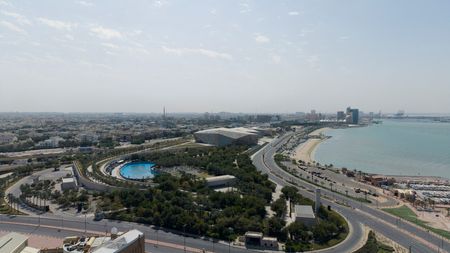
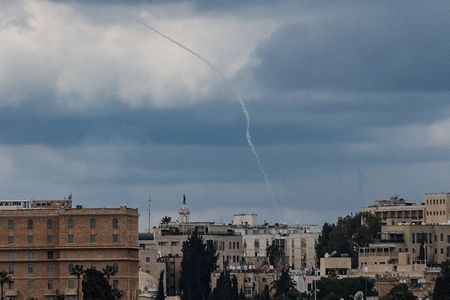
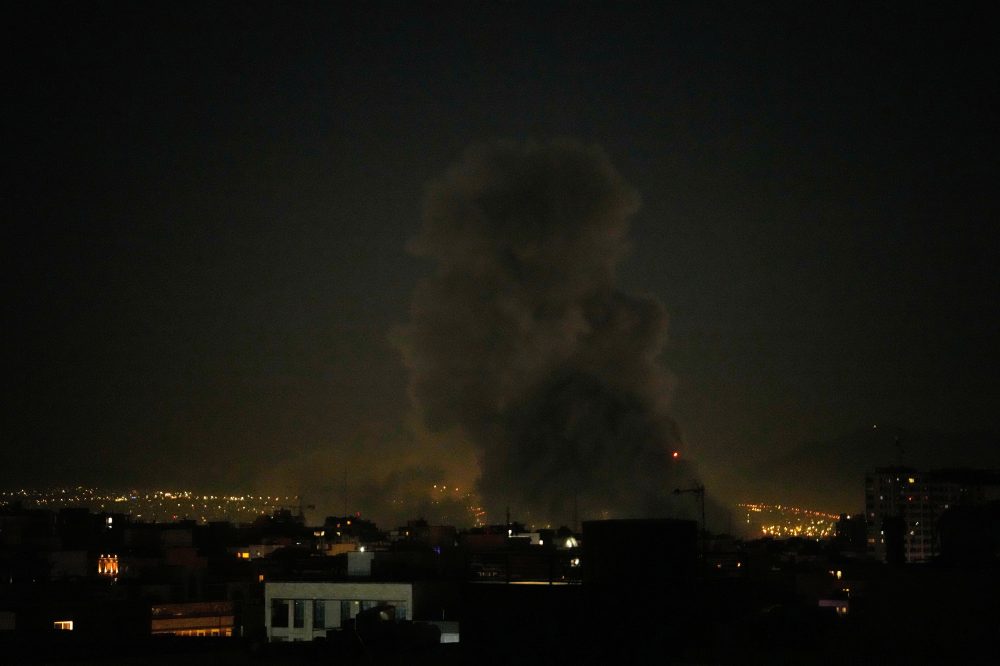
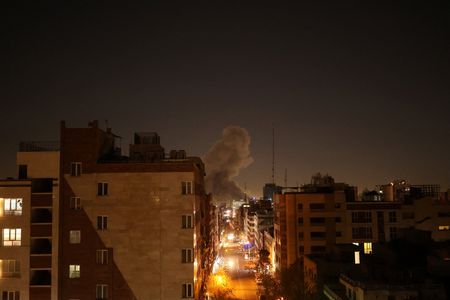
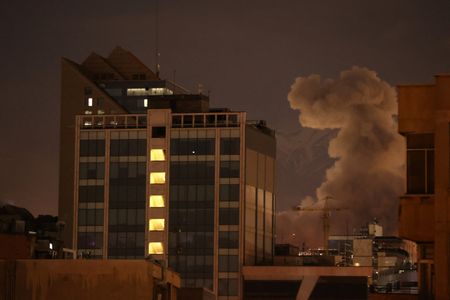
Kuwaiti defense forces successfully shot down multiple hostile drones on Monday, as Iran continued its third consecutive day of retaliatory attacks targeting Gulf region neighbors following weekend strikes by the United States and Israel.
According to the state news agency, Kuwait’s air defense systems intercepted most of the threatening drones near the Rumaithiya and Salwa neighborhoods, with the civil defense director-general confirming no casualties resulted from the incident.
Residents in Kuwait reported hearing loud explosions and warning sirens earlier in the day, according to witness accounts.
Iranian officials announced plans to strike American military installations throughout the region after the U.S. and Israel conducted attacks against Iran over the weekend.
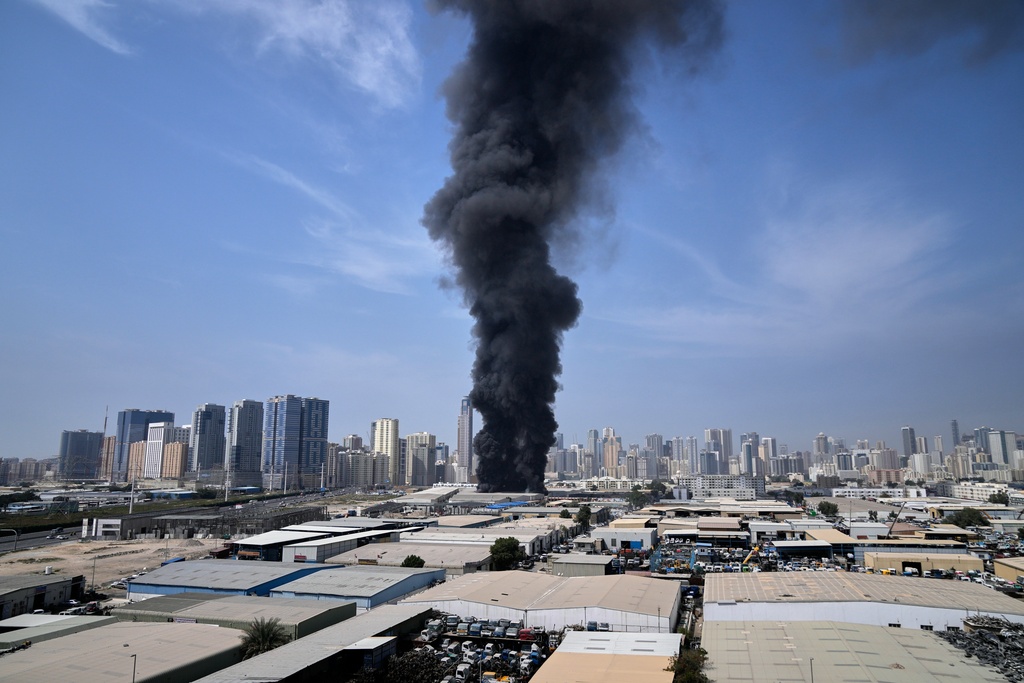
The expanding conflict has also impacted civilian and commercial districts across multiple Gulf cities, creating broader disruptions to important regional aviation routes and trade centers.
Defense Department officials disclosed during private congressional briefings Sunday that intelligence showed no evidence Iran intended to launch initial attacks against American military personnel, according to two sources with knowledge of the discussions.
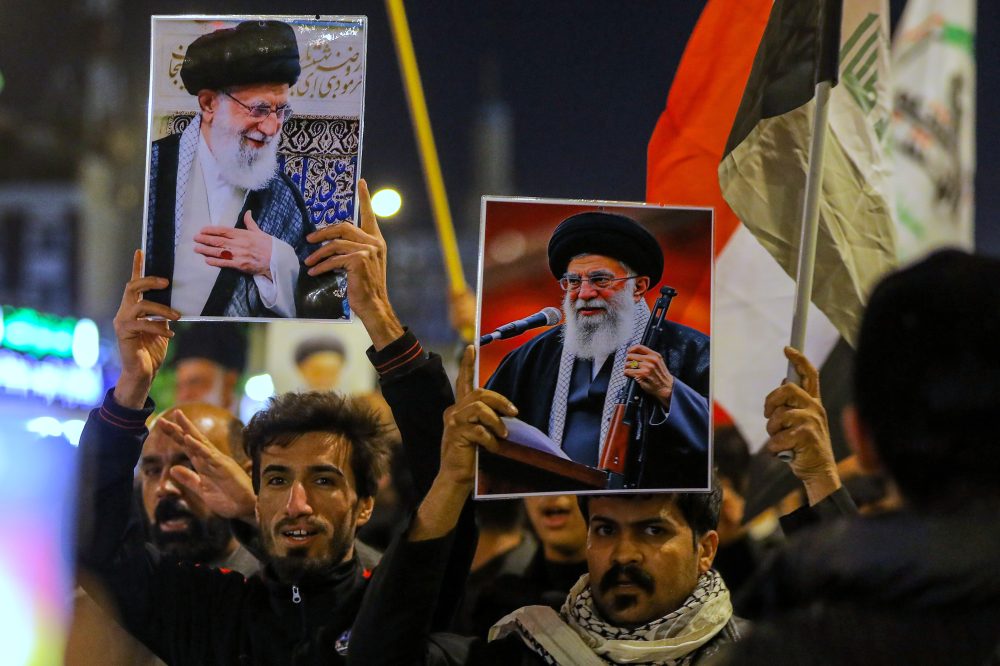
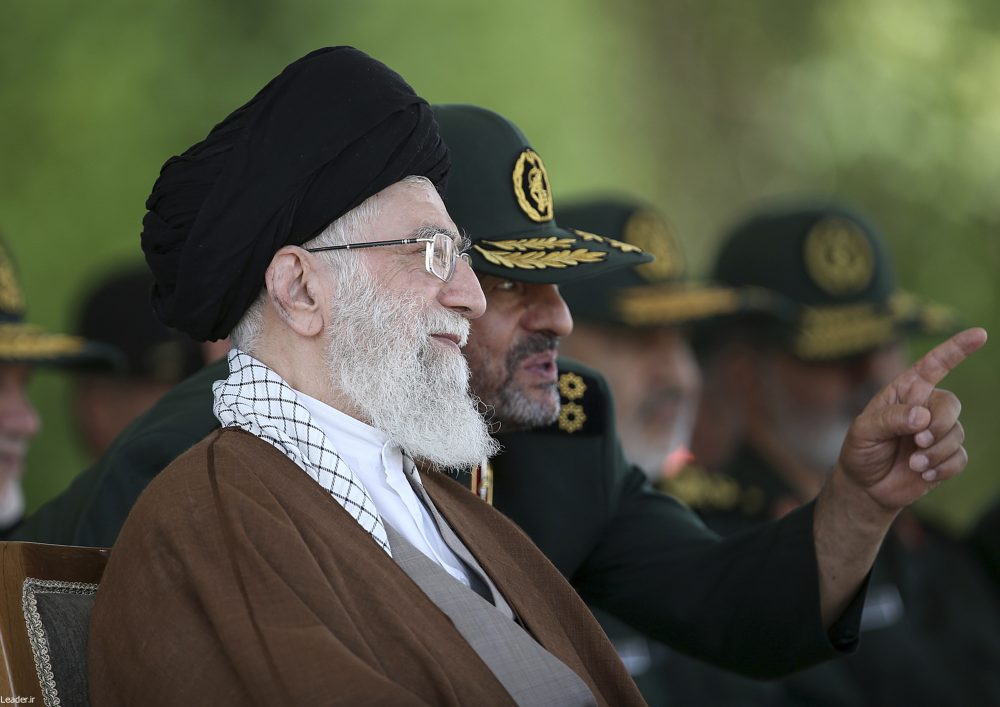
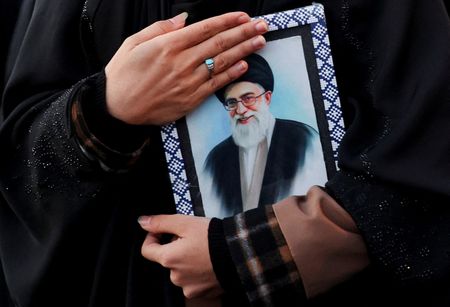
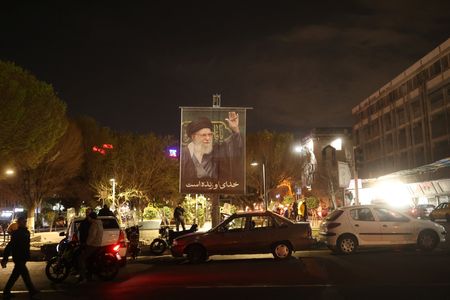
The weekend briefings appear to contradict justifications previously offered by the Trump administration for launching extensive military operations against Iran on Saturday. These strikes, conducted alongside Israeli forces, have targeted over 1,000 locations and resulted in the death of Supreme Leader Ayatollah Ali Khamenei and the destruction of Iranian naval vessels.
Administration representatives had told media outlets Friday that President Trump authorized the military action partly due to intelligence suggesting Iranian forces might conduct strikes against US personnel in the Middle East region.
One official stated Trump refused to “sit back and allow American forces in the region to absorb attacks.”
The Pentagon conducted briefings lasting more than 90 minutes with both Democratic and Republican committee staff from the Senate and House of Representatives, according to White House spokesperson Dylan Johnson.
During these sessions, defense officials stressed that Iran’s ballistic missile capabilities and regional proxy networks created immediate dangers to American interests, though they confirmed no intelligence existed showing Tehran would initiate hostilities against US forces, the anonymous sources revealed.
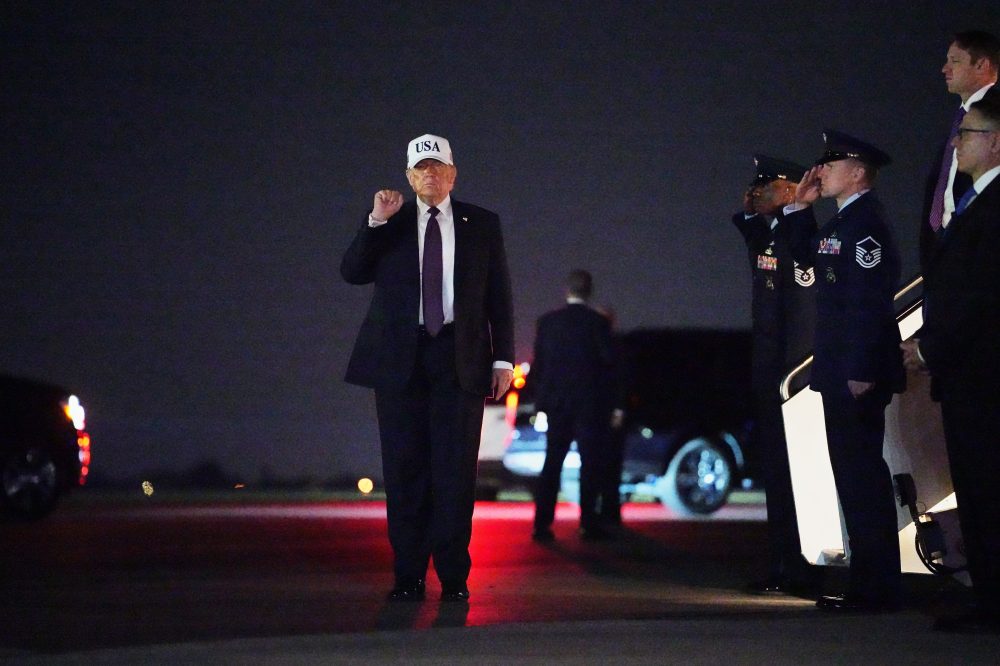
Trump has stated the ongoing military campaign, expected to continue for several weeks, seeks to prevent Iranian nuclear weapons development, limit their missile programs, and remove threats facing America and allied nations. The president has also called for Iranian citizens to overthrow their government.
Democratic lawmakers have criticized what they characterize as an unnecessary conflict, questioning Trump’s decision to abandon diplomatic negotiations that Oman, serving as mediator, indicated still showed potential for success.
The president has claimed, without providing supporting evidence, that Iran was close to developing intercontinental ballistic missile capabilities to strike American territory. Intelligence sources have told reporters this assertion lacks backing from official assessments and appears overstated.
These questions about military justification emerge as the Pentagon announced the conflict’s first American casualties Sunday.
US Central Command reported three service members killed and five seriously injured, with additional personnel suffering minor shrapnel wounds and concussions.
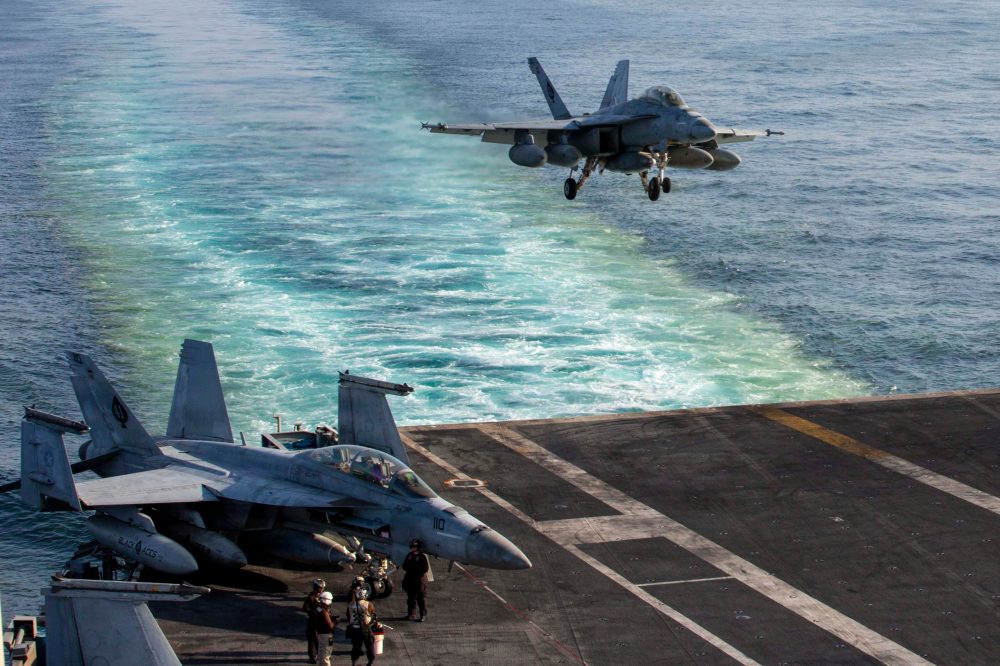
American aircraft and naval vessels have hit more than 1,000 Iranian targets since major combat operations began, military officials confirmed. The strikes included B-2 stealth bomber missions using 2,000-pound bombs against fortified underground missile installations.
A Sunday Reuters/Ipsos survey found 27% of Americans support the military strikes, while 43% oppose them and 29% remain undecided.
Entertainment enthusiasts have plenty to look forward to this week as Harry Styles releases his fourth solo record “Kiss All the Time. Disco, Occasionally” and Guy Ritchie debuts his detective series “Young Sherlock” on streaming platforms.
The Associated Press entertainment team has curated additional streaming highlights worth checking out: Steve Carell headlines the uplifting comedy “Rooster” on HBO, Nintendo launches Pokémon Pokopia for a relaxing gaming session, and Netflix debuts the science fiction action movie “War Machine.”
Oscar enthusiasts can catch up on this year’s nominees with two films arriving on Hulu in March. Jafar Panahi’s darkly comic revenge tale “It Was Just an Accident” and Kleber Mendonça Filho’s “The Secret Agent” both begin streaming. Panahi’s Palme d’Or-winning film, which Mark Kennedy praised as one of the year’s most emotionally powerful in his AP review, competes for best international feature and best original screenplay at the March 15 Oscars ceremony. “The Secret Agent” earned nominations for best picture, best actor (Wagner Moura), best international feature and best casting. In my review, I described it as a “slow burn thriller,” noting it represents “the best kind of personal film, imbued with so many things that Mendonça Filho loves, both resurrection and elegy.”
Netflix premieres a fresh sci-fi action film titled “War Machine” on Friday, March 6 – distinct from the 2017 Brad Pitt vehicle directed by David Michôd. This latest version features Alan Ritchson portraying an Army Ranger who encounters a lethal machine that relentlessly pursues him and his fellow soldiers during a training exercise. The cast includes Dennis Quaid, Stephan James and Jai Courtney.
“Fackham Hall” tells the story of a pickpocket (Ben Radcliffe) who secures employment at an elegant English estate and begins courting the lady of the manor (Thomasin McKenzie) in this comedic parody blending murder mystery elements that merges “Downton Abbey” with “Monty Python.” The production also features Katherine Waterston, Damian Lewis and Tom Felton, launching on HBO Max March 6. Alternatively, fans of the original can watch “Downton Abbey: The Grand Finale,” the franchise’s third film, arriving on Netflix Saturday, March 7.
Harry Styles makes his musical comeback with his fourth solo release “Kiss All the Time. Disco, Occasionally,” launching Friday through Columbia Records. Information remains limited: He characterized the record as “an audio representation of a long diary entry” during an interview with stylist Harry Lambert in The Sunday Times Magazine, describing the project as directly reflecting his time away from public attention in Rome. The initial preview came via “Aperture,” a quintessential Styles opener featuring a five-minute gradual build of intensifying synthesizers. He shared with BBC Radio 1 that the track drew inspiration from witnessing LCD Soundsystem perform live and listening to The Durutti Column, an ’80s English post-punk group. He appears to suggest that freedom emerges from anonymity, dance floors, and slowing down as the tempo increases.
Denzel Curry and The Scythe (comprising rappers Bktherula, TiaCorine, Key Nyata and Ferg, previously A$AP Ferg) return with “Strictly 4 The Scythe.” Consider them the premier Southern rap collective – this supergroup appears to enjoy themselves more than any other artists currently active. This energy shines through on the title track “The Scythe,” featuring bouncing verses and an infectious sing-along chorus.
Scott Speedman showcases his magnetic appeal in ABC’s new series “R.J. Decker.” Speedman portrays a former news photographer and ex-convict pursuing a fresh start as a private detective. Set in South Florida where investigations can turn bizarre – because it’s Florida – the show draws inspiration from Carl Hiaasen’s novel “Double Whammy.” Hiaasen, a Florida native who comprehends the state’s peculiarities, bases his stories there. “RJ Decker” becomes available Wednesday on Hulu.
Prime Video’s “Young Sherlock” explores the period before Sherlock Holmes achieved his reputation as the world’s premier detective, during his Oxford University studies. Hero Fiennes Tiffin stars as the lead character in this series executive produced and directed by Guy Ritchie, incorporating all the expected Ritchie elements: dynamic action scenes, rapid pacing and clever dialogue. This adaptation shows Sherlock forming an unlikely friendship with James Moriarty, who becomes his greatest adversary. All eight episodes premiere Wednesday.
Peacock presents another prequel this week as “Ted” the television series returns Thursday for its second season. The show focuses on the early years of the profanity-laden teddy bear (Seth MacFarlane) and his closest friend John (Max Burkholder), a high school student. MacFarlane serves multiple roles as executive producer, writer, director and co-showrunner.
Steve Carell leads HBO’s new uplifting comedy “Rooster,” playing a bestselling writer who accepts a position at a university where his daughter works as a professor during a difficult period. Bill Lawrence (“Ted Lasso,” “Scrubs” and “Shrinking”) co-created the series. Phil Dunster, Danielle Deadwyler and John C. McGinley fill primary roles. The show debuts Sunday, March 8 on HBO Max.
Bungie established impressive standards for science fiction shooters through Halo and Destiny, though few gamers recall their initial genre attempt: 1994’s Marathon. The updated Marathon advances 99 years forward to the distant planet Tau Ceti IV, where original explorers attempted establishing a new settlement. Upon arrival, most colonists have disappeared, leaving players to gather remaining treasures. Bungie indicates solo play is possible, but assembling online teammates becomes advisable once player-versus-player combat intensifies. The mission launches Thursday on PlayStation 5, Xbox X/S and PC.
Nintendo’s Pokémon Pokopia departs from the traditional “gotta catch ’em all” format. The concept resembles “build ’em all a nice place to live and hope they show up.” Players control a shape-shifting Ditto character placed in a barren environment. Fortunately, the knowledgeable Professor Tangrowth provides assistance in improving the surroundings. Diversification becomes essential for attracting visitors, as Pidgey likely prefers trees while Psyduck may desire a lake. For those wanting Pokémon companionship without battles, this creates the ideal setting. The experience begins Thursday on Switch 2.
PARIS (AP) — President Emmanuel Macron delivered a major address Monday outlining France’s nuclear defense strategy, speaking as European nations grow increasingly worried about potential American withdrawal from regional security and escalating Russian aggression.
As the only nuclear-armed member of the European Union, France operates under a defensive deterrence strategy designed to protect the nation’s “vital interests.” Macron has consistently argued these “vital interests” extend beyond France’s borders to include a “European dimension.”
Though France participates in NATO, the country maintains complete control over its nuclear arsenal while supporting the alliance’s overall deterrence strategy. France’s constitution grants the president exclusive authority as military commander-in-chief to authorize nuclear weapon deployment.
An examination of France’s nuclear capabilities reveals the scope of its strategic power:
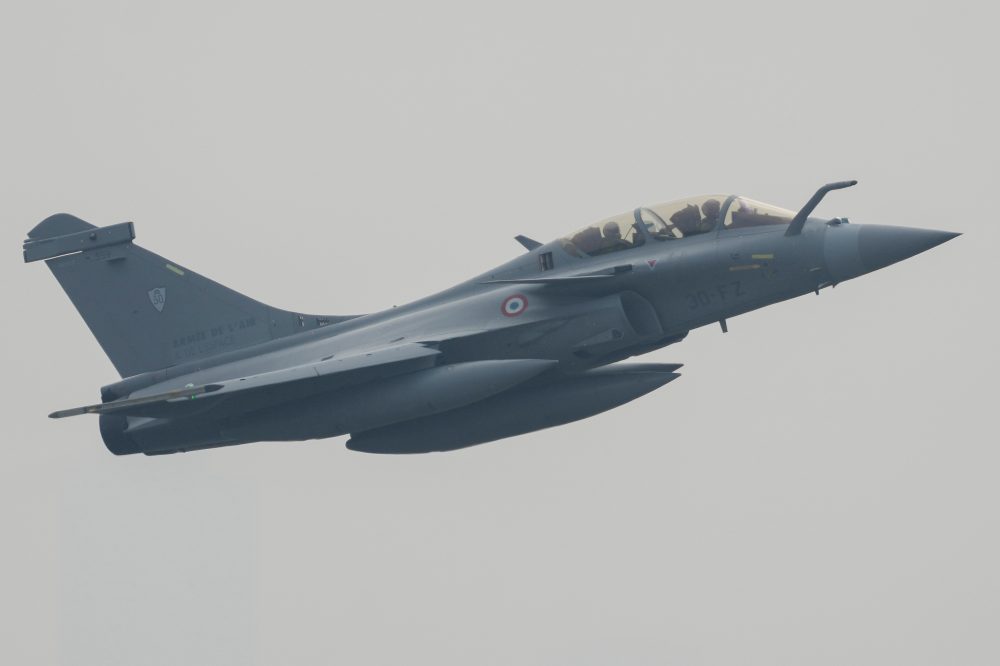
The aircraft carrier Charles de Gaulle stands as Europe’s sole surface vessel equipped to deploy nuclear weapons through Rafale fighter aircraft launched via catapult systems.
This naval flagship has recently conducted operations in North Atlantic and Baltic waters, including a recent port call in Malmo, Sweden.
Due to extensive maintenance periods required for the carrier, France lacks continuous sea-based nuclear air capabilities.
In December, Macron announced plans for constructing a replacement nuclear-powered aircraft carrier to succeed the Charles de Gaulle by 2038.
France operates four nuclear submarines: Le Triomphant, Le Téméraire, Le Vigilant and Le Terrible. These vessels operate from the highly classified Ile Longue facility on France’s Atlantic coastline.
Each 453-foot submarine requires approximately 110 crew members and can deploy 16 M51 intercontinental ballistic missiles equipped with multiple nuclear warheads.
France has maintained continuous submarine patrols since 1972, guaranteeing the nation’s permanent nuclear strike capability.
The ASMPA air-launched cruise missile system — an enhanced medium-range air-to-surface weapon — can strike targets approximately 310 miles away.
Deployed by Rafale fighters, this weapon serves as an ultimate warning before potential escalation to full-scale nuclear warfare.
The Strategic Air Forces, established in 1964 and stationed at three French locations, operates these missiles, which can also launch from Charles de Gaulle-based aircraft.
The M51 submarine-launched ballistic missile can reach targets between 5,000 and 6,200 miles away, though exact specifications remain classified.
An enhanced M51 version became operational in October, featuring improved targeting precision and better defense-penetration capabilities, according to France’s Defense Ministry. Each missile carries multiple independently targeted nuclear warheads.
Research organizations including the Stockholm International Peace Research Institute and Federation of American Scientists estimate France possesses 290 nuclear warheads. The Bulletin of the Atomic Scientists reports over 80% of French warheads are submarine-deployed.
This arsenal positions France as the world’s fourth-largest nuclear power, following Russia with over 4,300 warheads, the United States with approximately 3,700, and China with about 600. Britain, no longer an EU member but NATO ally, maintains roughly 225 warheads according to SIPRI and FAS estimates.
These five countries hold recognized nuclear-weapon status under the Nuclear Non-Proliferation Treaty.
India, Pakistan and North Korea have publicly acknowledged nuclear weapons programs. Israel is widely suspected of possessing nuclear capabilities but has never officially confirmed this.
Nations closely guard precise warhead inventory numbers as state secrets.
Iran maintains its nuclear program serves only peaceful purposes, though the country has recently enriched uranium to 60% purity — approaching the 90% weapons-grade threshold.
UN nuclear monitors reported Friday they cannot confirm whether Iran has halted uranium enrichment activities, according to an Associated Press report preceding major U.S. and Israeli military action against Iran.
BUENOS AIRES — In a confrontational address to Argentina’s Congress on Sunday, libertarian President Javier Milei celebrated his administration’s accomplishments while launching verbal attacks against opposition legislators and expressing admiration for his connection with U.S. President Donald Trump.
During the hour-and-a-half presentation, Milei engaged in heated exchanges with opposition members of parliament, branding them as “thieves,” “murderers” and “ignorant” while showcasing what he characterized as his administration’s major successes during his first year in office.
The congressional address came following a string of policy wins for Milei’s government, encompassing workplace reform legislation, modifications to juvenile criminal accountability laws, the Mercosur-European Union commercial pact, and preliminary passage of environmental protection measures for glaciers.
“This has been one of the most productive extraordinary sessions in our history, fulfilling all the campaign promises made in 2025,” Milei said.
Key themes in Milei’s remarks centered on Argentina’s capacity to export natural resources and energy supplies, along with the nation’s advantageous geographic position. He stressed the importance of staying aligned with Washington, pointing to successful financial assistance from the U.S. government in the previous year and referencing his “special relationship” with Trump, whom he called a “key ally.”
Milei added that “we have to create the century of the Americas. Make America Great Again.”
The Argentine leader also contended that his country holds essential minerals sought by Western nations and highlighted the nation’s strategic positioning between two oceans and near Antarctica. “We are a natural link in the West’s strategic value chain,” he asserted.
Throughout his remarks, Milei engaged in heated confrontations with opposition representatives, branding them as dishonest and corrupt, while also targeting former leftist leader Cristina Fernández de Kirchner, who remains incarcerated on corruption-related charges.
Last Friday marked a significant legislative triumph for Milei when lawmakers approved his workplace reform package that will dramatically reshape Argentina’s employment landscape, despite strong resistance from left-leaning political groups and the nation’s primary labor organization.
Political analyst Juan Negri from Torcuato Di Tella University’s Political Science department told The Associated Press that Milei now holds considerably more legislative influence.
“We find him with significant support and, through his allies, with a parliamentary majority that seemed unprecedented in 2023,” he said.
When Milei took office in 2023, he faced an opposition that vowed to block the free-market reforms championed by his La Libertad Avanza party, which ranked as merely the third-largest congressional faction in both legislative chambers. During his early presidential months, Milei experienced intense conflicts with lawmakers, whom he denounced as a “rat’s nest” for blocking his policy agenda.
Following the 2025 legislative contests, La Libertad Avanza partnered with the conservative Republican Proposal (PRO) party to become the dominant force in both congressional houses, securing the one-third threshold necessary to sustain presidential vetoes.
The administration has also solidified backing from previously hesitant or critical allies, including certain PRO members “who are now perfectly aligned with the ruling party,” according to Gustavo Marangoni, a Buenos Aires political analyst and head of the M & R Asociados consulting group.
Marangoni noted that Milei has also gained support from numerous provincial leaders who, despite their varied political backgrounds, have recognized the benefits of working cooperatively with the federal government.
COLUMBIA, S.C. — Civil rights champion Rev. Jesse Jackson Sr. will receive final state honors Monday as he lies in state at South Carolina’s capitol building, marking a homecoming for the activist who launched his decades-long fight for equality in the Palmetto State.
The ceremony represents a remarkable journey from Jackson’s early days in segregated Greenville, where as a young man in 1960, he was barred from entering the well-funded whites-only section of the public library to borrow a book he required.
That moment sparked Jackson’s first act of defiance when he guided seven Black high school students into the segregated library section, where they quietly sat reading books and magazines before police took them into custody. The library branches subsequently shut down before quietly reopening to serve all residents.
This bold action marked the beginning of Jackson’s lifelong mission for equal rights, eventually drawing notice from Rev. Martin Luther King Jr. and leading to his participation in the historic voting rights march from Selma to Montgomery, Alabama.
Jackson passed away on February 17 at 84 years old following his battle with a rare neurological condition that impacted his movement and speech during his final years.
Monday’s South Carolina tribute represents one part of a two-week series of memorial events that started last week when Jackson’s body was displayed for public viewing at his Rainbow PUSH Coalition headquarters in Chicago.
Following the South Carolina ceremony, Jackson will return to Chicago for a major celebration of life service at a large church, followed by final memorial services at Rainbow PUSH headquarters. A planned Washington, D.C. service has been delayed to a future date.
Throughout his career, Jackson championed causes for America’s poor and marginalized communities, fighting for voting access, employment opportunities, educational advancement and healthcare access. He achieved notable diplomatic successes working with international leaders.
Using his Rainbow PUSH Coalition as a platform, Jackson transformed calls for Black empowerment and self-reliance into corporate pressure campaigns, demanding business leaders create a more inclusive and fair American society. Following King’s assassination, he emerged as a leading voice in the Civil Rights Movement and pursued the Democratic presidential nomination twice, in 1984 and 1988.
Jackson maintained strong ties to South Carolina throughout his life, pushing Greenville County in 2003 to recognize the federal Martin Luther King Jr. holiday and advocating in 2015 for the removal of the Confederate flag from the State House grounds following the racist massacre of nine Black church members in Charleston.
Jackson becomes only the second Black man to receive the honor of lying in state at South Carolina’s capitol. State Senator Clementa Pinckney received this distinction in 2015 after being murdered in the Charleston church attack.
DUBAI, United Arab Emirates (AP) — Military operations across the Middle East intensified Monday as Iranian-backed forces launched missile attacks against Israeli and Arab targets, while American and Israeli aircraft continued devastating strikes against Iranian positions amid escalating threats and warnings of additional U.S. military losses.
During the ongoing American and Israeli bombing campaign, senior Iranian security official Ali Larijani declared defiantly on X that “we will not negotiate with the United States.”
Iraqi pro-Iranian militia forces took credit for a drone assault on American personnel stationed at Baghdad’s airport, following their previous day’s attack on a U.S. installation in northern Irbil, while Cyprus reported that attackers targeted a British military facility on the island nation.
Combined Israeli and American forces struck Iranian missile installations and naval assets, reporting the destruction of the Iranian navy’s command center and numerous vessels. Iranian officials report more than 200 fatalities since the bombardment began.
During continued attacks, Hezbollah announced it launched rockets from Lebanese territory into Israel early Monday, citing retaliation for Iranian Supreme Leader Ali Khamenei’s death and “repeated Israeli aggressions,” marking the militant organization’s first claimed strike in over twelve months. Israeli forces reported intercepting one projectile while others landed in uninhabited areas, with no casualties or property damage reported.
Israeli forces responded with strikes against Beirut, warning residents in approximately 50 eastern and southern Lebanese communities to evacuate before potential additional attacks, prompting mass civilian displacement.
Iranian forces have maintained missile bombardments against Israeli and Arab territories in a retaliatory campaign following Saturday’s joint American-Israeli operation that eliminated Khamenei and numerous senior Iranian officials.
Persian Gulf nations have threatened potential retaliation against Iran following strikes that damaged critical infrastructure and killed at least five non-combatants, while U.S. President Donald Trump pledged Washington would “avenge” three American service members killed in Kuwait.
“Sadly, there will likely be more before it ends,” Trump said. “That’s the way it is.”
Trump has encouraged Iranians to “take over” their government and, despite indicating openness to discussions with new Iranian leadership after Khamenei’s death, suggested Sunday that military action would continue indefinitely.
“Combat operations continue at this time in full-force, and they will continue until all of our objectives are achieved,” he said in a video message. “We have very strong objectives,” he added, without elaborating.
Military officials confirmed that B-2 stealth aircraft attacked Iranian ballistic missile complexes using 2,000-pound ordnance. Trump announced via social media that nine Iranian naval vessels were destroyed and the Iranian navy’s command structure was “largely destroyed.”
Indicating potential broader international involvement, Britain, France and Germany announced readiness to collaborate with American efforts to halt Iranian attacks, while Gulf Arab nations declared they maintained the option to respond to Iranian strikes.
Saturday’s attacks marked the second coordinated American-Israeli military action against Iran within eight months. During June’s 12-day conflict, Israeli and American forces significantly degraded Iran’s air defense systems, military command structure and nuclear capabilities. However, Khamenei’s death, ending his three-decade rule, creates an authority gap that heightens regional instability risks.
DUBAI, United Arab Emirates — The Islamic Revolutionary Guard Corps has transformed into one of Iran’s most influential military organizations since emerging from the 1979 revolution, operating independently from regular military forces while controlling the nation’s missile capabilities and international operations.
This elite force has gained renewed attention as regional tensions escalate following recent military exchanges between Israel and Iran that resulted in the death of Supreme Leader Ayatollah Ali Khamenei during coordinated airstrikes.
The organization originated during Iran’s 1979 Islamic Revolution with the mission of safeguarding the newly established Shiite clerical government. It developed alongside Iran’s conventional military during the devastating Iran-Iraq conflict of the 1980s, eventually gaining constitutional recognition.
Following the war’s conclusion, Supreme Leader Khamenei authorized the Guard’s expansion into commercial ventures, preventing its dissolution and enabling significant growth. Today, the organization operates Khatam al-Anbia, a major construction enterprise, along with companies managing infrastructure projects, port operations, telecommunications systems, and medical services including laser vision correction.
The Guard’s specialized international wing, known as the Quds Force, played a central role in establishing Iran’s self-described ‘Axis of Resistance’ targeting Israel and the United States. This network supported Syria’s former leader Bashar Assad, Lebanon’s Hezbollah movement, Yemen’s Houthi fighters, and various regional allies, gaining strength after the 2003 U.S.-led Iraq invasion.
American officials report that Guard operatives trained Iraqi insurgents in manufacturing sophisticated explosive devices used against coalition forces. Intelligence suggests the Quds Force and Iranian spy agencies recruited criminal organizations to target dissidents and perceived enemies internationally.
During the current Israel-Hamas conflict, Israeli authorities have detained citizens allegedly receiving Iranian instructions for surveillance and sabotage activities. Iran has rejected involvement in these alleged operations. The Guard also reportedly maintains extensive smuggling networks throughout the Middle East.
The organization operates independent intelligence services responsible for arresting and prosecuting dual citizens and individuals with Western connections on espionage charges through secret proceedings. International observers have criticized Iran for using these detainees as negotiating leverage, particularly regarding nuclear discussions.
The carefully constructed ‘Axis of Resistance’ faces unprecedented challenges following Hamas’s October 7, 2023 attack on Israel that sparked the Gaza war. While Iran supports Hamas, Israel has systematically targeted Iranian-backed organizations, severely weakening Hezbollah and repeatedly striking Houthi positions in Yemen.
Syria’s government collapsed in December 2024, eliminating a crucial Iranian ally and Guard partner. Direct missile exchanges between Israel and Iran have occurred under Guard oversight.
Israeli forces launched extensive airstrikes against Iran in June, killing senior Guard commanders on the first day and disrupting organizational structure. These attacks eliminated ballistic missile facilities and Guard-operated air defense installations.
Domestically, Iran’s theocratic government relies heavily on the Basij, the Guard’s volunteer militia, to suppress civil unrest. Protest footage from December 28 demonstrations shows Basij forces carrying firearms, clubs, and pellet weapons while beating demonstrators and pursuing them through city streets. A prominent Basij leader appeared on state television warning parents to keep children indoors while calling for force deployment against protesters.
The European Union designated the Revolutionary Guard as a terrorist organization in January, citing Iran’s violent suppression of domestic protests.
Iran’s foreign minister recently suggested military units operate independently from central government oversight when questioned about attacks on Gulf Arab nations that previously served as Iranian intermediaries. Strikes have targeted Oman, which facilitated recent nuclear negotiations with the United States, and Qatar, which has mediated with Tehran and shares a major natural gas field with Iran.
‘What happened in Oman was not our choice. We have already told our, you know, army, armed forces to be careful about the targets that they choose,’ Abbas Araghchi told Al Jazeera on March 1. ‘As a matter of fact, our, you know, military units are now in fact independent and somehow isolated and they are acting based on instructions — you know, general instructions — given to them in advance.’
While militaries worldwide develop contingency plans for wartime scenarios, including government disruption, Iran presents unique concerns given the Guard’s control over extensive ballistic missile arsenals and drone stockpiles.
Araghchi’s statements may serve to justify recent attacks while attempting to reduce tensions with Gulf Arab neighbors, who have expressed increasing frustration over continued strikes despite recent diplomatic efforts.
A traffic accident has resulted in the closure of the right lane on southbound Interstate 95 approaching the Route 273 interchange, according to Delaware Department of Transportation officials.
The crash is causing delays for drivers heading south on the major highway. Motorists are advised to exercise caution when passing through the area and to expect slower than normal traffic conditions.
DelDOT has not yet released information about the severity of the accident or when the lane is expected to reopen to traffic.
During his congressional address on Sunday, Argentina’s libertarian President Javier Milei outlined his administration’s commitment to comprehensive tax reform, emphasizing the need for reduced tax burdens across the nation.
Speaking to lawmakers in Buenos Aires, Milei articulated his economic philosophy regarding taxation and government revenue. “We need lower taxes because the tax system must serve growth, not the revenue needs of whoever is in office,” the president declared during his remarks.
Beyond fiscal policy, Milei announced his government’s intention to pursue broader institutional changes, including modifications to Argentina’s electoral framework and updates to the nation’s criminal justice code. He indicated these additional reforms would be priorities for his administration heading into 2026.
The president’s address comes on the heels of a significant legislative win for his government. Just days earlier, Argentina’s Congress passed controversial workplace legislation that opponents argue will make employee terminations easier for businesses to execute. This victory followed Milei’s strong performance in the country’s October midterm electoral contests.
Israeli forces conducted fresh airstrikes against Hezbollah positions in Lebanon on Monday, broadening a Middle East military campaign that President Donald Trump indicated could persist for several weeks.
The strikes targeted locations linked to the Iranian-backed Shi’ite militia group following Hezbollah’s admission that it fired missiles and drones at Israeli territory in response to the death of Iran’s Supreme Leader Ali Khamenei.
Israeli defense forces reported successfully intercepting one projectile from Lebanon while additional munitions struck uninhabited regions within Israeli borders.
More than a dozen explosions shook Beirut on Monday as Israeli warplanes targeted Hezbollah-controlled areas in the capital’s southern districts. Israeli military officials confirmed they also hit high-ranking Hezbollah operatives in the vicinity of Beirut.
Residents evacuated Beirut on foot and in vehicles, creating massive traffic jams, after the bombing campaign commenced at approximately 2:40 a.m. local time.
The current violence breaks a U.S.-mediated ceasefire agreement between Israel and Lebanon established in 2024 following over a year of combat that significantly damaged Hezbollah’s capabilities.
These retaliatory strikes between Hezbollah and Israel have expanded the regional crisis that erupted when American and Israeli forces attacked Iran on Saturday, causing oil prices to spike and disrupting international air travel.
Lebanon’s government reported receiving assurances from the U.S. ambassador on Saturday that Israel would not intensify operations against Lebanon provided no aggressive actions originated from Lebanese territory.
Israeli military commanders declared Hezbollah “fully responsible for any escalation” while issuing evacuation orders to residents of numerous villages throughout southern and eastern Lebanon.
Late Sunday, Israeli military officials announced their air force had achieved air superiority over Tehran, conducting widespread strikes across the Iranian capital that targeted intelligence facilities, security installations, and military command headquarters.
Iranian President Masoud Pezeshkian announced that a temporary leadership council consisting of himself, the judiciary chief, and a Guardian Council representative had assumed Supreme Leader responsibilities.
Air raid warnings echoed throughout Israel late Sunday, including Tel Aviv where residents witnessed projectiles crossing the nighttime sky as Iran launched additional missile volleys.
The campaign’s first American fatalities were confirmed Sunday, with three service members killed. Two U.S. officials, requesting anonymity, informed Reuters the personnel died at a Kuwaiti military installation.
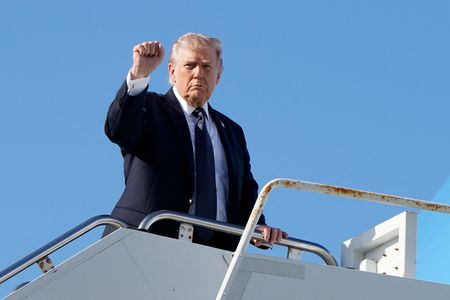
Trump honored the fallen soldiers as “true American patriots” while cautioning that additional casualties were likely. “That’s the way it is,” he stated.
A prolonged military operation could create significant political challenges for Trump’s Republican party before upcoming U.S. midterm elections that may determine Congressional control. Approximately one in four Americans support the operation, according to a Sunday Reuters/Ipsos survey.
In a Sunday video message, Trump pledged continued military action against Iran until “all our objectives are achieved” without specifying details. He claimed the offensive had eliminated Iran’s military leadership and destroyed nine Iranian naval vessels plus a naval facility.
U.S. military sources reported American aircraft and naval vessels had attacked over 1,000 Iranian targets since major combat operations began Saturday.
Trump addressed Iran’s military and police forces, including the influential Islamic Revolutionary Guards Corps, urging them to cease fighting while offering immunity for surrendering personnel and threatening “certain death” for those continuing resistance. He repeated appeals for Iranian citizens to overthrow their government.
“I call upon all Iranian patriots who yearn for freedom to seize this moment, to be brave, be bold, be heroic and take back your country,” Trump declared in his recorded message. “America is with you.”
During interviews with various media organizations, Trump suggested the Iranian military campaign might continue for at least four weeks. White House representatives announced top administration officials would brief complete Senate and House memberships on Tuesday.
Following Khamenei’s death, Iran confronts a leadership crisis that could result in internal chaos, though the Trump administration has not revealed long-term objectives for the nation.
Breaking from his typical routine at his Mar-a-Lago Florida residence, Trump avoided speaking with traveling reporters. No administration representatives participated in Sunday political television programs.
The Trump administration seeks to prevent conflicting messages while officials continue internal policy discussions, according to a source familiar with the deliberations.
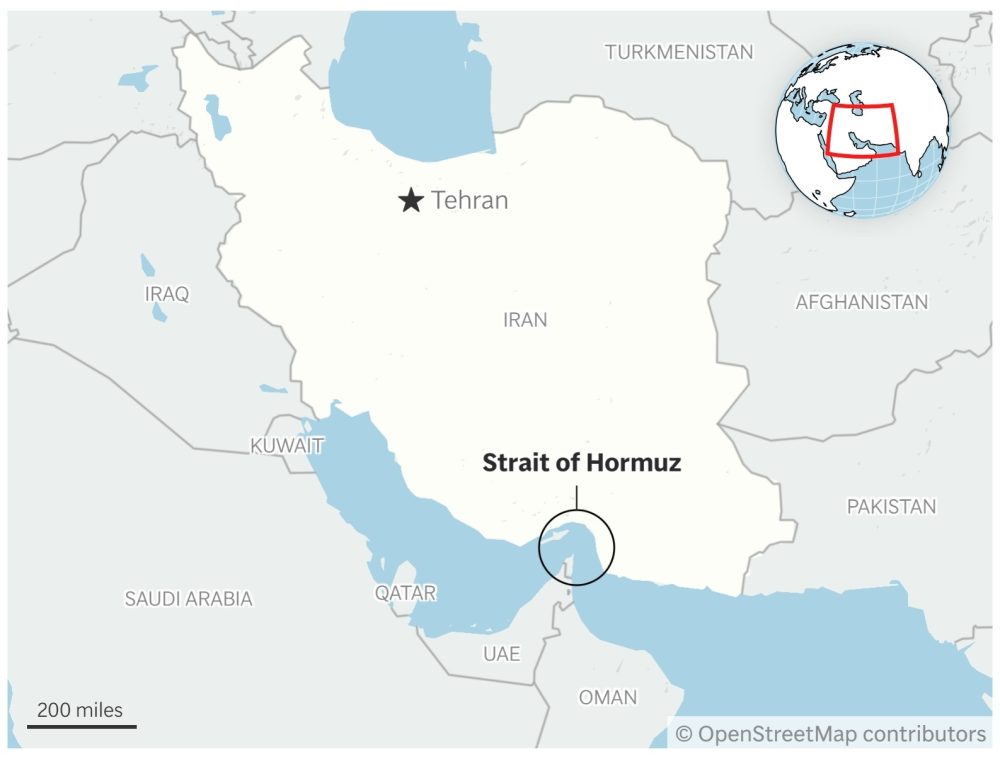
Iran’s Revolutionary Guards claimed Sunday they had struck three American and British oil tankers in the Gulf and Strait of Hormuz while attacking Kuwaiti and Bahraini military bases with drones and missiles. Maritime data showed hundreds of vessels, including oil and gas tankers, anchoring in nearby waters as traders anticipated sharp crude oil price increases Monday.
International air travel faced severe disruptions as ongoing airstrikes forced major Middle Eastern airports to close, including Dubai — the world’s busiest international aviation hub — creating one of the largest aviation interruptions in recent years.
Oman’s foreign ministry reported Iranian Foreign Minister Abbas Araqchi had suggested Tehran remained open to reducing tensions. However, Araqchi’s social media posts indicated Iran’s readiness to continue fighting.
Long-term possibilities for Iran to reconstruct its leadership and replace 86-year-old Khamenei, who had governed since Islamic Republic founder Ayatollah Ruhollah Khomeini’s 1989 death, remained uncertain.
Analysts suggested that while his death and other Iranian leaders’ deaths would severely impact Iran, it would not necessarily end Iran’s established clerical government or the elite Revolutionary Guards’ population control.
Nevertheless, predicting Iranian public response to these changes was premature. New Iranian social media analysis from Redpoint Advisors, a global intelligence company, indicates citizens are already considering Khamenei’s potential replacement.
The Australian Securities Exchange faces a challenging transition as it searches for new leadership while dealing with mounting legal and operational difficulties.
Helen Lofthouse announced last month that she will step down as CEO in May, ending an 11-year tenure with the exchange, including four years in the chief executive role. An international executive search firm is currently leading the hunt for her replacement.
Market experts and investors believe the incoming CEO will encounter significant obstacles in rebuilding the exchange’s reputation as it competes with other regional and global markets for new company listings and institutional investment.
The leadership transition occurs during a period of heightened concerns about global financial market infrastructure stability, driven by rapidly advancing technology and increasing trade volumes.
In January, the Australian exchange recorded average daily trading volumes of A$6.9 billion ($4.9 billion), significantly lower than Hong Kong’s exchange volume of HK$272.3 billion ($34.81 billion). The Australian bourse ranks ninth in the Asia-Pacific region by total market capitalization, according to World Federation of Exchanges data.
Omkar Joshi, founder of Opal Capital Management, emphasized the need for credible leadership. “You need someone that restores credibility and really does focus on understanding the problems that they are facing, and really just going from the bottom up to fix those issues,” Joshi stated.
“They’ve been making mistakes which have been of their own accord,” he added. “And to stop doing that, they need to first understand what’s actually driving that and get on top of that.”
The exchange declined to provide comments regarding the CEO search process. However, ASX Chair David Clarke stated last month that the next leader must “have strong credentials in financial markets, transformation and risk management.”
Sean Sequeira, chief investment officer at Australian Eagle Asset Management and an ASX shareholder, stressed the importance of regulatory experience. “While shareholders would love near-term returns, for the longevity of the company, the most important part for them at the moment is to manage the regulatory risk, which would mean keeping those regulators that they are in touch with very happy with what they’re doing,” Sequeira explained.
“That’s probably the reason why (Lofthouse) was encouraged to move on … regulators have picked up a number of missteps. Those missteps probably resulted in a requirement for ASX to make some sort of change.”
The Australian exchange dominates approximately 80% of the country’s A$9.9 billion daily equity trading, with smaller competitor CBOE Australia handling the remaining 20%, based on regulatory information.
The organization’s most significant challenge emerged publicly in 2022 when it announced a A$250 million write-down for a failed blockchain technology project designed to modernize its outdated software systems and enhance trading capacity to better compete internationally.
This initiative, called CHESS, is now the subject of legal action by the Australian Securities and Investments Commission (ASIC), which alleges the ASX misled investors regarding project timelines and development progress. Federal Court hearings are scheduled to begin in mid-June.
Following this setback, the exchange has encountered numerous additional problems, including deploying a replacement software system that won’t be completely functional until 2029, along with multiple regulatory investigations that have frustrated investors and market participants.
Technical difficulties continued into late 2024 when the exchange experienced a system failure that postponed trade settlements and raised questions about its capacity to maintain essential market infrastructure. The exchange’s announcement platform also froze on December 1 of last year.
Emanuel Datt, managing director of fund manager Datt Capital, criticized the exchange’s performance. “The ASX’s near-monopoly means they don’t face the pressures that other businesses in Australia deal with, which reduces the urgency of change,” Datt observed.
“The errors we’ve seen, such as consistent outages for the announcement platform, suggest a culture of sloppiness that tarnishes the reputation of such an important piece of financial market infrastructure.”
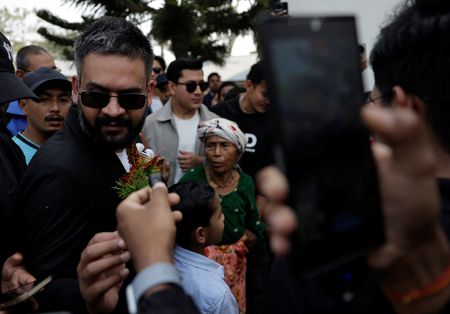
In Nepal’s eastern region, crowds gather wherever Balendra Shah appears, eager for photos with the musician-turned-politician who has captured the nation’s attention.
Shah, widely known by his stage name Balen, has emerged as a leading figure in Nepal’s political landscape, representing the centrist Rastriya Swatantra Party in a crucial March 5 election. The contest could dramatically alter the political dynamics of the mountainous country situated between China and India.
“I am here to see Balen, even though I have a fever,” declared a seven-year-old girl during her first encounter with the prime ministerial hopeful.
Standing nearby, a middle-aged woman revealed she had abandoned her cardiac appointment halfway through just to capture a photograph with Shah, the former Kathmandu mayor who entered national politics last September following unprecedented youth-driven demonstrations across the country.
Those protests, led by Generation Z activists frustrated with widespread government corruption and joblessness, resulted in 77 fatalities and ultimately forced Prime Minister K.P. Sharma Oli from office.
Now Shah is directly confronting the veteran politician in Oli’s stronghold – the Jhapa district where the 74-year-old has secured victory six consecutive times throughout his extensive political journey.
Should Shah and his party succeed, it would fundamentally transform Himalayan politics, which has long suffered from instability caused by the same established parties controlled by Oli and his contemporaries.
Political observers note widespread public frustration with traditional parties that have repeatedly held power but consistently failed to deliver meaningful results throughout Nepal.
The established political landscape includes Oli’s Communist Party of Nepal (Unified Marxist–Leninist or UML), the Nepali Communist Party formed by former Maoist insurgents, and the moderate Nepali Congress – all of whom have alternated control for decades.
However, these organizations maintain pockets of support, particularly in mountainous regions like Kavrepalanchok, where 38-year-old voter Raju Rasaili observes the persistent political divisions.
“In my village, there are loyal supporters of both the Maoists and the CPN-UML. I don’t think people easily let go of that kind of political loyalty,” he explained.
Back in Damak town within Jhapa district, Bipana Oli – who shares no family connection with the former prime minister – returned from her job in Kuwait specifically to participate in Thursday’s voting.
“How long I continue working in Kuwait as a migrant worker will depend on Balen’s victory, and the policies and job opportunities he creates,” stated the 25-year-old.
Supporters swarm around Shah, each receiving approximately ten seconds with the candidate, who maintains his signature look of dark blazer and sunglasses.
Most visitors seek only photographs. Others manage brief handshakes or quick conversations until Shah’s official photographer intervenes with firm instructions: “Step aside, next in line.”
After resigning from his mayoral position and joining the RSP in January, Shah has conducted an intensive campaign across Nepal, visiting nearly 50 of the nation’s 77 districts.
His campaign style breaks traditional political norms completely.
Shah frequently drives himself, making unplanned stops to interact with merchants, agricultural workers, students, and other citizens, often catching them off guard, according to two campaign assistants.
During one journey through Kamal town in Jhapa, Shah unexpectedly halted his vehicle and entered a wedding celebration without invitation, greeting attendees before continuing his travels, campaign team member Surendra Bajgain recalled.
“It’s spontaneous, his actions are instinctive and not strategic,” Bajgain observed about Shah’s approach.
Departing further from conventional methods, Shah has mostly avoided traditional media outlets, instead leveraging social media platforms where he commands millions of followers to spread his political message.
“Campaigning is easy,” Shah mentioned to Reuters during a brief exchange.
“It was more challenging when I ran for mayor because I was alone and I did everything on my own. Now, I have a party and a team supporting me throughout.”
His support team includes a specialized group carrying laptops to campaign events, systematically recording citizen complaints, documenting incomplete projects from previous administrations, and identifying voter priorities.
These concerns undergo investigation and are compiled into manifesto-style “Promise Letters” that Shah’s organization distributes during campaign activities, explained Subhas Basnet, one of the documentation specialists.
Not every Jhapa voter fully embraces Shah’s unconventional approach.
Mahesh Rai, 35, spoke directly to the RSP candidate, recommending he adopt his opponent Oli’s strategy of personal, door-to-door campaigning.
“I think you earn votes when you visit people at their home,” Rai advised Shah, who listened attentively and acknowledged the suggestion with a simple: “Okay.”
Meanwhile, dust clouds from a convoy exceeding 20 vehicles, several equipped with flashing emergency signals, herald Oli’s arrival – a political mainstay since the 1990s.
In rural Gauriganj within Jhapa, organizers arrange a plastic table and chair in the village center for Oli’s use immediately upon his arrival. He performs traditional hand gestures of respect, maintaining a subtle smile.
Despite representing this district for decades, many constituents encounter Oli face-to-face for the first time, as the former leader adjusts his strategy to salvage his political future following September’s uprising damage.
“In previous elections, I did not always have the time to meet local residents personally,” Oli acknowledged to Reuters.
“This time, we have structured the campaign in a way that allows me to stay here and interact directly with people.”
Singheswar Prasad Rajbanshi, 85, expressed his disappointment frankly to Oli, whose journey began as a teenage activist who spent 14 years imprisoned before ascending to key ministerial positions and eventually the premiership.
“Many years ago, you came here seeking my vote while I was resting on my daybed. I supported you,” Rajbanshi confronted the former prime minister.
“But after that, I never saw you again until now.”
KATHMANDU, March 2 — The Himalayan nation of Nepal prepares for a crucial general election Thursday, following massive anti-corruption demonstrations that forced out the previous administration just months ago.
This landlocked country nestled in the mountains has struggled with governmental turmoil spanning multiple decades, witnessing 32 different administrations assume power since 1990 — remarkably, not a single one managed to serve out a complete five-year tenure.
The following timeline illustrates Nepal’s tumultuous political landscape:
ROYAL RULE ERA
Various royal dynasties governed Nepal until 1951, when the nation transitioned to parliamentary democratic rule.
Ten years afterward, King Mahendra dissolved the constitution and outlawed all political organizations. King Birendra, his successor, maintained absolute authority until 1990, when popular pressure transformed the absolute monarchy into a constitutional system.
During the 1991 and 1999 electoral cycles, the moderate Nepali Congress — the nation’s most established political organization — secured decisive majorities needed for governance, yet failed to complete either full term due to both internal divisions and conflicts between parties.
Political chaos ensued. A shocking 2001 royal palace attack claimed the lives of King Birendra and eight additional family members, carried out by Crown Prince Dipendra, who subsequently took his own life, official investigations determined.
Frustrated by unreliable political leaders and facing a strengthening Maoist rebellion in rural areas, King Birendra’s replacement, Gyanendra, seized direct control in 2005, but mass street demonstrations forced his removal within twelve months.
The Nepali Congress led a coalition government starting in 2006, maintaining power for two years.
REPUBLICAN TRANSFORMATION
During 2008, a specialized assembly controlled by former Maoist insurgents, who had entered legitimate politics through a peace agreement, decided to eliminate the 239-year monarchy.
The Communist Party of Nepal branch led by the former insurgents then assumed control, yet the republican transition failed to bring governmental stability.
Fifteen administrative changes have occurred subsequently, with authority rotating among the ex-Maoist rebel organization, the centrist Communist Party of Nepal (Unified Marxist Leninist), and the Nepali Congress.
A fresh constitution took effect in 2015, following more than seven years of work by two separate constitutional conventions. However, this development also proved insufficient for creating lasting governments.
The fragmented political environment created widespread citizen disengagement, strengthening public beliefs that Nepal’s dishonest political establishment showed little concern for average people — who rank among the world’s most economically disadvantaged.
This past September, a brewing digital anti-corruption campaign erupted into youth-driven street demonstrations that removed the administration headed by Prime Minister K.P. Sharma Oli from the Communist Party of Nepal (UML).
Former Chief Justice Sushila Karki subsequently assumed temporary leadership responsibilities to supervise this week’s general election.
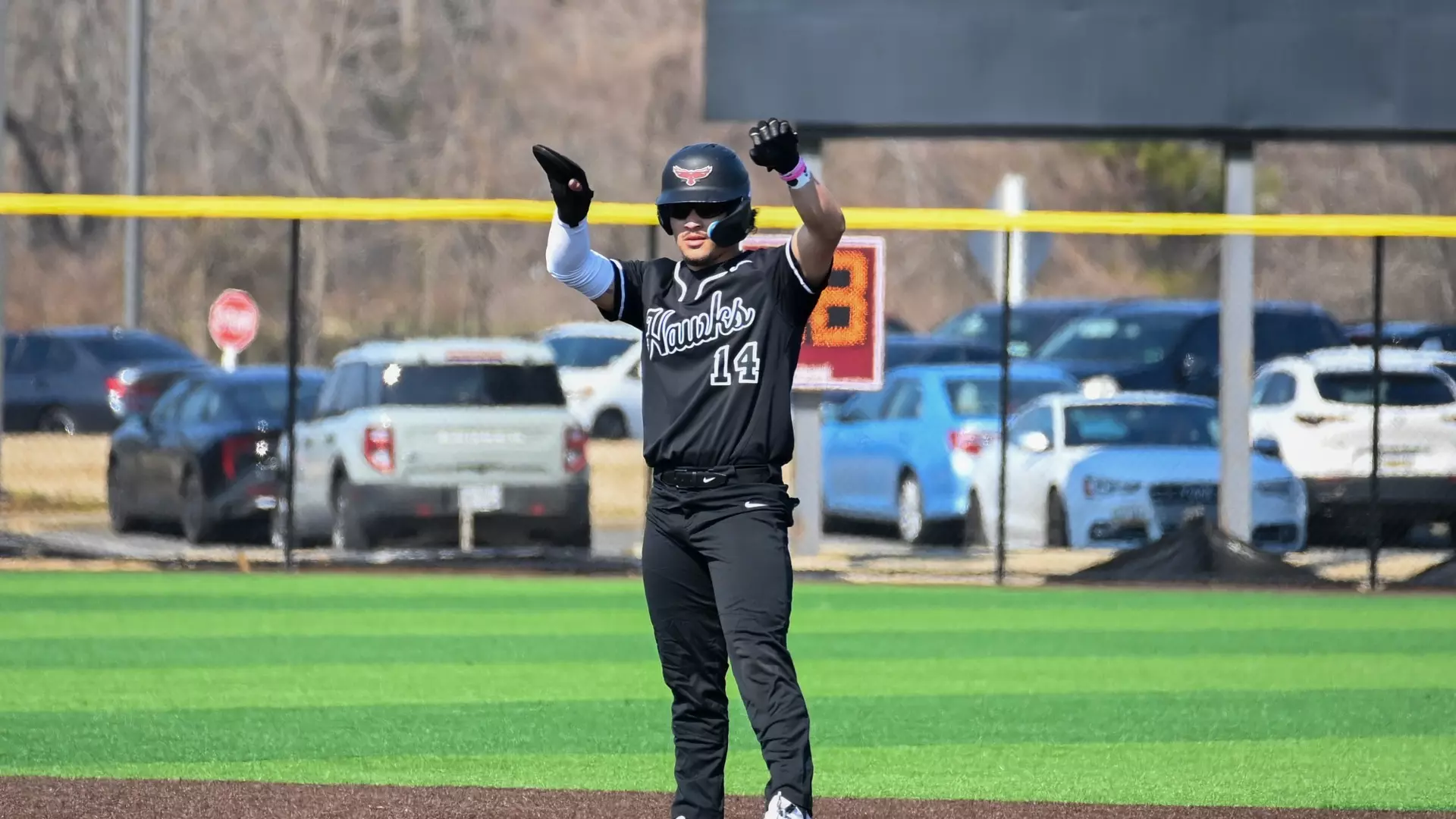
The University of Maryland Eastern Shore Hawks baseball squad celebrated their first win of the 2026 season Saturday, defeating Manhattan College 8-2 in the opening game of a doubleheader at the recently upgraded Hawk Stadium in Princess Anne.
The victory marked a significant milestone for the Hawks, who christened their renovated home field with a commanding performance against the visiting Jaspers. The two teams divided the twin bill, with Manhattan taking the second contest.
Player Amari Hackett contributed to the Hawks’ offensive effort with a key double during the game, helping fuel the team’s eight-run output in their season-opening triumph.
The newly renovated Hawk Stadium provided the perfect backdrop for the Hawks’ breakthrough performance, as the team looks to build momentum following their decisive victory in the first game of the doubleheader.
A suspected drone attack targeted a British military installation in Cyprus on Monday, according to reports from Sky News citing the United Kingdom’s Ministry of Defence.
The incident occurred at RAF Akrotiri, located near the city of Limassol on the Mediterranean island. Officials confirmed that no personnel were injured during the attack on the Royal Air Force facility.
The Ministry of Defence has not released additional details about the nature of the strike or potential damage to the base.
Golden State Warriors announced Sunday that superstar Stephen Curry will be sidelined for at least five additional games while dealing with a right knee condition before medical staff reassess his status.
The point guard has been absent from action since January 30 and will definitely miss Monday’s matchup at home versus the Los Angeles Clippers due to “right patellofemoral pain syndrome,” commonly known as “runner’s knee.” This condition results from overuse and causes discomfort in the area surrounding the kneecap.
Beyond Monday’s Clippers matchup, Curry will be unavailable for Golden State’s upcoming road games against Houston, Oklahoma City, and Utah, plus their home contest versus Chicago scheduled for March 10. The earliest possible return date for the star player would be March 13 when the Warriors host the Minnesota Timberwolves.
Team officials report that while Curry is showing improvement in his recovery, he has not yet resumed on-court activities.
The Warriors currently hold a 31-29 record, placing them eighth in the Western Conference standings. Without their star player, the team has struggled to a 4-6 record in games played before and after the All-Star break during his absence. Most recently, the Los Angeles Lakers dominated Golden State in a 129-101 victory on Saturday.
South Korean President Lee Jae Myung will conduct high-level discussions with Singapore Prime Minister Lawrence Wong on Monday as part of an official state visit focused on strengthening partnerships in artificial intelligence and nuclear energy sectors.
The presidential meeting will include formal discussions between the two leaders, followed by a joint public statement and an official lunch, according to announcements from South Korea’s presidential Blue House.
Officials anticipate the summit will launch formal negotiations to enhance the current free trade agreement between the two nations, the Blue House reported.
Both countries plan to finalize five memorandums of understanding during the visit, addressing cooperation in artificial intelligence technology, small modular reactor development, and broader digital technology initiatives.
President Lee’s itinerary also includes participation in an artificial intelligence conference, a meeting with Singapore President Tharman Shanmugaratnam, and attendance at an official state dinner, presidential officials confirmed.
The death of Iran’s Supreme Leader Ayatollah Ali Khamenei in Saturday’s U.S.-Israeli military strike has not convinced American intelligence officials that Tehran’s government will collapse anytime soon, according to sources familiar with the situation.
While President Donald Trump and other administration figures have indicated that overthrowing Iran’s authoritarian leadership was among Washington’s objectives—alongside dismantling the country’s nuclear and missile capabilities—three intelligence officials tell Reuters they doubt Iran’s weakened opposition movement can bring down the theocratic system that has controlled the nation since 1979.
In a Truth Social video message Sunday, Trump appealed directly to Iranian citizens, stating: “I call upon all Iranian patriots who yearn for freedom to seize this moment … and take back your country.”
However, American officials who spoke with Reuters say while they cannot entirely dismiss the possibility of governmental collapse—particularly given ongoing airstrikes that have eliminated key Iranian personnel and widespread public anger following January’s brutal crackdown on protesters—such an outcome remains unlikely in the immediate future.
Intelligence reports delivered to the White House before the military operation began warned that Khamenei’s elimination could simply result in his replacement by hardline Islamic Revolutionary Guard Corps commanders or similarly extremist religious leaders, two sources revealed.
A White House official with access to internal discussions explained that IRGC leadership is unlikely to surrender voluntarily, partly because they have prospered under an extensive patronage system created to ensure loyalty within their ranks.
These CIA evaluations came after separate intelligence agency reporting that noted zero IRGC defections occurred during January’s massive anti-government demonstrations, which Iranian security forces crushed with extreme violence. According to three additional sources, such military defections would likely be essential for any successful revolutionary movement. These sources asked that their specific agency not be identified.
All sources interviewed for this report demanded anonymity when discussing classified intelligence materials.
Trump’s Sunday announcement that he intends to restart diplomatic contact with Iran suggests Washington expects the current government to remain in power, at least temporarily.
Neither the White House nor CIA provided immediate responses to requests for comment.
On Sunday, Iranian President Masoud Pezeshkian announced that a temporary leadership committee consisting of himself, the judiciary chief, and a Guardian Council representative had assumed the Supreme Leader’s responsibilities.
Security official Ali Larijani condemned the United States and Israel for attempting to “plunder and disintegrate Iran” and threatened harsh retaliation against “secessionist groups” if they take action, according to state television reports Sunday. This followed the two nations’ aerial bombardment campaign against Iran, which allegedly included striking a girls’ elementary school. Reuters was unable to independently verify these state media claims.
American intelligence conversations about Khamenei’s potential elimination have extended beyond questions of leadership transition.
Two officials revealed that since January, agencies have engaged in substantial discussions—without reaching agreement—about whether Khamenei’s death might significantly alter Iran’s approach to nuclear program negotiations with Washington.
Intelligence personnel have also debated how much the Supreme Leader’s removal might discourage Iran from reconstructing its missile and nuclear infrastructure, according to these officials, who requested anonymity for discussing sensitive internal conversations.
After January’s protests, Steve Witkoff, Trump’s special representative and close associate, held multiple conversations with Iranian opposition leader Reza Pahlavi, the former shah’s exiled son. This raised questions about potential American support for his installation should Iran’s government fall, two officials noted.
However, senior administration figures have grown increasingly doubtful in recent weeks that any Washington-backed opposition leader could realistically govern the country, these officials added.
Jonathan Panikoff, a former senior intelligence official now with Washington’s Atlantic Council think tank, explained the challenge: “At the end of the day, once U.S. and Israeli strikes stop, if the Iranian people come out, their success in promoting the end of the regime will depend on the rank and file standing aside or aligning with them.”
“Otherwise, the remnants of the regime, those with the weapons, are likely to use them to keep power,” Panikoff concluded.
When China’s real estate market collapsed under crushing debt, it left behind massive residential developments sitting mostly empty across the nation — including a sprawling complex called “Life in Venice” situated along China’s eastern shoreline.
Located just 90 minutes by car from the busy commercial center of Shanghai, this residential development drew its design inspiration from Italy’s famous floating city, complete with European-influenced artwork and structures linked by waterways and footbridges.
The development was originally marketed as Shanghai’s paradise, offering residents an upscale, peaceful resort-style experience near the ocean. However, real estate values began declining several years back, and by 2024, the project’s builder, Evergrande, filed for bankruptcy protection.
Now, “Life in Venice” resembles a deserted community overlooking the sea, with numerous housing units remaining vacant and unsold.
Real estate values in the area have dropped by more than 50 percent. Numerous villa properties stand empty, reduced to bare concrete and stone shells with their private boat slips sitting unused. A three-bedroom unit in the complex can now be leased for only 800 yuan, equivalent to $116 monthly.
These dramatically reduced costs are attracting individuals looking for a relaxed, budget-friendly lifestyle and an alternative to the intense competition found in China’s largest urban centers.
Several small markets, dining establishments, and a postal service center provide basic necessities for those who have decided to relocate to the area.
During winter months, the development remains mostly peaceful as its inhabitants embrace a more leisurely way of life. Some residents can be seen fishing beside a deflated inflatable duck. Children’s garments hang on lines in common areas. A solitary figure rocks back and forth on a beach swing, looking toward an unused dock extending into the water.
In a sprawling, mostly empty development called “Life in Venice” along China’s coast, a multibillion-dollar recreation of the famous Italian city sits largely deserted. Thousands upon thousands of residential units remain nothing more than concrete and stone shells.
Yet this remote, half-abandoned project has attracted unexpected new inhabitants like Sasa Chen, a former finance worker who walked away from her demanding job in Shanghai’s fast-paced business district.
What drew her there?
Chen spends only 1,200 RMB monthly – roughly $168 – for her unit in this artificial Venice located in Jiangsu province. The incredibly low cost has enabled Chen to step away from working life entirely at just 28 years old.
According to analysts, Chen represents a growing movement of young Chinese citizens relocating to smaller communities and towns, capitalizing on rock-bottom property values that have been dropping dramatically since the COVID-19 outbreak.
This represents a complete shift from earlier generations who valued climbing the social ladder. For decades, China’s emerging middle class rushed to thriving metropolitan areas seeking employment and opportunities that were plentiful as the nation experienced rapid economic growth. However, as the previously booming economy has slowed down, expectations have risen while prospects have shrunk and rivalry has intensified.
The majority of major Chinese corporations, particularly well-paying technology companies, demand employees work from 9 a.m. until 9 p.m., Monday through Saturday – an exhausting routine commonly called the 996 culture. Facing this relentless pressure, some young workers have abandoned their careers entirely, joining a protest movement known as “lying flat” – rejecting traditional career paths and consumer culture in favor of a “low-desire lifestyle.”
Many are reshaping their aspirations to prioritize rest and leisure, similar to what young people in Western countries pursue through FIRE: “Financial Independence, Retire Early.”
This goal is much more attainable in China due to extremely low living expenses in certain areas compared to Western costs.
Property values at the enormous “Life in Venice” complex have dropped by more than half since China’s real estate market declined several years ago, and a meal of noodles or rice at local restaurants costs less than three dollars.
These rock-bottom prices have helped young people like Chen who are willing to relocate to isolated but affordable housing now accessible throughout the nation. Chen calls it an ideal existence: ocean views, fresh air, and minimal rent.
“I have all the time in the world, the freedom of doing whatever I want,” said Chen. “I am living the life that I want.”
“Life in Venice” was originally conceived in the early 2010s as a vacation destination for affluent Shanghai residents, offering an upscale yet serene seaside lifestyle.
However, interest in the enormous development’s 46,000 housing units collapsed when China’s debt-driven real estate bubble burst. The construction company, property giant Evergrande, filed for bankruptcy in 2024.
The location now resembles a ghost town, with numerous villas standing as empty frameworks. Fewer than 20% of units have residents. Deserted vessels sit deteriorating at the crumbling dock while “For Sale” notices and vacant storefronts fill the streets. Still, a small number of residents have settled there, with some fishing in the development’s peaceful waters.
Chen previously worked in a gleaming Shanghai office tower, earning as much as 700,000 yuan ($98,480) annually at a major financial company. However, she had always disliked the concept of traditional employment. After three years, she started planning her exit from China’s demanding white-collar work environment.
Her strategy involved accumulating savings and locating housing with rent so minimal she could survive on investment returns alone.
Her goal became reality last year: Chen accumulated 2 million yuan ($290,000) and secured a large apartment at “Life in Venice.” With such minimal rent, she believes she can remain there permanently without returning to work.
While “Life in Venice” lacks her preferred sour soup hotpot restaurant, home delivery services, or nearby major medical facilities, her new home offers basic amenities including a market and dining options.
Chen once dreaded her demanding nine-to-six schedule, which she described as feeling “like marching to my own death.” Currently, she rises at 10 a.m. daily, spending her time preparing meals, relaxing, and taking extended beach walks.
“I never believed that work is the meaning of life,” Chen said. “My ideal state of life is not to work and stay at places that I like.”
Similar to Chen, numerous young Chinese individuals have departed major urban centers.
Although specific data about workforce departures isn’t available, statistics indicate that between 2019 and 2024, Beijing lost 1.6 million residents in their twenties and early thirties – equivalent to Philadelphia’s entire population – based on the capital’s statistical office records.
“People are quitting this competition, this very clear, linear, upward career track,” said Xiang Biao, director of the Max Planck Institute for Social Anthropology in Germany. “It’s a broader trend.”
China’s economic growth has decelerated recently, expanding just 5% in 2025 – still exceeding the U.S. and other developed nations, but far below the double-digit expansion the country previously experienced.
With the slowing economy, young Chinese face employment challenges. By December, 16.5% of 16-24 year-olds not attending school were jobless.
Others, including 29-year-old Ban Zhao, are completely abandoning corporate competition.
Last summer, Ban relocated from a busy commercial city on China’s eastern coastline to a small community in southwestern Yunnan province. Nestled in a green valley, the town is known for pure air and therapeutic hot springs. There, Ban pays just 800 yuan monthly ($110) for a three-bedroom apartment, converting one room into a yoga studio.
She and her partner work fewer than 20 hours weekly, teaching online yoga classes for income. Otherwise, she explores her beautiful tree-lined neighborhood filled with flowers, frequently enjoying the area’s famous sunshine.
“I can do whatever I want and not do whatever I don’t want,” Ban said. “I live in heaven.”
Some are moving to locations like Hegang, a frigid and isolated coal mining community in northeastern China known for incredibly affordable housing. As natural resources were depleted and mines shut down, young residents departed, leaving Hegang with far more homes than inhabitants.
Units there now cost less than automobiles, making sales simple for real estate agent Yang Xuewei.
Yang has sold over 100 discount apartments to buyers nationwide – including some international clients who contacted Yang after viewing his online property tours. A single-bedroom unit sells for $3,000, while $13,000 purchases a spacious four-bedroom home.
“I don’t know about big cities, I never lived in one,” Yang said. “I can only say that living in Hegang is easy.”
Chen Zhiwu, a University of Hong Kong finance professor, explained that increased living expenses and reduced employment options in larger cities are pushing people toward more affordable locations.
“It’s natural,” Chen said. “Young people are facing reality and thinking hard about their futures.”
Fourth-seeded Peyton Stearns claimed her second professional tennis championship by defeating Taylor Townsend, another American player, in the ATX Open championship match on Sunday in Austin, Texas, winning 7-6 (8), 7-5.
The marathon contest lasted two hours and 22 minutes, with Stearns managing to prevail by delivering eight aces while successfully defending four of seven break point opportunities against her. The former University of Texas standout, who was previously an All-American, national singles champion, and member of two NCAA championship teams in Austin, benefited from playing on familiar territory.
Stearns faced early trouble in the opening set when Townsend broke her initial service game, later finding herself trailing 5-3 and staring down two set points. However, she managed to save both opportunities and then dominated by capturing 10 of the following 11 points. Though she couldn’t capitalize on four of her own set point chances during the tiebreaker, Stearns ultimately prevailed after defending yet another Townsend set point to claim the first set.
Meanwhile, at the Merida Open Akron in Mexico, Spain’s Cristina Bucsa achieved her breakthrough moment by defeating Poland’s Magdalena Frech 6-1, 4-6, 6-4 to earn her maiden tour-level championship.
Following her upset victory over top-seeded Italian Jasmine Paolini in the semifinals, Bucsa successfully converted five break point opportunities and won 32 of 43 first serve points (74.4%) in her match against Frech. She started aggressively by breaking Frech’s opening service game and, despite losing her own serve once, dominated the first set.
The second set marked Bucsa’s first set loss of the entire tournament, but she rebounded strongly in the deciding third set by building a 4-1 advantage. Though she had an opportunity to close out the victory on her own serve, Frech managed to break back. Bucsa immediately responded by breaking Frech’s next service game to secure both the match and the title.
A University of Colorado football player lost his life early Sunday morning when his vehicle crashed in Boulder County, according to head coach Deion Sanders.
Dominiq Ponder, age 23, was operating a 2023 Tesla when the single-vehicle collision occurred around 3 a.m. Sunday, according to reports from DNVR Buffs and FOX 31.
Sanders took to social media platform X to share his grief over losing the young athlete.
“God please comfort the Ponder family, friends & Loved ones,” Sanders wrote on X, formerly Twitter. “Dom was one of my favorites! He was Loved, Respected & a Born Leader. Let’s pray for all that knew him & had the opportunity to be in his presence. Lord you’re receiving a good 1. Comfort us Lord Comfort us.”
Fellow quarterback Colton Allen, who shared the position room with Ponder, expressed his sorrow through an Instagram tribute.
“Dom, you were a blessing to so many people,” Allen wrote on Instagram. “You had a presence about you that just made everything better. You brought so much joy to me and everyone around you. I’m grateful for every lift, every practice, every rep, every conversation we got to share. I’ll carry those with me for the rest of my life. What happened feels so final. It feels heavy. It hurts.”
The Opa Locka, Florida native was beginning his third season with the Buffaloes after taking a redshirt year at Bethune-Cookman in 2023 before making the move to Colorado. During the 2025 season, Ponder appeared in two contests as a backup, completing one passing attempt and rushing twice.
Ponder was expected to compete for a higher position on Colorado’s quarterback depth chart heading into 2026. The tragic accident occurred just one day before the team was set to begin spring practice sessions.
The University of Southern California announced Sunday that their top scorer, Chad Baker-Mazara, has left the basketball program.
Baker-Mazara’s exit comes at a crucial time, with only two regular season contests remaining before the Trojans travel to Chicago for the Big Ten tournament. USC is currently struggling through a five-game losing streak.
University officials did not specify why the graduate transfer departed the team. During Saturday’s home defeat against 12th-ranked Nebraska, Baker-Mazara was spotted sitting among spectators along the baseline instead of with his teammates on the bench throughout the second half.
Given ongoing legal challenges to NCAA eligibility regulations, Baker-Mazara’s extensive 145-game collegiate career appears to have concluded.
The 26-year-old player has competed for five different college programs across six seasons, which included one year at a junior college level. Following single seasons at both Duquesne and San Diego State, he attended Northwest Florida State College during the 2022-23 academic year.
Baker-Mazara experienced his most successful period at Auburn, where he posted averages of 11.2 points, 3.3 rebounds, and 2.5 assists across 73 contests, starting 43 of those games. However, he was removed from an NCAA Tournament first-round matchup against Yale in 2024 after receiving a flagrant 2 foul for elbowing an opposing player; Yale subsequently defeated the fourth-seeded Tigers in an upset.
Despite that setback, Baker-Mazara contributed to Auburn’s rise to the top ranking in the nation for much of the 2024-25 season and their advancement to the Final Four, where they fell to SEC rival and eventual champion Florida.
During his time with USC, Baker-Mazara started 22 of his 26 games and recorded career-high averages of 18.5 points, 4.2 rebounds, and 2.8 assists per contest.
Delaware State University’s women’s basketball squad earned a solid 75-66 triumph over North Carolina Central University, with their reserve players playing a crucial role in securing the victory.
The Hornets received exceptional production from their bench unit, which combined for 24 points during the contest. This substantial contribution from the substitutes proved instrumental in helping Delaware State maintain their advantage throughout the game.
The victory demonstrates the depth and versatility of the DSU women’s basketball program, as head coach has been able to develop talent beyond the starting lineup. Having reliable scoring options coming off the bench gives the Hornets additional flexibility in their rotation and keeps players fresh during critical moments.
Delaware State’s balanced attack and strong bench performance helped them control the tempo against North Carolina Central, ultimately pulling away for the nine-point victory. The win continues to build momentum for the Hornets as they work toward their season goals.
The head of Iran’s soccer federation has cast doubt on whether the country’s national team will compete in World Cup matches scheduled on American soil, citing recent military strikes involving Iran and Israel. Federation president Mehdi Taj expressed uncertainty about his team’s participation in an interview with sports website Varzesh3.
“What is certain is that after this attack, we cannot be expected to look forward to the World Cup with hope,” Taj stated as Iran and Israel exchanged military strikes in an escalating regional conflict. Iran’s team has been placed in Group G for the tournament and is set to compete in two matches in Inglewood, California, with an additional game planned for Seattle.
In NASCAR history-making news from Austin, Texas, Tyler Reddick achieved an unprecedented feat by capturing his third consecutive victory to open the Cup Series season at Circuit of Americas. No driver had previously won the opening three races of a NASCAR Cup Series season until Reddick’s dominant performance on Sunday.
Racing a Toyota owned in part by basketball legend Michael Jordan, Reddick previously claimed victory at the season-opening Daytona 500 and followed up with a win in Atlanta before taking the checkered flag from pole position in Sunday’s road course event. Reddick successfully defended against a strong challenge from Shane van Gisbergen of Trackhouse Racing during the final 20 laps, while Jordan celebrated with the 23XI pit crew as his driver crossed the finish line. Van Gisbergen’s defeat ended his pursuit of a record-tying sixth straight road course victory. This marks Reddick’s 11th career win, adding to his previous COTA triumph in 2023.
At PGA National in Palm Beach Gardens, Florida, Colombian golfer Nico Echavarria claimed the Cognizant Classic title after Shane Lowry suffered a dramatic collapse in the tournament’s final holes. Despite trailing by three strokes with just three holes remaining, Echavarria managed a remarkable comeback to secure a two-stroke victory over Lowry.
The 31-year-old Echavarria carded a 5-under 66 to reach 17-under 267 for the tournament, earning his third PGA Tour title and his first victory on American soil. This win secures Echavarria’s second Masters Tournament appearance. Lowry’s chances crumbled when he sent his tee shot into the water on both the par-4 16th hole, resulting in a double bogey, and repeated the mistake on the par-3 17th.
The Los Angeles Kings made a coaching change Sunday, dismissing Jim Hiller and appointing D.J. Smith as interim head coach for the remainder of the season. The decision came after the team dropped five of their last six contests and slipped out of playoff contention.
This represents the first coaching move by general manager Ken Holland, who had retained Hiller when he assumed front office duties last May. Hiller was only in his second complete season leading the Kings, who appeared lifeless during Thursday’s 8-1 defeat to the Edmonton Oilers.
USC’s men’s basketball program announced that Chad Baker-Mazara, the team’s second-highest scorer, is no longer with the team, though the university provided no explanation for his departure. Baker-Mazara contributed 14 points in the first half of Saturday’s loss to No. 12 Nebraska before taking a hard fall near the baseline.
After playing just three minutes in the second half, Baker-Mazara did not return to the game. Coach Eric Musselman revealed that Baker-Mazara informed him he was unable to continue playing. The 26-year-old graduate student from the Dominican Republic had attended five different colleges during his career, including Auburn, where he helped the team reach last season’s Final Four.
The United States women’s national soccer team extended its shutout streak to six games with a 2-0 victory over Argentina in the SheBelieves Cup in Nashville, Tennessee. Lindsey Heaps contributed both a goal and an assist, while Jaedyn Shaw also found the net in Sunday’s triumph.
Under coach Emma Hayes’ leadership, the U.S. squad has outscored opponents 27-1 across their past seven matches. The team hasn’t suffered a defeat since a 2-1 loss to Portugal in Chester, Pennsylvania, on October 23. The match saw Lily Reale leave due to a right leg injury, and Argentina’s Milagros Martín received a yellow card during stoppage time for pushing Trinity Rodman.
Paralympic champion Oksana Masters represents a unique group of elite athletes who compete in both Summer and Winter Paralympic Games, requiring mastery of completely different athletic disciplines every two years. Masters holds the distinction of being America’s most decorated Winter Paralympian.
Approximately 120 athletes have participated in both Summer and Winter Paralympics over the past two decades. Masters, a double leg amputee, has competed in every Paralympics since 2012, earning medals in Para cross-country skiing and Para biathlon during winter competitions, while also medaling in Para cycling and Para rowing in summer events.
San Antonio Spurs star Victor Wembanyama expressed surprise at his team’s performance following their 114-89 defeat to the New York Knicks at Madison Square Garden, which ended an impressive 11-game winning streak. The Spurs struggled against New York’s defensive intensity and never recovered from a devastating 26-2 run by the Knicks in the opening half.
Wembanyama had anticipated better resistance from his team at the iconic venue, but the Spurs couldn’t match their February dominance. San Antonio had posted a perfect 11-0 record in February, becoming the first NBA team in history to remain undefeated while scoring at least 110 points in every game during a month with 10 or more contests.
Vegas Golden Knights captain Mark Stone exited his team’s game against the Pittsburgh Penguins due to an undisclosed injury sustained in the first period. The injury occurred when Kris Letang delivered what appeared to be a routine stick check to Stone’s left arm in the neutral zone late in the opening period.
Stone immediately showed signs of pain, dropped to one knee, and skated off the ice. The 33-year-old winger has dealt with various injuries throughout his NHL career spanning more than a decade. Stone ranks as the Golden Knights’ second-leading scorer with 60 points in 42 games this season and recently helped Canada reach the Olympic final before falling to the U.S. in overtime.
During a “Saturday Night Live” appearance, U.S. women’s hockey team captain Hilary Knight delivered a comedic moment alongside the recent controversy involving both American gold medal-winning hockey teams. Knight appeared with teammate Megan Keller and men’s team brothers Jack and Quinn Hughes during host Connor Storrie’s opening monologue.
Knight jokingly mentioned that initially only the women’s team was invited to appear, but they decided to include the men as well. Her comment referenced the recent dispute that arose when President Trump invited only the men’s team to attend his State of the Union address, later joking that he would need to invite the women’s team as well to avoid impeachment.
Medical centers throughout Israel quickly relocated patients to reinforced underground facilities over the weekend as Iranian missiles struck the nation, forcing healthcare workers to once again implement emergency wartime procedures.
More than 100 patients were rapidly moved to the basement hospital facility at Hadassah Hospital Mount Scopus’ Gandel Rehabilitation Center in Jerusalem on Saturday night. Medical staff worked swiftly to transfer vulnerable patients to safety as missiles targeted Israeli territory.
Israeli healthcare facilities have experienced similar situations before. Following a 12-day conflict in June 2025 that required hospitals to shift essential services below ground while treating emergency patients under attack, medical personnel found themselves reactivating crisis response plans. During that previous escalation, Soroka Medical Center in Beersheba suffered a direct missile hit, though patients in the affected area had been evacuated to underground areas just hours earlier.
This recent incident allowed hospitals advance warning and additional preparation time. Dr. Moshe Simons, an Orthodox internal medicine physician working in the underground facility during the Sabbath, explained that when alerts first rang out in June signaling Israel’s strike on Iran, medical centers were uncertain about what would follow. This time around, he noted, the evacuation process proceeded much more efficiently.
“We were unsure about the duration,” Simons explained to The Media Line. “While it required eight hours to move patients downstairs previously, we accomplished it faster this time.”
According to Simons, the hospital had already identified which patients from various departments required underground relocation and their designated locations. Medical staff had incorporated knowledge gained from the earlier crisis, and he stated that “operations proceeded more smoothly.”
Approximately 100 patients occupied the underground area at the Mount Scopus facility, with a similar number at the affiliated Ein Kerem hospital in Jerusalem. Medical centers throughout Israel functioned under comparable circumstances.
However, obstacles persist. Simons identified the primary challenge as operating within a single expansive room. Patient beds are divided by blue and white fabric partitions, creating privacy issues for some individuals. Moving equipment and machinery through the narrow central walkway proves challenging but manageable. The enclosed environment offers limited illumination and lacks fresh air circulation. Consequently, one important takeaway from the previous crisis was providing staff with more frequent rest periods during quiet intervals, permitting outdoor breaks during their work shifts.
A young woman named Miriam, who accompanied her friend to the medical facility, described how her friend had been transferred from Ein Kerem to Mount Scopus as warning sirens activated. She characterized the circumstances as “less than perfect” and expressed hope for a brief duration. Nevertheless, she told The Media Line that staff handled everything with professionalism and stressed that her friend maintained positive spirits.
Following national protocols, hospitals nationwide are currently conducting only critical and limited scheduled and outpatient procedures.
During the night, one woman lost her life while more than two dozen others sustained injuries when an Iranian missile impacted central Israel. The fatality, a woman in her 40s, suffered critical wounds in the strike and died while being transported to medical care. Two additional victims remained in moderate condition Sunday morning. Reports indicated children were also wounded in the attack.
Following the initial day of missile strikes, most casualties were minor and happened as people rushed to protective shelters or were injured in related incidents. However, Israel is preparing for more severe injuries.
On March 1, the conflict’s second day, nine people died, 51 sustained injuries, and 11 remained missing after an Iranian missile struck a bomb shelter in Beit Shemesh. Later that same day, three individuals were wounded when a strike hit a Jerusalem roadway.
Throughout the 12-day war, 28 Israelis died and more than 3,000 people required hospitalization.
During the weekend, Magen David Adom (MDA) elevated its alert status to maximum level. All MDA ambulances, mobile intensive care units, emergency motorcycles, and rapid response vehicles operated with full crews, while all 39,000 staff members and volunteers were activated to deliver rapid and effective medical response to any situation.
ZAKA emergency services implemented identical measures. “During recent days, we performed thorough inspections of all emergency vehicles, updated equipment, and addressed logistical shortfalls,” stated ZAKA Vehicle Officer Erez Madmon. “I also ordered siren replacements to ensure they don’t resemble air-raid warnings, showing sensitivity to the public and recognizing the importance of maintaining calm and accuracy even during crises.”
MDA dedicated most of Saturday morning to relocating bedridden patients, those requiring ventilation, and others to secure facilities, utilizing specialized intensive care buses, mobile intensive care units, and ambulances. The emergency response organization also urged public blood donations, particularly from type O donors, for potential emergency use. Multiple blood collection sites opened to accept contributions.
The Health Ministry simultaneously released its own directives, requesting all mental health departments to maintain operations while enabling early patient discharge when appropriate. Healthcare organizations established support telephone lines to offer emotional assistance and help individuals manage stress, anxiety, tension, and other difficulties.
Elderly care facilities and rehabilitation hospitals received requests to consider early discharges and prepare space for potential broader emergencies.
At Assuta Ashdod hospital, however, operations continued normally. All sections, including the nursery, maternity and newborn department, neonatal and intensive care units, already possess complete protection and enable uninterrupted and secure care even during missile strikes, eliminating the need to relocate patients or halt treatment.
Assuta became the nation’s first fully fortified public hospital when it opened in 2017.
“Sirens sounded during my labor pains, but due to the protection, I didn’t need to relocate and stayed with my regular medical team,” said Daniela Cohen, who gave birth at Assuta on Saturday. “I remained in the same room with the same familiar team guiding me calmly and professionally. The experience felt completely secure, without unnecessary stress, and the security situation didn’t affect care continuity or this special moment.”
Despite the stress, there were also moments of peaceful contemplation within these facilities. On Saturday evening, a special Havdalah ceremony took place to mark the Sabbath’s conclusion at Shaare Zedek Hospital in Jerusalem.
“Even during difficult times, both personally and medically, it was essential for us to stop briefly and perform Havdalah together with patients’ families and the dedicated teams who joined the effort and have been working extended hours to both treat patients and ensure their safety,” said Professor Philip Levin, director of general intensive care at the hospital. Six individuals injured in the Beit Shemesh missile attack on Sunday, including a four-year-old boy, were transported to Shaare Tzedek.
Military actions involving the United States and Israel targeting Iran sent ripples through global financial markets early Monday morning, causing sharp declines in stock futures and dramatic spikes in energy prices.
Markets across Asia opened with significant losses, led by Japan’s Nikkei 225, which dropped 2.4% to close at 57,430.18. Australia’s S&P/ASX 200 also declined, falling 0.4% to 9,159.60.
American stock futures painted a similar picture of concern, with the S&P 500 future contract dropping 1.1% while the Dow Jones Industrial Average future fell 1.2%. The Nasdaq composite future also slipped 1.1%.
Investors flocked to traditional safe-haven assets during the uncertainty. Gold prices climbed 2.3% to reach $5,380.60 per ounce, while silver advanced 2.1%.
Energy markets saw the most dramatic movement as traders worried about potential disruptions to Middle Eastern oil supplies. U.S. benchmark crude oil prices surged 6.8% to $71.58 per barrel, while international Brent crude jumped even higher at 7.5% to reach $78.33 per barrel.
Market analysts pointed to the strategic importance of regional shipping lanes. Stephen Innes from SPI Asset Management explained the significance in a market commentary: “Roughly one-fifth of global oil and LNG (liquefied natural gas) flows squeeze through the Strait of Hormuz. This is not an obscure canal. It is the aorta of the global energy system.”
The narrow waterway connecting the Persian Gulf to international waters has seen multiple incidents affecting vessels, raising concerns about countries’ ability to export energy resources to global markets.
Energy analysts warn that continued regional conflicts could lead to sustained increases in both crude oil and gasoline costs for consumers.
Iran’s daily oil exports of approximately 1.6 million barrels, primarily shipped to China, represent another potential supply concern. Any disruption to Iranian exports could force China to seek alternative sources, potentially driving prices higher across global markets.
However, the military actions weren’t entirely unexpected, as U.S. forces had been building up their presence in the Middle East, allowing traders to prepare for potential market impacts.
Last Friday’s trading session had already shown weakness, with the S&P 500 declining 0.4% and marking only its second monthly loss in the past ten months. The Dow industrials dropped 1.1% while the Nasdaq composite fell 0.9%. Bond markets saw Treasury yields decrease as investors sought safer investment options.
Innes noted the market’s current vulnerability, stating: “When markets are fragile, they do not need a knockout blow. They just need another weight on the bar.”
Adding to market concerns was Friday’s inflation data showing U.S. wholesale prices rose 2.9% last month, significantly exceeding economists’ expectations of 1.6%. This unexpected jump could influence Federal Reserve decisions regarding interest rate cuts, as lower rates typically boost both economic activity and investment values but may also fuel inflation.
SALISBURY, Md. – Salisbury University’s nationally-ranked softball team experienced both victory and defeat during their season-opening weekend at home on Sunday.
The Sea Gulls, currently ranked 18th in the nation, managed to secure one win while dropping another game at Margie Knight Sea Gull Softball Stadium. Their triumph came against 25th-ranked Swarthmore College in a dominant 6-0 shutout victory that concluded after six innings.
However, earlier in the day, Salisbury suffered a 4-2 defeat at the hands of The College of New Jersey, resulting in an even split for their opening weekend performance.
The day held special significance for senior player Sam Flowers, who achieved a personal milestone by recording her 100th career hit while wearing a Sea Gulls uniform during the second contest of the afternoon.
The split weekend gives the Sea Gulls a 1-1 record as they begin their campaign, with both games taking place at their home stadium in Salisbury.
Israeli armed forces announced Monday they have launched military operations targeting the Iran-supported militant organization Hezbollah throughout Lebanon.
Residents reported hearing explosions in Beirut’s southern districts, an area widely recognized as a stronghold for the militant group.
The military action represents an escalation in tensions between Israel and the Lebanon-based organization backed by Iran.
Financial markets are preparing for continued uncertainty as artificial intelligence threatens to reshape entire industries, with Wall Street eagerly awaiting next week’s employment figures for additional clues about the technology’s economic impact.
February’s employment report, scheduled for release March 6, takes center stage among upcoming economic indicators, while chip manufacturer Broadcom prepares to deliver one of the final fourth-quarter earnings announcements.
Investment professionals have been fixated on AI’s transformative power in recent weeks, causing stock values in sectors like software development, financial advisory services, and property management to plummet amid fears of widespread industry changes.
“There continues to be this … back and forth about who might be the victim and those that will actually emerge winners because they are harnessing AI as opposed to being replaced by it,” said Kristina Hooper, chief market strategist at Man Group.
“There is very little definitive right now about that, and so I think that will continue to be a concern.”
Share prices in technology-related fields continue showing extreme reactions to artificial intelligence announcements. Even Nvidia, considered a leading indicator for AI trends, saw its stock drop more than 5% Thursday following its quarterly earnings release, despite high investor expectations. Market participants worry whether Nvidia’s major clients can generate adequate profits to support their enormous investments in server farms and related infrastructure.
Although technology stocks have struggled, positive performance in sectors like manufacturing and everyday consumer goods has helped maintain stability across major market indices.
Technology and banking sector declines pulled down primary market measures Friday, with both the S&P 500 and Nasdaq Composite recording their steepest monthly drops in approximately twelve months during February.
The S&P 500 benchmark index showed a 0.5% gain for 2026 through Friday’s close.
“The U.S. equity market is sort of in its late cycle, trying to find the winners and losers of this new disruptive technology and pretty much treading water,” said John Velis, Americas macro strategist at BNY.
Economists predict February will show 60,000 new positions added, according to Reuters polling. This follows January’s unexpectedly strong performance, which delivered 130,000 additional jobs while pushing unemployment down to 4.3%.
January’s employment data eased concerns about labor market deterioration, but “the concern is that January is a one-off,” said Paul Nolte, senior wealth adviser and market strategist at Murphy & Sylvest Wealth Management.
“We saw a good January jobs report, but we also have seen a really weak 2025 for the job market,” Hooper said. “And so the question becomes, where do we go from here?”
Market watchers will also analyze the employment data for hints about Federal Reserve interest rate policy. Futures markets currently indicate the next rate reduction will occur in June or July, following Fed Chair Jerome Powell’s May departure and the potential leadership of nominated successor Kevin Warsh.
The Federal Reserve reduced rates last year responding to employment weakness but halted further cuts in January, and robust job numbers might cause investors to delay their expectations for additional reductions. Lower interest rates typically correlate with higher valuations for stocks and other investments.
BNY’s Velis noted that market responses to employment statistics will reveal which factors most influence equity investors. Strong data accompanied by declining stock prices would “be a sign that the rate argument is important,” Velis explained.
Additional economic announcements scheduled for the coming week include manufacturing and service industry activity measurements. January’s retail spending report is also expected March 6.
Beyond Broadcom’s Wednesday earnings release, financial results are anticipated from retail giants Best Buy and Target.
Financial professionals continue seeking evidence of AI’s economic effects, both beneficial and harmful. During a Reuters interview this week, departing Atlanta Fed President Raphael Bostic suggested the United States might face a period of persistently elevated unemployment as companies implement AI solutions to reduce workforce needs.
“Major technological shifts provoke both excitement and anxiety,” Keith Lerner, chief investment officer at Truist Advisory Services, said in a research note on Thursday. “More recently… optimism has begun to give way to heightened anxiety and increasingly bleak narratives about AI’s impact on work, productivity, and economic outcomes.”
Australia has firmly declared it will not deploy military forces to Iran as tensions continue to escalate throughout the Middle East region, officials announced Monday.
The declaration comes as Israel conducted additional airstrikes against Tehran while Iran retaliated with further missile launches. The weekend brought devastating news with the death of Iran’s Supreme Leader Ali Khamenei in Saturday’s attack, and the United States reporting its initial military losses in the expanding conflict.
Foreign Minister Penny Wong made clear that Australia plans to stay out of the military confrontation entirely.
“Australia is not central to the issues in the Middle East. We didn’t participate in these strikes and we wouldn’t anticipate participating in the future,” Wong stated during a Monday interview with Channel Nine.
Instead of military involvement, Australian officials are focusing their efforts on assisting citizens trapped in the conflict zone. Wong revealed that approximately 115,000 Australians are currently stuck in the region as commercial air travel remains severely disrupted.
The foreign minister acknowledged the government is working with airline companies to develop evacuation strategies, though she admitted the process faces significant obstacles with much of the regional airspace still shut down.
“We understand how distressing and challenging this time is, and we will do all that we can to provide you with information and to support you. The situation is very challenging,” Wong explained to media representatives in Canberra.
Wong indicated that resuming commercial airline operations would likely provide the most practical solution for bringing Australians home, though she refused to specify whether the government might arrange special repatriation flights.
“There is conflict in the region, we’ve seen loss of life across the region and airspace is not open. So whether or not it is an Australian flight or a commercial flight, the flights are not able to occur,” Wong explained.
The ongoing crisis has severely impacted travel connections between Australia and major destinations in Asia and Europe, with the Middle East serving as a crucial transit hub. Major carriers including Etihad and Emirates have suspended multiple flights departing from Australia.
Meanwhile, Defence Minister Richard Marles confirmed that safety protocols have been implemented for roughly 100 Australian military personnel currently stationed at Al Minhad Air Base near Dubai, which supports various United Nations peacekeeping operations.
Argentina’s foreign minister announced Sunday that a military officer from their country who had been held in Venezuelan custody for more than 12 months has been freed and departed the nation.
The officer, Nahuel Gallo, serves with Argentina’s Gendarmerie and was taken into custody in Venezuela during late 2024. His detention created additional strain in the already tense relationship between Argentine President Javier Milei and Venezuela’s former leader Nicolas Maduro, who was later apprehended by U.S. authorities in January and brought to New York.
Argentine officials had previously challenged Gallo’s imprisonment as unlawful through international legal channels.
In a social media message, Gallo’s spouse Maria Alexandra Gomez shared her relief, stating: “I just spoke with Nahuel Gallo and I can inform you that he is already flying to Argentina. We are deeply moved. Victor will be able to hug his father in a few hours.”
SAN ANTONIO — Texas voters will head to the polls Tuesday for what’s shaping up to be one of the most expensive and closely watched Senate primaries in the nation, marking the first major electoral test of the 2026 midterm cycle.
Republican Senator John Cornyn finds himself in an unusual position for a Texas GOP incumbent, battling to avoid becoming the first Republican senator from the Lone Star State to fall in a primary. His main challengers include Texas Attorney General Ken Paxton and Congressman Wesley Hunt, both seeking to unseat the longtime senator.
On the Democratic side, party leaders believe they have their strongest opportunity since 1988 to capture a Texas Senate seat, though they must first navigate their own competitive primary battle.
Congresswoman Jasmine Crockett, known for her sharp exchanges with President Donald Trump, emphasized her Washington experience during a Sunday church visit, highlighting the federal dollars she’s secured for her district.
“So yes, I will clash with folk when it’s time to do so but I actually govern as well,” Crockett stated during her appearance.
Crockett acknowledged the Black women who form her base of support across Texas and beyond. If victorious, she would make history as the first Black woman elected to represent Texas in the U.S. Senate. Her campaign received a boost Friday with an endorsement from former Vice President Kamala Harris, while Senators Angela Alsobrooks of Maryland and Ayanna Presley of Massachusetts joined her on the campaign trail over the weekend.
Meanwhile, State Representative James Talarico, a seminary student who promotes his ability to attract Republican voters, planned a San Antonio rally as part of what he calls his final campaign tour.
The spotlight has largely remained on Cornyn’s vulnerable position, with both parties pouring massive resources into the March 3 contest.
“Complacency is a killer,” Cornyn warned supporters Saturday during a stop at a seafood establishment in The Woodlands, near Houston. “It kills relationships. It kills careers.”
Republican leadership in Washington has expressed concern for months about potentially losing what was once considered a safe Texas seat if GOP voters select Paxton, who appeals to Trump supporters but carries significant legal baggage.
Fundraising has reached unprecedented levels for this primary, with Talarico outpacing Crockett in total donations raised. His campaign alone has invested $13 million in television advertisements this year, surpassing all other entities in the race, according to AdImpact, which monitors political advertising.
Total spending on advertising and reserved airtime has exceeded $110 million ahead of Tuesday’s vote, setting a new record for Senate primary contests. Cornyn’s campaign and supporting organizations account for more than $67 million of that total, primarily targeting Paxton while also working to prevent Hunt’s advancement.
Should no candidate secure 50 percent of the vote Tuesday, the primary will advance to a runoff between the top two finishers on May 26.
President Trump’s Friday appearance in Texas, where he spoke about energy policy at the Port of Corpus Christi, attracted all leading Republican Senate hopefuls. Though Trump indicated he’s “pretty much” made his endorsement decision, he stopped short of revealing his choice.
“We have a great attorney general, Ken Paxton. Where’s Ken? Hi, Ken,” Trump remarked. He continued, “And we have a great senator, John Cornyn. Hi, John.”
Acknowledging their competition, Trump observed: “It’s going to be an interesting one, right? They’re both great people.”
Despite his extensive Texas political background, Paxton has positioned himself as an outsider to Washington politics and a devoted Trump ally.
“I’m not going up to Washington, D.C., to join the swamp club,” Paxton declared at a Fort Worth campaign stop. “I will go up there and fight for you.”
The University of Delaware softball squad wrapped up their Blue Hen Invitational in impressive fashion Sunday, March 1, claiming a pair of shutout victories at home.
The Blue Hens dominated Bryant University 7-0 in their first game before completing the sweep with an 8-0 triumph over Le Moyne College. Both contests showcased exceptional pitching from Delaware’s staff.
Karli Challburg delivered a masterful performance on the mound in the opener against the Bulldogs, allowing no runs throughout the game. Josie Crossman followed suit in the nightcap, blanking Le Moyne to secure the second shutout of the day.
Delaware’s offense exploded for five home runs combined across both games, with Sorella Gallucci leading the power surge by launching two homers in the victory over Le Moyne.
The doubleheader sweep provided a strong finish to the Blue Hen Invitational tournament for the home team, demonstrating both offensive firepower and pitching depth as the season continues.
The University of Maryland Eastern Shore softball squad endured a difficult road trip, dropping both ends of a doubleheader against North Carolina A&T.
The Hawks were unable to find their rhythm in either game against the Aggies, suffering defeats in both contests of the twin bill.
The losses mark another challenging outing for UMES as they continue their season on the road against conference competition.
Commercial satellite photography is offering a bird’s-eye view of recent military operations inside Iran, revealing the scope of coordinated strikes carried out by United States and Israeli forces.
The aerial imagery, captured by private satellite companies, documents damage at numerous Iranian military installations across the country. Among the sites photographed is the Konarak naval facility in southern Iran, where smoke can be seen billowing from the base following Sunday’s attacks.
The satellite pictures provide visual evidence of how Iran is dealing with the aftermath of the strikes, which targeted hundreds of locations throughout the Islamic Republic. The commercial imagery offers insight into both the extent of the military action and Iran’s response to the coordinated assault on its infrastructure.
Following nearly five decades of internal divisions and political splits, Iran’s opposition movements are making unprecedented efforts to unite in the wake of January’s mass protests and ongoing demonstrations within the country. These unification attempts gained significant momentum after February 28, when a joint U.S.-Israeli preemptive attack eliminated Iran’s highest-ranking political and military officials, including the supreme leader, dramatically reshaping the opposition environment both domestically and internationally.
Recent developments have sparked new hope among opposition circles. Several major Iranian Kurdish political organizations have successfully merged their operations, while republican factions held a private gathering in London called the “Congress for Freedom in Iran” to explore greater cooperation. Though traditional leftist parties with nearly seven decades of history have not yet created a unified coalition, younger progressive activists recently exiled from Iran have established the “Inclusive Alliance of the Revolutionary Left.” This new organization, founded by prominent student movement leaders who fled Iran in recent years or months, represents a fresh approach to overcoming generational divisions within leftist circles.
In a surprising diplomatic move, Reza Pahlavi, the prominent figure among monarchist and right-wing supporters, recently held discussions with progressive intellectuals in Paris. The meeting included distinguished Iranian thinkers such as Dariush Ashouri, a founding member of the Iranian Writers’ Association. This organization historically faced persecution under both the monarchy, when SAVAK repeatedly jailed its members and banned their publications, and later under the Islamic Republic, which executed or assassinated several members.
Also present at the Paris gathering was Chahla Chafiq, an Iranian author and sociologist living in exile who has written extensively critiquing political Islam and Islamic totalitarianism. Some Pahlavi allies characterized the meeting as an attempt to gain leftist intellectual support. However, controversy arose due to the attendance of Yasmine Pahlavi, his spouse, whom critics associate with the phrase “Death to the three corrupt ones: the mullah, the leftist, and the mojahed.” Many leftist activists viewed this slogan as directly targeting them, especially given widespread public rejection of clerical rule and the unpopularity of the People’s Mojahedin Organization of Iran (MEK) among broad segments of Iranian society.
The Paris meeting generated significant criticism. Some opponents accused the participating intellectuals of aligning with Pahlavi’s dominant political movement, drawing parallels to 1979 when intellectuals were marginalized amid mass support for Ayatollah Ruhollah Khomeini. Pahlavi has pursued alliance-building not through established political parties but by engaging influential individuals, particularly prominent social media personalities and celebrities. During the “Woman, Life, Freedom” demonstrations, he departed from an earlier coalition with moderate and progressive figures, while his inner circle has since promoted the message “One country, one flag, one leader.”
Political analysts argue that any alliance excluding Iran’s diverse ethnic populations and the broad range of political and social movements within the 95 million Iranian population, both inside and outside the country, will likely fail to achieve meaningful ground-level impact.
Fariba Balouch, a political activist advocating for Iran’s Balouch community rights, maintains that including historically marginalized ethnic groups in a broad coalition would increase public participation in revolutionary change.
In an interview with The Media Line, she emphasized that opposition unity is crucial for removing the Islamic Republic but must be founded on genuine acceptance of Iran’s diversity. “In the decisive circumstances we are facing today, unity is a necessity for the overthrow of the Islamic Republic. However, such unity will only be effective if it is built on the genuine acceptance of the diversity and plurality that exist within Iran.”
She characterized Iran as a nation of marginalized ethnic, religious, and linguistic communities, stressing that excluded groups must be fully represented in any unified movement. “Iran is a country of multiple nationalities, cultures, religions, and languages, many of which have had their voices ignored or suppressed in recent decades. The Balouch people, who have faced structural discrimination throughout these years, must find their rightful place within this unity in order to secure their rights.”
Balouch emphasized her support for partnerships based on equality and substantive power-sharing rather than superficial leadership changes. “We support any alliance that is founded on justice, equality, and the meaningful participation of nationalities in power, an alliance whose aim is not merely to replace figures, but to transform the fundamental structures of power.”
The collaborative efforts among major Iranian Kurdish parties, many of which have conducted armed resistance against the Islamic Republic, have received widespread approval. However, Reza Pahlavi issued a statement warning against “separatism” and implicitly threatening Kurdish parties with military action, drawing strong negative reactions. Kurdish organizations responded critically, claiming the former crown prince was using the “worn-out baton of separatism accusations” to silence them, similar to the Islamic Republic’s tactics. This exchange appears to have widened the gap between Pahlavi and Kurdish groups, many of which say they seek autonomy arrangements similar to Switzerland’s federal system rather than independence.
Meanwhile, independent organizations, including supporters of the Woman, Life, Freedom movement within Iran, are working to establish a new coalition.
Shirin Shams, a leader of the Women’s Revolution Collective, told The Media Line the initiative directly responds to activists inside the country demanding a democratic, pluralistic alternative. “We are building an organized and inclusive network that will create an active and effective connection between forces inside and outside Iran.”
She indicated a formal announcement is approaching and described the initiative as both an opposition alliance and a transitional framework. “Our goal is to generate synergy and unity among all forces committed to the Woman, Life, Freedom movement in order to overthrow the Islamic Republic and prepare a political alternative for the transitional period, one that is distinct and rooted in Iranian society.”
January’s protests demonstrated that despite millions taking to the streets, the lack of organized leadership made it nearly impossible to challenge a state prepared to deploy armored forces without suffering massive casualties and social chaos. Currently, as opposition forces view the Islamic Republic as being in its most vulnerable state since 1979, unity and coalition-building efforts have accelerated—a perception strengthened by the February 28 targeted strike that eliminated much of the regime’s leadership and created uncertainty about succession and command structure.
Within the country, the opposition includes notable figures such as Nobel Prize winner Narges Mohammadi, along with intellectuals representing leftist, centrist, and nationalist perspectives. Most are either imprisoned or effectively held captive by the state. Nevertheless, student organizations, women’s rights advocates, labor organizers, teachers’ councils, and retirees’ associations continue coordinating strikes and protests and may play a crucial role at a pivotal moment.
In Ilam, a student named Farzaneh suggested that the visible presence of competing political visions could prevent a new power monopoly after the regime’s collapse. A diverse opposition, she argued, would prevent the revolutionary process from consolidating under one dominant voice.
“It can first offer practical strategies for struggle,” she explains, “at the same time, ensure that power is not monopolized by one specific group after the fall of the Islamic Republic. It can also reduce public despair and disengagement if the revolutionary process becomes prolonged, because a range of options rooted in different political tendencies and supported by various groups and movements can lead to meaningful participation by the entire population.”
For years, the Islamic Republic and its intelligence apparatus have worked to penetrate opposition movements inside and outside the country to spread mistrust and create divisions. A unified coalition—or multiple coordinated coalitions—across ideological boundaries could therefore pose a strategic challenge to the regime. The regime’s Ministry of Intelligence has repeatedly claimed infiltration among opposition groups to prevent unity. Some of these operations have reportedly involved discrediting activists by impersonating members of rival factions. Recently, Majid Khadami, head of the IRGC Intelligence Organization, stated that “internal disagreements among traditional anti-regime groups over the timing and leadership of unrest, and the refusal to accept monarchists’ centrality,” were among the reasons the January protests did not lead to the regime’s overthrow. He added that IRGC intelligence has intensified efforts through “infiltrators” to disrupt the planners and executors of what he described as combined operations against the regime.
Although the Islamic Republic’s intelligence agencies—echoing the late Ali Khamenei—have blamed the January uprising on foreign powers such as the United States and Israel, even regime-affiliated figures have acknowledged that accumulated public grievances were the main cause. Mohammadreza Javadi Yeganeh, a former member of the Government Information Council, wrote on X that the “continuation of political obstruction” in response to public demands is concerning. Sociologist Ahmad Bokharaei told Eghtesad News that following the violent suppression of the uprising, many young people have become fearless and that anger has “transformed into resentment.”
In this environment, coordinated action among opposition parties, after nearly half a century of fragmentation, could provide new energy to protest movements that have resurged in public spaces, especially in universities. Despite harsh repression, the regime appears increasingly challenged in its attempts to suppress dissent.
Kuwait International Airport came under drone attack Saturday, leaving multiple airport workers with minor injuries and causing damage to one of its main terminals, according to Kuwait’s aviation authority.
The Directorate General of Civil Aviation reported that the unmanned aircraft struck Terminal 1, prompting immediate emergency response protocols. Abdullah Al-Rajhi, speaking for the aviation directorate, confirmed that authorities quickly secured the area following the incident.
“Assessment, repair, and restructuring of operations are currently underway, adhering to the highest safety standards,” Al-Rajhi stated.
Meanwhile, drone attacks also struck Bahrain, with one unmanned aircraft hitting a residential structure in Manama, the nation’s capital. A second drone went down in Bahrain’s eastern region.
Warning sirens blared throughout Bahrain and other Gulf nations, with Oman being the sole exception to experience the alerts.
The Iranian assault extended to Saudi Arabia as well, with missiles and drones striking both Riyadh, the Saudi capital, and the country’s Eastern Province.
Regional and world leaders have strongly criticized the attacks. Gulf state officials have been communicating with each other in recent hours to voice their unified opposition to Iran’s military actions.
Multiple professional tennis players find themselves trapped in Dubai following the closure of regional airspace after U.S. military operations against Iran over the weekend.
Among those unable to leave the United Arab Emirates is Daniil Medvedev, the former top-ranked player who just captured his 23rd ATP championship at the Dubai Duty Free Tennis Championships on Saturday. The Russian star is accompanied by his family and coaching staff.
Also stranded are Tallon Griekspoor, who was forced to withdraw from the final due to injury, and Andrey Rublev. The airspace shutdown occurred following Saturday’s American military strikes on Iranian targets, creating uncertainty about when travel will resume.
The 2021 U.S. Open winner shared his situation with Bolshe Tennis, explaining that departure plans remain completely unclear. All affected players are expected to participate in the upcoming BNP Paribas Open in Indian Wells, California, where main draw competition begins Wednesday.
“The situation is unusual, but basically, the only thing is that the airspace is closed, naturally,” Medvedev explained to the Russian outlet, as reported by tennisuptodate.com. “So, no one knows when we’ll be able to fly out. It’s not clear whether this will last long or not.”
“We’re just waiting to see what happens in the coming hours or days. They keep gradually pushing back the airport reopening time,” he added.
Despite the uncertain circumstances, the 30-year-old Russian maintains his composure and reports feeling well under the challenging situation.
“As strange as that sounds, on the court, I’m very emotional, but in real life, it might actually help me to be more emotional at times – so, for me, everything is normal,” Medvedev explained. “Naturally, I’ve received a lot of messages from friends and family, and everyone is worried, but I can say for my part that everything is fine.”
Both Medvedev and Rublev are scheduled to participate in Tuesday’s Eisenhower Cup mixed doubles exhibition at Indian Wells. Medvedev will partner with rising Russian talent Mirra Andreeva, while the 28-year-old Rublev is paired with American player Amanda Anisimova.
This marks Medvedev’s second Dubai championship, having previously won the tournament in 2023. The world No. 11 entered last week’s competition ranked outside the top 10.
Griekspoor, the 25th-ranked Dutch player, suffered a left hamstring injury during his semifinal victory over Rublev, who holds the 18th position in world rankings.
The stranded group extends beyond singles players to include doubles champions and runners-up from the Dubai tournament. Finland’s Harri Heliovaara and Britain’s Henry Patten, who won the doubles title, remain stuck alongside defeated finalists Mate Pavic of Croatia and El Salvador’s Marcelo Arevalo.
Tennis coaches, tournament officials, and sports journalists covering the Dubai event also find themselves unable to depart the emirate.
Currency markets experienced significant volatility Monday as investors sought safer financial havens amid escalating military conflict in the Middle East that has disrupted global energy supplies.
The U.S. dollar strengthened while the euro weakened after joint American and Israeli military operations in Iran resulted in the death of Supreme Leader Ayatollah Ali Khamenei, creating political uncertainty and heightening fears of extended regional warfare.
The Swiss franc, traditionally viewed as a safe investment during times of crisis, increased approximately 0.2% against the dollar and surged 0.6% versus the euro to reach its highest point since 2015 at 0.9030 during early Asian trading hours.
Meanwhile, the euro declined 0.3% to $1.1781, and the Japanese yen showed mixed performance, ultimately trading slightly lower at 156.32 against the dollar due to Japan’s heavy reliance on oil imports.
Other currencies tied to energy-importing nations also suffered losses, with the British pound and Australian dollar each dropping more than 0.5%, while China’s yuan fell about 0.2% in offshore markets given China’s status as Iran’s primary oil customer.
BNZ strategist Jason Wong in Wellington expressed uncertainty about the conflict’s duration and economic impact. “You don’t know how long this is going to last, how high oil is going to go, how long the Strait of Hormuz is going to be closed,” Wong stated. “The initial reaction is mild risk off, and you’ve just got to take each day as it comes.”
Israeli military officials confirmed their air force successfully eliminated the 86-year-old Khamenei, with Iranian state media acknowledging his death and triggering a critical leadership succession process.
Combat operations continued through Sunday, with Iran retaliating against the attacks. The Iranian Revolutionary Guard reported strikes against three American and British oil tankers, while explosions were documented in Dubai and Doha.
Energy markets responded immediately to the disruption, with oil prices jumping approximately 9% during early Monday trading as seaborne transportation faced significant interference.
Currencies from oil-exporting countries like Canada and Norway remained relatively stable during early Asian market hours, while the risk-sensitive Australian dollar dropped 0.7% to $0.7065. Market analysts anticipate energy-importing nations will face the most sustained economic pressure.
Wells Fargo analysts highlighted particular concerns for European markets in a research note. “The euro is in a difficult spot,” the analysts wrote. “Europe’s natural gas storage refill season is about to begin and the EU is heading into it with record-low gas in storage, implying it will need to buy a large chunk of energy right as prices potentially shoot higher.”
Israeli military spokesperson Lieutenant Colonel Nadav Shoshani indicated numerous targets remain but ruled out deploying ground troops. President Donald Trump suggested to the Daily Mail that military operations could continue for approximately one month. “We figured it will be four weeks or so. It’s always been about a four-week process,” Trump said.
Shipping data from Sunday revealed the conflict’s impact on maritime trade, with at least 150 vessels carrying crude oil and liquefied natural gas anchored in open Gulf waters beyond the Strait of Hormuz, while dozens more remained stationary on the opposite side of the critical shipping passage.
As tensions escalate between Israel and the United States against Iran, Syria finds itself at a crossroads, potentially moving away from years of Iranian dominance in the region.
The war-torn nation now presents a dramatically different landscape compared to previous years of conflict. Syria’s emerging political leadership is working to reshape the country’s regional relationships, influenced by widespread public resentment over Iran’s involvement in the Syrian civil war.
A recent declaration from Syria’s Ministry of Foreign Affairs and Expatriates signals this transformation in official policy. The statement, reviewed by The Media Line, criticized Iranian strikes against multiple Arab nations and expressed Damascus’s support for these countries, opposing any threats to their independence and safety.
Political experts note this represents a significant shift from the previous era, when Syrian foreign policy closely mirrored Tehran’s interests under Bashar Assad’s leadership. The change reflects Syria’s intention to distance itself from alliance-based politics and rebuild relationships with Arab neighbors and the broader region.
Understanding current Syrian perspectives requires examining Iran’s deep involvement in the country during the early stages of the war. Tehran provided direct military and security support, backing the former government, deploying advisors and fighters, and supporting various armed factions.
This involvement created lasting impacts on Syrian communities, especially among citizens who consider Iran a key participant in military campaigns that struck urban areas, neighborhoods, and civilian zones. These experiences fostered widespread anti-Iranian sentiment that intensified as civilian casualties continued rising.
After the former regime’s downfall, Syria experienced a gradual pullback of Iranian-affiliated forces and organizations as part of new political and security frameworks designed to minimize foreign interference and reconstruct government institutions.
Many Syrians view this withdrawal as the start of a fresh era, particularly as discussions grow about rebalancing international relationships and abandoning the rigid alliances that defined the earlier period.
Widespread Syrian relief regarding strikes against Iran comes as no surprise. Many citizens believe current events extend beyond immediate military conflict and connect directly to wartime memories and traumatic personal experiences.
Hussein Al-Saeed, an Aleppo resident, shared with The Media Line that today’s developments “carries symbolic meaning for many Syrians, because they feel that a party that was part of their suffering is now facing major challenges. This gives them a sense that times are changing and that the region may be entering a new phase.” He clarified that these feelings don’t stem from wanting war itself, but rather from hoping for reduced foreign interference that burdened the nation for years.
Damascus journalist Shireen Al-Masri explained to The Media Line that public sentiment remains complicated but leans toward believing “what is happening today may ease the intensity of the conflicts that have affected Syria.” She noted that many aren’t celebrating warfare, but think regional rebalancing could benefit Syria internally. This perspective also connects to widespread desires for stability and rebuilding, and moving beyond the divisions that have blocked political or economic advancement.
In Idlib, activist Iyad Aref told The Media Line that community reactions directly tie to memories of blockades and bombing campaigns. Local residents believe “a decline in Iranian influence in the region may reduce the chances of repeating scenarios of military intervention in other countries.” He added that many Syrians interpret these developments as part of a wider struggle for Middle Eastern influence, not simply a conflict between two nations or two alliances.
From the south, young resident Ayham Mahmoud told The Media Line that his generation matured during warfare and foreign interventions, therefore viewing current events as a chance to alter established patterns. He emphasized that “the joy is not about the war itself, but about the possibility of ending a phase in which Syrians were an open arena for conflict,” adding that many hope this will reduce security and military pressures on the region.
In Qamishli, a humanitarian worker who requested anonymity indicated that public attitudes also carry a humanitarian aspect. Some Syrians feel that “any retreat in the influence of forces that participated in the war may help turn the page on the past.” However, she stressed that most people want stability above everything else, and that citizens simultaneously worry about expanding regional conflicts and their effects on the entire area.
Well-known Syrian activist Hadi Al-Abdullah expressed a much more intense reaction, connecting reports of Iranian leadership deaths to Syrians’ wartime losses. “The Supreme Leader Ali Khamenei has been transferred, and his body is being pulled out from under the rubble. This reminds me of the days when we used to pull the bodies of our children from under the rubble—our children whom the Iranians killed, whom Ali Khamenei, the head of evil, the head of crime, the head of injustice, sent. He has been killed along with a group of Iranian officials. These criminals have deeply shed the blood of the Syrians, Iraqis, Lebanese, and Yemenis, and they have shed the blood of Arabs and Muslims. I am very happy about the killing of the criminals, and I cannot hide my joy.”
Despite these popular feelings among certain groups, Syria’s new leadership maintains careful and measured official messaging centered on sovereignty principles and non-interference, advocating for diplomatic resolutions while showing awareness of the delicate current situation. Damascus recognizes that direct participation in polarizing conflicts could create new pressures when it’s working to establish internal stability, rebuild the economy, and secure international backing.
Political analysts suggest the divide between government statements and public opinion represents a normal characteristic of political transitions, as administrations tend to pursue careful balance while societies express emotions more directly. Meanwhile, Syrian leadership seeks to reposition the country as a regional player committed to avoiding escalation, an approach that could help establish new partnerships and rejoin the regional community.
Ultimately, Syria seems to be beginning a new chapter, where regional developments are seen not simply as military confrontation between major powers, but as part of broader reshaping of regional dynamics that significantly influenced the Syrian war’s trajectory.
While public opinion reflects both relief and caution, the government continues using diplomatic language to strengthen stability and begin a new chapter in international relations. Many Syrians hope these changes will mark the beginning of the end of a lengthy period of interventions and conflict, for which their country has paid an enormous cost.
Escalating military tensions in the Middle East sent oil prices soaring on Monday as investors fled to safer investments amid concerns the conflict could drag on for weeks.
Brent crude oil prices leaped 9% to reach $79.42 per barrel, while U.S. crude oil climbed 8.6% to $72.61 per barrel. Gold also gained ground, rising 1.4% to $5,350 an ounce as investors sought refuge from market volatility.
The price spike comes as military operations involving the United States and Israel against Iran continue with no signs of de-escalation, while Iran has responded with missile attacks throughout the region, raising fears neighboring countries could be drawn into the fighting.
In an interview with the Daily Mail, President Donald Trump indicated the conflict might persist for another four weeks, stating on social media that attacks would continue until American goals are achieved.
Market attention has focused on the Strait of Hormuz, a critical shipping lane through which approximately one-fifth of global seaborne oil and 20% of liquefied natural gas passes. Though the waterway remains open, ship tracking data reveals tankers accumulating on both sides, with crews either fearful of attacks or unable to secure voyage insurance.
“The most immediate and tangible development affecting oil markets is the effective halt of traffic through the Strait of Hormuz, preventing 15 million barrels per day (bpd) of crude oil from reaching markets,” said Jorge Leon, head of geopolitical analysis at Rystad Energy.
“Unless de-escalation signals emerge swiftly, we expect a significant upward repricing of oil.”
Extended high oil prices could reignite inflation worldwide while acting as an additional cost burden on businesses and consumers that might reduce economic demand.
OPEC+ members agreed Sunday to a modest production increase of 206,000 barrels daily for April, though much of that oil must still navigate Middle Eastern shipping routes by tanker.
“The nearest historical analogue in our view is the Middle East oil embargo of the 1970s, which increased oil prices by 300% to around $12/bbl in 1974,” said Alan Gelder, SVP of refining, chemicals and oil markets at Wood Mackenzie.
“That is only US$90/bbl in 2026 terms. Eclipsing this in today’s market concerned about significant losses of supply seems very achievable.”
The oil shock would particularly impact Japan, which relies entirely on imported oil, contributing to a 1.1% decline in Nikkei futures.
U.S. stock markets also felt the pressure, with S&P 500 futures dropping 0.8% and Nasdaq futures falling 0.9%.
Currency markets reflected the oil price shock as the dollar weakened 0.2% against the safe-haven Swiss franc to 0.7673. However, since America exports more energy than it imports, and U.S. Treasury bonds remain attractive during uncertain times, the dollar found some support, pushing the euro down 0.3% to $1.1780.
The Japanese yen’s typical safe-haven status was complicated by Japan’s complete dependence on oil imports, leading to mixed currency flows. The dollar gained 0.2% to 156.31 yen while rising significantly against the Australian dollar, which traders often sell during periods of global uncertainty.
In bond trading, 10-year Treasury futures strengthened 3 ticks, with yields having dropped below 4% last week for the first time since late November.
Bond prices had already received a boost Friday when UK mortgage company MFS entered administration following accusations of financial misconduct. The firm’s collapse raised broader credit concerns, as major banks were among its lenders. MFS had outstanding debts of 2 billion pounds ($2.69 billion).
The banking sector news, combined with concerns about artificial intelligence-related stocks, weighed on Wall Street more broadly.
Investors must also navigate a busy week of U.S. economic releases, including the ISM manufacturing survey, retail sales figures, and the closely watched employment report.
Weak economic data could undermine confidence following a disappointing fourth quarter, but might also increase expectations for Federal Reserve interest rate cuts.
Current market pricing suggests a 53% probability of rate reduction in June and approximately 60 basis points of cuts throughout the year.
Warning sirens echoed throughout northern Israel on Monday after rockets were launched from Lebanese territory, according to Israeli military officials. This marks the first attack originating from Lebanon since the United States and Israel began conducting military operations against Iran.
A ceasefire agreement brokered by the United States in 2024 brought an end to the conflict between Israel and Lebanon, concluding over a year of combat with the Lebanese militant organization Hezbollah. The fighting had escalated to Israeli military operations that significantly damaged the Iranian-supported group. Both nations have since accused each other of breaking the truce terms.
Hezbollah has not yet responded to reports of Monday’s rocket launch from Lebanese soil.
The Shiite Muslim organization, which has served as one of Iran’s key regional partners in the Middle East, declared support for Iran on Saturday while remaining unclear about potential military involvement.
Israeli military officials later confirmed that defense systems successfully intercepted one rocket while additional projectiles landed in uninhabited regions.
Military representatives reported no casualties or property damage from the incident.
Stock prices for Australia’s national airline Qantas Airways dropped sharply on Monday, falling more than 10% to reach their lowest point in nearly a year following weekend military strikes involving the United States, Israel and Iran that sent fuel costs soaring.
When trading began Monday in Australia, Qantas stock prices declined as much as 10.4% to A$8.92 per share – marking the lowest trading level since May 2, 2025. By late Monday, the losses had moderated somewhat with shares down 5.8% by 2345 GMT.
International aviation continues to face significant disruption as the Iranian conflict has forced major Middle Eastern travel centers like Dubai and Doha to shut down operations for a second consecutive day, leaving tens of thousands of travelers stranded across the globe and canceling thousands of scheduled flights.
Other regional carriers also experienced stock declines, with Virgin Australia – the country’s second-largest airline – seeing shares drop as much as 3.5% on Monday to A$3.03 each, hitting nearly month-low levels before recovering to post gains of approximately 1.9%.
Meanwhile, Air New Zealand’s stock fell up to 0.5% to NZ$0.553 per share, reaching its lowest trading point since April 7, 2025, though the airline’s losses were later recovered to close unchanged for the day.
Nearly 500 Russian citizens are preparing to leave Iran by traveling through Azerbaijan, Russia’s embassy in Baku announced Sunday.
The Russian diplomatic mission expressed appreciation to Azerbaijan for their cooperation in the evacuation effort. “We would like to express our gratitude to the Azerbaijani side for their assistance, including for the prompt consideration of issues related to the issuance of border crossing permits,” the embassy stated on its Telegram channel.
According to a government source in Azerbaijan, 192 people have already been evacuated from Iran to Azerbaijan during a 38-hour period, with 82 of those individuals being Azerbaijani citizens.
Russia’s foreign ministry has advised Russian citizens to either relocate to safer areas within Israel and Iran or to leave both countries entirely following recent military actions conducted by Israel and the United States.
Crude oil markets experienced their sharpest spike in months on Monday, with prices climbing over 8% as military tensions between Iran and Israel intensified, threatening vital shipping lanes in the Middle East.
International Brent crude reached a peak of $82.37 per barrel before settling at $79.34, marking an increase of $6.47 or 8.88% by late Monday. Meanwhile, U.S. West Texas Intermediate crude climbed $5.36 to $72.38 per barrel, after earlier touching $75.33.
The price surge followed Israel’s launch of fresh military strikes against Tehran on Sunday, prompting Iran to respond with additional missile attacks. This escalation came one day after the death of Supreme Leader Ali Khamenei, creating widespread uncertainty across the Middle East and global financial markets.
Maritime operations in the region suffered significant casualties, with at least three oil tankers sustaining damage near the Gulf coast. One crew member was killed as vessels became caught in the crossfire during Iran’s retaliatory strikes against U.S. and Israeli targets, according to shipping industry sources and government officials who spoke Sunday.
The disruption to petroleum shipments from this crucial oil-producing area could translate to higher fuel costs for consumers as global energy markets react to supply concerns.
The Goldey-Beacom Lightning baseball squad endured a challenging day on the diamond Saturday, falling in both ends of a doubleheader against Millersville University in Pennsylvania.
The Lightning kept things competitive in the opening contest, suffering a narrow 2-1 defeat to the Marauders. However, the second game proved more difficult as Goldey-Beacom was overwhelmed in a 16-7 loss to complete the sweep.
The doubleheader results continue the Lightning’s season as they work to find their rhythm in conference play.
Military operations between the United States, Israel, and Iran entered their second day Sunday following the death of Iranian Supreme Leader Ayatollah Ali Khamenei, creating uncertainty about the Islamic Republic’s future and heightening regional tensions.
Explosions erupted across Tehran Sunday evening as Israeli forces announced they were bringing their offensive to Iran’s capital city center.
Iranian forces responded by launching missiles and drones toward Israeli targets, U.S. military bases throughout the Gulf region, and striking both Saudi Arabia’s capital and Dubai’s business district. Earlier Sunday, Iran appointed a 66-year-old religious leader to a three-person governing council that will oversee the nation while selecting Khamenei’s replacement.
A high-ranking White House official revealed that Iran’s emerging leadership has indicated interest in negotiations with the United States. The official, who requested anonymity when discussing internal government discussions, stated President Trump expressed eventual willingness to engage in talks while maintaining that current military actions will proceed without interruption.
During a Sunday interview with The Atlantic, Trump confirmed plans to communicate with Iran’s new leaders. “They want to talk, and I have agreed to talk, so I will be talking to them,” Trump stated, though he refused to specify when discussions might begin.
Congressional Briefing Scheduled
Secretary of State Marco Rubio, Defense Secretary Pete Hegseth, CIA Director John Ratcliffe, and Joint Chiefs Chairman Dan Caine will address Congress regarding the Iranian military operation next week, according to White House announcements Sunday.
White House spokesperson Dylan Johnson confirmed the four officials would address “the full membership of both chambers of Congress on Tuesday, March 3.”
Johnson noted that Pentagon representatives had already conducted a 90-minute briefing for congressional staff members Sunday.
Syrian Civilians Injured by Debris
Four individuals, including three children, sustained minor injuries from Iranian missile fragments in Ain Terma, located in Damascus’s surrounding area Sunday evening, according to Syria’s official news agency SANA.
The casualties, consisting of a father and his three daughters, received hospital treatment for minor wounds that were immediately addressed, SANA reported, citing the Health Ministry’s Ambulance and Emergency director.
Gulf Nations Demand End to Iranian Attacks
Foreign ministers from six Gulf nations demanded Iran immediately cease attacks on their sovereign territory, claiming these actions threaten regional security and stability.
Qatar, Saudi Arabia, the United Arab Emirates, Kuwait, Oman, and Bahrain’s top diplomats conducted an emergency virtual conference Sunday following the U.S.-Israeli strikes that prompted Iranian missile barrages against U.S. installations and civilian infrastructure, including airports, hotels, and residential neighborhoods. The ministers denounced the attacks targeting their nations and Jordan.
The Gulf diplomatic leaders affirmed their countries maintain “their legal right to respond and the right to self-defense,” according to international law.
Trump Vows to Avenge Fallen Service Members
President Trump pledged America would “avenge their deaths” when referring to killed U.S. military personnel.
Trump made these remarks during a six-minute social media video posted Sunday afternoon, calling the three service members “true American patriots who have made the ultimate sacrifice for our nation, even as we continue the righteous mission for which they gave their lives.”
The president continued: “Sadly, there will likely be more, before it ends. That’s the way it is. Likely be more.”
Diplomatic Personnel Authorized to Leave Gulf
The State Department authorized non-essential American diplomats and government personnel families to depart Bahrain and Qatar as U.S.-Israeli strikes and Iranian counterattacks continue.
Updated travel warnings issued Sunday indicated the department reduced its diplomatic presence in Doha and Manama “due to security concerns.”
The department advised private American citizens should “reconsider travel to Bahrain and Qatar due to the threat of armed conflict.”
Israeli Official Credits Optimal Strike Conditions
An Israeli military official described how multiple factors created ideal circumstances for Israel and the U.S. to eliminate much of Iran’s leadership during the war’s opening assault.
The official explained that months of preparation and extensive U.S. coordination, combined with real-time intelligence confirming targets were assembled together, enabled the allies to execute their joint Saturday morning operation.
According to the official, airstrikes hit three sites within 60 seconds of each other, killing Iran’s supreme leader and approximately 40 senior officials, including Iran’s Revolutionary Guard commander. The broad daylight timing provided additional surprise.
The official stated Israel and the U.S. determined targeting leadership offered the best operational opening, preventing their rapid dispersal and concealment once attacks commenced. Speaking anonymously about the covert mission, the official said: “We had a great opportunity, great intel, great execution.”
Israeli General Acknowledges Extended Combat Ahead
Israel’s commanding general commended his military’s initial success against Iran while cautioning citizens that “many more days of combat lie ahead.”
Following a day characterized by warning alarms, strikes, and at least nine fatalities from one Iranian assault, Lt. Gen. Eyal Zamir acknowledged casualties in Beit Shemesh while celebrating “significant achievements” made by Israel and the U.S. The joint operations eliminated high-ranking security officials and Supreme Leader Khamenei.
“Patience and resilience are required now. We are operating in close cooperation with our ally. Coordination with the U.S. military is closer than ever,” stated Zamir, the army’s chief of general staff.
Trump Estimates Four-Week Timeline
President Trump discussed projected combat duration during a telephone conversation with a British publication.
“We figured it will be four weeks or so,” Trump informed the Daily Mail. “It’s always been about a four-week process, so, as strong as it is — it’s a big country — it’ll take four weeks, or less.”
The U.S. military confirmed three service member deaths, marking the first acknowledged American casualties. Trump described those killed as “great people.”
“You know, we expect that to happen, unfortunately,” Trump told the publication. “Could happen continuous — it could happen again.”
Jerusalem Experiences Heavy Bombardment
Powerful explosions shook Jerusalem Sunday night as another wave of Iranian missiles targeted the city.
Shelters reached capacity while residents reported the explosions were among the loudest experienced since combat began.
Officials could not immediately determine whether the sounds resulted from missile impacts or defensive interceptions.
Omani Official Calls for Renewed Negotiations
The diplomat who facilitated indirect nuclear discussions between the U.S. and Iran last week in Geneva urged resuming negotiations, stating the “door to diplomacy remains open.”
Oman’s Foreign Minister Badr al-Busaidi posted on X that “genuine progress toward an unprecedented agreement” occurred during recent talks.
“I still believe in the power of diplomacy to resolve this conflict,” he wrote. “The sooner talks are resumed the better it is for everyone.”
Iranian explosive drones struck Oman’s Duqm Port earlier Sunday, injuring one worker.
Federal health officials are committing $200 million to investigate how multiple chemical exposures impact human health and to explore alternatives to chemical-intensive farming practices.
The Department of Health and Human Services announced the substantial funding will support research into what officials call “cumulative chemical exposures” – examining how various chemicals affect people when encountered together over time.
The initiative also focuses on decreasing agriculture’s dependence on chemical-based crop protection methods, potentially affecting farming operations across the region including Delaware’s significant agricultural sector.
Baseball’s top-rated prospect Konnor Griffin continued his remarkable spring training performance on Sunday, launching another home run to power the Pittsburgh Pirates past the St. Louis Cardinals 6-1 in Jupiter, Florida.
The 19-year-old shortstop, who celebrates his 20th birthday on April 24, delivered a two-run blast in the opening frame – marking his third long ball in just six spring contests and 14 plate appearances. According to MLB Pipeline’s rankings, Griffin sits atop all baseball prospects and is building a compelling argument for Pittsburgh’s Opening Day shortstop position. Remarkably, all three of his hits this spring have left the ballpark.
Pittsburgh received additional offensive support from Jhostynxon Garcia, who also went deep, helping the team establish a commanding 4-0 advantage by the second inning. On the mound, Pirates hurler Hunter Barco – another top-100 organizational prospect – dominated through three hitless frames, recording three strikeouts while issuing two free passes.
St. Louis managed only one hit courtesy of Yohel Pozo, with their lone run coming via a double play. The Cardinals struggled offensively, managing just two at-bats with runners in scoring position.
In other spring action, the Detroit Tigers and Toronto Blue Jays battled to a 4-4 deadlock in Lakeland, Florida. Toronto’s offense roughed up two-time reigning Cy Young Award winner Tarik Skubal, who surrendered two runs and four hits across three innings after cruising through his initial spring outing. Detroit collected nine hits from nine different players, with Riley Greene contributing the team’s only extra-base knock – an RBI double.
Jonatan Clase paced Toronto’s attack with three hits, including a two-run double off Skubal in the third inning. Blue Jays pitcher Grant Rogers turned in three flawless innings on the hill.
The New York Mets edged the Houston Astros 4-3 in Port St. Lucie, Florida, behind home runs from Tyrone Taylor and Chris Suero, plus a double from Cristian Pache. Despite managing only six hits, three went for extra bases in New York’s prospect-heavy lineup. Clay Holmes impressed in his second spring start, fanning four batters over four innings while allowing one run.
Houston received hits from Jose Altuve and Joey Loperfido, scoring runs via sacrifice fly, walk, and wild pitch before Yonatan Henriquez delivered a walk-off single for the Mets.
The New York Yankees defeated the Philadelphia Phillies 5-3 in Clearwater, Florida, breaking a 1-1 tie with a four-run seventh inning rally. Duke Ellis tripled and Yanquiel Fernandez doubled during the decisive frame. Yankees starter Will Warren established early momentum with 3⅔ innings of one-hit ball and three strikeouts, lowering his spring ERA to 1.42 across 6⅓ innings through two starts.
Philadelphia’s Bryson Stott connected for his second spring homer, but the team’s top three hitters – Trea Turner, J.T. Realmuto, and Alec Bohm – combined for an 0-for-9 performance with three strikeouts. Reliever Zach Pop absorbed the loss after surrendering four runs in ⅔ of an inning.
Atlanta’s split squad defeated the Tampa Bay Rays 5-3 in North Port, Florida, with consecutive home runs from Austin Riley and Ben Gamel providing the winning margin. Gamel, a veteran competing for a roster spot, has launched three homers in 11 at-bats this spring, while Riley has two. Michael Harris II contributed a two-run single, and Reynaldo Lopez delivered three innings of one-hit shutout relief.
Tampa Bay received second spring homers from Yandy Diaz and Jacob Melton, while Drew Rasmussen tossed three perfect innings. The right-hander has surrendered just one hit across five scoreless spring innings.
In Fort Myers, Florida, another Atlanta split squad tied Minnesota 2-2 behind home runs from Brewer Hicklin and John Gil. The Twins received outstanding work from Mick Abel, who struck out six while allowing one hit over three scoreless frames. Minnesota acquired Abel from Philadelphia in last year’s Jhoan Duran trade. The Twins plated their runs on sixth-inning sacrifice flies by Kody Clemens and James Outman.
The Baltimore Orioles narrowly defeated the Boston Red Sox 8-7 in Fort Myers, with Heston Kjerstad collecting three hits and top prospect Samuel Basallo driving home two with a double. Fourth-ranked prospect Enrique Bradfield Jr. contributed a single, walk, and two runs for Baltimore. Offseason acquisition Chris Bassitt made his spring debut, allowing two runs over two innings.
Boston’s key winter addition Willson Contreras blasted his second spring homer – a three-run shot – as part of a two-hit, two-run performance at designated hitter. Allan Castro added a two-run single for the Red Sox, who squandered an early 6-1 advantage.
Finally, the Miami Marlins blanked the Washington Nationals 3-0 in West Palm Beach, Florida, using three extra-base hits to secure victory. Christopher Morel delivered an RBI triple, Daniel Johnson contributed an RBI double, and Heriberto Hernandez launched his first spring homer. Offseason signing Chris Paddack anchored a dominant pitching effort with three strikeouts over two shutout innings.
Washington managed four singles while going hitless in four at-bats with runners in scoring position. Brad Lord, who debuted in the majors last season, surrendered two runs on five hits across 2⅓ innings.
LONDON – The United Kingdom has launched a comprehensive review asking families and young people to weigh in on whether children under 16 should be prohibited from using social media platforms.
Nations across the globe are wrestling with how to shield children from the negative effects of social media and online gaming on their mental wellness and sleep patterns, as many parents struggle to keep up with platforms designed to keep young users engaged for extended periods.
In December, Australia implemented restrictions preventing those under 16 from accessing social media, prompting other nations including the UK to consider following suit.
UK Prime Minister Keir Starmer has expressed his intention to establish additional safeguards for children that go beyond the current Online Safety Act, which was enacted just two and a half years ago.
Beginning Monday, the three-month public consultation will examine various approaches including establishing minimum age requirements for social media access, prohibiting features designed to be addictive, and implementing nighttime restrictions for users under 16.
Technology Minister Liz Kendall addressed the widespread concerns in a public statement: “We know parents everywhere are grappling with how much screen time their children should have, when they should give them a phone, what they are seeing online, and the impact all of this is having.”
“This is why we’re asking children and parents to take part in this landmark consultation on how young people can thrive in an age of rapid technological change,” Kendall continued.
Officials announced plans to conduct trial programs involving families and teenagers to test how social media limitations might function in real-world scenarios.
The review will also investigate whether minors should have unrestricted access to artificial intelligence chatbots and explore ways to enhance age-verification systems.
Additionally, the UK is developing more stringent regulations requiring technology companies to delete non-consensual intimate images within 48 hours or face penalties up to 10% of their worldwide revenue.
British Prime Minister Keir Starmer announced Sunday that his government has granted the United States permission to utilize British military installations for defensive operations targeting Iranian missile storage facilities and launch sites.
In a video statement posted to X, Starmer explained the decision: “The United States has requested permission to use British bases for that specific and limited defensive purpose. We have taken the decision to accept this request to prevent Iran firing missiles across the region.”
The British leader emphasized that the UK did not participate in the combined US-Israeli military operations against Iran on Saturday that resulted in the death of Supreme Leader Ali Khamenei, and stated Britain would not join additional strike missions.
However, Starmer noted that Iran has responded with continuous attacks throughout the region, with Iranian missiles striking airports and hotels housing British nationals.
“Our decision that the UK would not be involved with the strikes on Iran was deliberate, not least because we believe that the best way forward for the region and for the world is a negotiated settlement, one in which Iran agrees to give up any aspirations to develop a nuclear weapon,” Starmer stated.
“But Iran is striking British interests nonetheless, and putting British people at huge risk,” he added.
According to Starmer, Gulf region allies have requested increased British assistance in defending their territories, and he considers it his responsibility to safeguard British lives.
The Prime Minister revealed that British military aircraft are already participating in coordinated defensive missions and have successfully intercepted Iranian attacks. However, he emphasized that eliminating the threat requires destroying the missiles at their origin points in storage facilities or launch platforms.
Starmer justified approving the American request as necessary for the “collective self-defence of long-standing friends and allies and protecting British lives” under international law.
North Korean dictator Kim Jong Un made a public appearance at a cement manufacturing facility on Sunday, where he urged workers to maintain production levels to achieve objectives established during a major party meeting, according to reports from state-controlled media KCNA on Monday.
The visit follows North Korea’s week-long Ninth Congress of the ruling Workers’ Party, which took place in late February. During that gathering, Kim stressed the significance of advancing construction initiatives, including development in Pyongyang’s Hwasong district, which he described as essential “for strengthening national power.”
According to KCNA’s reporting, Kim praised the cement facility’s workforce for boosting production levels that have enabled various construction endeavors to move forward.
Data from the Asan Institute for Policy Studies shows Kim’s documented public activities have increased significantly, rising from approximately 70 appearances in 2021 to 153 in 2025. This uptick reflects Kim’s renewed emphasis on economic development, with many of his visits focused on inspecting completed construction projects including hotels, apartment complexes, and industrial facilities.
Good evening, Delmarva! We’re wrapping up this first day of March with mostly clear skies and chilly temperatures dropping to around 25 degrees tonight. Light north winds at 5 mph will keep things calm, so it’s a perfect night to cozy up indoors.
Monday brings a nice rebound with partly sunny skies and highs climbing to a more comfortable 37 degrees. It’s shaping up to be a pleasant start to the work week, so you might want to get outside and enjoy it while you can.
Here’s where things get interesting – Monday night into Tuesday, we’re tracking our first mixed precipitation event of March. Expect mostly cloudy skies Monday evening with rain and snow likely developing overnight as temperatures dip to 30 degrees. By Tuesday, we’ll see a mix of rain and snow continuing with temperatures rising to 48 degrees, which should help transition any snow to mainly rain.
Stay tuned for updates on this developing weather pattern, and remember to drive carefully if you’re out during the mixed precipitation. Stay warm, Delmarva!
Virginia Senator Mark Warner, who serves as the leading Democrat on the Senate Intelligence Committee, offered his analysis regarding recent U.S. military operations targeting Iran.
Warner, representing Virginia in the U.S. Senate, provided his assessment of the intelligence information that led to American strikes against Iranian targets.
As the ranking minority member of the Senate’s intelligence oversight panel, Warner is among the lawmakers with access to classified briefings on national security matters involving Iran and other international threats.
Members of the Iranian community residing in Los Angeles are displaying varied responses to military action taken against Iran by the Trump administration.
Many within the Iranian diaspora in the city have expressed support for the strikes, though others are experiencing conflicted emotions about the developments.
NEWARK, Del. – The University of Delaware Blue Hens baseball team mounted a late-game comeback to defeat Rider University 5-4 on Sunday afternoon at Bob Hannah Stadium.
The decisive moment came during the sixth inning when the Blue Hens orchestrated a rally that ultimately secured their victory over the visiting Broncs.
The narrow one-run triumph showcased Delaware’s ability to respond under pressure as they battled back to claim the win on their home field in Newark.
SALISBURY, Md. – Salisbury University’s women’s lacrosse team made a statement Sunday afternoon, overwhelming Washington and Lee University in a dominant 13-6 victory at Sea Gull Stadium.
The Sea Gulls, currently ranked third nationally, established control immediately by netting six consecutive goals to open the match against the 11th-ranked Generals. That explosive start set the tone for what would become a convincing win on their home field.
The early offensive surge proved too much for Washington and Lee to overcome, as Salisbury maintained their advantage throughout the remainder of the contest to secure the seven-goal victory.
Texas Republican Representative Tony Gonzales is working to secure his political future as he confronts a challenging primary election on Tuesday. The congressman finds himself embroiled in scandal while attempting to convince constituents he deserves another term in office.
Voters in his district must decide whether the embattled representative has earned their support despite the swirling allegations and controversy surrounding his candidacy. The primary contest presents a significant test for Gonzales as he seeks to overcome the personal and political challenges that have emerged during his tenure.
NEW YORK — Victor Wembanyama couldn’t hide his astonishment. The San Antonio Spurs, who had been unstoppable throughout February, stumbled badly as March began.
The Spurs crumbled under New York’s defensive intensity on Sunday, watching their impressive 11-game winning streak come to a halt in a lopsided 114-89 defeat.
The aggressive defense wasn’t anything new for San Antonio to face. That’s why Wembanyama anticipated his team would handle it much better at Madison Square Garden, but they never bounced back after the Knicks unleashed a devastating 26-2 scoring surge in the opening half.
“We gave them life,” Wembanyama said. “We should have been better, especially on that run in the first quarter.”
San Antonio had posted a perfect 11-0 record in February, making NBA history as the first franchise to remain undefeated while putting up 110 or more points in every contest during a month with at least 10 games. Things looked promising early when they jumped out to a 19-7 advantage on Sunday.
However, New York completely stifled them from that point forward, using their massive scoring run to flip the momentum and limiting San Antonio to their season-low point total.
“I was surprised, yeah,” Wembanyama said. “It feels like they’re a good basketball team, they are good actual basketball players. They’re not the nastiest, ugly team, you know? They’re not an ugly team to watch but they made our game ugly.”
The All-Star center finished with 25 points, 13 rebounds and four blocks, recovering offensively after managing just 12 points in his previous two outings. However, he turned the ball over seven times and criticized himself for playing too cautiously, particularly from three-point range where he connected on only 1 of 7 attempts.
Wembanyama also acknowledged making an error on what both he and head coach Mitch Johnson described as a crucial moment. San Antonio failed to secure the rebound after Knicks center Mitchell Robinson missed a free throw while the Spurs held a 21-14 advantage late in the opening quarter. New York closed the period with an 8-0 surge to grab the lead and then dominated early in the second quarter.
Prior to that sequence, Johnson noted that “the first 10 minutes roughly couldn’t have gone almost any better for us.” Following that stretch, his squad barely resembled the team that had climbed to the Western Conference’s No. 2 position.
“I think if you watched us even a little bit this year, the best version of us is fast, activity, space, pace,” Johnson said, “whether that’s ball movement, body movement or a combination of. And at that point through that stretch we were it felt like in quicksand a lot, both ways.”
Despite the setback, Wembanyama dismissed any concerns following the Spurs’ first defeat since January 31 against Charlotte.
“No, I don’t see any regression,” the All-Star center said. “I think it’s good for us to see this kind of adversity.”
DEIR AL-BALAH, Gaza Strip — Palestinian residents express concern that escalating conflict involving Iran could shift global attention away from Gaza’s delicate situation, coming just days after President Trump secured billions in reconstruction pledges and worked to advance ceasefire negotiations.
Local inhabitants report anxiety about being forgotten and facing hardship, particularly after Israel shut down all border crossings following recent weekend military operations in the region of more than 2 million people.
Gaza residents interviewed by The Associated Press described hurrying to stores, haunted by memories of severe food shortages during Israel’s extended blockade last year. Portions of Gaza, particularly areas near Gaza City, experienced famine conditions.
“When the crossings shut down, everything was suspended from the market,” explained Osamda Hanoda from Khan Younis. “The prices go up, and people live in misery.”
The unstable truce between Israel and Hamas had previously allowed increased humanitarian assistance and other essential supplies to reach Gaza, though United Nations officials and aid organizations emphasize that greater quantities of medical supplies, fuel, and other necessities remain critically needed.
Currently, Palestinians have returned to stockpiling goods, with reports indicating dramatic price increases for essential items like flour.
“We are afraid of not finding milk” and diapers for children, along with food and water, explained Hassan Zanoun, who was forced to leave Rafah.
COGAT, Israel’s military organization managing civilian matters in Gaza, did not provide a response to inquiries Sunday. In their closure announcement, officials stated that food supplies within the territory “is expected to suffice for an extended period.” They also noted that the scheduled rotation of humanitarian personnel entering and leaving Gaza has been delayed.
The timing for reopening any crossing remains uncertain. Israeli officials have turned their focus to Iran, while citizens repeatedly sought shelter as warning sirens sounded.
The Gaza conflict originated with Hamas’s assault on Israel on October 7, 2023, and has been characterized throughout by limitations on people and goods permitted into the territory — along with frightened residents, including medical patients requiring treatment, attempting to leave.
Four weeks ago, Gaza’s primary Rafah border crossing with Egypt — the territory’s sole non-Israeli crossing — resumed operations, permitting limited and strictly monitored Palestinian movement in both directions. Cargo shipments remained prohibited.
Currently, all crossings have closed once more during the sacred Muslim fasting period of Ramadan, traditionally a time of voluntary deprivation, evening meals, and worship. Photographs have captured Palestinians gathering at lengthy tables amid destroyed buildings and rubble.
The Iranian strikes disrupted this pattern.
“All the people rushed to markets, and they all wanted to shop and hide,” described Abeer Awwad, who was forced to relocate from Gaza City, as news of explosions in Tehran began circulating.
Following the October 10 American-mediated ceasefire, intense combat has decreased, although routine Israeli military action persists in Gaza. The UN World Food Program has acknowledged improvements in the enclave but indicated in last week’s food security assessment that malnutrition continues.
“Households reported an average of two meals per day in February 2026, compared to one meal in July,” the report stated. “Still, one in five households consumed only one meal daily.”
Redirecting international focus back to Gaza presents difficulties for relief organizations and others as Iran seeks new leadership amid ongoing explosions in Tehran, Israel, and throughout the Middle East.
Trump has indicated that bombing operations in Iran may persist throughout the week or beyond, and cautioned Tehran of “A FORCE THAT HAS NEVER BEEN SEEN BEFORE!” should it intensify attacks.
This represents a significant shift from Trump’s introduction less than two weeks earlier of his new Board of Peace, a coalition of international leaders designed to conclude the Gaza war while aspiring to address conflicts in other regions.
Despite recent progress regarding Gaza, substantial obstacles persist for the ceasefire. These include dismantling Hamas’s military capabilities, organizing and positioning an international peacekeeping force, and enabling a recently formed Palestinian administrative committee intended to oversee Gaza to enter the territory.
As Middle Eastern attention shifts to another conflict, some Palestinians identify a potential advantage: Israel’s military faces divided priorities.
“The good thing is that the sound of booms and demolitions is rare now near the yellow line,” noted Ahmed Abu Jahl, from Gaza City, referring to the boundary separating Gaza and marking approximately half the territory under Israeli military control.
“Even the drones, they are still flying overhead, but their number has gone down.”
Nobel Peace Prize recipient María Corina Machado announced Sunday her intention to return to Venezuela within the coming weeks, while also declaring that new elections will take place in the South American nation.
The Venezuelan opposition leader, who received the 2025 Nobel Peace Prize, did not specify an exact timeline for her homecoming but stated that among her goals will be preparing “for a new and gigantic electoral victory.”
Through a social media post, Machado urged her followers to “strengthen the unity of Venezuelans that began with the primaries,” referring to the 2023 selection process where she emerged victorious as the unified opposition candidate to challenge former President Nicolás Maduro in elections.
Current Acting President Delcy Rodríguez, who has held power since Maduro and his spouse were detained during a U.S. military operation in January, has issued a warning that Machado “will have to answer” should she return to Venezuelan soil.
U.S. Secretary of State Marco Rubio has outlined that Venezuela’s transformation must occur through stages including stabilization, economic rebuilding, and governmental transition. Rubio has not suggested that voting could occur in the immediate future.
The 58-year-old political leader, who plays a central role in Venezuela’s opposition movement, received the Nobel Peace Prize last year in recognition of her efforts to bring democratic change to Venezuela.
In a move that generated controversy, she later gave her Nobel medal to U.S. President Donald Trump following the military action that removed Maduro from power. Maduro now confronts drug trafficking accusations in American courts and has entered a not guilty plea.
Following Maduro’s declared victory in the July 2024 election, demonstrations broke out across the country, leading to extensive government crackdowns. Opposition groups maintained they possessed reliable proof that Edmundo González was the actual winner, who had taken Machado’s place on the ballot after authorities prevented her from running.
SALISBURY, Md. – Salisbury University’s women’s tennis squad continued their winning streak with authority, delivering a commanding 7-0 shutout victory against Albright College on Sunday at their home outdoor tennis facility.
The Sea Gulls demonstrated complete control throughout the afternoon match, securing their third consecutive triumph in dominant style. The comprehensive victory showcased the team’s depth and skill across all positions against the visiting Lions.
Sunday’s shutout performance at the SU Outdoor Tennis Center highlighted the program’s strong momentum as they continue building on their recent success this season.
Delaware motorists should prepare for higher prices at the pump as escalating tensions with Iran threaten to push gas costs above $3 per gallon for the first time in over three months, energy experts predict.
The anticipated price jump comes as ongoing conflict between the United States and Iran, a major oil-producing nation, creates disruptions in worldwide petroleum supply chains, according to industry analysts.
This development poses significant political challenges for President Donald Trump and the Republican Party as they approach the November midterm elections, with inflation continuing to weigh heavily on voters’ minds. Trump has frequently taken credit for reduced fuel costs since his return to the presidency last year, though these claims are often inaccurate.
Patrick De Haan, who tracks retail fuel costs for GasBuddy, forecasts that nationwide pump prices may exceed $3 per gallon on Monday, marking the first occurrence this year. The last time prices crossed this threshold was in November 2025, with costs dropping as low as $2.85 per gallon in February.
“Oil will move first. Gasoline will follow — but gradually,” De Haan stated in a blog post following the military strikes against Iran.
Iran ranks among the globe’s leading petroleum suppliers, and Tehran has announced the closure of navigation through the Strait of Hormuz after U.S. and Israeli airstrikes resulted in the death of Supreme Leader Ali Khamenei.
The Hormuz waterway serves as a vital passage in the Middle East Gulf, with approximately one-fifth of global oil shipments passing through by tanker. At least three vessels have sustained damage in the area, prompting major shipping companies to announce they will bypass the strait.
International oil benchmark Brent crude surged 10% to roughly $80 per barrel in over-the-counter trading Sunday due to the intensifying situation, with some market observers projecting Brent could reach $100 as the Middle East enters a fresh period of warfare.
Bob McNally, who heads the Rapidan Energy Group consulting firm, believes the White House appears prepared to accept the political consequences of elevated oil prices while pursuing its foreign policy goals.
“Their eyes are wide open to the risk, and I expect they will focus on shortening the amount of time Iran has to control the flow of energy through the Strait of Hormuz,” McNally explained.
McNally suggested the White House might also indicate readiness to tap the U.S. Strategic Petroleum Reserve to prevent excessive price increases.
Former President Joe Biden had authorized a record SPR release in 2022 to combat soaring prices following Russia’s Ukraine invasion, a decision that Trump and fellow Republicans have strongly condemned.
The White House has not yet responded to requests for comment.
Even before the Iranian conflict, gasoline prices across America were already climbing as refineries recently began producing more expensive summer-grade fuel, which environmental regulations require to reduce air pollution during warmer months, De Haan noted.
Additionally, gasoline consumption typically reaches its highest levels in the United States during summer vacation periods.
Tom Kloza, senior adviser for fuel supplier Gulf, said the industry was already positioned for increases to $3.10-$3.25 per gallon under peaceful conditions in the Persian Gulf region.
“We’ll now get there very quickly and the action of the last 48 hours puts higher numbers in play,” Kloza stated.
He explained that a $5 increase per barrel of crude oil typically translates to about 12 cents more per gallon for gasoline and diesel, though some suppliers have already raised wholesale prices by as much as 25 cents per gallon.
The current price surge reverses months of decreases since mid-last year, which were primarily caused by high inventory levels and weak demand growth. These substantial stockpiles might help cushion global market disruptions and moderate current price spikes.
Government data shows U.S. gasoline inventories reached 254.8 million barrels as of February 20, approaching the highest levels seen since the coronavirus pandemic. These reserves represent a 30-day supply.
“I expect a lot of (price) volatility tonight, but markets will likely start to settle down a bit after the first furious hour,” De Haan predicted.
WASHINGTON – President Donald Trump declared Sunday that American military operations against Iran will remain active until the United States fulfills all its strategic goals in the region.
In a video message shared on his Truth Social platform, Trump acknowledged that three American military personnel had lost their lives and cautioned that additional casualties could occur. The president pledged to seek retribution for the fallen Americans.
“Combat operations continue at this time in full force, and they will continue until all of our objectives are achieved. We have very strong objectives,” Trump said.
SYDNEY – Australia’s digital safety authority is threatening to target major tech companies like Apple and Google if artificial intelligence platforms fail to implement age verification systems by next week’s deadline.
The country’s internet watchdog issued the warning after a Reuters investigation revealed that more than half of popular AI services haven’t publicly outlined compliance plans ahead of the March 9 deadline.
This represents one of the world’s most ambitious attempts to regulate AI companies, which are facing increasing legal challenges for failing to prevent – and sometimes promoting – self-harm and violence. Mental health experts warn these platforms may be more damaging to young people than traditional social media.
Australia made headlines in December as the first nation to prohibit social media access for teenagers due to mental health concerns, inspiring world leaders to consider similar measures. Now the country is pioneering comparable restrictions on artificial intelligence technology.
Starting March 9, internet platforms operating in Australia – including AI tools like OpenAI’s ChatGPT and various companion chatbots – must prevent users under 18 from accessing pornographic material, extreme violence, self-harm content, and eating disorder information. Companies that violate these rules face penalties reaching A$49.5 million ($35 million).
“eSafety will use the full range of our powers where there is non-compliance,” a spokesperson for the commissioner said, including “action in respect of gatekeeper services such as search engines and app stores that provide key points of access to particular services”.
Several AI companies, including OpenAI and Character.AI, are currently defending against wrongful death lawsuits related to their interactions with young users. OpenAI also revealed this week that it had disabled the ChatGPT account of a teenage mass shooting suspect in Canada months before the attack occurred, but never notified law enforcement.
While Australia hasn’t yet documented cases of chatbot-related violence or self-harm, regulators report receiving information about children as young as 10 spending up to six hours daily interacting with AI-powered conversational tools.
The safety commissioner expressed concern that “AI companies are leveraging emotional manipulation, anthropomorphism and other advanced techniques to entice, entrance and entrench young people into excessive chatbot usage.”
Apple, the leading app store operator, hasn’t responded to requests for comment but stated on its website last week that it would employ “reasonable methods” to prevent minors from downloading adult-rated apps in Australia and other regions implementing age restrictions, though it didn’t specify these methods.
Google, which dominates Australia’s search market and operates the second-largest app store, declined to provide comment through a spokesperson.
Jennifer Duxbury, policy director at digital industry organization DIGI, helped draft the AI regulations before regulatory approval. She noted that eSafety is working to inform chatbot services about the new requirements, but “ultimately any service operating in Australia is responsible for understanding its legal obligations and ensuring it meets them.”
The Reuters analysis found that just one week before Australia’s compliance deadline, only nine of the 50 most widely-used text-based AI products had implemented or announced age verification systems.
An additional 11 platforms had installed comprehensive content filters or planned to block all Australian users entirely – approaches that would satisfy the new law by preventing restricted content from reaching any users. This left 30 platforms with no visible efforts to comply with the upcoming regulations.
Major conversational search tools including ChatGPT, Replika, and Anthropic’s Claude had begun implementing age verification systems or comprehensive filters. Character.AI eliminated open-ended conversations for users under 18.
Several companion chatbot companies – Candy AI, Pi, Kindroid, and Nomi – told Reuters they intended to comply without providing details, while HammerAI announced it would initially block its services from Australia to meet the code requirements.
However, these compliant companies represented a small fraction of the market. Among companion chatbots, three-quarters lacked functioning or planned filtering and age verification systems, while one-sixth didn’t even provide published email addresses for reporting suspected violations – another mandatory requirement.
Elon Musk’s conversational search tool Grok, currently under global investigation for allegedly failing to prevent the creation of synthetic sexualized images of children, showed no age verification measures or text-based content filtering, according to Reuters’ findings. Grok’s parent company, xAI, didn’t respond to comment requests.
Lisa Given, who directs RMIT University’s Centre for Human-AI Information Environments, said the Reuters discoveries weren’t surprising because “most of these tools are being designed without a view to potential harms and the need for those kinds of safety controls.”
“It feels as though … we’re beta testing all of these things for these companies and they’re trying to see how far society is willing to be pushed,” she explained.
SALISBURY, Md. – Salisbury University’s men’s tennis program got back on track Sunday with a commanding 6-1 triumph over Albright College at the university’s outdoor tennis facility.
The Sea Gulls, currently holding the 39th position in national rankings, dominated the Lions throughout the afternoon match, securing victory in six of seven contests.
Sunday’s decisive win helped the Salisbury squad regain momentum following their previous outing, as they controlled play from start to finish at the SU Outdoor Tennis Center.
The lopsided result demonstrates the Sea Gulls’ ability to bounce back and maintain their competitive edge as they continue their season.
President Donald Trump provided his assessment of how long a potential conflict with Iran might last, telling the Daily Mail on Sunday that such military action would span roughly four weeks.
In his interview with the British publication, Trump explained his timeline estimate: “It’s always been a four-week process. We figured it will be four weeks or so. It’s always been about a four-week process so — as strong as it is, it’s a big country, it’ll take four weeks — or less.”
The president indicated he has not closed the door on diplomatic discussions with Iranian leadership, though he stopped short of providing a timeline for when such conversations might occur.
When asked about the possibility of renewed dialogue, Trump responded with uncertainty. “I don’t know,” he stated, according to the Daily Mail’s reporting. “They want to talk, but I said you should have talked last week, not this week,” Trump continued.
CAIRO — Mixed reactions have emerged across Iran following the death of Supreme Leader Ayatollah Ali Khamenei, with some citizens celebrating openly while others express deep concerns about their nation’s uncertain future amid ongoing U.S.-Israeli military strikes.
Khamenei, who ruled Iran’s Islamic Republic for almost forty years, was killed along with several high-ranking military officials during the first day of coordinated attacks. His death has shocked the Iranian population and triggered complicated feelings throughout the politically divided country.
A resident from northern Tehran shared his conflicted emotions about the leader’s death through encrypted messaging. “Inside, we are in party mode,” he said. “But unless we are safe from them, people are not celebrating publicly because they are ruthless and even more vengeful.”
Government officials quickly organized large memorial gatherings in multiple cities to demonstrate public mourning for the leader, whom state broadcasters called a martyr. Verified footage from state television revealed massive crowds filling central plazas in Isfahan and Yazd, displaying Iranian flags while shouting anti-American slogans.
Despite calls from President Donald Trump urging Iranians to “seize their government,” former protest participants told reporters that security forces maintain too strong a grip for new large-scale demonstrations. The Associated Press spoke with eight Iranian citizens on Sunday, with several requesting anonymity due to safety concerns amid unstable communications.
Tehran resident Golshan Fathi reported heavy Basij paramilitary presence throughout the capital’s streets. These forces previously participated in violently suppressing recent mass protests. A physician from Rasht described witnessing Basij members forcibly removing a driver from his vehicle after he honked his horn in celebration.
Fathi characterized Iranian society as currently existing “between hope and fear.”
The country remains sharply split politically. Last month witnessed hundreds of thousands marching nationwide, chanting anti-Khamenei slogans in what may have been the largest protests against clerical rule since 1979. Although authorities brutally suppressed these demonstrations, public resentment toward the government persists. However, significant numbers of supporters continue backing the system for various religious, social, and economic reasons.
Iranian leadership moved swiftly to demonstrate continued control following the deaths of Khamenei and other top officials including the defense minister, army chief, and senior security advisor. President Masoud Pezeshkian announced that a new leadership council had begun operations, while the foreign minister indicated a replacement supreme leader would be selected within days.
Parliament Speaker Mohammad Bagher Qalibaf addressed the nation on state television Sunday, emphasizing that government and military operations don’t rely on specific individuals. “We prepared ourselves for these moments and set plans for all scenarios,” he stated, “even for after the martyrdom of our dear Imam Khamenei.”
Official media confirmed Khamenei’s death early Sunday morning, prompting immediate celebrations in certain areas. Verified online videos showed crowds cheering and dancing while vehicles honked horns in Karaj, near Tehran. Both Fathi and the Rasht doctor reported hearing celebratory sounds from nearby buildings.
The physician described the experience in a voice message: “It was one of the best nights, if not the best night, of our lives. It was actually my first time ever smoking a cigarette. We didn’t sleep at all. And we don’t even feel tired.”
Throughout Sunday, Iranians confronted the harsh reality of living under bombardment with no clear end in sight. Explosions in Tehran created massive smoke plumes over government building areas. Iranian officials report over 200 casualties from the strikes, including at least 165 deaths from an attack on a girls’ school in the country’s southern region.
Tehran residents rushed to grocery stores Sunday, clearing shelves of bottled water, bread, eggs, and milk. Extended lines at gas stations throughout the capital suggested either fuel shortage fears or evacuation plans. State television showed heavy highway traffic with bumper-to-bumper vehicles as families attempted to reach northern provinces, while others chose to remain home for safety.
Iran launched retaliatory missiles at expanding targets across Israel and Gulf Arab nations, while Israel promised continuous strikes against Iranian leadership and military installations.
Fathi expressed concern that the Islamic Republic might maintain power, “leading to chaos or even causing the splitting of the nation. But maybe, maybe from this morning, that new page for Iran where everything changes has begun. People are hopeful,” she said. During the conversation, explosion sounds echoed through the capital. “Right now, you see, Israel is hitting us. Fighters have violated our country’s airspace and are freely bombing us and we are just sitting here.”
Many Iranians remain traumatized by last month’s violent crackdown that killed thousands. This brutality and subsequent mass arrests have deterred many from returning to the streets. Others question U.S. and Israeli motives or worry about potential national chaos and fragmentation.
The Rasht doctor reflected on the situation: “I don’t think that the people have their determination in their own hands yet. This is a foreign war at the end of the day. But if the regime is so weakened and then another call for protests is made, this is another story.”
Reza Mehrabi, 67, cautioned against premature celebrations over Iranian leadership deaths. He recalled similar jubilation following the 1979 revolution that removed the Shah and established Islamic Republic rule. “I saw some people were happy about the losses, but when I remember 1979 revolution and its aftermath, I need more consideration to understand if the nation and the country is on the right path.”
A 27-year-old Tehran woman described a strike landing just hundreds of yards from her home, terrifying her with the blast. “I have no idea which direction we are heading,” she said. “I wish all these things were just a bad dream that vanishes when I wake up.”
Academic experts suggest that launching new mass demonstrations may prove challenging despite Trump’s encouragement for Iranian uprising.
“The reality is, the Iranian people don’t have the means to displace the Islamic Republic on their own,” explained Esfandyar Batmanghelidj, an adjunct professor at Johns Hopkins University’s School of Advanced International Studies-Europe.
He predicted the strikes might embolden some citizens, but many will hesitate to protest again “because the regime retains its repressive capacity and there should be no doubts it would be willing to use violence again against protesters.”
“Even within families and within neighborhoods there may be very disparate views” regarding Khamenei’s killing, particularly because foreign powers carried it out, he noted.
Arang Keshavarzian, a Middle Eastern and Islamic Studies professor at New York University, observed that both during last summer’s conflict with Israel and current bombardment, “the political and military apparatus has been hit hard, but they have replaced people and maintained their cohesion.”
During the 1979 Islamic revolution, Iranians across society sustained massive protests for months, ultimately forcing the shah to flee. “But we are far from the 1979 model in which Iranians organized strikes and nationwide organizations of merchants, students, and clerics,” Keshavarzian said.
“Just because Iranians have many grievances and make claims on the state on a daily basis, it does not necessarily mean that this will scale up to a social revolution,” he concluded. “And bombing Iran does not change this.”
Massive demonstrations swept through major Brazilian cities on Sunday as thousands of backers of jailed former President Jair Bolsonaro gathered to oppose the current administration of President Luiz Inácio Lula da Silva.
The rallies, which drew crowds wearing Brazil’s national colors of yellow and green, took place in major metropolitan areas including São Paulo, Rio de Janeiro, and the nation’s capital, Brasília. Organizers aimed to generate support for conservative candidates ahead of the presidential election scheduled for October.
Speaking to followers on Instagram before the demonstrations began, Flávio Bolsonaro, the former president’s son who has been selected to challenge Lula, declared the importance of the moment. “This year will be decisive for all Brazilians,” he stated. “We’re one step away from succeeding at rescuing our Brazil.”
The younger Bolsonaro has been working to unite right-wing voters behind his campaign to face Lula, who has announced his intention to seek a fourth term in office, though not consecutive.
The former president remains incarcerated, currently serving a 27-year prison term for his role in attempting to overthrow the government following his 2022 election loss to Lula. Many of his followers maintain that the imprisoned far-right politician is being targeted for political reasons.
State legislator Douglas Ruas dos Santos, speaking at the Rio demonstration, expressed optimism about future electoral prospects. “We believe that 2026 will be the year of the turning point. We have a project led by President Bolsonaro, which was entrusted to Flávio Bolsonaro,” he told the crowd.
Polling data indicates a tight race between Flávio Bolsonaro and Lula in a potential head-to-head matchup.
Research conducted by the University of São Paulo and the nonprofit organization More in Common estimated attendance at approximately 20,000 people in São Paulo and close to 5,000 in Rio de Janeiro. The studies carry a margin of error of 12 percentage points.
Demonstrators in São Paulo filled the city’s primary thoroughfare, Paulista Avenue, carrying numerous signs demanding “Free Bolsonaro.” Large inflatable displays showed Lula dressed in prison garb while depicting Bolsonaro wearing the presidential sash. Some participants also displayed American flags during the march.
During his address to supporters, Flávio Bolsonaro directed sharp criticism toward the Supreme Court, claiming the judicial body was “destroying democracy.” A Supreme Court panel had issued the prison sentence against his father in September of last year.
“The Brazilian people will have the opportunity to choose candidates who are committed to restoring our democracy,” he proclaimed to the assembled crowds.
Among those attending the Rio protest at Copacabana was Igor Jardim, a 45-year-old military officer who said Brazil needed to “wake up” — echoing the demonstration’s official theme, “Wake up Brazil.”
Jardim voiced his support for Flávio’s presidential ambitions, saying, “He has good proposals, he has a motivation that I think is appropriate for this, and he is our hope.”
For decades, the United Arab Emirates has marketed itself to international visitors as a tranquil, secure destination where wealthy travelers can enjoy luxury living without paying taxes.
That carefully crafted reputation suffered a devastating blow over the weekend when Iranian missiles and drones bombarded Dubai, igniting fires at a luxury hotel, endangering the world’s tallest skyscraper, and causing one death plus seven injuries at Abu Dhabi’s airport.
The attacks represent Tehran’s retaliation following significant military operations by American and Israeli forces, bringing terror and disorder to a region that had maintained remarkable stability until Saturday.
“This is Dubai’s ultimate nightmare, as its very essence depended on being a safe oasis in a troubled region,” Cinzia Bianco, an expert on the Persian Gulf at the European Council on Foreign Relations wrote on X. “There might be a way to be resilient, but there is no going back.”
Government leaders attempted to calm both locals and tourists by emphasizing the country’s world-class air defense capabilities, which successfully intercepted numerous drones and missiles.
“I know it’s a scary time for a lot of the residents,” Reem Al Hashimy, minister of state for international cooperation, told CNN. “We don’t hear these types of loud sounds. But at the same time, those are sounds of interception. And where there has been damage — that has been primarily debris.”
The weekend violence has damaged the UAE’s diplomatic efforts to reduce friction with Iran, despite longstanding mistrust of their Persian Gulf neighbor. Following the bombardment, the Emirates shut down its airspace Saturday, closed its Tehran embassy Sunday, and recalled diplomatic personnel.
“This decision reflects its firm and unwavering position against any aggression that threatens its security and sovereignty,” the Foreign Ministry said in a statement. It called the attacks an “aggressive and provocative approach” that threatens the region.
The petroleum-wealthy nation of seven emirates has built its economy around attracting affluent tourists, entrepreneurs, and expatriates seeking tax-free luxury living in a desert paradise beside the ocean. Foreign nationals make up nearly 90% of the country’s estimated 11 million inhabitants.
Property developers market sparkling skyscrapers and waterfront mansions to affluent Europeans and Americans by highlighting favorable weather and pro-business regulations, while advertising the UAE as among the planet’s most secure destinations.
However, after hundreds of drone and missile strikes, that stellar safety record now faces serious questions.
“Last night was pretty surreal,” said British racehorse trainer Jamie Osborne, who was in Dubai for the Emirates Super Saturday. “You’re standing in the paddock watching missiles get shot through the sky.”
Defense officials reported Sunday that air defense systems had neutralized 165 ballistic missiles, two cruise missiles and more than 540 Iranian drones during the two-day assault.
Although authorities claimed they stopped all aerial attacks Saturday, falling debris from destroyed weapons ignited fires at several of Dubai’s most recognizable sites.
Videos and images shared on social media revealed flames outside the Fairmont hotel on the exclusive artificial Palm Jumeirah island, fire damage to the renowned Burj Al Arab hotel’s exterior, and smoke billowing near the Burj Khalifa, the 2,723-foot tall tower.
Blazes also erupted at Dubai’s Jebel Ali Port, the city’s primary maritime facility and crucial shipping center, while Dubai International Airport sustained damage and four workers were hurt, the Dubai Media Office reported.
Kristy Ellmer, visiting from New Hampshire on business, said she avoided her hotel windows but felt reasonably secure despite the constant explosions.
“You hear a lot of explosions at times, you know, there’s hundreds of them,” she said. “It’s unsettling. We’re not used to hearing bombs, right, or missiles.”
Louise Herrle, an American vacationer whose return flight from Dubai was cancelled, explained this marked her third attempt to visit the region. Earlier trips were scrapped due to the COVID-19 outbreak and Hamas’s October 2023 assault on Israel.
After completing their Abu Dhabi and Dubai vacation, she expressed reluctance to return to the Emirates or surrounding area.
“I would probably be inclined to avoid this part of the world when there’s increased tensions, it just explodes so quickly,” Herrle said.
Perhaps, she added, “the universe was trying to tell us something.”
MOORHEAD, Minn. — Despite frigid single-digit temperatures this past Sunday, dozens of determined customers gathered outside a historic Dairy Queen in Minnesota, viewing the seasonal reopening as their personal declaration that spring has arrived.
For 77 years, this walk-up ice cream establishment has maintained its unwavering March 1st opening date, creating a beloved community ritual that persists regardless of blizzards, subzero conditions, or heavy snowfall.
“It just says that we’re tough, and there are things that are really important to us,” explained Jerry Protextor, a former pastor who waited in line for a butterscotch milkshake and chocolate-mint Blizzard. “It’s just a part of community.”
Store owners Troy and Diane DeLeon describe their establishment as a “heritage store” that provides hope and continuity for community members seeking something positive to anticipate, particularly during challenging times globally.
“It’s a sense of unity. It’s a tradition for many families,” Diane DeLeon explained.
The opening day typically attracts approximately 1,200 visitors. Many arrive early and wait in their vehicles, with securing the first position in line earning year-long boasting privileges.
Julie Bergseid arrived before 7 a.m. to claim the coveted first spot after finishing second for two consecutive years.
“Usually there’s a little bit of a line after a bit, so you gotta get here before they start,” she noted. “It’s momentous that this is the start of spring, no matter what the temperature. This starts it, going to the DQ, getting your first ice cream of the season.”
Dressed in snow pants, long underwear, wool socks and mittens, Bergseid intended to sit at an outdoor patio table to consume her barbecue, peanut butter parfait and Dilly frozen treat.
“It won’t melt. That’s the nice thing,” Bergseid remarked.
Patrons can choose from unique offerings unavailable at other locations. Popular items include the Mr. Malty, a chocolate malt frozen on a stick; the Curly Shake, featuring a shake base topped with sundae; the Monkey Tail, a chocolate-dipped frozen banana on a stick; and various discontinued Blizzard varieties.
“It’s just that we have always had and made those special treats through the years. Even though they’ve been discontinued, we still have them because we have the ingredients and why not make it?” Troy DeLeon said. “If you still have the ingredients, ‘give the customer what they want’ is our feeling.”
Due to its age, the establishment operates under grandfathered regulations, allowing it to emphasize personal service and distinctive menu items, he noted.
The butterscotch milkshake Protextor purchased for his wife cannot be obtained at any neighboring DQ locations, he mentioned.
“We have to go to the right Dairy Queen to do what she wants,” he said.
Bundled customers in winter coats, hats and gloves maintained distance near the street while others approached the service windows to order. The establishment eschews mobile apps or ordering kiosks, focusing instead on personal customer interaction, the DeLeons emphasized.
Visitors brought pets and young children, taking photographs beneath a giant Dilly bar statue — honoring the chocolate-covered ice cream creation invented at the Moorhead DQ during the 1950s. The atmosphere resembled a summer gathering, albeit with winter attire.
“This is beautiful today. I mean, it’s a little chilly, but the sun’s shining, it will get a little warmer,” Troy DeLeon observed. “Typically it’s either snowing or probably closer to zero or below zero, so this is a beautiful day.”
Amazon announced Monday it will eliminate commission charges for Indian sellers on items priced below 1,000 rupees (approximately $11), as the e-commerce giant works to draw more merchants to its platform and strengthen its position in India’s highly competitive online retail sector.
This decision builds upon Amazon’s ‘zero-referral fee’ initiative from last year, which applied to about 12 million items under 300 rupees and resulted in a 50% increase in new sellers signing up with Amazon India. These referral fees represent the commission payments sellers make to Amazon for each item sold through the platform.
Beginning March 16, the updated fee structure will apply to over 125 million products, according to Amazon, which also announced reductions in certain delivery costs.
“This move is designed to make selling on Amazon more lucrative and simpler, particularly for small businesses and entrepreneurs in tier-2 and tier-3 cities,” said Amit Nanda, director of Selling Partner Services for Amazon India.
India represents a vital marketplace for Amazon, driven by the country’s rapidly growing internet user population that has accelerated e-commerce expansion in the world’s most populous nation.
However, Amazon confronts intense rivalry in the region from Flipkart, which has Walmart’s backing, and the retail division of billionaire Mukesh Ambani’s Reliance Industries. Meanwhile, rapid-delivery services like Eternal’s Blinkit and Swiggy’s Instamart have been quickly capturing market share.
In December, Amazon announced plans to invest over $35 billion in India through 2030, aiming to enhance its artificial intelligence infrastructure while focusing on expanding retail logistics and supporting small business development.
Amazon Web Services experienced a significant disruption at one of its Middle Eastern data centers on Sunday after debris collided with the facility in the United Arab Emirates, causing electrical sparks and igniting a blaze that required emergency response.
The incident comes as the UAE faces ongoing security challenges from Iran’s recent retaliatory attacks using missiles and drones, which targeted the country’s aviation hubs, shipping facilities, and civilian neighborhoods following military actions by the United States and Israel against Iranian targets.
AWS officials declined to specify whether the data center incident was related to the regional military strikes when questioned by Reuters reporters.
The company issued a statement detailing the emergency: “At around 4:30 AM PST, one of our AvailabilityZones (mec1-az2) was impacted by objects that struck the datacenter, creating sparks and fire.”
Amazon defines an Availability Zone as a cluster of interconnected physical data centers that operate as isolated units within broader regional networks to ensure service reliability.
Emergency responders from the local fire department disconnected electrical power to the damaged facility as crews battled the flames, according to AWS officials.
The cloud computing giant warned customers that restoring network connections to the affected zone would require several hours of work, though other UAE-based data centers continued normal operations throughout the incident.
Ukrainian President Volodymyr Zelenskyy called on Sunday for recent developments in Iran following U.S. and Israeli military actions to be leveraged appropriately for the benefit of Iranian citizens who have endured government brutality.
During his evening video address, Zelenskyy accused Iranian leadership of killing “tens of thousands of people in the last couple of months alone” while suppressing domestic protests.
The Ukrainian leader argued that Iran has “predetermined the way it is treated” through its decision to provide attack drones to Russia for use in Moscow’s ongoing four-year conflict with Ukraine, while also “fomenting wars in the region.”
“It is important that the this chance for changes in Iran be used properly,” Zelenskyy stated. “The Iranian people were on their own for a long time, enduring violence while standing against the Iranian regime.”
Zelenskyy reiterated his previous assertion from Saturday following the beginning of the strikes that American determination “brings results.”
The Ukrainian president expressed gratitude to “everyone who is trying to prevent the spread of war” and suggested Russia should take note of what has occurred with Iranian leadership, emphasizing that “justice is finally served in the end.”
On Saturday, Zelenskyy revealed that Moscow has launched more than 57,000 Iranian-manufactured Shahed-type drones against Ukraine throughout the duration of the war.
SALISBURY, Md. – In a thrilling finish at Donnie Williams Sea Gull Baseball Stadium, Salisbury University’s nationally-ranked baseball program pulled off a dramatic victory Sunday afternoon.
The Sea Gulls, currently sitting at fourth in national rankings, edged out the Arcadia Knights 3-2 in a game that went down to the final inning. The hero of the afternoon was Charlie Hartman, who came off the bench as a substitute hitter and delivered the game-winning hit with a single that scored the decisive run in the bottom of the ninth.
The clutch performance capped off what had been a tightly contested matchup between the two teams, with neither side able to pull away throughout the game. Hartman’s timely hitting sealed the win for the Sea Gulls in front of their home crowd.
Motorists traveling on Route 13 should expect significant delays this evening after a traffic accident forced lane closures at the Ridgewood Drive intersection.
According to DelDOT traffic officials, the crash has resulted in the closure of the left travel lane in both northbound and southbound directions on Route 13. The incident is causing backups for drivers in the area.
Authorities have not yet released details about the severity of the accident or whether anyone was injured. Emergency crews are on scene managing the situation.
Drivers are encouraged to seek alternative routes or allow extra travel time if they must use Route 13 in that area. DelDOT continues to monitor the situation and will reopen the lanes once the scene is cleared.
European Union leaders united Sunday in demanding immediate de-escalation of the growing conflict involving Iran, following an emergency meeting of foreign ministers from all 27 member nations.
EU foreign policy chief Kaja Kallas released a statement on behalf of the entire bloc, declaring: “We call for maximum restraint, protection of civilians and full respect of international law, including the principles of the United Nations Charter, and international humanitarian law.”
The urgent video conference among EU foreign ministers was organized after military strikes were exchanged between the United States and Israel against Iran, with Tehran retaliating with attacks targeting Israel, U.S. military forces, and Gulf region nations.
The European statement strongly criticized Tehran’s actions, stating: “Iran’s attacks and violation of sovereignty of a number of countries in the region are inexcusable. Iran must refrain from indiscriminate military strikes.”
Economic implications weighed heavily on European leaders’ minds as they warned the conflict “must not lead to an escalation that could threaten the Middle East, Europe and beyond, with unpredictable consequences, also in the economic sphere.”
The EU specifically highlighted concerns about maritime trade routes, emphasizing that “the disruption of critical waterways, like the Strait of Hormuz, must be avoided.”
The unified statement masked significant disagreements among European leaders regarding the military actions taken by U.S. President Donald Trump and Israeli Prime Minister Benjamin Netanyahu. The compromise language reflected the diverse perspectives within the bloc representing approximately 450 million Europeans.
German Chancellor Friedrich Merz took a measured approach Sunday, suggesting this wasn’t the appropriate time to criticize allies and partners. However, Spanish Prime Minister Pedro Sanchez took a sharper stance, having “rejected” the U.S. and Israeli military action Saturday, arguing it “contributes to a more uncertain and hostile international order.”
European diplomats privately acknowledged their limited ability to influence the rapidly developing situation, despite potential major consequences for the continent.
“Not too many options, I am afraid. Certainly not short-term,” one Western European official admitted.
Another EU diplomat expressed frustration about Europe’s position, noting that Europeans are “just bystanders, nobody has leverage with Trump.”
PITTSBURGH — The Vegas Golden Knights lost their team captain during Sunday’s matchup against the Pittsburgh Penguins when Mark Stone was forced to exit the game due to an injury that has not been disclosed by the team.
The incident occurred during the closing minutes of the opening period when Pittsburgh defenseman Kris Letang made contact with Stone’s left arm using his stick in the neutral zone. While the contact appeared minor, it may have struck Stone in an unprotected area between his shoulder and elbow padding. Stone immediately showed signs of discomfort, dropped to one knee on the ice, and headed to the locker room.
The 33-year-old forward has struggled with various injuries throughout his NHL tenure spanning more than ten years, most recently dealing with a wrist problem earlier this season. Since joining the league as a regular player with Ottawa during the 2014-15 campaign, Stone has never managed to appear in a complete 82-game season.
Currently, Stone ranks as Vegas’s second-most productive offensive player this season, accumulating 60 points across 43 contests. The Canadian winger recently competed in the Olympics, where he helped his national team advance to the championship game before falling to the United States in an overtime defeat.
Eight member nations of the OPEC+ petroleum alliance declared Sunday they will ramp up crude oil output as military conflicts escalate across the Middle East, threatening global energy supplies and potentially driving up gas prices for Delaware consumers.
The oil-producing coalition, meeting in a session scheduled prior to the current hostilities, decided to raise daily production by 206,000 barrels starting in April – exceeding what market analysts had projected. Nations increasing their output include Saudi Arabia, Russia, Iraq, the United Arab Emirates, Kuwait, Kazakhstan, Algeria and Oman.
Military strikes across the region, including incidents involving two ships navigating the Strait of Hormuz at the Persian Gulf’s entrance, threaten to limit oil export capabilities from the area. Energy analysts predict this disruption will drive up both crude oil costs and gasoline prices at the pump.
The Strait of Hormuz serves as a critical passage for approximately 15 million barrels of crude daily – representing roughly 20% of global oil supply – establishing it as the planet’s most vital oil transit point, according to Rystad Energy. Vessels passing through this waterway, which has Iran along its northern border, transport petroleum products from Saudi Arabia, Kuwait, Iraq, Qatar, Bahrain, the UAE and Iran.
Iran previously closed portions of the strait temporarily in mid-February, citing military exercises as the reason. Additional interruptions to this shipping corridor could reduce available supply while increasing oil costs.
“Roughly one-fifth of global oil supply passes through the Strait of Hormuz, a vital artery for world trade, meaning markets are more concerned with whether barrels can move than with spare capacity on paper,” said Jorge León, Rystad’s senior vice president and head of geopolitical analysis, in an email. “If flows through the Gulf are constrained, additional production will provide limited immediate relief, making access to export routes far more important than headline output targets.”
Iran ships approximately 1.6 million barrels daily, primarily to China, which may require alternative suppliers if Iranian exports face disruption – another element that could push energy costs upward.
Energy specialists predict oil prices may surge when trading resumes late Sunday. Rystad analysts project Brent crude, the global benchmark, could jump $20 per barrel when markets open.
Brent crude finished Friday at $72.87 per barrel, marking a seven-month peak.
WASHINGTON — The U.S. military confirmed Sunday that three American service members lost their lives and five others suffered serious injuries during ongoing military operations involving Iran, representing the first American fatalities in the escalating conflict with the Islamic Republic.
U.S. Central Command, responsible for Middle East operations, released the casualty information on social media platform X without specifying the exact timing or location of the incidents. Military officials noted that additional personnel received minor injuries from shrapnel and concussions but are expected to resume their duties.
Describing the circumstances as constantly changing, Central Command indicated they would wait 24 hours before releasing the names of the fallen service members to allow time for family notifications.
Military officials also refuted Iranian assertions that ballistic missiles had hit the USS Abraham Lincoln aircraft carrier, stating on X that Iran’s “missiles launched didn’t even come close.”
President Donald Trump had previously cautioned that American personnel might face danger during the mission.
“The lives of courageous American heroes may be lost, and we may have casualties,” Trump stated in a video message released Saturday morning. “That often happens in war. But we’re doing this not for now. We’re doing this for the future.”
After combined U.S.-Israeli operations resulted in the deaths of Iran’s supreme leader Ayatollah Ali Khamenei and other high-ranking officials, Iranian forces have responded by attacking American military installations in Bahrain and the United Arab Emirates.
Iran’s Revolutionary Guard has issued warnings about launching what they describe as their “most intense offensive operation” ever against Israeli and American military targets.
Prior to these strikes, Trump had assembled the most substantial U.S. military deployment in the Middle East seen in recent decades. The Lincoln’s arrival with three guided-missile destroyers in late January increased naval presence in the region.
The USS Gerald R. Ford, the world’s most advanced aircraft carrier, along with four destroyer escorts, was subsequently ordered from the Caribbean to the Middle East theater.
The Ford had previously participated in the U.S. operation in Venezuela that resulted in the capture of leader Nicolás Maduro, who was transported to New York to face drug trafficking accusations. That January mission resulted in no American deaths but left seven U.S. personnel with gunshot and shrapnel wounds.
During last week’s State of the Union address, Trump presented the Medal of Honor to one of the injured service members from that operation. The president identified Army Chief Warrant Officer 5 Eric Slover as the pilot who commanded the primary CH-47 Chinook helicopter during the assault on the “heavily protected military fortress” where Maduro was located.
Trump has authorized multiple military actions during his current presidency, including operations against Islamic State fighters in Syria following an ambush in December that killed two American soldiers and a civilian interpreter.
American forces have also conducted strikes against IS militants in Nigeria after Trump criticized that nation’s government for inadequately protecting Christian communities from terrorist attacks.
North Carolina’s Elina Aarnisalo achieved her second consecutive career-best scoring performance, tallying 22 points to lead the 21st-ranked Tar Heels past 12th-ranked Duke 74-69 on Sunday in Chapel Hill, wrapping up their regular season with an impressive victory.
The Tar Heels (25-6, 14-4 ACC) found themselves down by two points at the break, but Aarnisalo’s flawless shooting from beyond the arc in the third period – connecting on all three attempts – propelled the home team ahead. Aarnisalo’s stat line also included seven boards, four assists and two steals.
Nyla Harris contributed 19 points and seven rebounds while converting 9-of-10 attempts from the charity stripe. When North Carolina fell behind 60-59 with 4:53 remaining on the clock, Aarnisalo and Harris sparked an 8-1 surge that included six successful free throws. The Tar Heels dominated at the foul line 20-10 and controlled the boards 45-33 to even their season series with the Blue Devils.
Duke’s Ashlon Jackson finished with 17 points on five three-pointers while Riley Nelson contributed 13 points for the Blue Devils (21-8, 16-2), who had previously secured at least a portion of the ACC championship. Delaney Thomas and Toby Fournier each scored 12 points but both fouled out during the final quarter.
In other top-25 action, fourth-ranked Texas defeated 24th-ranked Alabama 72-65 as Madison Booker recorded 21 points and nine rebounds in Tuscaloosa. Jordan Lee and Kyla Oldacre each scored 11 for the Longhorns (28-3, 13-3 SEC), who built a 17-point advantage before Alabama’s 7-0 fourth-quarter surge cut the deficit to 49-44. Jessica Timmons led Alabama with 24 points while Essence Cody added 16, but the Crimson Tide’s 19 turnovers resulted in 21 Texas points.
Meanwhile, 13th-ranked Ohio State dominated 15th-ranked Michigan State 87-68 behind Jaloni Cambridge’s 33-point explosion and Chance Gray’s 21-point effort in East Lansing. Cambridge and Gray combined for 14 three-pointers on 23 attempts, with Cambridge setting a personal best and Gray matching her season high. The Buckeyes (24-6, 13-5 Big Ten) used a decisive 15-0 second-quarter run to take control and led by 30 at halftime. Grace VanSlooten paced the Spartans (22-7, 11-7) with 17 points, seven rebounds and five assists.
Australian golfer Wade Ormsby has been selected to replace Phil Mickelson in this week’s LIV Golf Hong Kong tournament as the legendary golfer remains absent due to an ongoing family health situation, according to an announcement from HyFlyers FC on Sunday.
The 55-year-old Mickelson announced on February 1st his intention to skip the season’s opening two tournaments in Riyadh, Saudi Arabia and Adelaide, Australia, due to an unspecified family health concern. Ollie Schniederjans filled in for the first tournament in Saudi Arabia, while Ormsby took his place during the Adelaide event.
Now Mickelson will be absent from Thursday’s tournament start in Hong Kong as well.
HyFlyers FC expressed enthusiasm about Ormsby’s return in a social media post, stating: “We are excited to have Wade join the team again in Hong Kong as he steps in for Phil. As a two-time winner of The Hong Kong Open, Wade brings a great deal of familiarity to Hong Kong Golf Club.”
The veteran Mickelson boasts an impressive career with six major championship victories, including three Masters titles. His most recent major triumph came at the 2021 PGA Championship, where at age 50 he became the oldest major winner in golf history and earned a five-year exemption to the U.S. Open.
The death of Iran’s Supreme Leader Ayatollah Ali Khamenei has thrown the Islamic Republic into unprecedented turmoil, creating the nation’s most serious crisis since the 1979 revolution. The country now grapples with active warfare within its borders, an uncertain leadership transition, and growing domestic pressures.
However, five regional experts and officials warn against expecting Iran’s government to quickly fall apart. They explain that Iran’s political structure was intentionally designed to distribute power among religious institutions, security forces, and various power networks rather than depending on one person.
Danny Citrinowicz from the Atlantic Council explained, “The Iranian system is bigger than one man – removing Khamenei could harden the regime rather than weaken it.”
Ali Hashem, who researches at Royal Holloway, University of London, emphasized this point: “Iran was built to survive the loss of a leader. The danger is not a vacuum. It’s whether war and pressure push the system past the point where that resilience holds.”
The powerful Islamic Revolutionary Guards Corps (IRGC) sits at the heart of this durability, widely considered Iran’s actual power center. The future balance of control depends on whether the Guards become weakened by military defeats and internal conflicts, or instead become more entrenched while adopting a tougher, security-focused governing style.
Alex Vatanka from the Middle East Institute posed the crucial question: “The real question is whether Khamenei’s death takes the air out of the IRGC – the force that actually runs Iran – or whether they close ranks and harden. If rank-and-file officials decide there is no future here, I’m not sure even the Guards can keep the regime together.”
Regional sources indicate the Guards are unlikely to change their core ideology since their mission centers on defending the revolution. However, they could adapt their tactics if the system’s survival requires it.
One regional official noted, “They may evolve into a less hardline force…there are pragmatic mid-level members open to reducing tensions with the United States if necessary for the system’s survival.” This flexible pragmatism positions the IRGC as both the system’s protector and its most important indicator.
Jonathan Panikoff, formerly a U.S. deputy national intelligence officer for the Near East, believes Washington and Israel are pursuing a strategy designed not just to weaken Iran’s military response abilities, but to destabilize the government by eliminating senior leaders and testing lower-level loyalty.
He said this approach’s effectiveness would ultimately depend on whether security forces step back or switch sides if public protests return.
In the immediate period following Khamenei’s death, officials say Tehran’s main focus is demonstrating stability. Iran’s command structure remains operational despite significant pressure. While missile forces, air defenses, and top military leaders have been targeted, the system has managed to withstand these attacks so far.
Officials identify three critical challenges Iran now confronts: whether its security apparatus can maintain control under attack; whether the troubled leadership can select a successor or shift to a new governing approach; and whether an unsettled population might push the crisis toward deeper political breakdown.
Ali Larijani, a seasoned Iranian politician serving as secretary of Iran’s Supreme National Security Council, announced Sunday that a temporary leadership council would manage the transition period following Khamenei’s death.
Leaders like Larijani and Mohammad Baqer Qalibaf, who serves as parliament speaker, are viewed as potential transitional figures, representing a security-focused yet pragmatic approach.
Iran faces a succession process it has only experienced once before, and under much more stable circumstances. The constitution gives this responsibility to the Assembly of Experts, consisting of 88 clerical members. However, analysts suggest wartime conditions might force a more improvised solution – either a rapidly chosen successor or temporary collective leadership dominated by security officials.
Analysts say Khamenei worked to influence this outcome before his death. After a 12-day conflict with Israel in June that targeted him and his close associates, he identified preferred successors and ensured critical military positions had backup commanders ready.
His preferred candidates included judiciary chief Gholam-Hossein Mohseni-Ejei and Hassan Khomeini, a moderate cleric who is the grandson of the Islamic Republic’s founding leader.
Officials suggest the clerical assembly might postpone selecting Khamenei’s replacement due to concerns about assassination risks.
Israel indicates its military campaign will continue. Two sources familiar with the operations say Israel plans to keep targeting political and security institutions connected to Iran’s government, along with ballistic missile systems and launchers, attempting to weaken the state and create conditions for regime change.
One source revealed Israel wants the campaign to persist at least until Iran’s missile capabilities are eliminated, though they worry it might end early if Washington negotiates an agreement with Tehran.
Israeli Foreign Ministry spokesperson Oren Marmorstein told Reuters in Tel Aviv: “The objective is very clear: to remove an existential threat to the State of Israel. That threat is the Iranian regime. We have no quarrel with the Iranian people.”
A senior official with direct access to joint Israeli-U.S. military planning said it’s premature to predict Iran’s future political structure, noting the campaign remains in early stages with outcomes depending on ground developments.
The official stated Iranians must control their own future, adding this might become easier once the U.S. and Israel achieve “air supremacy” over Iran.
Continuing the pace and strength of attacks was viewed as essential for exploiting divisions within Iran and the IRGC after senior leaders’ deaths, the official added, though declined to detail what command breakdown might involve.
The conflict has created additional dangers. With foreign military forces operating in Iranian airspace and the state’s enforcement capabilities under pressure, analysts warn unrest could worsen if major anti-government demonstrations return, potentially causing security force defections and elevating civilian reform advocates.
Sunday’s US half marathon championship turned chaotic when a navigation error by a guide vehicle completely upended the women’s race results, leading the top three competitors down the wrong path with under two miles left to run.
The incident occurred as Jess McClain held a commanding lead over Ednah Kurgat and Emma Hurley. All three runners followed the guide vehicle as it veered away from the designated route, creating an opening for competitors who remained on course.
Molly Born, who had been trailing the leaders by more than 60 seconds, seized the unexpected opportunity to capture the championship title. Carrie Ellwood and Annie Rodenfels rounded out the top three finishers.
The navigation mistake proved costly for the original front-runners. McClain dropped to ninth place, while Hurley and Kurgat finished 12th and 13th respectively. The men’s competition proceeded without similar problems, with Wesley Kiptoo taking the victory.
USA Track & Field rejected an appeal regarding the incident, even while admitting the course lacked proper markings.
Since this event determined qualifiers for the 2026 World Road Running Championships, USATF indicated the selection process remains fluid.
“The team will not be officially selected until May,” the governing body stated. “USATF will review the events in Atlanta carefully.”
USATF placed blame for the guide vehicle error on local race organizers, explaining that lead vehicles “are provided and managed by the local organising committee” and referred inquiries to the Atlanta Track Club.
McClain, an experienced distance runner who placed eighth in the marathon at September’s World Athletics Championships in Tokyo, must now wait for USATF’s investigation to determine whether her championship aspirations can survive the course confusion.
BURIRAM, Thailand, March 1 – Italian rider Marco Bezzecchi transformed disappointment into victory Sunday, dominating the Thailand Grand Prix from start to finish at Chang International Circuit after crashing during Saturday’s sprint race.
The Aprilia rider controlled the race from pole position, securing a commanding win with more than five seconds separating him from second-place finisher Pedro Acosta of KTM and third-place Raul Fernandez from Trackhouse Racing. Defending champion Marc Marquez saw his race end abruptly due to a rear tire failure.
“Yesterday was a small mistake with a big consequence, so it was important today to try to bounce back,” Bezzecchi explained.
“My pace was good with the medium (rear tyre), we worked super well all weekend, so I knew that I could be fast if I was in front. So I tried my all to make a good start and the bike was perfect.”
The triumph marked a historic achievement for Bezzecchi, who became Aprilia’s first rider to capture three straight Grand Prix victories, a streak that began last season. Teammate Jorge Martin and Trackhouse’s Ai Ogura rounded out the top five, delivering an exceptional day for Aprilia motorcycles.
DUCATI’S REMARKABLE PODIUM RUN ENDS
Marquez’s tire trouble proved devastating for Ducati, ending an incredible streak of 88 straight races with at least one Ducati bike on the podium, dating back to 2021.
Starting from the front row, the Spanish rider couldn’t maintain competitive pace and was forced to withdraw on lap 21 when his rear tire failed at 176 kph (109 mph) during a corner, severely damaging the wheel rim as the rubber nearly separated.
The Marquez family’s troubles doubled when brother Alex crashed the following lap, giving both siblings who battled for last year’s title a forgettable Sunday.
The action began immediately as Bezzecchi took control entering the first turn. Fernandez soon overtook Marquez, followed by Martin’s move on lap four that positioned three Aprilia machines in podium spots.
Acosta, who won Saturday’s sprint, also passed the faltering Marquez, relegating him to fifth position.
As Bezzecchi and Fernandez built their lead, Acosta, Martin, and Marquez engaged in an intense battle for third place with multiple clean passes in sweltering conditions.
ACOSTA’S KTM PROVES DURABLE
Acosta maintained third place while keeping strong pace throughout the race – a notable improvement from KTM’s previous season difficulties – and capitalized when Fernandez’s tires began deteriorating to claim the runner-up position.
“It was quite difficult, especially the last five, six laps. I tried to give my maximum but I had destroyed the rear tyre,” an exhausted Fernandez stated.
Acosta now tops the championship standings with 32 points, while Bezzecchi sits second with 25 points.
“Remember how much we struggled last year here even to take points and this year we make back-to-back podiums. For this, we have to be super happy,” an elated Acosta commented.
“Thanks to KTM… Last year the start was not the one I dreamed of and we survived to make it this.”
Delaware transportation officials have shut down all northbound traffic lanes on US Route 113 at Route 404 following a vehicle collision.
The Delaware Department of Transportation is reporting the complete closure of the roadway as emergency crews work at the scene of the crash.
Motorists traveling northbound on US 113 should expect significant delays and are advised to seek alternate routes while authorities clear the incident.
No additional details about the collision or potential injuries have been released at this time. DelDOT has not provided an estimated timeline for when the roadway will reopen to traffic.
A traffic accident has forced the complete closure of Route 404 westbound at US Route 113, according to Delaware Department of Transportation officials.
The crash has blocked all westbound traffic at this major intersection, prompting DelDOT to issue a traffic alert for the area.
Drivers traveling westbound on Route 404 are being advised to find alternative routes while emergency crews and transportation officials work to clear the scene and investigate the incident.
No additional details about the nature of the collision, potential injuries, or estimated reopening time have been released at this time.
This is a developing situation and motorists should expect delays in the area until further notice.
Delaware Department of Transportation officials have shut down eastbound Route 404 at its intersection with U.S. Route 113 following a vehicle crash.
The roadway closure is currently in effect as emergency responders and cleanup crews work at the accident scene. DelDOT has not provided details about the severity of the collision or potential injuries.
Drivers traveling eastbound on Route 404 should plan for delays and consider using alternative routes until the roadway reopens. No timeline has been given for when normal traffic flow will resume.
This is a developing situation and TV Delmarva will provide updates as more information becomes available from state transportation officials.
The defending NWSL champions have cleared team captain Tierna Davidson to return from their season-ending injury list, the club announced Sunday.
The 27-year-old defender for the U.S. Women’s National Team was sidelined for the majority of the 2025 season after suffering a torn ACL.
Davidson is now beginning her third year with Gotham following a five-season stint with the Chicago Red Stars that lasted from 2019 through 2023.
The reigning NWSL title holders will kick off their 2026 regular season schedule on March 14 when they travel to face Boston Legacy on the road.
The veteran defender brings impressive international credentials to the field, having represented the USWNT in 67 matches. Her achievements include capturing the 2019 FIFA Women’s World Cup championship and earning Olympic gold at the 2024 Paris Games.
WASHINGTON — Iran’s emerging leadership has indicated readiness for diplomatic discussions with the United States following a significant U.S.-Israeli military operation that resulted in the death of the country’s supreme leader and other top-ranking officials, according to a senior White House official speaking Sunday.
The administration official, requesting anonymity due to the sensitive nature of ongoing discussions, revealed that President Donald Trump expressed he is “eventually” prepared for dialogue while emphasizing that current military actions “continues unabated.” The official did not identify who comprises Iran’s potential new leadership or specify how their diplomatic interest was communicated.
Speaking to The Atlantic on Sunday, Trump confirmed his intention to engage with Iran’s new governing structure. “They want to talk, and I have agreed to talk, so I will be talking to them,” he stated, refusing to provide details about when such conversations might occur.
This diplomatic possibility emerges alongside fresh information regarding the extensive preparation behind the coordinated U.S.-Israeli assault and specific Iranian targets that were struck.
According to U.S. Central Command, B-2 stealth aircraft targeted Iran’s ballistic missile installations using 2,000-pound munitions. This strategy echoes the military’s June approach when Trump authorized B-2 bombers to strike three critical Iranian nuclear facilities.
During last week’s State of the Union address, Trump asserted that Iran had been developing ballistic missiles capable of reaching American territory — a rationale he reiterated Saturday while announcing the Iranian bombardment had commenced.
Iran has not confirmed efforts to construct or pursue intercontinental ballistic missile capabilities. However, the U.S. Defense Intelligence Agency stated in a public report last year that Iran could potentially develop an operationally effective intercontinental ballistic missile by 2035 “should Tehran decide to pursue the capability.”
Prior to the attacks, the CIA spent months monitoring the whereabouts of senior Iranian officials, including Supreme Leader Ayatollah Ali Khamenei, according to someone with knowledge of the operation.
This intelligence was provided to Israeli counterparts, and strike timing was partially adjusted based on information about Iranian leaders’ locations, according to the source, who lacked authorization for public comment and requested anonymity.
The intelligence collaboration between the U.S. and Israel demonstrates the extensive preparation underlying the strikes, which extended into a second day Sunday after Khamenei’s death created uncertainty about the Islamic Republic’s future and heightened regional conflict risks.
The New York Times previously reported on the CIA’s pre-strike activities during the Israeli-U.S. operations.
Senator Tom Cotton, who chairs the Senate Intelligence Committee, refused to discuss specifics Sunday when questioned on CBS’ “Face the Nation” about intelligence sharing with Israel. However, he noted that monitoring the supreme leader’s movements and those of other hostile nation leaders “is obviously one of the highest priorities of our intelligence community.”
“Clearly, this operation is driven by intelligence collected by Israel and the United States that has once again proven that our nations have capabilities that no other nation on Earth has,” stated Cotton, R-Ark.
The U.S. routinely exchanges intelligence with allies including Israel. These partnerships and the precision of resulting intelligence often prove essential not only for military operation success but also for public backing.
Virginia Senator Mark Warner, the committee’s ranking Democrat, told The Associated Press that historically, “our working relationship with the Mossad and Israel is really strong.” Mossad represents Israel’s intelligence service.
Warner expressed significant concerns about the strikes’ justification, Trump’s long-range conflict strategy, and potential dangers facing U.S. military personnel. The military reported Sunday that three American soldiers died and five sustained serious injuries during the Iran operation.
“No tears will be shed over their leadership being eliminated but always the question is: OK, what next?” Warner remarked.
The Associated Press has begun classifying recent military confrontations involving the United States, Israel, and Iran as warfare, citing the scale and severity of the ongoing hostilities.
American and Israeli forces targeted critical military installations and eliminated Iran’s Supreme Leader Ayatollah Ali Khamenei along with additional high-ranking officials. Tehran responded with missile and drone attacks against Israeli territory and Gulf Arab nations housing American military personnel, while surviving Iranian leadership has promised retribution for Khamenei’s killing. These exchanges suggest that eliminating Khamenei, coupled with President Donald Trump’s demands for regime change in the Islamic Republic, may trigger extended fighting throughout the Middle East region.
According to Merriam-Webster’s definition, war encompasses ‘A state of usually open and declared armed hostile conflict between states or nations,’ or ‘a state of hostility, conflict, or antagonism.’
While no nation has formally announced a declaration of war, the military operations conducted by Washington and Tel Aviv, along with Tehran’s response, satisfy these parameters. The Trump administration’s decision to launch attacks alongside Israeli leadership, resulting in significant destruction and loss of life, justifies characterizing these actions and Iran’s countermeasures as warfare. Trump has personally employed the term war when discussing this confrontation.
Accurate terminology matters when reporting on military confrontations between sovereign states.
Occasionally, unilateral strikes occur without subsequent escalation, or disputes begin but fail to intensify. Labeling such scenarios as ‘war’ might reduce the term’s gravity. Consequently, when genuine warfare emerges, audiences may fail to grasp its seriousness.
The Associated Press issued editorial guidance regarding Israel’s attacks on Iran in June 2025, adopting ‘war’ terminology to characterize the hostilities following initial strikes and Iranian retaliation. The 12-day conflict significantly damaged Iran’s aerial defense systems, military command structure, and nuclear capabilities through Israeli and American bombardments.
The news organization similarly adopted war terminology for the Russia-Ukraine conflict and Israel-Hamas fighting within days or weeks of combat initiation.
Editorial decisions in these instances weighed casualty figures, combat intensity, each nation’s participation level, and how countries themselves characterized their conflicts.
The Associated Press capitalizes ‘war’ exclusively when part of official designations, which currently don’t exist for this conflict.
AP’s war terminology decisions occur as events unfold. News leadership and standards editors continuously assess developments to determine if modifications are warranted.
Currently, the fighting level constitutes warfare between these nations, regardless of future developments. Should hostilities cease quickly, AP would maintain that these countries had engaged in war.
Two eyewitnesses confirmed on Sunday that an Israeli military attack targeted a medical facility located on Gandhi Street in Tehran, according to reports from Dubai.
The witnesses described extensive damage to the hospital building following the strike, with medical staff working to evacuate patients from the facility in the aftermath of the attack.
Currency markets opened Monday with significant shifts as investors responded to escalating Middle East tensions following weekend military operations between the United States, Israel, and Iran that resulted in the death of Supreme Leader Ayatollah Ali Khamenei.
The Swiss franc and Japanese yen, both considered safe investments during times of uncertainty, strengthened as global markets reopened. Meanwhile, the euro declined 0.34% to $1.1776, down from approximately $1.18 during Friday’s late New York trading session. The European currency also dropped 0.5% against the Swiss franc to 0.9039, marking its weakest position since 2015.
The U.S. dollar weakened by 0.26% to 155.65 yen and fell 0.3% compared to the Swiss franc, though it gained ground against both the British pound and Australian dollar.
The military actions and subsequent Iranian counterattacks have created widespread concern throughout the Middle East region, impacting industries ranging from shipping and aviation to energy markets. Businesses operating in the Gulf region, a crucial global trade corridor, are bracing for potential disruptions and increased operational costs.
Energy market reactions will likely determine how stocks, bonds, and currencies respond to the unfolding situation in Iran going forward.
Market analysts anticipate oil prices will surge significantly when trading begins Monday, with over-the-counter markets already showing increases of approximately 10%. Gold, another traditional safe-haven investment, is expected to rise sharply while stock markets are projected to decline.
Regional stock exchanges felt the impact Sunday, with most Gulf markets falling and Boursa Kuwait halting operations entirely after Iranian retaliatory strikes targeted American installations in nearby Gulf cities, heightening concerns about extended regional conflict.
Currency markets were among the first to respond to weekend developments as investors worked to assess potential outcomes from the escalating situation.
“We see two scenarios: first, contained disruptions to global energy markets, with limited implications for the world economy. Second, a more protracted, broader conflict leading to an oil shock,” explained Lombard Odier chief economist Samy Chaar.
“We believe that the first case is playing out right now,” Chaar noted, while warning that in a more severe scenario, “commodities, bond yields, currencies, oil-sensitive equity sectors, inflation expectations, monetary policy paths – and in case of a protracted closure (of the Strait of Hormuz), economic growth – would all be affected.”
Brent crude oil prices jumped 8% to 10% higher at approximately $80 per barrel in over-the-counter trading Sunday, according to traders. Oil prices had already climbed Friday to $73, reaching their highest level since July.
Iran plays a significant role in global energy production and sits across from the oil-rich Arabian Peninsula, separated by the Strait of Hormuz. This strategic waterway handles roughly 20% of worldwide oil shipments.
Congressional leaders from both parties voiced concerns Sunday about the lack of a clear post-strike strategy for Iran after coordinated U.S.-Israeli military operations eliminated most of the country’s top officials.
President Donald Trump has advocated for governmental change in Iran, which now faces an uncertain transition period after Supreme Leader Ayatollah Ali Khamenei died in Saturday’s assault. The administration’s publicly stated approach relies heavily on expectations that Iranian citizens will organize themselves and shape their nation’s destiny following years of oppression.
While Republican officials expressed positive views about the military action, Democratic representatives questioned whether it would produce beneficial results, though politicians across party lines remained unsure about immediate developments.
UNCERTAIN FUTURE
Congressional members appearing on Sunday television programs unanimously rejected sending American ground troops into Iran.
Arkansas Republican Senator Tom Cotton, who chairs the Senate Intelligence Committee, acknowledged the complexity ahead during his CBS News “Face the Nation” appearance. “There’s no simple answer for what’s going to come next,” Cotton stated.
South Carolina Republican Senator Lindsey Graham, a strong Trump supporter and military advocate, reinforced the president’s position that Iranian citizens should choose their government leadership.
During NBC’s “Meet the Press,” Graham rejected traditional nation-building approaches. “You know, this idea, ‘You break it, you own it,’ I don’t buy that one bit,” Graham declared. “This is not Iraq. This is not Germany. This is not Japan. We’re going to free the people up from a terrorist regime.”
Following Khamenei’s death, Iran’s constitutional process activated a temporary three-member council to govern until religious authorities select a replacement supreme leader.
When asked about identifying potential Iranian opposition leaders for citizens to support, Cotton responded broadly: “The opposition is 90 million Iranians who have suffered under the brutal Islamic Republic Revolutionary regime for the last 47 years.”
Delaware Democratic Senator Chris Coons expressed skepticism about achieving governmental change through current military operations.
“There’s no example I know of in modern history where regime change has happened solely through air strikes,” Coons explained during CNN’s “State of the Union” broadcast.
Intelligence sources revealed that before Saturday’s attacks, the Central Intelligence Agency predicted hardline Islamic Revolutionary Guard Corps members would likely succeed Khamenei if eliminated.
Trump announced Sunday that 48 Iranian government leaders have been killed total. Connecticut Democratic Senator Chris Murphy referenced the CIA’s earlier assessment.
“So, we are not going to get a democracy. We are going to get an even worse Iranian leadership,” Murphy warned on CBS. “It’s no secret that this administration has no plan for the chaos that is unfolding right now in the Middle East.”
CHOSEN CONFLICT
The American-Israeli strikes and Iran’s counterattacks have created widespread disruption across shipping, aviation, and petroleum industries, raising concerns about increased energy prices and business interruptions in the strategically important Strait of Hormuz.
Military officials reported Sunday that three American service members died and five others sustained serious injuries, marking the first U.S. casualties in the expanding Iranian operations.
Trump defended the assault partially by citing Iran’s nuclear weapons development, which he had previously claimed was “obliterated” during American airstrikes last June.
Although Republican lawmakers generally supported the president’s decision, several Democratic colleagues argued the attack violated constitutional law since only Congress possesses war declaration authority.
Virginia Democratic Senator Mark Warner, who serves as Intelligence Committee vice chairman and received pre-strike briefings with seven other lawmakers, said officials failed to demonstrate imminent danger. Warner characterized Trump’s action as a “war of choice.”
“I saw no intelligence that Iran was on the verge of launching any kind of pre-emptive strike against the United States,” Warner told CNN’s “State of the Union.”
Both Warner and California Democratic Representative Ro Khanna worried about America becoming entangled in another extended Middle Eastern conflict.
Khanna, who leads House efforts to prevent additional military action without congressional authorization, questioned Iran’s future governance after Khamenei’s elimination.
“Khamenei was a brutal dictator, but Americans are not safer today,” Khanna observed. “The question is, ‘is the country going to descend in civil war? Are billions of our dollars going to be spent there? Are American troops going to be at risk’?”
Politicians emphasized avoiding prolonged, expensive warfare similar to the Iraq conflict, which continued for years and killed thousands of Americans.
South Carolina Republican Senator Tim Scott expressed hopes for completing American involvement within one month.
“It all depends on… whoever the new leader is in Iran,” Scott explained on Fox’s “Sunday Morning Futures.” “We’re going to finish this, and if we don’t, we’ll be doing this in five years, in 10 years.”
Indiana Fever star Aliyah Boston will be absent from the Unrivaled league playoffs after sustaining an injury to her right lower leg, league officials confirmed Sunday.
The 24-year-old forward had an outstanding season in the 3-on-3 basketball league, earning Defensive Player of the Year honors just one day before the injury announcement. Boston posted impressive numbers throughout the season, scoring 18.9 points per game while pulling down 9.7 rebounds and recording 2.1 blocks across 14 contests. Her stellar performance also earned her a spot on the league’s second-team all-star roster.
Boston’s team, Phantom BC, enters the playoffs as the number one seed with an 11-3 record. They’re scheduled to take on sixth-seeded Vinyl, who finished 5-9, in Monday’s semifinal matchup in Brooklyn, New York. The victorious team will advance to Wednesday evening’s championship contest.
The South Carolina product was selected first overall in the 2023 WNBA Draft and has established herself as one of the league’s premier players. During the 2025 WNBA season, the three-time All-Star contributed 15.0 points and 8.2 rebounds per game while starting all 44 contests for Indiana.
President Donald Trump declared on Sunday through social media that American military forces are systematically destroying Iran’s naval fleet, claiming nine Iranian vessels have been eliminated with operations continuing against remaining ships.
The president’s statement came as Pentagon operations escalated against Iranian military targets, with B-2 stealth aircraft launching from United States bases to attack fortified underground missile installations using 2,000-pound ordnance.
According to Trump’s announcement, American strikes have also devastated Iran’s naval command center, causing extensive damage to the facility.
Iranian forces are responding with extensive missile and drone counterattacks, according to military officials. U.S. Central Command confirmed the first combat fatalities on Sunday, with three American service members killed and five others sustaining serious injuries during the ongoing conflict.
The president, who has stated his intention to completely eliminate Iran’s naval capabilities, predicted the destruction of all remaining Iranian warships.
“They will soon be floating at the bottom of the sea,” Trump stated.
“Other than that, their Navy is doing very well!” he added.
New Castle County police have launched a groundbreaking initiative to combat human trafficking by creating the state’s first dedicated hotline for victims and community members who need help.
The around-the-clock phone line connects callers directly with law enforcement officers and victim support services, providing immediate assistance to those trapped in trafficking situations or individuals who suspect trafficking activity in their communities.
Alongside the hotline launch, the New Castle County Division of Police has formed a specialized detective team dedicated to investigating both human trafficking and drug trafficking cases throughout the county and adjacent regions.
This comprehensive approach represents Delaware’s most significant step forward in addressing human trafficking, offering both immediate support for victims and enhanced investigative capabilities to pursue traffickers.
LOS ANGELES — The Los Angeles Kings dismissed head coach Jim Hiller on Sunday following a troubling stretch that saw the team drop five of their last six contests, causing them to slip from playoff contention.
D.J. Smith has been appointed as interim head coach for the remainder of the season, marking the first coaching decision made by general manager Ken Holland, who retained Hiller when he assumed control of the front office last May. Matt Greene, previously serving as player development coach, will join Smith’s coaching staff as an assistant.
“I want to thank Jim Hiller for his dedication, professionalism, and the commitment he showed to our players and our team every day: He is a respected coach and person, and we appreciate the work he’s done behind our bench,” Holland said. “At this point in the season, we believe a change in leadership is necessary to give our group the best opportunity to reach its potential and compete at the level we expect. These decisions are never made lightly, but our responsibility is to position this team for success now and moving forward.”
Hiller was completing just his second complete season leading the Kings, who appeared completely outmatched during an 8-1 defeat to the Edmonton Oilers on Thursday. Supporters repeatedly shouted “Fire Hiller!” as the Oilers dominated the second and third periods in what became Los Angeles’ most lopsided loss of the campaign.
The previous evening, Los Angeles surrendered five goals during the final period in a devastating 6-4 defeat to an undermanned Vegas squad in both teams’ initial contest following the Olympic break. A 2-0 victory over Calgary on Saturday proved insufficient to preserve Hiller’s position.
Hiller compiled a 93-58-24 record with the Kings and secured two playoff berths, though he never advanced beyond the first round.
The 56-year-old Hiller spent years as an NHL assistant before receiving his initial head coaching opportunity when the Kings elevated him to replace the dismissed Todd McLellan in February 2024. He stabilized their campaign and guided the Kings to the playoffs, though they were eliminated in the opening round by Edmonton — matching their fate in the two previous seasons under McLellan.
Los Angeles matched franchise records for wins (48) and points (105) last season during Hiller’s first complete campaign, yet they again faced the Oilers in the first round — with Connor McDavid eliminating them once more in six games.
Hiller continued McLellan’s emphasis on defensive-minded hockey as the Kings’ core philosophy, despite sometimes producing uninspiring play for spectators.
Holland attempted to address their scoring struggles by trading for high-scoring Artemi Panarin from the Rangers before the break, but the Kings subsequently lost star forward Kevin Fiala for the season when he suffered a broken leg representing Switzerland at the Olympics.
Following consecutive defeats after the break, Los Angeles now trails Seattle by three points, with the Kraken currently holding the final wild-card playoff position in the Western Conference.
“We didn’t feel good tonight,” Hiller said immediately after the 8-1 shellacking from Edmonton. “I don’t feel good standing here. Those players don’t feel good today, but we’ve got a job to do.”
Smith previously coached the Ottawa Senators from 2019 to 2023, overseeing four seasons without playoff qualification before his dismissal 26 games into his fifth season. He joined the Kings’ coaching staff when Hiller succeeded McLellan.
Smith becomes the Kings’ fifth head coach since the 2017 dismissal of Darryl Sutter, who guided Los Angeles to its only two Stanley Cup championships.
The Kings haven’t captured a playoff series since claiming that second Cup in 2014, managing just nine total victories across six first-round eliminations.
Hiller represents only the second coach dismissed in the NHL this season. Columbus replaced Dean Evason with Rick Bowness in January.