The Los Angeles Kings dismissed head coach Jim Hiller on Sunday following nearly three seasons with the organization and have appointed D.J. Smith to serve as interim head coach through the end of the current season.
Additionally, the franchise promoted player development coach Matt Greene to an assistant coaching position.
Currently holding a 24-21-14 record for 62 points, Los Angeles finds itself trailing the final Western Conference wild-card position by three points as of Sunday’s games. The team struggled immediately after the Olympic break, losing their opening two contests, including an embarrassing 8-1 defeat to Edmonton on Thursday where supporters loudly called for Hiller’s dismissal. However, they bounced back with a shutout 2-0 win against Calgary on Saturday.
The 56-year-old Hiller compiled a 93-58-24 coaching record across 175 games with Los Angeles. He initially came aboard as an assistant in July 2022, bringing experience from previous assistant roles with Detroit (2014-15), Toronto (2015-19), and the New York Islanders (2019-22).
Kings vice president and general manager Ken Holland expressed his thoughts on the decision: “I want to thank Jim Hiller for his dedication, professionalism, and the commitment he showed to our players and our team every day. He is a respected coach and person, and we appreciate the work he’s done behind our bench. At this point in the season, we believe a change in leadership is necessary to give our group the best opportunity to reach its potential and compete at the level we expect. These decisions are never made lightly, but our responsibility is to position this team for success now and moving forward.”
During his playing career, Hiller accumulated 20 points through eight goals and 12 assists along with 116 penalty minutes across 63 NHL games with Los Angeles, Detroit, and the New York Rangers. The Kings originally drafted him in the 10th round of the 1989 NHL Draft.
The 48-year-old Smith previously led the Ottawa Senators as head coach from 2019-24, recording a 131-154-32 mark before joining the Kings organization on February 5, 2024. His coaching background also includes an assistant role with Toronto from 2015-19.
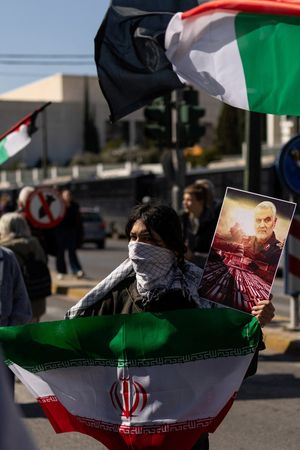
BERLIN – Germany has confirmed that Israel’s official government aircraft has been moved to Berlin’s airport as a security precaution, following joint U.S. and Israeli military operations that resulted in the death of Iranian Supreme Leader Ayatollah Ali Khamenei and escalated regional tensions.
According to German government officials, the aircraft left Israeli airspace Saturday afternoon and spent time circling over Mediterranean waters before making its way to Germany that evening, based on flight tracking data from Flightradar24.
German sources confirmed that Israeli authorities had pre-registered the flight and that the aircraft carried only flight crew during the journey to Berlin.
The relocated aircraft, known as the “Wing of Zion,” is Israel’s official state plane – a modified Boeing 767 that has been outfitted with specialized equipment for government operations and official diplomatic missions.
Cuba’s national baseball team will move forward with plans to participate in the World Baseball Classic tournament, even after the United States rejected visa applications for eight members of their delegation.
The Cuban Baseball and Softball Federation announced late Saturday that they will not pull out of the international competition despite what they called unfair treatment by U.S. immigration officials.
“We reiterate the discriminatory, politicized, and unethical nature of the decision to deny visas to eight members of our delegation, but we will not withdraw from an event in which we have participated since its inception,” the federation stated.
The visa rejections came on Wednesday amid ongoing tensions between the United States and Cuba, as Washington has implemented what amounts to an oil embargo against the Caribbean nation, worsening fuel shortages and power outages across the island.
Most of those denied entry were support personnel, including Cuba’s baseball federation president and secretary general. However, the group also included pitching coach Pedro Luis Lazo, who was a standout pitcher during his professional playing career.
According to the Cuban federation, U.S. officials justified the visa denials by claiming Cuba has not cooperated with American immigration enforcement efforts. Cuban authorities dispute this explanation. The U.S. embassy in Havana has not yet responded to requests for comment on the matter.
Cuba is now preparing for the sixth edition of the World Baseball Classic, which serves as baseball’s equivalent to soccer’s World Cup. Their opening game is set for Friday in Puerto Rico, which is U.S. territory.
Before the tournament begins, the Cuban squad will face Major League Baseball teams in two exhibition matches at spring training facilities in Arizona this week.
Cuba dominated international baseball competition during the sport’s amateur era, capturing three consecutive Olympic gold medals between 1992 and 2004.
The island nation has been a regular participant in the World Baseball Classic since 2006, when the tournament became a professional competition featuring MLB players. In the most recent tournament held in 2023, Cuba advanced to the semifinals before falling to the United States.
Venezuelan opposition figure Maria Corina Machado announced through social media posts on Sunday that she intends to head back to her homeland within the next few weeks.
The 58-year-old industrial engineer departed Venezuela in December to travel to Oslo where she accepted the Nobel Peace Prize. She is presently staying in the United States.
Questions about when Machado might return have intensified following the January 3 capture of former Venezuelan president Nicolas Maduro by U.S. authorities.
Venezuelan officials are currently investigating Machado, and Interim President Delcy Rodriguez has stated that she must “answer to Venezuela” regarding her backing of U.S. military intervention against Caracas.
Weather concerns have forced Major League Soccer officials to delay an upcoming match between Houston Dynamo and the New England Revolution that was set for next weekend.
Both soccer clubs made the announcement on Sunday that their March 7 game at Gillette Stadium in Foxborough, Massachusetts will be moved to a future date due to expected harsh weather conditions.
Weather forecasters are predicting rain and snow for the region on Thursday and Friday, with temperatures expected to fall into the low 30s during that period.
SALISBURY, Md. – Salisbury University’s men’s tennis program faced a disappointing outcome Saturday as the nationally-ranked Sea Gulls fell 4-3 to visiting Shenandoah University at their home facility.
The Sea Gulls, who hold the 39th position in national rankings, battled through a competitive match against the Hornets at the SU Outdoor Tennis Center but came up just short in the closely contested affair.
The narrow margin of defeat highlights the competitive nature of the match, with both teams trading victories throughout the afternoon before Shenandoah managed to secure the deciding point.
Authorities have released the identity of a motorcyclist killed in a Friday afternoon crash in Wilmington as 29-year-old Brian Silva from New Castle, Delaware.
Delaware State Police’s Collision Reconstruction Unit continues to examine the circumstances surrounding the deadly accident. Investigators are seeking witnesses or anyone with relevant details to reach out to Master Corporal R. Kunicki at (302) 365-8417. Tips can also be submitted through private messages to the Delaware State Police Facebook page or by calling Delaware Crime Stoppers at 1-800-847-3333.
Those affected by crime or sudden loss can access support through the Delaware State Police Victim Services Unit and Delaware Victim Center, which provides round-the-clock assistance via their hotline at 1-800-VICTIM-1 (1-800-842-8461). Support services are also available by emailing [email protected].
Delaware State Police have released the identity of the victim in Saturday morning’s deadly single-vehicle accident in Laurel. The crash claimed the life of Yeyson Perez-Ortiz, 26, who lived in Laurel.
Authorities with the Delaware State Police Collision Reconstruction Unit continue their investigation into the fatal incident. Officials are requesting that anyone who may have seen the accident or has relevant information reach out to Master Corporal K. Argo by calling (302) 703-3264. Witnesses can also share details by sending a private message to the Delaware State Police Facebook page or by calling Delaware Crime Stoppers at 1-800-847-3333.
For those affected by crime, sudden loss, or who have witnessed traumatic events, support services are available around the clock. The Delaware State Police Victim Services Unit works with the Delaware Victim Center to provide assistance and resources through their 24-hour helpline at 1-800-VICTIM-1 (1-800-842-8461). Those needing help can also reach out via email at [email protected].
WASHINGTON – A new national survey shows limited public support for weekend military action that resulted in the death of an Iranian leader, with just 27% of Americans backing the strikes, according to Reuters/Ipsos polling data released Sunday.
The survey found that 43% of respondents opposed the Saturday strikes, while 29% remained undecided. Nearly 90% of those polled indicated they had at least some awareness of the military action that commenced early Saturday morning.
Beyond the immediate strikes, the poll revealed broader concerns about President Trump’s approach to military intervention. More than half of Americans – 56% – view the president as overly aggressive in deploying military force to pursue U.S. objectives abroad. Trump has authorized similar operations in Venezuela, Syria and Nigeria in recent months.
Political divisions were evident in the responses, with 87% of Democrats expressing concern about Trump’s willingness to use military force. However, the sentiment crossed party lines, with 23% of Republicans and 60% of independent voters sharing similar views.
The nationwide online survey collected responses from 1,282 American adults beginning Saturday as the strikes commenced. The poll carries a margin of error of three percentage points.
New York Mets utility infielder Grae Kessinger faces an extended absence of two to three months after suffering what manager Carlos Mendoza described Sunday as a “pretty significant injury” to his left hamstring.
Mendoza indicated that surgical intervention remains “on the table” for Kessinger, who had been competing for a spot on the team’s Opening Day roster as a versatile bench player.
The 28-year-old player joined the Mets organization through free agency on February 3rd. His most recent major league experience came during the 2024 campaign with the Houston Astros.
Houston selected Kessinger in the second round of the 2019 draft. During his two seasons with the Astros from 2023-24, he appeared in 48 games and posted a .131 batting average with one home run and one RBI. His defensive versatility allowed him to play shortstop, first base, second base, and third base.
The Arizona Diamondbacks released Kessinger on April 20, 2025, following his stint at Triple-A Reno where he compiled a .235 batting average with three RBIs across 11 games.
Minnesota Vikings officials have notified two veteran players they face release when the NFL’s new league year begins unless the team finds trading partners, according to an ESPN report published Sunday.
Running back Aaron Jones and defensive tackle Javon Hargrave received word from the organization about their potential departure, which would take effect March 11 at 4 p.m. Eastern Time when the new league year officially starts.
The Vikings would gain significant financial relief by parting ways with both players, freeing up $7.75 million from Jones’ contract and $10.9 million from Hargrave’s deal.
According to Spotrac’s calculations, Minnesota faces a challenging salary cap situation, currently sitting approximately $44.35 million above the 2026 season’s official limit of $301.2 million.
Jones, who turned 31, contributed 548 rushing yards across 132 attempts during the most recent season, finding the end zone twice on the ground through 12 games as a starter. His receiving statistics included 28 receptions for 199 yards and one touchdown.
The veteran back earned Pro Bowl recognition in 2020 and has accumulated 7,626 career rushing yards with 52 ground touchdowns over 126 games split between Green Bay (2017-23) and Minnesota.
Hargrave, 33, recorded 52 tackles and 3.5 quarterback sacks across 16 appearances (15 starts) in his debut season with the Vikings in 2025.
The defensive lineman has earned two Pro Bowl selections throughout his career, compiling 432 total tackles and 49.0 sacks across 146 games (130 starts) while playing for Pittsburgh (2016-19), Philadelphia (2020-22), San Francisco (2023-24), and Minnesota.
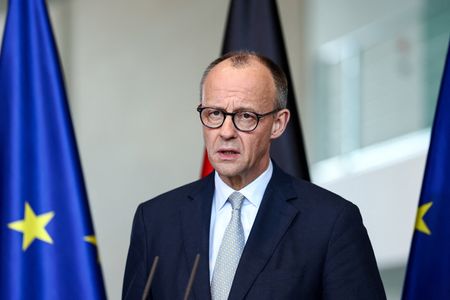
BERLIN, March 1 — German Chancellor Friedrich Merz is urging the United States and European allies to begin developing comprehensive strategies for Iran’s future following military strikes that resulted in the death of the nation’s supreme leader.
Speaking to the press, Merz expressed his administration’s support for American objectives aimed at halting Tehran’s nuclear weapons development and bringing an end to what he described as Iran’s “destructive game” in the region, though he cautioned about potential consequences.
“This is not without risk. We do not know how far the region will be drawn into escalation by Iran’s harsh counterstrikes,” Merz warned during his remarks to journalists.
While acknowledging some concerns about the American and Israeli military actions, the German leader emphasized that criticism of allies was inappropriate at this time, despite existing doubts about the approach.
“We want to work with our partners in the U.S., Israel, the region, and Europe to develop an agenda for the day after,” Merz stated.
The Chancellor outlined four primary objectives for the post-strike period: maintaining regional peace and stability, compelling Iran to abandon its nuclear and ballistic missile programs, contributing to Iran’s stable future, and enabling the Iranian people to determine their own destiny.
Merz additionally announced that Germany would not permit any attacks against American or Israeli facilities within German borders.
A sailor lost his life when a suspected projectile struck an oil tanker sailing in waters off Oman, according to the vessel’s management company.
The incident occurred Friday when the Marshall Islands-registered tanker MKD VYOM was hit while navigating near the coast of Muscat, Oman, according to V.Ships Asia.
“The vessel suffered an explosion and subsequent fire after being struck by a suspected projectile while off the coast of Muscat, Oman on 1 March,” the shipping management firm stated.
The company confirmed the tragic loss of life in their official statement: “It is with great sadness that we confirm one crew member, who was in the engine room at the time of the incident, has died.”
The fatal strike occurred as the product tanker was conducting routine operations in the region’s shipping lanes.
WASHINGTON – President Donald Trump revealed Sunday that Iran’s newly configured leadership has expressed interest in opening dialogue with the United States, according to his recent interview with Atlantic magazine.
Speaking from his Florida home, Trump confirmed his willingness to engage in these discussions. “They want to talk, and I have agreed to talk, so I will be talking to them. They should have done it sooner. They should have given what was very practical and easy to do sooner. They waited too long,” the president stated during the interview.
The president did not provide details about which Iranian officials he would meet with or specify the timing of these potential conversations, whether they might occur Sunday or Monday.
The diplomatic opening comes as Iran undergoes a significant leadership transition. Iranian President Masoud Pezeshkian announced that a temporary governing council has been established, consisting of himself, the head of the judiciary, and a representative from the influential Guardians Council. This arrangement was put in place following the death of Supreme Leader Ayatollah Ali Khamenei.
Trump noted that previous diplomatic contacts have been disrupted by recent events, with some former negotiating partners no longer available.
“Most of those people are gone. Some of the people we were dealing with are gone, because that was a big — that was a big hit,” Trump explained to Atlantic writer Michael Scherer. “They should have done it sooner, Michael. They could have made a deal. They should’ve done it sooner. They played too cute.”
Digital warfare accompanied the recent joint United States-Israeli military operations against Iran, with cybersecurity specialists documenting widespread online attacks that occurred early Saturday morning.
The cyber offensive compromised several Iranian news platforms and infiltrated BadeSaba, a widely-used religious calendar application downloaded by more than 5 million people. The compromised app displayed threatening messages stating “It’s time for reckoning” while encouraging military personnel to abandon their weapons and side with civilians.
Attempts to reach BadeSaba’s top executive were unsuccessful, and US Cyber Command representatives have not yet provided comment on the situation.
Iran’s internet infrastructure suffered major disruptions, with connectivity plummeting dramatically at 7:06 AM GMT and again at 11:47 AM GMT, leaving only limited online access available, according to Doug Madory, who serves as director of internet analysis at Kentik and shared the information on X.
Security researcher and DarkCell cybersecurity firm founder Hamid Kashfi explained that targeting BadeSaba was strategically effective since government loyalists frequently use the application and typically hold stronger religious beliefs.
The Jerusalem Post reported Saturday that the digital operations also targeted various Iranian governmental services and military infrastructure to prevent a unified Iranian counterattack, though Reuters has been unable to independently confirm these reports.
“As Iran considers its options, the likelihood increases that proxy groups and hacktivists may take action, including cyberattacks, against Israeli and U.S.-affiliated military, commercial, or civilian targets,” warned Rafe Pilling, who directs threat intelligence at cybersecurity company Sophos.
Pilling noted that potential retaliation might involve republishing old data breaches as new incidents, basic attempts to infiltrate internet-connected industrial systems, and possibly direct offensive cyber operations.
Cynthia Kaiser, a former senior FBI cyber official now serving as senior vice president at anti-ransomware company Halcyon, reported increased Middle Eastern activity and observed calls to action from recognized pro-Iranian cyber operatives known for conducting hack-and-leak campaigns, ransomware deployments, and distributed denial-of-service attacks that overwhelm internet services.
CrowdStrike senior vice president of counter adversary operations Adam Meyers suggested the current digital activity might signal more aggressive future operations.
“CrowdStrike is already seeing activity consistent with Iranian-aligned threat actors and hacktivist groups conducting reconnaissance and initiating DDoS attacks,” Meyers stated.
Cybersecurity company Anomali reported in Saturday analysis shared with Reuters that Iranian state-sponsored hacking organizations had already begun executing “wiper” attacks designed to destroy data on Israeli targets before the military strikes occurred.
Despite US cyber officials frequently citing Iran alongside Russia and China as major threats to American digital infrastructure, Tehran’s past responses to attacks within its borders have been relatively restrained.
Following US strikes on Iranian nuclear facilities in June, there was minimal evidence of the disruptive cyber retaliation often associated with Iran’s digital warfare capabilities, except for brief service interruptions in Albania’s capital city of Tirana, according to media coverage.
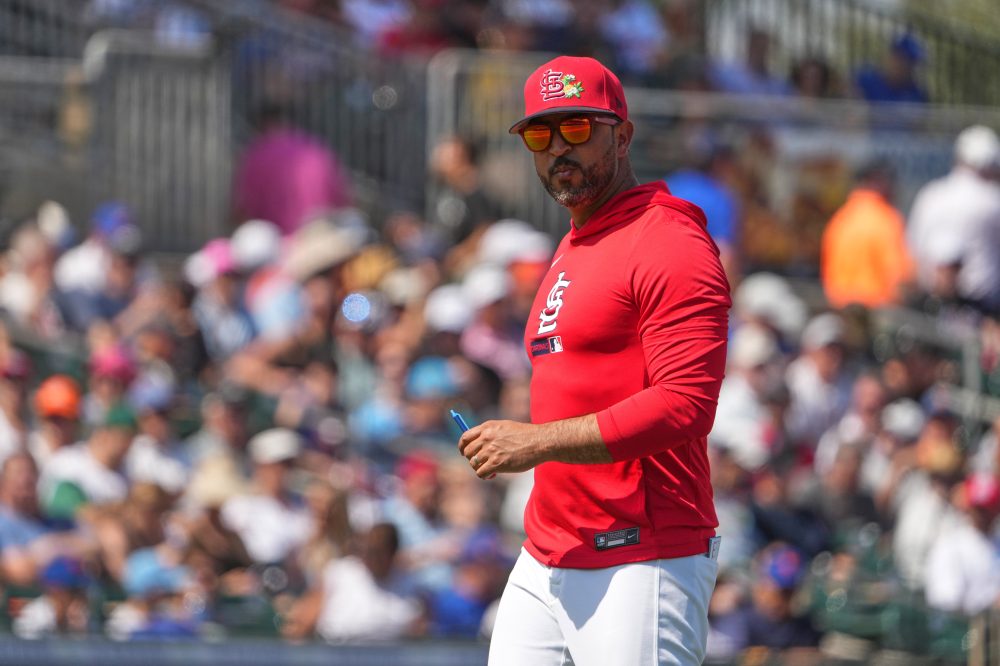
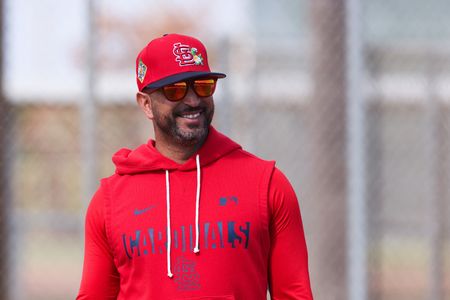
JUPITER, Fla. — The St. Louis Cardinals have locked in manager Oliver Marmol for the long haul, announcing Sunday that the skipper has agreed to a two-year contract extension that will keep him in the dugout through at least 2028.
The new agreement also features a team option for the 2029 season, according to the franchise.
“As I’ve gotten to know Oli, I’ve seen someone who cares about this organization and knows what has made the Cardinals special over time, and who understands that for us to get where we need to go, we must compete relentlessly to set new standards in everything that we do,” Cardinals president Chaim Bloom said in a statement. “He is invested in the progress of our young core and is unafraid to challenge himself and to help those around him grow.”
The 39-year-old skipper has been at the helm in St. Louis for four campaigns, guiding the team to a National League wild-card appearance during his inaugural season as manager. However, the Cardinals haven’t reached postseason play in the subsequent three years, finishing with a disappointing 78-84 record this past season.
Despite the recent struggles, the Cardinals view the last few seasons as part of a broader organizational reset, with Bloom stepping into his role after longtime executive John Mozeliak and the team working to revitalize its roster. This context makes providing continuity with Marmol a logical move, as he now ranks as the National League’s third-longest serving manager, trailing only Dave Roberts of the Dodgers and Torey Lovullo of the Diamondbacks.
Marmol’s history with the Cardinals organization dates back to 2007 during his playing career. After spending five years managing in the minor league system, he joined the major league coaching staff in 2017 before being promoted to the top job on October 25, 2021.
Through his four seasons leading the Cardinals, Marmol holds a 324-323 record.
MILAN (AP) — At Milan Fashion Week’s closing event Sunday, Silvana Armani stepped forward with understated assurance to debut her inaugural signature line, marking the first collection created independently of her legendary uncle Giorgio Armani’s guidance.
The runway show drew notable attendees including actress Andie MacDowell, 67, who occupied a front-row seat for this historic moment in the Giorgio Armani fashion empire’s evolution, coming after the founder’s passing on September 4 at 91 years old.
“One of the things that is really important to me is representing women of a certain age, and showing that we still are fashionable and powerful and strong, and we enjoy life and looking beautiful,” MacDowell expressed upon her arrival, dressed in a black Armani ensemble featuring an intricate three-dimensional rose accent.
“I love this because I was born Rosalie Anderson MacDowell, and I thought this suit was made for me. It makes me feel really elegant,” she added.
The upcoming fall and winter women’s line embodied the fashion house’s core principles through flowing silhouettes, minimalist design, and modern appeal. Accessories were deliberately sparse, featuring only pins displaying the Cancer zodiac symbol — a tribute to her uncle’s astrological sign.
The presentation began with pieces in sophisticated urban gray tones, enhanced by silk tops adorned with decorative scarf details at the neckline. Rich burgundy belts provided both visual interest and structure, while precisely cut knitwear with subtle necklines demonstrated refined restraint. Floor-length outerwear swept dramatically across the catwalk.
Following her uncle’s design philosophy, Silvana Armani centered the collection around expertly crafted yet comfortable blazers, incorporating quilted pieces inspired by Japanese aesthetics and vibrant shearling outerwear. These were paired with flowing pants, some featuring side pleating for added dimension. Crisp winter white trousers combined with high-necked silk blouses and sporty jackets conveyed an active sensibility, complemented by comfortable knits, crossbody bags, and tinted glasses.
The color scheme transitioned into rich burgundy and deep navy — positioned as the contemporary alternative to black. Luxurious velvet pieces enhanced with beaded details offered sophisticated comfort, while evening pieces showcased shimmering bodices designed to sit elegantly away from the wearer’s form.
Notably, even the more formal pieces were styled with practical crossbody bags, indicating that the Giorgio Armani customer leads an active lifestyle rather than passively awaiting evening events.
Following the presentation, Silvana Armani revealed that the collection featured pieces she personally would choose to wear.
“Working with fluidity and simplicity came naturally to me, because that’s how I am,” Armani explained, echoing her uncle’s signature style by taking her final bow in navy knitwear and trousers.
Earlier in the week on Thursday, Silvana Armani partnered with Leo Dell’Orco as the brand’s creative successors to preview a sharp Emporio Armani unisex collection.
The Armani Theater featured wooden flooring designed to evoke a music academy atmosphere, serving as inspiration for designs that blended British formality with Italian flair. Formal tailcoats and vests suggested theatrical performance, while denim elements provided contemporary edge and youthful appeal.
The presentation concluded with a memorable sequence of crisp white shirts and flawless formal wear, earning enthusiastic and sustained applause for the creative partnership.
Italian Olympic medalists occupied prominent seating, wearing EA7 Emporio Armani athletic gear designed for the February 6-22 Games.
President Donald Trump revealed during a Sunday television interview that American military actions directed at Iran are progressing more rapidly than originally planned.
Speaking with CNBC, Trump indicated that U.S. military operations targeting Iran are currently “ahead of schedule,” suggesting the mission timeline is moving faster than expected.
The President’s comments provide insight into ongoing American military activities in the region, though specific details about the nature and scope of these operations were not disclosed during the interview.
An 18-year-old NASCAR Craftsman Truck Series newcomer was hospitalized for heat-related illness following Saturday evening’s street race in St. Petersburg, Florida.
Tyler Reif was taken to a nearby hospital after completing the race in 16th place while driving the No. 42 Chevrolet for Niece Motorsports. Medical officials released him later that evening.
“Tyler and his family would like to express their gratitude to the NASCAR officials, track medical workers and the local medical facility staff for their care,” Niece Motorsports said in a release.
The young driver began competing in the NASCAR Craftsman Trucks Series this year as a first-year participant. Saturday’s event marked only his third appearance in the series, following a 17th-place result at Atlanta on February 21.
The St. Louis Cardinals announced Sunday they have secured manager Oliver Marmol with a two-year contract extension that will keep him at the helm through the 2028 season.
The organization did not reveal the financial details of the deal, though it includes a team option for the 2029 campaign.
“As I’ve gotten to know Oli, I’ve seen someone who cares about this organization and knows what has made the Cardinals special over time — and who understands that for us to get where we need to go, we must compete relentlessly to set new standards in everything that we do,” president of baseball operations Chaim Bloom said.
“He is invested in the progress of our young core and is unafraid to challenge himself and to help those around him grow. I am energized to continue working with him towards the on-field success that we expect and that our fans deserve.”
The 39-year-old Marmol has compiled a 325-323 win-loss record across four seasons managing the Cardinals. His most successful campaign came in 2022 when he steered St. Louis to the National League Central division championship, though the team was eliminated by the Philadelphia Phillies in the wild-card round.
The Cardinals struggled in the most recent season, finishing with a 78-84 record that left them in fourth place within the NL Central division.
Before taking over as manager, Marmol served as a coach for the Cardinals organization from 2017 through 2021, working under former managers Mike Matheny and Mike Shildt.
A rising star in professional golf continued his impressive streak Sunday as 22-year-old Casey Jarvis captured the South African Open championship, marking his second consecutive tournament victory on the DP World Tour.
The young South African golfer secured the win with a commanding three-stroke lead, posting a total score of 14-under-par across four rounds at Stellenbosch Golf Club. His final round score of 67 brought his tournament total to 266 strokes and earned him qualification for the prestigious Masters tournament at Augusta next month.
Three players shared runner-up honors at 269 strokes: South Africa’s Hennie du Plessis, Italy’s Francesco Laporta, and France’s Frederic Lacroix.
Beginning the final round with a slim one-shot advantage, Jarvis quickly expanded his lead by sinking a birdie on the opening hole. He maintained his composure throughout the round, even when weather forced officials to halt play for nearly an hour due to dangerous lightning and thunderstorms with just one hole remaining.
Jarvis becomes the eighth consecutive South African winner of this historic championship, which ranks among the world’s oldest national open tournaments, dating back to its inaugural event in 1903.
The victory follows Jarvis’s triumph at last week’s Kenya Open in Nairobi, where he also won by three strokes. Notably, du Plessis placed third in that tournament while Laporta finished fourth, creating a familiar leaderboard for both events.
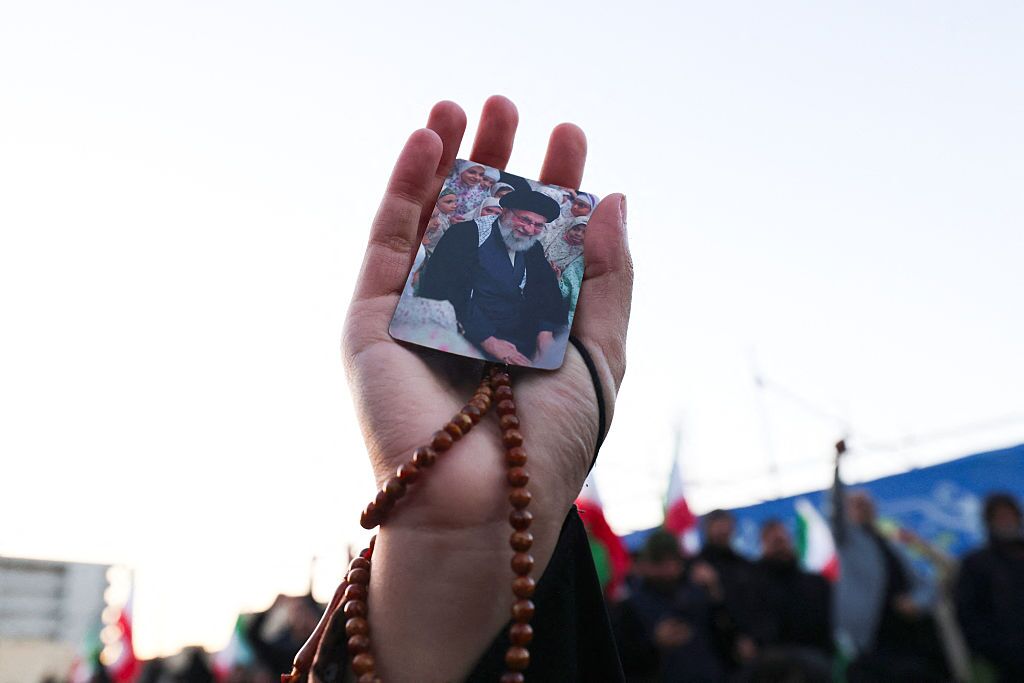
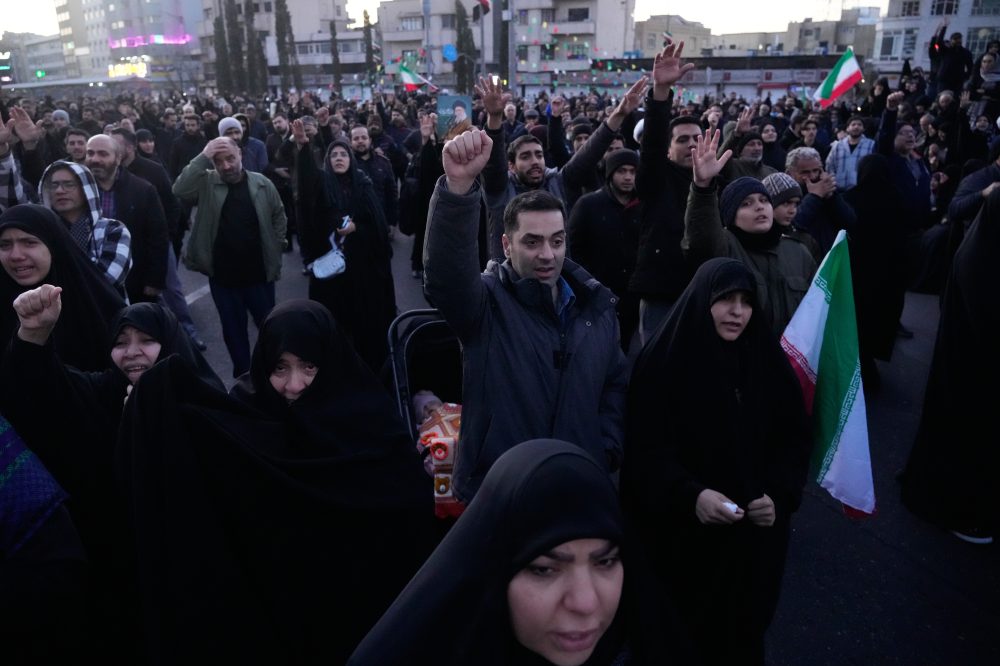
DUBAI – Iranian counter-attacks throughout Gulf nations have created the most severe economic disruptions the region has experienced since COVID-19, shuttering airports, stopping port activities, and creating turmoil in financial markets.
The Iranian offensive, conducted in retaliation for a combined American-Israeli operation against Iran, impacted all major Gulf states – an area that has worked for decades to establish itself as among the globe’s most dependable commercial centers. The attacks resulted in three deaths in the United Arab Emirates, while residents of Dubai and Abu Dhabi reported hearing explosive sounds for a consecutive day on Sunday.
These attacks represent an unparalleled escalation for Dubai, a metropolis that built its contemporary reputation on remaining separate from regional warfare. Starting as a modest fishing community, Dubai transformed limited oil income into developing harbors, aviation facilities, and commercial districts before shifting focus in the 1990s toward high-end tourism, property development, and banking services.
Vijay Valecha, chief investment officer at Century Financial, explained the regional economic effects: “Regionally, the impact across (Gulf) economies is mixed.”
He continued: “Elevated oil prices provide a fiscal cushion for producers such as Saudi Arabia and Qatar, strengthening revenues and liquidity. However, trade, logistics and tourism, particularly in the UAE, would face pressure if shipping risks rise or regional sentiment weakens.”
FINANCIAL MARKETS TUMBLE
Regional stock exchanges experienced significant declines when Sunday trading commenced, with Saudi Arabia’s primary index falling over 4% at opening before recovering to close down 2.2%. Oman’s market finished 1.4% lower while Egypt dropped 2.5%, both recovering from steeper early losses. Kuwait’s stock exchange made the rare decision to halt all trading indefinitely. UAE financial markets, which remain closed Sundays, are scheduled to resume Monday.
Mohammed Ali Yasin, chief executive of Ghaf Benefits, a Lunate company in Abu Dhabi, commented on market conditions: “Markets will continue to be fragile and volatile as long as the military actions are active.”
Yasin added: “Usually in such events, the international institutional investors are the ones that put the selling pressures initially… while local ones try and soften the drops by picking the leading stocks.”
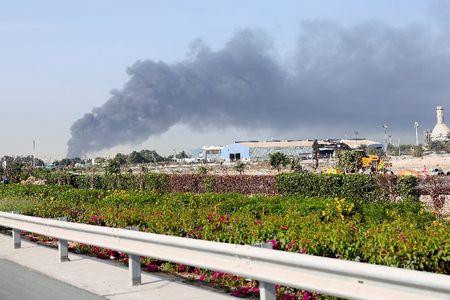
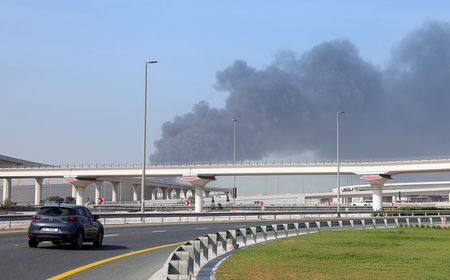
Iranian forces targeted aviation hubs, defense facilities, shipping ports, and hospitality venues throughout the Gulf region. Both Dubai International Airport and Abu Dhabi’s Zayed International Airport suffered infrastructure damage, resulting in one civilian death and 11 injuries between the two locations. A section of Dubai’s Jebel Ali Port ignited following aerial defense activities.
Major UAE corporations include property developer Emaar Properties and retail giant Majid Al Futtaim. The nation has increasingly attracted international hedge funds and major banking institutions seeking access to substantial sovereign wealth managed by organizations like ADIA and Mubadala.
RAMADAN BUSINESS DISRUPTIONS
The timing of these disruptions proves especially problematic for Gulf commercial activities. The strikes occurred during Ramadan, Islam’s sacred month, when business iftar and suhoor gatherings – the shared meals ending and starting daily fasting – represent crucial networking opportunities throughout the region.
Reuters obtained correspondence showing that events organized by Dubai airline Emirates, Abu Dhabi renewable energy company Masdar, Mubadala, education provider GEMS, and the Department of Government Enablement have been canceled or delayed.
In a region where personal relationships form the foundation of commercial transactions, losing Ramadan’s networking period creates additional, though less apparent, economic damage beyond the visible disruption already occurring.
Attacks also struck residential neighborhoods near Dubai Marina and Palm Jumeirah, igniting the Fairmont The Palm hotel and causing damage to the Burj Al Arab. The Fairmont had recently been purchased for $325 million by Kuwait’s Arzan Investment Management – a transaction viewed as indicating rising Gulf hospitality market demand – making this damage a prominent symbol of the impact on the region’s thriving tourism sector.
The United States, United Kingdom, and European Union released revised travel warnings for Gulf nations following the attacks, recommending citizens use extreme caution and avoid unnecessary travel. Critical transportation airports, including those in Dubai, Abu Dhabi, and Qatar’s Doha, were either closed or operating under severe restrictions Sunday as most regional airspace remained inaccessible.
International company employees are anticipated to follow local guidance regarding remote work arrangements in upcoming days. The UAE federal labor authority recommended companies establish work-from-home policies through March 3, encouraging them to keep employees away from outdoor locations, except for essential positions requiring on-site presence.
According to sources speaking with Agri-Pulse, Luke Lindberg, who currently holds the position of undersecretary for trade and foreign agricultural affairs at the U.S. Department of Agriculture, is being considered as a top candidate to lead the United Nations World Food Program as its executive director.
The UN World Food Program holds the distinction of being the planet’s most extensive humanitarian aid agency.
WASHINGTON – The U.S. Central Command announced Sunday that three American military personnel have died during combat operations targeting Iran.
According to the military statement, five additional service members suffered severe injuries during the mission, which has been designated Operation Epic Fury.
The Central Command released the casualty information on Sunday, confirming the deaths occurred as part of ongoing U.S. military actions against Iranian forces.
WASHINGTON – The Pentagon announced Sunday that American forces have destroyed an Iranian naval vessel and are demanding that Iran’s military personnel abandon their positions.
U.S. Central Command, which is directing current American military operations against Iran, reported that it destroyed a Jamaran-class corvette belonging to Iran’s navy. The vessel was struck while docked at a pier in Chah Bahar in the Gulf of Oman.
In a statement posted on social media platform X, Central Command reinforced President Donald Trump’s Saturday message to Iranian forces. “As the President said, members of Iran’s armed forces, IRGC and police ‘must lay down your weapons.’ Abandon ship,” the command stated.
Multiple oil tankers were struck and damaged in Persian Gulf waters following military exchanges between the United States, Israel, and Iran, according to shipping industry officials and maritime security sources who reported the incidents Sunday.
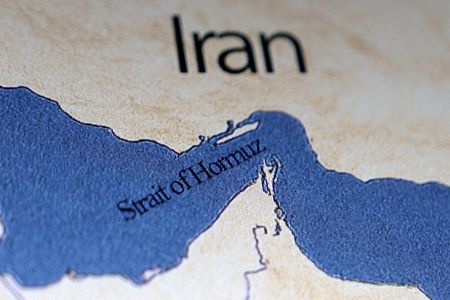
Commercial vessel traffic faces dramatically heightened dangers in the region over the past day, with shipping data revealing more than 200 ships – including oil and liquefied gas carriers – have anchored near the Strait of Hormuz and adjacent waters.
Iranian authorities have declared the vital shipping corridor closed to navigation.
Jakob Larsen, who serves as chief safety and security officer for shipping organization BIMCO, warned that recent military actions have created severe risks for maritime operations.
“The U.S.-Israeli attack on Iran dramatically increases the security risk to ships operating in the Persian Gulf and adjacent waters,” Larsen stated.
“Ships with business connections to U.S. or Israeli interests are more likely to be targeted, but other ships may also be targeted deliberately or in error,” he added.
Among the damaged vessels, a Palau-flagged oil tanker under U.S. sanctions was struck Sunday near Oman’s Musandam peninsula, leaving four crew members injured, according to that nation’s maritime security center. Officials did not identify what struck the ship.
The Marshall Islands-flagged crude carrier MKD VYOM also took a projectile hit while carrying cargo off Oman’s coastline, maritime security sources confirmed Sunday. The vessel was struck approximately 44.4 nautical miles northwest of Muscat, according to one source.
Britain’s maritime agency UKMTO reported that a loaded merchant ship experienced an explosion in the same area.
A separate tanker docked at the United Arab Emirates’ Jebel Ali port narrowly avoided damage from falling debris during an aerial interception following overnight Iranian strikes on Gulf nations, maritime security sources reported.
A third oil-bunkering vessel sustained damage off the UAE coastline, shipping sources confirmed.
The U.S. Department of Transportation’s Maritime Administration issued guidance Saturday urging ships to avoid the Strait of Hormuz and broader Gulf of Oman region due to potential Iranian retaliation.
“Any U.S.-flagged, owned or crewed commercial vessels that are operating in these areas should maintain a standoff of 30 nautical miles from U.S. military vessels to reduce the risk of being mistaken as a threat,” the advisory stated.
Security sources also warned of possible mine deployment by Iranian forces in the narrow shipping channels within the Strait of Hormuz.
Two U.S. officials previously told Reuters in July that Iranian military forces had placed naval mines on vessels in the Persian Gulf during June, raising concerns in Washington about potential blockade preparations for the strait.
Maritime industry sources anticipate significant increases in war risk insurance premiums when underwriters reassess coverage Monday.
War risk insurance becomes mandatory when vessels enter dangerous zones, and Lloyd’s of London market has already designated Iran, the Gulf region, and portions of the Gulf of Oman as high-risk areas.
Financial markets worldwide are preparing for potential widespread disruption as Middle East tensions escalate beyond what investors initially anticipated, according to market analysts.
What began as a peripheral concern has now evolved into a primary source of anxiety for Wall Street, particularly following weekend U.S.-Israel military operations that resulted in the death of Iranian Supreme Leader Ayatollah Ali Khamenei on Saturday. The strikes prompted Iranian retaliation against Gulf cities, forced airlines to cancel flights, and led to the suspension of oil tanker traffic through the crucial Strait of Hormuz.
Market experts are particularly concerned about the unpredictable nature of Iran’s political future, given the complex structure of the Islamic Republic’s government, its ideological foundation, and the influence wielded by the Revolutionary Guards.
These uncertainties are creating additional pressure on oil markets, which have already experienced weeks of price increases and now face potential disruption based on regional producer actions and shipping lane accessibility. The situation carries significant implications for global inflation rates and could even impact traditionally safe investment bonds.
Rong Ren Goh, a portfolio manager with Eastspring Investments’ fixed income division in Singapore, explained the market shift: “Middle East tail risks have increased. Markets will reprice from geopolitical shock to regime risk shock, prolonged conflict, not just retaliation, unless Iran says it wants to negotiate.”
Market specialists suggest a major concern is investor overconfidence, with many assuming the economic impact will remain limited, similar to last June’s “12-Day War” in Iran or Russia’s ongoing attacks on Ukraine. Many are also dismissing parallels to Iran’s 1979 regime transformation.
Current market indicators show Brent crude oil has risen by 20% this year, reaching approximately $73 per barrel. Investors have been purchasing U.S. Treasury bonds and gold as protective measures against various risks, including Middle East instability and unpredictable policies from President Donald Trump.
Gold experienced record performance last year and has gained 22% in 2026 so far, while the primary U.S. stock index has only increased by 0.5%.
Barclays analysts noted in a Saturday report: “History argues strongly in favor of selling geopolitical risk premium when hostilities start. What worries us is that investors have now learned this pattern and might be underpricing a scenario where containment fails.”
The Barclays team also highlighted additional factors that could worsen any market decline if conflict expands, including existing concerns about artificial intelligence market valuations and private credit sectors.
“We would recommend not buying any immediate dip – risk-reward doesn’t seem compelling. If equities pull back enough, say over 10% in the S&P 500, there is likely to come a time to buy. But not yet,” the analysts advised.
Markets are expected to experience significant volatility in the upcoming week.
Charles Myers, chairman and founder of geopolitical investment consulting firm Signum Global Advisors, assessed the situation before the weekend strikes: “The markets are prepared for a limited surgical strike. What is not priced in is a major strike to decapitate the regime.”
William Jackson, chief emerging markets economist at Capital Economics, predicts that extended conflict affecting supply chains could push oil prices to around $100, potentially increasing global inflation by 0.6-0.7 percentage points.
Tariq Dennison, a wealth adviser at Zurich-based GFM Asset Management, offered a different perspective: “In my view, the market has already been overestimating inflationary forces, so I don’t think this will change much. There will be more impact on Europe than U.S. given the closer proximity of Hormuz oil and gas post-Russia.”
Dennison also noted: “Maybe a slight short term uptick on gold, but gold has already priced in maximum geopolitical uncertainty.”
Eastspring’s Goh pointed to the continuous decline in U.S. bond yields, which has brought 10-year rates below 4%.
“I’m not sure if buying US Treasuries here is a good trade, especially if oil prices spike and induce inflation, if this thing drags,” he stated.
However, some market observers believe Iran will be unable to significantly disrupt Gulf region commerce and that oil price impacts will remain manageable.
Ed Yardeni, president of New York-based Yardeni Research, suggested: “We wouldn’t be surprised if any selloff in the S&P 500 on Monday morning turns into a rally, driven by expectations of lower oil prices once the latest Middle East war ends.”
“The price of gold might also round-trip on Monday. Bond yields might fall due to both safe-haven demand and post-war prospects for lower oil prices,” Yardeni added.
DUBAI, March 1 – When Iran launched hundreds of drones and missiles toward Gulf nations in response to American and Israeli military actions, Dubai residents found themselves witnessing something many thought impossible in their adopted safe haven.
Social media influencer Hofit Golan captured the shock felt by many as she filmed smoke billowing from an explosion near Palm Jumeirah, the artificial island that represents Dubai’s luxury lifestyle.
“Oh my god … this is the view from my balcony,” Golan said with evident disbelief in her voice. “This is in front of my home. Oh my god,” she shared with her millions of online followers.
For years, Dubai has attracted residents fleeing regional conflicts and Westerners seeking low taxes and stability, all viewing the emirate as insulated from Middle Eastern turmoil.
That perception suffered a major blow when Iranian projectiles caused damage at Dubai’s most recognizable landmarks, despite most being successfully intercepted by defense systems.
The affected locations included the iconic Burj Al Arab hotel and Palm Jumeirah, where luxury resorts and upscale residences house many social media personalities who shared their panoramic views of the attack.
RESIDENTS DESCRIBE FEAR
Dubai-based trader Daniel Holmes, who has a substantial Instagram presence, said missile interceptions woke him and were visible from his apartment.
“All the locals are like ‘nah bro you’ve got nothing to worry about, it’s all good,’” Holmes posted online. “I’m like … there is genuine war around where you live here in Dubai. I’ve never dealt with that before.”
Similar conversations occurred throughout the city, which serves as the Middle East’s primary commercial and tourist center. While some residents discussed temporary departures, others maintained confidence in the UAE’s security capabilities.
Foreign nationals comprise approximately 90% of the UAE’s population.
A Western mother with two elementary-age children described feeling unsettled after hearing multiple explosions in rapid succession.
“They are really keeping us on our toes,” she messaged Reuters. “It’s almost as if their only purpose is to maintain the panic and fear.”
Another Dubai resident with experience in previous Middle Eastern wars said he never anticipated hearing drone interceptions in the UAE.
“I was not mentally prepared. I was terrified, I was actually (hiding) in the bathroom,” he said, requesting anonymity due to Dubai’s restrictive media policies.
However, Yamen Fadel, a 36-year-old Syrian living in Dubai, expressed confidence in government protection and communication efforts.
“I am seeing that there’s nothing much, just a few minor things,” Fadel said. “Nothing scary … because the government here, thank God, is protecting everyone.”
Dubai’s media office announced Saturday that outdated fire footage was circulating on social platforms and warned of legal consequences for sharing such material.
Several influencers reportedly removed their initial posts about the incidents.
CITY SHOWS STRAIN
By Sunday, as Iran’s retaliation expanded throughout the Gulf region, Dubai appeared noticeably quieter than usual, with typically congested weekend roads showing sparse traffic in many areas. The UAE’s human resources ministry advised private sector remote work through Tuesday.
Numerous small neighborhood businesses including barbershops, convenience stores, and local service providers remained closed.
Residents reported extended supermarket lines, delayed grocery deliveries, and unusually empty store shelves.
Social media platforms saw heated exchanges about emergency stockpiling.
“STOP! You are leaving no essentials for others,” one user wrote in a Dubai residents’ Facebook group.
“My husband was in the queue at are (sic) local shop and the person in front of him had 15 baguettes in their trolley, and there was absolutely no meat left,” another posted.
A third user responded: “During the war there are no rules. Each one for himself.”
Dubai’s leadership projected normalcy and continuity.
Saturday evening saw the emirate’s ruler attending Dubai’s premier horse racing event, Emirates Super Saturday, which state media described as “a special evening marked by thrilling races and strong competition.”
But Robyn, a British tourist who had stayed at the Fairmont Hotel earlier in the week before it sustained damage Saturday, said the attacks provided perspective.
“I always thought in the back of my mind that something will kick off someday and spread to the UAE and surrounding areas,” she said.
“But the fact that it happened is definitely very grounding, and you realize that not all that glitters is gold.”
Motorists traveling on Interstate 95 northbound should expect delays near Churchmans Marsh due to a vehicle breakdown blocking traffic.
According to Delaware Department of Transportation officials, the right lane of I-95 north at Churchmans Marsh is currently shut down because of the disabled vehicle.
Drivers are advised to use caution in the area and allow extra travel time while crews work to clear the obstruction and restore normal traffic flow.
WASHINGTON — President Donald Trump, along with his Treasury secretary and Federal Reserve nominee, are banking on recreating the economic prosperity that defined the late 1990s.
Their strategy centers on artificial intelligence serving the same transformative role that the internet played during the Clinton era. During that period, the American economy experienced remarkable growth as companies became more efficient, joblessness dropped significantly, and price increases remained manageable.
Trump believes his Fed chair nominee, Kevin Warsh, can trigger an even more impressive economic surge by abandoning what the president considers the central bank’s outdated resistance to aggressive interest rate reductions.
Economic experts remain unconvinced.
Today’s economic landscape bears little resemblance to the era when the Spice Girls dominated music charts and “Titanic” broke box office records. The narrative promoted by Trump’s team — suggesting that visionary Fed leader Alan Greenspan sparked the ’90s expansion through low interest rates — presents an oversimplified picture.
“The administration is offering a rather distorted version of what actually happened in the 1990s,” economist Dario Perkins of TS Lombard said in a commentary.
Despite skepticism, the Trump administration remains convinced that history can be repeated. According to the president’s perspective, the only missing element has been a Fed chair possessing Greenspan’s forward-thinking approach.
Trump has consistently criticized current Fed leader Jerome Powell, whose chairmanship expires in May, for his unwillingness to cut rates more dramatically while inflation remains above the central bank’s 2% goal. Treasury Secretary Scott Bessent posted on social media in January that the president wanted to replace Powell with someone having “an open, Greenspan-like mind.”
“Our nation can see productivity boom like we did in the ’90s when we are not encumbered by a Federal Reserve which throws the brakes on,” Bessent said.
Trump announced his selection of Warsh on January 30.
Through various speeches and publications, Warsh has contended that artificial intelligence-powered productivity enhancements could support lower interest rates.
These positions match Trump’s preference for Fed rate reductions but represent a departure from Warsh’s previous stance as someone who typically favored fighting inflation. Following the 2007-2009 Great Recession, Warsh — serving as a Fed governor at the time — opposed some central bank initiatives designed to assist the struggling economy through rate cuts, even with unemployment exceeding 9%. Warsh incorrectly predicted then that inflation would soon surge.
The current debate revolves around productivity increases and whether AI will amplify them substantially.
Economists view productivity improvements as nearly miraculous. When businesses implement new equipment or technology, their employees can work more effectively and generate greater output per hour. This enables companies to increase profits and worker compensation without raising prices. Simply put: Rising productivity can fuel economic expansion without triggering inflation.
During the mid-1990s, Greenspan faced unusual economic conditions: Employee wages were increasing, yet inflation remained stable.
Significant productivity gains could have provided an explanation, but government statistics showed no evidence of such improvements. Other Fed officials worried that rising wages and controlled inflation couldn’t coexist and that price increases were inevitable. They favored raising interest rates.
However, Greenspan suspected the official productivity measurements were incomplete. The data didn’t align with remarkable efficiency improvement stories the Fed was hearing from companies investing in computers and adopting internet technology.
He directed his staff to examine decades of productivity data. The official statistics they compiled presented an unlikely scenario: Service sector businesses — from retail stores to law firms — had allegedly experienced declining productivity over time, despite fierce competition and substantial technology investments.
Greenspan rejected this conclusion. He convinced his Fed colleagues that government figures were incorrect and underestimating productivity. They decided in September 1996 to postpone rate increases.
The economy soared.
Eventually, productivity improvements appeared in official data. American economic growth exceeded 4% annually from 1997 through 2000, an achievement repeated only once in the following 25 years. Unemployment fell to 3.8% in April 2000, the lowest level in three decades. Inflation remained controlled, staying below 2% — later the Fed’s official target — for 17 consecutive months during 1997-1999.
American productivity appeared robust during the second and third quarters of 2025, with some economists crediting early AI adoption for these improvements; they anticipate larger gains and stronger economic growth ahead.
Others express uncertainty.
Joe Brusuelas, chief economist at consulting firm RSM, argued that 2025 productivity improvements “are not because of artificial intelligence” but reflect automation investments companies made when facing worker shortages during and after the COVID-19 pandemic. “Those investments are starting to pay off,” Brusuelas wrote.
Economist Martin Baily, senior fellow emeritus at the Brookings Institution, believes AI will require time to significantly impact business operations and national productivity.
“Companies don’t change that fast,” said Baily, chair of President Bill Clinton’s Council of Economic Advisers. “It’s expensive to change. It’s risky to change. The managers don’t necessarily understand the new technology that well. So they have to learn how to use it. They have to train their staff. All that stuff takes a long time.”
While productivity booms can increase the economy’s growth potential without triggering higher prices, they might not justify lower interest rates, Federal Reserve Gov. Michael Barr explained in a recent speech.
Companies will need to borrow money for AI investments, creating upward pressure on interest rates. Similarly, American workers and families would likely save less and borrow more expecting higher wages from increased productivity, further pressuring rates upward.
Barr concluded: “The AI boom is unlikely to be a reason for lowering policy rates.”
Even Greenspan’s Fed ultimately reached similar conclusions, changing direction and beginning to raise its benchmark rate in mid-1999, increasing it from 4.75% to 6.5% in under a year. (The current rate Trump criticizes stands around 3.6%.)
“Warsh and Bessent talk only about the dovish 1995/96 version of Greenspan; they overlook the hawkish 1999/2000 variant,” Perkins wrote.
Many of Warsh’s potential future Fed colleagues on the interest-rate setting committee view the late 1990s experience differently, potentially creating conflicts at the central bank if the Senate confirms Warsh as chair.
Austan Goolsbee, president of the Federal Reserve Bank of Chicago, said earlier this week that “the analogy to the late 90s is a little harder for me to understand.” Greenspan’s insight was that productivity gains meant the Fed could delay raising rates, not that it should reduce them, Goolsbee observed.
“It wasn’t, ‘Should we cut rates because productivity growth is higher?’” he said.
The economic environment awaiting Warsh is also considerably less favorable than what Greenspan encountered.
Greenspan avoided rate increases when the typically free-spending U.S. government was running unusual budget surpluses and didn’t require extensive borrowing. Currently, following multiple spending increases and tax reductions, deficits accumulate annually, and the Congressional Budget Office projects federal debt will reach a historic high of 120% of America’s GDP by 2035.
Productivity wasn’t the sole factor controlling inflation during the 1990s. Nations were reducing tariffs and eliminating trade restrictions. Immigration was increasing.
Now, largely due to Trump’s own policies, particularly his comprehensive import taxes and immigration restrictions, circumstances have changed dramatically. “Trade barriers are going up,” Perkins wrote. “Globalization has given way to de-globalization.”
“That benign era is clearly behind us,” said Michael Pearce, chief U.S. economist at Oxford Economics.
A commercial ship traveling in waters off the United Arab Emirates was hit by an unidentified projectile on Sunday, according to maritime security officials.
The incident occurred approximately 17 nautical miles northwest of Mina Saqr port in the UAE’s Ras Al Khaimah emirate, the United Kingdom Maritime Trade Operations agency reported.
The impact from the mysterious projectile sparked a fire aboard the vessel, but crew members were able to successfully extinguish the blaze, UKMTO officials stated. Despite the attack, the ship’s operators indicated they plan to proceed with their planned route.
The nature and origin of the projectile that struck the vessel remains unknown at this time.
An Indian educator’s historic achievement became bittersweet when her community’s response revealed troubling attitudes about women’s success.
Joyeeta Banerjee made headlines when she became the first instructor from a government-funded school in India to receive the prestigious Fulbright exchange scholarship, which would allow her to observe and learn from American educational systems.
The groundbreaking opportunity should have been a moment of pure celebration for Banerjee, who had worked tirelessly to earn this recognition. Instead, her joy was diminished by two persistent questions from people in her community that highlighted deeper societal issues.
The Fulbright program represents one of the most competitive and respected international educational exchanges, making Banerjee’s selection particularly significant for government school educators in India who rarely receive such opportunities.
While the specific questions that troubled Banerjee weren’t detailed in initial reports, her experience reflects broader challenges faced by women achieving professional milestones in traditional societies where such success can be met with skepticism or inappropriate inquiries about personal choices.
Despite the mixed reception at home, Banerjee’s selection marks an important milestone for public education in India and could pave the way for future exchanges between Indian government schools and American educational institutions.
AUSTIN, Texas — A violent shooting incident at an Austin beer garden has left three people dead and 14 others wounded, according to local authorities.
During an early Sunday morning news briefing, Austin Police Chief Lisa Davis reported that officers responded to emergency calls about a “male shooting” at Buford’s, a well-known establishment located in the city’s entertainment district.
Upon arriving at the location, law enforcement encountered an armed individual and “returned fire, killing the suspect,” Davis stated.
Emergency Medical Services Chief Robert Luckritz confirmed that three victims were pronounced dead at the location, while 14 wounded individuals required hospital transport. Among those hospitalized, three remain in critical condition.
“We received a call at 1:39 a.m. and within 57 seconds, the first paramedics and officers were on scene actively treating the patients,” Luckritz explained.
Austin Mayor Kirk Watson commended the swift emergency response efforts.
A delicious fennel-seasoned pork loin recipe was showcased by Chef Tammy Brawley during an episode of ‘Real Virginia,’ the weekly television show produced by Virginia Farm Bureau.
Fennel-Crusted Pork Loin Recipe
Ingredients needed: 24 cloves of garlic 4 large sweet onions, cut into rounds 1½ inches thick 2 fennel bulbs, with fronds chopped and saved, ribs removed, bulbs sliced ¼ inch thick One 6-7 pound boneless pork loin Salt and freshly ground black pepper ¼ cup fennel seeds 3 cups buttermilk ½ cup extra-virgin olive oil
Begin by preheating your oven to 400 degrees.
Crush 12 garlic cloves into a paste and spread in a roasting pan large enough for the pork loin. Layer the sliced onions over the garlic paste, then add the fennel slices on top.
Toast the fennel seeds in a dry pan until fragrant, allow to cool, then grind them completely in a spice or coffee grinder.
Create cuts in the pork loin approximately 2 inches apart and insert 7-8 garlic cloves into each opening. Season the entire roast with salt and pepper, then coat with the ground toasted fennel.
Position the seasoned pork on the vegetable bed in the roasting pan. Cover with buttermilk and seal tightly with aluminum foil. Roast for 40-45 minutes until the internal temperature reaches 145 degrees at the thickest section. Remove the foil and continue cooking for another 10-15 minutes. Take the pan out and transfer the loin to a cutting board.
Combine half of the roasted onions and fennel with all the cooking juices in a blender or food processor and blend for 30 seconds. While the machine runs, slowly add the olive oil until the mixture becomes smooth and thick. If the sauce is too thick, gradually add warm water, ¼ cup at a time, until it reaches a pourable consistency. Adjust seasoning with salt and pepper.
Place the remaining vegetables on a heated serving platter. Slice the meat into ½-inch pieces and arrange over the vegetables. Drizzle several spoonfuls of sauce over the meat and serve right away. Offer the remaining sauce separately in a gravy boat.
A mouth-watering comfort food recipe that brings together Mexican flavors in pie form has been featured by Chef Tammy Brawley during her appearance on Real Virginia, the weekly television show produced by Virginia Farm Bureau.
The hearty taco pie recipe combines a homemade biscuit-style crust with a savory seasoned meat filling and a rich cheese topping that’s sure to please the whole family.
For the Crust:
2½ cups plus 1 tablespoon flour 1½ teaspoons baking powder 1 teaspoon kosher salt 5½ tablespoons cold, unsalted butter, cut into ½” cubes ½ cup plus 1 tablespoon milk
For the Filling:
1 tablespoon butter 1 pound ground beef or ground turkey 2 teaspoons kosher salt & coarse ground pepper 2 tablespoons chili powder 1 tablespoon ground cumin 1 teaspoon onion powder ½ teaspoon cayenne ½ teaspoon ground coriander 1 teaspoon cornstarch 2/3 cup water 1¼ cups sour cream 4½ ounces cheddar cheese, grated 1 large egg, beaten 2 tablespoons mayonnaise salt and pepper to taste
Begin by preheating your oven to 350 degrees.
To prepare the crust, use a food processor to blend flour, baking powder, and salt until the mixture has a coarse texture. Incorporate the cold butter pieces, then gradually add milk, pulsing until a cohesive dough forms. If the mixture seems too dry, add small amounts of water until you achieve a soft consistency. Form the dough into the bottom and partway up the sides of either a 9-inch springform pan or deep pie dish. Wrap in plastic and chill for approximately 45 minutes until firm.
For those without a food processor, you can achieve the same results by whisking the dry ingredients in a bowl, then working in the butter with your fingers or a pastry blender until it resembles coarse crumbs. Add the milk and mix until the dough holds together.
Time-saving suggestion: The crust can be prepared the evening before and removed from refrigeration about 30 minutes prior to continuing with the recipe.
For the meat mixture, warm butter in a medium-sized skillet over medium heat and brown the ground meat thoroughly, stirring frequently for about 5 minutes. Create a spice blend by whisking together the 2 teaspoons of salt with all the spices and cornstarch in a small bowl. Stir this seasoning mixture and the water into the cooked meat, continuing to cook while stirring until the liquid evaporates, approximately 3 minutes. Remove from heat.
Prepare the cheese topping by combining sour cream, grated cheddar, beaten egg, and mayonnaise in a medium bowl, whisking until smooth. Add salt and pepper to taste.
Place the chilled crust on a parchment-covered baking sheet. Using a slotted spoon, distribute the seasoned meat evenly over the crust, then spread the creamy cheese mixture on top. Bake for about 45 minutes until the topping is firm and the crust turns golden brown. Allow the pie to rest for approximately 15 minutes before slicing and serving.
Motorists should plan alternate routes as a section of Park Avenue eastbound remains shut down for construction activities today.
Delaware Department of Transportation officials report the roadway closure spans from Wood Branch Road to Springfield Road and is expected to continue until 5 PM this afternoon.
Drivers are advised to seek alternative routes and allow extra travel time while crews complete the necessary construction work in the area.
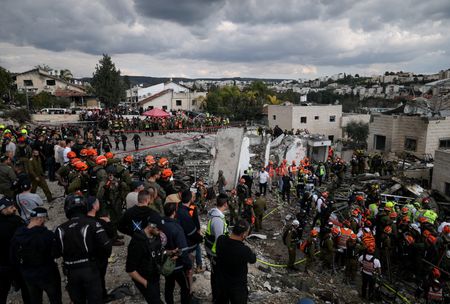
Israeli emergency medical services confirmed on Sunday that six people died following a missile attack that struck the town of Beit Shemesh.
The fatal incident occurred as tensions continue to escalate in the region, with emergency responders confirming the casualties from the deadly strike.
Beit Shemesh, located in central Israel, became the target of the missile attack that resulted in multiple fatalities according to official reports from Israeli ambulance services.
Financial markets are bracing for major volatility as investors turn to gold and other precious metals following recent military strikes involving the United States and Israel against Iran. Market experts are predicting substantial price movements when trading resumes Monday.
Edward Meir, an analyst at Marex, anticipates immediate market reactions across commodity sectors.
“I think you’re going to see a knee jerk spike up in most commodity markets, including gold and oil. This will be a natural response to the outbreak of hostilities, which was rather unexpected in terms of scale and scope,” Meir said.
He projects gold could jump approximately $200 per ounce initially, though expects prices may decline throughout the trading day. “The markets are rather dispassionate when it comes to military conflicts; the only thing investors are ultimately focused on is whether the oil flows will be interrupted so once the initial spike is over, the initial rally tends to fade,” Meir explained.
Digital gold trading is already showing signs of increased demand during the weekend closure of traditional exchanges. Hugo Pascal, a precious metals trader at InProved, noted that tokenized gold is currently commanding premium prices.
“With traditional exchanges closed, tokenised gold is currently trading at a premium, signalling a bullish ‘flight to safety’ ahead of the week’s open. Our digital proxies are showing a strong weekend bid,” Pascal said.
He reported that “PAX Gold (PAXG) is currently leading the charge at $5,344/oz (+2.2% since Friday), while Tether Gold (XAUt) has climbed to $5,292/oz (+1.2%).”
However, Pascal cautioned that “weekend proxy premiums often overstate the initial gap but accurately reflect the direction.”
Tim Waterer, chief market analyst at KCM Trade, expects heightened gold demand due to multiple risk factors.
“Gold is likely to be in higher demand than usual when markets open on Monday. Given the risks regarding how long the conflict may last, which other nations could be dragged in, and inflation fears, gold is expected to assume its mantle as the safe haven asset of choice,” Waterer said.
“Stock markets and other risk assets will probably be sold off and investors will be looking for the best place to park their funds, and gold will likely be atop that list,” he added.
Fawad Razaqzada from City Index and Forex.com sees potential for new record highs in gold pricing.
“There will be extra haven demand for gold which could see prices rise to around $5,500 again, and possibly a new record high above January’s peak of around $5,600,” Razaqzada said.
“However, gold’s gains beyond that level could be capped by a potential rebound in the U.S. dollar, especially if crude oil stays sharply higher,” he noted.
Independent metals trader Tai Wong suggests the market response may be mixed initially.
“I think gold and silver could sell off ‘on the fact’ on the open but any significant sell off will find buyers as the picture in Iran will unlikely be clear for weeks to months,” Wong said.
“I think a U.S. attack has been priced in but the timing was a bit uncertain. It’s certainly in the oil market. And the fact that crypto is higher might be a harbinger,” he added.
ANZ analyst Soni Kumari expects positive price movement with possible pullbacks depending on developments.
“Tomorrow, the price reaction will be positive initially, though there could be some retracement later in the session depending on how events unfold,” Kumari said.
“Our overall view has not changed, we remain positive on gold … Geopolitics has been very different this year, with tensions more intense, and after this attack there could also be macro implications, especially if oil prices rise sharply,” she explained.
Joshua Rotbart, founder and managing partner at J. Rotbart & Co, predicts increased volatility in precious metals markets.
“It is safe to assume that precious metals will experience enhanced volatility with upward movement,” Rotbart said.
“As the risk of a war with Iran was somewhat priced in the rally gold price had already, the extent of the movement will depend on the effect the conflict will have on the energy market, and on whether regime change in Iran is within reach,” he added.
Ole Hansen, head of commodity strategy at Saxo Bank, expressed concern about the escalating situation and its market implications.
“There is no doubt this is a worrying escalation and one that will drive investors into precious metals and the energy sector. How big the impact will be is anyone’s guess but given last week’s momentum I would not be surprised if gold prints a fresh record high,” Hansen concluded.
Crude oil prices experienced a dramatic surge of 10% to approximately $80 per barrel in weekend trading as escalating Middle East tensions threaten global energy supplies, according to oil market traders.
The price spike comes after military strikes involving the United States, Israel, and Iran have created new instability in the region, with market experts warning that oil could reach $100 per barrel if shipping disruptions continue.
Ajay Parmar, who serves as director of energy and refining at ICIS, explained the primary concern driving the market volatility. “While the military attacks are themselves supportive for oil prices, the key factor here is the closing of the Strait of Hormuz,” Parmar stated.
The strategic waterway has become a major bottleneck as shipping companies halt operations. Major oil companies, tanker operators, and commodity traders have stopped moving crude oil, fuel, and liquefied natural gas through the Strait of Hormuz following Tehran’s warnings to vessels about using the passage. This critical shipping lane handles more than one-fifth of the world’s oil transportation.
Parmar warned of further price increases when markets reopen. “We expect prices to open (after the weekend) much closer to $100 a barrel and perhaps exceed that level if we see a prolonged outage of the Strait,” he said.
RBC analyst Helima Croft reported that Middle Eastern leaders have cautioned Washington that military action against Iran could drive oil prices beyond $100 per barrel. Financial analysts at Barclays have issued similar predictions about potential price levels.
Meanwhile, the OPEC+ alliance of oil-producing nations announced a modest production increase of 206,000 barrels per day starting in April, though this represents less than 0.2% of worldwide oil demand.
Jorge Leon, an energy economist with Rystad, outlined the potential supply impact even with alternative routes. While some backup infrastructure could help circumvent the Strait of Hormuz, including pipelines through Saudi Arabia and Abu Dhabi, closing the waterway would still eliminate 8 million to 10 million barrels per day from global crude oil supplies.
Rystad’s analysis projects oil prices will increase by $20 to reach approximately $92 per barrel when trading resumes.
The developing crisis has prompted governments and oil refiners across Asia to evaluate their petroleum reserves and explore backup shipping routes and supply sources.
A violent shooting at an Austin, Texas bar during the early morning hours of Sunday resulted in three fatalities and left 14 people wounded, according to local authorities.
Law enforcement officers engaged the gunman in a deadly confrontation at the scene, ultimately killing the suspect, police reported. Hospital officials confirmed that 14 victims are receiving medical treatment, with three individuals fighting for their lives in critical condition.
Authorities have not disclosed the shooter’s name or provided any information regarding what may have motivated the deadly attack.
Such mass shooting incidents occur with greater frequency in the United States compared to other nations, as America maintains some of the world’s most lenient firearm regulations among developed countries.
BEIJING – Chinese electric vehicle manufacturer BYD has reported its most dramatic sales decline in six years, according to company filings released over the weekend.
The automaker experienced a sharp 41.1% decrease in worldwide vehicle sales during February compared to the same period in 2023, company documents filed with stock market regulators on Sunday revealed. This marks the sixth month in a row that BYD has seen its sales numbers drop.
The February decline represents the company’s steepest sales fall since February 2020, when global markets were severely impacted by the onset of the COVID-19 pandemic.
Chinese Foreign Minister Wang Yi strongly condemned military strikes carried out by the United States and Israel against Iran, labeling them “unacceptable” during discussions with Russian Foreign Minister Sergei Lavrov on Sunday, China’s state news agency Xinhua reported.
Speaking about Saturday’s military operations, Wang characterized the “blatant killing of a sovereign leader” and efforts to provoke regime change as completely unacceptable. Iran has confirmed that Supreme Leader Ali Khamenei died during Saturday’s bombardment.
Beijing is demanding an immediate halt to all military operations and pushing for a swift return to diplomatic discussions and negotiations, while jointly opposing unilateral military actions, the Chinese minister stated.
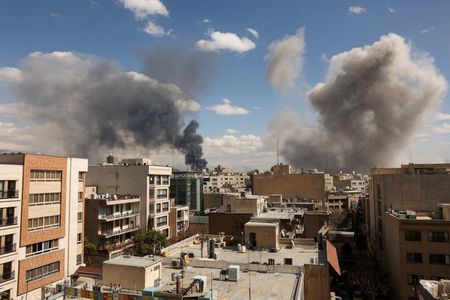
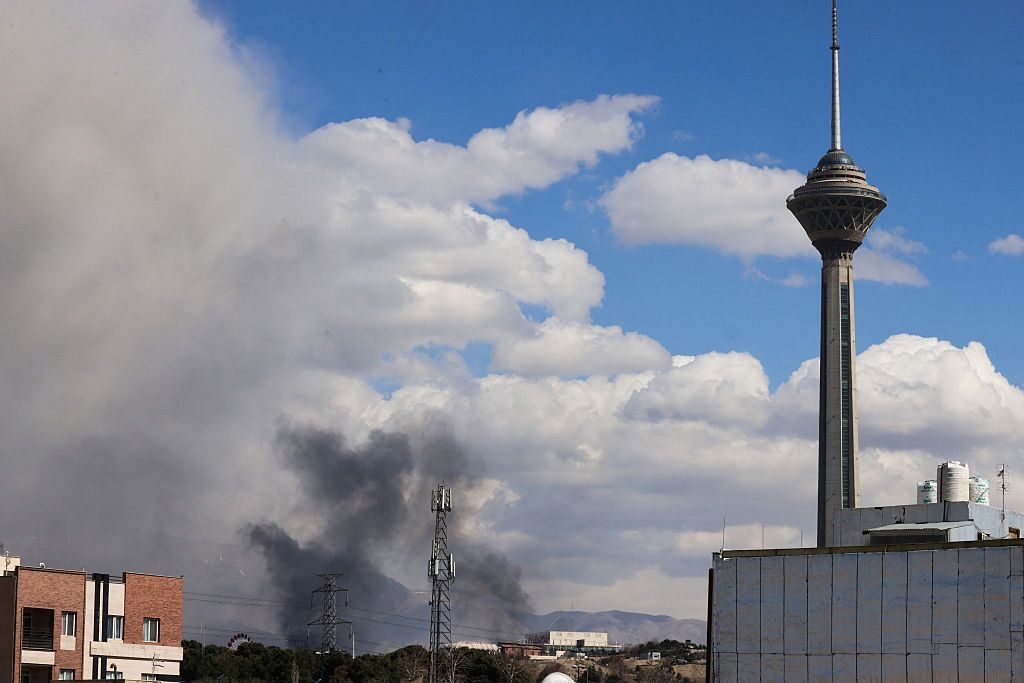
The joint U.S.-Israeli military operations began early Saturday morning, focusing on Iran’s military infrastructure and capabilities.
China’s foreign ministry had already voiced serious concerns about the strikes on Saturday, demanding an immediate cessation of hostilities and encouraging all parties to prevent further escalation while returning to diplomatic channels. Beijing emphasized that Iran’s sovereignty, security and territorial boundaries must be honored.
By Sunday, China’s embassy in Israel had issued evacuation guidance for Chinese nationals, recommending they relocate to safer regions within Israel immediately or exit through Egypt using the Taba border crossing.
Chinese authorities also advised their citizens currently in Iran to depart “as soon as possible” on Sunday, providing four overland evacuation routes through Azerbaijan, Armenia, Turkey and Iraq.
In Sunday editorial commentary, China’s official Xinhua news agency condemned the military action, describing it as “brazen aggression against a sovereign nation” and an example of “power politics and hegemony.”
Xinhua characterized Washington’s military pressure tactics as a “flagrant violation” of United Nations Charter principles and a break from “fundamental norms of international relations.”
Meanwhile, Hong Kong-based Cathay Group announced Saturday that it was halting Middle East operations, impacting passenger services to and from Dubai and Riyadh, plus cargo operations through Dubai’s Al Maktoum International Airport, according to a company statement from Cathay, which owns Cathay Pacific Airways.
The airline company indicated it is redirecting flights that normally travel through the conflict zone.
The regional conflict has triggered extensive flight disruptions and cancellations across the aviation industry.
ATHENS – Over 1,300 anti-war demonstrators gathered in the Greek capital on Sunday, staging protests outside both the United States and Israeli diplomatic missions following recent military strikes against Iran.
The crowd, consisting primarily of members and supporters of Greece’s Communist Party, carried signs with messages including “Hands off Iran” and demands to “close Souda base,” referring to the strategic U.S. naval facility.
Greek authorities had increased security measures at the Souda naval installation on Crete’s coast just one day earlier on Saturday. The base serves as a crucial strategic location for American military operations throughout the eastern Mediterranean region.
Law enforcement officials established security perimeters around both embassy locations using multiple rows of blue police vehicles to separate protesters from the diplomatic buildings.
According to police estimates, the demonstration drew more than 1,300 participants who marched through Athens streets to voice their opposition to the military actions.
BRUSSELS – The European Union’s foreign policy leader believes Iran has reached a pivotal moment following the death of Supreme Leader Ayatollah Ali Khamenei, calling it a historic turning point for the nation.
Kaja Kallas, the EU’s chief diplomat, described the situation as offering new possibilities for Iran’s future. “What comes next is uncertain. But there is now an open path to a different Iran, one that its people may have greater freedom to shape,” Kallas wrote on the social media platform X on Sunday.
The EU official emphasized her efforts to coordinate with international allies to reduce tensions in the region. “I’m in contact with partners, including those in the region that bear the brunt of Iran’s military actions, to find practical steps for de-escalation,” she stated.
According to Iranian state media reports, Khamenei died Saturday when Israeli and U.S. airstrikes destroyed his compound in central Tehran.
European Commission President Ursula von der Leyen also weighed in on the developments, revealing she had spoken with Jordan’s King Abdullah. Von der Leyen expressed Europe’s complete support for Jordan following Iranian attacks on the kingdom.
“With Khamenei gone, there is renewed hope for the people of Iran. We must ensure that the future is theirs to claim and shape,” von der Leyen posted on X.
However, the European leader cautioned about potential consequences of the current situation. “At the same time, this moment carries a real risk of instability that could push the region into a spiral of violence,” she warned.
Military confrontations between Israel and Iran extended into a second consecutive day Sunday, with both nations launching fresh attacks against each other’s territories.
Israeli officials confirmed they conducted additional military operations against Iranian targets, while Tehran’s forces simultaneously carried out strikes against Israeli positions. The Iranian military also expanded its operations to include attacks on American facilities located in Gulf states, Iraq, and Jordan.
The escalating situation has created widespread instability throughout the Middle East region, with multiple countries now involved in the growing conflict. The exchange of strikes marks a significant intensification of tensions between the longtime adversaries.
KABUL, Afghanistan — Afghan authorities reported Sunday they successfully prevented Pakistani military aircraft from conducting bombing runs against Bagram Air Base, the once-major American military installation located north of Kabul, as border hostilities between the two nations entered their fourth consecutive day.
The current hostilities represent the most intense military confrontations between these neighboring countries in recent years, with Pakistan’s leadership stating the nations are engaged in “open war.” International observers have expressed growing concern about the escalating violence, especially given the region’s continued presence of extremist organizations such as al-Qaida and ISIS, which have been attempting to regain influence.
Pakistani officials have accused Afghanistan’s Taliban leadership of providing sanctuary to militant organizations that launch attacks on Pakistani soil, while also claiming Afghanistan has formed partnerships with Pakistan’s longtime adversary, India. Previous border skirmishes in October resulted in numerous fatalities among military personnel, civilians, and suspected militants before Qatar helped broker a temporary ceasefire. However, multiple diplomatic discussions held in Turkey during November failed to establish a permanent peace agreement, and sporadic exchanges of gunfire have occurred since then.
According to a Sunday statement from Parwan province’s police command, where Bagram is situated, multiple Pakistani warplanes violated Afghan airspace “and attempted to bomb Bagram Air Base” around 5 a.m. The statement indicated that Afghan military units deployed “anti-aircraft and missile defense systems” and successfully prevented the assault.
Pakistani officials have not yet responded to these allegations.
Bagram served as America’s primary military installation throughout its Afghanistan operations. Taliban forces assumed control of the facility during their rapid territorial gains following the disorganized American military departure in 2021. Former President Donald Trump indicated last year his interest in reestablishing American operations at the location.
The present conflict erupted when Afghan forces initiated extensive cross-border operations Thursday evening, claiming the actions were retaliation for Pakistani aerial bombardments conducted the previous Sunday.
Pakistan had stated its airstrikes targeted the banned Pakistani Taliban organization, known as TTP. Afghan officials maintained that only civilian casualties resulted from those strikes.
The TTP militant organization, while distinct from Afghanistan’s governing Taliban, maintains close ties with the ruling group and conducts operations within Pakistan, where authorities blame the group for hundreds of deaths through bombing campaigns and other violent attacks spanning multiple years. Pakistani leadership accuses Afghanistan’s Taliban government of offering protected territory within Afghanistan for TTP operations, which Afghan officials reject.
Following Thursday’s Afghan military action, Pakistani Defense Minister Khawaja Mohammad Asif announced that “our patience has now run out. Now it is open war between us.”
Throughout the ongoing hostilities, both nations claim to have eliminated hundreds of opposing forces while reporting significantly lower casualty figures for their own military units.
Afghan representatives confirmed that combat operations continued through the night and into Sunday across border regions.
Said Tayyeb Hammad, spokesman for Nangarhar province’s police command, reported that anti-aircraft missiles were deployed from the provincial capital Jalalabad and nearby locations against Pakistani fighter aircraft conducting overflights Sunday morning.
Defense Ministry spokesman Enayatulah Khowarazmi stated that Afghan military units conducted sniper counterattacks across the border from Nangarhar, Paktia, Khost and Kandahar provinces during overnight operations. He alleged that two Pakistani unmanned aircraft were destroyed and numerous Pakistani soldiers were killed.
Deputy government spokesman Hamdullah Fitrat reported that Pakistani drone strikes targeted civilian residences in Nangarhar province late Saturday evening, resulting in the deaths of one woman and one child, while mortar fire killed another civilian when it struck a home in Paktia province.
Pakistani officials have not immediately addressed these allegations.
Within just one hour of American and Israeli missiles hitting Iranian targets, President Donald Trump delivered a direct message encouraging political upheaval. In a video address aimed at Iranian citizens, Trump declared, “Now is the time to seize control of your destiny. This is the moment for action. Do not let it pass.”
The concept appears straightforward at first glance. With Iran’s widely disliked leadership weakened by devastating air attacks, key officials either killed or unaccounted for, and Washington offering its backing, overthrowing an oppressive government might seem achievable.
Historical precedent suggests otherwise.
America’s track record with toppling foreign governments spans decades and continents. The list includes Vietnam during the 1960s and 70s, Panama in 1989, Nicaragua throughout the 1980s, Iraq and Afghanistan following September 11th, and Venezuela in recent weeks.
Iran itself experienced American-backed regime change before. In 1953, the CIA orchestrated the removal of Iran’s democratically chosen prime minister, installing Shah Mohammad Reza Pahlavi with sweeping authority. Yet like the Shah, who fell during Iran’s 1979 Islamic Revolution after growing increasingly unpopular over decades, government overthrows seldom proceed according to plan.
American efforts to install friendly administrations typically begin with noble goals, whether promoting democracy in Iraq or supporting anti-Communist leadership in Congo during Cold War tensions. However, these missions frequently become mired in political chaos where democratic aspirations devolve into civil warfare, once-cooperative dictators become liabilities, and American service members come home in coffins.
Trump has frequently referenced this troubled history. “We must abandon the failed policy of nation building and regime change,” he stated in 2016.
During a 2025 address in Saudi Arabia, Trump criticized previous administrations, saying, “In the end, the so-called ‘nation-builders’ wrecked far more nations than they built.” He condemned American efforts in Afghanistan and Iraq, arguing that “interventionists were intervening in complex societies that they did not even understand.”
Following Saturday’s military action, a crucial question arises: Does the current administration comprehend the complexity of its undertaking?
Iran faces severe economic turmoil, and popular dissent persists despite brutal government suppression of January protests that killed thousands and imprisoned tens of thousands more. The country’s primary military allies and proxy forces — including Hamas in Gaza, Hezbollah in Lebanon, and Syria’s Assad regime — have suffered significant losses or elimination. Early Sunday reports from Iranian state media confirmed that Israel and the United States had eliminated Supreme Leader Ayatollah Ali Khamenei.
Washington has not articulated a post-conflict strategy and may not seek complete governmental overthrow. Similar to the Venezuelan situation, potential allies within Iran’s existing power structure might be willing to fill leadership voids.
Jonathan Schanzer, who leads the Foundation for Defense of Democracies, a Washington think tank highly critical of Iran’s government, explained the challenges ahead. “But there’s a lot that needs to happen between now and a possible scenario along these lines. There needs to be a sense that there is no salvation for the regime as such, and that they will need to work with the United States.”
In a nation where core leadership remains bound by shared ideology and religious conviction, achieving such cooperation may prove exceptionally challenging.
“The question to my mind right now is have we been able to penetrate the ranks of the regime that are not true believers that are more pragmatic,” Schanzer noted. “Because I don’t believe that the true believers will flip.”
Determining whether political momentum is building in Tehran remains premature. Future leaders might prove equally oppressive or face domestic rejection as American puppets.
Phillips O’Brien, who teaches strategic studies at the University of St. Andrews in Scotland, cautioned about expectations. “We’ll see whether elements of the regime start moving against each other. Air power can damage a leadership, but it can’t guarantee that you’ll bring in something new.”
America’s intervention history in Latin America extends back over two centuries, beginning when President James Monroe declared the hemisphere part of America’s sphere of influence.
While the Monroe Doctrine initially aimed to exclude European powers from the region, by the 1900s it justified everything from Central American coups to the unsuccessful 1961 Bay of Pigs invasion of Cuba. Historians note that such interventions frequently resulted in violence, bloodshed, and widespread human rights abuses.
Christopher Sabatini, a senior fellow for Latin America at London’s Chatham House, argues that direct American involvement has rarely “resulted in long-term democratic stability.” He cites Guatemala, where 1950s U.S. intervention sparked a four-decade civil war that claimed over 200,000 lives.
Nicaragua presents another example, where American support for Contra rebels fighting the Sandinista government during the 1980s fueled prolonged civil conflict that devastated the economy, caused tens of thousands of deaths, and intensified political divisions.
Though large-scale American involvement in Latin America largely ended with the Cold War, Trump has revived this approach.
Since taking office, Trump has authorized naval strikes against Caribbean drug traffickers, imposed a blockade on Venezuelan oil exports, and intervened in electoral processes in Honduras and Argentina. On January 3rd, U.S. forces captured Venezuelan leader Nicolás Maduro, transporting him to face American drug and weapons charges.
The aftermath in Caracas may preview White House expectations for Tehran. Many anticipated American support for María Corina Machado, Venezuela’s prominent opposition figure. Instead, Washington marginalized her while demonstrating willingness to collaborate with President Delcy Rodríguez, formerly Maduro’s deputy.
Schanzer observed the distinction: “There are those who could claim that what we did in Venezuela is not regime change. The regime is still in place. There’s just one person that’s missing.”
North Korea has strongly criticized recent military actions by Israel and the United States against Iran, with a foreign ministry representative condemning the operations as unlawful acts of aggression that violate Iran’s national sovereignty, according to a Sunday report from the Korean Central News Agency.
The North Korean spokesperson characterized the U.S. military action against Iran as being “within the range of expectations,” describing it as a predictable result of what they termed America’s “hegemonic and gangster-like” behavior.
According to the statement, any “war of aggression” conducted by the United States and Israel cannot be justified under any conditions.
The North Korean official also called on Middle Eastern nations and other countries with common interests to step up and take action to restore peace and stability throughout the region.
These condemnations follow Israel’s announcement Sunday that its forces had conducted extensive strikes in central Tehran. The Israeli military reported carrying out a major operation that resulted in the death of Iran’s Supreme Leader Ayatollah Ali Khamenei, sparking concerns about potential widespread unrest across the Middle East.
LONDON – Iranian state media has confirmed the death of Supreme Leader Ayatollah Ali Khamenei following joint strikes by American and Israeli forces that targeted the country on Sunday, March 1st.
The announcement has prompted responses from leaders across the globe, with reactions varying significantly based on international relationships and regional interests.
Russian President Vladimir Putin offered his sympathies, stating: “Please accept my deep condolences in connection with the murder of the Supreme Leader of the Islamic Republic of Iran, Seyed Ali Khamenei, and members of his family, committed in cynical violation of all norms of human morality and international law.”
Sweden’s Foreign Minister Maria Stenergard struck a more measured tone, acknowledging the potential implications while warning of continued regional instability.
“Ayatollah Ali Khamenei has been confirmed dead. This could open a window of opportunities. But there are still many uncertainties remaining,” Stenergard said. “Iran’s future must belong to the people. But the road there is long. The risk of a spiral of violence in the Middle East remains great.”
Indonesia’s Muslim Clerical Council, known as the Ulema Council, issued a statement condemning the February 28th attack while questioning American involvement in Middle Eastern peace efforts.
“The Indonesian Ulema Council (MUI) expressed its deepest condolences for the death of Iran’s supreme leader, Ali Khamenei, as a result of the Israeli-American attack on February 28,” the organization stated.
The council went further, challenging U.S. peace initiatives in the region: “The United States, which is playing a central role in managing the Palestinian conflict through the BoP (Board of Peace), faces a major question: is this strategy truly aimed at a just peace, or is it actually strengthening an unequal security architecture and burying Palestinian independence? Therefore, the MUI urges the Indonesian government to revoke its membership from the BoP.”
The strikes represent a significant escalation in Middle Eastern tensions, with the full implications of Khamenei’s death yet to be determined.
The passing of Iran’s Supreme Leader Ayatollah Ali Khamenei has revealed stark divisions across the nation, as citizens responded with both mourning and celebration following his death after 36 years in power.
Iranian state television broke the news during the early morning hours on Sunday, with the announcer’s voice filled with emotion while confirming that Khamenei had perished in Saturday’s U.S.-Israeli strike. Video from Tehran captured crowds of mourners gathering in a public square, many wearing black clothing and visibly weeping.
However, social media footage revealed contrasting scenes of jubilation across various Iranian cities. In Dehloran, located in Ilam province, people cheered as they brought down a statue. Residents of Karaj city in Alborz province danced in the streets, while celebrations erupted in Izeh within Khuzestan province.
In the southern Iranian town of Galleh Dar, citizens destroyed a memorial dedicated to Ayatollah Ruhollah Khomeini, the founder of Iran’s Islamic Republic in 1979, according to verified social media video.
“Am I dreaming? Hello to the new world!” a man can be heard shouting in the video, as fires burned on a traffic circle where the monument was toppled, prompting cheers and applause.
Additional footage showed people celebrating in the southern town of Lapuee outside the residence of Pooya Jafari, a 15-year-old who was fatally shot during anti-government demonstrations in January.
The January protests resulted in thousands of Iranian deaths during government crackdowns, marking the most deadly period of civil unrest since the 1979 Islamic Revolution.
Following Saturday’s announcement of the Iranian attack, President Donald Trump called on Iranian citizens to take advantage of the situation to overthrow their government.
At a memorial gathering for Khamenei in Tehran, one attendee expressed that the news had filled him with animosity “towards Israel and America. We must avenge the blood of the leader.”
“We said last night until the morning that God willing, it is a lie. Unfortunately, it was the truth,” said a woman mourning Khamenei’s death, in a pool report via WANA.
Throughout Khamenei’s leadership, Iran experienced multiple periods of civil disorder, including student demonstrations in 1999 and 2002, upheaval in 2009, and the recent “Woman, Life, Freedom” movement in 2022, which began after a young woman died while in morality police custody.
A 33-year-old Isfahan woman told Reuters she wept from both happiness and shock upon learning of Khamenei’s death. Speaking from Iran, she described joining street celebrations to “share my happiness with my people,” hoping his death would signal the end of the Islamic Republic. She requested anonymity due to safety concerns.
However, Atousa Mirzade, an elementary school educator in Shiraz, said she couldn’t celebrate their leader’s death at the hands of foreign forces.
“I also cannot be happy because I don’t know what will happen to our country. We saw what happened in Iraq — chaos and bloodshed. I would prefer the Islamic Republic to that situation.”
Hossein Dadbakhsh, a 21-year-old university student in Mashhad, vowed that Iran would seek retribution for its leader.
“I am ready to sacrifice my life for Islam and for my Imam Khamenei. The Zionist regime and Trump will pay a heavy price for the martyrdom of my leader,” he said by phone, his voice trembling with emotion.
LONDON – The United Kingdom’s Defense Secretary John Healey stopped short of endorsing weekend military strikes conducted by the United States and Israel against Iran, telling reporters Sunday that America must “set out the legal basis of the action it took.”
Iranian state media has confirmed that the country’s Supreme Leader Ayatollah Ali Khamenei died in Saturday’s air strikes.
Speaking to BBC’s Laura Kuenssberg, Healey emphasized that Britain had no involvement in the military action, though the UK shares Washington’s goal of preventing Iran from acquiring nuclear weapons capabilities.
When pressed about whether the strikes complied with international law, Healey responded: “It is for the U.S. to set out the legal basis of the action that it took.”
The Defense Secretary described Iran’s response as increasingly reckless, noting that Iranian forces have been targeting civilian infrastructure including airports and hotels alongside military installations.
“We have strengthened the UK defences in the region, we are active in regional defence operations,” Healey stated during an interview with Sky News.
He confirmed that British military aircraft stationed at bases in Qatar and Cyprus are currently conducting operations to intercept drone attacks aimed at allied forces and installations in the region.
MOSCOW – Russian President Vladimir Putin on Sunday condemned the death of Iran’s Supreme Leader Ayatollah Ali Khamenei, calling it a “cynical” assassination that breaks international law and basic human decency.
In an official message to Iranian President Masoud Pezeshkian released by the Kremlin, Putin expressed his condolences, stating: “Please accept my deep condolences in connection with the murder of the Supreme Leader of the Islamic Republic of Iran, Seyed Ali Khamenei, and members of his family, committed in cynical violation of all norms of human morality and international law.”
According to Iranian state media reports, the 86-year-old Khamenei died Saturday during military strikes carried out by Israeli and American forces.
Putin praised the deceased Iranian leader’s role in strengthening ties between Moscow and Tehran, saying: “In our country, Ayatollah Khamenei will be remembered as an outstanding statesman who made a huge personal contribution to the development of friendly Russian-Iranian relations and bringing them to the level of a comprehensive strategic partnership.”
The Russian president concluded his statement by extending sympathy to Iran’s leadership and citizens: “I ask you to convey my most sincere sympathy and support to the family and friends of the Supreme Leader, the government and the entire people of Iran.”
Good morning, Delmarva! We’re starting off this first day of March with some early morning sprinkles possible between 8 and 10 AM, but don’t worry – it’s just a slight 20% chance. After that brief possibility of light showers, we’ll see mostly cloudy skies with temperatures reaching a chilly 42 degrees. Those north winds at 5 to 10 mph will keep it feeling quite crisp out there, so grab that jacket if you’re heading out!
Tonight brings much clearer skies and significantly colder temperatures as we drop down to a frosty 23 degrees – definitely bundle up if you have any evening plans.
Looking ahead to Monday, we’ll see some improvement with partly sunny skies and temperatures climbing to 37 degrees. However, Monday night could get interesting as mostly cloudy conditions move in with a chance of light snow developing.
March is certainly coming in like a lion here on the peninsula! Make sure to layer up today and keep an eye on those Monday night snow chances. Stay warm out there, Delmarva, and have a great Sunday!
A commercial oil vessel sustained damage near Oman’s coastline on Sunday, leaving four crew members wounded, according to the nation’s maritime security officials. The incident followed separate drone attacks on Oman’s Duqm commercial port facility.
These attacks represent the initial strikes targeting Omani territory or nearby waters amid escalating regional tensions following retaliatory actions by Tehran against Gulf nations. The broader conflict stems from coordinated U.S.-Israeli military operations against Iran, which have sparked a new phase of warfare in the region.
The vessel, named Skylight and registered under Palau’s flag, had its entire 20-member crew evacuated following the assault, which took place approximately 5 nautical miles north of Khasab Port on the Musandam peninsula, according to Oman’s Maritime Security Centre’s social media announcement. Officials did not identify what weapon struck the tanker.
Four crew members sustained injuries of different degrees of severity, maritime authorities reported. The ship’s crew consisted of 15 Indian nationals and five Iranian citizens.
The Musandam peninsula, where Oman is located, jointly controls the Strait of Hormuz with Iran. This narrow waterway serves as a crucial shipping lane for approximately 20 percent of the world’s oil supply.
Earlier the same day, Oman’s official news service confirmed that two drones struck the Duqm commercial port, wounding one foreign worker.
Wreckage from an additional drone landed close to fuel storage tanks at the Duqm facility, though this incident resulted in no injuries or property damage, according to the news agency.
The world’s major oil-producing nations are weighing a substantial increase in crude output this weekend following disruptions to shipping lanes caused by escalating tensions between the United States, Israel, and Iran.
According to two sources within the OPEC+ alliance, the group will contemplate boosting production beyond previously anticipated levels during Sunday’s emergency meeting. The discussions come after Iran issued warnings that effectively shut down navigation through the Strait of Hormuz, a critical waterway for global energy shipments.
The oil cartel has traditionally responded to supply disruptions by ramping up production, though energy experts note that most member countries currently lack significant unused capacity to meaningfully increase output. Only Saudi Arabia and the United Arab Emirates possess substantial spare production capability.
Sources indicate that Saudi Arabia has already begun increasing both production and exports in recent weeks, anticipating potential U.S. military action against Iran.
Maritime traffic carrying oil, natural gas, and other commodities through the Strait of Hormuz ceased on Saturday after shipping companies received Iranian advisories declaring the waterway closed to vessels.
Sunday’s OPEC+ meeting will examine raising daily production by 411,000 barrels or potentially more, sources revealed to Reuters. This represents a significant jump from initial projections of just 137,000 barrels per day.
Energy markets reacted sharply on Friday, with oil prices climbing to $73 per barrel – the highest point since July. The increase reflects growing concerns about broader Middle Eastern conflict and potential supply shortages through Hormuz, which handles more than 20% of worldwide oil transportation.
Veteran OPEC analyst Helima Croft from RBC reported that Middle Eastern officials have cautioned Washington that military action against Iran could drive oil prices above $100 per barrel. Barclays analysts have issued similar warnings about potential price spikes.
However, Croft emphasized that any large-scale OPEC production increase would have minimal market impact due to limited actual production capabilities beyond Saudi Arabia’s reserves.
The emergency session scheduled for 1100 GMT Sunday will include eight key OPEC+ members: Saudi Arabia, Russia, the UAE, Kazakhstan, Kuwait, Iraq, Algeria, and Oman. While OPEC+ encompasses the Organization of the Petroleum Exporting Countries plus allies like Russia, these eight nations have handled most production adjustments in recent years.
The eight-member group had previously agreed to boost production quotas by approximately 2.9 million barrels daily from April through December 2025 – roughly 3% of global demand – before temporarily suspending increases for January through March 2026 due to seasonal market conditions.
KARACHI, Pakistan — Deadly violence erupted in Pakistan’s largest city Sunday when hundreds of angry demonstrators launched an assault on the United States Consulate, resulting in at least six fatalities and approximately a dozen injuries during confrontations with law enforcement and paramilitary units, according to local officials.
The deadly unrest followed reports that American and Israeli forces had conducted an operation that resulted in the death of Iran’s supreme leader, Ayatollah Ali Khamenei. Medical personnel at a Karachi hospital confirmed that around eight individuals sustained injuries during the fierce confrontations.
Dr. Summaiya Syed Tariq, serving as police surgeon at the city’s primary government medical facility, verified that six deceased individuals and numerous wounded protesters were transported to the hospital. Karachi serves as both the capital of Sindh province in southern Pakistan and the nation’s most populous urban center.
According to senior law enforcement official Irfan Baloch, demonstrators temporarily breached the consulate’s outer security perimeter before being pushed back by authorities. “The situation is now fully under our control,” Baloch stated.
Baloch refuted unverified claims suggesting portions of the consulate facility had been set ablaze. Nevertheless, he acknowledged that protesters had burned down a nearby police station and damaged consulate windows before security personnel arrived to restore order.
Eyewitness accounts indicated that numerous Shiite demonstrators continued to gather approximately one kilometer away from the diplomatic compound, encouraging additional participants to join their cause. Pakistan’s Shiite population comprises roughly 15% of the country’s 250 million residents, representing among the world’s most significant Shiite communities. While anti-American and anti-Israeli demonstrations have occurred previously, violent confrontations of this magnitude remain uncommon.
Similar protests also took place near the American Consulate in Lahore, the capital city of Punjab province in eastern Pakistan, law enforcement reported. Senior police official Faisal Kamran explained that demonstrators attempted to stage protests outside the diplomatic facility but were prevented from doing so. Authorities dispersed the gathering when protesters tried to march toward the consulate building, he confirmed.
Iran has declared a 40-day period of national mourning following the death of Supreme Leader Ayatollah Ali Khamenei, who was killed during coordinated military strikes conducted by the United States and Israel this past Saturday.
The Iranian leadership confirmed the death of their highest-ranking official after the joint military operation targeted Iran. President Trump has since issued a stern warning to Tehran, advising against any retaliatory measures in response to Khamenei’s death.
The strikes mark a significant escalation in tensions between Iran and the Western allies, with the death of the Supreme Leader representing a major blow to Iran’s theocratic government structure.
Airlines around the globe continued suspending Middle Eastern routes on Sunday following military strikes by the United States and Israel against Iran that resulted in the death of Iranian Supreme Leader Ayatollah Ali Khamenei, triggering a fresh regional crisis.
Flight tracking data from Flightradar24 revealed nearly empty skies across Iran, Iraq, Kuwait, Israel, Bahrain, the UAE and Qatar, while ongoing military operations forced major aviation hubs including Dubai, Abu Dhabi and Doha to either close completely or operate under severe limitations.
Here’s how individual carriers are responding to the crisis, organized by airline:
AEGEAN AIRLINES: Greece’s flagship carrier halted service to Tel Aviv, Israel; Beirut, Lebanon; and Erbil, Iraq through March 2.
AIR ASTANA: The airline group suspended all Middle Eastern routes until March 3.
AIR CANADA: Canadian flights to Israel remain grounded through March 8, while Dubai service is cancelled until March 3.
AIR EUROPA: Spain’s Air Europa scrapped Tel Aviv flights for Sunday and Monday, with Tuesday operations under review.
AIR FRANCE KLM: Air France eliminated Saturday flights to Tel Aviv and Beirut. KLM’s Dutch operations cancelled weekend service to Dubai, Dammam and Riyadh, while moving up the suspension of Amsterdam-Tel Aviv routes to Saturday.
AIR INDIA: The carrier scrapped Sunday departures from Delhi, Mumbai and Amritsar to London, New York, Chicago, Toronto, Frankfurt and Paris, plus additional European destinations including Birmingham, Amsterdam, Zurich, Milan, Vienna and Copenhagen.
AZERBAIJAN AIRLINES: Service to Dubai, Doha, Jeddah and Tel Aviv remains suspended.
BRITISH AIRWAYS: The IAG subsidiary cancelled Tel Aviv and Bahrain flights through March 3, along with Saturday’s Amman service.
CATHAY PACIFIC: Hong Kong’s Cathay Group suspended regional operations affecting Dubai and Riyadh passenger flights, plus cargo service at Dubai’s Al Maktoum airport.
EMIRATES: Dubai’s flagship carrier halted all operations until 3 p.m. UAE time on March 2 due to widespread airspace restrictions.
ETIHAD: UAE’s Etihad suspended Abu Dhabi departures until 2 p.m. local time Sunday.
FLYDUBAI: The budget carrier temporarily grounded all Dubai flights until 3 p.m. local time Sunday.
IBERIA EXPRESS: The Spanish subsidiary cancelled Saturday’s 5 p.m. Tel Aviv departure.
INDIGO: India’s largest airline extended suspension of select international routes using Middle Eastern airspace through Monday.
ITA AIRWAYS: Italy’s carrier suspended Tel Aviv service and banned use of Israeli, Lebanese, Jordanian, Iraqi and Iranian airspace until March 7, while Dubai flights remain cancelled through March 1.
JAPAN AIRLINES: Saturday’s Tokyo Haneda-Doha flight and Sunday’s return service were cancelled, according to Nikkei reports.
LOT POLISH AIRLINES: Tel Aviv service remains suspended until March 15, with Dubai and Riyadh flights cancelled through March 2.
LUFTHANSA: Germany’s flag carrier suspended Tel Aviv, Beirut and Oman routes until March 7, cancelled weekend Dubai flights, and banned use of Israeli, Lebanese, Jordanian, Iraqi and Iranian airspace through March 7.
NORWEGIAN AIR: The Nordic carrier suspended Dubai service through March 4, though Tel Aviv and Beirut routes remain unaffected as they operate only during summer months.
PEGASUS AIRLINES: Turkish carrier cancelled flights to Iran, Iraq, Jordan and Lebanon through March 2.
QATAR AIRWAYS: All flights remain suspended due to Qatari airspace closure, with updates expected by 9 a.m. local time Monday.
SCANDINAVIAN AIRLINES: Saturday’s Copenhagen-Tel Aviv flight was cancelled, with future dates under review.
TURKISH AIRLINES: Saturday flights to Qatar, Kuwait, Bahrain, UAE and Oman were cancelled, along with service to Lebanon, Syria, Iraq, Iran and Jordan through March 2.
VIRGIN ATLANTIC: The British carrier is avoiding Iraqi airspace, causing flight rerouting, and cancelled Saturday’s London Heathrow-Dubai service.
WIZZ AIR: Hungary’s budget airline immediately suspended flights to Israel, Dubai, Abu Dhabi and Amman through March 7, with ongoing schedule reviews as conditions change.
Team USA sailed to victory at the Sydney Sail Grand Prix on Sunday, capturing their first championship since claiming the title in Cadiz back in October 2023. Captain Taylor Canfield guided the American crew to triumph while Australia’s Bonds Flying Roos experienced disappointment by missing the event final for the first time ever.
The American team dominated the three-boat championship race from the start, executing a flawless approach to the initial gate and taking an early lead over Emirates GBR. They maintained their position throughout the race to claim the top spot. The defending champions from Great Britain finished in second place, with Los Gallos Spain taking third despite being the weekend’s most reliable performers.
“We’ve been putting in the effort – we said we were going to stick to our processes and that showed. We’re getting better all the time and to get a win is huge,” Canfield told reporters.
“It was a tricky race track but we came into today with a really good plan. We knew we had to keep the pedal down, stay in clean air, stay out of the pack.”
“Our starting has always been pretty good in the lighter conditions, and we got off the line well, kept our heads out of the boat and did a nice job.”
Earlier in the day, Emirates GBR’s Dylan Fletcher guided his team to a close victory in the fifth race, edging past Spain after calm winds bunched the competing boats near the first marker and created a strategic battle on the final stretch. Spain’s runner-up position in that race strengthened their lead in the overall event rankings.
During the sixth race, the American team launched perfectly from the starting line and maintained their advantage throughout the entire course. Spain fought back from last place to claim fourth, finishing behind Germany and Rockwool Denmark.
Nicolai Sehested’s Danish team captured the concluding fleet race, while both the United States and Emirates GBR earned spots in the final with fifth and sixth-place results respectively. Australia, under Tom Slingsby’s leadership, was knocked out after finishing 10th.
SailGP features international competition with high-velocity racing using matching F50 foiling catamarans that can reach speeds over 100 kilometers per hour (60 miles per hour). The championship series brings together national teams competing in regattas at prestigious venues around the globe.
Dallas completed a remarkable turnaround Saturday night, overcoming a two-goal deficit to defeat Nashville 3-2 in overtime and extend their winning streak to eight games.
Jason Robertson delivered the decisive blow just 1:47 into overtime, finishing off a pass from defenseman Miro Heiskanen for his team-leading 33rd goal of the season. The Stars had trailed 2-0 with under four minutes remaining in the second period before mounting their comeback.
Wyatt Johnston contributed a goal and assist while Nathan Bastian also found the net for Dallas. Goaltender Jake Oettinger was solid between the pipes, turning away 25 shots to help secure the victory.
Nashville’s Michael Bunting and Steven Stamkos provided the early offense that put the Predators ahead 2-0. Luke Evangelista recorded two assists and Juuse Saros made 22 saves, but the Predators couldn’t hold their lead and now stand 1-1-2 over their last four contests.
In other NHL action Saturday night, the New York Rangers ended their five-game losing skid with a 3-2 shootout victory over Pittsburgh. Vincent Trocheck scored the lone shootout goal, cutting from the left circle and beating goalie Stuart Skinner glove-side.
The Rangers had fallen behind 2-0 early, allowing goals to Anthony Mantha and Ryan Shea in the opening minutes of the first two periods. Mika Zibanejad sparked the comeback with a power-play tally late in the second, and Taylor Raddysh evened the score early in the third.
Philadelphia snapped Boston’s eight-game point streak with a 3-1 victory, scoring twice to open the third period. Travis Konecny and Jamie Drysdale each tallied and assisted on the other’s goal, while Dan Vladar made 26 saves. Charlie McAvoy extended his point streak to nine games with Boston’s lone goal.
San Jose ended their five-game slide by defeating Edmonton 5-4, with Shakir Mukhamadullin providing the game-winner on a third-period slap shot. Connor McDavid, the league’s scoring leader, collected three assists for the Oilers, while 12 different Sharks players recorded points.
The New York Islanders remained perfect in overtime, improving to 8-0 in extra time with a 4-3 victory over Columbus. Simon Holmstrom scored the winner with 3:12 remaining in overtime, completing another comeback win for the Islanders.
New Jersey halted their five-game losing streak with a 3-1 triumph over St. Louis, getting 25 saves from Jacob Markstrom. Luke Hughes returned from injury to contribute an assist in his first game since January 19.
Colorado bounced back from a disappointing home loss with a 3-1 victory over Chicago, led by Cale Makar’s two goals. The Avalanche maintain the NHL’s best record with 87 points, while the Blackhawks have dropped eight of their last nine games.
Carolina extended their winning streak to five games and point streak to 12 games with a 5-2 victory over Detroit. Taylor Hall and Shayne Gostisbehere each recorded a goal and two assists in the win.
Buffalo dominated Tampa Bay 6-2, scoring four times in the opening period to cruise to their third straight victory since the Olympic break. Josh Norris netted twice while Rasmus Dahlin added a goal and two assists.
Los Angeles goaltender Anton Forsberg recorded his second shutout of the season, making 29 saves in a 2-0 victory over Calgary. The Kings snapped a five-game losing streak with goals from Alex Laferriere and Adrian Kempe.
Montreal earned points in their seventh consecutive game with a 6-2 victory over Washington. Cole Caufield scored twice in the first period, while Alex Ovechkin tallied both goals for the Capitals.
Ottawa defeated Toronto 5-2 behind Dylan Cozens’ two goals and assist. Drake Batherson also scored twice for the Senators, who improved to 1-0-1 since the Olympic break.
Seattle opened a six-game homestand with a convincing 5-1 victory over Vancouver. Jordan Eberle recorded two goals and an assist, while the Canucks extended their losing streak to five games.
KARACHI, Pakistan — Violent confrontations between Pakistani authorities and demonstrators outside the U.S. consulate in Karachi resulted in nine fatalities on Sunday, as crowds responded to reports that Supreme Leader Ayatollah Ali Khamenei was killed in strikes by U.S. and Israeli forces against Iran.
Similar demonstrations took place near Baghdad’s Green Zone in Iraq, where the American Embassy is situated, as supporters of Iran expressed their outrage.
Both Pakistan and Iraq contain the world’s second and third largest populations of Shi’ite Muslims, following Iran itself.
In Karachi, demonstrators managed to breach the exterior barrier of the consulate before being repelled by security forces, according to a local government representative. The crowd ignited a car near the facility’s main entrance during the confrontation with police.
Authorities confirmed that nine individuals lost their lives during these violent encounters.
News reporters on the scene documented the sound of weapons fire and witnessed law enforcement deploying tear gas throughout the area surrounding the diplomatic compound. Video evidence captured flames burning under a bridge in the vicinity.
Officials reported no injuries from the street violence itself.
Neither the Karachi consulate nor the U.S. Embassy press office in Islamabad provided responses to media inquiries.
Demonstrations of significant size also took place throughout other regions of Pakistan.
In Skardu, located in the northern Gilgit Baltistan area known for its mountainous terrain and tourism, angry crowds set fire to a United Nations facility. This region typically remains calm and has a Shi’ite majority population.
Local government representative Shabbir Mir confirmed to reporters that demonstrators had assembled at the UN office in the region and destroyed the structure through arson, though no injuries occurred.
Earlier that day in Lahore, hundreds gathered near the American consulate in Pakistan’s central region. While minor altercations with law enforcement took place, no violent incidents were documented.
Eyewitness Aqeel Raza described the scene, stating: “Some of the protesters tried to damage the security gate, hundreds of yards away from the Consulate. However, police stopped them without use of force.”
In Pakistan’s capital city of Islamabad, law enforcement blocked all routes to the red zone containing diplomatic buildings and the parliament, preventing vehicle and pedestrian access.
Motorists traveling on North DuPont Highway should expect delays this evening as DelDOT reports a vehicle accident has shut down the right lane at the Interstate 495 northbound interchange.
The Delaware Department of Transportation is advising drivers to use caution when traveling through the area and to expect slower than normal traffic conditions.
No additional details about the crash have been released at this time, including information about potential injuries or when the lane might reopen to traffic.
Drivers are encouraged to seek alternate routes if possible or allow extra travel time when passing through this section of North DuPont Highway.
ATLANTIC CITY — Agricultural spray drones offer tremendous possibilities for farming operations, according to Adam Kyle from Warren County Rutgers Cooperative Extension, but federal oversight agencies like the FAA and FDA haven’t kept up with the rapid technological advances in safe drone spraying applications.
During a presentation at the Northeast Ag Expo in late January, Kyle discussed both the benefits and challenges surrounding spray drones that can help farmers reduce costs and save valuable time.
Farmers have shown increasing interest in spray drone technology over recent years, Kyle noted, particularly because the equipment proves valuable during wet conditions when conventional machinery cannot access fields.
“A lot of the companies that sell you drones offer you a waiver package which is typically a good thing,” Kyle said. “The issue is I see a lot of farmers and companies that buy spray drones don’t usually read those exemptions exactly to a tee, so they’re good to fly them but they don’t understand everything they’re legally required to do.”
Kyle warned that misunderstanding these exemption requirements can create significant problems, especially since the FAA has only informal guidelines rather than comprehensive regulations for spray drone operations.
“They have sets of regulations for smaller drones, but for the spray drone they have no formal sets of regulations yet, this is why it’s so complicated,” he explained. Despite the expanding market, most drone companies lack sufficient personnel to meet growing demand from farms requesting services, particularly in northwestern New Jersey where Kyle works.
“A lot of farmers have asked me if they should get their own spray drone,” he said, describing this as a complex decision given current circumstances, though he acknowledged that drone service companies are experiencing rapid growth “and that seems to be mostly a good thing.”
Kyle recommended viewing spray drone technology as an additional farming tool, particularly useful for accessing wet fields or areas blocked by forests and difficult terrain. For now, he suggests hiring professional drone crews might be the safest approach.
“The drone doesn’t really care about terrain or road access,” he said.
Purchasing spray drone equipment requires substantial investment, with American-manufactured units typically costing more than Chinese-built alternatives.
“I’ve heard rumors from people that the FAA was going to regulate spray drones, but so far they have not been forthcoming. I know the FAA is working to create a formal set of regulations just like part 107 where you could just go and take a class at a community college and be able to take it online and then go take a test and be a certified drone pilot, but right now that’s not where it is and that’s why it’s so complicated with spray drones.”
Safety concerns with larger spraying drones include entanglement in electrical power lines and potential interference with roadway traffic.
“If you have 100 liters of [potential] poison flying in the air, imagine if that goes out into the road or someone crashes into that. If you look online you can see that happening, you see them getting tangled in power lines all the time, people think of drones traditionally as a toy.”
Kyle said his growing understanding of spray drone safety challenges helps him comprehend “the more I understand why the FAA is kind of nervous about it, because the sprayers have tons of autonomous capabilities.”
Modern drones include video and audio safety systems designed to prevent collisions, he explained, “but the issue is people get frustrated with these things and sometimes they turn them off or lower the thresholds, so it won’t see a really thin branch or a really thin wire. It might see it sometimes but it also might not see it and it’ll fly right into that wire and now you have a $60,000 spray gun entangled in power lines.”
A seasoned Iranian political figure has stepped into a leadership vacuum after announcing Sunday that a temporary governing council will take charge following the death of Supreme Leader Ayatollah Ali Khamenei in an airstrike.
Ali Larijani, who has risen to become one of Iran’s most influential security officials over the past year, has been handling a wide range of critical issues including nuclear diplomacy, regional relationships, and the government’s harsh response to domestic protests.
The establishment veteran, who comes from a prominent religious family, had been leading Iran’s attempts to negotiate a nuclear agreement with America – this came just one month after the U.S. imposed sanctions on him in January for his alleged role in violently suppressing anti-government demonstrations.
On Sunday, Larijani blamed the United States and Israel for attempting to “plunder and disintegrate Iran” and issued warnings to “secessionist groups” about severe consequences if they take action, according to state television reports. This statement came nearly a full day after attacks against Iran commenced.
Iranian state media also reported that Armed Forces Chief of Staff Abdolrahim Mousavi died in the strikes.
Since taking over as Secretary of the Supreme National Security Council in August, Larijani has maintained senior positions throughout his career, earning recognition for his unwavering loyalty to Khamenei and his skill at working with competing factions within the system.
His position as a trusted advisor to Khamenei became clear last month when he traveled to Oman, which serves as a mediator, to lay groundwork for indirect nuclear discussions with the United States. This occurred as Washington increased its military presence in the Middle East to pressure Iran before launching strikes.
In recent months, Larijani has also made multiple visits to Moscow, Iran’s important ally, to discuss various security partnerships, demonstrating his return to high-level international diplomacy.
LARIJANI VIEWS NUCLEAR DISPUTE AS ‘SOLVABLE’
Having previously led the SNSC two decades ago, Larijani returned to this leadership position after last year’s 12-day aerial conflict between Iran and Israel, which also involved the United States, bringing him back to the center of Iran’s security apparatus.
His public comments regarding nuclear issues have often reflected a practical approach.
“In my view, this issue is resolvable,” Larijani stated to Oman state television last month about the U.S. negotiations. “If the Americans’ concern is that Iran should not move toward acquiring a nuclear weapon, that can be addressed.”
However, following January’s widespread anti-government protests, Washington criticized his security council position.
A U.S. government statement announcing sanctions against Larijani and other officials for their response to the protests described him as leading the effort to suppress the demonstrations that occurred across Iran in January.
“Larijani was one of the first Iranian leaders to call for violence in response to the legitimate demands of the Iranian people,” stated a U.S. Treasury announcement on January 15, noting that Larijani acted on Khamenei’s orders.
Human rights organizations report that thousands died during the government’s crackdown on the protests, marking Iran’s most severe internal unrest since the 1979 Islamic Revolution.
‘TRADING A PEARL FOR CANDY’
While Larijani, like other Iranian officials, showed some sympathy for demonstrations driven by economic difficulties, he condemned violent actions that he claimed were encouraged by Israel, Iran’s primary adversary.
“Popular protests must be completely separated from these terrorist-similar groups,” state media quoted him as saying on January 10. “The rioters are an urban quasi-terrorist group,” he was reported as saying on January 26.
A former Revolutionary Guards member, Larijani worked as Iran’s chief nuclear negotiator from 2005-2007, defending Tehran’s claimed right to uranium enrichment. He famously compared European offers to halt nuclear fuel production to “exchanging a pearl for a candy bar.”
During that period, Iranian experts believed he tried to convince Western nations through diplomatic means and was viewed as a moderate.
The United States and Israel maintain that Iran wants to develop nuclear weapons that could endanger Israel’s survival. Iran insists its nuclear activities are entirely for peaceful purposes.
From 2008 to 2020, Larijani served as parliament speaker. While in this role, Iran reached a nuclear agreement with six global powers in 2015 following nearly two years of complex negotiations. President Donald Trump pulled the United States out of this carefully negotiated deal in 2018 during his first presidency.
WORKING WITH PUTIN
Larijani has warned that Iran’s nuclear capabilities “can never be destroyed.”
“Because once you have discovered a technology, they can’t take the discovery away,” he explained to PBS Frontline in September 2025. “It’s as if you are the inventor of some machine, and the machine is stolen from you. You can still make it again.”
Through frequent trips to Moscow and meetings with President Vladimir Putin, Larijani has helped Khamenei maintain relations with a crucial ally and global power that balances pressure from Trump.
Larijani also oversaw negotiations with China that resulted in a 25-year cooperation deal in 2021.
He ran for president unsuccessfully in 2005 and later attempted to compete in the 2021 and 2024 presidential races but was rejected both times by the Guardian Council, which pointed to concerns including personal conduct standards and family connections overseas.
Born in Najaf, Iraq, in 1958 into a prominent Iranian religious family, Larijani relocated to Iran during childhood and eventually obtained a philosophy doctorate. Multiple brothers have also served in high-ranking government positions, including in the court system and foreign ministry.
In January, one of Larijani’s daughters lost her medical teaching job at Emory University in the United States after Iranian-American activists protested her father’s involvement in suppressing that month’s demonstrations.
Second-ranked Arizona delivered a commanding 84-61 victory over 14th-ranked Kansas on Saturday in Tucson, getting revenge for their earlier season defeat while securing at least a share of the Big 12 regular season title.
The Wildcats (27-2, 14-2 Big 12) dominated the Jayhawks with a decisive 16-0 scoring surge, with Jaden Bradley contributing six of his 10 total points during that crucial run. This win avenged Arizona’s February 9th defeat at Kansas, which ended their historic 23-0 start to the season.
Brayden Burries paced Arizona’s offensive attack with 20 points while also grabbing 12 rebounds and dishing out five assists. Koa Peat, returning after missing three games due to a lower-leg muscle strain, contributed 12 points, seven rebounds and five assists in his comeback performance.
Kansas (21-8, 11-5) was led by Darryn Peterson’s 24 points. Peterson had been sidelined with flu-like symptoms during the teams’ previous meeting. Tre White and Melvin Council Jr. each chipped in 13 points for the Jayhawks.
In other top-25 action, top-ranked Duke overwhelmed 11th-ranked Virginia 77-51, with Isaiah Evans leading the way with 19 points. The Blue Devils built their advantage to as much as 28 points in the second half.
Sixteenth-ranked Texas Tech stunned fourth-ranked Iowa State 82-73 on the road, handing the Cyclones their first home defeat of the season. Donovan Atwell sparked the Red Raiders with 18 points, connecting on six three-pointers.
Fifth-ranked Houston snapped a three-game losing streak by demolishing Colorado 102-62, with Milos Uzan pouring in 26 points and hitting five of seven three-point attempts.
Sixth-ranked UConn edged Seton Hall 67-71 behind Alex Karaban’s 23 points on five three-pointers. The Huskies overcame an eight-point second-half deficit with a 10-0 run.
Seventh-ranked Florida clinched at least a share of the SEC regular season title with a dominant 111-77 victory over 20th-ranked Arkansas. Thomas Haugh led the Gators with 22 points in their highest-scoring game of the season.
In an upset, unranked Saint Mary’s defeated ninth-ranked Gonzaga 70-59 to claim a share of the West Coast Conference title. Mikey Lewis set career highs with 31 points and seven three-pointers for the Gaels.
Twelfth-ranked Nebraska rallied from a second-half deficit to defeat USC 82-67, with Pryce Sandfort scoring over 32 points for the second time in a week.
Other notable results included 15th-ranked St. John’s crushing Villanova 89-57 behind Zuby Ejiofor’s first career triple-double, and 17th-ranked Alabama edging 22nd-ranked Tennessee 71-69 on a late jumper by Labaron Philon Jr.
Olympic hockey champions from both the men’s and women’s U.S. teams took center stage on Saturday Night Live, using humor to address a recent controversy that dominated headlines all week.
Women’s team captain Hilary Knight, alongside teammate Megan Keller and brothers Jack and Quinn Hughes from the men’s squad, made an unexpected appearance during the opening segment with “Heated Rivalry” star Connor Storrie.
The four athletes entered wearing their Team USA uniforms with gold medals hanging around their necks, receiving enthusiastic applause from the studio audience. After the Hughes brothers initially joined Storrie on stage, Knight and Keller made their entrance.
“It was going to be just us, but we thought we’d invite the guys, too,” Knight said, drawing laughter with her pointed comment.
Her remark directly addressed the recent uproar following President Donald Trump’s congratulatory phone call to the men’s team after their 2-1 overtime victory over Canada at the Milan Cortina Games on Sunday.
During that speakerphone conversation, Trump extended an invitation to his State of the Union address to the male players, then mentioned he would need to include the women’s team as well. He joked that failing to invite the women could result in impeachment, a comment that prompted laughter from the men but drew widespread criticism as inappropriate.
Knight had previously characterized Trump’s remarks as “distasteful and unfortunate” during a Wednesday interview.
Several male team members later acknowledged their response was inappropriate. Boston Bruins goaltender Jeremy Swayman admitted they “should have reacted differently” to the president’s comments.
The women’s team, which defeated Canada 2-1 in overtime three days before the men’s victory, respectfully turned down Trump’s invitation, citing scheduling conflicts. The female athletes flew commercial and arrived back in North America late Monday, significantly later than their male counterparts who returned via charter aircraft funded by the NHL and its players’ union.
Jack Hughes netted the game-winning goal in overtime for the men’s team, while Keller scored the decisive overtime goal for the women after Knight had tied their championship game in the closing moments of regulation.
Knight, who competes for Seattle Torrent in the PWHL, made the journey to New York City just one day after being placed on long-term injured reserve. Keller, a Boston player, rushed to the city following her team’s 3-2 shootout victory over Ottawa earlier that same day.
The Hughes brothers play professionally in the NHL, with Jack representing the New Jersey Devils and Quinn skating for the Minnesota Wild.
The comedic exchanges continued when Quinn Hughes mentioned that the men’s team hadn’t captured gold for 46 years, referencing the legendary 1980 Lake Placid triumph.
Knight quickly responded that the women had last won their championship in 2018, prompting Jack Hughes to laugh and say “nice burn” before addressing Storrie: “These gold medals aren’t just for us, they’re for all hockey fans, yours’ too.”
When Storrie requested to try on one of the medals, all four Olympians simultaneously declined with a firm “No.”
“Heated Rivalry” has gained significant popularity since debuting its first season on HBO Max. The series adapts Rachel Reid’s 2019 novel, focusing on a romantic storyline between two professional hockey players from rival teams who maintain a secret relationship.
LONDON — Military strikes targeting Iran have created widespread travel chaos throughout the Middle East, forcing the closure of major airports and leaving tens of thousands of passengers stranded worldwide as the conflict entered its second day Sunday.
Major transportation hubs across the region remained shuttered Sunday following the joint U.S.-Israeli operation. Emirates Airlines halted all Dubai operations until at least Sunday afternoon, while Qatar Airways announced its airport would stay closed through Monday morning. Israeli airspace also continued its closure Sunday.
The widespread airspace restrictions have affected hundreds of thousands of travelers globally.
On Saturday, massive travel disruptions began when Israel, Qatar, Syria, Iran, Iraq, Kuwait and Bahrain all sealed their airspace to civilian aircraft. The United Arab Emirates implemented what officials called a “temporary and partial closure” of its airspace, effectively grounding all flight operations, according to flight monitoring service FlightRadar24.
The closures shuttered critical aviation hubs in Dubai, Abu Dhabi and Doha, resulting in more than 1,800 flight cancellations by major Middle Eastern carriers. The three primary airlines serving these airports — Emirates, Qatar Airways and Etihad — normally handle approximately 90,000 daily passengers through their hubs, plus countless additional travelers bound for Middle Eastern destinations, aviation data company Cirium reports.
UAE authorities reported direct impacts at two of their airports, condemning what they described as a “blatant attack involving Iranian ballistic missiles” on Saturday.
Dubai International Airport — the UAE’s largest facility and among the world’s busiest — confirmed four people sustained injuries, while Abu Dhabi’s Zayed International Airport reported one fatality and seven injuries from a drone attack. Kuwait International Airport also experienced strikes.
While Iran has not officially acknowledged responsibility, the retaliatory strikes that Gulf states blame on Iran went beyond the American military installations Iran had previously threatened to target.
“For travelers, there’s no way to sugarcoat this,” stated Henry Harteveldt, airline industry analyst and president of Atmosphere Research Group. “You should prepare for delays or cancellations for the next few days as these attacks evolve and hopefully end.”
Airlines operating Middle Eastern routes must now redirect flights around the conflict zone, with many aircraft routing south through Saudi Arabian airspace. These longer flight paths will add hours to journey times and increase fuel consumption, raising operational costs that airlines must absorb. Extended conflicts could drive ticket prices higher.
The increased air traffic will strain Saudi Arabia’s air traffic control systems, potentially requiring slower traffic flow to maintain safety standards. Meanwhile, countries with closed airspace will lose revenue from overflight fees that airlines typically pay.
However, Mike McCormick, former Federal Aviation Administration air traffic control overseer and current Embry-Riddle Aeronautical University professor, believes partial airspace reopening may occur within days once American and Israeli officials share military flight information and Iran’s remaining missile capabilities with airlines.
“Those countries then will be able to go through and say, okay, we can reopen this portion of our space but we’ll keep this portion of our airspace closed,” McCormick explained. “So I think what we’ll see in the next 24 to 36 hours how the use of airspace evolves as the kinetic activity gets more well defined and as the capability of Iran to actually shoot missiles and create additional risk is diminished due to the attacks.”
The duration of flight operation disruptions remains uncertain. For reference, the Israeli and U.S. military action against Iran in June 2025 continued for 12 days.
Rapidly changing conditions prompted airlines to advise passengers to verify flight status online before traveling to airports.
Several carriers have issued travel waivers allowing affected passengers to reschedule flights without additional fees or fare increases.
Jonathan Escott and his fiancé discovered their situation firsthand Saturday when they reached Newcastle, England’s airport only to learn their direct Emirates flight to Dubai had been canceled, stranding all passengers.
Escott returned to family accommodations an hour from the airport but remains uncertain about future travel plans.
“No one knows,” Escott said. “No one really knows what’s going on with the conflict, really. Not Emirates, Emirates don’t have a clue. No one has a clue.”
Flight tracking service FlightAware recorded at least 145 aircraft diverted to alternate airports in Athens, Istanbul, and Rome after being rerouted from destinations like Tel Aviv and Dubai early Saturday. Other flights returned to their departure points, including one aircraft that spent nearly 15 hours airborne after leaving Philadelphia, reaching Spain before turning back to its starting location.
Multiple airlines suspended weekend international service to Dubai as India’s civil aviation authority classified much of the Middle East — including airspace over Jordan, Saudi Arabia and Lebanon — as high-security risk zones at all flight levels.
Air India canceled all Middle Eastern flights. Turkish Airlines suspended service to Lebanon, Syria, Iraq, Iran and Jordan until Monday, while also halting flights to Qatar, Kuwait, Bahrain, the United Arab Emirates and Oman.
The carrier warned of potential additional cancellations, joining numerous other airlines suspending regional service through the weekend.
American carriers Delta Air Lines and United Airlines paused Tel Aviv flights at least through the weekend. Dutch carrier KLM had already announced earlier this week its suspension of Tel Aviv service.
Lufthansa, Air France, Transavia and Pegasus eliminated all Lebanon flights, while American Airlines suspended Philadelphia-to-Doha service.
Virgin Atlantic announced it would avoid Iraqi airspace, potentially extending flight times to and from India, the Maldives and Riyadh. The airline, already avoiding Iranian airspace, said all flights would carry extra fuel for potential short-notice rerouting.
British Airways suspended Tel Aviv and Bahrain flights until next week, while canceling Saturday’s Amman, Jordan service.
“Travelers should anticipate that there will be a lot of disruptions,” Harteveldt warned. “To be honest, if you haven’t left home, chances are you won’t be leaving home if you’re supposed to travel to or through these destinations for at least several days, if not longer. And if you are returning home, you will have to be very creative about how you get home.”
International air travel faced severe disruptions Sunday as ongoing military strikes forced the closure of critical Middle Eastern airports, including Dubai – the world’s busiest international airport – creating one of aviation’s most significant disruptions in recent memory.
Major transit hubs such as Dubai and Abu Dhabi in the United Arab Emirates, along with Doha in Qatar, either closed completely or operated under heavy restrictions as regional airspace remained largely inaccessible. The Gulf region continues dealing with instability following U.S. and Israeli military operations that resulted in the death of Iranian Supreme Leader Ayatollah Ali Khamenei on Saturday.
Israeli forces announced additional strikes against Iran on Sunday, while explosive sounds echoed for the second consecutive day near Dubai and above Doha, following Iran’s retaliatory aerial attacks on neighboring Gulf nations.
Iran’s assault caused structural damage to Dubai International Airport, with facilities in Abu Dhabi and Kuwait also suffering hits. Flight tracking service FlightAware reports thousands of flights throughout the Middle East have been impacted since U.S. forces initially struck Iran on Saturday.
The consequences extend well beyond Middle Eastern borders. Dubai and Doha serve as crucial connection points for east-west aviation routes, managing long-distance traffic between Europe and Asia through carefully coordinated flight networks. With these major hubs offline, planes and flight crews remain displaced, creating worldwide airline scheduling problems.
“It’s the sheer volume of people and the complexity,” explained John Strickland, a UK-based aviation analyst.
“It is not only customers, it is the crews and aircraft all over place.”
Airlines throughout Europe, Asia and the Middle East have canceled flights or changed routes to bypass closed airspace, resulting in longer travel times and increased fuel expenses. The situation worsened with the loss of flight paths over Iran and Iraq, routes that became more valuable after the Russia-Ukraine conflict forced carriers to avoid those nations’ airspace.
According to Ian Petchenik, communications director at Flightradar24, the Middle Eastern airspace restrictions are forcing airlines into tighter flight corridors, while ongoing tensions between Pakistan and Afghanistan present additional risks.
“The risk of protracted disruption is the main concern from a commercial aviation perspective,” Petchenik stated.
“Any escalation in the conflict between Pakistan and Afghanistan that results in the closure of airspace would have drastic consequences for travel between Europe and Asia.”
Residents of Dubai and Doha reported hearing powerful explosions throughout Sunday, marking the second consecutive day of Iranian retaliatory attacks targeting Gulf region locations following U.S. and Israeli military actions against Iran.
While Iranian officials had initially indicated their focus would be on American military installations in the area, the strikes have expanded to include various civilian and commercial locations throughout major Gulf cities.
In Dubai, two residents sustained injuries when debris from intercepted drones crashed into residential properties, according to an official statement from Dubai’s Media office.
The attacks caused significant damage to several of Dubai’s most recognizable sites, including the busy international airport, the iconic Burj Al Arab hotel, and the exclusive artificial Palm Jumeirah Island development.
Dark smoke clouds remained visible rising from the Jebel Ali port district, where a dock facility ignited Sunday morning due to falling debris from a missile that was shot down during an aerial interception.
As the Middle East’s largest center for tourism and commerce, Dubai operates one of the globe’s most heavily trafficked airports for international travel.
Officials from Qatar’s interior ministry confirmed Sunday they were addressing a contained fire at an industrial facility caused by falling debris from a successfully intercepted missile.
The New York Rangers ended their five-game losing skid in dramatic fashion Saturday, overcoming an early two-goal deficit to defeat the Pittsburgh Penguins 3-2 in a shootout at home.
Vincent Trocheck delivered the decisive blow in the first round of the shootout, cutting from the lower left circle and firing a shot past goaltender Stuart Skinner on the glove side to secure the victory.
Pittsburgh appeared to control the game early, building a 2-0 advantage after Anthony Mantha and Ryan Shea found the net in the opening three minutes of the first and second periods respectively.
Mantha opened the scoring just 2:08 into the contest on a power play, deflecting Erik Karlsson’s shot from the right point past Rangers netminder Igor Shesterkin.
The Penguins nearly extended their lead less than a minute later when Bryan Rust scored, but New York successfully challenged for goaltender interference after Mantha’s skate made contact with Shesterkin in the crease, nullifying the goal.
Shea did make it 2-0 early in the second period when his shot from the slot area found its way through traffic and past Shesterkin at 1:59.
New York began their rally when Mika Zibanejad cut the deficit in half with 10 minutes remaining in the middle frame, converting a one-timer off a pass from Trocheck during a power play opportunity.
Taylor Raddysh completed the comeback just 2:57 into the final period, redirecting a pass from Vladislav Gavrikov past Skinner’s pads to even the score at 2-2.
Shesterkin was outstanding in goal for the Rangers, making 31 saves total including five crucial stops in overtime. The Russian goaltender twice denied Evgeni Malkin in the final half of regulation and twice more in the extra session, then stopped rookie Egor Chinakov in the shootout’s second round.
The Rangers sealed their victory when Thomas Novak’s third-round shootout attempt sailed wide of the net.
Skinner made 23 saves for Pittsburgh before being beaten by Trocheck’s shootout winner.
The victory improved New York’s recent record to 3-11-2 over their last 16 games and 2-6-1 in their previous nine home contests. Meanwhile, Pittsburgh fell to 9-1-3 in their past 13 games and missed an opportunity to earn their third win against the Rangers this season.
Olympic champion Cole Hocker kept his perfect streak alive at the USA Track and Field Indoor Championships, capturing victory in the 3,000-meter event during Saturday’s competition on Staten Island, New York.
The thrilling race at Ocean Breeze Athletic Complex saw Hocker edge out two fellow Olympic teammates in an incredibly tight finish, clocking 7 minutes and 39.25 seconds. Yared Nuguse claimed second place just three hundredths behind at 7:39.28, while Nico Young rounded out the podium in third at 7:39.29.
The Paris Olympics 1,500-meter champion and recent world outdoor 5,000-meter titleholder has never tasted defeat at the national indoor championships. His winning resume includes double victories in the 1,500 and 3,000 events during 2022, plus another 1,500-meter crown in 2024.
“It was just staying attached to both Yared and Nico,” Hocker explained to NBC Sports. “I know both of them are such good finishers. It was just staying connected to them because only two go (to worlds), so I needed one of them.”
Saturday’s competition serves as the selection meet for the upcoming World Indoor Championships scheduled for March 20-22 in Poland. Each nation may qualify a maximum of two athletes per individual event, with potential third spots available through World Indoor Tour wild card selections.
Hocker and Nuguse will return to action Sunday for the 1,500-meter final as the national championships wrap up.
Other standout performances included Chase Jackson’s record-breaking effort in women’s shot put, launching 20.44 meters to surpass the previous American indoor standard. The two-time world champion had previously shared the old record of 20.21 meters and also holds the outdoor mark at 20.76 meters.
Pole vaulter Zach Bradford joined an exclusive club by clearing 6.01 meters, becoming just the eighth American man to reach the six-meter barrier in either indoor or outdoor competition.
Emily Mackay established a new championship standard in the women’s 3,000 meters with her winning time of 8:30.01, narrowly defeating Elle St. Pierre who finished in 8:30.07. The hurdles events saw Dylan Beard triumph in the men’s 60-meter race at 7.37 seconds, while Alia Armstrong took the women’s title in 7.82 seconds.
The women’s high jump witnessed the end of an era as Vashti Cunningham’s remarkable nine consecutive national indoor championships came to a close. Charity Hufnagel claimed victory with a clearance of 1.96 meters, while Cunningham settled for runner-up honors at 1.93 meters.
Additional event winners included Jasmine Moore in women’s long jump at 6.86 meters and Lauren Harris in the 5K racewalk with a time of 22:14.69.
On the men’s side, Russell Robinson dominated the triple jump with a leap of 16.59 meters, Isaiah Rogers captured the weight throw at 23.41 meters, and Nick Christie won the 5K racewalk in 19:13.37.
GUADALAJARA, Mexico – Thousands of Mexican soccer enthusiasts found a peaceful escape on Saturday while viewing the FIFA World Cup trophy, just seven days after their country experienced significant violent unrest.
The death and capture of the nation’s top-priority drug kingpin, Nemesio “El Mencho” Oseguera, the previous Sunday sparked widespread violence, including the burning of vehicles and commercial properties.
Guadalajara, the capital city of Jalisco state and home to Akron Stadium – both a World Cup host venue and current location of the trophy display – saw the heaviest concentration of these violent episodes.
Under heavy security from Mexico’s military forces, National Guard units, and Jalisco state law enforcement, the trophy made its arrival at Akron Stadium in Zapopan, which sits within the greater Guadalajara metropolitan region.
“From this platform, we can affirm that Mexico is at peace, and there is tranquility to enjoy soccer,” declared Mexico’s Interior Minister Rosa Icela Rodriguez during the trophy ceremony, which featured appearances by former professional players Hugo Sanchez and Roque Junior.
“We would like to thank FIFA, the organisers, and the government of Jalisco for their trust, coordination with the Mexican government, and the relationship we maintain to make this international event a glorious experience,” Rodriguez continued.
The display includes not only the championship trophy but also memorabilia from past World Cup tournaments, including historic soccer balls and team jerseys.
“I think the passion for soccer is greater than anything else, so welcome everyone. I believe that the necessary measures are being taken, they have been preparing for a long time, so I don’t see why it couldn’t be held here (the World Cup),” fan Beny Martinez shared with reporters at the trophy event.
Akron Stadium is scheduled to host World Cup qualification matches featuring New Caledonia, Jamaica, and the Republic of Congo between March 26-31.
The venue will also serve as the site for four opening-round World Cup games.
“Today, I would like to express my deepest gratitude to the people of Jalisco, who showed solidarity and extraordinary responsibility during the events we experienced,” stated Jalisco Governor Pablo Lemus.
“Today, Jalisco, I have no doubt, is establishing itself as the most Mexican World Cup venue,” the governor added.
The championship trophy will stay in Guadalajara through March 2, before continuing its tour to additional Mexican cities, including fellow host city Monterrey, and concluding in Mexico City this June.
“I think that even though it will be in the United States, Canada, and Mexico, Mexico is more outrageous, more joyful, and, without a doubt, a better host,” commented Julian Lili, another attendee at the trophy exhibition.
ASBURY PARK — Community Supported Agriculture programs vary significantly in their structure and approach, as demonstrated by three regional farmers who shared their experiences at the NOFA-NJ Winter Conference held at the Berkeley Oceanfront Hotel.
The panel featured Dean and Emily Buttacavoli from Cabbage Throw Farm located on the Hunterdon County side of Asbury, John Crooke who operates Tinicum CSA across the Pennsylvania border near the Frenchtown Bridge, and Jeff Tober who oversees Rancocus Creek Farm as part of the Pinelands Alliance initiative.
These Community Supported Agriculture operations have each developed distinct approaches to serve their communities, though all share the fundamental CSA model where customers pay farmers upfront for seasonal produce before crops are planted.
Crooke manages just over four acres of vegetables on a 20-acre property, working alongside his landlord who runs a roadside nursery and farm stand. The arrangement allows them to share equipment and facilities while maintaining separate operations.
“Don’t get in each other’s way,” Crooke explained about the partnership.
His operation employs nine workers, including several full-time positions, and serves 365 households who must collect their shares directly from the farm. Now in his 14th season, Crooke follows organic growing methods but hasn’t pursued formal certification.
“There’s not so much motivation to apply for organic certification,” he said. “With a CSA, you build trust.” He emphasized that his customers know and trust his farming practices.
Over the years, Crooke has adapted his program, switching from large shares to smaller options and implementing a sliding payment scale. He’s also extended pickup hours and uses direct-mail marketing with photographs. His CSA offers customer choice through selections displayed on a chalkboard.
The Buttacavolis face different pressures as their CSA represents their sole income source. Since establishing their farm in 2018, they’ve cultivated seven acres of vegetables on rented land spanning both sides of the Musconetcong River. The property came with existing organic certification.
Their program runs 32 weeks from May through December with three share sizes available. Beyond the CSA, Dean and Emily operate at three farmers markets, allowing shareholders to pick up orders at any location.
“We have a core group of customers,” Dean noted, explaining that their 125 member families “have our back.”
The couple transitioned to CSA during 2021 after feeling pressure to adapt during the 2020 season. Emily handles payments through Square, which streamlines her administrative duties.
Tober’s situation differs significantly as his farm operates under the nonprofit Pinelands Alliance. The organization acquired over 72 acres of former conventional soybean farmland, establishing both their offices and the farm operation on the preserved property.
The land required extensive rehabilitation due to erosion damage and poor stormwater management. Tober focused on reducing erosion, increasing carbon sequestration, and rebuilding soil health. His improvements included planting over 1,200 trees and implementing former Agriculture Secretary Phil Alampi’s beneficial insect program.
The farm now operates sustainably and hosts apprentices through the Collaborative Regional Alliance for Farm Training. Tober launched a small CSA in his second year, which has grown to a projected 425 members for the 2026 season with a flexible 21-week share structure.
While offering only full shares, Tober encourages families to split memberships and includes pick-your-own options. The farm’s revenue breaks down as 55 percent CSA sales, 9 percent wholesale, 9 percent farm store, 5 percent deliveries, 5 percent farmers market, 4 percent fundraising events, and 7 percent grants due to their nonprofit status.
The operation also generates income from value-added products. Tober highlighted the strong relationships with members, recalling how staff received homemade baked goods and breakfast sandwiches from customers in 2015.
During the audience question period moderated by NOFA’s Lana Mustafa, the farmers shared advice for improving CSA operations. Crooke emphasized learning from other farms’ practices, while Tober acknowledged the challenge of “CSA guilt” when recruiting neighbors as members.
“It’s easier to sell a member on something new,” Dean Buttacavoli suggested, recommending introducing new vegetables including ethnic varieties to existing customers.
The farmers also appreciate traditional approaches. “It’s like vinyl records,” Crooke said about using chalkboards for customer communication.
“It’s a human-oriented enterprise,” Tober concluded, emphasizing that success depends on attention to details, tracking customer preferences, and innovating when possible.
Dean Buttacavoli, who previously farmed in Camden for three years, noted benefits of urban agriculture. “There is a benefit to growing in an urban setting,” he said, explaining that cities create demand while providing opportunities to educate consumers.
All three operations prioritize sustainability by donating surplus produce, offering pick-your-own opportunities, and composting extensively. The farmers remained available for individual conversations following the panel discussion.
ASBURY PARK, N.J. — Agricultural professionals gathered at the Berkeley Oceanfront Hotel on January 31st for the annual winter gathering of the Northeast Organic Farming Association of New Jersey, where they were introduced to the organization’s newly appointed board president.
Melanie Ganzman, who has served as a board member for several years, addressed the audience before the main presentation, sharing her unique perspective on agriculture.
“I come to farming with no legacy,” Ganzman told the assembled farmers during her introductory remarks.
She described her learning journey, explaining how she needed to understand milling processes and connected with grain producers while visiting milling facilities to grasp the technical support required in the industry. When seeking guidance on policy matters, she turned to veteran board member Cali Alexander for direction.
Reflecting on her leadership role, Ganzman noted that “leadership is a lot like farming, it’s about stewardship.” She outlined her guiding principles as “soil-labor-policy-trust.”
The conference also featured remarks from Assemblywoman Luanne M. Peterpaul (D-11), who represents the local district. Originally from Newark, Peterpaul has made Long Branch her home for many years, where she previously served as municipal judge. She operates Peterpaul Law in Asbury Park as managing partner, specializing in labor and employment law, general litigation, and training and education. Her background includes work as an assistant county prosecutor, with educational credentials from Duquesne University in Pittsburgh and Seton Hall University Law School.
Currently serving as vice chair of the judiciary committee while also participating in financial institutions and insurance and aging and human services committees, Peterpaul expressed her desire to return to her previous role on the agriculture committee.
“Being on the ag committee opened my eyes to what our state is so much about: farmers, food, caring about people,” Peterpaul explained. She praised the growing involvement of women in agriculture, saying “I love so many women are involved in farming. They have a different sense of compassion and of gathering. It’s important for the legislature to know what you do.”
Concluding her address, she assured the audience: “You have a friend in the Assembly.”
ATLANTIC CITY — A fourth-generation Burlington County farmer shared her business philosophy at a recent agriculture conference, breaking down her approach to just one simple concept.
Rose Robson, who operates Robson Family Farm in Wrightstown, told attendees at the Northeast Agriculture Conference at Harrah’s Resort Atlantic City in late January that choosing a single defining word has transformed her business strategy.
“I think having a word is probably the most important thing you could do for your business. A word is basically the shortest form of a mission statement. Our word at Robson’s Farm is ‘cute,’” Robson explained. “If it isn’t cute, we’re not saying it, we’re not posting it, we’re not stocking it at our farm stand, we’re not making it into merchandise.”
The farm, located next to the Joint MDL Base (previously McGuire Air Force Base), has evolved into primarily orchard operations. Robson returned to farming after working in medical sales, which she described as profitable but ultimately unsatisfying. She’s now completing her 13th year running the family operation.
The business operates two main divisions, according to Robson – flowers and produce. Working alongside her mother and team, they provide customers with 32-ounce containers for self-picked flowers. While she previously handled wedding florals, she found that market too demanding despite good profits.
Their product lineup includes apples, peaches, paw-paws, donut peaches, cut flowers and sunflowers. Robson applies her single-word philosophy to analyze competing farms in her area as well.
“The closest businesses to me that do something similar to me would be Strawberry Hill Farm, which does peaches and apples, and Johnson’s Locust Hall Farm, which does a lot of stuff, almost everything,” she noted.
“Johnson’s Farm is the other direction from us and they offer everything, weddings, hayrides, all kinds of baked goods and they offer premium products. The word I use for their farm is ‘luxury,’ and I would put Strawberry Hill as ‘classic,’ and we at Robson’s Farm directly in the middle, are ‘cute,’” she continued.
During her presentation, Robson explained how she leverages the farm’s website, Facebook and Instagram for customer feedback, while weekly email newsletters help strengthen profits and build customer loyalty while attracting new visitors.
“The only bad review we had online was someone who simply said ‘Bad.’ And it was in February and I’m pretty sure it was a disgruntled neighbor — 99% sure I know who it is, so we don’t even count that one,” she mentioned.
The farm has undergone significant changes since Robson took over. Initially, they delivered vegetable packages to homes, which performed well financially but proved exhausting for her personally. They also tried farmers’ markets but found the time investment didn’t justify the returns.
“It was a nightmare, for me at least, so in 2019 we started saying ‘vegetable free in three,’ meaning in three years, we’re going to really commit to doing just orchard fruits and stop doing all the vegetable stuff. It just was not working.”
“Ultimately, I want to be in my own happy place and now I’m there, we also want to be the cutest and that is really important to me, so the scope of what we do is apples, peaches, paw-paws, you-cut flowers, and we have room to grow other unique crops, these items need to be unique hard-to-find and of high quality fit into what we are already doing. I’m putting in two new products this spring and it’s a lot of fun,” Robson shared, though she kept details about the new offerings under wraps.
For their flower picking experience, the farm charges $12, with the 32-ounce containers typically accommodating around 60 stems.
“Pay only for what you pick is what separates us from other farm businesses in our area, others charge an entry fee, so I’m constantly thinking about how we can add value without spending a ton of money,” she explained.
Robson stressed that successful marketing requires viewing everything from the customer’s perspective.
“You have to come at it from a customer-focused perspective, what’s in it for the customer,” she advised, describing wallet-sized cards she created for fruit picking customers.
“They give us their email address and we give them a cute little Peach Pass which is a cute little card. They come, they pick their own peaches, and they get 10% off what they pick.” The farm also distributes peach and apple scented scratch-and-sniff stickers during harvest months from July through October.
One of their signature events, paw-paw walks held multiple times each September, originated from an unexpected source. A National Geographic reporter years ago inquired about paw-paw events at the farm. Since none existed, Robson and her team developed guided walks where visitors can harvest from their limited paw-paw trees. These September events have become what Robson calls “paw-paw insanity month.”
She also emphasized the importance of training staff to handle common customer questions effectively.
“Because nothing is worse than asking an employee a question and having him or her stumbling and stuttering and not sure who to ask. It doesn’t inspire much confidence in what’s going on at the farm,” she concluded.
CRANBURY — Frigid temperatures and bone-chilling winds couldn’t keep determined farmers and collectors away from a major equipment auction at the historic Walker Gordon Farms site this past January.
Approximately 200 people endured brutal single-digit wind chills to bid on farm machinery, antiques, and memorabilia from the legendary Walker Gordon Dairy operation, according to auctioneer Alfred Finocchiaro of Alfred’s Auctions in Monroe Township.
“We’re all just a little bit crazy,” remarked one landscaper from Monmouth County who made the trip despite the harsh conditions.
Event organizers set up steel barrel fires and designated heated areas inside barns to help attendees stay warm during the marathon January 24th sale, which lasted six hours and 22 minutes.
Finocchiaro, who grew up on family farms near Swedesboro in Gloucester County, has built strong relationships with area farmers over his career as both an auctioneer and agriculturalist. His reputation for honest dealing has made him a trusted figure in the farming community.
The veteran auctioneer noted that even more bidders would likely have attended if not for an approaching snowstorm that was predicted to hit the Mid-Atlantic region the following day.
Walker Gordon Dairy, once famous for its “Elsie the Cow” marketing campaigns, ceased dairy operations in the early 1970s. While portions of the original property along Route 1 were developed into residential communities, the auction took place on land closer to Route 130 near South Brunswick township.
“The sale featured both agricultural antiques and Walker Gordon memorabilia, which brought out a diverse crowd of farmers and collectors,” Finocchiaro explained in a follow-up phone interview. “Some of the farm machinery was over a century old, and the vintage Hickory furniture pieces were particularly popular with bidders.”
Despite the extreme weather conditions, the auctioneer praised the turnout and efficiency of the sale, crediting his team, his wife, and the cooperative spirit of all attendees.
Among the most sought-after items were five John Deere tractors, all in working condition. Finocchiaro made sure to demonstrate each machine and openly discuss any mechanical issues, such as oil leaks, before bidding began.
“Participants came from Ohio, New York, Pennsylvania, and Delaware, and we certainly would have seen more out-of-state buyers without the storm forecast,” he noted.
The success of the auction stemmed partly from Walker Gordon Dairy’s enduring reputation and the skilled maintenance work performed by its mechanics and technicians through the 1970s and 1990s, Finocchiaro explained.
“Transparency is key in this business,” Finocchiaro emphasized. “If equipment has problems, I make sure everyone knows about it upfront. When a tractor leaks oil, we announce it to the entire crowd. Buyers need complete honesty about any issues with used machinery. Farmers understand equipment because they work on it themselves, so we fired up all those old tractors despite the record cold to show they ran properly. That level of openness made the whole event successful.”
ASBURY PARK, N.J. — Despite cold temperatures and snow blanketing the Jersey Shore, farmers throughout New Jersey gathered at the Berkeley Oceanfront hotel on Saturday, January 31st for the Northeast Organic Farming Association – New Jersey’s annual winter conference.
The keynote presentation featured Anna Roberts, a representative from The Moth storytelling organization, who may have appeared to be an unconventional choice for an agricultural audience. However, conference organizers recognized that farming professionals possess compelling narratives worth sharing, particularly newer farmers who may lack outlets for their experiences.
Roberts provided background information about The Moth, an organization that brings individuals to stages worldwide to share personal narratives. The group also produces an NPR radio program and podcast featuring these stories.
Speakers at Moth events tell their stories without written materials, focusing on life-changing moments and transformative experiences.
Roberts first encountered The Moth concept during her graduate studies when her journalism class visited a Union Square café for five-minute storytelling sessions.
“It dawned on me why we were doing it,” Roberts explained, “journalism school is so competitive.” The exercise helped students open up about themselves, and Roberts believes agricultural professionals can experience similar benefits.
“Stories can show how we can make meaning of what we want to say,” she noted. “Our brains are wired for storytelling and they sync up when people are listening.” Roberts emphasized that information wrapped in narrative form becomes more memorable.
Following a demonstration using an actual Moth story, Roberts invited conference attendees to share their own experiences. She outlined storytelling fundamentals, focusing on technique and creating emotional connections with listeners. “Each story has an arc,” Roberts said, explaining that compelling narratives involve genuine transformation and shifts in how storytellers relate to institutions or the world around them. She encouraged participants to consider prompts like “I used to…” or “now I…”
Roberts walked the audience through examples showing that while story stakes can vary dramatically, all effective narratives contain conflict and tension. She advised speakers to observe their audience and adapt accordingly.
“There is no best way to share,” she concluded. “So share as yourself.”
Multiple attendees volunteered to share farming-related anecdotes, with several participants noting that the storytelling exercise helped them feel more connected to fellow farmers in attendance.
ATLANTIC CITY — Renowned autism advocate and livestock expert Dr. Temple Grandin traveled from Colorado to address agricultural professionals during a midday presentation at the Northeast Ag Expo in Atlantic City late last month.
The 78-year-old Colorado State University professor, who holds a doctorate in animal science, shared her personal journey and professional insights with attendees. Following her presentation, Grandin signed copies of her latest publication “Thinking In Pictures” along with her other written works.
Drawing from her experience growing up with undiagnosed autism in the 1950s, Grandin spoke candidly about facing bullying throughout her educational years. Born into an affluent Boston family, she didn’t receive an autism diagnosis until her early twenties while attending college.
Beyond her numerous publications and biographical films, Grandin has revolutionized livestock handling through innovative facility designs that minimize animal stress. Her work has transformed slaughterhouse operations across the nation to create more humane conditions.
Reflecting on her childhood, Grandin explained how she was initially labeled as having “brain damage” during an era when autism was poorly understood. She described her learning challenges with abstract concepts, noting her preference for visual and concrete thinking.
“I never got a chance to try geometry because I failed miserably in Algebra,” she explained. “But I could always do real world, applied practical math. The problem with algebra is it’s too abstract for me to remember.”
The speaker strongly advocated for music and arts education for children on the autism spectrum, emphasizing the developmental benefits these programs provide.
Grandin stressed the critical importance of early employment opportunities for young people, particularly those working outside their family circle to build essential life competencies.
“We need paper route substitutes nowadays, like walking the neighbors’ dogs, where you are doing something for somebody outside the immediate family, even church or synagogue volunteer jobs, these kids need real jobs,” she stated, highlighting the necessity of developing practical skills.
“I advocate now for getting work skills early on,” she continued. “Let’s say a guy is going into college now with no work skills. Let him slow down, five years [instead of four,] and he’ll gain some work and life skills while he’s there. These are the things I see as I travel around.”
During her youth, Grandin found refuge from bullying by working at a local horse facility, which became a safe haven for her development.
“At 13, my mother got me a job with a lady who works out of her home altering dresses. When I was in college I did internships in research labs and also as an aide for children with autism. How did I get the research job? One of my professors in college had a friend with a research lab. That’s how you get into these places, take these jobs through the back doors. Your 18-year-old needs to get a job,” she shared.
The expert emphasized that developing life skills during elementary school years through part-time employment opportunities is crucial for all children.
“Get your 8-and-9-year-old child out there selling stuff so they learn how to talk to people. This is important!” she urged.
Grandin recommended that younger children with autism can gain valuable experience working with smaller farm animals including goats, sheep, chickens, and rabbits. She expressed frustration with educators struggling to help students who cannot master abstract mathematical concepts like algebra and trigonometry.
“There are some very good programs in low income areas where kids are working with turkeys and raising chickens, so this is something where you can raise an animal and learn from it, and you can always take them to places where you couldn’t keep a lamb,” she noted.
“And I want to commend the 4-H leaders that are in here today because these are really great programs that get young people involved and interested. With construction companies, the big question is how do we get them interested? We can’t take little kids onto construction sites but getting them into a building with a window next to a big construction site is one way to get them interested. I’m a big believer that you have to show [autistic] kids interesting things to get them interested in interesting things. My interest in cows started in high school,” she recalled.
Grandin concluded by emphasizing that overcoming fears and anxieties requires exposure to new experiences and challenges.
“Get the kids out and get them doing a lot more real things in real time,” she advised.
CHESTER TOWNSHIP, NJ — When labor shortages threatened to ruin the harvest at Riamede Farm back in 1974, the owners placed a newspaper advertisement asking community members to come pick their own vegetables. That creative solution not only saved the crop but launched what would become a beloved u-pick destination in Western Morris County.
Today, Ashley Adsell runs the historic 60-acre operation alongside farm manager Jamie Bourgeois. The former Naval officer had no agricultural background when a previous owner recruited her help, but her military experience provided valuable leadership and risk assessment skills that translated well to farming.
After 11 years in the Navy, Adsell saw an opportunity to purchase the property, settle outstanding debts, and begin a new chapter. Bourgeois, who hails from a South Jersey farming family, has worked at Riamede for 17 years and brings the technical expertise that complements Adsell’s management abilities.
The farm’s name comes from an early farmer named Mead and his wife Mariah. Located on sloping terrain north of Chester Borough’s shopping area, near the popular Bernie’s bar, Riamede sits in a stone farmhouse originally constructed in 1742. Interestingly, Adsell grew up just miles away in another stone house built around the same time by a brother of Riamede’s original builder, both members of the historically significant Swayze family.
The original two-room structure (one upstairs, one down) received a major expansion in 1790 that more than doubled its size. Additional renovations over the years created the current home where Adsell lives with her 4-year-old son Oliver, while also housing the farm office and seasonal workers.
Apple production has anchored the farm since the 1930s, with some original trees still bearing fruit. The orchard spans 30 acres and showcases 54 different varieties, including Rome, Winesap, Red and Gold Delicious, Cortlands, Paragons, Northern Spy, and Macintosh. Adsell has observed how flavors have evolved between older and newer plantings of traditional varieties.
“Taste is powerful,” Adsell explained. “It connects us to history.”
The apple trees range from historic specimens to recent additions from Rutgers University’s experimental program. When Adsell took over, she noticed limited recent plantings and has since added approximately 500 new trees using tighter spacing methods. However, many mature trees remain both for their fruit production and the character they bring to the landscape.
Adsell has incorporated modern technology including a weather station and is exploring remote soil monitoring systems. While she embraces these innovations, her primary goals focus on water conservation and minimizing chemical applications. She’s also diversifying the orchard with Asian pears and peach trees.
Recognizing that apples may not hold the same appeal for all consumers, Adsell has expanded the agritourism aspects of the operation. The farm offers hayrides to the orchard and various entertainment options to draw visitors.
The 10-acre vegetable section continues the u-pick tradition that saved the farm decades ago. Adsell finds it remarkable how enthusiastic people become about harvesting their own produce, noting with amusement: “Who’d think people would get excited about pick-your-own-eggplant?”
Bourgeois plants numerous vegetable varieties reflecting Morris County’s ethnic diversity, acknowledging that different eggplant types serve as staples across many global cuisines. What surprises Adsell most is how disconnected many visitors are from agricultural processes. People express amazement at seeing how broccoli and Brussels sprouts develop, and even at the appearance of tomato plants.
This disconnect motivates her educational efforts, particularly welcoming children to the farm. The fall festival features a child-sized corn maze and apple slingshot (a corn cannon would be inappropriate given the nearby residential area). While Riamede doesn’t produce its own cider, Adsell purchases it from Melicks and combines it with soft-serve ice cream to create apple-cider slushies.
“Every new crop is a new business,” she observed about the challenges of diversification.
The agritourism expansion includes monthly line dancing in one of the property’s barns, plus music events on alternate weekends. Adsell organizes two annual craft and vendor fairs: one in early May and another on Veterans Day weekend with a “Christmas at the farm” theme.
Her commitment to agricultural education extends to hosting school field trips, allowing children to experience both the educational and entertainment aspects of farm life. Through u-pick operations, hayrides, and various events, Adsell has successfully created a genuine community gathering place in her corner of Chester Township.
The ATX Open will crown an American champion for the second year running after Peyton Stearns and Taylor Townsend both claimed semifinal victories Saturday in Austin, Texas, setting up Sunday’s championship showdown between the two Americans.
Stearns, seeded fourth in the tournament and a former University of Texas standout who captured All-American honors, a national singles title, and helped deliver two NCAA team championships during her college career in Austin, battled through a three-set thriller against Australia’s Kimberly Birrell, winning 6-3, 3-6, 6-2. The victory sends Stearns to her first singles championship match since capturing her only career title in Morocco in 2024.
Townsend earned her spot in the final by defeating American compatriot Ashlyn Krueger in straight sets, 7-6 (5), 6-3, marking her debut appearance in a WTA singles final. The 2023 tournament also featured an all-American championship match when Jessica Pegula defeated McCartney Kessler 7-5, 6-2.
Stearns needed slightly more than two hours to close out Birrell, claiming the final five games of the match to seal her advancement to her third career championship match. She successfully defended five of ten break point opportunities while capitalizing on seven of her ten chances, including converting two of the match’s final three break points.
Townsend faced early adversity against Krueger, dropping 12 of the opening 15 points and falling behind 0-4 in the first set before mounting her comeback. She responded by capturing six of the following seven games, breaking Krueger’s serve when her opponent was attempting to close out the set. Despite allowing a 5-1 tiebreak advantage to slip away, Townsend saved set point and eventually prevailed in the tiebreaker.
At the Merida Open Akron tournament in Mexico, Spain’s Cristina Bucsa pulled off a major upset by defeating top-seeded Jasmine Piolini of Italy, earning a championship match against Poland’s Magdalena Frech, who eliminated China’s Zhang Shuai in the other semifinal.
Bucsa recorded her first career victory over a Top 10 opponent, sweeping Piolini 7-5, 6-4 to reach her inaugural WTA 500 final. The Spanish player had previously lost all 10 encounters against Top 10 competitors before defeating the world’s seventh-ranked player in one hour and 33 minutes. Bucsa maintained her perfect set record for the week, building leads of 5-2 in the opening set and 4-0 in the second set during her upset victory.
Frech advanced by outlasting Zhang in a marathon 6-2, 6-7 (6), 6-3 battle lasting two hours and 35 minutes, securing her third WTA singles final appearance and second at the WTA 500 level in Mexico. The Polish player held four match points during the second set, but Zhang forced a deciding third set with her tiebreak victory.
Though Zhang accumulated nearly twice as many winners as Frech, the Polish competitor persevered for the victory. Following an exchange of breaks to start the final set, Frech captured the match’s last four games to complete her hard-earned triumph.
Luka Doncic marked his 27th birthday in style, putting up 26 points along with eight assists and six rebounds as the Los Angeles Lakers dominated the Golden State Warriors 129-101 on Saturday night in San Francisco.
The Lakers entered the Bay Area having dropped three consecutive games but bounced back in emphatic fashion. After falling behind by two points early, Los Angeles responded with 10 straight points to take control and never looked back.
LeBron James contributed 22 points while connecting on 4 of 6 attempts from beyond the arc and shooting 7 of 13 overall from the field. James nearly recorded a triple-double, distributing a team-high nine assists while pulling down seven rebounds.
The Warriors struggled offensively, with only one player reaching double figures beyond 12 points. Gui Santos topped Golden State’s scoring with 14 points. Moses Moody contributed 12 points entirely from three-point range, making 4 of 10 attempts from deep. De’Anthony Melton chipped in 10 points while Al Horford provided eight points coming off the bench.
Hornets 109, Trail Blazers 93
Brandon Miller drained six three-pointers on his way to a team-leading 26 points as Charlotte defeated Portland at home.
Coby White made his long-awaited Hornets home debut after arriving via trade from Chicago and recovering from injury, contributing 20 points off the bench with 10 in each half to help Charlotte extend its winning streak to four games. The Hornets put the game away with a 10-0 scoring run that created a 17-point advantage in the final quarter.
Portland was paced by Jrue Holiday’s 25 points, while Jerami Grant added 21 points, marking his fourth consecutive contest with at least 20 points for the first time this season.
Heat 115, Rockets 105
Bam Adebayo recorded a double-double and Andrew Wiggins sparked a fourth-quarter comeback after returning from an in-game injury to power Miami past Houston at home.
Adebayo delivered 24 points and 11 rebounds to help the Heat end a two-game slide. Pelle Larsson contributed 20 points and Tyler Herro added 18 in a well-distributed offensive effort. However, it was Wiggins who provided the crucial fourth-quarter spark after taking an elbow to the jaw from Rockets center Alperen Sengun, requiring stitches to close a facial cut. Wiggins recorded 12 points, six rebounds, four assists and three blocks.
Kevin Durant paced Houston with a game-high 32 points and eight assists. Amen Thompson recorded 20 points and 11 rebounds for a double-double, while Tari Eason added 10 points and 11 boards. Reed Sheppard provided 14 points and five assists for the Rockets.
Raptors 134, Wizards 125
Immanuel Quickley recorded 27 points and 11 assists to guide Toronto to a road victory over Washington.
Brandon Ingram contributed 24 points and RJ Barrett added 21 for Toronto, which ended a two-game losing streak. Jakob Poeltl posted 18 points and 10 rebounds while Scottie Barnes scored 18 for the Raptors, who shot an outstanding 71.4% in the second half while putting up 73 points. Toronto finished the game shooting 60% from the field.
Will Riley led Washington with 19 points, followed by Bilal Coulibaly and Kyshawn George with 14 points each. Tristan Vukcevic added 13 points, while Bub Carrington and Justin Champagnie each finished with 12. The Wizards connected on 16 of 34 three-point attempts and shot 53.4% overall but suffered their fourth straight defeat.
Pelicans 115, Jazz 105
Saddiq Bey led New Orleans with 24 points as the Pelicans defeated Utah at home for the second time in three days.
Bey, who posted a season-high 42 points in Thursday night’s 129-118 victory, received double-figure support from rookie Jeremiah Fears with 18 points and a season-high 11 rebounds, Bryce McGowens with 18 points, Herb Jones with 17 and Jordan Poole with 11 as New Orleans extended its winning streak to four games. Top scorer Trey Murphy III missed his fifth straight game due to a right shoulder contusion, and second-leading scorer Zion Williamson managed just four points in 11 minutes before exiting with a right ankle injury.
Isaiah Collier scored 21 points to pace Utah, while Keyonte George returned from a six-game absence due to an ankle injury to contribute 17 points. Elijah Harkless added 14, Ace Bailey had 13, Kyle Filipowski scored 12 and Brice Sensabaugh contributed 10 for the Jazz, who dropped their fifth consecutive game.
NAIROBI – Six individuals perished in a helicopter accident that occurred Saturday in Kenya’s western region, with a sitting member of parliament among the victims, according to police and government sources.
The aircraft went down in Nandi County, located in the North Rift area of the country. Authorities have not yet determined what caused the fatal crash. Samuel Mukusi, the county’s police commander, confirmed to Citizen TV that the casualties included the parliamentarian, the aircraft’s pilot, and four additional passengers.
In a social media statement, President William Ruto named the deceased lawmaker as Johana Ng’eno, who represented the Emurua Dikirr constituency.
“Our thoughts and prayers are with his family, his friends, the people of Emurua Dikirr, and all the victims and families affected by the helicopter crash in Mosop, Nandi County,” Ruto wrote.
Authorities have not released the identities of the remaining passengers who died in the crash.
Belgian military forces have intercepted and taken control of an oil tanker suspected of operating as part of Russia’s covert shipping network, according to an announcement from Belgian Defense Minister Theo Francken on Sunday.
The operation involved Belgian armed forces working in coordination with French defense personnel to board the vessel at sea, Francken revealed in a social media statement posted early Sunday morning.
“Over the past few hours, our armed forces, with the support of the French Defence, have boarded an oil tanker belonging to the Russian shadow fleet,” Francken wrote on X.
The intercepted tanker is now under military escort heading toward Zeebrugge port, where Belgian authorities plan to formally confiscate the vessel, the defense minister confirmed.
“The vessel is currently being escorted to the port of Zeebrugge, where it will be seized,” Francken stated in his announcement.
ATLANTIC CITY — A Burlington County farmer has distilled her family business strategy into a single, powerful concept.
Rose Robson, who operates the fourth-generation Robson Family Farm in Wrightstown, told attendees at the Northeast Agriculture Conference in late January that choosing one defining word transformed her approach to business. Speaking at Harrah’s Resort Atlantic City, she explained her philosophy.
“I think having a word is probably the most important thing you could do for your business. A word is basically the shortest form of a mission statement. Our word at Robson’s Farm is ‘cute,’” Robson said. “If it isn’t cute, we’re not saying it, we’re not posting it, we’re not stocking it at our farm stand, we’re not making it into merchandise.”
The farm, located next to the Joint MDL Base (previously McGuire Air Force Base), now focuses primarily on fruit orchards. Robson returned to agriculture after working in medical sales, a field she found profitable but personally unsatisfying. This marks her 13th year managing the family operation.
According to Robson, the business operates two main divisions: floral and produce. Customers receive 32-ounce containers and can harvest their own flowers. While she previously handled wedding arrangements, she discontinued that service due to excessive stress despite good profits.
The farm’s offerings include apples, peaches, paw-paws, donut peaches, cut flowers, and sunflowers. Robson applies her single-word branding strategy to analyze nearby competitors as well.
“The closest businesses to me that do something similar to me would be Strawberry Hill Farm, which does peaches and apples, and Johnson’s Locust Hall Farm, which does a lot of stuff, almost everything,” she explained.
“Johnson’s Farm is the other direction from us and they offer everything, weddings, hayrides, all kinds of baked goods and they offer premium products. The word I use for their farm is ‘luxury,’ and I would put Strawberry Hill as ‘classic,’ and we at Robson’s Farm directly in the middle, are ‘cute,’” she continued.
Robson detailed how she leverages digital platforms including the farm’s website, Facebook, and Instagram to gather customer feedback continuously. Weekly email newsletters help strengthen relationships with existing customers while attracting new ones, boosting revenue in the process.
“The only bad review we had online was someone who simply said ‘Bad.’ And it was in February and I’m pretty sure it was a disgruntled neighbor — 99% sure I know who it is, so we don’t even count that one,” she noted.
The farmer described her evolution in finding the right business model. Initially, they delivered vegetable packages to homes, which succeeded but required too much driving. Farmers’ markets followed but proved time-intensive with minimal returns.
“It was a nightmare, for me at least, so in 2019 we started saying ‘vegetable free in three,’ meaning in three years, we’re going to really commit to doing just orchard fruits and stop doing all the vegetable stuff. It just was not working.”
“Ultimately, I want to be in my own happy place and now I’m there, we also want to be the cutest and that is really important to me, so the scope of what we do is apples, peaches, paw-paws, you-cut flowers, and we have room to grow other unique crops, these items need to be unique hard-to-find and of high quality fit into what we are already doing. I’m putting in two new products this spring and it’s a lot of fun,” Robson revealed, though she kept the new offerings secret.
For flower picking, Robson charges $12, with the standard 32-ounce containers typically accommodating around 60 stems.
“Pay only for what you pick is what separates us from other farm businesses in our area, others charge an entry fee, so I’m constantly thinking about how we can add value without spending a ton of money,” she said.
Customer perspective drives all marketing decisions, according to Robson. She developed wallet-sized cards for fruit picking customers as an example of this approach.
“You have to come at it from a customer-focused perspective, what’s in it for the customer,” she emphasized, describing her Peach Pass program where customers provide email addresses in exchange for cards offering 10% discounts on picked fruit. During harvest season from July through October, she distributes peach and apple scented scratch-and-sniff stickers.
The farm’s popular paw-paw walks originated from an unexpected source. Several years ago, a National Geographic reporter inquired about special paw-paw events at the farm. Since none existed, Robson and her team created guided walks where visitors could pick from limited paw-paw trees. These September events continue today during what she calls “paw-paw insanity month.”
Robson stressed the importance of training staff to handle common customer questions effectively.
“Because nothing is worse than asking an employee a question and having him or her stumbling and stuttering and not sure who to ask. It doesn’t inspire much confidence in what’s going on at the farm,” she concluded.
CHESTER TOWNSHIP, N.J. — When a labor crisis struck in 1974, farm operators at Riamede Farm found an unexpected solution by placing a newspaper advertisement asking community members to harvest vegetables themselves or lend a hand during picking season.
The response was overwhelming. People flocked to help save the harvest and discovered they loved the hands-on farming experience.
That emergency measure transformed Riamede into one of Western Morris County’s premier pick-your-own destinations.
Today, Ashley Adsell runs the operation alongside farm manager Jamie Bourgeois. The former Naval officer was inexperienced in agriculture when a previous owner recruited her assistance. Bourgeois brings 17 years of experience at Riamede and comes from a South Jersey farming background. He lives on the property with his wife and daughters.
“I credit him with the farming innovations and expertise,” Adsell explained. However, her military background provided valuable leadership abilities, risk assessment skills, and decision-making experience that proved essential for agricultural management.
After 11 years in the Navy, Adsell was considering a career change when the farming opportunity presented itself. She purchased the land, cleared existing debts, and began her agricultural journey.
The sloping 60-acre property sits north of Chester Borough’s shopping area, near the well-known Bernie’s dive bar. The farm’s name combines “Mead” with his wife “Mariah” from an early farming family.
Riamede’s story mirrors Chester’s agricultural heritage. The original farmhouse dates to 1742, with Adsell’s childhood home just miles away on Route 124 built around the same period by a relative of Riamede’s builder. Both belonged to the Swayze family, prominent in Morris and Warren county history.
The initial structure contained just two rooms — one upstairs, one down. A “newer” section added in 1790 more than doubled the space. Subsequent expansions created the current home where Adsell lives with her 4-year-old son Oliver, along with farm offices and seasonal workers’ quarters.
Apple cultivation has dominated the farm since the 1930s, with some original trees still bearing fruit. The orchard showcases 54 varieties including Rome, Winesap, Red and Gold Delicious, Cortlands, Paragons, Northern Spy, and Macintosh. Adsell notes how flavors have evolved between older and newer plantings of the same varieties.
“Taste is powerful,” Adsell said, “it connects us to history.”
The 30-acre orchard contains everything from heritage specimens to recent varieties from Rutgers’ experimental program.
Upon assuming ownership, Adsell observed minimal recent plantings had occurred. She’s added approximately 500 new trees using tighter spacing while preserving older specimens for both their produce and the atmosphere they create.
Beyond expanding the orchard with climate-resilient varieties, Adsell has installed weather monitoring equipment and is exploring remote soil sensors. While embracing technology, she prioritizes water conservation and minimal chemical applications.
Asian pears and peach trees are joining the apple collection.
Although apples may not be everyone’s preferred fruit anymore, Adsell recognizes that pick-your-own operations and agricultural tourism create strong appeal. She offers orchard hayrides and various activities.
The property includes 10 acres dedicated to pick-your-own vegetables.
Adsell remains fascinated by visitors’ enthusiasm for specific crops. “Who’d think people would get excited about pick-your-own-eggplant?” Bourgeois cultivates numerous varieties reflecting Morris County’s ethnic diversity and eggplant’s global culinary importance.
She’s equally surprised by many people’s disconnection from agricultural processes.
Visitors express amazement at how broccoli and Brussels sprouts develop, even at tomato plant appearance. This motivates her to welcome children whenever possible. Her autumn celebration includes a child-sized corn maze and apple slingshot — residential proximity prevents using a corn cannon.
Rather than producing cider on-site, she purchases from Melicks and combines it with soft-serve for apple-cider slushies.
“Every new crop is a new business,” she observed.
Expanding into agritourism, Adsell hosts monthly line dancing in one barn and weekend music events. She organizes two annual craft and vendor markets — one in early May and another on Veterans Day weekend with a “Christmas at the farm” theme.
Her commitment to agricultural education includes school visits, with children enjoying both educational and entertainment offerings.
Through pick-your-own activities, hayrides, and special events, Adsell has fostered a genuine community within her Chester Township corner.
CRANBURY, N.J. — Freezing temperatures and bone-chilling winds couldn’t keep determined farmers and antique hunters away from a major equipment sale at the historic Walker Gordon Farms site this past January.
Nearly 200 bidders endured the harsh conditions on January 24th to participate in the extensive auction featuring dairy equipment, vintage furniture, and collectible items from the legendary Walker Gordon Dairy operation.
As one landscaper from Monmouth County put it: “We’re all just a little bit crazy.”
The crowd stayed warm thanks to burning wood barrels scattered around the property and heated indoor areas set up in various barns, according to auctioneer Alfred Finocchiaro from Alfred’s Auctions in Monroe Township.
Finocchiaro, who grew up working on family farms near Swedesboro in Gloucester County, has built strong relationships with area farmers over his years in the business and earned a solid reputation for conducting fair sales.
The veteran auctioneer noted that attendance could have been even larger, but a major snowstorm was forecast to hit the Mid-Atlantic region the following day, keeping some potential bidders at home.
Walker Gordon Dairy gained widespread recognition through its “Elsie the Cow” marketing efforts before ceasing dairy operations in the early 1970s. While portions of the original property along Route 1 were developed into residential communities, the auction site remained closer to Route 130 near South Brunswick township.
“We offered both vintage farm equipment and Walker Gordon memorabilia, which created an interesting mix of working farmers and antique enthusiasts,” Finocchiaro explained in a follow-up phone interview. “Some of the machinery went back more than a century, and the old Hickory furniture pieces were particularly popular with bidders.”
Despite the brutal weather conditions, Finocchiaro expressed satisfaction with both the turnout and the auction’s efficiency, which wrapped up in just over six hours. He praised his team, including his wife and assistants, along with the cooperative spirit of all attendees.
The sale’s major attractions included five operational John Deere tractors, with any mechanical issues like oil leaks clearly disclosed to potential buyers beforehand.
“Bidders came from Ohio, New York, Pennsylvania, and Delaware, and we definitely would have seen more out-of-state participation without that storm approaching,” he noted.
According to Finocchiaro, the auction’s success stemmed partly from Walker Gordon Dairy’s enduring reputation and the skilled maintenance performed by the farm’s mechanics and technicians who worked there through the 1970s and 1990s.
“My approach is complete honesty about every item,” Finocchiaro emphasized. “When equipment has problems like oil leaks, I make sure everyone knows upfront. Farmers understand machinery and do their own repairs, so they appreciate transparency. Even in those record-breaking cold temperatures, we started up all the old tractors so buyers could see exactly what they were getting. That level of openness made the whole event successful.”
ASBURY PARK, N.J. — Despite cold temperatures and snowy conditions along the Jersey Shore, agricultural professionals from across New Jersey gathered on Saturday, January 31st at the Berkeley Oceanfront hotel for the Northeast Organic Farming Association – New Jersey’s annual winter conference.
The event featured an unexpected but compelling keynote speaker: Anna Roberts from The Moth, a renowned storytelling organization. While her background might initially appear unrelated to agriculture, Roberts argued that farmers possess compelling narratives that deserve to be heard, particularly newer farmers who may lack outlets for sharing their experiences.
Roberts provided attendees with background information about The Moth, an organization that brings individuals to stages worldwide to share personal narratives. The group also produces an NPR radio program and podcast featuring these stories.
The organization’s speakers deliver their tales without written materials, focusing on pivotal life moments that created transformation, Roberts explained. Her own introduction to The Moth concept occurred during graduate studies when her class visited a Union Square café for five-minute storytelling sessions.
“It dawned on me why we were doing it,” Roberts explained. “Journalism school is so competitive.” The exercise helped students connect by revealing personal aspects of themselves, a benefit she believes farmers could also experience.
“Stories can show how we can make meaning of what we want to say,” she told the audience. “Our brains are wired for storytelling and they sync up when people are listening.” Roberts emphasized that information becomes more memorable when presented through narrative structure.
Following a demonstration using an actual Moth story, Roberts invited conference participants to share their own experiences. She outlined storytelling fundamentals, focusing on technique and creating emotional connections with listeners.
“Each story has an arc,” Roberts noted, explaining that effective narratives involve genuine transformation and shifts in how storytellers relate to organizations or the broader world. She encouraged participants to structure their thoughts around “I used to…” or “now I…” frameworks.
Through brief video examples, Roberts demonstrated that while story stakes can vary dramatically in importance, all effective narratives contain conflict and tension. She advised speakers to observe their audience and adapt their delivery accordingly.
“There is no best way to share,” she concluded. “So share as yourself.”
Multiple conference attendees took the opportunity to share farming-related stories, with several participants noting that the exercise helped them feel more connected to fellow farmers in attendance.
ATLANTIC CITY — Dr. Temple Grandin, a renowned author, inventor, and advocate for individuals with autism, traveled from Colorado to address attendees at the Northeast Ag Expo’s lunchtime session in Atlantic City during late January. The Colorado State University professor, who holds a doctorate in animal science, conducted a book signing following her presentation, featuring her latest work “Thinking In Pictures” along with her other publications.
The accomplished speaker, known for incorporating humor into her presentations, shared personal experiences of growing up with autism during the 1950s and facing harassment throughout her educational journey for being different. Her autism diagnosis didn’t come until her early twenties while she was attending college.
At 78 years old, Grandin was raised in an affluent Boston family. Beyond her extensive writing and the multiple films documenting her life story, she has gained recognition for creating groundbreaking designs that minimize cattle stress at processing plants. Her work has transformed slaughterhouses across America to operate more humanely.
During her youth in the 1950s, Grandin received a “brain damage” diagnosis, but her learning difficulties stemmed from challenges with abstract thinking. She explained that her thought processes were picture-based and heavily visual in nature.
“I never got a chance to try geometry because I failed miserably in Algebra,” she explained. “But I could always do real world, applied practical math. The problem with algebra is it’s too abstract for me to remember.”
According to Grandin, music and arts education provides tremendous benefits for children on the autism spectrum.
She also advocates for allowing teenagers and preteens to begin employment with individuals outside their immediate family circle to build essential life skills.
“We need paper route substitutes nowadays, like walking the neighbors’ dogs, where you are doing something for somebody outside the immediate family, even church or synagogue volunteer jobs, these kids need real jobs,” she emphasized, highlighting the importance of developing life skills.
“I advocate now for getting work skills early on,” she continued. “Let’s say a guy is going into college now with no work skills. Let him slow down, five years [instead of four,] and he’ll gain some work and life skills while he’s there. These are the things I see as I travel around.”
In her younger years, Grandin found employment at a local horse farm, which became her refuge from bullying.
“At 13, my mother got me a job with a lady who works out of her home altering dresses. When I was in college I did internships in research labs and also as an aide for children with autism. How did I get the research job? One of my professors in college had a friend with a research lab. That’s how you get into these places, take these jobs through the back doors. Your 18-year-old needs to get a job,” she shared.
She stressed the importance of teaching all children life skills during elementary school through some form of part-time employment.
“Get your 8-and-9-year-old child out there selling stuff so they learn how to talk to people. This is important!”
Grandin noted that younger children with autism can gain valuable experience and life skills by working with smaller farm animals including goats, sheep, chickens, and rabbits. She expressed frustration with encountering discouraged educators in both public and private schools whose students struggle because they cannot master algebra, trigonometry, or pre-calculus.
“There are some very good programs in low income areas where kids are working with turkeys and raising chickens, so this is something where you can raise an animal and learn from it, and you can always take them to places where you couldn’t keep a lamb,” she noted.
“And I want to commend the 4-H leaders that are in here today because these are really great programs that get young people involved and interested. With construction companies, the big question is how do we get them interested? We can’t take little kids onto construction sites but getting them into a building with a window next to a big construction site is one way to get them interested. I’m a big believer that you have to show [autistic] kids interesting things to get them interested in interesting things. My interest in cows started in high school,” she recalled.
However, the crucial element, she emphasized, involves providing opportunities to face and overcome anxieties and fears.
“Get the kids out and get them doing a lot more real things in real time.”
ASBURY PARK, N.J. — Agricultural producers gathered at the Berkeley Oceanfront Hotel on January 31st for the annual winter gathering of the Northeast Organic Farming Association of New Jersey, where they were introduced to the organization’s newly appointed board president.
Melanie Ganzman, who has served as a board member for several years, stepped into the leadership role and addressed attendees before the main presentation. Speaking candidly about her background, Ganzman acknowledged that she entered agriculture without inherited farming traditions.
“I come to farming with no legacy,” she told the audience during her introductory remarks.
Her agricultural education included connecting with grain producers and visiting milling operations to understand the technical support requirements of the industry. When seeking guidance on policy matters, she consulted with Cali Alexander, a veteran and engaged board member.
“I went to Cali about policy,” Ganzman explained, “to get a sense of where I stand.”
Drawing parallels between her new responsibilities and agricultural work, she noted that “leadership is a lot like farming, it’s about stewardship.”
Ganzman concluded her address by outlining her guiding principles with the phrase “soil-labor-policy-trust.”
The conference also featured remarks from Assemblywoman Luanne M. Peterpaul (D-11), who addressed the farming community prior to the keynote presentation. A Newark native who has made Long Branch her long-term home, Peterpaul previously served as a municipal judge and currently operates as managing partner of Peterpaul Law in Asbury Park, where she focuses on employment law, general litigation, and educational training. Her background also includes work as an assistant county prosecutor, with educational credentials from Duquesne University in Pittsburgh and Seton Hall University Law School.
Currently serving as vice chair of the judiciary committee while also participating in financial institutions and insurance and aging and human services committees, Peterpaul expressed her desire to rejoin the agriculture committee where she previously served.
“Being on the ag committee opened my eyes to what our state is so much about: farmers, food, caring about people,” she stated, adding “I love so many women are involved in farming. They have a different sense of compassion and of gathering. It’s important for the legislature to know what you do.”
Concluding her remarks, Peterpaul assured the agricultural community: “You have a friend in the Assembly.”
ATLANTIC CITY — Agricultural spray drones hold tremendous promise for farmers, but federal agencies haven’t kept pace with the rapidly evolving technology, according to Adam Kyle from Warren County Rutgers Cooperative Extension.
Speaking at the Northeast Ag Expo in late January, Kyle discussed both the benefits and challenges surrounding spray drones that could help farmers save both time and money.
Farmer interest in spray drone technology has grown significantly in recent years, Kyle noted. The equipment proves especially valuable during wet conditions when traditional machinery cannot access fields.
“A lot of the companies that sell you drones offer you a waiver package which is typically a good thing,” Kyle explained. “The issue is I see a lot of farmers and companies that buy spray drones don’t usually read those exemptions exactly to a tee, so they’re good to fly them but they don’t understand everything they’re legally required to do.”
Kyle warned that misunderstanding these regulatory exemptions can lead to serious problems. While the Federal Aviation Administration has loose guidelines, no comprehensive regulations specifically govern spray drone operations.
“They have sets of regulations for smaller drones, but for the spray drone they have no formal sets of regulations yet, this is why it’s so complicated,” he said.
Despite the regulatory uncertainty, the market continues to grow rapidly. However, most drone companies lack sufficient personnel to serve all the farms requesting their services, particularly in northwestern New Jersey where Kyle works.
Many farmers have asked Kyle whether they should purchase their own spray drones, a question he finds difficult to answer given current circumstances. Meanwhile, companies offering drone services continue expanding at a rapid pace.
Kyle recommends farmers view spray drone technology as an additional resource rather than a replacement for existing equipment. The drones excel in situations where fields are too wet for conventional machinery or when terrain makes access difficult.
For now, hiring professional drone crews may be the safest approach, Kyle suggested.
“The drone doesn’t really care about terrain or road access,” he said.
Purchasing spray drone equipment requires substantial investment, with American-manufactured models typically costing more than Chinese-built alternatives.
Kyle has heard speculation about forthcoming FAA regulations for spray drones, but nothing concrete has emerged. He knows the agency is developing formal certification programs similar to existing Part 107 regulations, which would allow pilots to complete training at community colleges and obtain certification through testing.
“I know the FAA is working to create a formal set of regulations just like part 107 where you could just go and take a class at a community college and be able to take it online and then go take a test and be a certified drone pilot, but right now that’s not where it is and that’s why it’s so complicated with spray drones.”
Safety concerns include potential entanglement with power lines and drones straying into traffic areas. Kyle emphasized the serious risks involved when large spraying drones malfunction.
“If you have 100 liters of [potential] poison flying in the air, imagine if that goes out into the road or someone crashes into that. If you look online you can see that happening, you see them getting tangled in power lines all the time, people think of drones traditionally as a toy.”
As Kyle has learned more about spray drone safety requirements, he better understands the FAA’s cautious approach, particularly given the autonomous capabilities of modern spraying equipment.
Current drone models include video and audio safety systems designed to prevent collisions, Kyle noted. However, operators sometimes disable these features out of frustration or adjust sensitivity settings that may cause the system to miss thin branches or wires.
“It might see it sometimes but it also might not see it and it’ll fly right into that wire and now you have a $60,000 spray gun entangled in power lines,” he warned.
ASBURY PARK, N.J. — Three distinct Community Supported Agriculture operations shared their unique approaches during a panel discussion at the NOFA-NJ Winter Conference held at the Berkeley Oceanfront Hotel.
The panel showcased how CSA programs have developed differently to serve their communities. Dean and Emily Buttacavoli operate Cabbage Throw Farm in Hunterdon County on the Asbury side, while John Crooke manages Tinicum CSA across the Pennsylvania border near the Frenchtown Bridge. Jeff Tober oversees Rancocus Creek Farm, which operates under the Pinelands Alliance.
These Community Supported Agriculture programs have each found their own specialized approach over time. The CSA model provides farmers with guaranteed income upfront, as members purchase their seasonal produce before crops are even planted.
Crooke’s operation spans just over four acres within a 20-acre property. He manages eight acres total while his landlord runs a roadside nursery and farm stand on the same land. The two operations share equipment and facilities without interfering with each other, according to Crooke.
His operation supports nine employees, including several full-time workers, and serves 365 households who must collect their shares directly from the farm. Now in his 14th year, Crooke follows organic farming methods he’s developed through experience.
“There’s not so much motivation to apply for organic certification,” Crooke explained. “With a CSA, you build trust.” He emphasized that his customers have confidence in his practices without needing official certification.
Over the years, Crooke has adapted his approach. He switched from offering one large share to providing smaller options and implemented a sliding payment scale. Extending the pickup timeframe has also proven beneficial, he noted.
His marketing strategy includes direct-mail materials featuring numerous photographs, and Tinicum offers members choices by listing available items on a chalkboard.
The Buttacavolis depend entirely on their farm income, making their CSA’s success crucial since starting their operation in 2018. They lease land on both sides of the Musconetcong River, cultivating seven acres of vegetables on property that came with existing organic certification.
Their program offers three different share sizes throughout a 32-week growing period from May through December. The couple also operates at three farmers markets, allowing CSA members to pick up shares at any of these locations.
“We have a core group of customers,” Dean Buttacavoli said, noting that their 125 member families “have our back.” The couple felt significant pressure to launch their CSA during 2020 and made the transition the following year.
Emily Buttacavoli mentioned they process payments through Square, which streamlines her administrative duties.
Tober’s situation differs significantly from the others. He explained that the Pinelands Alliance acquired more than 72 acres that had been used for conventional soybean production for decades.
The alliance preserved the property and established its headquarters there, where Tober’s wife is employed. The land had experienced significant erosion and required extensive stormwater management improvements. Tober addressed the erosion issues, began carbon sequestration efforts, and enhanced soil quality.
His restoration work included planting over 1,200 trees and implementing former Agriculture Secretary Phil Alampi’s beneficial insect program. The farm now operates sustainably and hosts apprentices through the Collaborative Regional Alliance for Farm Training.
Tober launched a small CSA in his second year and expects to serve 425 members in the 2026 season. He created a flexible 21-week share program that offers only full shares but encourages families to split them. The program includes pick-your-own opportunities.
His revenue breakdown shows 55 percent from CSA sales, 9 percent wholesale, 9 percent farm store sales, 5 percent deliveries, 5 percent farmers markets, and 4 percent from farm-to-table fundraising events, with grants covering the remaining 7 percent due to the alliance’s nonprofit status.
The operation also generates income from value-added products, Tober noted. He highlighted the strong relationships with members, mentioning how staff received baked goods and hot breakfast sandwiches from members in 2015.
Following their presentations, the farmers answered audience questions moderated by NOFA’s Lana Mustafa. When asked about improving the CSA model, Crooke said he constantly observes other operations to identify better practices. Tober mentioned there’s a “level of CSA guilt” that can be applied to neighbors.
“It’s easier to sell a member on something new,” Dean Buttacavoli observed, suggesting the introduction of new vegetables, including ethnic varieties.
Traditional methods also maintain appeal. “It’s like vinyl records,” Crooke said, referring to his use of chalkboards. “It’s a human-oriented enterprise,” Tober added, noting that success ultimately depends on attention to detail, tracking customer preferences, and innovating when possible.
Dean Buttacavoli previously farmed in Camden for three years. “There is a benefit to growing in an urban setting,” he said, explaining that it creates demand while providing opportunities to educate consumers.
All three operations prioritize donating surplus produce, offering pick-your-own options, and composting as much as possible. The farmers remained available for individual discussions after the session concluded.
ATLANTIC CITY — The New Jersey Farm Bureau Women’s Committee brought together approximately 400 farmers and agricultural professionals for their annual Women in Agriculture luncheon during this year’s Northeast Ag Expo, timing the event to coincide with the United Nations’ designation of 2026 as the International Year of the Woman Farmer.
Darcy Perehinys, who helped organize the gathering, explained the unique challenges facing agricultural leaders today. “Leadership in agriculture doesn’t look like a corner office, it looks like boots by the door and a to-do list that never ends,” Perehinys said. “And sometimes plans completely fall apart before they’ve even been put into action. Let’s be honest, agriculture is hard. Some days it’s amazing and some days you question every decision that you ever made.”
According to Perehinys, the luncheon was designed as an opportunity for agricultural professionals to connect over a meal and share insights about their farming operations.
Dakota Meys, who serves as New Jersey Dairy Princess and is Perehinys’ daughter, addressed the crowd about the importance of guiding newcomers into agricultural careers.
“From dairy farms to produce fields, from equine operations to specialty crops, agriculture has shaped our state for generations now, and as we look to the future one thing is clear: the success of New Jersey agriculture depends on mentorship, generational learning and a willingness to open our hearts and our farms,” she said.
Meys emphasized that guidance in farming extends beyond technical skills. “Mentorship is one of the most powerful tools we have in agriculture, the lessons passed down from generation to generation go far beyond how to plant a crop or how to care for livestock, it teaches responsibility, perseverance and respect for the land.”
She added that honoring past agricultural practices while embracing innovation remains crucial. “Learning from the generations before us allows us to honor the sacrifices they made to keep agriculture alive in a small-but-mighty agricultural state like New Jersey. While technology continues to evolve, the values that define agriculture remain the same, by combining traditional knowledge with new ideas and innovation, we can continue our agricultural heritage while building a stronger future.”
The featured speaker, Dr. Carrie Edsall, teaches animal science at State University of New York, Cobleskill, and operates Black Willow Pond Farm near the campus where she raises chickens, pigs and sheep.
Edsall focused her presentation on straightforward approaches to farm marketing and sales, emphasizing the importance of establishing clear financial objectives.
She challenged attendees to consider their marketing strategies, asking, “we all know we can grow great things, but what happens if you can’t market them?” Edsall described her own efforts to secure farmers’ market spots and build relationships with restaurants, particularly targeting New York City’s market of 8 million consumers.
The professor shared how she incorporated her young sons into evening business meetings and prioritized building relationships with neighboring farmers and potential customers. Her farm hosts annual community events like hog roasts as part of her community outreach strategy.
“Technology and resources are out there and I urge you to grab them where you can, and when and where you can,” she said, noting her decision to invest time in networking with local businesses and farmers, including joining the New York State Certified Organic Association.
Throughout her presentation, Edsall returned to her central message about maintaining straightforward business goals. She acknowledged the demanding nature of farming, particularly dairy and livestock operations that require constant attention to animals.
“Keep your farm goals simple. What are your [monetary] targets for each new thing you’re introducing? When I started, it was, ‘I want to make $10,000 from those broiler chickens’ or ‘Can I make $10,000 off of these rabbits?’ It was simple and for some reason $10,000 was what I wanted each entity to be able to raise so that I would gross $50,000 and that number was a salary to me. I just set simple targets for that.”
SALT LAKE CITY, Utah — New Orleans Pelicans star Zion Williamson faces yet another injury concern after departing Saturday night’s matchup against the Utah Jazz during the second quarter with a right ankle problem.
Team officials confirmed that Williamson would sit out the remainder of the contest due to the ankle issue, though the Pelicans managed to secure a 115-105 victory without their star player.
Acting head coach James Borrego described the situation as Williamson having “tweaked the ankle,” though he couldn’t immediately assess how serious the injury might be. “Hopefully, it’s nothing serious, and we’ll have him back out there very soon,” Borrego stated.
This marks another health concern for the frequently sidelined forward, who had already been absent for 16 contests this season due to different physical issues. Saturday’s game represented Williamson’s 35th consecutive appearance — a personal NBA record — stretching back to December 11, following a five-game absence caused by a right hip adductor strain.
During his limited time on the court against Utah, Williamson recorded four points, two assists, and one rebound across 11 minutes of action.
The former Duke standout, chosen first overall by New Orleans in the 2019 NBA Draft, has managed to participate in only 258 out of a possible 543 regular-season contests throughout his professional career. Prior to his current streak, he had never played more than 25 straight games, and he missed the complete 2021-22 campaign due to a fractured right foot.
New Orleans was already dealing with a shortened roster, playing without small forward Trey Murphy (right shoulder), center Yves Missi (left calf), and guard Dejounte Murray (reconditioning).
DUBAI, United Arab Emirates (AP) — Iranian forces launched missile attacks targeting Israel and several Gulf nations on Sunday, responding to the death of Supreme Leader Ayatollah Ali Khamenei, who was killed in a coordinated American-Israeli military operation. President Donald Trump has warned Tehran against additional escalation following the strikes.
Tehran confirmed Khamenei’s death occurred during the combined US-Israeli air assault on Saturday at his office complex in the Iranian capital, creating uncertainty about the Islamic Republic’s future and heightening concerns over regional stability.
Iranian state television reported that the 86-year-old leader died at his workplace, stating this “demonstrated his unwavering commitment to remain with his people and fulfill his duties while facing what authorities describe as global tyranny.”
Trump declared that eliminating Khamenei provided Iranians with their “best opportunity” to “reclaim” their nation.
“Khamenei, among history’s most wicked individuals, is deceased,” Trump posted on social media.
Iran’s government pledged this “heinous act will face consequences,” while the paramilitary Revolutionary Guard promised to execute their “most aggressive military campaign” in history, focusing on Israeli and American installations.
“You have violated our boundaries and must face retribution,” declared Iran’s parliamentary speaker Mohammad Bagher Qalibaf during a televised speech Sunday. “We will inflict such crushing defeats that you will find yourselves pleading for mercy.”
“Iran has announced they plan to strike with unprecedented force today,” Trump responded via social media. “THEY HAD BETTER RECONSIDER, BECAUSE IF THEY PROCEED, WE WILL RESPOND WITH POWER NEVER BEFORE WITNESSED!”
Following the initial attacks, Iranian forces immediately deployed missiles and drones against Israeli territory and American military facilities in Bahrain, Kuwait and Qatar. Israeli defense officials reported Iran launched numerous missiles toward Israel, with many successfully intercepted. The Magen David Adom emergency service confirmed Saturday evening that a woman in the Tel Aviv vicinity died from injuries sustained during an Iranian missile strike.
Aviation across the Middle East faced disruptions, while air defense systems activated over Dubai, the UAE’s business hub, with explosions persisting through Sunday morning. Iranian missile fragments striking the UAE capital resulted in one fatality according to state media, while debris from aerial intercepts sparked fires at the city’s primary port and damaged the famous Burj Al Arab hotel’s exterior.
The Iranian operation marks a dramatic escalation in US military involvement, carrying potential for retaliatory attacks and broader warfare, representing a bold display of force from an American president who campaigned on “America First” principles and promised to avoid prolonged conflicts.
Eliminating Khamenei during Trump’s second administration, marking the second Iranian assault in eight months, will likely generate a leadership crisis given no clear successor exists and the supreme leader maintained ultimate authority over major decisions throughout his decades-long rule. He controlled Iran’s religious establishment and Revolutionary Guard, the governing theocracy’s primary power centers.
“This represents the greatest opportunity for Iranian citizens to reclaim their nation,” Trump stated.
Iran rapidly established a governing council to oversee the country while selecting a new supreme leader.
State media additionally reported deaths of Iran’s Revolutionary Guard commander and a senior security advisor to Khamenei in the airstrikes. Major General Mohammad Pakpour assumed leadership of the Guard following Israel’s elimination of the previous commander during last June’s 12-day conflict. The advisor, Ali Shamkhani, had served as a prominent figure within Iran’s security apparatus, IRNA reported.
As news emerged regarding Khamenei’s death, witnesses in Tehran informed The Associated Press that some citizens celebrated, shouting from rooftops, sounding whistles and making celebratory calls.
Mourners displayed a black funeral flag above the Imam Reza shrine in Mashhad, Iran’s second-largest city and significant Shiite Muslim pilgrimage destination. Iranian officials announced 40 days of public mourning and a week-long national holiday honoring Khamenei’s death.
The semi-official Fars news agency, considered aligned with the Revolutionary Guard, cited unnamed sources reporting several Khamenei family members also perished, including a daughter, son-in-law, daughter-in-law and grandchild.
The collaborative US-Israel mission, which officials indicate required months of planning, occurred Saturday during Ramadan’s Muslim holy fasting period and Iran’s workweek beginning. It followed tense negotiations and Trump’s warnings, who previously celebrated his administration’s success in dismantling the country’s nuclear capabilities but characterized recent actions as necessary to prevent their restoration.
Approximately 12 hours after attacks commenced, US military officials reported no American casualties and minimal base damage despite “hundreds of Iranian missile and drone assaults.” They stated Iranian targets included Revolutionary Guard command centers, air defense installations, missile and drone launching sites, and military airfields.
Israeli forces reported eliminating the Revolutionary Guard Corps commander and Iran’s defense minister, plus the Iranian Security Council secretary, a close Khamenei advisor.
An Iranian diplomat informed the United Nations Security Council that hundreds of civilians suffered casualties in the strikes. Iran responded by launching missiles and drones toward Israel and US regional military bases, with fighting continuing overnight.
Initial Iranian strikes appeared to impact areas near Khamenei’s offices, the Islamic Republic’s second leader who succeeded Ayatollah Ruhollah Khomeini, who led the 1979 Islamic Revolution. Israeli officials confirmed the death, followed by Trump’s announcement.
Democrats criticized Trump for acting without congressional approval. White House spokesperson Karoline Leavitt stated the administration briefed several Republican and Democratic congressional leaders beforehand.
Tensions escalated recently as the Trump administration assembled the largest American naval and air presence in the Middle East in decades. The president emphasized wanting an agreement limiting Iran’s nuclear program while the country faced growing internal dissent following nationwide demonstrations.
Despite Trump declaring Iran’s nuclear program destroyed in previous strikes, the country was rebuilding lost infrastructure, according to a senior US official speaking anonymously about Trump’s decision-making. Intelligence indicated Iran developed capabilities for producing high-quality centrifuges, crucial for creating highly enriched uranium required for weapons.
Iran expressed hopes to prevent war while maintaining uranium enrichment rights.
Iran claimed no enrichment since June but blocked international inspectors from visiting bombed sites. Associated Press satellite imagery analysis revealed new activity at two locations, suggesting Iran attempts to assess and potentially recover materials.
Israel stated the operation involved months of US coordination. Air Force pilots struck “hundreds of Iranian targets,” Israeli military chief Lieutenant General Eyal Zamir announced.
Israeli campaign targets included Iran’s military, government symbols and intelligence sites, according to an operation-briefed official speaking anonymously about classified attack details.
Trump acknowledged Saturday that American casualties remained possible, stating “that frequently occurs during warfare.” He aimed to “eliminate” Iran’s navy and destroy Tehran-supported regional proxies. He urged Iranian Revolutionary Guard members to surrender, offering immunity or warning of “inevitable death” for resistance.
In southern Iran, at least 115 people reportedly died when a girls’ school was hit, with dozens more injured, the local governor told Iranian state television. US Central Command spokesperson Captain Tim Hawkins said he was “aware of reports” about the school strike and officials were investigating.
Iran’s IRNA news agency reported at least 15 deaths in the southwest, quoting Lamerd region governor Ali Alizadeh stating a sports facility, two residential areas and a school-adjacent hall were struck.
The strikes could disrupt global markets, particularly if Iran threatens Strait of Hormuz commercial shipping. One-third of worldwide seaborne oil exports passed through the strait in 2025.
Saudi Arabia reported repelling Iranian attacks on its capital and eastern regions. Bahrain said missile attacks targeted the US Navy’s 5th Fleet headquarters on the island nation, with three buildings damaged in Manama and Muharraq city by drone strikes and intercepted missile debris.
Kuwait’s aviation authority reported a drone targeting the main international airport, injuring several workers. Kuwait’s state news agency said three soldiers suffered shrapnel injuries from strikes hitting Ali Al-Salem air base. Explosions were also audible in Qatar. Jordan reported “handling” 49 drones and ballistic missiles.
ALLAMUCHY, N.J. — What began as a floor-sweeping job for a 12-year-old has blossomed into a thriving greenhouse empire spanning nearly 100 acres.
Abe Willekes started his career doing basic cleaning tasks at a greenhouse facility. Over time, he took on maintenance duties, flower deliveries, and climbed the ranks at Plainview Growers in Pompton Plains, Morris County.
“In 1998, Plainview Growers expanded into Allamuchy, and I became manager of the operations,” said Abe. “Six years later, my wife, Beverly, and I bought 35 acres of land from a local dairy farmer.”
“We established Riverside Greenhouses in 2004, and started selling flowers during the following year,” he continued. “We began with about 16,000 square feet of greenhouse space.”
The business has experienced remarkable growth since its humble beginnings. Today’s operation spans 92 total acres with approximately 76,000 square feet under glass, Abe reports. Ten acres serve as outdoor growing areas, and during busy periods, the company employs around 20 workers.
The Willekes’ five sons, ranging from 6 to 17 years old, also pitch in around the facility.
“It’s beautiful here,” said Abe. “There is a lot of preserved farmland in the area. That means you’re able to get more land for less cost as compared to other areas.”
Riverside Greenhouses maintains year-round production schedules. Spring varieties include begonias, dahlias and geraniums, followed by summer bloomers like zinnias, cannas, and petunias. Autumn brings mums, ornamental cabbage, and ornamental kale, while winter focuses on various poinsettia cultivars.
The operation also produces foliage plants and houseplants beyond flowering varieties.
Production methods vary depending on the crop. Some plants begin as plugs, others as liners, then transfer from 102-cell liner trays or 288-plug trays into individual containers. Direct seeding handles vegetables like cucumbers, melons, and beans.
“We sell on a wholesale basis,” Abe said. “Most of our customers are within about two hours of our location. We sell to independent garden centers, landscapers, and florists in New Jersey, New York, and Pennsylvania. Landscapers use our flowers to enhance properties, including country clubs and golf courses, throughout the area.”
“We email and fax almost 500 customers weekly,” he continued. “We let them know what we have available every week. Sometimes, we email and fax them twice a week.”
Perhaps the most surprising product line involves citrus trees — an unusual sight in Warren County, New Jersey.
“We bring two tractor-trailer loads of citrus trees up from Florida each year,” said Abe. “We re-wholesale the forty pallets of trees to our customers.”
“Lemon trees are the most popular type of citrus trees we sell,” he continued. “We also sell lime, orange, and tangerine trees. The trees are in one-gallon, three-gallon, five-gallon, and ten-gallon containers. We even have 30-gallon containers. Some of our garden center customers use these larger trees as showpieces.”
Recent expansion efforts have diversified the business further.
“We’ve added a product line of shrubs,” Abe said. “This includes roses and hydrangeas. We see great potential in the future.”
ATLANTIC CITY — The New Jersey Farm Bureau Women’s Committee brought together approximately 400 regional farmers and agricultural professionals for a special luncheon honoring women in farming at this year’s Northeast Ag Expo. The timing was particularly meaningful, as the United Nations Food and Agriculture Organization has designated 2026 as the International Year of the Woman Farmer.
Event organizer Darcy Perehinys explained the motivation behind the gathering, emphasizing the unique challenges facing agricultural leaders today.
“Leadership in agriculture doesn’t look like a corner office, it looks like boots by the door and a to-do list that never ends,” Perehinys said. “And sometimes plans completely fall apart before they’ve even been put into action. Let’s be honest, agriculture is hard. Some days it’s amazing and some days you question every decision that you ever made.”
“This event was created so we could all just eat lunch together, talk with each other and learn about each other’s operations,” she said.
The program featured remarks from New Jersey Dairy Princess Dakota Meys, who is also Perehinys’ daughter. Meys highlighted the critical role of mentorship in attracting the next generation to farming.
“From dairy farms to produce fields, from equine operations to specialty crops, agriculture has shaped our state for generations now, and as we look to the future one thing is clear: the success of New Jersey agriculture depends on mentorship, generational learning and a willingness to open our hearts and our farms,” she said.
“Mentorship is one of the most powerful tools we have in agriculture, the lessons passed down from generation to generation go far beyond how to plant a crop or how to care for livestock, it teaches responsibility, perseverance and respect for the land.”
“Learning from the generations before us allows us to honor the sacrifices they made to keep agriculture alive in a small-but-mighty agricultural state like New Jersey. While technology continues to evolve, the values that define agriculture remain the same, by combining traditional knowledge with new ideas and innovation, we can continue our agricultural heritage while building a stronger future.”
The featured speaker was Dr. Carrie Edsall, an animal science professor at State University of New York, Cobleskill, who operates Black Willow Pond Farm where she raises chickens, pigs and sheep near the college campus.
Edsall focused her presentation on the importance of straightforward marketing approaches for farm operations.
“We all know we can grow great things, but what happens if you can’t market them?” She asked. “That’s where I really stepped up trying to find farmers’ markets, trying to make connections with restaurants and get stuff to New York City. After all there’s 8 million people just south of us. I made all those connections and I was doing a lot of that.”
The professor shared how she balanced family life with business networking, often bringing her young sons to evening meetings while building relationships with neighbors and potential customers. She cited her farm’s annual hog roast and pig roast as examples of strengthening community ties.
“Technology and resources are out there and I urge you to grab them where you can, and when and where you can,” she said, explaining her decision to prioritize networking with local businesses, fellow farmers and neighbors, including joining the New York State Certified Organic Association.
Throughout her talk, Edsall repeatedly stressed the value of uncomplicated goal-setting, particularly given the demanding nature of livestock and dairy operations that require constant attention.
“Keep your farm goals simple. What are your [monetary] targets for each new thing you’re introducing? When I started, it was, ‘I want to make $10,000 from those broiler chickens’ or ‘Can I make $10,000 off of these rabbits?’ It was simple and for some reason $10,000 was what I wanted each entity to be able to raise so that I would gross $50,000 and that number was a salary to me. I just set simple targets for that.”
Schools across the region are discovering that improving milk consumption isn’t about better advertising—it’s about smarter distribution methods.
The growing trend of installing bulk milk dispensers in cafeterias—sleek, self-serve units that replace individual cartons—is earning recognition as a win-win solution. These systems deliver multiple advantages: reduced waste, increased student consumption, cost savings for districts, and much-needed support for dairy producers during tough economic times.
Anyone familiar with school lunch programs has witnessed the common sight of barely touched milk containers heading straight to the trash. Studies conducted by organizations like the World Wildlife Fund demonstrate that bulk dispenser systems can slash milk waste by more than 50 percent. Students consistently report that dispensed milk tastes fresher and colder, and when children can control their portion sizes, consumption increases while waste decreases—a combination of smart nutrition policy and practical thinking.
Virginia’s implementation provides compelling evidence of these benefits. According to the Virginia State Dairymen’s Association, schools that received donated bulk dispensers experienced approximately 15 percent higher milk consumption—a significant boost for a product already mandated in school meal programs. One Virginia elementary school reported consumption increases exceeding 50 percent following the equipment installation, while simultaneously achieving substantial reductions in packaging waste. These results demonstrate that delivery method significantly impacts student acceptance.
The initiative is supported by substantial financial backing. The Virginia State Dairymen’s Association recently obtained funding from the Van der Lely Foundation to expand bulk dispenser installations beginning in 2026, building upon initial program achievements.
Additional support from organizations including The Dairy Alliance and Farm Credit of the Virginias helps schools manage equipment costs and facilitate the transition. This comprehensive support approach is crucial—while launching pilot programs is straightforward, successfully expanding effective solutions requires sustained commitment, which Virginia is demonstrating at an ideal time. President Trump’s recent approval of the bipartisan Whole Milk for Healthy Kids Act eliminates Obama-era limitations on whole and 2 percent milk availability in schools, some of which are already providing students enhanced milk access through dispensers.
For dairy industry stakeholders, this represents the type of positive advancement that merits widespread adoption and promotion. Bulk dispensers strengthen student connections with genuine milk products, address both perceived and actual waste concerns, and maintain dairy relevance in educational environments increasingly filled with alternative beverages. The approach also creates rare harmony between environmental objectives and agricultural interests, proving that sustainability and farm profitability can coexist.
While this solution may not be revolutionary and doesn’t address every dairy industry challenge, it demonstrates effectiveness, practicality, and immediate benefits for schools, families, and farmers. Other states should examine these results closely. When straightforward modifications lead to increased milk consumption and decreased waste, the outcome benefits everyone—particularly the dairy community nationwide.
Former President Donald Trump delivered a stern warning to Iran on Sunday, threatening military action of unprecedented scale if the Middle Eastern nation follows through on threats to retaliate against recent American strikes.
Taking to his Truth Social platform, Trump referenced Iranian statements about planned retaliation, writing that “Iran just stated that they are going to hit very hard today, harder than they have ever been hit before.”
The former president then escalated his rhetoric, declaring in all capital letters: “THEY BETTER NOT DO THAT, HOWEVER, BECAUSE IF THEY DO, WE WILL HIT THEM WITH A FORCE THAT HAS NEVER BEEN SEEN BEFORE!”
Trump’s social media post on March 1st suggested the U.S. would respond to any Iranian retaliation “with a force that has never been seen before,” marking another instance of heightened tensions between the two nations.
VATICAN CITY – A stunning security violation disrupted the highly secretive papal election that chose Pope Leo as the Catholic Church’s leader last May, according to a new book published this Sunday.
During the closed-door proceedings involving 133 cardinals, Vatican security systems detected an active mobile phone signal inside the Sistine Chapel, despite sophisticated jamming technology designed to block all outside communications.
The discovery occurred just as the religious leaders were about to cast their initial ballots. After security officials identified the breach, the cardinals looked around in disbelief until an elderly cleric realized he still had his device and surrendered it to authorities.
Authors Gerard O’Connell and Elisabetta Pique detail the incident in their new publication “The Election of Pope Leo XIV,” describing the unnamed cardinal as appearing “disoriented and distressed” by the discovery. The writers suggest no intentional wrongdoing occurred.
“The scene was unimaginable even for a film and never before seen in the history of modern conclaves,” the Vatican correspondents wrote in their account.
O’Connell told reporters that the real-life drama exceeded even Hollywood’s imagination, noting that “Reality (was) better than fiction” compared to the 2024 movie “Conclave” which depicted fictional papal election intrigue.
Vatican protocol requires all participating cardinals to pledge complete isolation from external contact and surrender all communication equipment before entering the conclave, which can extend for multiple days.
Vatican officials declined to comment on the book’s revelations about one of the world’s most closely guarded electoral processes.
The two-day selection process unfolded May 7-8 following Pope Francis’s death in April after leading the 1.4 billion-member church for twelve years. Global attention focused on whether cardinals might choose the first pope from Asia or Africa, given the conclave’s unprecedented geographic diversity with representatives from 70 nations.
However, the book reveals that candidates from those continents gained little traction during the actual voting, based on interviews with participating cardinals conducted afterward.
While cardinals are strictly prohibited from discussing conclave details without papal permission, journalists typically gather information through gradual interviews in subsequent years.
Two contenders quickly dominated the competition, according to the authors’ account. Italian Cardinal Pietro Parolin, widely considered a leading prospect by media outlets, faced off against U.S. Cardinal Robert Prevost, a relatively unknown figure outside church leadership who would become America’s first pope.
During the evening vote on May 7, Prevost surprisingly secured between 20-30 ballots, an exceptionally strong initial showing. Philippine Cardinal Luis Antonio Tagle, another pre-election favorite, never exceeded single-digit support throughout the process.
Prevost clinched victory on the fourth ballot May 8 afternoon with 108 votes. The book notes that Tagle, seated beside the future pontiff during final vote counting, offered Prevost a cough drop to ease his throat.
TUCSON, Ariz. — With an oxygen tank strapped to her back due to COPD, Marcia OBara guides a group of bird enthusiasts along flat pathways, each person moving at their own comfortable speed. The atmosphere is relaxed and supportive, free from the competitive spirit often found in traditional birding groups.
OBara leads “Birding for Every BODY,” one of several monthly excursions organized by the Tucson Bird Alliance in partnership with Pima County, Arizona. The program represents a nationwide effort to make bird watching and nature experiences available to individuals with physical and other challenges.
“It’s an opportunity for people to get out and see birds without pressure, no matter how long it takes or how many birds we see,” explained OBara, a former nurse who has coordinated these inclusive outings for three years. She noted that people with disabilities frequently struggle to participate in conventional birding trips, particularly when competitive enthusiasts focus on spotting as many species as possible.
OBara carefully plans each accessible expedition, confirming that pathways are easy to navigate and restroom facilities can accommodate wheelchairs and mobility scooters. She verifies the availability of water fountains, shaded areas, and seating options. During walks, OBara monitors the group’s progress and adjusts the tempo accordingly.
“I used to work in rehab, so I usually know what people need,” OBara said.
Although the excursions welcome participants using wheelchairs and scooters, individuals with such equipment seldom join the walks, possibly due to concerns about keeping pace, OBara observed.
“But we’d encourage them to come,” OBara said.
During one February outing at a Tucson-area park, OBara highlighted a phainopepla, a slim bird with a distinctive crest resting on a mesquite branch, feeding on the bright red mistletoe berries. Nearby, mallards and other waterfowl splashed in ponds and foraged on the ground.
“It’s nice to just be outside and not think of anything else,” commented Rhea Guertin, a retired visitor from Rhode Island who winters in Tucson for four months annually. She relied on a walking stick for balance.
“I’m just slow,” she explained.
Evelyn Spitzer, a former teacher from the Tucson area, also used a walking aid due to a heart condition and recent surgical recovery.
The organized movement to include people with disabilities in birding dates back to at least 2018, when former Texas educator Virginia Rose established the nonprofit organization Birdability. Rose has been wheelchair-bound since sustaining a spinal injury at 14 years old.
“Our vision is that birding be truly for everybody and every BODY, regardless of disability,” stated Cat Fribley, Birdability’s executive director. She explained that participants face various challenges including mobility restrictions, vision impairment, chronic conditions, intellectual or developmental differences, mental health issues, neurodivergence, hearing loss, and other medical concerns.
Fribley, who uses a mobility scooter due to multiple disabilities, can travel five to six miles on accessible trails in her Iowa City, Iowa neighborhood while bird watching.
“In the winter, I bird on my back deck with my coffee,” she said.
Accessible birding takes many forms, including observation from vehicles, canoes on waterways, or simply through home windows, according to advocates.
Birdability has collaborated with the National Audubon Society to create a crowd-sourced database of accessible birding sites across the country and provides guidance to able-bodied birders on creating more welcoming environments.
The organization’s website features numerous resources and adaptive equipment, including camera mounts for car windows and applications that help blind individuals identify and record bird songs.
Occupational therapist Freya McGregor suggests binocular harnesses that distribute weight across the back and chest, reducing strain on shoulders and neck compared to traditional neck straps.
McGregor, who lives with a permanent knee injury, operates Access Birding, which educates nature organizations like state parks and local Audubon groups about trail accessibility.
Birding “really brings you joy,” said Jerry Berrier, a 73-year-old Massachusetts bird enthusiast who has been blind since birth. “There is happiness from being out in nature.”
Berrier discovered his passion as a college student when he learned to recognize numerous bird vocalizations to fulfill a biology course requirement. He later instructed blind and deaf-blind individuals on using computers and mobile devices at the Perkins School for the Blind in Watertown, Massachusetts.
He records bird sounds for his website, www.birdblind.org, helping blind bird lovers document and share their experiences. Last year, he started the “Any Bird, Any Body” podcast with friend Gary Haritz.
Berrier also helped coordinate the first national bird-counting event for blind participants in the United States. The event attracted several hundred people last year, who documented bird calls they heard during a 24-hour period. This year’s event expands internationally on May 3-4.
“We encourage people to reach out to local organizations to help blind people with the bird-a-thon, he said. “A disability can be very isolating.”