
What began as an ambitious Republican strategy to secure congressional control has ended in a virtual tie, leaving the battle for the House of Representatives right back where it started.
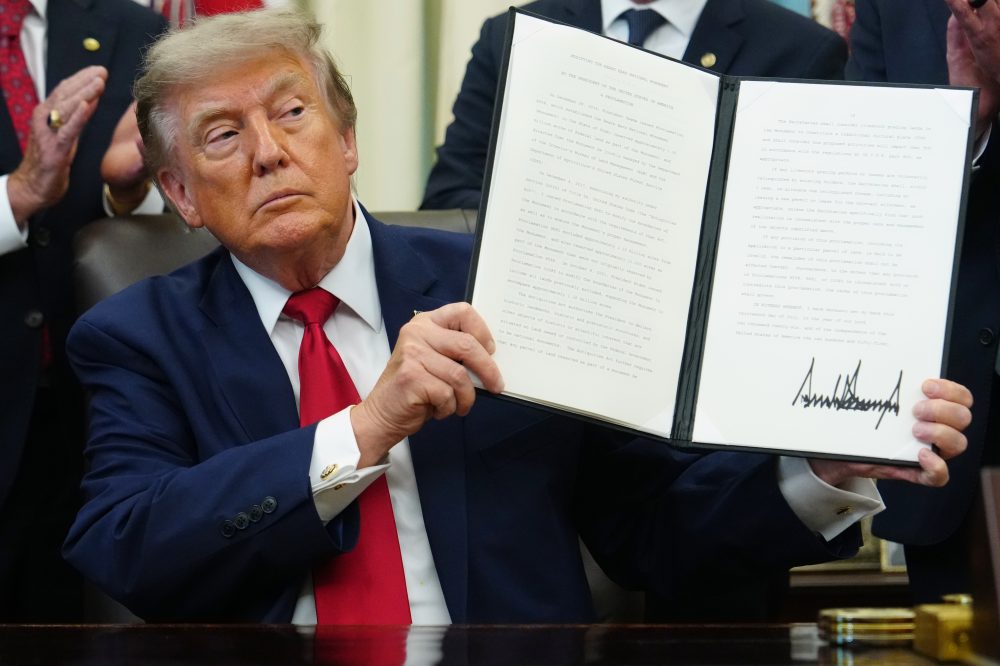
Sixteen months before the midterm elections, former President Donald Trump launched an unprecedented mid-decade redistricting effort, starting with Texas last July. Breaking with over a century of tradition, Trump persuaded Texas Republicans to redraw their congressional boundaries in a bold move to safeguard the party’s narrow House majority.
Initially, Democrats faced significant disadvantages in countering this strategy. With fewer state legislatures under their control and constitutional restrictions in key states like California and New York preventing similar tactics, Republicans seemed positioned to gain up to twelve additional House seats.
However, eight months later, the political landscape has shifted dramatically. Trump’s redistricting initiative encountered obstacles in multiple Republican-controlled states, while Democrats mounted their own aggressive campaigns and benefited from favorable judicial decisions, creating an essentially even playing field.
The battle for chamber control in November will ultimately depend on a small number of contested districts, despite the extensive political turmoil and wholesale redrawing of dozens of congressional boundaries nationwide.
“I do think that it is a wash right now,” said Erin Covey, a House analyst with the nonpartisan Cook Political Report. “It’s a huge amount of turnover and disruption all basically for nothing, if you’re looking solely at partisan seat gain.”
The situation remains fluid, with ongoing legal challenges targeting several new maps and Florida Governor Ron DeSantis announcing plans for April redistricting. Additionally, the Supreme Court is considering whether to weaken the Voting Rights Act, which could enable Republican-controlled Southern states to eliminate multiple Democratic districts.
TEXAS LEADS THE CHARGE
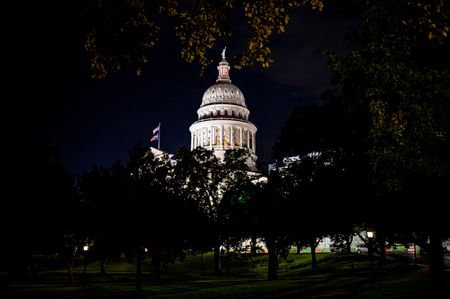
The Texas redistricting plan that initiated this nationwide effort faces its inaugural test Tuesday, as voters select party candidates for all 38 House seats, plus statewide Senate and gubernatorial races.
The elimination of several Democratic districts has produced unusual primary contests, including a Houston-area matchup between incumbent Democrats Christian Menefee and Al Green.
Tuesday’s primaries in Texas, North Carolina, and Arkansas officially launch the midterm season. Democrats require just three Republican seat flips to claim House control, though their Senate prospects appear more challenging.
A Democratic House majority could obstruct much of Trump’s legislative priorities while wielding subpoena authority to investigate his administration. Historically, the president’s party typically loses congressional seats during midterms, a pattern Trump’s redistricting campaign aimed to disrupt.
Congressional redistricting normally occurs once per decade following the Census to account for population shifts. Both parties have historically engaged in partisan gerrymandering, manipulating district lines for electoral advantage.
Trump’s mid-decade redistricting represented a dramatic departure from century-old precedent. The Texas map targeted five Democratic incumbents, with Missouri and North Carolina Republicans quickly following with their own aggressive redistricting plans.
While Democrats previously supported anti-gerrymandering legislation, Trump’s actions prompted many party members to advocate responding with similar tactics. Longtime gerrymandering opponents including former President Barack Obama and Senator Bernie Sanders endorsed Democratic states pursuing their own redistricting efforts.
“I’m sick and tired of this Democratic Party bringing a pencil to a knife fight,” Democratic National Committee Chair Ken Martin told a party gathering in August. “Let’s grow a damn spine and get in this fight.”
As Texas Republicans advanced their plans, Democratic House members from the state consulted with House Minority Leader Hakeem Jeffries and former Speaker Nancy Pelosi regarding party strategy, according to Representative Julie Johnson from the Dallas area.
Democrats rallied behind California Governor Gavin Newsom’s proposal to amend the state constitution through referendum, installing a map designed to flip five Republican seats. The initially unlikely plan passed the legislature and received overwhelming voter approval in November.
Virginia Democrats subsequently pursued an even more complex constitutional amendment strategy, potentially yielding four additional seats if it survives Republican legal challenges this spring.
JUDICIAL INTERVENTIONS
Court decisions also aided Democratic efforts. Judges in Utah and New York mandated new maps likely to flip one Republican seat in each state.
Meanwhile, Republicans in several states rejected Trump’s pressure campaign, most notably in Indiana, where state Senate Republicans defeated a Trump-endorsed redistricting plan despite threats of political retaliation.
Democrats haven’t achieved universal success. In Maryland, a proposed map eliminating the state’s sole Republican seat remains stalled due to opposition from the Democratic state Senate leader.
Whatever this year’s outcome, the redistricting conflicts Trump initiated appear far from over. Democratic-leaning states Colorado and New York, both with anti-gerrymandering laws, are considering rule changes to permit new maps for the 2028 election.
“We could have just as many states redraw their lines in 2028 as they did in 2026,” Covey predicted.