
Global financial markets are experiencing significant volatility as Middle East tensions escalate, with crude oil prices jumping dramatically overnight in response to military action between the United States, Israel, and Iran.
Oil futures climbed as much as 10% following coordinated U.S.-Israeli strikes against Iran over the weekend, which have prompted substantial retaliation from Tehran. The conflict has effectively halted shipping traffic through the strategically important Strait of Hormuz, a critical pathway for global energy supplies.
Brent crude prices reached above $80 per barrel early Monday morning, marking their highest point since January 2025, before retreating slightly to around $79. Industry analysts suggest prices could potentially reach $100 per barrel if the regional conflict extends over several weeks.
The crisis has intensified following the reported death of Iranian Supreme Leader Ali Khamenei, leading to widespread retaliatory actions throughout the region. President Trump has suggested the military campaign could continue for up to four weeks, raising concerns about prolonged supply disruptions.
The extended closure of the Strait of Hormuz waterway threatens to create substantial stress on worldwide oil supplies. Even a planned OPEC+ production increase scheduled for April may provide little relief, as regional producers face significant challenges exporting their oil while Gulf navigation remains disrupted.
The energy price surge carries important implications for inflation and Federal Reserve policy decisions. For the first time in over a year, crude oil prices are showing significant year-over-year gains, adding to concerns following hot inflation data released Friday. Financial markets have pushed back expectations for the next Federal Reserve rate cut to September.
Treasury markets are experiencing complex movements as investors weigh competing factors. While government bonds initially gained on safety concerns and geopolitical risks, inflation worries from rising energy costs have caused two-year yields to rebound from three-year lows, erasing Friday’s declines.
The U.S. dollar has strengthened considerably as energy price concerns and regional conflict fears impact currencies of major energy-importing nations including Japan, China, and European countries.
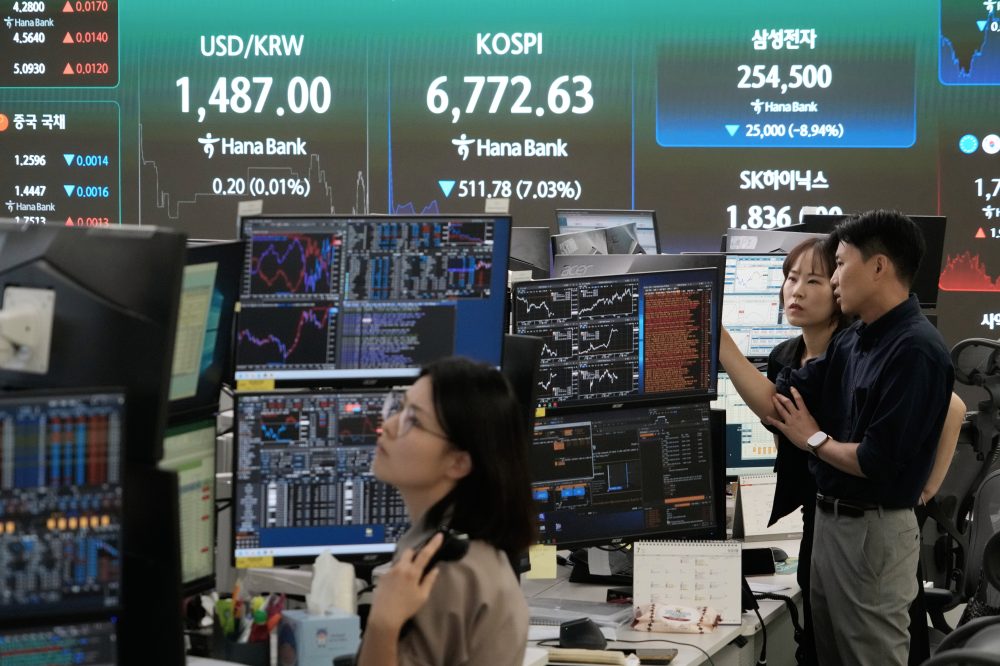
Stock markets have declined but remain relatively stable, with U.S. index futures and Asian and European benchmarks falling between 1% and 2%.
Shipping data from Sunday revealed that at least 150 oil tankers have anchored in Gulf waters, while three vessels sustained damage during Iranian retaliatory strikes against U.S.-Israeli forces.
The duration of this expanding regional conflict will be crucial in determining how energy markets and broader financial systems respond in the coming days and weeks.
Economic data scheduled for release today includes U.S. manufacturing reports from S&P Global and ISM for February, expected between 9:45 and 10:00 a.m. Eastern time.