
SAN DIEGO (AP) — Natural evolution takes thousands of years to occur. Global warming is happening much more rapidly.
This timing problem is destroying some of Earth’s most important ecosystems, including California’s massive redwood forests and underwater seagrass beds along the coastline. Both environments capture enormous amounts of carbon and sustain intricate networks of wildlife.
Ocean heat surges, unprecedented wildfire seasons and shoreline development are overwhelming these natural systems as global warming, fueled by burning fossil fuels, gains momentum. According to a 2019 study by a United Nations-connected scientific organization, approximately 1 million species could become extinct, many in the coming decades, primarily because of human actions including habitat loss, contamination and excessive exploitation of natural resources.
Researchers are attempting to bridge this divide through a new field known as conservation genomics: analyzing an organism’s full genetic code to identify individuals with characteristics that help them survive extreme heat, lack of rainfall, disease and other climate-related challenges, then applying this knowledge to guide ecosystem restoration efforts.
Coral reef systems are among the initial environments where these genetic techniques are being implemented. Recurring ocean heat events, causing widespread coral bleaching, have destroyed reef systems across the globe. Through genetic analysis of corals and their symbiotic algae partners, scientists have found coral communities that naturally tolerate elevated temperatures and are starting to experiment with selective breeding of these hardier corals to aid reef restoration efforts.
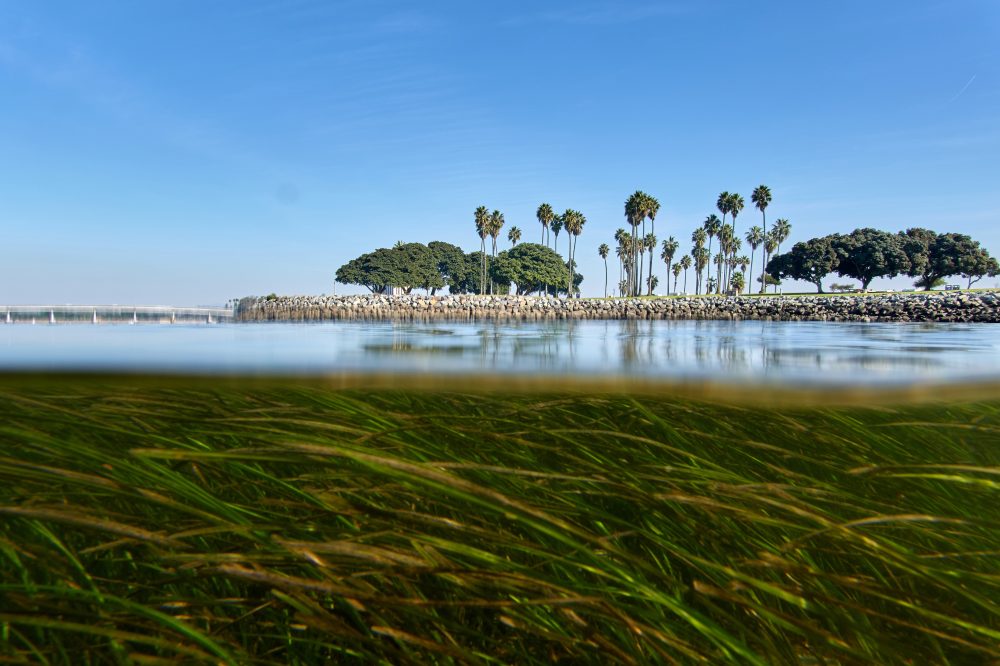
In Southern California, scientists are using this method with eelgrass, a seagrass variety, after conventional restoration techniques have proven unsuccessful. This underwater plant creates homes for marine life including fish, crabs and tiny organisms, provides food for migrating birds and traps carbon dioxide and methane — both greenhouse gases that contribute to warming — in ocean floor sediments.
Environmental conditions in San Diego’s coastal waters are shifting. Ocean temperatures are rising. King tides — the annual peak tides that global warming is making more common and intense — churn up bottom materials and block sunlight from reaching the ocean floor. Urban development creates runoff that flows into these waters, making them even murkier.
Because of these changes, attempts to restore lost seagrass beds are unsuccessful roughly fifty percent of the time.
“Conservation genomics is becoming particularly important because right now, the climate is changing — a plant that was growing great in San Diego Bay, now San Diego Bay might be too hot for it,” said Todd Michael, a research professor at the Salk Institute for Biological Studies.
In Mission Bay, Michael and his research team made a discovery that could increase success rates: a naturally formed hybrid eelgrass that performed better than either of its parent varieties. This plant, created by crossbreeding between shallow-water eelgrass Zostera marina and deep-water Zostera pacifica, survived in areas where both original species failed.
Through genetic sequencing, the research team found genes connected to the plant’s internal biological clock that remained active for extended periods in dim lighting conditions. Scientists think this pattern might enable the plant to conduct photosynthesis more effectively in cloudy water.
These discoveries indicate that restoration success could increase by choosing or developing eelgrass varieties better adapted to changing environmental conditions. However, this research remains mostly in testing phases and has not been implemented widely in actual restoration projects. The scientists have formed partnerships with marine biologists at the Scripps Institute of Oceanography to investigate how these discoveries might be used in future restoration work.
Redwood trees rank among Earth’s tallest and most ancient trees, and their forest ecosystems capture more carbon per acre than any other type, based on a 2020 research study conducted by Save the Redwoods League and Humboldt State University.
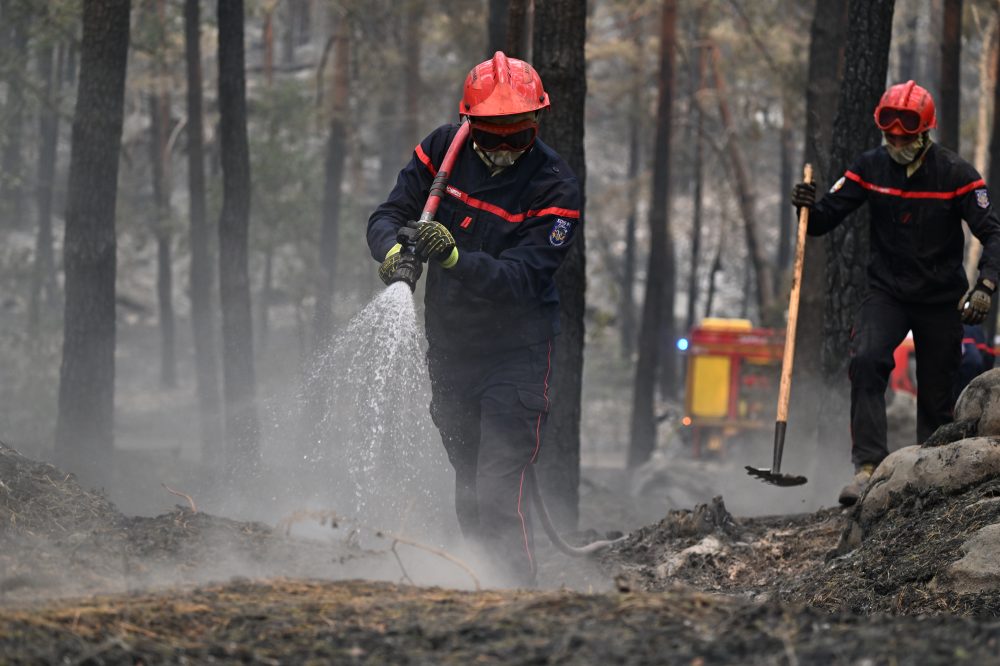
Although these trees developed alongside regular, mild forest fires, current hotter and more devastating wildfire seasons, along with extended dry periods, are causing increasing damage. Historical logging has created even greater harm: approximately 95% of ancient redwoods were harvested, severely limiting genetic diversity.
Researchers have completed genetic sequencing of the redwood genome — an enormous project considering its scale, which is almost nine times bigger than human genetic material.
Scientists emphasize that this work involves more than rebuilding what previously existed, but rather preparing forest ecosystems for environmental conditions that differ significantly from the past.
“Where one organism was adapted to a certain location at one moment in time, it may no longer be,” said David Neale, a forest geneticist and distinguished professor emeritus at the University of California, Davis. “It might require different genetic variation to adapt to the new environment.”
Initial studies have started connecting specific genes to characteristics like drought resistance and temperature tolerance, but scientists say more thorough research is required to verify these connections before using them in restoration planning. This research has stopped due to insufficient funding.
“It can be helpful, but it’s not a solution unto itself,” said Karen Holl, a distinguished professor of environmental studies at the University of California, Santa Cruz. “What should be prioritized is reducing greenhouse gas emissions.”
Genetic techniques might assist certain species, especially long-living varieties like redwoods that cannot evolve rapidly enough naturally, but these approaches have restrictions. Natural ecosystems depend on intricate connections between plants, animals, microorganisms and fungi. Developing or selecting for climate-resistant characteristics in one species does not ensure the survival of numerous other organisms that rely on it.
“Can you genetically engineer a few species that would be more tolerant? Absolutely. But that’s not an ecosystem,” said Holl. “We’re not going to engineer our way out of climate change.”