
WINCHESTER—Fruit producers throughout Virginia are grappling with losses ranging from significant setbacks to complete devastation following an unusually harsh spring freeze season.
Farmers across the state endured unpredictable weather patterns during late winter and early spring, as periods of unseasonably warm temperatures accelerated growth in freeze-vulnerable crops before several damaging cold snaps arrived.
A freeze in early April caused near-total destruction to Virginia’s apple and peach harvests, with certain orchards in Winchester and Frederick County areas suffering complete crop failure.
“The freeze happened at the most sensitive time of flower development, which is full bloom,” said Sherif M. Sherif, Virginia Tech associate professor of pomology. “This has been the most devastating damage I’ve seen since I started with Virginia Tech.”
Although some trees began producing secondary blooms following the initial damage, another freeze on April 21 eliminated remaining hopes for this year’s harvest season. Only orchards located mainly in Central Virginia managed to survive.
Mark Sutphin, a Virginia Cooperative Extension agriculture and natural resources agent working in the Northern Shenandoah Valley, recently gathered with local orchard owners to discuss recovery strategies following what they called “one of the worst freeze events this region has ever seen.”
Despite efforts by numerous orchard operators to create warmth through propane torches, smudge pots, wind machines and additional frost protection methods, temperatures dropped about “10 degrees too cold” for these measures to be effective.
“The springtime is your one chance to set fruit,” Sutphin said. “Unfortunately, it’s going to be a very light crop for most of our growers.”
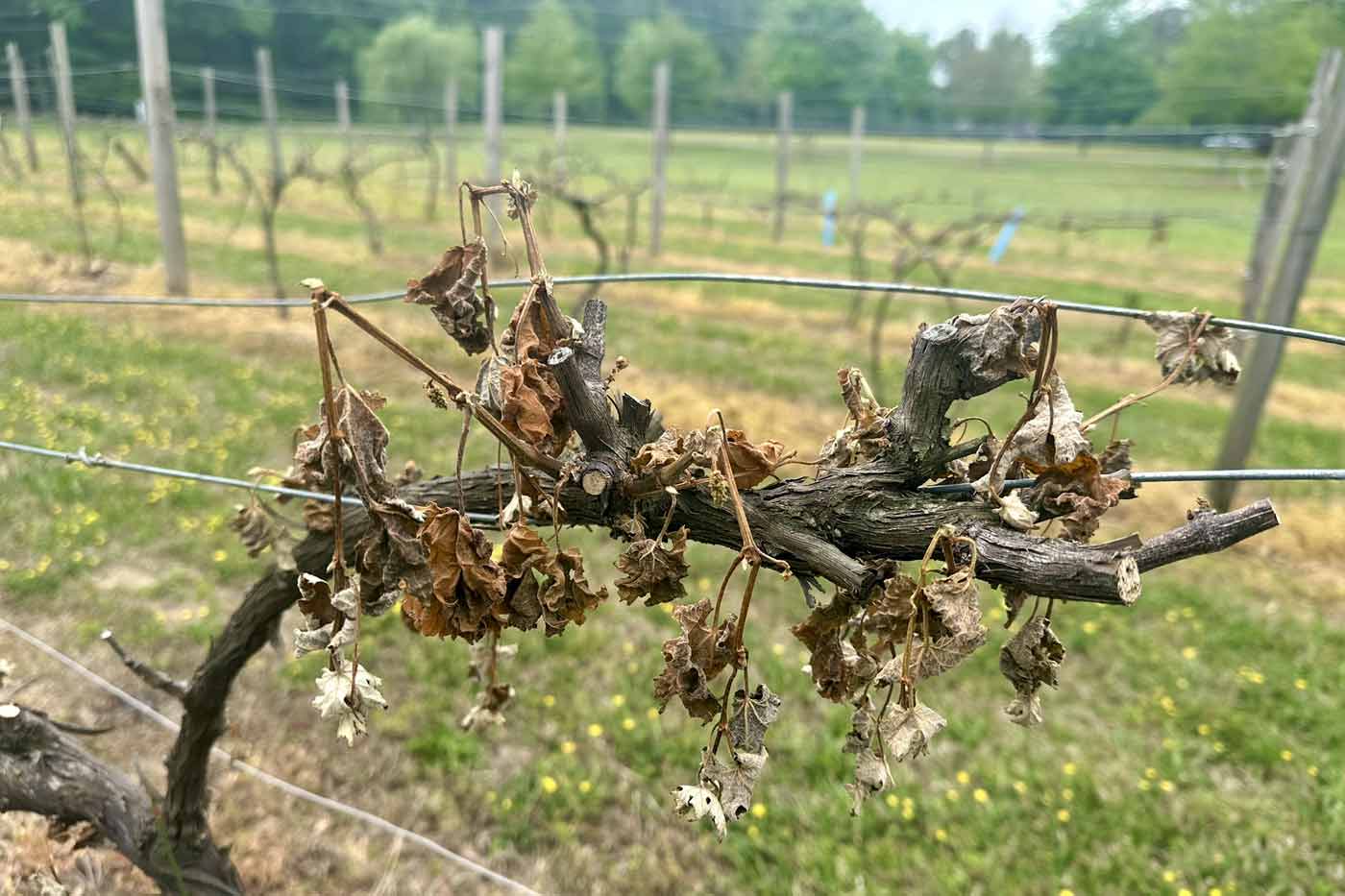
Vineyard operators faced comparable challenges on April 21, with wine grape operations statewide reporting between 30-90% shoot damage, according to Drew Harner, Virginia Tech assistant professor of viticulture.
“When we get below 29 degrees, that’s really when we start to see damage on primary shoots,” he explained. “A lot of fruit growers use different strategies to try to buffer the temperature in their vineyards, but those mechanisms weren’t enough.”
Harner noted it remains too early in the growing season to assess complete yield losses. Numerous producers are working intensively to promote secondary bud development, which generally yields approximately 30% of primary shoot production. Those who lost reserve buds are confronting even greater losses.
Numerous grape producers draw upon recollections of the “catastrophic” freeze that occurred around Mother’s Day in 2020 for context.
“In situations like these, you realize how resilient of a community it is, and how everyone is willing to say, ‘Alright, here’s how we’re going to move forward, and how can we help each other?’” Harner reflected. “And it’s only April—there’s still a lot of time for us to see where this year is going.”
While the extent of freeze damage to the state’s blackberry and blueberry harvests remains undetermined, consumers can anticipate abundant strawberries this season.
Following an intensive four-month period of extensive row cover applications, strawberry producers maintain substantial berry supplies ahead of favorable May weather forecasts—with certain early-season varieties even showing increased size and sweetness, according to Jayesh Samtani, Virginia Tech small fruit Extension specialist.
He urges consumers to support local producers.
“It’s always a very rewarding experience for growers to see customers, because their mind goes back to all the hard work that was put into growing those crops,” Samtani remarked.
“Focus on your local industry, your farm markets and pick-your-own operations—they need our support right now,” Sherif encouraged.
Sherif continues conducting research into possible mitigation strategies for tree fruit frost damage at the Alson H. Smith Jr. Agricultural Research and Extension Center. The research team seeks letters of support from producers as they pursue research grants and additional funding. Producers should contact their local Extension office for more information.
Furthermore, initiatives are in progress to gather information supporting applications for state and federal disaster relief funding. Any producers with crops affected by recent spring freezes are urged to report potential damage to their local Extension office.