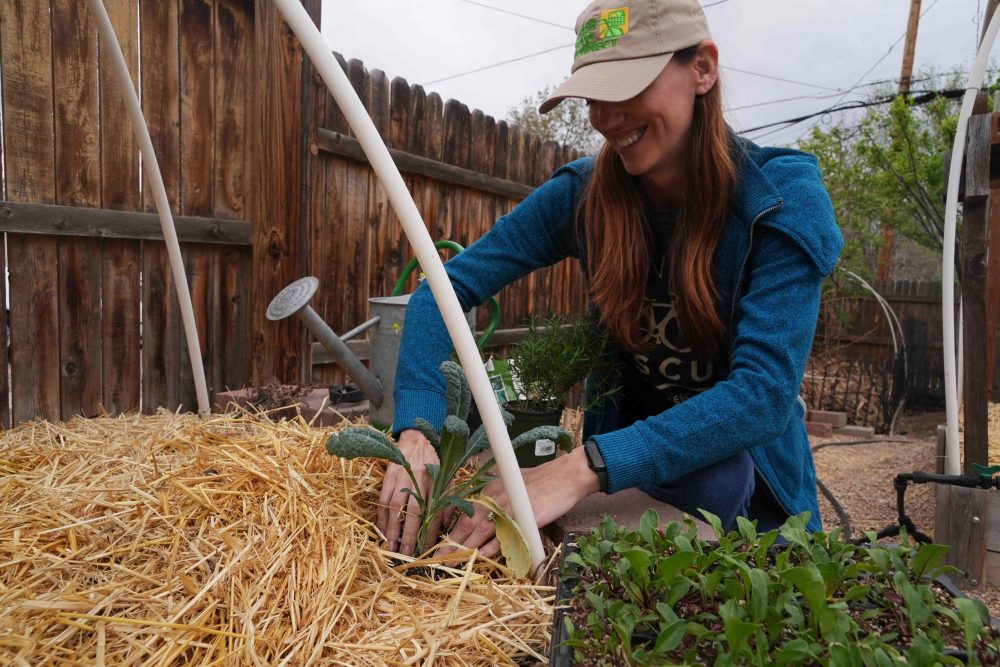

DENVER — Light drizzle began to fall as Heather Grady carefully moved young beet plants into her garden soil, though the brief precipitation wasn’t nearly enough to calm her concerns about the parched winter that has left water reservoirs dangerously low.
Facing widespread drought conditions across Colorado, Grady and her spouse Terrance started exploring methods to reduce water consumption in their home vegetable plot.
“We feel personally responsible, even though it’s not a problem we created,” Grady explained. She documents her sustainable gardening practices on the Homesteading in Denver Instagram page while committing to significant water reductions.
An unprecedented winter with minimal snowfall throughout the western United States translates to reduced snowmelt for the rivers and reservoirs that provide the region’s water supply. This reality has delivered an urgent warning to communities, farmers, and businesses that water conservation is no longer optional.
Municipal governments are enacting outdoor irrigation limitations. Denver Water implemented drought measures on March 25, marking their earliest restrictions on record. Salt Lake City has requested voluntary conservation from residents while requiring government facilities to reduce usage. Metropolitan areas including Los Angeles, Las Vegas, and Albuquerque maintain permanent seasonal watering regulations.
Food garden irrigation typically remains permitted under these restrictions within specific guidelines.
Even in areas without formal limitations, cultivating homegrown produce can be accomplished using water-efficient methods, including in arid desert environments. Agricultural specialists offer practical advice for getting started.
Greg Peterson, who developed The Urban Farm educational platform, recommends evaluating all available water sources, including unconventional options. Beyond municipal water, households can collect rainfall in containers, save water from vegetable washing or shower warming, Peterson explained. His preferred technique involves capturing air conditioner condensation by positioning containers beneath exterior drainage pipes.
Don Titmus, Peterson’s educational partner, employs multiple greywater collection strategies for his desert food garden and pollinator sanctuary in Mesa, Arizona. During summer months, Titmus showers outdoors, directing the runoff toward nearby plants. He also washes dishes in basins using environmentally safe soaps, then applies that water to his garden beds.
When precipitation does occur, capturing it for later use proves far more economical than purchasing municipal water, according to Jamiah Hargins, founder and executive director of Crop Swap LA, a nonprofit that cultivates food on vacant Los Angeles properties. The advantages extend beyond reducing utility costs.
“Rainwater has more oxygen than (tap water),” Hargins noted. “It actually makes the roots happier and the plants grow much better.”
Choosing plant varieties that flourish with natural local conditions represents one of the simplest water-saving approaches. Consider hybrid varieties developed for reduced water needs or heritage plants native to your region, suggests Noelle Johnson in her publication “The Water-Smart Garden.”
Healthy soil contains five elements: earth, internal air pockets, organic material, moisture, and living organisms. Quality soil requires less fertilization and irrigation than poor soil, Peterson explained.
Soil analysis can reveal deficiencies in essential nutrients, said Josie Hart, Associate Director of Sustainable Agriculture at Denver Botanic Gardens Chatfield Farms. Home gardeners can typically submit soil samples for evaluation through local public universities or private laboratories.
For initial soil preparation, break apart compacted earth using a tiller or spade, then incorporate compost or leaves to achieve a loose consistency. In subsequent seasons, simply add compost to the surface and allow earthworms to distribute nutrients naturally, Titmus advised.
Solar radiation and wind represent the main factors that dehydrate garden plants. Positioning crops near fencing, trees, or buildings can provide protective barriers, Hart noted.
Shade coverings also minimize evaporation for plants stressed by intense, sunny conditions by blocking approximately half the sunlight. These fabric or burlap materials can be suspended from hooks attached to structures or draped over frames positioned above the plants.
Johnson, the Arizona-based author, advocates for intensive vegetable cultivation, a technique that reduces wasted space compared to conventional row arrangements. This intensive approach places plants closer together in offset patterns, allowing mature plant foliage to create shade and decrease evaporation.
Direct ground planting also benefits water retention since raised beds face greater exposure to weather elements, Johnson explained.
Gardeners in dry climates might consider constructing waffle beds that utilize small raised soil ridges in grid formations around plants, Hart suggested. This traditional method used by Indigenous cultivators helps channel rainfall toward root systems.
“Creating a waffle bed is going to capture any moisture you have going and it will keep it there,” Hart stated.
Finally, mulching proves essential for soil protection by retaining moisture and preventing weeds, all experts emphasized. However, exercise caution with wood mulch, which can deplete nutrients from vegetables.
Employ irrigation methods that gradually deliver water directly into soil, specialists recommend. Options include soaker lines, drip systems, or drip tape. Any spray application will lose water to evaporation.
While choices may seem overwhelming, abundant online resources provide assistance, including complimentary drip tape workshops through urbanfarm.org. Local garden centers and water utilities frequently offer free or affordable educational programs.
Using these systems, water thoroughly but infrequently to encourage deep root development where moisture accumulates, Hart advised. Gardeners in hot, arid regions may believe frequent watering benefits plants, but this practice maintains shallow root systems. Hart suggests operating drip systems for at least one hour during summer, then waiting three days between watering sessions.
In Denver, adjusting the watering schedule represents one change Heather and Terrance Grady intend to implement this season. They plan to attempt deep watering three times weekly instead of brief daily applications.
“It’s a huge change,” Grady concluded.