
CHRISTIANA, Tenn. — At first glance, a solar installation in central Tennessee appears similar to countless others scattered across rural communities nationwide, featuring endless rows of dark panels capturing sunlight to produce clean electricity.
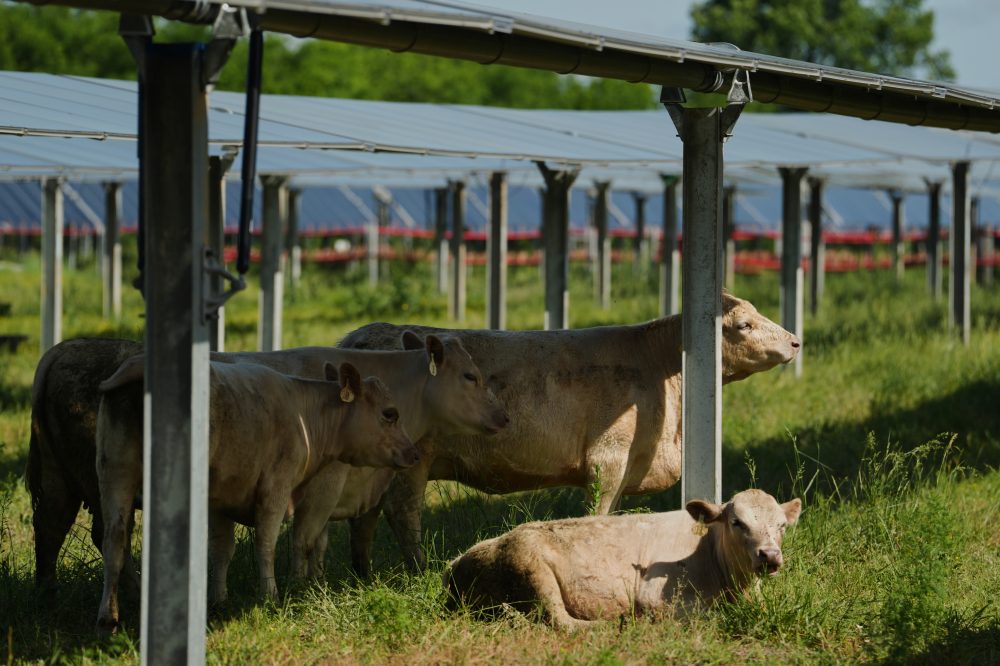
However, what sets this facility apart is the green pasture flourishing underneath the panels, where a small group of cattle peacefully grazes and seeks shelter from the sun.
The company behind this 40-acre installation near Nashville, Silicon Ranch, views cattle grazing as the newest development in agrivoltaics — a practice that has traditionally focused on cultivating crops or allowing sheep to graze around solar equipment.
Company officials unveiled this innovative project this week and plan to spend the coming year demonstrating that larger livestock can successfully coexist with solar operations. Success could accelerate new developments to satisfy increasing electricity needs from expanding data centers while avoiding carbon emissions and helping ranchers maintain their property and income sources.
“Solar is one of the most powerful tools we have for cutting emissions and … is cost-competitive with fossil fuels,” said Taylor Bacon, a doctoral student at Colorado State University who has studied ecological outcomes at solar grazing sites. “I think we’re starting to see enough research that, when you do it well, the land use can be more of an opportunity than a downside.”
While America has significantly more cattle than sheep, their substantial size creates obstacles at solar facilities, where expensive equipment and animals weighing over 1,000 pounds must both remain safe.
Traditional solar panels typically rotate to nearly vertical positions to maximize sun exposure, creating insufficient space below for cattle movement. Simply elevating all panels would be financially unfeasible due to increased steel requirements. Silicon Ranch addressed this by slightly raising panel height while creating specialized software that workers can use to position panels nearly flat during grazing periods, providing adequate room for cattle movement, explained Nick de Vries, the company’s chief technology officer.
Staff members move the livestock — currently consisting of 10 adult cows and their offspring — between different sections every few days, allowing panels in non-grazing areas to function normally and generate approximately 5 megawatts of power for Middle Tennessee Electric, a rural utility cooperative.
Company leaders expressed optimism that this technology will eventually gain wider acceptance.
“We know it works,” said de Vries. “But you need to prove it to other people.”
Solar developers typically find agricultural properties easier to develop compared to other locations. However, many farmers and local communities require convincing that solar grazing will provide benefits, given previous practices that damaged topsoil and permanently removed land from agricultural use.
“For many agricultural stakeholders, it is offensive to see high-quality farmland getting graded and piled when that’s a farm family’s legacy,” said Ethan Winter, national smart solar director at American Farmland Trust.
Winter recognizes potential for solar grazing partnerships to help farmers maintain productive land use while generating supplemental revenue.
“Agriculture is in a really tough spot right now, so maybe this is our moment where we can be helping states meet their energy needs and do that in a way that’s providing new opportunities for farmers,” Winter said.
Silicon Ranch expects to manage nearly 15,000 acres of grazed pastureland — primarily with sheep — by year’s end, building on five years of experience while collaborating with ranchers, farmers, university researchers and others to establish optimal practices for maintaining soil and animal health.
Their research reveals that grassland beneath solar panels retains greater moisture levels, improving drought resistance, according to Anna Clare Monlezun, a rancher and rangeland ecosystem scientist involved in the Tennessee project. Animals grazing in shaded conditions experience reduced heat stress, allowing better weight gain while requiring less water consumption.
“There are more win-wins than trade-offs,” she said.
Farmers typically receive approximately $1,000 per acre through solar land leases, representing roughly ten times their historical earnings from conventional farming, Winter noted. This additional income can help diversify operations, reduce debt and finance land purchases.
“I think you’ll start to hear more interest from farmers who are up against a serious financial wall right now and looking for income diversification opportunities that keep land in production,” Winter said. “We need and want to grow America’s energy capacity but not at the expense of our best farmland or at the expense of agricultural livelihoods.”