Seattle Mariners pitcher Bryce Miller is set to return from the injured list and take the mound Wednesday when his team faces the Houston Astros, according to manager Dan Wilson’s announcement to media on Saturday.
The right-handed pitcher has been sidelined since the beginning of the season due to an oblique injury he suffered during spring training.
At 27 years old, Miller had an outstanding 2024 season, recording a 2.94 earned run average, a 0.976 WHIP, and striking out 171 batters over 31 games started and 180 1/3 innings pitched.
His performance took a downturn during his injury-plagued 2025 season, though, as he managed only a 5.68 ERA, 1.406 WHIP, and 74 strikeouts across 18 starts covering 90 1/3 innings before being sidelined for more than two months with elbow problems.
Miller’s comeback will strengthen Seattle’s pitching staff, which currently holds the 12th-best team ERA in Major League Baseball at 4.00. Wilson informed reporters that the team plans to operate with six starting pitchers, at least initially, following Miller’s activation.
A former New York Jets linebacker is set to compete for a coveted UFC contract through Dana White’s Contender Series, according to multiple sports media outlets.
Anthony Wint, who transitioned from professional football to mixed martial arts, will step into the octagon seeking his shot at the premier fighting organization. The 30-year-old athlete originally played collegiate football at Florida International University, earning All-Conference USA honors three times during his college career.
Following his college success, Wint joined the Jets as an undrafted free agent in 2018. During his brief NFL stint, he saw action in two games, registering one tackle and forcing a fumble before his football career ended.
The heavyweight fighter made his transition to combat sports in 2023 and has compiled an impressive undefeated record of 6-0. His victories include four knockouts and one submission, demonstrating his versatility in the cage.
Standing 6 feet tall and weighing 224 pounds, Wint is scheduled to face Matt Adams, who holds a 6-2 record, on August 11. The bout will take place at the Meta Apex venue in Las Vegas as part of the Contender Series program.
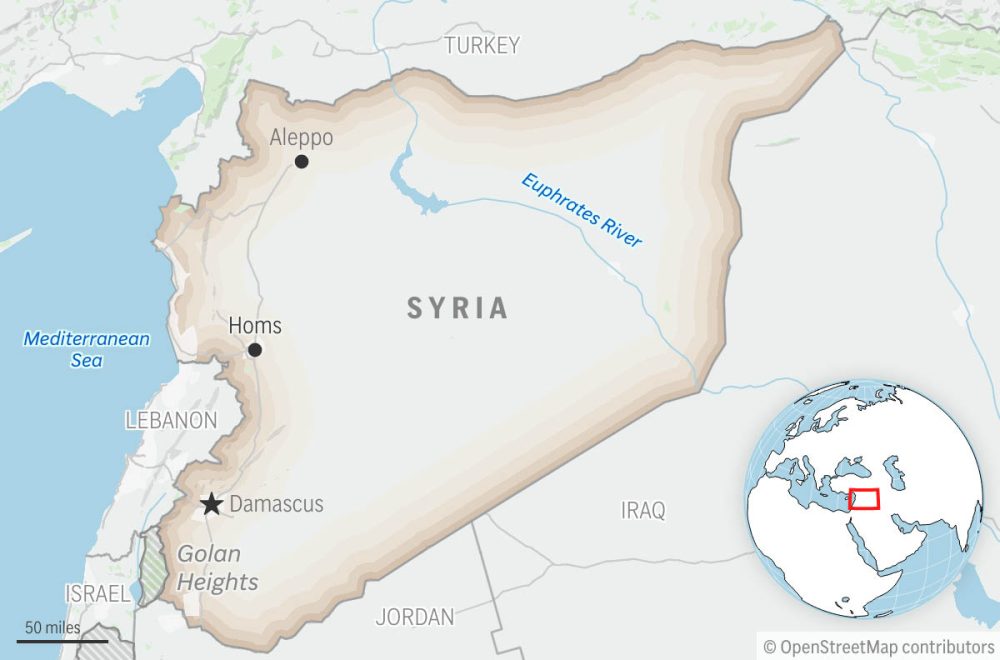
DAMASCUS, Syria (AP) — Syria’s transitional president conducted a major government reorganization on Saturday, dismissing his brother from a senior administrative role amid growing criticism over family favoritism while working to rebuild the war-torn nation following years of devastating conflict.
Maher al-Sharaa, brother of President Ahmad al-Sharaa, had been serving in the role of secretary-general to the presidency based in Damascus. The family appointment had sparked criticism and comparisons to the governing style of Syria’s ousted President Bashar Assad and his predecessor father, Hafez Assad.
President Ahmad al-Sharaa spearheaded the rebel campaign that successfully removed Bashar Assad from power in December 2024, ending nearly 14 years of civil warfare. Throughout Assad’s tenure, he similarly installed relatives, including his spouse and brother, into positions of power and influence.
Maher Assad, the former president’s brother, held command of the Syrian military’s 4th Armored Division — a force that opposition groups accused of murder, torture, extortion and narcotics smuggling. Assad’s spouse, Asma Assad, led the powerful Syrian Trust for Development organization.
Through an official order issued Saturday, al-Sharaa named Abdul Rahman Badreddine al-Aama — who had been serving as Homs province’s governor — to take over his brother’s responsibilities, according to state media outlet SANA.
Officials have not announced what role, if any, Maher al-Sharaa will assume moving forward. The physician had previously held the position of Syria’s temporary health minister.
The interim administration also named new provincial leaders for Homs, Latakia, Deir el-Zour and Quneitra regions, along with selecting a new information minister, Khaled Zaarour, a university professor who recently served as media faculty dean at Damascus University. Zaarour is taking over from Hamza Mustafa, a former broadcasting industry leader who had directed the private Syria TV channel before joining the government as information minister.
FREDERICKSBURG, Va. – Salisbury University’s baseball team demonstrated incredible resilience once again, overcoming a deficit in their final turn at bat to defeat Mary Washington 4-3 in a nail-biting 10-inning championship game Saturday at Dickinson Stadium.
The nationally seventh-ranked Sea Gulls, seeded second in the tournament, faced elimination against the tournament’s top seed but managed to pull off their second consecutive come-from-behind victory in as many days during the 2026 Coast-to-Coast Athletic Conference Tournament finale.
This championship marks Salisbury’s fifth conference crown in the past six seasons and represents the 20th conference title in the program’s storied history. The victory extends the team’s current winning streak to an impressive 12 games as they prepare for next week’s NCAA Division III Tournament competition.
The Sea Gulls’ ability to perform under pressure was on full display as they once again found themselves trailing late in the game, only to mount another successful rally when it mattered most. This clutch performance continues a pattern that has defined their recent tournament run.
A UCLA senior made softball history this weekend by shattering a three-decade-old NCAA record with a powerful swing that sent the ball soaring into the record books.
Megan Grant launched her 38th home run of the 2026 season during Saturday’s matchup with Nebraska, surpassing the previous NCAA Division I softball record of 37 home runs that Arizona’s Laura Espinoza established back in 1995.
The remarkable achievement came in the third inning when Grant connected on a deep drive to left-center field. What makes the feat even more impressive is that Grant accomplished this milestone in just 55 games, compared to the 72 games it took Espinoza to set the original mark.
Mike Candrea, who served as Espinoza’s coach at Arizona, offered his congratulations to Grant. “Records are made to be broken,” Candrea shared with The Athletic. “It’s a pretty phenomenal record to be able to break, so tip my hat off.”
Despite Grant’s historic moment, Nebraska claimed victory in Saturday’s contest with a 7-2 win to secure the Big Ten championship.
Grant’s record-breaking performance capped off an incredible weekend for the Bruins’ offense. During Friday’s semifinal victory over Wisconsin in the Big Ten tournament, UCLA’s team reached 181 home runs for the season, breaking the previous team record of 161 that had been set in 2021. Grant’s Saturday blast pushed that total to 182.
The multi-sport star, who also contributed to UCLA’s 2026 NCAA basketball championship, reflected on her achievement with reporters. “When I first came into college, I wanted to put myself in the books as one of the best, and I didn’t really know how to at the time, but throughout my career, just more and more has gone on, and to be able to do that, it’s just, it’s surreal,” Grant explained. “I am just so grateful for the opportunity I was blessed with, and just to follow the people that were before me. It’s just honor.”
Grant’s path to the record included matching UCLA’s previous single-season mark during an April 18 doubleheader against Cal, when she tied Stacey Nuveman’s school record with her 31st homer. She then broke Nuveman’s UCLA record on April 24 in a game against Washington.
Both Grant and Nuveman now stand as the only Bruins players to reach 80 career home runs. While Nuveman, who finished her career in 2002, holds the program’s all-time record with 90, Grant currently sits at 85 career homers.
Grant has also made history alongside senior teammate Jordan Woolery, who has hit 33 home runs this season. The duo became the first teammates in NCAA softball history to each hit 30 or more home runs in the same season.
The Bruins, who finished the regular season with a 47-8 record, will learn their postseason placement during Sunday afternoon’s NCAA Division I Selection Show. UCLA is pursuing its first Women’s College World Series championship since 2019, which would be the program’s 13th NCAA title overall.
Following the college season, Grant plans to continue her softball career alongside teammates Woolery and Taylor Tinsley in the Athletes Unlimited Softball League this summer.
University of Delaware baseball player Wolf turned in an exceptional offensive performance, collecting four hits during the Blue Hens’ matchup against Sam Houston.
The standout batting display showcased Wolf’s ability to consistently connect with the ball throughout the contest. His four-hit effort provided a significant offensive boost for the Delaware baseball team during their game against the Bearkats.
The performance represents a notable individual achievement for Wolf and demonstrates the type of offensive production that can help drive team success for the Blue Hens baseball program.
Recent polling data from the Pew Research Center shows that voters across Central and South America strongly favor presidential candidates who will champion their religious values as multiple nations prepare for elections this year. Approximately two-thirds of respondents in these countries expressed desire for leaders who would protect their faith traditions, with similar numbers believing biblical principles should guide national legislation. Remarkably, even half of those who don’t practice religion agreed with this sentiment. Separate research suggests religious faith remains more influential in Latin America compared to declining trends elsewhere globally.
The Public Religion Research Institute has published new findings about America’s LGBT community, showing that individuals identifying as Lesbian, Gay, Bisexual or Transgender now represent roughly ten percent of the nation’s population. This marks the highest recorded percentage since researchers began tracking this demographic. Young adults between 18 and 29 years old show the greatest likelihood of identifying as LGBT. The survey reveals this population tends to support Democratic candidates and hold liberal political views, while 51 percent report having no religious affiliation.
International Christian Concern reports remarkable expansion of Iran’s underground Christian movement, with current believer numbers exceeding those before the 1979 Islamic Revolution that triggered severe religious persecution. The organization states: “Some estimates point to a million or more Iranian converts to Christianity. These converts come from all sectors of society — from street vendors and taxi drivers to intellectuals, artists, and public servants.” House church networks have emerged throughout Iran, spanning major urban centers to remote rural communities.
Australia launched a comprehensive investigation into antisemitism this week, with the Royal Commission hearing initial testimony from Jewish citizens describing increasing hatred that has made them feel unsafe and exposed. The inquiry was established following a December shooting at a Bondi Beach Hanukkah gathering that claimed 15 lives when two gunmen attacked the celebration. The Royal Commission on Anti-Semitism and Social Cohesion, representing Australia’s most serious form of investigation, will conduct hearings for two weeks examining how antisemitism manifests within Australian institutions and society, with additional sessions planned throughout the year before releasing final recommendations.
A nationwide fight over congressional district boundaries shifted in favor of Republicans Friday, following a Virginia Supreme Court decision that struck down Democratic redistricting efforts and new legislation in Alabama setting up potential primary elections if courts approve GOP-drawn maps for November’s midterm contests.
Republican Governor Kay Ivey quickly signed Alabama’s legislation into law, marking another step in a broader Republican strategy across Southern states to take advantage of a recent Supreme Court decision that substantially reduced Voting Rights Act safeguards for minority communities.
Tensions ran high at Alabama’s state capitol, where security personnel removed a demonstrator from the crowded House viewing area. Similar confrontations occurred in Louisiana and South Carolina, where Republican legislators faced strong pushback from civil rights advocates and Democratic opponents while unveiling their congressional redistricting proposals Friday.
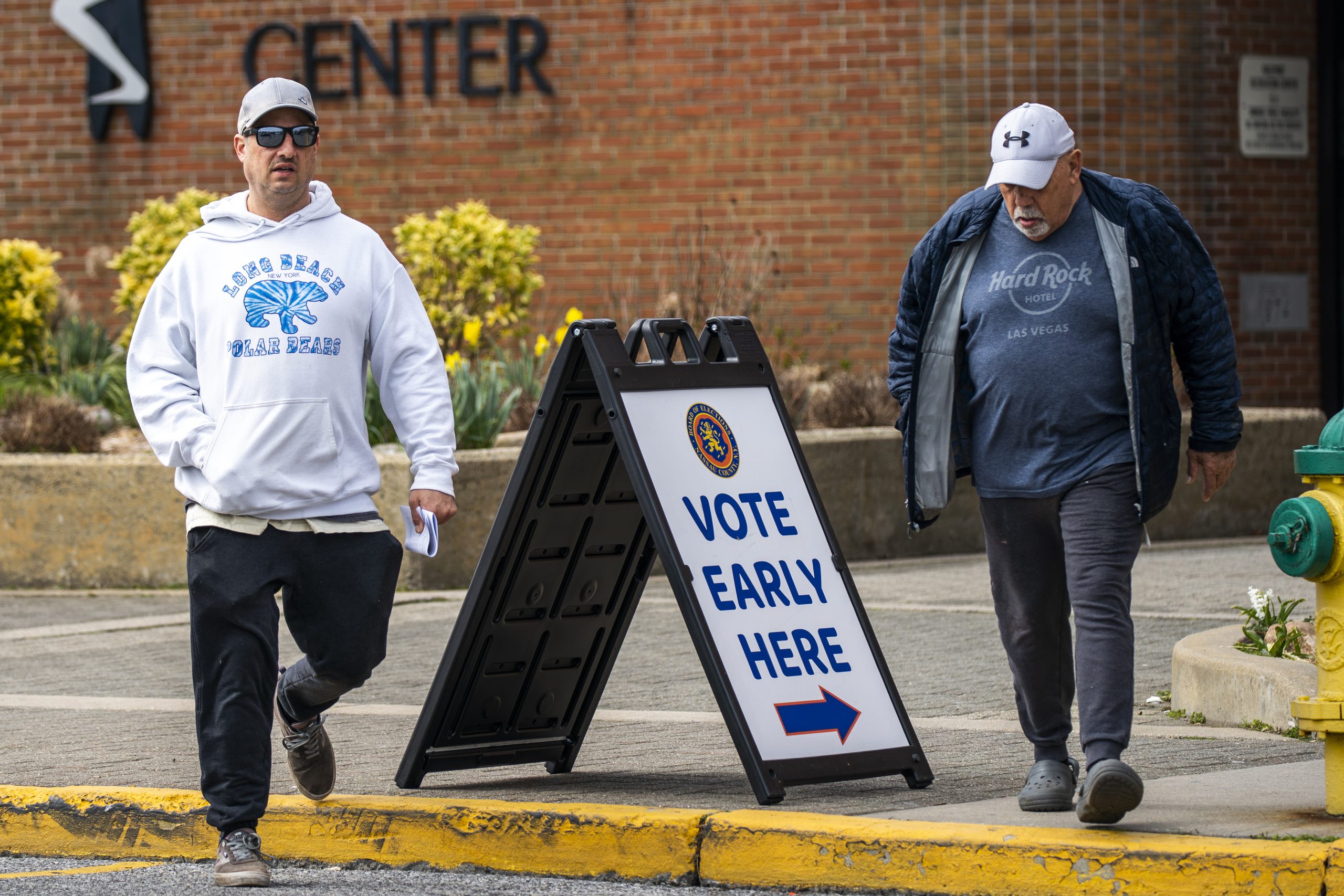
These developments followed Thursday’s passage of new congressional boundaries in Tennessee that split apart a Democratic-controlled, majority-Black district in Memphis. The Tennessee Democratic Party filed a lawsuit Friday, arguing the maps should not take effect until after this year’s elections due to timing constraints.
The redistricting conflict had already intensified before last week’s Supreme Court decision in a Louisiana case, with both major parties fighting for advantages in midterm elections that will decide control of the narrowly divided House. Republicans gained further momentum when Virginia’s highest court ruled Friday that Democratic legislators had broken constitutional procedures when putting a redistricting measure before voters.
Republican strategists believe they could pick up as many as 14 House seats through new district maps across multiple states, while Democrats estimate they might gain up to six seats following redistricting efforts that began after former President Donald Trump supported Texas redistricting plans last summer.
Alabama’s special primary elections would only occur if courts agree to remove an injunction that currently keeps a court-approved map in place through the 2030 census. That judicial order mandated a second district with a Black majority or near-majority, leading to the 2024 election victory of Democratic Representative Shomari Figures, who is Black. Should courts remove the injunction, Republican leaders plan to implement a 2023 legislative map that federal courts previously rejected, potentially allowing them to regain control of Figures’ district.
“With this special session successfully behind us, Alabama now stands ready to quickly act, should the courts issue favorable rulings in our ongoing redistricting cases,” Ivey said in a statement.
However, a three-judge panel rejected Alabama’s Friday evening request to remove their injunction and clear the path for new maps. The matter remains under consideration by the U.S. Supreme Court.
Virginia Democrats had anticipated gaining up to four additional House seats under new districts that voters narrowly approved in April. The state Supreme Court invalidated the measure, determining that the Democratic-controlled legislature failed to follow proper procedures.
Virginia’s Constitution mandates that lawmakers approve constitutional amendments during two separate legislative sessions, with a state election occurring between the votes. The legislature’s first approval of the redistricting amendment happened last October while early voting was already underway but had not yet concluded for the general election. The second legislative vote took place after the new session began in January.
The state’s highest court determined the initial approval came too late, pointing out that more than 1.3 million ballots had already been submitted, representing approximately 40% of all votes eventually cast.
In Louisiana, a Senate committee reviewed multiple redistricting proposals Friday from Republican state Senator John “Jay” Morris that would eliminate one or both existing Black-majority House districts.
“Every one of these maps reduces Black voting power in every one of the districts. And I think that’s a problem,” Democratic state Senator Sam Jenkins told Morris.
Morris rejected claims that his proposed redistricting maps discriminated based on race. He explained his objective was to be “respectful of the traditional boundaries” of Louisiana’s six congressional districts.
“I don’t think we should care that much about race,” Morris said.
South Carolina legislators convened an unusual Friday session to examine a proposed congressional map designed to give Republicans control of all seven of the state’s House seats.
The House hearing represented the initial phase of redistricting. However, the proposal’s future remains uncertain, as the state Senate has not yet agreed to consider new districts later this month, which requires a two-thirds majority vote.
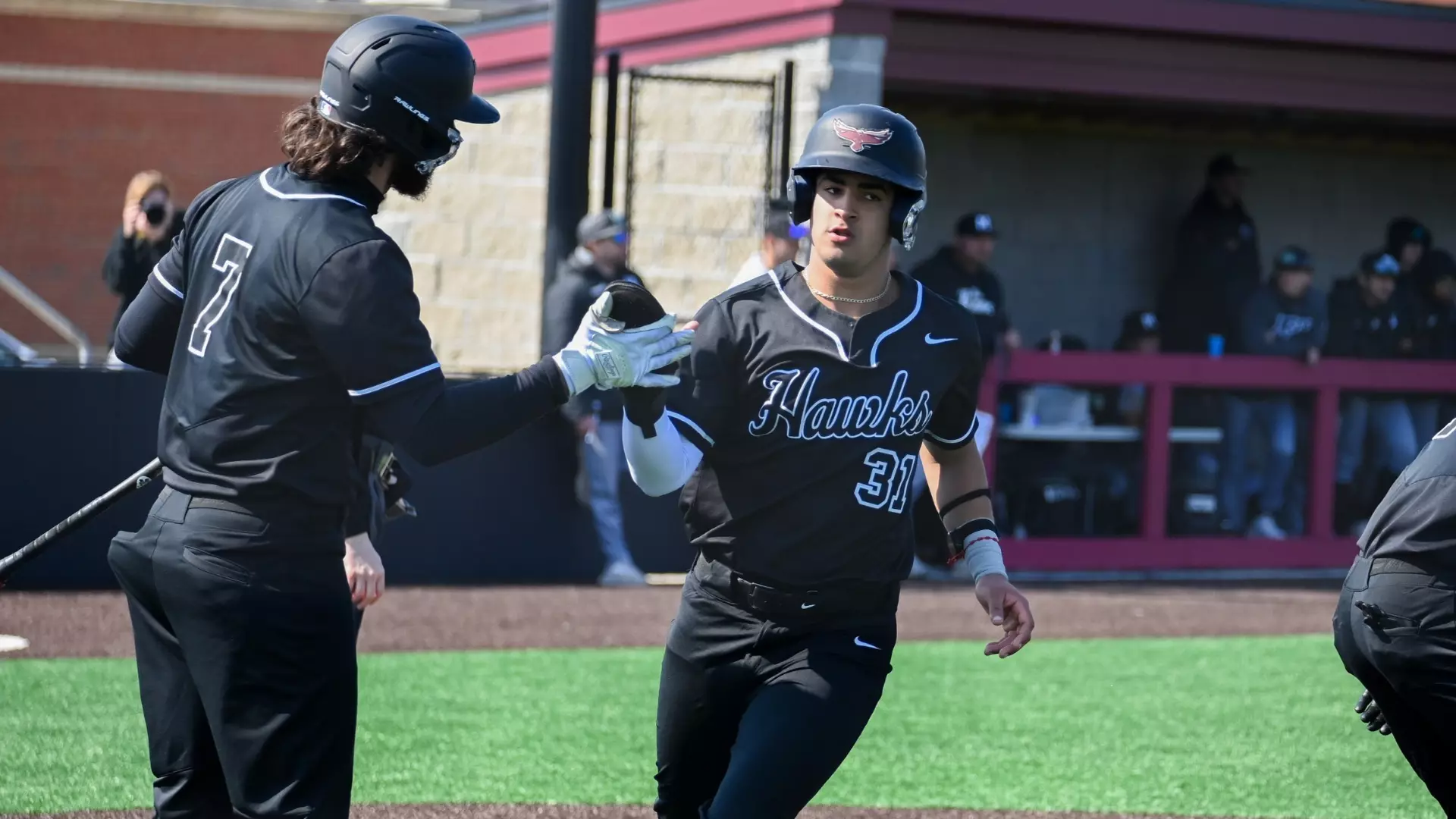
The University of Maryland Eastern Shore Hawks delivered their most powerful offensive display of the season but came up just short in a thrilling 16-15 defeat to Le Moyne on Thursday.
The Hawks connected for six home runs, marking their highest single-game total this season, yet couldn’t quite match their opponents’ firepower in the back-and-forth contest.
Among the standout performances was Marco Davila, who belted his first home run of the campaign during the slugfest. The offensive explosion showcased the Hawks’ potential at the plate, even as they fell one run short of victory.
The loss highlighted both the team’s emerging power and the challenges of containing opposing offenses in what proved to be one of the most entertaining games of the season for both squads.
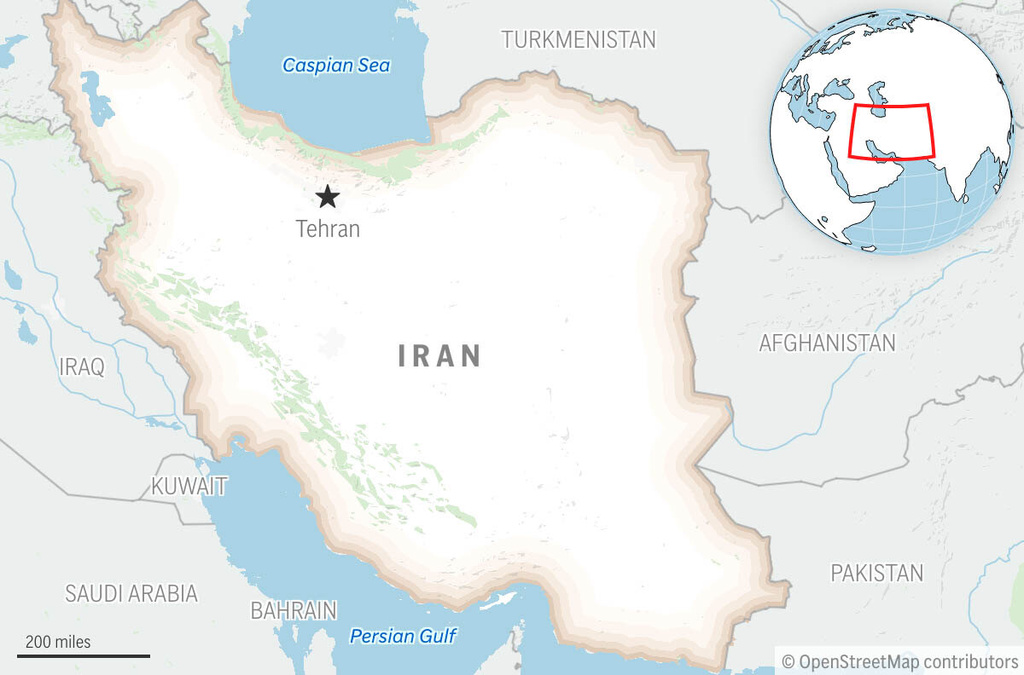
DUBAI, United Arab Emirates — Iran’s Revolutionary Guard naval forces issued stark warnings on Saturday, threatening massive retaliation against U.S. military installations in the region and enemy vessels if Iranian commercial ships or oil tankers face any strikes, despite an ongoing fragile truce that appears to be maintaining stability.
UK Sends Naval Vessel to Middle Eastern Waters
The British defense ministry announced plans to dispatch a warship to Middle Eastern waters as part of preparations for a possible mission safeguarding commercial vessels traveling through the Strait of Hormuz after current hostilities conclude.
Officials stated that the HMS Dragon would establish a strategic position in the area, prepared to participate in a security initiative spearheaded by the United Kingdom and France. This week, France declared it was repositioning its aircraft carrier battle group to the Red Sea as part of these preparations.
The UK and France have organized discussions with dozens of nations regarding an alliance aimed at restoring safe passage through the waterway. However, officials emphasize that operations will not commence until a lasting truce is established and shipping companies feel confident about vessel safety in the strait.
Round-the-Clock Diplomatic Efforts Continue
President Donald Trump has restated warnings about resuming comprehensive bombing campaigns unless Iran agrees to reopen the strait and scale back its nuclear activities. On Friday, Iranian foreign ministry representative Esmail Baghaei stated through state media IRNA that the nation was disregarding imposed “deadlines.”
Diplomatic negotiations persist. Pakistani Prime Minister Shehbaz Sharif revealed his nation has maintained continuous communication with both the United States and Iran “day and night” while working to extend the current truce and achieve a comprehensive peace settlement.
Russia’s foreign ministry announced that both Russia and Saudi Arabia are advocating for diplomatic initiatives to establish a “sustainable, long-term agreement” that would conclude the conflict.
In a separate development, Putin informed Moscow reporters that removing enriched uranium from Iran as part of settlement negotiations would provide transparency regarding “how much of it there is, and where it is located,” adding that “all of this would be placed under the control of the IAEA,” referring to the United Nations nuclear monitoring agency.
Senior diplomats from Egypt and Qatar emphasized that diplomatic solutions represent the only viable path forward, according to an official summary of a telephone conversation between both nations’ foreign ministers.
Iran’s new Supreme Leader Mojtaba Khamenei has remained absent from public view and has not made any public statements since hostilities began, generating questions about his current situation.
On Friday, a senior Iranian official confirmed that Khamenei was in “complete health” and would eventually make public appearances. Mazaher Hosseini, connected to the office of Iran’s former supreme leader, Ayatollah Ali Khamenei, who died when the war started, spoke at a government-supporting event. Hosseini explained that Mojtaba, the late Khamenei’s son, sustained knee and back injuries during the conflict’s initial attacks but has mostly recovered.
Hall of Fame baseball manager Bobby Cox, who transformed the Atlanta Braves into a dynasty during the 1990s and led them to their 1995 World Series championship, passed away Saturday at age 84 in Marietta, Georgia, the team announced.
Cox had been battling health issues since suffering a stroke in 2019. The legendary skipper guided the Braves through their most successful era, turning around a franchise that had been struggling in last place when he took control in June 1990.
Just one year later, Cox orchestrated one of baseball’s most remarkable turnarounds, leading Atlanta from worst to first and into the 1991 World Series, where they fell to Minnesota in a thrilling seven-game series. That dramatic season launched an unprecedented run of 14 straight division championships.
During his 25-year tenure with the Braves, Cox became synonymous with the franchise’s success before stepping down following the 2010 season. His contributions to the game were recognized in 2014 when he was enshrined in the Baseball Hall of Fame.
In other sports news, the Cleveland Cavaliers kept their playoff hopes alive with a 116-109 victory over Detroit in Game 3 of their Eastern Conference semifinal series. James Harden delivered when it mattered most, nailing three crucial shots in the final two minutes, while Donovan Mitchell led all scorers with 35 points. The win cuts Detroit’s series advantage to 2-1, with Game 4 scheduled for Monday night in Cleveland.
Harden’s performance was a significant bounce-back after struggling in the previous two games, finishing with 19 points alongside Jarrett Allen’s 18. Mitchell reached a career milestone, becoming the fastest player to score 2,000 postseason points, achieving the feat in just 73 games. Detroit’s Cade Cunningham recorded his second career playoff triple-double with 27 points, 10 rebounds, and 10 assists, though he was hurt by eight turnovers.
The WNBA season kicked off with much fanfare as the highly anticipated matchup between Caitlin Clark’s Indiana Fever and Paige Bueckers’ Dallas Wings drew a sold-out crowd at Gainbridge Fieldhouse. After a 10-month wait to play at home, Clark and the Fever fell just short in a thrilling 107-104 loss to Dallas.
Arike Ogunbowale paced the Wings with 22 points, while Bueckers contributed 20 in the victory. Clark had a chance to force overtime with a deep three-pointer but came up short, finishing with 20 points, seven assists, five rebounds, and five turnovers. Kelsey Mitchell topped Indiana’s scoring with 30 points, and Aliyah Boston added 23.
In Major League Baseball transactions, the San Francisco Giants have shipped struggling catcher Patrick Bailey to the Cleveland Guardians in exchange for minor league pitcher Matt Wilkinson and the 29th selection in the 2026 draft. Despite winning two Gold Glove awards for his defensive prowess, Bailey’s offensive struggles prompted the move, as he was hitting just .146 with one home run and five RBIs.
The New York Giants began their rookie minicamp under new head coach John Harbaugh, who described the weekend sessions as a rehearsal rather than a competition. Top draft selections Arvell Reese and Francis “Sisi” Mauigoa participated in Saturday’s activities, with Harbaugh emphasizing preparation for upcoming workouts when veterans return.
UCLA’s Megan Grant made college softball history by launching her 38th home run of the season, breaking the Division I single-season record during the Big Ten Championship Game against Nebraska. The senior slugger connected on an 0-2 pitch from Jordy Frahm, sending it deep to left-center for a solo shot that gave UCLA a 2-0 lead in the third inning, though Nebraska ultimately won the conference title 7-2.
The Phoenix Mercury delivered a statement victory in their WNBA season opener, crushing the defending champion Las Vegas Aces 99-66 and spoiling their ring ceremony. Alyssa Thomas led the way with 20 points as Phoenix gained revenge for being swept by Las Vegas in last year’s finals. The 33-point margin represented the Mercury’s largest victory since August and marked the Aces’ most lopsided defeat since early last season.
Looking ahead to Sunday’s NBA draft lottery in Chicago, several teams are positioned to benefit from strategic rebuilding efforts. Washington is guaranteed a top-five selection, while Brooklyn and Utah could be rewarded for enduring historically poor seasons. The lottery will be determined by four ping-pong balls drawn in a secure room, with the resulting combination determining which team earns the coveted first overall pick.
Finally, Shane van Gisbergen celebrated his 37th birthday by capturing the pole position for Sunday’s NASCAR Cup Series race at Watkins Glen. The New Zealand driver, who has dominated road course racing with five wins in his last six attempts on road and street circuits, will start ahead of Michael McDowell and Austin Cindric when the green flag drops.
Bahraini officials revealed Saturday that security forces have detained 41 individuals suspected of operating within an intelligence network connected to Iran’s Islamic Revolutionary Guard Corps, with allegations including espionage activities and assistance to Iranian operations.
According to the Interior Ministry, security services discovered this organization while conducting investigations overseen by prosecutors examining cases involving “espionage on behalf of foreign entities and sympathy for Iranian aggression.”
These detentions occur as Bahrain has strengthened domestic security protocols amid escalating regional conflicts involving Iran, Israel, and the United States. The island nation serves as home to a significant US military installation and was among Gulf states impacted by Iranian strikes that followed American and Israeli military actions against Iran.
Saudi Arabia’s Foreign Ministry released a statement Saturday expressing Riyadh’s complete backing of Bahrain’s actions to counter efforts designed to undermine the kingdom’s stability.
The ministry additionally lauded Bahraini security personnel, highlighting what it characterized as their success in thwarting attempts to compromise national security.
Following the start of regional hostilities, Bahraini officials have implemented measures targeting individuals suspected of publicly backing Tehran. In the previous month, Bahrain stripped citizenship from 69 people charged with demonstrating support for Iran.
The Bahraini Interior Ministry reiterated Saturday that this case originated from previous investigations connected to foreign-sponsored intelligence operations and assistance to Iranian activities.
Three Israeli soldiers sustained injuries Saturday when explosive drones launched by Hezbollah detonated close to the Lebanese border in the Shlomi region, amid ongoing military exchanges between the two sides.
According to Israeli military reports, one reserve soldier from the Israel Defense Forces suffered serious injuries, while an officer and another reserve soldier received moderate wounds. Medical teams transported the injured personnel to a hospital, and their families have been informed of the incident.
Israeli forces successfully intercepted multiple aerial attacks targeting troops operating in southern Lebanon, with no additional casualties recorded from those incidents.
Reports from Lebanese media outlets indicate that Israeli airstrikes resulted in 12 fatalities in southern Lebanon on Saturday. Prior to the strikes, Israeli military officials ordered civilians in multiple southern Lebanese villages to leave their homes.
Army spokesman Col. Avichay Adraee issued a statement to local residents, saying: “In light of the Hezbollah terror organization’s violations of the ceasefire agreement, the IDF is forced to act against it with force and does not intend to harm you.”
Israeli military officials reported conducting operations against more than 85 Hezbollah infrastructure sites throughout various regions of Lebanon during the previous 24-hour period. The targeted facilities included ammunition storage sites, rocket launchers, and buildings used by the militant organization.
Additional Israeli operations targeted a subterranean weapons production facility located in the Bekaa Valley, along with militant fighters positioned in southern Lebanon.
In separate military actions, Israeli forces attacked storage facilities containing military equipment and destroyed a Hezbollah drone launch site in southern Lebanon that had been used for attacks against Israeli forces. The military also eliminated two rocket launchers that were loaded and ready for deployment.
Warning systems for drone infiltrations activated across the Western Galilee region on Saturday before the Home Front Command declared the threat had passed and authorized residents to exit protective shelters.
Israeli Air Force units intercepted several suspicious aerial objects launched from Lebanese territory toward Israel, according to military statements. Near the border town of Metula, security forces identified an explosive drone deployed by Hezbollah. Military officials confirmed no injuries or property damage occurred, and investigators are examining the location.
Washington remains in a holding pattern as Iranian officials deliberate over a comprehensive peace proposal designed to halt the conflict that started in February.
Iranian leadership is examining a detailed 14-point plan from the United States that would establish a two-month cessation of hostilities, restore access through the Strait of Hormuz, and halt Iran’s uranium enrichment activities for a minimum of 12 years in return for lifting economic sanctions.
The wait extended into Saturday despite earlier expectations for a quicker response. Secretary of State Marco Rubio had indicated Friday that Washington anticipated hearing from Tehran within hours, while Donald Trump suggested the Iranian decision would come “tonight.” As of Saturday, no official word had emerged regarding Iran’s position on the offer.
Pakistani Prime Minister Shehbaz Sharif confirmed that Islamabad continues intensive diplomatic efforts with both nations “day and night” to maintain the current ceasefire and advance broader peace negotiations.
Ali Safari, who advises the Iranian Foreign Ministry spokesperson, spoke with Lebanon’s Al-Mayadeen network about Tehran’s perspective on the strategic waterway dispute. “Iran’s priority is to stop the war, open the Strait of Hormuz and stop American maritime piracy,” Safari stated.
Safari elaborated on Iran’s comprehensive approach to ending hostilities: “When we say ending the war, we mean all fronts, especially Lebanon. We decided to use the Strait of Hormuz card for the Lebanese front. We are in contact with official parties in Lebanon.”
The Iranian advisor also leveled accusations against the United Arab Emirates regarding military involvement. “The United Arab Emirates is among the countries that participated in the war against Iran. We have evidence,” he claimed.
United States Central Command reported Saturday that American forces had “diverted 58 commercial vessels and disabled four, since April 13, to prevent ships from entering or leaving Iranian ports,” characterizing these actions as components of the Strait of Hormuz blockade operations.
The past several days have witnessed the most intense confrontations in the critical shipping corridor since a ceasefire began one month ago. The United Arab Emirates also experienced additional attacks on Friday.
Iran’s ISNA news agency published details of diplomatic exchanges that revealed Tehran’s concerns about American military activities in the Persian Gulf. “The recent escalation of tensions by American forces in the Persian Gulf and their numerous actions in violating the ceasefire have added to suspicions about the motivation and seriousness of the American side in the path of diplomacy,” according to the Iranian diplomatic account.
Emergency responders rushed 11 people to area hospitals Saturday afternoon following what authorities are calling a suspected boat explosion near Miami Beach.
Miami-Dade Fire Rescue crews were dispatched to the scene after receiving reports of a “possible explosion” at 12:48 p.m. Eastern Time near Haulover Sandbar, a well-known recreational spot that draws many visitors. The U.S. Coast Guard and Florida Fish and Wildlife Conservation Commission also responded to assist with the emergency.
All 11 individuals aboard the vessel were transported to nearby medical facilities for treatment, though officials have not disclosed the extent of their injuries.
The exact cause of the incident remains unclear as authorities continue their investigation. However, according to the Miami Herald, one person who was aboard the boat suggested a gas leak may have been responsible for the explosion.
According to a Wall Street Journal report published Saturday, Israel established a hidden military facility in Iraq’s desert region to bolster its aerial operations against Iran, with sources including U.S. officials providing details to the publication.
The covert installation served as a base for Israeli special operations forces and functioned as a supply center for Israel’s air force operations, according to the newspaper. The facility was constructed with American awareness prior to the commencement of joint U.S.-Israeli military actions against Iran, the report states. Search-and-rescue personnel were also stationed at the location to provide assistance to any Israeli aviators who might be shot down, the Journal reported.
Reuters was unable to confirm the Wall Street Journal’s account independently. Israeli Prime Minister’s office did not provide an immediate response when Reuters sought comment on the matter.
The hidden facility nearly came to light in early March when Iraqi state television reported that a local herder had observed suspicious military operations, including aircraft activity in the region.
When Iraqi military personnel were sent to examine the area, Israeli forces conducted aerial bombardments to maintain distance and avoid detection of their position, according to the newspaper’s sources.
The Journal referenced a formal complaint Iraq submitted to the United Nations in late March, alleging that foreign military forces and aerial attacks were responsible for the incident, with Iraq pointing to U.S. involvement. However, the WSJ reported that a source knowledgeable about the situation stated the United States did not participate in the strikes.
The New York Knicks received encouraging news regarding forward OG Anunoby’s availability for Sunday’s pivotal Game 4 matchup with the Philadelphia 76ers, as the team upgraded his status from doubtful to questionable due to his hamstring injury.
The 28-year-old forward has been a cornerstone of New York’s impressive playoff run, contributing 21.4 points per game along with 7.5 rebounds, 1.9 steals and 1.1 blocks while connecting on an outstanding 53.8 percent of his three-point attempts.
Anunoby delivered a strong performance in Game 2 against Philadelphia, recording 24 points and four steals before sustaining a strain to his right hamstring that sidelined him for the following contest.
Despite missing their key contributor in Game 3, the Knicks maintained their momentum with a commanding 108-94 victory over the Sixers, powered by Jalen Brunson’s exceptional 33-point, nine-assist showing.
New York now holds a commanding 3-0 advantage in the series and has the opportunity to complete a sweep when they travel to Philadelphia on Sunday.
Houston has acquired outfielder Rhylan Thomas through waivers after he was released by the Seattle Mariners, the Astros announced.
To make room on the roster, Houston moved right-handed pitcher Hunter Bown from the 15-day injured list to the 60-day IL.
The 26-year-old Thomas began his professional career when the New York Mets selected him in the 11th round of the 2022 MLB Draft. Seattle acquired him in 2024 through a trade that sent veteran right-handed pitcher Ryne Stanek to New York.
Thomas made his major league debut this season with Seattle, playing in three games where he collected one hit in eight at-bats, including a double, and drove in two runs while drawing one walk.
At the Triple-A level this year with Tacoma, Thomas has compiled a .260 batting average with a .313 on-base percentage and .328 slugging percentage over 31 games. During that stint, he has hit two home runs, driven in nine runs, and stolen six bases.
The Salisbury University Sea Gulls men’s lacrosse squad delivered a dominant performance Saturday afternoon, overwhelming the Roanoke Maroons 19-3 during NCAA Division III tournament action at Sea Gull Stadium in Salisbury, Maryland.
Ranked sixth nationally, the Sea Gulls wasted no time establishing their dominance, finding the back of the net just 11 seconds after the opening faceoff. From that early strike, Salisbury maintained complete control against their 25th-ranked opponents throughout the second-round tournament matchup.
The lopsided victory advances the Sea Gulls deeper into the 2026 NCAA Division III Men’s Lacrosse Tournament bracket. The commanding win showcased Salisbury’s offensive firepower and defensive prowess as they outscored Roanoke by a margin of more than six goals per quarter.
Saturday’s performance demonstrated why Salisbury earned their high national ranking heading into tournament play. The Sea Gulls will now prepare for their next tournament opponent as they continue their championship pursuit on home turf.
Transportation officials have temporarily shut down a portion of Bi-State Boulevard following a motor vehicle accident in the area.
The roadway closure extends from Allens Mill Road to Old Racetrack Road, blocking all traffic flow in that section. Motorists are advised to seek alternate routes until the roadway can be safely reopened.
Delaware Department of Transportation officials have not yet provided details about the severity of the collision or an estimated timeline for when the road will reopen to traffic.
Drivers traveling in the area should expect delays and plan accordingly while emergency crews work to clear the scene.
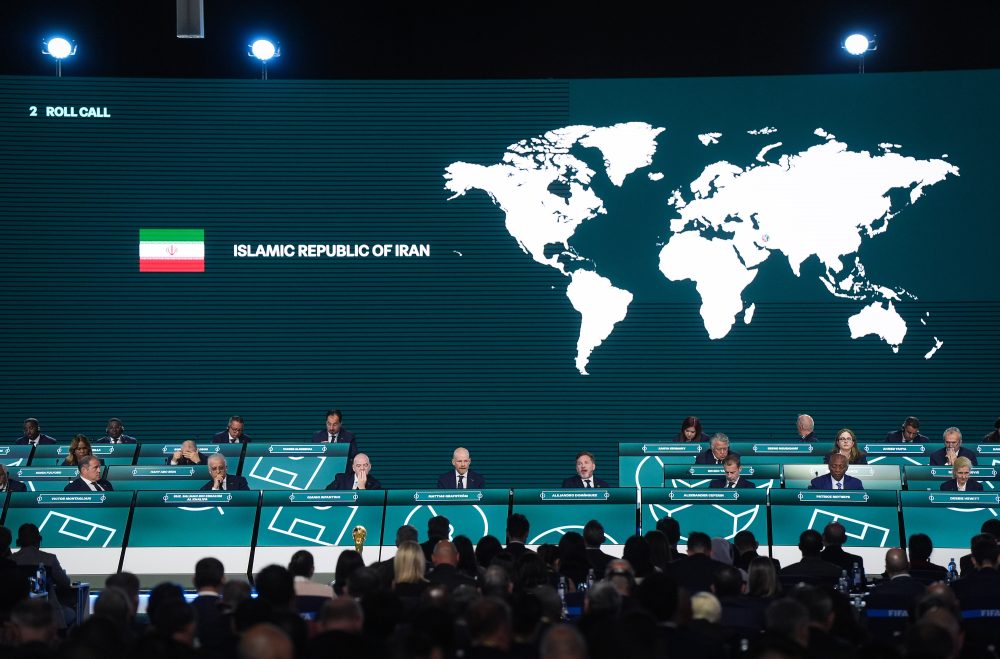
Iran’s football federation announced Saturday that the nation will “definitely” compete in the 2026 FIFA World Cup, while demanding that host countries address Tehran’s concerns about player travel and treatment.
Football Federation Islamic Republic of Iran president Mehdi Taj stated that “All players and technical staff, especially those who served their military service in the Islamic Revolutionary Guard Corps, should be granted visas without problems,” according to Iranian media reports.
The request comes as Iran maintains a delicate ceasefire with the United States following military conflicts that began with US and Israeli strikes on Iran in late February, and while Iranian citizens face travel restrictions implemented during the Trump presidency.
Speaking to the state-run IRNA news agency on Friday, Taj outlined conditions for Iran’s participation, including visa guarantees, security assurances, and proper treatment of Iranian personnel. He emphasized that the Islamic Republic would compete “without retreating from our beliefs, culture and convictions.”
The visa issue gained prominence after Canadian officials blocked Taj’s entry last month prior to a FIFA Congress, allegedly due to his connections to Iran’s Revolutionary Guard, which both the United States and Canada classify as a terrorist organization.
Taj has consistently sought FIFA’s commitment to respectful treatment of Iranian officials, athletes, and national symbols throughout the tournament.
The visa concerns could impact key player Mehdi Taremi, Iran’s team captain and striker, who fulfilled his required military duty with the Guard. Iran’s conscription system randomly assigns service members to various branches including police, army, or the Revolutionary Guard.
Iran has been placed in Group G alongside Belgium, New Zealand, and Egypt, with their opening match scheduled against New Zealand in Inglewood, near Los Angeles.
The Iranian national team has secured World Cup berths in four straight tournaments and seven total appearances, though they have never progressed beyond group play. Currently holding the 21st world ranking, Iran suffered only one defeat during Asian qualification rounds.
Community leaders and elected officials gathered Saturday to honor eight young lives lost in a devastating mass shooting that shocked Shreveport, Louisiana last month.
Seven siblings and their cousin, all between ages 3 and 11, were gunned down on April 19 when the children’s father opened fire in an attack that spanned two neighborhood homes.
The memorial service at Summer Grove Baptist Church during Mother’s Day weekend featured a somber procession as mourners walked past eight white coffins, each adorned with large photographs of the children, golden crowns, and white flower arrangements. Musical performances from a choir and solo artists provided comfort throughout the ceremony.
“In spite of how you may be feeling today, we still need to know that God is still good,” declared Bishop Bernard Kimble of Mount Olive Baptist Church as he opened the service.
Memorial programs honored each child individually, revealing loving family nicknames for the victims. Three-year-old Jayla Elkins went by “Jaybae,” while 6-year-old Kayla Pugh was known as “K-Mae,” and 10-year-old Mar’Kaydon Pugh answered to “K-Bug.”
The program described 6-year-old Khedarrion Snow as having “a sweet and loving heart” whose “light was mighty” despite his brief time on earth. Seven-year-old Layla Pugh was remembered as “bright, intelligent, bold, and full of love” who loved creating TikTok content with her relatives.
Gospel artist and pastor Kim Burrell encouraged grieving family members and community members struggling to understand the tragedy, emphasizing that “God is still on the throne.”
“To ask the question, ‘Why is this fair, God? How could you, Lord?’ He’s still God,” Burrell stated. “The same God that healed you from the stuff that you don’t want to tell nobody about. But he is a God that doesn’t have to give us all the clues. Just know that he makes no mistakes.”
The perpetrator, Shamar Elkins, carried out the attack using an assault-style firearm despite a 2019 felony weapons conviction. His estranged wife, who had filed for divorce, and another woman sustained injuries during the violence.
Elkins perished following a police chase after fleeing the scene. Authorities have not determined whether he died from police gunfire or took his own life.
The incident remains under investigation as the nation’s most deadly mass shooting in more than two years.
City Councilwoman Tabatha Taylor spoke during the service, acknowledging that “there are no words sufficient to ease this pain.” Fellow Councilman James Green urged attendees to “take off our funeral face” because “this is a celebration” of the children’s lives.
Congregation members frequently rose to applaud speakers and musical performances. The victims’ names were repeatedly honored throughout the ceremony, where Shreveport Mayor Tom Arceneaux offered the city’s sympathies.
“May we honor them by carrying forward the gentleness, joy and love they so freely shared,” Arceneaux remarked.
Louisiana Governor Jeff Landry directed that American and state flags fly at half-mast for one week at government facilities statewide. His statement described the victims as “the light of their homes and the heart of their classrooms” who “were full of promise and found joy in the simplest things, such as dancing, playing outside and sharing laughter with family and friends.”
“It is incumbent upon us to honor the memory of those lost by standing together against such senseless violence,” the governor’s message continued.
Former Congresswoman Gabby Giffords, who survived a 2011 assassination attempt that ended her political career, attended the service.
“She just wanted to come and just let the family know that this pain is not just in Louisiana,” explained U.S. Representative Cleo Fields, D-Louisiana. “This pain is all across the nation.”
Transportation was provided following the church service to take mourners to the burial site. Bishop Kimble concluded with a prayer for the healing process to begin.
“Help us as we move from this spot,” he prayed. “Because we know, oh God, grief is only temporary. And if we’ll put our hands in your favor, you’ll lead us through this.”
A major cybersecurity incident this week has exposed the personal information of millions of students nationwide after hackers targeted Canvas, a popular educational management platform used by schools and universities across America.
The cyberattack brought down the widely-adopted classroom software system, which serves as a digital hub for coursework, grades, and student communications at educational institutions throughout the United States.
Both higher education institutions and elementary through high school districts that depend on the Canvas platform were affected by the data breach, leaving student records vulnerable to unauthorized access.
A devastating militia assault in the Democratic Republic of Congo has claimed the lives of no fewer than 69 individuals, according to reports from Agence France-Presse on Saturday.
The deadly violence was confirmed by both local authorities and security officials in the region, AFP reported.
The attack represents the latest incident of violence to plague the central African nation, which has struggled with ongoing conflict and instability.
Toronto FC made history Saturday night, welcoming their biggest crowd ever to BMO Field as nearly 45,000 soccer fans came out to witness Lionel Messi and Inter Miami in action. The match doubled as a crucial preparation exercise for Toronto’s upcoming role as a World Cup host city.
The stadium was packed with supporters wearing Miami’s distinctive pink and black jerseys alongside Argentina’s traditional blue and white colors, all eager to see the legendary eight-time Ballon d’Or champion in person. Messi delivered for the crowd, finding the net in Inter Miami’s 4-2 victory over Toronto FC.
Toronto Mayor Olivia Chow acknowledged the weekend’s significance on Friday, stating: “This weekend will serve as a real life test run with a number of high attendance sporting events in town.” The mayor was also referencing concurrent Toronto Blue Jays games and the Sporting Life 10K race happening in the city.
The attendance figure of 44,828 provided Toronto officials with valuable insights into crowd management, from stadium entry and exit procedures to public transportation coordination. Security personnel faced their own challenges when multiple fans attempted to storm the field in the final minutes, hoping to get close to the 38-year-old Argentine superstar.
Sharon Bollenbach, who leads the World Cup 2026 Toronto Secretariat, emphasized the event’s importance in a Reuters statement: “This weekend’s match is a valuable opportunity for city divisions, emergency services, transit agencies, venue operators and other partners to work together in a live event setting, to test and refine as required before the matches begin.”
City officials anticipate more than 300,000 visitors will descend on Toronto during the World Cup tournament. Saturday’s game marked Toronto FC’s last home appearance before the June 11-July 19 competition begins.
BMO Field underwent significant renovations worth $158 million, including the installation of 17,000 temporary seats positioned behind both goals to satisfy World Cup capacity requirements. These additional seats made their debut during Saturday’s match.
The towering temporary structures sparked safety concerns on social media back in March, with one user posting on X: “Just saw a photo of BMO’s temporary seating. Respectfully, you couldn’t pay me to climb, stand or sit on that.”
However, fans seemed comfortable with the new seating arrangements on Saturday. Many supporters in the uppermost sections chose to stand with their backs to the railings, taking in panoramic views of Lake Ontario after the final whistle.
Metrolinx, the agency operating the city’s GO train network, announced Wednesday it would treat the match as a “readiness test,” implementing increased service frequency to the station serving BMO Field along with enhanced safety protocols and crowd control measures.
The transportation authority expects roughly 500,000 additional passengers to use their services during the World Cup, which will be jointly hosted by Canada, the United States, and Mexico.
Canada’s World Cup journey begins June 12 when they face Bosnia and Herzegovina at BMO Stadium. The Canadian squad will also take on 2022 World Cup hosts Qatar and Switzerland as part of Group B competition.
A devastating coordinated assault on a police station in northwestern Pakistan resulted in the deaths of at least three law enforcement officers on Saturday, with officials warning the death toll could climb significantly higher.
The attack occurred at a police facility located on the outskirts of Bannu, where a vehicle packed with explosives was detonated at the station. Police official Sajjad Khan expressed grave concerns that most of the 15 officers who were working at the post during the incident may have perished, noting that the facility was completely destroyed in the blast.
Khan stated that combat operations were still underway and that the full scope of casualties and destruction would not be determined until the fighting concluded.
An unnamed police official described the multi-phase nature of the assault, explaining: “The terrorists first attacked the police post with an explosives-laden car, and then militants entered its premises and opened fire on the police personnel.”
The official continued: “Other law enforcement personnel were sent to help the police, but the terrorists ambushed them and caused some casualties.”
According to police sources, the attackers also deployed drones during the operation, adding another layer of sophistication to the assault.
Emergency response teams and ambulances from rescue organizations and civilian medical facilities were immediately sent to the location. Officials announced that all government hospitals in Bannu had been placed on emergency status to handle the influx of casualties.
The militant group Ittehad-ul-Mujahideen has taken credit for orchestrating the deadly attack.
Such violent incidents threaten to escalate tensions and resume hostilities along Pakistan’s border with Afghanistan. Earlier this year in February, the most severe clashes in years broke out between the former allies, resulting in Pakistani air strikes within Afghan territory that Pakistan claimed were targeting militant bases.
While the intensity of conflict has diminished since then, sporadic border clashes continue to occur, and no formal ceasefire agreement has been established between the two nations.
Pakistan’s government continues to accuse Afghanistan’s Taliban leadership of providing safe haven to militant groups who use Afghan territory as a base for planning attacks against Pakistani targets.
Taliban officials have rejected these accusations, maintaining that Pakistan’s security challenges with militant groups represent domestic issues rather than cross-border problems.
EAST RUTHERFORD, N.J. — New York Giants head coach John Harbaugh is taking a measured approach as he settles into his new role, with his first meaningful game still more than four months away.
Saturday’s concluding rookie minicamp session intentionally avoided physical contact. Harbaugh emphasized to high draft selections Arvell Reese and Francis “Sisi” Mauigoa, along with other participants, that the weekend served as preparation for upcoming offseason workouts rather than a competitive evaluation.
“This is not a camp where you’re trying to go out there and make plays,” Harbaugh explained. “There really are no plays to be made. It’s a rehearsal type of camp. … We’re going to kind of do the dance, so to speak, of football. We’re not actually competing against one another.”
The real competition will emerge during organized team activities, mandatory minicamp, and training camp, which kicks off in late July at The Greenbrier in West Virginia. Following an 18-year tenure with Baltimore, Harbaugh is implementing a methodical strategy for his fresh opportunity, with genuine evaluations still months ahead.
“The true competition comes in the preseason games,” Harbaugh noted. “That’s when you can say it’s the most competitive. I’d say it’s kind of a ramp up to that.”
Harbaugh’s credentials include a Super Bowl victory and 12 playoff appearances with Baltimore, plus six additional postseason trips as a Philadelphia assistant coach.
During his time with Philadelphia, Harbaugh coached defensive back Rod Hood. Now, the Giants selected Rod’s nephew Colton Hood, a Tennessee cornerback, in the second round. The rookie minicamp marked Colton Hood’s first chance to work under Harbaugh’s guidance.
“My uncle told me what to expect, and it was everything that I expected,” Hood commented after making Saturday’s standout play — an interception where he stripped the ball from tryout running back Miles Davis. “Just hard-nosed coach, old-school, but he loves his players. He wants them to be great, so it’s that tough love kind of thing.”
Given Harbaugh’s special teams expertise, the upcoming months will feature an intriguing kicking battle. The Giants signed Michigan’s Dominic Zvada as an undrafted free agent to challenge returning kicker Ben Sauls and newly acquired veteran Jason Sanders.
“We’ll kick field goals, I think, every other practice,” Harbaugh said. “We may be kicking them every practice because we’ve got three guys to kick, and we’ll just see how it shakes out.”
Zvada connected on 95.5% of his field goal attempts in 2024, leading the nation, but dropped to 68% the following season. Standing 6-foot-3, Zvada is “big for a kicker,” according to Harbaugh, who praised his leg strength.
“More than anything just the consistency,” Harbaugh said. “He does a nice job of getting downfield through the kick, and because of that he tends to kick a straight ball consistently. If you do that, you probably have a chance.”
Reese’s availability at the fifth overall pick caught some by surprise, and the organization is now working to optimize the Ohio State standout’s potential, as assistant general manager Brandon Brown described.
The team envisions Reese as a weak-side linebacker rather than an edge rusher like other franchises might, and his rookie minicamp debut left a positive impression.
“Picks things up really quick,” Harbaugh observed. “Very serious-minded, very diligent about the assignments. I don’t think he got one assignment wrong throughout the two days, which is great to see.”
Despite receiver Odell Beckham Jr.’s workout with New York last month, no contract has emerged and may not materialize. Harbaugh revealed he spoke with Beckham multiple times recently while the 33-year-old trains in Arizona, though no deal appears close.
“It’s got to be right for both parties,” Harbaugh explained. “I’m pretty sure that he can make a team in the National Football League right now, but can he make a difference? It’s something he wants to do. Is his body going to hold up in the way he wants it to? And all those things are questions that need to get answered for anybody at that age.”
Beckham hasn’t appeared in an NFL contest since December 8, 2024.
NASHVILLE, Tenn. — At Tennessee’s storied Iroquois Steeplechase, while jockeys and horse owners vie for substantial prize money, the crowd’s beloved highlight remains the traditional foxhound parade that has charmed audiences for 85 years.
On Saturday, more than 20 foxhounds — specially bred to accompany horses and hunters — paraded across the grass course to launch race day festivities as thousands of fans cheered and captured the moment on camera.
The huntsman and his assistants, known as whippers-in, face the challenging job of guiding the pack along the proper route, particularly when the dogs become distracted by the massive crowd of spectators and their tempting tailgate spreads in the infield area.
Charles Montgomery, who serves as master and huntsman for the Mells Foxhounds — the hunting organization that provides dogs for the steeplechase — recalled one particularly social hound who abandoned her route for fan interaction. “She had the best time. She loved going into the beer tents,” Montgomery explained.
The dog enjoyed the experience so thoroughly that she made a beeline for the beer tent again the following year, resulting in her permanent exclusion from future races, Montgomery noted.
The Iroquois Steeplechase ranks among America’s top steeplechase competitions, offering $730,000 in total prize money on a grass course featuring hurdles. The venue opened in 1941 through a Works Progress Administration initiative, with the Nashville event established by members of the Hillsboro Hounds, a local fox hunting organization.
According to Stephen Heard, an Iroquois Steeplechase trustee and Mells Foxhounds member, steeplechase racing and fox hunting share deep historical connections. This tradition originated in the British Isles, where horses raced between church steeples and learned to clear obstacles like fences during hunting expeditions with dogs.
“Many of the horses that we use fox hunting are ex-steeplechase horses,” Heard noted.
With 25,000 attendees eating and drinking throughout tents and grandstands, the dogs require adjustment time to handle the overwhelming sounds and aromas.
“I took one dog last year and he heard the speakers and he said, ‘This is not for me,’” Charles Montgomery recalled.
“It’s high pressure,” explained Boo Montgomery, one of the whippers-in. She remembered when a child extended a fried chicken leg through the railings, creating irresistible temptation. “You couldn’t fault Brightly for stopping and having a snack,” she said, referring to one of the foxhounds.
Charles Montgomery typically brings experienced hunting dogs to mentor younger hounds along the course. On race morning, the eager dogs leaped from their trailer, ready to explore the grass, chew sticks, and roll in clover.
The hounds sport GPS-enabled collars during both hunting activities and racetrack appearances. This technology proved valuable last year when a frightened dog fled into the surrounding wooded parkland.
Despite the unfamiliar racetrack environment, the hounds appear to relish their role in launching the horse races, Boo Montgomery observed.
“It’s a great exposure for hunting to get to see these hounds and the horses,” Boo Montgomery said. “It’s nice to be able to show off.”
Former Major League Baseball star and Hall of Famer Wade Boggs has received the all-clear from doctors after his battle with prostate cancer.
The 67-year-old baseball legend shared the positive update following his participation in Friday evening’s celebration at Fenway Park, marking 125 years since the Red Sox played their first home game. Boggs joined fellow Red Sox legends David Ortiz, Pedro Martinez, Jim Rice, Carlton Fisk, and Carl Yastrzemski in throwing ceremonial first pitches.
“I’m a cancer survivor now. Prostate cancer is null and void. Thank God,” Boggs stated on Friday, referencing his latest medical examination.
The former third baseman received his prostate cancer diagnosis in September 2024 and completed radiation therapy and hormone treatments in Florida. On November 13, 2024, he posted on social media platform X to announce the completion of his treatment regimen.
“Praise God! Had my last treatment this morning, now it’s in the hands of God 🙏,” Boggs wrote in his November post. “Can’t thank my family, friends and my fans for your continued support throughout this difficult time. Also my wonderful team at Tampa General Hospital Cancer Institute 🙏🙏🙏.”
Boggs emphasized the importance of early detection in his successful treatment and urged men to prioritize regular health screenings.
“It’s a process that you have to go through, and I encourage all young men to get your PSA tests,” Boggs explained Friday. “Please go out there. Because mine, it wasn’t even on the radar. It was a 3.3, and they don’t even start talking about it until it gets to four. But I had the bad one, and we caught it early. … I had my checkup a month ago, and I’m completely cancer-free.”
During his 18-season MLB career, Boggs played for the Boston Red Sox from 1982 to 1992, the New York Yankees from 1993 to 1997, and finished with the Tampa Bay Devil Rays from 1998 to 1999. Both the Red Sox and Rays organizations have retired his jersey number in his honor.
In 2005, Boggs earned first-ballot induction into the Baseball Hall of Fame, receiving recognition on 91.9% of submitted ballots.
His impressive career achievements include five American League batting titles, 12 All-Star Game selections, two Gold Glove Awards, and eight Silver Slugger Awards. He captured a World Series championship with the Yankees in 1996. Boggs concluded his playing days with a .328 batting average and membership in the exclusive 3,000-hit club, tallying 3,010 hits along with 1,513 runs scored, 118 home runs, and 1,014 RBIs.
The Los Angeles Dodgers have acquired left-handed pitcher Charlie Barnes through the waiver claim process from the Chicago Cubs, while simultaneously moving utility player Tommy Edman to the 60-day injured list to create space on their 40-man roster.
The 30-year-old Barnes had been placed on waivers by Chicago earlier this week. His only major league outing this season came on April 13 against Philadelphia, where he allowed four runs (three earned) across three innings. At the Triple-A level with Iowa, Barnes posted a 3-1 record and 3.04 ERA through seven games, including four starts.
Throughout his major league career, Barnes holds a 0-3 record with a 6.15 ERA across 10 appearances, eight of which were starts. His last MLB action came in 2021 with Minnesota, the team that selected him in the fourth round of the 2017 draft.
For the past four seasons, Barnes played professionally in South Korea with the Lotte team, compiling a 35-32 record and 3.58 ERA over 94 starts.
The 31-year-old Edman had right ankle surgery in November, just after helping the Dodgers capture the World Series championship. He is expected to be cleared for return from the injured list before the end of this month.
Over seven major league seasons split between St. Louis and Los Angeles, Edman has maintained a .258 batting average with 72 homers and 291 RBIs across 730 games.
Baseball Hall of Fame manager Bobby Cox, who became synonymous with the Atlanta Braves during their dominant run in the 1990s and 2000s, passed away at 84 years old, the organization confirmed Saturday.
Throughout his managerial career with the Braves and Toronto Blue Jays, Cox amassed 2,504 wins, placing him fourth all-time in major league history. His remarkable achievements include leading teams to 15 division championships, five National League pennants, and the Braves’ 1995 World Series title.
“We are overcome with emotion on the passing of Bobby Cox, our treasured skipper. Bobby was the best manager to ever wear a Braves uniform,” the Braves organization stated. “His Braves managerial legacy will never be matched.”
Cox entered the world on May 21, 1941, in Tulsa, Oklahoma, before relocating to Central California at age three. The Los Angeles Dodgers signed him as an infielder straight from Selma High School in 1959, with scout Red Adams making the discovery.
Following nearly ten years in the minor league systems of the Dodgers, Chicago Cubs, and Braves, Cox’s playing career remained modest. He spent his inaugural major league season in 1968 with the New York Yankees, playing alongside Mickey Mantle during the legend’s final year. Cox recorded nine home runs and posted a .619 OPS across 220 games over two seasons with New York.
Yankees general manager Lee MacPhail subsequently presented Cox with a managerial opportunity at their Class A affiliate in Fort Lauderdale, where he spent six seasons before joining Billy Martin’s major league coaching staff as first-base coach for the 1977 World Series champions.
In the following season, former Braves owner Ted Turner provided Cox his initial big league managing opportunity, though he struggled with a 266-323-1 record during the franchise’s rebuilding phase. Turner dismissed Cox in 1981, later remarking about his replacement: “It would be Bobby Cox — if I hadn’t just fired him. We need someone like him around here.”
Cox continued his managerial journey with the Toronto Blue Jays for four seasons, leading them to their inaugural division championship in 1985.
Despite the earlier dismissal, Turner praised Cox as a “terrific manager and a terrific person,” which explained his decision to bring Cox back to the Braves organization in 1986 as general manager. Despite lacking front-office experience, Cox spent four years developing, acquiring, and selecting future stars including Tom Glavine, John Smoltz, Steve Avery, and Chipper Jones, whom he selected first overall in the 1990 MLB Draft.
Cox returned to managing duties during the 1990 season and took full control the following year as the Braves launched their historic streak of 14 straight division titles. His teams captured five National League pennants during the decade, culminating with Atlanta’s first major professional sports championship in 1995.
After stepping down as manager following the 2010 season when the Braves earned a wild-card berth, Cox remained with Atlanta’s front office as a senior advisor.
Across 29 seasons of managing, Cox finished with a 2,504-2001 record and a .566 winning percentage, earning Manager of the Year recognition four times.
“Bobby was a favorite among all in the baseball community, especially those who played for him. His wealth of knowledge on player development and the intricacies of managing the game were rewarded with the sport’s ultimate prize in 2014 — enshrinement into the Baseball Hall of Fame,” the Braves noted.
While earning widespread respect throughout baseball, Cox also established the record for most ejections in league history with 158 during regular season play and three more in postseason games, many featuring lengthy and animated arguments.
“And while Bobby’s passion for the game was unparalleled, his love of baseball was exceeded only by his love for his family,” the Braves added. “It is with the heaviest of hearts that we send our sincerest condolences to his beloved wife, Pam, and their loving children and grandchildren.”
The British Foreign Office confirmed Saturday that officials called in China’s ambassador to the United Kingdom on Friday in response to a recent court ruling that found two individuals guilty of conducting espionage operations for Hong Kong and China.
The diplomatic summons came after a London court delivered guilty verdicts in a national security case involving the two men, who were convicted of carrying out spying activities that ultimately benefited Chinese interests through Hong Kong connections.
The Foreign Office announced the ambassador’s summons the day after the diplomatic meeting took place, highlighting the serious nature of the espionage convictions and their impact on UK-China relations.
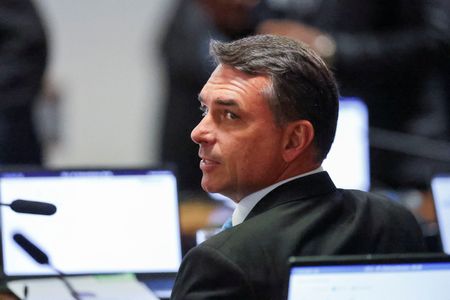
A Brazilian Supreme Court justice has temporarily blocked legislation that would have significantly shortened the prison term of former President Jair Bolsonaro, who is serving 27 years for attempting to orchestrate a coup following his 2022 electoral defeat.
Justice Alexandre de Moraes issued the suspension order on Saturday, preventing the implementation of the sentence reduction measure while the nation’s highest court examines its constitutionality, according to court documents.
The controversial legislation, which received congressional approval last month after lawmakers overrode President Luiz Inacio Lula da Silva’s veto, would have slashed Bolsonaro’s sentence to approximately two years. Under this reduced term, the former right-wing leader could have been released as early as 2028.
Two political parties in Brazil, along with the press association ABI, filed separate legal challenges this week arguing the law violates the constitution. The measure would also have reduced penalties for individuals convicted in connection with the January 2023 uprising, when Bolsonaro’s supporters stormed and damaged the presidential palace, Supreme Court building, and congressional offices.
Justice Moraes determined the law cannot take effect until the Supreme Court completes its review of two separate cases seeking to invalidate the measure on constitutional grounds.
Bolsonaro’s legal team has not yet formally petitioned the court to apply the sentence reduction to their client. However, on Friday, his attorneys submitted a motion requesting criminal review to have the Supreme Court overturn his conviction entirely.
The former president is currently serving his sentence under humanitarian house arrest conditions, which were initially granted for 90 days based on medical considerations.
ATLANTA — Bobby Cox, the legendary Atlanta Braves skipper who transformed a struggling franchise into a National League powerhouse throughout the 1990s and delivered the city’s first major championship, passed away Saturday at age 84.
The Hall of Fame manager died in Marietta, Georgia, the Atlanta Braves confirmed. Cox had been battling health complications since suffering a stroke in 2019, including cardiac problems that hindered his recovery.
“Bobby was the best manager to ever wear a Braves uniform. He led our team to 14 straight division titles, five National League pennants, and the unforgettable World Series title in 1995. His Braves managerial legacy will never be matched,” the team stated.
After inheriting a cellar-dwelling squad in June 1990, Cox orchestrated one of baseball’s most remarkable turnarounds, guiding the Braves from worst to first in 1991. Though they lost that World Series to Minnesota in seven games, it launched an unprecedented streak of 14 straight division championships — a professional sports record.
During his 25-year tenure with Atlanta, Cox delivered the franchise’s first World Series crown in 1995, stepped down following the 2010 campaign, and earned Baseball Hall of Fame induction in 2014.
“Bobby was a favorite among all in the baseball community, especially those who played for him. His wealth of knowledge on player development and the intricacies of managing the game were rewarded with the sport’s ultimate prize in 2014 — enshrinement into the Baseball Hall of Fame,” the organization noted.
Cox’s statistical achievements place him among baseball’s managerial elite: fourth all-time with 2,504 victories, fifth with 4,508 games managed, first with 15 division crowns including that record 14-year run, first with 16 playoff appearances, and fourth with 67 postseason wins.
Only Connie Mack, John McGraw and Tony La Russa accumulated more regular-season victories than Cox. He also holds the record for most managerial ejections with 158.
“He is the Atlanta Braves,” former catcher Brian McCann said in 2019. “He’s the best.”
McCann characterized Cox as an “icon” and “one of the best human beings any of us have ever met.”
The Braves honored Cox by retiring his No. 6 jersey in 2011 and inducting him into the team’s Hall of Fame.
Across 29 major league seasons as a manager, including four years with Toronto, Cox guided 16 teams to the postseason. He brought traditional baseball values to the dugout, always sporting cleats and stirrups while earning fierce player loyalty through his paternal leadership style.
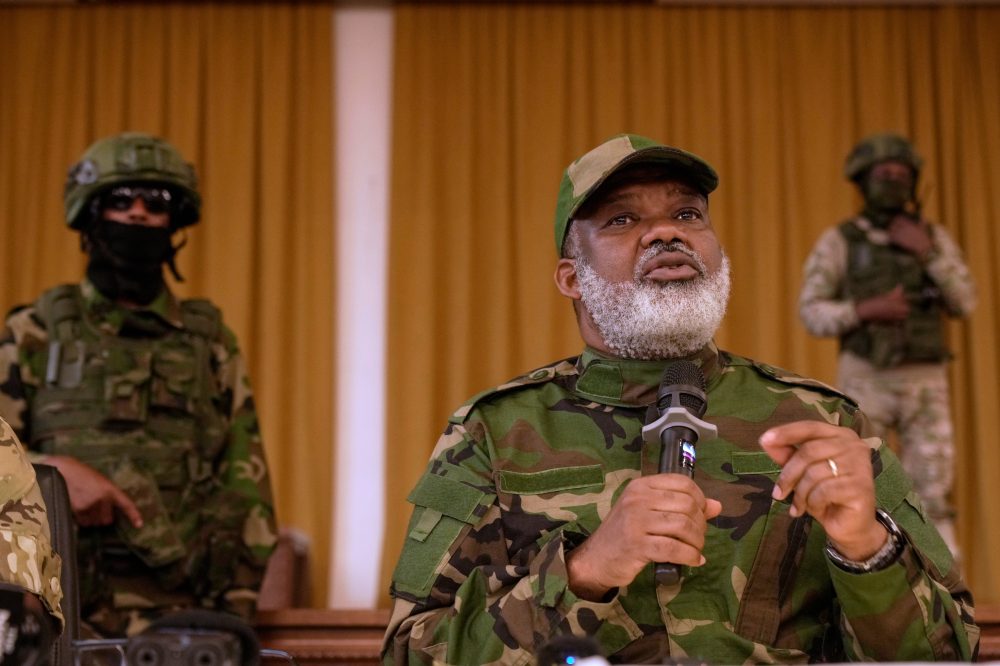
DAKAR, Senegal — Rebel forces operating in the Democratic Republic of Congo have criticized the United States for inadequate mediation efforts in the ongoing conflict plaguing the nation’s resource-rich eastern territories, as the Trump administration works to secure access to the area’s strategic mineral deposits for American interests.
Congolese rebel commander Corneille Nangaa penned a letter to Secretary of State Marco Rubio, alleging that Washington has not adequately confronted the Congolese government regarding its purported breaches of peace agreements.
The correspondence, obtained by The Associated Press on Saturday, bore the signature of the Congo River Alliance, an organization that encompasses the M23 rebel faction supported by Rwanda.
Last year, Congo and Rwanda entered into a peace agreement facilitated by the United States, designed to halt the prolonged violence in eastern Congo. The arrangement outlined economic cooperation terms among the three nations and promised to facilitate agreements concerning rare earth mineral extraction.
President Donald Trump lauded the heads of state — Congo’s Felix Tshisekedi and Rwanda’s Paul Kagame — when the deal was reached. Trump has frequently highlighted his role in brokering the agreement. Despite the accord, combat operations persist in the area, with rebel and government military units each claiming the other side has broken the peace terms.
Nangaa’s letter to Rubio also condemned American sanctions targeting “actors critical of the authorities in power” in Kinshasa, Congo’s capital city. This appears to reference recent U.S. penalties imposed on former Congolese leader Joseph Kabila for his suspected involvement in financing and assisting rebel groups. Washington previously sanctioned Rwanda’s armed forces and four high-ranking officials for their support of M23.
“Your administration has neither imposed any sanctions nor issued even a simple warning to the leaders in Kinshasa, whose intransigent and arrogant attitude calls into question the impartiality and neutrality of the American Facilitator/Mediator,” the letter stated.
“The absence of clearly identifiable corrective measures fuels questions regarding the facilitation’s ability to preserve, over time, the requirements of impartiality and neutrality that are essential to its credibility,” it continued.
Congo, the United States, and United Nations specialists maintain that Rwanda provides backing to M23, which has expanded from several hundred fighters in 2021 to approximately 6,500 combatants, according to UN data.
Eastern Congo has endured decades of violence as government troops battle over 100 armed organizations, with M23 being the most formidable, frequently competing for control of the region’s mineral wealth. M23 forces launched a significant offensive in the area in early 2023, capturing Goma and other strategic locations while rapidly extending their territorial control.
Although American diplomatic intervention has helped reduce regional tensions, it has not halted the intensifying ground combat, according to Kristof Titeca, a University of Antwerp professor who specializes in Central African governance and conflict issues.
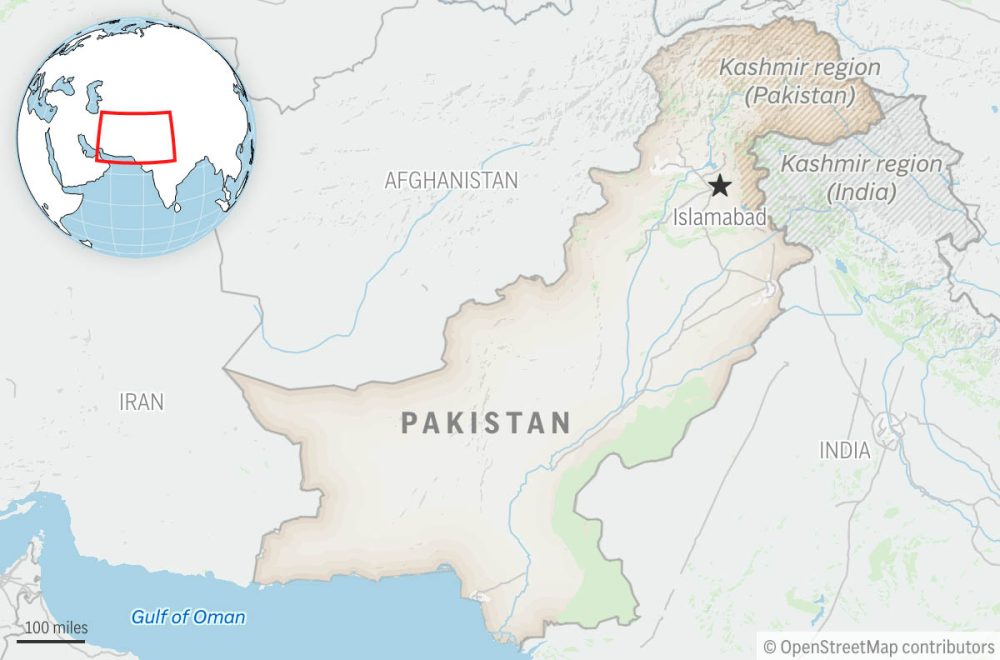
PESHAWAR, Pakistan (AP) — Three law enforcement officers died Saturday night when militants launched a coordinated assault on a police facility in Pakistan’s northwestern region, authorities confirmed.
The deadly incident occurred in Bannu district within Khyber Pakhtunkhwa province, which shares a border with Afghanistan, according to police official Zahid Khan. Attackers used a vehicle packed with explosives while armed fighters engaged officers in combat.
Khan reported that numerous blasts echoed through the area following the initial explosion, which destroyed both the police facility and several residential buildings in the vicinity due to the powerful detonation.
The police official declined to provide additional information, noting that gunfire continued between security forces and the attackers. He added that some officers sustained injuries and may be buried beneath debris from the collapsed structures.
Authorities have not identified which organization orchestrated the assault.
Intelligence experts anticipate the Pakistani Taliban, formally called Tehrik-e-Taliban Pakistan or TTP, along with associated extremist organizations, will likely emerge as suspects given their history of conducting comparable operations. The nation has experienced an escalation in extremist attacks over recent years.
The TTP operates independently from but maintains ties with Afghanistan’s Taliban movement, which assumed control of the neighboring country in 2021.
MOSCOW, May 9 – Russian President Vladimir Putin declared Saturday that he believes the ongoing war in Ukraine is approaching its conclusion.
The conflict, which began with Russia’s invasion of Ukraine in 2022, has created the most severe tensions between Russia and Western nations since the Cuban Missile Crisis of 1962, a period when many feared global nuclear conflict was imminent.
“I think that the matter is coming to an end,” Putin stated when speaking with reporters about the Ukrainian war.
Recent reports from the Financial Times on Thursday indicated that leaders across the European Union are making preparations for possible negotiations.
When questioned about his openness to discussions with European officials, Putin indicated his preference would be to work with former German Chancellor Gerhard Schroeder.
Russian government officials stated last week that European nations must initiate contact first, since they were responsible for cutting off diplomatic communication with Moscow when the Ukrainian conflict began in 2022.
Milwaukee has added outfielder Brandon Lockridge to their 10-day injured list following a leg injury, with the team bringing up Blake Perkins from their Triple-A affiliate in Nashville, according to Saturday reports from the Milwaukee Journal-Sentinel.
The 29-year-old Lockridge sustained his injury during Friday’s matchup with the New York Yankees when he collided with the wall while pursuing a foul ball in the fourth inning. Medical examinations ruled out fractures, but doctors found a deep cut that reached the bone.
This season, Lockridge has posted a .294 batting average across 28 games, recording four doubles and driving in 12 runs. Throughout his three-year major league career with San Diego and Milwaukee, he maintains a .251 batting average with one home run and 24 RBIs over 107 games.
The returning Perkins, also 29, struggled during his recent stint with Milwaukee, managing just five hits in 46 at-bats for a .109 average before being sent down to Nashville earlier this week. Over his four seasons with the Brewers organization, Perkins has compiled a .224 career average with 13 home runs and 87 RBIs in 261 games.
Seven people lost their lives, including one child, when Israeli forces targeted the Lebanese town of Saksakiyeh on Saturday, according to Lebanon’s health ministry. Fifteen others sustained injuries in the attack.
Israeli military officials confirmed they conducted the operation against Hezbollah fighters in the area, claiming the militants were preparing assaults on Israeli troops.
“The IDF is aware of reports regarding harm to uninvolved civilians in the structure in which the terrorists were struck. The details of the incident are under review,” military officials stated.
The deadly confrontation marks continued violence between Israeli forces and the armed group Hezbollah in southern Lebanon, where Israel maintains what it calls a security zone. This ongoing conflict persists even after a ceasefire agreement brokered by the United States was announced on April 16.
Earlier this week, Israeli forces reported killing a high-ranking Hezbollah commander from the elite Radwan unit on Wednesday. The strike on Beirut’s southern suburbs was the first of its kind since the ceasefire declaration.
Meanwhile, diplomatic efforts continue as the United States facilitates discussions between Lebanese and Israeli representatives. These meetings represent the most significant diplomatic contact between the two nations’ government officials in many years.
State Department officials confirmed that Israeli and Lebanese ambassadors to Washington will participate in a third round of negotiations scheduled for Thursday and Friday this week.
A traffic accident has forced the closure of two left lanes on northbound Route 1 at the Biddles Toll Plaza, according to DelDOT officials.
The crash is causing significant delays for drivers traveling north on the busy highway. Traffic is being diverted to the remaining open lanes as emergency crews work to clear the scene.
Motorists are advised to seek alternate routes if possible or allow extra travel time when passing through the area. DelDOT has not yet provided an estimated time for when the lanes will reopen to normal traffic flow.
The Atlanta Braves organization confirmed Saturday that Bobby Cox, the Hall of Fame manager who guided the team through its most successful era, has passed away at 84 years old.
Cox transformed the Braves into a baseball dynasty throughout the 1990s, culminating in the franchise’s sole World Series title in 1995. His managerial career with Atlanta concluded following the 2010 season, capping off decades of excellence on the diamond.
The veteran skipper became synonymous with Braves baseball during an unprecedented run of success that made Atlanta a perennial contender and household name across the sport.
A cruise vessel called the MV Hondius is currently experiencing a hantavirus outbreak, with over 140 individuals aboard including both travelers and staff members.
The situation aboard the affected vessel has been documented through a series of photographs compiled by Associated Press photo editors.
Motorists traveling on Interstate 95 northbound are experiencing delays near the US Route 202 interchange due to a broken down tractor-trailer blocking multiple lanes.
According to the Delaware Department of Transportation, the disabled commercial vehicle has forced officials to shut down the right lane and turn lane leading to the Route 202 ramp.
Drivers heading toward the Route 202 exit should expect delays and consider alternate routes while crews work to clear the disabled truck from the roadway.
DelDOT has not provided an estimated time for when the lanes will reopen to normal traffic flow.
Federal health authorities are working to calm public concerns about hantavirus, emphasizing that the chances of a major outbreak spreading across communities remain very low.
Despite recent media coverage that has generated anxiety about the potential for another pandemic-level health crisis, the Centers for Disease Control and Prevention maintains that the likelihood of extensive transmission is minimal.
The virus has captured significant attention in news reports recently, leading to public worry about whether the nation could face another widespread health emergency similar to previous pandemic experiences.
The Houston Astros have sidelined left-handed pitcher Bennett Sousa for at least two weeks due to an elbow injury, the team announced Saturday. The club has brought up right-handed reliever Jayden Murray from their Triple-A Sugar Land affiliate to take his place on the roster.
Sousa is suffering from inflammation in his left elbow, with his placement on the injured list dating back to Wednesday of this week.
The 31-year-old reliever has struggled this season, posting an 8.10 earned run average across five appearances out of the bullpen. Over his four-year major league career spanning three different organizations, Sousa holds an 8-1 record with a 4.54 ERA. He joined the Astros organization in 2023.
Murray, who is 29 years old, appeared in four relief outings earlier this season and recorded a 6.00 ERA during that stint. Since breaking into the majors last year, he has compiled a 3.06 ERA over 13 total games, including one start.
In additional roster moves, Houston acquired outfielder Rhylan Thomas through waivers from the Seattle Mariners and immediately assigned him to Sugar Land. To create space on their 40-man roster, the Astros moved right-handed pitcher Hunter Brown to the 60-day injured list due to a shoulder issue.
Chicago has added veteran wide receiver Scotty Miller to their roster as a free agent, according to confirmation from his agents on Saturday.
Representatives Drew Rosenhaus and Robert Bailey verified the signing to ESPN but did not reveal contract details for the 28-year-old player.
During the previous season with Pittsburgh, Miller recorded nine receptions for 62 yards across 13 appearances, though he did not start any games or score touchdowns.
Throughout his NFL career spanning 93 games with nine starts, Miller has accumulated 99 receptions for 1,216 yards and six touchdowns while playing for Tampa Bay (2019-22), Atlanta (2023), and Pittsburgh (2024-25).
Tampa Bay selected Miller in the 2019 sixth round of the draft, and he contributed to their Super Bowl championship during the following season.
Chicago’s current wide receiver roster features Rome Odunze and 2026 third-round selection Zavion Thomas among others.
Minnesota Twins right-handed pitcher Taj Bradley was added to the 15-day injured list Saturday due to inflammation affecting his right pectoral muscle.
The roster move was made retroactive to Wednesday, which came one day after Bradley delivered a strong performance against Washington, striking out eight hitters across six innings in an 11-3 Twins victory.
The 25-year-old pitcher has posted a 4-1 record with a 2.87 ERA across eight starts this season. In 47 innings of work, he has recorded 52 strikeouts while issuing 17 walks.
Throughout his major league career, Bradley holds a 23-28 record with a 4.64 ERA over 83 games, including 81 starts. He previously played for Tampa Bay from 2023-25 before Minnesota acquired him in a trade deadline deal that sent right-hander Griffin Jax to the Rays.
To fill Bradley’s spot on the 26-man roster, the Twins brought up right-hander Travis Adams from their Triple-A affiliate in St. Paul.
Adams, 26, has appeared in five relief outings this season for St. Paul, compiling a 3-0 record with a 9.00 ERA.
The Goldey-Beacom Lightning baseball team’s remarkable postseason journey concluded with a disappointing 12-3 defeat against Wilmington University in the Central Atlantic Collegiate Conference championship game held in Waterbury, Connecticut.
The Lightning had put together another impressive tournament performance to reach the conference final, continuing their tradition of strong showings in the CACC Tournament. However, their championship aspirations were dashed by a dominant Wilmington squad that controlled the title game from start to finish.
The loss marks the end of what had been a successful season for Goldey-Beacom, which once again demonstrated its ability to compete at a high level in conference tournament play despite falling short of the ultimate prize.
CHICAGO — This Sunday’s NBA draft lottery could deliver top picks to teams that spent the season deliberately losing games, with Washington guaranteed a top-five selection and Brooklyn and Utah positioned for premium picks after enduring some of the worst seasons in franchise history.
The lottery process involves drawing four ping-pong balls from a secured container, witnessed by team representatives and select media members in a private room. These balls create a numerical combination that corresponds to one assigned to participating teams, determining who receives the first overall pick in next month’s draft.
“June 23rd, I’ll know where I’m at,” said AJ Dybantsa, the BYU standout who declared for the draft after leading college basketball in scoring this past season.
Dybantsa will likely learn his destination Sunday, as he joins Kansas’ Darryn Peterson and Duke’s Cameron Boozer among the projected top three selections.
Washington, Brooklyn, and Indiana each hold identical 14% chances of securing the number one pick — though those remain relatively modest odds.
The Wizards compiled a dismal 3-26 record following the All-Star break, including allowing Miami’s Bam Adebayo to score 83 points in a single contest. Washington cannot drop below fifth position and faces essentially even odds of landing exactly there, with a 52.1% probability of a top-four selection versus 47.9% for fifth place.
“This was going to be a season of development and opportunity,” said Wizards coach Brian Keefe during his end-of-season press conference. “And that is something that we really focused on all the way up to Game 82.”
Washington anticipates significant improvement next season after acquiring Trae Young and Anthony Davis through trades, making another basement finish unlikely with a potential top pick added to the roster.
Accusations of tanking — intentionally losing to improve draft position — have surrounded Washington, Brooklyn, and Utah this season.
Brooklyn suffered their worst point differential in franchise history, being outscored by 975 points and losing 43 games by double digits. Utah endured their own historic low, getting outscored by 858 points with 41 double-digit defeats.
Nets owner Joe Tsai acknowledged the rebuilding approach before the season began.
“We hope to get a good pick,” Tsai stated at the All-In Summit last fall. “So, you can predict what kind of strategy we will use for this season.”
The league fined Utah $500,000 during the season for benching top players in fourth quarters, though the Jazz still managed to win one such game in Miami. Their poor finish secured a top-eight pick that otherwise might have transferred to Oklahoma City.
Remaining lottery odds for the top selection include Utah and Sacramento at 11.5%, Atlanta at 9.8%, Memphis at 9%, Dallas at 6.7%, Chicago at 4.5%, Golden State at 2%, Oklahoma City at 1.5%, Miami at 1%, and Charlotte at 0.5%.
Atlanta’s percentage combines two separate scenarios that could deliver them the first pick.
In a potentially controversial outcome, the defending champion Thunder could claim the top pick despite their success. If the position typically belonging to the Clippers wins the lottery, it transfers to Oklahoma City through the trade that brought Shai Gilgeous-Alexander to the Thunder.
The Clippers maintain a 48% chance of moving up if Indiana lands in fifth or sixth position, as those picks would convey to Los Angeles rather than staying with the Pacers.
“Call it a coin-flip chance of getting a high, high lottery pick in a loaded draft,” said Clippers president of basketball operations Lawrence Frank.
The NBA expects to implement a revised lottery system next season, with framework established last month to further discourage tanking behavior. The Board of Governors will likely approve these changes in coming weeks, following Tuesday’s general manager meeting in Chicago.
This season featured an unprecedented race to lose, with five teams — Washington, Indiana, Utah, Memphis, and Brooklyn — posting sub-.180 winning percentages after the All-Star break, marking the first time in league history so many franchises performed this poorly in the season’s final stretch.
“The incentives are not necessarily matched here,” NBA Commissioner Adam Silver said in February regarding teams with the worst records receiving the best lottery odds. “I think the tradition in sports where the worst-performing team receives the first pick from their partners, when any economist comes and looks at our system, they always point out you have the incentives backwards there. That doesn’t necessarily make sense.”
SAN FRANCISCO — Cleveland has acquired two-time Gold Glove catcher Patrick Bailey from San Francisco in a Saturday trade that addresses both teams’ catching situations.
San Francisco received minor league southpaw Matt Wilkinson and Cleveland’s 29th selection in the 2026 amateur draft as compensation for Bailey.
To create roster space for Bailey, Cleveland sent Bo Naylor down to Triple-A Columbus. Naylor had served as the Guardians’ primary catcher since the 2023 season.
Since his major league debut in 2023, Bailey has established himself among baseball’s premier defensive backstops, particularly excelling at pitch framing. Over the past two-plus seasons, he leads all major leaguers with 69 catcher framing runs and 42 defensive runs saved.
However, Bailey’s offensive production has been problematic and reached new lows this year. Through 89 plate appearances, he was hitting .146 with just one home run and five RBIs. Among 286 players with at least 75 plate appearances this season, his .396 OPS ranked dead last.
San Francisco could afford to move Bailey with Daniel Susac and Jesus Rodriguez positioned to share catching responsibilities, along with Eric Haase available as depth. These alternatives have delivered significantly better offensive production for the Giants, who entered Saturday averaging just 3.16 runs per game — worst in baseball — and sharing the National League’s poorest record with New York.
Bailey, who celebrates his 27th birthday later this month, captured Gold Glove honors in both 2024 and 2025. Throughout his career, he maintains a .224 batting average with a .611 OPS.
Naylor posted a .237 average during his 2023 rookie campaign but has battled offensive struggles over the subsequent two-plus seasons. His .143 batting average this year ranks last among the 29 catchers with at least 90 plate appearances.
Since 2024, his .192 batting average places him second-worst among catchers who have played in at least 200 games.
Cleveland entered Saturday with a 21-19 record atop the AL Central standings. Bailey was scheduled to join the club before Saturday night’s game against Minnesota. Austin Hedges has also received consistent playing time at catcher.
The 23-year-old Wilkinson represented Canada in this year’s World Baseball Classic. This season at Double-A Akron, he has compiled a 1-2 record with a 1.59 ERA across six starts, striking out 36 batters in 28 1/3 innings.
A liquefied natural gas tanker from Qatar was making its way toward the Strait of Hormuz on Saturday, heading to Pakistan after leaving Qatar’s Ras Laffan terminal, maritime tracking information from LSEG reveals.
If the vessel completes its journey successfully, it would represent the first time a Qatari LNG ship has made it through the strategic waterway since Iran began its military campaign. QatarEnergy has not yet responded to requests for comment.
The tanker Al Kharaitiyat operates under a Marshall Islands flag and is operated by Nakilat Shipping Qatar Ltd, with storage space for 211,986 cubic meters of cargo, maritime records indicate.
In early April, Iran’s Revolutionary Guards stopped two LNG vessels from Qatar – the Al Daayen and Rasheeda – as they approached the Strait of Hormuz on April 6, ordering them to remain stationary without providing any reasoning, according to a source who spoke to Reuters.
As the globe’s second-biggest LNG supplier, Qatar primarily ships its energy exports to Asian markets. Iranian military actions have damaged 17% of Qatar’s LNG shipping capabilities, with reconstruction work anticipated to keep 12.8 million tons annually of the fuel offline for three to five years.
Robert Griffin III has stepped away from Team USA’s flag football program as the sport gears up for its first-ever Olympic appearance at the 2028 Los Angeles Games.
The former NFL signal-caller, now 36, made the announcement Friday through social media, revealing he was pulling out of USA Football’s 2026 selection process because of a timing issue.
“A commitment honoring our military veterans is preventing me from attending training camp and that’s not fair to the other 23 guys competing for a spot this year,” Griffin posted. “Looking forward to seeing the squad go to Germany and win Gold and still excited for LA28.”
Griffin had been selected in March as one of four quarterbacks for the 24-player training camp roster. The upcoming camp is set for May 21-24 in Chula Vista, California.
From that group, coaches will trim the roster to 12 players who will compete for the United States at the 16-nation International Federation of American Flag Football World Championships. Those games will take place August 27-30 in Dusseldorf, Germany.
Griffin hasn’t suited up in the NFL since the 2020 campaign and currently serves as a football commentator for ESPN and Fox Sports.
Washington selected Griffin as the second overall pick in the 2012 NFL Draft following his standout career at Baylor. He captured NFL Offensive Rookie of the Year recognition and earned a Pro Bowl selection in his debut season. Throughout his professional career spanning 56 games with 42 starts, Griffin accumulated 9,271 passing yards along with 43 touchdown passes and 30 interceptions while playing for Washington (2012-14), Cleveland Browns (2016), and Baltimore Ravens (2018-20). He also contributed 1,809 rushing yards and 10 rushing touchdowns.
Toronto Blue Jays outfielder Addison Barger made his return to the active roster Saturday after spending time on the 10-day injured list, while the team sent rookie Yohendrick Pinango down to their Triple-A Buffalo affiliate.
The 26-year-old Barger had been sidelined since April 5 due to ankle sprains affecting both feet. His season got off to a rough start with just one hit in 19 at-bats across eight games, a stark contrast to his strong 2023 campaign where he connected for 21 home runs and drove in 74 runs over 135 games. He followed that regular season performance with an impressive postseason showing, posting a .367 batting average along with three homers and nine RBIs in 17 playoff contests.
For Saturday’s matchup against the Los Angeles Angels at home, Barger was slotted into the starting lineup in right field, hitting in the second spot in the batting order.
Looking at his overall major league statistics since breaking into the big leagues in 2024, Barger carries a .224 career batting average with 28 home runs and 104 RBIs across 212 games in a Blue Jays uniform.
The corresponding roster move involved sending down Pinango, the 24-year-old who earned his first major league call-up on April 26. During his brief stint with Toronto, he posted impressive numbers with a .423 batting average, one double, and four RBIs over 10 games.
Tennessee has completed contract negotiations with their top 2026 draft selection, wide receiver Carnell Tate, securing him on a four-year rookie deal.
The Ohio State product, selected fourth overall in this year’s draft, will earn $51.1 million in guaranteed compensation, which features a $33.6 million signing bonus. Friday’s announcement revealed the agreement also contains a fifth-year team option for the young receiver.
With Tate’s contract finalized, Tennessee can now focus on completing deals with their remaining unsigned rookies: edge rusher Keldric Faulk from Auburn (selected 31st overall) and linebacker Anthony Hill from Texas (second-round selection).
During his final collegiate season, the 21-year-old Tate recorded 51 receptions for 875 receiving yards and nine touchdowns across 11 games for the Buckeyes. Throughout his three-year career at Ohio State, he accumulated 121 catches for 1,872 yards and 14 touchdowns over 39 total games.
The Cleveland Guardians made a major roster move Saturday, trading with the San Francisco Giants to acquire defensive specialist Patrick Bailey, a catcher who has earned Gold Glove recognition in consecutive seasons.
Cleveland sent their 29th overall selection in this year’s draft along with left-handed pitching prospect Matt Wilkinson to San Francisco in return for the 26-year-old Bailey. The move strengthens Cleveland’s catching corps, which already includes Austin Hedges and Bo Naylor, though the team immediately sent Naylor down to their Triple-A affiliate in Columbus.
While Bailey’s offensive numbers have struggled this season – posting a .146 batting average with just one home run and five RBIs across 30 games – his defensive prowess has been consistently elite. Over his entire major league career spanning 383 games with San Francisco, he has compiled a .224 batting average while contributing 22 home runs and 154 RBIs.
The Giants expressed their appreciation for Bailey’s contributions in a social media post, stating: “From unbelievable defense to unforgettable walk-off home runs, we thank you, Patrick, and wish you good luck.”
In return, San Francisco receives Wilkinson, a 23-year-old southpaw who was Cleveland’s 10th-round selection in the 2023 MLB Draft. This season at Double-A Akron, Wilkinson has posted impressive numbers with a 1-2 record and 1.59 ERA through six starts.
BEIRUT — Saturday’s deadly Israeli military operations resulted in 17 fatalities across Lebanon, with drone attacks targeting vehicles south of Beirut claiming four lives and separate airstrikes in the country’s southern region killing at least 13 others, according to state media and Health Ministry reports.
The vehicle-targeting drone operations south of Lebanon’s capital represent a significant escalation in hostilities, occurring despite a ceasefire agreement between Israel and Hezbollah that took effect on April 17. Despite the truce, both sides have maintained daily military operations.
Earlier this week on Wednesday evening, Israeli warplanes conducted an airstrike on a southern Beirut suburb, with Israel claiming the operation eliminated a high-ranking Hezbollah military commander. That attack marked the first strike near the capital since the ceasefire agreement was established.
Saturday’s drone operations included two strikes along the major highway connecting Beirut to the southern coastal city of Sidon, injuring several individuals, while a third attack occurred on a roadway leading to Lebanon’s Chouf region, resulting in three deaths, the state-operated National News Agency reported.
An Associated Press correspondent at one scene observed a fatality on the highway in Saadiyat.
Health Ministry officials confirmed that an Israeli airstrike on Saksakiyeh village in southern Lebanon resulted in at least seven deaths, including one child, with 15 people wounded. Ministry representatives noted this represented preliminary casualty figures.
Additional strikes hit various southern Lebanese communities, including an attack on Bourj Rahhal village that killed three people and another in Maifadoun that claimed one life, according to agency reports.
In a particularly tragic incident, Health Ministry officials said three Israeli drone strikes killed a Syrian man traveling by motorcycle with his 12-year-old daughter in Nabatiyeh city.
According to ministry accounts, following the initial attack, the man and his daughter managed to escape the immediate area before being targeted again by the drone, instantly killing the father. The wounded girl then moved approximately 100 meters away before being struck a third time by the drone. The child later succumbed to her injuries at a medical facility, NNA reported.
“The Ministry of Public Health denounces this barbaric targeting and the deliberate violence against civilians and children in Lebanon,” ministry officials stated, describing the attack as part of an ongoing pattern “of grave violations of International Humanitarian Law.”
Israeli military representatives reported that Hezbollah launched explosive drones into Israeli territory near the Lebanese border, with three soldiers wounded in one attack, including one seriously injured. Military officials added that Hezbollah also deployed drones within Lebanese territory, with one striking an Israeli vehicle without causing casualties.
Hezbollah acknowledged responsibility for multiple attacks within Lebanon and confirmed firing a drone at an Israeli military installation in the northern community of Misgav Am.
The current conflict between Israel and Hezbollah commenced on March 2, when Hezbollah launched rockets into northern Israel, occurring two days after the United States and Israel initiated military action against Hezbollah’s primary supporter, Iran. Israel has subsequently conducted hundreds of aerial bombardments and launched a ground offensive into southern Lebanon, seizing control of numerous border towns and villages.
Subsequently, Lebanon and Israel engaged in their first direct negotiations in over thirty years. The two nations have remained technically at war since Israel’s establishment in 1948.
A new round of diplomatic discussions is planned for Washington beginning Thursday and continuing for two days.
A 10-day ceasefire announced in Washington became effective on April 17, with the agreement later extended for an additional three weeks.
In Syria’s capital Damascus, Lebanese Prime Minister Nawaf Salam conducted discussions Saturday with Syria’s interim President Ahmad al-Sharaa, focusing on strengthening bilateral relations and enhancing security cooperation amid regional conflicts.
Addressing reporters before returning to Lebanon, Salam stated that Lebanon would not again be utilized to harm “our Arab brothers, on top of them Syria.” The Prime Minister was making an indirect reference to Hezbollah’s participation in Syria’s civil conflict that began in 2011, supporting the five-decade Assad family regime that concluded in December 2024.
British health officials announced Saturday that passengers and crew members from the United Kingdom aboard a cruise ship struck by a deadly hantavirus outbreak will be placed in hospital isolation upon their return home.
Twenty-two British citizens are currently on the MV Hondius, which is scheduled to dock near the Spanish island of Tenerife early Sunday morning before the passengers are transported back to Britain by aircraft.
The hantavirus outbreak aboard the vessel has sickened eight individuals, with three fatalities reported. Spanish authorities indicated that multiple nations including the UK, Germany, France, Belgium, and Ireland have arranged evacuation flights to retrieve their citizens from the affected cruise ship.
Upon arrival, British passengers will undergo medical evaluation and testing during a precautionary isolation period lasting up to three days at a supervised medical facility, according to a collaborative announcement from northwestern England health departments, law enforcement, and local government officials. Sky News identified the location as Arrowe Park Hospital in the Liverpool area.
“The risk to the general population remains very low,” officials stated in their joint announcement.
The UK Health Security Agency announced Friday that returning passengers and crew members will be required to remain in isolation for 45 days following their homecoming.
A fatal incident occurred at Denver International Airport when a person who had breached security perimeters was struck and killed by a Frontier Airlines aircraft.
According to airport officials, the individual had climbed over a security fence and ran directly into the path of the moving plane. The deadly collision happened just minutes after the person had illegally entered the restricted tarmac area.
The incident highlights ongoing security concerns at major airports across the country, where unauthorized access to aircraft operating areas poses serious safety risks to both intruders and aviation operations.
LOS LLANITOS, Mexico — In a dusty field along Mexico’s Pacific shoreline, five young cousins ranging from 8 to 13 years old remove their clothing and footwear. Adults nearby assist them in putting on traditional pre-Hispanic gear called “fajado” — loincloths and leather belts wrapped around their waists.
The Osuna youngsters take hold of a solid rubber ball weighing 3.2 kilograms — approximately 7 pounds, making it seven times heavier than a standard soccer ball — and start their game. Players can only strike the ball with their hips, requiring them to jump high in the air or drop low when the ball bounces near the earth.
With Mexico set to co-host the 2026 FIFA World Cup, the country is reflecting on a sport that dates back 3,400 years — ulama, one of humanity’s oldest team competitions. This ceremonial practice was almost completely destroyed during Spanish colonization and only endured in isolated areas of northwestern Mexico until experiencing a renaissance in the late 1900s. Now, officials and contemporary players are using soccer’s global popularity to bring attention to this ancient game once more.
Though players recognize that tourist interest helped revive the sport, many express concern that promoting an “exotic” image damages a tradition that defines their cultural identity.
“We must rid the game of the notion that it is a living fossil,” said Emilie Carreón, a researcher at the National Autonomous University of Mexico, UNAM, and director of a project aimed at studying and practicing the sport.
The Osuna family exemplifies this mission. Following the death of ulama player Aurelio Osuna, his wife María Herrera, 53, has carried on his work by instructing their grandchildren in the ballgame within their small Sinaloa village, located 1,000 kilometers (620 miles) northwest of Mexico City.
“This seed will bear fruit someday,” she said.
The Popol Vuh, the holy Mayan text, describes how the universe began through a ballgame where light battled darkness to create balance between life and death and set everything in motion.
Before the Maya civilization, the Olmecs — Mesoamerica’s earliest known society — participated in this sport. This reenactment of opposing forces was widespread among various pre-Hispanic cultures. Archaeological evidence includes ancient rubber balls discovered throughout Mexico and nearly 2,000 ball courts spanning from Nicaragua to Arizona.
Historical records show the game in codices, stone engravings, and sculptures, revealing multiple variations and purposes — from fertility and war rituals to political demonstrations and even human sacrifices.
Although some participants faced execution — potentially the defeated players — Guatemalan archaeologist and anthropologist Carlos Navarrete clarified this happened only during certain time periods and in specific areas. The physically challenging game primarily served as a major social gathering, attracting crowds for entertainment and gambling.
Spanish conqueror Hernán Cortés admired the display presented by Aztec ruler Moctezuma, but the Spanish eventually prohibited ulama and commanded the demolition of its courts, likely considering the practice as opposition to Christian beliefs. According to the Catholic Church, “the ball was the living devil,” Carreón explained.
The sport — involving striking the ball with hips, forearms, or mallets — only persisted along Mexico’s northern Pacific coastline, where Jesuit-led colonization was gentler and ulama became incorporated into Catholic celebrations, according to Manuel Aguilar Moreno, an art history professor at California State University.
During the opening ceremony of the 1968 Mexico City Olympics, audiences witnessed muscular men twisting their bodies in surprising ways to maintain the rubber ball’s movement for extended periods. This demonstration inspired research about the ballgame and preservation efforts in subsequent decades.
Luis Aurelio Osuna, 30, Herrera’s oldest son, started playing hip ulama after classes, following his father’s example from decades earlier in Los Llanitos, a ranch near the port city of Mazatlán. Today his three children also participate.
Osuna and his mother instruct the children on ball-striking techniques and explain the complex regulations, including a point system where scores can be gained and lost.
Their motivation combines love for the game with practical concerns in a state where criminal organizations are widespread.
“We need to find a way to keep them entertained with good things,” said Osuna.
Hip ulama squads can include up to six participants, and the Osuna family occasionally competes in tournaments or demonstrations.
Years ago, competitions were major occasions connected to religious celebrations, sometimes lasting an entire week. However, those times have passed as enthusiasm declined and rubber balls became difficult to obtain.
During the 1980s, filmmaker Roberto Rochín recorded the work of possibly the final rubber ball craftsman in Sinaloa’s mountains. The artisan created them using methods similar to the Olmecs, who learned that combining heated rubber sap with plant materials produced strong, flexible, and long-lasting material. This civilization manufactured some of the world’s earliest balls.
Throughout the 1990s, employees from a Mexican Caribbean resort traveled nationwide seeking Sinaloan families who could demonstrate the ballgame as entertainment in the Riviera Maya, where the sport had disappeared.
“It’s pure spectacle: they paint their faces and put on feathered costumes,” Herrera said. Still, she recognizes its importance. “That’s where the revival began.”
The ballgame started expanding and gaining recognition beyond Mexico’s borders. Osuna, playing with his father’s team, eventually performed hip ulama in an Italian Roman amphitheater. The attention was so significant they were recruited for a deodorant advertisement, he recalled.
As the World Cup nears, government agencies and companies are organizing exhibitions in Mexico City and Guadalajara, and including ulama players in advertising campaigns celebrating Mexican culture — a development that has created conflicted reactions.
“We’re not circus monkeys,” says Ángel Ortega, a 21-year-old ulama player from Mexico City who recently participated in a TV commercial alongside football players.
Ilse Sil, a player and member of the UNAM project led by Carreón, thinks institutional backing will help preserve ulama, but officials must promote the game in communities and schools to attract more young participants, as it remains a niche sport with roughly 1,000 players primarily in Mexico and Guatemala.
In Los Llanitos, Herrera’s grandchildren enjoy playing. Location doesn’t matter to them — whether in the dirt field, on a proper court, or even in their home hallway — but they always use their treasured inheritance: a handcrafted rubber ball from Sinaloa’s mountains that’s decades old. They claim it absorbs impacts more effectively.
Eight-year-old Kiki shows the greatest passion. He declares his commitment to continue training until he achieves his goal of captaining his own team.
LONDON – British officials announced Saturday that the Royal Navy has moved its HMS Dragon destroyer to the Middle East region as part of advance preparations for a possible international mission to safeguard merchant vessels traveling through the Strait of Hormuz.
The air defense warship had been stationed in the Eastern Mediterranean since March, where it was assigned to help protect Cyprus following the outbreak of conflict involving Iran.
Britain’s decision to reposition the vessel comes as France has also moved its carrier battle group to the southern Red Sea region, with both European nations collaborating on defensive measures designed to rebuild trust in the vital shipping corridor.
A representative from Britain’s Ministry of Defence explained the strategic move, stating: “The pre-positioning of HMS Dragon is part of prudent planning that will ensure that the UK is ready, as part of a multinational coalition jointly led by the UK and France, to secure the Strait, when conditions allow.”
The coordinated European response comes as tensions between the United States and Iran appear to be moving toward a possible resolution after 10 weeks of conflict, with British and French officials developing proposals to establish secure passage through the waterway once regional stability returns.
Any protective operation would require cooperation with Iranian authorities, and approximately twelve nations have expressed interest in participating in such an initiative.
However, Britain’s capacity to contribute to any naval protection effort faces constraints due to the Royal Navy’s reduced size compared to previous decades, with some vessels being decommissioned before replacement ships become operational.
Economic concerns remain at the forefront for many Americans this week as rising costs at grocery stores and gas stations continue affecting household budgets and business decisions nationwide.
The latest economic developments show a mixed picture of the nation’s financial health, with some encouraging signs amid ongoing challenges.
U.S. employers exceeded expectations by creating 115,000 new positions last month, even as the ongoing conflict with Iran created economic uncertainty. This job growth nearly doubled the 65,000 new positions that economic forecasters had predicted, though it represented a slowdown from March’s stronger performance of 185,000 jobs added.
The nation’s unemployment rate held steady at a relatively low 4.3%, according to Friday’s report from the Labor Department.
The healthcare sector led job creation with 37,000 new positions, while retail businesses contributed 22,000 jobs. Manufacturing, however, continued struggling with 2,000 job cuts in April alone. The manufacturing sector has eliminated 66,000 positions over the past twelve months, despite President Donald Trump’s trade protection policies designed to boost factory employment.
Home financing costs climbed higher this week as mortgage rates responded to bond market instability caused by rising oil prices linked to the Iran conflict and growing inflation concerns.
Freddie Mac reported Thursday that the standard 30-year fixed mortgage rate increased to 6.37% from the previous week’s 6.3%. While still below last year’s average of 6.76%, this marks the second consecutive weekly rise, returning rates to levels seen a month ago.
Applications for unemployment benefits increased last week but continue reflecting a historically strong job market despite inflationary pressures and other economic challenges.
New unemployment claims for the week ending May 2 rose by 10,000 to reach 200,000, the Labor Department announced Thursday. This figure came in below the 205,000 applications that FactSet-surveyed analysts had anticipated.
The prior week’s claims total, originally reported as the lowest since 1969, was adjusted upward by 1,000 to 190,000.
These weekly unemployment filings serve as an immediate gauge of layoff activity and provide real-time insight into job market conditions.
Job availability remained relatively stable in March while hiring activity strengthened before the Iran war’s full economic effects took hold.
Companies advertised 6.87 million open positions in March, slightly down from February’s 6.92 million openings, according to Tuesday’s Labor Department data.
Employment trends have fluctuated throughout the year following a challenging 2025, with the Iran conflict that began February 28 adding uncertainty to economic and hiring forecasts.
The Job Openings and Labor Turnover Survey revealed increased layoffs in March, but hiring activity improved significantly. Employers filled 5.55 million positions, representing the strongest hiring month since February 2024. Additionally, more Americans voluntarily left their jobs, typically indicating worker confidence in finding better opportunities.
Stock markets advanced toward record levels to close the week, buoyed by encouraging employment data and strong corporate earnings reports from major American companies.
The S&P 500 gained 0.5% and moved closer to an all-time high following news that employers added 115,000 more jobs than they eliminated last month, despite rising fuel costs and economic uncertainty from the Iran war.
Although hiring slowed compared to March, the results nearly doubled economist expectations. The positive news kept the S&P 500 positioned for its sixth consecutive weekly gain, which would mark its longest winning streak since 2024. U.S. markets have surged since late March, partly due to optimism that the war won’t create worst-case economic scenarios and hopes that the Strait of Hormuz will reopen for Persian Gulf oil shipments.
NANYUKI, Kenya (AP) — Known as the phantom of Kenya’s forests, the mountain bongo earns its nickname through remarkable camouflage abilities that help it blend seamlessly into thick vegetation.
This critically endangered antelope species is now the focus of an ambitious conservation effort aimed at boosting the population of these native Kenyan forest dwellers through careful reintroduction programs.
Distinguished by their rich brown coats adorned with striking white stripes, mountain bongos number fewer than 100 in their natural habitat. A Kenyan conservation facility is working to breed these magnificent creatures and gradually release them back into the wilderness, setting an ambitious goal of 750 wild bongos roaming free by 2050.
Nestled on the foggy mountainsides of Mount Kenya and bordering pristine forest land, the Mount Kenya Wildlife Conservancy spans 1,250 acres in the Nanyuki region. Here, staff members work to rebuild the natural survival skills of zoo-raised bongos, teaching them to forage independently, evade predators, and develop resistance to wild diseases.
The facility recently welcomed four male bongos from the European Association of Zoos and Aquaria via the Czech Republic. These newcomers remain in quarantine under careful monitoring before they will breed with offspring from 18 bongos that came from the United States in 2004, creating a healthier genetic mix.
According to conservancy director Dr. Robert Aruho, preventing inbreeding among genetically similar animals is crucial for successfully rebuilding this endangered population.
“We want bongos that are not only strong in body, but strong in the genes they pass to the next generation,” he said.
These antelopes originally inhabited Kenya’s Mount Kenya, Aberdare, Eburu and Mau forest regions, which serve as crucial guardians of woodlands essential to the nation’s water resources.
The final wild bongo sighting in Mount Kenya’s forest occurred in 1994, decades before the conservancy successfully released the first group of 10 bongos back into their natural environment in 2022. These animals now wander freely among orange climbing vines and bushes that make up their preferred vegetation.
Disease epidemics during the 1960s devastated bongo numbers, killing thousands of the animals. Conservationist Don Hunt shipped 36 of these creatures to America in the 1980s as a safety measure, planning to breed them in controlled environments until wild conditions became suitable for their return.
Following the Mount Kenya Wildlife Conservancy’s establishment in 2004, 18 descendants of Hunt’s original bongos arrived and began reproducing, expanding the facility’s current population to 102 animals.
Local resident Caroline Makena, 33, recalls childhood tales from her grandmother about bongos being prized as bush meat in their community. Despite these stories, Makena never encountered one until beginning work as a gardener at the conservancy.
“I never knew the bongos were this beautiful, and I think my community loved them not just for the meat but because of their beauty,” she said.
Their timid nature and camouflage capabilities, despite those distinctive white markings, prove essential for wilderness survival.
Andrew Mulani, who assists with the bongo program, explains that animals undergo months of observation before wild release to identify the most cautious individuals, since tame creatures would become easy prey.
His greatest satisfaction came when a fourth calf was born in the wilderness last year, proving these antelopes are flourishing in their ancestral home and confirming population growth potential.
Nine-month pregnancies slow population recovery efforts, while bongos show greater sensitivity to certain plants and weather patterns compared to other antelope species sharing their ecosystem.
While Mount Kenya’s conservation team works urgently to rescue this endangered species by supplementing their natural shrub diet with specially formulated nutritious pellets, thousands of annual visitors admire their spiral horns and hope this forest phantom will once again become a regular sight throughout Kenya’s woodlands.
A Palestinian family in the West Bank reports they were forced to dig up their elderly father’s remains after Israeli settlers confronted them at a village cemetery, demanding the body be removed from what they claimed was settlement land.
Mohammed Asasa says his 80-year-old father Hussein died of natural causes on Friday and was laid to rest that same evening in the cemetery of Asasa village, located near Jenin. The burial proceeded with all required permits from Israeli military authorities, who were present during the ceremony.
However, the family received an urgent call from villagers shortly after the funeral, informing them that settlers had arrived at the gravesite and were demanding the grave be excavated.
“They said the land was for settlement and that burial was not allowed. We told them that this is the village’s cemetery, not part of the settlement,” Mohammed Asasa explained.
When the settlers threatened to use heavy machinery to dig up the grave, the family made the difficult decision to remove their father’s body themselves, according to Asasa.
“We found that they already dug the grave and reached the body,” he stated. “We continued digging and got the body and buried him in another cemetery.”
Social media footage appears to document the disturbing scene, showing settlers observing as individuals excavate a hillside grave. The video then captures people carrying what appears to be human remains while Israeli soldiers follow behind. Reuters confirmed the footage was recorded in Asasa.
Israeli military officials acknowledged that the funeral had been properly coordinated with their forces and stated they never instructed the family to relocate the burial. Troops were dispatched to the location after receiving reports of a confrontation involving settlers who were “digging in the area.”
“The soldiers confiscated digging tools from the Israeli civilians and remained at the location in order to prevent further friction,” military representatives said, adding their condemnation of actions that violate the “dignity of the living and the deceased.”
The United Nations Human Rights Office strongly criticized the incident.
“This is appalling and emblematic of the dehumanisation of Palestinians that we see unfolding across the OPT (Occupied Palestinian Territories). It spares no one, dead or alive,” declared Ajith Sunghay, who leads the OHCHR Palestinian office.
Attempts to contact settlers from the adjacent Sa-Nur settlement were unsuccessful.
Sa-Nur was among 19 settlements dismantled during Israel’s 2005 disengagement plan, which also involved removing settlers and military forces from Gaza.
Prime Minister Benjamin Netanyahu’s administration authorized Sa-Nur’s reconstruction one year ago, and building activity has progressed quickly, according to Peace Now, an organization that monitors Israeli settlement activity.
The West Bank represents territory that Palestinians hope will become part of a future independent state. Israel justifies its presence there based on historical and biblical connections to the region, along with security considerations.
Netanyahu’s current government, which firmly rejects Palestinian statehood, has been expanding settlement construction while increasing settler violence against Palestinians has prompted international concern.
The United Nations and most nations consider Israeli settlements on West Bank territory seized during the 1967 conflict to be illegal under international law, though Israel challenges this interpretation.
Peter Magyar officially took the oath of office as Hungary’s new prime minister on Saturday, riding into power on campaign pledges to transform the country after years of economic struggles and deteriorating relationships with Western partners during Viktor Orban’s lengthy tenure.
The center-right politician toppled the nationalist Orban in a decisive April 12 electoral victory, ending Orban’s 16-year grip on power. Magyar’s Tisza party secured a constitutional majority in the vote, positioning him to reverse institutional changes that opponents argue undermined Hungarian democracy.
Markets and citizens have responded positively to Magyar’s election win. Hungary’s currency, the forint, reached four-year peaks against the euro, government bond yields dropped, and polling conducted after the election shows increased support for the Tisza party.
However, the 45-year-old leader faces immediate challenges, as he must quickly secure billions of euros in frozen European Union funds essential for reviving Hungary’s struggling economy and addressing the country’s financial difficulties.
“Hungarian people have given us a mandate to put an end to decades of drifting,” Magyar stated. “They have given us a mandate to open a new chapter in Hungary’s history. Not only to change the government, but to change the system as well. To start again.”
The new prime minister takes control of an economy that barely escaped recession in the first quarter and now confronts new challenges from rising energy prices connected to Middle Eastern conflicts, which could significantly impact Europe’s import-dependent economies.
Government financial data released Friday revealed Hungary’s budget shortfall had already consumed 71% of the annual target by April, largely due to Orban’s pre-election spending spree. Magyar has warned the deficit might climb to 7% of the country’s economic output this year.
Magyar has committed to restoring Hungary’s alignment with Western nations. The NATO member country had been perceived as moving closer to Moscow under Orban, who resisted European Union initiatives to assist Ukraine in defending against Russia’s military invasion.
The new leader has also announced plans to halt public media news programming after assuming power, claiming state-controlled media and pro-Orban outlets helped the former prime minister retain control while limiting coverage of opposition voices.
Magyar, who has vowed to launch an extensive anti-corruption campaign, is working to negotiate an agreement with EU officials to release the suspended funding by May 25.
Members of President Trump’s Religious Liberty Commission are developing recommendations that would fundamentally challenge the constitutional principle separating church and state, according to discussions from their recent meetings.
The advisory panel’s proposals include establishing a federal hotline with an automated message stating “There is no separation of church and state,” along with awarding a Presidential Medal of Freedom to a baker who declined to make a wedding cake for a same-sex couple.
Additional recommendations involve Department of Justice court interventions supporting Amish families opposing New York vaccination mandates and Catholic nuns challenging state requirements to accommodate hospice patients’ gender identities.
These suggestions emerged during the commission’s April meeting, where members outlined their priorities for the panel’s upcoming final report. The commission, established by Trump last year, consists primarily of conservative Christian supporters with minimal internal disagreement on proposed initiatives.
The recommendations align with conservative Catholic and evangelical perspectives on religious freedom, emphasizing expanded religious expression in public education, increased public funding opportunities for faith-based organizations, and broader religious exemptions spanning labor law, educational curricula, and healthcare requirements.
These viewpoints mirror recent Supreme Court rulings issued by the court’s conservative majority.
However, critics argue the commission represents a biased perspective favoring Trump’s supporters while threatening established constitutional church-state separation principles.
A progressive interfaith coalition has filed a lawsuit claiming the commission violates federal requirements for advisory panels to include diverse membership and varied viewpoints.
The legal challenge highlights that most commissioners are conservative Christian clergy and commentators, with one Orthodox Jewish rabbi. The coalition notes commissioners have declared America a Judeo-Christian or Christian nation, with most meetings held at Washington’s Museum of the Bible, an institution with Christian leadership.
The Republican administration has requested federal court dismissal of the lawsuit, citing legal technicalities and arguing the law doesn’t specify how commissions should achieve fair balance or whose perspectives require representation.
Another Trump-created entity, the Task Force to Eradicate Anti-Christian Bias, released a report claiming Christians experienced discrimination under President Biden’s administration in education, tax law, and anti-abortion protester prosecution. Progressive organizations dismissed this report as lacking systematic discrimination evidence and functioning as advocacy rather than investigation.
Several Religious Liberty Commission members are scheduled to participate in a May 17 prayer event commemorating the nation’s approaching 250th anniversary. Many also joined a recent Bible-reading marathon primarily staged at the Museum of the Bible.
The commission has generally maintained member consensus, with one notable exception. Commissioner Carrie Prejean Boller was removed in February following a contentious antisemitism hearing.
Commission Chair Dan Patrick stated Prejean Boller attempted to “hijack” the hearing, engaging in heated exchanges with witnesses about antisemitism definitions and defending commentator Candace Owens while denying her antisemitic statements record. Prejean Boller, a Catholic, claimed wrongful removal for expressing her beliefs.
During other hearings, witnesses described defying workplace regulations they believed conflicted with their conservative religious values regarding gender, abortion, COVID-19 vaccines, and other issues. Some reported temporary prevention from displaying religious symbols at work or singing Christian songs at school talent shows.
The antisemitism hearing featured Jewish witnesses describing harassment and threats during campus pro-Palestinian protests against Israel. The commission has also heard from Hindu, Muslim, Sikh, and other religious representatives.
Nevertheless, critics maintain the commission primarily focuses on conservative Christian and right-leaning political grievances.
Rev. Paul Brandeis Raushenbush, president of the progressive Interfaith Alliance and one of the groups challenging the commission’s composition, emphasized the panel’s omissions are as significant as its focus areas.
Raushenbush noted the commission has inadequately addressed anti-Muslim efforts in Texas and elsewhere, plus rising antisemitism from the right, not just the left.
He expressed particular concern about the commission chair’s challenge to church-state separation principles.
Patrick, a Republican serving as Texas lieutenant governor, repeatedly criticized a concept established in Supreme Court precedent.
“We need to say there is no separation of church and state,” Patrick declared at the April meeting. “That’s a lie.” He proposed printing “a million bumper stickers” conveying this message.
No commission meeting attendees disagreed with Patrick’s statement.
Trump made similar remarks at a 2025 White House prayer event. “They say separation between church and state,” Trump stated. “I said, all right, let’s forget about that for one time.”
Although “separation of church and state” doesn’t appear in the Constitution, 20th-century Supreme Court decisions referenced Thomas Jefferson’s description of the First Amendment creating “a wall of separation between church and state.” The court extended the First Amendment’s prohibition of church “establishment” to states beyond federal government, citing the 14th Amendment’s ban on states denying citizens’ rights.
Courts have subsequently balanced religious freedom with freedom from government-sponsored religion.
Patrick has advocated for prayer and Ten Commandments displays in public schools.
“I don’t have any malice towards anyone that doesn’t believe in any type of faith,” Patrick told fellow commissioners. “That’s fine. That’s what America is about. But these organizations that are pushed by some ideology and pushed by someone’s bank account who wants to remove God from our country? We need to push back.”
Regarding other issues, various commissioners requested mandatory school and workplace postings of religious expression rights and exemption notices.
Some advocated restoring full compensation and pension benefits for military personnel discharged for refusing COVID-19 vaccines.
Bishop Robert Barron of the Catholic Diocese of Winona-Rochester, Minnesota, called for enabling religious organizations like Catholic Charities to receive federal funding without compromising traditional church family teachings.
He also advocated humane treatment and sacrament access for Catholic immigrants in detention, requesting immigration agents avoid disrupting worship services during enforcement actions. The administration previously eliminated a policy against immigration enforcement in sanctuaries, which other religious leaders said should never occur.
Kelly Shackelford, president and chief executive officer of First Liberty Institute, proposed new requirements for governments to pay all legal expenses when losing religious liberty cases. He noted many individuals lack financial resources to challenge government actions in court.
“That would be a huge shifting of power in favor of citizens,” he stated.
Public health specialists are questioning the Centers for Disease Control and Prevention’s response to an unusual hantavirus outbreak aboard a cruise vessel that has affected American citizens and drawn international attention.
The federal health agency has faced criticism for not immediately deploying disease investigators, holding public briefings, or issuing prompt medical advisories to healthcare providers during the crisis.
“We seem to have things under very good control,” President Donald Trump told reporters Friday evening.
However, health authorities indicate the situation remains manageable primarily because hantavirus doesn’t transmit easily between people, unlike COVID-19, measles, or influenza. International health officials, rather than U.S. agencies, have taken the lead in managing the outbreak over the past week.
“The CDC is not even a player,” said Lawrence Gostin, an international public health expert at Georgetown University. “I’ve never seen that before.”
Some specialists suggest the CDC’s reduced involvement signals the agency no longer holds its former position as a leader in global health or domestic disease protection.
The hantavirus situation represents “a sentinel event” that reveals “how well the country is prepared for a disease threat. And right now, I’m very sorry to say that we are not prepared,” said Dr. Jeanne Marrazzo, chief executive officer of the Infectious Diseases Society of America.
The outbreak began in early last month when a 70-year-old Dutch passenger developed fever-related symptoms aboard a cruise vessel traveling from Argentina to Antarctica and South Atlantic islands. The man died within a week. Additional passengers fell ill, including his spouse and a German woman, both of whom also died.
Medical officials confirmed hantavirus as the cause of illness in one case on May 2. The World Health Organization responded quickly and declared an outbreak by Monday. Approximately two dozen Americans were aboard the ship, with roughly seven disembarking last month and 17 remaining on the vessel.
Historically, the CDC worked closely with WHO during such emergencies. The agency served as a cornerstone of international disease investigations, supplying personnel and knowledge to solve outbreak puzzles, create control measures, and inform the public about risks and appropriate responses.
These efforts helped establish the CDC’s reputation as the world’s leading public health organization.
However, the WHO has taken center stage this time, conducting the risk evaluation that determined the outbreak doesn’t pose a pandemic threat.
“I don’t think this is a giant threat to the United States,” said Jennifer Nuzzo, director of Brown University’s Pandemic Center. But the way events have unfolded “just shows how empty and vapid the CDC is right now,” she said.
This situation follows 16 months of upheaval during which the Trump administration left the WHO, sometimes prevented CDC scientists from communicating with international colleagues, and began building its own global health network through individual country partnerships.
The administration has eliminated thousands of CDC scientists and public health workers, including staff from the agency’s ship sanitation program.
During these developments, Trump’s health secretary, Robert F. Kennedy Jr., stated he was working to “restore the CDC’s focus on infectious disease, invest in innovation, and rebuild trust through integrity and transparency.”
The CDC hasn’t remained entirely quiet about the hantavirus situation.
On Wednesday, the agency released a brief statement declaring the risk to Americans “extremely low” and describing the U.S. government as “the world’s leader in global health security.”
Nuzzo responded: “Not only was that not helpful, it actually does damage because a core principle of public health communications is humility.”
CDC acting director Dr. Jay Bhattacharya posted on social media that the agency was contributing expertise while coordinating with other federal departments and international authorities. Arizona state officials announced this week they learned from the CDC that one American who left the ship — showing no symptoms and not considered infectious — had returned to the state. WHO representatives confirmed the CDC has been sharing technical data.
The CDC is also “monitoring the health status and preparing medical support for all of the American passengers on the cruise,” Bhattacharya wrote.
Nevertheless, federal health officials have largely remained silent, refusing interview requests. Some information emerged through anonymous sources rather than public announcements, including Friday’s news that the CDC was dispatching a team to Spain’s Canary Islands to assist Americans aboard the vessel.
Friday evening, health officials released an updated statement confirming the Canary Islands team deployment. They also announced a second team would travel to Offutt Air Force Base in Nebraska as part of plans to evacuate American passengers to a quarantine facility.
During interviews this week, several experts drew comparisons to a 2020 incident involving the Diamond Princess, a cruise ship docked in Japan that became the site of one of the first major COVID-19 outbreaks outside China.
The CDC deployed staff to the port, assisted with American passenger evacuation, operated quarantine facilities, shared virus genetic information, coordinated with WHO and Japan, conducted public briefings, and quickly published reports “that became the world’s reference data on cruise ship COVID transmission,” said Dr. Tom Frieden, a former CDC director.
While some aspects of the Diamond Princess international response faced criticism and didn’t prevent the outbreak or stop COVID-19’s global spread, experts say the CDC made significant efforts.
“The CDC was right on top of it, very visible, very active in trying to manage and contain it,” Gostin said, contrasting with the agency’s current delayed and muted response.
Rather than collaborating with nearly all world nations through WHO, the Trump administration has pursued bilateral health agreements with individual countries for information sharing, public health assistance, and what it calls “the introduction of innovative American technologies.” About 30 such agreements currently exist.
Gostin considers this approach inadequate. “You can’t possibly cover a global health crisis by doing one-on-one deals with countries here and there,” he said.
MEMPHIS, Tenn. — Two longtime bandmates who have entertained crowds on Memphis’ famous Beale Street for over two decades are discovering that being neighbors doesn’t guarantee they’ll share the same voting district anymore.
Steve Fowler and Sam Wilson, who have lived across the street from each other for ten years, will now cast ballots in completely different congressional districts starting Thursday due to Tennessee’s newly redrawn electoral map.
The Republican-dominated state legislature has carved up Memphis, eliminating the city’s traditional Democratic-leaning House seat that served the community for generations. Instead, the city’s predominantly Black population has been divided among three districts that lean Republican, connecting urban voters with largely white, rural, and conservative areas stretching far from their East Memphis street.
The new boundary literally runs down the middle of Fowler and Wilson’s road. Fowler finds himself assigned to the 8th Congressional District, which stretches hundreds of miles across a dozen counties into central Tennessee. Meanwhile, Wilson belongs to the 9th District, which spans most of the state’s southern border before curving northward to include predominantly white, wealthy Nashville suburbs.
“I think it’s horrible,” Fowler, who is white, expressed. “This isn’t just going to be bad for Black folks in Memphis, but poor whites in these new districts also aren’t going to get services. How are any of these congressmen going to serve all these different counties?”
This redistricting effort stems from a recent U.S. Supreme Court decision that could spell the end for congressional representation of majority-Black Southern communities like Memphis.
For six decades, a key section of the historic Voting Rights Act required map creators to demonstrate they weren’t discriminating against racial minorities when drawing district boundaries. This often resulted in political lines that enabled minority communities to elect their preferred candidates rather than having their voting power weakened by surrounding white majorities.
This protection had its strongest impact across Southern states, where Black and white communities often remain sharply divided along partisan lines.
On April 29, the Supreme Court significantly undermined this safeguard, determining that courts had improperly introduced racial considerations into redistricting processes in ways that violated the Constitution. Republicans throughout the South quickly seized this opportunity to redraw their maps before November’s elections, aiming to eliminate as many Democratic-held, majority-minority congressional seats as possible.
Tennessee’s legislature became the first GOP-controlled state to complete a new map under this ruling. However, it joins several other Southern states — including Alabama, Florida, Louisiana, Mississippi, and South Carolina — participating in a widespread partisan redistricting effort across the nation.
Republicans have long argued that the Voting Rights Act prevented them from applying the same tactics to Democratic, majority-Black districts that Democrats use in states they control against conservative-leaning, white, and rural communities — essentially scattering opposing voters for political advantage. Tennessee Republicans previously employed this strategy in their 2021 congressional map against Nashville’s Democratic voters, where they faced fewer constraints since that city has a white majority.
“Tennessee is a conservative state and our congressional delegation should reflect that,” stated Republican state Sen. John Stevens, who guided the legislation creating the new map that makes all nine congressional districts solidly Republican.
Wilson, the Black Memphis musician, appeared less troubled by his neighborhood’s division for political purposes. He viewed this action as another challenge facing the city, following an influx of federal agents deployed by President Donald Trump to address crime and ongoing narratives about Memphis’ safety from surrounding suburbs and Republican state officials.
“It’s a hustling community. We’re going to make ends meet for our families,” Wilson said. “The legacy of Memphis is music and our civil rights history,” he continued, noting their connection. “Hard times mean you’re going to try and find your gift. That’s what we do here; music in Memphis is a way of life.”
Memphis’ congressional district existed long before the Voting Rights Act. For at least a century, well before Congress moved to protect minority voting rights, Tennessee recognized it made sense for its Mississippi River metropolis to maintain its own House district. However, since the 1965 law’s passage, anyone attempting to divide the district for partisan benefit could face lawsuits and have their maps overturned. Legal experts now say this risk has largely disappeared.
Despite this, Democrats and civil rights organizations are pursuing legal action to stop the map. The symbolism carries particular weight given the city houses the National Civil Rights Museum, constructed around the motel where Rev. Martin Luther King Jr. was killed in 1968. When lawmakers approved the new maps, Democrats and demonstrators chanted “hands off Memphis!” while displaying signs accusing Republicans of reviving Jim Crow policies.
“Memphis is not just any city; it holds a central place in the national story of our quest for racial justice in this country and how, over time, we have increasingly achieved civil, voting, and economic rights for all Americans,” said Eric Holder, former U.S. attorney general who leads the National Democratic Redistricting Committee. “Black citizens protested, marched and died there for the right to vote.”
Memphis has experienced contrasting narratives recently. While billions in private investment and federal funding have poured into the area, many local businesses continue expressing concerns about a sluggish regional economy.
Residents interviewed by The Associated Press voiced worries about safety and public services while rejecting stereotypes about widespread crime. These contrasting realities are visible throughout the river city, where pothole-riddled streets connect empty storefronts to elaborate mansion-filled neighborhoods and tree-lined college campuses just blocks apart.
The city has maintained a tense relationship with the rest of the state, which supported Trump in 2024 by approximately a 2-1 margin.
The conservative Nashville legislature has repeatedly clashed with Memphis, accusing city leaders of widespread mismanagement. Lawmakers passed legislation blocking numerous police reform efforts Memphis implemented following Tyre Nichols’ death, an unarmed Black man killed by city officers in 2023. They also approved measures seizing control of Memphis’ airport board and others statewide, while granting the Republican state attorney general authority to remove Memphis’ elected district attorney.
“The state legislature is trying to take it over,” said U.S. Rep. Steve Cohen, the white Democrat currently representing the city until the new boundaries take effect after the midterms. “And that’s absurd. It was all partially because it’s a majority Black city.”
Thomas Goodman, a politics and law professor at Rhodes College in Memphis, observes that the new congressional districts may create greater tension over who receives attention — and funding — from elected officials. Memphis residents will soon share districts with Republican communities having vastly different economies, geographies, and demographics. Whoever represents those congressional seats will have incentives to focus on those voters rather than Memphis’ population.
“It would not only deprive Black Tennesseans of proper representation,” Goodman explained. “These changes also break up the city of Memphis as an entity into multiple districts, thereby removing a dedicated agent in government who knows the people, who understands their concerns and can speak for them and deliver on behalf of their interests and desires.”
Chris Wiley’s residence sits on what was previously a peaceful Midtown Memphis street featuring duplexes, well-maintained lawns, and sports fields. Now his neighborhood is divided among three congressional districts. This doesn’t surprise him, he said, because “Tennessee is all about the dollar” rather than residents.
“Memphis is majority Black, so if you mess with that, what’s the point of even voting in Tennessee?” said Wiley, a 29-year-old sports stadium employee who is Black. “Whatever the congressional numbers, whatever that is, we don’t count on the scale as high, anyway.”
DENVER — A Frontier Airlines aircraft collided with a person walking on the runway at Denver International Airport during takeoff Friday night, triggering an engine fire and emergency evacuation of all passengers and crew.
Airport officials confirmed the incident occurred at approximately 11:19 p.m. as Flight 4345 was departing for Los Angeles International Airport, according to a post on the airport’s official social media account.
Authorities have not released information about the condition of the person who was struck.
Audio recordings from air traffic control captured the pilot’s urgent communication with the tower: “We’re stopping on the runway. We just hit somebody. We have an engine fire.”
The pilot informed controllers there were “231 souls” aboard the aircraft and reported that an “individual was walking across the runway.”
Controllers immediately responded they were “rolling the trucks now,” referring to emergency vehicles, before the pilot updated the tower: “We have smoke in the aircraft. We are going to evacuate on the runway.”
In an official statement, Frontier Airlines confirmed Flight 4345 was involved in the collision and that pilots “aborted takeoff” after “smoke was reported in the cabin.” The airline did not specify whether the smoke was directly related to striking the pedestrian.
The company stated the Airbus A321 was transporting “224 passengers and seven crew members” and that they are “investigating this incident and gathering more information in coordination with the airport and other safety authorities.”
Emergency crews evacuated all occupants using the aircraft’s emergency slides before transporting them by bus back to the terminal.
Denver International Airport announced the National Transportation Safety Board has been contacted about the incident and that runway 17L, where the collision occurred, will stay shut down during the investigation.
JERUSALEM – Israeli authorities freed two international activists from detention Saturday following their arrest during a humanitarian mission to Gaza last month, according to their legal representatives.
Spanish citizen Saif Abu Keshek and Brazilian national Thiago Avila had been held since April 29 when Israeli forces stopped their vessel bound for the Gaza Strip.
The two men were participants in the second Global Sumud Flotilla, which departed Spain on April 12 with the goal of delivering humanitarian supplies to Gaza while challenging Israel’s naval blockade of the territory.
Israeli foreign ministry officials accused Abu Keshek of having ties to a terrorist organization and alleged Avila engaged in illegal activities. Both men have rejected these accusations.
The Spanish and Brazilian governments condemned the detentions as illegal, though Israel’s Ashkelon Magistrate’s Court had ordered the men held until May 10.
Adalah, a human rights organization providing legal support for the activists, also challenged the legality of their imprisonment. The group announced that Abu Keshek and Avila were notified Saturday of their release from detention and transfer to immigration custody pending deportation.
“Adalah is closely monitoring developments to make sure that the release from detention goes ahead, followed by their deportation from Israel in the coming days,” the organization stated. Israeli officials could not be reached immediately for response.
During their detention, Israeli authorities investigated the activists for potential charges including providing assistance to enemies and maintaining contact with terrorist organizations.
The Palestinian territory of Gaza remains under the control of Hamas, which Israel and many Western nations classify as a terrorist group.
Hamas launched its October 7, 2023 assault against Israel, triggering the current conflict in Gaza that has displaced most of the territory’s residents and created widespread dependence on humanitarian assistance that aid organizations report is arriving inadequately.
BUDAPEST – Peter Magyar officially took the oath of office as Hungary’s new prime minister on Saturday, marking a significant political transition for the European nation.
The centre-right politician’s rise to power comes after he campaigned on a reform agenda, promising to address the country’s prolonged period of economic difficulties and repair damaged relationships with important international allies that deteriorated during Viktor Orban’s time in leadership.
Magyar’s inauguration represents a notable shift in Hungarian politics as the nation seeks to move forward from recent challenges under the previous administration.
Medical and wellness guidance floods social media platforms daily — ranging from helpful tips to trendy fads to outright false information — and millions of Americans are turning to these sources for health advice.
Recent findings from the Pew Research Center reveal that roughly 40% of American adults — with about half of those younger than 50 — obtain health guidance through social media platforms or podcasts.
The study examined social media accounts belonging to 6,828 wellness influencers who each have more than 100,000 followers. Results showed that only around 40% actually list credentials as healthcare professionals. Approximately one-third identify as coaches, roughly 30% describe themselves as business owners, and about 10% cite personal experiences such as parenthood as their qualifications.
Even with varying levels of expertise among these content creators, approximately half of people following health influencers reported that the information helps them understand their wellbeing better. About one-third said the content made little impact, while roughly 10% admitted it left them more confused.
Medical professionals recommend approaching fitness, mental health, and personal wellness posts with healthy skepticism. They offer guidance on becoming a more informed consumer of online health content.
Healthcare professionals emphasize that easily accessible credentials on an influencer’s profile serve as the most reliable indicator of legitimacy. They warn against self-proclaimed coaches who cannot demonstrate proper training or certification.
Courtney Babilya, a certified medical exercise specialist and personal trainer with over 430,000 Instagram followers, has observed this pattern in pregnancy-related content. “Someone has a baby and suddenly they’re a pregnancy coach,” she noted.
“We have to be careful with people who have an experience in one thing and suddenly become a ‘coach’ on that,” Babilya explained.
She points out that coaching represents a business approach rather than evidence of professional training. While Babilya discusses her personal chronic illness journey online, she maintains clear separation from her professional guidance.
“You do have an obligation to make sure that you are not giving someone a false idea or spreading a message that isn’t going to be applicable to everyone,” she emphasized.
Medical experts advise taking a step back when content triggers strong emotional responses. For individuals who struggle to access healthcare or feel dismissed by physicians, unconventional advice might seem like the solution they’ve been seeking. The Pew study found that 53% of uninsured individuals obtained health information through social media, compared to 38% of those with insurance coverage.
However, Dr. Fatima Daoud Yilmaz, an OB-GYN at Stony Brook Medicine in New York who creates the popular “Feminine Aisle” video series reviewing drugstore products, explains that legitimate medical information providers online avoid creating fear or shock.
Even when dealing with qualified experts, viewers should consider whether they’re discussing topics beyond their expertise and if their statements align with established scientific understanding.
“All opinions are not created equal when it comes to something such as health or medicine or science,” Daoud stated.
Babilya warns against overstated or absolute statements, particularly in video openings where influencers work hard to capture viewer attention.
Nedra Glover Tawwab, a practicing therapist and author, suggests that cautious language indicates credibility. In her boundary and mental health videos for 1.8 million Instagram followers, she uses words like “maybe,” “sometimes,” and “perhaps” rather than providing diagnoses.
Tawwab advises that feeling like you’ve discovered a diagnosis online signals the need to consult an actual professional.
Social media users should remember that content creators earn money from their platforms — for many, it’s their primary income source.
“It doesn’t mean that all of the information that they put out is biased, but it should tell consumers of that information to take it with a grain of salt because they do have financial incentive to be pushing information like this,” Daoud explained.
Babilya’s platform has become her full-time career and helps support her family. While accepting partnerships and brand collaborations wasn’t an easy choice, it makes her work financially viable.
Babilya emphasizes transparency with her audience and ensures all sponsored content receives proper labeling.
Medical professionals also suggest verifying video sources and looking for high-quality scientific evidence. Some posts lack proper fact-checking, Babilya cautions, referencing studies that don’t actually support the influencer’s claims.
Tawwab recommends applying the same scrutiny used when researching online purchases. Examine broader discussions around the advice similar to reading product reviews.
According to the Pew survey, two-thirds of users encounter this content accidentally rather than actively searching for it.
Ash Milton from the University of Minnesota, who researches how people navigate online mental health information, explains that controlling your feed requires ongoing effort and time.
“You have to work for it because the algorithm is designed to be passive consumption,” Milton noted.
Users can employ Instagram’s “Hidden Words” feature or TikTok’s “Not Interested” option to filter content, though Milton points out that TikTok may not identify exactly which video elements you want to avoid. She suggests using your reactions as guidance to limit content by asking whether the health information truly applies to and benefits your life, or simply feels relatable.
Healthcare professionals strongly recommend verifying any online health information with trusted medical providers before taking action.
Unlike influencers who can make any claims, medical professionals face ethical and legal responsibility for patient care and “may face professional and personal consequences for the advice that they give you,” Daoud explained.
“Ultimately, talk to the medical provider who knows you,” she concluded.
WASHINGTON — A federal judge considering the fate of a large Washington park joked this week that she had no plans to become Amy Poehler, the comedian famous for portraying a parks department director on television.
However, President Donald Trump appears eager to take on that responsibility.
Following military exchanges between the United States and Iran on Thursday, Trump visited the National Mall to inspect the Lincoln Memorial Reflecting Pool, which he had ordered repainted in what he calls “American flag blue.”
This renovation has captured the president’s attention recently. During a lengthy address to small-business owners on Monday, Trump dedicated approximately nine minutes to discussing the paint work, describing the granite flooring and claiming he reduced the project’s price tag to $1.9 million from an original estimate of $350 million.
Trump’s upcoming focus may shift to East Potomac Park, which houses an affordable public golf facility offering Washington Monument views.
The Republican commander-in-chief has discussed converting it into an upscale “U.S. Open-caliber course.” Warning notices appeared this week announcing upcoming disruptions, and preservation groups filed legal action after debris from White House East Wing demolition showed lead contamination.
By Friday evening, the nonprofit managing the golf facility announced it would continue operations until the National Park Service starts a “historic restoration.”
Separately, the White House informed a planning committee that taxpayers would face at least $7.5 million in costs to execute Trump’s vision of painting the granite Eisenhower Executive Office Building white.
This represents just one week’s worth of Washington’s dramatic transformation.
Throughout the past year, Trump has demolished the East Wing to create space for a ballroom. His name now appears on the U.S. Institute of Peace and Kennedy Center buildings, with the latter scheduled for a two-year closure for renovations. His image is displayed on banners at Department of Justice headquarters and other locations. He advocates for a victory arch near Arlington Cemetery and has shuttered parks, including Lafayette Square opposite the White House, for rehabilitation.
Trump is ensuring his permanent mark on a city where he captured only 6.5% of votes in 2024. He is exercising remarkable executive authority while revealing how he allocates his time, arguably a president’s most precious resource.
While these Washington initiatives progressed this week, the Iranian ceasefire faced potential collapse, AAA reported gasoline prices exceeding $4.50 per gallon, and election results demonstrated growing Democratic momentum before November voting.
“It’s not a zero-sum game but obviously all presidents have limited amounts of capital they can use and limited amounts of attention that they have to give,” said presidential historian Julian Zelizer of Princeton University. “And he’s deciding, in a moment of war, a moment of economic instability, that this is a priority.”
Trump dismisses such criticisms.
When questioned at the Reflecting Pool about his project focus during U.S. military operations in Iran, he responded, “Our country is about beauty, cleanliness, safety, great people. Not a filthy capital.”
For Republicans protecting narrow congressional control, the situation proves more complex. Many prefer highlighting policy victories like tax reductions rather than expensive Washington construction initiatives.
Though few openly criticize Trump, party members acknowledge economic concerns must be addressed.
“A lot of Americans are very worried about the cost of living and we need to address it,” Sen. John Kennedy, R-La., said recently.
A Washington Post-ABC News-Ipsos survey from late April revealed 52% of Americans oppose Trump’s proposed arch, including roughly 60% of independents. About 51% of Republicans support it.
Americans reject the ballroom concept by a 2-to-1 ratio, primarily driven by Democrats and independents. Approximately 20% of Republicans oppose the project, the poll showed. The survey found no significant support change following a shooting at last month’s White House Correspondents’ Association Dinner. Trump has referenced that incident while pushing for secure facilities, though he didn’t mention security when initially ordering East Wing demolition.
Trump shows no indication of abandoning any projects. Demonstrating GOP loyalty, Republican senators added $1 billion in White House security improvements for the ballroom to an unrelated bill this week. Trump previously claimed taxpayer funding wouldn’t be necessary.
In a city where historic preservation holds sacred status, the transformation pace has been overwhelming.
Rebecca Miller, executive director of DC Preservation League, has worked 23 years at the organization that sued to prevent the golf course takeover and joined efforts forcing Kennedy Center compliance with preservation regulations. She has collaborated with both parties’ administrations and describes Trump’s actions as “highly unusual.”
“One of the problems that we have right now is an administration that seems to think that it can just plow ahead without any input,” she said. “These assets are owned by the people of the United States. They’re not anybody’s personal portfolio.”
White House spokeswoman Taylor Rogers stated Trump is “laser-focused on lowering costs for working families, deporting illegal criminals, keeping our cities safe, beautifying our nation’s capital, and protecting our national security by ensuring Iran can never possess a nuclear weapon all at the same time.”
This isn’t the first instance of White House interest in Washington’s aesthetics.
Under Lyndon Johnson’s presidency, first lady Lady Bird Johnson supervised beautification campaigns including tree and flower planting across the District of Columbia.
Her initiatives sometimes faced criticism as diversions from urgent matters like the Vietnam War, but she coordinated with local authorities.
“Lady Bird Johnson was trying to bring out the natural beauty of Washington,” said Mark Updegrove, chairman of the LBJ Foundation and presidential historian. “Donald Trump is trying to remake the nation’s capital in his own image.”
Trump’s control assertion over Washington, including ongoing National Guard deployment, has energized the city’s Democratic primary next month for crucial local positions, including mayor and congressional delegate.
The opening question at a mayoral candidate forum this week addressed protecting the Home Rule Act, the 1973 legislation granting the city limited self-governance. Candidates pledged to resist Trump when necessary, though contender Vincent Orange noted national Democrats had also disappointed the district.
“The two times that we had an opportunity at statehood, it was the Democrats who let us down,” he said, referencing failed congressional attempts to grant the city full representation rights.
In an interview, Janeese Lewis George, a D.C. Council member and leading mayoral candidate, said city officials must better advocate in Congress for statehood. She described Trump’s city impact as extending beyond renovations, calling troop deployments a “federal occupation” while noting immigration enforcement and federal workforce reduction consequences.
“The people of our city are afraid,” she said. “It’s the mayor’s job to really let the nation know that D.C. has uniquely been left vulnerable.”
Tom Davis, a Virginia Republican who frequently supported city autonomy during his congressional service, said renovations provide an “opportunity to bring some money into the city and spruce up stuff that you wouldn’t have had otherwise.”
“But this is tough,” he said. “This is not a city that is in love with the president.”
DUBAI, United Arab Emirates (AP) — An unstable truce between the United States and Iran appeared to remain intact Saturday following American military action against Iranian oil vessels, while Bahrain announced the arrest of dozens allegedly tied to Iran’s Revolutionary Guard.
Friday’s military actions raised questions about the delicate month-long ceasefire that Washington maintains remains valid. The United States continues to wait for Tehran’s response to its most recent peace proposal aimed at ending hostilities, reopening the Strait of Hormuz, and scaling back Iran’s controversial nuclear activities.
American military officials reported Friday that their forces had incapacitated two Iranian oil tankers attempting to break through a U.S. naval blockade at Iranian ports. Earlier that day, the military announced it had prevented attacks on three Navy vessels and conducted strikes against Iranian military installations in the strategic waterway.
In Bahrain, the small Gulf nation’s Interior Ministry announced Saturday the detention of 41 individuals suspected of belonging to a cell connected to Iran’s Revolutionary Guard. Officials said investigations continue to identify additional members of the organization, though they declined to provide additional specifics.
The island kingdom operates under Sunni Muslim leadership while maintaining a predominantly Shiite population similar to Iran. Human rights organizations have accused Bahrain of exploiting the Iran-U.S. conflict, which involves the country hosting America’s Fifth Fleet, to justify suppressing domestic opposition.
Tehran has largely sealed off the vital shipping lane for global energy supplies since the United States and Israel initiated military action on February 28, triggering worldwide fuel price increases and destabilizing international markets. Washington has implemented its own naval blockade of Iranian shipping facilities.
American military officials released footage showing Friday’s strikes on the two Iranian tankers, with fighter jets targeting their smokestacks. Earlier this week, a U.S. military aircraft disabled a tanker’s steering system after officials said it attempted to violate the blockade.
An overnight American attack resulted in at least one sailor’s death and injured 10 others when a cargo ship caught fire, according to a news outlet linked to Iran’s judicial system. Officials have not confirmed whether this vessel was among the two tankers the U.S. acknowledged striking.
President Donald Trump has maintained that the ceasefire continues despite recent military actions. He has repeated warnings about resuming comprehensive bombing campaigns if Iran rejects an agreement to reopen the strait and curtail its nuclear development.
Iranian foreign ministry representative Esmail Baghaei stated Friday that his country was ignoring “deadlines” and continues examining the American proposal for ongoing talks, state-run IRNA reported.
A senior Iranian official also confirmed Friday that Supreme Leader Mojtaba Khamenei remains in “complete health” and will make public appearances in the future.
Mazaher Hosseini, connected to the former Supreme Leader’s office, made these statements at a government-supporting event. Hosseini explained that Mojtaba had experienced knee and back problems that have mostly resolved, leaving him in good physical condition.
Khamenei has not appeared publicly since hostilities began, and the ongoing lack of verified photographs, recordings, or video footage has sparked questions about his wellbeing. Statements like Hosseini’s are viewed by some as efforts to address speculation that he may have died.
International diplomatic activity has increased as tensions continue rising.
Russia’s foreign ministry announced Saturday that both Russia and Saudi Arabia are advocating for continued diplomatic work toward a “sustainable, long-term agreement” to conclude the conflict.
Top diplomats from Egypt and Qatar have also emphasized that diplomatic solutions represent the only viable path forward, according to details from a Saturday telephone conversation between Egyptian Foreign Minister Badr Abdelatty and Qatari counterpart Sheikh Mohammed bin Abdulrahman Al Thani.
Pakistani Prime Minister Shehbaz Sharif revealed his nation has maintained continuous contact with both the United States and Iran “day and night” working to extend the ceasefire and achieve a lasting peace agreement.
A temporary halt in hostilities between Russia and Ukraine began Saturday, offering war-weary civilians their first peaceful nights in months as part of a three-day truce negotiated by American officials.
President Donald Trump announced Friday that both nations had committed to the ceasefire running from May 9 through May 11, which also includes an exchange of prisoners. Trump expressed optimism for a “big extension” of the agreement.
The pause in fighting coincided with Russia’s World War Two victory commemoration in Moscow, which proceeded without incident despite earlier Russian threats of potential Ukrainian attacks that could have prompted massive retaliation against Kyiv.
Ukrainian air defense forces reported detecting some unmanned aircraft along the extensive 1,000-kilometer front line stretching across southeastern Ukraine during morning hours, though no missile alerts were issued overnight or into Saturday.
“On the one hand, this is very good because, honestly, the sleepless nights have gotten a bit tiresome,” said Kateryna Kizev, who evacuated from the frontline city of Kherson in the south and currently resides in Cherkasy in central Ukraine.
“At least for a few days we will be able to sleep in peace and without the attacks,” the 22-year-old told Reuters at Kyiv’s Independence Square during a weekend visit to the capital.
KREMLIN SAYS A UKRAINIAN SETTLEMENT IS COMPLICATED
Ever since Russia launched its comprehensive invasion of Ukraine in February 2022, Moscow has bombarded power facilities and critical infrastructure throughout Ukraine using missiles and drones, while Kyiv has targeted Russia’s energy production and export sites.
Diplomatic efforts have reached an impasse, with Ukraine refusing Russia’s conditions that it relinquish territory it has successfully protected after forcing Russian troops away from the capital during the early stages of the conflict.
“It is understandable that the American side is in a hurry,” Kremlin spokesman Dmitry Peskov told state television reporter Pavel Zarubin.
“But the issue of a Ukrainian settlement is far too complex, and reaching a peace agreement is a very long way with complex details,” Peskov said.
The temporary truce encompasses a halt to all “kinetic activity” and an arrangement to exchange 1,000 prisoners of war from both sides. Officials had not announced Saturday when the prisoner swap would occur.
“There were no strikes on the Red Square. Obviously, there was no massive retaliatory missile strike on Kyiv from us,” Kremlin aide Yury Ushakov told reporters.
Both Russia and Ukraine had previously declared individual ceasefires starting on different days this week, but each side rapidly accused the other of violations.
Ukrainian President Volodymyr Zelenskiy indicated the current truce resulted from ongoing U.S. diplomatic initiatives and emphasized that humanitarian concerns remain central to Kyiv’s priorities.
UKRAINE MARKS VICTORY DAY DIFFERENTLY
Ukraine, which remained part of the Soviet Union until 1991 and suffered millions of casualties during World War Two, shifted its remembrance ceremonies for the Soviet triumph over Nazi Germany from May 9 to May 8 after Russia’s invasion began.
However, some Ukrainian citizens who lost family members during World War Two continue to place flowers at Soviet military monuments on May 9.
“This ceasefire – for a day, or two or three – these are temporary measures. We need peace. It is the fifth year already. It is enough,” Oleksandr Boiko told Reuters in Kharkiv.
“I have lost everything… We need peace.”
Another Kharkiv resident, Ramaz Tsytsyashvili, expressed hope that the ceasefire might create opportunities for additional discussions to conclude the war.
“And perhaps there will be a miracle and this temporary silence, this ceasefire, will hold up a bit and continue, and then step by step it will move to negotiations, and affairs will be solved in offices, not on the battlefield.”
German Chancellor Friedrich Merz emphasized Saturday that European nations remain committed to preserving NATO’s effectiveness, even as disagreements with the Trump administration over the Iran conflict have created new strains within the alliance.
Speaking during a press conference in Stockholm alongside Swedish Prime Minister Ulf Kristersson, Merz addressed mounting concerns about NATO’s future amid escalating disputes between Washington and European partners.
Relations have deteriorated significantly after Germany and several other European nations declined to back the U.S. and Israeli military campaign against Iran that started in late February. These tensions add to existing friction over defense spending requirements and immigration policies that Trump has previously criticized.
“We are really willing to keep this alliance alive for the future,” Merz stated during the joint appearance. He noted that both Sweden and Finland have bolstered NATO’s European component.
“We know that there are some differences. We know that we are seeing challenges, all of us, but our final goal is to bring this conflict to an end and to guarantee that Iran is not able to produce nuclear weapons,” the German leader explained.
“And this goal is a common goal between America and Europe,” he added.
The relationship between Germany and the U.S. has become particularly strained after Merz criticized Iran for “humiliating” America last month. In response, Trump ordered the withdrawal of 5,000 American troops and canceled plans to deploy long-range Tomahawk missiles.
Merz downplayed the significance of troop reductions, arguing that “unity of purpose” matters more than numbers. He maintained that having a robust European NATO presence serves American interests.
“We are remaining interested and highly interested in having the American army and the American military support on our side,” he said. “So this is something we are having in common and we are trying to achieve that currently.”
European nations, including Germany, are investing heavily in military modernization after years of reduced defense spending, responding to what Merz described earlier Saturday as an immediate Russian threat to Europe.
His comments came as Russian President Vladimir Putin participated in Moscow’s annual parade commemorating the Soviet victory over Nazi Germany in World War Two. Merz expressed disappointment that Slovakian Prime Minister Robert Fico had reportedly planned to attend the ceremony, saying he intended to discuss “this day in Moscow” with the Slovak leader.
However, while Fico did travel to Moscow, he ultimately chose not to participate in the parade itself.
Photo: Kenny Leonard JrPhoto: Kenny Leonard JrPhoto: Kenny Leonard JrPhoto: Kenny Leonard Jr
Traffic accident has resulted in the closure of the right lane on southbound US 301 at Bunker Hill Road, according to Delaware Department of Transportation officials.
The collision has prompted authorities to restrict traffic flow in the area as emergency responders work at the scene. Drivers traveling through this corridor should anticipate potential delays and may want to consider using alternative routes.
DelDOT has not provided details about the severity of the crash or when the lane is expected to reopen to normal traffic flow.
An immigration detention facility in Florida that has earned the infamous moniker ‘Alligator Alcatraz’ could be shutting its doors in the coming period. Officials indicate that the high costs associated with running the facility are driving the potential closure decision.
Agricultural producers in Arizona are expected to bear the initial burden of a new initiative designed to cut water allocations from the Colorado River system. Despite facing immediate reductions, these farmers remain optimistic that the plan could deliver much-needed long-term water security for the region.
The proposal represents an effort to bring stability to the overtaxed Colorado River, which serves as a crucial water source for multiple states across the Southwest. While Arizona’s farming community would see immediate impacts from reduced deliveries, agricultural leaders view the initiative as a necessary step toward sustainable water management.
MADRID – Five European nations have committed to dispatching aircraft to retrieve their citizens from a cruise vessel bound for Spain following a hantavirus outbreak aboard the ship, according to Spain’s interior minister who spoke in Madrid on Saturday.
Fernando Grande-Marlaska announced that Germany, France, Belgium, Ireland, and the Netherlands have all confirmed their evacuation plans. Additionally, the European Union will provide two more aircraft for other European passengers, he stated.
The United States and United Kingdom have also arranged flights and backup plans for non-EU passengers whose home countries cannot provide air transportation, Grande-Marlaska explained.
Travelers will be permitted to bring only necessary personal items, while their remaining baggage and the body of a passenger who died aboard the vessel will stay with the ship as it travels to the Netherlands for disinfection procedures, Garcia noted.
Spanish nationals will be the first to leave the ship, with health officials determining the sequence for evacuating other passenger groups. Grande-Marlaska emphasized that no passengers will be permitted to leave the vessel until their designated evacuation aircraft is prepared for immediate departure.
The World Health Organization’s top official touched down in Spain Saturday to coordinate the safe removal of more than 140 people aboard a cruise ship struck by a deadly hantavirus outbreak as it approaches the Canary Islands.
WHO Director-General Tedros Adhanom Ghebreyesus announced his arrival at the Spanish island of Tenerife, located off West Africa’s coast, accompanied by high-ranking Spanish officials. “to oversee safe disembarkation of the passengers, crew members and health experts,” he stated.
The MV Hondius, sailing under a Dutch flag, is scheduled to dock at Tenerife during the early morning hours Sunday. Tedros reported that currently, no individuals aboard the vessel are displaying viral symptoms.
“WHO continues to actively monitor the situation, coordinate support and next steps and will keep Member States and the public updated accordingly. So far, the risk for the population of Canary Islands and globally remains low,” he wrote on the social media platform X.
Spanish Health Minister Monica Garcia announced Friday her plans to travel to Tenerife alongside Tedros and Interior Minister Fernando Grande-Marlaska to manage the passenger removal process.
The outbreak has claimed three lives, with five passengers who previously departed the vessel now confirmed to carry the hantavirus infection. Both American and British governments have committed to dispatching aircraft to retrieve their nationals from the affected cruise liner.
Virginia Barcones, who leads Spain’s emergency response services, explained that passengers will be transported to a “completely isolated, cordoned-off area” upon leaving the ship.
Typically transmitted through breathing in contaminated rodent waste particles, hantavirus rarely passes from person to person. However, the specific Andes strain identified in this cruise outbreak may occasionally spread between individuals. Illness signs typically emerge one to eight weeks following exposure.
A correspondence from Dutch foreign and health officials to their parliament Friday evening revealed that Spain has triggered the European Union’s civil protection system, placing a specialized medical evacuation aircraft on alert for high-risk infectious disease transport.
Should anyone become sick, ship medical personnel will notify Spanish officials, and the evacuation aircraft “will be sent to Tenerife so that the sick person can be quickly transported by air to the European mainland.”
Dutch authorities plan to collaborate with Spanish officials and the shipping company to arrange the return of Dutch passengers and crew immediately after reaching Tenerife, pending medical assessments and guidance from the European Centre for Disease Prevention and Control. Symptom-free individuals will enter six-week home isolation with local health service monitoring.
Given the vessel’s Dutch registration, the Netherlands may temporarily house people from other countries while overseeing their quarantine period.
Medical officials across four continents are tracking and observing more than two dozen passengers who left the ship before the fatal outbreak’s discovery. They are also working urgently to locate others who may have encountered these individuals.
Friday brought news from the WHO that a flight attendant on an aircraft briefly boarded by an infected cruise passenger had received a negative hantavirus test. Concerns about her potential infection had sparked worries regarding the virus’s transmission capabilities.
The flight attendant’s negative outcome should calm public anxiety, noted Christian Lindmeier, a WHO representative. “The risk remains absolutely low,” he emphasized. “This is not a new COVID.”
On April 24, nearly fourteen days after the initial passenger death aboard the vessel, more than two dozen individuals from at least twelve nations departed the ship without contact monitoring, according to Dutch authorities and the ship’s management company.
Health officials didn’t confirm the first hantavirus case in a ship passenger until May 2, the WHO reported.
The KLM flight attendant who received the negative test result was working aboard an aircraft traveling from Johannesburg to Amsterdam on April 25 and subsequently became ill.
The cruise passenger who briefly traveled on that flight — a Dutch woman whose spouse died aboard the ship — was too sick to continue the international journey to Europe and was removed in Johannesburg, where she passed away.
Dutch public health officials are conducting contact tracking for passengers who interacted with the sick woman before her plane departure.
Friday brought word from U.K. health officials that a third British citizen who had sailed on the ship is suspected of hantavirus infection. The U.K. Health Security Agency reported the individual is located on Tristan da Cunha, an isolated British territory in the South Atlantic where the vessel made an April stop. No update was provided regarding the person’s medical status.
Spanish health authorities announced Friday that a woman in the southeastern Spanish region of Alicante shows signs matching a hantavirus infection and is undergoing testing.
She traveled on the same aircraft as the Dutch woman who died in Johannesburg after her cruise ship journey, Secretary of State for Health Javier Padilla informed media representatives.
Two additional Britons from the ship have confirmed viral infections. One remains hospitalized in the Netherlands while the other receives treatment in South Africa.
South African officials are working to identify contacts of any passengers who previously left the vessel. Their efforts have concentrated primarily on an April 25 flight from the remote South Atlantic island of St. Helena to Johannesburg, occurring one day after some passengers left the ship on the island.
Several U.S. state officials reported monitoring a small group of residents who sailed on the ship and have returned home, along with people who may have contacted ship passengers. None are showing symptoms.
MOSCOW (AP) — Russia conducted its annual Victory Day commemoration on Saturday with a reduced military display in Moscow’s Red Square, surrounded by enhanced security protocols.
The Associated Press photo desk compiled a collection of images documenting the ceremony.
British Prime Minister Keir Starmer vowed to rebuild his faltering administration Saturday as pressure mounted for his resignation following catastrophic local election defeats that saw his Labour Party lose ground across the United Kingdom.
Saturday’s final tallies revealed Labour’s loss of 1,000 council seats throughout England and the end of their 27-year reign in Wales. Meanwhile, the anti-immigration Reform UK party secured nearly 1,300 seats across England, finished runner-up in Wales, and expanded their presence in Scotland.
The outcomes delivered a harsh judgment from voters in contests many viewed as an unofficial vote of confidence in Starmer, whose approval ratings have collapsed since bringing his center-left party to power fewer than two years ago.
Despite the electoral devastation, Starmer declared he would not abandon his post “and plunge the country into chaos,” and no immediate leadership challenge materialized against him.
Cabinet members rallied around Starmer, while prominent Labour figures viewed as potential successors remained silent. Health Secretary Wes Streeting, former Deputy Prime Minister Angela Rayner, and Greater Manchester Mayor Andy Burnham have avoided making any leadership moves.
However, an increasing number of Labour members of parliament called for the prime minister to establish a timeline for stepping down this year. Under British parliamentary rules, parties can replace their leader during a term without triggering new elections.
“There has to be a timetable,” legislator Clive Betts told the BBC. Fellow lawmaker Tony Vaughan advocated for an “orderly transition of leadership.”
In a bid to signal change Saturday, Starmer recalled two veteran Labour figures from previous administrations. He named former Prime Minister Gordon Brown as a special envoy for global finance and appointed ex-deputy leader Harriet Harman as an adviser on women and girls’ issues.
Starmer plans to deliver a major address Monday aimed at rebuilding momentum before the government outlines its legislative agenda Wednesday during King Charles III’s speech at Parliament’s State Opening ceremony.
The elections marked a major victory for Reform UK, the newest far-right movement under veteran nationalist leader Nigel Farage.
Campaigning on anti-establishment and anti-immigration platforms, the party captured hundreds of local council positions in working-class northern English communities like Sunderland that had been Labour strongholds for generations. Reform also seized territory from Conservatives in areas such as Essex county, located east of London.
Farage declared the outcomes represented a “historic change in British politics.” He expressed confidence that “voters who have come to us are not doing it as a short-term protest.”
Reform UK currently controls only eight of Parliament’s 650 seats, leaving questions about whether the party could replicate this success in nationwide elections.
The voting produced regional governments in Scotland and Wales controlled by independence-minded parties committed to dissolving the United Kingdom, though neither is actively pursuing that agenda.
The Scottish National Party, which has ruled from Edinburgh since 2007, secured another term but failed to achieve a majority, making an independence referendum unlikely. Labour and Reform finished tied for a distant second place.
Plaid Cymru (The Party of Wales) captured the most seats in Cardiff’s legislature, the Senedd. The party, which supports Welsh independence but lacks immediate plans for pursuing it, fell short of a majority but will likely form the new government. Reform finished second while Labour placed a distant third in one of their traditional strongholds, with outgoing First Minister Eluned Morgan losing her seat.
Economic struggles form the core of Labour’s difficulties, mirroring challenges facing incumbent governments worldwide.
After ending 14 years of Conservative leadership marked by austerity measures and the COVID-19 pandemic, Labour has failed to address cost-of-living concerns and revitalize a stagnant economy amid challenging conditions created by the Ukraine conflict and, recently, Iran. Starmer has also frustrated supporters through welfare spending cuts, some of which were reversed following internal Labour opposition.
Some Labour members argue the government’s accomplishments, including tenant protections and minimum wage increases, are being overlooked. Many blame Starmer, describing him as an uninspiring leader distracted by controversies including his controversial appointment of Peter Mandelson, a scandal-linked associate of Jeffrey Epstein, as Britain’s ambassador to Washington.
However, Stephen Houghton, the departing leader of Barnsley council in northern England where Labour lost to Reform, suggested the issues “go deeper than the prime minister.”
“This has been coming for 30 years around the country, in post-industrial communities, coastal communities, that have been left behind,” he explained. “You can change prime ministers all day long. If you don’t change policy, it’s not going to charge.”
The results demonstrate the fragmentation of UK politics following decades of Labour and Conservative Party dominance, with both traditional parties suffering significant losses Thursday.
Voters had numerous options, including the centrist Liberal Democrats and nationalist movements in Scotland and Wales.
The major beneficiaries were populist newcomers Reform UK and the Green Party, which has broadened its focus from environmental issues to social justice and Palestinian advocacy under self-described “eco populist” leader Zack Polanski. The Greens captured hundreds of council seats from Labour in urban areas and university communities while gaining control of multiple local governments.
Tony Travers, a government professor at the London School of Economics, suggested the results indicate the next national election, scheduled by 2029, may not produce a majority for any single party.
“So then you’re in the world of, after the election, two or three big minority parties trying to work out how they would govern,” he explained — a scenario traditionally viewed as “very un-British.”
JAKARTA, Indonesia — Search teams recovered the remains of one woman Saturday following a deadly volcanic eruption at Mount Dukono on Indonesia’s remote Halmahera island, while operations continue to locate two missing Singaporean climbers, according to local officials.
Twenty hikers had attempted to climb the 4,445-foot volcano Friday despite existing safety prohibitions when Dukono suddenly erupted in the early morning hours, sending a massive ash plume approximately 6 miles skyward.
The recovered victim, identified only as Enjel and described as an experienced local climber, was discovered Saturday afternoon roughly 165 feet from the main crater’s edge, according to Iwan Ramdani, director of the local Search and Rescue Office. Two Singaporean climbers remain missing as rescue operations continue despite ongoing volcanic activity.
“The rescue efforts went through a situation that required careful calculation and a well-planned evacuation strategy,” Ramdani explained. “We took into account the potential escalation of volcanic activity as well as the safety of all personnel.”
Seventeen climbers were successfully rescued following the initial eruption, including seven Singapore nationals and two Indonesian climbers who later assisted rescue teams by providing crucial information about climbing paths used by the missing victims. Ten of those evacuated sustained minor burns.
More than 100 rescue personnel supported by drone technology resumed search efforts Saturday morning, concentrating on a 7,500-square-foot zone where evidence was discovered during initial operations, despite dangerous conditions and continued eruptions.
Ramdani emphasized that rescuer safety remains the top priority given Dukono’s elevated volcanic activity.
“The main challenge in this search effort is that we are racing against ongoing eruptions,” Ramdani stated in a video message. “When the authorities declare conditions safe, we move closer to the crater area, but when an eruption occurs, we must immediately secure all search personnel from potential danger.”
Indonesia’s volcanic monitoring agency documented several eruptions from early Saturday through late morning, with ash columns reaching heights of nearly 10,000 feet above the crater. Monitoring stations also recorded lava bursts throughout the overnight hours.
Mount Dukono has maintained the country’s second-highest alert classification since 2008. Officials established a 2.5-mile restricted zone around the active crater in December 2024.
Regional authorities officially prohibited all hiking access to Mount Dukono in April and strengthened the prohibition following Friday’s incident. The National Disaster Management Agency cautioned that violating restricted areas could lead to legal consequences.
The agency called on climbers and tour companies to follow safety guidelines, pointing out that similar restrictions are in effect for dozens of other active volcanoes nationwide that are currently at heightened alert status.
Indonesia, home to over 270 million residents, is located along the Pacific “Ring of Fire” and contains more than 120 active volcanic peaks.
SYDNEY – A far-right political movement in Australia achieved a historic milestone over the weekend when Pauline Hanson’s One Nation party captured its first-ever seat in the nation’s House of Representatives during a special election, according to initial vote tallies.
This victory aligns with a global trend of increasing support for far-right populist movements. Earlier this week, Britain’s governing Labour party experienced significant losses in local council races across the country.
Former agribusiness executive David Farley secured the rural Farrer district for the anti-immigration political organization, earning a commanding 59.1% of votes and defeating the sitting centre-right Liberal Party candidate. The district is located approximately 340 miles south of Sydney and 200 miles north of Melbourne, according to Australian Broadcasting Corp. projections.
“It’s very clear, the next member for Farrer is David Farley,” stated Australian Broadcasting Corp election analyst Casey Briggs during a television broadcast. “It’s not a close result.”
This victory represents a major breakthrough for One Nation, marking their first lower-house parliamentary win since Hanson established the party three decades ago.
However, the outcome will not impact the governing Labor Party’s parliamentary control, as they maintain 94 seats out of 150 in the lower chamber.
The position became available after Liberals leader Sussan Ley stepped down in February.
Labor chose not to field a candidate for this seat, which has remained under conservative opposition control since its creation more than 50 years ago.
Indonesian law enforcement officials detained 321 foreign nationals during a Saturday operation targeting an illegal online gambling enterprise in Jakarta, according to police statements.
The arrests took place at an office complex in Central Jakarta as part of ongoing efforts to combat prohibited online gambling activities in Indonesia, which maintains strict prohibitions on gambling as the world’s most populous Muslim-majority country.
Wira Satya Triputra, who leads the Indonesian police force’s criminal investigation division, revealed the nationality breakdown during a news briefing. The detained individuals included 228 Vietnamese citizens, 57 Chinese nationals, 13 from Myanmar, 11 from Laos, five Thai citizens, and three Cambodian nationals.
According to Wira’s statements, the gambling operation had been active for approximately two months before the raid occurred.
Among the 321 individuals taken into custody, 275 face potential charges under Indonesia’s criminal statutes regarding gambling violations, which could result in prison sentences of up to nine years if convicted.
Wira indicated that the majority of the foreign suspects understood they had traveled to Indonesia specifically to operate online gambling services, and their operations primarily served customers outside Indonesia.
Untung Widyatmoko, representing Interpol Indonesia, addressed reporters about emerging patterns in regional criminal activity. He noted that online gambling operations appear to be relocating from Cambodian urban centers to Indonesian territory.
This enforcement action represents the second major arrest of foreign nationals within a 48-hour period. Indonesian immigration officials had previously apprehended 210 foreign individuals on Friday in connection with alleged online investment fraud schemes on Batam island, located approximately 20 kilometers from Singapore.
MOSCOW, May 9 – Russian officials stated Saturday that Washington is pushing too quickly for a peace agreement to resolve the Ukraine conflict, but achieving any meaningful resolution remains extremely distant due to the complexity of issues involved and suspended diplomatic talks.
The ongoing conflict, now in its fifth year, represents Europe’s most devastating war since World War II. Moscow’s military has yet to capture the entirety of Ukraine’s eastern Donbas region, where Ukrainian defenders have retreated to heavily fortified urban positions.
President Donald Trump has pledged to bring the Ukraine war to an end, describing his inability to achieve this goal as among his greatest frustrations. However, on Friday he revealed a temporary halt in fighting from May 9 through May 11 that both nations have accepted.
Kremlin spokesperson Dmitry Peskov spoke with state media correspondent Pavel Zarubin, stating: “It is understandable that the American side is in a hurry.”
Peskov continued: “But the issue of a Ukrainian settlement is far too complex, and reaching a peace agreement is a very long way with complex details.”
Moscow’s military campaign in Ukraine has now exceeded four years – a duration longer than the Soviet Union’s involvement in World War II, which Russians commemorate as the Great Patriotic War from 1941 to 1945.
According to Trump’s announcement on Truth Social, the temporary truce between Ukraine and Russia includes halting all “kinetic activity” and exchanging 1,000 prisoners from both countries.
When speaking to media Friday, Trump expressed hope for extending the pause, saying: “I’d like to see a big extension. It could be.”
Moscow confirmed the arrangement covers three days, while diplomatic discussions remain stalled.
Kremlin foreign policy advisor Yuri Ushakov explained: “Negotiations will probably resume, but it is still unclear when. There was an agreement that the Victory Day ceasefire would last for three days: May 9, 10, and 11.”
Louisiana’s Republican-controlled legislature is moving forward with plans to eliminate at least one majority-Black congressional district, sparking intense opposition and emotional testimony from civil rights advocates.
The effort follows a recent U.S. Supreme Court ruling that weakened voting rights protections, giving GOP lawmakers the opportunity to redraw congressional boundaries that could eliminate one or both of the state’s Democratic-held districts where Black voters hold the majority.
During a contentious eight-hour hearing at the state capitol in Baton Rouge on Friday, Leona Tate, one of the “New Orleans Four” who helped desegregate Southern public schools as a child, delivered powerful testimony against the redistricting proposal.
“I need you to understand what it feels like to stand here, to have walked through that mob as a child, and to now watch elected officials do the same thing that mob was trying to do – just with better suits and a parliamentary procedure,” Tate addressed the senate committee.
The hearing grew heated as protesters gathered outside the chamber, at one point chanting “Let him speak!” after Republican committee Chairman Caleb Kleinpeter shut off a Democratic colleague’s microphone during a heated exchange. Security personnel prevented Mike McClanahan, head of Louisiana’s NAACP chapter, from entering the hearing room.
The redistricting battle has created electoral turmoil across Louisiana. Governor Jeff Landry canceled the May 16 U.S. House primary elections just one day after the Supreme Court decision, despite thousands of absentee ballots already being distributed to voters.
Early voters this week discovered notices posted on polling station doors informing them that House races had been suspended while other elections continued as scheduled. Officials have not clarified what will happen to votes already submitted or when new primaries might take place.
“The truth of the matter is the Supreme Court came down and said that the maps are unconstitutional,” Kleinpeter explained to reporters following the hearing. “So we’re going forward with drawing new maps.”
Black voters comprise approximately one-third of Louisiana’s electorate and predominantly support Democratic candidates. Republicans currently hold four of the state’s six congressional seats.
The Louisiana controversy represents part of a broader national redistricting battle affecting multiple Southern states including Tennessee, Alabama, and South Carolina, where Republican officials are pursuing similar efforts to reduce Black voting power following the Supreme Court ruling.
Voting rights organizations have filed lawsuits challenging Landry’s decision to suspend the elections, arguing it creates widespread voter confusion.
“Folks are unsure of what is happening with these ballots, what elections are or are not happening,” explained Sarah Whittington from the American Civil Liberties Union of Louisiana. “Invalidating a single part of a ballot and alleging that the rest of it is valid, I think, just undermines the entire faith in the system.”
Democratic Representative Cleo Fields, whose district was declared unconstitutional by the Supreme Court, warned that the redistricting effort could expand beyond congressional races.
“This is about congressional elections today; tomorrow, it’ll be state legislatures, it’ll be city council, it’ll be school boards,” Fields said.
During Friday’s proceedings, civil rights leaders drew parallels to historical discrimination, with Fields noting the limited Black representation in Congress from Louisiana.
“Since Reconstruction, Louisiana has elected four African Americans to Congress – and you’re looking at all of them,” Fields stated, sitting with current Representative Troy Carter and former Representatives Cedric Richmond and William Jefferson.
Republican state Senator Jay Morris presented several redistricting proposals, including options that could result in Republicans winning five or all six of the state’s House seats.
“Neither race nor party affiliation nor voting patterns were considered when this was prepared,” Morris claimed regarding his most aggressive redistricting plan. However, Democratic senators and activists argued these maps would significantly diminish Black political representation.
Tate issued a direct challenge to lawmakers during her testimony: “You have a choice in front of you. You can draw a map that reflects who Louisiana actually is: a state where Black voices belong in the halls of Congress. Or you can draw a map that tells my grandchildren, ‘Your voices don’t count.’”
Baptist pastor Brandon Boutin warned Republican lawmakers they would face consequences for proceeding with the redistricting effort.
“This redistricting issue is not just about lines on a map,” Boutin testified. “It’s about whether democracy is sacred. It’s about whether every citizen has equal value in the eyes of the law.”
A Chinese business leader’s recent journey to Brazil’s Amazon rainforest could signal a major shift in global commodity trading that might help preserve one of the world’s most critical ecosystems.
Xing Yanling, who heads the Tianjin Meat Industry Association representing importers handling roughly 40% of China’s Brazilian beef purchases, shared her Amazon experience with friends on WeChat in April, describing the overwhelming beauty of being surrounded by “tens of thousands of shades of green.”
Her organization has now pledged to purchase 50,000 metric tons of certified deforestation-free Brazilian beef before year’s end. This commitment represents 4.5% of Brazil’s expected beef exports to China this year and could indicate China’s willingness to invest in environmentally responsible supply chains.
This development contradicts the widespread belief among Brazilian cattle ranchers that Chinese buyers prioritize low prices above all other considerations. China stands as the world’s top importer of both beef and soybeans.
The commitment emerges as China’s government demonstrates increasing concern about trade’s environmental consequences while safeguarding domestic industries. In 2019, Chinese officials modified forest legislation to prohibit illegal timber trading. Two years ago, China and Brazil jointly agreed to combat illegal deforestation linked to trade. Additionally, China’s state-controlled trading company COFCO began working to remove deforestation from its supply operations last year.
According to Andre Vasconcelos, who leads global engagement for Trase, a platform monitoring supply chain environmental impacts, beef represents an ideal target for meaningful environmental action since it’s less essential to Chinese diets than commodities like soybeans.
“At the same time, there is awareness, supported by available information, that beef, especially Brazilian beef, is the commodity most associated with deforestation among all agricultural commodities imported by China,” he explained.
The Amazon, Earth’s largest and most biodiverse rainforest, loses hundreds of thousands of acres annually, with MapBiomas, a Brazilian land-use monitoring organization, reporting that 90% of cleared land immediately becomes cattle pasture.
Some Chinese consumers recognize this connection and are becoming more selective as their wealth increases, Xing noted.
“It’s not just ‘cheap is good,’” she stated. “This means deforestation‑free, green, safe and traceable beef will have a stronger market in the future.”
While most Chinese consumers facing rising food costs cannot afford to prioritize environmental factors over price, the traceability offered by this initiative also addresses food safety worries.
The beef will carry a Beef on Track label created by Brazilian nonprofit Imaflora, featuring four compliance levels based on supply chain tracing depth and ranchers’ ability to demonstrate legal land clearing.
Tianjin importers are prepared to pay 10% premiums for beef from processing facilities that can verify their supplier farms have no connections to legal or illegal deforestation or slave labor.
Should this trend expand, the effects could be substantial. Government statistics and beef export association ABIEC show China purchases more than 10% of Brazil’s beef production. ABIEC members include major companies JBS and MBRF.
However, Brazil’s weak traceability infrastructure could limit any positive impact. The current system relies on cattle transportation documents that prosecutors say bad actors can easily falsify to conceal supply chain violations, a practice known as “cattle laundering.” System improvements could require years to implement.
When Xing and her team visited the Carioca farm in Castanhal, located in the northern Amazon, rancher Altair Burlamaqui expected only productive discussions. After touring his cattle operations and the extensive rainforest reserve on his property, the delegation became so enthusiastic they asked if he dreamed of selling his beef in China as a product that supports Amazon protection. The possibility was both exciting and daunting.
“What I gathered from the conversation with them is that they want a product with more added value for a section of their population who is willing to pay for it,” he said. “But that section of their population may be bigger than the entire Brazilian population.”
The broader industry has responded less enthusiastically to Tianjin’s sustainability initiative. Two sources who recently spoke with ABIEC leadership told Reuters the beef export organization disapproves of Xing’s efforts.
One source explained their worry that sustainable beef requirements might create additional barriers in an already restricted market.
China implemented beef import quotas this year to protect domestic producers, and Brazil expects to reach its 1.1 million ton limit by next month’s end, when Tianjin plans to import its first sustainable-certified beef container.
ABIEC released a statement saying it “supports initiatives focused on certification but considers that any new labels should align with already established systems, avoiding overlaps and requirements that lack public infrastructure for implementation, which could create potential barriers to production.” The organization declined to respond to Reuters’ questions.
The quota system may delay Tianjin’s timeline since beef imports exceeding the limit face 55% Chinese tariffs. Beijing established these quotas during a year when global beef production is declining as ranchers in the United States and Brazil rebuild herds, driving up prices worldwide, including in China.
Chinese consumers already purchase traceable products regularly. During their Brazil visit, Xing’s team demonstrated how they attach QR codes to eggs, allowing consumers to trace them to originating farms.
Traceability helps regulators track disease outbreak sources and enables companies to eliminate suppliers involved in environmental violations. Consumers willingly pay double for those eggs, Xing reported.
The Beef on Track certification will be available for processing companies, retailers, and importers to implement by year-end. Its basic standard matches criteria used by Brazil’s federal prosecutors to monitor whether farms directly supplying the beef industry follow environmental and labor regulations.
That program has approved suppliers producing 2.7 million tons of beef annually – only one-fifth of Brazil’s total production but nearly double China’s imports last year. This year’s Tianjin beef imports will come from this approved output.
No Brazilian meat processing companies have yet announced adoption plans for the certification.
Imaflora contends their designed certification will generate opportunities rather than obstacles for producers, similar to what occurred with timber and coffee industries.
“The industry is still trying to understand how this certification can recognize and value Brazilian products, in a scenario of geopolitical tension,” said Marina Guyot, an Imaflora policy manager.
She added that the certification aims to acknowledge companies’ existing sustainability and traceability efforts.
“It’s a certification that creates the possibility of valuing this effort,” she concluded.
Delaware State Police’s Sex Offender Apprehension and Registration Unit (SOAR) has released public alerts regarding sex offenders who are either wanted for registration violations or currently without permanent housing.
Individuals Sought by Police
Authorities are actively searching for several sex offenders who have violated registration requirements by failing to update their address information with the state. Among those being sought are Arthur Baugh, Charles Fulton, Deangelo Hoskins, Tori Lied, Michael Viscount, and Brian Walker.
Anyone with knowledge of these individuals’ locations is urged to contact authorities at (302) 739-5882. Tips can also be submitted anonymously through Delaware Crime Stoppers at (800) 847-3333. Police note that these cases represent just a fraction of the total number of sex offenders currently being sought. The complete listing can be found on the Delaware Sex Offender Registry website.
Individuals Without Fixed Address
SOAR has also issued notifications about sex offenders who are currently homeless but are not wanted for registration violations. These individuals include Louis Hines, Marcus Hoteling, Francis Hultberg, Charles Jamison, Dwayne Keenan, Eric Riffle, and Ammir Taylor.
While these individuals are not considered fugitives, police ask residents to report any information suggesting these people may be staying at a specific residence. The same contact numbers apply for reporting this information.
The homeless sex offender notifications represent only recently reported cases, and a comprehensive list is available through the state’s sex offender registry database.
Three decades ago, the sport known as football everywhere else in the world held little appeal for American audiences. Soccer struggled to find its footing in the United States before the 1994 World Cup arrived on American soil.
Despite initial skepticism about whether Americans would embrace the tournament, the event ultimately became a tremendous achievement that changed the sporting landscape forever.
The transformation didn’t happen overnight, but by the time the final whistle blew, something fundamental had shifted in how Americans viewed the beautiful game. What started as uncertainty about hosting a major soccer tournament ended up launching a passionate relationship between the United States and the world’s most popular sport.
Delaware residents and millions of Americans across the country are unknowingly funding electrical infrastructure projects through their monthly bills before these facilities are even constructed.
Regulatory officials, responding to urgent needs to modernize the country’s deteriorating electrical infrastructure, are permitting utility companies to bill customers for power facilities and transmission systems well before construction is complete. This practice increases current monthly bills while promising cost reductions that may not appear for decades, according to a comprehensive analysis of regulatory documents.
These financial arrangements are designed to accelerate electrical grid improvements during a period of increasing power demand driven by data centers supporting artificial intelligence technology. However, they’re also driving up electricity costs for families and businesses already struggling with escalating energy expenses.
Historically, utility companies planning costly infrastructure developments had to obtain financing from financial institutions and investors, with customer charges only beginning after project completion.
However, these developments can now receive advance funding through Construction Work In Progress (CWIP) programs, which enhance utility companies’ cash flow while reducing their borrowing expenses. These charges generally add several dollars monthly to typical household electricity bills, affecting millions of customers nationwide.
Currently, at least 40 states nationwide implement some version of CWIP programs, according to analysis of thousands of pages of utility rate documentation. This represents double the number from ten years ago, when research by economic consulting firm The Brattle Group identified fewer than 20 states with such provisions.
Recent reporting reveals how extensively CWIP policies have expanded over the past five years alongside the growth in data center construction. Interviews with two dozen industry representatives, analysts, and consumer advocates highlight these policies’ effects on grid development and American household electricity expenses.
Research shows CWIP policies have funded various major energy and infrastructure developments, including Georgia’s Vogtle nuclear facilities, which faced substantial cost increases and construction delays; a Nevada transmission system currently raising bills for financial benefits expected decades ahead; and a Virginia offshore wind installation that has already collected approximately $2 billion from customers before starting operations.
Following decades of relatively stable power consumption, the nation’s electrical grid reserves have become critically low in multiple regions, raising the possibility of rolling blackouts, according to federal energy officials. Grid managers forecast electricity demand will grow more than 2% annually through at least 2045, compared to average yearly growth of approximately 0.5% from 2009 to 2024.
Many new state CWIP policies have been implemented recently as grid capacity issues have intensified. Missouri Governor Mike Kehoe reversed his state’s 50-year prohibition on CWIP programs last year to address increasing power demands from data centers. Arkansas, Kansas, Oklahoma, and North Carolina have also established CWIP provisions since 2024.
“Governor Kehoe believes CWIP incentivizes new power generation while reducing long-term financing costs passed on to ratepayers,” the governor’s office said in a statement. “Without CWIP, customers see dramatic increases in their monthly utility bills when a new facility comes online. CWIP allows these costs to be recouped over a longer period, reducing price shocks to customers.”
The National Governors Association, representing state governors, stated it doesn’t take positions on whether CWIP is suitable for individual states or specific developments.
However, business and consumer organizations criticize CWIP for increasing power costs for projects that may never provide benefits.
“All this does is shift the financial risk to the ratepayer,” said Paul Cicio, president of the Industrial Energy Consumers of America, a trade group representing large manufacturers. “The average ratepayer has no idea this is happening.”
American electricity prices have already increased approximately 40% over the past five years to fund massive investment in aging electrical infrastructure, according to the U.S. Energy Information Administration, with double-digit increases over the past year in data center regions including Virginia, Maryland, and Pennsylvania.
“Huge rate increases have caused a monumental affordability crisis for electricity,” said Ben Inskeep, program director for Citizens Action Coalition of Indiana, an Indianapolis-based consumer watchdog group. “CWIP incentives are adding insult to injury for these customers.”
Utilities and states argue CWIP programs are essential for initiating projects needed to strengthen the grid to meet growing demand after decades of insufficient investment, and that these provisions can reduce long-term costs by lowering financing expenses.
In Nevada, Berkshire Hathaway-owned NV Energy charges average customers approximately $4 monthly to cover financing costs for long-distance, high-voltage transmission lines scheduled for 2028 operation, according to regulatory submissions.
The utility claims using CWIP for project financing costs less than obtaining Wall Street funding, ultimately saving customers money.
However, the calculated advantage in reduced rates could be as small as 0.1% and require half a century to realize, according to Mark Garrett, a consultant for Nevada’s Bureau of Consumer Protection.
“A ratepayer would need to stay on the system for 52 years before receiving any net benefit from the CWIP model,” Garrett said. “This means that an average 40-year-old ratepayer would be 92 before seeing any benefit from the CWIP approach.”
NV Energy didn’t respond to requests for comment regarding Garrett’s assessment.
In Virginia, hosting the world’s largest data center concentration, electricity customers have already paid Dominion Energy approximately $2 billion for an $11.5 billion offshore wind facility still under construction, currently adding up to $11.23 to average monthly bills, according to regulatory documents.
Dominion leadership states the CWIP structure will save customers $2 billion over the project’s complete 30-year operational period.
Overall, Wall Street experts characterize current capital spending by American electric utilities as an investment surge exceeding $1 trillion over the next five years. This spending significantly benefits utility company profits because they receive regulated returns on capital investments ranging from 9% to 12%, according to financial data analysis.
CWIP programs often include provisions protecting utilities from delays, cancellations, and cost increases, leaving customers responsible for additional expenses, said Jason Walter, a University of Tulsa economics professor.
This creates concern because the American power industry has experienced failed, delayed, and over-budget projects.
“If a project, particularly a nuclear one, cannot attract private capital without a public backstop, it is a clear signal that it may not be a financially responsible investment,” Walter said. “Forcing captive ratepayers to act as the bank for speculative projects serves no clear public purpose.”
This structure has already generated public opposition in some instances.
In November, Georgia voters removed two Republican public service commissioners, driven by anti-CWIP sentiment over massive cost overruns from constructing the state’s two Vogtle nuclear reactors.
That development ran seven years behind schedule and cost approximately $35 billion, more than double the original $14 billion estimate, according to Georgia regulators. Meanwhile, state households each paid around $1,000 in CWIP expenses since 2009 as electricity rates increased sharply, Georgia regulatory records show.
“What’s important is that Georgia’s nuclear pursuit is seen as a cautionary tale across the country for the nuclear hype that is underway,” said Patty Durand, director of Georgians for Affordable Energy. “Georgia ratepayers were severely harmed, and any electeds that support these high-risk, expensive projects may suffer the same fate from consumer outrage as the two commissioners who lost their seats did.”
A recent Supreme Court ruling that reduced protections for minority voters has triggered redistricting efforts by Republican officials across four states, while Democrats in Virginia suffered a significant setback when a court struck down their redistricting plans.
The high court’s decision has cleared the way for GOP lawmakers to redraw electoral maps as part of broader political maneuvering. The ruling represents a shift in how voting rights protections are interpreted at the federal level.
In Virginia, Democratic redistricting efforts have been dealt a major blow after a court determined their map redrawing violated legal standards. The nullification of the Democratic redistricting plan adds to the party’s challenges in maintaining electoral advantages.
These developments come as part of ongoing political battles over electoral boundaries that could significantly impact future election outcomes across multiple states.
Bahrain’s interior ministry announced Saturday the detention of 41 individuals suspected of having connections to Iran’s Revolutionary Guards, according to the country’s state news agency.
Security officials discovered a network with alleged ties to Iran’s IRGC, the ministry stated. Prosecutors conducting the investigation also examined cases involving individuals who expressed support for Iranian military strikes.
The arrests come after Iran launched strikes against targets in Bahrain and other Gulf Arab nations hosting U.S. military installations, following the start of military action by the United States and Israel against Iran on February 28.
LONDON – Authorities in Britain have filed criminal charges against two young men accused of creating antisemitic content for social media platforms in a Jewish neighborhood of north London.
According to a Saturday announcement from the Crown Prosecution Service, Adam Bedoui, 20, and Abdelkader Amir Bousloub, 21, face religiously aggravated harassment charges. Investigators allege the pair deliberately traveled to the Jewish community to record hateful videos for social media.
Both defendants are scheduled to make their court appearance at Thames Magistrates’ Court to face the charges stemming from their alleged actions.
Good morning, Delmarva! We’re looking at an active weather day across the peninsula with showers and thunderstorms likely as we head into the afternoon and evening hours.
Temperatures will reach a comfortable 73 degrees today, but don’t let that fool you – keep those umbrellas handy! We’ll see a chance of rain showers between 11am and 2pm, then conditions ramp up with showers and thunderstorms becoming more likely as the day progresses. Expect mostly cloudy skies with breezy southwest winds at 10-15 mph, gusting up to 25 mph. There’s a 70% chance of precipitation, though rainfall amounts should stay light at less than a tenth of an inch.
Tonight, storms continue with lows dropping to a cool 55 degrees, and patchy fog may develop late.
The good news? Sunday looks much brighter! After some early morning fog clears out, we’ll enjoy mostly sunny skies with temperatures bouncing back to a lovely 83 degrees – perfect for any outdoor plans you might have.
Stay dry today, Delmarva, and have a wonderful weekend!
BUDAPEST, Hungary — A new chapter began in Hungarian politics Saturday as Péter Magyar took the oath of office as prime minister, bringing Viktor Orbán’s lengthy 16-year tenure to a close.
Magyar made his way to the Parliament building Saturday morning alongside members of his center-right Tisza party, which delivered a historic upset victory over Orbán’s nationalist Fidesz party in last month’s elections. The electoral triumph marked the largest vote and seat count any party has achieved since Hungary transitioned from Communist rule.
The political shift positions Tisza to dismantle numerous policies that earned Orbán criticism as an authoritarian leader, tackle widespread corruption allegations, and reshape Hungary’s role in European Union politics, where the outgoing leader frequently blocked important bloc decisions.
Magyar’s party delegation included 140 representatives as they entered the impressive neo-Gothic parliament complex, securing control of 141 seats in the 199-member legislative body. Meanwhile, Orbán’s Fidesz-KDNP alliance saw their representation plummet from 135 seats to just 52, with the far-right Mi Hazánk party claiming the remaining six positions.
Notably absent from Saturday’s inaugural ceremony was Orbán himself, marking his first absence since Hungary established its initial post-Communist Parliament in 1990. Following his electoral defeat, Orbán announced plans to concentrate on reconstructing his nationalist political movement.
The incoming leader, a 45-year-old attorney who established Tisza in 2024 following years working within Orbán’s inner circle, has pledged to eliminate government corruption that he claims has deprived Hungarian citizens of economic advancement opportunities.
Magyar invited citizens to join a daylong “regime-change” festival outside Parliament to commemorate his swearing-in ceremony and mark the conclusion of the Orbán period. Following his 3 p.m. oath-taking, the new prime minister planned to speak to supporters gathered outside.
The new administration has committed to mending Hungary’s strained relationship with the European Union, which deteriorated significantly under Orbán’s leadership, and to reestablish the country’s position among Western democratic nations. Hungary’s democratic credentials faced scrutiny as Orbán developed increasingly close ties with Russia.
A primary objective for Magyar involves securing approximately 17 billion euros ($20 billion) in EU funding that was suspended during Orbán’s administration due to rule-of-law violations and corruption issues. These funds are essential for revitalizing Hungary’s economy, which has remained stagnant over the past four years.
Demonstrating their pro-EU stance, Tisza representatives announced they will restore the European Union flag to Parliament’s exterior, which Orbán’s administration removed in 2014.
Budapest’s liberal mayor, Gergely Karácsony, extended a public invitation to a riverside celebration along the Danube Saturday evening to mark Orbán’s departure and welcome the new government.
In his social media announcement, Karácsony described the gathering as an opportunity to honor Hungarians who courageously opposed Orbán’s system over the years. “Teachers fired, civilians and journalists humiliated, small churches torn apart,” he wrote on Facebook.
“We can finally leave this era behind us — but first, let us remember the everyday heroes and express our gratitude with a farewell to the system,” Karácsony posted.
A Frontier Airlines aircraft heading to Los Angeles was forced to halt its departure Friday evening at Denver International Airport after experiencing an engine fire, with reports indicating a pedestrian was struck during the emergency situation.
The Airbus A321 carried 224 passengers along with seven crew members when pilots detected smoke inside the aircraft cabin and immediately called off the takeoff, according to Frontier Airlines officials.
Airport fire crews quickly responded to extinguish the brief engine blaze, Denver International Airport confirmed.
All individuals aboard the aircraft were successfully evacuated without serious harm, though ABC News indicated at least one passenger sustained minor injuries during the evacuation process.
Details regarding the pedestrian who was allegedly struck remain unclear, as neither Frontier Airlines nor airport officials have released information about that aspect of the incident.
Frontier Airlines stated they are conducting a thorough investigation into what occurred and are working closely with airport officials and additional safety agencies to gather comprehensive details about the emergency.
Milwaukee’s Jacob Misiorowski delivered a masterful performance on the mound Friday night, recording 11 strikeouts during six shutout innings to lead the Brewers past the New York Yankees 6-0 in the opening game of their three-game series.
The powerful right-hander Misiorowski (3-2) dominated throughout his 95-pitch appearance, surrendering only two singles while issuing two walks. His velocity was particularly impressive early, as all 10 of his first-inning pitches exceeded 102 mph. The 24-year-old’s previous outing saw him throw 5 1/3 no-hit innings before leaving due to a hamstring cramp.
Rookie reliever Shane Drohan completed the shutout for Milwaukee, giving up just one hit during the final three frames to earn his first major league save. Brandon Lockridge contributed offensively with two hits and two RBIs before suffering an injury that required him to be carted off the field in the fourth inning due to a severe cut on his right knee.
The Yankees managed only three hits total, with Jose Caballero accounting for two of them. New York entered the contest having won six of their last seven games. Milwaukee broke the game open with a four-run second inning, during which their first five batters all reached base against Yankees starter Max Fried (4-2).
In other Friday action around Major League Baseball, the Chicago Cubs extended their winning streak to 10 games with a 7-1 victory over Texas. Seiya Suzuki launched a two-run homer while Michael Busch drove in three with a double. Ian Happ’s RBI single extended his on-base streak to 29 games.
The Los Angeles Dodgers rallied past Atlanta 3-1, with Shohei Ohtani delivering the go-ahead single in the fifth inning and Freddie Freeman homering against his former team in the sixth. Freeman’s blast ended a 26-game homerless drought.
Houston blanked Cincinnati 10-0, handing the Reds their eighth consecutive defeat. Zach Cole capped the scoring with a three-run homer during a five-run ninth inning, while Mike Burrows threw seven strong innings for the Astros.
Toronto ended their four-game skid by shutting out the Los Angeles Angels 2-0, as Dylan Cease struck out 10 batters over seven innings. Seattle powered past Chicago 12-8 behind Luke Raley’s grand slam and three-run homer, giving him seven RBIs on the night.
St. Louis pitchers combined for a one-hitter in a 6-0 victory over San Diego, while Colorado defeated Philadelphia 9-7 in 11 innings on Troy Johnston’s pinch-hit RBI double. The New York Mets edged Arizona 3-1 in 10 innings, and Oakland beat Baltimore 4-3 on Nick Kurtz’s two-run triple.
Boston’s pitching staff recorded their major league-leading sixth shutout in a 2-0 win over Tampa Bay, snapping the Rays’ seven-game winning streak. Cleveland topped Minnesota 6-4 behind rookie Travis Bazzana’s first major league homer, while Kansas City walked off against Detroit 4-3 on Kyle Isbel’s ninth-inning single.
Washington defeated Miami 3-2, San Francisco beat Pittsburgh 5-2, and several other games completed Friday’s full slate of action across the majors.
Chinese manufacturing exports experienced a dramatic acceleration in April as production facilities worked overtime to fulfill surging demand from artificial intelligence sectors and businesses stockpiling materials due to concerns that Middle East conflicts could drive global supply costs higher.
The robust export performance has expanded China’s trade surplus with the United States to $87.7 billion for the year, creating a key talking point for President Donald Trump’s upcoming Beijing visit next week for a leadership summit aimed at continuing last year’s trade ceasefire.
Although Chinese manufacturers have managed to navigate challenges from the Middle East crisis so far, economic experts caution that prolonged warfare and rising energy costs could eventually reduce international demand, leaving weak domestic spending unable to compensate for the shortfall.
Currently, economists are monitoring the speed of the artificial intelligence manufacturing surge and whether related equipment shipments can sustain China’s export momentum.
“The conflict in the Middle East pushed up demand for global manufacturing inventory replenishment, and under the upward cycle of semiconductors, imports and exports maintained a boom,” said Xing Zhaopeng, senior China strategist at ANZ.
“There is still room for expansion in this round of manufacturing cycle driven by AI, and it is expected that the annual export growth rate will be about 10%.”
Saturday’s customs data revealed exports jumped 14.1% compared to the previous year in dollar terms, significantly exceeding March’s 2.5% increase and surpassing economist predictions of 7.9% growth.
Separate manufacturing activity reports from last month indicated new export orders reached their peak level in two years during April.
Import activity also remained robust, increasing 25.3% compared to March’s 27.8% rise. Economic forecasters had anticipated 15.2% growth.
These figures pushed China’s monthly trade surplus to $84.8 billion in April, up from March’s $51.13 billion.
China’s broader economic performance showed strength in the opening quarter, with GDP expansion reaching 5% annually, matching the government’s yearly target ceiling and reducing pressure for immediate economic stimulus measures.
However, even China, frequently criticized by international partners for subsidy-supported low-cost production, faces challenges from reduced buyer spending power as fuel and shipping expenses climb.
Manufacturing data released last month indicated input costs stayed high, especially for processed goods and petroleum, coal, and chemical products.
Jobless rates also increased slightly while retail sales, measuring consumer spending, continued lagging behind industrial production.
Trump plans to meet with Chinese President Xi Jinping during his May 14-15 Beijing trip, as both nations work to stabilize relations strained by disputes over trade, Taiwan, and the Iran conflict.
Trump will likely seek trade concessions from Beijing before November’s U.S. midterm elections, though business leaders and analysts don’t anticipate major agreements.
When confronted with U.S. tariffs that temporarily reached triple-digit levels, Chinese exporters pursued alternative markets including South America by reducing prices. China concluded 2025 with a record $1.2 trillion trade surplus.
MINNEAPOLIS — Despite his smooth movements and natural grace on the basketball court, Victor Wembanyama’s battle-scarred arms told the real story of his dominant performance for the San Antonio Spurs on Friday night.
The fresh marks and bruises covering his lengthy limbs revealed the physical toll of battling in the paint all evening against the Minnesota Timberwolves, as the 7-foot-4 star compiled an impressive 39 points, 15 rebounds and five blocks in San Antonio’s 115-108 Game 3 triumph that put the Spurs ahead 2-1 in their second-round playoff matchup.
“It’s going to happen,” Wembanyama said. “They’re Wolves, after all.”
San Antonio maintained their perfect road record in this year’s postseason while capturing their first victory in a tight contest, following four first-round wins against Portland that were decided by margins ranging from 12 to 21 points.
“They just continue showing growth,” coach Mitch Johnson said.
Leading that development is Wembanyama himself. The 22-year-old French sensation, competing in his inaugural NBA playoffs, has appeared in just seven postseason contests but is already establishing an impressive historical mark.
Throughout NBA playoff history, only Hall of Fame centers Kareem Abdul-Jabbar, Hakeem Olajuwon, and Shaquille O’Neal had previously achieved the combination of 35 points, 15 rebounds, and five blocks in a single playoff contest. Wembanyama became the first to accomplish this feat while shooting above 70 percent from the field, connecting on 13 of 18 attempts and making 10 of 12 free throws.
“It’s good to be along with the big fellas,” said Wembanyama, who gave credit to Olajuwon for teaching him a spin fadeaway move that he successfully executed over his former mentor Rudy Gobert during a crucial 16-point fourth quarter.
Wembanyama achieved this performance despite receiving his fifth foul with 6:18 remaining, spending only about one minute on the bench during crunch time as he helped San Antonio pull away whenever Minnesota closed within striking distance.
“Just staying calm, getting my senses back,” Wembanyama said. “Our coaches tell us what to do. They give us the recipe, so as long as we stay steady and we trust our process we’re going to be all right.”
After establishing an NBA playoff record with 12 blocked shots in the series opener, Wembanyama expressed disappointment with his offensive contribution following Monday’s 104-102 defeat to Minnesota. He responded emphatically in Game 2 by immediately establishing control on both sides of the court, leading San Antonio to a commanding 133-95 victory on Wednesday, and maintained that momentum despite traveling to Minnesota.
Beginning with two spectacular dunks off alley-oop passes, including a reverse finish, Wembanyama tallied San Antonio’s first seven points as they jumped to an early 18-3 advantage. His defensive presence proved even more impactful, as he patrolled the lane and consistently forced Minnesota players to modify their close-range shots to avoid potential blocks.
“He’s a world-class defender. You’re always aware of him,” Wolves guard Ayo Dosunmu said. “Yeah, he’s a gift at that end of the court.”