
MEMPHIS, Tenn. — Two longtime bandmates who have entertained crowds on Memphis’ famous Beale Street for over two decades are discovering that being neighbors doesn’t guarantee they’ll share the same voting district anymore.
Steve Fowler and Sam Wilson, who have lived across the street from each other for ten years, will now cast ballots in completely different congressional districts starting Thursday due to Tennessee’s newly redrawn electoral map.
The Republican-dominated state legislature has carved up Memphis, eliminating the city’s traditional Democratic-leaning House seat that served the community for generations. Instead, the city’s predominantly Black population has been divided among three districts that lean Republican, connecting urban voters with largely white, rural, and conservative areas stretching far from their East Memphis street.
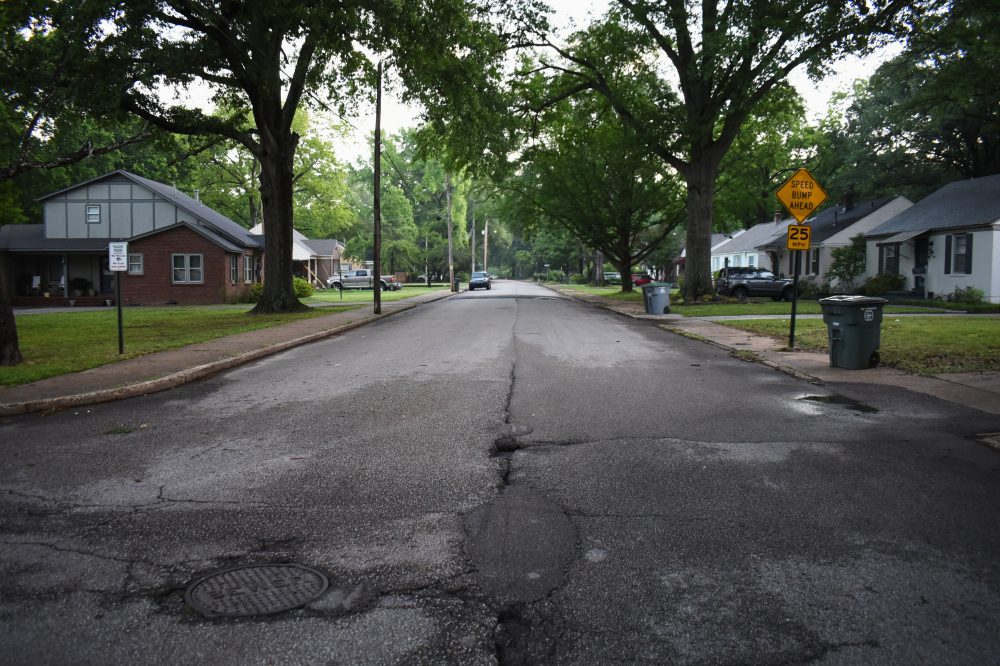
The new boundary literally runs down the middle of Fowler and Wilson’s road. Fowler finds himself assigned to the 8th Congressional District, which stretches hundreds of miles across a dozen counties into central Tennessee. Meanwhile, Wilson belongs to the 9th District, which spans most of the state’s southern border before curving northward to include predominantly white, wealthy Nashville suburbs.
“I think it’s horrible,” Fowler, who is white, expressed. “This isn’t just going to be bad for Black folks in Memphis, but poor whites in these new districts also aren’t going to get services. How are any of these congressmen going to serve all these different counties?”
This redistricting effort stems from a recent U.S. Supreme Court decision that could spell the end for congressional representation of majority-Black Southern communities like Memphis.
For six decades, a key section of the historic Voting Rights Act required map creators to demonstrate they weren’t discriminating against racial minorities when drawing district boundaries. This often resulted in political lines that enabled minority communities to elect their preferred candidates rather than having their voting power weakened by surrounding white majorities.
This protection had its strongest impact across Southern states, where Black and white communities often remain sharply divided along partisan lines.
On April 29, the Supreme Court significantly undermined this safeguard, determining that courts had improperly introduced racial considerations into redistricting processes in ways that violated the Constitution. Republicans throughout the South quickly seized this opportunity to redraw their maps before November’s elections, aiming to eliminate as many Democratic-held, majority-minority congressional seats as possible.
Tennessee’s legislature became the first GOP-controlled state to complete a new map under this ruling. However, it joins several other Southern states — including Alabama, Florida, Louisiana, Mississippi, and South Carolina — participating in a widespread partisan redistricting effort across the nation.
Republicans have long argued that the Voting Rights Act prevented them from applying the same tactics to Democratic, majority-Black districts that Democrats use in states they control against conservative-leaning, white, and rural communities — essentially scattering opposing voters for political advantage. Tennessee Republicans previously employed this strategy in their 2021 congressional map against Nashville’s Democratic voters, where they faced fewer constraints since that city has a white majority.
“Tennessee is a conservative state and our congressional delegation should reflect that,” stated Republican state Sen. John Stevens, who guided the legislation creating the new map that makes all nine congressional districts solidly Republican.
Wilson, the Black Memphis musician, appeared less troubled by his neighborhood’s division for political purposes. He viewed this action as another challenge facing the city, following an influx of federal agents deployed by President Donald Trump to address crime and ongoing narratives about Memphis’ safety from surrounding suburbs and Republican state officials.
“It’s a hustling community. We’re going to make ends meet for our families,” Wilson said. “The legacy of Memphis is music and our civil rights history,” he continued, noting their connection. “Hard times mean you’re going to try and find your gift. That’s what we do here; music in Memphis is a way of life.”
Memphis’ congressional district existed long before the Voting Rights Act. For at least a century, well before Congress moved to protect minority voting rights, Tennessee recognized it made sense for its Mississippi River metropolis to maintain its own House district. However, since the 1965 law’s passage, anyone attempting to divide the district for partisan benefit could face lawsuits and have their maps overturned. Legal experts now say this risk has largely disappeared.
Despite this, Democrats and civil rights organizations are pursuing legal action to stop the map. The symbolism carries particular weight given the city houses the National Civil Rights Museum, constructed around the motel where Rev. Martin Luther King Jr. was killed in 1968. When lawmakers approved the new maps, Democrats and demonstrators chanted “hands off Memphis!” while displaying signs accusing Republicans of reviving Jim Crow policies.
“Memphis is not just any city; it holds a central place in the national story of our quest for racial justice in this country and how, over time, we have increasingly achieved civil, voting, and economic rights for all Americans,” said Eric Holder, former U.S. attorney general who leads the National Democratic Redistricting Committee. “Black citizens protested, marched and died there for the right to vote.”
Memphis has experienced contrasting narratives recently. While billions in private investment and federal funding have poured into the area, many local businesses continue expressing concerns about a sluggish regional economy.
Residents interviewed by The Associated Press voiced worries about safety and public services while rejecting stereotypes about widespread crime. These contrasting realities are visible throughout the river city, where pothole-riddled streets connect empty storefronts to elaborate mansion-filled neighborhoods and tree-lined college campuses just blocks apart.
The city has maintained a tense relationship with the rest of the state, which supported Trump in 2024 by approximately a 2-1 margin.
The conservative Nashville legislature has repeatedly clashed with Memphis, accusing city leaders of widespread mismanagement. Lawmakers passed legislation blocking numerous police reform efforts Memphis implemented following Tyre Nichols’ death, an unarmed Black man killed by city officers in 2023. They also approved measures seizing control of Memphis’ airport board and others statewide, while granting the Republican state attorney general authority to remove Memphis’ elected district attorney.
“The state legislature is trying to take it over,” said U.S. Rep. Steve Cohen, the white Democrat currently representing the city until the new boundaries take effect after the midterms. “And that’s absurd. It was all partially because it’s a majority Black city.”
Thomas Goodman, a politics and law professor at Rhodes College in Memphis, observes that the new congressional districts may create greater tension over who receives attention — and funding — from elected officials. Memphis residents will soon share districts with Republican communities having vastly different economies, geographies, and demographics. Whoever represents those congressional seats will have incentives to focus on those voters rather than Memphis’ population.
“It would not only deprive Black Tennesseans of proper representation,” Goodman explained. “These changes also break up the city of Memphis as an entity into multiple districts, thereby removing a dedicated agent in government who knows the people, who understands their concerns and can speak for them and deliver on behalf of their interests and desires.”
Chris Wiley’s residence sits on what was previously a peaceful Midtown Memphis street featuring duplexes, well-maintained lawns, and sports fields. Now his neighborhood is divided among three congressional districts. This doesn’t surprise him, he said, because “Tennessee is all about the dollar” rather than residents.
“Memphis is majority Black, so if you mess with that, what’s the point of even voting in Tennessee?” said Wiley, a 29-year-old sports stadium employee who is Black. “Whatever the congressional numbers, whatever that is, we don’t count on the scale as high, anyway.”